

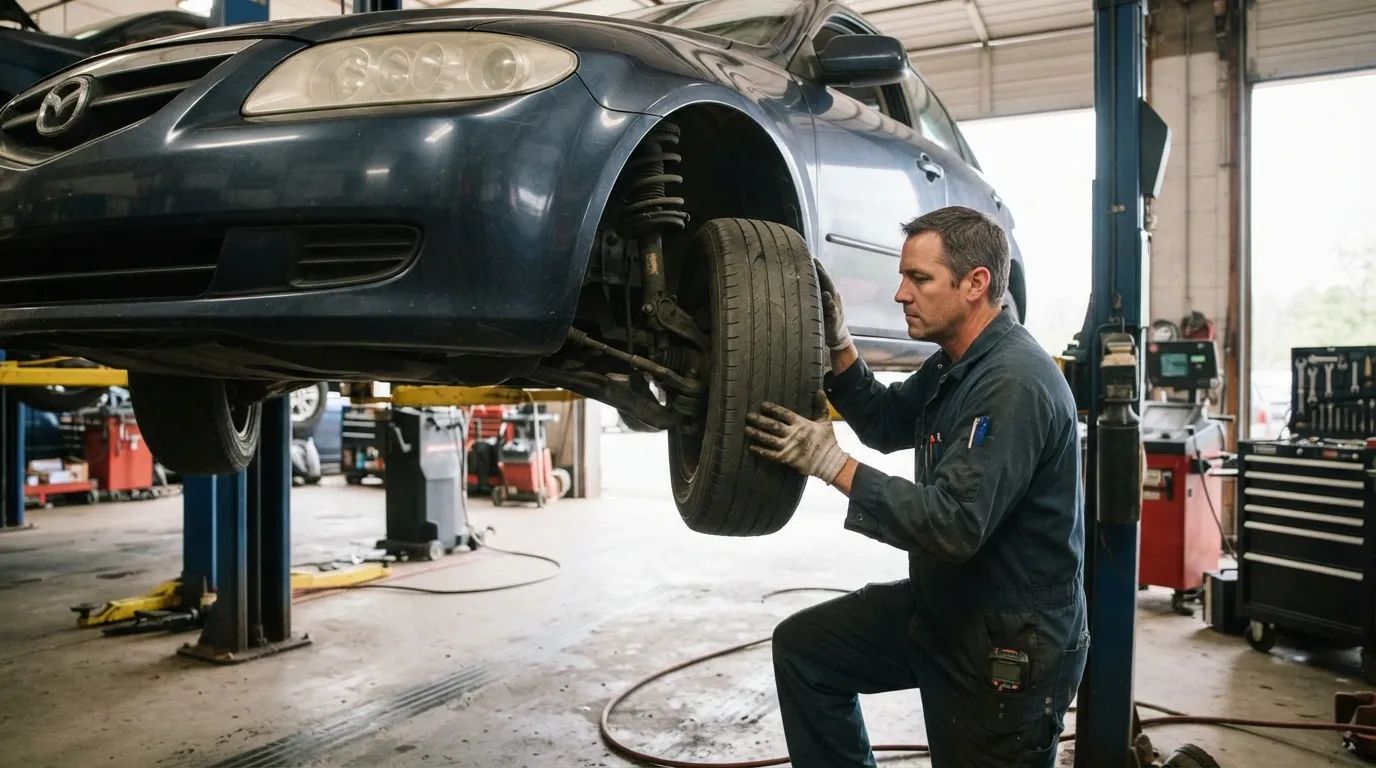
Most drivers think a quick glance under the hood covers them before a road trip. They’re dead wrong.
Only 19% of drivers actually check that their car is road-ready before hitting the highway. A separate AAA survey found that 35% of U.S. motorists skip or delay basic maintenance altogether – usually because of cost, time, or the belief it can wait.
Dead batteries, flat tires, and lockouts make up nearly two-thirds of all roadside emergency calls. The unsettling part is that almost every one of those calls was preventable.
Here’s the full list of things mechanics wish every road tripper checked before pulling out of the driveway – starting with the one almost everyone gets wrong.
#17 – Tire Pressure (Including the Spare)
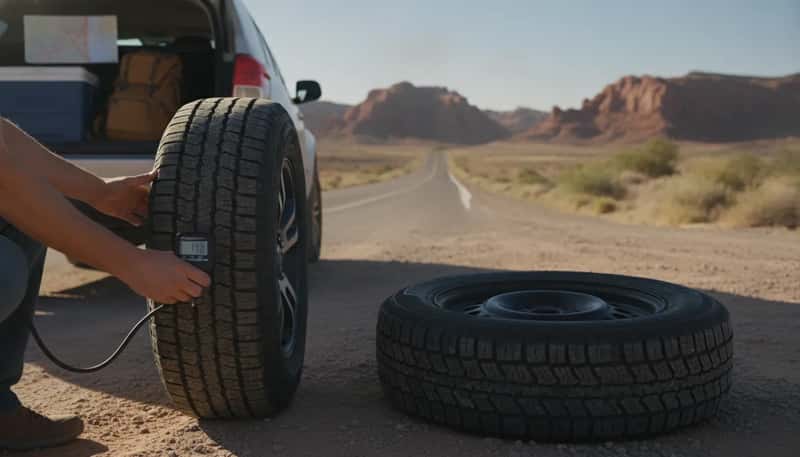
Road trippers check their tires by kicking them. Mechanics cringe every single time.
A tire doesn’t have to be punctured to lose air – all tires naturally lose some over time, and underinflation is the leading cause of tire failure. Check pressure when the tires are cold, at least three hours after driving, and use the number on the driver’s door pillar or owner’s manual – never the number printed on the tire itself.
You should also make sure your tires are properly inflated, including the spare. Most people forget that one entirely.
It’s smart to check tire pressure at least once a week on a road trip – regular checks protect performance, safety, and fuel efficiency.
But that’s nothing compared to what we found about #16…
#16 – Tire Tread Depth
Low pressure is one problem. Bald tires are a completely different kind of danger.
Take five minutes to inspect your tires for excessive or uneven wear. If the tread is worn down to 2/32 of an inch, it’s time to replace them.
A tire with a slow leak might be fine for grocery runs. It can fail catastrophically at highway speed on a hot afternoon.
Check tread depth monthly and rotate tires every 5,000 to 7,000 miles for even wear. If you see visible cracks, bulges, or cords showing through the rubber, replace those tires immediately before they become a roadside disaster.
Regardless of how much you drive, you should replace tires every six years to avoid wear-related breakdowns.
Fast Facts
- Legal minimum tread depth: 2/32 of an inch
- Recommended rotation interval: every 5,000–7,000 miles
- Recommended replacement: every 6 years, regardless of mileage
- Red flags: cracks, bulges, or exposed cords
But that’s nothing compared to what we found about #15…
#15 – Engine Oil Level and Condition
This is the one mechanics assume you know. Most people don’t check it right.
If it’s been a while since your last oil change – or you don’t remember when it happened – err on the side of caution and head to a service center. Neglecting this right before a road trip can cause irreversible engine damage, especially with all those extra miles ahead.
Dark, gritty oil on the dipstick means your engine is already overdue. Don’t just check the level – check the condition.
Fresh oil looks amber and slightly translucent. Old oil looks like used coffee.
Pack a small bottle of motor oil in your trunk in case of an emergency. It’s a $5 fix that could save a $5,000 engine.
But that’s nothing compared to what we found about #14…
#14 – Coolant Level
Engine issues, particularly cooling system failures, caused 11% of the breakdowns AAA was called for. That’s a huge number for something so easy to prevent.
Top off the coolant before any long trip. It needs to sit at the proper level to prevent overheating.
Check underneath your car after it’s been parked. If you see fluid gathering on the ground – or notice a sickly-sweet smell that signals a leak – get it fixed before it takes down the entire cooling system.
Never remove a radiator cap while the engine is hot. The system may be pressurized, and escaping coolant can cause severe burns.
But that’s nothing compared to what we found about #13…
#13 – Car Battery Health
Battery trouble is a leading cause of roadside breakdowns, according to AAA. Extreme heat, especially in summer, strains a battery and hastens its failure.
Batteries typically fail about every five years under normal use. Extreme heat or cold – or repeatedly draining and recharging it – speeds that up.
Most batteries give zero warning before they die completely. One morning it starts your car. The next morning, nothing.
Common warning signs include a slow engine crank, dim headlights, and dashboard warning lights. If you’re seeing any of those, don’t gamble on a long trip.
But that’s nothing compared to what we found about #12…
#12 – Battery Terminal Corrosion
Here’s the check even mechanically-minded road trippers routinely skip.
Pop the hood and look at the battery terminals for white or greenish corrosion. It quietly kills the electrical connection and can drain your battery’s performance.
Check the terminals regularly, keep them tight, and keep them clean. Most auto parts stores sell terminal protector spray, or you can just use a dab of petroleum jelly.
A corroded terminal can mimic a dead battery and fool you into replacing a perfectly good one. Clean it first, then test.
It’s a five-minute job that could save you $150.
But that’s nothing compared to what we found about #11…
#11 – Brake Pads and Fluid
Brakes are the most consequence-heavy thing on this entire list. Yet most people never think to check them before a road trip.
Braking performance is essential on highways, mountain roads, and stop-and-go traffic. Listen for squealing, grinding, or scraping, and watch for vibration, pulling, or a soft pedal.
Top off the brake fluid before you leave – neglecting it can lead to dangerous driving conditions. Brake fluid is hygroscopic, meaning it absorbs moisture over time, which lowers its boiling point and can reduce stopping power on a long mountain descent.
If you’re worried your pads may be wearing thin, get them checked and replaced before your trip.
But that’s nothing compared to what we found about #10…
#10 – Serpentine Belt
This one single belt quietly runs your alternator, power steering pump, water pump, and air conditioning compressor – all at once.
Belts and hoses may not seem important until they break on the interstate. A visual check can catch cracks, fraying, or leaks before they cause engine failure or overheating.
Serpentine belts, timing belts, and coolant hoses are especially critical – and replacing them early is usually a simple, cheap fix.
Look for cracks, fraying, glazing, or excessive slack. A worn serpentine belt can take out the alternator, water pump, and air conditioning compressor simultaneously – one belt failure cascading into three at once.
Why It Stands Out
- Powers the alternator, power steering pump, water pump, and AC compressor
- One failure can cascade into three or more system failures at once
- Warning signs: cracking, fraying, glazing, or excessive slack
- Usually a simple, cheap fix – if caught early
But that’s nothing compared to what we found about #9…
#9 – Radiator Hoses
You checked the coolant level. Good.
Now check what’s actually carrying that coolant through the engine.
Worn or damaged hoses can lead to breakdowns or serious engine damage. Look for fraying, cracking, soft spots, or visible wear.
Any sweet smell, oily residue, or puddle under the vehicle should be investigated before departure. Common leak spots include the engine bay, under the transmission, and near the wheel wells.
A bulging radiator hose is a time bomb. It can hold for weeks of short commutes but blow spectacularly under the sustained heat of a long highway drive.
But that’s nothing compared to what we found about #8…
#8 – All Exterior Lights
This one sounds trivial. It is not.
A burned-out brake light or taillight is a ticketable offense in every state – and a real safety hazard on a dark interstate.
A dim headlight is an easy fix if you catch it early, and even a more serious wiring issue gives you time to call a mechanic before you leave. The fix is rarely expensive.
Walk around your car before leaving. Check the headlights, taillights, brake lights, turn signals, and reverse lights.
Most drivers have never once walked behind their own car while pressing the brake pedal. That’s the only way to actually know if it’s working.
A pre-trip inspection at a tire or auto center catches this too – a technician sees what an untrained eye misses.
At a Glance
- Headlights, taillights, and brake lights – check all three
- Turn signals and reverse lights – easy to forget, easy to test
- Tap the brake pedal while a friend watches from behind
- No friend around? Park facing a window or reflective surface
But that’s nothing compared to what we found about #7…
#7 – Windshield Wipers and Washer Fluid
Every road tripper thinks their wipers are fine – until it starts pouring at 70 mph and they find out otherwise.
Inspect the wiper blades for wear. Replace them if they’re streaking or skipping.
Rain, mud, and insects can dirty your windshield fast, and visibility drops right along with it. Wiper blades should be soft and flexible, not cracked or torn.
Fill the washer fluid reservoir so you can clear bugs, road film, and sudden rain – highway bug splatter is no joke at 75 mph. An empty washer reservoir is possibly the most preventable visibility problem on this entire list, and almost everyone shows up for a road trip without topping it off.
But that’s nothing compared to what we found about #6…
#6 – Transmission Fluid
This is the check that separates casual drivers from people who actually understand their car.
Top off the transmission fluid before any long trip. It should be clean and sit at the correct mark.
Even if the level is fine, dirty or degraded fluid can still strain the system. Flushing and refilling is often part of a comprehensive pre-trip service.
Dark brown or burnt-smelling transmission fluid is a red flag – it’s been overheated and can no longer protect the transmission properly.
Some newer vehicles have sealed transmissions with no dipstick at all. Follow your owner’s manual exactly, and never guess about fluid type or service intervals.
But that’s nothing compared to what we found about #5…
#5 – Engine and Cabin Air Filters
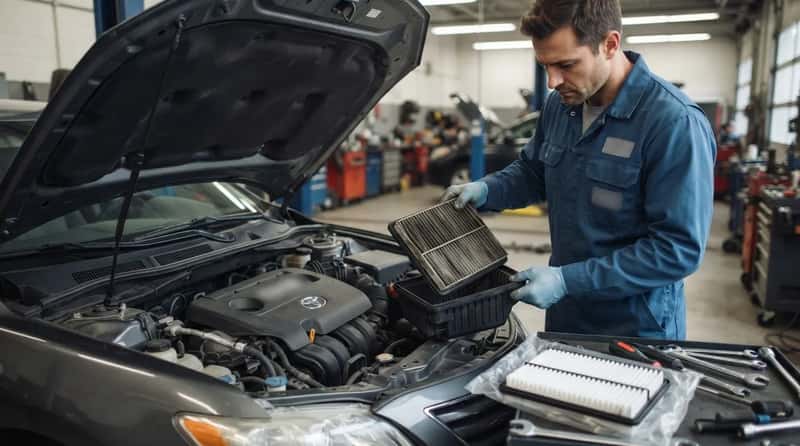
Here’s the check mechanics say gets skipped constantly – and it costs real money in fuel every time.
An often-overlooked item is your engine’s air filter. If it’s clogged, your engine works harder for airflow, and you lose performance and fuel economy.
Your cabin air filter matters too – it filters dust, pollen, and debris from the air inside the car.
A clean engine filter boosts fuel economy and power. A fresh cabin filter helps you breathe easier, especially on dusty or pollen-heavy routes.
Both filters are cheap. Both are ignored by almost every road tripper – mechanics find clogged filters on nearly every car brought in for a pre-trip check.
But that’s nothing compared to what we found about #4…
#4 – Power Steering Fluid
Nobody thinks about power steering – until the wheel feels like concrete on a highway on-ramp.
Top off the power steering fluid before your trip. Neglecting it can create genuinely dangerous driving conditions.
Low fluid makes the pump strain, produces a whining or groaning noise when turning, and can eventually destroy one of the most expensive components on your car.
Most power steering failures on road trips trace back to a slow, unnoticed leak that started weeks earlier. Any oily residue or puddle under the vehicle should be investigated before you leave.
Common leak spots include the engine bay and near the wheel wells. If you can’t identify the source, get a mechanic to inspect it before you travel.
But that’s nothing compared to what we found about #3…
#3 – Alignment and Suspension
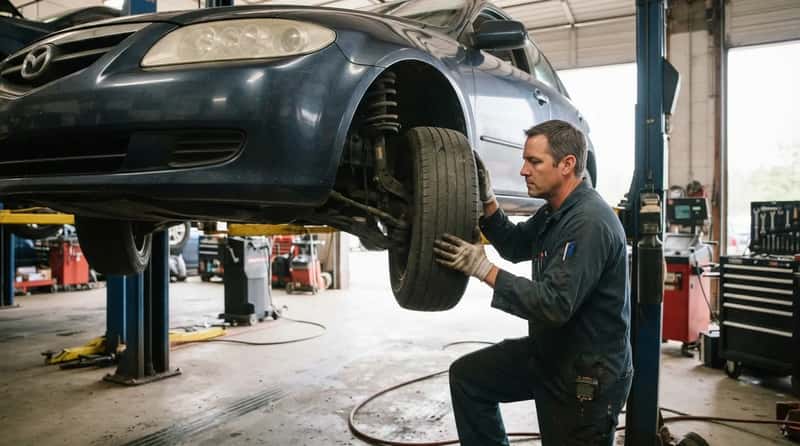
Most people would never guess this is a road trip killer. Mechanics call it one of the most frequently missed pre-trip checks.
If the steering wheel feels loose, the car drifts, or you notice uneven response, get the alignment and suspension checked before departure. Poor alignment doesn’t just make driving exhausting – it eats your tires unevenly and fast.
Check tire tread for wear and damage. Uneven wear means you need a rotation – and worn treads in a diagonal pattern are a near-certain sign of alignment problems.
If you notice strange noises, like knocking from a wheel when accelerating or turning, get to a mechanic before your trip.
But that’s nothing compared to what we found about #2…
#2 – The Spare Tire and Emergency Kit
Dead batteries, flat tires, and lockouts make up nearly two-thirds of all roadside emergency calls. Yet the spare tire is the single most overlooked item on every pre-trip checklist.
Check the spare before departure. Make sure it’s properly inflated and that your jack and lug wrench are present and working.
If your vehicle uses a tire repair kit instead of a spare, confirm the sealant canister and compressor actually function.
Your emergency kit should include a spare tire, jack, and lug wrench – make sure they’re in good shape and that you actually know how to use them. Jumper cables can also get you back on the road fast if the battery dies.
Discovering you have no working spare while stranded on a highway at night is not the time to find out you’ve never changed a tire in your life.
Worth Knowing
- Spare tire – confirm it’s properly inflated, not just present
- Jack and lug wrench – make sure both actually work
- Tire repair kit – check the sealant and compressor if you have no spare
- Jumper cables – pack them even if the battery seems fine
But that’s nothing compared to what we found at #1…
#1 – A Pre-Trip Test Drive With a Fresh Set of Ears
Every item on this list is something you can check with your eyes. This one requires your ears – and mechanics say it catches everything the others miss.
A short test drive can reveal issues before you embark on a long trip. Listen for unusual noises, and pay attention to handling.
Strange noises – knocking from a wheel when accelerating or turning, or odd sounds when starting the engine – are a clear sign to visit a mechanic before you leave.
Most mechanical failures send a warning signal days before they turn into a roadside disaster – a knock, a whine, a shimmy, a smell. Drivers tuned out by music and routine stop hearing them.
For trips over 500 miles, a comprehensive pre-road trip inspection with a certified mechanic is worth scheduling – sustained highway temperatures turn minor wear into major failures fast. This is the one check that catches what everything else misses.
The Bottom Line
Only 19% of drivers always check their car before a trip. A staggering 30% never do it at all.
That’s the real reason so many road trips end on the shoulder of a highway.
A single road trip can pack nearly a month’s worth of driving into two or three days. That kind of sustained stress exposes weaknesses that short commutes never reveal.
The good news: almost every failure on this list costs under $50 to prevent – and hundreds, sometimes thousands, to fix after the fact.
The mechanics aren’t gatekeeping this stuff. They’ve just been watching drivers ignore it for years.
Did we miss a check your mechanic always flags? Drop it in the comments – we want to hear it.
#18 – The Free Recall Check Almost Nobody Runs
Every item above deals with wear and tear. This one catches a factory defect that no amount of oil changes or tire rotations will ever fix – and it costs you nothing.
Every vehicle has a 17-character VIN, usually found on the driver’s side dashboard (visible through the windshield) or on the inside edge of the driver’s door. Open safety recalls are tied directly to that VIN, and dealerships are required to fix them free of charge, even on older or used vehicles.
- Locate your 17-digit VIN on the dashboard or door jamb
- Go to the official NHTSA recall lookup site and enter the VIN
- Review any open recalls listed – these are safety issues, not routine maintenance
- If a recall shows up, call a local dealer to schedule the free repair before you leave
This takes under 60 seconds and costs nothing, yet mechanics say most drivers have never run this check on their own vehicle.
A recall can involve anything from a faulty airbag to a fuel system defect – things a visual inspection or test drive will never reveal. Run it a few days before departure, not the morning you leave, in case a repair needs to be scheduled.


