Most people assume a river cruise is just a smaller, calmer version of an ocean cruise – same concept, fewer waves, maybe a nicer view. That assumption is exactly what blindsides so many first-timers the moment they step onto the gangplank.
From water-level chaos that can rewrite your entire itinerary overnight, to cabins a fraction of the size you pictured, to a social dynamic that has nothing in common with a 4,000-passenger megaship, river cruising plays by its own rulebook. Nobody hands you that rulebook at booking – so here’s what insiders and repeat passengers actually say once the ship leaves the dock.
#17 – The Ship Is Far Smaller Than You Picture
When people hear “cruise ship,” they picture multiple pools, a casino, and a dozen restaurants. River cruise ships are a fundamentally different animal.
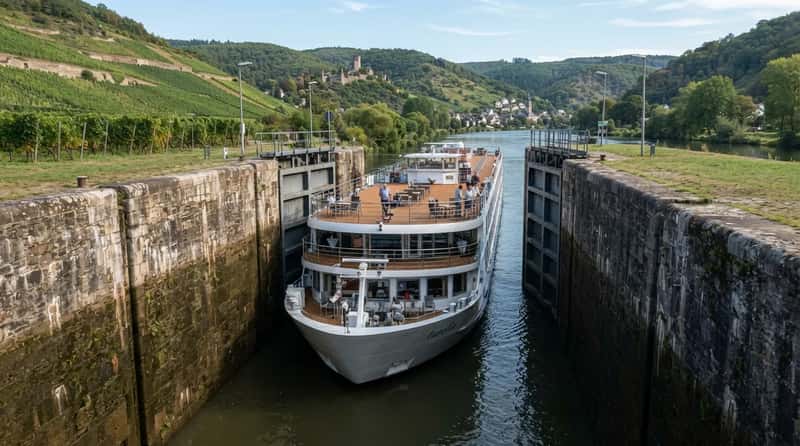
Ships sailing in Europe have a maximum length of 443 feet and a width of just 37 feet – dimensions dictated entirely by the narrow locks they need to fit through – with only three passenger decks so they can slide beneath low bridges.
That intimacy changes everything about how the ship feels: noise, service, crowding at the buffet, even how quickly you can get on and off in port.
Most river ships carry around 160 to 180 guests total, compared to thousands on a large ocean vessel. That’s not a drawback. It’s the entire point of choosing this kind of trip – but you need to know it going in.
Number 16 gets even more surprising.
#16 – Your Cabin Will Be Smaller Than You Think, Too
The compact ship has to put its cabins somewhere – and they’re not sprawling.
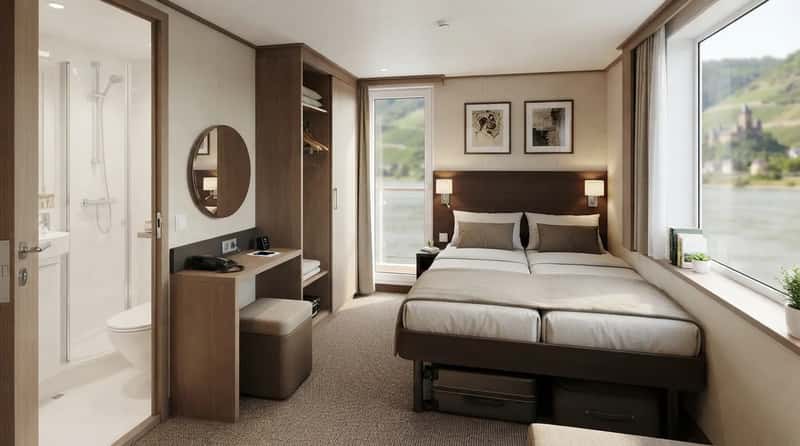
Standard river cruise cabins in Europe run between 150 and 170 square feet, with suites landing around 220 square feet. That’s roughly the size of a large hotel bathroom on a luxury ocean liner.
If you’re used to ocean cruising, walking into a river cabin for the first time can feel like a shock. Everything is scaled down, and entry-level cabins start at around 150 square feet.
That said, they’re cleverly designed to maximize space, with plenty of cupboards, drawers, and storage shelves, plus room to stow suitcases under the bed. Pack light and the cabin becomes surprisingly livable.
Wait until you see what’s hiding behind #15’s balcony.
#15 – The “Balcony” May Not Be What You Expect
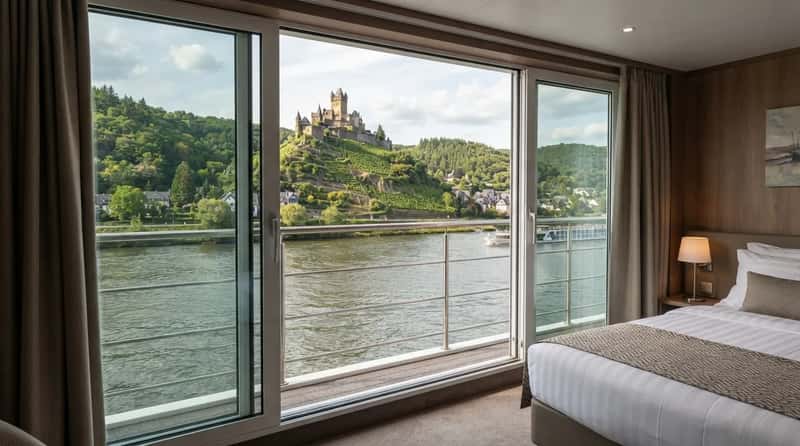
You book a cabin with a balcony and imagine yourself sitting outside with a glass of wine as castles drift past. Then you arrive.
Many river cruise ships offer what’s called a “French balcony” – floor-to-ceiling sliding glass doors that open onto a railing, with no actual outdoor seating space at all. Most ships lean French balcony, with only select cabins offering the full version.
A true balcony with two chairs and a small table is a premium feature, usually reserved for upper-deck suites. If sitting outside in the open air matters to you, verify the cabin type before you pay.
Quick Compare
- French balcony: floor-to-ceiling glass doors and a railing, no outdoor seating
- True balcony: two chairs and a small table on an open-air deck
- French balconies are the standard configuration on most river ships
- True balconies are typically reserved for upper-deck suite categories
The distinction matters enormously on a warm evening sailing through the Rhine Gorge or past the spires of Vienna. Read the deck plan, not just the marketing photos.
Number 14 flips the whole conversation.
#14 – You’ll Be Docking in City Centers (That’s a Feature, Not a Bug)
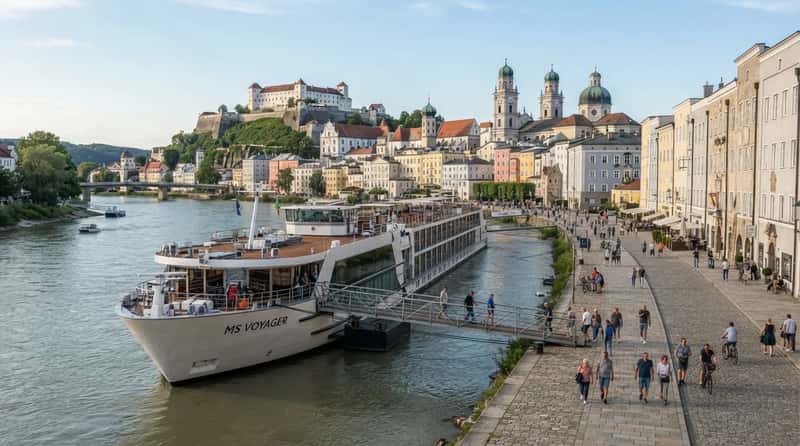
One of the most underrated advantages of river cruising is something the brochures mention but never fully explain: the ship itself becomes your hotel, parked steps from the action.
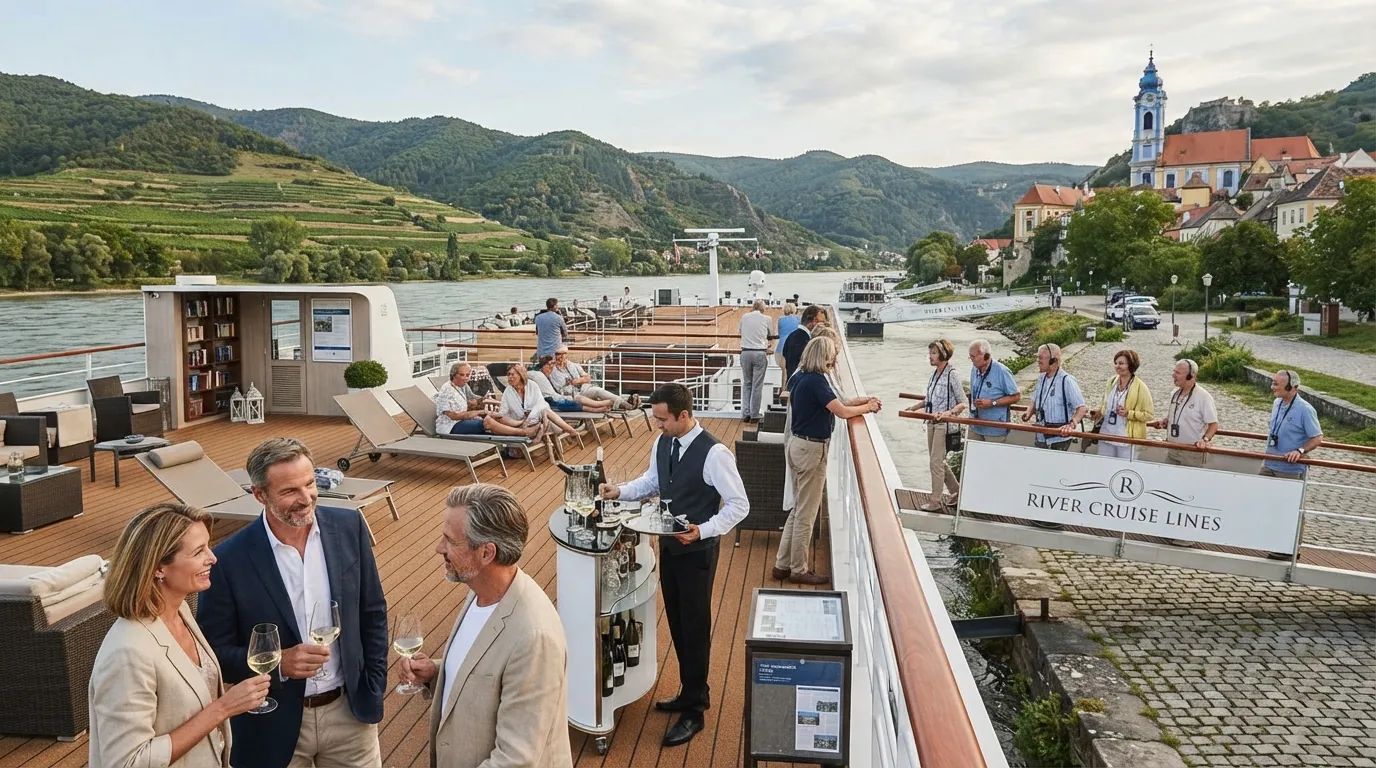
The smaller size of river ships allows docking directly in city centers and picturesque villages – no tender boats, no hour-long bus rides from a distant commercial port.
You walk off the gangplank and you’re on the main square. You walk back after dinner and you’re already home, which is exactly why experienced ocean cruisers who’ve lost half a day just getting to port keep switching over.
This single factor may be the most time-efficient way to see Central Europe ever devised. You’re not commuting to the destination – you are the destination’s next-door neighbor for the night.
But #13 is the one nobody warns you about at all.
#13 – Rafting Is Real, and It Can Kill Your View
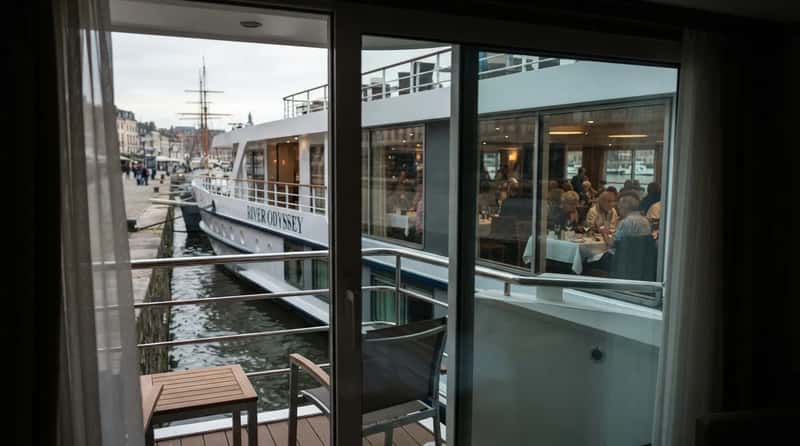
Here’s a scenario nobody warns you about: you wake up, pull back the curtain, and find yourself staring directly into another ship’s dining room.
This is called rafting. It happens when multiple ships dock side-by-side because of limited pier space, especially in popular ports along the Rhine and Danube.
When rafting occurs, guests on the inner ship have to walk through the outer ship’s public areas just to reach the dock. It’s not dramatic, but it’s jarring if you weren’t expecting it – and privacy disappears entirely for dockside cabins.
The good news is you’ll spend most of your time outside the cabin anyway, exploring ports and relaxing in the lounge. But if your riverside view suddenly turns into a wall of steel, you’ll wish someone had told you first.
Number 12 changes how you’ll spend every evening.
#12 – The Entertainment Is Nothing Like an Ocean Ship
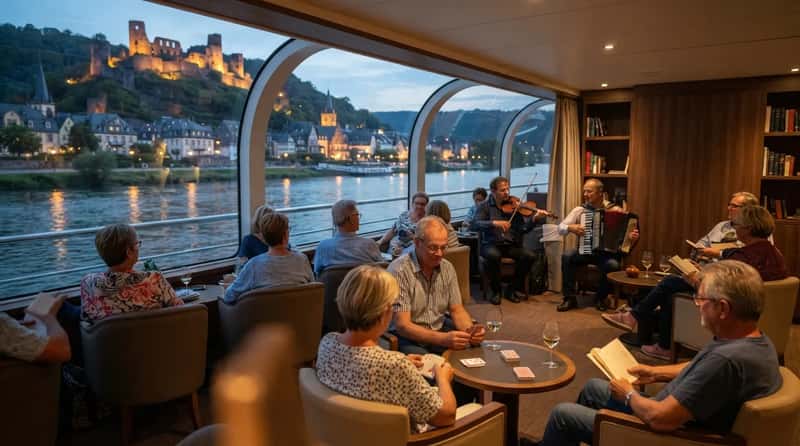
Forget the Vegas-style shows, the waterslides, and the comedy clubs. River cruise evenings operate at a completely different frequency.
River ships offer far fewer entertainment venues than ocean giants – typically a lecture, some live music, or trivia. Bring your own deck of cards, a tablet loaded with shows, or a good book for the lounge.
This isn’t a shortfall – it’s a design philosophy. River cruising is destination-led, not ship-led, and the entertainment is the river itself: medieval towns, lock transits at dusk, local musicians who board for a single night in port.
Travelers expecting a full-scale entertainment program end up disappointed. Travelers who arrive knowing the evenings are quiet, conversational, and scenery-driven leave wondering why they ever bothered with a big ship at all.
Here’s where the fine print really starts to matter – #11.
#11 – All-Inclusive Doesn’t Mean the Same Thing at Every Line
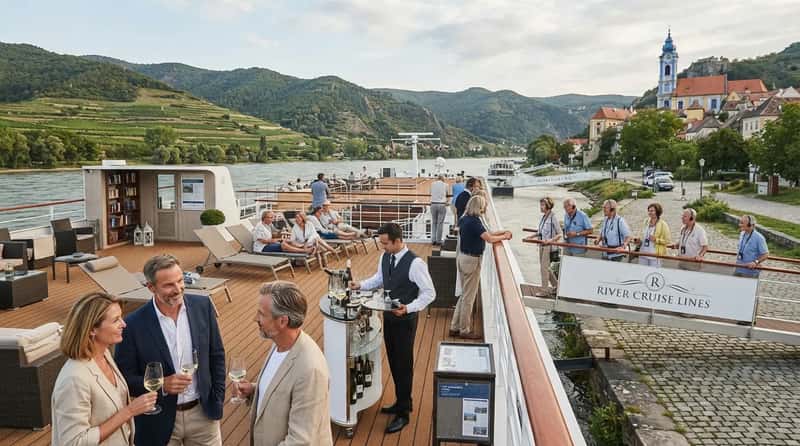
The phrase “all-inclusive river cruise” gets used so freely in marketing that it has nearly lost all meaning. What one line includes, another quietly charges extra for.
Many river cruise lines offer nearly all-inclusive pricing, so you won’t have to figure out a drink package or book excursions separately – most include at least one excursion per port.
First-time travelers should look closely at what’s actually bundled into the fare: dining, beverages, excursions, gratuities, transfers, and enrichment experiences. Gratuities alone can add hundreds of dollars if they’re not pre-included.
Some lines mean you can leave the ship without paying for anything beyond spa treatments and laundry. Others use “all-inclusive” to mean just meals and basic drinks. Read the fine print before comparing prices side by side.
Your feet are about to find out about #10.
#10 – You’ll Walk. A Lot More Than You Expect.

Nobody puts this in the brochure in bold: river cruising is a walking vacation. The shore excursions, the cobblestone old towns, the castle climbs – they all demand your feet.
The single best packing tip for any river cruise is comfortable shoes you’ve already broken in. You’re going to be walking a lot, and blisters on day one are nobody’s idea of a great start.
One day you’re strolling medieval cobblestone streets, the next you’re climbing uneven stone steps inside a castle. A good pair of sneakers, walking shoes, boots, or sturdy sandals is non-negotiable.
Fast Facts
- Cobblestone streets and uneven castle steps are standard on most shore excursions
- Broken-in walking shoes matter more than any other single packing item
- A second, sturdier pair of shoes is worth the extra suitcase space
- Blister prevention on day one sets the tone for the rest of the trip
Many first-timers bring one pair of stylish shoes and one pair of sneakers, then spend the entire trip in the sneakers. Pack accordingly, not aspirationally – your feet will thank you by day three.
Number 9 might cost you a night’s sleep.
#9 – Locks Are Fascinating – Until They Wake You at 3 A.M.
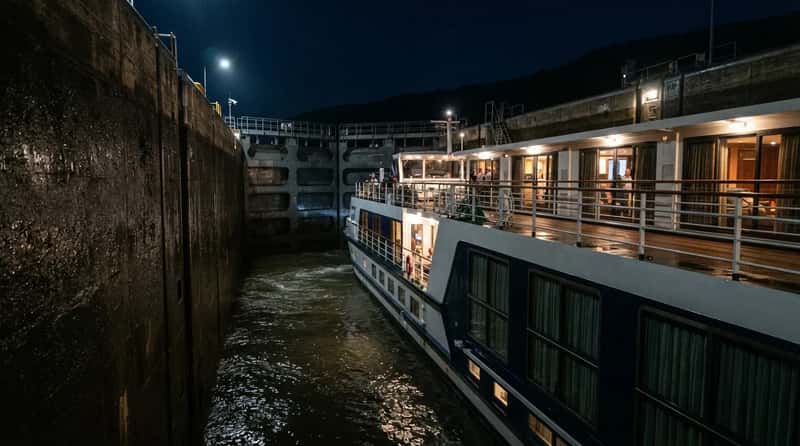
River locks are one of the great engineering spectacles you’ll witness on a cruise. They’re also one of the great disrupters of a good night’s sleep.
If your cabin sits on a lower deck, you’ll feel the movement more clearly. The walls may darken while you’re inside the lock, and the settling noise can interrupt sleep for light sleepers – worth remembering when choosing a cabin and packing earplugs.
Locks are essential to navigating rivers like the Rhine, Danube, and Main. The ship passes through dozens on a single itinerary, and many transits happen overnight while you’re asleep.
Light sleepers: pack earplugs and request a mid-ship cabin on an upper deck. Heavy sleepers: you won’t notice a thing and will simply wake up in a completely different country.
By #8, everything you thought about cruise ships gets rewritten.
#8 – The Social Dynamic Is Unlike Anything on a Big Ship

On a mega-ship, you can spend a week without talking to another passenger. On a river cruise, that’s essentially impossible – and most people end up loving it.
Because the ships are smaller and carry fewer guests, there are countless natural opportunities to get to know the people around you throughout the voyage.
Lines like American Cruise Lines, AmaWaterways, and Avalon Waterways host complimentary cocktail hours before dinner, an easy excuse to mix and mingle with other guests on board.
The open-seating dining model means you sit with different people every night. By day three, you know everyone’s name, where they’re from, and which port they loved most – for solo travelers especially, this is a revelation, not an obligation.
Number 7 hands you back your freedom.
#7 – You Can Skip the Organized Tours – And That’s Completely Fine

The scheduled shore excursions can feel mandatory. They’re not. Many experienced river cruisers spend half their ports exploring independently, and they don’t regret it for a second.
There’s no obligation to take any organized tour, or to return to the ship for meals, or to stay aboard after dinner – unless the ship is actually departing for the next port.
Worth Knowing
- Concierge desks can arrange restaurant reservations and private transportation
- Shore excursions are optional on most river cruise lines
- Departure times are posted daily and independent explorers need to track them closely
- Missing the ship means arranging your own way to the next port at your own expense
The key is knowing the departure time and giving yourself a clear buffer. Miss the ship and you’re on your own in a foreign city – not the adventure you were planning, but if you’re back in time, your day is entirely yours.
The concierge desk is a resource many first-timers overlook completely. Concierges can arrange reservations, tickets, and transportation to events, attractions, and restaurants, making independent exploration far easier than you’d manage alone.
Now the math gets interesting at #6.
#6 – The Prices Look High Until You Do the Real Math
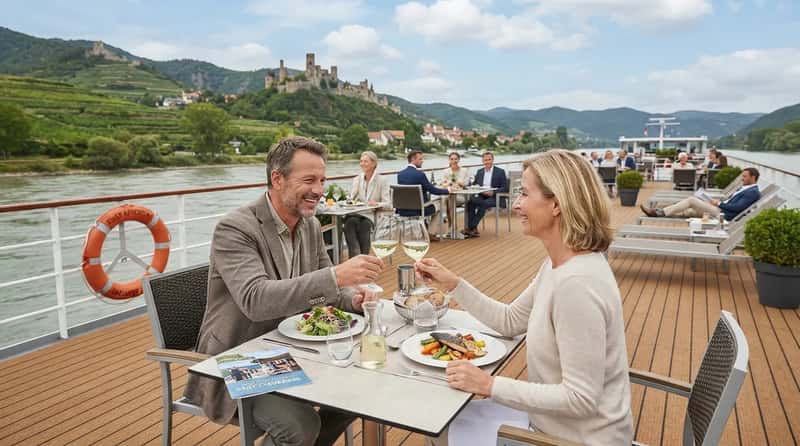
River cruise sticker prices shock first-timers who compare them directly to ocean cruise fares. But that comparison is almost always apples to oranges.
A quick glance suggests river cruise fares run higher – but that’s because they bundle in far more than most ocean cruises do. All meals, drinks with lunch and dinner, a shore tour program, and Wi-Fi mostly come standard.
Add up excursion costs, drink packages, specialty dining fees, and Wi-Fi charges on a comparable ocean cruise, and the final bills often land far closer together than they first appeared. Some river cruise travelers spend almost nothing beyond the fare itself.
On some all-inclusive lines, other than spa treatments and sometimes laundry, you can leave without paying anything extra at all. Your only real expenses become souvenirs and whatever you spend ashore.
Number 5 happens while you’re completely unconscious.
#5 – The Ship Moves While You Sleep – Through Multiple Countries
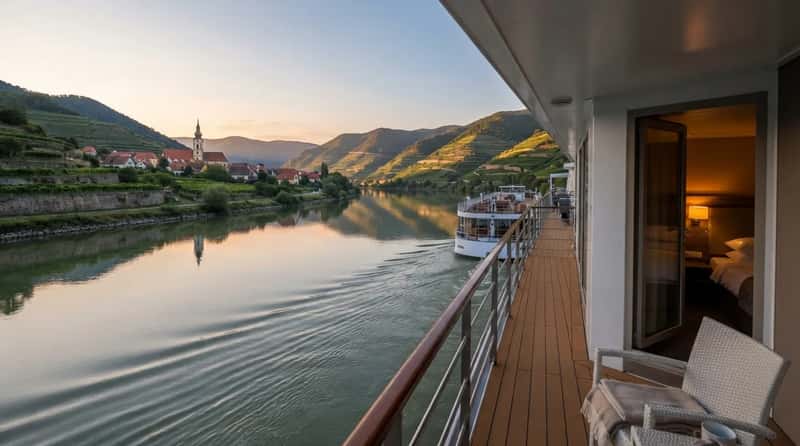
One of the genuinely magical things about river cruising happens entirely while you’re unconscious. You go to sleep docked in one country and wake up in another.
Most European river cruise itineraries move overnight, meaning the daytime view from your window is constantly changing. You’re never staring at the same scenery two mornings in a row.
This sailing-while-sleeping model is exactly why lock noise matters (see #9) and why crew movement overhead on upper decks is worth considering before you upgrade. The priciest top-deck cabins get the best views, but you might hear footsteps overhead as the ship navigates through the night.
The tradeoff is real: premium views by day, more noise by night. Know what you’re optimizing for before you pay the upgrade.
But #4 is the one that can wreck an entire itinerary.
#4 – Water Levels Can Completely Rewrite Your Itinerary
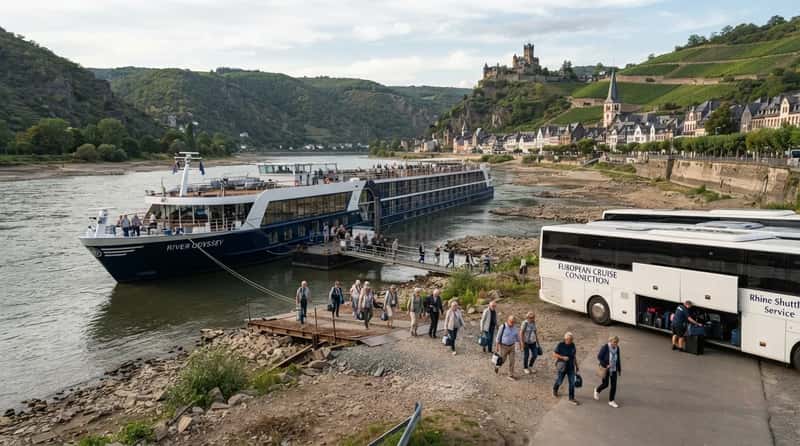
This is the one that catches even seasoned travelers off guard. You booked a Rhine cruise. You might end up on a bus for two days of it, and there’s nothing you or the cruise line can necessarily do about it.
Spring snowmelt combined with heavy rainfall usually drives high water on central European rivers. Late July onward is the most likely window for low water, when long dry spells and heat reduce river depth.
AmaWaterways estimates that high or low water affects roughly 3.5 percent of its European departures in an average year, though that number climbs sharply in a drought year. Viking reported that during the summer of 2026, more than half of its European river-cruise days were affected by low water between mid-July and mid-August, although most guests continued traveling.
If water levels disrupt operations, expect motorcoach transfers, changed ports, possible ship swaps or hotel stays, and refunds or alternative arrangements where needed. It’s rarely a cancellation – but it can fundamentally change the cruise you actually experience.
Number 3 is where your insurance quietly lets you down.
#3 – Your Travel Insurance May Not Protect You the Way You Think
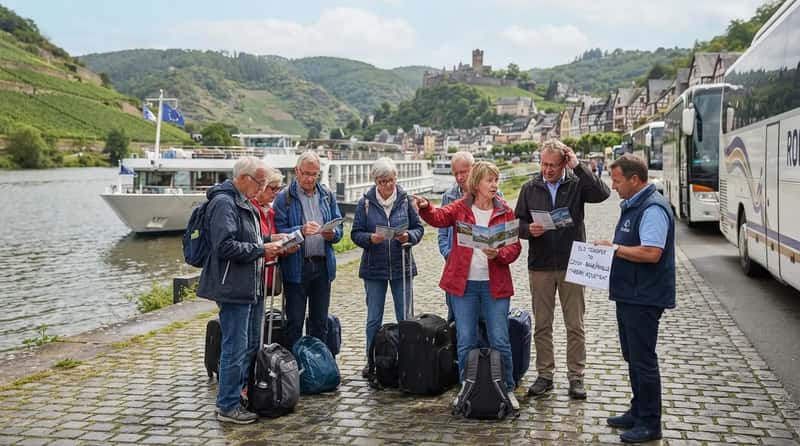
Most travelers buy trip-cancellation insurance and assume they’re covered for anything that goes wrong. River cruising has a specific scenario that exposes that gap brutally.
If a cruise is canceled altogether, qualifying insurance coverage may help with expenses that aren’t otherwise reimbursed. But if the cruise continues with different ports, buses, hotels, or a replacement ship, standard trip-cancellation or trip-interruption insurance may not treat that as a covered loss – simply because the experience differs from what you expected, not because it was canceled.
At a Glance
- Trip-cancellation insurance typically covers full cancellations, not itinerary changes
- Altered ports, bus transfers, or ship swaps are usually not treated as a covered loss
- Cruise line low-water compensation policies vary widely by operator
- Asking about the policy before booking is the safest first step
That’s why the cruise line’s own low-water policy can matter almost as much as the insurance policy you buy. Before booking, ask directly: what do you offer passengers if water levels force itinerary changes? The answer varies dramatically by operator.
Some lines have robust compensation frameworks. Others offer goodwill gestures and future cruise credits. Knowing this in advance is the difference between a frustrating dispute and a managed disappointment.
Number 2 is the one people argue about the most.
#2 – The Demographic Skews Older – But the Experience Doesn’t Have To

Here’s the controversial one. River cruising has a reputation for being a retirees-only activity, and that reputation has a basis in reality – though it’s slowly changing, just not as fast as the marketing suggests.
The typical river cruise passenger skews older and more traveled than the average ocean cruiser. The slower pace, the cultural focus, and the price point all attract travelers who are post-career and past the school-run years.
Younger travelers who book without knowing this sometimes feel out of place at dinner or frustrated by excursion pacing. But many who go in with open eyes end up having the time of their lives – the conversations, the cultural depth, and the unhurried rhythm convert them permanently.
With destination-focused itineraries, a slower pace, and cultural excursions at varying activity levels, river cruises remain an excellent way to explore many parts of the world. The key word is “different.” Different from what you know – embrace it.
And #1? That’s the reason people become river cruise converts for life.
#1 – The River Itself Will Change Everything You Thought You Knew About Travel
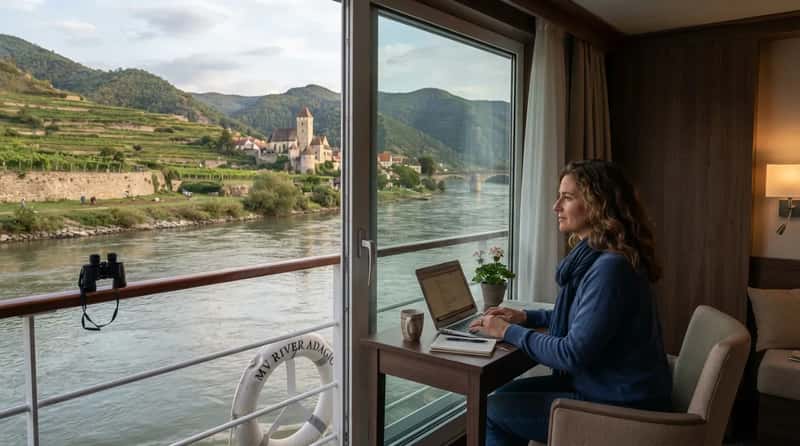
Every other item on this list is a logistical footnote compared to this one. The river itself – the actual moving water outside your window – does something to people that is genuinely hard to explain before you’ve experienced it.
There’s no horizon line on a river cruise. The land is always close, and you watch villages materialize and dissolve, farmers working fields tended the same way for centuries, bridges that Napoleon’s army once crossed. It’s not like watching a travel documentary. You’re inside it.
A river ship might be one of the best working environments many people ever encounter – sit at a laptop for hours and still have an ever-changing view. The scenery never stops, and neither does the quiet sense that you’re seeing the back of the continent, the working riverbanks, the life that faces the water instead of the road.
Most travelers who do one river cruise describe it as the vacation that reordered everything else. Not because it was perfect – water levels, small cabins, and bus transfers included – but because the connection to place was unlike anything a hotel, a flight, or a big ship can replicate.
Slow travel doesn’t just show you a place. It gives the place time to become part of you.
Common sentiment among long-time river cruise passengers
The Bottom Line

River cruising is not a scaled-down ocean cruise. It’s a fundamentally different kind of travel, built around proximity – to the land, to other passengers, and to the rhythms of actual rivers that don’t always cooperate with your itinerary.
The cabins are smaller than you expect, the entertainment is quieter than you’re used to, water levels can rewrite your plans with zero notice, and your insurance may not cover the most likely disruption. None of that is a reason to avoid it – it’s a reason to go in informed.
Travelers who understand what river cruising actually is, rather than what the brochures imply, are overwhelmingly the ones who come back and do it again. The ones who don’t know get blindsided by the details. Now you know the details.
Which of these surprised you most? Drop it in the comments – and tell us if we missed something the brochures definitely didn’t warn you about.