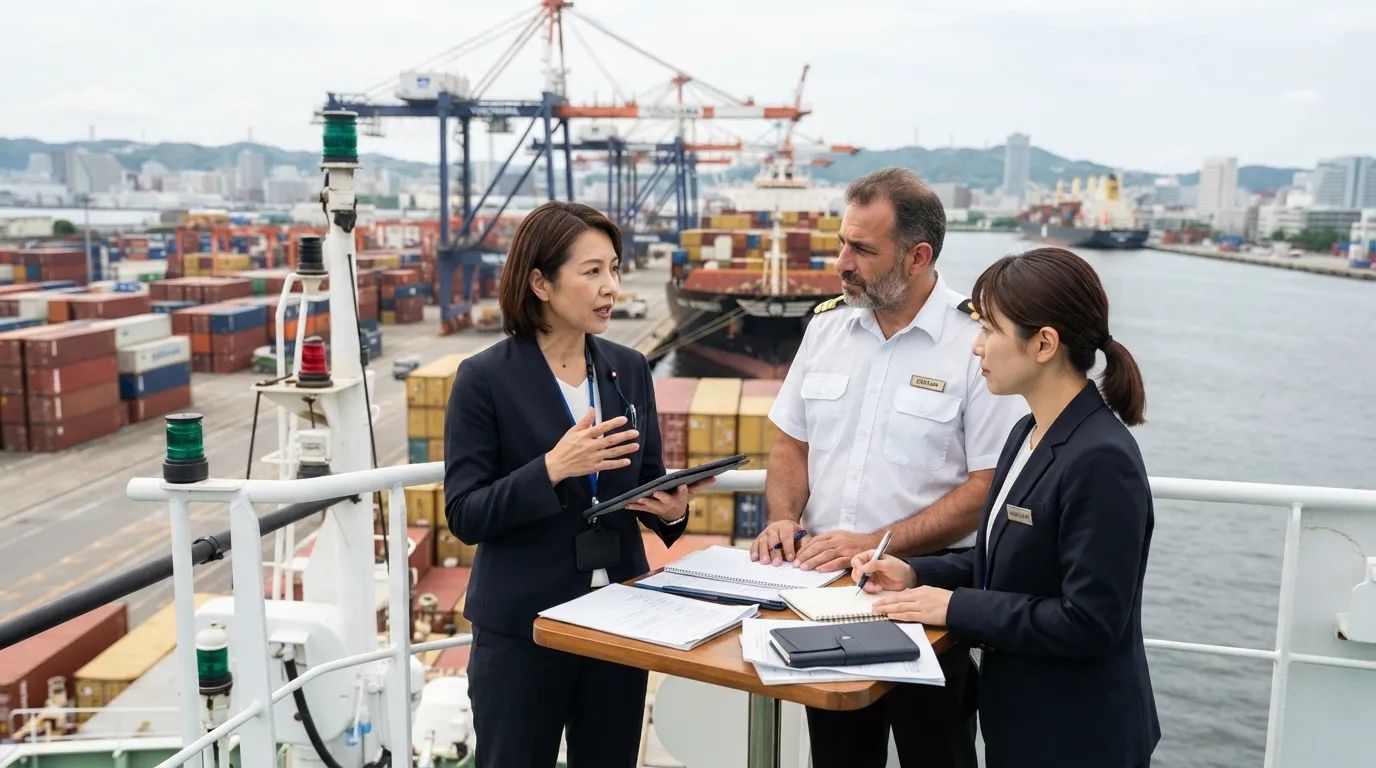
Most passengers think the ship runs itself in port. They assume the crew handles everything, the dock workers do the heavy lifting, and once the gangway drops, it’s a clean, automatic operation. They’re wrong – by a wide margin.
A silent professional is already onshore hours before you arrive, pulling strings you’ll never see. Here’s what insiders actually know about the person who really keeps your cruise from falling apart.
#17 – They File Your Ship’s Arrival Papers Before Dawn
Vessel agents compile and submit required documentation to customs authorities, typically 24 to 48 hours before arrival. Passengers are still asleep in their cabins when this paperwork battle is already won or lost.
Missing a single document can hold up clearance and delay berthing. That means your excursion, your lunch reservation in port, your entire day – all hostage to a form filed in the dark.
Most travelers assume the ship simply “docks.” It doesn’t. It gets permission to dock, and that permission is earned through a stack of regulatory filings passengers never hear a word about. The port agent is the one who gets it done – quietly, on deadline, every single time.
But paperwork is just the warm-up. Wait until you see what comes right after…
#16 – They Physically Secure Your Berth
The port agency’s responsibilities include securing a berth for the vessel and coordinating the timing of its arrival and departure with the port authorities. This isn’t just booking a parking spot – it involves negotiating with a port that may have a dozen other vessels competing for the same concrete.
Agents coordinate with the port authority and terminal operators to arrange for the vessel to berth at the designated location. Get this wrong and a ship full of 3,000 passengers idles at anchor while everyone’s shore plans collapse.
Fast Facts
- A single port agent may coordinate more than 130 separate operations during one ship’s port call.
- Major ports can host anywhere from one to a dozen ships competing for the same berths on a busy day.
- Berth assignments are locked in through direct negotiation with port authorities and terminal operators.
A delayed berth can cascade into cancelled excursions, shortened port stays, and missed connections – yet passengers rarely know how close to chaos things can get. The agent absorbs all of that pressure without a single announcement over the ship’s PA system.
And the berth is just the beginning of what they arrange on the water…
#15 – They Arrange the Tugboats and Pilots
Agents arrange for tugboats and pilotage services, which are necessary for safe navigation and maneuvering of the vessel within the port. These aren’t optional extras – most ports legally require them, and they must be booked and timed precisely around the tide.
Shipping agents coordinate pilotage, tugboat assistance, berthing, and mooring for every ship arriving at the port. A mismatch in timing between the pilot boat and the arriving vessel can throw off an entire port’s schedule.
Passengers watching the tugboats nudge the ship into position have no idea those boats were contracted, timed, and coordinated by a single agent who may be juggling three other vessels that same morning. It looks seamless because someone planned it that way.
What happens once the ship is safely tied up is where things get really interesting…
#14 – They Handle All the Customs and Immigration Clearance
Shipping agents handle customs clearance procedures, ensure compliance with immigration regulations for crew members and passengers, and manage the required documentation. Every port has different rules, and what clears in one country can trigger a full inspection in the next.
Upon the ship’s arrival, the agent manages customs and immigration clearance procedures – submitting documentation, coordinating with officials, ensuring compliance. One error and the gangway stays up.
This is arguably the most legally dangerous part of the job. Countries have pulled ships for paperwork discrepancies passengers never knew existed. The agent’s expertise is the invisible shield between you and a very expensive delay.
But legal compliance isn’t the only financial battle being fought on your behalf…
#13 – They Advance and Track Every Dollar Spent in Port
Financial disbursements cover port dues, pilotage fees, canal tolls, bunker supplies, provisions, repairs, and agency fees. Agents advance these funds on behalf of shipowners and reconcile accounts through detailed disbursement statements.
Agents prepare a proforma disbursement account to estimate every expected charge before the ship even arrives. This financial blueprint has to be ready in advance, no exceptions.
A single port call for a large cruise ship can involve tens of thousands of dollars in disbursements – all tracked, paid, and reconciled by the agent, often within hours. Passengers are browsing the gift shop while this financial operation runs in the background.
And the money doesn’t stop at port fees – there’s a whole supply chain being assembled too…
#12 – They Orchestrate the Ship’s Entire Food and Fuel Supply
Agents coordinate fuel bunkering, fresh water, provisions, spare parts, and technical supplies – obtaining quotes, arranging delivery timing, supervising quality, and handling payment. This happens simultaneously with every other port operation, often in a window of just a few hours.
The buffet you enjoy on day three exists because a port agent in the last port arranged a refrigerated truck at the right dock at the right time. Most passengers think the ship is self-sufficient. It’s actually re-supplied at almost every stop, and that coordination is invisible by design.
But supply runs are nothing compared to what they handle when something goes truly wrong…
#11 – They Are Your Emergency Lifeline If You Get Stranded Ashore
When you sail on a cruise line, the ship’s agent is your emergency contact should something go wrong while you’re off the boat. Most passengers don’t discover this until they desperately need it.
The most common reason a passenger calls a port agent is missing the all-aboard time – and the agent helps communicate with the ship in real time. They can also relay urgent messages when no other channel exists.
You can’t just dial the ship from a foreign hospital. The port agent is the one number that bridges the gap between a passenger in crisis and a vessel already pulling away from the dock. Most cruise cards carry that number – most passengers never read it.
And what the agent does when you’re the one left behind goes deeper than a phone call…
#10 – They Navigate the Legal Minefield When You Miss the Ship
Cruise line agents work to determine whether a stranded passenger can join their ship at a later port call – but that depends entirely on whether local customs authorities allow embarkation there.
Passengers who miss departure to Alaska from Vancouver, for instance, are generally out of luck due to U.S. law restricting where certain itineraries can pick up passengers. Port teams know these legal landmines cold.
This is the part nobody warns you about in the cruise brochure. Rejoining a ship mid-itinerary isn’t just a logistics problem – it’s a legal one, with cabotage laws and customs rules that vary by country. The port agent knows which scenarios are solvable and which ones simply aren’t, no matter how much you’re willing to pay.
Speaking of what passengers don’t know – the crew’s entire welfare system runs through the same desk…
#9 – They Manage Crew Changes in Complete Secrecy
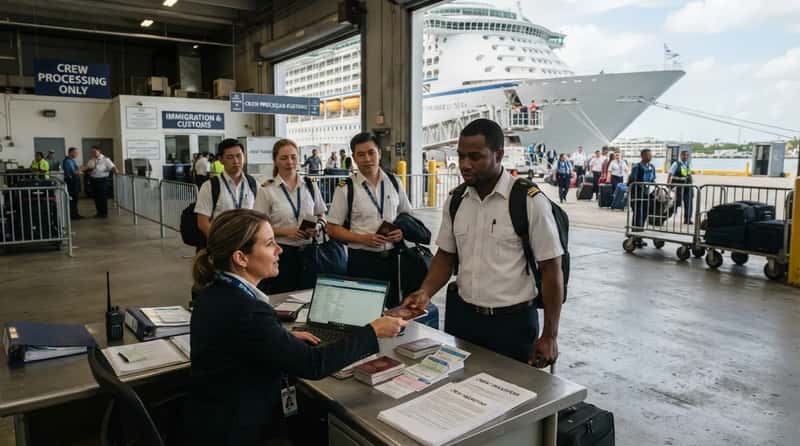
Agents arrange crew transportation, hotel accommodation, visa processing, and embarkation logistics – coordinating with manning agencies, consulates, and immigration authorities to keep crew rotations moving.
Passengers notice new faces at dinner service and assume it’s routine. What they don’t see is the port agent who spent the previous 48 hours clearing visas, booking transfers, and untangling paperwork for an entirely new shift of crew.
This happens at nearly every major port stop, completely off the passenger radar.
But crew changes are the clean version. The medical situations are far more complicated…
#8 – They Handle Medical Emergencies for Crew Members Left Behind

If a crew member is hospitalized after the ship sails, the port agent stays in contact with the hospital, the crew member, the shipowner, the P&I Club, and the consulate. Care may range from routine consultation to medical evacuation and repatriation.
The agent coordinates all of it, often across language barriers and layers of bureaucracy no tourist ever encounters.
Worth Knowing
- The hospital treating the crew member
- The ship owner and operator
- The P&I Club providing insurance coverage
- The consulate representing the crew member’s home country
This is a 24/7 responsibility that doesn’t end when the ship leaves. An agent may be managing a hospitalized crew member for days after the vessel has moved on – while simultaneously preparing for the next ship’s arrival. Most passengers have zero awareness this person exists, let alone what they’re carrying.
And when the situation turns truly grim, the agent’s job becomes something no job description can fully capture…
#7 – They Handle Onboard Deaths With Quiet, Unflinching Precision
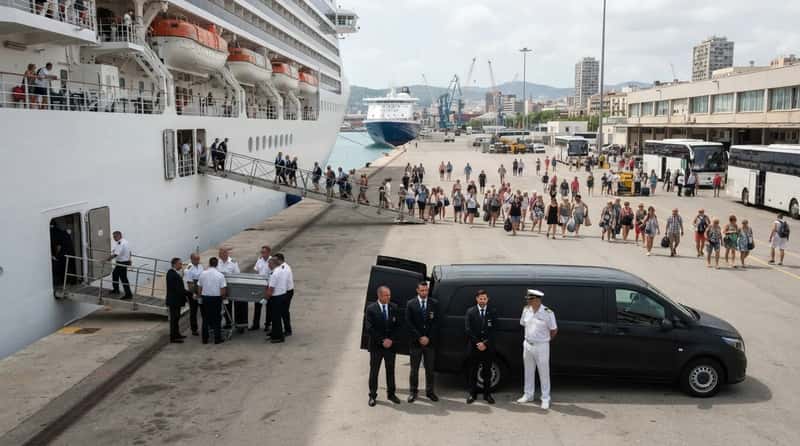
If a crew member dies, the port agent must move with extraordinary care – identifying religion, family requirements, consular procedures, and repatriation rules. Some countries have strict laws on embalming, medical certification, and export permits for deceased persons.
This is the part of the job that never makes the brochure. The port agent becomes, in effect, a grief coordinator and legal navigator – all while the rest of the operation continues around them.
Passengers are disembarking for a shore excursion a few hundred meters away, completely unaware. The agent handles it in silence, because that’s exactly what the job demands.
What comes after that kind of pressure? A completely different kind of problem – one involving language and law…
#6 – They Source Emergency Translators on the Spot
If language is a problem, the port agent arranges a translator – and in ports where the local language is far from English, think Japanese, Arabic, or Greek, this becomes a critical operational requirement, not a nice-to-have.
Port agents build these local networks over years in a single port. A good agent can produce a certified maritime translator within hours, even on a weekend, even in a small port most tourists couldn’t find on a map.
This hyper-local knowledge is exactly what makes a seasoned port agent irreplaceable. The agent’s local network doesn’t stop at translators, either…
#5 – They Coordinate Waste Disposal According to International Law
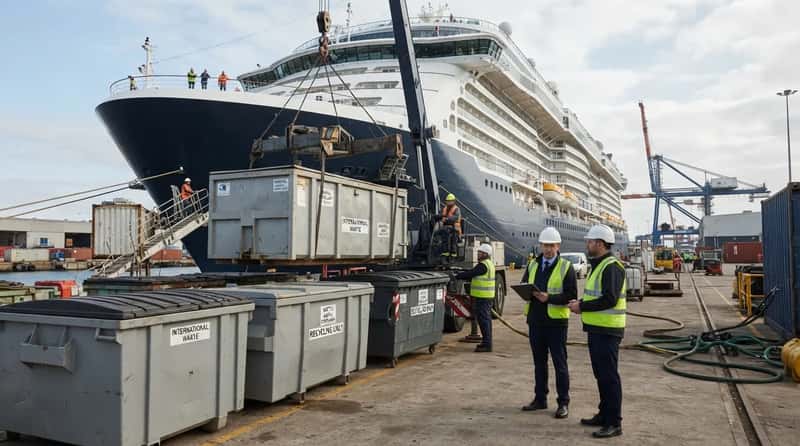
Agents facilitate the disposal of waste generated on the vessel in strict accordance with environmental regulations. This isn’t as simple as putting bags on a dock – international maritime law, specifically MARPOL, governs what ships can discharge, where, and how.
Illegal waste disposal can result in port bans, enormous fines, and damaging headlines – all outcomes a port agent actively prevents. They line up certified waste contractors, confirm compliant disposal records, and keep the ship clean both literally and legally.
Passengers focused on their next cocktail hour have no idea their vessel is managed through a web of environmental treaties. And that compliance extends into an area that surprises most people…
#4 – They Arrange Emergency Repairs While Passengers Are Ashore
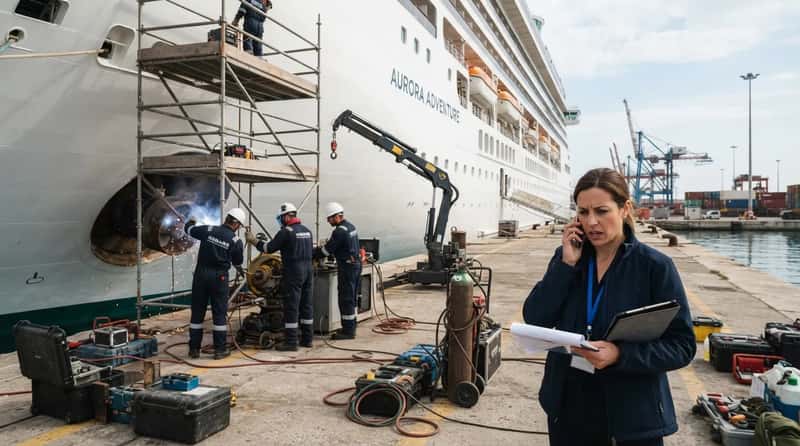
If the vessel needs repairs while in port, shipping agents source the services and coordinate with repair facilities. This has to happen inside the ship’s port window – sometimes just four to six hours.
Think about what that actually means. An agent might be sourcing an emergency marine engineer at 6 a.m. in a port where they don’t speak the language, negotiating a rate, arranging dockside access, and certifying the work – all before the passengers return from their tours.
A crew member might walk up with an item in hand saying, “we need 200 of these today before we sail.” That’s not unusual. That’s Thursday, and the agent delivers.
The pressure of port-window repairs is intense – but it pales next to what agents do when security is the concern…
#3 – They Support Port Security and Safety Protocols
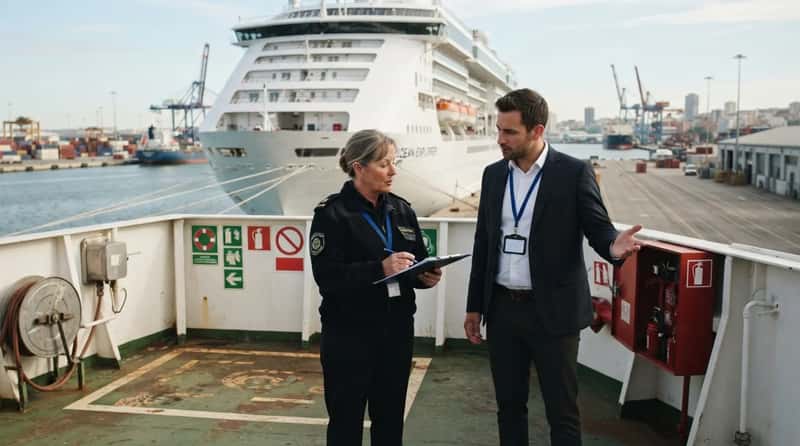
Shipping agents assist with security arrangements to protect the vessel and crew during the port stay, including liaising with port state control officers who have the power to detain a vessel that fails inspection.
The physical presence of the agent signals that responsibility is being taken seriously on the client’s behalf. Because legality is involved, port agents are required to have a clean criminal record – it’s not a formality, it’s a condition of the job.
A port state control detention can strand thousands of passengers and cost a cruise line millions of dollars per day. Part of the agent’s job is making sure that never happens, by knowing inspection standards cold and flagging problems before an inspector does.
But perhaps the most underrated function of all sits quietly at the intersection of emergency and passenger welfare…
#2 – They Manage the Entire Operation on 14-Hour Days, Every Time
During the summer season in busy ports, port agents can receive over 1,000 emails a day. That’s not hyperbole – that’s a documented reality from active agents in the field.
“You work 14-hour days, you are on your feet all the time solving problems.”
Kate Anderson, Port of Seattle port agent
Every ship is different, every port call carries new variables, and the margin for error is effectively zero.
There is no script for this job. A port agent might spend the morning clearing customs documents, the afternoon sourcing a spare engine part, and the evening coordinating a medical evacuation. Passengers rate the port on TripAdvisor – the agent just moves on to the next ship.
And the one function that holds everything together is saved for last…
#1 – They Are the Single Point of Contact for Every Moving Part
Port agents serve as liaisons between the ship and shore, coordinating services for the vessel and crew. That sentence sounds simple. The reality is anything but.
The agent arranges the berth, all port and husbandry services, the requirements of the master and crew, clearance with authorities, and every piece of documentation. In practical terms, they are the ship’s eyes, hands, and voice at the port – preparing for arrival, handling everything during the stay, and clearing the ship out on departure.
Every vendor, official, contractor, translator, doctor, and fuel supplier answers to one coordinator: the port agent. Remove that person and the entire port call doesn’t just get harder – it stops functioning.
Passengers walk off a ship into a beautiful port city and feel like the world was set up just for them. It was. They just don’t know who set it up.
The Bottom Line
Port agents are the most powerful invisible professionals in the cruise industry. They file documents before dawn, negotiate berths, manage medical crises, handle deaths, source translators, arrange emergency repairs, and coordinate every vendor – all before the gangway drops.
There is an entire invisible operation of port agents, terminal staff, and cruise line liaisons who spring into action the moment something goes wrong. They’re rarely thanked, rarely noticed, and most cruisers never learn their name.
At a Glance
- PortMiami welcomed a record 8.56 million cruise passengers in 2025 alone.
- The port logged a single-day record of 75,201 passengers on November 30, 2025.
- Seattle and Vancouver’s busiest weeks can see seven to nine ships arriving back to back.
Next time you walk off a ship into a smooth, effortless port day, remember: someone was already there at 4 a.m., making sure it looked that easy.
Bonus: The One Number That Can Save Your Entire Vacation
The single most useful thing in this entire article isn’t a fact – it’s an action you can take before you ever step off the ship.
Every port stop has a local port agent contact number tied to your ship for that specific day, and almost no passenger ever writes it down.
- Check the ship’s daily program (often called the Compass, Patter, or Freestyle Daily) for that day’s port information, or simply ask Guest Services the morning of your stop.
- Save that number in your phone under a name like “Port Emergency” before you disembark – not after you’re already lost or late.
- If you’re running behind, call that number immediately instead of trying to phone the ship directly; the agent can relay your status in real time.
- Confirm the exact all-aboard time versus the ship’s departure time – they are almost never the same, and that gap is your real safety margin.
This one habit turns the scariest possible travel moment – watching your ship from the wrong side of the dock – into a manageable phone call instead of a five-figure mistake.