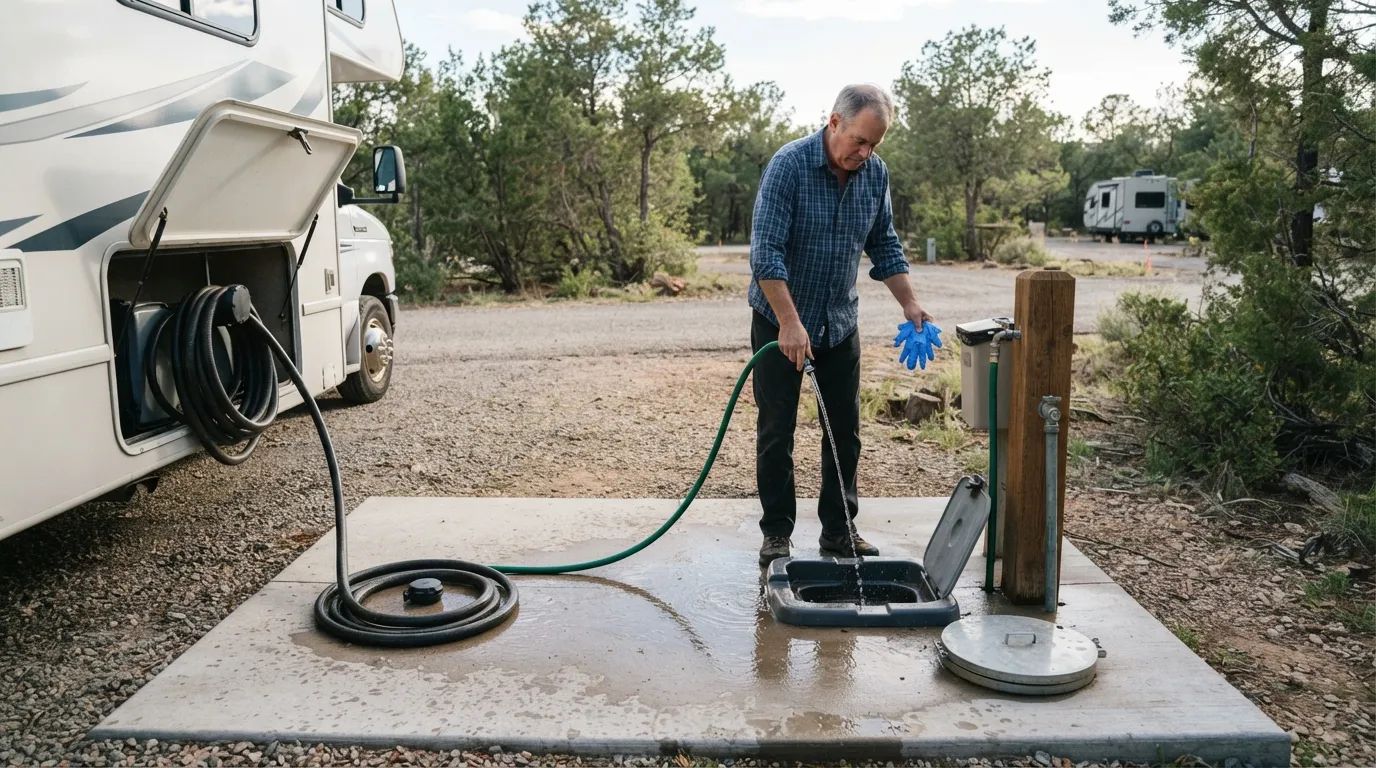
Most people assume a dump station visit gets judged once the valve opens. But campground guides and veteran RVers keep describing the same thing: the verdict is mostly in before the engine shuts off. Where you stop, what’s in your hands, and how you glance at the line all give you away.
The tells are smaller than you’d expect. A pair of gloves, a strip of duct tape, the way a hand reaches for a handle. One of them has nothing to do with the dump itself, and it might be the most telling of all.
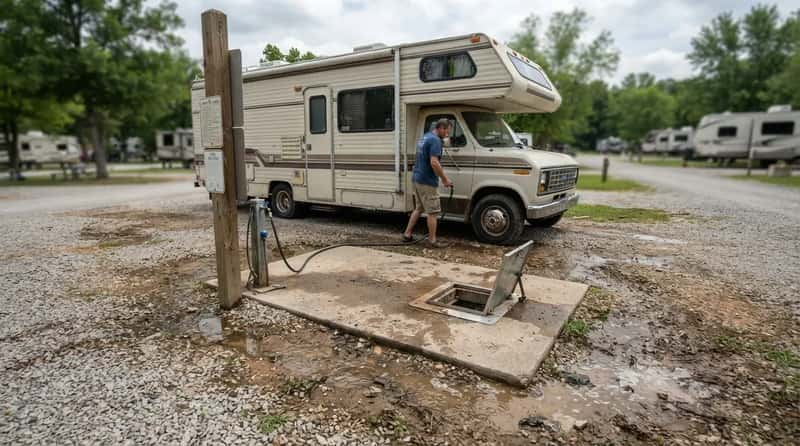
#17 – The Rig Rolls In Crooked and Nowhere Near the Inlet
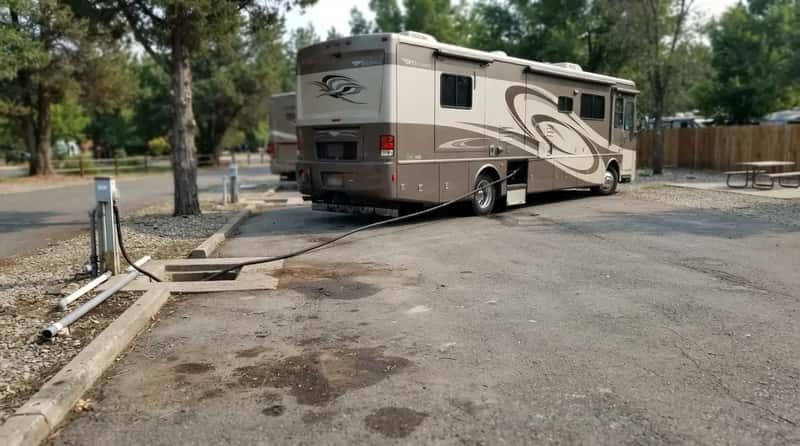
The first giveaway is the parking job. A dump inlet sits in a fixed spot in the pad, and your RV’s outlet sits on one side of the rig. When the two don’t line up, the hose has to stretch, kink, or dip, and a hose pulled tight is the one most likely to pop off its fitting. Now picture that happening with a full black tank.
A clean approach looks boring: stop close, outlet roughly lined up, nothing blocking the lane. Many stations have more than one bay, so sprawl across two and everyone behind you notices instantly. And that’s before anyone has touched a single thing. The next tell happens at hand level, at #16…
#16 – Gloves Are Already on Before the Door Even Opens
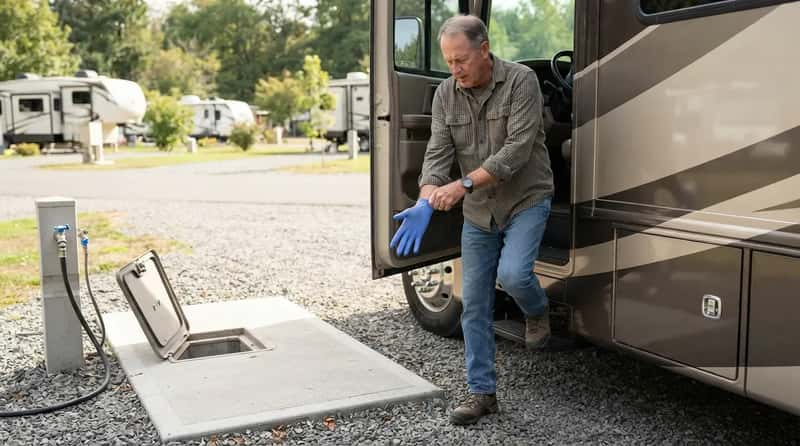
Seasoned RVers don’t fumble for gloves at the inlet. They pull them on while still stepping down from the cab. It’s a small move, but it tells a manager this person has done this before and isn’t about to touch the spigot bare-handed.
The reason is simple. Wastewater from black and gray tanks contains bacteria, and gloves protect you when you handle the hose and the dump valve. The part managers say they dread isn’t the dumping. It’s the used glove left lying on the ground. The people who glove up early are usually the same ones who pocket them afterward.
But gloves are only the opening act. What comes out of the storage bay next is more revealing, at #15…
#15 – That Clear Elbow Adapter Is Quietly Doing a Lot of Work
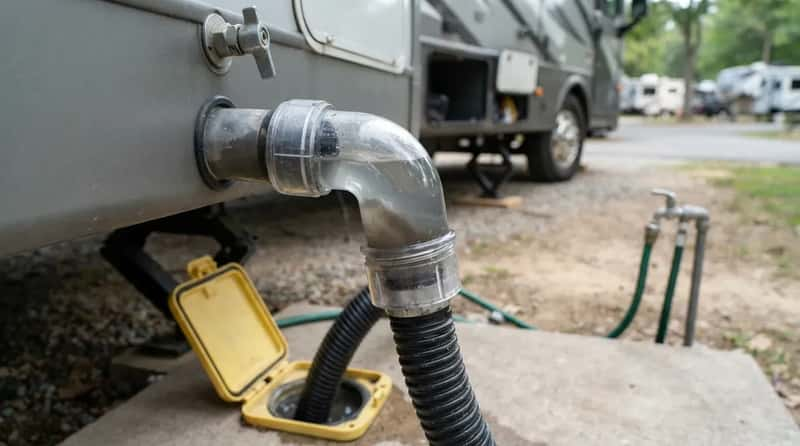
A clear plastic fitting at the RV end of the hose looks like nothing. But it lets you see when the tank is truly empty, so nobody guesses and nobody pulls the valve early. To a manager watching the bay, it reads as a camper who came prepared.
Quick Compare
- Clear elbow: You can see the flow run clear, so there’s no guessing.
- Sound and flow: It’s free, but it takes experience to read.
- Either way: Gloves and patience still do most of the work.
Here’s where opinions split. Some RVers call the clear elbow the best ten dollars they ever spent. Others say it’s overrated, since the sound and flow tell you the same thing. Either way, one RV guide calls a sewer hose kit with a clear elbow a must-have, and it lists gloves and cleaning supplies right alongside it. The hose itself tells its own story next, at #14…
#14 – The Hose Looks Patched, Taped, or Suspiciously Short
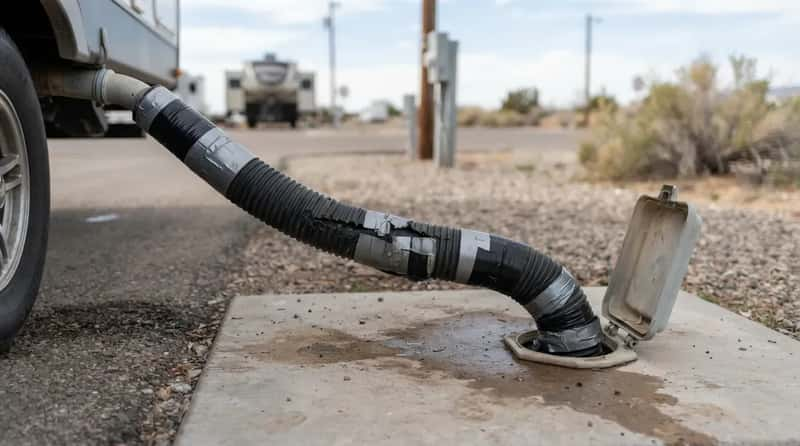
A sewer hose is the one piece of gear a manager can judge from twenty feet away. Cracks, duct tape, and mismatched fittings all hint at a leak waiting to happen. At a shared station, a leak isn’t just gross. It becomes a cleanup job for someone else.
The advice from RV guides is blunt: make sure hose connections are tight and secure before emptying, because a spill at a community station contaminates the area. A hose that’s too short forces people to drag the rig into awkward positions, which loops right back to the crooked parking problem.
Still, some managers don’t look at the hose first. They look at the ground, at #13…
#13 – Everyone Quietly Reads the Pad Before Touching Anything
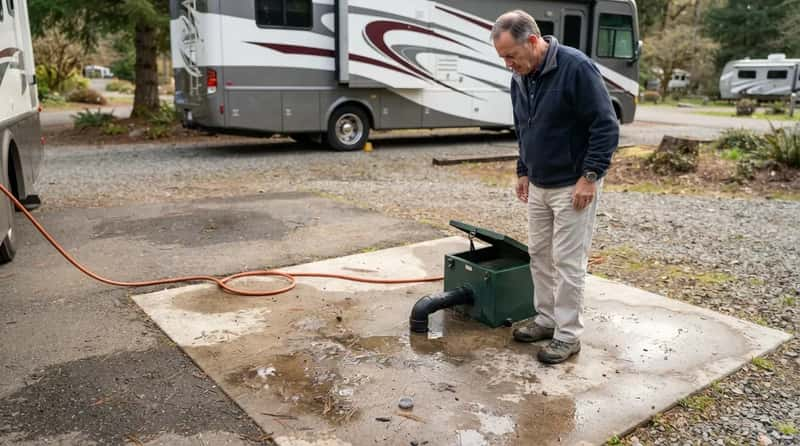
A wet concrete pad tells the whole history of the previous visitor. Puddles, stray trash, and splash marks all say the last user skipped the cleanup. Smart campers read the pad the way you’d read a public restroom before you commit.
The standard etiquette is the “Camper’s Golden Rule”: leave the place in as good a condition as you found it, or better. Some RVers even pack a small squeegee or extra rinse water to clear the pad for the next person. Managers rarely see it happen, which is exactly why they appreciate it. Speaking of germs, what people do with the spigot divides camps even more, at #12…
#12 – Their First Move Is Wiping Down the Water Spigot
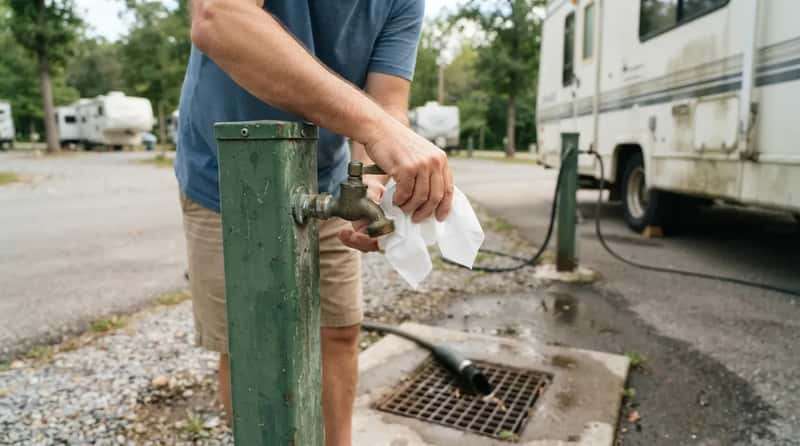
The spigot at a dump station is one of the most handled, least cleaned surfaces in a campground. Experienced RVers know it, and many wipe it down before they use it. A manager who sees someone pull out a sanitizing wipe knows they’re dealing with a pro.
One guide puts it plainly: you can’t know whether the last user was careful, so clean the tap before and after use. Another suggests a bleach solution spray. Others skip the spigot entirely and bring their own rinse hose, which also avoids the non-potable water that stations typically post warnings about. The debate has no clear winner, and RV forums argue about it constantly.
That’s the hygiene side. Now the mechanical side, which shows up faster than you’d think, at #11…
#11 – A Drip Appears Before the Valve Is Even Opened
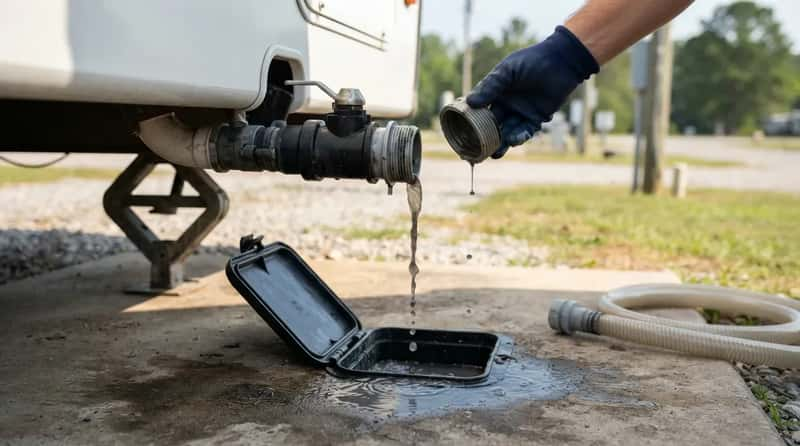
Here’s a tell managers recognize immediately. The camper uncaps the outlet and wastewater leaks out before anyone has pulled a handle. That means the gate valve seal is worn and has probably been dripping the whole drive in.
It’s not rare. The more you use your RV, the more those valve seals wear and let wastewater seep through. The valve is the only thing standing between your tank and the road, and a failing one can leave a trail on the campground lanes. That’s why experienced owners keep a cap and a catch bucket handy.
If the valve is the quiet problem, the line behind them is the loud one, at #10…
#10 – They Start Prepping While Still Sitting in the Line
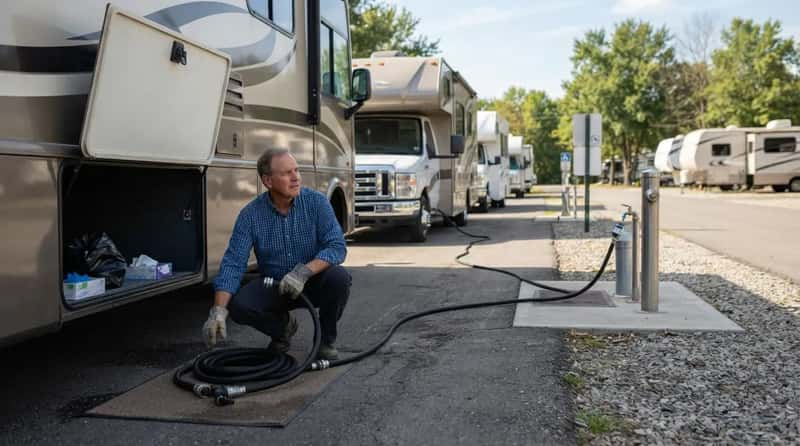
When a line forms, the smartest RVers don’t wait for their turn to start getting ready. They pull out the hose, the gloves, and the fittings while still in the queue. That’s the difference between a two-minute stop and a ten-minute one.
Worth Knowing
- Lay out the hose, gloves, and fittings while the rig ahead of you is still dumping.
- Keep a trash bag within reach so used gloves have somewhere to go.
- Save the tank chemicals for after you’ve pulled out of the bay.
- Stay in your place in line, even if another lane looks tempting.
Guides spell it out: if you have to wait, get your dumping equipment ready so you can move fast when it’s your turn. Another adds that you should wait patiently and never cut in. Cutting the line is the fastest way to make a stranger furious in a campground. Managers watch who handles a queue calmly, and where you park while you wait matters just as much, at #9…
#9 – The Line Has Swallowed the Campground Road
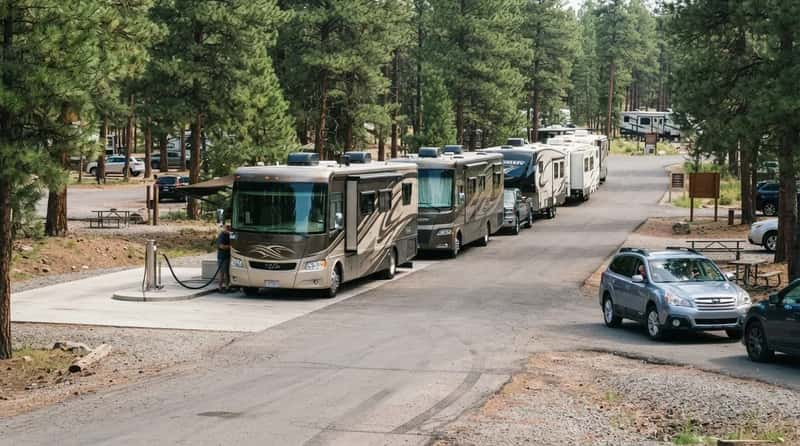
A dump station line can quietly become a traffic jam. Long rigs queue up and spill onto the main campground road, blocking people who are trying to arrive or leave. Managers see this and often have to step in.
One RV guide’s golden rule is simple: when waiting in line, make sure your rig isn’t blocking other vehicles from using the campground roads. A big motorhome with a tow car can take up far more road than most people realize. If the line is long, some managers would rather you come back later than create gridlock.
Waiting is one thing. What you do when you reach the front is another, at #8…
#8 – A Hand Is Already Under the Fitting When the Hose Comes Off
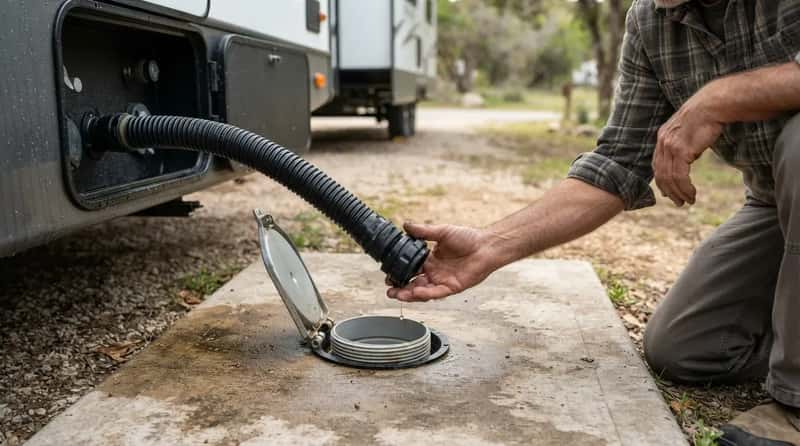
Disconnecting the hose is the moment most spills happen. Rookies pull the hose off and watch the drips land on the pad. Veterans already have a hand under the connection.
The recommended move is to hold the twist-lock fitting under the dump port to catch any liquid still working its way out. It’s a tiny technique with real consequences. Most of the mess at a dump station comes from the final ten seconds, not the dump itself. A manager who sees someone cup the fitting knows the pad is going to stay clean. Next is a habit that sounds trivial but isn’t, at #7…
#7 – They Don’t Stop to Mix Chemicals While Cars Are Waiting
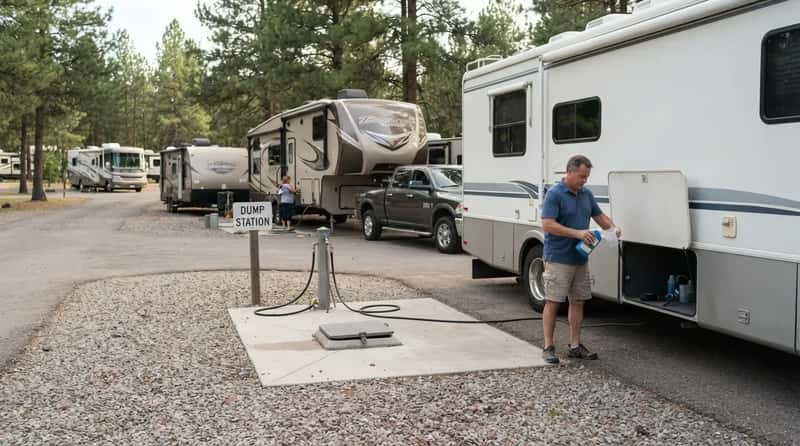
Dumping is quick. Pouring tank treatments can eat up a surprising amount of time. If the driver starts measuring chemicals at the bay with a line behind them, managers take note, and so does everyone in the queue.
The guidance from RV campers is simple. If you’re alone, add treatments right there. If others are waiting, pull ahead into a parking area and add them after you’ve moved. It’s a small courtesy that keeps the whole queue moving. People who do it rarely realize anyone noticed, but the folks behind them absolutely did.
But the biggest timing mistake happens long before arrival, at #6…
#6 – The Tank Is Full to the Brim and the Driver Looks Panicked
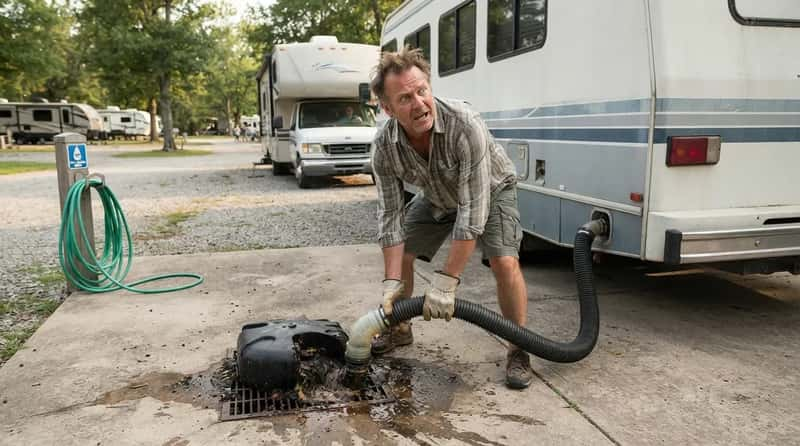
Some RVers show up with a tank that’s been ignored for days. They hurry, they skip steps, and they aren’t in the mood to wait behind anyone. Managers can spot that rushed energy from the entrance.
Fast Facts
- Most RVs have separate tanks: black for toilet waste, gray for sink and shower water.
- Built-in tank monitors can misread when residue coats the sensors, so don’t trust them blindly.
- A planned dump at a quiet hour usually beats a desperate one at checkout rush.
- Black goes first and gray goes last, which comes up again at #5.
Guides recommend the opposite of waiting: don’t wait until the black tank is completely full, and monitor your tanks so you can plan ahead. A last-minute dump is where most of the sloppy decisions get made. Planning a stop also means picking a time when the station isn’t packed. Calm arrivals usually mean calm departures. Now for the step that trips up newcomers most, at #5…
#5 – Their Hand Goes Straight to the Black Valve First
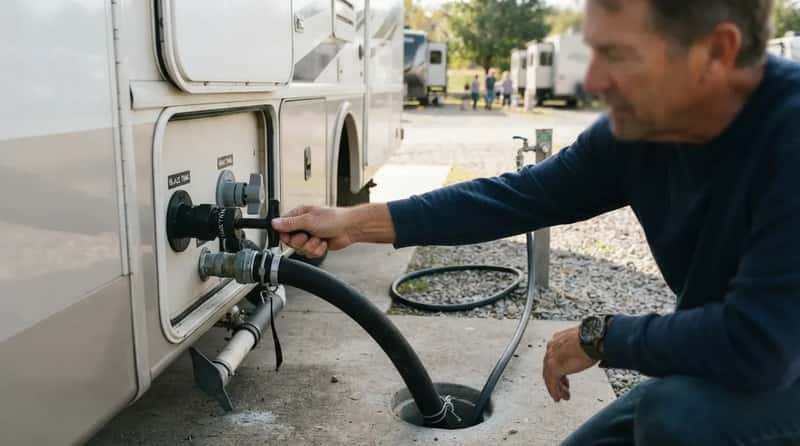
Order matters, and managers know it. The black tank, which holds toilet waste, gets opened first. The gray tank follows, and it rinses the hose on the way out.
RV Life says it directly: pull the lever to dump your black water first. Then open the gray valve last, which gives the hose a good rinse and helps if the station’s rinse water is turned off. Reverse the order and you lose the free hose rinse. Watching someone reach for the right handle without thinking is a quiet signal of experience.
And then comes the habit that divides RVers more than any other, at #4…
#4 – The Full Tank Flush That Starts Arguments in Line
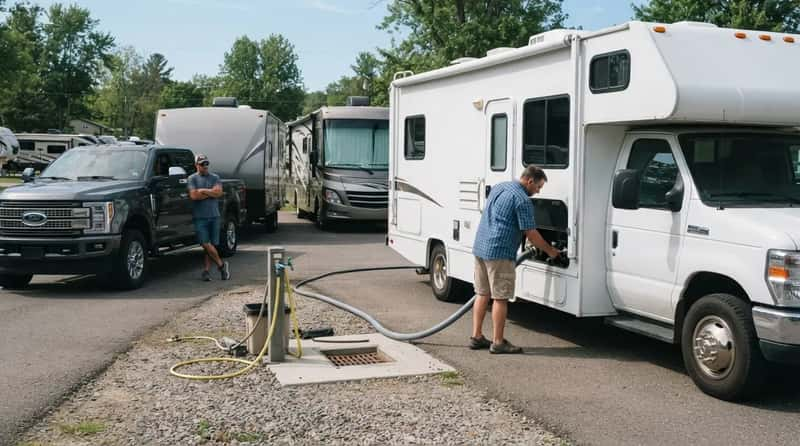
Some campers run a full rinse of the black tank, which takes extra time and water. At a busy station, that can turn a quick stop into a long one. Managers see the standoff coming before anyone else does.
Here’s the controversial take. One RV site argues that a full flush of tanks and pipes may be frowned upon when others are waiting. Its fix is to wait for an uncrowded station or do it at a full-hookup campsite. Others say skipping the flush is how clogs and odors start. The truth is there’s no official rule, just a line of impatient people deciding for you.
Then there’s the clue that gives away problems before the rig even stops, at #3…
#3 – A Trail of Drips Follows the Rig Into the Station
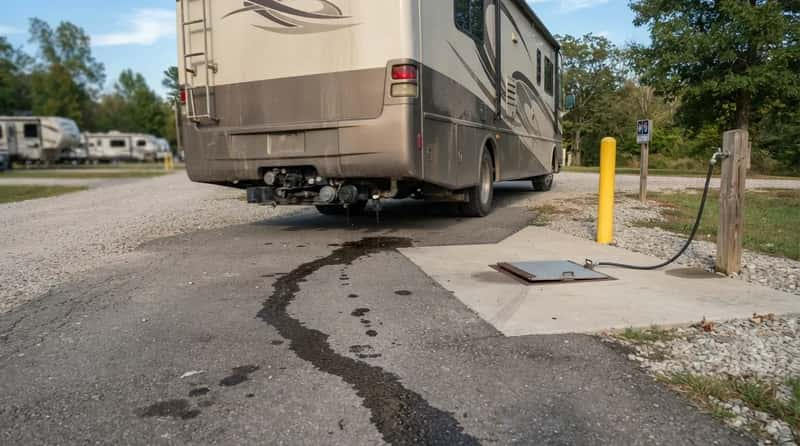
Managers don’t just watch the dump. They watch the arrival. A wet streak under the rig, or a smell that arrives before the vehicle does, usually points to a leaking valve or a loose fitting.
At a Glance
- Gate valve seals: The most common source of slow seepage.
- Hose fittings: Loose or cracked connections drip at the joint.
- Outlet cap: A missing or worn cap lets drops escape on the road.
- Wet streak or smell: The earliest sign a manager can spot from the entrance.
Camping guides recommend a pre-trip check: inspect your dump valves and connections for leaks or damage, because leaks can be hazardous and contaminate the environment. A leak at a shared station becomes a problem for every camper who walks through it afterward. The fix is usually cheap, and nobody’s judging a repair. They’re judging the choice to keep driving with the problem. One more sign involves the rules themselves, at #2…
#2 – Someone Treats the Station Like It Has No Rules
At many campgrounds, the dump station is a paid service with posted rules. Managers watch for people who ignore the signs, skip the fee, or try to dump somewhere they shouldn’t. It usually takes only a few seconds to spot.
One state RV association puts it clearly: you may need to pay a fee, and you should never dump RV waste on campground property. Dumping on the ground, even a little, can get a camper kicked out. The rules exist because a bad dump can contaminate nearby areas. There’s a bigger issue too: good etiquette helps keep dump station access available for everyone.
But the strongest signal of all has nothing to do with the dump itself, at #1…
#1 – They Scan the Pad Before Leaving and Pack Out the Mess
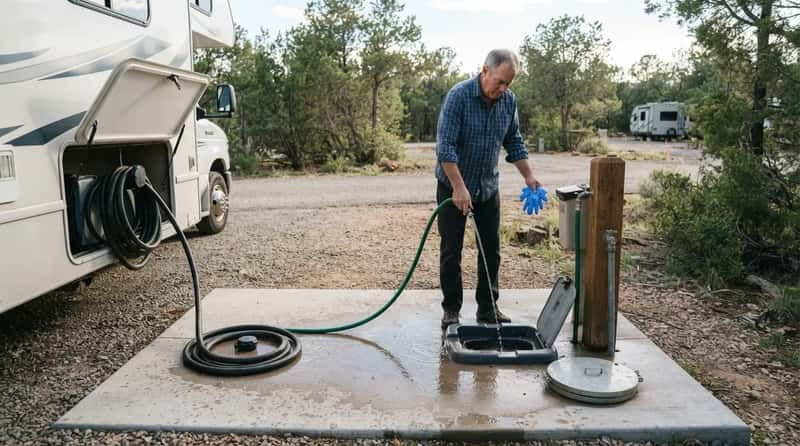
Here’s the final tell, and it happens after the work is done. Before pulling away, the best campers do a slow scan of the pad. They collect the gloves, wipe the spigot, and rinse away any spill. It takes less than a minute, and it’s the part everyone else sees and remembers.
The guidance is nearly unanimous across RV sources: don’t leave foul pools behind, and pack away your discarded gloves. Take all debris to a trash receptacle and leave nothing behind. The last thirty seconds say more than the first thirty. That’s what turns a dump station from a chore into a place people want to keep open.
Nothing on this list takes special skill. It takes a tight hose, a gloved hand, a quick look at the pad, and a little awareness of the people waiting behind you.
A dump station is the one spot in a campground where strangers share the least glamorous chore in RVing. Managers aren’t grading anyone. They’re just hoping the next rig leaves it a little cleaner than the last one did.