You’d expect someone who has been traveling for 50 years to haul guidebooks, a camera, a giant umbrella and three spare sweaters. Open their day bag and it’s almost insulting how small it is. Every item inside earned its spot because a trip once went sideways without it.
None of it is flashy, and a few picks will surprise you. One item costs less than a coffee and saves more trips than any gadget. Another is something younger travelers leave behind at the hotel. Here’s the countdown, ending with the one that matters most.
#17 – The Photo ID That Can Now Cost You $45 If You Forget It
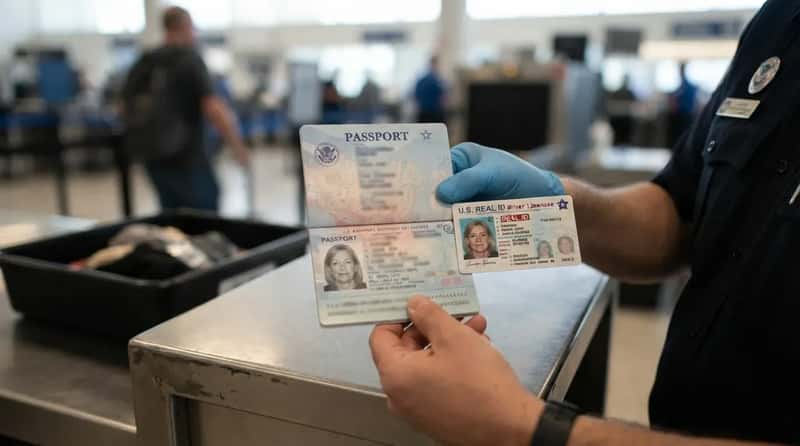
Experienced travelers pack the dull stuff first, and a valid photo ID tops that list. Since May 7, 2025, TSA has required travelers 18 and older to show a REAL ID-compliant card or another approved ID, such as a passport. That old license in your wallet may not get you through the checkpoint anymore.
The penalty for showing up without one got steeper in 2026. Starting Feb. 1, 2026, travelers without a REAL ID or passport face a $45 fee for an alternate identity check at the airport. Veterans keep their ID in the same inside pocket on every trip, so it never turns into a frantic pat-down of every pocket in the security line.
#16 – The Pills Still in Their Original Bottles
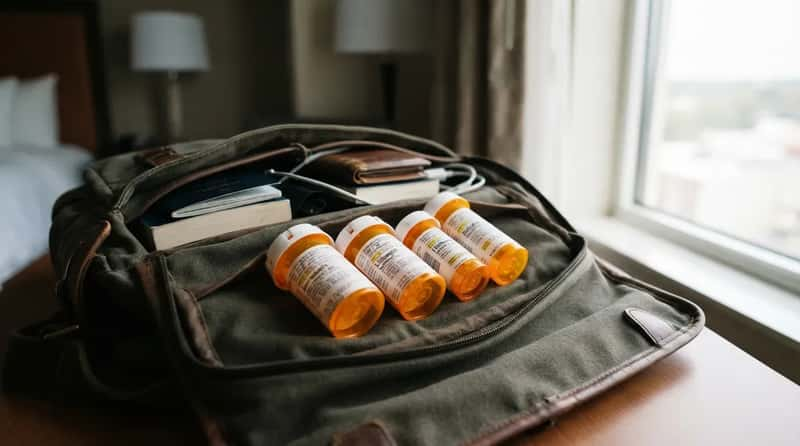
Ask a long-time traveler what they’d never put in a checked suitcase, and prescriptions come up fast. They keep medications in the day bag, in the original labeled containers. A lost suitcase is an annoyance. Lost blood pressure pills in a foreign city are a genuine emergency.
Worth Knowing
- TSA allows medically necessary pills in carry-on bags, and it doesn’t cap the quantity.
- Liquid medications can exceed the usual 3.4-ounce limit in reasonable amounts, but you should tell the officer at screening.
- Labeled bottles make questions at security and at foreign borders much quicker to answer.
- Some countries restrict certain prescriptions, so veterans check the destination’s rules before packing.
Most also pack an extra day or two of doses, in case a flight is canceled or a train strands them overnight. Many add a short printed list of medication names and doses, since brand names can differ from country to country. That’s cheap insurance against a pharmacy counter where nobody recognizes the label. The next item is a gadget that has quietly become the most argued-over thing in the bag.
#15 – The Power Bank With Rules Nobody Reads
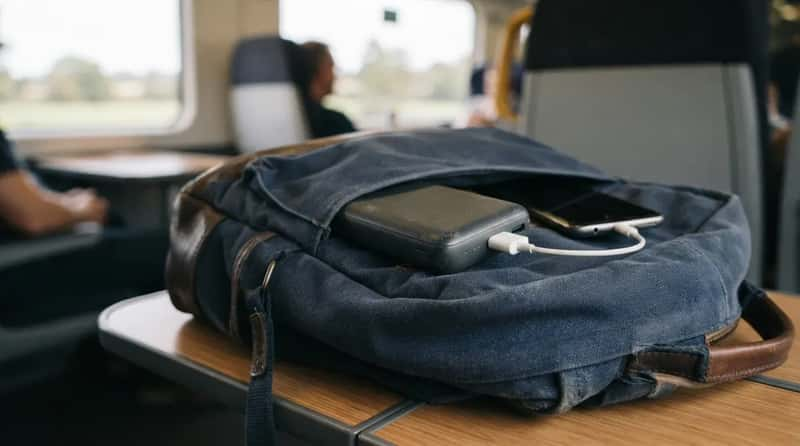
A dead phone can mean no boarding pass, no map and no way to reach the hotel. So a small power bank rides in the day bag, never in a checked bag. Power banks and spare lithium batteries are prohibited in checked baggage and must be carried on or with you.
The fine print keeps shifting, too. Several U.S. airlines have tightened their own rules on how many power banks you can carry and how you can use them in flight. Veterans bring one clearly labeled bank and check their airline’s policy before they leave home. The next item is much simpler, and it’s the one you’ll spot in every terminal.
#14 – The Empty Water Bottle That Beats Every Airport Kiosk

Walk through any terminal and you can pick out the seasoned travelers. They’re the ones carrying a bottle that’s completely empty at security. They fill it at a fountain on the other side and walk past the newsstand, where a single bottle can cost several dollars.
Cabin air is notoriously dry, and long travel days wear everyone down. Most veterans sip steadily instead of gulping at the gate. Many also use the bottle as a quiet reminder to take medications on schedule. And when the weather turns cold, the next item is the one that saves the day.
#13 – The Thin Layer Everyone Else Regrets Leaving Behind

Planes, trains and museums run cold, often when you least expect it. Seasoned travelers know this, so a lightweight scarf, cardigan or packable jacket lives in the day bag year-round. It weighs almost nothing, and it turns a freezing seat into a tolerable one.
Here’s an opinion that gets heated: many veterans call the bulky neck pillow one of the most overrated travel items ever sold. They’d rather roll that scarf into a makeshift cushion and save the space. Plenty of younger travelers swear by their pillows, so the debate is real. Either way, the scarf wins on versatility. The next item has been on doctors’ minds for years.
#12 – The Boring-Looking Socks That Work Overtime
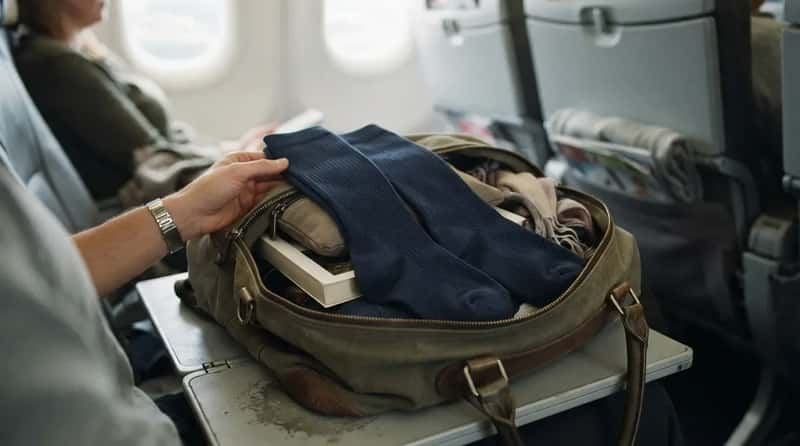
On long flights and train rides, a lot of experienced travelers slip on compression socks. They aren’t a fashion statement. They’re a habit picked up after one too many swollen-ankle arrivals. Many pair them with a rule of standing up and walking the aisle every hour or two.
Anyone with circulation concerns should ask their own doctor first, and veterans do exactly that before a big trip. They pack the socks in the day bag so they can change before boarding, not after the damage is done. The next item looks trivial until the afternoon it isn’t.
#11 – The Backup Reading Glasses That Save Whole Afternoons
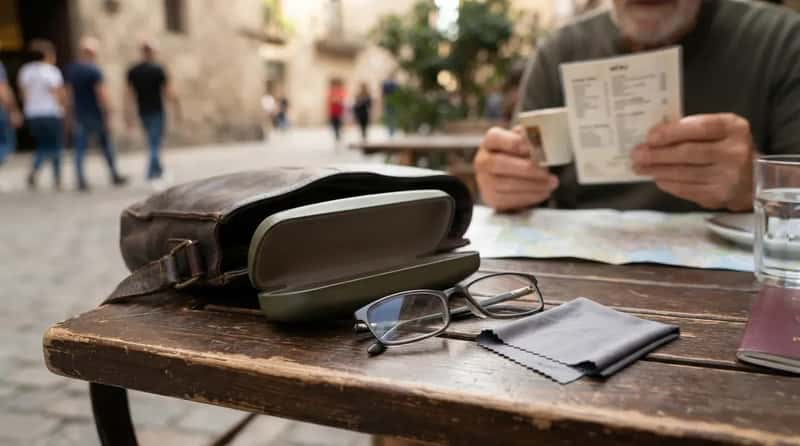
Menus, ferry schedules, medication labels and train boards are all printed in tiny type. One cracked or lost pair of glasses can erase an entire day of a trip. So the veterans carry a second pair, often a cheap one, tucked in a hard case.
The hard case matters almost as much as the glasses. Soft pouches get crushed in a crowded bag, and a bent frame is nearly as useless as a missing pair. Many also tuck a small microfiber cloth inside. Now for a backup plan that predates every smartphone.
#10 – The Paper Itinerary That Outlasts a Dead Phone
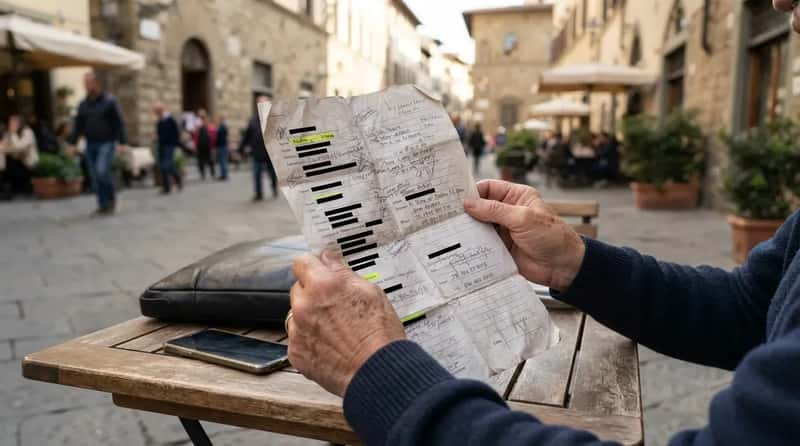
Yes, they own smartphones. But seasoned travelers print the key details anyway: hotel address, booking numbers, flight times and a phone number or two. A dead battery, a cracked screen or a stolen phone shouldn’t leave them stranded on a street corner.
Quick Compare
- Phone: holds everything, but needs battery, signal and a passcode.
- Paper: holds less, but works in a dead zone, in the rain and in a stranger’s hands.
- The veteran’s mix: phone for maps and tickets, paper for the address and emergency numbers.
Many also write the hotel’s name and address in the local language when it’s easy to do. Handing a card to a taxi driver beats trying to pronounce an unfamiliar street name. It folds into a pocket, needs no signal and never asks for a password. Next up is the item that starts the biggest food fight in the carry-on world.
#9 – The Snack That Beats the Airport Food Court
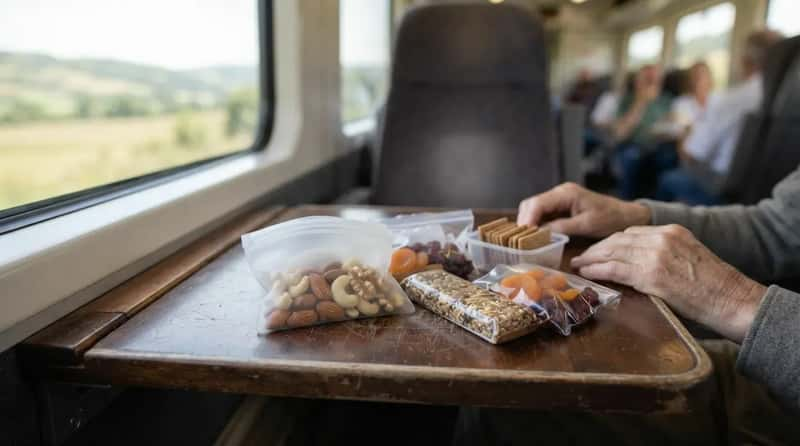
Delays happen, and airport food is expensive and often disappointing. So veterans carry a small stash of sturdy snacks such as nuts, crackers, a protein bar or dried fruit. Nothing messy, and nothing that melts or stinks up a train car.
Anyone who manages blood sugar or takes medication with food has an even stronger reason to pack their own. A missed meal on a stuck tarmac isn’t just uncomfortable. Pros also check food rules before crossing borders, since some countries restrict fresh items. The next one is small enough to forget, and big enough to miss.
#8 – The Wipes That Make Every Seat Safer
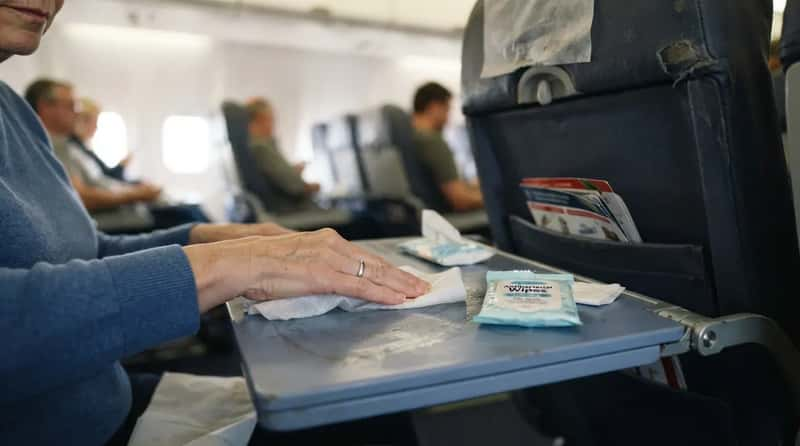
Tray tables, armrests and café tables are rarely as clean as they look. A small pack of travel wipes lets seasoned travelers deal with that in seconds. It’s a tiny item that gets used constantly.
The wipes do more than germ duty. They handle coffee spills, sticky fingers and grimy sunglasses. A resealable pouch keeps them from drying out. Many pros also tuck in a few tissues, since public restrooms in many countries run out of paper without warning. It’s a humble trio, but you’ll notice the moment it’s missing. The next item handles a different kind of mess.
#7 – The Tiny First-Aid Kit That Stops a Blister From Ruining Day Three
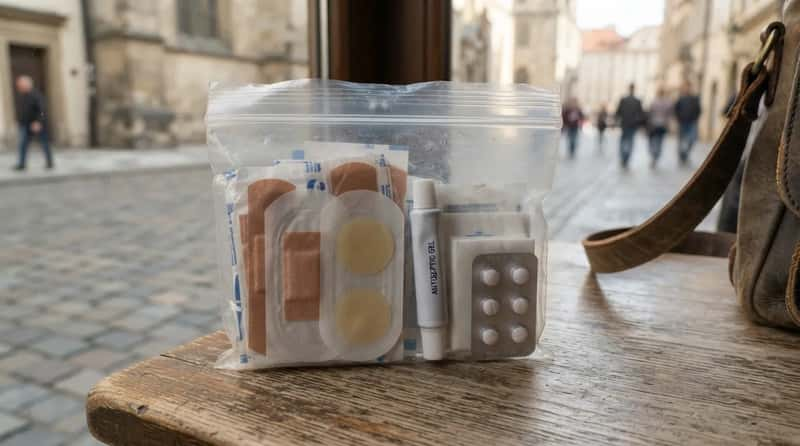
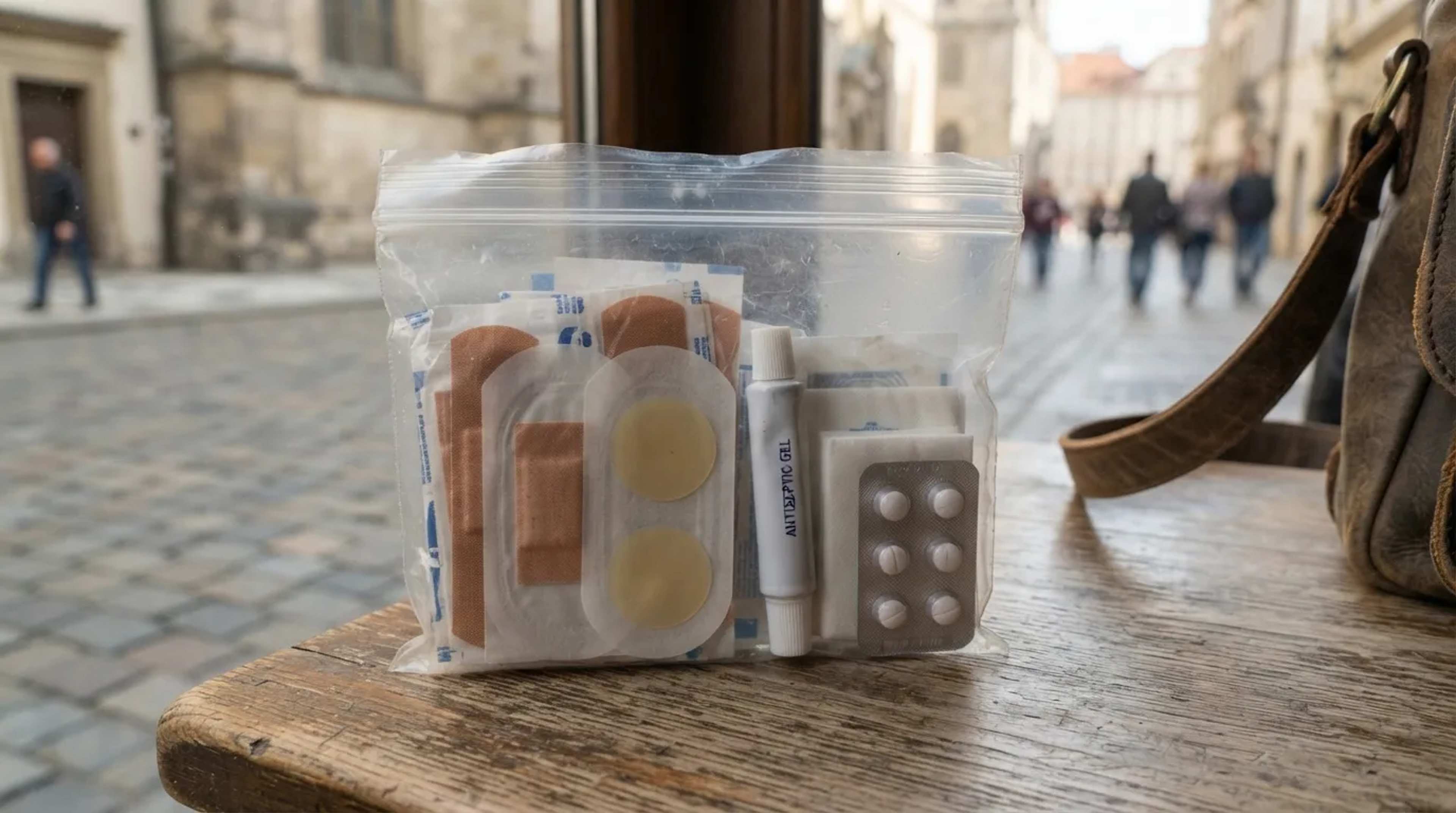
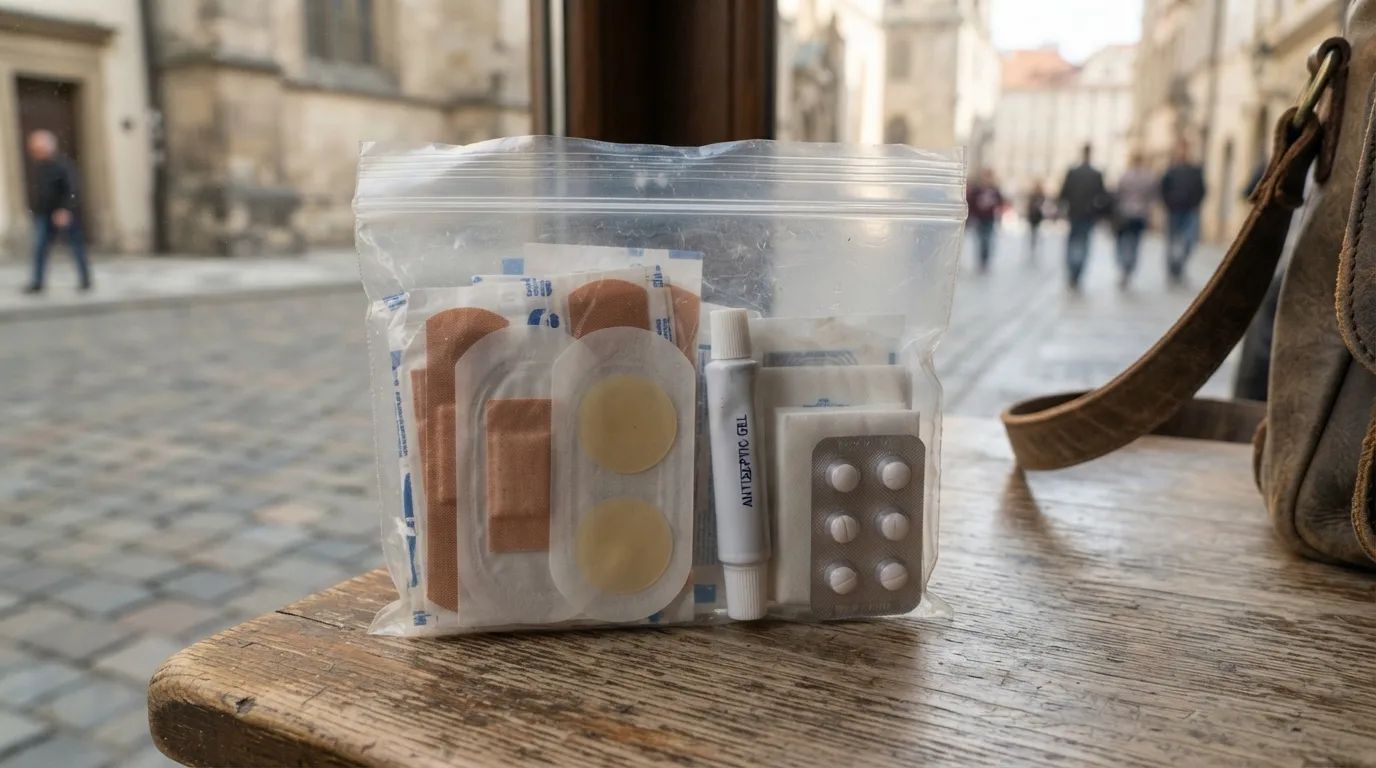
Blisters end more sightseeing days than any dramatic injury. So seasoned travelers carry a few adhesive bandages, blister pads and a small tube of antiseptic. They add whatever pain reliever they already use at home.
The kit stays small on purpose. Everything fits in a zip bag and weighs almost nothing. They skip the giant pharmacy-in-a-box that many first-time travelers pack. A few carefully chosen supplies do the job, and the next item costs less than all of them combined.
#6 – The Cheap Pen That Beats Every Form

It seems almost silly, but a pen is one of the most-requested items on any trip. Arrival cards, customs forms, hotel registrations and museum sign-ins all need one. Everyone else is scrambling for a borrowed pen while the veteran already has theirs out.
A small pen also doubles as a way to jot down a phone number, a taxi price or a train platform. Paper still wins when a screen is awkward to read in bright sun or a crowd. Veterans clip it to a small notebook so neither gets lost. The next item is about money, and the trick isn’t what you’d guess.
#5 – The Cash Stash Hidden Away From the Wallet
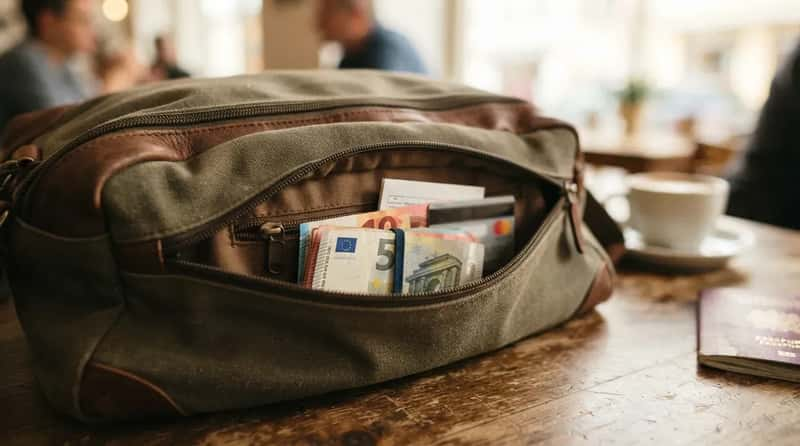
Seasoned travelers rarely rely on a single card. They carry a modest amount of cash plus a backup card, and they store them separately from the main wallet. If one gets lost or stolen, the trip doesn’t collapse.
Small bills matter more than large ones. Tips, tolls, market stalls and small cafés often can’t break a big note. Most pros also tell their bank about foreign travel and keep card numbers somewhere safe, separate from the cards themselves. The next item has nothing to do with money, and everything to do with the sky.
#4 – The Foldable Rain Layer That Weighs Less Than a Banana
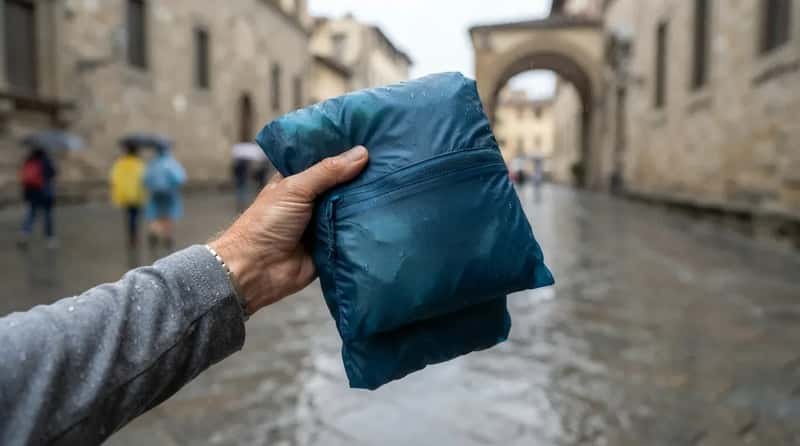
Weather changes fast, and a soaked traveler is a miserable one. So a thin, packable rain jacket or compact umbrella stays folded in the bag. It takes up almost no room and earns its spot the first time clouds roll in.
Why It Stands Out
- It protects the rest of the bag too, from paper tickets to that carefully packed cardigan.
- It doubles as a windbreaker on a breezy ferry deck or a chilly platform.
- It turns a surprise downpour into a short pause instead of a canceled afternoon.
Veterans choose a jacket that packs into its own pocket. A cheap poncho works too. The goal is to keep sightseeing instead of retreating to a café for two hours. Wet clothes can also turn a mild chill into a long, cranky afternoon. Now for the digital side of the bag, where the real prep happens before the trip even starts.
#3 – The Phone That’s Been Prepared Before Takeoff
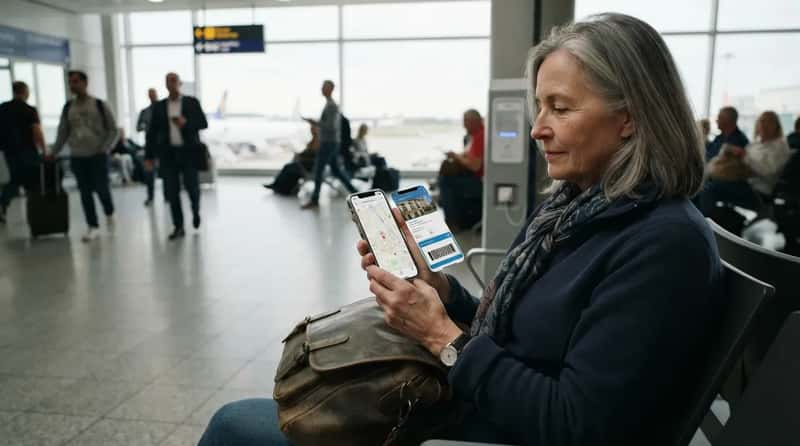
The phone is in the bag, but the real trick is what’s already on it. Before leaving, veterans download offline maps, save boarding passes and screenshot key confirmations. A weak signal or a jammed airport network then stops being a crisis.
Many also load a few books, podcasts or playlists for long waits. Some switch on a large-print mode so screens are easier to read. It’s all about being ready before something goes wrong. The next item is the one most tourists never think about until a clinic hands them a bill.
#2 – The Insurance Details Most Travelers Forget Until It’s Too Late
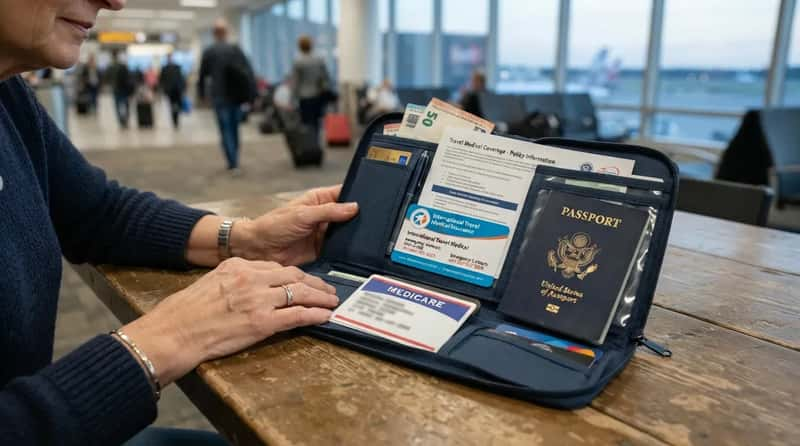
Here’s what catches people off guard. Original Medicare generally doesn’t cover health care outside the United States, which surprises many first-time international travelers. So veterans carry their insurance details, plus travel medical coverage information, in the bag.
At a Glance
- Original Medicare: generally no coverage for care outside the U.S.
- Medigap Plans C, D, F, G, M and N: pay 80% of emergency care abroad after a $250 annual deductible.
- The catch: the emergency must begin in the first 60 days of a trip, with a $50,000 lifetime cap.
- The workaround: many travelers add a separate travel medical policy, especially for long trips.
That usually means a policy number, a claims phone line and the name of the provider, kept on paper and on the phone. When a clinic visit happens in another country, they aren’t hunting through emails for details. Anyone traveling abroad should check their own plan before leaving, since coverage varies. And the last item is the one that speaks up when you can’t.
#1 – The Small Card That Speaks for You in an Emergency
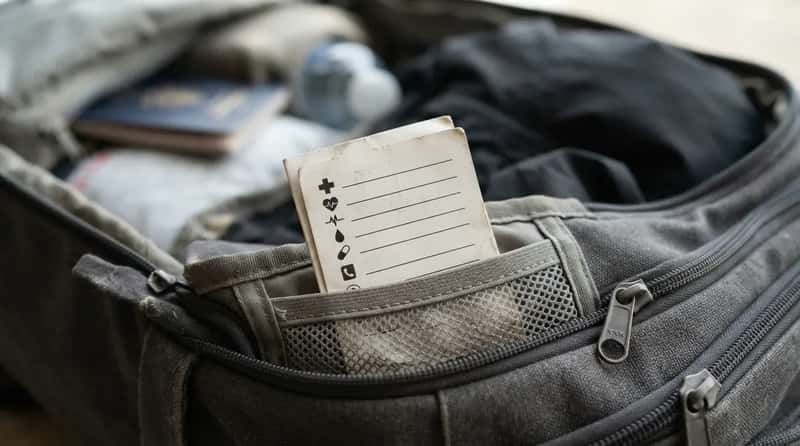
The single most valuable thing in the bag is a folded card with the essentials. It lists allergies, medical conditions, medications, blood type if known, and an emergency contact. If something happens and the traveler can’t speak, the card does the talking.
Many veterans tell their travel companions exactly where it lives. They keep it in the same pocket every time, and some translate the key words into the local language. It costs nothing, takes ten minutes to make and weighs less than a postcard. It’s the one item they’d never leave behind.
Look at the list again and you’ll notice something. Almost nothing in that bag is exciting. No gadget, no gimmick, no giant suitcase. Every item solves a small problem before it can turn into a big one, and the people who carry them learned each lesson the hard way.