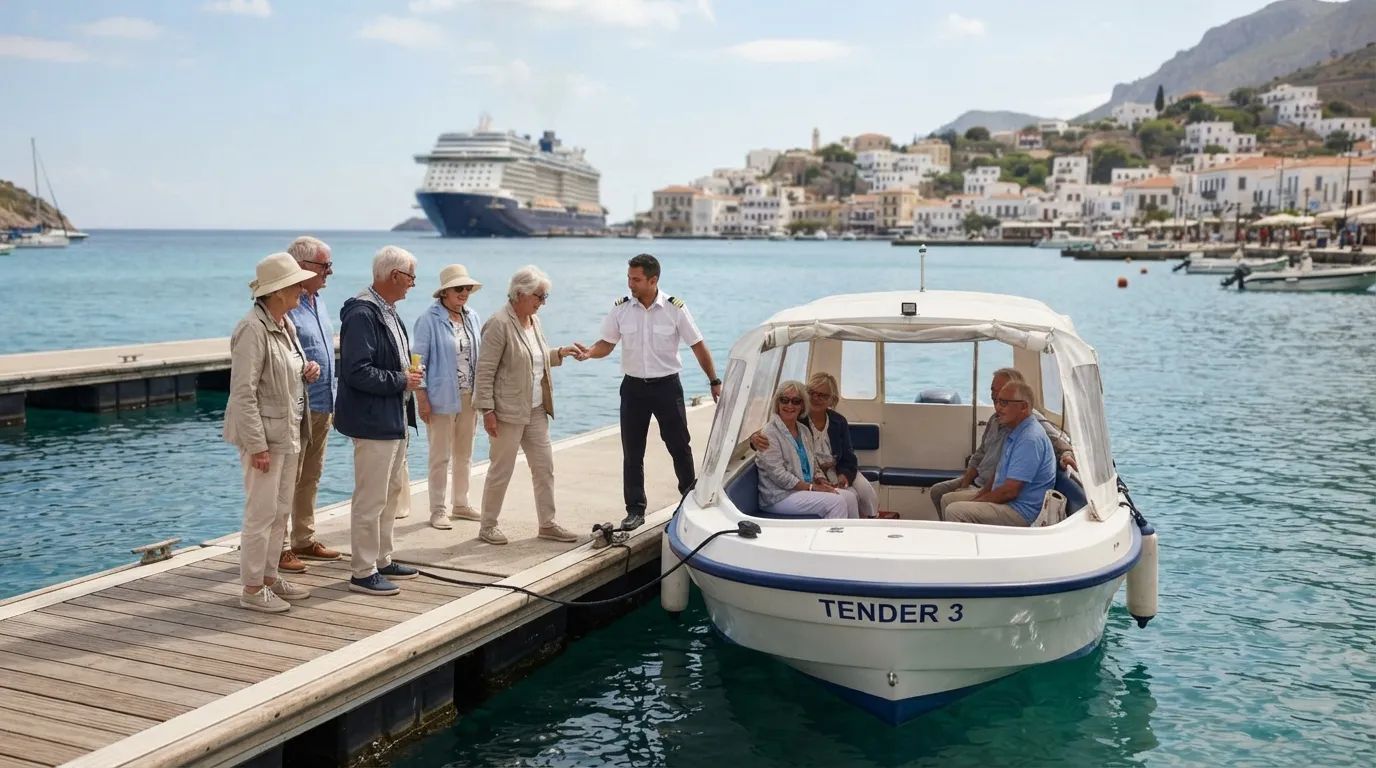
Most people assume the tender ride from ship to shore is the same for every passenger. It isn’t. Stepping down into a small boat that’s rocking against the hull is one of the trickiest moments of any cruise, and it gets harder fast once mobility becomes a factor.
What almost nobody realizes is that tender crews are quietly running a second, invisible operation built entirely around guests over 60. None of it shows up in a brochure, and most of it only kicks in if you know it exists. Here’s everything they’re doing behind the scenes, starting with something that happens before you even reach the boarding line.
17. They’re Sizing You Up Before You Even Reach the Line
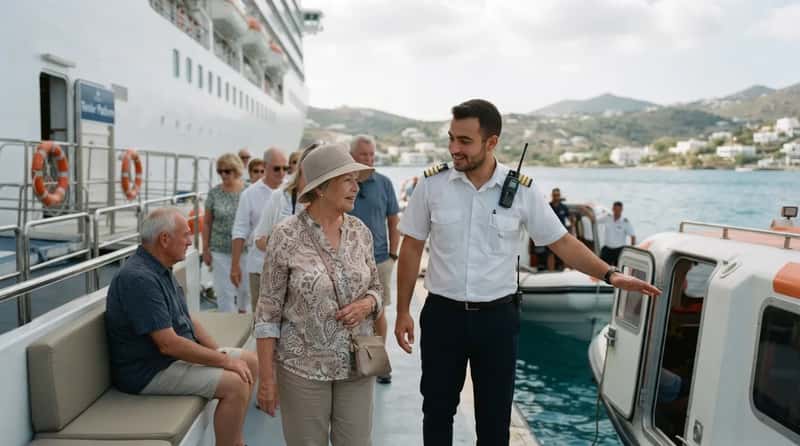
Before a single tender ticket gets called, crew members are already reading the boarding line. It’s never written down anywhere, but longtime cruisers over 60 describe a pattern of casual-sounding questions like “How are you feeling today?” that double as a balance check.
That quiet screening often decides who gets nudged toward an earlier, calmer boat before the midday rush even starts. It’s not a medical exam, just an experienced eye reading body language in about five seconds. Most guests never clock that it’s happening at all.
It sets the tone for everything that follows. But that’s nothing compared to what happens once priority boarding actually kicks in.
16. They Wave You Ahead Without Ever Calling It “Priority”
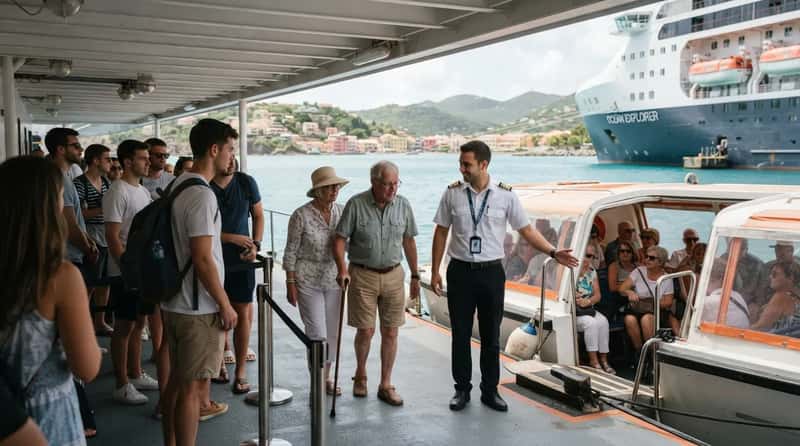
Most passengers wait for their group number to be called. Cruisers in their 60s often get quietly waved ahead instead, with no formal upgrade attached to it.
It isn’t about status or a suite booking. It’s a crew member making a judgment call about who could use a hand, and it’s rarely announced out loud.
One passenger described staff offering an earlier boat after her husband arrived with a cane, framing it simply as a way “to make things easier.” It’s subtle, but it changes an entire morning. The crowd-management tricks go deeper than most expect, and it starts with where you actually sit.
15. They Put You in the One Seat That Matters Most
When you board, crews will often direct you to a specific seat if you ask for the front or top of the boat. This matters more than it sounds.
If you’re prone to seasickness, the front near the windows helps considerably since the breeze makes a real difference. For guests over 60 who feel unsteady, crew instinct is to seat them closest to the boarding point, cutting down the distance walked on a rocking boat.
That single decision eliminates the highest-risk moment of the entire transfer. It’s not random kindness, it’s trained practice. And the boat they put you on matters just as much as where you sit in it.
14. They Save the Steadiest Boat for the Guests Who Need It
Not every tender boat rides the same, and crews know exactly which ones handle choppy water better. Most are built with a flat-bottomed design specifically to maximize stability during boarding and off-loading.
In places like George Town, Grand Cayman, ships use local tenders that are much bigger than the ship’s own lifeboats, which speeds up and steadies the whole process. On days when swells are picking up, that size difference matters most for guests who feel unsteady on their feet.
Knowing which boat to use on which day is insider-level knowledge. But the crew’s job doesn’t end at the ship’s side.
13. They Use the Safety Briefing to Spot Trouble Early
Every tender boarding starts with a safety briefing covering procedures and life jackets. It sounds routine, but it isn’t just paperwork for the crew.
For guests over 60, this briefing is also where crew members can spot last-minute concerns, a guest looking confused, unsteady, or anxious. It’s the final gate before the boat leaves, and experienced crew use it as one.
Most guests treat the briefing as a formality. The smart ones listen.
12. They Keep the Ship on Radio the Entire Crossing
Constant radio contact runs between the tender and the ship the whole way across, coordinating timing and any contingencies. If a guest needs assistance the moment they land ashore, the ship already knows before the boat docks.
Once ashore, crew help passengers disembark safely and point them toward transport or excursion pickup points. For older guests with timed excursions or mobility considerations, that coordination is the difference between a smooth morning and a stressful scramble.
The ship is never out of the picture, even when you’re halfway to the pier. What happens when conditions suddenly shift mid-morning is where things get more serious.
11. They’ll Cancel Tendering Entirely Rather Than Risk It
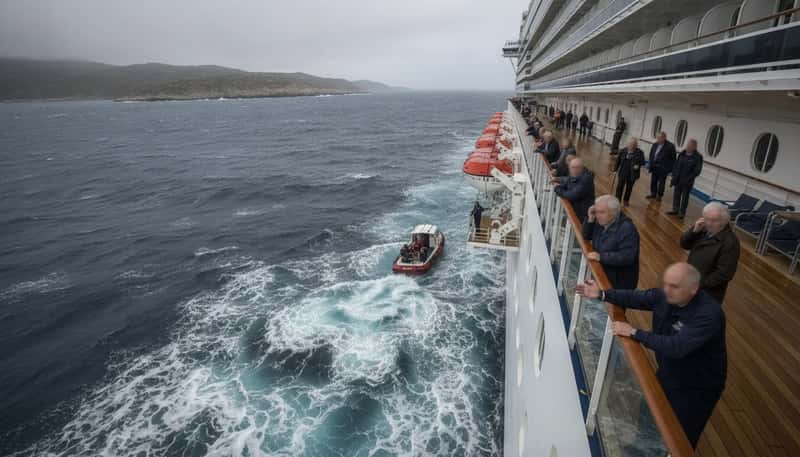
Safety is the number one factor in the tendering decision, and in rough seas, guests with limited mobility simply will not be allowed to board. There’s a hard line tender crews will not cross, no matter how much a guest insists they’re fine.
The captain and crew assess conditions at every tender port and decide whether operations are safe for guests with mobility needs. If seas are too rough, the answer is no, full stop, regardless of status or pleading.
If guests can’t tender because of this, there’s no refund or credit for the missed port, because guest and crew safety takes absolute precedence. It feels harsh in the moment, but it’s the rule that protects everyone most.
10. They’ll Handle a Folding Wheelchair, Not a 100-Pound One
Tenders typically don’t allow motorized wheelchairs or scooters aboard. If you can walk a few steps and carry a manual, foldable wheelchair, you can usually use the tender, but you should check with the cruise line first.
Steep gangways and steps make things harder during low or high tide for some guests with limited mobility. Staff aren’t allowed to transfer scooters or wheelchairs over 100 pounds.
Quick Compare
- Holland America & Norwegian: a wheelchair plus rider over 100 lbs combined can’t be transferred to the tender.
- Princess Cruises: staff are not permitted to individually lift more than 50 lbs.
- Most major lines: motorized scooters and power wheelchairs are barred from tenders outright.
- The common thread: a lightweight, foldable manual chair is almost always the safer bet at anchor.
Most guests assume any wheelchair is fine, and the weight limit catches people completely off guard. Knowing this rule in advance changes how you pack and what equipment you bring aboard. The no-lifting rule is connected to an even more specific policy that surprises almost everyone.
9. They Won’t Lift You, and That’s a Rule, Not Rudeness
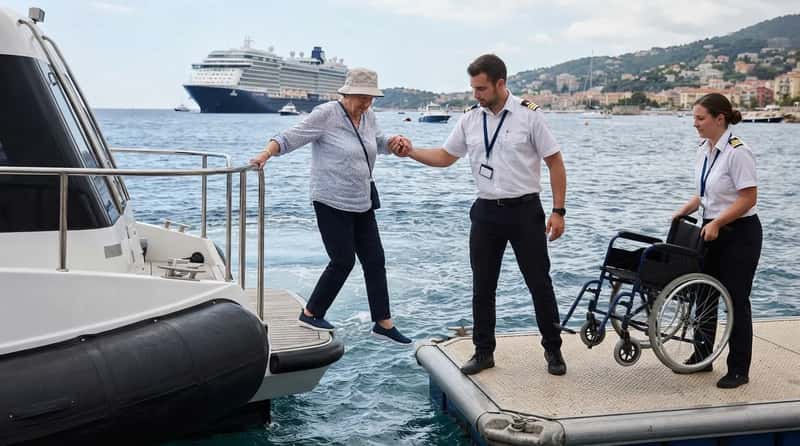
For safety reasons, staff are not permitted to lift guests or equipment. Guests sometimes read the hesitation as indifference, but it isn’t; it’s a liability and injury-prevention rule that applies fleet-wide across virtually every major cruise line.
Assistance with manual wheelchairs, walkers, and canes will be provided, but that means guiding, steadying, and supporting, not carrying. The distinction matters enormously on a moving boat.
A crew member who tries to carry a guest and slips puts both of them at serious risk. Knowing this ahead of time means you plan your footwear and balance strategy before you ever reach the platform, and footwear, it turns out, is something crews will actually comment on.
8. They’ll Quietly Call Out the Wrong Shoes
The standard recommendation before boarding a tender is flat, water-resistant shoes with good traction, plus clothing that lets you move easily. Crew members at the boarding platform will often glance down at a guest’s shoes before helping them step across.
Sandals with no back strap, heels, or smooth-soled dress shoes on a wet platform are the leading cause of stumbles at the step-across point. A crew member who spots the wrong footwear will say something, quietly, but clearly.
Most guests take the advice without a second thought. The ones who don’t occasionally regret it. Getting onto the boat is only half the challenge; getting back at the end of the day is a different calculation entirely.
7. They Steer Older Guests Away From the Worst Return Rush
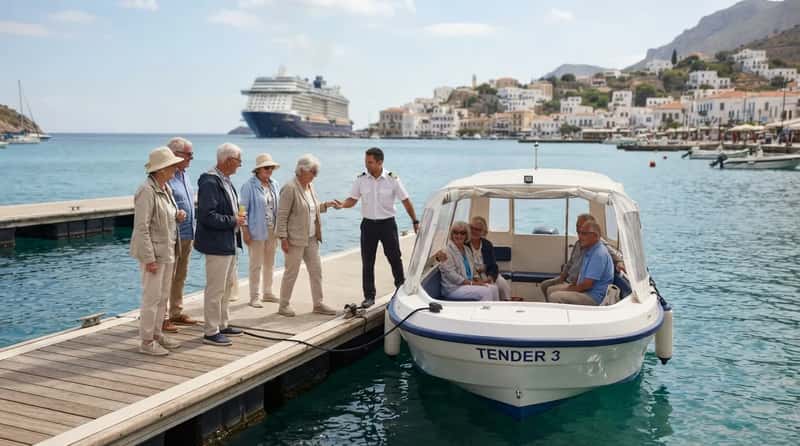
Planning your return a few hours before the final tender departure helps you avoid long waits and the late-day crowd crush. Experienced crews know that the two hours before the last tender are the highest-traffic, highest-stress window of the entire day.
If you come back earlier, you can skip the queues almost entirely. Tender crews routinely pass this timing tip along to older guests first thing in the morning, before they even go ashore.
Fast Facts
- The two hours before the last tender are the busiest at the dock.
- Returning a few hours early can cut wait times dramatically.
- Crews often share this tip with older guests before they even leave the ship.
- Skipping the late-day rush saves energy for the rest of your evening.
It’s a small piece of operational knowledge shared informally, but it restructures your entire shore visit. What happens if you do hit a long queue anyway is where crew discretion kicks in again.
6. They’ll Move You Up the Return Line If You Just Ask
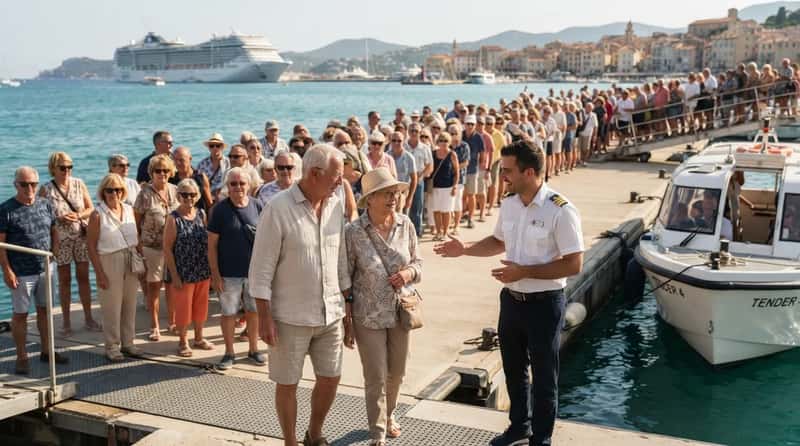
There’s no official policy behind it and no suite requirement, just crew members quietly helping well-traveled guests who ask. Those who speak to a tender attendant directly, rather than pushing through the crowd, tend to get moved along noticeably faster.
“Directly” is the key word. Guests who wait in silence rarely get moved, but guests who make brief, polite contact, mentioning a sore knee or a long day, consistently report being waved forward.
It costs nothing to ask, and the crew has the discretion to act on it. At a hot, crowded tender dock in the afternoon, that fast-track forward is worth more than almost any other service on the trip.
5. They Can Line Up Accessible Transport Before You Even Land
If requested in advance, cruise lines like Royal Caribbean can arrange accessible transportation between the airport, selected ports, and the pier. Tender crews work in coordination with port agents ashore, meaning a guest’s mobility needs can be communicated before the boat even arrives.
Many ports have reliable taxi services and local drivers offering private half-day tours at prices comparable to ship-sold excursions, and the difference is that a private driver waits for you if you’re moving slowly. The tender crew’s connection to that network is something most guests never think to tap.
Ask before you board the outbound tender, not after you’re standing confused at the dock. The next arrangement is one that most guests over 60 say actually changed how they felt about the whole trip.
4. They Post a Dedicated Escort at the Exact Danger Spot
Boarding involves climbing from a low platform on the ship, often down a few steps, and a crew member will be there to help if mobility is a concern. This isn’t just a hand held out.
On rougher days, a dedicated crew member plants themselves on that platform and physically anchors guests through each step-across, timing the move between swells. That gap between moving surfaces is exactly where falls are most likely to happen.
Why It Stands Out
- It’s the one moment crews treat as non-negotiable for older guests.
- The escort times each step to the rhythm of the swells, not the clock.
- It closes the single gap where most tender falls actually happen.
- Guests rarely notice it’s a dedicated role until they need it most.
The crew escort at that exact moment is the single most important service offered to any older guest at a tender port. Most passengers don’t even register it as a specific role. One more layer of this protection involves what happens when the weather changes mid-run.
3. They’re Watching the Weather Long After You’ve Boarded
High winds, rough seas, or poor visibility can delay or cancel tendering entirely, and what most guests don’t realize is that conditions can change between the outbound run and the return. Crews are authorized to make mid-session calls when that happens.
Passengers with mobility limitations may not be able to use the tender at all if conditions worsen, and weather and tide both affect the ability to transfer between two moving vessels. If a crew decides a guest who boarded in calm water can’t safely reboard as conditions deteriorate, they’ll coordinate an alternative.
It rarely happens, but the protocol exists. Knowing the crew is watching conditions the entire day, not just at departure, is genuinely reassuring.
2. They’ll Hold Your Tender Ticket So You Skip the Crowd
Collecting a tender ticket before boarding is one way to keep waiting times short. In practice, crew members at the lounge or staging area will often hold a ticket for an older guest who can’t easily stand in line, or flag one down on their behalf.
This doesn’t appear in any policy document. It’s the kind of small, practical problem-solving experienced crew default to when they see someone struggling with the queue.
A tender ticket collected early, without standing in a crowd, can mean the difference between a 10-minute wait and a 90-minute one. The guests who know to ask for this almost always get it.
1. They Pre-Register You So Every Port Already Knows Your Name
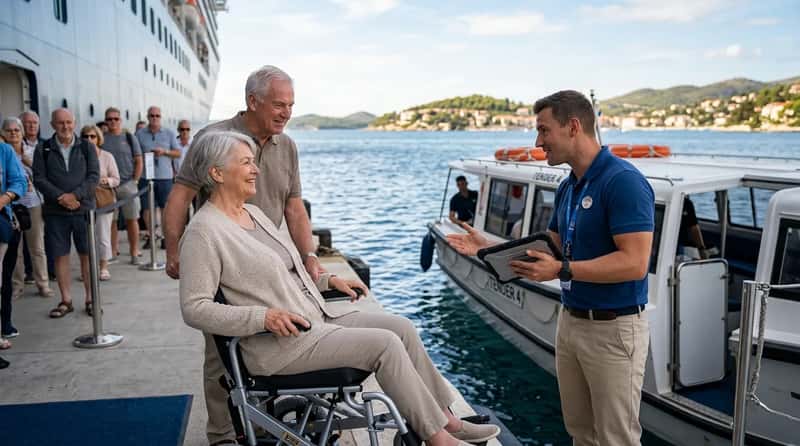
Most major cruise lines encourage guests to complete a Guest Special Needs Form, and some require 30 days’ advance notice for special equipment or services. Many lines provide accommodations for mobility challenges, but that advance notice is often required to make it happen.
At a Glance
- 30 days’ notice: the standard window for special mobility equipment or services.
- 60 days’ notice: needed if you require sign language interpreting.
- 72 hours’ notice: required for groups of 10 or more guests with disabilities.
- Filing early lets crews flag your name before the first tender ever launches.
When that notice is on file, tender crews receive a passenger manifest that flags specific guests before a single boat launches. Your name is already known, and your needs are already briefed.
Contacting the cruise line 30 days before sailing lets them prioritize your assistance from the very first port. Most guests over 60 who have a genuinely great tender experience didn’t get lucky. They pre-registered.
The Bottom Line
Tender operations look chaotic from the outside, but they run on quiet, practiced coordination, and a surprising amount of it is built specifically around guests over 60. From informal balance checks at the queue to a dedicated escort planted right on the boarding platform, the support is already there.
But most of it only activates when guests know to ask, pre-register, and speak directly to the crew member in front of them. The single most impactful step is pre-registering your mobility needs at least 30 days before sailing. Everything else flows from that.
Did we miss an arrangement a tender crew made for you at anchor? Drop it in the comments.
Bonus: The In-Person Move That Beats the Online Form
The 30-day Guest Special Needs Form gets your name on file, but it doesn’t guarantee tender access at any single port, since roll-on capability is never promised in advance and can vary by stop.
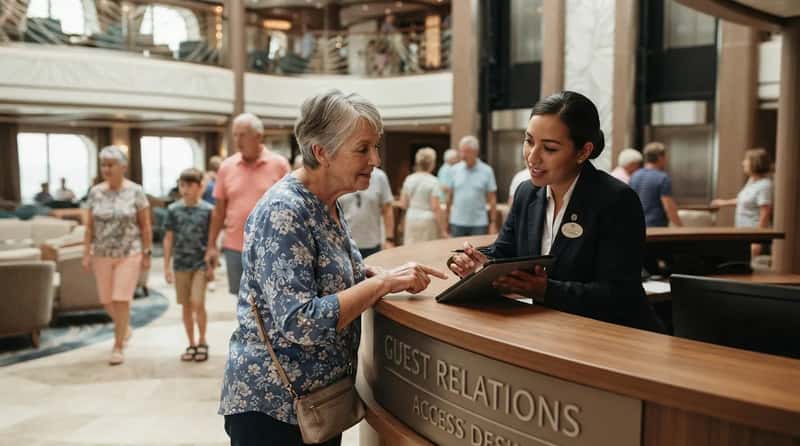
The real insider move is a second step almost nobody takes: walking up to the Guest Relations or Access Desk in person on embarkation day and asking port-by-port questions before you ever head to a tender line.
- Go to the desk within the first few hours of boarding, before the ship gets busy.
- Ask directly: “Is roll-on tendering available at each port on this itinerary?” since the answer changes stop to stop.
- Request that your mobility note be flagged specifically for tender priority, not just general accessibility.
- Reconfirm at Guest Services the morning of each tender port, since sea and tide conditions can change the answer overnight.
This extra, in-person confirmation is what actually turns a filed form into a crew member on the platform who already knows your name and your needs before you show up.