Most cruisers assume tender days are pure chaos – a shove-and-wait free-for-all where everyone fights for the same crowded boat. But talk to enough crew members and frequent cruisers in their 60s and 70s, and a different picture emerges: a quiet, almost invisible system of small favors happening in plain sight.
None of it is announced over the loudspeaker. No one hands out a badge or a wristband for it. Here’s what tender crews, cruise line policies, and the passengers who’ve noticed the pattern actually say is going on.
#17 – They Quietly Slip Slower Guests Onto an Earlier Boat, No Questions Asked
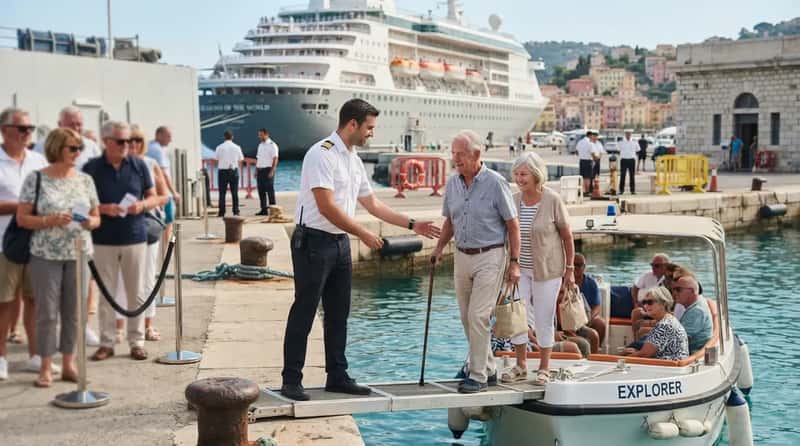
Tender mornings are supposed to run strictly by ticket number, but that’s not always what happens in practice. Most passengers get stuck waiting for their group to be called, but cruisers in their 60s often get quietly waved ahead. There’s no formal upgrade involved – just a crew member making a judgment call.
It isn’t about status or a suite booking – it’s simply crew helping well-traveled guests who look like they need a hand. One passenger reported staff offering an earlier boat after her husband arrived with a cane, framing it as a way “to make things easier.” It’s subtle, but it changes an entire morning. That’s nothing compared to what tender crews do once the boats actually start loading.
#16 – They Save the Calmest, Biggest Tender for the Roughest Sea Days
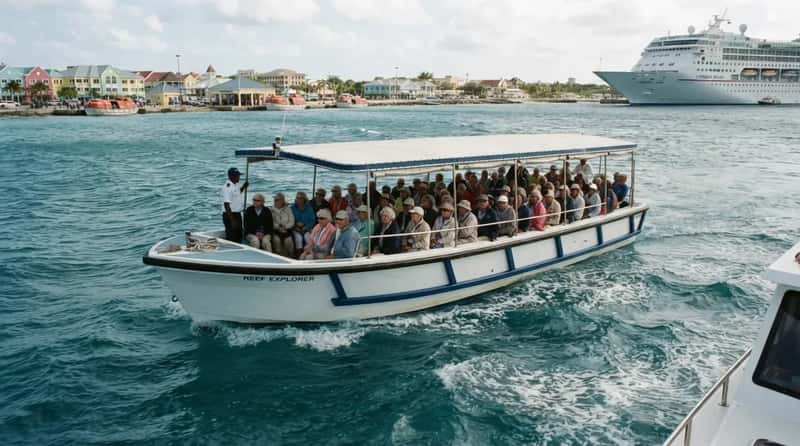
Not every tender boat is built the same, and crews know exactly which ones ride smoother in choppy water. In places like George Town, Grand Cayman, ships use local tenders that are much bigger than the ship’s own lifeboats, which speeds up and steadies the disembarkation process. On days when swells are picking up, that size difference matters most for guests who feel unsteady on their feet.
Tender boats typically seat around one hundred passengers and are covered to protect riders from sun and sea spray. Crews quietly funnel older guests toward the sturdier, larger boats rather than the smaller lifeboat-style tenders whenever both are running. It’s never advertised as a perk – it just happens. Next up is something crew members are trained to notice before a single word is spoken.
Fast Facts
- Local tenders often carry around 100 passengers per trip
- Tender boats are typically covered to block sun and spray
- In ports like George Town, tenders are bigger than the ship’s own lifeboats
- Bigger boats mean steadier footing on rough sea days
#15 – They Watch Your Shoes Before They Watch Your Face
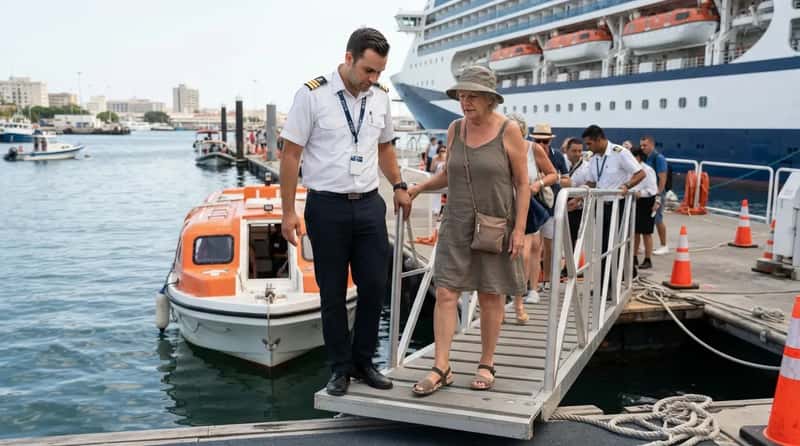
Tender staff are drilled to scan feet, not faces, as guests approach the boarding platform. Cruise lines explicitly require passengers to wear appropriate, flat, and securely attached footwear for tender boarding. Flip-flops, slick-bottomed sandals, or loose heels are the fastest way to get gently pulled aside for a second look.
For guests over 60, this isn’t about singling anyone out – it’s about spotting fall risk before it becomes a problem. Crew members will often quietly ask a guest to switch shoes or grab a rail before letting them onto the platform. It looks like small talk. It’s actually a safety screen happening in real time, and what comes next is a part almost nobody talks about.
#14 – They Load Wheelchairs Last So They Can Unload First
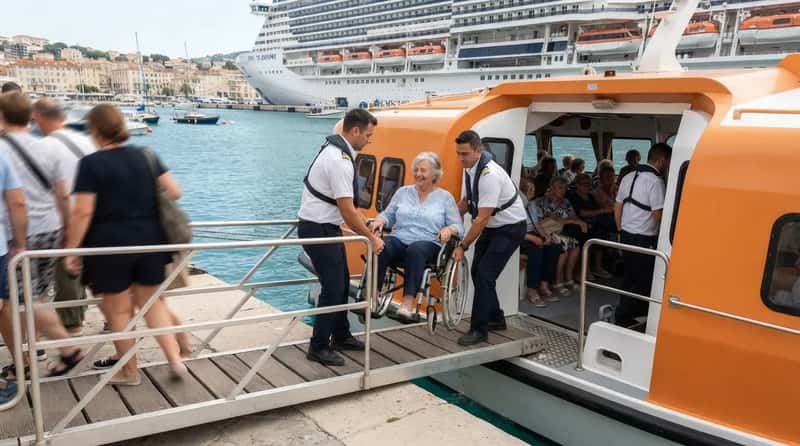
There’s a specific, deliberate sequence to how mobility devices get placed on a tender, and it’s built entirely around minimizing risk. Wheelchair users are typically loaded last onto an accessible tender specifically so they can be the first ones off at the other end. It sounds backwards until you see the logic: less time maneuvering through a crowded boat.
This isn’t a courtesy extended case-by-case – it’s closer to a standing rule crews follow whenever wheelchair boarding is possible. Near the boarding point there’s often a small step, and crew members lift wheelchair users onto the tender when needed. It’s one of the few moments where staff will physically lift a guest rather than just steady them. But even that has firm limits, and the next entry explains exactly why.
#13 – They Never Say “Hurry Up” – Even When the Line Behind You Is Furious
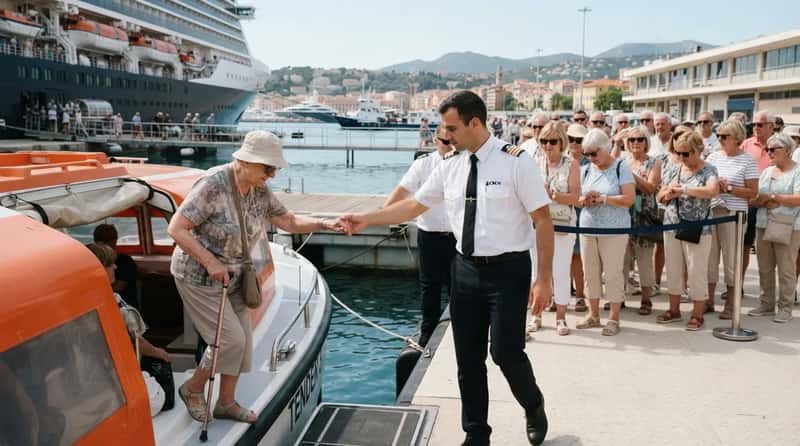
Anyone who’s tendered during a busy port day has felt the tension of a long line behind a slower-moving guest. Crew members are trained not to rush anyone, no matter how restless the crowd gets. It’s one of the more quietly enforced rules on a cruise ship, and it rarely gets mentioned in any brochure.
Instead of pressure, guests over 60 often get a steadying hand and a slower pace deliberately set by the crew member closest to them. The person controlling the flow of the line is usually the one absorbing the impatience, not the slower guest. It’s a small buffer most passengers never notice is even there. Coming up is a rule that has nothing to do with kindness and everything to do with liability.
#12 – They Quietly Radio the Shore Team Before You Even Step Off
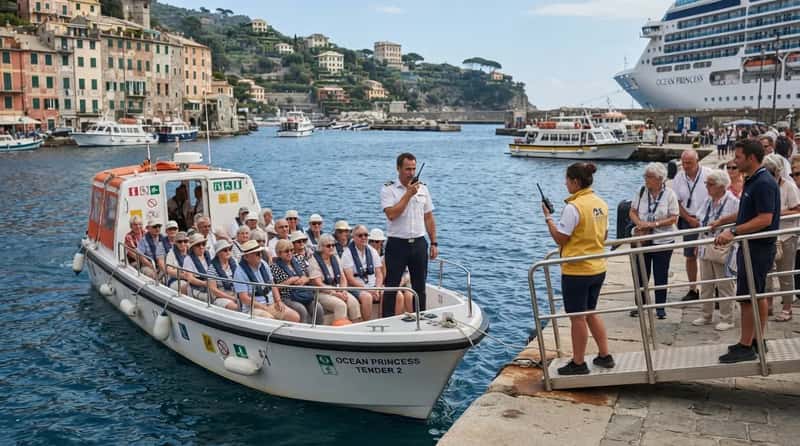
Long before a tender reaches the dock, there’s often a conversation happening that passengers never hear. Constant radio contact is maintained between the tender and the ship to coordinate timing and manage any contingencies. That same channel gets used to flag when a guest needing extra time or assistance is on board.
By the time the boat docks, shore staff sometimes already know to have a hand ready or hold a gate a few extra seconds. Crew on the receiving end assist passengers with safe disembarkation and provide guidance once they reach shore. None of this shows up on any itinerary – it’s simply logistics happening quietly in the background. The next item on this list is one most guests mistake for bad manners.
#11 – They Become a Human Handrail When the Ship’s Railing Runs Out
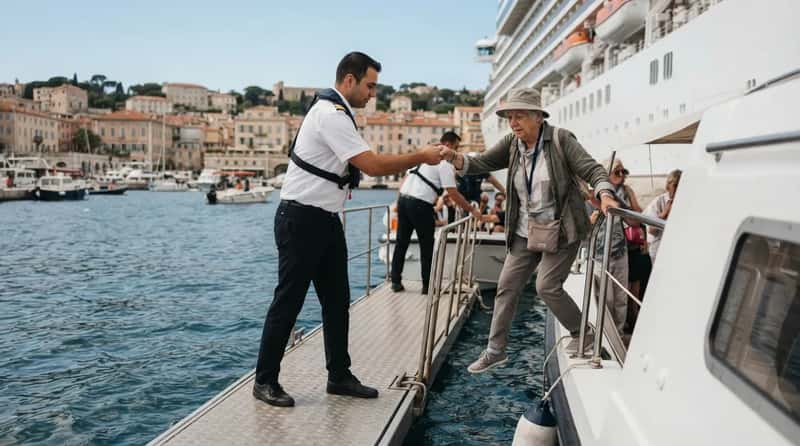
Tender platforms are narrow, low to the water, and often missing the kind of continuous handrail you’d expect on the main deck. Crew members guide and steady passengers as they get on or off the tender, working from a low deck positioned right at the waterline. When the physical railing stops, the crew member’s arm often becomes the substitute.
It’s one of the least visible but most repeated actions on tender day – a hand extended at exactly the right second, dozens of times an hour. Crew are legally barred from lifting or carrying guests, so that steadying arm is often the entire safety net. For older passengers, that small gesture is doing more work than most people realize. What comes next explains why crew can’t do more than that, even if they wanted to.
#10 – They Hold the Gap Closed With Their Own Body
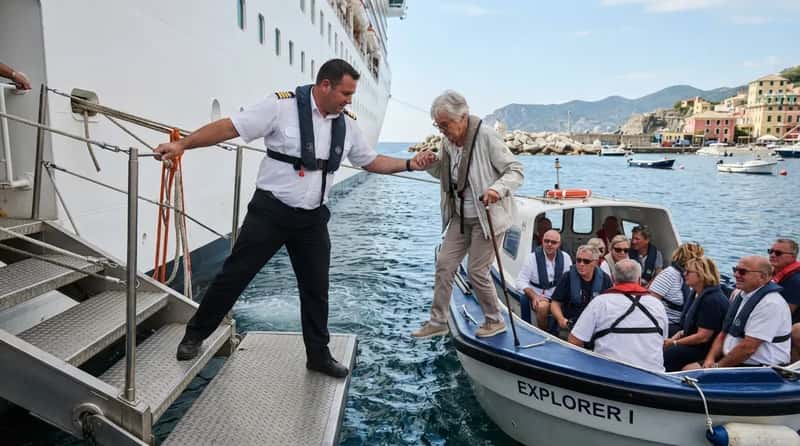
The narrow space between a moving tender and the ship’s platform is one of the most quietly dangerous parts of the entire process. Stepping from the ship to the tender involves a gap that can be treacherous, especially for anyone unsteady on their feet. Crew members routinely position themselves physically in that gap, using their own stance to shrink the space a guest has to cross.
It’s rarely acknowledged, but it’s one of the most consistent things tender staff do at every single port stop, all day long. They’ll time the boat’s rocking motion and call out “step now” at the exact right second. For a passenger with a bad hip or a cane, that timing call is doing more than any handrail could. Next up is a perk some guests get without ever asking for it.
Worth Knowing
- The ship-to-tender gap widens and narrows with every wave
- Crew members plant themselves in the gap to shrink the distance guests must cross
- A well-timed “step now” call matters more than any handrail
- This positioning happens at every port stop, not just rough-water days
#9 – They Quietly Reassign Seats So You’re Never Far From the Door
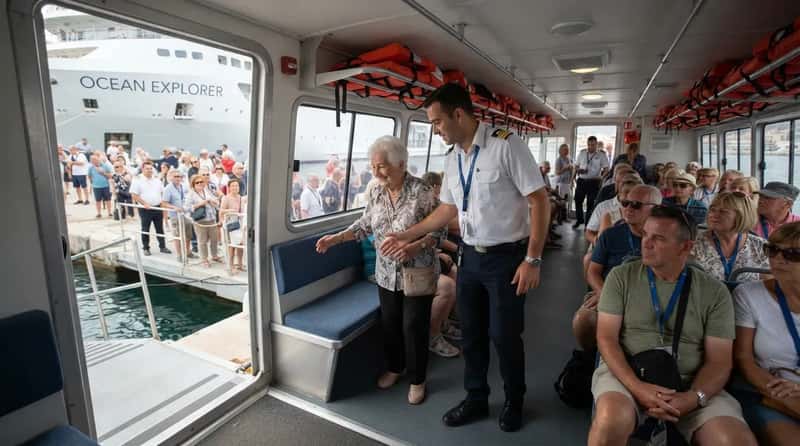
Not all tender seats are created equal, and staff know exactly which ones matter most for someone who needs an easier exit. Guests who look unsteady are often quietly guided toward seats closest to the boarding door rather than wherever the ticket line happens to place them. It’s a small reshuffle that happens without any announcement.
This isn’t a formal seating chart – it’s crew judgment, made in seconds, based on how someone walks up the ramp. The goal is always the same: fewer steps, fewer obstacles, less time exposed to a rocking boat. It’s one of the easiest things to overlook and one of the most consistently repeated. But it pales next to a rule crews will enforce even against direct requests.
#8 – They Refuse to Let You Board – Even When You Beg – On the Roughest Days
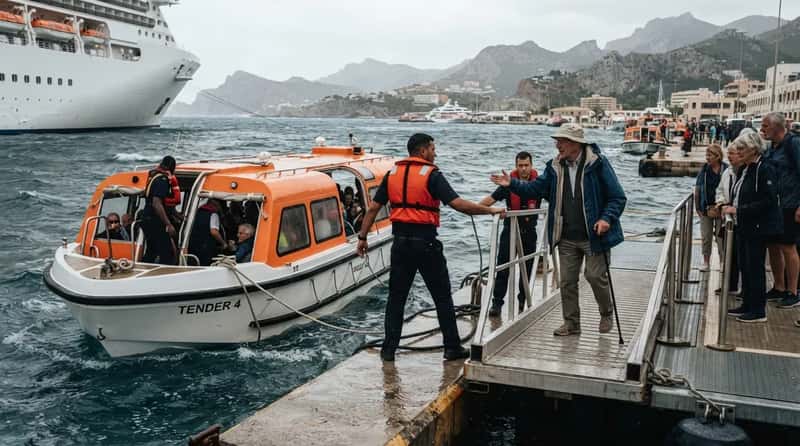
There’s a hard line tender crews will not cross, no matter how much a guest insists they’re fine. Ultimately, the captain and crew assess conditions at any tender port and decide whether operations are safe for guests with limited mobility. If seas are too rough, the answer is no – full stop, regardless of status or pleading.
This can mean a missed excursion or a missed port entirely, and cruise lines are upfront about the consequence. If guests are unable to tender or disembark due to safety conditions, there is no refund or credit issued for the missed port. It feels harsh in the moment, but crews treat it as non-negotiable. The next item shows exactly how far the “no lifting” rule really goes.
#7 – They Never Lift You, and That’s Actually a Safety Rule, Not Rudeness
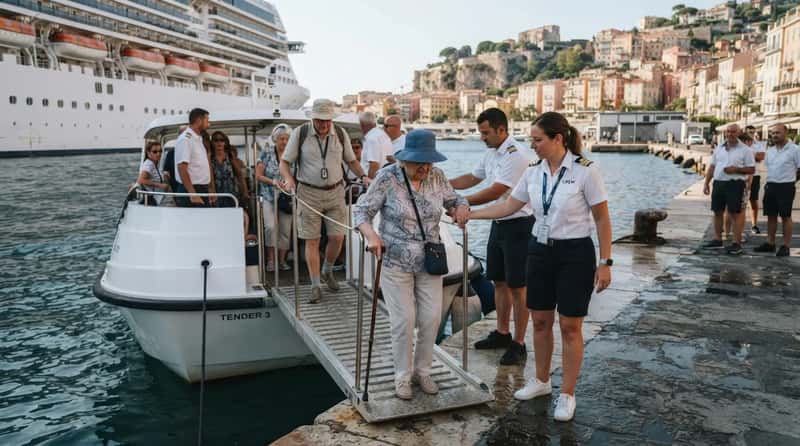
Guests sometimes misread a crew member’s hesitation to physically lift someone as coldness. It’s actually policy. Staff will make reasonable efforts to assist guests, but for safety reasons they are not permitted to lift guests or their equipment, though they will help with manual wheelchairs, walkers, and canes.
There’s a hard weight cutoff behind this, too. Guests using a wheelchair or mobility scooter are responsible for assembling and disassembling it themselves, and crew will only help lift individual parts weighing 40 pounds or less. A single heavy scooter battery can be enough to end the conversation entirely. It’s frustrating for families, but it exists because a crew injury mid-transfer puts everyone at risk.
#6 – They Quietly Test Your Balance Before They Test the Weather
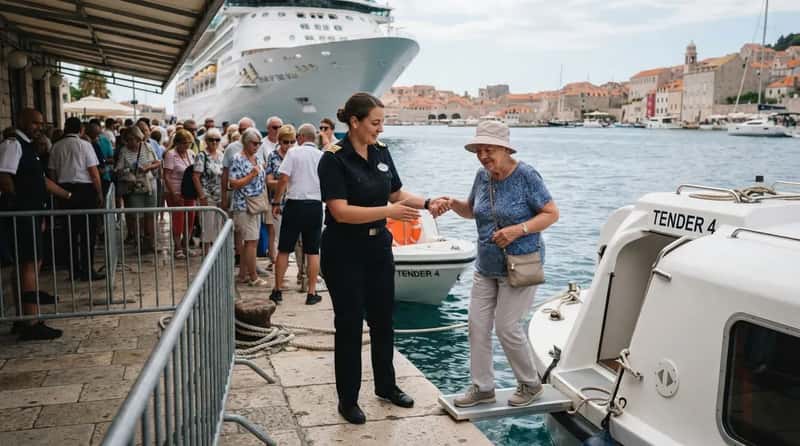
Before a single tender ticket gets called, crew members are already doing informal assessments of who’s in the boarding line. It’s not written down anywhere, but longtime cruisers over 60 describe a pattern of subtle questions – “How are you feeling today?” – that double as a balance check.
This quiet screening often decides who gets nudged toward an earlier, calmer boat before the busier midday rush even begins. It’s not a medical exam, just an experienced eye reading body language in a five-second window. Most guests never clock that it’s happening at all. What comes next is a workaround crews use when a guest’s equipment simply won’t fit the rules.
At a Glance
- Balance checks happen before a ticket number is ever called
- A simple “how are you feeling today?” often doubles as an assessment
- Guests who seem unsteady may get nudged toward an earlier, calmer boat
- The screening takes seconds and isn’t a formal medical check
#5 – They Save the “Easy” Tender Boats for the Guests Who Need Them Most
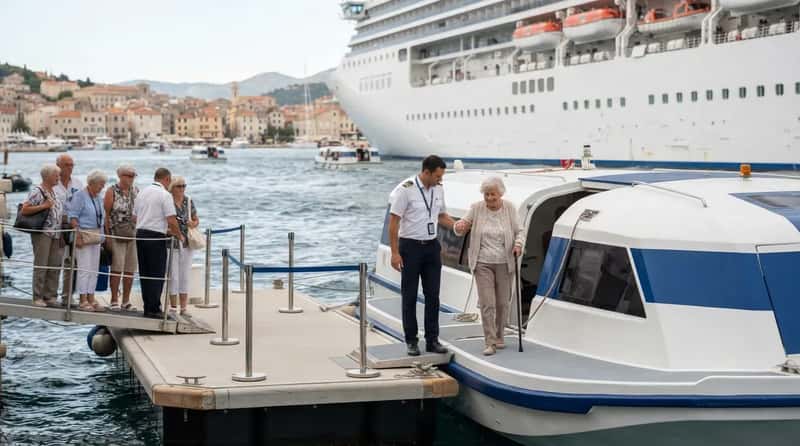
Not every boat running the shuttle route that day is identical, and crews know it. On busy port days with multiple tenders cycling at once, staff will sometimes hold a steadier, easier-to-board boat back specifically for guests who move more slowly, rather than sending them onto whichever tender arrives first.
Boarding is generally done in an orderly fashion, often with priority given to guests needing assistance or those with scheduled excursions. That priority isn’t just about order in line – it can mean literally which physical boat someone ends up on. The smoothest-riding tender of the day rarely goes to whoever happens to be first. The next item involves equipment most guests assume will simply be left behind.
#4 – They Let Your Cane or Walker Skip the Disassembly Line
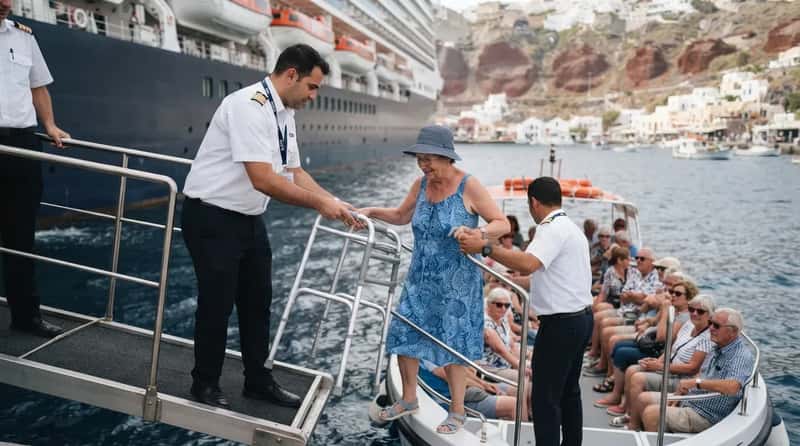
Collapsible mobility aids get special handling that most first-time cruisers don’t expect. To safely board most tenders, guests generally need to be able to take a few steps or use a collapsible manual wheelchair, and cruise lines offer boarding assistance for guests with mobility disabilities. Crew members often quietly fold and hand across a cane or walker rather than making a guest fumble with it mid-step.
Motorized versions are a different story entirely. Guests with assistive devices who can’t take a few steps generally can’t board tenders unless roll-on capability is available, since most tenders require passengers to step aboard. For a folding walker, though, that extra hand-off is one of the most consistent quiet courtesies on tender day. The next entry is about bending a rule that’s technically not supposed to bend at all.
#3 – They Quietly Bend the Ticket Rules for Guests Who Look Unsteady
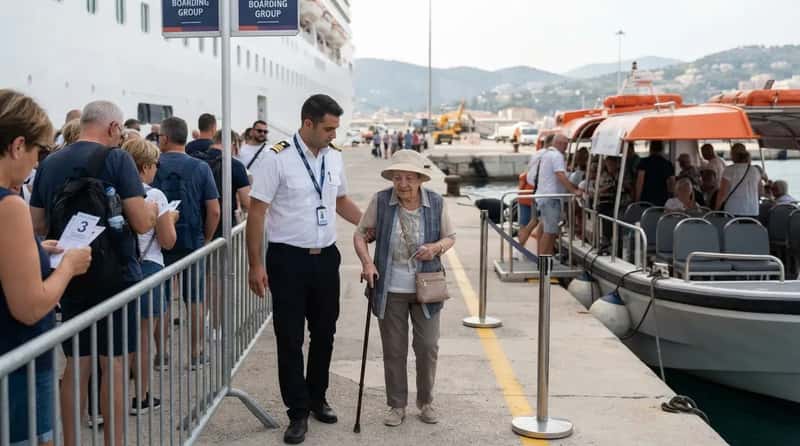
Officially, tender boarding runs on a strict number system. Tickets are handed out on the morning of the port day, and when a guest’s number is called over the loudspeaker, they head to the embarkation area to board. In reality, crews will often quietly slide an older guest into an earlier-numbered group if the line allows it.
On some cruise lines, loyalty status can officially unlock priority tendering as a stated perk. But the unofficial version – a crew member simply deciding someone shouldn’t wait through three more ticket calls – happens far more often than the official version does. Most passengers who benefit from this never realize a rule was bent at all. The next item is the one crew members almost never get thanked for.
#2 – They Time the Whole Departure Around the Slowest Walker in the Group
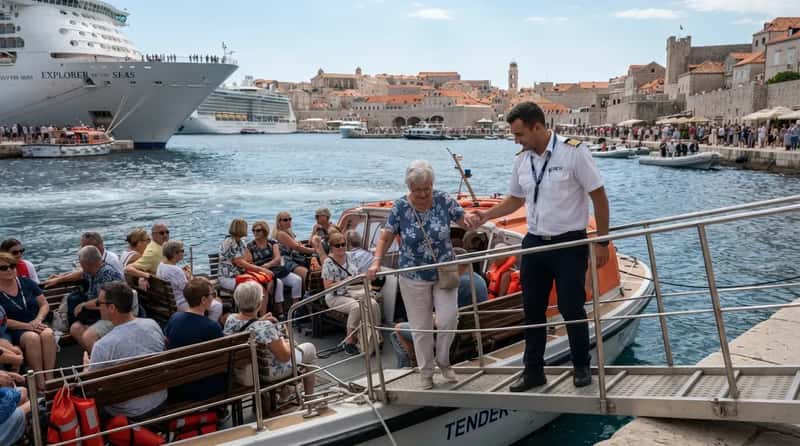
Tenders don’t leave the second they’re full – they leave when everyone is seated and stable, and that timing bends around whoever needs the most time. On port days with heavy congestion, that patience is expensive in scheduling terms. During peak cruise seasons or in destinations with limited docking space, multiple ships may be present at once, and tendering becomes the only way to get everyone ashore.
Even with that pressure, crews consistently hold the boat rather than rush a slower-moving guest into their seat. A single unsteady passenger can add several extra minutes to a departure crew members never mention or complain about. It’s one of the clearest signs of the quiet standard tender teams hold themselves to. And that brings us to the moment that changes everything for the guests who experience it.
Why It Stands Out
- Tenders wait for every seated guest to be stable before departing
- Even heavy port congestion doesn’t speed up the process for a slower walker
- Crews absorb the schedule pressure rather than rushing a guest
- It’s a quiet standard, not a written rule
#1 – They Quietly Whisper “We’ll Get You on the Next One” – And It Changes Everything
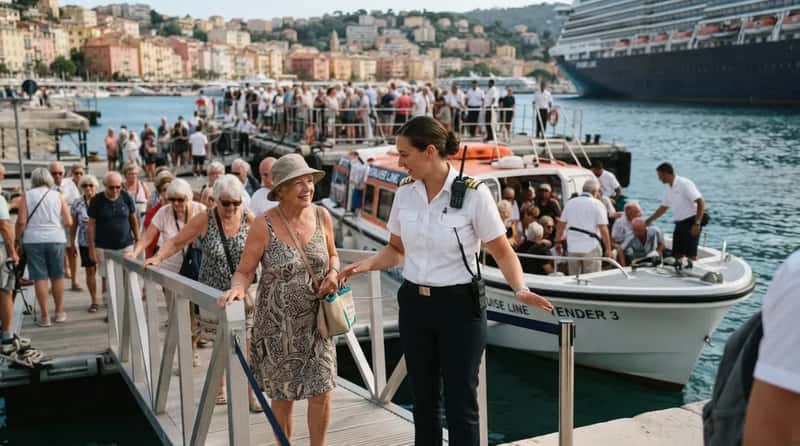
Of everything tender crews do quietly, this is the one guests remember years later. One woman in her 60s described a crew member simply saying, “We’ll get you on the next one,” with no fanfare, no explanation, no fuss. It’s a small sentence that instantly removes the pressure of a chaotic boarding line.
We’ll get you on the next one.
A tender crew member, as recalled by a passenger in her 60s
Another cruiser shared that staff offered his wife, who arrived with a cane, an earlier boat specifically “to make things easier.” There’s no policy manual entry for this – it’s simply crew members choosing kindness inside a system built for speed. For guests over 60 who’ve felt invisible in a crowded line before, that one quiet sentence is often the highlight of the entire port day.
None of this is written into a cruise contract, and none of it is guaranteed from one ship to the next. What’s consistent is the pattern: tender crews, working inside strict safety rules and tight schedules, still find small, quiet ways to make busy port mornings easier for older guests. It’s not a perk you can book – it’s a habit built into the culture of the job.
Have you noticed any of these on your own cruises? Or had a tender crew member do something for you that wasn’t on any list? Drop your story in the comments – the small ones are usually the best.