Plenty of lists crown a “most scenic” train. Almost none ask the question that matters: how many of those hours actually reward you with a view you couldn’t get from a car? This ranking counts the miles that earn the window seat, not the one postcard shot in the brochure.
The famous names don’t always win. Some legendary trains spend long, dark hours crossing farmland while you sleep through it. A three-mile mountain climb can out-deliver a two-day epic, and an ordinary commuter-style train can float past a ruined castle. Here’s what each route really gives you, starting at the bottom and working toward a #1 that earns its spot in a way you might not expect.
#18 – Mount Washington Cog Railway: Three Miles, a 37% Grade, and a Summit Known for Brutal Weather
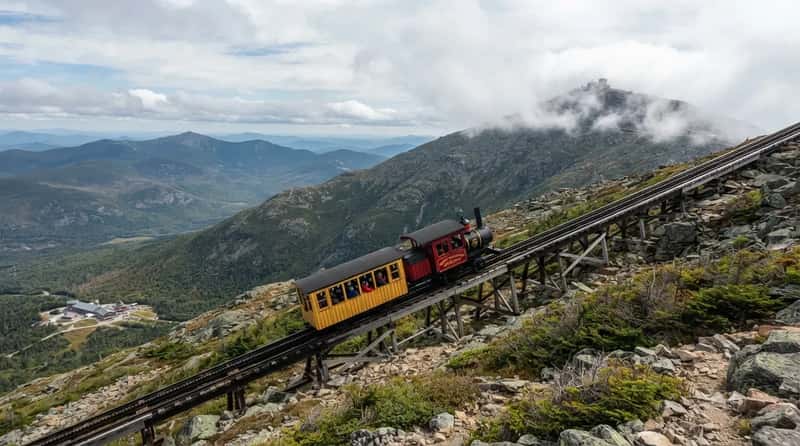
Three miles of track can feel like a dare. The Cog Railway has been hauling riders up New Hampshire’s Mount Washington since 1869, and its steepest stretch, Jacob’s Ladder, tilts at roughly 37 percent. The summit sits at 6,288 feet in the White Mountains. Mile for mile, it’s the densest scenery on this list.
That’s why it sits last. The view is huge but brief, and a bank of cloud can wipe it out before you get your phone up. Some riders say they’re paying for the thrill of the climb more than the panorama. But that’s nothing compared to the ordinary-looking train waiting at #17.
#17 – Amtrak’s Hudson River Line: The Everyday Train With a Castle in the Window
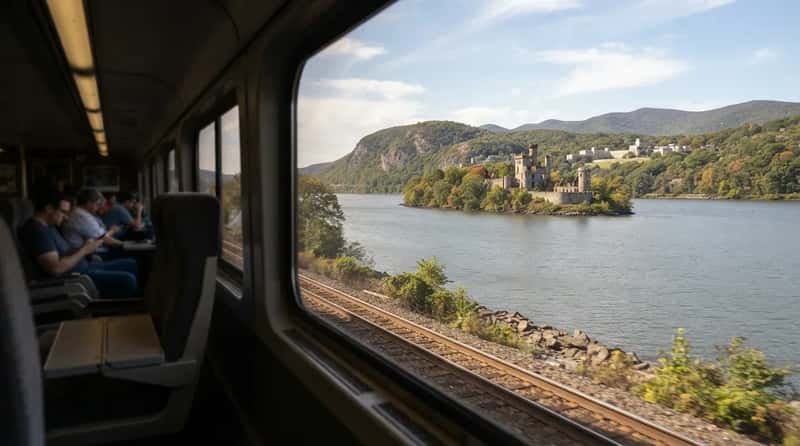
Amtrak’s Empire Service between New York City and Albany looks like a regular commuter-style train. For long stretches the tracks run right along the Hudson’s edge. Across the water you’ll spot West Point. A little farther on, Bannerman’s Castle, the ruined arsenal on Pollepel Island, appears out of nowhere.
This isn’t a cruise-style journey. The views arrive between ordinary stops, and plenty of passengers never look up from their phones. That’s the quiet irony of the line: one of the best free views in the Northeast, ignored by half the car. Next up is a train that runs straight through a national park.
#16 – Cuyahoga Valley Scenic Railroad: A Train That Rolls Through a National Park, Not Past It
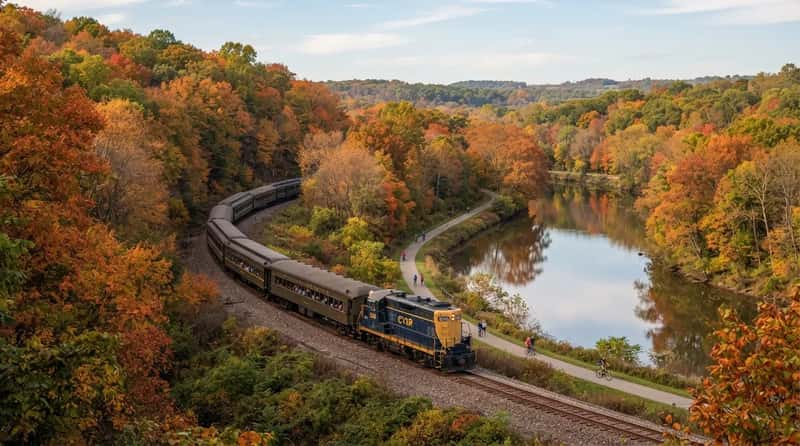
Ohio isn’t the first state people name for train scenery. The Cuyahoga Valley Scenic Railroad runs through Cuyahoga Valley National Park, along the river and the old Ohio & Erie Canal corridor. Riders can bike part of the Towpath Trail and catch the train back, which is a rare combo.
Worth Knowing
- The train runs inside a national park, not just near one.
- The river and old canal corridor stay in view for much of the ride.
- Bike one way on the Towpath Trail, then ride the train back.
- Fall foliage is the headline act.
Don’t expect peaks or canyons. You get river bends, hardwood forest, and farm fields. Visitors who show up wanting mountains can feel let down. Those who expect a calm green surprise in the Rust Belt tend to fall for it. But the next route has something no highway can reach.
#15 – Amtrak’s Pacific Surfliner: Ocean Views You Literally Can’t Drive To
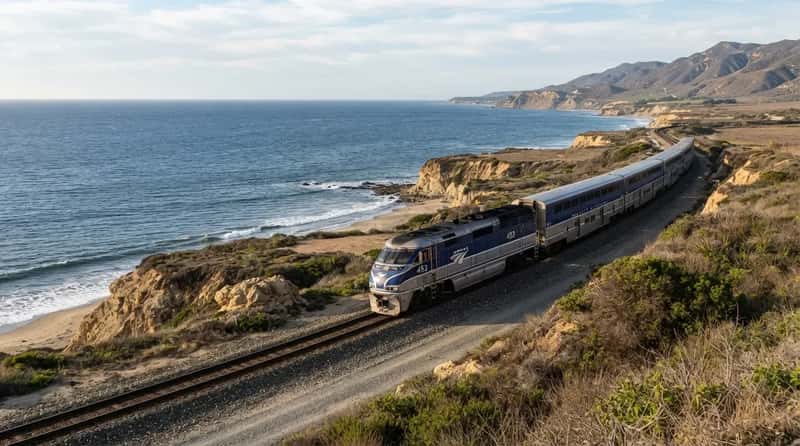
The Pacific Surfliner runs up the California coast from San Diego to San Luis Obispo. North of Santa Barbara, the train crosses ranch land and empty shoreline that most drivers never see from the road. That’s a rare treat in a region packed with freeways. The full trip takes roughly 8 to 9 hours.
Most people only ride a short hop between beach towns. They miss the long, quiet stretch where the scenery really opens up and the Pacific fills the window. If you want a bargain, this could be it. But the East Coast has a rival with a border crossing at the end.
#14 – The Adirondack: A River, a Lake, and a Passport Stamp
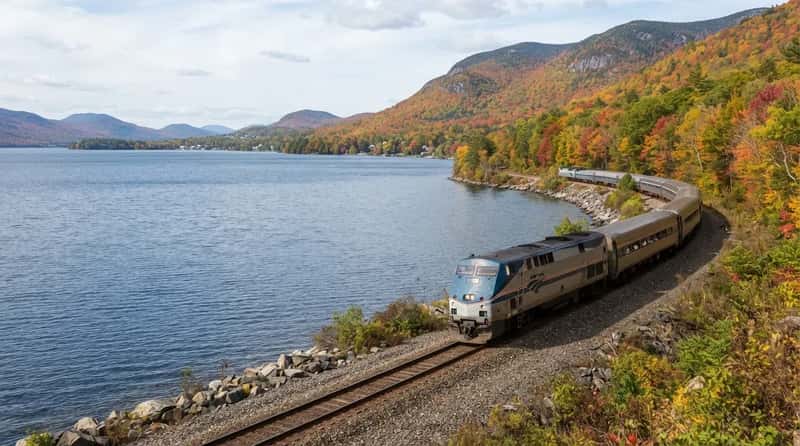
The Adirondack runs from New York City to Montreal, trading the Hudson River for Lake Champlain along the way. It’s a daytime train, so the views aren’t wasted on a sleeper schedule. You see the water, the hills, and the small towns in full light.
It’s considered one of the most scenic East Coast Amtrak routes, especially in the fall. Bring a passport, because the trip ends in Canada. Some riders say the lake section outshines the Hudson half, and others swear it’s the other way around. Next comes a gorge line where whitewater is the main character.
#13 – Great Smoky Mountains Railroad: Whitewater Below, Lake Trestle Ahead
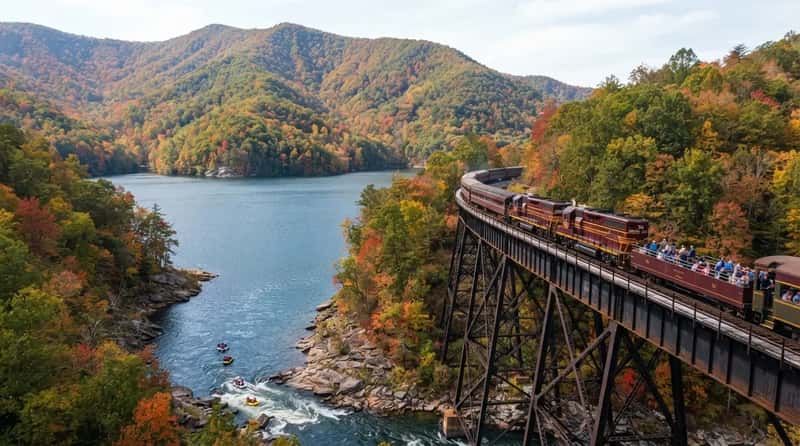
Out of Bryson City, North Carolina, the Great Smoky Mountains Railroad is a tourist line, not Amtrak. Its Nantahala Gorge trip is the big draw. The train follows the Nantahala River while rafters bob below, then crosses a trestle over Fontana Lake.
Southern mountain trains make their best case in autumn, when the ridgelines turn red and orange. The scenery here is close-up rather than sweeping. You see rapids, rock walls, and forest from a few feet away. It’s an intimate ride, not a big-sky one. For a bigger wall of rock, the next stop is in Colorado.
#12 – Royal Gorge Route Railroad: The Train That Passes Under a 956-Foot Bridge
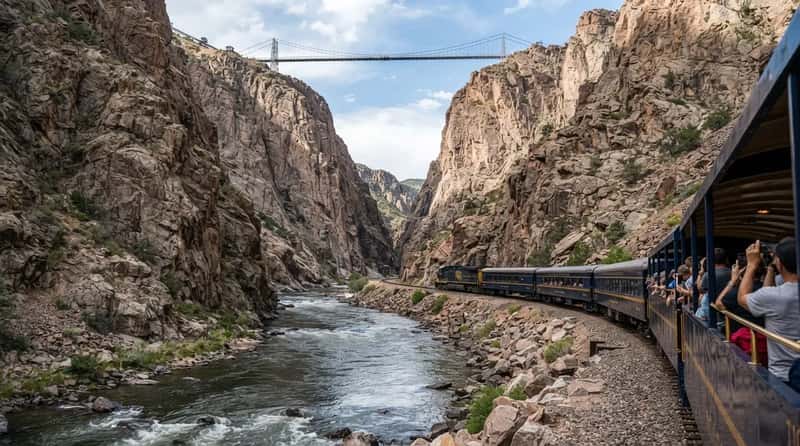
Leaving Cañon City, Colorado, the train follows the Arkansas River into a granite canyon. Overhead hangs the Royal Gorge Bridge, 956 feet above the water. The walls rise on both sides, and open-air and dome seating make the most of it. It’s roughly a two-hour round trip.
Many Colorado visitors go for the bridge alone. Some insiders argue the view from the bottom is the better one. It’s short, but it squeezes value out of every minute. Next comes a route most people have never even heard of.
#11 – The Cardinal: The Underrated Train Through New River Gorge
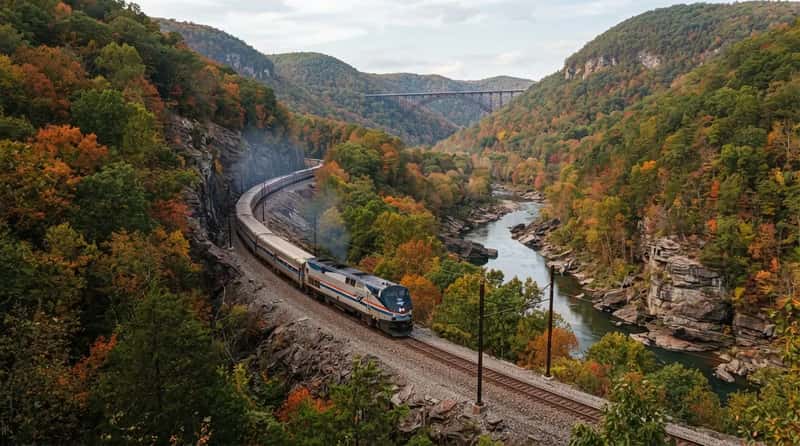
The Cardinal runs between New York and Chicago, but only three days a week. It’s the only Amtrak train that threads the New River Gorge, the rugged West Virginia canyon that became a national park and preserve in 2020. The stretch through the gorge and the Appalachian foothills is a showstopper in foliage season.
Why It Stands Out
- It’s the only Amtrak train through the New River Gorge.
- The gorge gained national park and preserve status in 2020.
- Foliage season turns the Appalachian foothills into the main event.
- Few riders know it exists, which keeps the cars quieter than the hype.
The catch is the schedule. Because it runs just three days a week, you have to plan your trip around the train instead of the other way around. Those who do tend to call it Amtrak’s best-kept secret. Next is a Pacific Northwest corridor with a major glow-up.
#10 – Amtrak Cascades: Mountains and Puget Sound on a Commuter Schedule
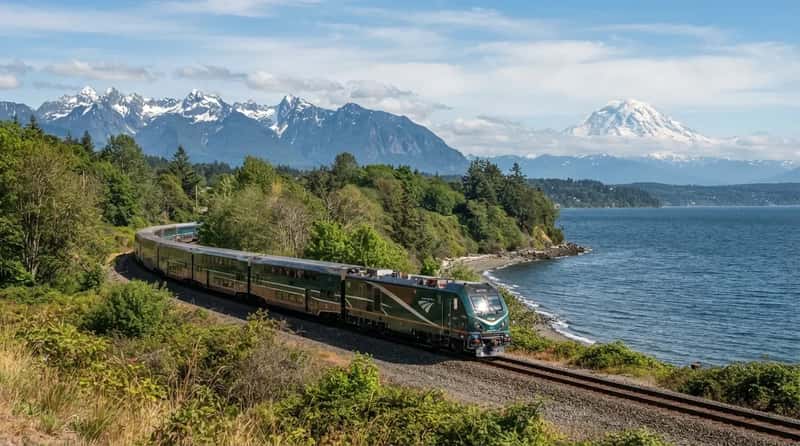
Seattle to Portland takes about three and a half hours, and the best stretches hug Puget Sound with the Olympic Mountains hovering to the west. On a clear day, Mount Rainier shows up like a surprise guest. Amtrak has also been bringing its new Airo trainsets to the corridor, with bigger windows for the view.
Some riders say it’s more transportation than cruise, and they’re not wrong. Still, the water stretches are real, and the frequent schedule makes it easy to try. Next up is a route that climbs nearly 3,000 feet inside a gold rush legend.
#9 – White Pass & Yukon Route: A Gold Rush Railroad Carved Into Cliffs
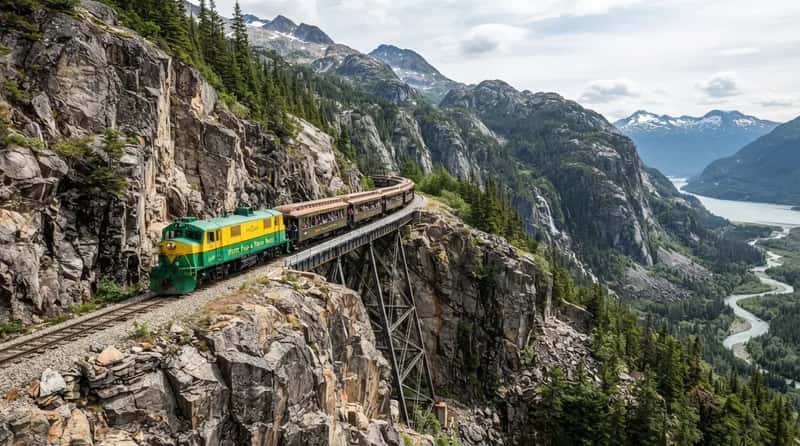
From Skagway, Alaska, this narrow-gauge line was built during the 1898 Klondike Gold Rush. It climbs nearly 3,000 feet in just 20 miles, going from sea level to alpine terrain. The tracks cling to cliff edges and cross towering trestles.
Cruise ships bring crowds, so the line can feel busy in peak summer. Some travelers call it too touristy. Even skeptics tend to admit the engineering is outrageous for its era. You go from harbor to tundra in a single morning. Next is a steam ride that keeps hopping between two states.
#8 – Cumbres & Toltec: The Steam Train That Crosses a State Line 11 Times
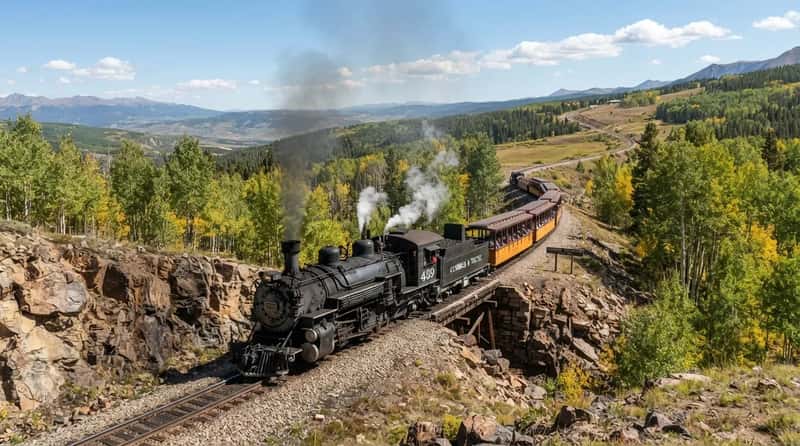
This 64-mile narrow-gauge line connects Antonito, Colorado, and Chama, New Mexico. It crosses the state line 11 times as it works up to Cumbres Pass, at more than 10,000 feet. It’s among the highest steam railroads in the country.
The route winds through aspen groves, rock cuts, and wide open high country. It feels like a time capsule from the 1880s, and that’s a big part of the appeal. Even so, the next line is arguably the more famous steam ride in Colorado.
#7 – Durango & Silverton: A Ledge Above the Animas River
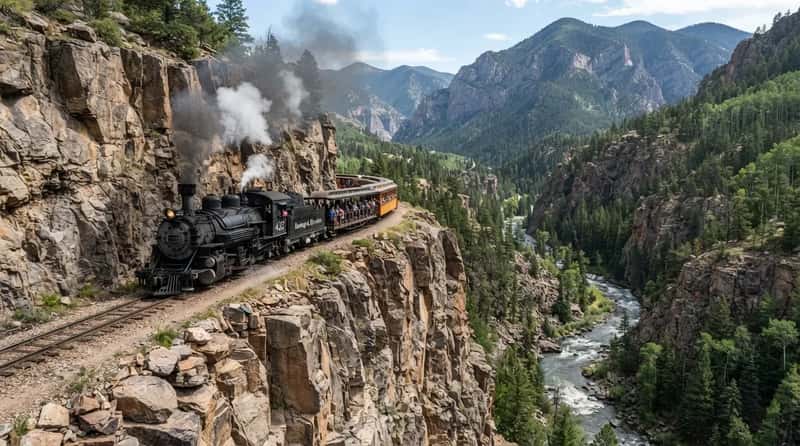
Running 45 miles since 1882, this coal-fired steam train follows the Animas River into the San Juan Mountains. The track climbs more than 2,800 feet from Durango to Silverton. On the famous High Line, it hugs a ledge far above the water.
Quick Compare
- Durango & Silverton: 45 miles, a climb of more than 2,800 feet, and a ledge above the Animas River.
- Cumbres & Toltec: 64 miles, 11 state line crossings, and a pass above 10,000 feet.
- The shared thread: Both are narrow-gauge steam trains that feel like the 1800s.
It’s a full day of travel, soot, and whistles. For some riders that’s the charm; for others it’s a hurdle. The scenery doesn’t let up, though, and the drop-off views are the kind that make people go quiet. The next route covers far more miles but faces one big question: when does the good part start?
#6 – Southwest Chief: High Desert, Raton Pass, and a Grand Canyon Gateway
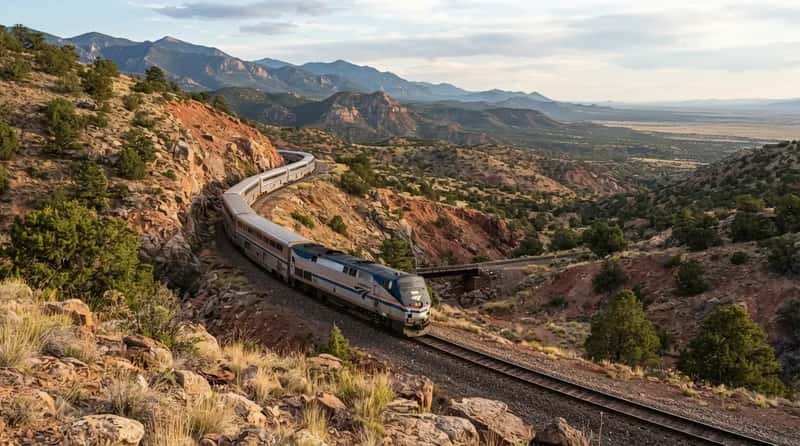
The Southwest Chief runs from Chicago to Los Angeles through high desert, Raton Pass country, and Flagstaff, the gateway to the Grand Canyon. Raton Pass is where the Plains give way to the edge of the Rockies. That’s when the window starts to pay off.
Many riders say the first half is a long stretch of flat farmland. The second half is where the Southwest takes over. That uneven payoff is why it isn’t higher. Next is the coastal giant everyone expects near the top.
#5 – Coast Starlight: The Pacific Is Only a Slice of the Ride
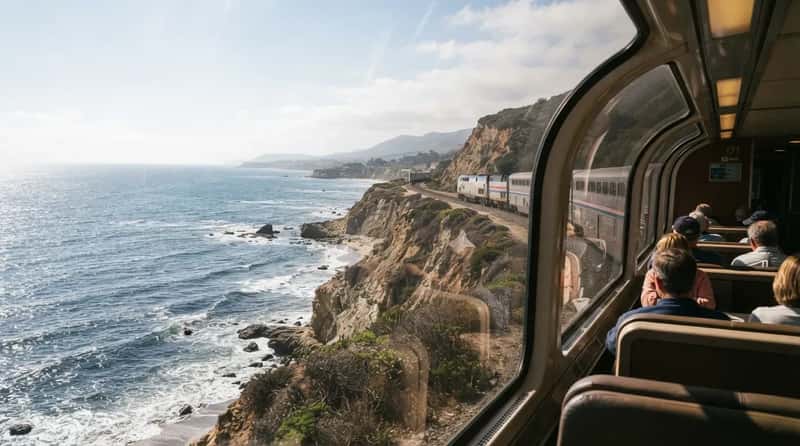
The Coast Starlight is famous, but the ride is long. It runs daily between Seattle and Los Angeles, a roughly 35-hour journey. Along the way come Puget Sound, the Cascades and Mount Shasta, then the central coast, where the track hugs the Pacific between San Luis Obispo and Santa Barbara.
The truth is that the ocean is only a small part of those 35 hours. Much of the rest crosses valleys and farmland, and plenty of riders say it drags. The best miles are spectacular, but they’re spread thin. The next route has bigger drama, if the clocks cooperate.
#4 – Empire Builder: Glacier Country, If the Train Runs on Time
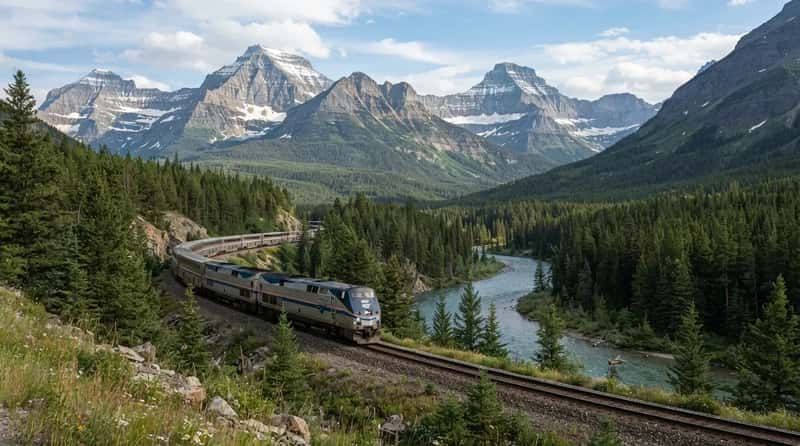
The Empire Builder runs from Chicago to Seattle and Portland in about 46 hours. It crosses the Plains into Glacier country and the Cascades, with some of the biggest northern mountain drama in the country when the schedule lands in daylight. That caveat is the whole story.
A delay can push the best mountain miles into the dark. Riders who hit the timing right talk about it for years, and those who don’t feel robbed. The route follows parts of the Lewis and Clark Trail, which adds a layer of history to the Plains. Next come the two Alaska rides that top most lists.
#3 – Alaska Railroad’s Denali Star: A 356-Mile Trip Where the Wild Wins
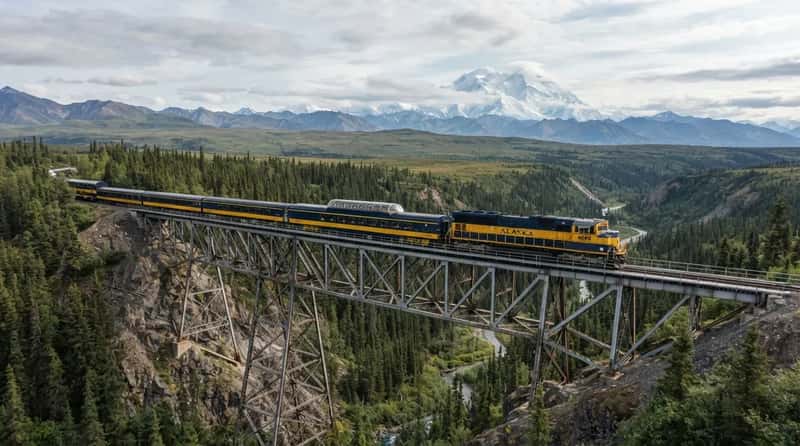
The Denali Star is the Alaska Railroad’s flagship route, covering the 356-mile stretch between Anchorage and Fairbanks. It crosses the historic Hurricane Gulch trestle, 918 feet long and 296 feet above the creek, and rolls through the tundra of Broad Pass.
At a Glance
- Route: Anchorage to Fairbanks, 356 miles.
- Big crossing: Hurricane Gulch trestle, 918 feet long and 296 feet high.
- Landscape: Broad Pass tundra and country with no road access.
- Wild card: Clouds often hide Denali.
On a clear day, you can see Denali, the tallest mountain in North America. The catch is that “clear day,” since clouds often hide the peak. Even when it stays hidden, wildlife sightings from the windows are common. That’s the payoff. The next route might be even better.
#2 – The Coastal Classic: Where Mountains Plunge Into a Tidal Inlet
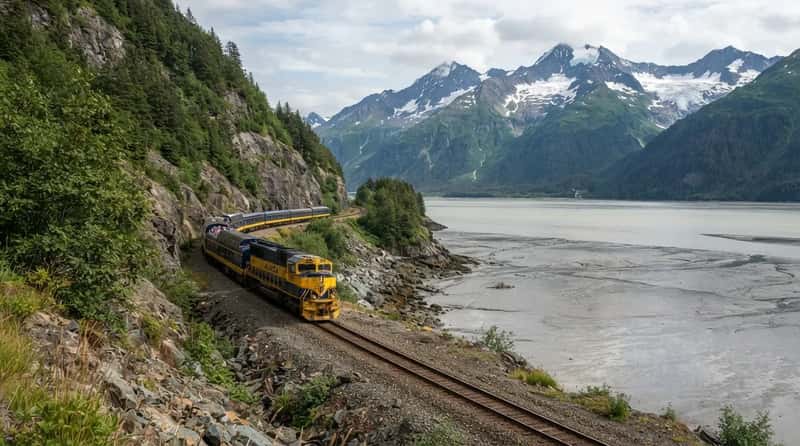
The Alaska Railroad’s Coastal Classic, running from Anchorage to Seward, is considered by many to be its most scenic route. The train runs along Turnagain Arm, a narrow inlet where tides can swing about 30 feet. The Chugach Mountains drop straight toward the water, and riders watch for beluga whales and Dall sheep.
The train then climbs into the Kenai Mountains and through the roadless Placer River Valley. This is scenery most visitors never see, because roads can’t get there. It runs daily only in summer, which keeps it from the top spot. But one route beats it for sheer range.
#1 – The California Zephyr: The Longest Window Seat That Never Gets Boring
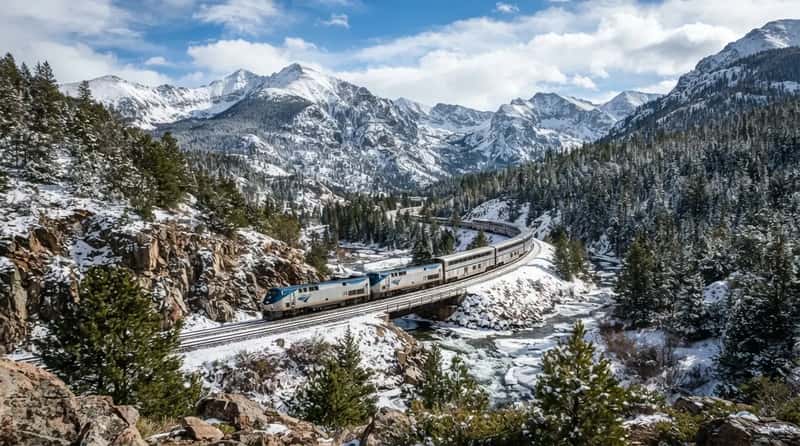
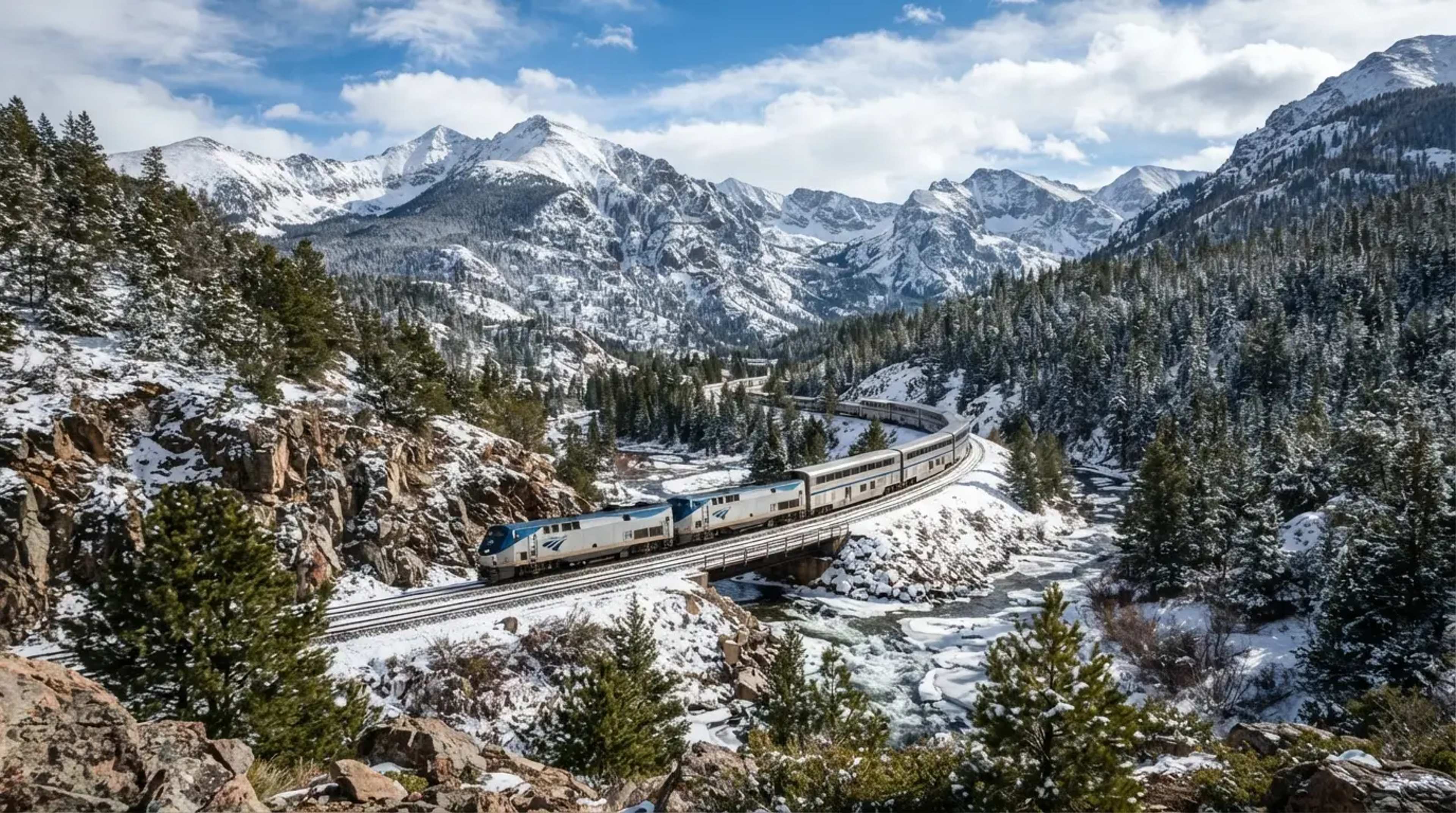
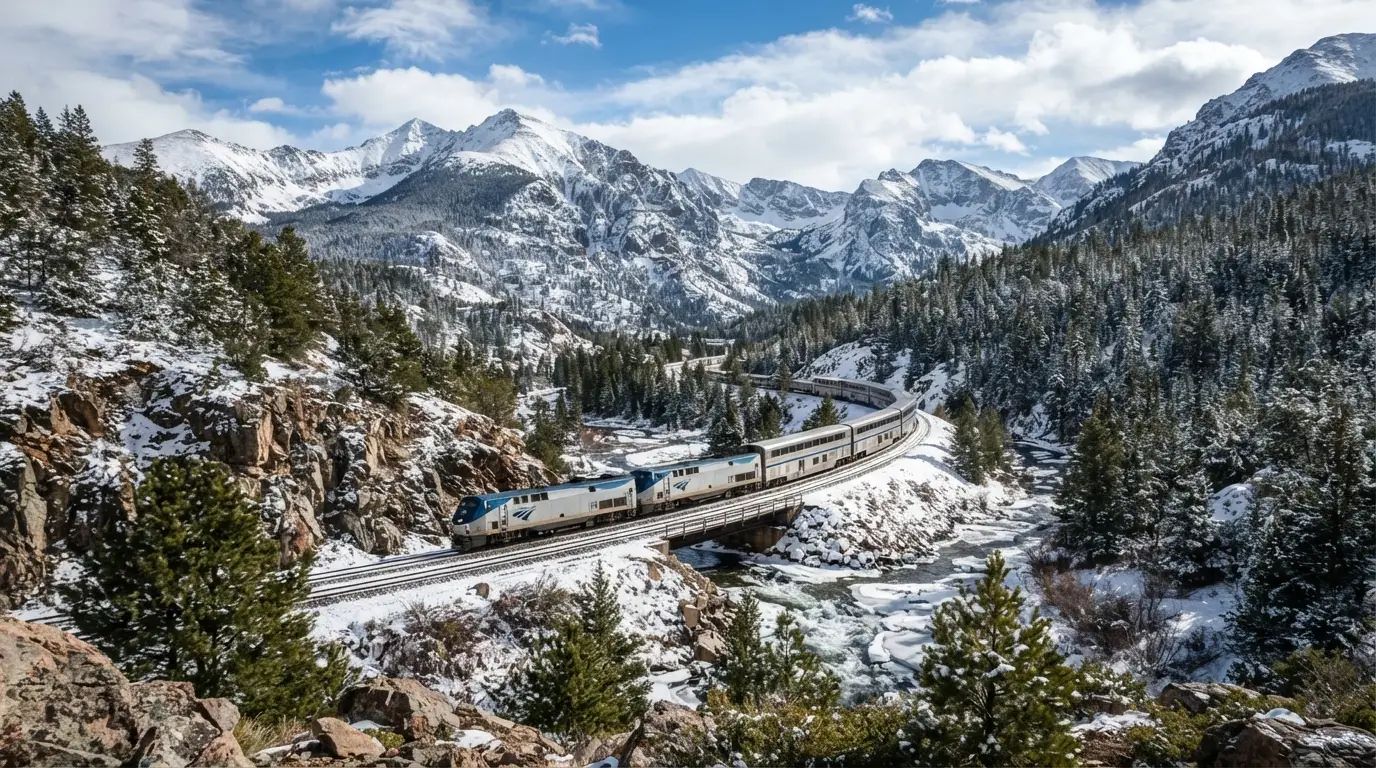
The California Zephyr runs from Chicago to the Bay Area through the Rockies, the Colorado River canyons, and the Sierra Nevada. It’s often called Amtrak’s most scenic long-distance train. The trip takes roughly 51 hours end to end. Highlights include the Moffat Tunnel under the Continental Divide, Glenwood Canyon, and Donner Lake.
Unlike the Alaska trains, the Zephyr isn’t just a summer ride. It doesn’t spend a few hours on one big view and then fade. It strings together a mountain pass, a desert canyon, and a snowy range in a single trip. Scenery per hour is lower than on the Alaska rides, but total scenery is the highest in the country.
The biggest surprise is that fame and scenery don’t always match. The shortest rides, like the Cog and the Royal Gorge, pack the most into each mile. The longest, like the Starlight and the Chief, ask for patience.
The Cardinal and the Surfliner prove you don’t need a famous name to have a window worth watching. Which route would you rank higher, or did we miss one?