Boarding looks like a polite shuffle: a smile at the door, a wave toward the cabin, a quick glance at a boarding pass. But the crew member standing there is running a fast, quiet read on the whole line, and passengers over 65 often get a slightly closer look. It has little to do with age and a lot to do with safety, comfort and dignity. What they actually notice is far more specific than most travelers imagine.
Some of the signals are physical, like a hand drifting toward the wall. Others are almost invisible, like a greeting that gets no reply or an “I’m fine” that arrives a beat too fast. A few of them will change how you see that smile at the door, and the last one is the hardest to spot.
1. The Walk Down the Jet Bridge Says More Than You Think
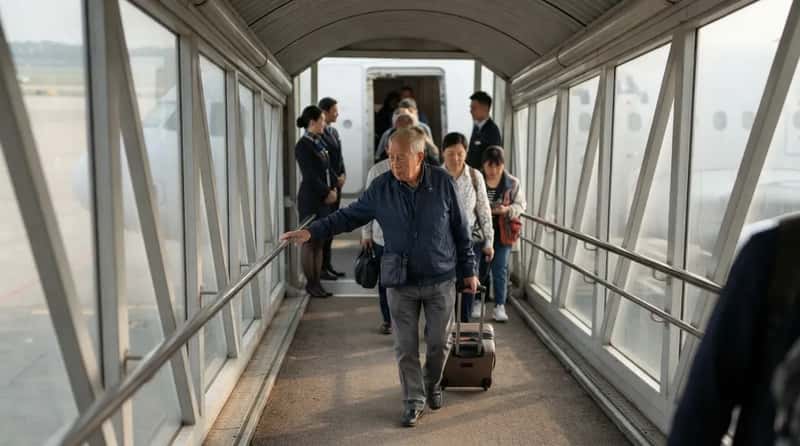
The greeting at the door is not only a greeting. Jet bridges slope, the floor can feel different from the terminal, and crew near the door can see who slows down, who reaches for the wall and who looks winded after a long walk to the gate. The sloped jet bridge is one of the first real balance tests of the trip. It is also the one most travelers never think about.
Crew are not guessing at anyone’s age or health. They simply notice who might use a steadier arm or a slower lane. Someone who looks tired from a long terminal trek may get a quiet offer of help. The next detail sits right at the threshold, and it trips up more people than the aisle does.
At a Glance
- Pace: does the walk slow down on the slope?
- Hands: is one drifting toward the wall or rail?
- Breathing: does the person sound winded after the gate trek?
- Hesitation: is there a pause right before the door?
2. The Tiny Step Over the Door Gap That Catches Everyone Off Guard
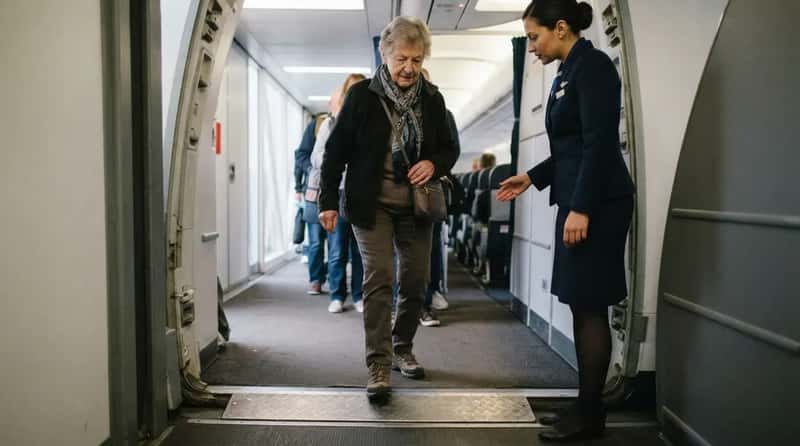
The jet bridge and the aircraft floor don’t always line up perfectly. There can be a small gap or a lip at the threshold, and crew know exactly where it is. They watch feet at that spot more than almost anywhere else. Many boarding stumbles happen in that one-step zone, not in the aisle.
A crew member who sees someone hesitate will often step closer without making a fuss. Sometimes it’s just a hand held out at the right moment, framed as a welcome. It’s a small move that prevents a big problem. Still, the most misunderstood boarding perk comes before anyone reaches the door.
3. Who Actually Takes Pre-Boarding, and Who Skips It
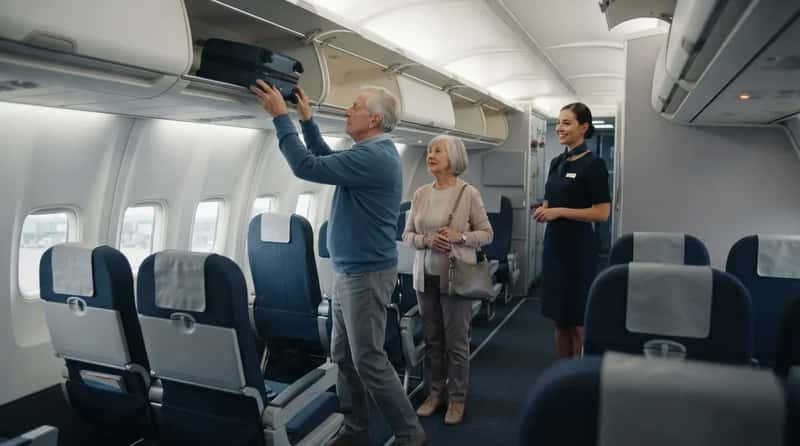
Pre-boarding exists for passengers who need extra time or help. Under U.S. Department of Transportation rules, airlines must offer it to passengers with disabilities who ask. Age alone doesn’t qualify anyone, and nobody is required to use it. Crew often notice the people who clearly could use it and decline.
Many travelers wave it off out of pride, then end up in the busiest part of the boarding crush with a heavy bag and a line breathing down their neck. That crowd pressure is often the real hazard. And the next item is where it hurts most.
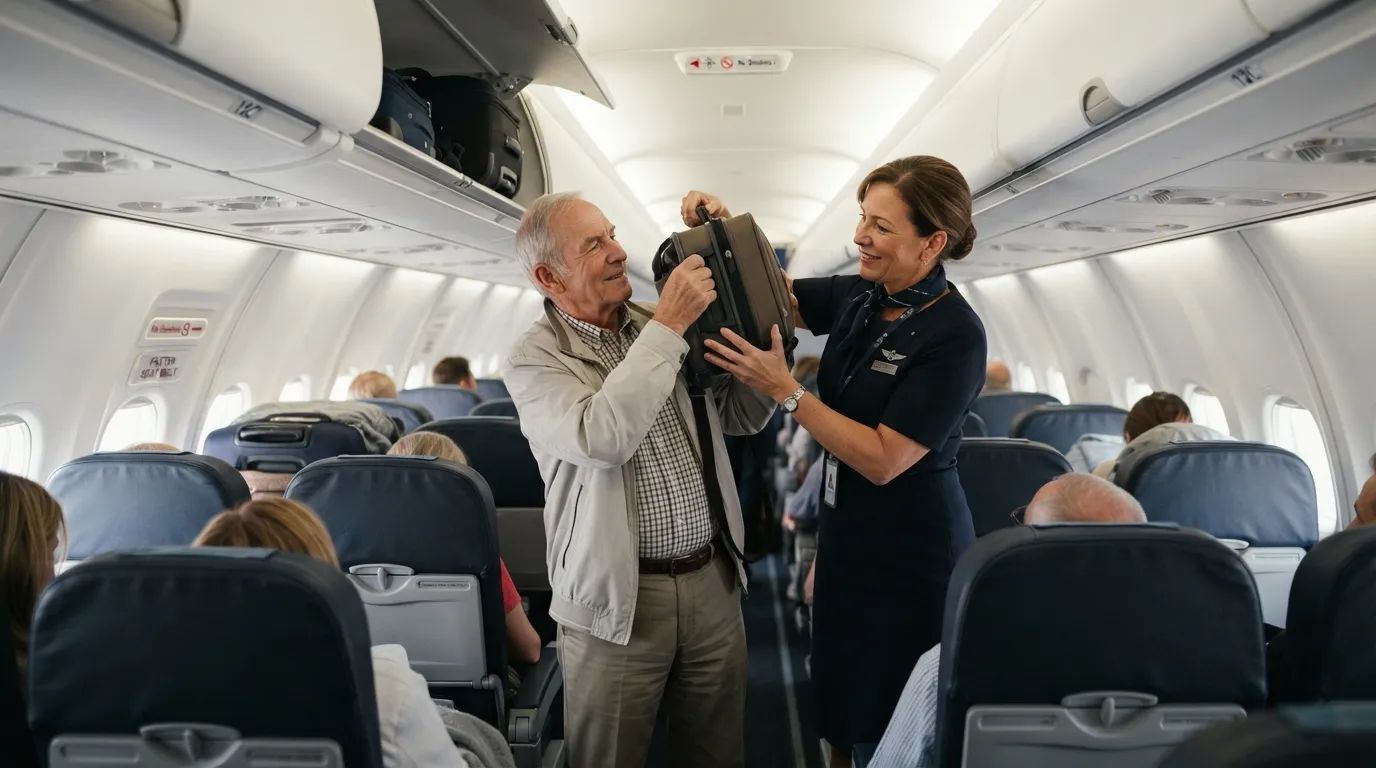
4. The Overhead Bin Lift That Goes Wrong in Slow Motion
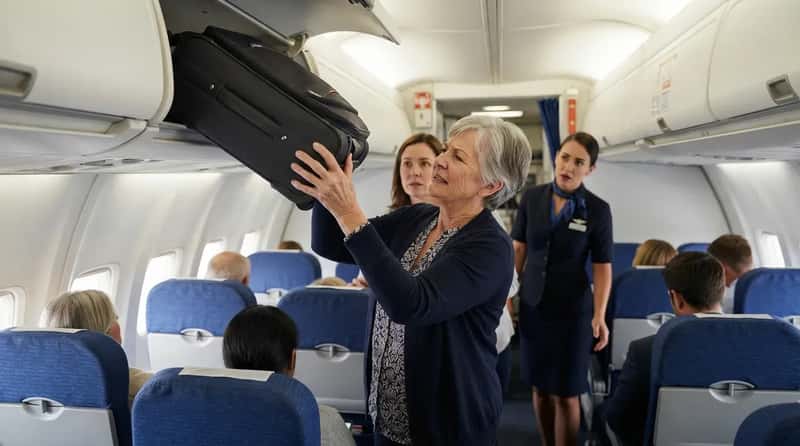
Lifting a bag above your head in a cramped aisle is a bigger physical task than it looks. Crew watch shoulders, wrists and the moment someone hesitates under a heavy carry-on. A badly lifted bag is a hazard to the person behind them as well.
Policies on helping with bags vary by airline and by crew member. Many will step in if asked, and some will offer without being asked. Gate-checking a heavy bag is a common fix, and it’s free on many flights. But bags aren’t the only thing crew track down the aisle.
5. The Seat-Back Grab That Reveals a Wobbly Aisle
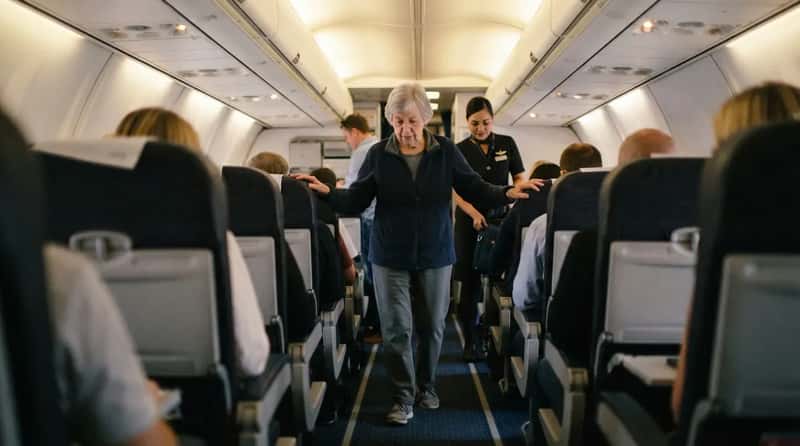
Aircraft aisles are tight, and the floor can shift with a bump of air. Crew notice who grabs seat backs for balance and who moves with confidence. That handrail habit is a quiet worry, because a tug on a seat can jolt the person sitting in it. The aisle is where an ordinary lurch can turn into a fall.
Crew sometimes offer a steadying hand, or ask someone to wait while a cart rolls past. It’s about the environment, not the person. Next comes a signal that has nothing to do with legs at all.
6. The Friendly Hello That Gets No Reply
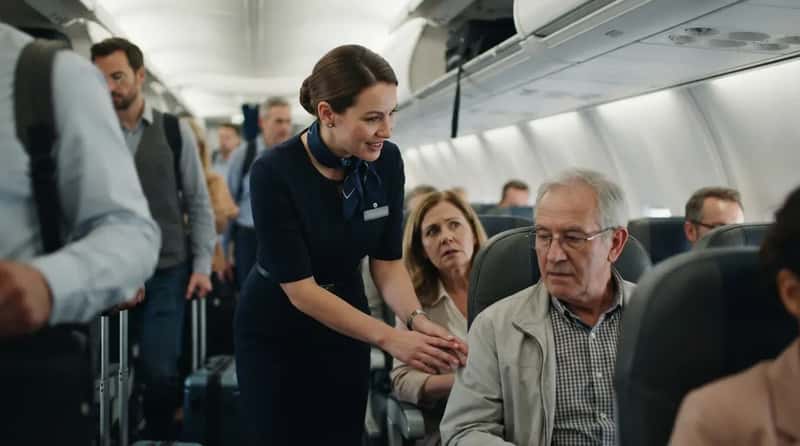
Crew say hello to everyone, and the response tells them something. A missed greeting might be hearing loss, a language gap, engine noise or plain distraction. It’s not rude and it’s not a problem, but it matters later. The safety briefing depends on people being able to hear it.
If a passenger seems to have missed something, a crew member may repeat it directly and clearly. A light tap and a clear view of the speaker’s face work better than raising their voice. And that same instinct for understanding shows up at one very specific row of seats.
7. The Exit Row Question Everyone Gets Asked
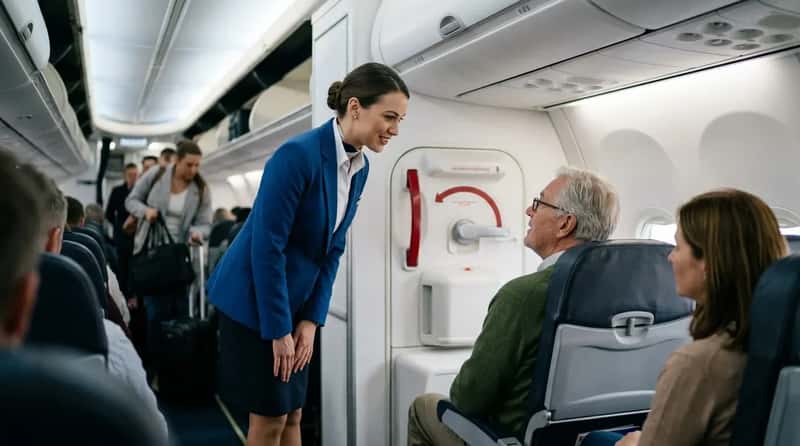
Federal rules require passengers in exit rows to be able and willing to help in an evacuation. That means opening the door, following instructions and moving quickly. Crew confirm this before takeoff. Age by itself is not what disqualifies anyone. What a person can physically do is.
Plenty of travelers hear the question as a hint that they look old. In reality, crew ask it of everyone seated there. Some passengers feel singled out when they’re moved, but the rule exists to put people in those seats who can do the job when seconds count. The next item can’t be judged by how someone looks at all.
Fast Facts
- Exit row passengers must be able to understand crew instructions, whether spoken or written.
- They need enough mobility, strength and dexterity to operate the exit and help others out.
- Anyone can decline an exit row seat, and crew don’t ask for a reason.
- Children and travelers who need assistance are not seated there.
8. The Portable Oxygen Battery That Has to Outlast the Flight
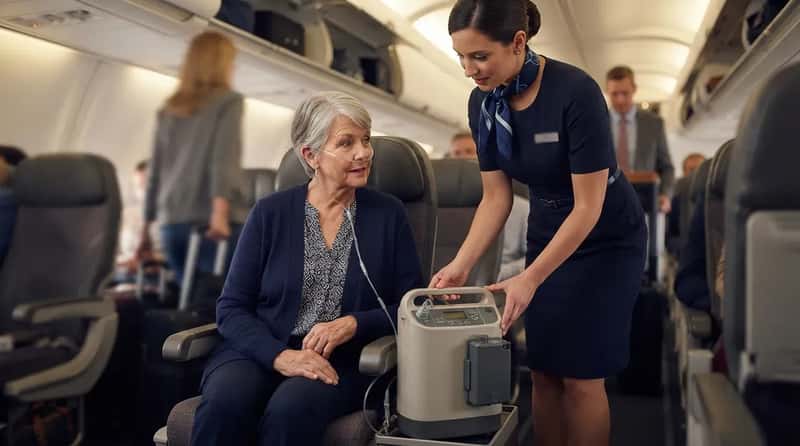
Many older travelers rely on a portable oxygen concentrator. Airlines only allow models approved by the FAA, and passengers generally can’t bring their own compressed oxygen tanks. Airlines expect enough battery to cover the whole journey, with a generous buffer for delays.
Crew check that the device is stowed where it won’t block the aisle and that spare batteries are packed safely. It’s a logistics check, not a judgment. The same logic applies to something much smaller in the bag.
9. The Medication Bag Buried in the Overhead Bin
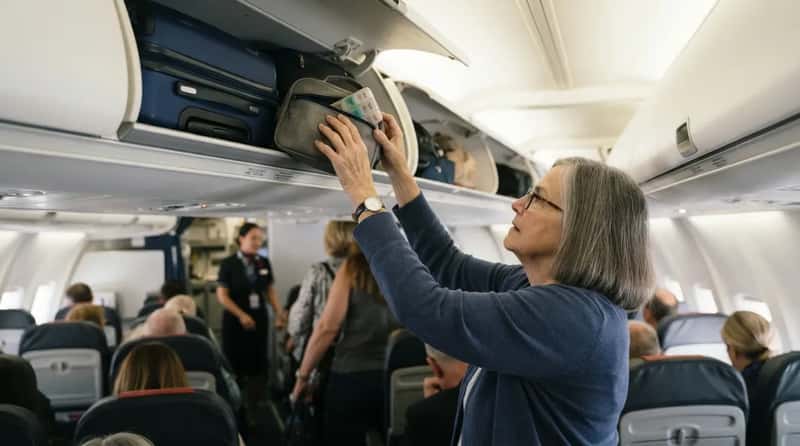
A pill organizer stuffed into a bin overhead is a classic boarding mistake. If a dose comes due mid-flight, getting to it means standing in the aisle and reaching up. Delays, diversions and long taxi waits can easily push a dose past schedule.
Crew notice when someone puts essential items out of reach. Travelers are usually advised to keep medicines in a small bag under the seat, along with a written list of what they take. That list matters even more if something goes wrong. And speaking of things going wrong, crew have a quiet checklist for that too.
10. The Color, Breathing and Sweat Check Before Takeoff
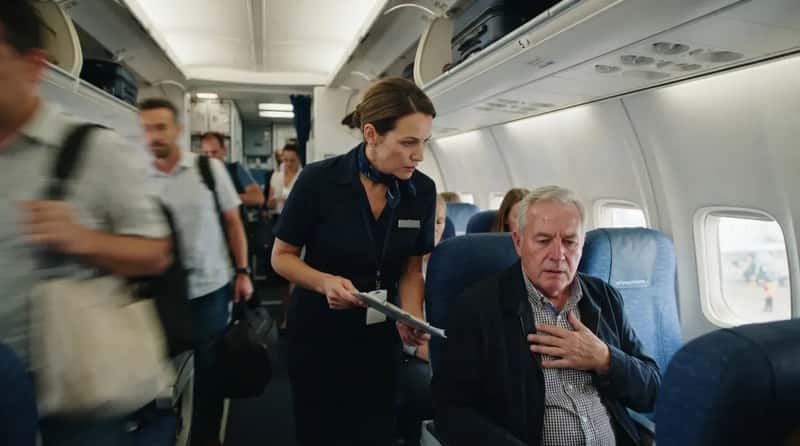
Crew are not doctors, but they are trained to notice when something looks off. Pale or flushed skin, heavy breathing, a sudden sweat or a hand pressed to the chest can all be warning signs. They also know where the medical kit is. U.S. aircraft with flight attendants carry an automated defibrillator.
If someone looks unwell during boarding, it’s far easier to deal with at the gate than at 35,000 feet. Crew may ask a quiet question or call for help. But a different kind of check begins at the airport, long before anyone reaches the plane.
11. The Wheelchair Handoff That Doesn’t Always Go Smoothly
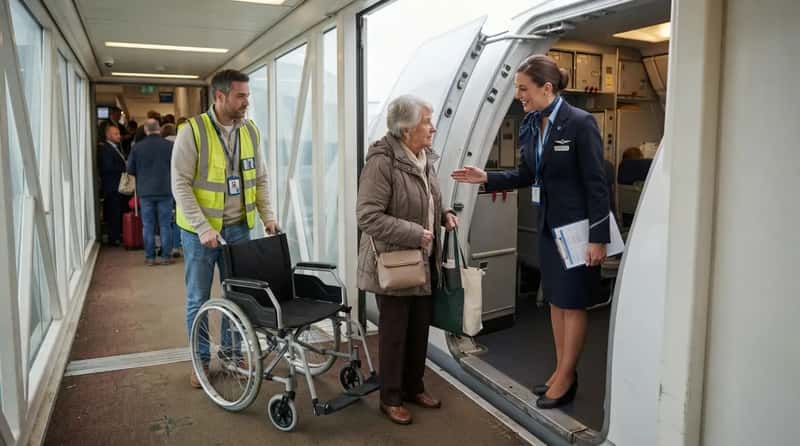
Airport wheelchair assistance is free, and it’s often used by people who can walk short distances but not the length of a terminal. Crew see the handoff from the gate to the aircraft door. Needing a wheelchair through the airport does not mean someone can’t walk.
What crew need to know is whether the passenger requires help to reach the seat. A short, friendly conversation sorts it out and keeps the aisle moving. Still, some travelers arrive with no companion at all, which changes the picture.
12. The Passenger Who Can’t Quite Find Their Seat
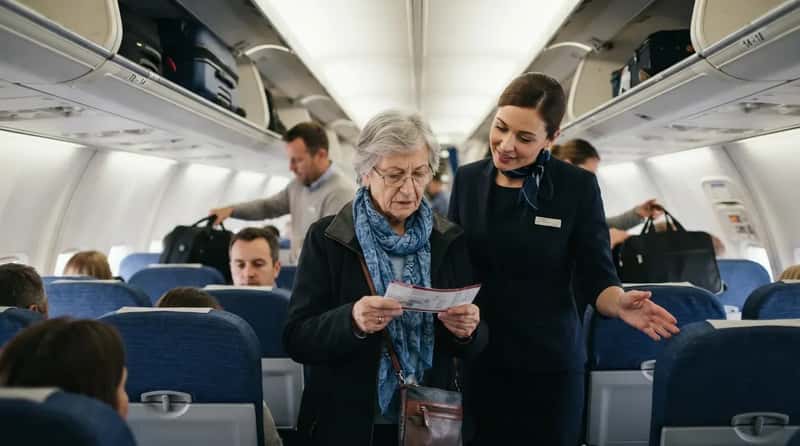
Everyone double-checks a boarding pass in a crowded aisle. But crew pay closer attention when someone seems truly lost, repeats a question or can’t find the right row even after help. That can be stress, a tight connection or something more. A kind redirect looks identical whether the cause is nerves or confusion.
Crew are careful here, because assuming memory trouble based on age is exactly the wrong move. They check the boarding pass, walk the person to the row and keep their tone warm. Nobody is diagnosed, and nobody is embarrassed. The next sign involves who is, or isn’t, sitting beside them.
13. The Solo Traveler With No One to Flag Trouble
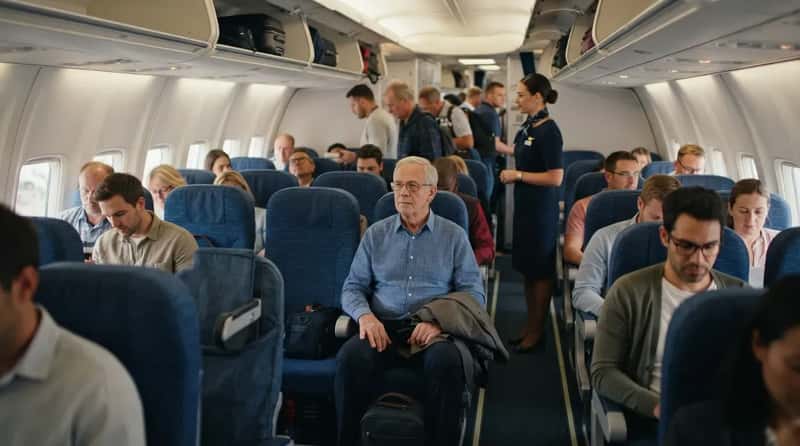
When a couple or family travels together, there is someone to speak up. A solo passenger has to do it alone. Crew often keep a mental note of where those passengers sit, especially on longer flights. Quiet travelers can go unnoticed for hours unless someone is looking.
This isn’t about being fragile. Crew do the same for anyone who might need a quick check-in. A simple wave and a smile at the right moment can be enough. And the next item is about something nobody notices until they’re already tired and thirsty.
14. The Declined Water and the Dry Cabin Air
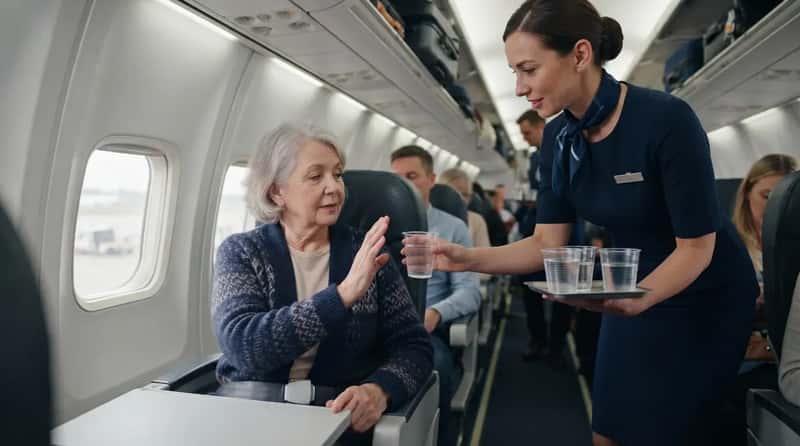
Cabin air is very dry, and many travelers skip drinks to avoid trips to the restroom. Crew notice who keeps saying no to water. Skipping fluids is a common habit that can leave people tired or lightheaded by landing.
Thirst signals can weaken with age, so a friendly offer of water often helps. Crew can’t prescribe anything, but they can top up a cup without being asked. It’s about the smallest kind of care on the plane, and one of the easiest to miss. A more serious long-flight concern comes next.
Worth Knowing
- Cabin humidity is typically far lower than in most homes, often well under 20 percent.
- Thirst can arrive late, so waiting to feel thirsty isn’t a reliable cue.
- Asking for a full cup of water at boarding costs nothing and saves a later flag-down.
- An aisle seat makes restroom trips easier, which makes sipping less of a hassle.
15. The Swollen Ankles and the Long-Flight Clot Worry
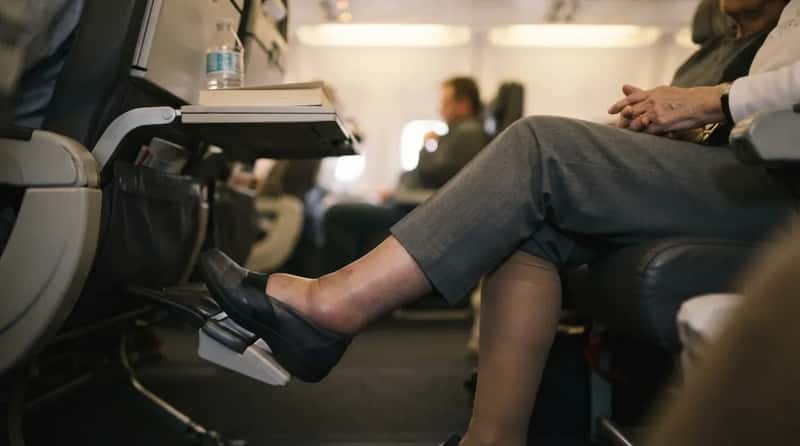
The CDC notes that sitting still for four hours or more raises the risk of blood clots in the legs. Older age is one of the risk factors. Crew keep an eye out for passengers who stay locked in their seats on long flights. Simply moving around the cabin is among the most common pieces of advice.
Crew may remind passengers they’re free to stand when the seat belt sign is off. It’s a gentle nudge, never an order. Next up is a piece of gear that can cause more trouble than expected.
16. The Cane or Walker With Nowhere Safe to Go
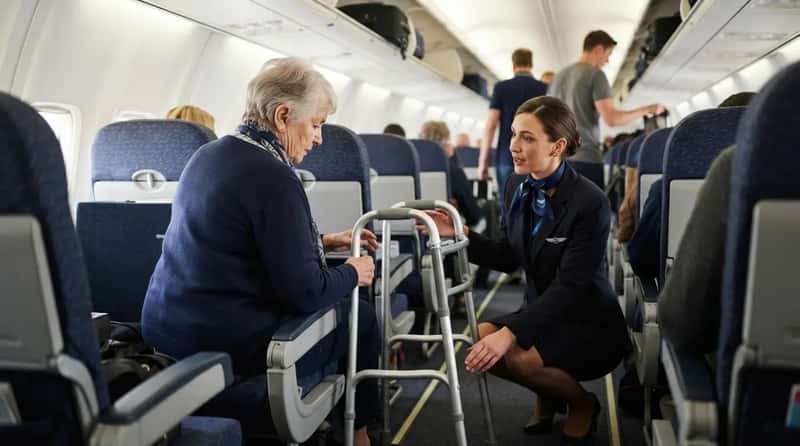
A cane, walker or folding mobility aid has to go somewhere safe. U.S. rules let passengers keep canes in the cabin, but they can’t block the aisle or an exit. Crew think about evacuation routes before a single passenger sits down.
Aircraft are certified to be emptied in about 90 seconds in evacuation tests, so a loose cane in the wrong spot matters. Crew solve it quickly and quietly. Then there’s the passenger whose challenge isn’t physical at all.
17. The First Flight in Years, and Nerves That Look Like Something Else
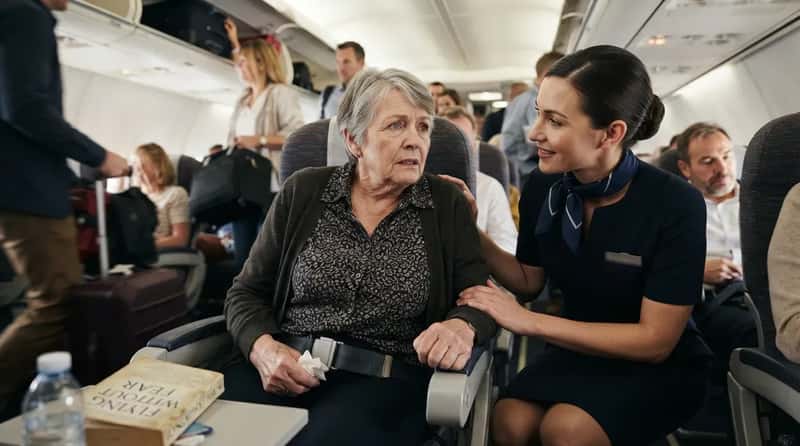
Some older passengers haven’t flown since before the pandemic, or in decades. Security lines, apps, digital boarding passes and self-service kiosks have changed a lot. Fear of flying and fear of making a mistake can look exactly the same from the outside.
Crew read tight shoulders, a white-knuckle grip on the armrest and nervous questions as signs that a calm word would help. Explaining what the engine noises or the bumps are can settle a lot. It costs nothing, and it’s often the most appreciated thing crew do. The last signal is the hardest one to catch.
Quick Compare
- Flight nerves: a tight grip and questions about every noise. A calm explanation of what’s normal helps most.
- Tech trouble: a phone held out and a puzzled look at the boarding pass. A quick walk to the right row solves it.
- Plain fatigue: slow, quiet and a bit drained. A seat, a cup of water and some space do the trick.
18. The Quiet “I’m Fine” That Comes a Little Too Fast
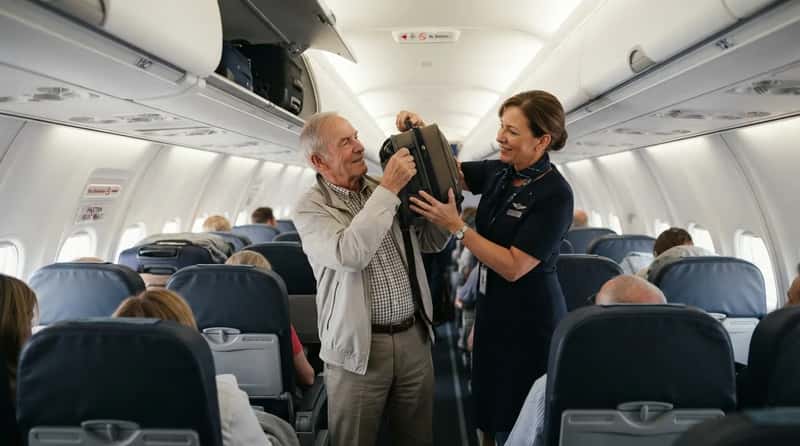
The sharpest instinct among experienced crew is noticing what isn’t said. Many people don’t want to be seen as needing help, especially if they’ve traveled independently for decades. Pride is often the one thing that keeps someone from asking.
So crew often phrase offers carefully, such as “Let me get that for you,” instead of “Do you need help?” It protects dignity while solving the problem. That small choice is probably the real skill behind every item on this list.
Cabin crew aren’t scanning passengers over 65 for age. They’re reading balance, hearing, breathing, medication, mobility aids and pride, all within the few seconds of a hello.
Next time you board, watch the person at the door. That smile is doing a lot more work than it looks like.