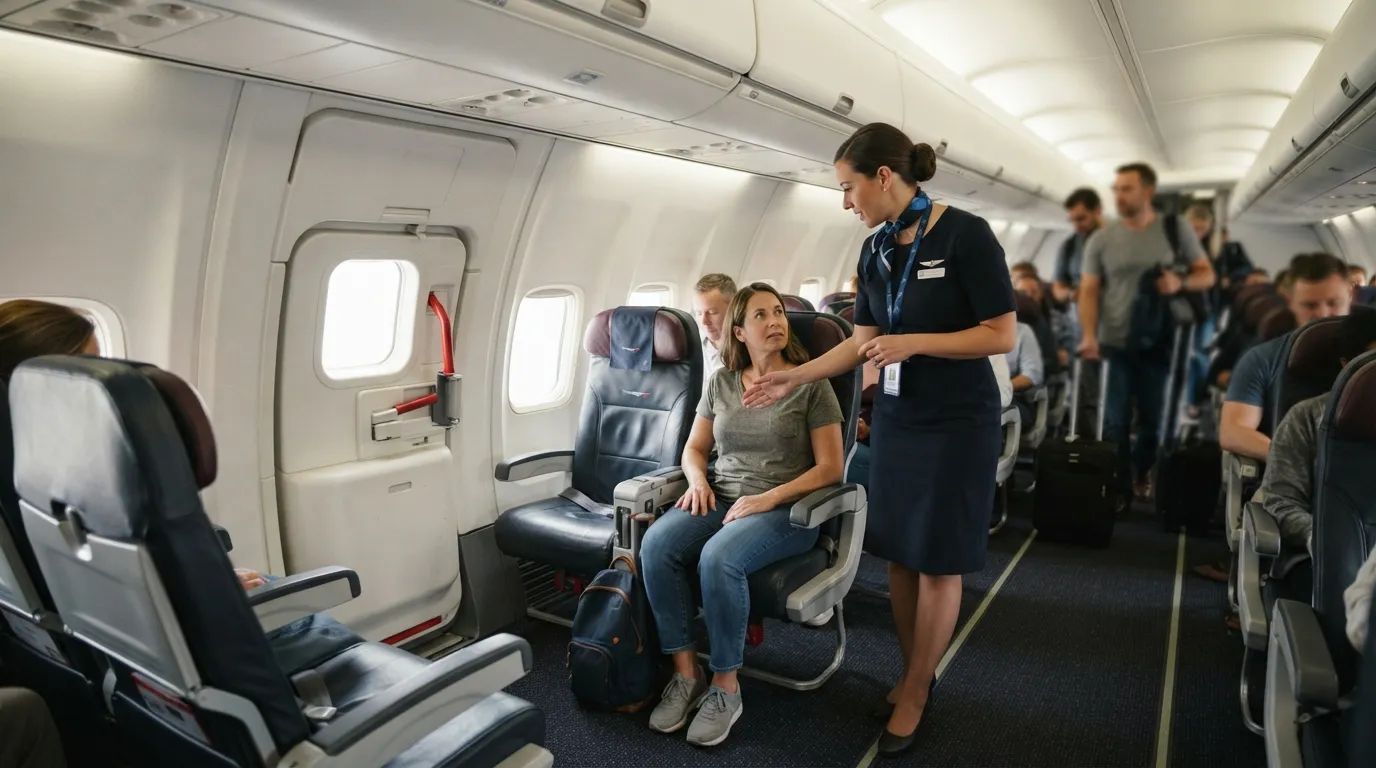
You hold out your phone, the scanner beeps, and you stroll past the one person who can still derail your trip. Around that beep, 15 checks are quietly happening that most passengers never notice.
Most of them were settled days ago, by what you booked and packed. The smallest item sits at #1, and its rule only kicks in after an agent takes your bag.
#15 – Scanning Your Boarding Pass at the Door
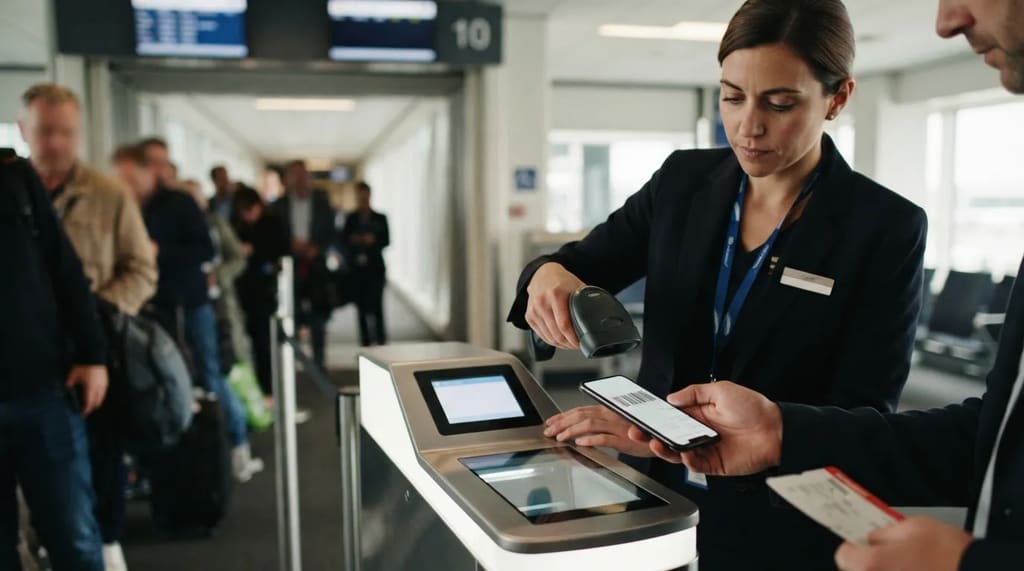
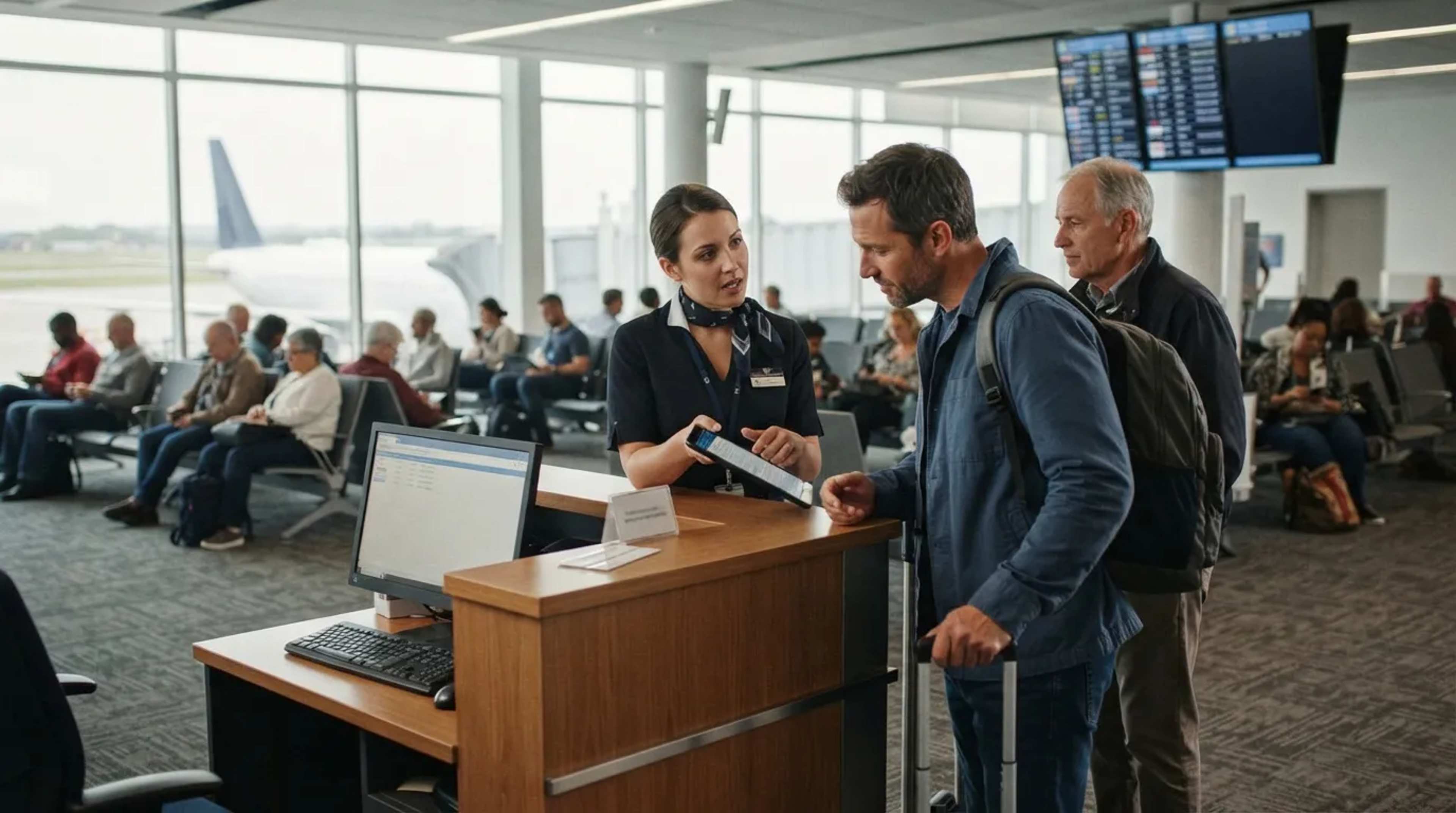
Some airports now have credential scanners at the TSA checkpoint that read your photo ID and confirm your booking, so you may not be asked for a boarding pass there. You still show the pass or app to the airline’s gate agent before boarding, according to The Points Guy.
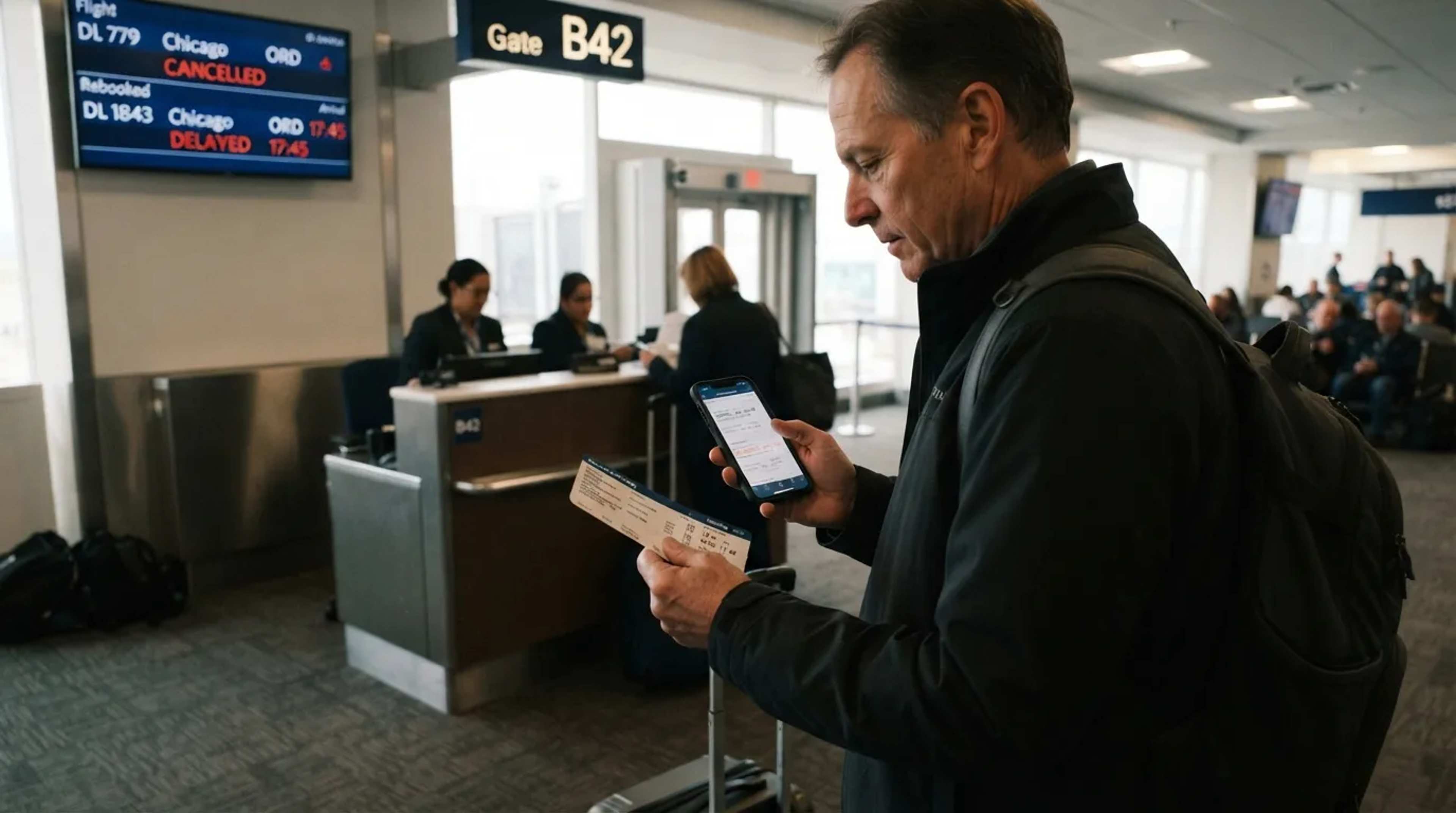
That gate scan is where the airline records you as boarded, so a dead phone in the terminal is a real problem. A screenshot or paper copy costs nothing and is worth having on a long travel day.
A clean scan says nothing about whether the name on the pass matches your ID, and that comparison is where boarding can stall.
#14 – Whether Your Ticket Name Matches Your ID
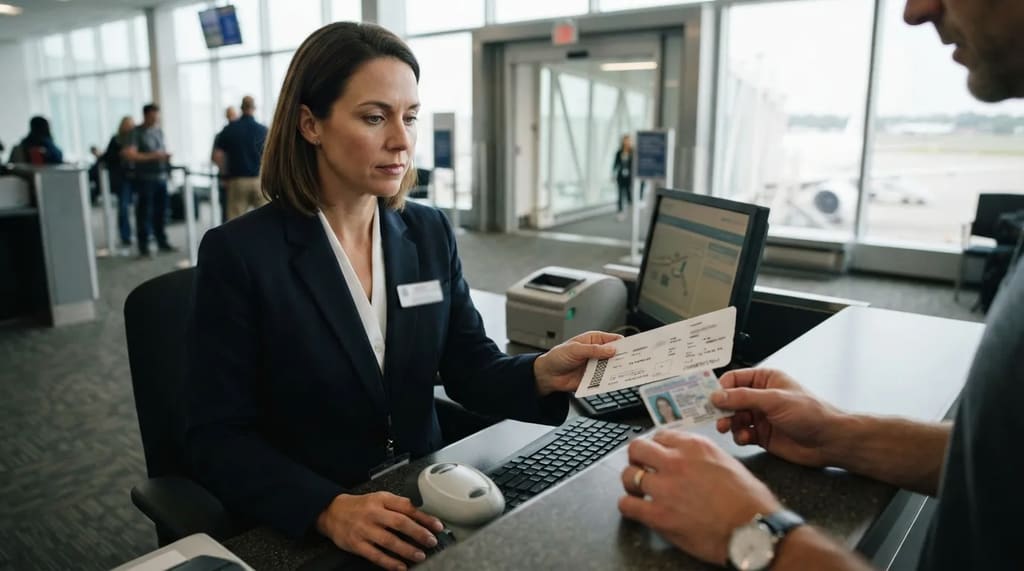
On a domestic flight the gate agent may ask for the pass alone. Agents can still ask for ID at boarding, even though most ID checking happens at security.
If the name on the ticket doesn’t match your ID, an agent can refuse boarding until it’s resolved.1 Name-change policies vary by airline.
TSA’s scanners connect to the Secure Flight database, which holds the details of every passenger booked to fly that day. Your booking name is already in front of TSA before you reach the gate.
Call the airline the day you spot a typo or a name change. That fix is a phone call at home and a negotiation at the gate.
On domestic trips that is usually the end of the document checks; on international ones, the document being compared changes.
#13 – Your Passport on International Flights
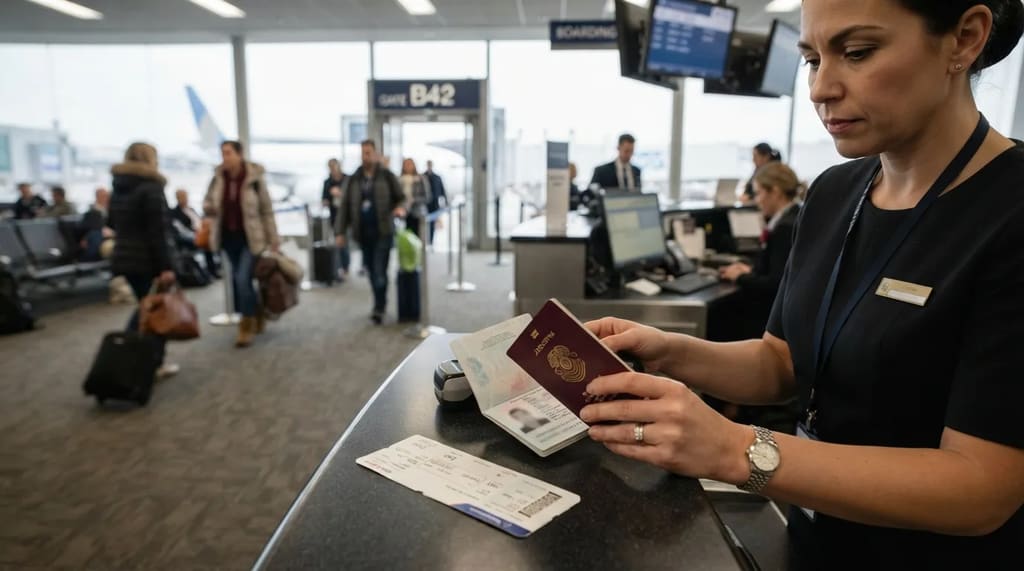
For an international flight, your passport is required at check-in and checked again at the gate before boarding. The same applies when a domestic leg connects to an international one.
On a purely domestic trip, the agent wants only the boarding pass. At airports that use facial matching at the gate, a camera may stand in for the booklet, but you still need to carry it.
Quick Compare
- Domestic flight: boarding pass at the gate, with ID checked mainly at security
- International flight: passport at check-in and again at the gate
- Domestic leg into an international trip: the passport rule applies
- Facial matching gate: a camera may replace the booklet, but carry it anyway
Keep the passport in the same pocket as the boarding pass from check-in on. It gets asked for twice, and a boarding line is a poor place to dig through a bag.
That passport is also the simplest answer to a problem that starts at the checkpoint: the license with no star.
#12 – The Star in the Corner of Your License
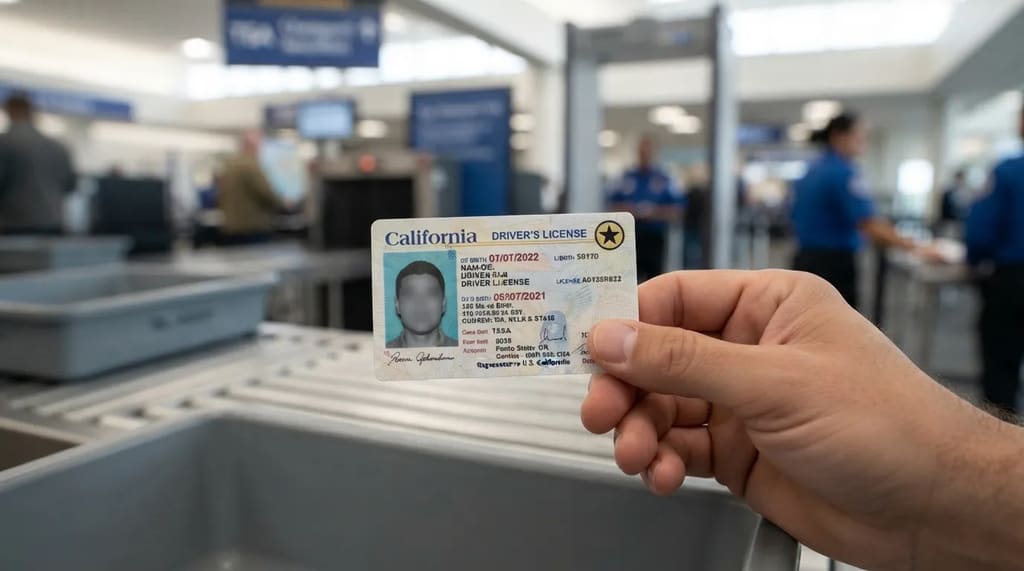
Since May 7, 2025, a driver’s license has needed to be REAL ID compliant for domestic air travel, and compliant cards are marked with a star at the top. TSA checks this at the checkpoint, not the airline at the gate, but it decides whether you reach the gate calmly.
If your state ID isn’t compliant, you may have to pay a fee at the airport to use TSA ConfirmID. A current passport can stand in for a REAL ID, so if you already carry one, a DMV trip just for flying is optional.
Getting the star usually means a DMV appointment, and what you walk out with that day is not always a card TSA will take.
#11 – A Temporary Paper License From the DMV
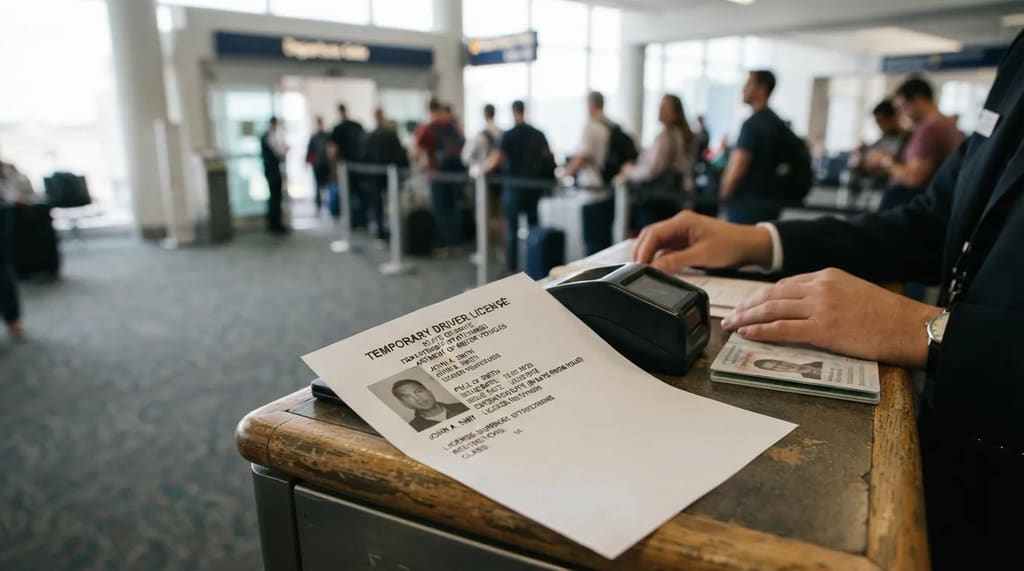
TSA typically does not accept temporary IDs, because they’re easier to alter or counterfeit than an official ID. That includes the temporary paper license handed over at a REAL ID appointment, which matters if you renew shortly before a trip.2 3
Without another ID, agents have procedures that can include checking public databases, asking personal questions or contacting the issuer. All of that takes time you may not have when your boarding group is about to be called.
If the permanent card is still in the mail, carry a passport or passport card, since passport cards are accepted.2 That one backup removes the whole question.
Once the paperwork passes, the agent’s eyes tend to drop to something much bigger: your bag.
#10 – Carry-On Size Frames, Present or Missing
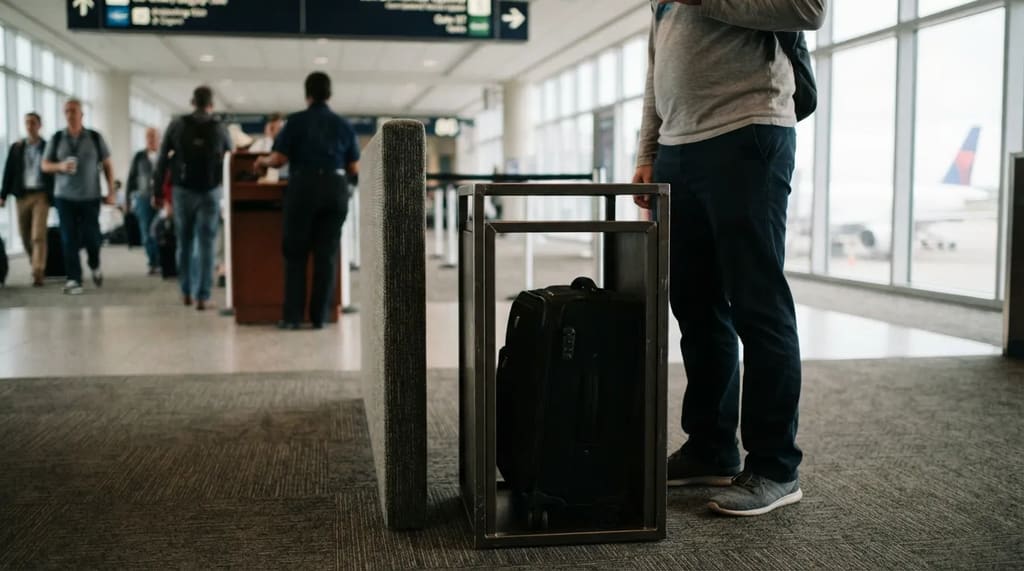
At most U.S. airlines, enforcement is visual and inconsistent, and agents rarely pull out a measuring tape, according to KAYAK. European and budget carriers are far stricter, using sizer boxes and charging gate fees for non-compliance, and Spirit is among the airlines that commonly use them.
The picture is shifting. American removed carry-on bag sizers from all gate areas systemwide beginning October 6, 2025, according to a reported internal memo, and enforcement now favors earlier checkpoints, where lobby and check-in staff flag oversized bags.
Reports on United conflict: one describes sizers moved to the check-in lobby, another automated scanners at over 35 airports. Either way, the size limit hasn’t moved, and an obviously oversized bag still gets sent to the hold.
A bag that passes the size test can still be charged for another reason, and it has nothing to do with the bag itself. It’s the fare you booked it under.
#9 – The Fare Type Behind Your Bag
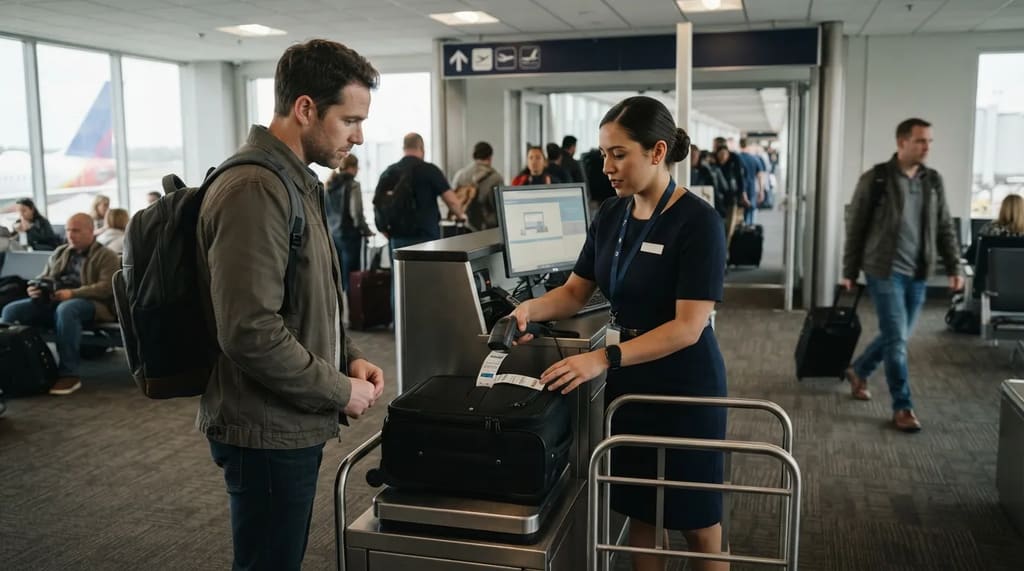
On restrictive basic economy fares, a standard carry-on brought to the gate can trigger the checked-bag fee plus a gate handling fee, as United’s rules have specified. Spirit and Frontier go further: they charge their standard carry-on fee when a bag doesn’t qualify as a personal item and you haven’t paid for carry-on access.
So a bag can pass the frame and still be charged, because the fare decides whether a roller bag was ever included.
A bag that clears the frame and the fare can still be stopped by a scale.
#8 – Carry-On Weight on Budget and European Carriers
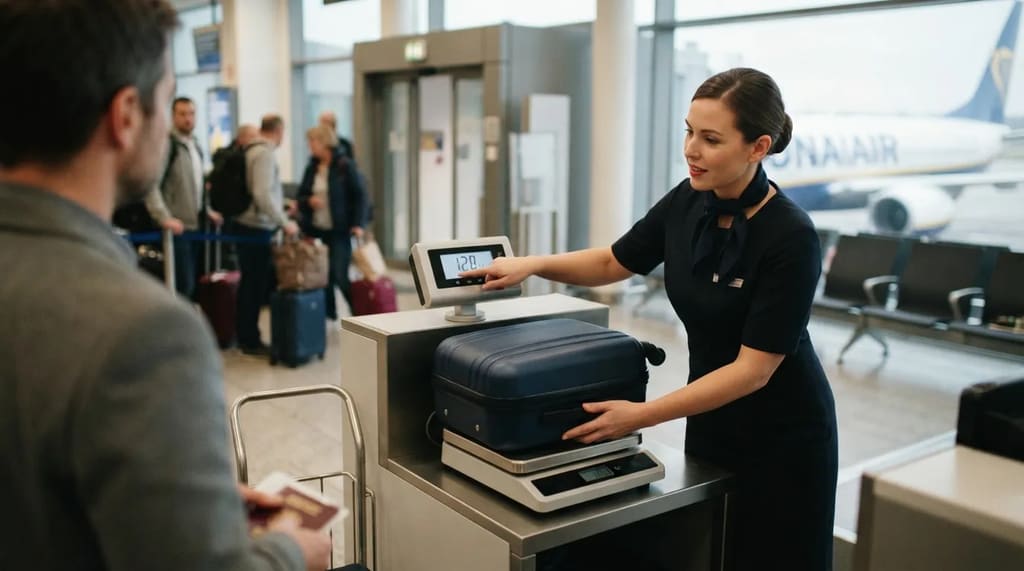
If your airline has a carry-on weight limit, stay within it. Whether anyone checks depends heavily on who you fly.
At a Glance
- Most U.S. airlines: carry-ons are rarely weighed, and enforcement tends to focus on size
- European and budget carriers: some routinely weigh bags at check-in or the gate
- Over the limit: extra fees, or being required to check the bag before boarding
That makes weight a check that depends on the trip. Ignore it on a domestic nonstop, but if any leg is on a European or budget carrier, weigh the bag at home.
A bathroom scale will do: weigh yourself holding the bag, then subtract your own weight.
Even a bag you’ve flown with a dozen times can fail, and the culprit is sometimes printed right on its own label.
#7 – Suitcase Labels and Expansion Zippers
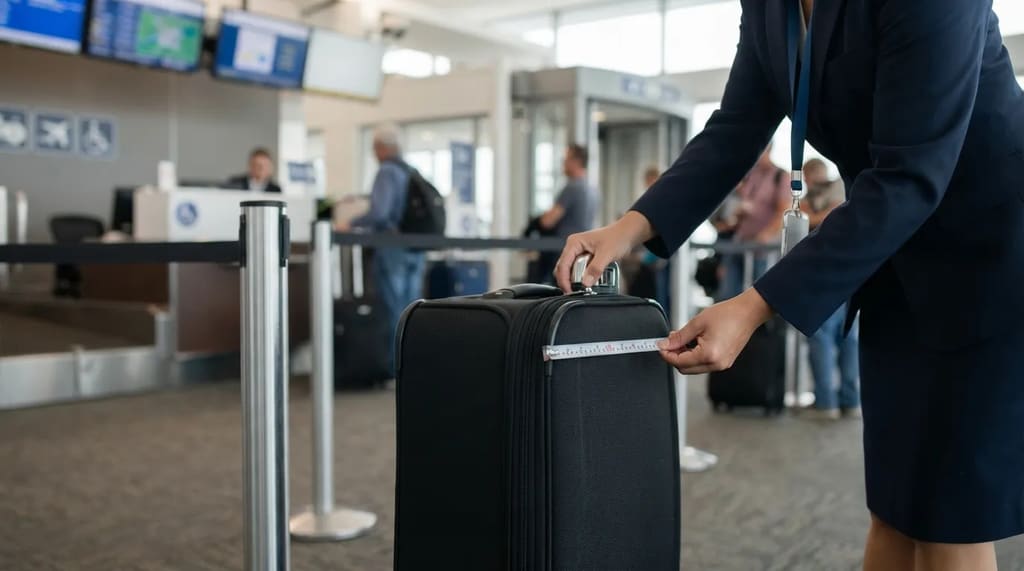
United has cautioned that a bag claiming to be “official carry-on size” may not meet its limits, and the airline has used tape measures to enforce its policy. A manufacturer’s label is a sales claim, and the airline’s number is the one that counts.
Expansion zippers cause a similar problem, because a zipper that adds an inch can push a compliant bag past the limit. Measure the outside of the bag with wheels and handles included, and keep the expansion zipper closed.
A bag that has been fine on past trips deserves a tape measure anyway. The same bag can pass a U.S. gate and fail a stricter airline’s sizer.
And sometimes a bag that passes every test still gets tagged, simply because of who else is boarding.
#6 – Bin Space on a Full Flight
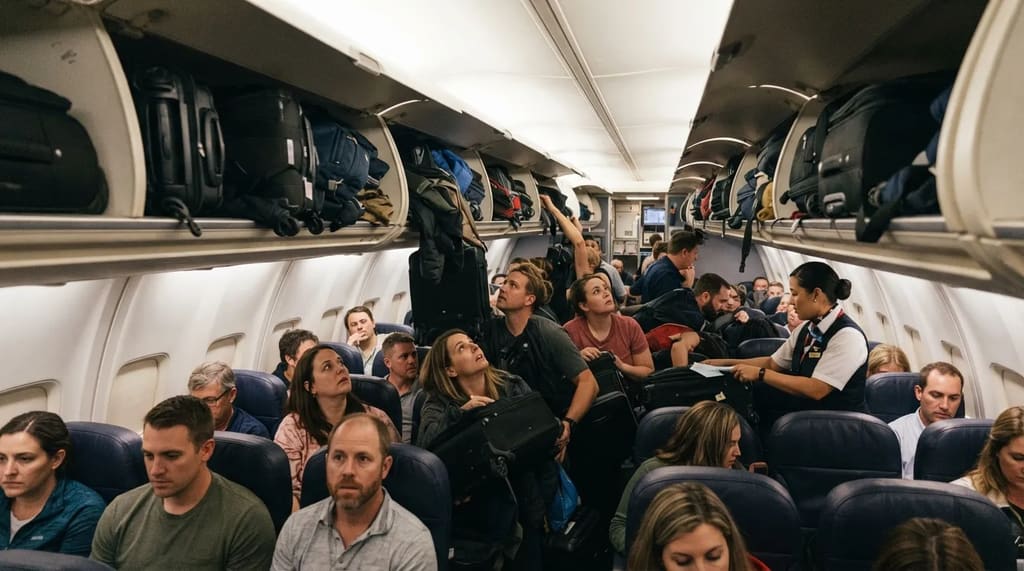
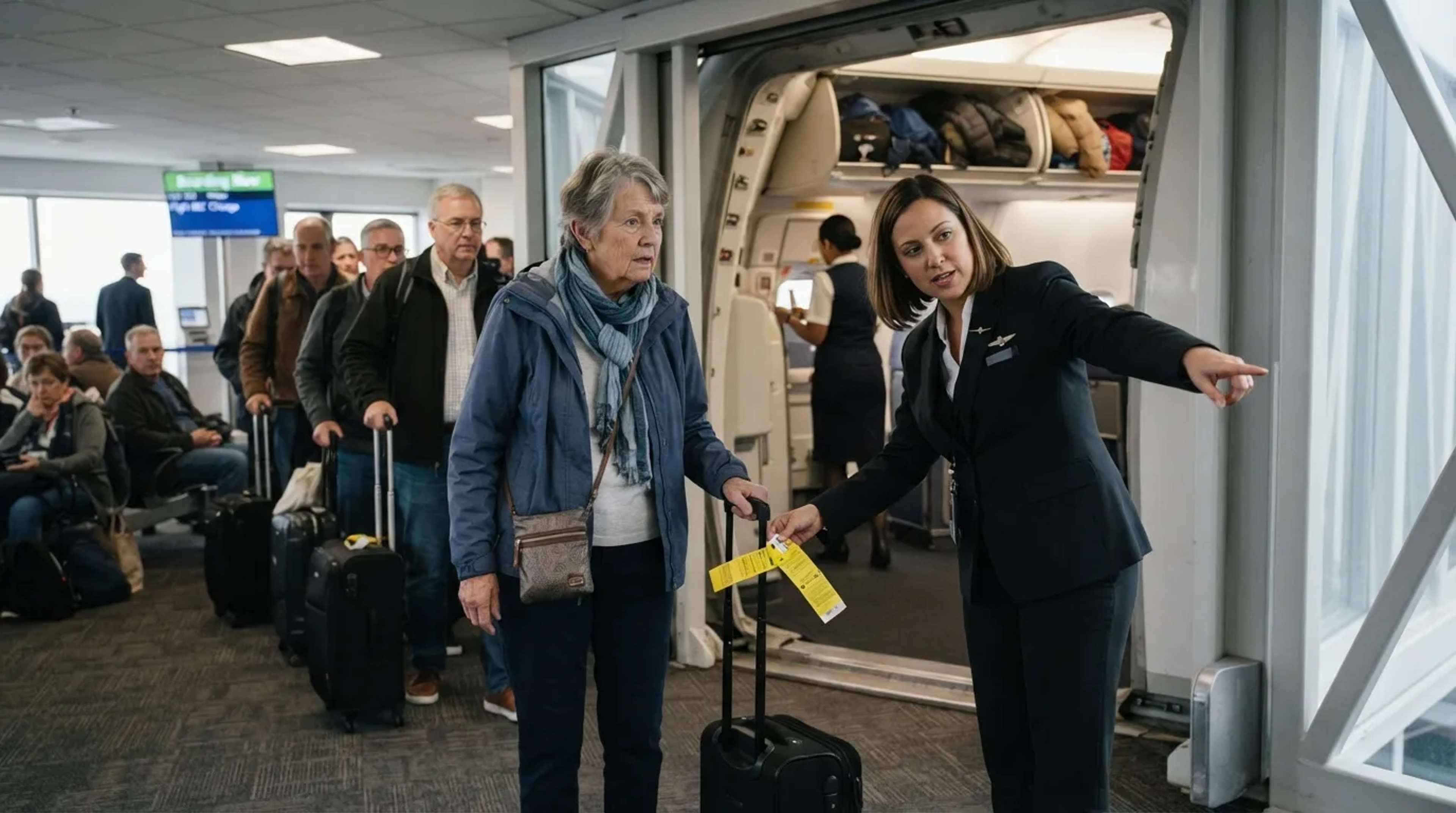
On a full flight, overhead bins fill before the last boarding group reaches the door. Gate agents then tag more bags for the hold, even bags that would have passed on an emptier day.
That is why boarding by group exists. United has reconfigured its gate areas to separate boarding groups, aiming to bring order and speed to boarding.
If you are in a late group with a roller bag, decide in advance what you would pull out if it were tagged. The check-in counter is the cheaper place to give up a bag than the jet bridge.
Bins are one shared limit on the plane; exit rows are another, and they carry conditions that a ticket price does not waive.
#5 – Who Is Allowed in the Exit Row
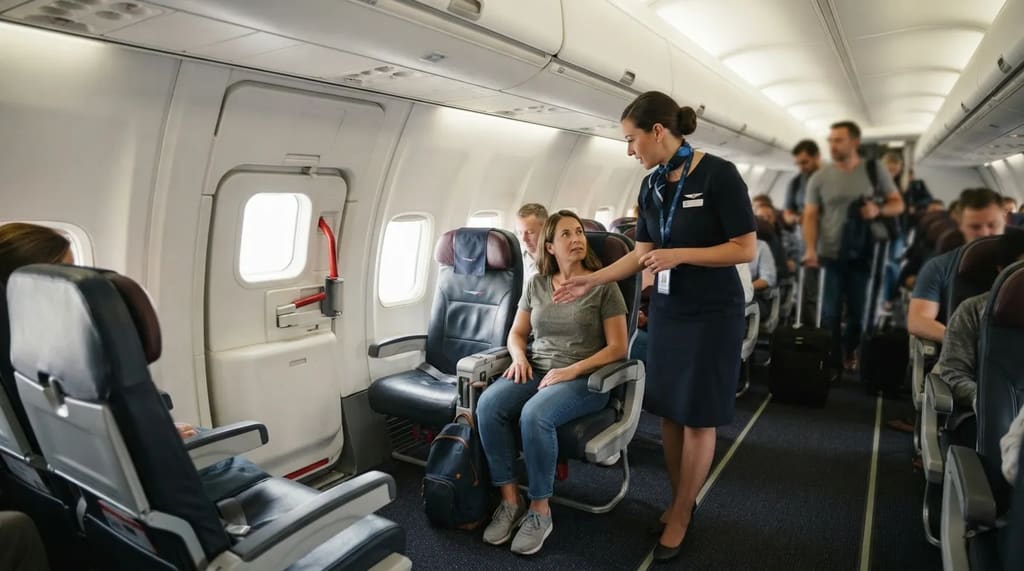
The FAA’s exit-seat rule, 14 CFR 121.585, sets conditions for anyone sitting in those rows. In plain terms:4
- At least 15 years old
- Physically able to operate the exit door
- Able to communicate in the crew’s language
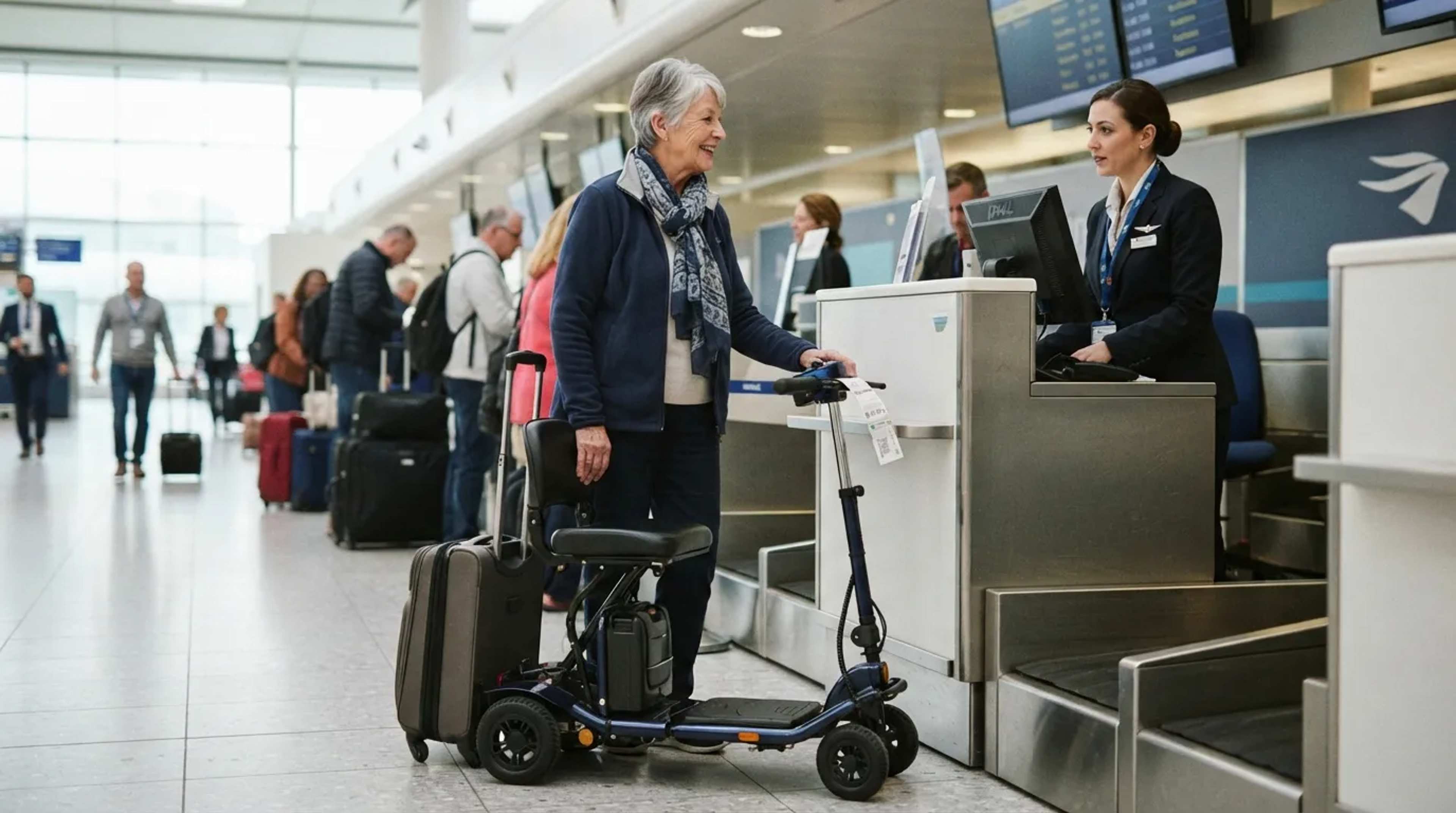
- Free from mobility aids or infant-care duties
Crew must confirm before pushback that exit seats are occupied by able passengers.5 Some carriers require exit-row passengers to check in with an agent who verifies eligibility by hand.
Exit rows often have a few more inches of seat pitch, though not all offer extra legroom. A seat bought for legroom is really a job.
Delta’s site says you must not have a condition that might cause you harm if called upon to perform an exit row function. If you have a bad shoulder or back, take the regular seat even when the exit row is free, because the crew will ask you to confirm and the answer should be honest.
Meeting the criteria yourself is not enough when someone else is sitting beside you.
#4 – The Empty Exit Seat and Your Row-Mates
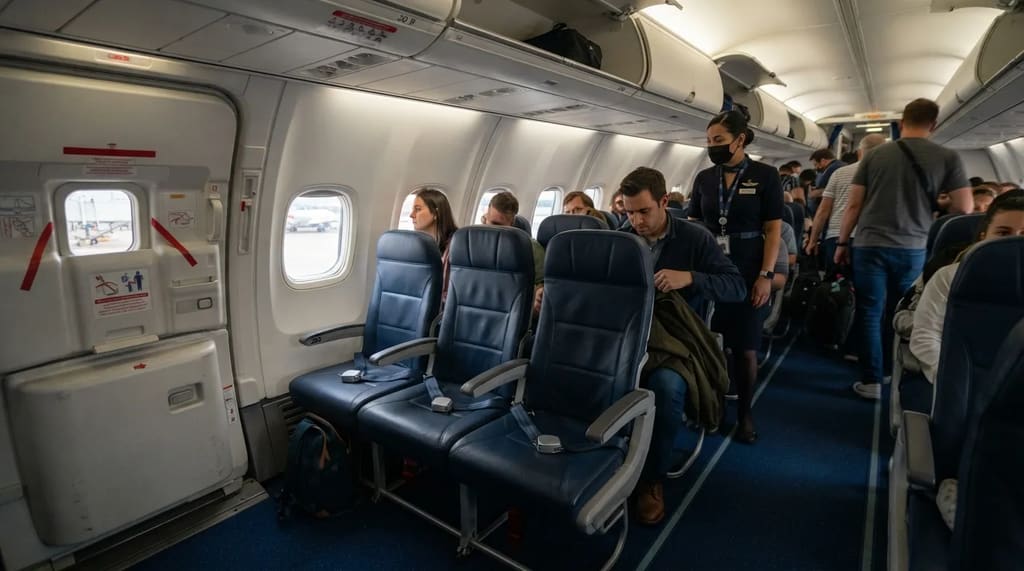
Every person in the row must meet the criteria independently and agree to assist, so a qualified traveler cannot vouch for a companion. A cast or brace may disqualify a passenger unless they can safely perform all required duties.4
Fast Facts
- Pets, including service animals, are never allowed in exit rows
- Headphones during the briefing aren’t permitted, because passengers must hear, understand and verbally confirm the instructions
- Moving into an empty exit-row seat isn’t allowed without crew approval, even after takeoff
- Each passenger in the row is judged on their own, not as a group
The Points Guy notes that under federal rules, if the only remaining seat on a flight is in an exit row and you don’t meet the requirements, you can be involuntarily denied boarding.
Ask for a different seat at the counter instead of accepting the last one offered.
Companions can sort out seating; they cannot sort out what happens when an agent tags your bag for the hold.
#3 – What Rides Along in a Gate-Checked Bag
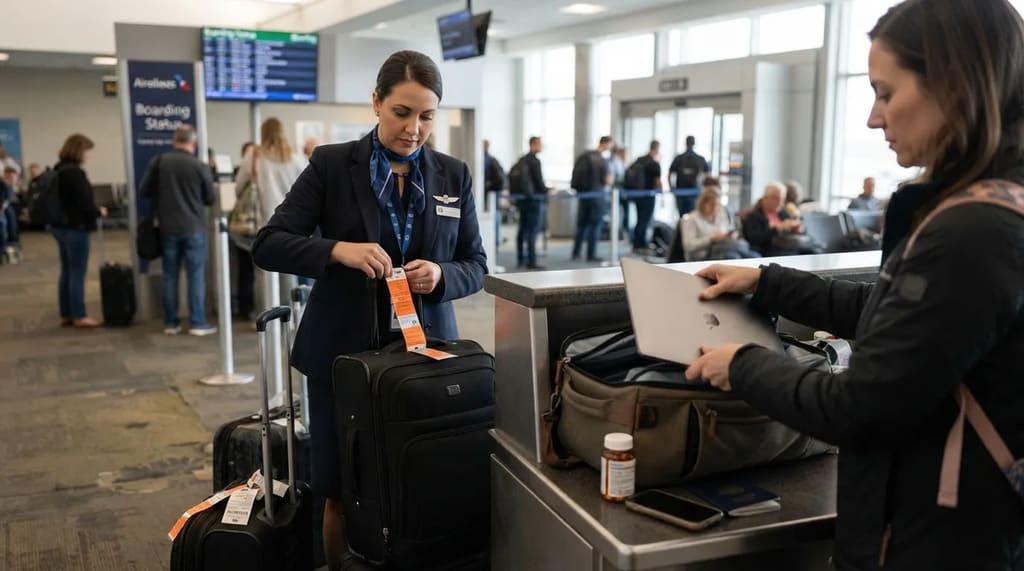
Gate-check fees are often higher than standard checked-bag fees. That makes the counter the better place to give up a bag if you have any doubt.
Whatever is inside goes with the bag. If you have a laptop, valuables or medication in your carry-on, remove them before surrendering it.
Treat medication as the one item that never goes into a bag that might be tagged. A checked bag can arrive late, and a missed dose is a worse problem than a missed shirt.
One item in that bag has a federal limit of its own, stated in watt-hours instead of inches.
#2 – Watt-Hour Ratings on Power Banks
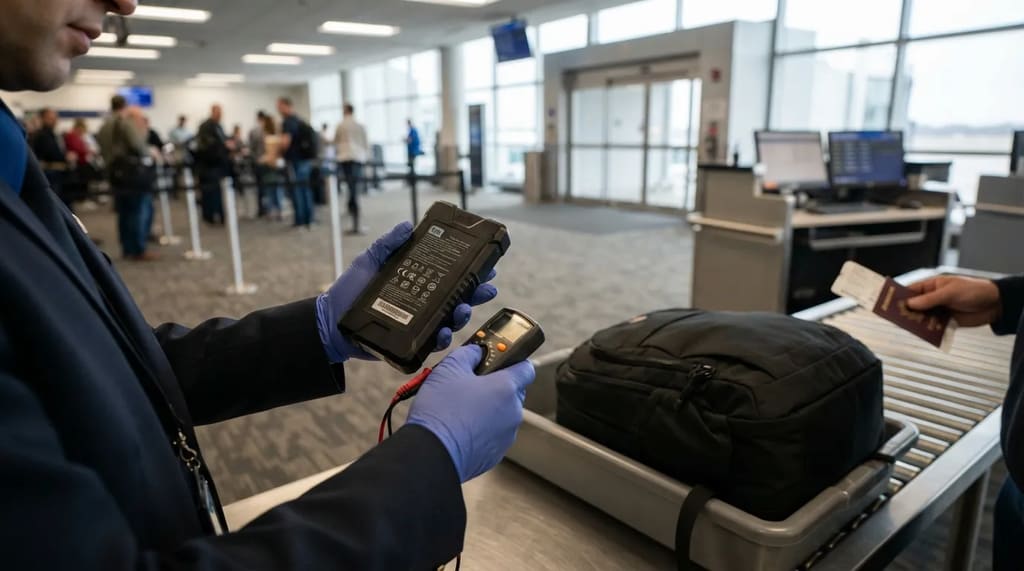
The FAA allows lithium-ion batteries up to 100 Wh in carry-on with no approval, and 101 to 160 Wh with airline approval, limited to two spares. Anything over 160 Wh is prohibited entirely.6
Many banks are labeled in milliamp-hours, which don’t answer the question because the limit is in watt-hours. Typical conversions:
- 10,000 mAh is about 37 Wh, allowed in carry-on
- 20,000 mAh is about 74 Wh, allowed in carry-on
- 30,000 mAh is about 111 Wh, which needs airline approval
A 30,000 mAh bank lands in the approval tier, while a 20,000 mAh bank clears the limit with room to spare. The FAA notes airlines “may have stricter quantity and Wh limits,” so check your airline’s page before the trip.6
A bank that meets the rating still has to travel in the cabin, and that matters the moment an agent tags your bag at the door.
#1 – The Power Bank Inside a Bag Bound for the Hold
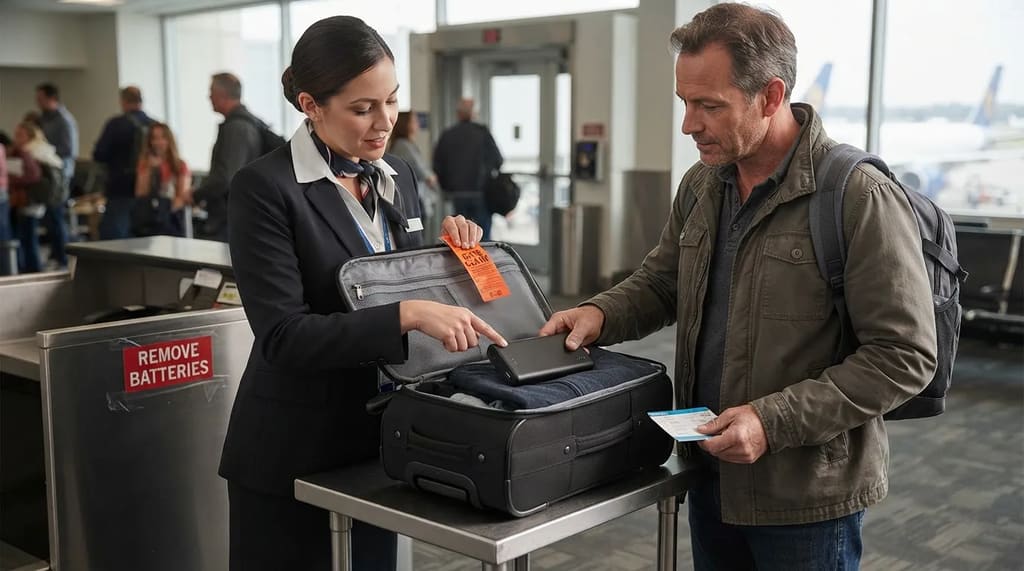
When a carry-on bag is checked at the gate or planeside, the FAA says all spare lithium batteries and power banks must be removed and kept with you in the cabin. A bank that was legal in your bag at the security line becomes a problem in the same bag once it goes from cabin to cargo.6
Every earlier item leads here: the expandable zipper, the full flight, the basic economy fare and the oversized roller can all end in a tag. The bank is the one thing that has to come out of the bag first.
Smart luggage adds a wrinkle. The FAA says bags with lithium batteries must travel as carry-on unless the batteries can be removed, so find out whether the battery in yours comes out.
Take the bank out and into your personal item as soon as you hear the words gate-check. Even a battery rated well under the limit has to come out of a bag headed for the hold.
Treat every bag as one that might be tagged, and pack so the tag costs you nothing. Medicine, chargers, the power bank and a copy of your boarding pass belong in the personal item at your feet.
Most of this list is settled at the kitchen table with a tape measure and a battery label. So what’s the one thing you now keep at your feet, whichever bag gets tagged?
- Delta Secure Flight Data: https://pro.delta.com/content/agency/ca/en/policy-library/government-tsa/secure-flight-passenger-data–sfpd–faqs.html
- TSA REAL ID Deadline: https://www.tsa.gov/news/press/releases/2025/04/09/tsa-highlight-real-id-enforcement-deadline-may-7-2025
- Visaverge Temporary REAL ID: https://www.visaverge.com/questions/temporary-paper-real-id-not-accepted-by-tsa-for-airport-travel/
- 14 CFR 121.585 Exit Seating: https://www.law.cornell.edu/cfr/text/14/121.585
- eCFR Exit Seating Rule: https://www.ecfr.gov/current/title-14/chapter-I/subchapter-G/part-121/subpart-T/section-121.585
- FAA PackSafe Lithium Batteries: https://www.faa.gov/hazmat/packsafe/lithium-batteries