Fifty hungry travelers and one giant check sounds like the easiest booking in the restaurant business. It isn’t. The second a coach hisses to a stop out front, the people behind the counter start reading the group like a weather report: who’s in charge, who’s exhausted, who needs a restroom right now, and whether the schedule is about to crash into the lunch rush.
Some of what they notice is flattering. Some of it explains why your group lunch felt like a race against a stopwatch. And one small moment, saved for the very end of this list, decides whether the coach is ever welcome back.
#18 – The First Question Isn’t About Food. It’s Where a Giant Coach Can Park
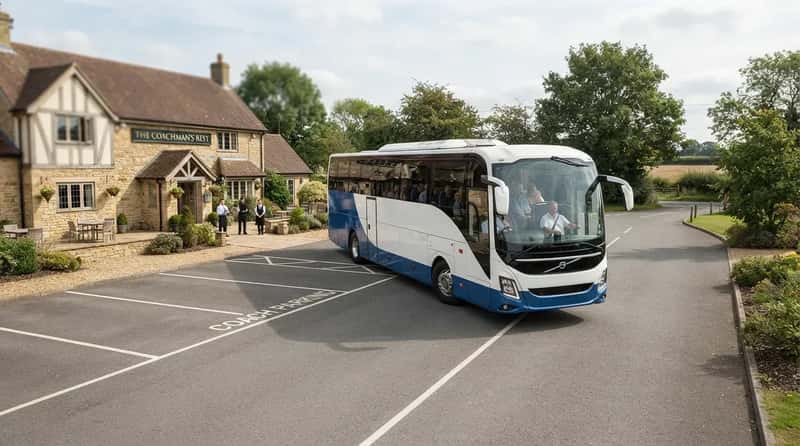
Before anyone asks what’s for lunch, somebody has to ask where a motorcoach goes. Group-travel planners are advised to check whether a restaurant can accommodate buses on-site, because a great menu means little if the driver can’t get in or out. A tight lot or a street with no turning room can sink the whole stop before a single plate is carried.
Operators look for easy drop-off, safe parking, and a reasonable turning radius. Some restaurant chains even advertise designated motorcoach parking at most of their locations. Staff often watch the driver’s face as the coach swings in, and a calm driver is usually a good sign of a group that planned ahead. But the next clue shows up before anyone even steps inside.
#17 – The Quiet Person Eating Free Is Usually the One Running Everything
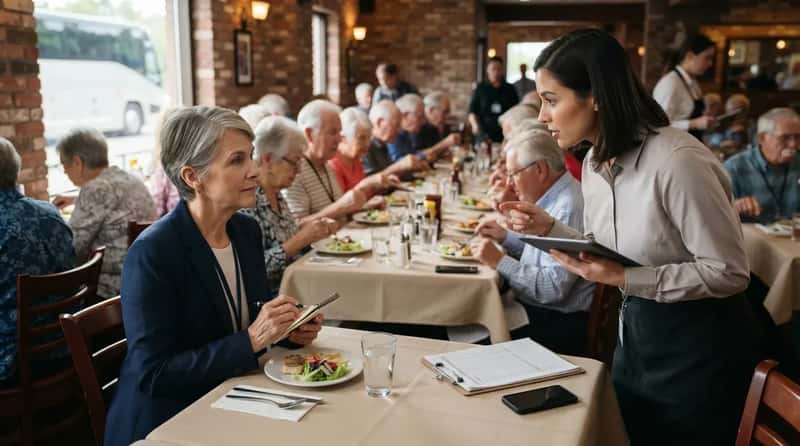
The person who never touches the group menu may be the most important one in the room. At some chains, the driver and escort receive complimentary meals with groups of 15 or more. To the restaurant team, that’s a quick map of who actually makes the decisions.
Servers learn to scan for the clipboard, the lanyard, or the phone glued to an ear. That’s the person who knows the numbers, the timing, and what the group was promised. Find them fast and questions get answered in seconds. And speaking of numbers, that’s where the first real trouble starts.
#16 – The Headcount Is Never Quite the Number on the Paperwork
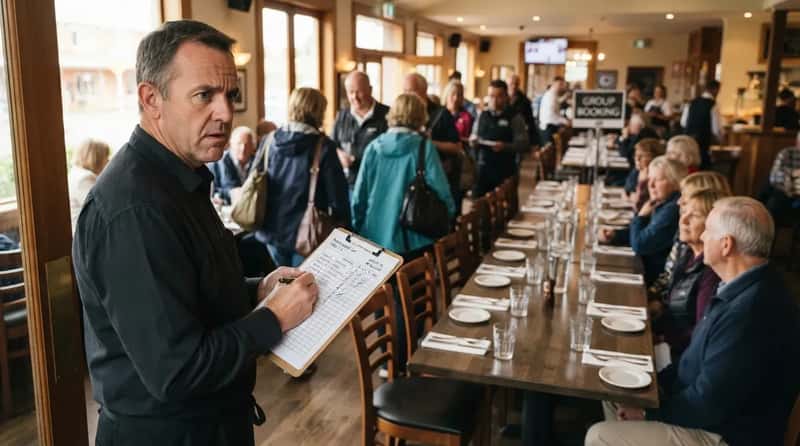
A group of 48 on Tuesday can easily become 44 by Friday. School-trip planning guides recommend submitting guaranteed meal counts about two weeks before travel. But real life moves faster than any spreadsheet, and people get sick, change plans, or add themselves at the last minute.
At a Glance
- The kitchen preps to the number it was given.
- Guaranteed counts are often due about two weeks before travel.
- Fewer people than planned means wasted food.
- Extra people mean portions get stretched fast.
Restaurant crews quietly keep score of which groups give honest numbers and which treat them as guesses. Those small gaps lead straight into the next surprise.
#15 – That Annoying “Limited Menu” Is Really a Kitchen’s Rescue Plan
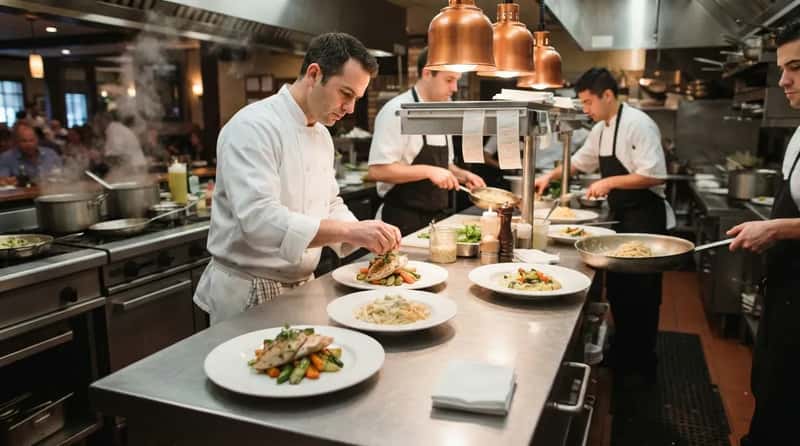
Travelers often grumble about getting only two or three choices. The truth is that menu options for large groups are often limited to streamline kitchen operations. One chicken, one pasta, and one vegetarian plate keep the line moving instead of burying it.
Planning experts call a set menu the fastest, simplest, and most predictable option per person. For the kitchen, that means everyone’s food comes out hot at roughly the same time. But what happens when the whole coach walks in at once is another story.
#14 – The Whole Coach Hits the Door in One Giant Wave
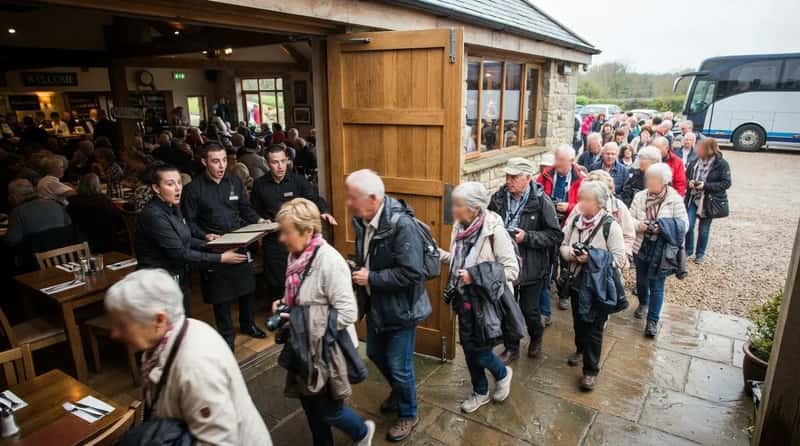
A regular restaurant gets customers in a trickle. A coach delivers them all in one rush. Servers see the doors swing open and know every single table will want drinks, menus, and restrooms at the same time.
Meanwhile, the restaurant is still serving its regular guests. Good teams stage water, bread, and drinks before the group even pulls in. Veteran crews say the first five minutes can set the tone for the whole meal. And one of the first things that happens in those five minutes is a stampede.
#13 – The Restroom Stampede Can Make or Break the Whole Stop
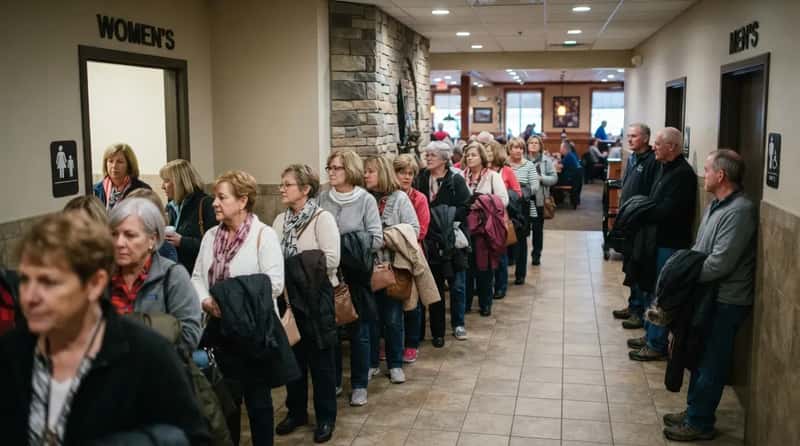
Turns out, the first place half the group heads is not the dining room. After hours on the road, restrooms get a rush before anyone looks at a menu. Operators’ checklists specifically call for clean, accessible public restrooms that can handle a full coach load.
Staff know a long restroom line can eat into the whole stop, because every minute in line is a minute not eating. Teams that check the restrooms before a group arrives are quietly protecting the meal. But the bigger problem often arrives with a note from the group leader.
#12 – The Dietary Note That Shows Up Late Is the Real Kitchen Nightmare
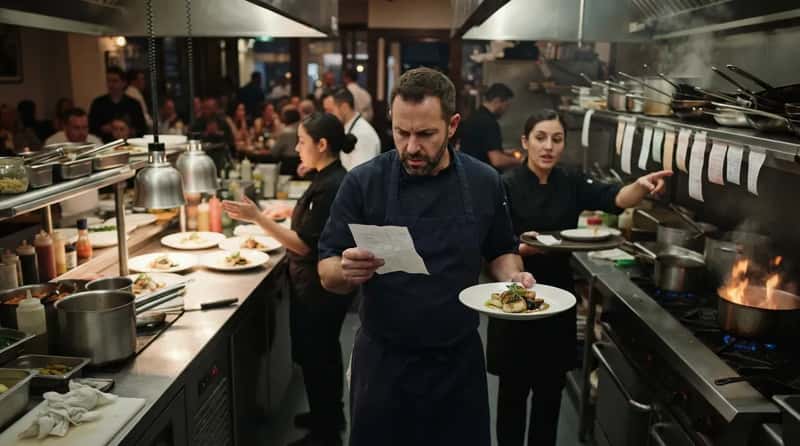
Allergies and special diets are completely normal for group meals. Planning experts say the real failure is timing, because the restaurant needs advance notice to plan ingredients, prep space, and serving flow. A gluten-free request announced at the table is far harder than one sent two weeks ahead.
Worth Knowing
- Advance notice lets the kitchen plan ingredients and prep space.
- A list sent about two weeks ahead beats a request made at the table.
- Planners suggest at least one vegetarian and one gluten-aware option per course.
- Kitchen crews remember which groups sent clear lists.
They also remember which ones didn’t. Then there’s the clock, which is always ticking.
#11 – Everyone Is Racing a Clock the Diners Can’t See
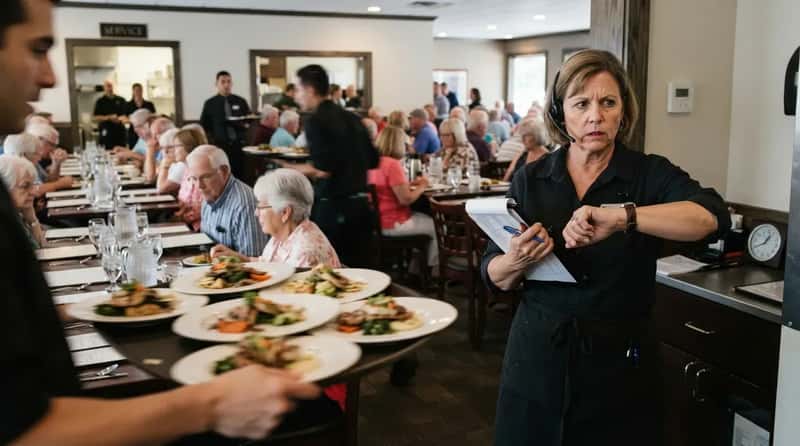
Group meals run on a strict schedule. One chain executive described the goal as getting tour groups in and out in under an hour. That’s a tough promise when 40 or more people are involved.
Servers notice the guide checking a watch and start moving faster. Tour guides, meanwhile, are balancing the rest of the day’s stops. Which is why the very first thing out of the kitchen matters so much.
#10 – Drinks Hit the Table First, and Smart Teams Plan Around It
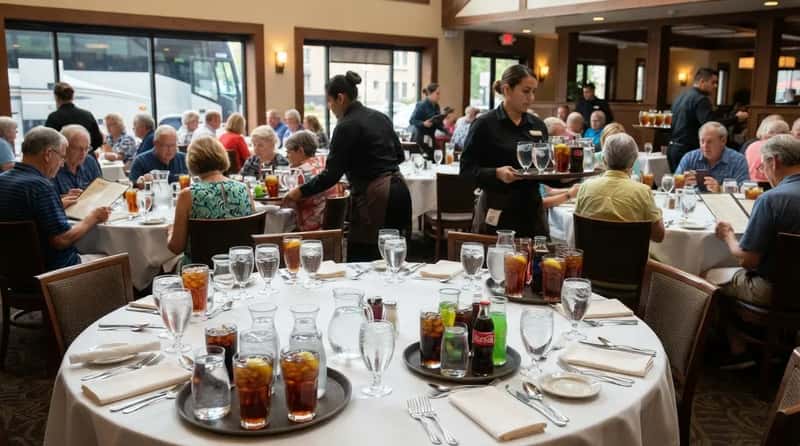
Thirsty travelers are impatient travelers. One chain says it keeps servers assigned specifically to get a group’s beverages out first. It’s a simple move that calms a room fast.
Group planners also check whether beverages like soda and tea are included in the price. Staff notice quickly when guests didn’t know that and start ordering extras. Restaurants that get drinks right early tend to get forgiven for almost everything else. Next comes a trick that quietly speeds up the rest of the meal.
#9 – A Name Tag With a Meal Choice Saves Everyone Precious Minutes
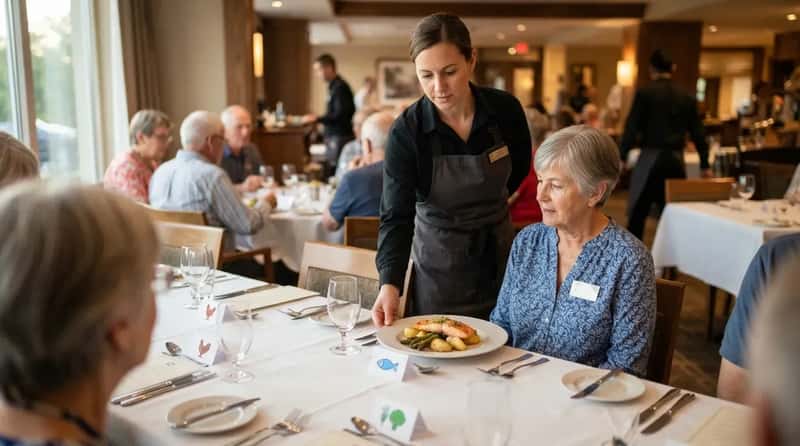
Servers love groups that arrive organized. Planners recommend that pre-selected dinner choices be noted on place cards or name tags, helping wait staff serve quickly and efficiently. It beats shouting “Who had the fish?” across a crowded room.
Some travelers on tour forums say they’re given menu options on the coach so the restaurant can be notified ahead of time. That’s the kind of preparation staff remember fondly. But there’s one role every group meal needs in the room.
#8 – One Lead Server and One Group Contact Change Everything
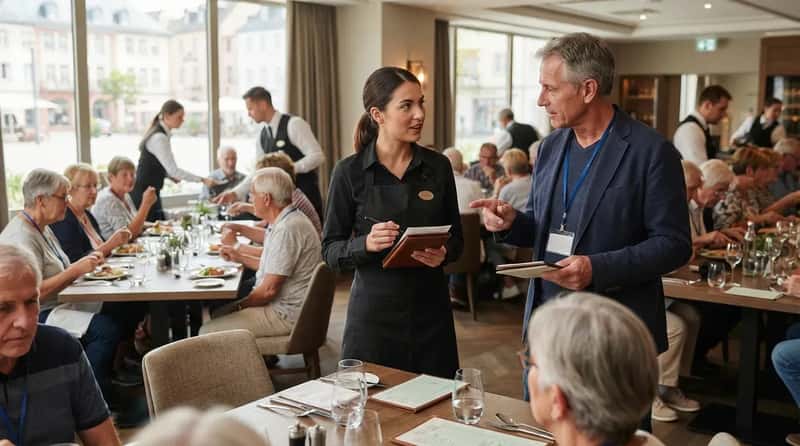
Chaos starts when ten people give instructions to five servers. Group-dining guides recommend that a manager greet the group and introduce a lead server who oversees the group’s needs. That person becomes the single point of contact.
It works the same way on the group’s side. One tour escort handling requests means fewer mistakes at the table. Without that, servers say, dishes go out wrong and hands go up everywhere. Then there’s the great debate that divides group planners.
#7 – The Great Menu Fight: Set Plates or Full Freedom?
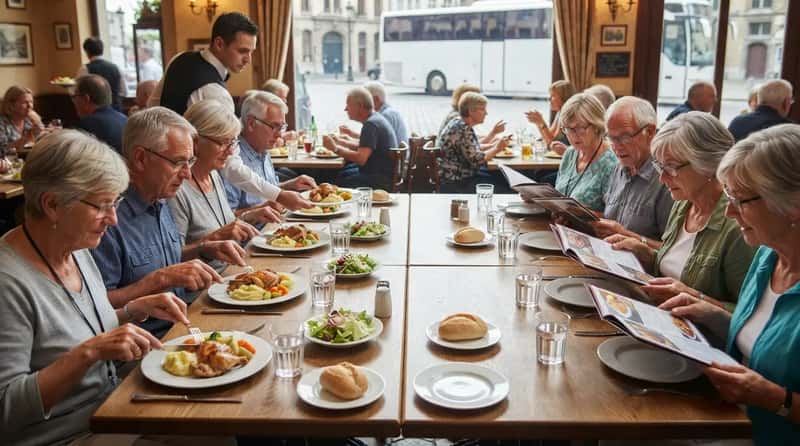
Not everyone agrees on the best way to feed a coach. Some organizers prefer preset tour menus with only a few options because they keep costs low and service quick. Others argue that giving travelers the full menu has its perks.
Quick Compare
- Set plates: a few options, lower costs, faster service, hot food arriving together.
- Full menu: more choice and happier guests, but dozens of different orders hitting the kitchen at once.
Here’s the opinion that gets kitchens talking: many group veterans say full freedom is the biggest time-waster on the itinerary. Others insist it’s worth it for happier guests. Restaurant crews usually have a strong opinion, and you can probably guess which side they pick. But there’s a stop that looks cheap and easy and often isn’t.
#6 – Fast Food Was Never Built for 50 Hungry People at Once
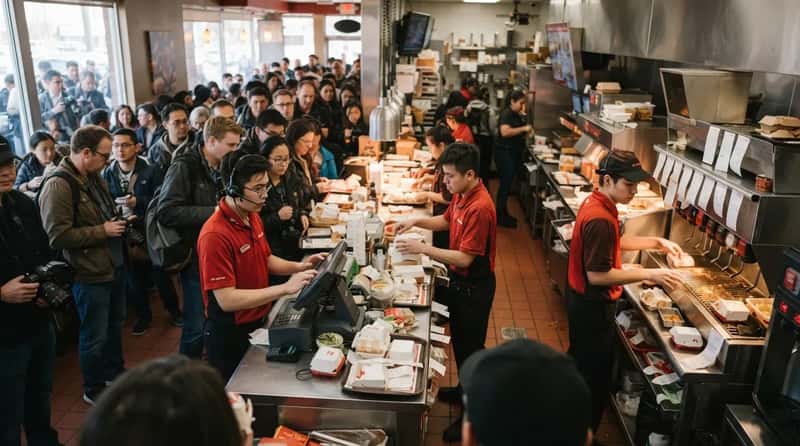
The quick-service stop looks cheap and simple on paper. Tour guides warn that most stand-alone fast-food restaurants aren’t equipped to handle a large group descending on them at once. The teams behind the counter feel it first.
Group dining guides also note that local establishments may not always be equipped to handle large groups. That mismatch is why a restaurant can look overwhelmed even when everyone is trying their hardest. And sometimes the smartest move is all about timing.
#5 – The Smartest Groups Book the Quiet Hours
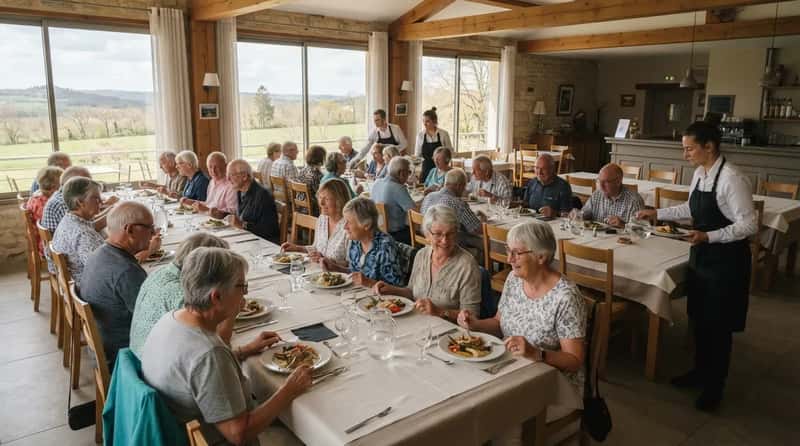
The best group meals often happen when nobody else is there. Planners are advised to ask when a restaurant is closed or has lower volume, because staff may be able to feed a group then with minimal staffing. It’s a win for both sides.
Some restaurants will even open at an unusual time if the group can guarantee a certain amount of spending in advance. Staff say they notice the groups that plan around them. But not every meal on tour comes with a choice.
#4 – Some Travelers Quietly Dread the “Eat It or Skip It” Set Meal
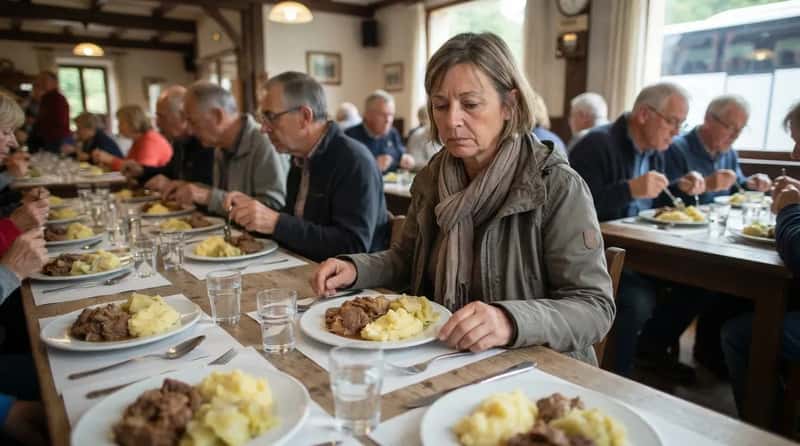
The restaurant team often can’t see the disappointment in the room. One traveler on a Rick Steves forum wrote that the hardest meals are the ones with no choice, just a set menu you eat or don’t. That’s one person’s view, but it shows how a tourist can feel while the plates land.
Fast Facts
- No-choice set menus are the meals one forum traveler found hardest.
- Opting out isn’t always possible on a tour stop.
- A remote farm meal means eating at that farm, whatever is served.
- Servers say a little extra warmth goes a long way.
Forum posters also point out that opting out isn’t always possible. At a remote farm stop, for example, you eat at that farm in the middle of nowhere. Servers who’ve handled these meals say a little extra warmth goes a long way. Then comes the bill, where trouble often hides.
#3 – One Single Bill Keeps the Whole Meal From Unraveling
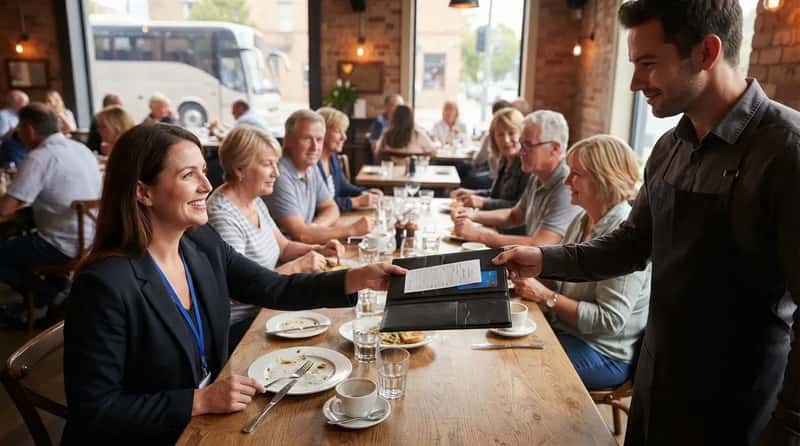
Few things slow down a group meal like 40 separate checks. Planners recommend that groups use a single host payment method if possible. Servers love it when the escort quietly handles everything in one tidy moment.
Teams do notice when extras like cocktails or desserts aren’t covered. Clear rules at the start prevent awkward moments at the end. But the biggest thing staff notice happens long before the bill arrives.
#2 – Restaurant Teams Can Tell Which Groups Will Come Back
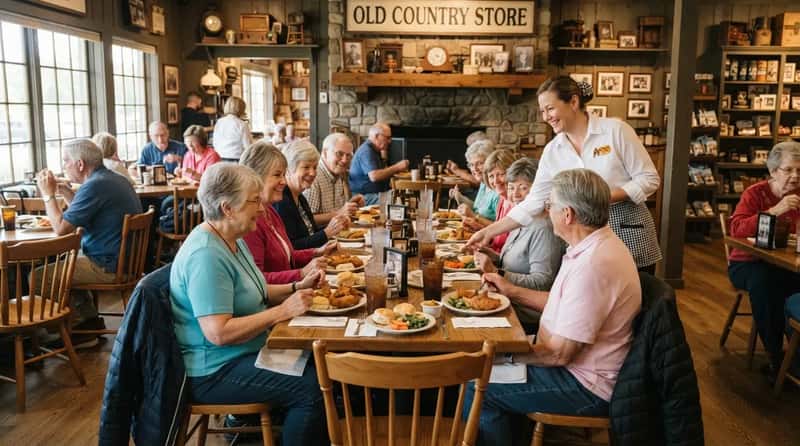
A coach isn’t a one-time customer. For many restaurants, it’s a relationship that can fill a calendar. A Cracker Barrel executive said tour groups are an essential element of the company’s success.
Another chain executive said the keys to attracting groups are consistency, over-the-top hospitality, food quality, and competitive prices. Teams know that one great visit can lead to many more. And the very last moment says the most.
#1 – The Send-Off Tells the Staff Everything
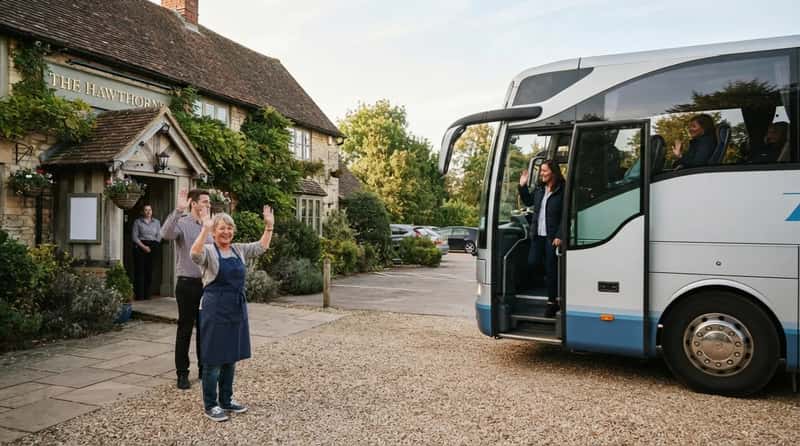
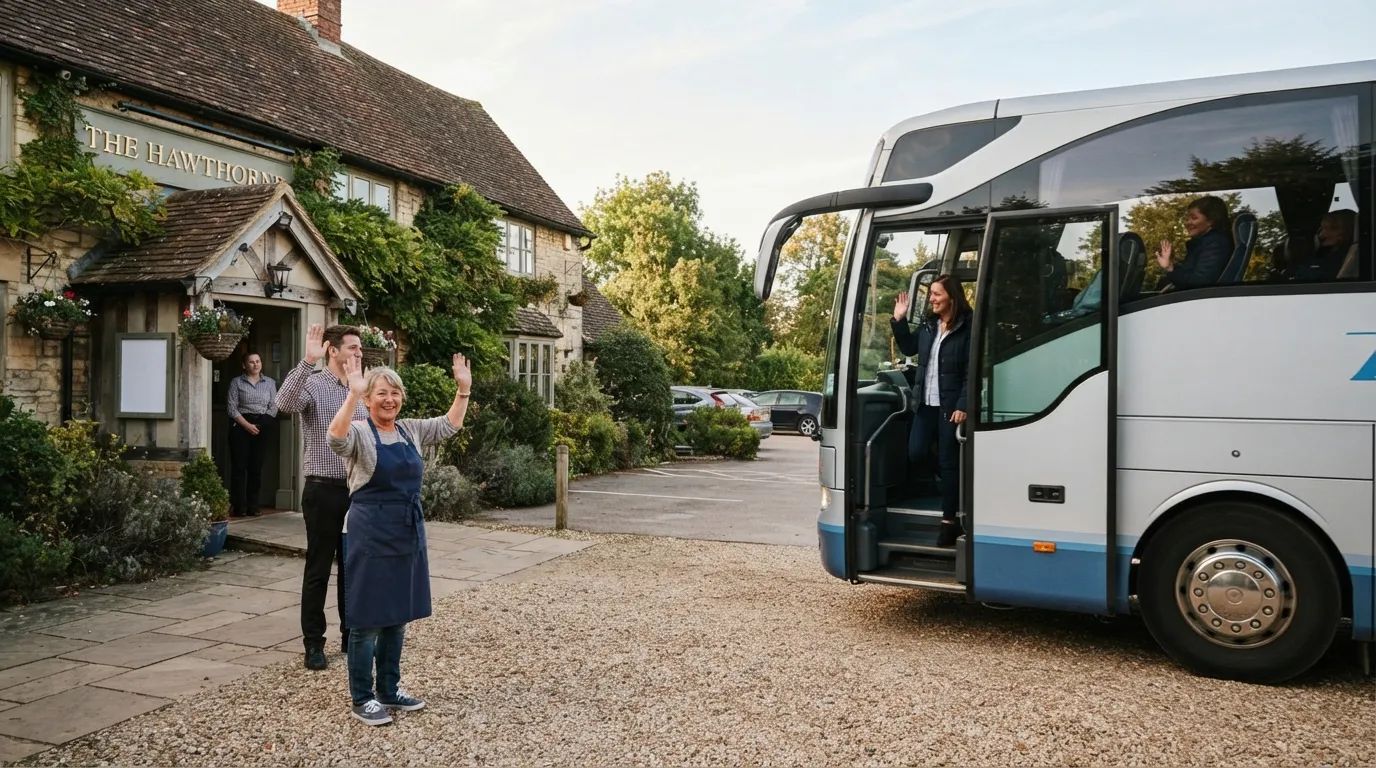
When the coach doors close, the restaurant team finds out how the meal really went. Some places send groups off with small gestures, like a box of cookies for the road. Operators also appreciate an onboard group farewell.
The wave from the driver and the thank-you from the escort matter more than most people realize. Staff remember those groups for months. All 17 earlier signs lead to this one moment, and it decides whether the coach ever pulls back in.
Behind every coach-tour meal, a restaurant team is quietly judging parking, headcounts, dietary notes, and timing. Most group-meal problems start long before the plates arrive, and the best meals are usually the ones that were planned well before anyone sat down.
So the next time a coach rolls up and fifty people pour through the door, remember that the people with the trays have already read the room. A little order and a simple thank-you can make them remember you.