
There was a moment in the 1960s when summer in America felt like it would last forever. Before budget flights scattered families to Cancún, before Disney World swallowed Florida whole, and before the Hamptons became a billionaire theme park, millions of middle-class families piled into station wagons and headed for beach resorts that felt like the center of the known universe. Taffy stuck to your fingers. The Beach Boys leaked from a tinny transistor radio. The whole country seemed to be pointed at the water.
Most of those resorts are gone now – swallowed by high-rises, killed by cheap airfare, or simply forgotten as tastes moved on. A few of the names will surprise you. One of them was more famous than almost any beach destination in the country before it collapsed completely. These are the 19 that defined the decade, and the ones most people have stopped talking about entirely.
#19 – Steeplechase Park, Coney Island, New York
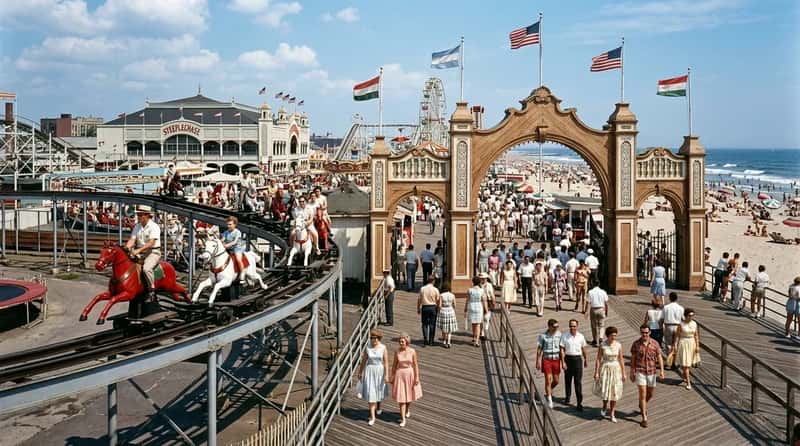
Most people know Coney Island is still technically there – but almost nobody remembers the crown jewel that closed right as the sixties began. Steeplechase Park ran from 1897 to 1964, covering 15 acres packed with rides, a saltwater pool, a ballroom, and a mechanical racetrack that defined summer weekends for generations of New Yorkers. At its peak, it was the entire reason Coney Island was worth the trip. In 1961, over 18,000 people passed through its gates in a single day.
The end came with almost no warning. Steeplechase closed after its final season on September 20, 1964, and the public didn’t even get an official announcement. By July 1965, developer Fred Trump had purchased the property for $2.5 million and the rides were gone. One of the most beloved seaside amusement parks in American history vanished within months of its last summer – and most people under 60 have no idea it ever existed.
Fast Facts
- Opened 1897 — Coney Island’s longest-surviving major amusement park
- Covered 15 acres with 50+ attractions, including the iconic Parachute Jump
- Record single-day attendance: 18,000+ visitors in 1961
- Sold to developer Fred Trump for $2.5 million in 1965; demolished by 1966
- Only survivor: the 250-foot Parachute Jump tower, now a NYC landmark
#18 – Old Orchard Beach, Maine
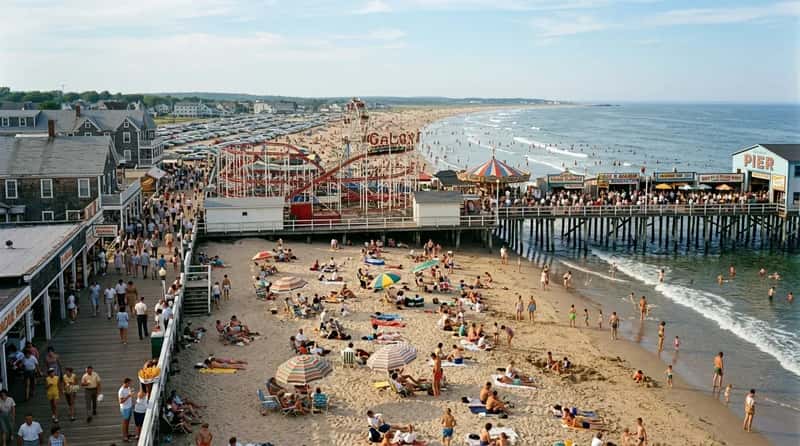
Before the Maine coast became synonymous with lobster rolls and L.L.Bean fleeces, Old Orchard Beach was the Northeast’s most democratic summer escape. Seven miles of flat, wide sand. A classic amusement park. And a boardwalk lined with French fries and carnival games that drew working-class families from Boston and Providence every summer without fail. In the 1960s, you didn’t need a reservation or a trust fund – you just needed a station wagon and a cooler.
What made Old Orchard genuinely distinctive was its French-Canadian flavor. Families from Quebec crossed the border every July, filling the beach towns with a bilingual energy that felt unlike anywhere else on the Eastern Seaboard. The pier stretched out over the Atlantic and the carnival lights ran all night. Today’s travel writers rarely include it in a top-ten Maine list, and that erasure from the cultural memory is a quiet kind of tragedy for everyone who spent summers there.
#17 – Treasure Island, Florida
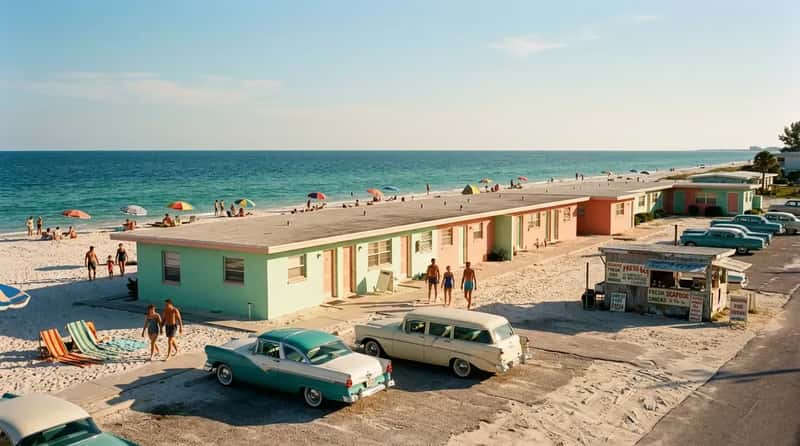
Before St. Pete Beach turned into a condo canyon, there was Treasure Island – and in the early 1960s, it was pure, postcard-perfect Florida. The pastel motor courts and roadside fish shacks had multiplied just enough to create a full resort scene for families who couldn’t stomach Miami prices. You could rent a beach umbrella for almost nothing, eat fried grouper for a dollar, and spend a week without a single reservation. The Gulf-facing sunsets were said to be the finest in all of Florida, and locals still argue that today.
What killed Treasure Island’s identity wasn’t neglect – it was success. The high-rises that replaced the motor courts were sold as an upgrade, and technically they were. But they also blocked the very sunsets people came to see and priced out the families who had made the place worth visiting. Almost nobody outside Tampa Bay has heard of the old Treasure Island anymore. The name survives. The thing it named does not.
#16 – Rehoboth Beach, Delaware
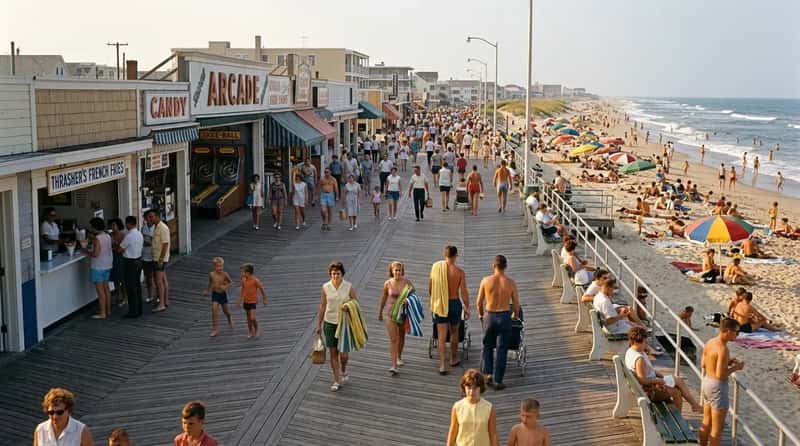
Rehoboth Beach has always punched above its weight. In the 1960s, it was the go-to summer escape for families from Washington, D.C. and Baltimore – close enough to drive but far enough to feel like a real vacation. The boardwalk was lined with candy shops, skee-ball arcades, and Thrasher’s French fries, a tradition that miraculously still survives. Delaware’s lack of a sales tax made everything feel cheaper, and the dunes along the state park stretched for miles without a resort tower in sight.
What turned Rehoboth into a 1960s institution was a perfect mix of accessibility and genuine beach character. Families returned to the same rental cottage every July for a decade. The town existed on a human scale that felt earned rather than manufactured. Today Rehoboth has gone noticeably upscale – boutique hotels, farm-to-table restaurants, and summer-share prices that would have seemed science fiction to a schoolteacher in 1965. The families who packed its boardwalk then would barely recognize the place.
#15 – Tybee Island, Georgia
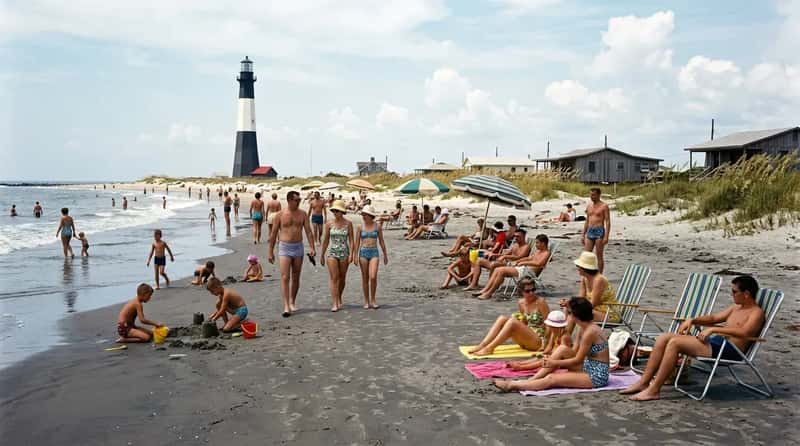
Tybee Island spent the 1960s being exactly what a beach town should be: laid-back, local, and completely unpretentious. For Savannah families, a trip to Tybee was a rite of passage every single summer – the kind of tradition passed from grandparents to parents to kids without anyone making a fuss about it. Wide, flat Atlantic beaches, the smell of sunscreen and saltwater taffy, and a lighthouse that had been standing since 1736. No chain hotels. No convention centers. No celebrity sightings.
What set Tybee apart in the sixties was its stubborn refusal to become anything other than itself. Time moved slower there in a way that felt like a deliberate choice rather than an accident of geography. The tragedy is that “slow” eventually became a liability when faster, flashier competitors started stealing summer dollars. Tybee is still beautiful today, but the specific unhurried character that made it feel like a secret is harder to find every year.
#14 – Long Beach Island, New Jersey
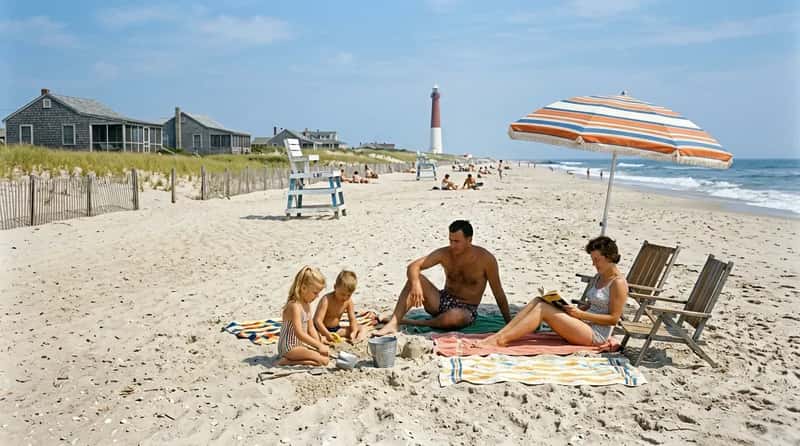
Before the Hamptons became a billionaire theme park and long before the Shore became reality television, Long Beach Island was quietly one of the finest barrier island beaches on the Eastern Seaboard. In the 1960s, LBI was where Jersey Shore families rented the same cottage every July for a decade running. The hardware store and the bait shop were more important local institutions than any hotel. Nobody dressed for dinner. Nobody was trying to be seen.
The island’s natural beauty was matched by an authenticity that resort developers hadn’t yet figured out how to commodify. Families returned not because LBI was the best beach in America but because it was their beach, and that distinction meant everything. Most of those summer families had no idea they were living through a golden age. They just thought they were going to the beach. That particular kind of ordinary perfection is exactly what makes it worth remembering now.
#13 – Wrightsville Beach, North Carolina
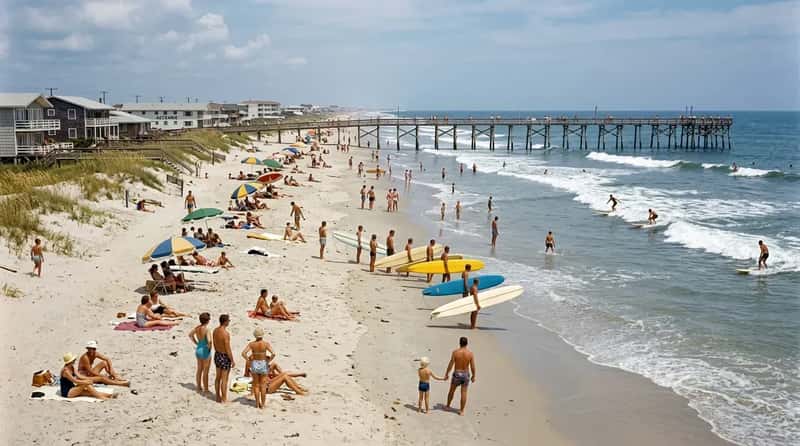
Wrightsville Beach has a claim almost nobody talks about anymore: it was a genuine surfing destination decades before Malibu got all the credit. Organized surfing on the island dates to 1909, when resident Burke Haywood Bridgers introduced the sport to friends after reading about it catching on in Hawaii. By the 1960s, when surf culture was hitting its national golden age, Wrightsville was already a seasoned scene – years ahead of the California cultural wave that would get all the magazine coverage.
What made it work in the sixties was the coexistence of two completely different crowds. Families came for the wide, calm inner channel; surfers came for the Atlantic swell. The Carolina Yacht Club, founded in 1853, gave the island a sense of rooted tradition that balanced the newer surf energy perfectly. Today Wrightsville is still gorgeous, but the insider-secret character that made it feel discovered rather than marketed has mostly been smoothed away by development. The history is real. The atmosphere is a replica.
At a Glance
- Surfing documented here as early as 1909 — predating California’s surf boom by decades
- Carolina Yacht Club founded 1853 — one of the oldest in the South
- Sheltered inner waterway made it a rare dual-purpose beach for families and surfers
- Just 10 minutes from downtown Wilmington — the most accessible “secret” beach on the East Coast
#12 – Folly Beach, South Carolina
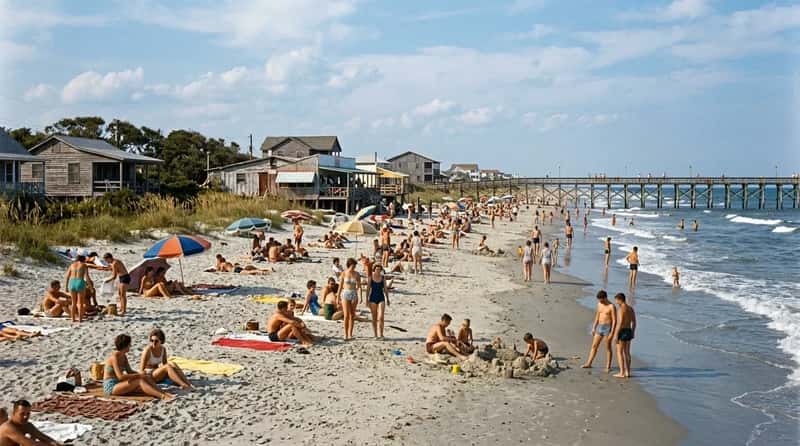
Folly Beach has always had an edge – a slightly rough, slightly creative, slightly dangerous energy that the polished resort towns never managed to replicate. Known as “The Edge of America,” it was where college kids from the Carolinas ended up when they wanted a beach with actual personality. George Gershwin composed Porgy and Bess while staying on Folly Beach in the 1930s, and the island never fully lost that bohemian streak. By the 1960s, the rickety beach houses and unpretentious roadside bars gave it the feel of a hideout rather than a resort.
It was the kind of place where nobody dressed up and everybody stayed too long. The summer crowds were fiercely loyal – and genuinely furious when gentrification started rewriting the island’s identity in the decades that followed. What Folly had in the sixties was something resort developers have never successfully manufactured: a scene that belonged to the people who lived it rather than the people who marketed it. Once that’s gone, no amount of renovation gets it back.
#11 – Cape Cod, Massachusetts
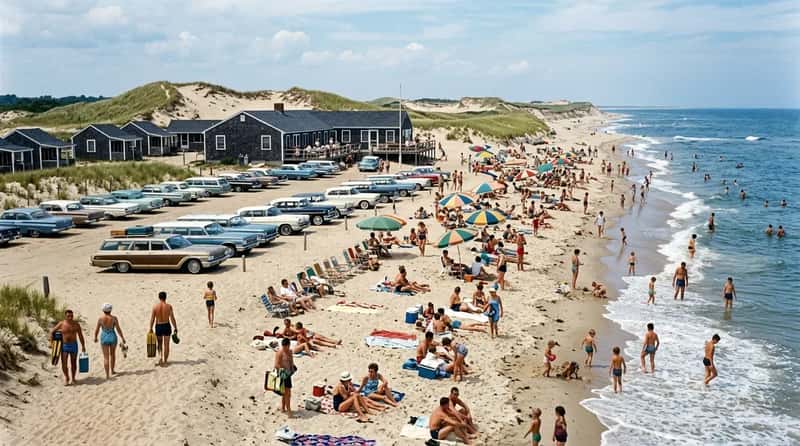
Cape Cod in the 1960s was not the Cape Cod of today – overpriced, over-trafficked, and groaning under the weight of its own reputation. Back then it was a working-class summer paradise with genuine salt-of-the-earth character. Kennedy family glamour had put the Cape on the national map by 1961, but the visitors who actually filled its motels were schoolteachers and factory workers from Boston who saved all year for a week by the water. The gap between the Kennedys and the regular families felt bridgeable in a way that said something good about the decade.
The 1960s brought a particular alchemy to the Cape: the Cape Cod National Seashore was established in 1961, protecting 40 miles of pristine coastline from overdevelopment, and for one miraculous decade, wild shore and commercial sprawl existed in genuine tension. Wellfleet, Truro, and Provincetown felt like discoveries rather than destinations. Today the Cape remains gorgeous, but summer pricing has pushed the ordinary family out in favor of a wealthier crowd, and the democratic spirit that defined the sixties version has quietly disappeared.
#10 – St. Petersburg, Florida
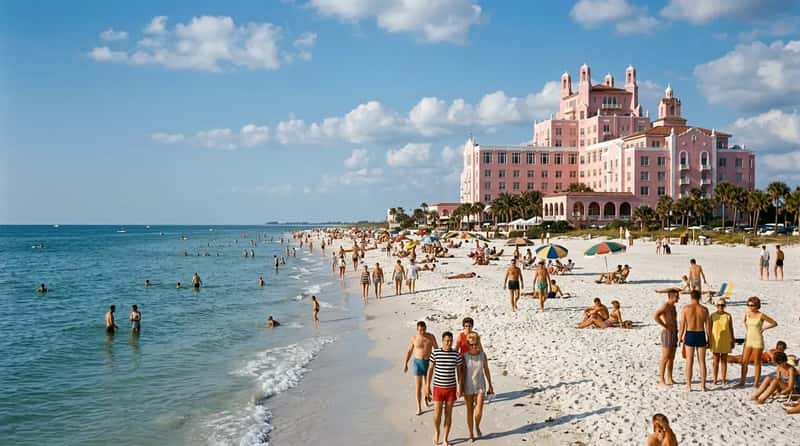
St. Petersburg spent the 1960s in the shadow of flashier Miami Beach, and that was exactly the point. While Miami was busy importing celebrities and building glass towers, St. Pete offered the same sun, the same Gulf water, and the same Florida magic at half the price and a quarter of the attitude. Families who couldn’t stomach Miami’s noise and expense found St. Pete to be their personal paradise – powder-white sand, waterfront parks packed every evening, and shuffleboard courts that were genuinely full.
The Don CeSar Hotel – a pink palace on St. Pete Beach that had hosted F. Scott Fitzgerald and Al Capone in earlier decades – was still drawing guests in the sixties, giving the destination a glamour that locals were quietly proud of. St. Pete quietly had one of the best-value resort scenes in all of America, and barely anyone outside of Florida knew it. That anonymity was the whole appeal. Once the word fully got out, the prices followed, and the thing that made it special was the first casualty.
Worth Knowing
- The Don CeSar Hotel opened in 1928 — guests called it “The Pink Palace” for its rose-colored exterior
- St. Pete Beach claimed more sunny days per year than almost any other Florida Gulf Coast city
- Downtown St. Pete hosted one of Florida’s first municipally owned waterfront parks, free to all visitors
- Shuffleboard became so central to the city’s identity that St. Pete once billed itself the “Shuffleboard Capital of the World”
#9 – Sanibel Island, Florida
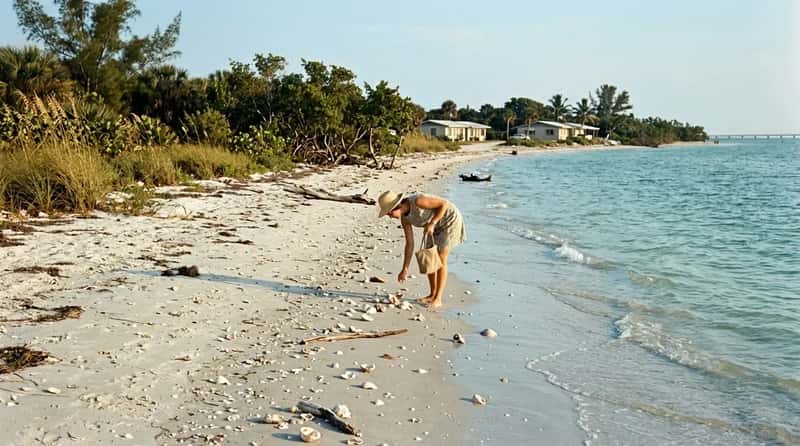
Sanibel Island in the 1960s was still small enough to feel like an actual secret. The causeway connecting the island to the mainland didn’t open until 1963, and even after it did, the island’s character remained stubbornly unhurried. Shelling enthusiasts and birders had known about it for years specifically because nobody else was paying attention. You could spend a full morning combing the beach without passing another person, which in 1960s Florida was already becoming a rare and remarkable thing.
Wildlife refuges occupied most of the island’s interior, keeping development at bay in a way that felt almost miraculous by American resort standards. A few small motor courts and family-run resorts offered just enough infrastructure to make a stay comfortable without tipping the island into something it didn’t want to be. Sanibel in the 1960s was the last genuinely wild Florida beach resort that ordinary families could easily reach. The crowds discovered it fast once the causeway opened – and the race to develop it began almost immediately after.
#8 – The Salton Sea, California
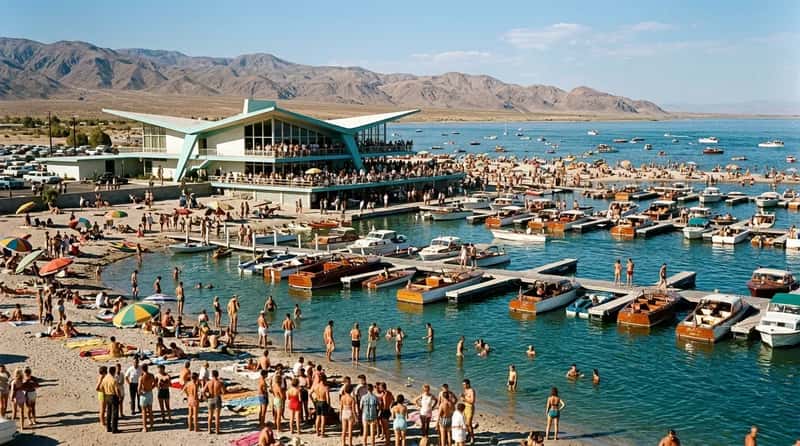
This one will genuinely surprise you. Before it became one of the most haunting ecological ghost towns in America, the Salton Sea was California’s answer to the French Riviera – and in the early 1960s it was absolutely packed. Developers envisioned it as a “desert Lake Tahoe,” and by 1960, several multi-million dollar marinas and yacht clubs had risen around its shoreline. The North Shore Beach and Yacht Club, which opened in 1959 as the largest marina in Southern California, welcomed celebrities including Frank Sinatra, Bing Crosby, the Beach Boys, Jerry Lewis, and the Marx Brothers. At its peak, the Salton Sea attracted more than 1.5 million visitors annually — more than Yosemite National Park.
The collapse, when it came – driven by rising salinity, agricultural runoff, and repeated flooding – was total and almost incomprehensible in scale. As early as 1961, California scientists had already predicted the sea would eventually die. By the 1970s, the smell of rotting fish drove tourists away almost overnight, and most of the shoreline communities became ghost towns within a single decade. The contrast between the glittering resort of 1962 and the crumbling shoreline of today is so extreme it barely seems like the same place. It isn’t.
Quick Compare: Then vs. Now
- 1962: 1.5 million annual visitors, celebrity-filled yacht clubs, motorboat races broadcast on TV
- 1970s: Salinity spikes kill fish; flooding devastates shoreline communities
- Today: Largely abandoned ghost towns, toxic dust storms, and one of California’s worst ecological crises
#7 – Atlantic City, New Jersey
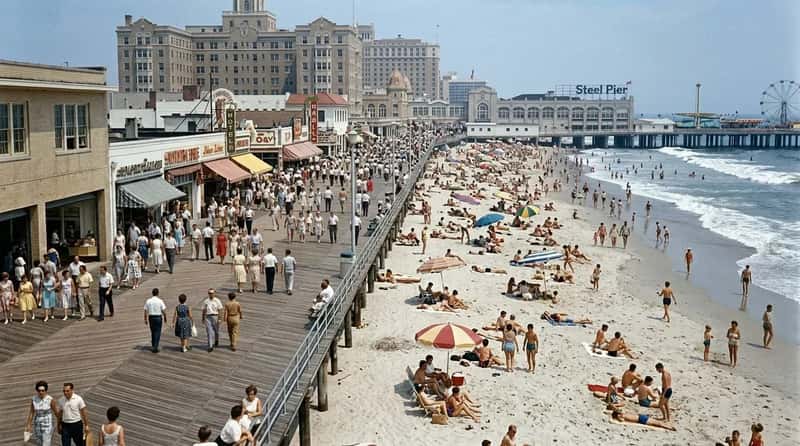
Before the casinos, before the boardwalk became a punchline, Atlantic City was legitimately the most famous beach resort in America. The boardwalk – the first of its kind when an early version opened in 1870 – invented an entire template for seaside recreation that beach towns across the country spent decades copying. By the 1960s, Atlantic City had been running that template for nearly a century, and the crowds kept coming. The hotels were enormous, the entertainment was world-class, and the beach itself remained genuinely spectacular.
The 1960s were simultaneously Atlantic City’s last great chapter and the beginning of its long slide. The stretch of beach known as Chicken Bone Beach had made the city a genuine cultural destination – Sammy Davis Jr., the Mills Brothers, Louis Jordan, and the Club Harlem showgirls all performed there each summer, drawing enormous crowds. But desegregation opened the beaches to everyone while simultaneously sending tourists in search of newer, less developed destinations. Atlantic City spent the next two decades in painful decline before gambling arrived and changed the story entirely, for better and worse.
#6 – Daytona Beach, Florida
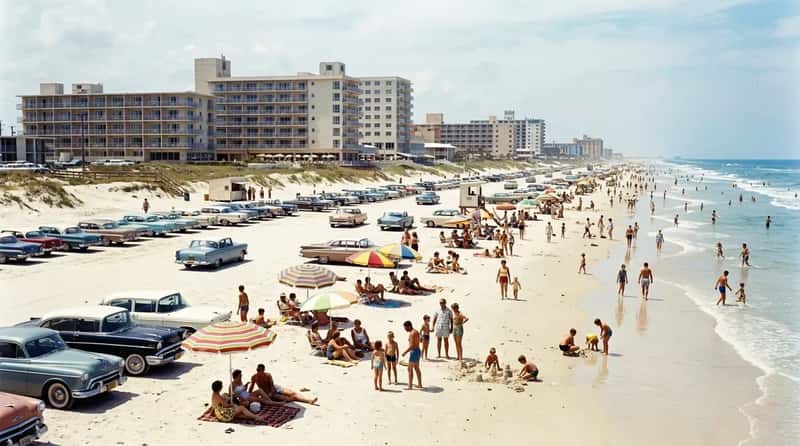
Daytona Beach in the 1960s was not yet the spring break spectacle it would become in the 1980s. It was a genuine multi-generational beach resort with one of the widest, hardest-packed sand beaches on the East Coast – wide enough that cars had been racing on it since 1902. The Daytona International Speedway, which opened in 1959, added a new dimension to the town’s identity and pulled in a whole new crowd of motorsports fans who stayed for the beach after the checkered flag dropped.
Spring break had been building since the 1930s, when American college students first started heading south for warm weather and freedom, but in the early sixties Daytona was still young enough to feel like a discovery. It was where the Twist, the Frug, and every other new dance craze got road-tested on a public beach by kids who had seen the moves on television the week before. By the 1970s, the character had already started shifting. By the 1980s, it had shifted so far it broke. The Daytona that existed in 1963 is a completely different place from the one that exists now.
#5 – Ocean City, Maryland
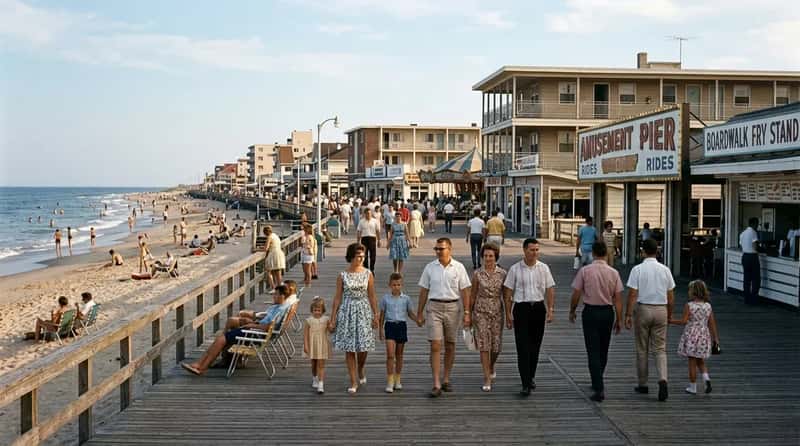
Ocean City, Maryland, is one of the few entries on this list that still exists in recognizable form – but what it was in the 1960s is a completely different animal from what it is today. Before the high-rises arrived, before the outlet malls crept in from the highway, OC was a genuine boardwalk resort – a place where the entire town existed to serve one purpose and everybody understood the deal. Families returned to the same rooming house every July, the same Thrasher’s stand every afternoon, the same amusement rides every night after dinner.
The three-mile boardwalk was the social center of the Eastern Shore’s entire summer universe. It was low-rise, family-owned, and utterly unpretentious in a way that felt less like a tourist product and more like a real community that happened to be incredibly fun. The modern version still carries the name and some of the boardwalk DNA, but it’s a photocopy of the original. The 1960s OC lives now mainly in the memories of the people who were actually there, and those memories get more vivid, not less, with every passing year.
#4 – Myrtle Beach, South Carolina
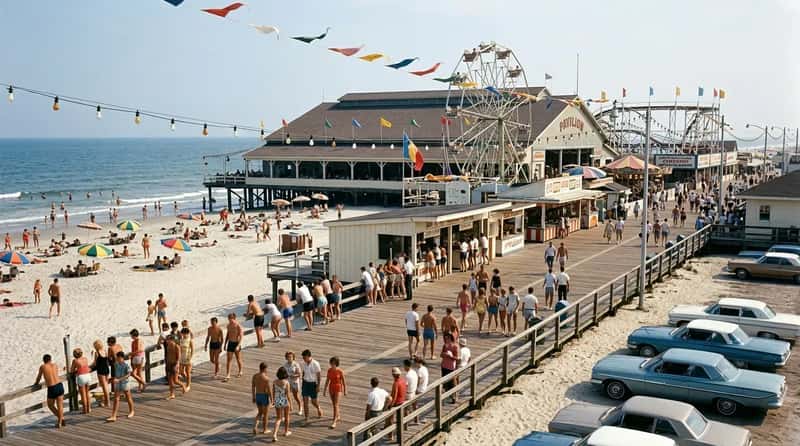
Myrtle Beach in the 1960s was the South’s best-kept secret. The Grand Strand – 60 continuous miles of Atlantic coastline – was still largely undeveloped, and the resort town at its center had exactly the right balance of accessibility and genuine local character. Beach music, the Shag dance, and the Pavilion Amusement Park were not tourist attractions manufactured for visitors. They were the actual culture of the place, invented there and owned by the people who lived there. That distinction mattered enormously.
The Myrtle Beach Pavilion, which opened in 1949 and ran through 2006, was the heartbeat of the 1960s resort experience – a real oceanfront amusement park where teenagers danced the Shag to rhythm-and-blues records while their parents rocked on the pavilion porch overhead. Myrtle Beach was exactly the memory people describe when they talk about the sixties: taffy sticking to your fingers, the sound of music drifting off the water, and a summer that felt like it might never end. The Pavilion closed in 2006 and took the soul of old Myrtle Beach with it.
Why It Stands Out
- 60 miles of Grand Strand coastline — one of the longest stretches of developed beach in the U.S.
- The Shag dance was born here — South Carolina later made it the official state dance
- The Pavilion Amusement Park ran 57 years (1949–2006) before closing; its loss is still mourned by locals
- Beach music — a distinct regional R&B-pop hybrid — was discovered and commercialized right on this strip
#3 – Miami Beach, Florida
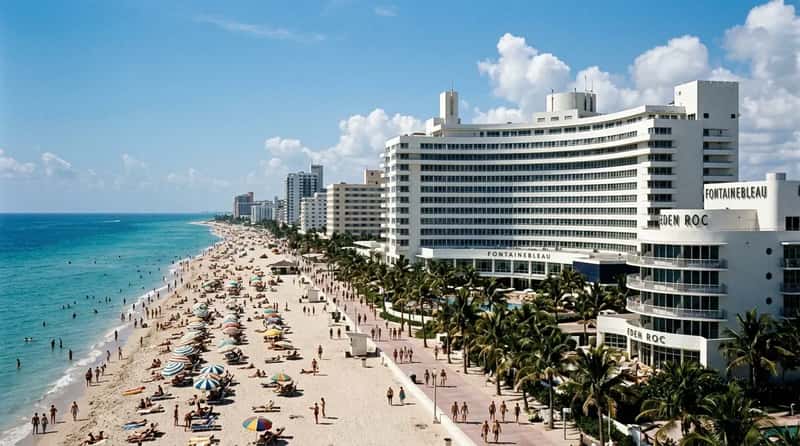
Miami Beach in the 1960s was the most glamorous beach resort on American soil – and almost nobody fully remembers how completely that world disappeared. The Morris Lapidus–designed hotels – the Fontainebleau, the Eden Roc, the Americana – were the most dramatic pieces of architecture in any American beach town. Sinatra performed. The Rat Pack ruled. Ordinary families from Ohio somehow got rooms two floors below the celebrities. It was loud, confident, and genuinely mixed in the most American way possible.
The Fontainebleau is not a hotel. It’s a work of art.
Morris Lapidus
What turned this into a forgotten story is what happened next. By the late 1960s and into the 1970s, Miami Beach aged fast and ugly. The glamour crowd moved on, the hotels deteriorated, and the strip that had felt like the future of American leisure became a cautionary tale about how quickly momentum can reverse. The Art Deco revival of the 1980s saved the bones of the place, but the specific 1960s incarnation – that particular collision of celebrity, middle-class ambition, and sheer visual excess – exists now only in color slides and Sinatra records.
#2 – Grossinger’s Resort, the Catskills, New York
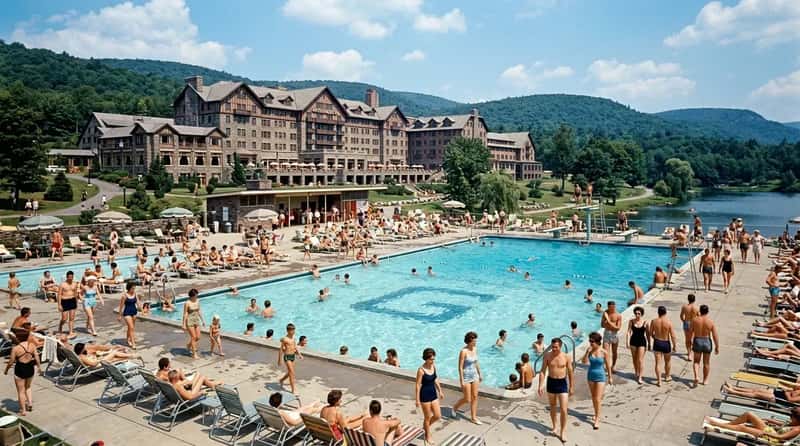
Grossinger’s wasn’t technically a beach resort – it was a Catskill mountain complex with pools, lakes, and enough water-based entertainment to feel like one. But it defined 1960s summer vacation for hundreds of thousands of American families in a way that no oceanfront property quite matched. Under the direction of Jennie Grossinger, the resort expanded into a 1,200-acre complex with over 35 buildings – complete with its own airstrip, post office, ski slope, and a dining room seating 1,300 guests. It welcomed over 150,000 guests a year, entertained by Eddie Fisher, Jerry Lewis, and Milton Berle in opulent nightclub showrooms. It is often cited as the inspiration for the fictional resort in Dirty Dancing.
The same cheap jet travel that opened the world to ordinary Americans destroyed the ecosystem that made places like Grossinger’s necessary. The falling of ethnic barriers, the fading appeal of traditional resort packages among younger generations, and the sudden possibility of flying to Europe for less than a week in the Catskills dismantled the entire Borscht Belt within a single decade. The last building was demolished in October 2018. A resort that had hosted 150,000 guests a year went from iconic to rubble in less than a generation – one of the most complete disappearing acts in American leisure history.
Fast Facts
- 1,200 acres, 35+ buildings, its own post office and private airstrip
- 150,000 guests per year at its postwar peak — dubbed “the Waldorf of the Catskills”
- First resort in the world to use artificial snow for skiing (1952)
- Performers included Mel Brooks, Jerry Lewis, Milton Berle, and a young Eddie Fisher
- Rocky Marciano trained here; Eddie Fisher and Debbie Reynolds honeymooned here in 1955
- Closed 1986; last building demolished October 2018
#1 – Fort Lauderdale, Florida
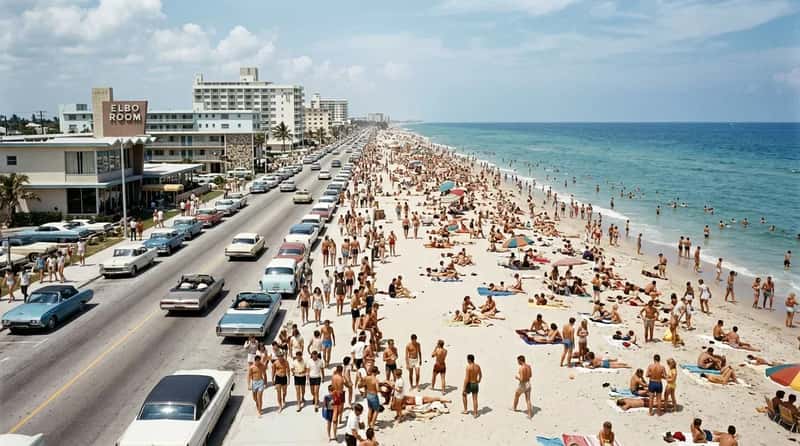
No beach resort in American history had a more defining 1960s moment than Fort Lauderdale – and none fell from grace quite as fast or as completely. The 1960 film Where the Boys Are turned Fort Lauderdale into the undisputed capital of spring break, and for a decade it was the most talked-about, most photographed, most scandalous beach destination in the country. A quarter million college students descended on its beaches every spring. The strip of hotels on A1A was packed wall-to-wall. The whole country knew the name, and the name meant something specific: freedom, youth, and a summer that hadn’t started yet.
Fort Lauderdale became the living embodiment of what young America wanted from the 1960s beach experience – and then, in one of the stranger reversals in American tourism history, the city turned its back on that identity entirely. In the 1980s, new ordinances deliberately drove away the spring break crowd the city had spent two decades courting. The result was a resort town that lost its defining reason for existing almost overnight. Fort Lauderdale was the decade’s biggest beach resort story precisely because it burned brightest and fell fastest – the perfect symbol of 1960s beach culture: glorious, reckless, and gone before anyone thought to save it.
From the Catskill mountain pools of Grossinger’s to the Rat Pack marina bars at the Salton Sea, the 1960s produced a beach resort culture that was genuinely unrepeatable. Cheap car travel, inexpensive motels, and a postwar confidence that summer was something every American family deserved conspired to create something extraordinary – and it lasted barely two decades before jet travel and shifting tastes dismantled it piece by piece. The boardwalks that survive are echoes. The ones that vanished took their communities with them. If you spent summers at any of these places as a kid, you already know something the glossy travel magazines can’t teach. Drop the one you remember best in the comments.