Picture a terminal where you could buy a life insurance policy from a vending machine, feed coins into a TV bolted to your chair, and light a cigarette a few steps from the gate. None of that was a strange corner of the 1970s. It was just a normal day at the airport, and if you’re under 50, you’ve almost certainly never seen any of it.
Here’s the twist: the coin slots weren’t the strangest part. Some of these features vanished because of tragedy, some because of everyday activism, and one because a hijacker disappeared into the night sky. Stick with the list, because the feature people miss most is waiting at the very end.
#20 – The Hare Krishna Greeters Who Worked Every Terminal
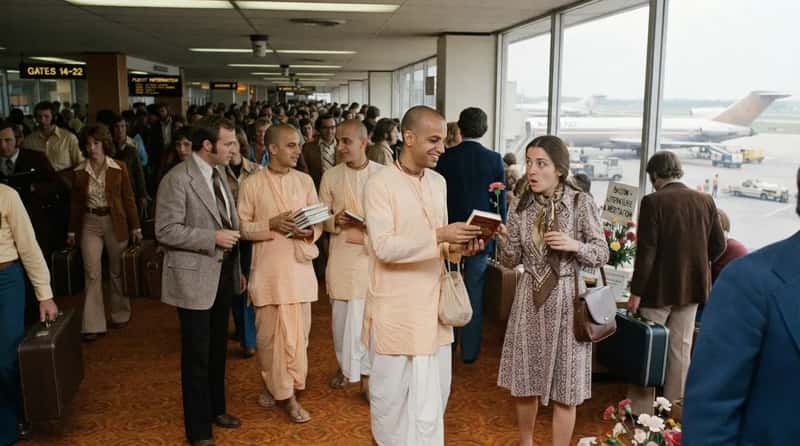
Between the curb and your gate, you often had to get past a gauntlet of solicitors. In the 1970s, members of the Hare Krishna movement were a familiar sight in American airports, handing out flowers and books and asking for donations. Some travelers found it charming, and plenty did not. The dispute ran so long that it ended up before the U.S. Supreme Court in 1992.
In ISKCON v. Lee, the Court upheld a ban on soliciting money inside terminals run by the Port Authority of New York and New Jersey. The real question was whether an airport counts as a public forum, like a street corner or a park. The Court said no, at least when it came to asking for cash. A daily airport annoyance had turned into a landmark free-speech case.
But the next entry was an even stranger way to make money off a bored traveler…
#19 – The Coin-Operated TVs Bolted to Your Seat
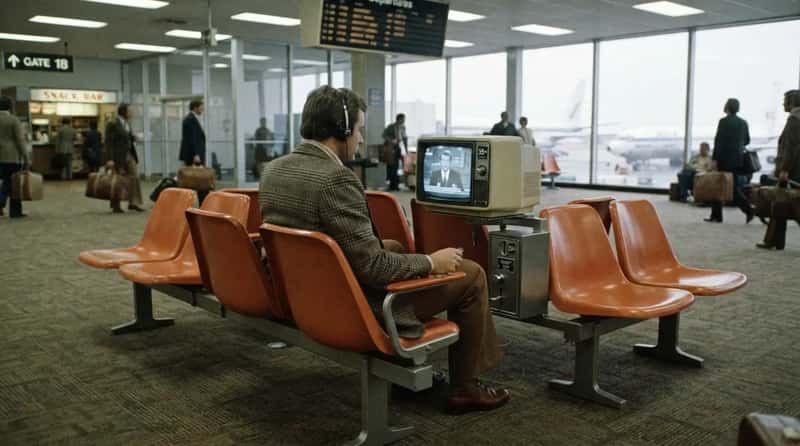
In some airports and bus stations of the era, you could pay to watch television from your waiting-area chair. Small TV sets were attached to the seats and ran on coins. Your seat could literally charge you for entertainment. It sounds like a joke now, but it was a real business.
There were no phones or laptops to fill a layover. A delayed flight meant a captive audience with nothing else to do, and a few coins bought a little escape. Actually, the logic hasn’t gone away. Only the coin slot has.
And that was hardly the only thing airports made you pay for coin by coin…
#18 – Pay Toilets and the Women Who Ended Them
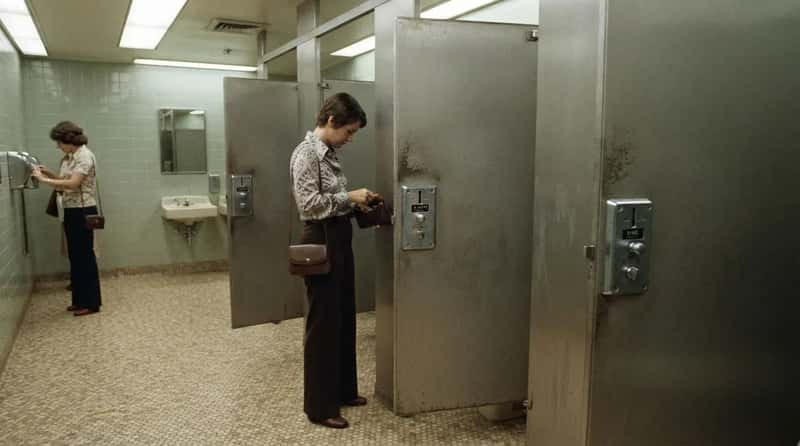
Many public restrooms, including those in transit hubs, once made you pay to use a stall. The door wouldn’t unlock until a coin went in the slot, usually a dime. Forget your change, and you were out of luck. A Chicago group founded in 1970 set out to end the practice nationwide. It was called the Committee to End Pay Toilets in America.
Critics argued that the fees hit women hardest, since men’s urinals were often free. Chicago banned pay toilets in 1973, and other cities and states followed. It’s still remembered as an early win for everyday consumer activism, powered by ordinary people who were simply fed up.
Still, one machine near the gate sold something far more unsettling than a bathroom stall…
#17 – The Vending Machines That Sold Flight Insurance
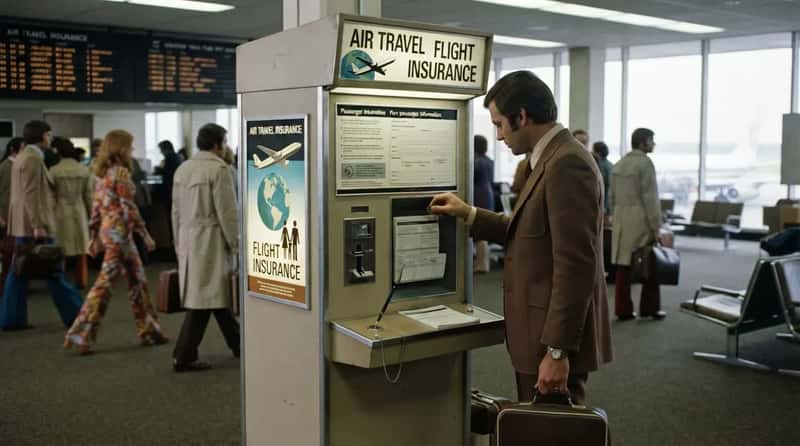
Yes, you could buy a life insurance policy for a single trip from a machine in the terminal. Airports had insurance counters and vending kiosks that sold short-term accident coverage. You filled out a form naming a beneficiary before you boarded, then dropped it in the mail or handed it over at the counter. The coverage lasted only as long as your flight.
It made sense to nervous flyers in an era when air travel felt riskier to the public. Commercial aviation is far safer today, and those kiosks faded away. In truth, they sold peace of mind more than protection.
But the next entry filled the air with something you’d never tolerate in a terminal now…
#16 – Ashtrays Everywhere and Cigarette Machines in the Hall
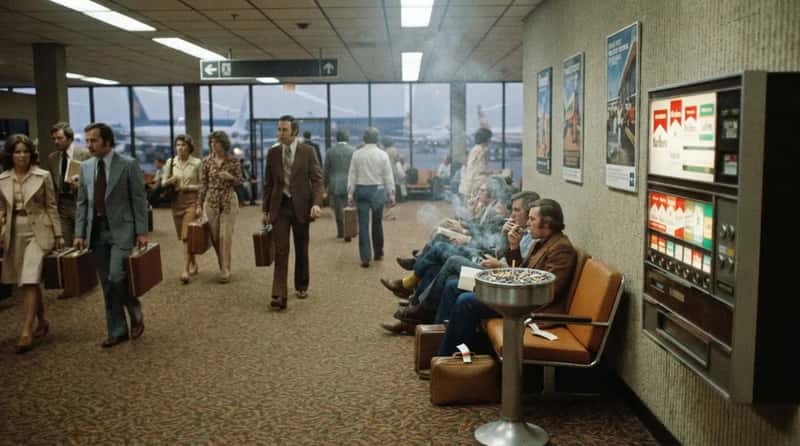
Smoking was simply part of the airport atmosphere. Ashtray stands sat near seating areas, and cigarette machines were a familiar sight in public spaces. Nonsmokers mostly put up with it, because there was nowhere else to go. Smoking on short domestic flights wasn’t banned until 1988.
That rule covered flights of two hours or less. Before it, smoking sections were a normal part of flying, and the haze drifted through a shared cabin. Most people don’t realize how recent the change is.
Fast Facts
- April 1988: smoking banned on U.S. domestic flights of two hours or less.
- 1990: the ban widened to domestic flights of up to six hours.
- 2000: smoking was barred on all flights to and from the United States.
- In between, “smoking” and “nonsmoking” rows shared the same cabin air.
Speaking of things that filled the terminal, the next one had a sound all its own…
#15 – The Departure Board That Clattered Like a Typewriter
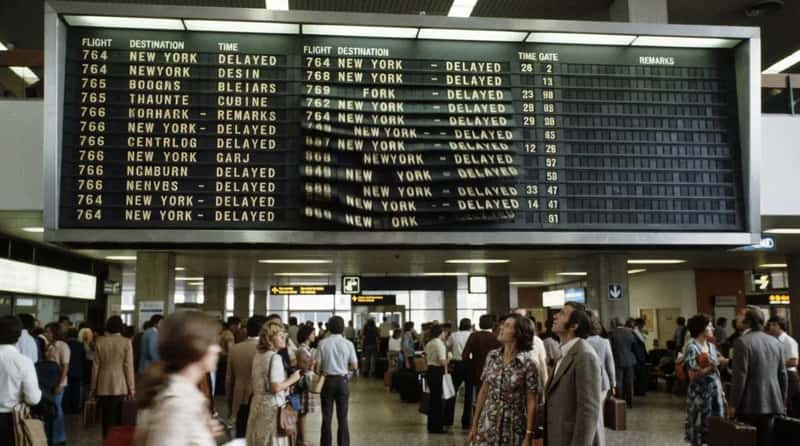
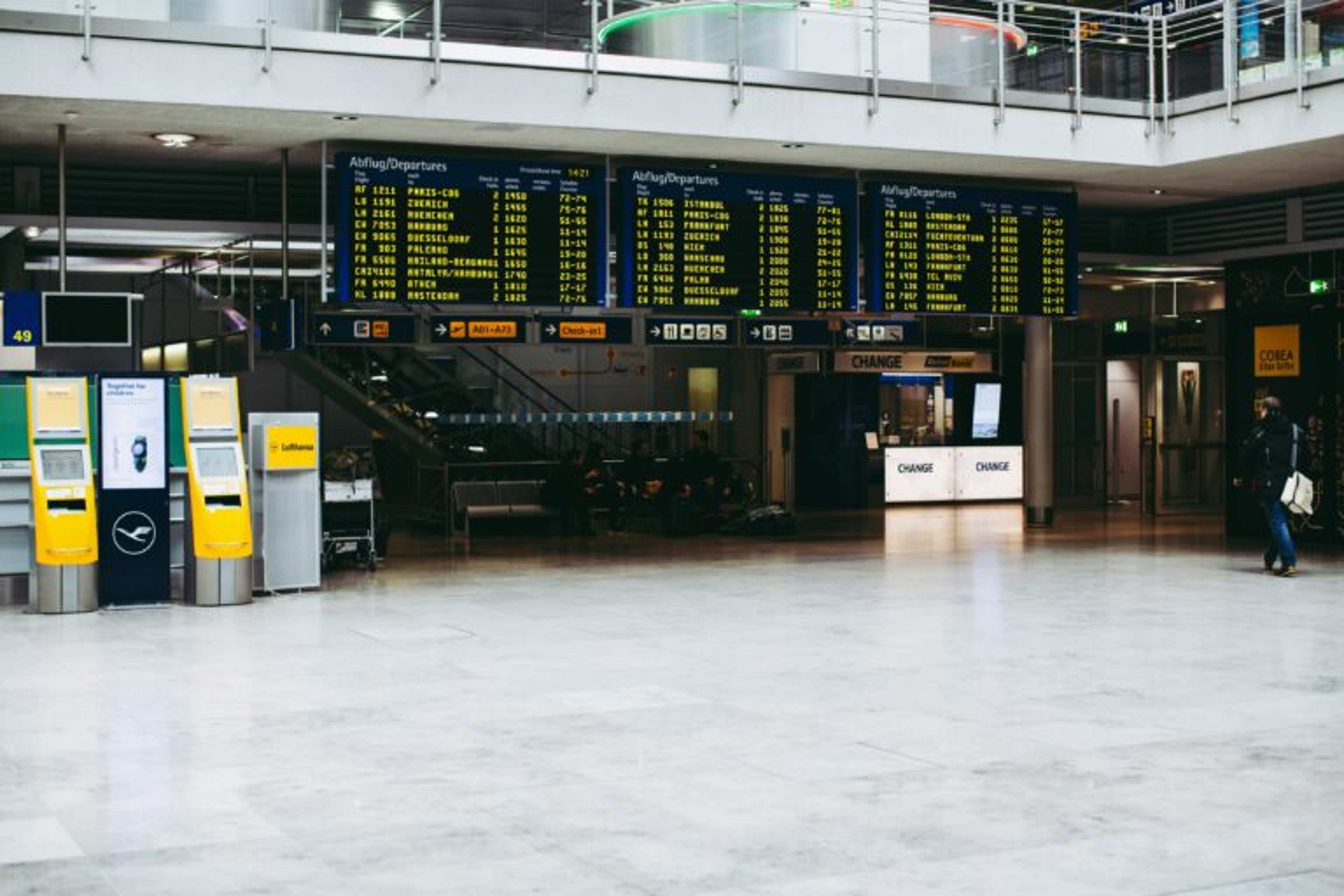
Before LCD screens, many airports posted flights on mechanical split-flap boards. Every time a flight changed, a whole wall of flaps rattled through the alphabet. The Italian maker Solari di Udine built many of the best-known boards. Every single letter was its own spinning drum of flaps.
The clatter told you something had changed before you even looked up. A gate switch or a delay announced itself with a burst of noise, like a room full of tiny card shuffles. Digital boards replaced most of them in the following decades, and many travelers argue nothing on a screen has matched the drama of that sound.
But even the seats you waited in had a design quirk that would frustrate anyone today…
#14 – Seats Bolted Together in Rigid Rows
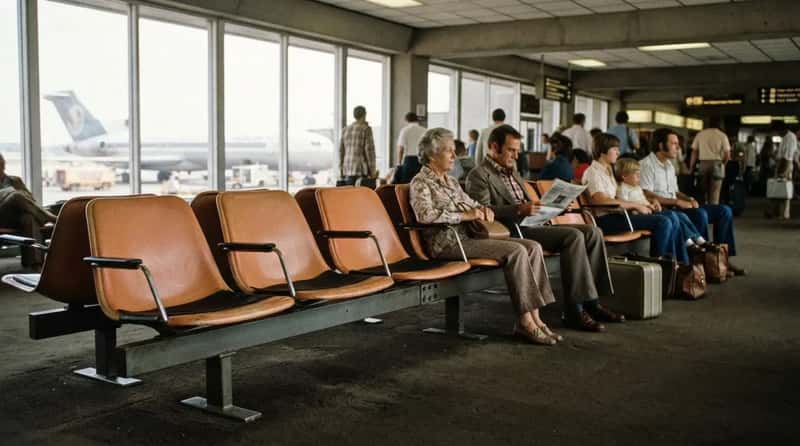
Airport seating in this era was often fixed in long rows of molded plastic, attached to a shared beam. The famous Eames tandem sling seating was designed in 1962 for Dulles and later used at Chicago O’Hare. It was built to be tough and easy to clean. Your chair was physically connected to your neighbor’s.
Groups could not turn their seats to face each other, so a family of four sat in a line like strangers on a bus. There were no armrest outlets, because nobody carried anything to plug in. It was practical for the airport, and comfort for the passenger was secondary.
Why It Stands Out
- Designed by Charles and Ray Eames, two of the best-known names in American design.
- Built for heavy traffic and quick cleanup, not for conversation.
- Rows stayed in place, so nobody could drag a chair closer to family.
- No charging ports, because there was nothing to charge.
Meanwhile, your luggage had its own coin-operated storage, with a darker history…
#13 – Coin Lockers and the Bombing That Changed Them
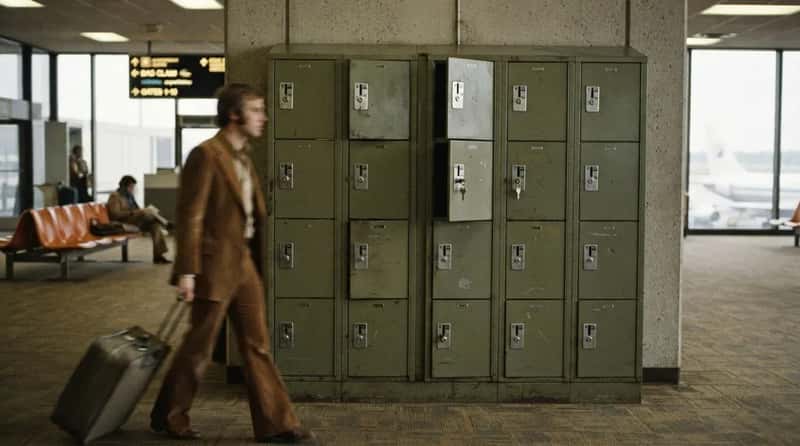
Coin lockers let you stash a bag during a layover for a small fee. They were a staple of terminals and train stations, and they felt like a small miracle for anyone with hours to kill. Then, on December 29, 1975, a bomb exploded in the TWA baggage claim area at LaGuardia. Eleven people were killed, and the case remains unsolved.
Investigators said the device had been left in a locker. Security thinking changed over the following years, and lockers disappeared from many airports as screening tightened. It’s a somber reminder that many “lost” conveniences left for real reasons.
On a lighter note, some airlines once built entire terminals as showpieces…
#12 – Pan Am’s Worldport, Where Jumbo Jets Parked Under the Roof
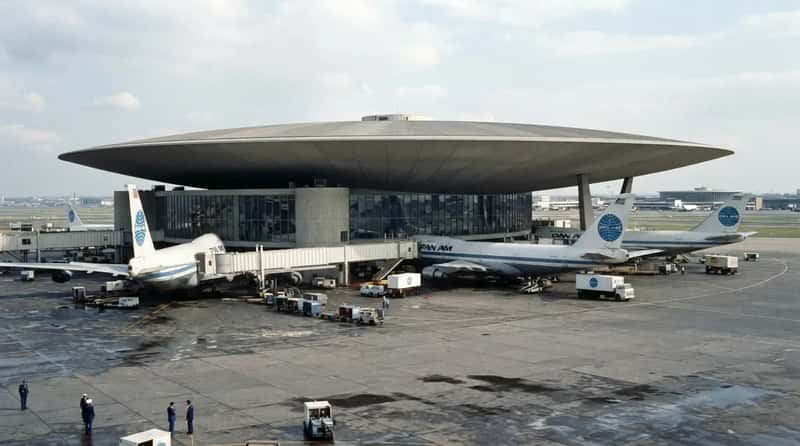
At JFK, each airline had its own terminal, and each was a statement. Pan Am’s Worldport opened in 1960, then got a major expansion in 1971. Jumbo jets parked under one enormous roof so passengers could board almost straight from the building. It was demolished starting in 2013.
TWA’s Flight Center, designed by Eero Saarinen, opened in 1962. It later reopened as a hotel in 2019. Airlines treated buildings like billboards, and passengers walked through the brand before they ever reached a seat.
But the boldest airport design of the decade was about something else: shortening your walk…
#11 – Tampa’s 1971 Shuttle to the Gate
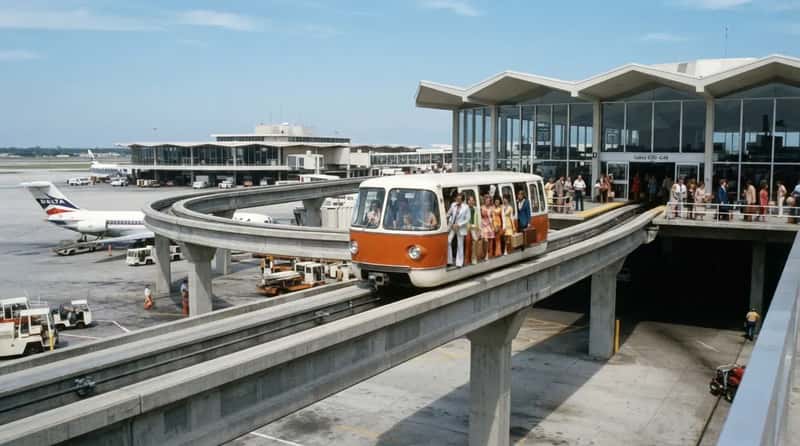
Tampa International opened in April 1971 with a different idea. Passengers checked in at a central landside building. Then they rode a shuttle to separate airside buildings holding the gates. Your walk to the plane was shorter because a train did part of the work.
The layout is widely credited as an early example of a design that many airports later copied. It kept the long hikes out of the picture, at least for travelers with heavy bags. Most people who use the same setup today have no idea where it started.
But an even bigger transit experiment opened three years later in Texas…
#10 – Dallas/Fort Worth’s Driverless Train From the Future
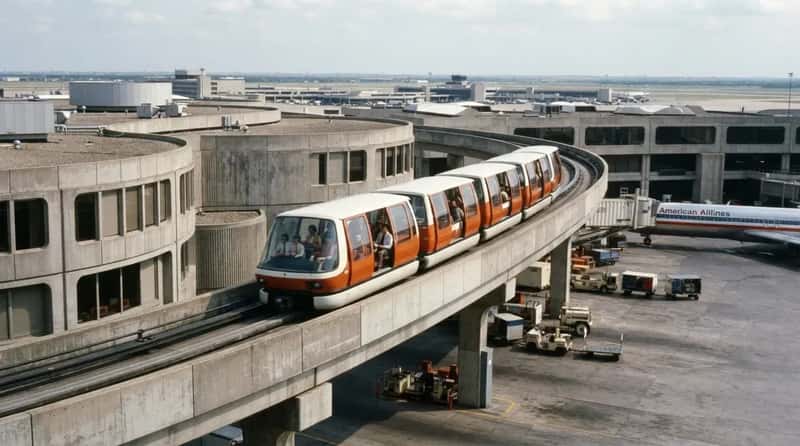
Dallas/Fort Worth International opened in January 1974, and it was built around convenience. Its original terminals curved so you could park close to your gate. An automated, driverless system called AIRTRANS carried passengers and bags around the airport.
It ran for decades before being retired in 2005 and replaced by a new train called Skylink. In the 1970s, this was cutting-edge technology, the kind of thing people expected in the year 2000. Finally, an airport that treated your time as valuable.
At a Glance
- Opened: January 1974, with curved terminals meant to keep the car-to-gate walk short.
- The ride: AIRTRANS was driverless and automated.
- The cargo: it moved bags and airport supplies, not just people.
- The end: retired in 2005 in favor of Skylink.
But you still needed to hold onto a flimsy piece of paper to get there…
#9 – Paper Tickets You Couldn’t Afford to Lose
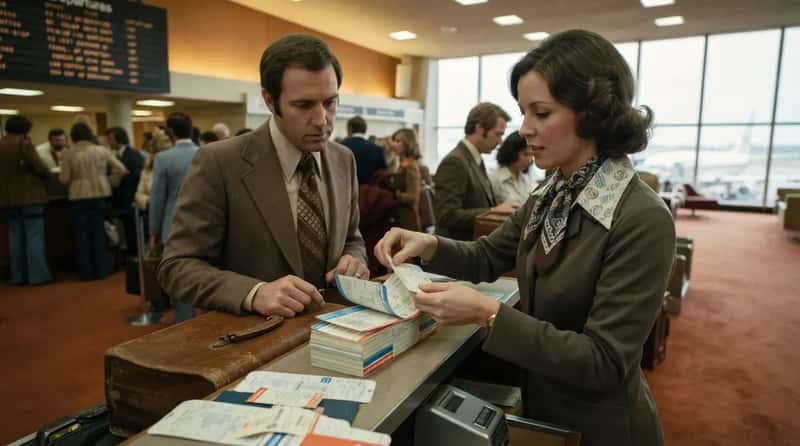
Your ticket was a booklet of carbon-copy coupons, and agents tore one out at each step. Every airline had its own version. Lose that booklet, and you might be treated like you’d lost cash. Replacing one could mean a long, stressful process.
Travel agents and airline counters handled almost everything, since there was no online booking. Digital tickets slowly took over as computers improved. The paper era lasted far longer than most people assume.
Once you had your ticket, families often skipped the flight entirely and just watched the planes…
#8 – The Observation Deck That Made the Airport a Day Trip
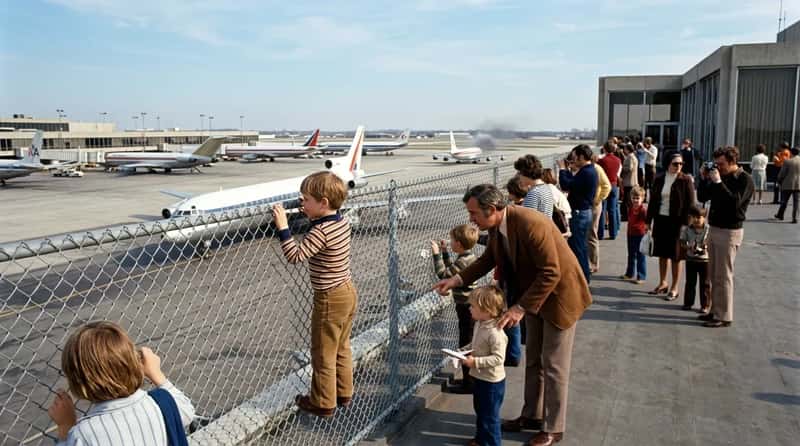
Many airports had open viewing decks where anyone could watch the planes. Families went on weekends, and it cost little or nothing. The airport itself was the destination, no flight required. Kids pressed against fences as jets roared past.
After the 2001 attacks, many of those decks closed for security reasons. A few survive, and some airports have tried to bring back viewing areas outside the secure zone. Many aviation fans still call the loss of those decks the saddest quiet change.
But the reason airports got stricter started with something far more dangerous than curiosity…
#7 – The Armed Sky Marshals Who Boarded Without Announcement
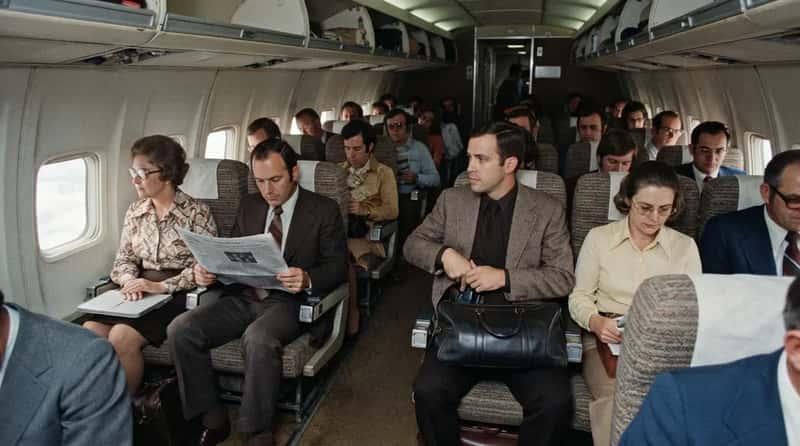
In September 1970, President Nixon announced a program to put armed federal agents on U.S. flights. Hijackings had surged, and dozens of planes were seized in 1969 alone. Passengers often had no idea who among them was carrying a gun. Sky marshals blended in.
The idea was deterrence through uncertainty. The person in 14C could be a salesman, or he could be the one standing between the crew and a hijacker. Later, mandatory screening did most of the work, and the federal air marshal program grew again after 2001.
The tarmac itself was also more open, and one plane’s rear door went down in history…
#6 – Walking Out Onto the Tarmac, and D.B. Cooper’s Escape Hatch
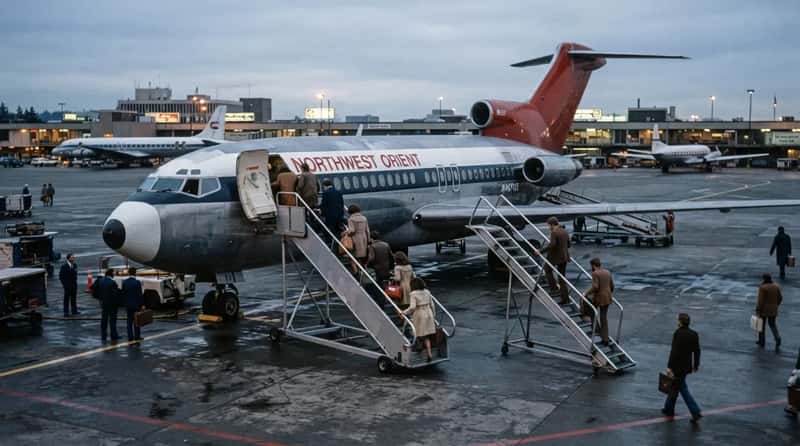
At many airports, you climbed rolling stairs and walked across the tarmac to board. Jet bridges existed but weren’t everywhere yet. The Boeing 727 also had its own built-in rear staircase. In November 1971, hijacker D.B. Cooper used that rear airstair to jump into the night.
Afterward, the FAA required a fix to stop the stairs from being lowered in flight. The device became known as the “Cooper vane.” The tarmac boarding survives at some smaller airports, but that rear door design doesn’t.
But the biggest glamour of the decade landed at airports in 1976…
#5 – Concorde Touches Down at the Terminal
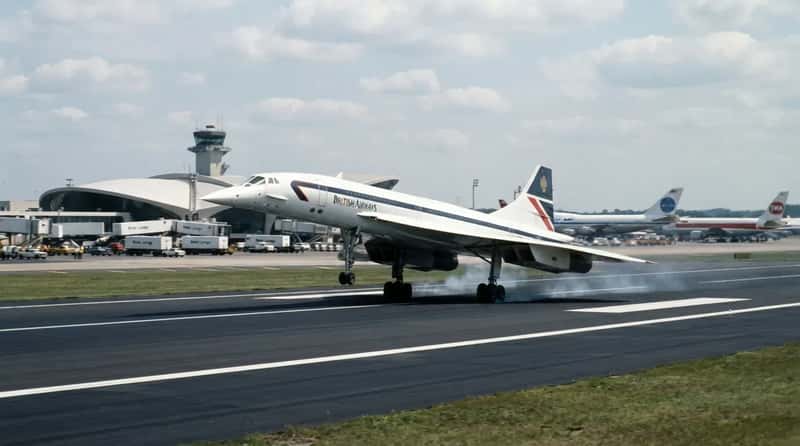
On January 21, 1976, Concorde began scheduled service, with British Airways and Air France both flying on the same day. Airports built special handling for the supersonic jet. New York flights didn’t start until November 1977, after a legal fight over noise. Washington Dulles got service first.
Concorde flew until 2003. Some experts argue it never made real economic sense and lived on prestige. Others say it proved what passengers would pay for speed.
But the biggest reason flying felt exclusive had nothing to do with speed…
#4 – Fares Set by the Government, Not the Airlines
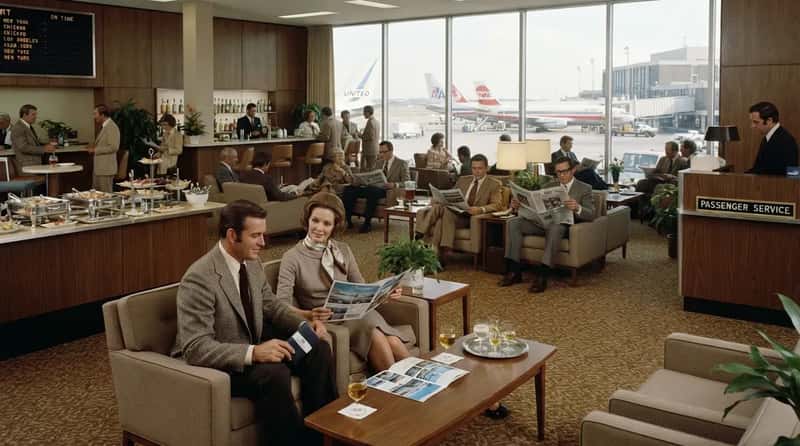
Until 1978, the Civil Aeronautics Board controlled which airlines could fly which routes and what they could charge. Airlines couldn’t compete on price the way they do now. They competed on service instead: bigger meals, more legroom, and lavish lounges. Flying was pricey, and it mostly suited wealthier travelers.
The Airline Deregulation Act, signed in October 1978, changed everything. Fares generally fell and crowds grew. Experts still argue about whether the trade-off was worth it.
Quick Compare
- Before 1978: The government approved routes and fares, so airlines fought over meals and comfort.
- After 1978: Airlines set their own prices, and new carriers could enter the market.
- The passenger’s view: Fancier flights gave way to cheaper, fuller ones.
But the next entry is the one people find hardest to believe…
#3 – Boarding a Plane Without Anyone Checking Your ID
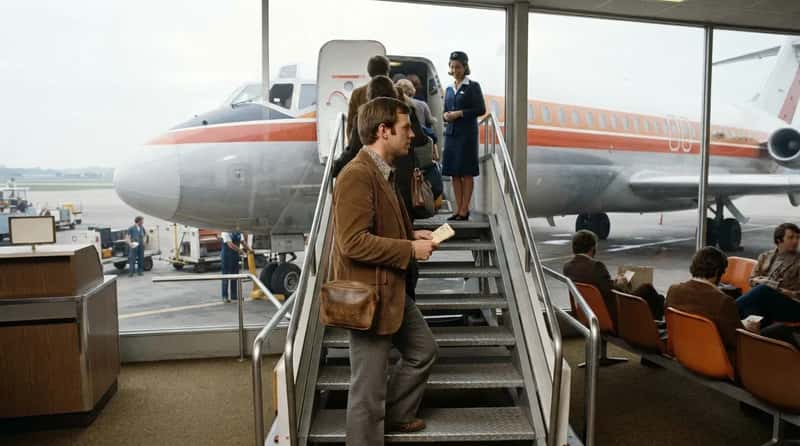
For much of the decade, showing photo ID to fly wasn’t a routine step. Tickets carried a name, but enforcement was loose. Photo ID checks became standard practice only in the 1990s. Airlines began tightening the rules after the 1996 crash of TWA Flight 800.
Today it’s impossible to imagine reaching a gate anonymously. That’s a huge shift in how travel works. Most people don’t realize the rule is younger than many of the airports they use.
But the real turning point came earlier, on one January morning in 1973 that changed the airport forever…
#2 – The Day the Metal Detectors Became Mandatory
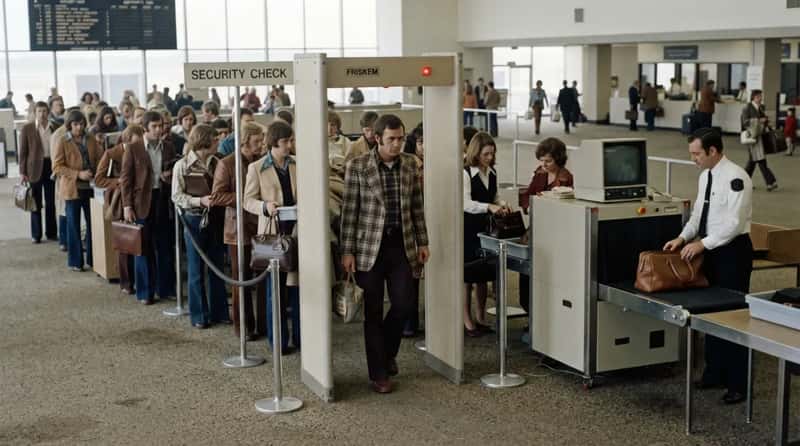
On January 5, 1973, the FAA required airlines to screen every passenger and carry-on bag. Before that, screening was often selective or based on profiles. Hijackings had become so frequent that the FAA ordered a checkpoint for everyone. Metal detectors and X-ray machines moved into the terminal.
That checkpoint is the ancestor of today’s security line. It looked simple by modern standards, with nothing like today’s full-body scanners. Still, it marked the moment the airport became a controlled space.
But the biggest thing we lost wasn’t about safety at all, and it’s the one people miss most…
#1 – Walking Someone All the Way to the Gate
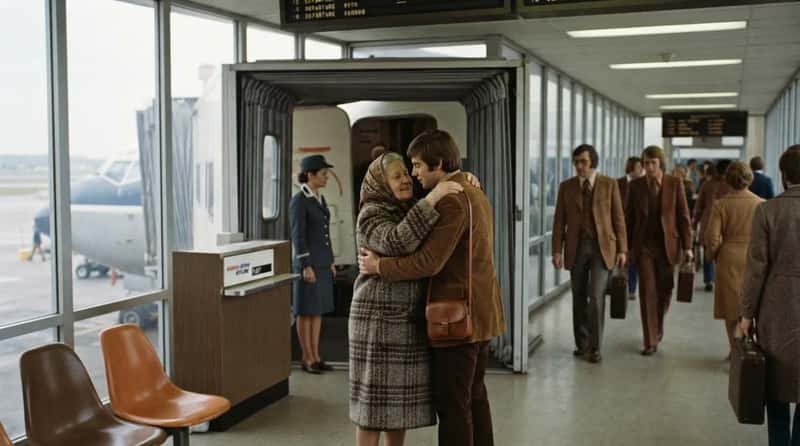
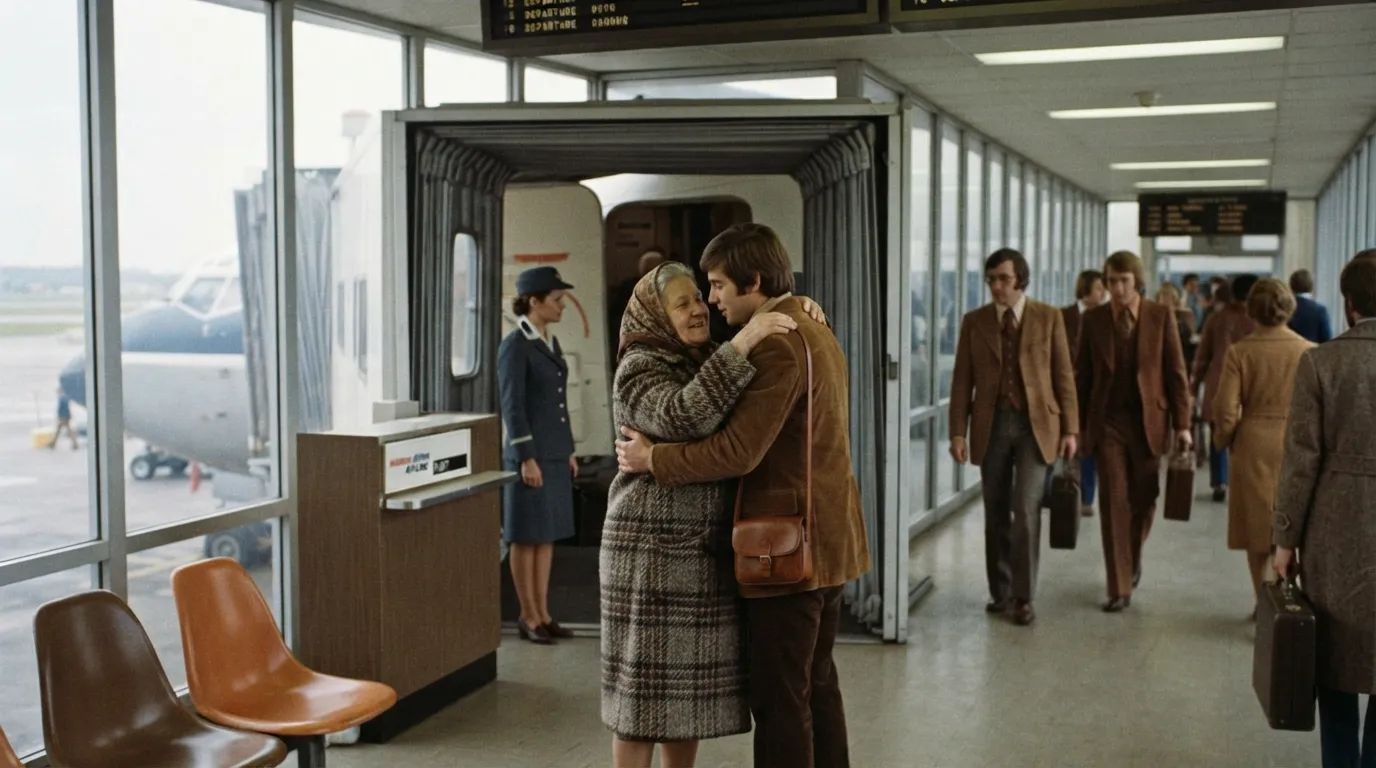
You could walk a loved one right up to the plane door. Families waved from the jet bridge, and greeters waited at the gate for arrivals. Until 2001, anyone could walk you to the gate, no ticket needed. Long goodbyes and sprint-and-hug reunions happened in plain sight.
After the 2001 attacks, checkpoints were restricted to ticketed passengers. A few airports have since tried limited visitor passes. Many people argue that losing gate goodbyes was the biggest hidden cost of modern security.
Some of these features disappeared for good reasons. Pay toilets and coin TVs were commercial quirks, but lockers, screening, and ID checks changed because the world did. Others are simply gone, like the clattering boards and the observation decks. The 1970s airport was looser, stranger, and often riskier than we remember.
But anyone who ever stood at the end of a jet bridge, waving until the plane pulled away, remembers exactly what it felt like.