Most travelers assume boarding delays are the airline’s fault – a broken jet bridge, a late crew, bad luck. But ask actual flight attendants, and they’ll tell you a different story: the biggest bottleneck standing between you and takeoff is usually the passenger three rows ahead of you, not the airline.
Cabin crew see the same mistakes on nearly every single flight, and a handful of small habits – some backed by real research, others just common sense they wish more people practiced – separate a smooth boarding process from a 30-minute aisle traffic jam. Here’s what they actually say works, counted down to the one habit crew say matters more than all the rest combined.
#20 – The Boarding Pass Fumble That Backs Up an Entire Jet Bridge
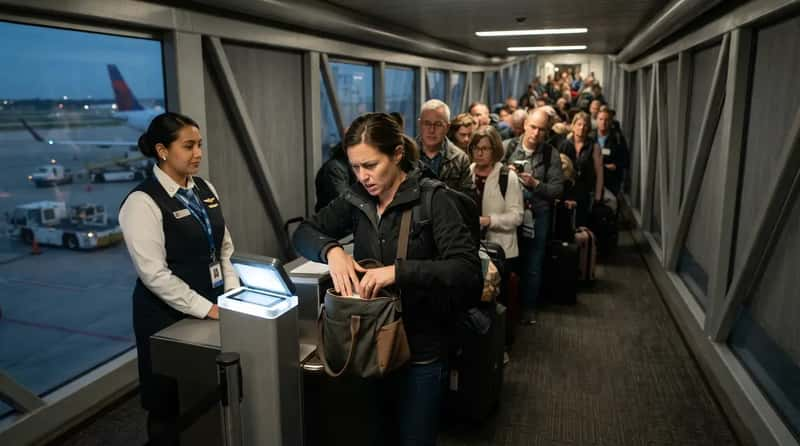
It sounds too small to matter, but it’s the thing crew mention first almost every time. Having your boarding pass ready to scan speeds up the whole line, because a few seconds of hesitation multiplied by 300 people quietly becomes a delayed departure. Digging through a bag or unlocking a phone right at the scanner doesn’t just cost you time – it costs everyone stacked up behind you.
Crew say the fix is almost embarrassingly simple: pull your pass up before you’re at the front of the line, not when the gate agent asks for it. That few seconds of hesitation, repeated hundreds of times, is often the real reason your flight leaves late – not weather, not mechanical issues. But that’s nothing compared to what crew say about your suitcase next.
#19 – The Suitcase Mistake That’s Secretly a Hygiene Problem
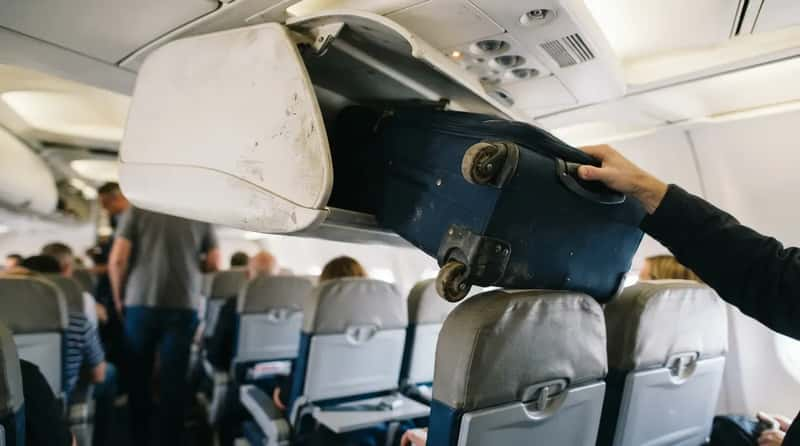
Flight attendants have a name for the wrong way to load a bin, and they borrowed it from grade school. One flight attendant described it as “hot dog, not hamburger-style,” the same folding rule taught with paper back in elementary school. Loading bags wheels-first instead of wheels-in isn’t just sloppy – it’s an actual hygiene issue crew deal with on every rotation.
Wheels touch airport floors, jet bridges, and bathroom stalls all day long, so a wheels-first bag smears that grime across every seatback and armrest it brushes going into the bin. Placing bags wheels-in with handles facing out instead maximizes space and makes grabbing your bag on deplaning noticeably faster. Most passengers have no idea their bin-loading habit is the reason the aisle stalls – wait until you hear what crew say about coats and purses.
Fast Facts
- Wheels touch every dirty surface at the airport, from jet bridges to restroom floors.
- Loading wheels-in keeps that grime off other passengers’ bags and jackets.
- The “hot dog, not hamburger” fold is the same one most people learned in grade school.
- A properly loaded bin fits noticeably more bags than one packed at random angles.
#18 – Grabbing Your Headphones Mid-Flight? Crew Wish You’d Done It Sooner
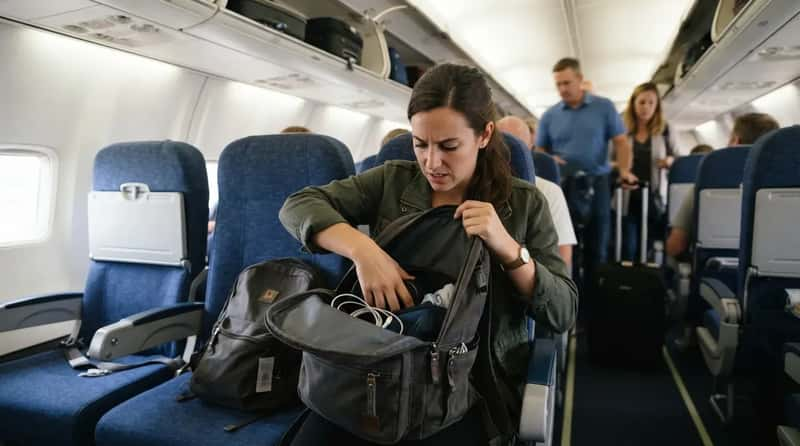
The easiest way to become a walking roadblock is waiting until you’re seated to dig through your bag. The fix is just as easy: make sure everything you’ll need in the air – headphones, a book, medication – is within reach before you even board.
It takes ten extra seconds at the gate versus ninety seconds holding up an entire row later while you excavate your backpack. Crew say this single habit – prepping before boarding instead of during – solves more bottlenecks than any new airline policy ever could. Next up is a bin trick almost nobody uses on purpose.
#17 – The Overhead Bin Trick Crew Wish Everyone Knew
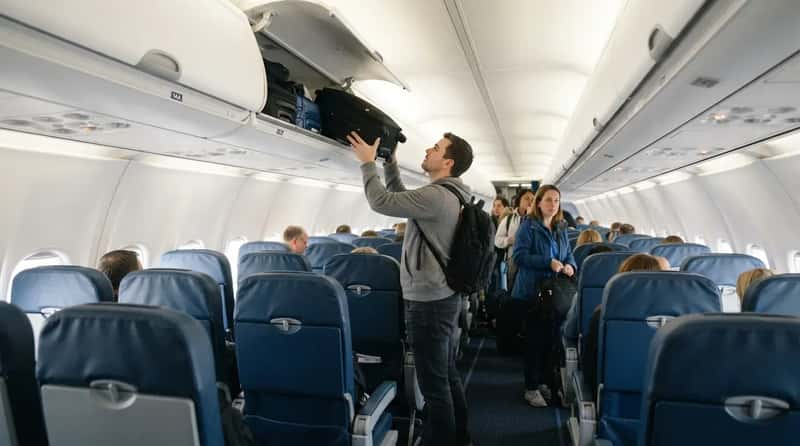
Racing all the way to your row before stowing your bag actually slows the whole cabin down. Crew suggest looking for bins that are already open near your seat and using those instead of fighting the crowd for the one directly overhead.
It sounds counterintuitive, but spreading bags across nearby open bins prevents the pileup that happens when everyone tries to cram luggage into the exact same three feet of space. Most passengers assume they must use the bin directly above their row – crew say that one assumption alone causes half the traffic jams onboard. What crew say about personal items is even more overlooked.
#16 – The Under-Seat Rule Almost Nobody Follows
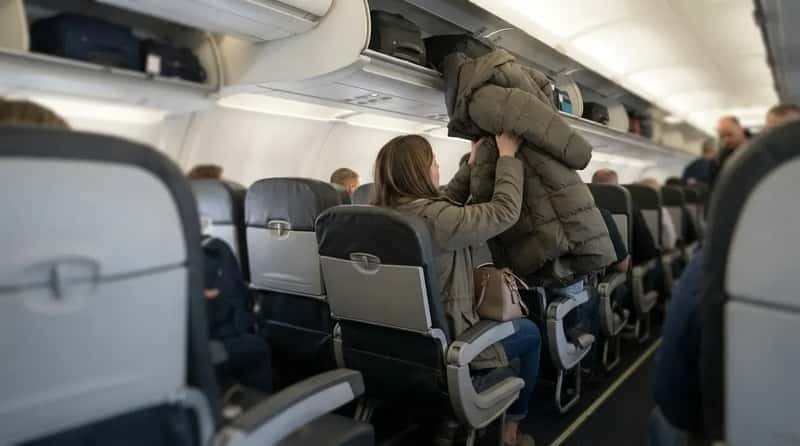
Personal items – purses, laptop bags, coats – are supposed to go under the seat in front of you, not overhead. Crew are consistent on this one for a specific reason: overhead space is finite, and every purse taking up a slot means a real suitcase has nowhere left to go.
Coats and bags belong underneath the seat in front of you unless you’re in a bulkhead or exit row, since those rows physically don’t allow underseat storage. Skipping this rule is one of the most common – and most avoidable – causes of bin shortages by row 25. Here’s the part crew really don’t want you doing.
#15 – Why Crew Beg You to Leave Overhead Bins Alone Mid-Boarding
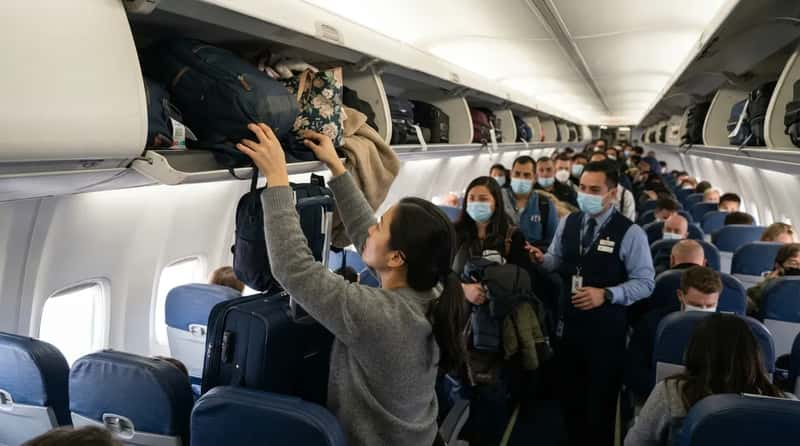
Shuffling other people’s bags around to make room for your own is a bigger deal than it looks. Crew ask passengers to wait until everyone has boarded before rearranging bins, because moving purses, coats, and backpacks to hunt for their owners can genuinely stall the entire line.
It feels harmless in the moment, but multiply it by a full 737 and you’ve added real minutes to the schedule. Crew say the instinct to “just make room” is one of the most well-meaning habits that quietly backfires the most. Coming up is the habit that makes crew visibly frustrated.
#14 – The Social Media Habit Crew Call Out by Name
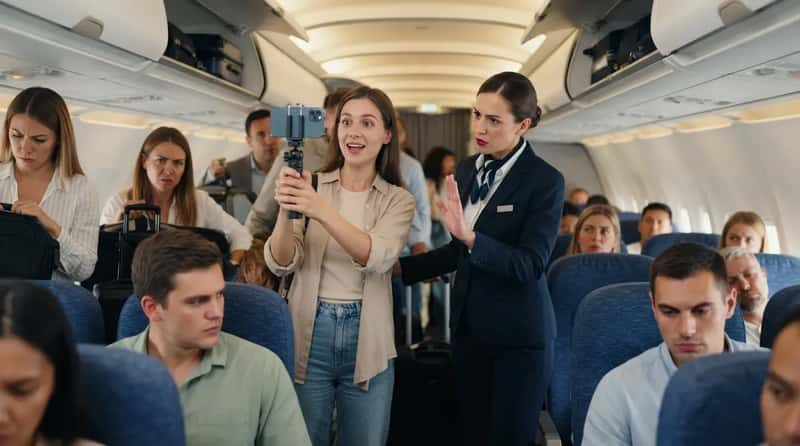
Filming a boarding vlog in the middle of the aisle isn’t a victimless habit – it’s one crew mention by name. One flight attendant described passengers with “main character syndrome” who jam the aisle filming content or narrating their trip loudly, adding, “I will make you stop.”
It’s a small population of travelers, but the delay they cause is wildly disproportionate to their numbers. Crew say your boarding behavior is genuinely one of the first things they notice – and remember – about you for the rest of the flight. The real surprise, though, is which boarding method actually works best, and it’s not the one most airlines use.
#13 – The “Logical” Boarding Method That’s Actually the Slowest
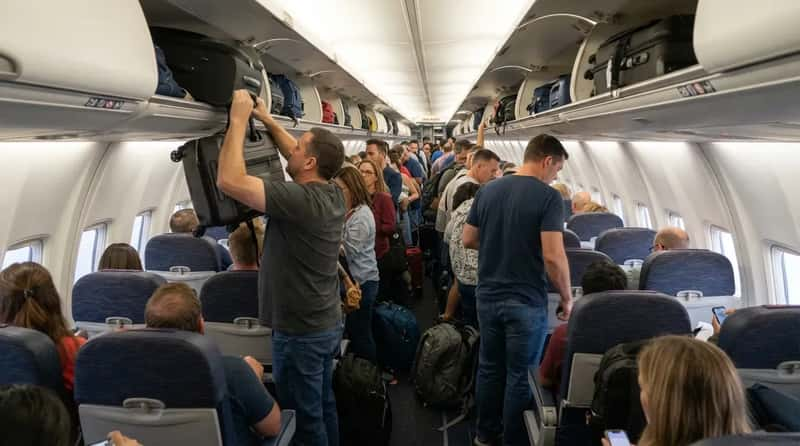
Most major U.S. carriers still board back-to-front, and most passengers assume that’s the smartest way to do it. Turns out, it’s nearly the opposite. Most airlines, including United and American, use block boarding, grouping passengers by zones and loading them back to front.
It feels organized because it matches the seat map in your head. But research on real boarding times tells a very different story than intuition suggests, and the method that “feels” most logical to passengers is one of the worst-performing options airlines actually use. Here’s the airline that figured that out first.
#12 – The Airline That Ditched Assigned Seats – and Got Faster
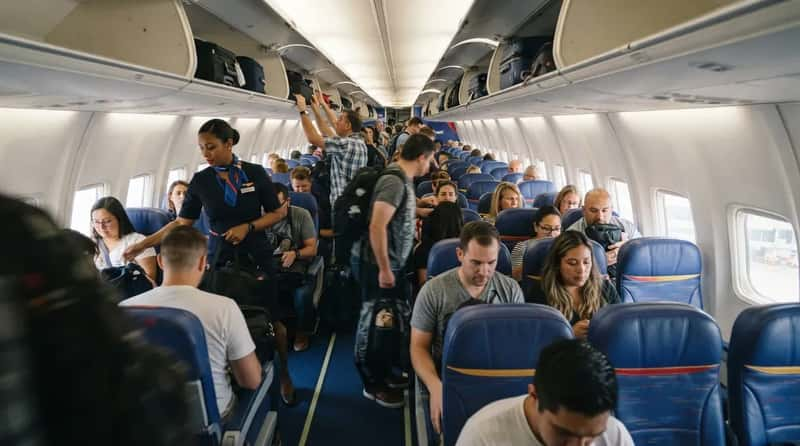
Southwest’s boarding looked chaotic from the jet bridge, yet for decades it was one of the fastest systems in the industry. Southwest’s open-seating process was long considered dramatically faster than the traditional back-to-front method most other carriers still rely on.
Passengers didn’t get an assigned seat, just a boarding position on a first-come, first-served basis, and the efficiency came from letting multiple travelers settle in at once instead of waiting on a strict sequence. The system most flyers dismissed as disorganized quietly outperformed the “orderly” method almost every other airline uses. An even bigger shake-up just hit one of the biggest U.S. airlines, though.
Worth Knowing
- Southwest officially ended its 50-plus-year open-seating system on January 27, 2026.
- The airline switched to assigned seats largely to match rivals’ seat-selection and premium-cabin revenue.
- Southwest’s own research found roughly 80% of its customers actually preferred assigned seating.
- Earlier assigned-seating tests had added 1 to 4 minutes to boarding time compared with open seating.
#11 – United’s New System Has a Name – and a Weird Acronym
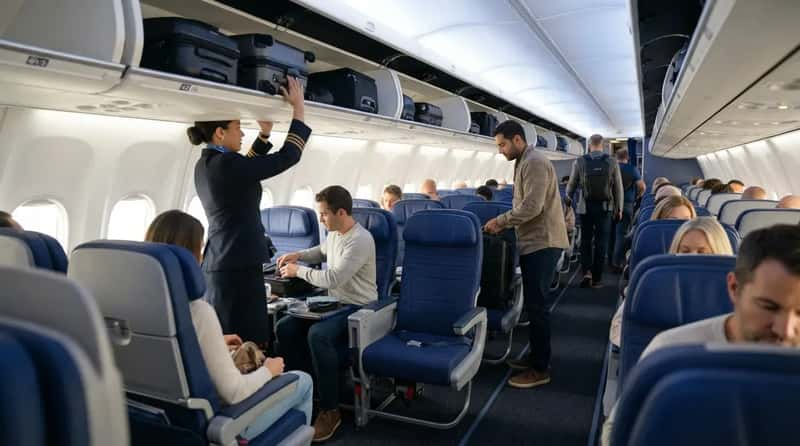
United rolled out a boarding method built almost entirely around seat letters, not seat numbers. Known as WILMA – window, middle, aisle – it boards window passengers first, then middles, then aisles, starting at the back of the plane.
The logic is simple: nobody has to climb over anyone else mid-row. The approach can shave up to two minutes off boarding per flight – roughly $200 in savings – and with United running close to 5,000 flights a day, that adds up to about $1 million saved daily. A change most passengers barely noticed is quietly saving one airline a million dollars a day. The method that inspired it is even faster, and airlines still won’t touch it.
#10 – The Boarding Method That Beats Everything Else – and Still Isn’t Used
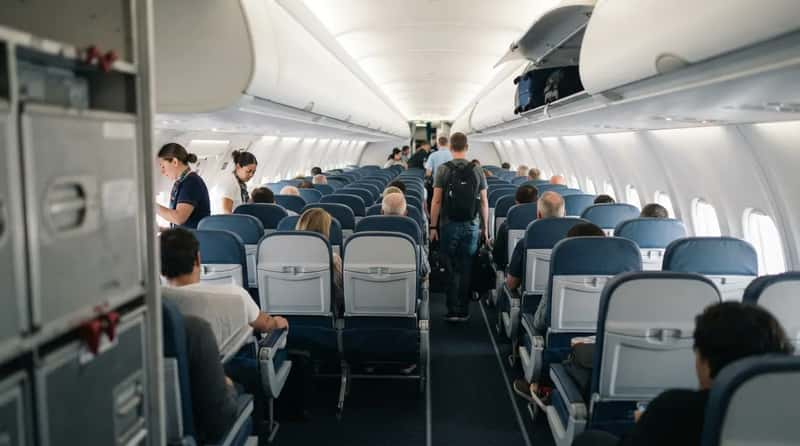
Long before WILMA, a physicist solved this problem almost perfectly, and airlines shelved it anyway. The idea dates back to 2005, when University of Nevada astrophysicist Jason Steffen got fascinated with boarding inefficiency after getting stuck in a jet bridge in Seattle.
In simulation testing, the Steffen method – which loads window seats first in a staggered pattern – finished boarding in just 11 minutes and 16 seconds, compared to nearly 18 minutes for random boarding and over 31 minutes for back-to-front loading. Back-to-front, the method most airlines still default to, took almost three times longer than the fastest system ever tested. So why isn’t it standard? Mostly logistics – it doesn’t play nicely with families or premium seating. Up next is a tip that has nothing to do with your seat letter at all.
#9 – Why Your Group Number Matters More Than Your Seat Letter
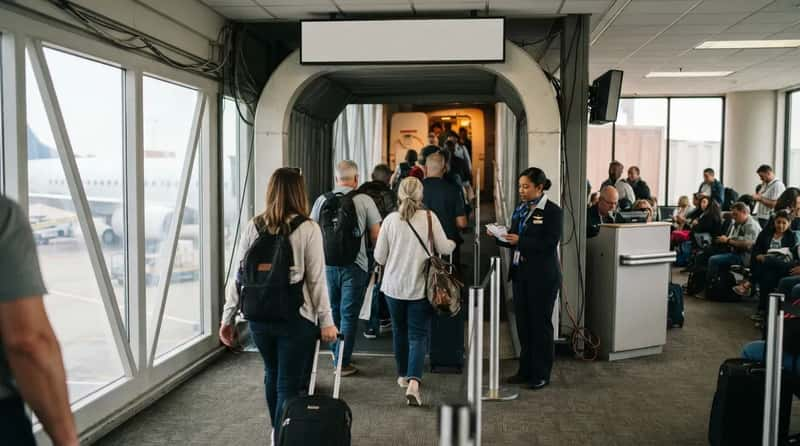
New research is challenging the assumption that window-versus-aisle is the real variable. Multiple studies on boarding efficiency converge on one finding: your boarding group and sequence matter far more to your total boarding time than whether you’re by the window, in the middle, or on the aisle.
Being first in your assigned zone beats worrying about your seat letter almost every time. Crew have said for years that hovering near the gate to be first in your group – even a “last” group – genuinely gets you seated faster than lingering at the back of the whole line. The seat-letter debate travelers argue about online matters far less than simply not being last in your zone. But packing habits matter even more than timing.
#8 – The Carry-On Habit That Slows Down Your Entire Row
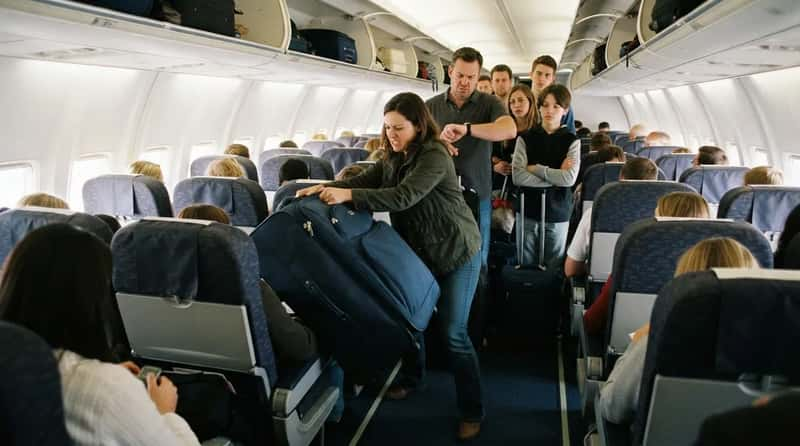
Fee-dodging has quietly made boarding worse for everyone. With almost every airline now charging extra for a second checked bag, travelers cram more into their carry-on – a habit that often ends in a rushed gate-check under the worst possible circumstances.
That oversized roller bag barely fitting through the aisle isn’t just your problem – it’s the reason six people behind you are standing still. The lighter and simpler your carry-on, the faster the entire line behind you moves too. What feels like a smart way to dodge bag fees is often the exact habit that turns a five-minute boarding process into fifteen. Even something as basic as bathroom timing plays a bigger role than people think.
Quick Compare
- First checked bag: roughly $35 to $45, depending on the airline and prepay discount.
- Second checked bag: typically $45 to $60, with several carriers raising prices in 2026.
- Third checked bag: often around $200, a steep jump meant to discourage overpacking.
- Carry-on and personal item: still free on most fares – exactly why bins fill up so fast.
#7 – The Bathroom Timing Trick Crew Actually Recommend
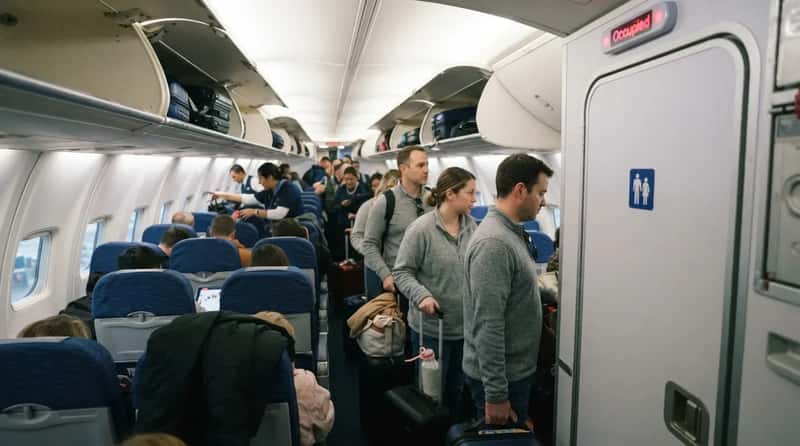
Cabin crew have quiet preferences about when passengers use the restroom, and it’s not mid-boarding. One flight attendant’s standing advice is simple: use the restroom at the airport, not once you’re already on the plane.
A lavatory line forming during boarding creates a standstill in the aisle at the worst possible moment, when there’s nowhere for anyone else to go. It’s a habit that costs nothing to change and instantly removes one more obstacle from a narrow space already packed with bodies and bags. Something this ordinary turns out to be one of the easiest, most overlooked fixes on this entire list.
#6 – Eating at the Gate Isn’t Just Comfort – It’s Strategy
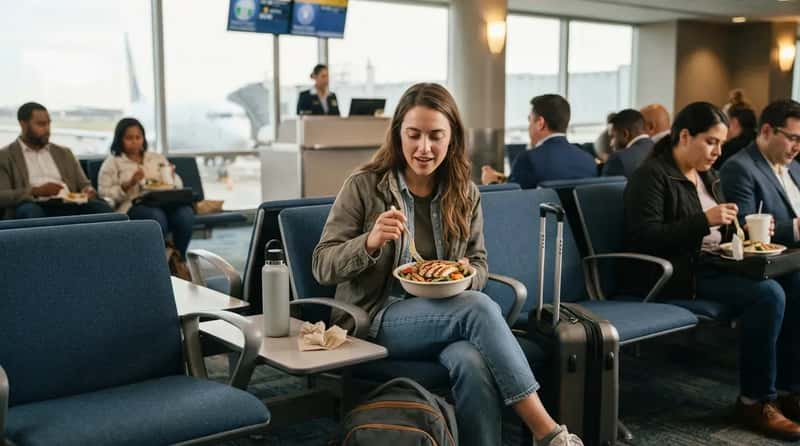
Grabbing food before you board isn’t just about hunger – it’s about not holding up the aisle later. Crew advice includes eating a snack or meal at the gate, checking in early, and keeping an eye on the departure board in case your gate changes.
Unwrapping snacks, digging for water bottles, or trying to eat once you’re crammed into a middle seat all add friction to an already tight process. Doing it beforehand means one less thing you’re juggling while everyone around you is trying to move. Announcements matter more than people assume, too.
#5 – Ignoring Gate Announcements Costs More Than You Think
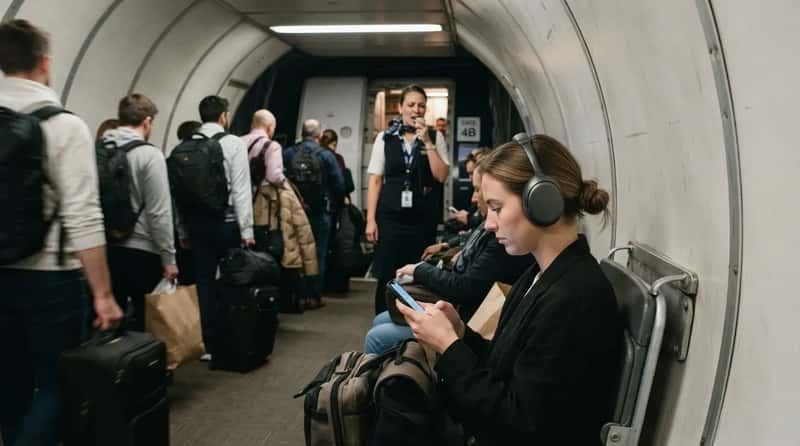
Crew repeat themselves constantly during boarding, and it’s not just habit – it’s damage control. Announcements about zones, bag stowage, and seat finding are designed to streamline the whole process, and tuning them out causes a delay crew notice even when they don’t call you out for it.
Passengers scrolling their phones or wearing headphones during boarding calls routinely miss zone announcements, gate changes, or seating instructions entirely. Crew say inattention during boarding is one of the quietest but most consistent causes of delay they see flight after flight. A simple facial expression, on the other hand, can genuinely change your flight.
#4 – The Small Gesture Crew Say Changes Everything
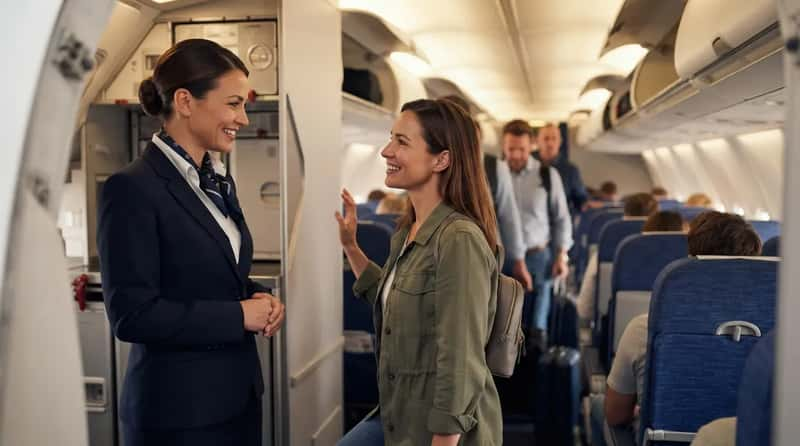
It sounds almost too simple to matter, but crew bring it up again and again. Smiling at your flight attendants as you board is part of the standard advice crew give for setting the tone of a better flight.
Crew are managing hundreds of interactions in a short window, and a passenger who’s pleasant from the first hello tends to get noticed – and remembered – differently than one who isn’t. It doesn’t guarantee an upgrade, but it does shape how your row gets treated for the rest of the flight. Letting others board first matters more than most flyers assume, too.
#3 – Why Letting Families Board First Actually Speeds Things Up
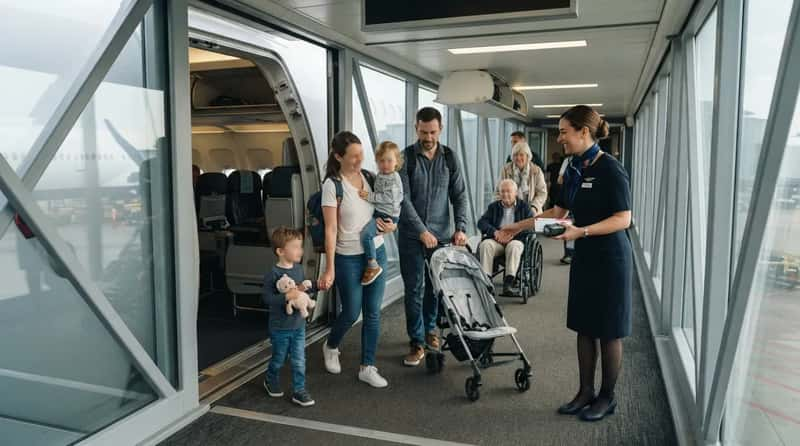
Preboarding isn’t just a courtesy – it’s a timing strategy. Priority boarding for passengers who need extra time, like those with disabilities or families traveling with young kids, exists specifically to keep the rest of the boarding process moving smoothly.
Getting slower boarding needs out of the way before the rush avoids a mid-aisle pileup later, when there’s far less room to maneuver a stroller or help someone into a seat. It’s one of the rare cases where “special treatment” for a few genuinely saves time for everyone else. Crew say resenting preboarding misses the point entirely – it’s not preferential, it’s load-balancing. The next one is less about logistics and more about attitude.
At a Glance
- Military members in uniform typically board among the first groups on most U.S. airlines.
- Passengers with disabilities or mobility needs get priority to arrange seating and stow equipment.
- Families with small children are usually invited to board early, though a few airlines have scaled this back.
- Unaccompanied minors and passengers needing extra time board before general zones open.
#2 – The Mindset Shift Crew Say Fixes More Than Any Rule
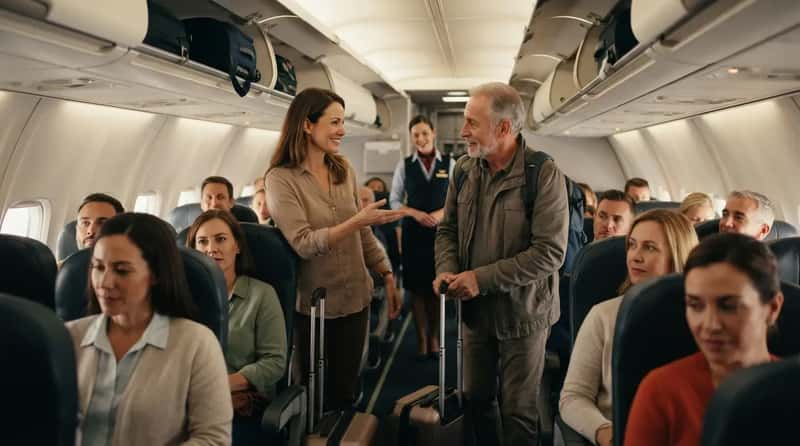
Ask any veteran flight attendant what actually makes boarding smoother, and the answer usually isn’t procedural. Crew say the difference between a pleasant flight and a chaotic one often comes down to plain courtesy, with one former flight attendant noting her best flights “weren’t necessarily the flights that ran on schedule,” but the ones where “people remembered how to be human.”
Patience with a struggling seatmate, letting someone go ahead of you, not sighing loudly at a slow bag stow – none of it is enforceable, but crew say it’s the difference passengers actually feel in their bones. The single biggest lever for smoother boarding isn’t a policy at all – it’s basic patience. And that idea leads straight into the biggest one of all.
#1 – The Line Crew Say Sums Up Everything Passengers Get Wrong
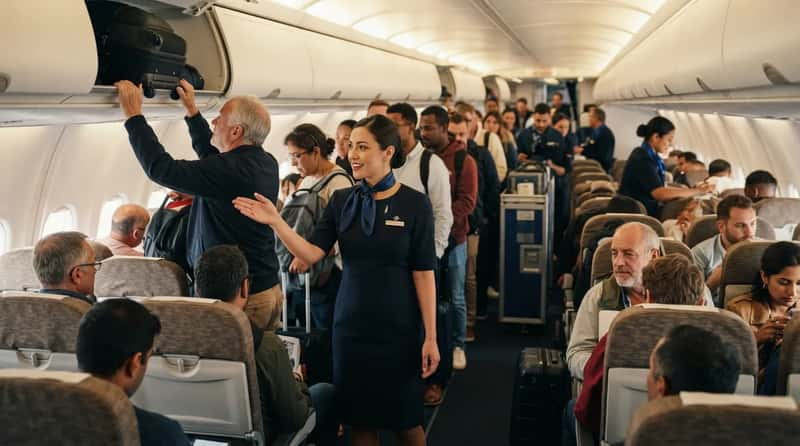
One quote from a former flight attendant cuts through every tip on this list. “The aircraft is not just a bus in the sky,” said Sophie Vancaeneghem, a former flight attendant for Air Belgium and Qatar Airways. “It’s a temporary city.”
The aircraft is not just a bus in the sky. It’s a temporary city.
Sophie Vancaeneghem
Every commercial flight puts dozens or even hundreds of strangers of different ages, backgrounds, and expectations into one confined shared space for hours at a time. Crew say boarding chaos isn’t really about bins or announcements at all – it’s about passengers forgetting they’ve temporarily joined a tiny, crowded community with its own etiquette. Treat the cabin like shared space instead of a commute, and almost every other tip on this list solves itself.
None of these habits require an app, a fee, or a status tier – just paying attention a little earlier and moving a little more considerately. Crew keep repeating the same handful of fixes because passengers keep making the same handful of mistakes, from wheels-first bags to phones buried at the scanner.
The airlines chasing “perfect” boarding science are still years behind what a little basic courtesy could fix today. Next time you’re standing in that jet bridge, the fastest thing on the plane might just be you.