Most first-time cruisers spend their first ten minutes onboard snapping selfies by the atrium or sprinting toward the buffet before it gets crowded. Repeat cruisers do something almost boring by comparison: they walk straight to their cabin and quietly work through a routine before anyone else has even found the elevators.
Nothing about it looks dramatic from the outside. But those first ten minutes quietly decide whether the next seven days feel effortless or chaotic, and once you see the full list of what veteran cruisers are actually doing behind that cabin door, you’ll never board a ship the same way again.
#21 – They Test the Balcony Divider Before Anyone Even Unpacks
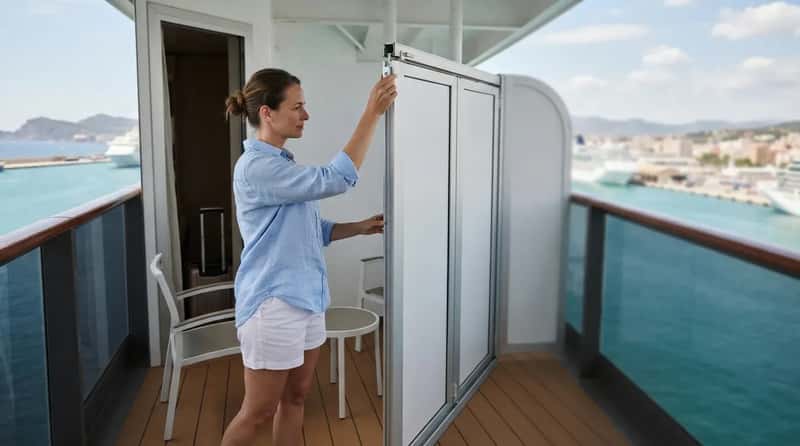
The first move for many balcony veterans isn’t opening a suitcase. It’s stepping outside to check the plastic partition separating their balcony from the neighbor’s, because on most ships that panel can be unlocked from either side and folded back completely.
Families traveling in two connecting cabins use this trick to quietly merge two small balconies into one shared outdoor space for the week. Repeat cruisers check it within minutes of boarding, long before the neighbors next door even arrive to notice.
#20 – They Turn the Empty Suitcase Into an Instant Laundry Sorter
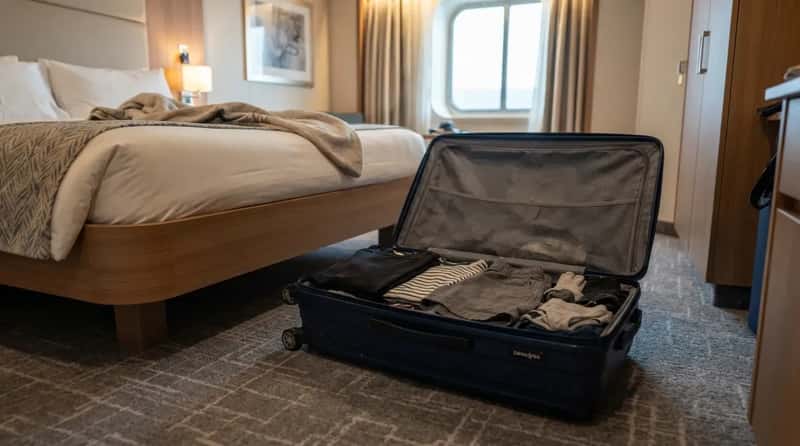
Instead of shoving the empty suitcase under the bed right away, seasoned cruisers repurpose it immediately. It becomes the dirty-clothes bin for the entire trip, sitting open and ready the moment the first outfit comes off.
Worn clothes get folded and dropped straight into the suitcase instead of piling up on a chair or the floor. It sounds almost too simple to matter, but it quietly prevents the frantic, sweaty repacking scramble that ruins so many last mornings before disembarkation.
#19 – They Adjust the Thermostat Before Touching a Single Bag

Cabins sit closed up for hours between guests, and the air inside can be stale, oddly warm, or blasting arctic cold depending on how housekeeping left it. Experienced cruisers walk in, drop their carry-on by the door, and go straight for the temperature dial before anything else.
It’s a small habit, but it means the room is actually comfortable by the time unpacking starts instead of thirty sweaty minutes later. First-timers often ignore the thermostat entirely and just tough it out, never realizing a two-second adjustment would have fixed everything.
#18 – They Find the Muster Station Map Before They Find Anything Else
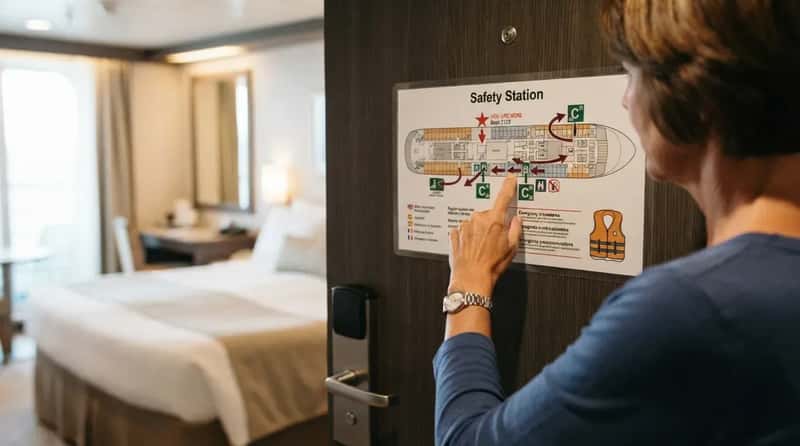
Long before anyone thinks about safety drills, repeat cruisers glance at the laminated card fixed to the inside of the cabin door. It shows the exact evacuation route and assigned muster station tied to that specific room.
It takes about ten seconds to memorize, but it means they’re never the confused passenger wandering the halls in a life jacket while an alarm blares overhead. First-timers usually skip it entirely, right up until the moment they actually need it.
Fast Facts
- Under the International Convention for the Safety of Life at Sea, all passenger musters must take place before or immediately upon departure from the embarkation port.
- That timing requirement was strengthened after the Costa Concordia disaster, replacing the older rule that allowed cruise lines up to 24 hours to conduct the drill.
- When entering the muster station, cruise cards are scanned by muster personnel, which assists crew in determining passenger attendance.
- Skipping the drill without a valid reason usually means an awkward, solo makeup session before the ship is cleared to sail.
#17 – They Ask About Splitting the Beds Before the Steward Walks Away
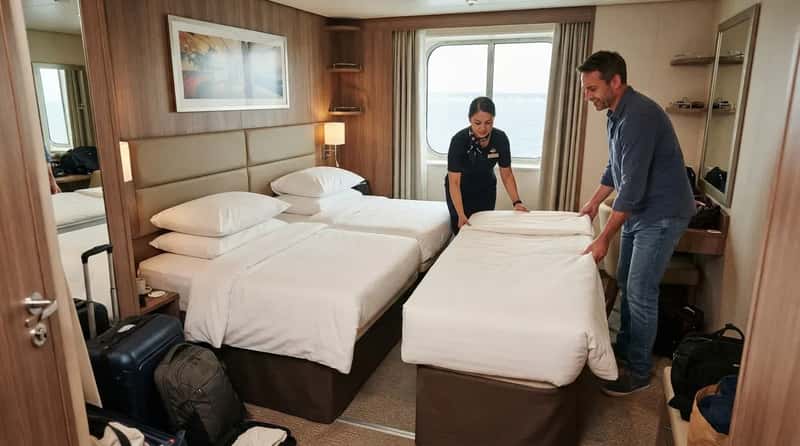
Many cabins arrive with twin beds pushed together into a king configuration by default, which looks romantic in the brochure photos but quietly eats up nearly all the open floor space in an already tight room. Repeat cruisers catch this the instant they walk in.
Asking the stateroom attendant to split the beds opens up a walkway down the middle of the room, making it far easier to move around without playing furniture Tetris every night. They make this request the moment they meet their steward instead of living cramped for a week.
#16 – They Hunt for the Hidden USB Port on the TV
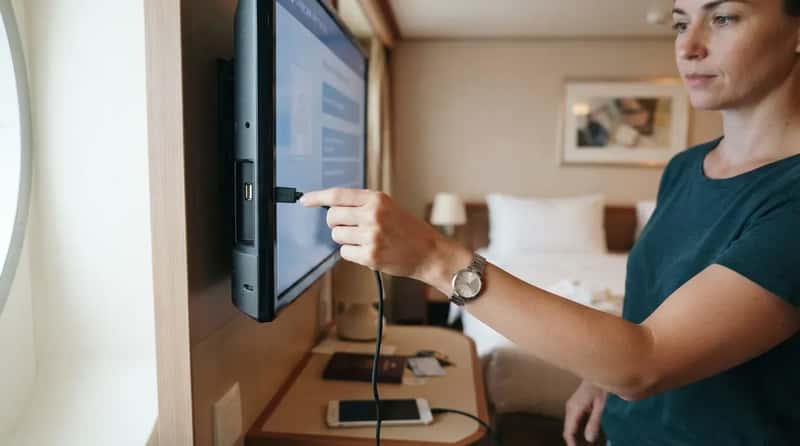
Cruise cabins are notorious for having only one or two usable outlets, and fighting over them with a travel companion gets old fast by night two. Frequent cruisers skip that fight entirely by checking the television first.
Most modern cruise ship TVs have a USB port tucked on the side or back that charges devices at a decent speed. A phone can charge there overnight while the actual outlet stays free for a CPAP machine, a fan, or a curling iron the next morning.
#15 – They Introduce Themselves to the Steward By Name, Immediately
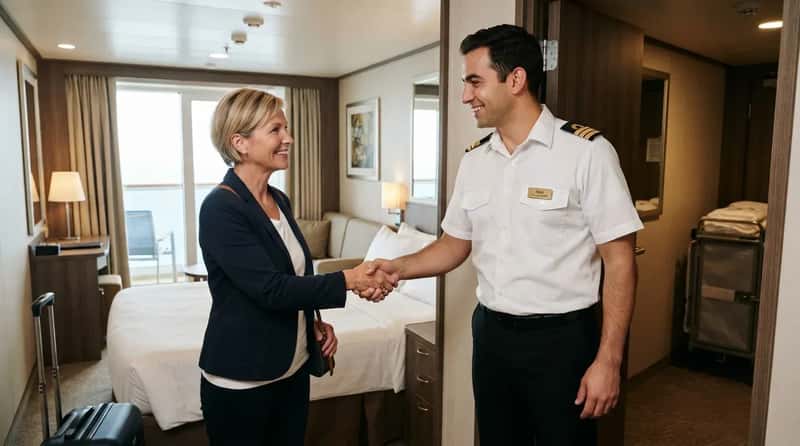
This one sounds obvious, but it’s rarer than you’d think. Repeat cruisers make a point of shaking hands, saying their name out loud, and mentioning how many nights they’ll be aboard before the steward even finishes explaining the room features.
Stewards notice these guests almost instantly, because they stow their own luggage without being asked and communicate preferences early without ever micromanaging. That one short interaction often quietly shapes the quality of service for the entire sailing.
#14 – They Reset the Safe Code Before Anything Valuable Goes In
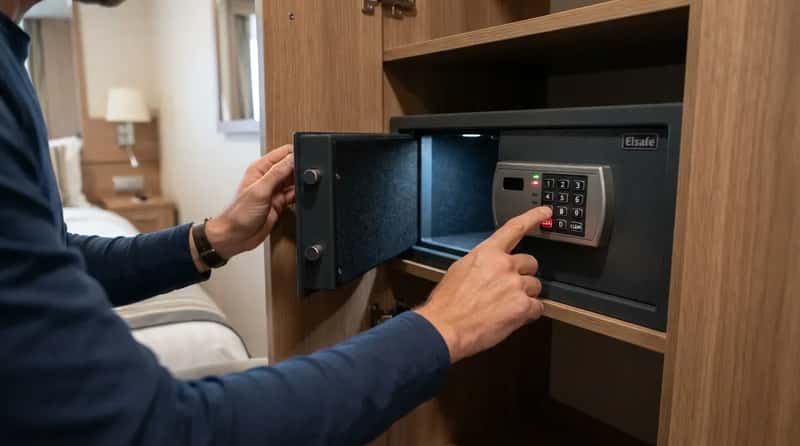
Almost every cabin comes with a small in-room safe, and almost every first-timer either ignores it or fumbles with the factory settings for days. Veteran cruisers set a personal code within minutes of arriving, before a single valuable item goes inside.
It’s a habit born from experience, because a safe left on a default or forgotten code is basically useless the moment it actually matters. They test the lock twice, close the door, and never think about it again for the rest of the trip.
#13 – They Never Open Both Doors at the Same Time

This is a mistake nearly every first-time cruiser makes at least once, usually with dramatic and slightly embarrassing results. Opening the balcony door and the hallway door simultaneously creates a shocking amount of chaos in a small space.
It creates a genuine wind tunnel that rips through the cabin, sending papers, daily planners, and loose clothing flying in seconds. Repeat cruisers learn this lesson exactly once, usually the hard way, and never make the mistake twice.
#12 – They Peek Under the Bed Before Unpacking a Single Suitcase
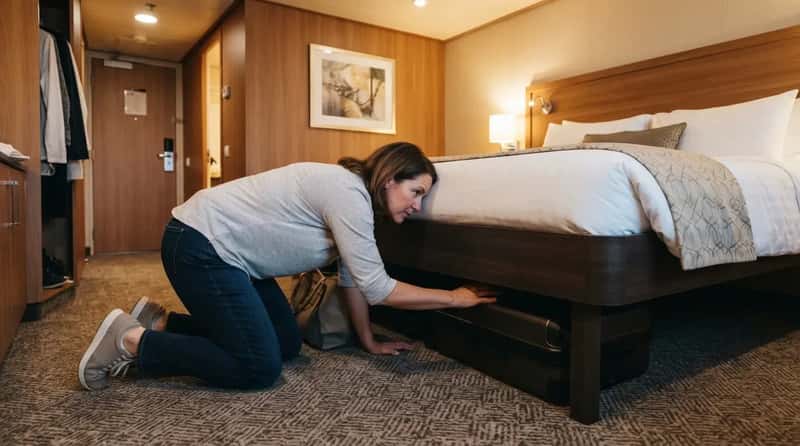
Cabin storage is famously tight, and most first-timers never think to check the one space that solves half the problem. Experienced cruisers get down on their knees within minutes of arriving to see exactly how much clearance is under the bed frame.
Not every room on a ship is identical, but most offer some usable gap underneath, and that space becomes prime real estate for empty suitcases and rarely-worn shoes. Clearing it out early frees up closet space for the rest of the cruise.
#11 – They Request Extra Hangers on Day One, Not Day Three

Standard cabin closets often come with a frustratingly small number of hangers, especially for a family of four packing formal night outfits. Repeat cruisers know that asking early gets a faster, more generous response than asking mid-cruise.
Embarkation day requests get handled before the ship even leaves port, when stewards still have the most flexibility with supplies. Waiting until the third night almost always means a longer wait and a more distracted steward juggling dozens of other requests at once.
#10 – They Test the Water Pressure Before They Even Sit Down
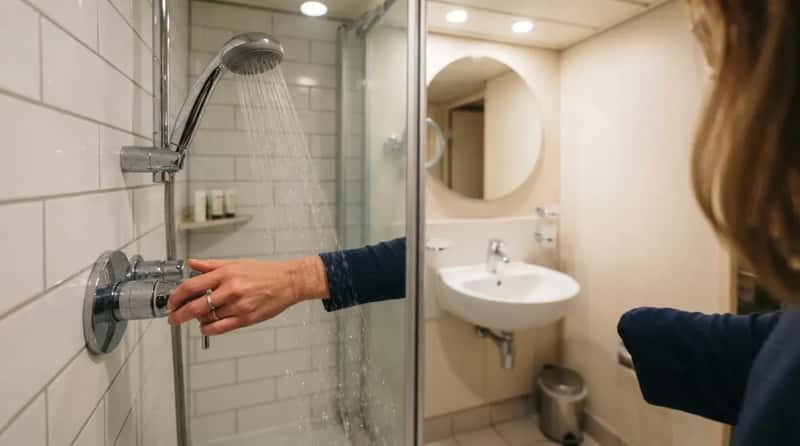
Bathroom quality varies wildly by cabin category and ship age, and shower pressure is one of the biggest surprises for new cruisers on night one. Veterans turn on the tap almost as a reflex, just to know what they’re working with for the week.
Cruise ship tap water goes through rigorous filtration and testing overseen by U.S. and international health agencies, and it’s the same supply throughout the entire ship despite rumors to the contrary. Knowing that upfront means one less thing to worry about for the rest of the cruise.
Worth Knowing
- Any cruise ship carrying 13 or more passengers on an international itinerary that stops at a U.S. port is subject to twice-yearly, unannounced sanitation inspections.
- Ships are graded on a 100-point scale, and must score 86 or above to pass inspection.
- Inspectors scrutinize drinking water systems, taking actual samples to verify chlorine and pH levels.
- The same tested water system runs from the crew galley to the priciest suite, so there’s no separate “better” supply anywhere onboard.
#9 – They Flip to the Bow-Cam Channel Before Unpacking Anything
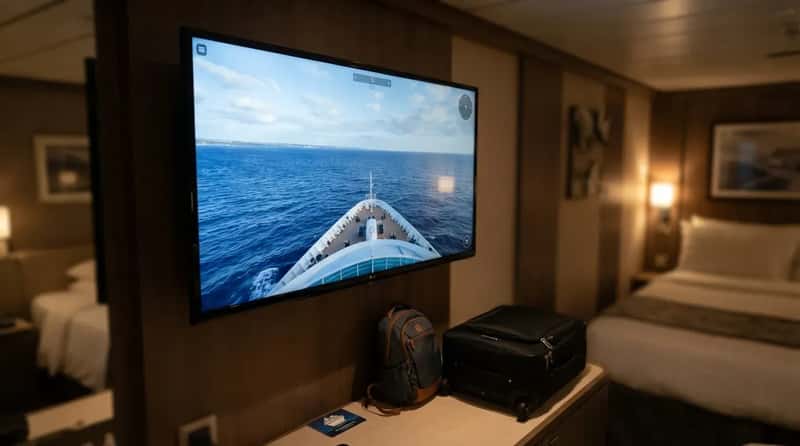
This one is almost exclusively a repeat-cruiser habit, and it’s tied directly to cabin type. Anyone without a window or balcony learns fast that the in-room TV has a secret weapon hiding in the channel list.
Turning to the ship’s forward-facing camera channel shows the bow cutting through open water, and on some ships it rotates through other angles too. For interior cabin guests especially, it’s the fastest fix for that boxed-in feeling during the first few minutes aboard.
#8 – They Stash Swimsuits and Sunscreen in a Drawer, Never the Suitcase
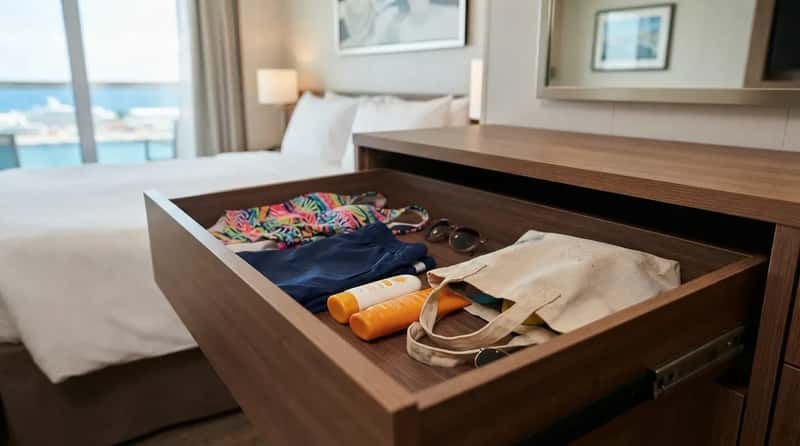
Cabins usually aren’t ready for a couple of hours after boarding, but the pool deck is open immediately. Repeat cruisers plan for this gap by keeping pool essentials completely separate from checked luggage before they ever board.
Guests typically have to wait for an announcement, which usually comes about two hours after boarding, before staterooms are cleared for entry. The moment the cabin finally opens, veterans dump a pre-packed swim bag into a drawer instead of waiting on luggage that may not arrive for hours.
#7 – They Check the Mini-Fridge Setting Before Anything Goes Inside

Many cruise cabin mini-fridges arrive set warm, essentially functioning as a small cabinet rather than an actual fridge, unless a guest specifically requests otherwise. Frequent cruisers check this within the first few minutes, not the first few hours.
They’ll test the interior by hand, and if it’s not cold, flag it with the steward immediately instead of assuming it will fix itself overnight. It’s a tiny detail, but it decides whether that first cold drink of the cruise actually stays cold.
#6 – They Leave a Note or Small Gift for the Steward, Right Away
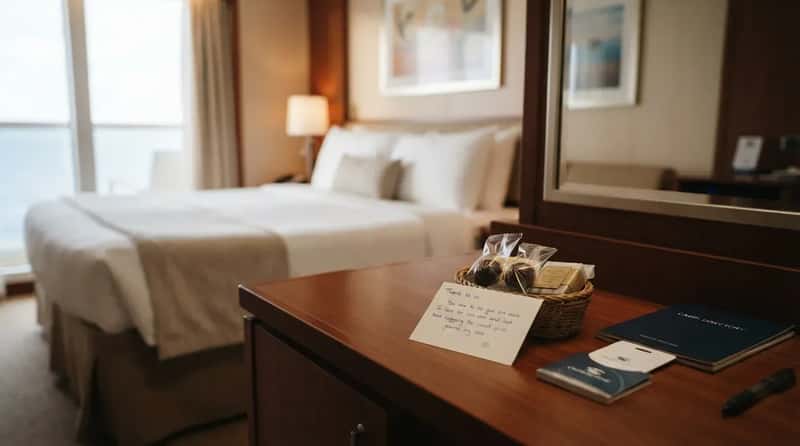
This is one of the more surprising habits among frequent cruisers, and it’s more strategic than sentimental. A short note with names, a special occasion, or simple preferences left on the desk sets the tone for the entire week ahead.
The biggest gap between first-time and experienced cruisers usually isn’t money or loyalty status, it’s knowing exactly what to ask for. Stewards notice guests who communicate clearly from the start, and that early gesture often leads to noticeably better service by day two.
#5 – They Inspect the Balcony Furniture Before Sailing Out of Port
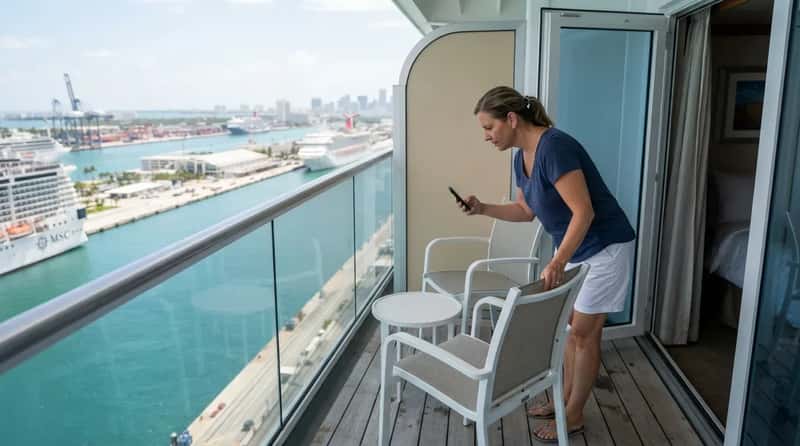
Balcony cabins aren’t all created equal, and repeat cruisers know that furniture, railing type, and overhang can vary even within the same category on the same ship. They step outside almost immediately to check what they actually got for their money.
Some balconies have full glass railings with unobstructed ocean views, while others have solid metal barriers that block the view entirely once seated. Checking this early leaves time to request a cabin change before the ship pulls away from the dock, something that’s nearly impossible once at sea.
Quick Compare
- Glass railings: full ocean view whether standing or seated, the most requested option.
- Solid metal railings: extra privacy, but the view disappears the moment you sit down.
- Obstructed balconies: lifeboats or ship structure can block part of the sightline.
- Covered balconies: shade from sun and rain, at the cost of open-sky stargazing at night.
#4 – They Memorize the Nearest Stairwell, Not Just the Elevator

Cruise ships are enormous, and elevators become painfully crowded at peak times like dinner seatings and disembarkation morning. Veteran cruisers spend a minute at their cabin door figuring out which stairwell is closest, not just which elevator bank.
It sounds minor, but it saves real time across a seven-night cruise, especially on formal nights when everyone floods the elevators at once. First-timers almost always default to elevators out of pure habit and end up waiting far longer than necessary.
#3 – They Set Up a Nightlight Plan Before It Ever Gets Dark

Cabins get remarkably dark at night, especially interior rooms with zero ambient light bleeding in from outside. Repeat cruisers solve this problem in the first few minutes rather than fumbling around blindly at 2 a.m. on night one.
A common trick is cracking the bathroom door open just a sliver with the light on, adding just enough glow to avoid a stubbed toe on the way to the bathroom. Others go a step further and set up a small battery-powered motion light the moment they arrive.
#2 – They Check the Bathroom Dispensers Instead of Packing Full-Size Toiletries
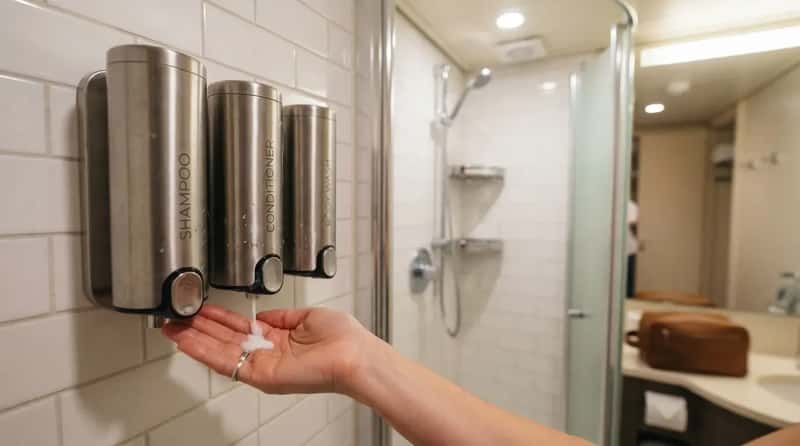
Many first-timers overpack toiletries out of pure habit, hauling full-size bottles of shampoo and conditioner they’ll barely use. Experienced cruisers check the shower dispenser situation within minutes of walking in, before unpacking a single thing.
Most mainstream cruise lines now install wall-mounted shampoo, conditioner, and body wash dispensers as a sustainability move, quietly eliminating the need to pack any of it. Skipping the extra bottles saves suitcase space and avoids the surprisingly common disaster of spilled shampoo ruining clothes mid-cruise.
#1 – They Photograph the Hallway and Room Number Before Leaving the Cabin
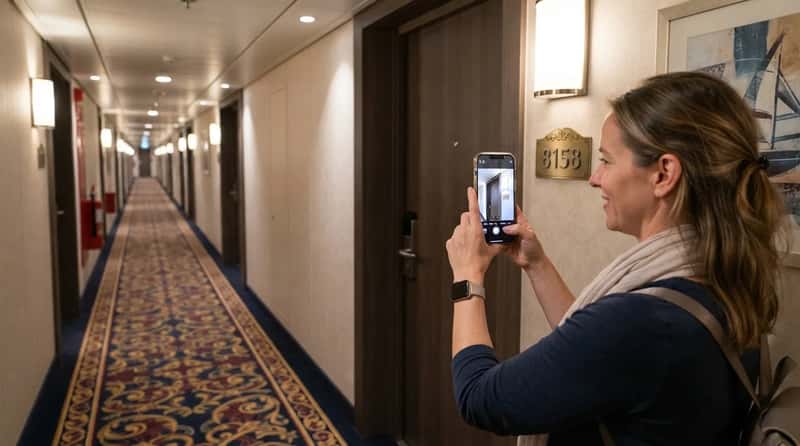
This is the habit that surprises first-timers the most, and it’s arguably the single most useful one on this entire list. Before heading out to explore, repeat cruisers snap a quick photo of their room number, deck number, and any distinctive hallway art nearby.
Cruise ship corridors are famously identical for hundreds of feet in every direction, and even loyal cruisers admit to wandering the wrong hallway after a long dinner and a few drinks. That one photo, taken in the first sixty seconds aboard, has saved more confused midnight walks back to the cabin than almost anything else on this list.
None of these twenty-one habits look impressive from the outside. There’s no secret upgrade, no hidden lounge, no VIP perk involved anywhere on this list. It’s just a series of small, deliberate choices made in the first ten minutes that quietly protect an entire week from avoidable frustration.
First-time cruisers tend to learn these lessons the hard way, usually somewhere around day three, standing in a wind-blasted cabin with shampoo-stained shirts and a dead phone. Repeat cruisers just skip straight to the smart version the moment the cabin door opens. Did we miss a habit you swear by on embarkation day? Drop it in the comments.