Think of the 1970s and you probably picture rides built like fortresses, meant to stand forever. Then look at this list. A Moon voyage was rebuilt as a Mars trip. A bee-themed Belgian park became a kids’ TV brand. A Florida pirate kingdom barely outlasted Disney’s arrival. These are 21 rides and attractions from the decade that slipped away, and the real records show how it happened.
What’s wild isn’t that they closed. It’s how they went: a sponsor that went out of business, a coaster that was wrecked on the truck, a pizza place where a rocket used to be. The strangest endings are still ahead.
#21 – Fun Island’s Swamp Buggy and Wacky Shack: The Tiny Corner Houston Forgot
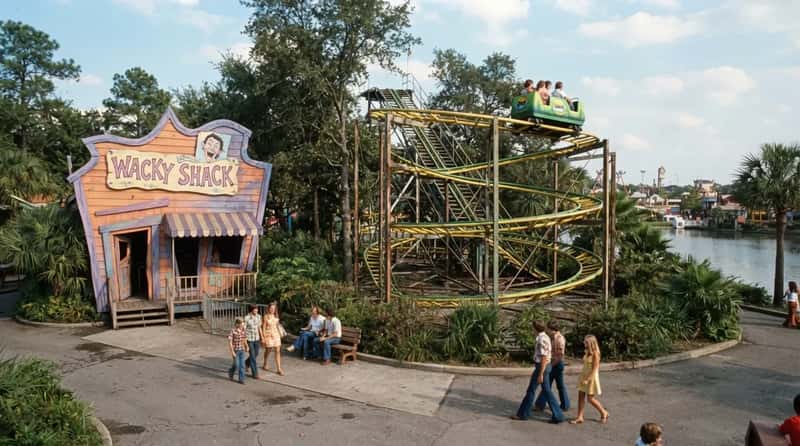
AstroWorld hid a miniature island of oddities that most visitors never talk about.
Fun Island opened in 1970 as the park’s ninth themed area, tucked into the lagoon between Oriental Corner and European Village. It had the Wacky Shack, a tilted illusion funhouse, and the Swamp Buggy Ride, a small 55-foot Chance Rides toboggan coaster.
Nobody agrees on when that coaster disappeared. One account says 1973, another says 1975, and a third says 1972. The park’s second-ever roller coaster vanished without a clear paper trail, and what happened to it afterward is unknown.
But a pirate-themed park in Florida had an even more dramatic exit, and Disney was the reason…
#20 – Pirates World’s Fiberglass Horses: Scattered by the Disney Effect
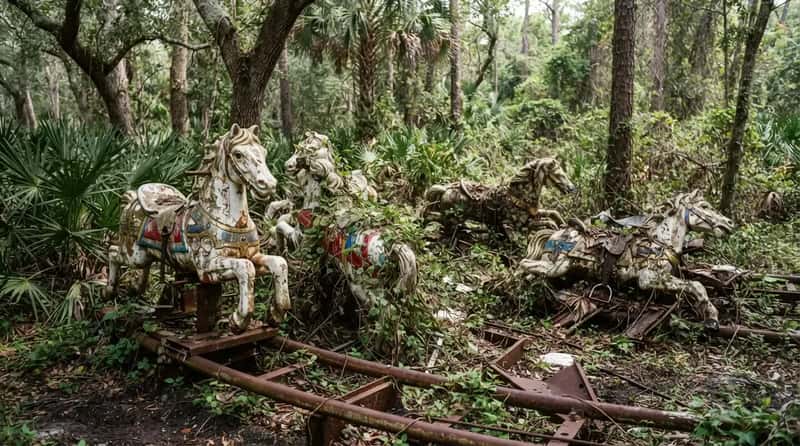
A 100-acre pirate fantasyland collapsed almost as soon as Mickey moved in down the road.
Pirates World opened April 8, 1967, in Dania, Florida. It had two coasters, a log flume, a pirate ship and a steeplechase ride with fiberglass horses.
After Walt Disney World opened in 1971, attendance dropped drastically, and the park closed in 1973. Some sources list the closure as 1975. One of the steeplechase horses turned up in the Coney Island USA museum more than 20 years later. The fate of the others is unknown.
Next up is an Oregon roadside park that outlasted that era by decades, then slipped away anyway…
#19 – Thrill-Ville USA: The Roadside Park Next to a Fairy-Tale Forest
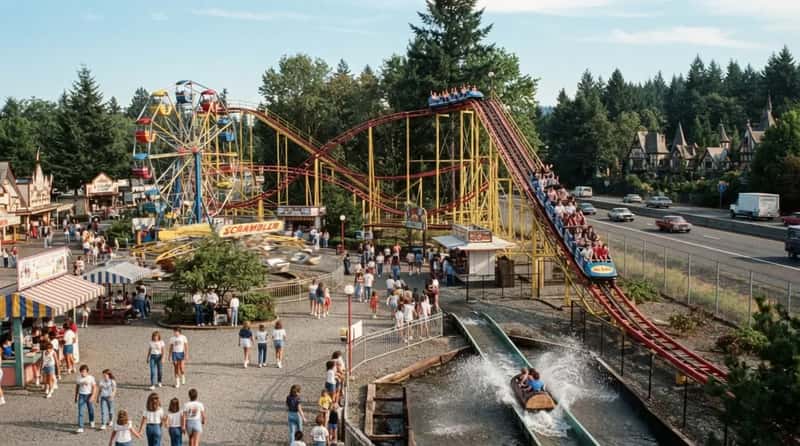
Few people realize an Oregon highway stop once held more than 20 rides.
Thrill-Ville USA sat in Turner, Oregon, beside the Enchanted Forest, south of Salem on Interstate 5. It opened in the 1970s, grew to more than 20 rides and closed in 2007.
It had two roller coasters and two water rides, a serious lineup for a park you could spot from the interstate. It ran for roughly three decades without most of the country ever hearing its name.
Parks like this were local favorites rather than national names. When they closed, the loss felt personal, not like headline news.
Fast Facts
- Location: Turner, Oregon, just south of Salem off Interstate 5
- Next-door neighbor: the Enchanted Forest
- Size: more than 20 rides at its peak
- Lineup highlights: two roller coasters and two water rides
- Final year: 2007
Still, a Phoenix park had an even quieter ending…
#18 – Legend City: The Phoenix Park That Left Almost No Trail
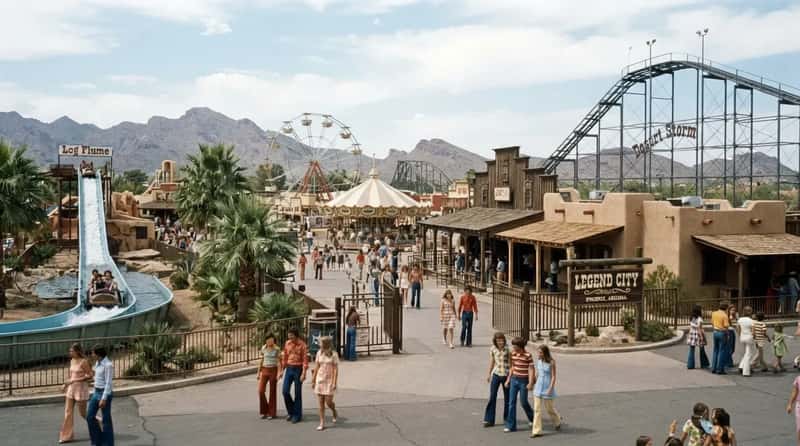
Some parks from the 1970s disappeared so quietly that their ride details are hard to find today.
Legend City in Phoenix operated from 1963 to 1983, so it ran through the entire decade. Then it closed, and its full ride roster has not stayed well documented online.
The records we could verify give the dates, not the attractions. That gap is the story, because a park open for two decades can fade from public memory this completely.
But a Southeast Asian park shows how bold the decade could get…
#17 – Mimaland’s Giant Water Slides: Malaysia’s Prehistoric Escape
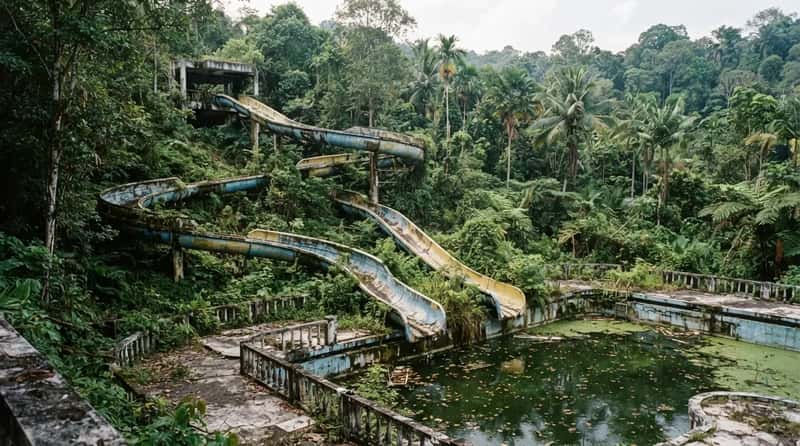
This park once mixed dinosaurs, water slides and a miniature world on the edge of Kuala Lumpur.
Mimaland, short for Malaysia In Miniature Land, was active from 1975 to 1994. It sat on the outskirts of Kuala Lumpur and is considered the first theme park in Southeast Asia.
It featured an artificial lake, a huge swimming pool with giant water slides and a Prehistoric Animal Kingdom. All of that ran for about 19 years before the gates closed for good.
Next is a comic-strip park that put a famous hillbilly family on the map…
#16 – Dogpatch USA: A Comic-Strip Town in the Arkansas Hills
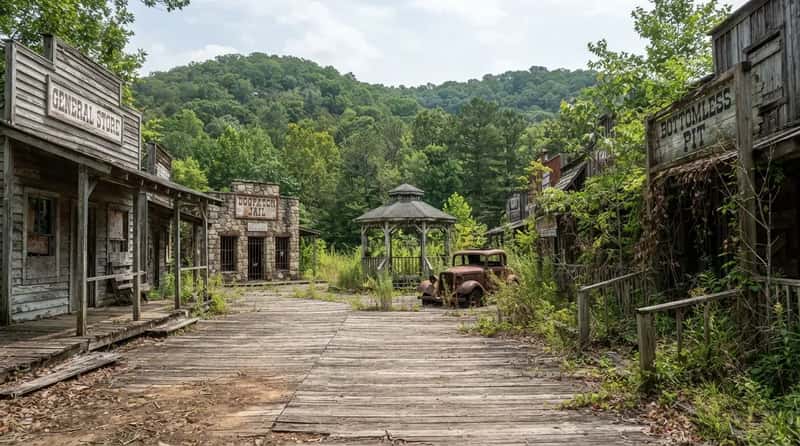
Imagine a whole theme park built around a newspaper comic.
Dogpatch USA in Marble Falls, Arkansas, ran from 1968 to 1993. The park drew on the Li’l Abner comic strip by Al Capp, which made it one of the more unusual theme park ideas of its day.
Parks like this tied their identity to a single pop-culture property. When the property faded from daily life, the park lost its biggest selling point. That’s a common pattern in theme park history, though no single cause is confirmed for this closure.
Across the Atlantic, a ruined park tells a very different story…
#15 – Spreepark’s Spreeblitz: Berlin’s Graffiti-Covered Coaster
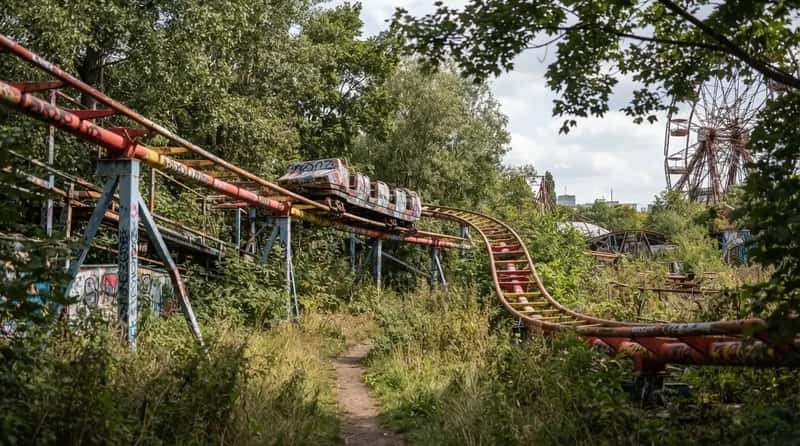
Visitors can still walk up to rides that haven’t turned in decades.
Named for the nearby River Spree, Berlin’s Spreepark operated from 1969 to 2001. Its decaying relics include a giant Ferris wheel and the graffiti-covered Spreeblitz roller coaster.
The grounds are now a large public park with walking paths that lead to many of the disused rides. Guided canoe trips also paddle past them.
But one of Belgium’s most famous dark rides was about bees…
#14 – Apirama: The Bee-Themed Dark Ride That Became a Cult Memory
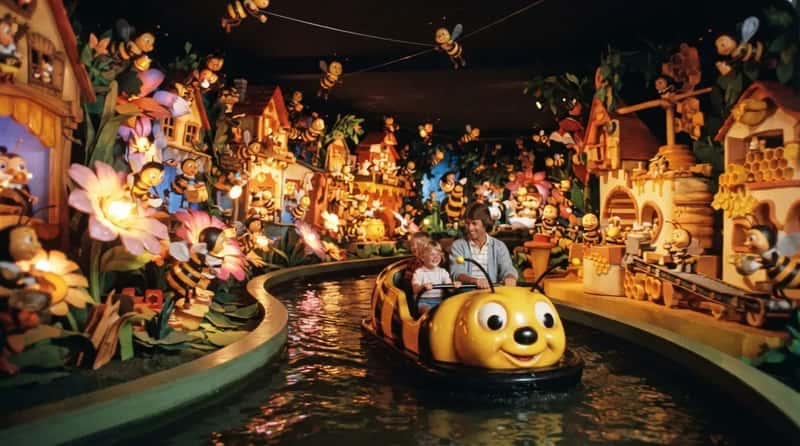
A honey company’s mascot once powered one of Belgium’s biggest tourist attractions.
Meli Park was founded by the owner of a honey company, and its mascot was a bee. Its most iconic attraction was the Apirama dark ride, which opened in 1979.
The park closed on October 3, 1999, and was sold to Studio 100, a Flemish children’s TV company, which rethemed the site as Plopsaland. A park built around bees was replaced by a TV brand.
Back in the U.S., a music-themed park in Nashville met a very modern fate…
#13 – Opryland USA: Nashville’s Music-Themed Park That Became a Mall
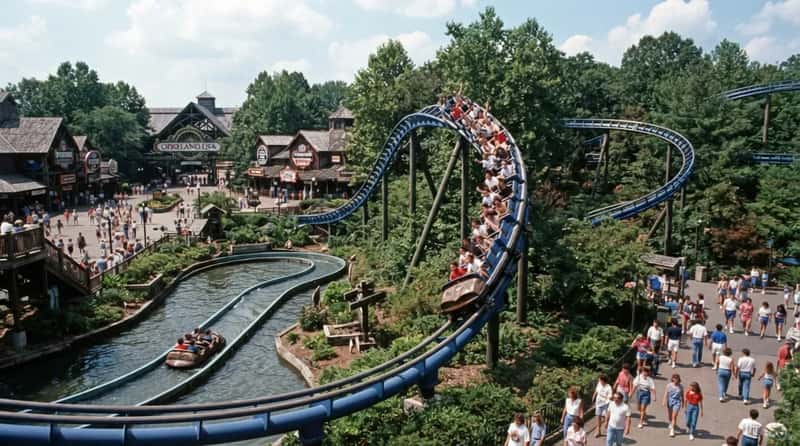
Nashville once had a full theme park devoted to music.
Opryland USA opened in 1972 and closed in 1997, according to widely available park histories. Live shows were central to the experience. The land is now home to a shopping center, which says a lot about how valuable that site had become.
A park built around entertainment was ultimately replaced by retail. The hotel linked to the park remains a major destination, but the rides did not survive.
That kind of closure is different from a park running out of money. It’s a park whose land became worth more than its rides.
Back at AstroWorld, one coaster outlived the park only to land in storage…
#12 – Greezed Lightnin’: The Shuttle Loop That Never Found a New Home
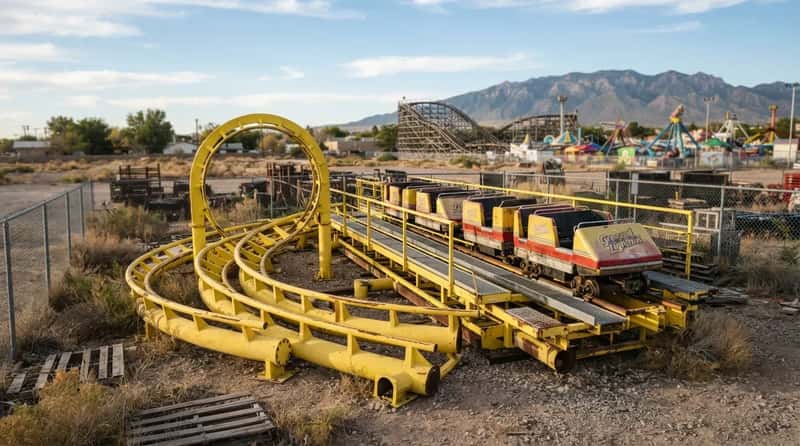
This coaster went backward, forward and upside down, then spent years waiting in storage.
In 1978, Greezed Lightnin’, a Schwarzkopf Shuttleloop coaster, opened in AstroWorld’s Western Junction section. It ran until the park closed in 2005.
It was relocated to Joyland Amusement Park in Lubbock, Texas, and remained in storage until 2012, when ownership transferred to Cliff’s Amusement Park in Albuquerque. A coaster that thrilled riders for 27 years then spent years waiting for another chance.
But one AstroWorld mine train ended its story much worse…
#11 – Excalibur: The Mine Train That Didn’t Survive Its Own Move
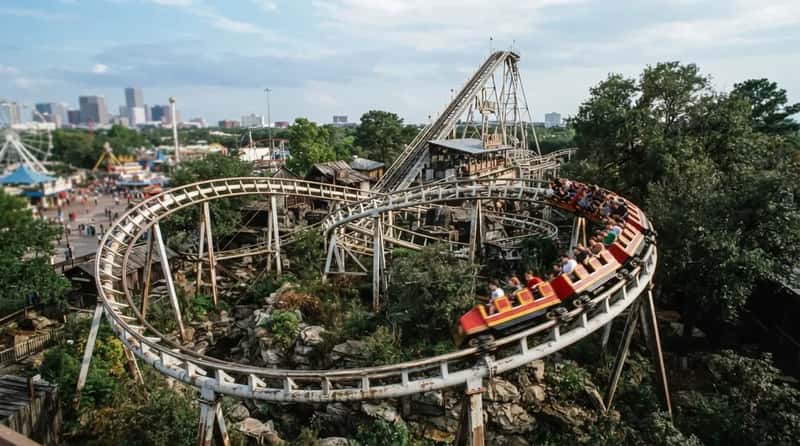
Its original name was far more playful than the medieval one it ended up with.
Excalibur opened in 1972 as Dexter Frebish’s Electric Roller Ride and was renamed in 1980. It was an Arrow mine train that stood 88 feet tall and hit 46 mph. Its tunnel doubled as storage for extra trains.
After the 1998 season it was removed to be sent to Frontier City in Oklahoma. It was damaged in transport and scrapped. Its trains went to Six Flags Over Texas.
Plenty of coaster fans argue that the mine train era produced more charm than many modern steel giants. The Excalibur story is one reason why.
At a Glance
- Opened: 1972 as Dexter Frebish’s Electric Roller Ride
- Renamed: Excalibur in 1980
- Stats: 88 feet tall, 46 mph, built by Arrow
- Planned move: Frontier City in Oklahoma after the 1998 season
- Final chapter: damaged in transport and scrapped
Over at Disneyland, a gentler mine train had an equally quiet ending…
#10 – Mine Train Through Nature’s Wonderland: The Slow Ride Big Thunder Replaced
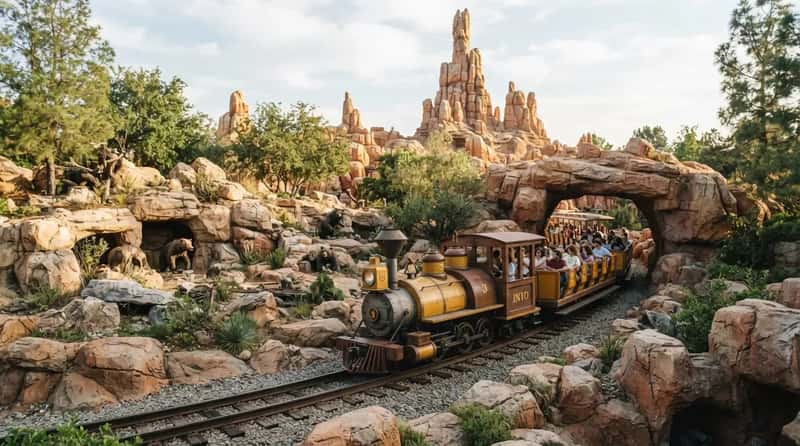
Before Big Thunder Mountain, the same land held something far calmer.
The Mine Train journeyed through illuminated caverns and later became Mine Train Through Nature’s Wonderland. It was a slow, scenic ride built around atmosphere rather than speed.
In 1979, Big Thunder Mountain Railroad took over the spot. A gentle trip through lit caverns was swapped for a runaway mine train.
Next is a ride that shrank you down to the size of an atom…
#9 – Adventure Thru Inner Space: The Ride That Made Guests Atom-Sized
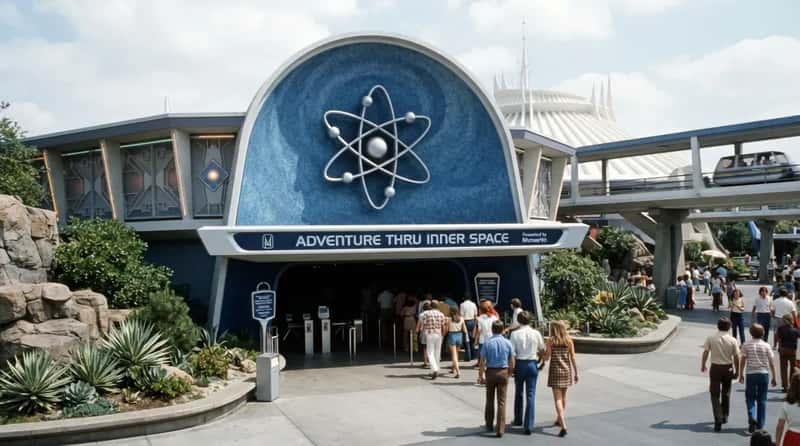
It promised to shrink you smaller than a snowflake.
Adventure Thru Inner Space ran in Disneyland’s Tomorrowland and took guests on a trip inside a snowflake and down to the atomic level. It was sponsored by Monsanto. It closed in 1985, and Star Tours took its place.
The ride that taught guests about atoms was replaced by one about Star Wars. That swap says plenty about what theme parks thought audiences wanted by the mid-1980s.
Science education lost its place in the park’s marquee spots. Pop culture took over.
But another Disney classic packed its bags and crossed an ocean…
#8 – The Mickey Mouse Revue: The Show That Moved to Tokyo
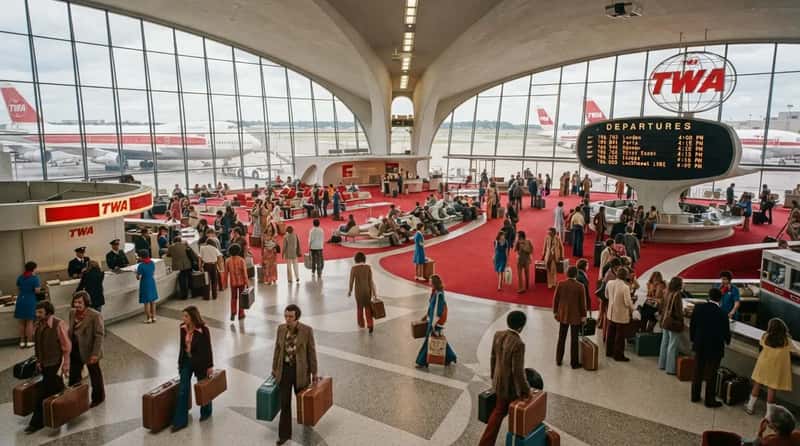
An entire cast of animatronic characters packed up and left Florida.
The Mickey Mouse Revue opened with Magic Kingdom in 1971. It featured Disney characters performing in a concert-style show. It closed in 1980, and the figures were later reused in Tokyo Disneyland, which opened in 1983.
The show was effectively recycled for another continent. Disney has long treated its expensive animatronics as assets that can be moved and reused.
Next, a bear band that still lives in Florida but vanished from California…
#7 – Disneyland’s Country Bear Jamboree: The Bears That Left Anaheim
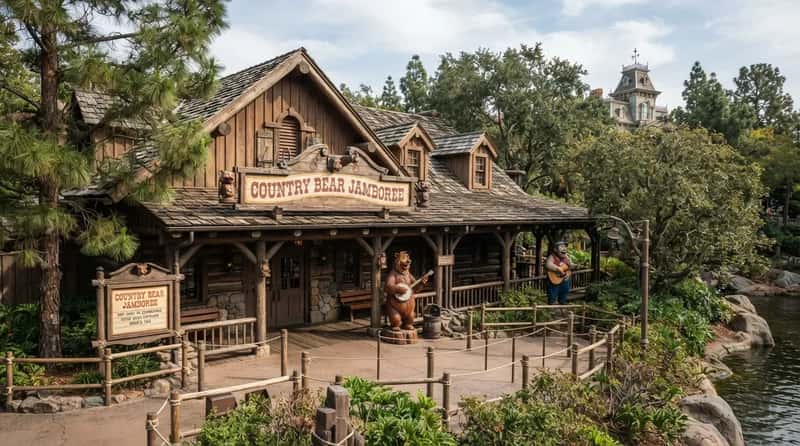
A backwoods bear band was once a Disneyland headliner.
The Country Bear Jamboree opened in Disneyland’s Bear Country in 1972. Its animatronic bears performed country-style songs. The Anaheim version ended its run in 2001, though a version still plays at the Magic Kingdom.
The same show survived in Florida while the California original disappeared. Two parks, one idea, completely different fates.
It’s a reminder that survival often depends on location. A show that fits one park’s layout can be an easy cut at another.
Quick Compare
- Disneyland, Anaheim: opened in Bear Country in 1972 and ended its run in 2001
- Magic Kingdom, Florida: the bears are still performing
- Verdict: same singing bears, opposite fates
Up next is a light-filled tunnel that most guests blinked past…
#6 – The Super Speed Tunnel: The Light Show Above America Sings
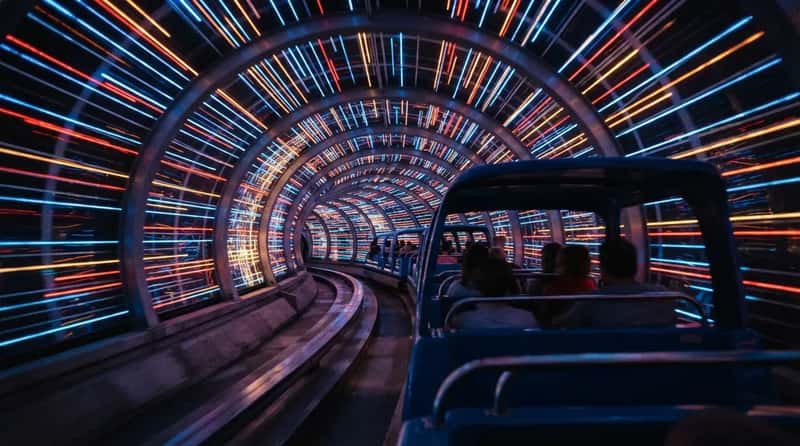
It was a short tunnel with a big reputation.
The Super Speed Tunnel was added in 1977 as part of the PeopleMover experience. It later became the Tron SuperSpeed Tunnel segment, in the upper level of the building that housed America Sings.
The attraction closed in 1995. That’s a long run for a segment that most visitors saw for only a few seconds.
But the next ride took guests under the water, where real subs once sailed…
#5 – Submarine Voyage: The Lagoon Ride That Ran 23 Years
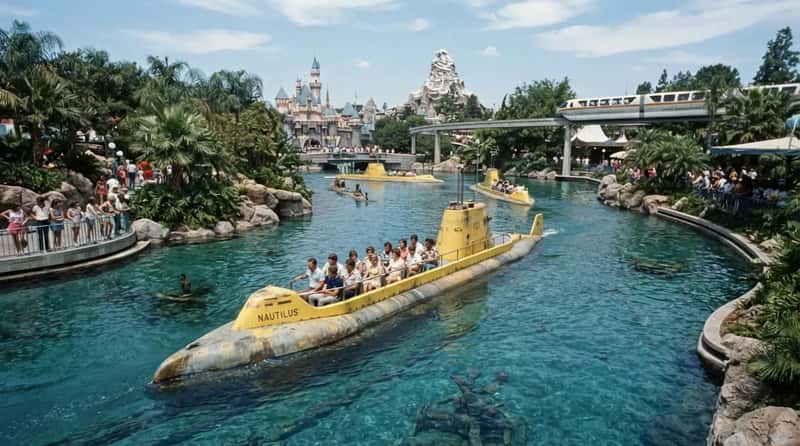
It let guests feel like they were exploring the deep without getting wet.
A Walt Disney World version similar to the original lasted from 1971 through 1994. At Disneyland, more sub names in line with the explorer theme were added over time, such as Seafarer and Voyager.
The Florida version ran for 23 years, a long stretch for a ride built on a big, expensive lagoon. Submarines also need constant maintenance, which makes them difficult to keep running.
Next is a ride that was really a flying commercial, and its sponsor didn’t last either…
#4 – If You Had Wings: The Airline Ride Whose Sponsor Vanished Too
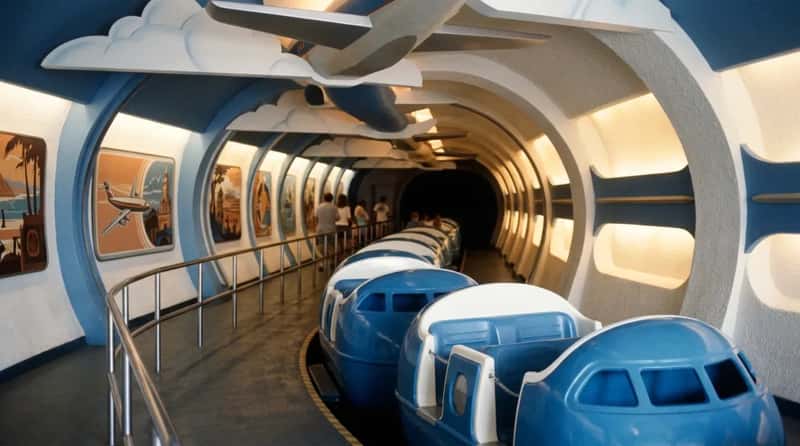
It was part ride, part commercial, and fully 1970s.
Between 1972 and 1987, Walt Disney World had a ride sponsored by Eastern Airlines called If You Had Wings. It took guests on a tour of destinations they could reach by plane. Of course, the sponsor wanted them to book flights.
The airline itself no longer exists. Eastern Airlines ceased operations in 1991, a few years after the ride closed.
Corporate sponsorship was a major force in the early parks. When a company fades, its ride usually goes first.
Worth Knowing
- Ride run: 1972 to 1987 at Walt Disney World
- Sponsor: Eastern Airlines
- The pitch: a tour of places you could reach by plane
- Sponsor’s end: Eastern ceased operations in 1991
Now we reach the coaster that Texas fans still argue about…
#3 – Texas Cyclone: The Wooden Coaster Houston Couldn’t Save
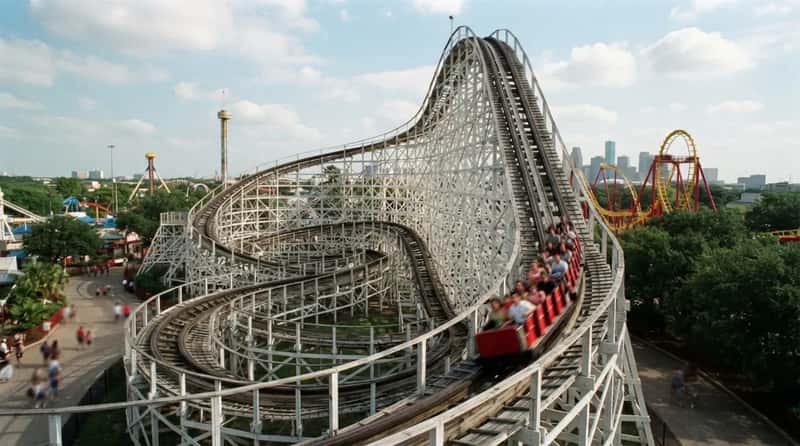
It was built as a copy of a legend and became one itself.
Texas Cyclone opened June 12, 1976. It was known for airtime, stood 93 feet tall and ran for two minutes and fifteen seconds. It was modeled after Coney Island’s Cyclone, which AstroWorld originally wanted to buy and move before realizing it would cost too much.
Demolition began after the park’s final day on October 30, 2005. Its trains were relocated to La Ronde. Plenty of coaster fans still say it was the best wooden coaster Texas ever had.
But the number-two entry holds the most puzzling mix of music and machinery…
#2 – America Sings: The 114-Animatronic Show Born From a Bicentennial
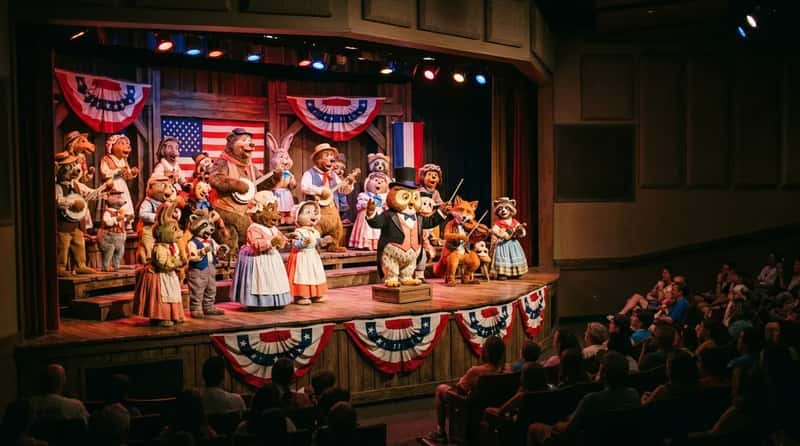
It was a stage show so big it needed a rotating theater.
In 1974, with the American Bicentennial approaching, Disney presented America Sings, featuring 114 Audio-Animatronics figures. It occupied its building until 1988.
The attraction used the same rotation mechanism built in 1967 for the Carousel of Progress. Its Audio-Animatronics were later used in Disneyland’s Splash Mountain. The building later became Innoventions.
And the number-one entry? It was outrun by the one thing it could never control: real history…
#1 – Mission to Mars: The Space Ride That Reality Outran
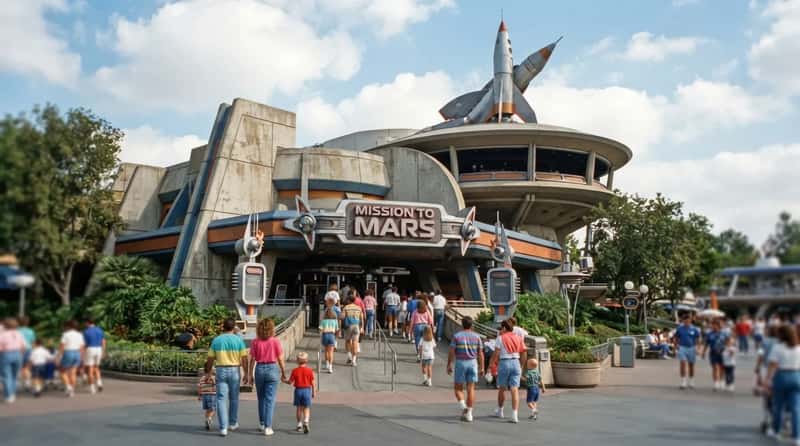
It was built to look into the future, and then the future kept moving.
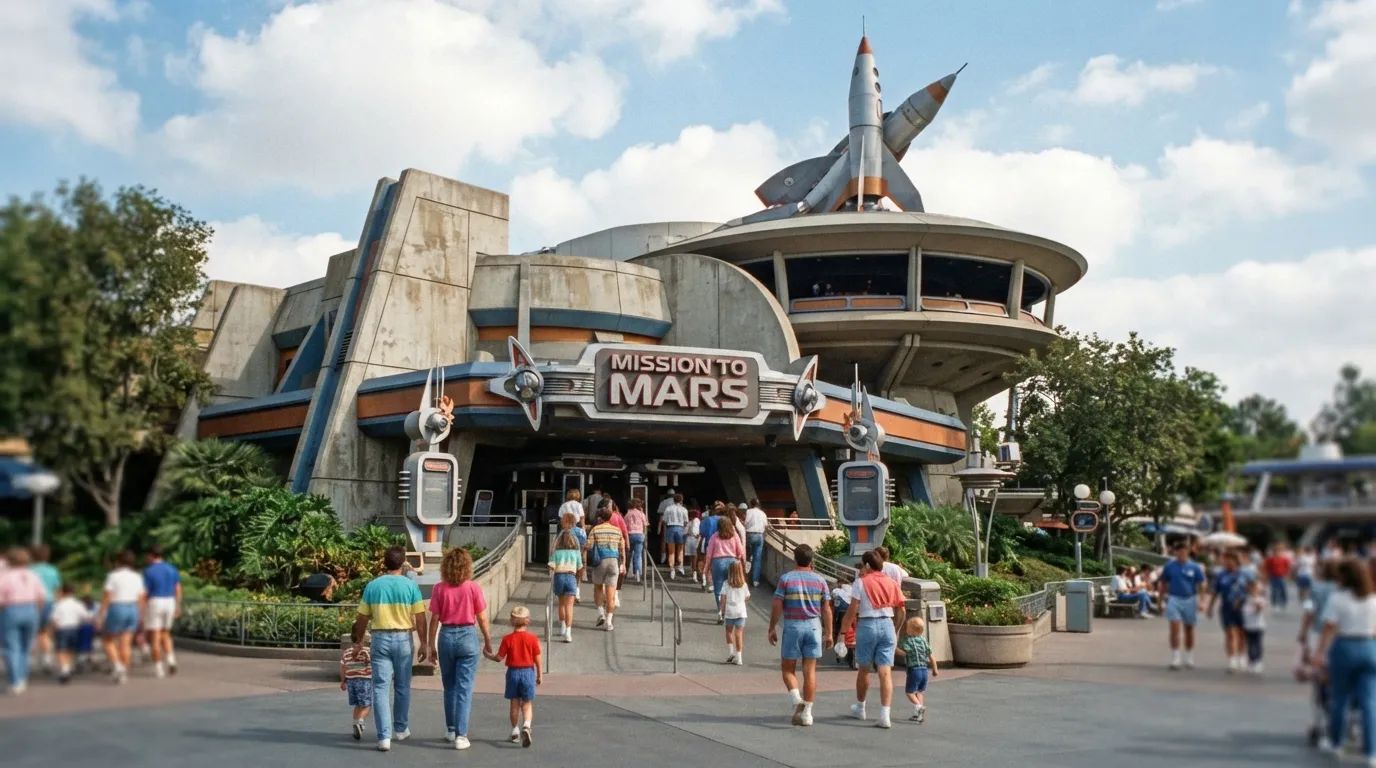
On March 21, 1975, the Moon trip was rebuilt as a Mars trip, years after real astronauts had made the Moon feel like old news. The ride was created with consultation from NASA. Disneyland’s version closed on November 2, 1992, and Magic Kingdom’s on October 4, 1993.
Mission to Mars never drew massive crowds, and the small theater kept capacity tight. At Disneyland, Redd Rockett’s Pizza Port took its place. Here’s the unpopular take: a pizza place was a poor swap for a rocket.
The 1970s didn’t just give us legendary rides. They gave us rides that were sold on the future and then outrun by it.
Parks fell to bigger rivals, changing land values and shifting tastes, and a few simply faded from the record. Somewhere, a fiberglass horse is still standing in a museum, and a few trains are still running on someone else’s track. That’s all that’s left of some of them.