Most people picture a 1960s “resort vacation” as a smaller, quainter version of what we have now – a hotel, a pool, maybe a buffet line. That picture is wrong by a mile.
The Catskills resorts of the Borscht Belt era ran on a completely different set of rules: social rules, dining rules, dress rules, even rules about which day of the week the husbands were allowed to show up. Even Dirty Dancing and The Marvelous Mrs. Maisel only scratch the surface of how strange, grand, and specific this world really was – and the deeper you dig, the stranger it gets.
22. More Than 500 Hotels Were Competing For Your Family’s Summer
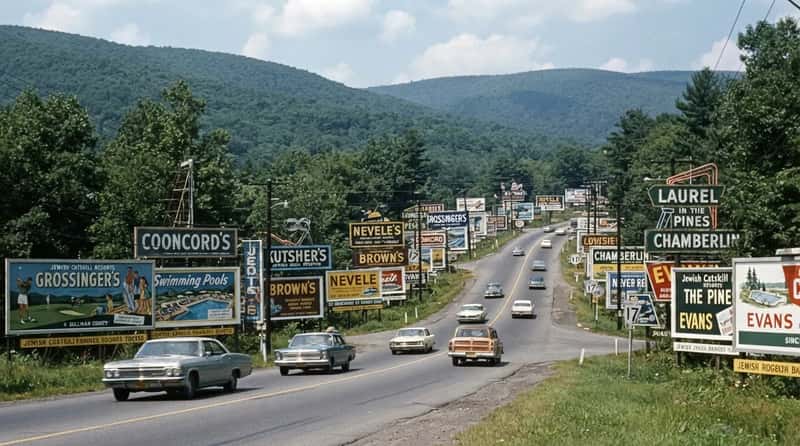
The sheer number of Catskills resort options in the 1960s would stun any modern traveler used to comparing a handful of hotels on an app. At its peak, over five hundred hotels and tens of thousands of bungalow colonies dotted the landscape of Sullivan County, New York.
By the 1950s, more than 1,000 Jewish resorts filled the Catskills, ranging from camps and bungalow colonies to “kuchalayns” – rented rooms with shared kitchens – all the way up to sprawling full-service hotels across Sullivan, Orange, and Ulster counties.
That kind of competition meant every resort constantly added new amenities just to keep up. Route 17 was lined wall-to-wall with billboards, each one claiming the best golf course, the newest pools, or the most star-studded lineup in the mountains.
Today’s travelers comparison-shop on an app in thirty seconds. Back then, families argued for hours in a hot car about which billboard was telling the truth.
But the number of resorts is just the opening act. The scale of any single property would shock you even more.
21. One Dining Room Could Seat 3,000 People at Once
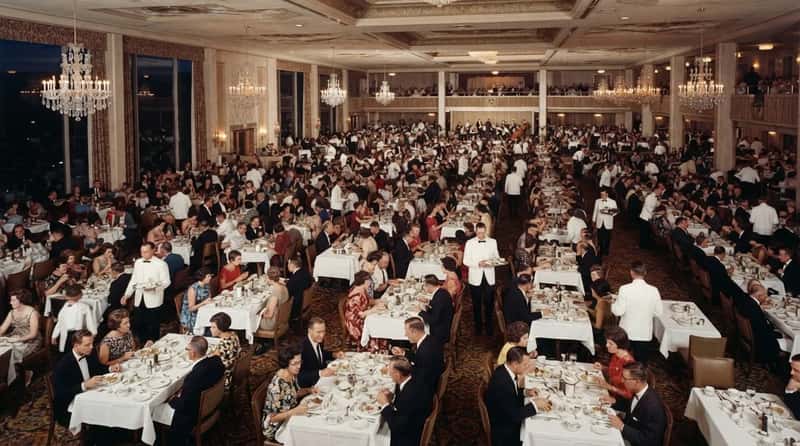
Modern all-inclusive resorts brag about their restaurants. The Catskills resorts of the 1960s operated on a scale that makes today’s biggest hotel dining rooms look like a corner diner.
The Concord Resort Hotel had over 1,500 guest rooms and a single dining room that sat 3,000 people, spread across roughly 2,000 acres. It was a kosher establishment through and through, and more lavish in decor and activities than almost any comparable resort in the region.
Getting a good seat – and keeping your waiter happy – was practically its own social event. Families tipped heavily on the first day of the week, not the last, because a good waiter could quietly upgrade your whole stay.
No app, no reservation widget, no dietary preference form. Just a dining room the size of an arena, three meals a day, every day, already paid for.
Wait until you hear what actually landed on those 3,000 plates.
20. The All-You-Can-Eat Buffet Was a Genuinely Radical Idea
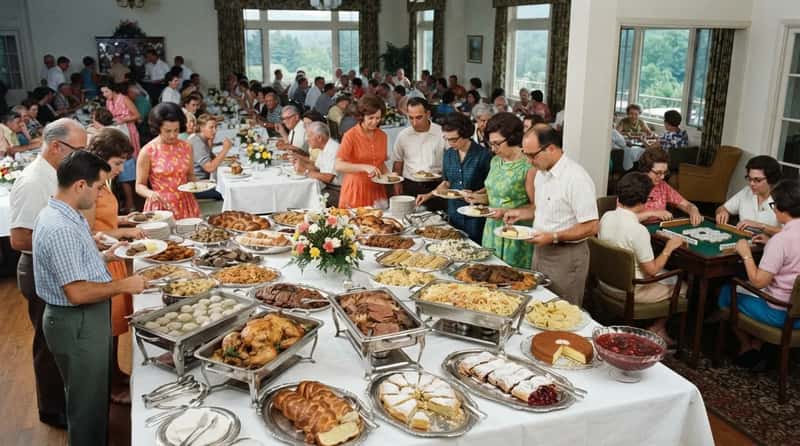
Hoteliers offered all-you-can-eat meal plans, a genuinely novel concept at the time. Portions were enormous, and most resorts served strictly kosher meals. Today “all-you-can-eat” means a sad steam table. In the 1960s Catskills, it was practically a statement of identity.
For immigrant families who had lived through Depression-era scarcity, an unlimited kosher spread three times a day wasn’t just food – it was proof they had arrived. Kosher meals were served, Yiddish was spoken at half the tables, and Mah-Jongg tiles clicked away in the lounge.
The food was culturally coded down to the last detail. Nearly every resort’s brochure promised strictly kosher meals, and many bragged about their Hungarian specialties in the same breath.
Modern families grumble if the breakfast buffet runs out of avocado toast. 1960s Catskills families treated out-eating the table next to them like a personal triumph.
But what you ate was only half the story. When the men actually showed up was the other half – and it’s the strangest detail on this whole list.
19. Husbands Only Showed Up on Weekends
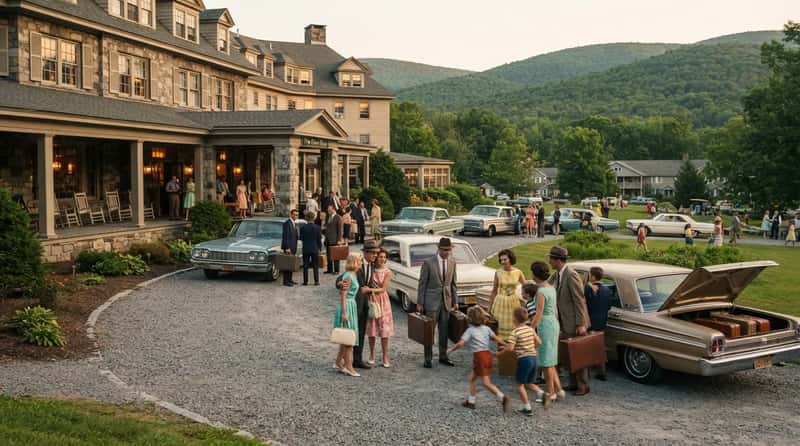
Here’s the part that would genuinely confuse any modern family planning a group trip. In the 1960s Catskills, the family vacation was explicitly split along gender and work lines. During the week, the resort belonged mainly to women, children, and retirees.
Families might book a resort for the entire summer, but that never meant the whole family was there the whole time. Wives, kids, and grandparents held down the fort from Sunday to Friday, building their own routines completely without the husbands.
The men made the drive up from New York City Friday evening and headed back Sunday night or early Monday. Some families stayed for a couple of weeks; others stayed the entire summer, and this arrangement was simply understood.
Fast Facts
- Weekday resort population: mostly wives, kids, and grandparents
- Husbands typically arrived by car on Friday evening
- Weekend visits ended Sunday night or early Monday morning
- Some families stayed just a week; others stayed the whole summer
No modern resort is designed around this kind of built-in weekly separation. A wife and kids summering for weeks while the husband commutes up on weekends sounds almost unrecognizable as a “family vacation” today.
But those women weren’t just waiting around all week. The resort had staff whose entire job was making sure nobody got bored – and one of them would go on to become a legend.
18. A Staff Member Was Paid Just to Keep You Laughing
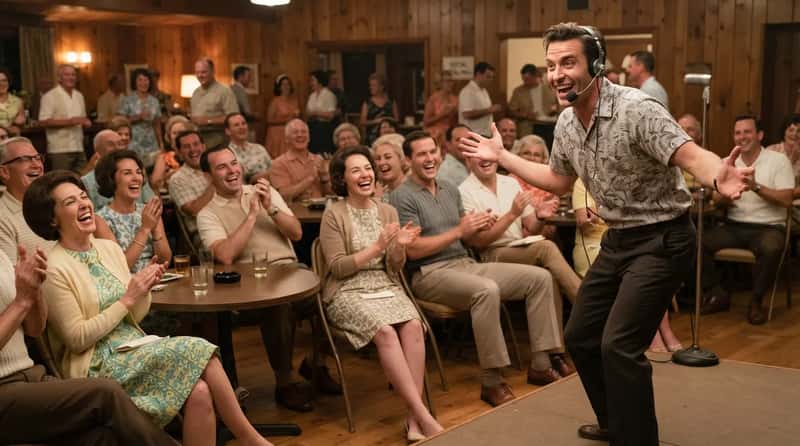
Every major Catskills resort employed someone whose full-time job was making sure guests never had a quiet, dull moment. This was the “tummler” – part camp counselor, part stand-up comic, part cruise director, decades before cruise directors existed.
Mel Brooks worked as a tummler: encouraging guests to join in games, cracking jokes nonstop, and schmoozing with the older ladies. It was the perfect training ground for an aspiring entertainer, and a genuine career path in an era before open-mic nights existed.
The job wasn’t optional from the resort’s perspective. In a world without smartphones or streaming, keeping hundreds of guests entertained from morning to night was an operational necessity, not a nice-to-have perk.
A modern resort hands you a pool towel and hopes for the best. The 1960s Catskills hired someone to be your friend, your hype man, and your entertainer, every single day of your stay.
And those future legends didn’t just lead icebreaker games. They were quietly launching some of the biggest careers in American comedy.
17. This Was the Most Productive Comedy Laboratory in American History
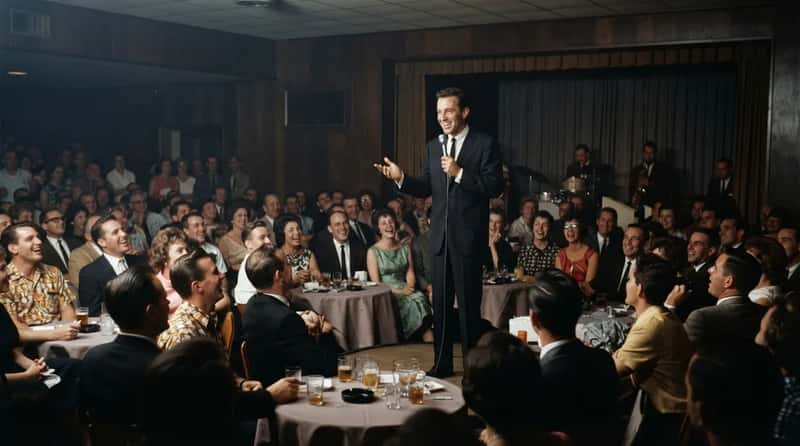
Woody Allen, Mel Brooks, and Joan Rivers all performed in the Borscht Belt, sharpening a style of fast, observational humor that would later define American comedy. The Catskills circuit was, in effect, the country’s most productive comedy incubator.
At its peak in the 1950s and ’60s, the Borscht Belt drew hundreds of thousands of visitors a year, training performers like Milton Berle, Joan Rivers, and Jerry Lewis through tummler-hosted shows, social mixers, and Yiddish-inflected humor. This wasn’t polished TV material – it was raw, crowd-tested stuff, refined night after night in front of the same returning audience.
As a teenager, Sid Caesar played saxophone in hotel bands and started slipping small comedy bits between sets. Some of America’s biggest comedic voices were essentially field-tested in front of families eating brisket.
Today comedians grind through tiny open-mic clubs hoping someone notices. In the 1960s Catskills, they had something better: a captive audience of thousands who came back every summer and remembered exactly what worked and what didn’t.
The entertainment didn’t stop at comedy, either. The headline acts who passed through these mountains would genuinely stun you.
16. The Headliners Were True A-List Stars, Not Local Bands
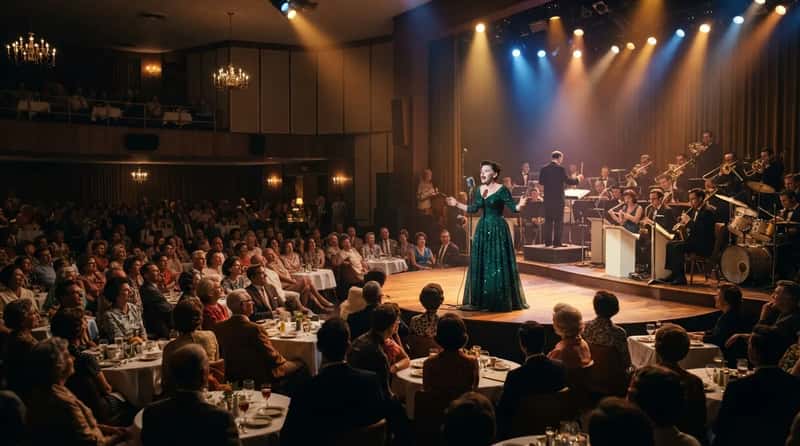
When you paid for a week at the Concord or Grossinger’s, you weren’t getting a hotel lounge with a cover band. The Concord became a genuine entertainment hub, hosting Barbra Streisand, Sammy Davis Jr., Judy Garland, Tony Bennett, Joan Rivers, and Aretha Franklin.
Duke Ellington and Louis Armstrong also played the Borscht Belt circuit. These weren’t nostalgia bookings – in the early 1960s, several of these performers were at the absolute peak of their careers.
For a working-class family from the Bronx or Brooklyn, watching Judy Garland perform after dinner was an experience unreachable anywhere else in their lives. The all-inclusive resort model quietly democratized access to America’s biggest entertainment names.
Modern resorts offer a DJ by the pool. The 1960s Catskills offered a front-row seat to Aretha Franklin – already included in your weekly rate.
But getting there in the first place was its own kind of ordeal, one that no modern family would recognize as a “vacation drive.”
15. Families Drove Hours on a Two-Lane Road, Every Single Summer
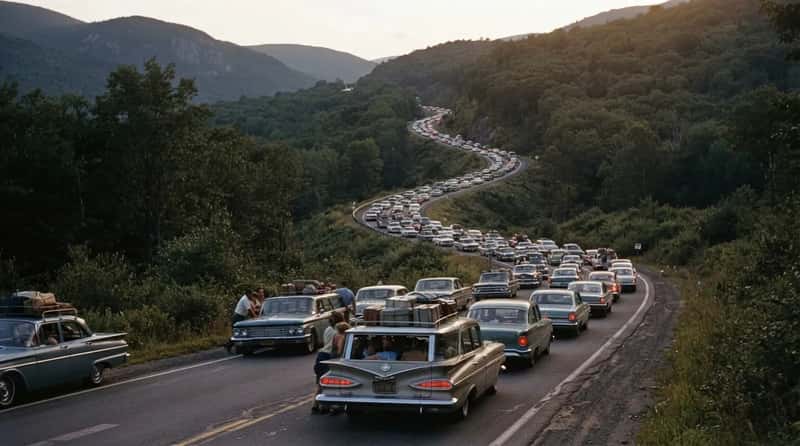
The Catskills is only about a two-hour drive from New York City, and was theoretically reachable by train and bus. In practice, the summer rush turned it into a much longer ordeal.
Route 17 became infamous for Friday-night gridlock as thousands of families made the same migration at once. Before the interstate system was fully built, these were winding two-lane roads shared with trucks, farm vehicles, and everyone else headed to the same mountains.
Rail service was also drying up – passenger trains through the Borscht Belt were largely cut by September 1953. By the 1960s, the car was essentially the only realistic way up.
Today families think nothing of flying across the country for a resort trip. The idea of loading the station wagon and grinding out the same two-lane road to the same mountains every single summer – and calling that the vacation – is a completely different relationship with travel.
And once families finally arrived, they weren’t checking into anything resembling a normal hotel.
14. The Biggest Resorts Were Essentially Small Cities
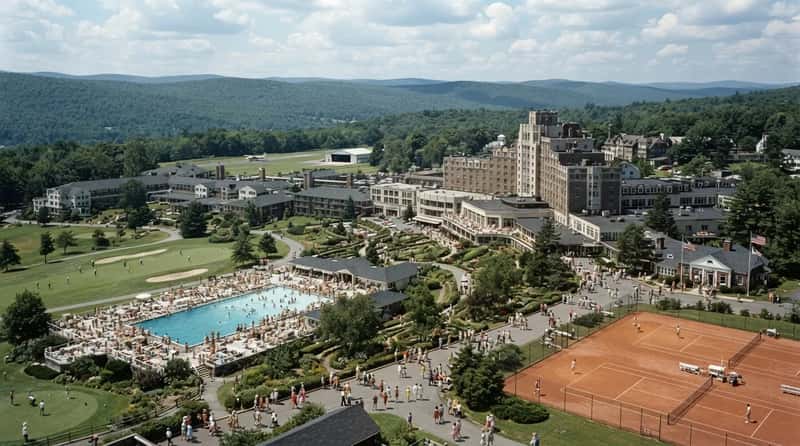
Grossinger’s wasn’t a hotel with a nice pool. Under Jennie Grossinger’s leadership, it expanded into a 1,200-acre complex with 35 buildings – Olympic-sized pools, a 9-hole golf course, tennis courts, a summer ice rink, and a ski slope, hosting up to 150,000 guests a year.
At its height, Grossinger’s had its own airstrip and its own post office. An actual post office, on resort grounds, because guests stayed long enough to need one.
These weren’t amenities bolted on for show. They were self-contained worlds, built so a family never had a reason to leave the property from check-in to checkout – and that was sold explicitly as the whole point.
Today’s all-inclusive resorts in Mexico or the Caribbean copy this exact playbook. Most people have no idea it was perfected in upstate New York decades before Cancún had a single hotel.
But the sheer size of these places created a social dynamic that no modern resort even attempts to replicate.
13. You Saw the Same Families, Same Tables, Same Faces for Decades
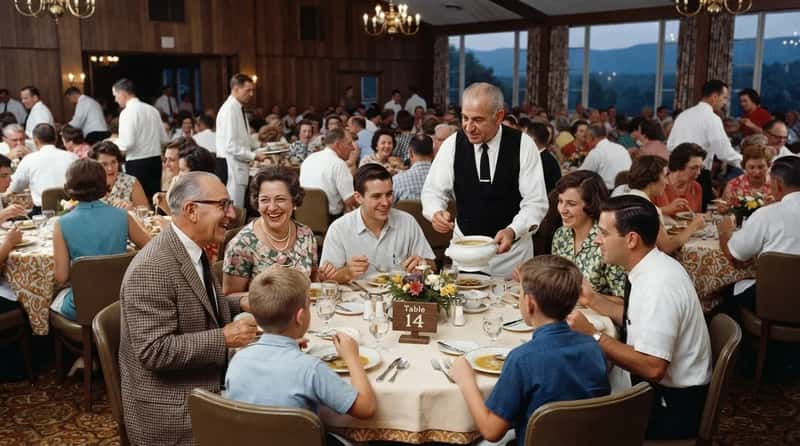
The Catskills experience was built on a kind of repetition almost incomprehensible to modern travelers, who rarely visit the same place twice. By the 1960s, as antisemitism declined nationally, the resorts’ appeal actually started slipping – partly because assimilated Jewish Americans no longer wanted to vacation with the same faces every single year.
That detail is telling: meeting the same people every summer had been the selling point, not the drawback, for decades. Friendships deepened, romances bloomed, business deals got struck, and grudges simmered across generations of repeat stays.
Your waiter might be the same one your parents had a decade earlier. The family two tables over might have booked that same week for fifteen straight summers.
Today’s travelers chase novelty. The 1960s Catskills family chased familiarity and belonging – a fundamentally different idea of what a vacation was supposed to give you.
And that sense of community extended straight into how people dressed – this is where modern families would really feel the culture shock.
12. Dinner Required Formal Wear, Every Single Night
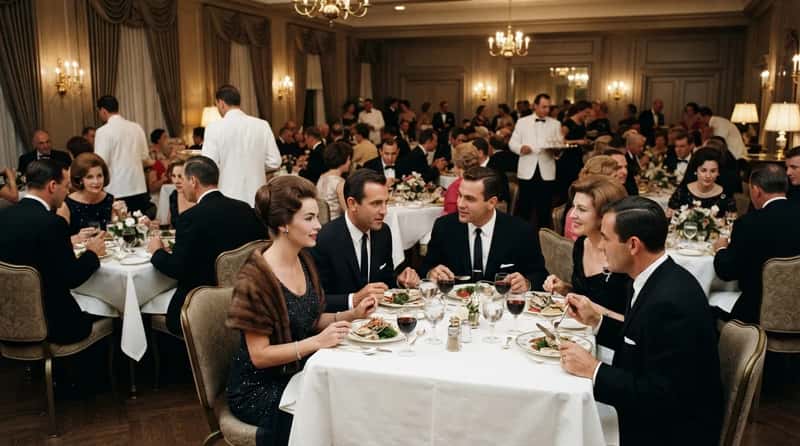
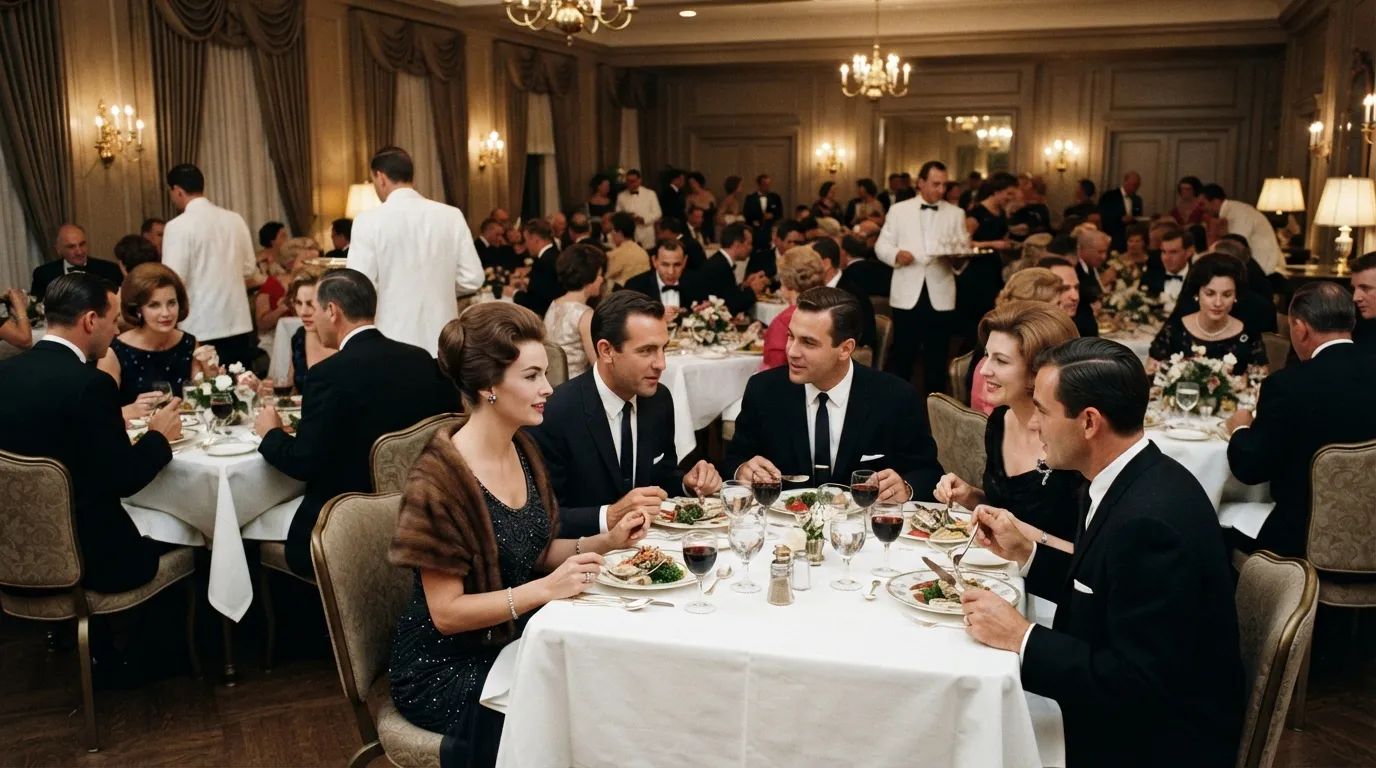
Showing up to dinner in shorts and a T-shirt wasn’t casual – it was a genuine social misstep. The evening meal was a formal event, every night, without exception at the major hotels.
The women transformed themselves before dinner: curlers came out, minks went on. Suits for the men, gowns or dresses for the women – the dinner hour was the true social centerpiece of the day.
Packing reflected that pressure. Mothers packed suitcases running from bathing suits straight through to formal wear, and forgetting the right dinner outfit was treated as a genuine problem, not a shrug-it-off inconvenience.
Today most resorts barely enforce a “no wet swimsuits at dinner” rule. Dressing formally every single night of a family vacation now feels closer to a cruise ship or a wedding than an ordinary summer trip.
That formality after dark made the daytime schedule feel even more striking by comparison.
11. Staff Planned Your Entire Day – and You Were Expected to Show Up
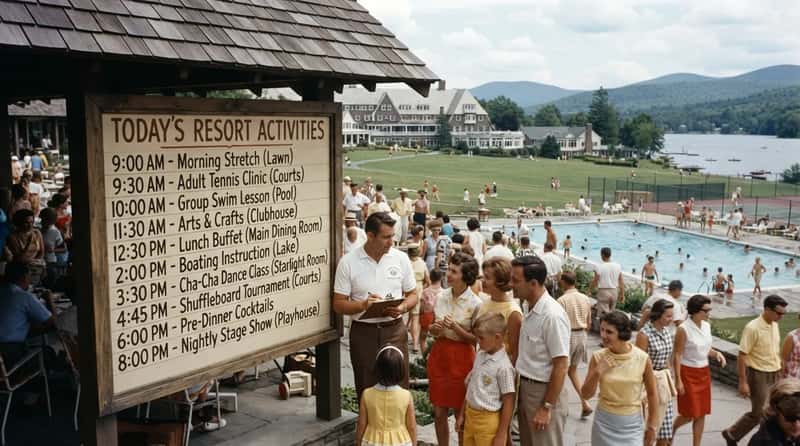
At a modern resort, you build your own day: spa at noon, pool at two, dinner whenever. At a 1960s Catskills resort, staff planned your day for you, and the unspoken expectation was full participation.
At a Glance
- Olympic-sized pools and full golf courses
- Basketball courts, gyms, and card rooms
- Boating, horseback riding, and adult classes
- Kids’ day camp and nightly stage shows
Regardless of a resort’s poshness, activities like dance lessons, arts and crafts, tennis, and swimming lessons filled every daylight hour. This wasn’t a menu of optional extras – it was the actual product families were paying for.
A family that spent the whole day holed up in their room would have struck other guests as genuinely odd, almost antisocial. The Catskills vacation was built around collective participation, not private downtime.
Today’s resort guest craves privacy and personalization. The 1960s guest wanted the opposite – to be swept up in a communal current of activity from sunrise to midnight.
But not every family could afford the grand hotels. The alternative that most families actually chose is even more fascinating.
10. Poorer Families Rented a Kitchen and Cooked It Themselves
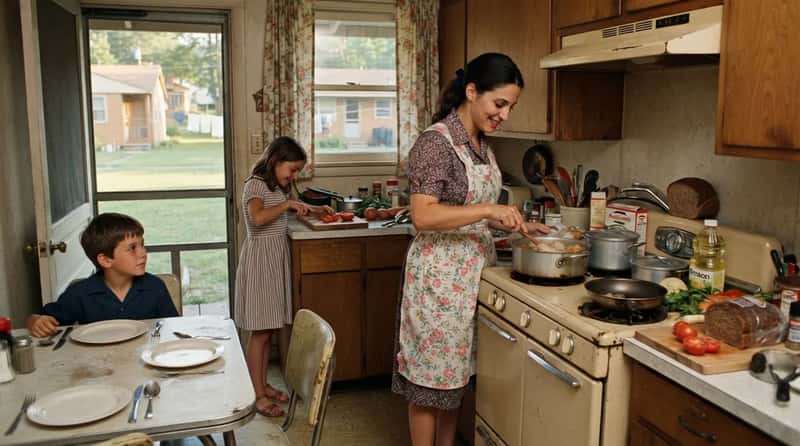
Grossinger’s and the Concord dominated the headlines, but millions of Catskills vacationers couldn’t touch those prices. For them, there were the “kuchalayns” – literally “cook-on-your-owns.”
These bungalows typically came with a kitchen, living room, dinette, one bedroom, and a screened porch, plus simple entertainment like bingo or a movie night. Families hauled their own groceries up from the city, cooked their own meals, and ran their own entertainment – essentially relocating their apartment to the mountains for a few weeks.
Kuchalayns were popular with working- and middle-class New Yorkers chasing the mountain air and Jewish community life, even without the nightly dinner show. Everyone at the resort understood exactly where the social lines were drawn between bungalow guests and hotel guests.
Today’s equivalent is an Airbnb cabin. In the 1960s, this was its own distinct cultural institution, complete with traditions, social hierarchies, and its own Yiddish vocabulary.
The gap between the bungalow crowd and the grand hotel crowd points to a much bigger, uglier story about exclusion that shaped the entire region.
9. These Resorts Existed Because Jews Were Banned Everywhere Else
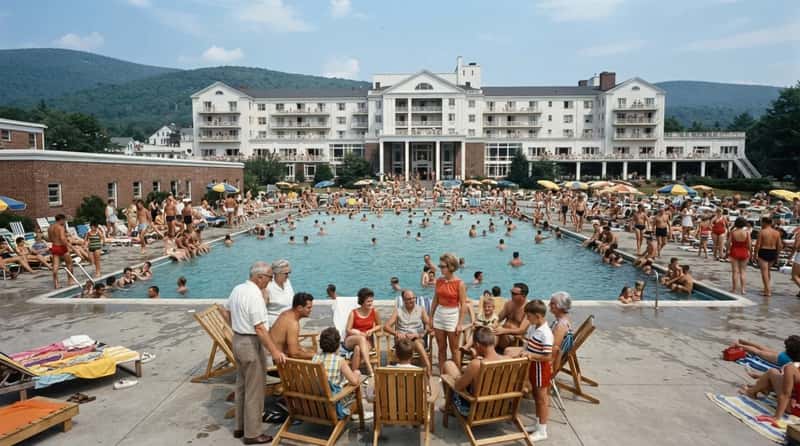
This is the historical fact most visitors today don’t fully reckon with. Jews were barred from countless resorts and hotels across the country, some of which openly advertised “Gentiles Only.” In response, Jewish entrepreneurs built their own self-contained resort world.
These properties emerged directly out of antisemitic exclusion, offering kosher food and recreation tailored to communal Jewish life, because mainstream America had shut its doors. This wasn’t a first choice made out of enthusiasm – it was a brilliant, defiant answer to discrimination.
Every Olympic pool and every grand ballroom carried a quiet message: exclusion had consequences for the people doing the excluding. And by the 1960s, the irony was complete – non-Jewish guests made up one-quarter to one-third of Grossinger’s annual visitors.
The resorts built to escape rejection had become so desirable that the people who once locked the doors now wanted in.
That eventual integration, it turns out, was also part of what quietly ended the Catskills era.
8. The Resorts’ Own Success Is What Helped Kill Them
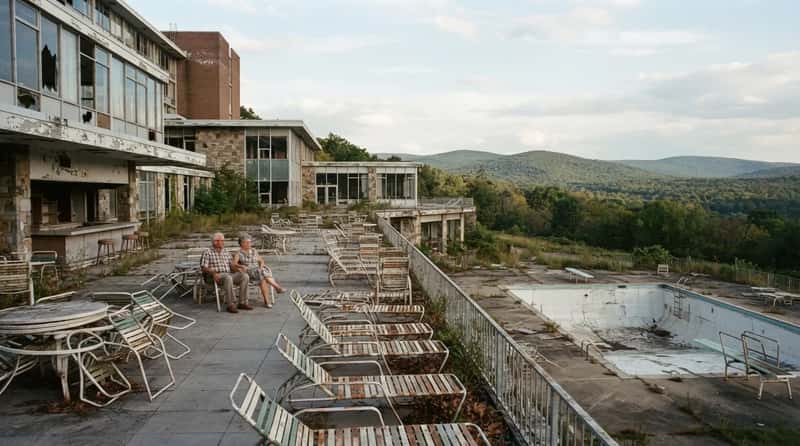
Here’s a genuinely counterintuitive twist: the more successfully the resorts proved Jewish Americans belonged fully in mainstream culture, the less reason there was for separate Jewish vacation spaces. The Borscht Belt declined from the mid-1960s through the 1990s as antisemitism waned, assimilation increased, air travel got cheaper, and cruise ships took over the leisure market.
Upwardly mobile families could now afford far-flung destinations, and the rise of 1960s counterculture made younger generations lose interest in their parents’ old-fashioned mountain retreats.
The place that had been a haven became, for the next generation, a symbol of the world they were trying to leave behind. Social progress undid what discrimination had originally built.
It’s one of the strangest ironies in 20th-century American history: the Borscht Belt flourished because of exclusion, survived for decades on community, and finally declined because the barriers it was built to dodge had largely fallen away.
And while the culture was shifting underneath it, one very specific flex defined exactly how glamorous the peak years really got.
7. VIP Guests Could Land Directly on the Property by Helicopter
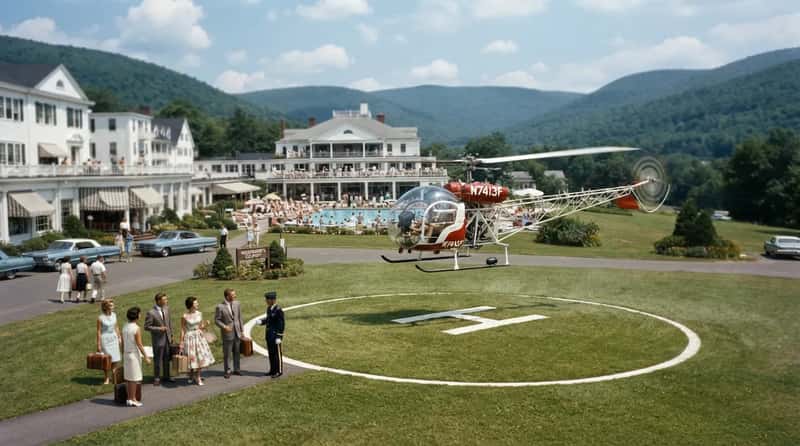
At the height of the Catskills era, the biggest properties weren’t just competing on food and entertainment – they were competing on spectacle. Helicopter arrivals became a 1960s hallmark for VIP guests at Grossinger’s, captured in surviving contemporary footage.
Grossinger’s had the infrastructure to pull it off, including its own private airstrip. A resort that started as a modest boarding house founded by Austrian Jewish immigrants in 1914 had grown grand enough that celebrities could fly straight onto the grounds.
This wasn’t an occasional novelty – it was a deliberate part of the resort’s identity and marketing. Being seen arriving by helicopter was a status signal every guest on the ground understood instantly.
Meanwhile, most families were still pulling in by station wagon after a three-hour slog on Route 17. That contrast – helicopters versus station wagons, on the same lawn, the same week – sums up how stratified and how spectacular this world really was.
The celebrities who flew in weren’t just passing through, either. Some of them were there for the biggest moments of their lives.
6. These Mountains Hosted Genuine American Cultural Milestones
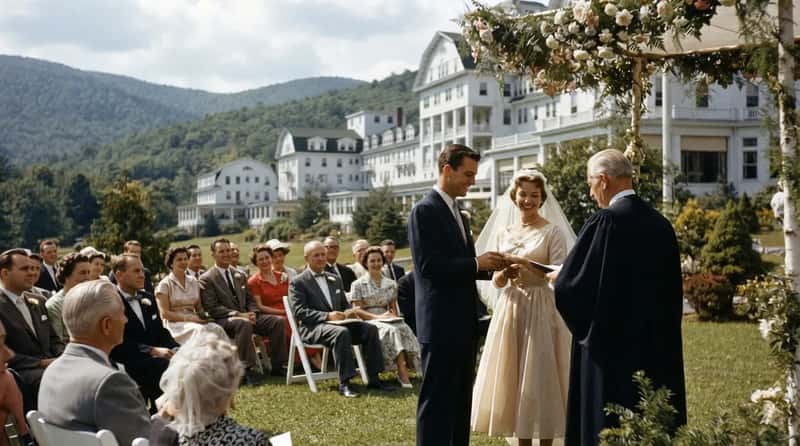
The Catskills resorts weren’t only vacation spots – they were stages for real American history. The Concord hosted a 1963 award presentation to Martin Luther King Jr., at a resort that, just a generation earlier, had been built specifically for a community facing systematic exclusion.
Grossinger’s was a favorite wedding venue, most famously hosting the 1955 civil ceremony of Eddie Fisher and Debbie Reynolds, officiated by a Sullivan County judge and covered in publications nationwide.
Worth Knowing
- 1963: The Concord hosted an award presentation to Martin Luther King Jr.
- 1955: Grossinger’s hosted the widely covered wedding of Eddie Fisher and Debbie Reynolds
- Both events cemented the Catskills as a genuine stage in American public life, not just a regional getaway
These weren’t incidental bookings. By the 1960s, the Catskills resorts had become genuine venues in American public life, not regional curiosities.
Today that kind of crossover between celebrity, culture, and community happens in city hotels or concert halls. That a cluster of mountain resorts in Sullivan County once played that role is something most Americans have completely forgotten.
Forget the celebrities for a second, though. Even ordinary families experienced the sheer logistics of a Catskills trip in a way that would feel alien today.
5. Packing for One Week Meant Packing Two Entirely Different Wardrobes
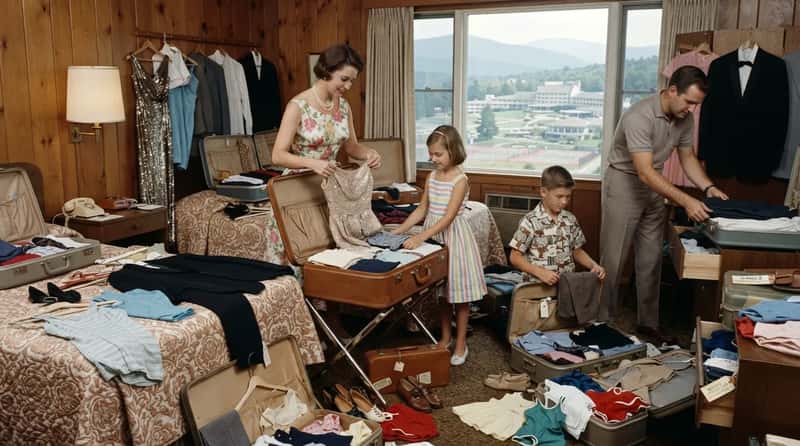
The packing logistics were genuinely demanding. Mothers packed suitcases running from bathing suits all the way to formal gowns, because a single week required outfits for the pool, daytime sports, casual afternoons, and formal dinners – often filling several large suitcases.
Nobody considered this unreasonable; it was simply the standard. Showing up underdressed for any part of the day’s schedule marked you instantly as someone who didn’t understand how the Catskills worked.
The pressure to dress correctly was real and community-enforced. When you saw the same three hundred people at every meal and activity, being underdressed wasn’t a private comfort choice – it was a public statement.
Today’s resort travelers pack two outfits and a pair of flip-flops and call it done. The 1960s Catskills basically required you to bring your entire closet.
But what happened after dinner is the part of the Catskills experience most people today have never even considered.
4. Nighttime Shows Were Non-Negotiable – Even for Blacklisted Performers
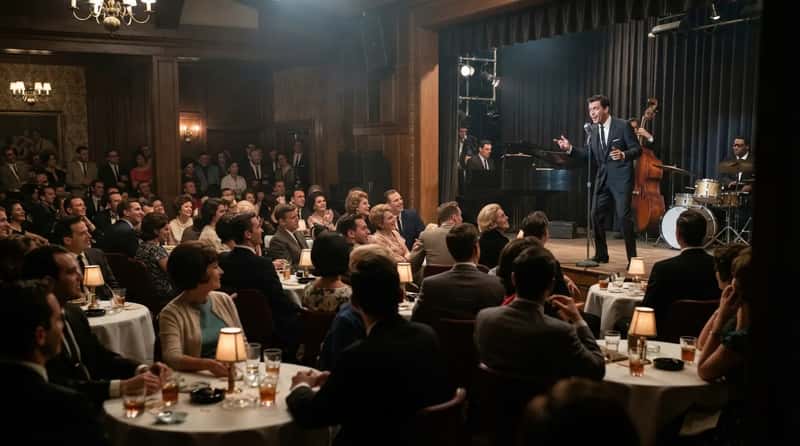
After the formal dinner, evenings at a Catskills resort didn’t wind down – they ramped up into another full block of programmed entertainment, often running past midnight. Sports facilities, childcare, card games, and bingo filled the gaps, but the nightly stage shows at the major hotels were the real production.
Top-tier entertainment was one of the biggest draws of the whole season, and performers used these stages to launch careers. Remarkably, Jewish summer resorts were also one of the only places where artists blacklisted during the McCarthy era could still find steady work.
That detail is startling on its own: at the height of McCarthyism, when blacklisted performers couldn’t get booked anywhere else in the country, the Catskills quietly kept hiring them. These resorts were an artistic refuge as much as a vacation destination.
Skipping the evening show wasn’t officially forbidden – but socially, it was the equivalent of walking out of a dinner party before the main course.
The reason all of this worked so seamlessly was rooted in something even more fundamental than the schedule.
3. Every Detail Was Built for One Very Specific Community
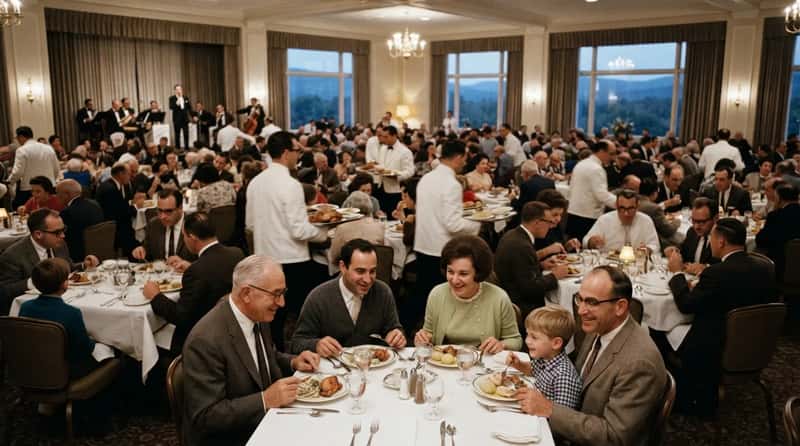
The Catskills resorts worked precisely because they weren’t trying to please everyone. Known collectively as “The Borscht Belt,” they offered American Jews a safe place to vacation alongside kosher dining – safety meaning cultural familiarity, a place to speak Yiddish and observe dietary laws without feeling like an outsider.
Guests got the full American vacation experience everyone else enjoyed, but layered with the comfort of food and community among their own people. No other American vacation destination offered that exact combination.
That specificity was the engine behind everything else on this list. The food, the entertainment, the comedy – all of it grew out of serving one very particular audience, and that comedy eventually reshaped mainstream American culture far beyond these mountains.
Modern resorts try to be everything to everyone. The Catskills succeeded by being everything to one specific people – and then discovered that formula had universal appeal all along.
Quick Compare
- Modern resorts: designed to appeal broadly to everyone
- 1960s Catskills: built specifically around one community’s needs
- Modern resorts: guests seek anonymity and personalization
- 1960s Catskills: guests sought familiarity, tradition, and belonging
And yet all of it – the hotels, the shows, the dining rooms, the whole community – collapsed within a single generation.
2. Almost Every One of These Hotels Is Now Completely Gone
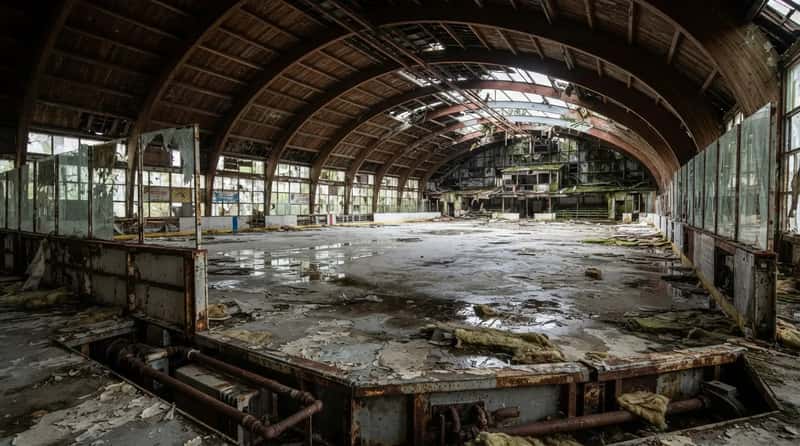
The comedic legacy of the Borscht Belt lives on, but almost none of the physical hotels do. Photographer Marisa Scheinfeld documented the abandoned ruins in her book “The Borscht Belt: Revisiting the Remains of America’s Jewish Vacationland.”
Some properties became wellness retreats or second-home communities; some were repurposed for other religious groups. The Concord itself became Resorts World Catskills Casino – the dining room that once seated 3,000 kosher diners is now a gaming floor.
The Nevele Grand Hotel outlasted most of its summer-resort peers for years by leaning hard into winter tourism, including a massive ice-skating rink built in 1970. It finally declared bankruptcy and closed for good in 2009.
What shocks historians most is the speed of the fall. By the late 1960s, the Borscht Belt had already lost its shine, and within a few more decades, buildings that once hosted hundreds of thousands of guests a summer stood empty – roofs caving in, pools filled with debris and weeds.
But here’s the detail that should genuinely shock modern families the most of all.
1. This Entire World Was Built by People Who Had Nothing – and It Outlasted the Very Thing That Excluded Them
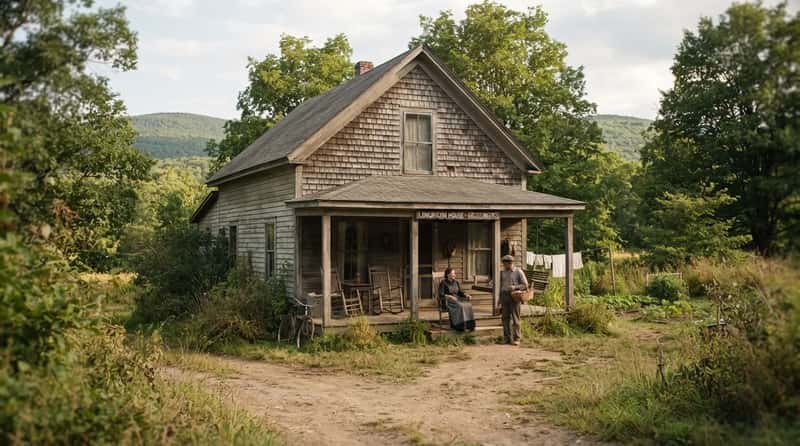
The deepest shock of the 1960s Catskills story isn’t the 3,000-seat dining rooms, the helicopter arrivals, or the nightly shows starring Aretha Franklin. It’s how small the beginning was: Grossinger’s was founded in 1914 by Austrian Jewish immigrants Asher Selig and Malka Grossinger as a modest boarding house called Longbrook House in Ferndale, catering to working-class families who just wanted an affordable escape from the city.
From that one boarding house, within a single generation, grew a 1,200-acre resort with its own airstrip and post office. At its peak in the 1950s, the Borscht Belt had over 1,000 establishments and drew more than a million Jewish visitors a year – an entire leisure economy, built from scratch by people who’d been explicitly told they weren’t wanted in the existing one.
Mel Brooks would later credit the Catskills with everything – it was where he learned to make a room full of strangers laugh on command, night after night, whether they wanted to or not.
As recounted in numerous retrospectives on his early career
What the Catskills became, it will never become again – the exact combination of exclusion, community, geography, and cultural moment that produced it was unrepeatable. Modern families plan every detail of a vacation from an app, curated to personal taste and reviewed by strangers; the families who built the Catskills were doing something categorically different – building an entire world, because the existing one had told them they weren’t welcome in it.
The Bottom Line
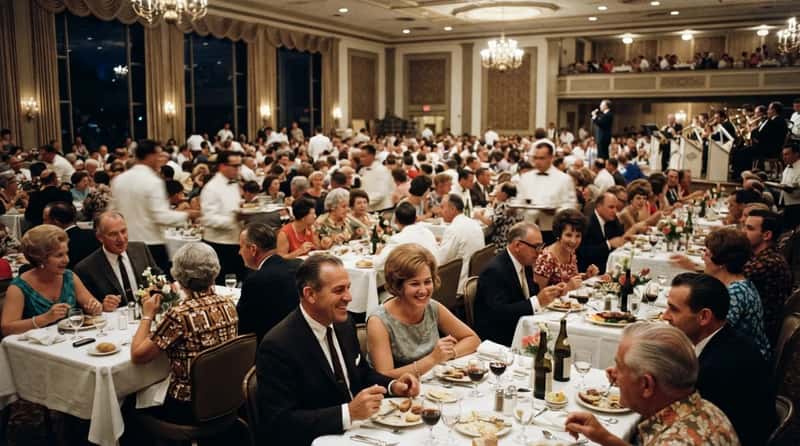
The 1960s Catskills resort vacation wasn’t just a different kind of holiday – it was a completely different idea of what leisure, community, and belonging were supposed to feel like. A dining room for 3,000, a tummler keeping you laughing at 10 a.m., husbands rolling in Friday night, Mel Brooks working the crowd, Aretha Franklin closing the show – it was a world built under real pressure and run with an intensity no modern resort even attempts.
It was also, in the end, a world that succeeded so completely at its mission – giving Jewish Americans a full, dignified, joyful place in American leisure culture – that it made itself unnecessary. The resorts didn’t fail. They won, and then, like everything built for a specific moment in history, the moment passed and they were gone.
Which of these details shocked you the most? If your family has its own Catskills story, we’d genuinely love to hear it in the comments.
Bonus: The Free Archive Search Most Families Never Try
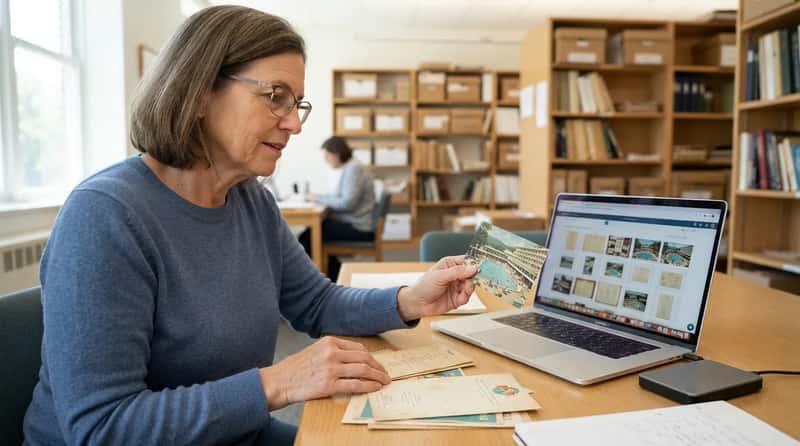
Before you close this tab, here’s the single most useful thing in this entire article: the actual hotels and bungalow colonies your grandparents visited may already be searchable online, for free, right now.
The Catskills Institute keeps a digitized archive of thousands of scanned postcards, menus, and hotel stationery, searchable by hotel or bungalow colony name.
- Go to the Catskills Institute’s online archive and type in the exact name of the hotel or bungalow colony your family stayed at, if you know it.
- Browse by object type – postcards, menus, and stationery are the most commonly digitized items, and often show the exact era your relatives visited.
- If you don’t know the property name, ask older relatives for it first; even a rough spelling is usually enough to find a match.
- Once you’ve found leads online, plan a visit to the Borscht Belt Museum at 90 Canal Street in Ellenville, NY, where recreated spaces like a 1960s bungalow kitchen and a Kutsher’s hotel room let you physically stand inside the world you just read about.
Most people scroll past this era assuming nothing survived. In reality, a huge amount of it was scanned, cataloged, and preserved – you just have to know where to type the name.