Before you’ve even found your seat, someone in a uniform has already sized you up. Flight attendants aren’t just waving you down the aisle; they’re running a fast, friendly check on every person who steps aboard.
That cheerful “welcome aboard” is doing a second job, and some of what crews notice will surprise you. A few of these things can cost you your seat, and one is the question they’re quietly asking about everyone on the plane.
#22 – The Phone Call at the Door
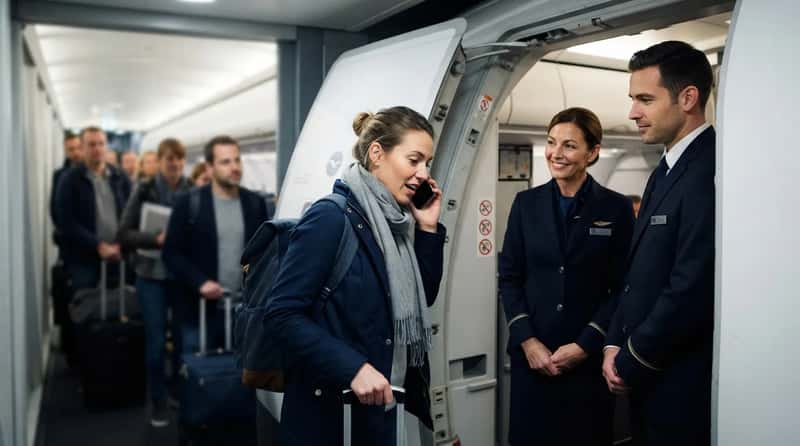
The first thing crews notice happens before you take a single step down the aisle.
If you’re glued to your phone at the door, flight attendants will try to catch your eye anyway. They need to know you’re actually paying attention.
A call or a text can also freeze the whole line behind you. That friendly greeting at the door doubles as a quick attention check.
But that’s nothing compared to what crews notice about people who haven’t even boarded yet…
#21 – The Crowd Around the Gate
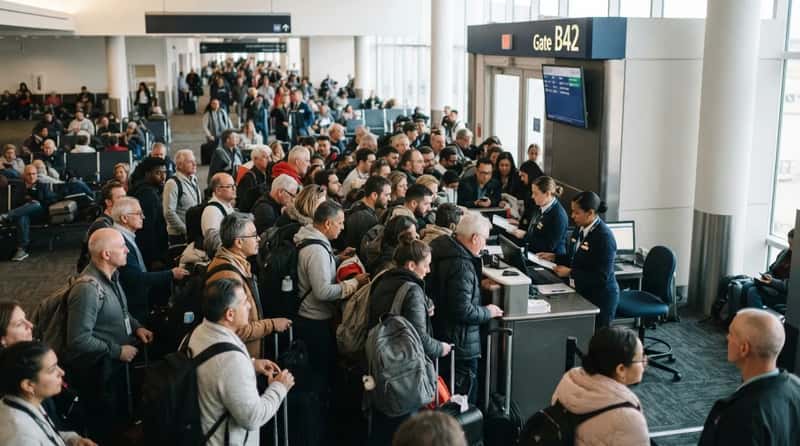
Crews have a slang term for the people who swarm the gate before their group is called.
Among flight attendants, those passengers are sometimes called “gate lice.” It isn’t always meant as an insult.
The crew simply wants to know who they’ll be sharing the air with for the next few hours. The watching starts well before you reach the cabin door.
Next up is something that delays more departures than you’d think…
#20 – How Much You’re Carrying
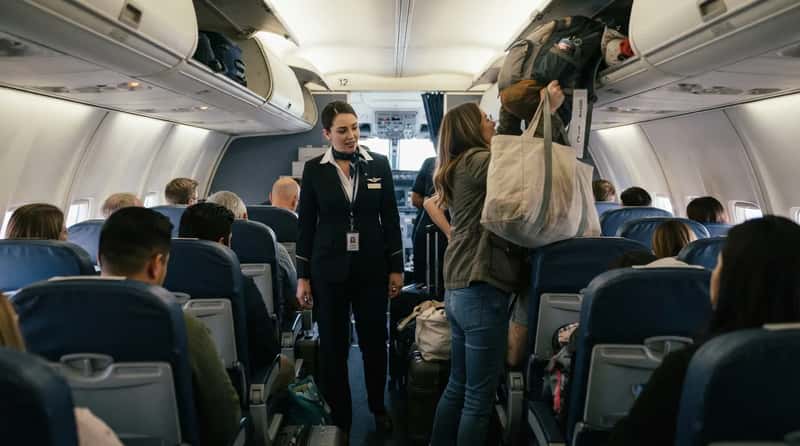
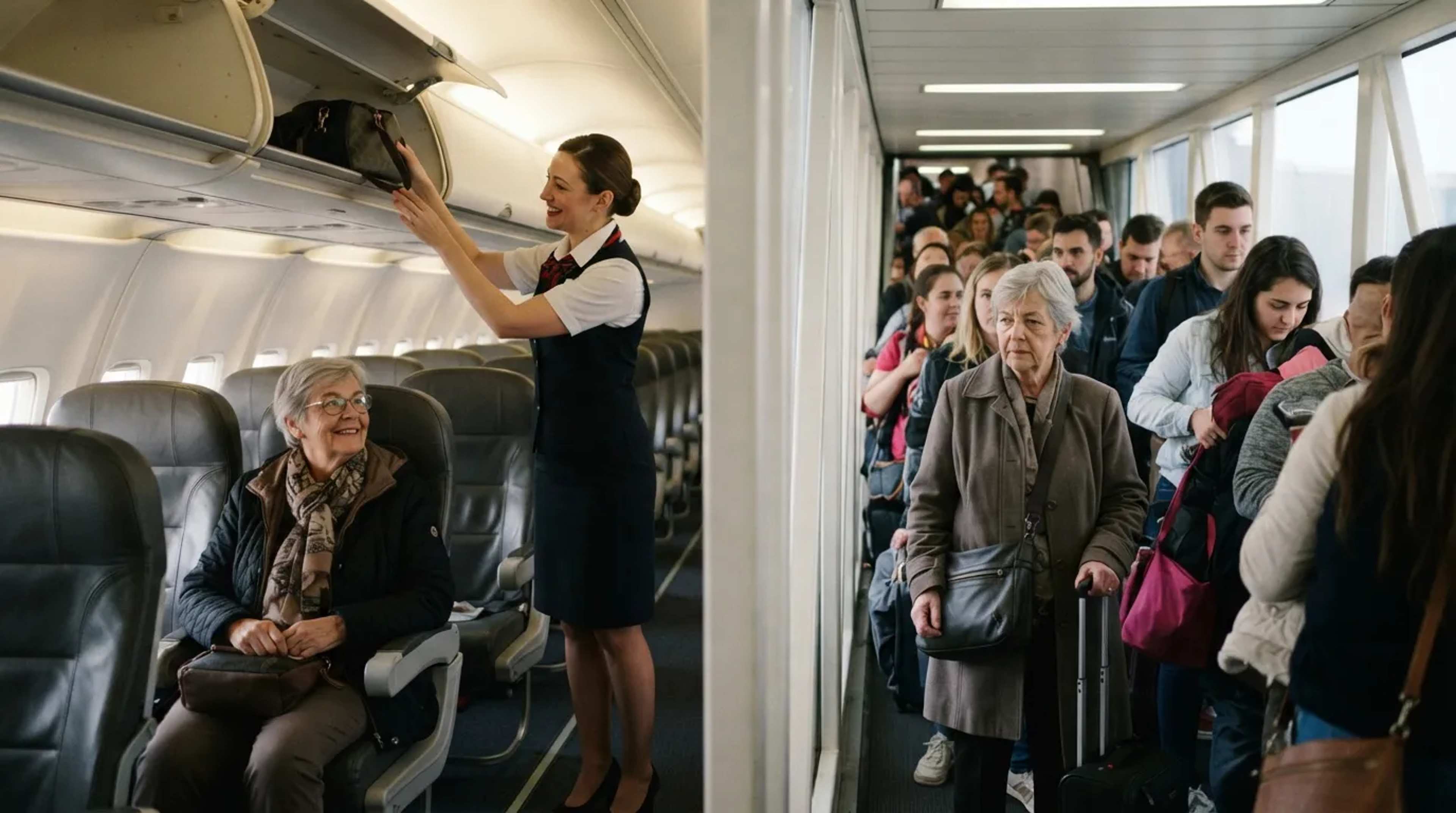
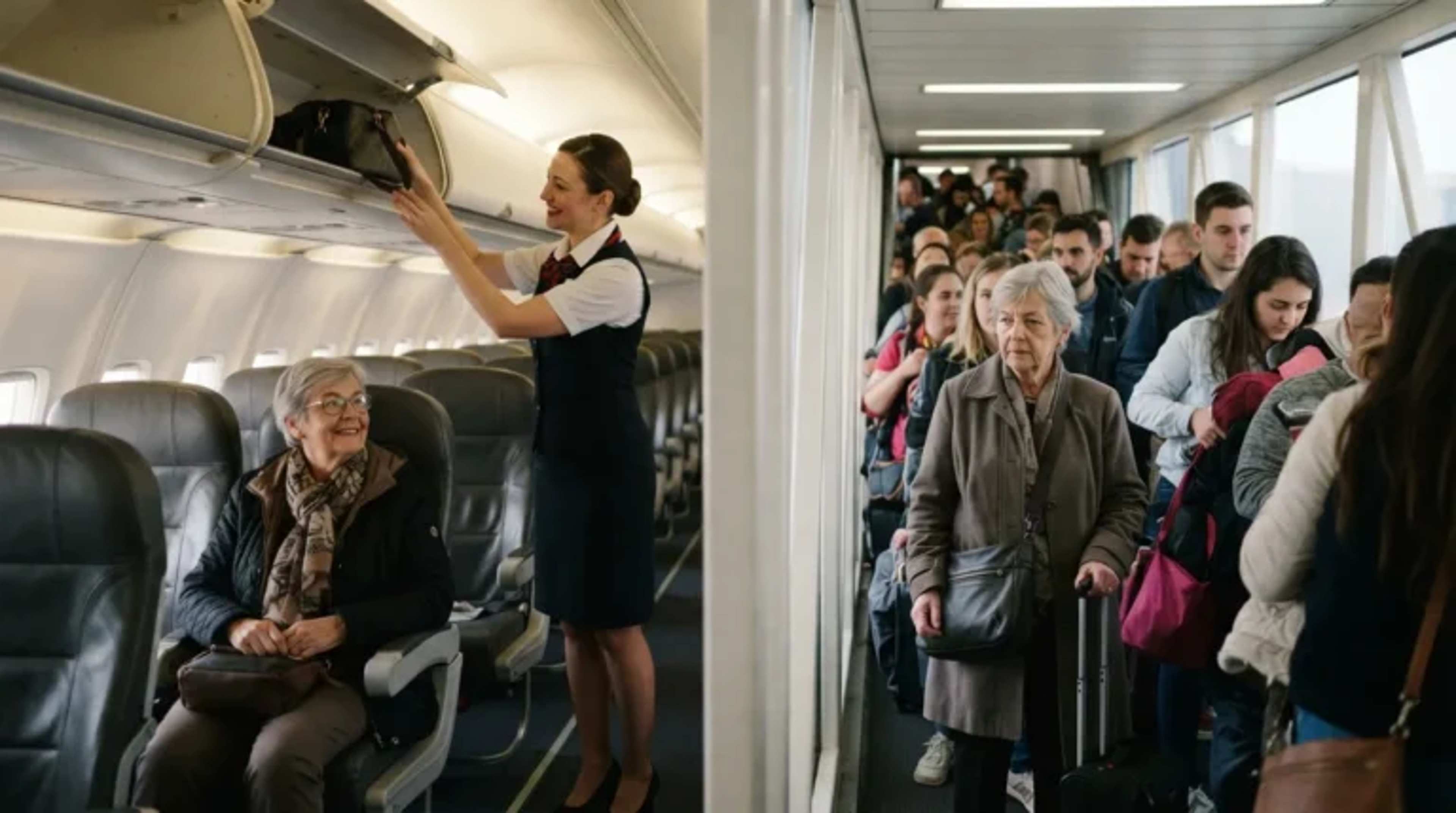
Your bags tell the crew how smooth the next ten minutes will be.
Extra bags slow boarding, and oversized items stuffed under seats can clog the aisle. Crews want the plane out on time, so they’re watching every bulging tote.
There’s a second reason, and it matters more than speed. Safety regulators list cabin baggage among the factors that can slow an emergency evacuation.
Worth Knowing
- Extra bags slow the boarding line.
- Oversized items under seats can block the aisle.
- Regulators count cabin baggage as an evacuation factor.
- A bag that fits under the seat in front keeps everyone moving.
But the next thing crews notice costs you nothing at all…
#19 – Whether You Say Hello
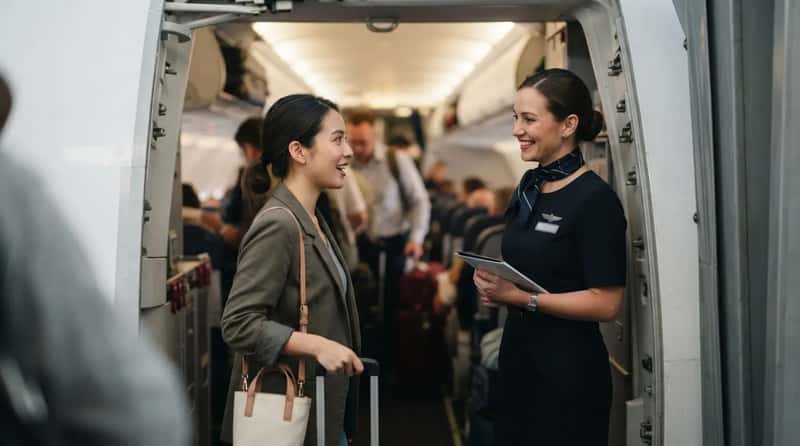
A two-second greeting can change how your whole flight goes.
Flight attendants notice the people who smile, make eye contact and say hello, because plenty of passengers shuffle past without a word. Crews are often more inclined to look after the polite ones with an extra drink or snack.
Listening to the pre-departure announcements gets noticed too. So does how you treat the people around you.
There’s also a popular belief about dressing well that may not hold up…
#18 – The Suit Myth and the Early Demands
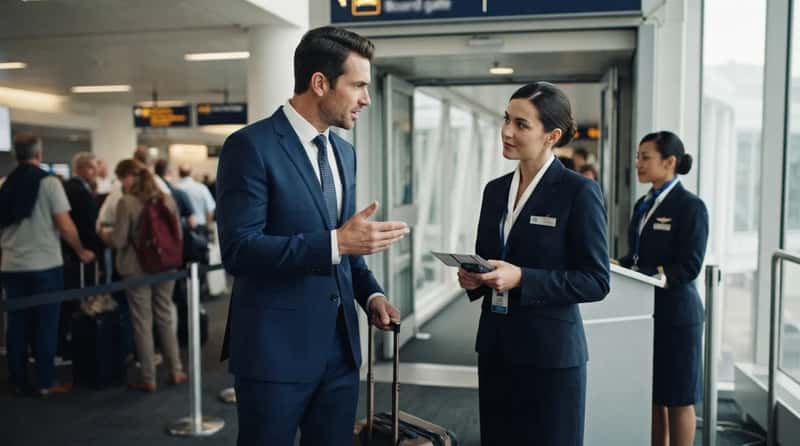
Dressing sharp for an upgrade is a travel “hack” crews don’t necessarily buy.
Some travelers believe a smart outfit earns priority for an upgrade if a flight is overbooked. The idea gets repeated constantly, but nothing here shows it works.
What crews do pick up on is attitude. They notice passengers with no obvious needs who start asking for special treatment right away, sometimes before they’ve even reached the boarding bridge.
Crews recognize that pattern fast, and it’s often the first impression that sticks. A calm, polite request lands very differently.
But some signs are far harder to read than a demanding attitude…
#17 – The Nervous Flyer
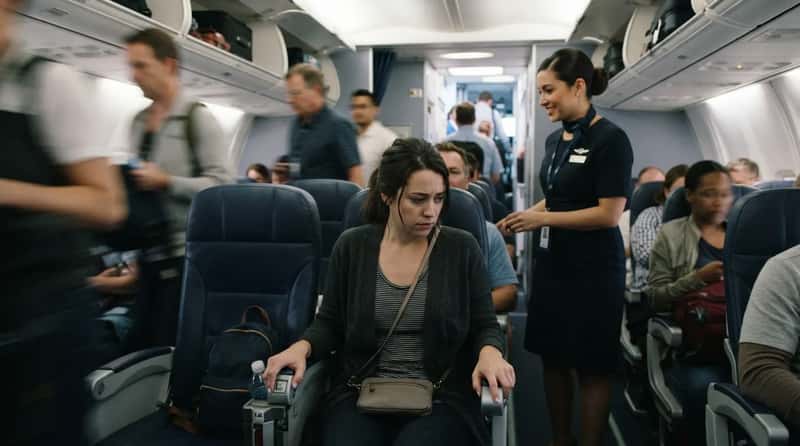
Crews can often tell you’re scared before you’ve found your seat.
Nervous fliers may look jittery or distracted, and they sometimes avoid eye contact with crew and other passengers. Their voice may also sound strained when they answer a greeting.
The irony is that the fear usually doesn’t match the risk. Flying is one of the safest ways to travel.
The same signs that point to anxiety are also the ones crews use to scan for intoxicated or suspicious passengers. So those behaviors get a closer look than you might expect.
Your outfit can raise flags too, in ways you’d never guess…
#16 – What You’re Wearing
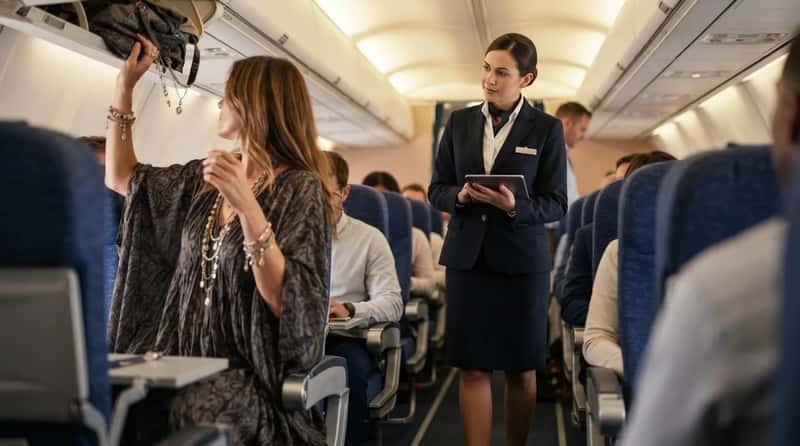
Your clothes can be a safety issue, not just a style choice.
Flight attendants look for clothing or jewelry that could become a hazard in an emergency, especially anything loose or dangling. They also notice outfits that look plain uncomfortable for a long flight.
The logic is simple. Narrow aisles and fast exits reward people who can move freely.
Dangling accessories are something crews actively scan for. Comfort matters on a long flight anyway.
And the next one is a moment crews say reveals a lot about a passenger…
#15 – Who Tunes Out the Safety Demo
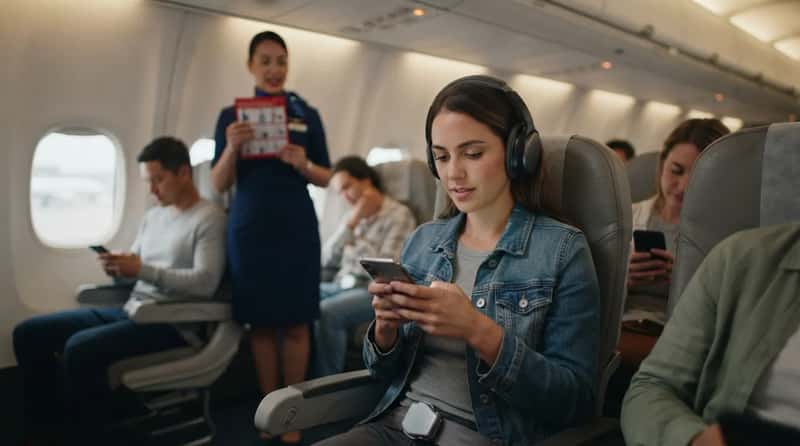
You’ve heard it a hundred times, and crews know exactly who thinks that.
Flight attendants notice passengers who talk during the safety demonstration, scroll their phones or keep their headphones on. It’s a small moment, but it’s a telling one.
Crews tend to read tuned-out passengers as less ready to act in an emergency. They also assume those passengers may be slower to follow instructions.
Many frequent flyers consider the briefing skippable. Crews see it the opposite way, because they’re the ones who’d have to manage a cabin that hasn’t listened.
Now for the passengers crews are already planning around…
#14 – Who Might Need a Hand
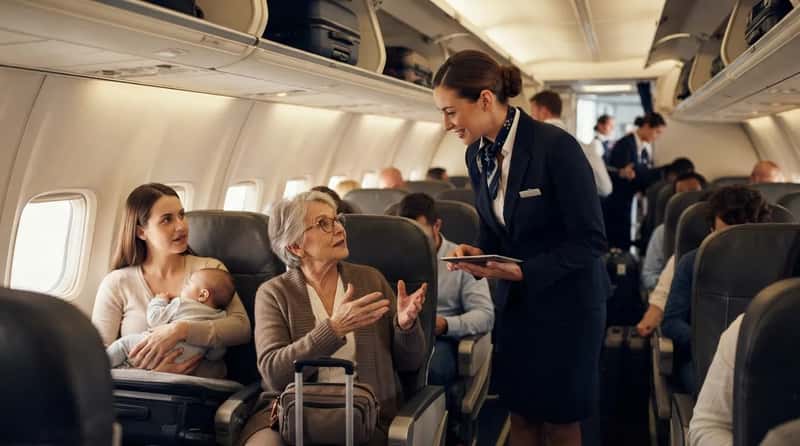
Before you’ve buckled up, the crew has already sorted the cabin into who could need help.
Flight attendants stay aware of passengers who may need extra assistance during the flight or in an evacuation. That can include older travelers, people with reduced mobility and parents with babies.
It isn’t judgment. It’s planning for a scenario nobody wants.
The crew is screening for risk and need at the same time. They’re looking for anything that might threaten a safe, smooth flight.
But some needs aren’t visible from the door at all…
#13 – The Cast, the Sling, the Limp
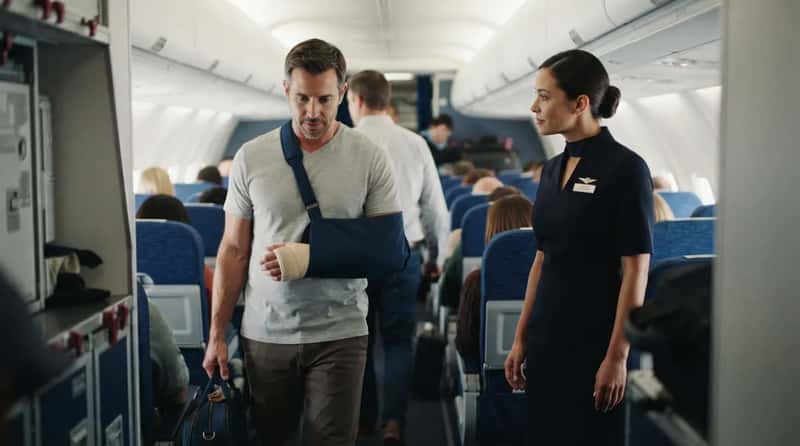
Injuries are one of the first things crews check for as you walk past.
Flight attendants note passengers who may need extra help, including those with reduced mobility, sight or hearing challenges, and injuries like a broken arm or leg. A sling or a cast tells them something may need adjusting.
That can change where you sit and how bags get stowed. It can also change how the crew would help you in an emergency.
A visible injury gets noticed faster than most passengers expect. Crews would rather adjust early than scramble later.
Some passengers are already on the crew’s radar before they arrive, though…
#12 – The Names Already on the List
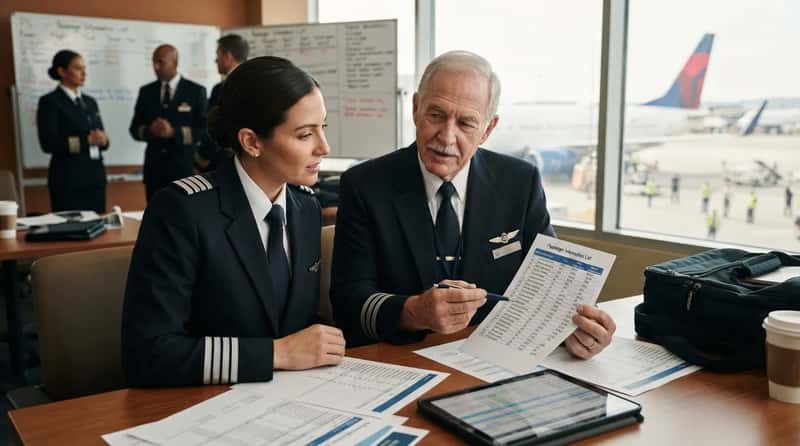
Some passengers are known to the crew before they walk on.
Crews are told about people with reduced mobility, unaccompanied minors, passengers with sight or hearing challenges and wheelchair users. These passengers are covered in the pre-flight briefing and appear on the passenger information list.
A flight’s most important planning often happens before the first passenger appears. The greeting at the door is partly a cross-check against the paperwork.
But the next group is one the list can’t predict at all…
#11 – The Traveler With Nothing
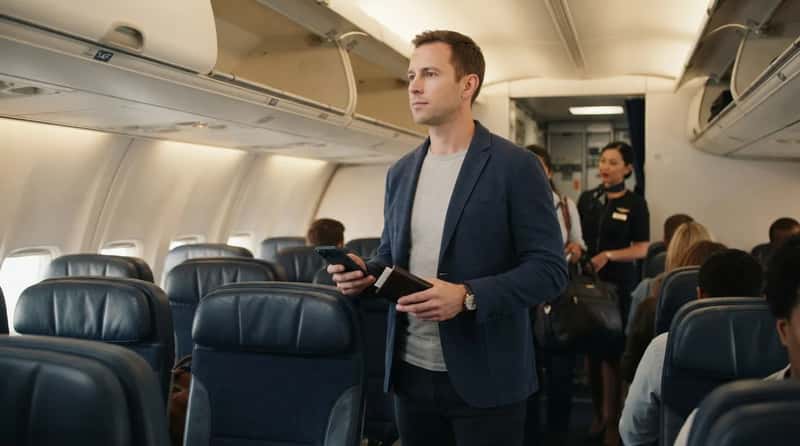
A passenger with no bag on a long flight gets a second glance.
One published list of crew observations says flight attendants notice passengers who board with nothing but a phone and a passport. It isn’t an automatic red flag, but it can signal that something is off.
Plenty of people travel light for good reasons. Crews know that, which is why they treat it as a prompt to pay attention, not a verdict.
The most common explanation is the boring one: lost luggage, a last-minute trip or a minimalist packer. Still, crews file it away.
Quick Compare
- What it usually is: lost luggage, a rushed trip or a light packer.
- What crews do: stay a little more alert, nothing more.
- What it isn’t: an automatic red flag.
And the opposite behavior gets noticed just as quickly…
#10 – The Passenger Who’s Too Friendly
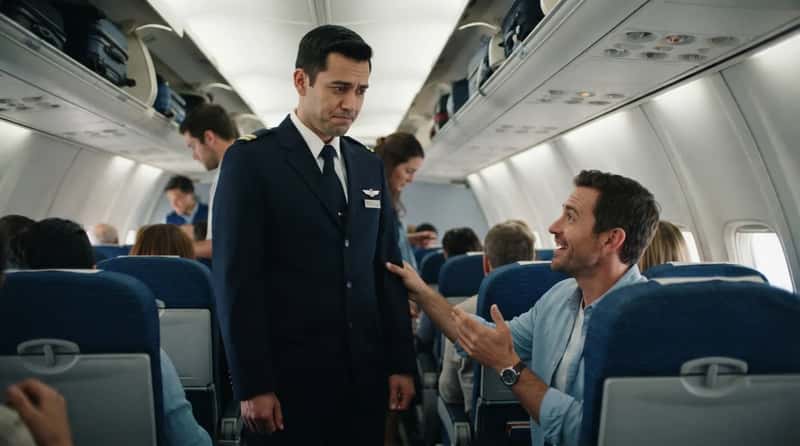
Being polite earns goodwill, but there’s a line.
Flight attendants get wary when a passenger is overly friendly and tries to sweet-talk their way into extra snacks, upgrades or legroom. Others have less innocent aims, such as trying to get close to the cockpit or distract the crew.
Plenty of people are simply sociable. Crews look at what comes after the charm.
Warmth paired with a steady stream of requests doesn’t always read as harmless. It depends on what’s being asked for.
The next one involves something in your bag that breaks the rules…
#9 – The Bottle You Brought Yourself
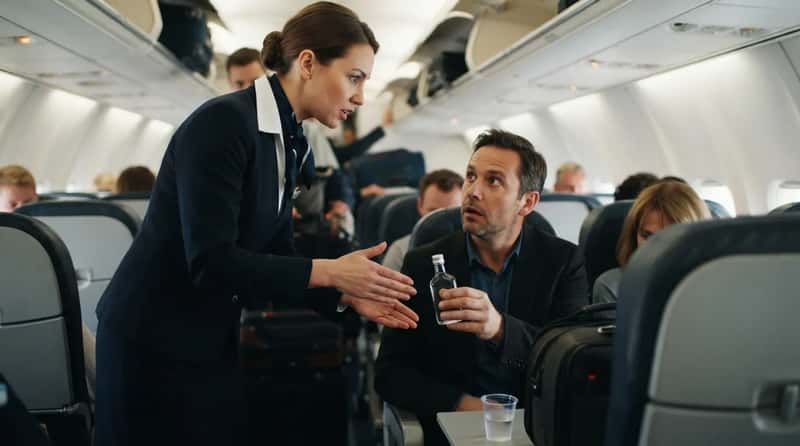
Drinking your own alcohol onboard is against the rules, and crews watch for it.
Passengers aren’t allowed to drink alcohol they brought themselves during a flight, and crews can confiscate it. They can hold those items until you leave the plane.
Many people assume a quiet sip from a duty-free bottle goes unnoticed. In reality, it’s one of the more common things crews step in on.
Crews also keep an eye on your condition before you get a drink at all.
That’s the next thing on their list, and it can end your trip at the door…
#8 – Signs You’ve Had Too Much
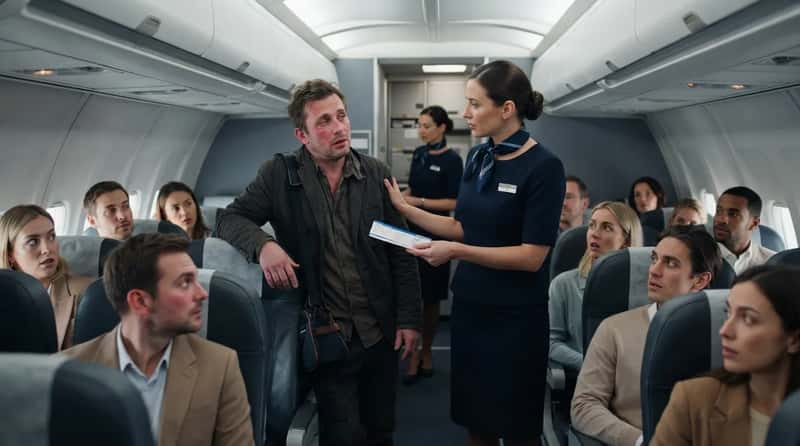
A preflight drink can cost you your seat.
Slurred speech, glassy eyes and wobbly steps are red flags. Crews try to spot signs of intoxication at boarding so they can head off conflict later.
A passenger who seems drugged or too drunk can actually be refused boarding. Crews know passengers may have a drink before a flight or take medication, so they’re judging how you seem, not guessing what you did.
But the most consequential thing crews watch for is the seat you’re sitting in…
#7 – Whether You Could Actually Open That Exit
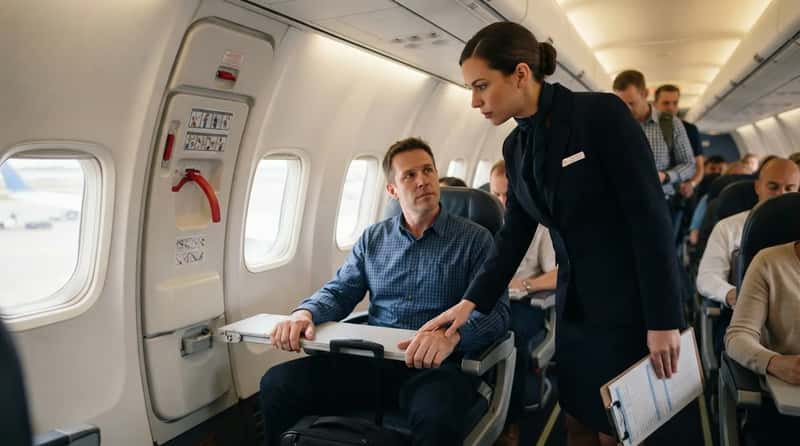
An exit row seat isn’t a perk. It’s a job.
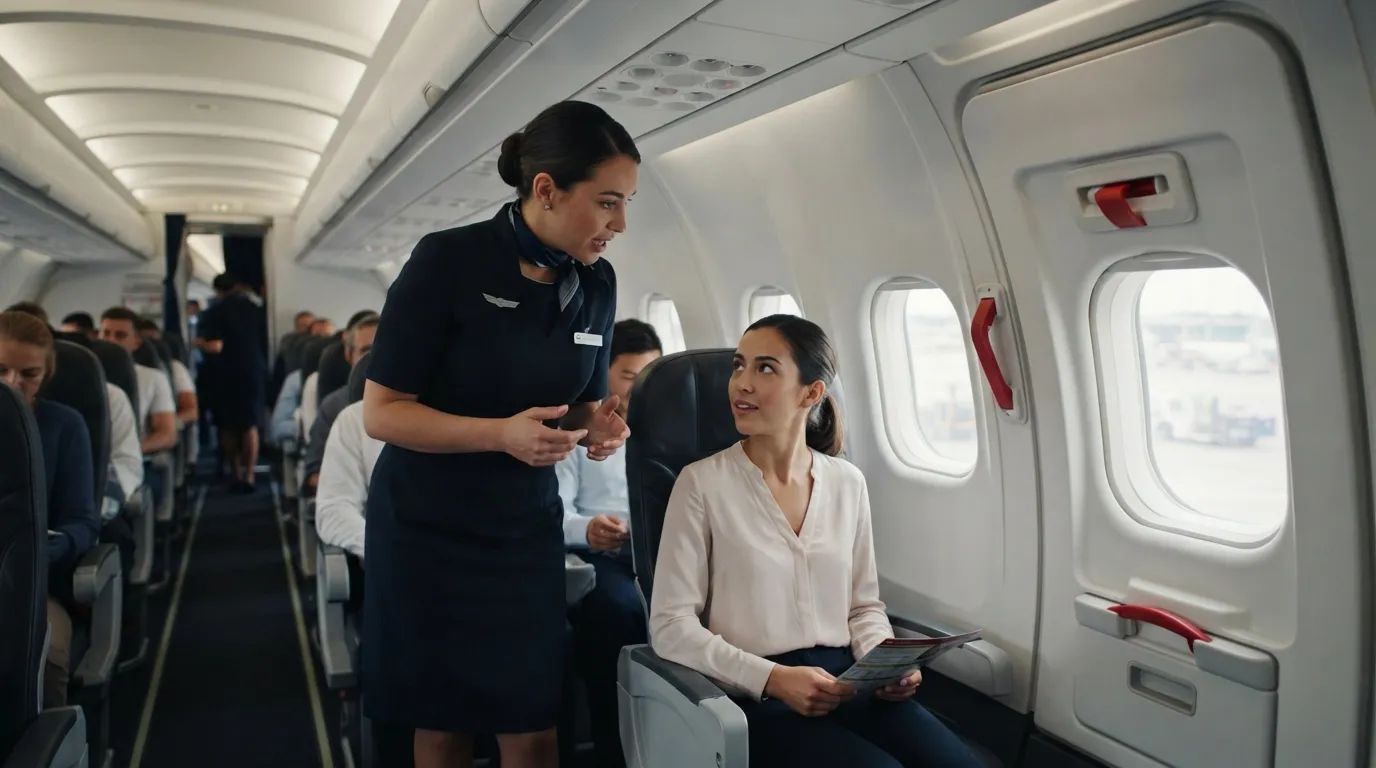
Exit row passengers must be able to reach, grip, turn, push, pull and lift an exit door, and to help others evacuate. FAA restrictions cover a lack of strength or dexterity in the arms, hands or legs.
Crews are sizing up your physical ability before you’ve even sat down. A cane or a visible limitation in a leg, arm or hand tells them what they need to know.
And physical strength is only part of the test…
#6 – Age, Language and the Question You’re Asked
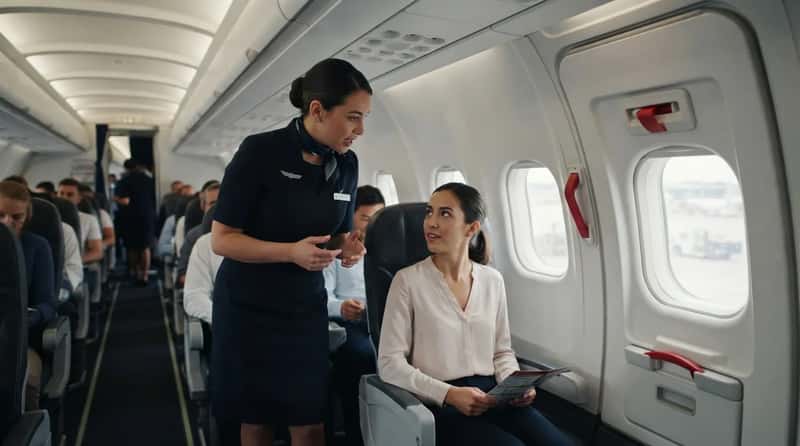
Being strong enough isn’t the only requirement for an exit seat.
Passengers must be at least 15, physically able to operate the exit, and able to communicate in the crew’s language. U.S. regulations also require passengers to confirm verbally that they meet the exit-row criteria.
You also need to read printed safety instructions and understand spoken commands. Your vision and hearing must be good enough without anything beyond standard glasses or hearing devices.
Crews are required to brief anyone seated in an exit row. The briefing has to happen before departure.
At a Glance
- Age: at least 15.
- Body: able to operate the exit and help others out.
- Language: able to read instructions and understand crew commands.
- Senses: adequate vision and hearing with standard glasses or hearing devices.
- Response: a verbal confirmation that you qualify.
But the next rule catches more travelers off guard than any other…
#5 – Who You’re Traveling With
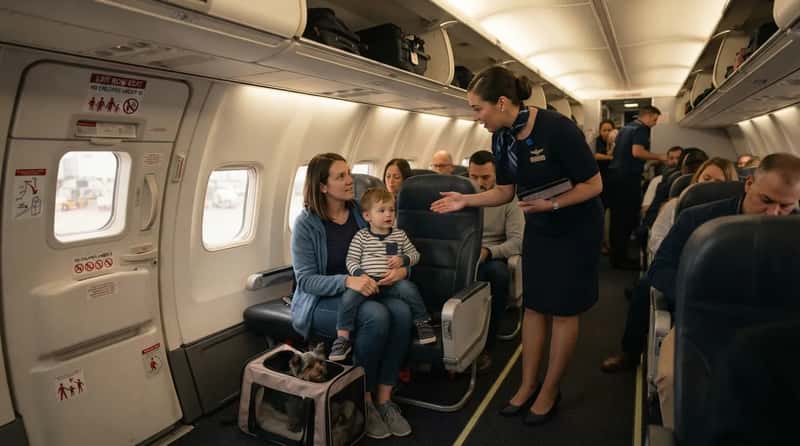
Your companion can disqualify you from the exit row.
Exit row passengers generally can’t be traveling with someone who’d need special help in an emergency, such as an infant, or with an animal. Caring for small children or pets can also stop someone from performing the exit functions.
It’s a rule that’s easy to overlook when you book a seat months ahead.
You may have paid for a seat you can’t keep. Crews will make the call at the gate or in the aisle.
And yes, there’s a way to step out of the exit row without explaining why…
#4 – The Exit Row Rule Nobody Enforces the Same Way
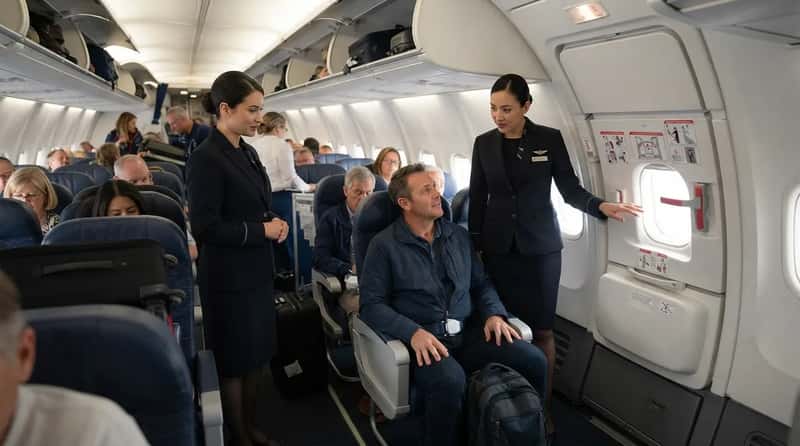
The rules are federal, but how they play out can change from crew to crew.
Airlines must invite you to identify yourself if you’d rather be reseated, and they can’t require you to say why. If a flight attendant decides you’re unfit to operate the exit, you must give up the seat.
That’s where the gray area starts. Two crews can look at the same passenger and make different calls.
Even the FAA admits its exit row rule can’t guarantee that every passenger will be able to perform. It only maximizes the chances of selecting those most able to lead an evacuation.
The next thing crews notice is about how you treat them, and it can follow you for years…
#3 – Your Attitude, Logged
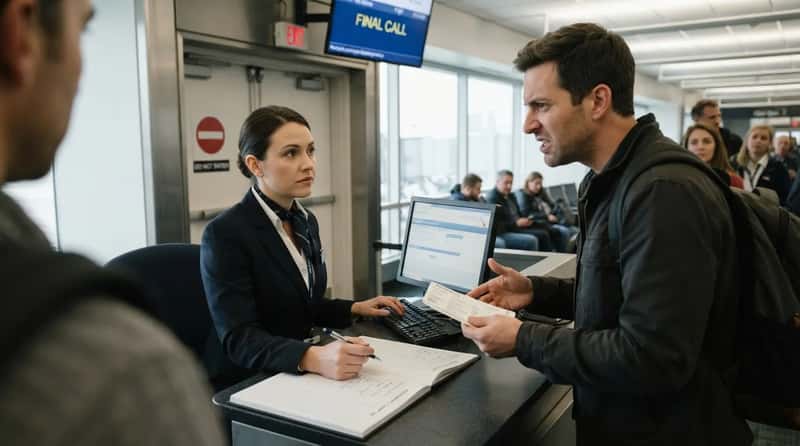
Rudeness doesn’t always end when the flight does.
Rude or entitled passengers can be noted, and that information can be kept for the crew’s reference on future flights. In extreme cases, if the behavior continues, a passenger can be banned from the airline.
A bad moment at the gate can be remembered well beyond a single trip. Most people assume it disappears the moment they land.
But there’s one behavior crews rank above all the others, and the data backs it up…
#2 – How You React When They Ask You to Do Something
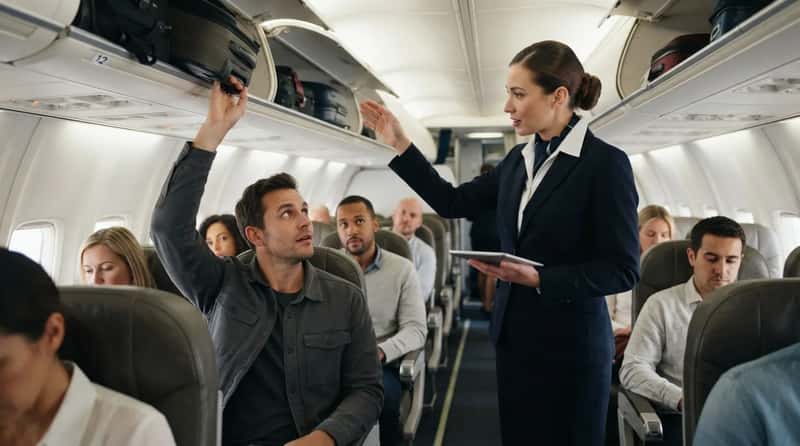
The most common problem in the cabin isn’t violence. It’s ignoring instructions.
Non-compliance with crew instructions remains the most frequently reported descriptor of unruly passenger incidents. That’s why a crew member notices right away how you respond to a simple request.
The consequences can be serious. The FAA can propose up to $43,658 per violation, and a single incident can produce multiple violations.
And that brings us to the thing crews are really scanning for, the one that matters most…
#1 – Who Would Help If Everything Went Wrong
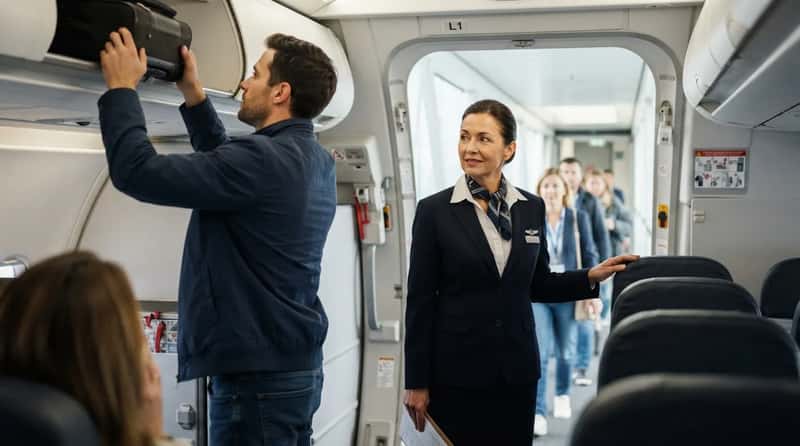
The real question behind every greeting is one nobody says out loud.
In those few seconds at the door, crews are looking at who may need extra help, including during an emergency evacuation. Just as important, they’re noticing who looks ready to help others.
Aircraft are certified on the premise that a full cabin can reach the ground in 90 seconds. An A380 test in 2006 evacuated 873 people in about 78 seconds.
But that was a planned test, and real evacuations can look very different. In the Japan Airlines Flight 516 accident, it was widely reported that evacuating 367 passengers took 18 minutes.
Passenger behavior, cabin baggage and smoke in the cabin are among the factors regulators say matter.
The crew isn’t judging you. They’re quietly working out how this cabin would behave when it counts.
The Bottom Line
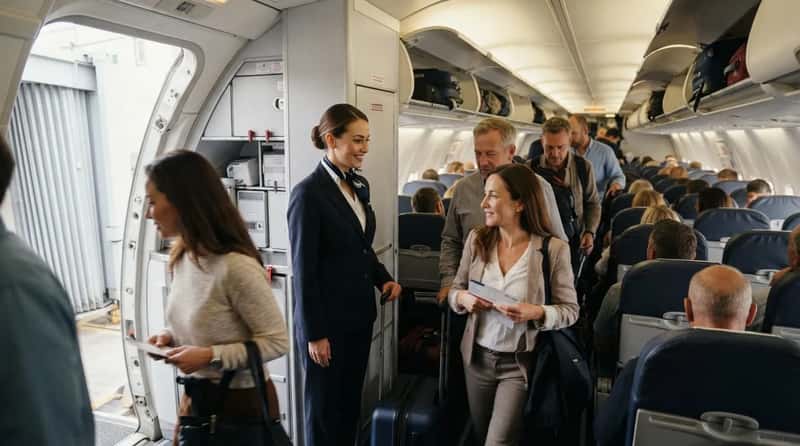
Crews screen for far more than you’d expect, from attention and attitude to intoxication and exit row eligibility. Some of it is about comfort, like a polite hello. Most of it is about safety, including who could need help and who could give it.
The exit row rules are federal, but they’re applied by people, and even the FAA says its exit-row rule can’t guarantee results. Ignoring crew instructions is the most commonly reported unruly behavior.
So the next time a flight attendant smiles at the door, remember that the smile is real and the scan is too. Which of these surprised you most, and which would you argue with?
Bonus: The Insider Habit That Puts You Ahead of the Whole Cabin
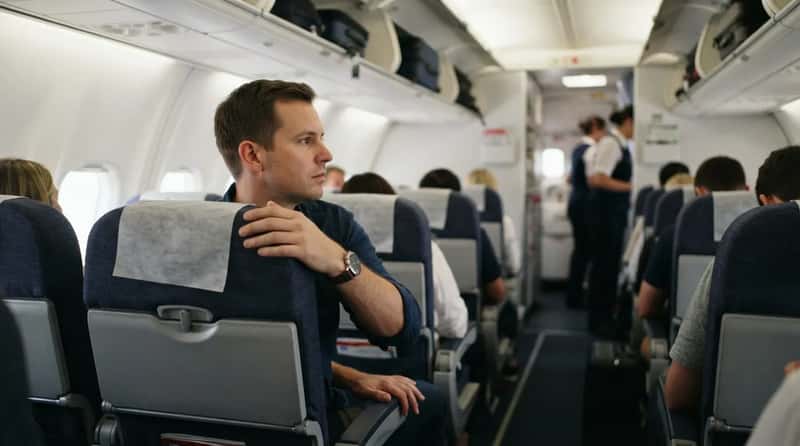
The most useful thing you can do after sitting down is build your own exit map before the safety demo even starts. It takes less than a minute, and it’s what crews quietly hope every passenger does.
- Find your two closest exits. Look both forward and behind you, because the nearest door is often not the one you came in through.
- Count the rows with your hand. Touch each seat back between you and each exit, so you could find the way in dim light or heavy smoke.
- Check the safety card for your exact aircraft. Door types and handles differ from plane to plane, so don’t rely on what you remember from your last flight.
If an evacuation ever happens, leave your bags behind and move when the crew tells you to. Carry-on baggage is one of the factors regulators say can slow everyone down.