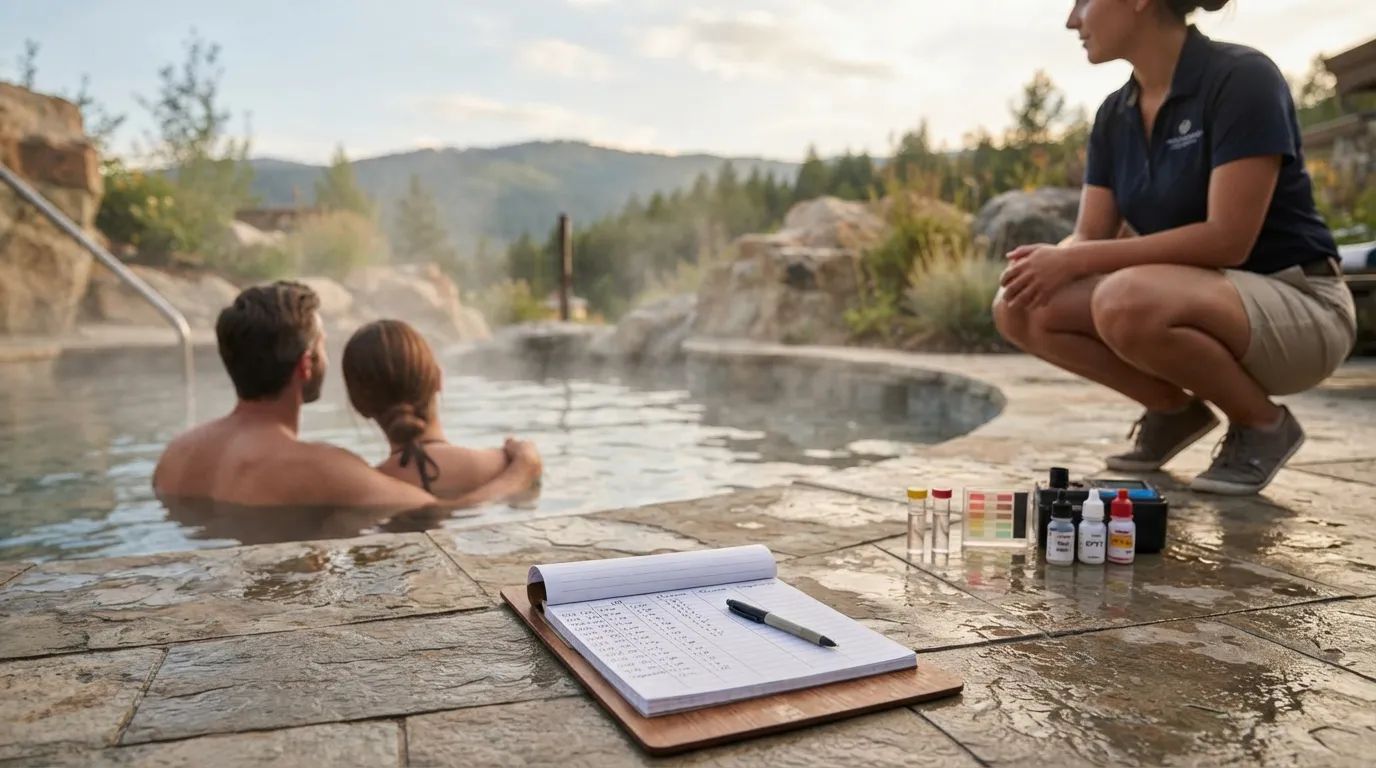
You’d think the only hot springs rule worth knowing is “don’t soak too long.” Then you read the fine print at real resorts, and it sounds like a diary of everything staff have watched guests do, from smuggled birthday cakes to drones buzzing over the pools.
Some of these habits are harmless. Others quietly ruin the water, the mood, or somebody’s afternoon. And the habits staff worry about most are waiting near the top of the countdown, where the stakes get a lot higher than a ruined swimsuit.
#22 – The Shower Everybody “Forgets” Before Hopping In
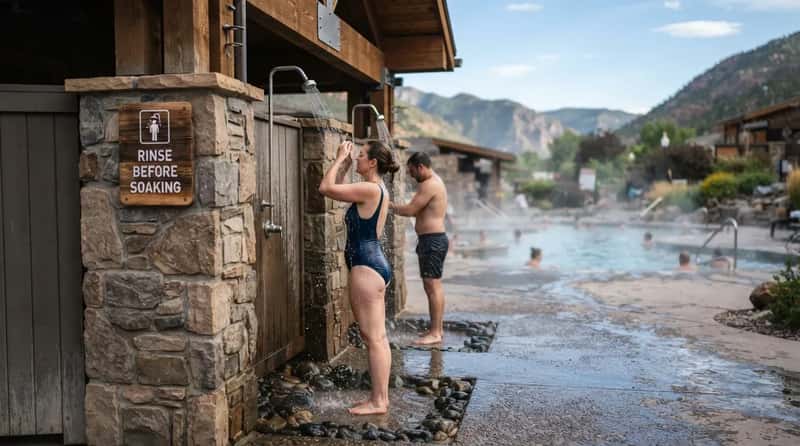
The first thing staff notice happens before anyone touches the water.
Glenwood Hot Springs asks guests to shower first to remove dirt, sweat, and lotions. Harbin Hot Springs goes further and requires a soap shower, with extra care to remove massage oils.
Here’s the part most people don’t realize. At Iron Mountain Hot Springs, the water in the pools changes completely every two hours, and each pool is drained and power washed weekly. Even with that constant turnover, the resort still says a pre-soak shower is what keeps the water pristine.
Staff also see it as a signal. Guests who skip the rinse tend to skip other rules too.
Fast Facts
- Glenwood asks every guest to shower first to remove dirt, sweat, and lotions.
- Harbin requires a soap shower, not just a quick rinse.
- Iron Mountain changes its pool water completely every two hours.
- Each Iron Mountain pool is drained and power washed weekly.
But the next mistake shows up on the pool deck in plain sight, and it’s about what guests wear…
#21 – The Guest Who Soaks in Sweatpants and Underwear
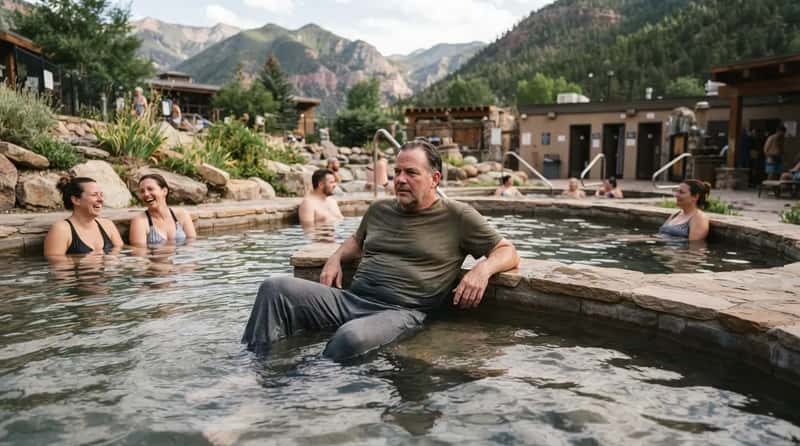
Swimwear sounds obvious, until you see what turns up at the edge of the pool.
Durango Hot Springs bans street clothes, underwear, pajamas, and sweats in its pools. Staff decide what counts as acceptable swimwear. That rule only exists because someone tried it.
Fabric sheds fibers and carries dirt from outside. A cotton T-shirt that’s been through a parking lot and a car seat is not what a shared mineral pool is built for.
Resorts don’t just suggest this. Staff are told they can decide what’s allowed.
But that rule pales next to what hot mineral water does to something far more personal, and it’s sitting on your wrist…
#20 – Soaking With the Jewelry Still On
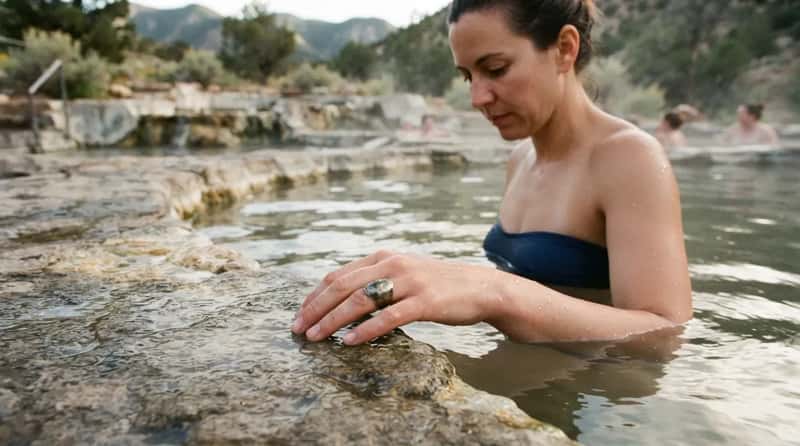
That ring you never take off has a problem waiting for it in the water.
Durango Hot Springs tells guests to remove all jewelry or it will tarnish. Mineral-rich water reacts with metal, and silver is usually the first casualty.
Staff see the same ending again and again. A guest steps out of the pool, glances down, and the shine is gone.
- Leave watches and necklaces in the room safe.
- Some resorts say flat out they’re not responsible for lost belongings.
And jewelry isn’t the only thing that takes a hit. Wait until you see what happens to the swimsuit you love most…
#19 – The Favorite Swimsuit That Comes Out a Different Color
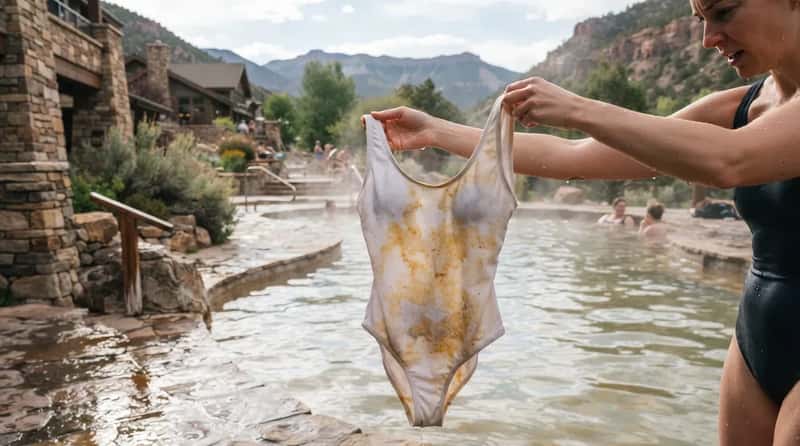
Staff will tell you the truth: your best suit is a risky choice.
Durango Hot Springs warns that fabric discoloration is possible. It suggests bringing an extra suit, or wearing last year’s, to soak.
Minerals and heat are tough on dye and elastic. A pale or white suit is the usual victim.
The resort itself recommends you wear last year’s suit. That’s a surprisingly frank bit of advice from a business that wants you to come back.
Debuting a brand-new swimsuit in a mineral pool is a gamble, and staff have watched plenty of guests lose it.
The next habit looks harmless, but it’s actually hiding in a bottle…
#18 – Lotion and Oil Slathered on Right Before the Pool
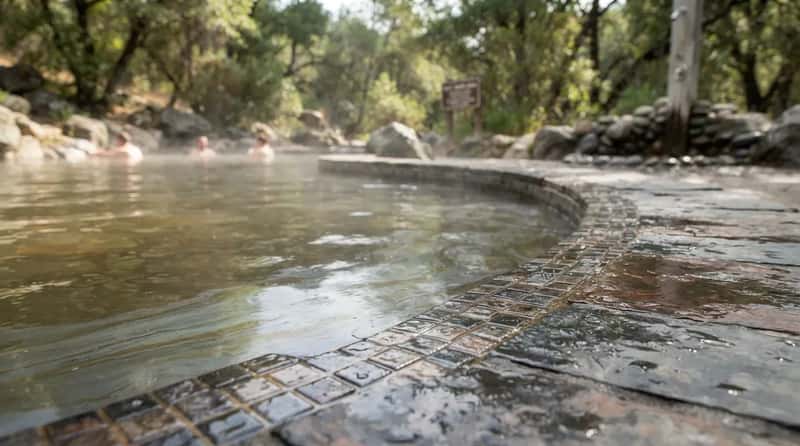
Staff know the smell, and they know what it does to the water.
Harbin bans oils and lotions before soaking. It also bans scented oils in the pool area out of consideration for chemically sensitive guests. A thin film on your skin ends up in the shared water.
Oils float, cling to pool edges, and make surfaces slick. Harbin’s rule specifically names massage oils as something to wash off first.
If you’re getting a spa treatment before your soak, shower again before you get in.
Still, there’s something far more dangerous than oil on a pool deck, and guests carry it in every day…
#17 – The Glass Bottle by the Pool
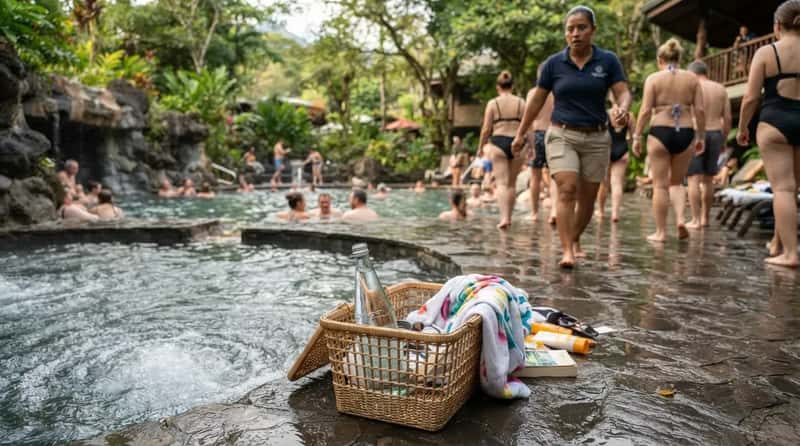
This is the one that makes staff drop everything and run.
Glenwood Hot Springs bans glass on the pool deck, because no one wants hurt feet. La Fortuna’s hot springs in Costa Rica also say never to bring glass containers.
Wet feet, slippery stone, and broken glass are a bad mix. A single broken bottle can force staff to close a pool while they clean it.
The same rule shows up at resorts thousands of miles apart. That tells you how often it happens.
It’s also one of the easiest rules to follow. Cans and plastic exist for a reason.
But here’s where some guests really push their luck, and it involves a picnic…
#16 – The Secret Picnic Smuggled Past the Front Desk
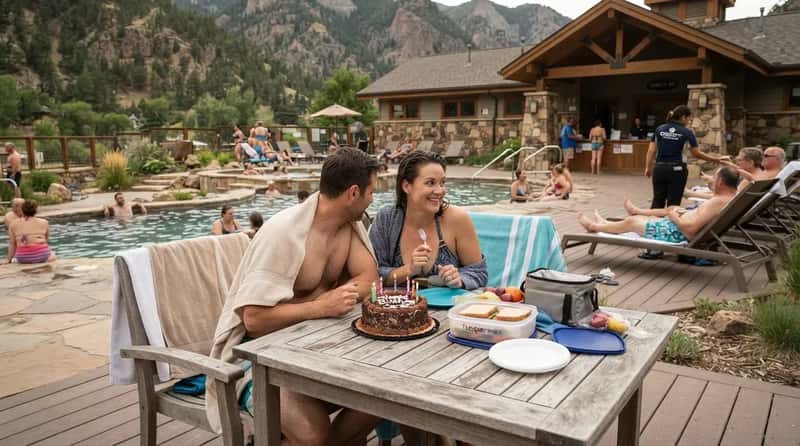
Some guests are clearly determined to eat on the deck.
Durango Hot Springs bans outside food, picnics, birthday cakes, and food deliveries. Glenwood allows no outside food or drink other than water at the pool.
The rules are blunt because staff clearly saw it. Birthday cakes are on an official banned list.
Resorts say they offer their own food. Glenwood points guests to its grill, snack bar, and a summer food truck.
What happens next is even harder for staff to manage, because it’s all about volume…
#15 – The Group Chat Voice at Full Volume
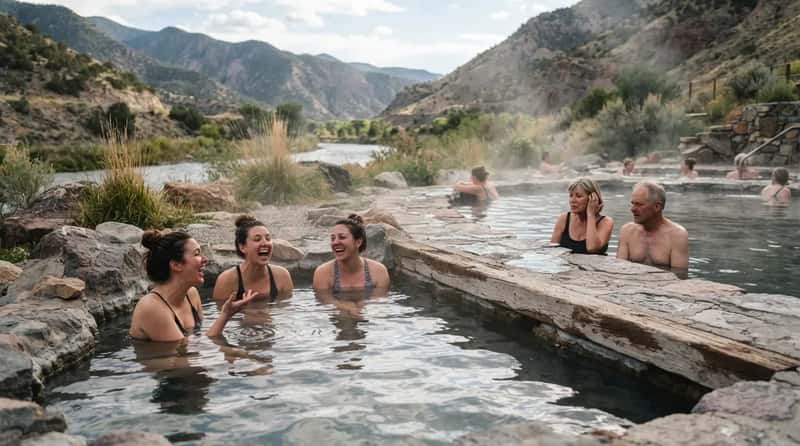
A hot spring is supposed to feel like a spa, but some guests never got the memo.
Durango bans excessive noise and boisterous play. Harbin keeps its pool areas quiet from dusk to 10 am.
Iron Mountain’s 16 individual soaking pools sit in a designated Quiet Zone, and signs mark the boundary. Quiet zones are an official part of the layout at some resorts.
Staff often step in gently first, then more firmly. Other guests usually hear it before staff do.
But volume isn’t the loudest problem at some resorts. The real troublemaker fits in your pocket…
#14 – The Phone That Never Leaves the Pool Deck
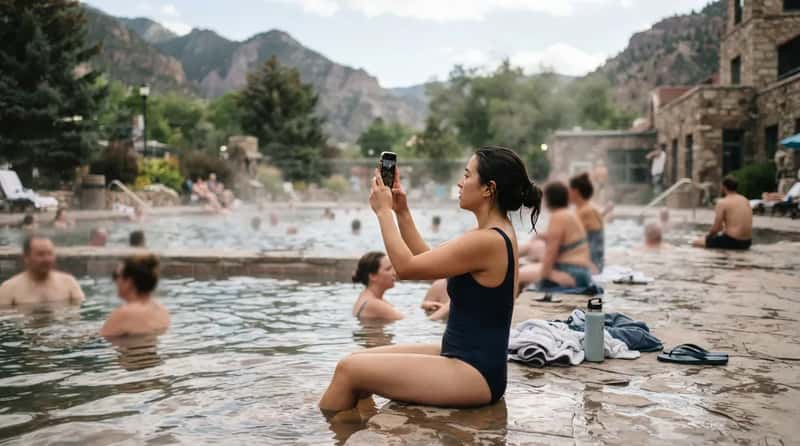
Here’s an unpopular opinion: the poolside selfie has become a bigger etiquette problem than the noise.
Glenwood bans phones in its locker rooms. Many clothing-optional resorts ban phones, electronics, and cameras that could capture unwanted photos of naked guests.
Harbin tells guests to keep glass, breakables, and electronics away from the pool area. Some resorts treat a phone as a privacy risk, not just a nuisance.
Staff watch for raised screens. A quick group photo can catch strangers in the frame.
The next gadget is even more of a privacy intrusion, and it flies…
#13 – The Drone Overhead Nobody Invited
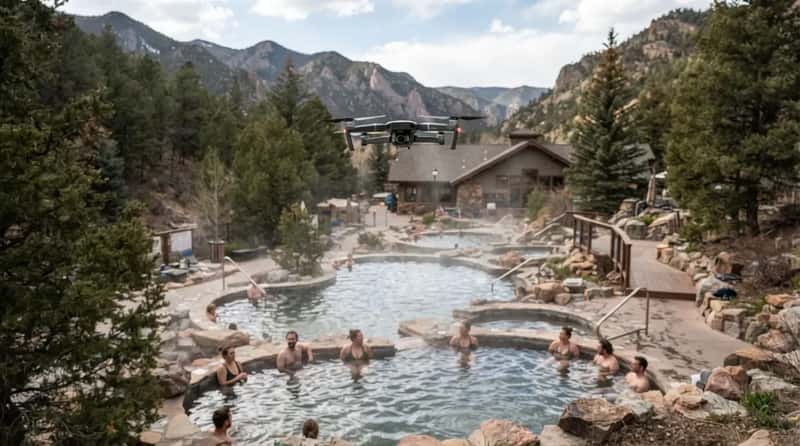
You wouldn’t expect to need a drone rule at a soaking pool, until you think about it.
Durango Hot Springs is officially a no-drone zone, to respect guests’ privacy while they soak.
Open-air pools are the one place where guests can be seen from above. A resort had to write a rule for flying cameras.
Guests also have the practical concern of whether someone else’s footage ends up online.
And speaking of privacy, the next item is the one everyone has seen and nobody wants to talk about…
#12 – The Stare Nobody Thinks Anyone Notices
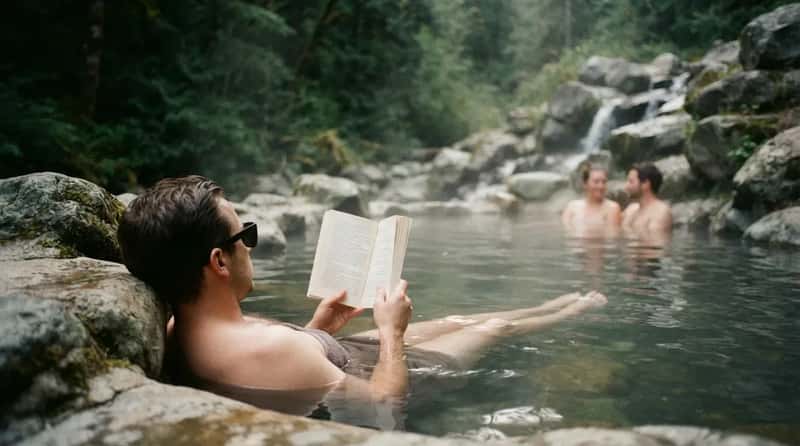
At clothing-optional resorts, staff notice where guests look.
At a clothing-optional resort or an onsen, you’ll likely see nudity, and it won’t stay confined to the water. Visitors in similar settings admit that keeping their gaze away can be hard.
Frequent guests have a trick. They bring a book to look at, and some wear sunglasses so a wandering glance isn’t obvious.
The advice that regulars give newcomers is to wear sunglasses. It’s a small tip that makes everyone more comfortable.
The temptation is real, and so is the lesson: staff pick up on it fast.
But there’s a bigger misunderstanding about these resorts, and it changes how people behave…
#11 – Treating “Clothing-Optional” Like “Anything Goes”

This is the most misread phrase on a hot springs website.
Harbin says nudity is common at its pools, but it’s neither required nor expected of anyone. Clothing is always required in food service areas, the reception office, and anywhere within sight of the public road.
The resort also asks guests to keep sexual activity for the privacy of their lodging. Staff have to spell out that last one in writing.
Clothing-optional means you choose. It doesn’t mean everything is allowed.
At a Glance
- At Harbin’s pools, nudity is common but never required.
- Clothing is always required in food service areas and the reception office.
- Clothing is also required anywhere within sight of the public road.
- Sexual activity belongs in the privacy of your lodging.
Still, one health rule is even more serious than etiquette, and some guests ignore it entirely…
#10 – Soaking While Sick or With an Open Wound
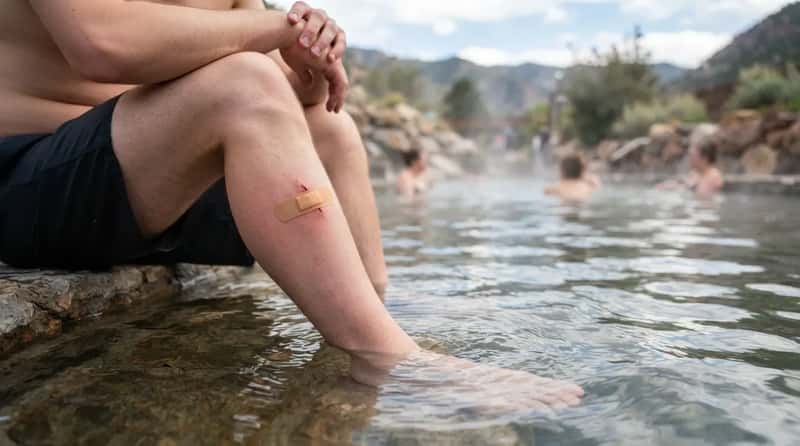
Staff can’t always spot it, but the rules are very clear.
Glenwood asks guests with an infectious or communicable disease, or an open wound, to stay out of the water. Harbin adds infectious skin rashes to the list.
Durango says anyone with an infectious disease or open wound is prohibited from the pools. Three different resorts wrote nearly the same rule.
Warm water is shared water. One guest’s problem can easily become everybody’s.
Now for a mistake that doesn’t hurt anyone else, but staff have seen it end badly for the guest…
#9 – The “I’ll Soak All Afternoon” Plan
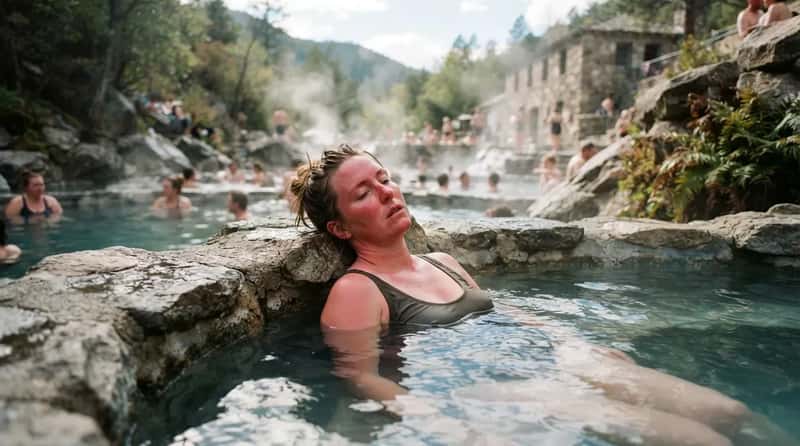
Here’s the controversial truth: the longest soak is usually the worst one.
Durango recommends a 15-minute soak. It also suggests getting out of a hot pool to cool down roughly every 15 minutes.
Prolonged soaking can lead to hyperthermia, and heatstroke can occur when body temperature goes above 104°F. Heatstroke can damage the brain and other organs.
Staff watch for guests who look flushed, quiet, or unsteady. It’s a sign to step in.
The next habit makes that risk worse, and it’s the simplest one to fix…
#8 – Forgetting That Water Is Not Just for Soaking
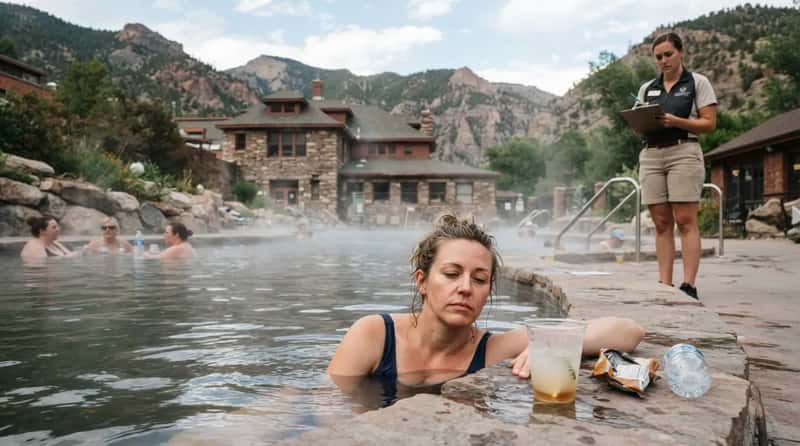
Guests drink everything except what their body needs.
Glenwood asks guests to take regular breaks and drink plenty of water, with a joke that staff would rather not peel anyone off the pavement. Durango also reminds guests to stay hydrated.
Hot water makes you sweat, but you hardly notice it while you’re submerged. You can get dehydrated while sitting in a pool.
Staff keep an eye on guests who linger for hours and never leave for a drink.
And the drink that guests do reach for is where the real trouble begins…
#7 – The Poolside Cocktail That Staff Count
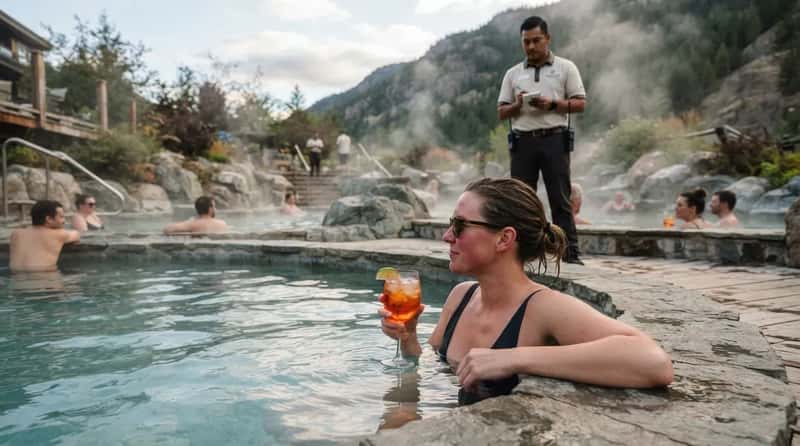
Alcohol and hot water are a combination staff watch closely.
Durango warns that long exposure and alcohol may cause dizziness, nausea, or fainting. It bans outside alcohol and all drugs.
Some resorts allow drinks with limits. Iron Mountain permits responsible drinking while soaking, with a maximum of two alcoholic beverages during a 2.5-hour soak.
Some resorts literally cap the number of drinks per soak.
Alcohol also masks the signs that you’re overheating, so staff watch for flushed guests holding a glass.
Quick Compare
- Durango: outside alcohol and all drugs are banned, with a warning about dizziness, nausea, and fainting.
- Iron Mountain: responsible drinking is allowed, capped at two drinks per 2.5-hour soak.
Timing matters just as much as what’s in the cup, and the next mistake is about dinner…
#6 – Jumping In Right After a Big Meal
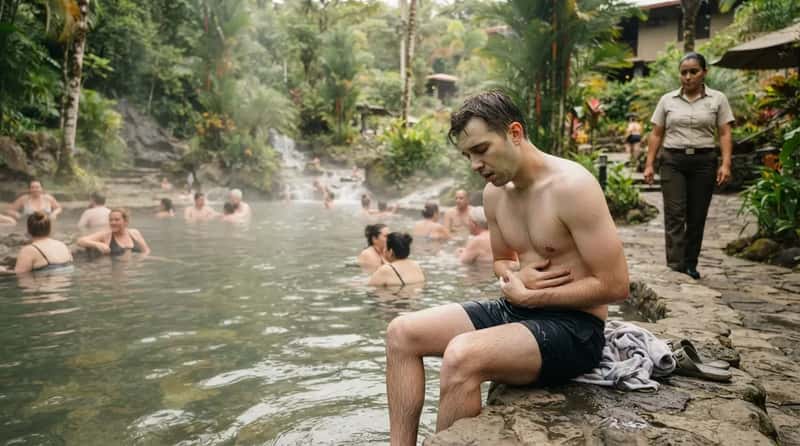
Some guests treat the buffet and the pool as one continuous event.
La Fortuna’s hot springs advise waiting at least one hour after eating before entering, to avoid discomfort or digestive issues.
Hot water pulls blood toward your skin. Your stomach has to compete for attention.
An hour is the recommendation, and guests rarely wait it. Staff see the results, which are usually a green face and a quick exit.
That isn’t the only way guests put themselves at risk. Some choose to do it alone…
#5 – Soaking Alone and Assuming It’s Fine
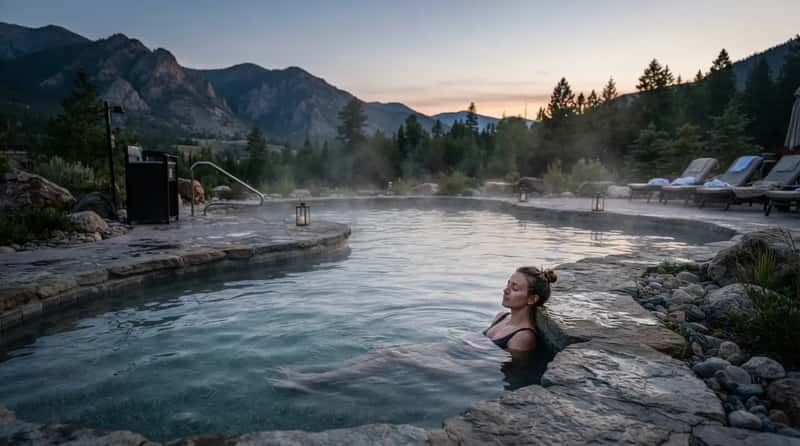
A quiet pool at sunrise sounds perfect, and staff would like you to bring a friend anyway.
Durango says soaking alone is not recommended. It also notes you swim and soak at your own risk when no lifeguard is on duty.
Heat and drowsiness make a bad pair. If you feel faint in a pool, nobody is there to notice.
Many hot springs have no lifeguard at all, which puts the responsibility on guests.
The next group of guests has a health reason to be careful, and many don’t ask the right person…
#4 – Ignoring the Doctor Warning Everyone Posts
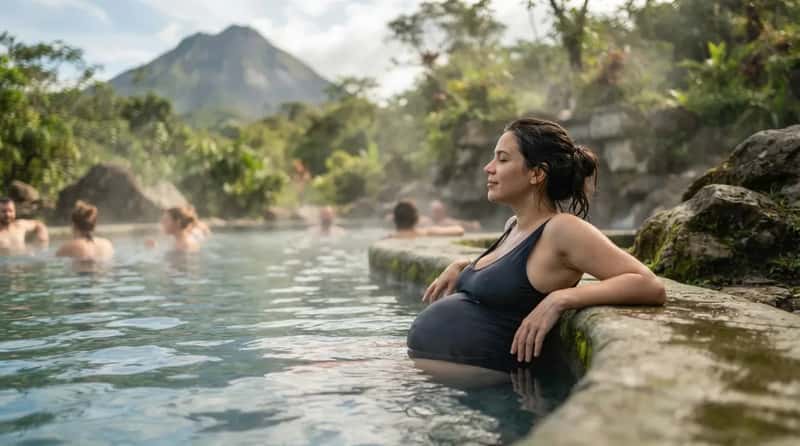
Resorts include a medical caution on nearly every page, and many guests scroll right past it.
La Fortuna’s hot springs say pregnant women and people with heart conditions or hypertension should talk to a doctor first. Durango doesn’t recommend that pregnant women soak in the hot pools.
WebMD reports that research links frequent or long hot tub use during pregnancy to a higher chance of neural tube birth defects. That’s why resorts repeat the warning so often.
Staff can’t check anyone’s medical file. They can only post the rules and hope guests read them.
The next risk is about what happens when you leave the water, and it surprises even regular guests…
#3 – Standing Up Too Fast and Skipping the Rest
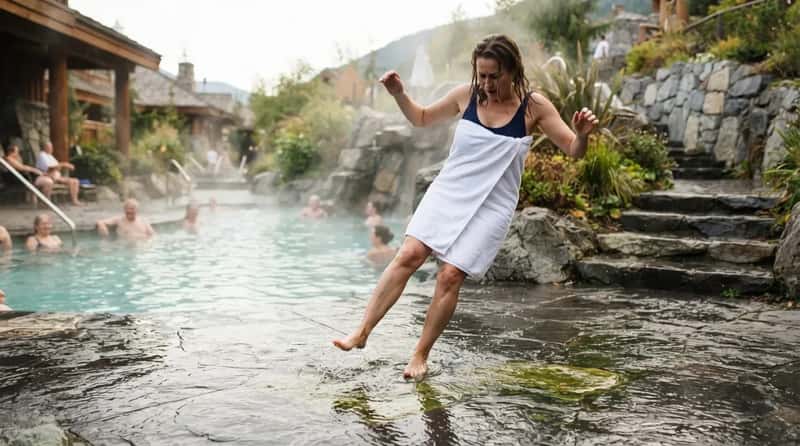
The most dangerous moment of a soak is the one right after it.
Durango notes that your body is tired after soaking and recommends a 30-minute rest. WebMD explains that in hot water your blood vessels widen to cool you, which makes your blood pressure drop.
Stand up quickly and your head can swim. The wet, slippery deck is where staff see the most dramatic exits.
Guests who rush from the pool to the stairs or the locker room are the ones who stumble.
But the next one isn’t about adults at all, and it keeps staff on edge all day…
#2 – Kids Wandering Into the Adults-Only Pools
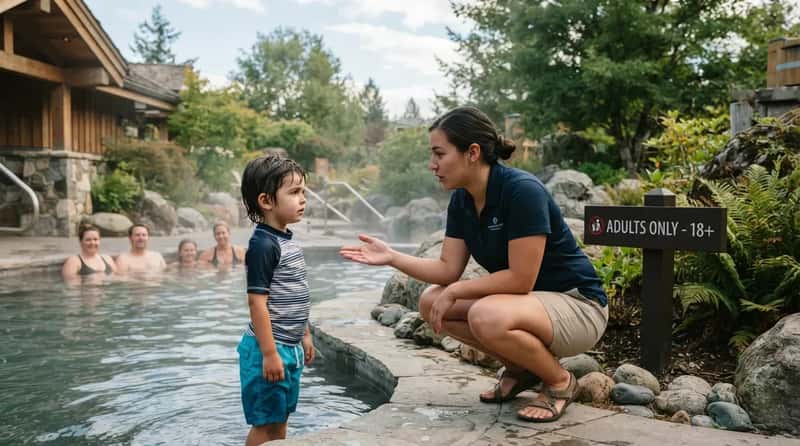
Family trips and quiet adult pools do not always mix, and staff are the referees.
Glenwood requires adult supervision for children up to age 12 at all times. Durango reserves its adult and private soaking pools for guests 18 and over.
WorldSprings tells families to know the children’s area rules and keep kids out of 18+ areas. Some resorts have separate zones, and some guests miss the signs.
Children also handle heat differently. Many resorts set lower limits for them.
Worth Knowing
- Glenwood requires adult supervision for kids up to age 12, at all times.
- Durango’s adult and private soaking pools are for guests 18 and over.
- Check the children’s area rules before the kids head for the water.
The last habit is the one staff say matters most, and it has nothing to do with the rules on the wall…
#1 – Never Asking How the Water Is Actually Kept Clean
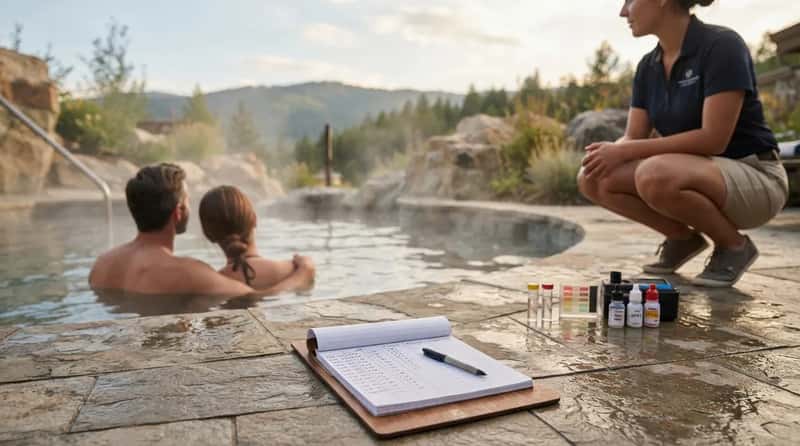
The quietest habit is the one that matters most.
WebMD advises guests to ask how often a hot tub is cleaned, and whether pH and chlorine levels are maintained. Almost nobody does.
Legionella bacteria thrive in water at 77°F to 113°F and are often inhaled in aerosolized warm water. Hot tubs have been tied to Legionnaires’ outbreaks, including among travelers.
Roughly one in 10 people who get Legionnaires’ disease die from complications. A well-run resort monitors this, but staff know that guests rarely check.
That one question is the habit staff wish more guests had.
Most of what staff notice isn’t dramatic. It’s the skipped shower, the glass bottle, the phone held up, and the guest who stays in the water too long. The biggest surprise is how many rules exist because someone actually did it, from banned birthday cakes to no-drone policies.
The most serious rules are about heat, health, and water quality, and they protect the guest as much as the pool. So next time you soak, shower first, take a break, and ask the front desk one simple question about the water. Staff will quietly notice that too.