You’d assume a ride stops because something mechanical gave out. A surprising number of the time, the trigger is a person in the seat. Disneyland says 13% of its ride shutdowns in fiscal year 2025 were caused by guest behavior, up from a 10% average.
From the queue, none of these habits look like a big deal. From the operator’s booth, they’re the moments that stall a line, stop a train, or end with a long walk down a dark track. Some are as small as a hat or a pair of sandals, and the biggest offender at the top is something almost everybody has in their pocket.
#22 – The Height-Stick Negotiation
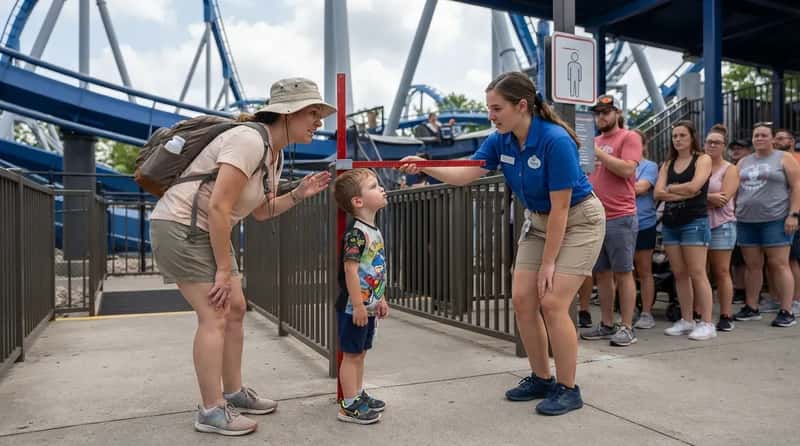
Some guests treat the height marker like an opening offer. They stand on tiptoe, point at the sign, or say “he was this tall last time.” The operator still has to hold the line, often with a disappointed kid watching.
A ride’s height minimum is tied to how its restraints are designed to fit a body, so it isn’t something an operator can bend. The cruel part is that the person in the uniform ends up looking like the villain. A family that waited an hour wants an exception that nobody on the platform is allowed to give, and nobody wins that conversation.
#21 – The Giant Backpack Hauled Right to the Seat
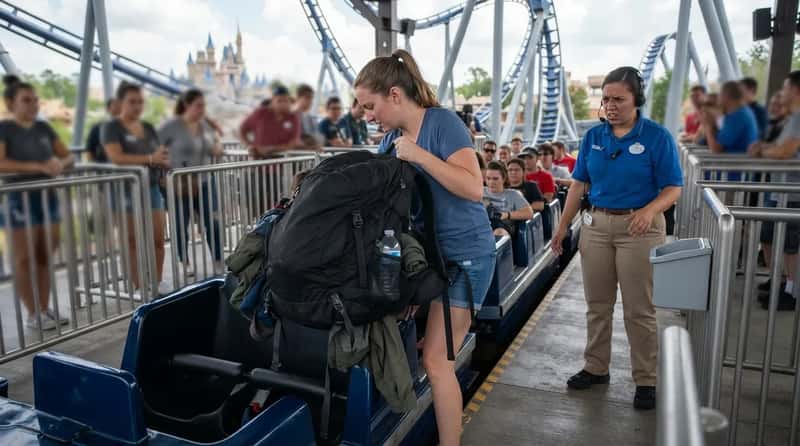
Many riders arrive at the load station carrying a full day’s gear. Sunscreen, snacks, a portable charger, and a rain jacket all come along for the ride. At that point nobody has time to figure out where it all goes.
The bag isn’t just a clutter problem. If a strap, a water bottle, or a stray souvenir falls out while the ride is moving, the ride can stop. That’s why Disneyland’s recent crackdown includes stricter enforcement of ride-side storage shelves and lockers for large backpacks. Operators see the bag and already picture the retrieval.
#20 – Deciding You’re Terrified After Everyone Is Seated
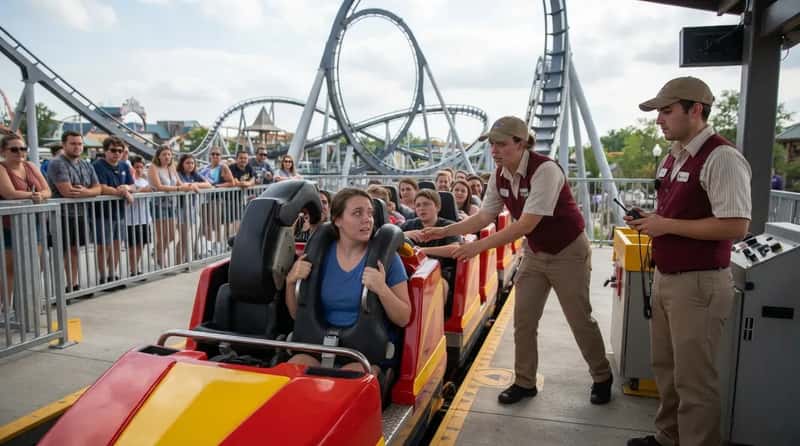
Nothing stops a dispatch like a rider who changes their mind at the last second. The restraints are closed, the train is full, and one voice says, “Wait, I want to get out.” The crew has to reopen the vehicle, escort the person off, and often re-check the seat before anyone moves.
A single last-second bailout can hold up a whole row of riders and a line that stretches outside. The operators aren’t mad at nervous people. They just wish the decision had come before the platform, not after the click.
#19 – Talking Straight Through the Safety Spiel
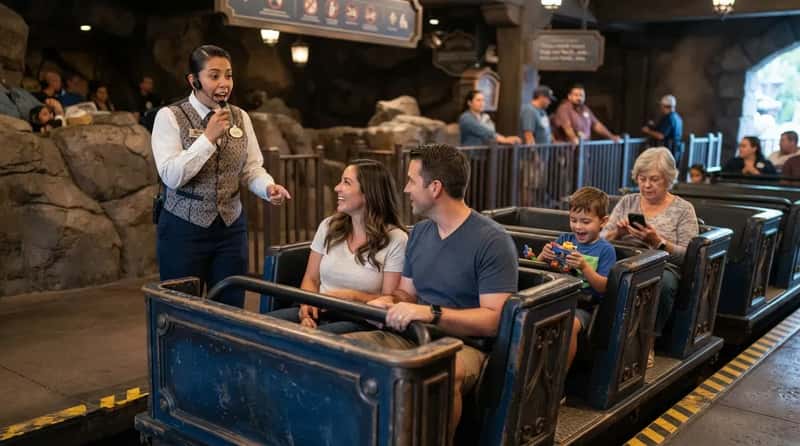
Every ride has a safety message, and the most common reaction is to tune it out. Guests chat, scroll, or tell the kids a story right over the announcement. Disneyland’s engineering director has said that incidents counted as guest behavior include guests not following safety procedures or instructions relayed by cast members.
Operators know most of this isn’t defiance. People simply stop hearing the instructions around the tenth ride of the day. The spiel is short because the crew needs it to work in about thirty seconds, and a talking row can make it useless.
Fast Facts
- Disneyland’s engineering director has listed ignoring safety procedures or cast member instructions as a guest-behavior incident.
- Standing up in a moving vehicle and reaching a hand out too far are on the same list.
- Loose items such as phones, mouse ears, water bottles, and backpacks falling from a moving vehicle count too.
- Together, these made up 13% of Disneyland’s ride shutdowns in fiscal 2025.
#18 – Freezing at the Exit Like the Ride Is Still Going
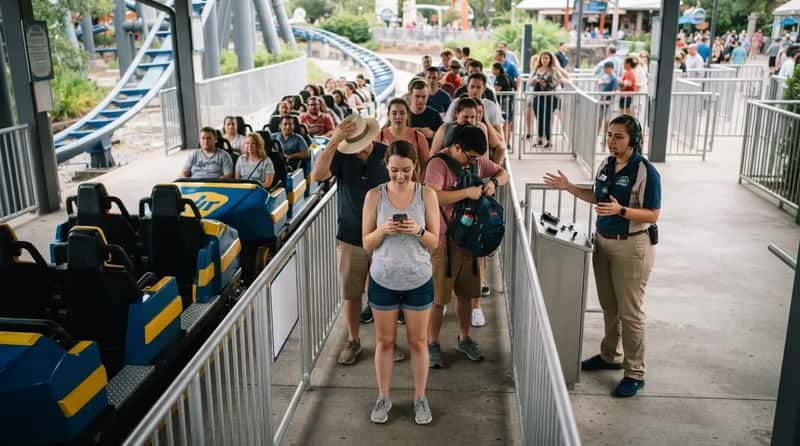
The ride ends and some guests just stop. They hunt for a sunhat, wait for a friend, or scroll through photos while the next train waits to dock. The crew can’t move the vehicle forward until the riders are clear.
That’s why you hear the constant “keep moving, please.” A few seconds of lingering per vehicle adds up to a visibly slower line over a long afternoon. Operators dread the guest who treats the unload zone like a photo stop.
#17 – Losing Glasses on a Ride, Then Expecting a Search
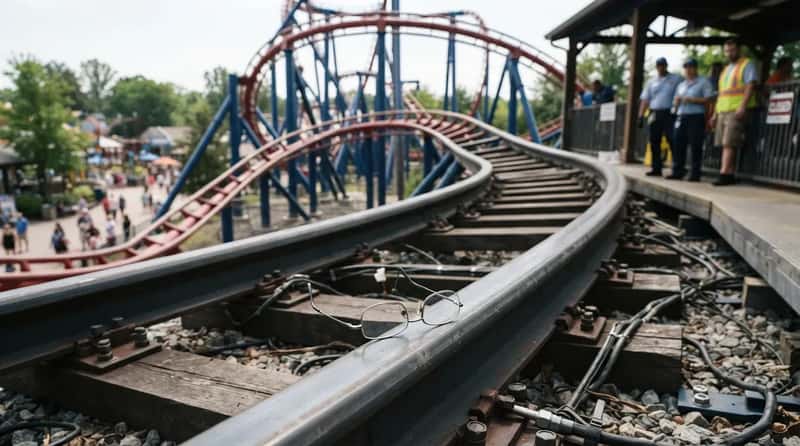
Glasses fly off all the time on spinning or bumpy rides. In an old Reddit thread summarized by Grunge, a former operator said they couldn’t count the times they had to lock out and tag out a ride because a kid lost glasses. Glasses count as an “essential item,” so the crew had to go look.
A pair of lost glasses can take a ride offline and trigger a formal lockout procedure. That’s an anecdote from one worker, not a park-wide statistic. It does show why operators hold their breath when they see loose eyewear.
#16 – Waving a Selfie Stick Anywhere Near Moving Machinery
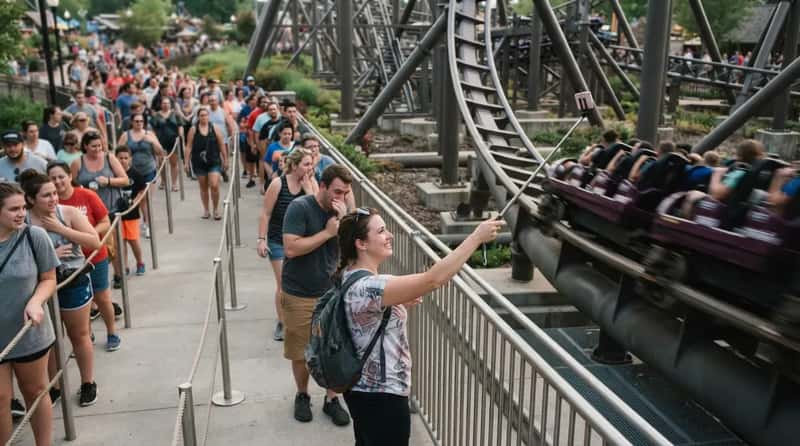
The stick looks harmless in a pocket. In a line, it swings into other guests and ride equipment, and on a ride it’s one more thing that can drop. Disney parks banned selfie sticks back in 2015, and many other parks followed with their own limits.
Operators don’t dread the photo. They dread the pole, because it turns every queue into an obstacle course. A long extended arm is a hazard for the person standing behind it, even if the person holding it never notices.
#15 – Riding a Spinner Right After a Giant Meal
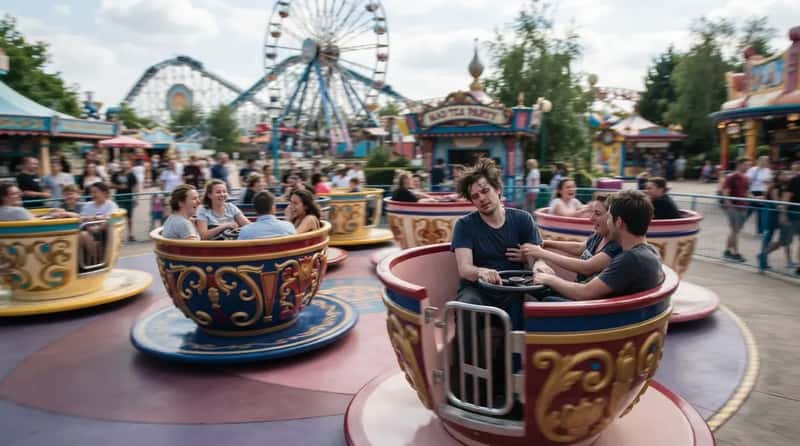
Nobody wants to talk about this one, but employees do. Workers on Reddit, in an article summarized by Grunge, said a temporarily closed ride is more often down for bodily fluids or guest misbehavior than for a mechanical fault. A former Six Flags worker said vomit was the usual cause where he worked.
That’s one set of employee accounts, not an industry audit. Still, the point is clear: a sick rider means a closed ride and a cleanup crew. On many days the most common reason a ride stops may be a stomach, not a stuck wheel.
#14 – Hopping the Rail to Grab Something You Dropped
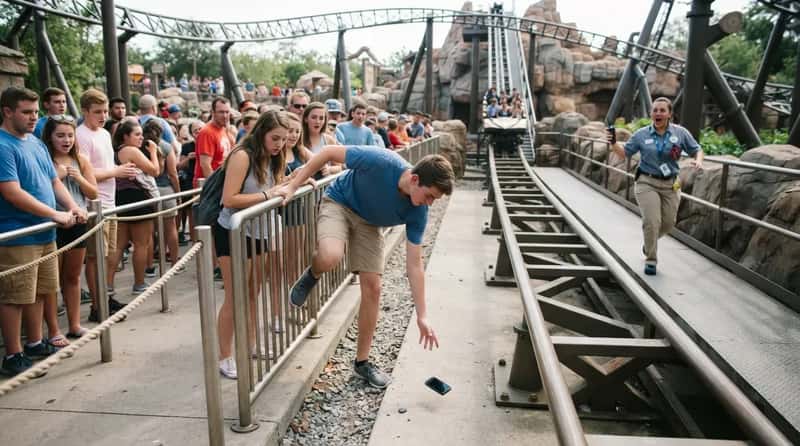
A phone slips from a pocket in the queue and the instinct is to grab it. Guests duck under ropes or climb rails and step into restricted areas. That’s the moment operators have to stop everything.
The most dangerous place in a ride queue can be the few feet you step into to rescue a phone. Operators would much rather have you wave and ask. A retrieval by trained staff takes minutes. An unauthorized climb can lead to a stop, an incident report, or worse.
#13 – Firing the Camera Flash in the Dark
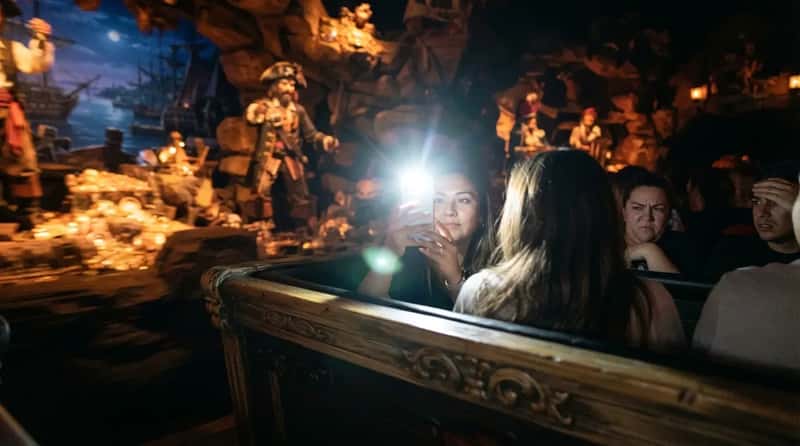
Dark rides depend on carefully lit scenes, and a bright flash is the one thing they can’t hide. Many attractions post no-flash rules for exactly this reason. Guests ignore them because it’s only one picture.
Crews know the effect: a quick white pop that ruins the scene for everyone behind and can startle other riders. The sad part is that the shot almost never turns out anyway. It’s usually a blurry square with a bright reflection in the middle.
#12 – Flip-Flops on a Ride That Shakes
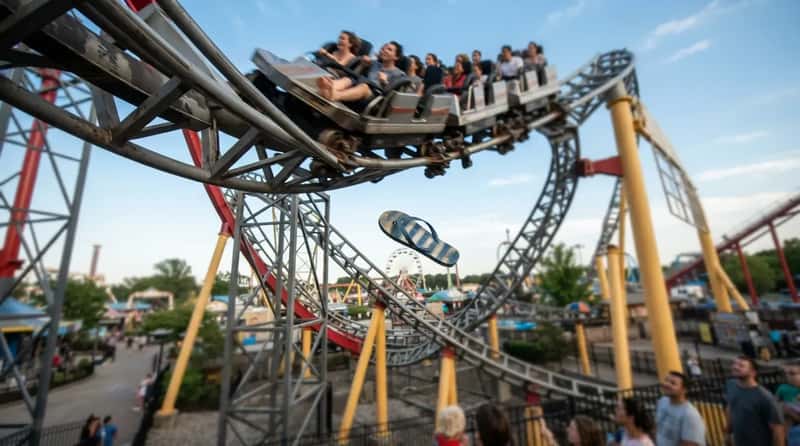
Footwear is one of the least talked-about loose items. Sandals slide off on rides with drops, jerks, or sudden stops. Many parks require shoes that stay on, and operators know why.
A single shoe lost on a track can be the reason a whole attraction stops. Crews often spot sandals in line and wince. They’ve seen what happens when a shoe finds a gap.
#11 – Fumbling the Phone at the Boarding Gate
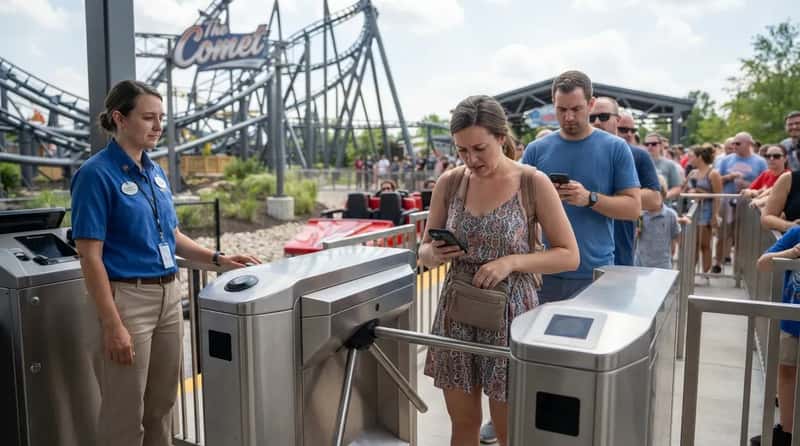
Digital passes created a new platform problem. Guests have to pull out a phone to scan, then stow it before the ride starts. A TheStreet report noted that guests with Lightning Lane and Premier passes must produce a phone before boarding, then quickly put it away.
That extra step is easy to botch. Some riders don’t have pockets, and bags need to be closed too. The very device that gets you onto the ride is the one operators now want out of sight. Those few seconds of fumbling are where the line backs up.
Quick Compare
- At the gate: The phone comes out for a quick pass scan, and that’s the only moment it’s expected.
- Before the ride moves: It needs to be stowed in a closed bag or secure spot, not held in a lap.
- If it’s still visible: Cast members at Disneyland now won’t dispatch the ride.
#10 – Blaming the Operator When the Ride Goes Down
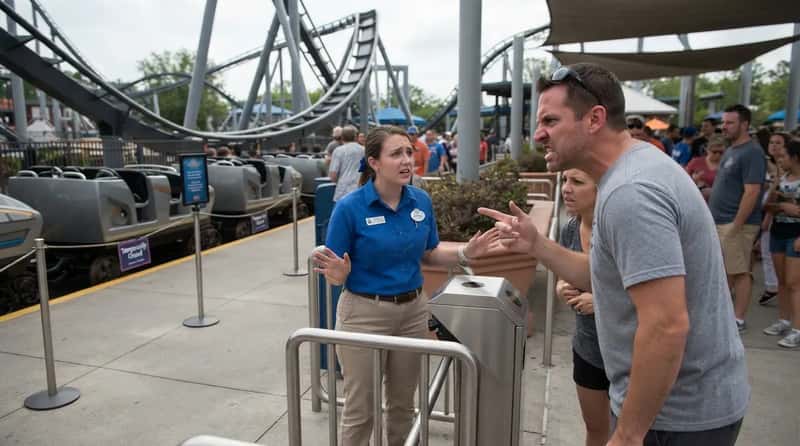
When a ride stops, operators take the first wave of frustration. Guests demand to know when it will reopen, and the answer is usually “when it’s safe.” The person at the gate often knows no more than you do.
The crew isn’t hiding anything. They’re waiting on maintenance, on a retrieval, or on a safety check. The operator getting the angry glare is usually the one least able to change the outcome.
#9 – Demanding a Full Stop for a Lost ID
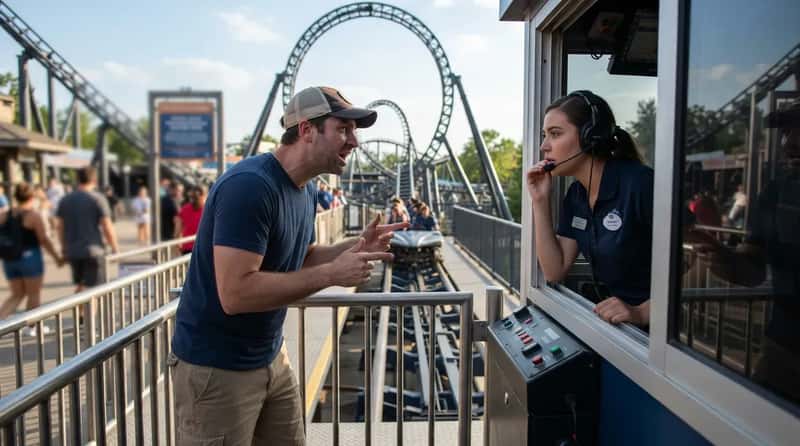
Few things are tougher than a guest who insists the ride must stop right now. In the Grunge roundup, a former operator recalled a serviceman demanding a ride be stopped to recover a lost military ID card. From the guest’s side, an ID is precious.
From the operator’s side, it’s a safety question. Stopping a ride has to follow procedure, and one guest’s priority doesn’t outrank everyone else in the seats. Even a vital item can’t make a running ride stop faster than protocol allows.
#8 – Wearing Mouse Ears and Hats Like They’re Bolted On
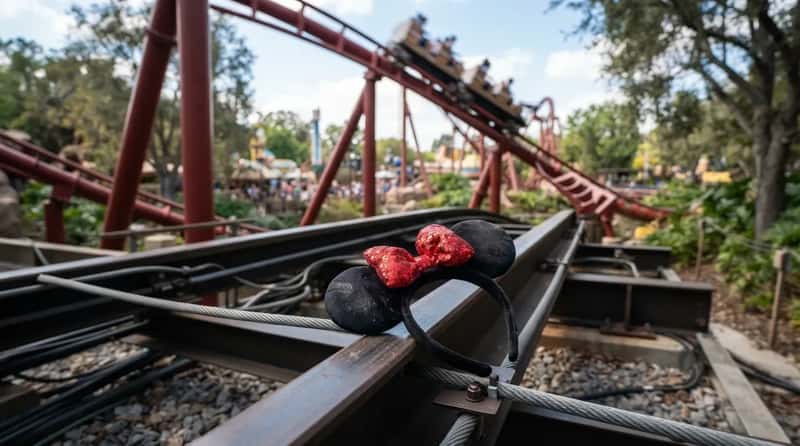
Headwear flies off in a gust. Disneyland’s engineering director listed phones, mouse ears, water bottles, and backpacks falling from a ride vehicle in motion as the kinds of loose articles that can cause shutdowns. Yes, the iconic ears are on that list.
A hat blows off and lands somewhere unreachable, and the crew has to treat it like any other fallen object. The most beloved souvenir of the day can be the very thing that stops the ride.
#7 – Trusting a Pocket on a Bumpy Coaster
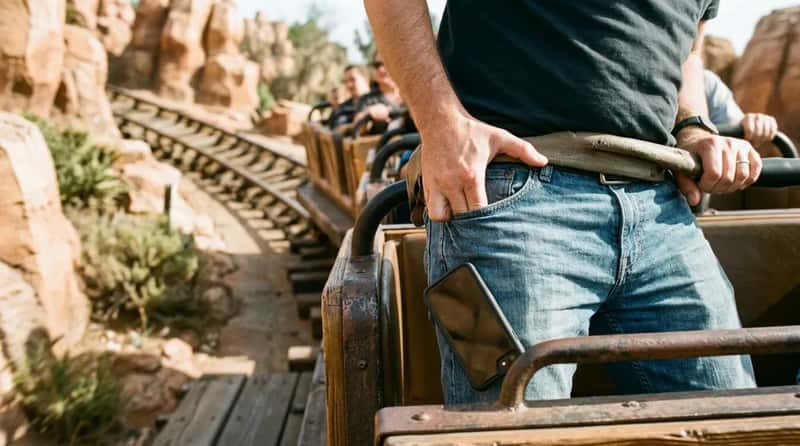
A pocket feels secure when you’re standing still. On a rough ride, it’s a different story. One Disney fan blog warned that Big Thunder Mountain Railroad is bumpy and jerky enough that phones can slip out, and it advised using a zipped bag or the vehicle pouch.
That’s a blogger’s account, but the pattern is familiar to crews. A phone that survives the queue can still fall out the moment the first bump hits. Operators know a pocket is a hope, not a plan.
#6 – Assuming “Gentle Ride” Means “Phones Out”
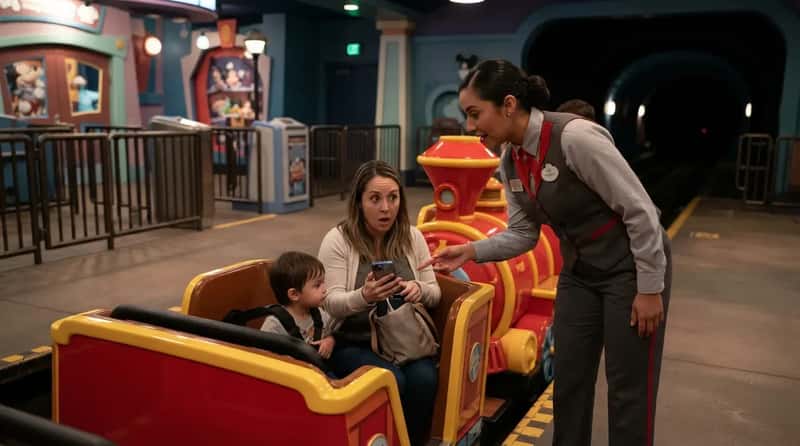
Family-friendly attractions create a false sense of security. Disneyland moved to strictly enforce a no-phones-out rule on Mickey & Minnie’s Runaway Railway. The indoor ride is slow-moving and family-friendly, but its movements can sometimes be jerky or unexpected.
Now cast members won’t start the ride if a guest has a phone in their lap or not stowed securely. Many guests argue that a slow ride is the perfect place to film. Operators counter that slow rides still have dropped phones.
#5 – Bringing the Giant Insulated Tumbler Aboard
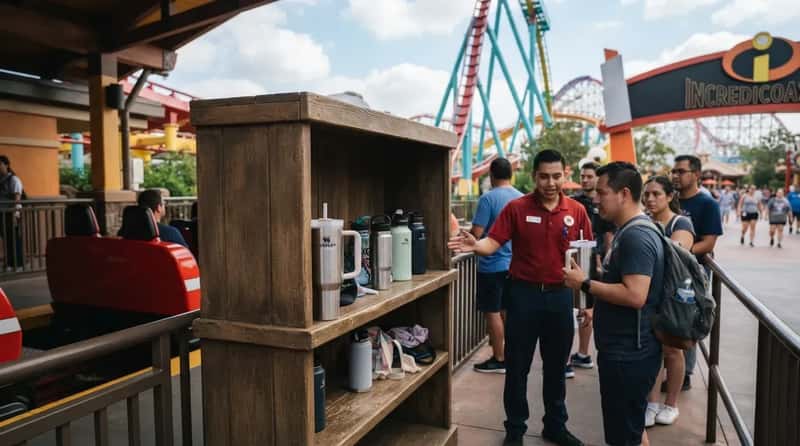
Oversized drinkware has become a new flashpoint. Reports say Incredicoaster is enforcing a new restriction on loose water bottles, particularly large insulated bottles such as Stanley cups. Guests who arrive with one are directed to a designated shelf near the boarding station or told to secure it in a closed bag.
Online, some have called it the “Stanley ban,” and plenty of guests think it’s overkill. Operators see a heavy metal cup that can fall from a moving vehicle. One report says falling items can trip the ride’s sensors and trigger emergency stops.
Why It Stands Out
- It’s a rule aimed at a drink container, not a gadget, which is why it surprised so many guests.
- The workaround is simple: use the shelf near the boarding station or zip the cup into a closed bag.
- The concern is weight. A heavy metal cup falling from a moving vehicle is a bigger problem than a lightweight item.
- Social media gave it a nickname, which tells you how much the rule struck a nerve.
#4 – Hiding the Phone, Then Whipping It Out After Launch
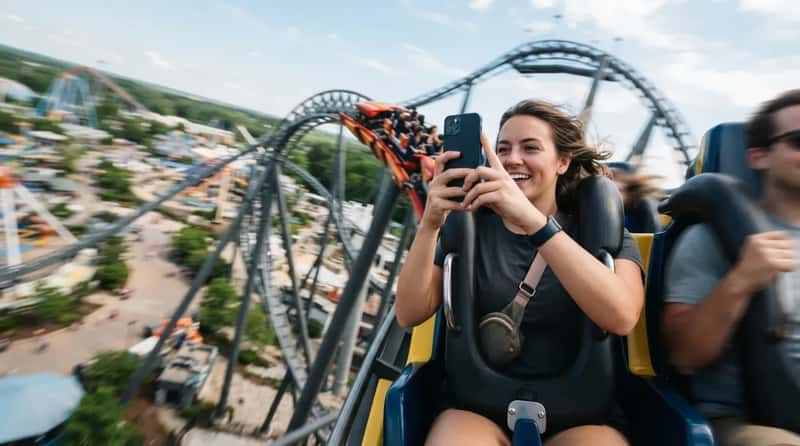
This is the sneaky one. A TheStreet report described a spike in guests hiding phones in a pocket, then pulling them out to film once the ride takes off. They pass the visual check, and then they record anyway.
That’s why Disney’s internal memo reportedly asks workers to remind guests in line of the phone ban and do a last visual check before setting the ride in motion. The hidden-phone trick doesn’t solve the problem. As the report put it, a phone hidden in a pocket doesn’t address guests pulling it out halfway through the ride.
#3 – Standing Up or Reaching Out While the Ride Moves
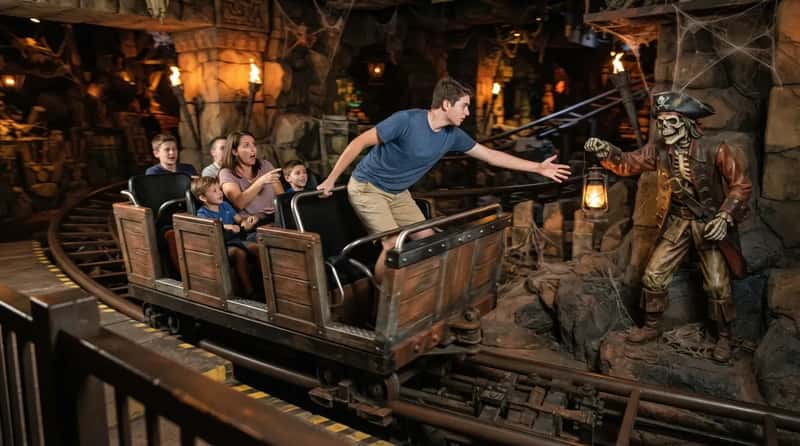
Few mistakes are riskier than leaving your seat position. Disneyland’s engineering director described guests standing up with a ride in motion or sticking a hand out too far as examples of behavior-related incidents. These are the moments that make operators go cold.
Disney’s own examples show a raised hand or a lean can be enough to trigger an incident. Operators can’t talk to you once the ride starts. They can only watch, hope, and stop the ride if they have to.
#2 – Dropping Something That Forces a Full Evacuation
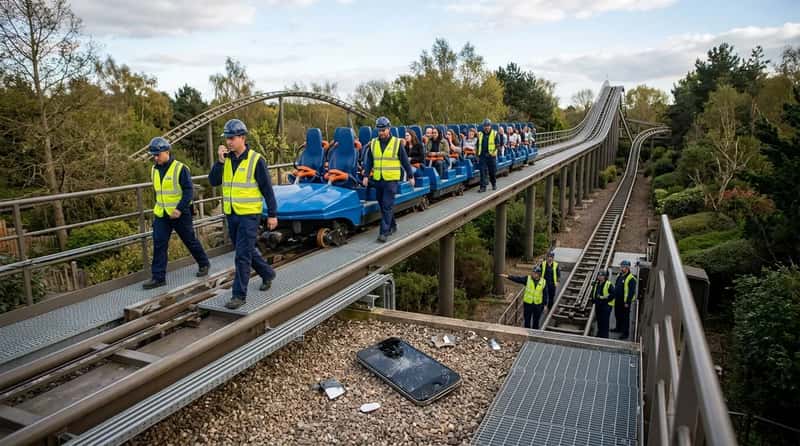
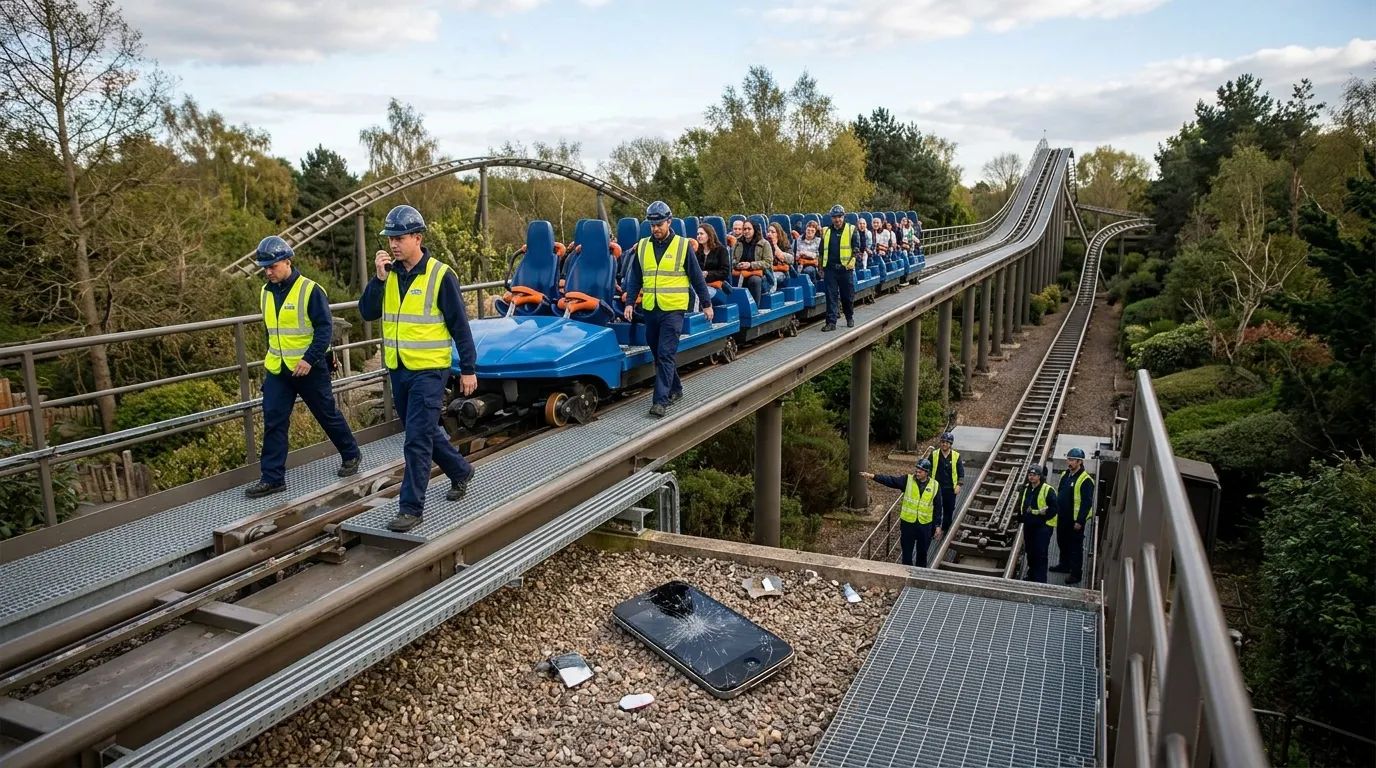
This is the nightmare scenario. Guest-behavior incidents can lead to a ride shutting down momentarily or for an extended period, requiring an evacuation of all riders. One dropped item, and everyone on the track walks out.
That includes the people who did everything right. A single dropped phone can pull a whole ride’s worth of riders off the attraction. Dropped items often require staff to stop operations while they clear the track or ride area, and those pauses can ripple through multiple ride cycles.
At a Glance
- The trigger: One item falls from a moving vehicle.
- The response: Staff stop operations and clear the track or ride area.
- The worst case: The ride shuts down for an extended period and every rider is evacuated.
- The ripple: The delay can carry through multiple ride cycles and a long line.
#1 – Filming a POV Video on a High-Motion Ride
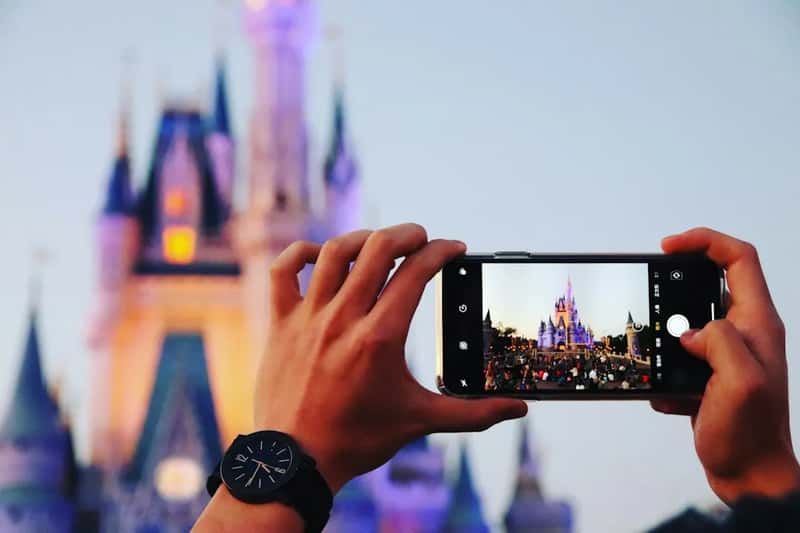
This is the behavior that has changed park rules. Disney long relied on a “Stow It, Don’t Show It” approach to phones on fast rides. Disneyland has now taken a tougher stance on phones and other technology, and cast members won’t dispatch a ride if a phone is visible.
Yes, the POV video is tempting. But the cost shows up in the numbers: 13% of Disneyland’s ride shutdowns in fiscal 2025 were caused by guest behavior, up from a 10% average. Dropped items are one of the main examples park officials point to, and it’s the reason a visual check now happens before the ride moves.
The twist is that many ride stoppages aren’t about machines at all. They’re about phones, cups, hats, glasses, and last-second decisions. Disneyland’s 13% figure shows what small habits can cost, and its new “no phones out” checks show how seriously parks now take them.
Plenty of guests think these rules are overkill, and some operators probably agree it’s a hard balance. Still, the biggest offenders on this list are almost always the easiest to fix. Which of these have you watched from the line, and did we leave out one that drives operators crazy?