Nobody clocks baggage claim as the interesting part of a flight. It’s the tired, shuffling five minutes after landing, the anticlimax before the parking garage or the rideshare pickup line. But ask the people who actually work that carousel every single day, and they’ll tell you it’s the most unfiltered stage in the entire airport.
The delays and the weather rarely stick with them. What they remember are the passengers – the rituals, the myths, the near-misses, and the one moment nobody in a terminal ever really forgets. Here’s what crews actually see down there, flight after flight, year after year.
#22 – Confidently Grabbing the Wrong Identical Black Suitcase
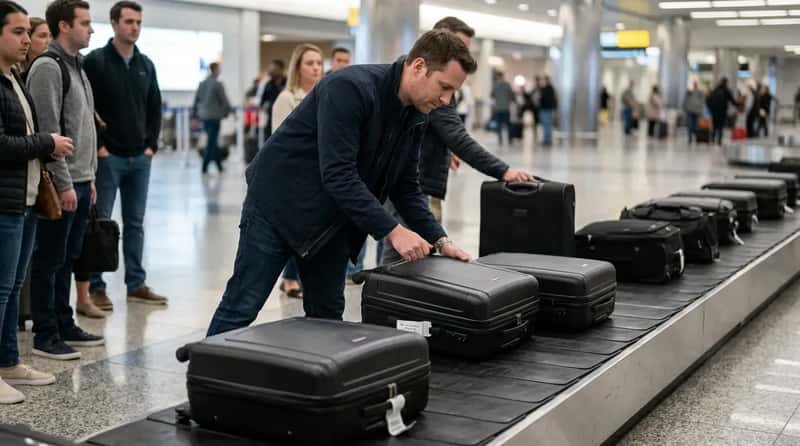
Nearly every carousel has at least five bags that look exactly the same. Plain black hard-shell suitcases are the single most popular style sold, so a dozen near-identical clones can hit the same belt within minutes of each other.
Crews watch the same scene repeat on every connecting flight: someone grabs a bag, hesitates, checks the tag, and sets it back down while a line forms behind them. A bright strap or ribbon would solve it in seconds, yet almost nobody bothers, until it’s their bag someone else walks off with.
#21 – Leaning Their Whole Body on the Moving Belt
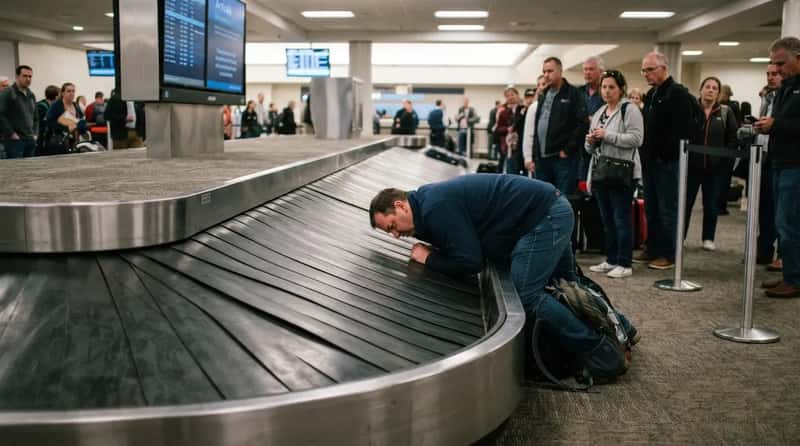
The stainless steel edge of a baggage carousel isn’t a bench, but people treat it like one every single day. Crews notice travelers draping arms, elbows, and sometimes their entire torso over the moving rubber, inches from where fifty-pound suitcases come crashing down the chute.
It looks harmless until a bag lands wrong. Ground staff have seen fingers pinched and jacket sleeves dragged simply because someone wanted a closer look at the arrivals screen, a small habit that turns into a genuine hazard the moment the belt gets busy.
#20 – Overpacking Until the Zipper Becomes the Real Villain
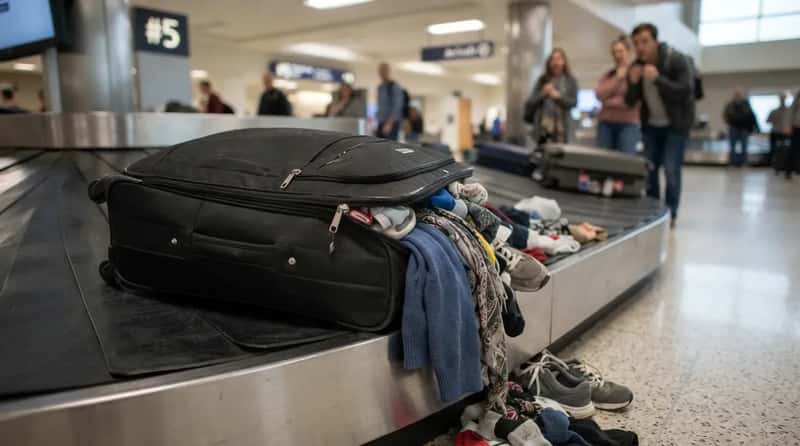
Cramming in “just one more pair” of shoes feels harmless at home, but it puts constant strain on the one component holding the whole bag together. Crews say overstuffed suitcases are easy to spot from across the room – swollen, straining, and one hard bump away from disaster.
Zippers are usually the first thing to fail, not the fabric or the frame. It’s a quiet countdown that starts at check-in and often ends with a very public mess spilling across the claim area for everyone to see.
Fast Facts
- Most U.S. carriers cap checked bags at 50 lbs (23 kg) before overweight fees apply
- Overweight fees on major domestic airlines commonly run well over $100 per bag
- Zippers, not the fabric or frame, are the most common failure point on stuffed suitcases
- Hard-shell cases tend to blow out suddenly under pressure, while soft-sided bags usually strain more gradually
#19 – Tying a Ribbon On, Convinced It Will Speed Things Up
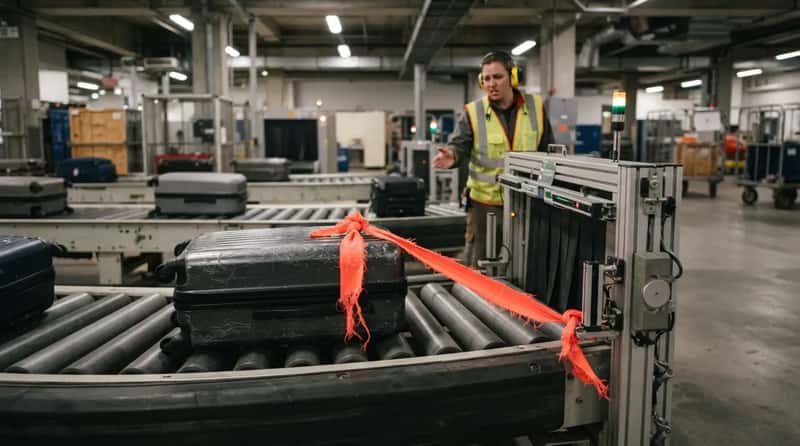
The bright ribbon trick feels like common sense: tie something colorful on, spot your bag faster. Crews say it frequently backfires in a way most travelers never see coming.
A loose ribbon can interfere with how a bag gets scanned in the baggage hall, occasionally flagging it for a manual check that slows everything down further. Instead of a shortcut, the well-meaning ribbon becomes the exact reason a bag gets pulled aside and delayed.
#18 – Slapping a “Fragile” Sticker On and Expecting Royal Treatment
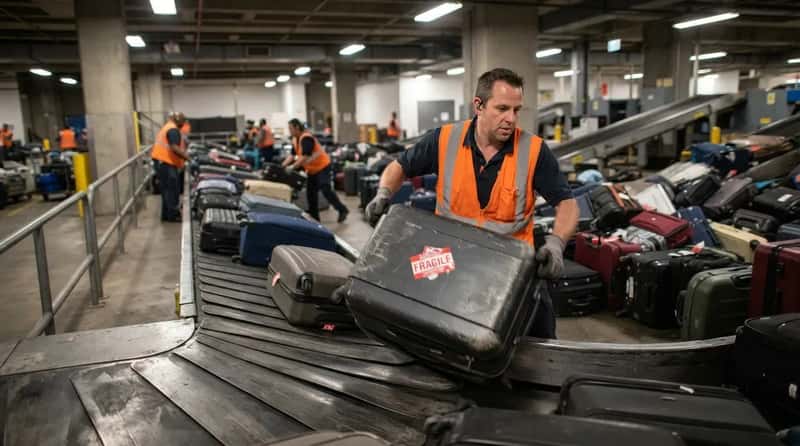
A fragile sticker feels like a small insurance policy, the kind of thing that should buy a suitcase gentler treatment down the line. Insiders say it barely moves the needle once a bag enters the real system.
Handlers moving hundreds of bags an hour simply don’t have time to hand-sort by sticker color. Fragile labels are essentially decorative at this point, and crews know it even when passengers clearly don’t.
#17 – Leaving Old Flight Tags Stuck on From Three Trips Ago
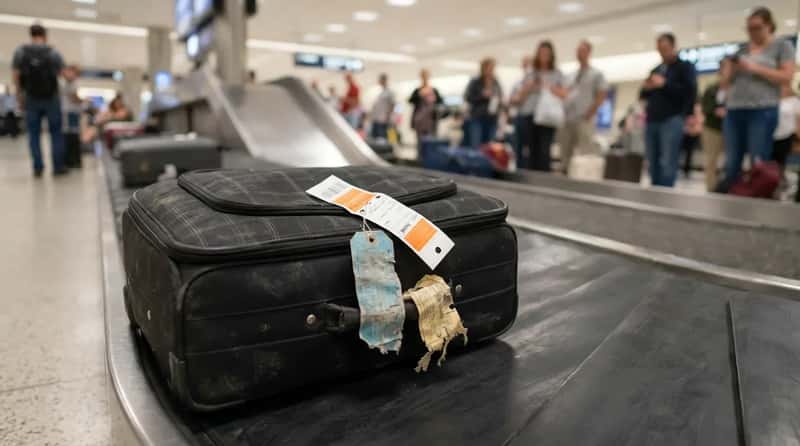
Nothing looks more harmless than a faded paper tag from a vacation two years back. Ground staff say it’s actually one of the sneakier ways a bag ends up in the wrong city entirely.
One baggage worker put it plainly: bags miss flights or get misrouted because passengers leave old tags on, which confuses both handlers and the scanners reading the belt. It costs nothing to peel off, yet crews say they spot it on nearly every belt, every single shift.
#16 – Standing Directly Under the Chute Where Bags Drop
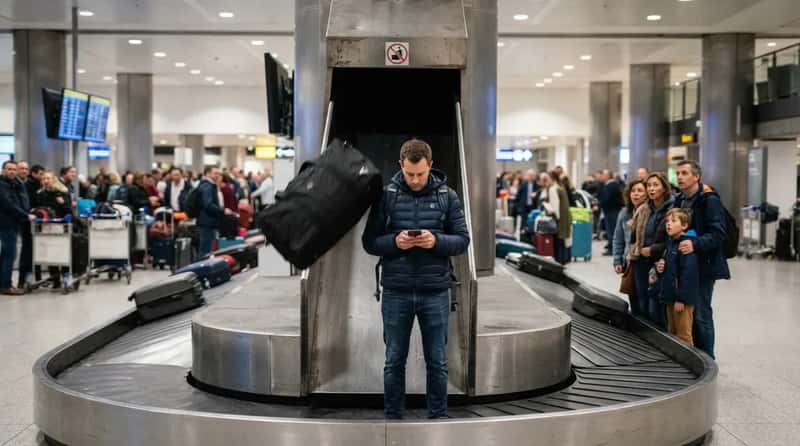
There’s always one person standing exactly where the suitcases fall, phone in hand, completely oblivious. Ground crews consider this one of the more avoidable near-misses of the entire arrivals process.
Bags don’t drift gently onto the belt, they drop with real force from a moving conveyor above. Standing in that blind spot means getting clipped by a forty-pound duffel is less a risk than a matter of time, and crews say they see the same person do it flight after flight.
#15 – Parking a Wall of Luggage Carts Across the Entire Aisle
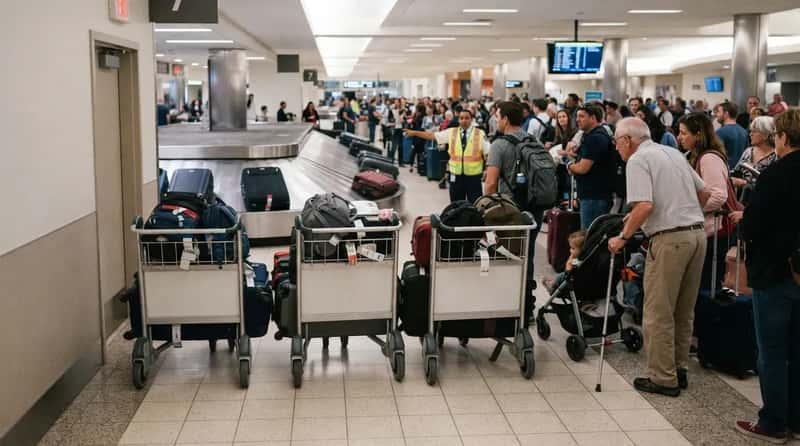
One cart is a convenience. Three carts spread sideways across the only walkway is a full-blown roadblock, and crews say it happens at almost every busy carousel in the country.
It’s rarely intentional, people just stop thinking about anyone behind them the second their own bag appears. The result is a bottleneck of strollers, wheelchairs, and exhausted travelers squeezing through a gap the width of a shoebox, while staff end up playing informal traffic cops.
#14 – Body-Checking Strangers to Win the Race to the Belt
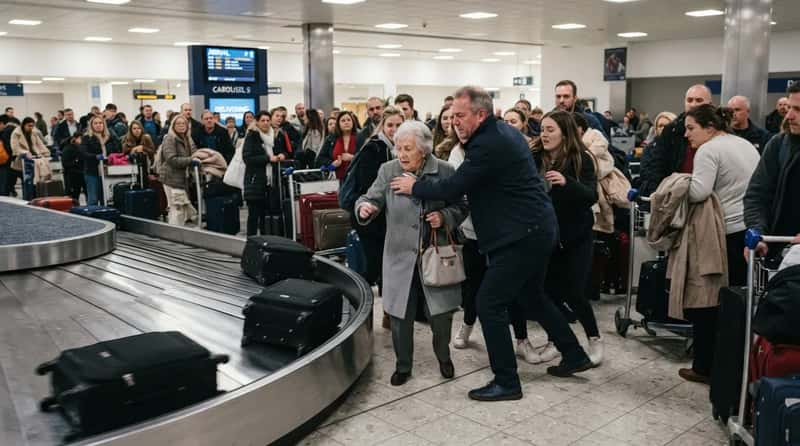
The instant the carousel groans to life, some passengers turn into linebackers. Crews have watched grown adults elbow past children and seniors just to be first in line for a bag that isn’t even out yet.
It’s one of the more comedic patterns airport workers describe, mostly because the urgency almost never pays off. The first person to the belt is rarely the first to actually get their bag, since suitcases load in a scattered, unpredictable order anyway.
#13 – Scrolling on a Phone While the Same Bag Laps Around Twice
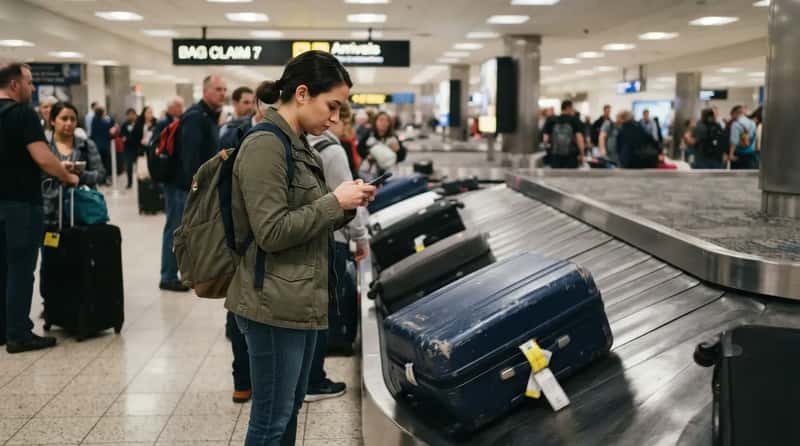
Distracted travelers miss their own suitcase circling past not once, but twice, buried in a phone screen. It’s an almost comically common sight for anyone who works the claim area daily.
The irony is that most people can’t even check bag status remotely to make up for it. In 2024, only about two in five passengers had access to real-time baggage tracking, meaning that phone in their hand usually isn’t tracking anything at all – it’s just a distraction at the worst possible moment.
#12 – Filming the Arrival Instead of Actually Watching for the Bag
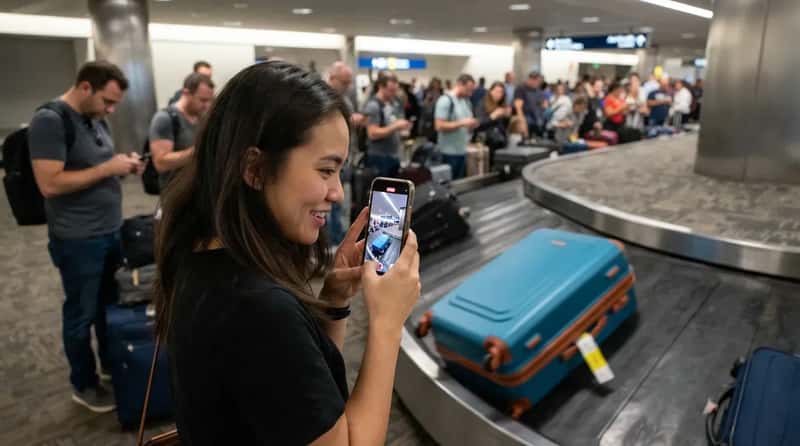
Recording the moment has become its own ritual, especially for reunions and homecomings. Crews say it’s sweet right up until the exact suitcase everyone’s waiting for slides past an unwatched camera lens.
Loading isn’t instant, either, which makes the distraction riskier than it looks. After the aircraft parks, ground crews open the cargo hold, unload containers or loose bags, transport them to the terminal, and feed them onto the carousel, a process that typically takes twenty to forty-five minutes on domestic flights.
#11 – Reaching Into the Machinery to “Rescue” a Stranger’s Stuck Bag
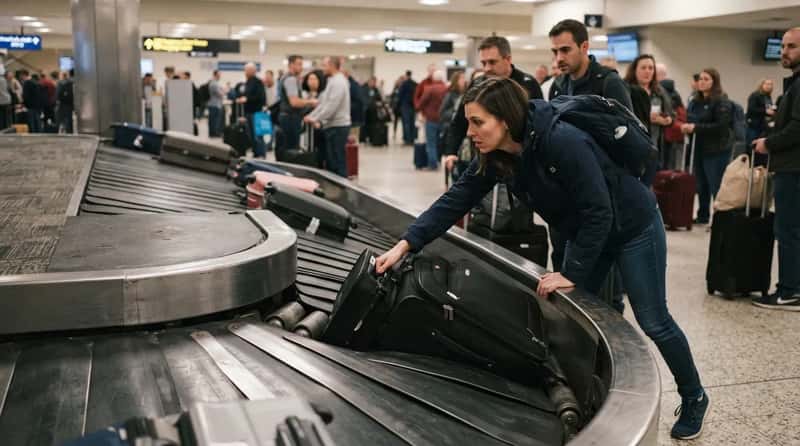
Good intentions go sideways fast at a jammed carousel. Passengers regularly reach toward a wedged suitcase that belongs to someone else, risking pinched fingers on moving steel plates in the process.
Airport workers actually have a system for this, and it isn’t well-meaning strangers grabbing at random. One handler was filmed carefully straightening bags as they dropped onto the belt, turning each one to face forward so its owner could spot it and grab it safely – that’s the job, not a passenger’s improvised rescue mission.
Worth Knowing
- Carousel gaps and rollers are built to move suitcases, not to be touched by hands or loose sleeves
- Ground staff are trained to reposition jammed bags safely, that’s part of their actual job
- Reaching into a moving belt risks pinched fingers far more often than it actually frees a bag
- Flagging an agent nearby is faster and safer than attempting a DIY rescue
#10 – Letting Toddlers Climb Onto the Carousel Like a Ride
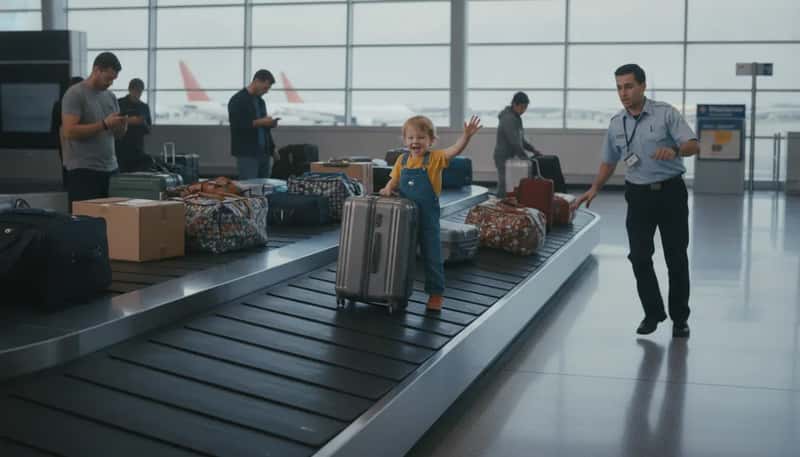
For a five-year-old, a moving belt covered in suitcases looks exactly like a playground ride. Crews say this is one of the scarier repeat patterns they witness, and it happens at nearly every terminal in the country.
It’s a genuine safety issue disguised as a cute photo opportunity, and crews say they step in far more often than parents ever realize.
“It amazes me how often I see children putting their hands on the conveyor, which could not only cause an injury but also mean a passenger may unintentionally hit them when lifting off their bag.”
Airport safety expert
#9 – Walking Away for Twenty Minutes and Leaving Bags Unattended
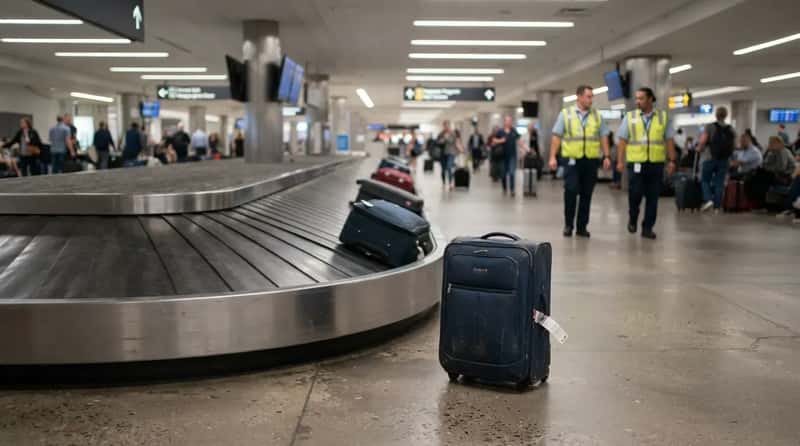
Grabbing a coffee or a bathroom break feels harmless when the carousel is still spinning. Crews notice unattended luggage sitting alone at the claim area far more often than passengers realize.
Beyond the obvious theft risk, an abandoned bag near a busy walkway draws attention fast in any modern airport. Ground staff and security end up keeping half an eye on suitcases nobody has claimed, which pulls focus away from everything else they’re supposed to be doing.
#8 – Ignoring the Priority-Tagged Bag That Already Arrived Early
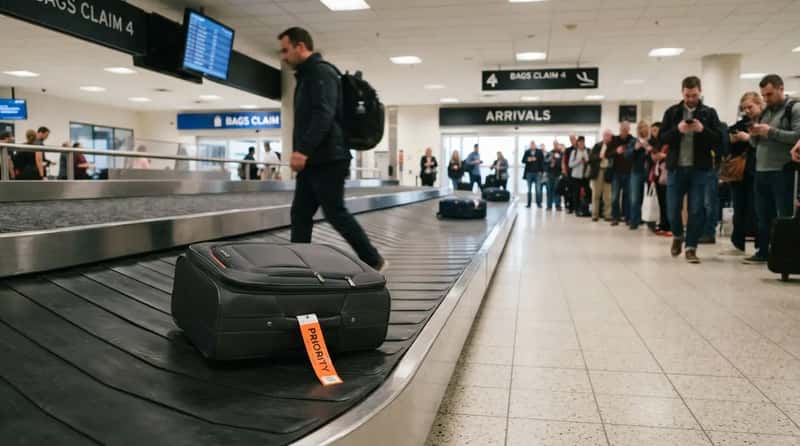
Most travelers assume every bag is a random lottery, but insiders say that’s not quite true. Priority-tagged bags are recognized automatically at many airports, and frequent flyers report they often appear within the first few minutes at the carousel.
It’s a real, documented advantage hiding in plain sight, and the simplest trick is just asking for a fragile or priority label at check-in. Crews watch travelers walk right past their own early-arriving bag simply because nobody ever told them to look for it sooner.
#7 – Chasing “First Bag Off” Myths Like the Red Suitcase Theory
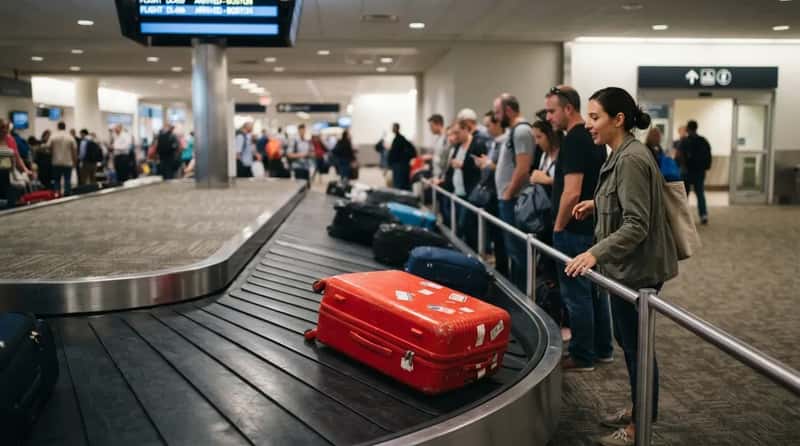
A viral rumor claimed red suitcases always get loaded first, and plenty of travelers still believe it. Ground crews were quick to shut this one down entirely.
A viral TikTok video suggested airline baggage handlers load red suitcases into the cargo hold first, but the answer was a firm no – a Delta communications manager who began his career as a ramp agent confirmed there’s no truth to the claim. Color has nothing to do with loading order, no matter how convincing the theory sounds online.
Quick Compare
- Myth: red suitcases get loaded first, so they come off the belt first
- Reality: loading order depends on flight routing, connection windows, and how the cargo hold is packed
- Myth: a bright color guarantees a faster claim experience
- Reality: bright colors help owners spot their own bag faster, they don’t change the loading sequence at all
#6 – Full-Blown Group Hugs Blocking the Only Walkway In
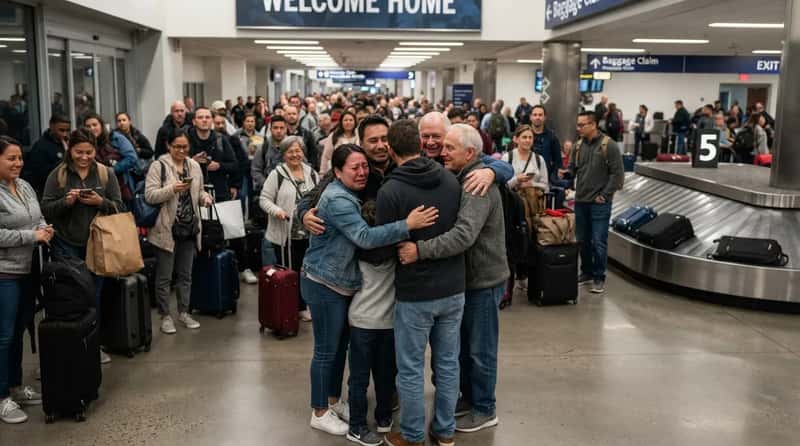
Homecomings and reunions produce some of the most genuinely touching scenes crews witness on a daily basis. They’re also, logistically speaking, a traffic disaster waiting to happen.
A tearful embrace in the exact center of the only entrance to the carousel area stops dozens of tired travelers dead in their tracks behind it. Crews say they’ve learned to just wait it out, because nobody has the heart to rush a family reunion, even when it’s blocking fifty people with connections to catch.
#5 – Screaming at the Baggage Desk Over Delays Staff Never Caused
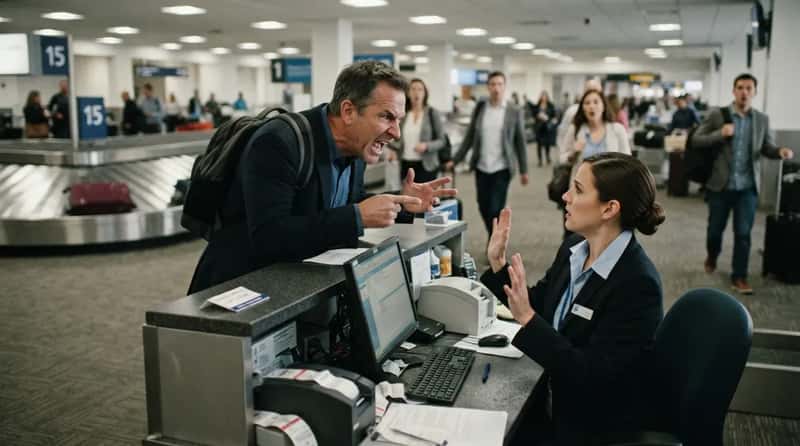
Frustration over a missing bag is understandable, but some passengers take it to a level crews genuinely never forget. One of the most extreme documented cases involved a sitting U.S. congressman.
“I was tired after a delayed flight and frustrated by the subsequent further delay of the entire flight’s baggage.”
U.S. congressman, after an alleged baggage claim altercation
He was alleged to have barged, screaming, into an airline’s baggage office and shoved a clerk, resulting in a misdemeanor assault charge. Most claim-desk agents can’t control routing, weather, or connections, they just absorb the anger anyway, shift after shift.
#4 – Grabbing the Wrong Bag Entirely and Walking Straight Out the Door
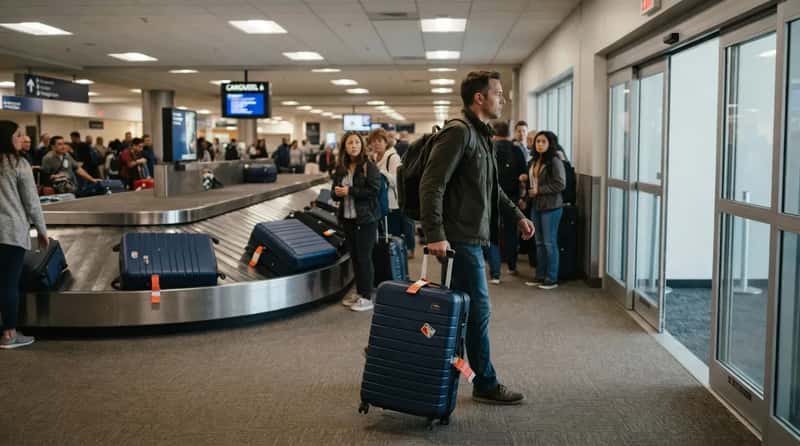
Some mix-ups aren’t caught in time, and travelers unknowingly leave with a stranger’s suitcase entirely. It’s rarer than outright loss, but crews say it happens more than most passengers assume.
SITA’s 2024 data showed that roughly 74% of mishandled bags were delayed and later delivered, 18% were damaged or pilfered, and 8% were truly lost or stolen. That “pilfered” category often starts with an exhausted traveler grabbing an identical bag and driving off without a second thought.
#3 – Watching a Packed Suitcase Burst Open and Spill Everywhere
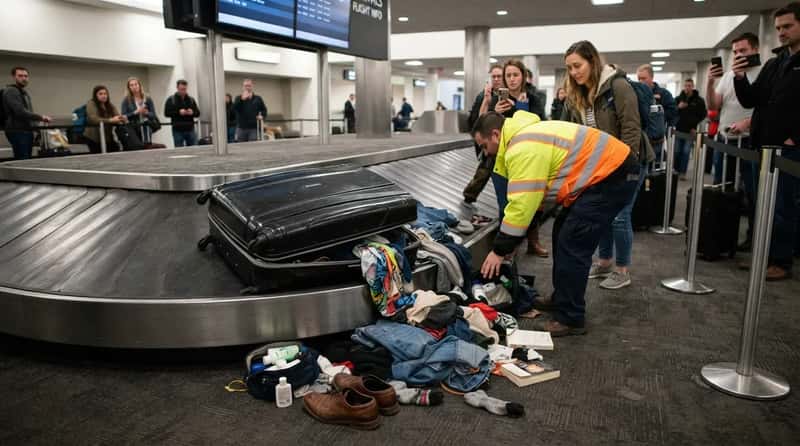
It’s the scene every crew member remembers: a suitcase splits open mid-belt and its contents scatter across the claim area in front of a crowd. Handlers have watched bags burst open on freezing tarmacs and zippers blow out mid-transfer, and almost none of it happens by bad luck.
It’s almost always a packing decision, not an airline mistake. Crews end up helping strangers scoop clothes, shoes, and toiletries off a public floor while a crowd stands there watching, phones half-raised.
#2 – Refusing to File a Report, Assuming the Bag Will “Just Show Up”
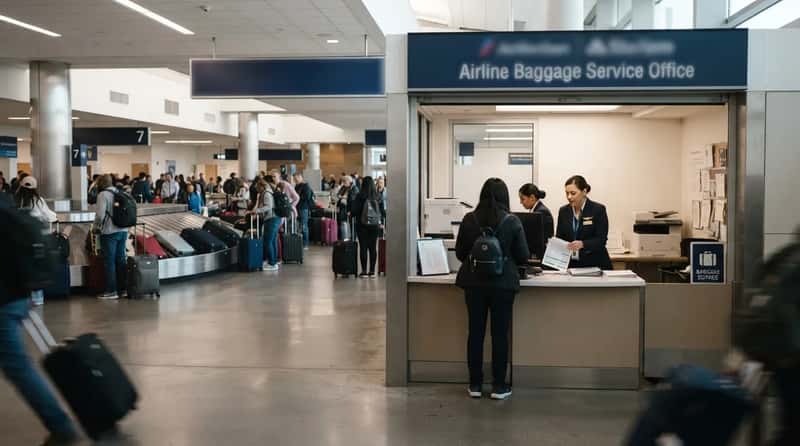
When a bag doesn’t appear, some travelers simply walk away instead of reporting it, convinced it’ll magically turn up later. Crews say this single decision costs people more time than almost anything else on this list.
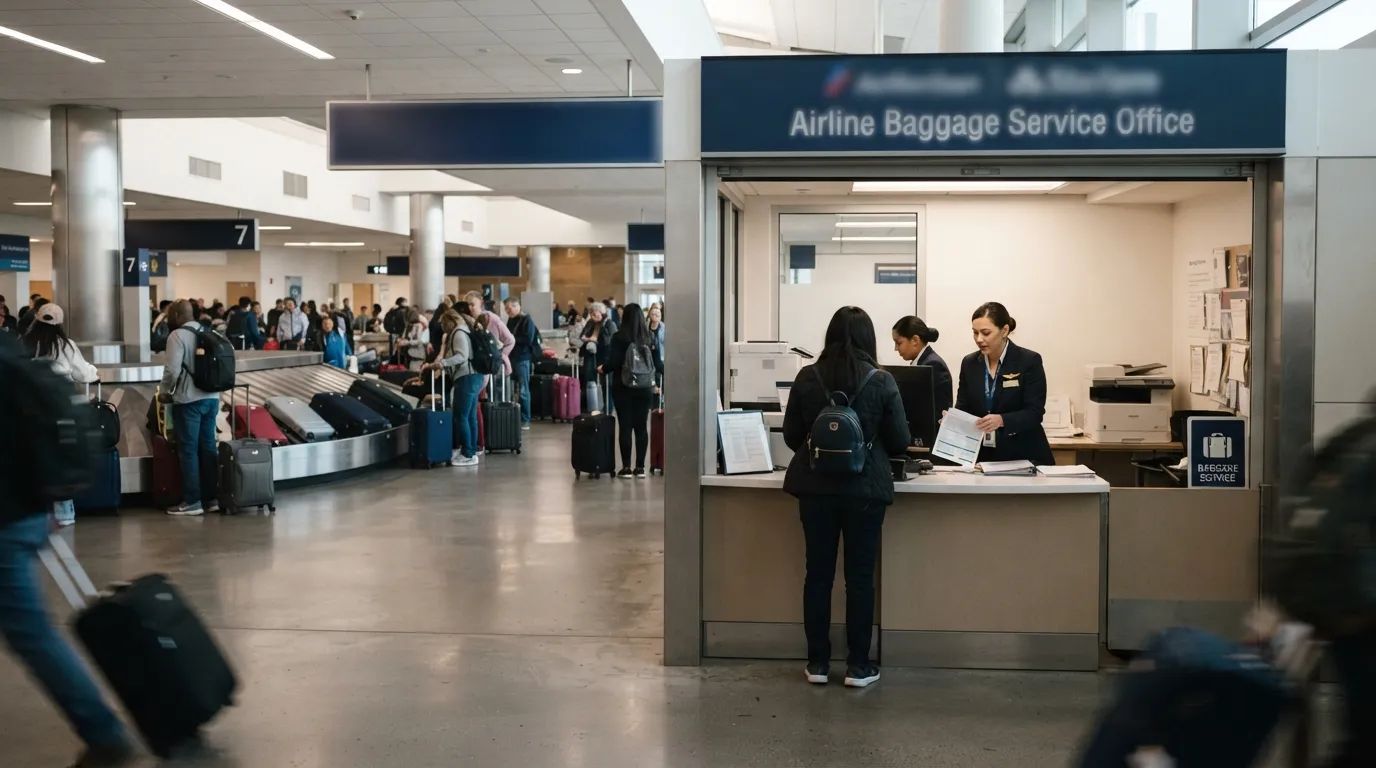
The next step is the airline’s baggage service office, located right inside the claim hall, where a traveler files a Property Irregularity Report documenting the bag’s description, contents, and contact details – a reference number that becomes essential for every follow-up call. Skipping it just delays everything that comes after.
At a Glance
- Go straight to the airline’s baggage service office before leaving the terminal
- File a Property Irregularity Report with a full description, contents, and contact info
- Keep the reference number, it’s needed for every follow-up call or email
- Ask about interim expense reimbursement if the bag won’t arrive same-day
#1 – The Moment the Belt Stops and Their Bag Never Comes
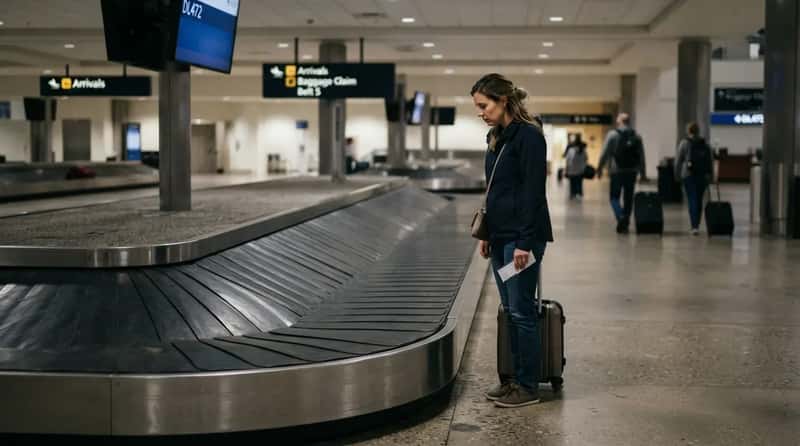
This is the one crews say they truly never forget – the exact second a passenger realizes the carousel is empty and their suitcase simply isn’t coming. More than 33.4 million bags were mishandled globally in 2024, and every single one of them started with this same silent moment of dread.
The good news crews wish more people knew: the odds of a bag disappearing forever were under 1 in 200 in 2024, and airlines must compensate for lost contents up to a maximum liability of $4,700 per passenger on domestic trips. Each mishandled bag costs airlines roughly $150 in added expenses, adding up to an estimated $5 billion industry-wide, exactly why staff push so hard to make it right, fast.
None of this is really about luggage. It’s about the last unscripted five minutes of any trip, the one place where exhaustion, excitement, and bad habits all collide in front of a crowd of strangers. Crews watch this same human comedy play out thousands of times a year, and somehow it never gets old for them, even when it clearly should.
So next time that belt starts moving, take a breath before you elbow past the guy in cargo shorts. Which one of these have you actually witnessed, or done? Tell us in the comments.