Most people assume group trips implode because of bad weather, bad luck, or one impossible personality. Ask anyone who’s actually survived a group vacation gone wrong, and they’ll tell you it’s rarely that dramatic.
It’s money nobody discussed. It’s one person building the whole itinerary alone while everyone else just shows up and complains.
Here’s what nobody tells you upfront: every one of those disasters is predictable, and every one of them is preventable. The travellers who’ve done this a dozen times know exactly how to stop it before it starts – and you’re about to learn all 22 of their tricks, starting with the one habit most groups skip entirely.
#22 – They Lock In a Trip Coordinator Before Anything Else
“Not having a plan is the biggest mistake you can make on a group trip.” Seasoned travellers fix this before they even book anything.
They pick one trip coordinator early – not a dictator, just a facilitator. That person makes the tiebreaking calls, keeps the schedule moving, and becomes the single point of contact.
Skip this step and every decision turns into a group negotiation nobody wins. But picking the right coordinator is only the start – what they do with that role next is where most groups still get it wrong.
#21 – They Have the Money Talk First, Not Last
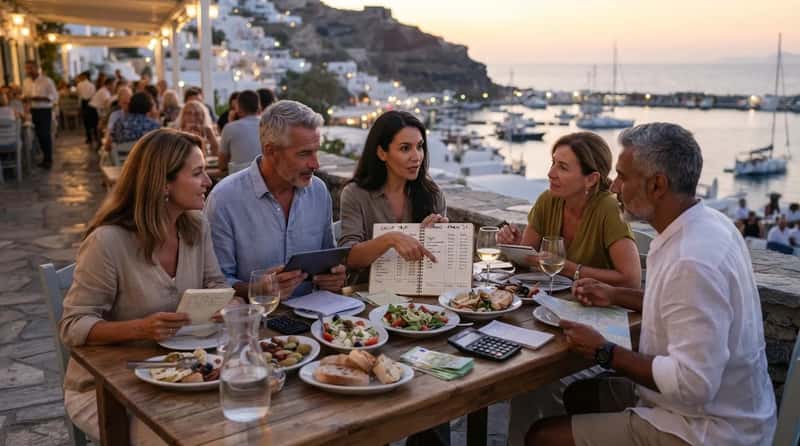
“Avoiding talking about money is a big mistake. With a group, you’ll have people who have different spending styles or budgets.”
Skip this conversation and it surfaces anyway – usually at dinner, usually awkwardly, right when everyone’s already spent their hard-earned money to be there.
Veterans set a collective budget and stay transparent about costs from day one. The money talk is uncomfortable for ten minutes; skipping it is uncomfortable for the whole trip.
#20 – They Track Every Expense From Day One
Talking about money is step one. Tracking it in real time is step two – and most groups skip it completely.
Seasoned travellers set up a shared expense tracker like Splitwise or Tricount before the trip even starts. Every shared cost gets logged the moment it happens, not reconstructed from memory a week later.
Quick Compare
- Splitwise: Deeper features like receipt scanning and currency conversion, but every member needs to create an account.
- Tricount: No account required and a simpler layout, though the free version shows ads.
- Best fit: Tricount for a single trip, Splitwise for friend groups who travel together often.
Settling up at the end instead of tracking as you go creates arguments nobody wins. But handling the money is only half the logistics puzzle – the next habit is the one most groups badly underestimate.
#19 – They Book Group Flights Earlier Than Feels Necessary

Most first-timers book group flights the way they’d book a solo ticket. That’s a costly habit to break.
Many airlines offer group rates and flexible policies for larger parties, but only for those who commit well ahead of peak season. Waiting for the whole group to “confirm” before booking almost always costs real money.
Some travellers even work with airline group desks or travel agents who can negotiate rates the average traveller never sees. The veterans lock in early and sort out the stragglers later.
#18 – They Chase Group Discounts Everywhere, Not Just on Flights
Smart group travellers treat their size as leverage – and they use it at every single booking stage.
They build one comprehensive budget covering flights, stays, meals, and activities, then actively ask about group rates at museums, tours, and restaurants. Most people never even ask.
The ones who do often walk away paying meaningfully less without much effort at all. Flexible dates and a willingness to negotiate can quietly cut the cost of an entire trip.
#17 – They Choose Group-Friendly Accommodation on Purpose

A row of separate hotel rooms sounds fine on paper. Experienced group travellers know it quietly fractures the trip.
They look for apartments or vacation homes with multiple bedrooms and shared living space instead – somewhere the whole group can actually gather. Proximity to attractions and transport matters too, but it’s secondary.
The accommodation style either brings a group together or pushes it apart. The late-night card games and spontaneous dinners happen in a shared kitchen – never in a hallway between hotel doors.
#16 – They Keep All Trip Info in One Shared Document
This sounds obvious. Almost nobody actually does it consistently.
Apps like TripIt sync flights and reservations automatically so the whole group sees changes in real time. Wanderlog goes further, letting everyone collaborate on day-to-day plans and maps in one place.
One shared source of truth kills the “wait, what time is the tour again?” message at 7am. It also means nobody’s stuck depending on one person’s phone for the restaurant address.
#15 – They Set a Meeting Point Protocol for Every Day
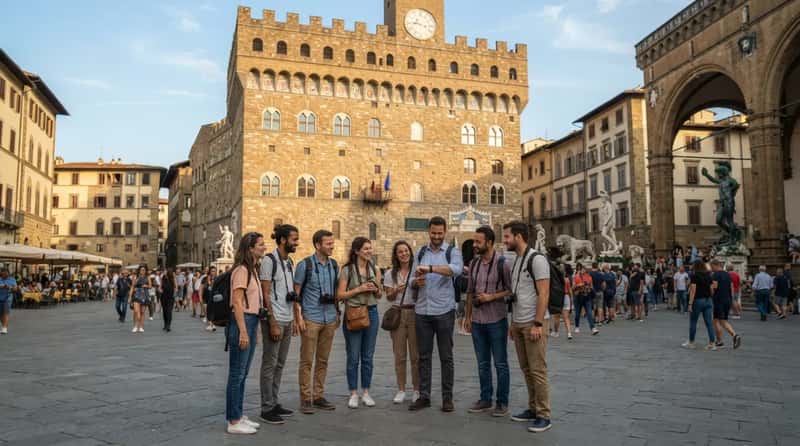
This sounds almost too simple – until your group of eight splits into three factions in an unfamiliar city.
Once a group gets past six or seven people, informal plans stop working. Someone needs a designated meeting point, a set time, and a backup plan.
A named landmark, a set time, and “no exceptions” saves more trips than any app ever will. When someone inevitably wanders off, there’s no panic – just a spot everyone already knows to return to.
#14 – They Build Buffer Time Into Every Single Day
Back-to-back activities with zero breathing room are a trap. Most groups don’t notice the problem until they’re already late for the second stop.
One small morning delay can quietly snowball into a much bigger one by dinner if there’s no cushion anywhere in the schedule. The best tour operators now build buffer windows between every major activity for exactly this reason.
Worth Knowing
- Larger groups almost always take longer to move between stops than solo travellers expect.
- A single delay in the morning can ripple through the entire day without a cushion.
- One unplanned window per day gives the whole schedule room to breathe.
- The first activity of the day is usually the one most likely to run late.
Amateurs schedule every hour. Veterans schedule every other hour and let the real moments fill the gaps – which matters even more once you realize how slowly groups actually move.
#13 – They Plan Routes at Group Pace, Not Solo Pace
Here’s a detail that wrecks more afternoons than anything else: groups move slower than individuals, always.
A walk that takes twenty minutes solo can take nearly twice as long with a mixed-age group. Even one or two slower walkers changes the math for everyone.
Experienced guides scout routes at realistic group speed, not their own. Veterans quietly pad every estimated travel time – not out of pessimism, but because arriving relaxed beats arriving stressed.
#12 – They Discuss Travel Styles Before Booking Anything

“A common mistake made when planning a group trip is not discussing expectations for the trip.” Budget and diet get discussed constantly – travel style almost never does.
Does everyone want to lounge at an all-inclusive, or fill every day with neighborhoods and activities? Seasoned travellers ask this question before a single booking is made.
Get it wrong and one person drags through every museum while another watches the clock at the beach. Mismatched travel styles are the silent killer of group trips.
#11 – They Vet Travel Companions Before Committing
This one’s slightly controversial, but veterans will admit it quietly: not every great friend makes a great travel companion.
They look for people whose pace, budget, and expectations actually align – and who are willing to compromise when they don’t. Room arrangements and shared expenses get discussed honestly before anyone commits.
Sometimes the real mistake isn’t the destination – it’s the guest list. Experienced group travellers know exactly which friends they travel with, and which ones they simply see off at the airport.
#10 – They Keep the Itinerary Flexible, Not Rigid
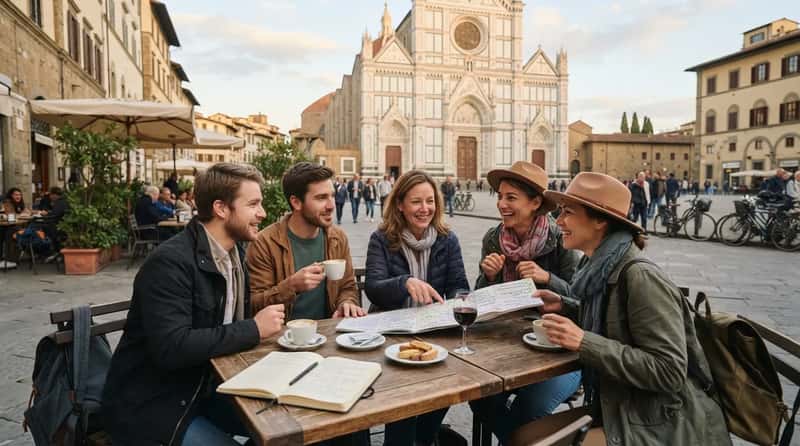
An itinerary that reads like a military operation kills spontaneity fast – usually by day two.
Veterans build the schedule with input from the whole group, including real downtime and options for different tastes. Pure spontaneity fails just as often, because people want to do different things on different days.
The key commitments get pre-planned; everything else stays open. It’s about the right ratio, not a full calendar or an empty one.
#9 – They Plan a Light First Day After Long-Haul Travel
Everyone assumes they’ll bounce back from a long flight with a short nap, then plans a full sightseeing day for arrival. Guides call this one of the most common – and most avoidable – mistakes in group travel.
Skip the rest window and the whole group drags for the next two days, energy and attention both shot. Experienced operators now build a deliberately slow first day into nearly every international itinerary.
A ruined first full day sets the emotional tone for the entire trip. Veterans protect it fiercely: a slow morning, a short walk, an early dinner, nothing more.
#8 – They Always Carry Copies of Every Key Document
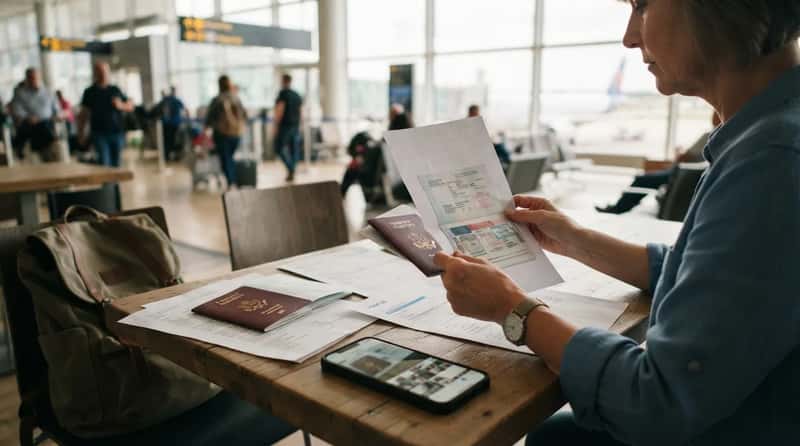
Seasoned travellers keep photo backups of every ID document on their phone, and leave paper copies behind with someone at home just in case.
Everyone in the group double-checks passports, visas, and paperwork before departure – no exceptions. Some countries require passports valid for six-plus months beyond the travel dates, a detail that has grounded more than one traveller at check-in.
Fast Facts
- Many countries enforce a “six-month rule,” requiring passport validity well past the travel dates.
- Popular destinations with this requirement include Thailand, Vietnam, Indonesia, and Saudi Arabia.
- Schengen countries usually only require three months of validity beyond departure.
- Airlines can deny boarding at check-in if a passport doesn’t meet a destination’s rule, even if nothing flagged it at booking.
One expired passport in the group has derailed more trips than every cancelled flight combined.
#7 – They Treat Punctuality as a Group Responsibility
Show up late solo, and you inconvenience one person. Show up late in a group, and the entire day slides.
Seasoned travellers treat punctuality as a shared contract, not a personal preference. They read the day’s plan, know the pace, and arrive a few minutes early as a matter of habit.
The unspoken group rule: being five minutes early IS on time. Being on time IS late. Veterans set their alarms accordingly, and they never apologize for it.
#6 – They Protect Their Solo Time Without Guilt
This is the habit that keeps friendships intact long after the trip ends.
Even best friends need solo moments on vacation – ignore that, and friction builds fast. Veterans quietly build in a morning or afternoon where the group disperses, no agenda required.
See a shop window catch your eye mid-group-outing? Snap a photo and go back alone later – the best group travellers aren’t fused at the hip for a week, they recharge privately so they show up fully for the shared moments.
#5 – They Stay Open to People They Didn’t Expect to Like

This one habit quietly turns a good trip into a great one – and most people don’t realize it until it happens to them.
“I’ve always found really interesting people on the tours I’ve gone on – people I would never have expected to meet,” one seasoned group traveller said. “I’ve even kept in touch with some, and finding out where they travelled to next inspired me to go to destinations I’d otherwise never have considered.”
Travellers who arrive with a closed social circle miss half the experience. The veterans arrive with an open hand instead.
#4 – They Choose Tour Operators With Ethical Standards
Most people pick a tour operator on price and itinerary alone. Experienced group travellers add a third filter.
A group operator’s choices have a real impact on the destinations they visit – avoiding activities that fail animal-welfare standards, and actually supporting local businesses instead of bypassing them.
Why It Stands Out
- Local guides and family-run stays keep more of the trip’s spending inside the community.
- Verified operators avoid wildlife attractions that rely on captive or mistreated animals.
- Smaller group sizes usually mean less strain on fragile sites and better access.
- Transparent operators are upfront about where guest money actually goes.
Responsible travel isn’t just ethics – it’s quality. Cheap operators cut corners that show up as overcrowded sites, hollow experiences, and communities that never see a dime of the money spent.
#3 – They Spread the Work Across the Group, Not Onto One Person
One person doing all the planning is a recipe for burnout – and quiet resentment when nobody notices the effort.
Veterans split responsibilities early: someone researches, someone books, someone becomes the unofficial “food coordinator.” Everyone gets a role and a stake in how the trip turns out.
When something goes right, the whole group owns it. When something goes sideways, nobody’s stuck fixing it alone.
#2 – They Scale Communication to the Size of the Group

A message sent to eight people is not the same as eight people actually reading it. Seasoned travellers know the difference the hard way.
One group text isn’t enough – people miss it, skim it, or forget by the day itself. Veterans build in redundancy and match the plan to the least experienced traveller in the group, not the most experienced.
A shared app like WhatsApp handles instant updates and location sharing well. But the real veterans still confirm anything important out loud, not just in text.
#1 – They Set Expectations, Then Let the Trip Breathe
Everything else on this list leads here. The single thing separating genuinely experienced group travellers from everyone else: they do the work upfront so they can let go mid-trip.
The plan, the budget, the roles – all of it gets nailed down before departure, because poor communication is the single biggest complaint among group travellers. But the moment the plane takes off, veterans shift gears entirely.
The best group trips feel like travelling with close friends while someone else quietly handles the logistics. The preparation gets you there. The mindset makes it worth it.
The Bottom Line
Group trips create lifelong memories or lifelong grudges – rarely something in between. The difference almost always comes down to habits built before departure, not luck during it.
The veterans talked about money early, tracked every expense, built in buffer time, and protected their own solo space. They stayed flexible, vetted their travel companions honestly, and picked operators actually worth supporting.
None of it is complicated. It’s just consistently done – unclear expectations, clunky communication, and one overloaded planner are behind almost every group trip that falls apart.
Fix those three things, and everything else on this list falls into place on its own.
Bonus: The Buffer Fund Trick Veteran Groups Never Skip
Before the trip even starts, seasoned groups add one extra step to the money talk from #21 and the expense tracker from #20: a shared emergency buffer fund.
- Each traveller contributes an extra 8-10% of their personal trip budget into the same shared tracker used for regular expenses, kept in one clearly labeled category.
- The fund can only be tapped with sign-off from the trip coordinator plus one other traveller – fast enough for a real emergency, slow enough to stop impulse spending.
- Any money left untouched gets refunded proportionally to everyone on the same day the group gets home, so nobody feels like they overpaid.
This one habit means a lost bag, a missed connection, or a sudden medical stop never turns into a scramble of people Venmo-ing each other in a panic on foreign wifi.
It’s the single move that turns a group’s money system from reactive to ready – and it’s the reason the smoothest trips never seem to have a “money crisis” at all.