Most people assume great are just lucky – natural wanderers who breeze through airports, never lose a bag, and always land the best table. That assumption is almost entirely wrong.
The real gap between someone who glides through a trip and someone who spends half of it stressed comes down to a specific, repeatable set of habits nobody really talks about. These aren’t tips you’ll find in a standard guidebook – they’re the quiet behaviours that only surface after enough trips go sideways, and the last one on this list is the one that changes everything else.
23. They Build Flexibility Into Every Itinerary From Day One
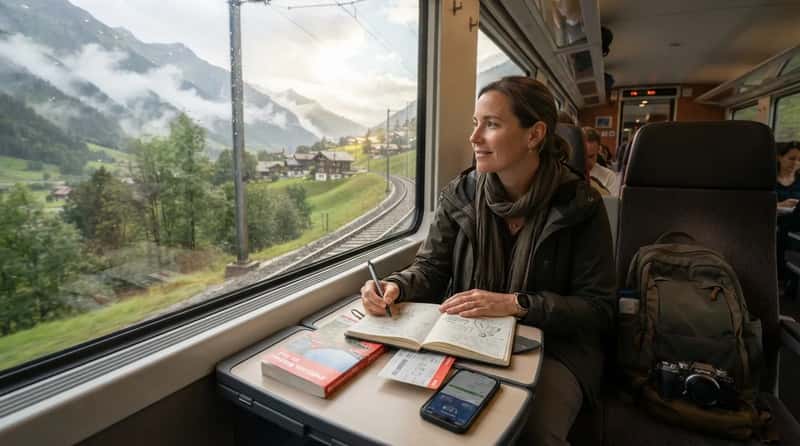
Most first-timers build a tight, lock-step itinerary and assume it will hold. Experienced travellers know better from the start.
Experienced travellers build flexibility into a trip from the very start. They don’t assume the plan will hold – they assume something will shift, and they build time around that.
Travel behaviour research shows that flexibility is now one of the most important decision factors, with more than 94% of travellers expecting built-in flexibility when making bookings.
A rigid itinerary is a fragile one. When one element moves – a delay, a cancellation, a sudden downpour – the whole plan can start to unravel.
Seasoned travellers guard against that domino effect by design, not by luck.
22. They Pack for the Laundry, Not for the Wardrobe

The rookie instinct is to pack for every possible outfit scenario. The experienced instinct is to pack for a washing machine – or a sink.
Frequent flyers know which fabrics wrinkle, which shoes double for hiking and dinner, and how laundry in a sink solves ninety percent of wardrobe problems.
It’s less about minimalism as a philosophy and more about not wanting to fight a suitcase down a train platform ever again.
Every unnecessary item in a bag is a decision you carry through every airport, every transfer, every cobblestone street. Experienced travellers have simply done the maths enough times to stop paying that tax.
21. They Treat Travel Insurance as Non-Negotiable
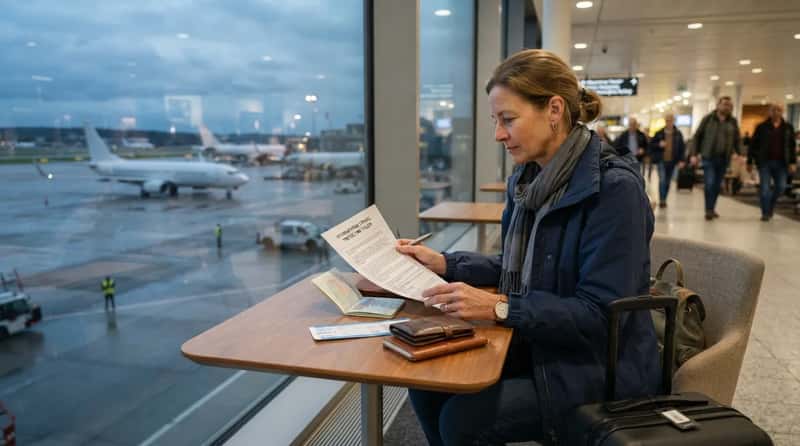
Skipping travel insurance feels rational right up until the moment it isn’t. Most inexperienced travellers make this bet at least once.
Newer travellers often skip it, betting nothing will go wrong. Experienced travellers rarely make that same bet twice.
According to the U.S. Travel Insurance Association, interest in travel protection has climbed steadily as more people report unexpected trip disruptions from weather, medical issues, or cancellations.
It’s not paranoia – it’s arithmetic. One bad flight delay or one hospital visit abroad can wipe out any money supposedly saved by skipping coverage in the first place.
Worth Knowing
- Trip cancellation and interruption coverage for prepaid, non-refundable costs
- Emergency medical treatment and evacuation while abroad
- Lost, stolen, or delayed baggage reimbursement
- Coverage for missed connections caused by a covered delay
20. They Research Local Customs Before They Land

Walking into a new culture blind is one of the most avoidable travel mistakes there is. Experienced travellers know this, and they quietly do their homework.
They research basic etiquette before landing somewhere new – not to seem impressive, but because interactions go smoother when locals feel respected. Dress codes at religious sites, tipping norms, greeting customs – they all get quiet attention.
This awareness usually comes from actual mistakes made on earlier trips. Nearly every seasoned traveller has one mildly embarrassing cultural misstep in their past that they never repeated.
Cultural missteps cost more than embarrassment – in some destinations, they cost you access entirely. That one piece of knowledge is worth more than any packing list.
19. They Prioritise Location Over Star Rating When Booking Accommodation

A five-star hotel forty-five minutes from everything you want to see is, functionally, a bad deal. Experienced travellers figured this out early.
Where you stay shapes your entire trip. Rather than choosing purely on price or star rating, seasoned travellers prioritise location.
Picking a hotel in the dead centre of a city is almost always the priciest option. Smaller hotels just outside the hub tend to be cheaper without adding real distance to anything you actually want to see.
The calculation isn’t just financial. Time lost commuting from a remote property adds up across a week-long trip in ways that rarely show up in a booking comparison.
Experienced travellers price that time in before they click confirm.
18. They Prefer Direct Flights Over Cheap Connections
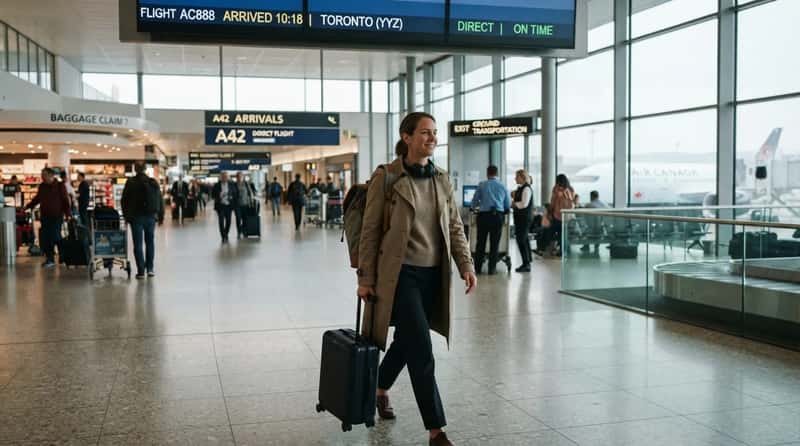
A connecting flight that saves $80 and costs three hours, one checked bag, and two days of stress is not a bargain. Experienced travellers have internalised this.
If a direct flight is available at a reasonable price, experienced travellers almost always take it. Layovers might save a little money, but they often add delays, stress, missed connections, and exhaustion.
A direct flight means arriving with more energy and less uncertainty.
The maths gets even starker on international routes. Arriving already exhausted from a stressful connection can erode 15 to 20 percent of a short holiday’s total time away.
Experienced travellers treat arrival energy as a resource worth protecting, and they book accordingly.
17. They Arrive a Day Early for Long-Haul Trips

The buffer day before a major trip feels like a luxury. Experienced travellers treat it as insurance – and occasionally as the thing that saves the whole journey.
A very underrated travel habit is arriving a day early, especially for long-haul trips. This buffer helps your body adjust, protects against delays, and gives you time to rest before anything important starts.
For business travellers especially, showing up jet-lagged to a critical meeting is a risk almost entirely eliminated with one extra night’s accommodation. The cost is minimal compared to what’s at stake.
Even for leisure travel, a buffer day means the real itinerary starts when you’re actually ready for it – not when the schedule demands it.
16. They Start Managing Jet Lag Before the Flight Leaves

Most people think jet lag management starts on the plane. Experienced long-haul travellers know it actually starts days before departure.
Long-haul travellers who wait until they land to think about jet lag are usually already behind. Sleep experts consistently point to preparation as the real key.
The advice is to start shifting your schedule before you even leave – moving mealtimes and bedtime incrementally closer to the destination’s clock for several days beforehand. Even a partial adjustment before departure can make the first day at a new destination far more enjoyable.
Flying east? Try going to bed earlier each night. Flying west? Stay awake a little longer instead.
Once on the ground, experts recommend keeping naps to no more than 15 to 20 minutes at a time. Anything longer risks disrupting the new sleep schedule entirely.
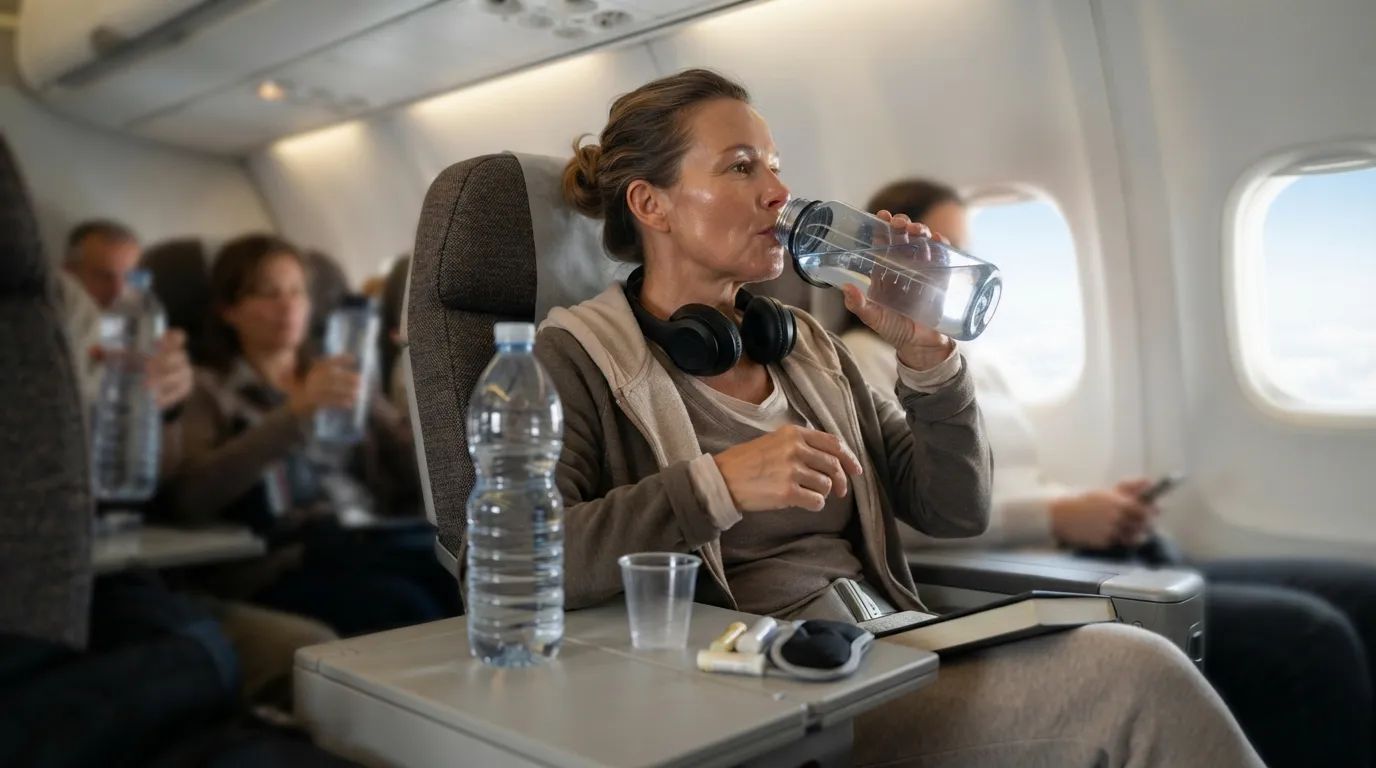
15. They Stay Hydrated Aggressively During Flights

Cabin air is far drier than most passengers realise, and experienced travellers treat in-flight hydration as a non-negotiable rather than an afterthought.
Between 30-64% air humidity is what’s recommended for comfort, but airplanes can drop beneath 10%. That dryness pulls natural moisture straight out of your skin and body.
Hydration keeps coming up across medical guidance, and for good reason. Volume depletion can worsen the physical symptoms of jet lag, which is why excess alcohol gets flagged so often too.
The practical implication is simple: water before, during, and after the flight, with a conscious cut to caffeine and alcohol mid-air. Heavy meals can also worsen fatigue, which is why many experienced travellers stick to lean protein, vegetables, and water on travel days.
14. They Enrol in Trusted Traveller Programmes
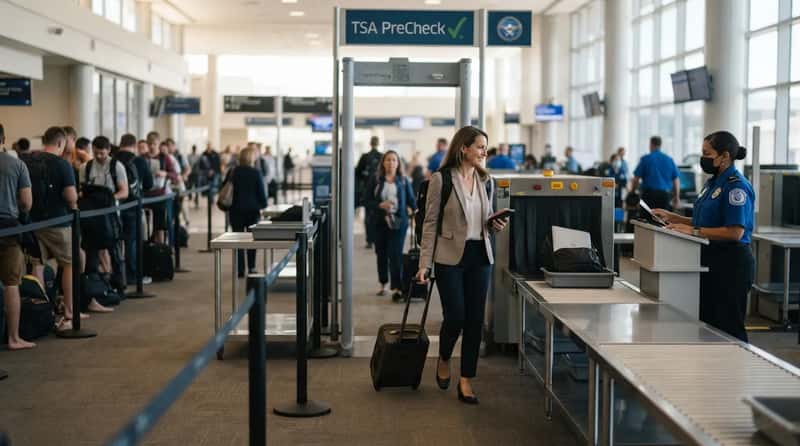
Experienced frequent flyers don’t wait in the same security lines as everyone else. They paid a small upfront cost to opt out of that system entirely.
In a PreCheck lane, you keep your shoes on, your laptop stays in your bag, and your liquids stay packed. As of September 2025, 99% of TSA PreCheck passengers waited less than 10 minutes at airport security.
The enrollment fee is modest compared to the time saved – around $80, covering five years of membership. That works out to roughly $16 per year, which is nothing against the hours reclaimed at security.
Beyond PreCheck, programmes like Global Entry and CLEAR add further speed at international arrivals. CLEAR Plus offers expedited entry at dozens of airports nationwide using biometric data instead of a manual ID check.
Quick Compare
| Programme | Cost | Validity | Best For |
|---|---|---|---|
| TSA PreCheck | ~$78-$85 | 5 years | Faster domestic security lanes |
| Global Entry | $120 | 5 years | Expedited customs on return to the U.S. (includes PreCheck) |
| CLEAR Plus | $219/year | 1 year | Biometric ID lanes at security checkpoints |
13. They Use Travel Rewards Credit Cards Strategically

Experienced travellers earn points and miles on spending they were going to do anyway. Over time, the compounding effect is significant.
They often use travel credit cards to earn points on everyday spending, then redeem them for flights, hotels, and upgrades. Over time, this can significantly reduce travel costs – or even cover entire trips.
The key word is strategic. Signing up for a card and forgetting about it isn’t the same as actively routing spend through the right categories and timing redemptions for maximum value.
Many seasoned travellers treat their points balance as a parallel travel budget – one that grows quietly all year and gets spent deliberately, not impulsively.
12. They Plan Activities Further Ahead Than Most People Realise

Booking flights and hotels months in advance feels organised. But experienced travellers don’t stop there – they plan what they’re actually going to do just as far ahead.
One of the most overlooked habits of experienced travellers is how early they plan the actual activities of a trip, not just the flights and hotels. Experience planning often happens up to a quarter of the year before the trip even takes place.
Popular experiences sell out weeks or months in advance – cooking classes in Bologna, sunrise slots at Angkor Wat, specific safari drives. Travellers who wait until the week before often discover the thing they most wanted is simply gone.
Experienced travellers secure the experience first, then build the rest of the itinerary around it.
11. They Ask “What Will I Do There?” Before “Where Should I Go?”

Destination selection based purely on aesthetics or social media is one of the most reliable routes to a disappointing trip. Experienced travellers ask a different question first.
Frequent travellers with this mindset ask a different question before booking. Not just “where should I go?” but “what will I actually do there that I couldn’t do anywhere else?”
Local culture, food, and experiences heavily influence travel decisions, with as many as 80% of travellers factoring these elements into where they go.
The destination becomes a context for experiences, not the experience itself. That reframe changes everything – from how a trip gets planned to how it’s remembered long after the suitcase is unpacked.
10. They Travel Slowly and Go Deep Into Fewer Places

Cramming twelve cities into ten days is a beginner move that experienced travellers almost universally grow out of – usually after doing it at least once.
Slow travel – spending meaningful time in fewer places rather than rushing through many – is a habit shared by most truly experienced travellers. It means rejecting conventional tourism in favour of experiences that feel unique and immersive.
Rather than squeezing in a dozen activities, slow travel is about a mindset that favours connection over checklist tourism.
Travellers are spending longer at their destinations too – trip lengths grew from an average of 4.5 days in 2020 to 5.5 days in 2024.
The shift is measurable and consistent. The more someone travels, the fewer places they try to squeeze into a single trip, because they’ve learned depth beats breadth every time.
9. They Carry a Go-Kit of Practical Essentials on Every Flight
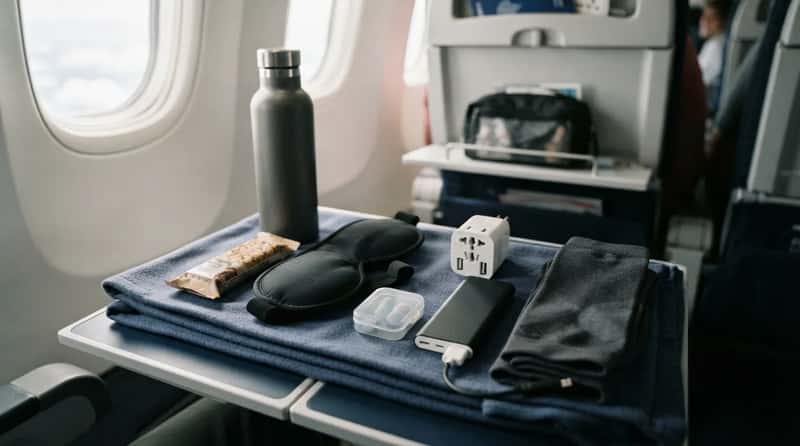
Experienced long-haul travellers don’t rely on the airline to be comfortable. They bring their own toolkit, honed over many trips.
A water bottle, a snack bar, a sleep mask and earplugs, a universal adapter, a battery pack, and compression socks for flights longer than five hours. Seasoned travellers consider these basic carry-on equipment, not optional extras.
Compression socks in particular are underrated. Deep vein thrombosis risk increases on long-haul flights, and compression wear is one of the most straightforward, evidence-backed countermeasures available to economy passengers.
The go-kit mindset reflects a broader truth about experienced travel: anticipate friction before it arrives, and you spend the trip enjoying it rather than managing it.
Fast Facts
- Water bottle and snack bar for hydration and steady energy
- Sleep mask, earplugs, and a neck pillow for long-haul rest
- Universal adapter and a charged battery pack
- Compression socks for flights over five hours
8. They Download Offline Maps and Save Key Locations Before Arrival

Getting lost in an unfamiliar city with no data connection and no offline map is an avoidable problem. Experienced travellers avoid it by preparing before they land.
They always download offline maps and save key locations on their devices before arriving somewhere new. This small step ensures they’re never truly lost, even in remote areas.
The habit extends to saving the accommodation address, emergency contacts, and nearby hospitals or pharmacies – all accessible without a signal. In countries where roaming is expensive or unreliable, that offline prep is the difference between navigating confidently and standing on a street corner hoping for WiFi.
It takes five minutes at home. It can save hours on the road.
7. They Handle Money Like a Layered System, Not a Single Point

Carrying all your travel money in one form – whether that’s cash, one card, or a single account – is a single point of failure. Experienced travellers build redundancy into how they handle money abroad.
Cash still matters, particularly in regions where card acceptance remains inconsistent. But seasoned travellers withdraw smaller amounts more frequently rather than carrying large sums at once.
They also tend to notify their banks before departure, or use apps that flag international activity automatically. This layered approach isn’t about paranoia – it’s about avoiding a single point of failure.
The frozen card scenario is far more common than people expect, and it tends to happen at the worst possible moment – late at night, in an unfamiliar city, with no branch open. One proactive phone call before departure eliminates the risk entirely.
6. They Use a VPN for Booking and for Public WiFi Security
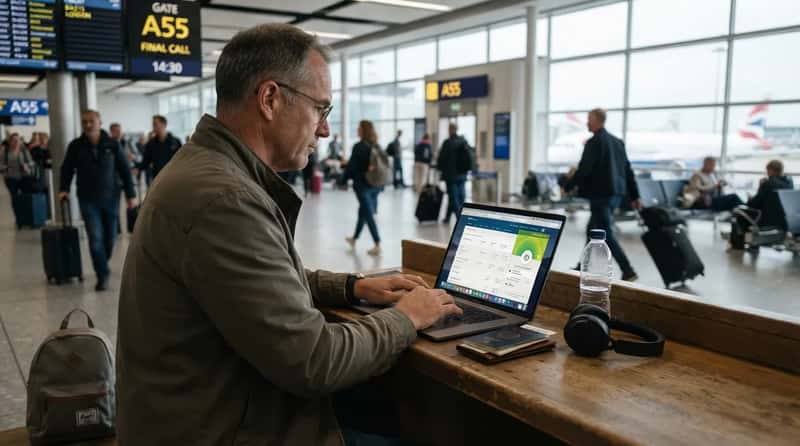
Most travellers use airport and hotel WiFi without a second thought. Experienced travellers know exactly what that exposes them to – and they do something about it.
Flight prices, hotel rates, and even car hire costs can shift depending on where you’re browsing from. Airlines and booking sites use your IP address to guess your location, so a VPN that changes your virtual location can sometimes unlock cheaper prices.
A VPN is also brilliant for safety on public WiFi in airports, hotels, and cafes. Public networks are a known hunting ground for credential theft, and a VPN creates an encrypted tunnel that makes interception dramatically harder.
Two benefits, one tool. It’s the kind of double-duty efficiency experienced travellers gravitate toward instinctively.
5. They Keep Document Copies in Multiple Formats and Locations
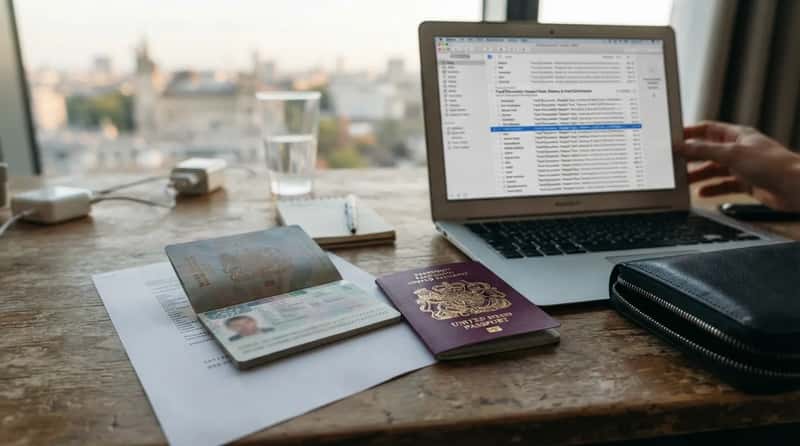
Losing a passport abroad is one of the most disruptive things that can happen to a traveller. Experienced travellers don’t prevent the loss – they prevent the crisis that follows it.
They tend to keep digital and physical copies of key documents, understanding that one overlooked requirement can derail an otherwise well-planned itinerary. This habit reflects less paranoia and more the memory of having been caught off guard once before.
Carrying a hardcopy of your passport matters, but forgetfulness or theft can hit at the worst possible time. Emailing yourself a scan means that even in a worst-case scenario, your passport is only a click away.
Printing extra copies of passports and travel documents, and keeping digital backups in your inbox, means no single disaster – a stolen bag, a waterlogged phone, a misplaced wallet – takes out every backup at once.
4. They Use Calm, Practiced Emotional Regulation When Things Go Wrong
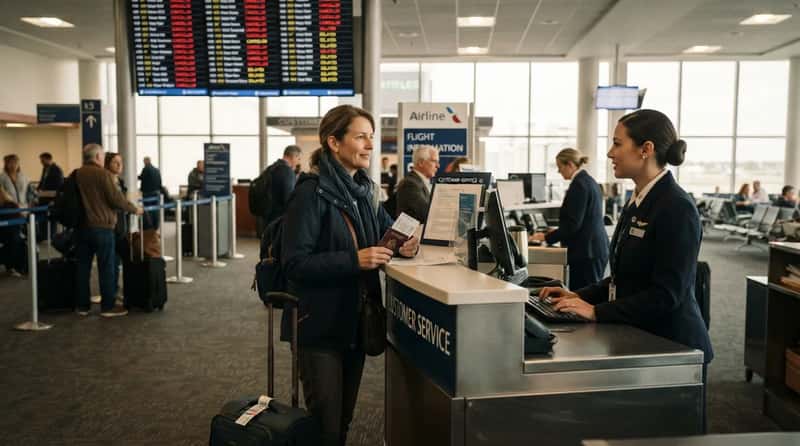
A cancelled flight, a lost bag, a botched booking – these are normal travel events. What separates experienced travellers isn’t that these things don’t happen to them, it’s how they respond when they do.
A canceled flight can feel like a crisis to someone new to travel. To a frequent traveller, it’s often just an annoying but familiar inconvenience.
The greatest secret of expert travellers is their mindset. Flexibility and patience go a long way toward making trips enjoyable, even when things go sideways.
They understand that delays, changes, and unexpected events are simply part of the adventure, and often lead to the most memorable moments. Staying calm at the service desk, speaking clearly, and asking specific questions almost always produces a better outcome than frustration does.
Experienced travellers have simply been at enough desks to know this from the inside.
3. They Book Directly With Hotels After Using Aggregators to Compare

Most travellers find a hotel on a booking site and book it there. Experienced travellers use the aggregator for research and then go direct – and often get a better deal for doing so.
Booking sites usually take a cut of any reservation, so hotels prefer when guests book directly – and often reward it. That reward might be a discount, a free upgrade, or a perk like breakfast included.
The same logic applies at the other end. Calling a hotel directly to price-match a rate found online works more often than people expect, since hotels have margin to play with once the commission is removed.
It takes one extra step and occasionally one short phone call. The upside can range from a room upgrade to an entirely free night.
Why It Stands Out
- Hotels often skip the online travel agency commission and pass part of it back to the guest
- Direct bookings make price-matching and last-minute upgrade requests easier
- Loyalty points and elite-night credit usually only apply to direct bookings
- Front-desk staff have more flexibility to solve problems for guests booked directly
2. They Read a Place’s Atmosphere, Not Just Its Reviews

Reviews tell you what other people thought. Experienced travellers develop something harder to quantify – the ability to actually read a destination in real time.
A well-traveled person doesn’t automatically avoid busy restaurants. But they’ve developed a sharper instinct for reading a menu, a crowd, or a price tag at a glance.
Modern travellers are increasingly experience-driven, prioritizing authenticity, cultural connection, and personalization over simple destination counts. The most experienced pursue this through genuine observation – noticing where locals eat, which streets go quiet in the afternoon, and which market stalls have the longest queues of residents rather than tourists.
This skill is fully learnable, but it only develops through deliberate attention. It’s arguably the most transferable habit on this entire list.
1. They Treat Every Trip as a Feedback Loop, Not a One-Off Event

Here is the habit that separates someone who has travelled a lot from someone who has genuinely become a skilled traveller: they learn from every single trip, systematically.
Frequent travellers don’t necessarily have more time or money than anyone else. They’ve simply run into enough friction over the years to know where it usually comes from, and they build habits around avoiding it before it happens.
After every trip, experienced travellers mentally log what worked, what didn’t, and what they’d change next time. The packing list evolves, the booking process tightens, and the cultural research gets more targeted with every trip.
There’s a certain wisdom that comes from logging many miles. Frequent travellers don’t just stumble onto great experiences – they cultivate the habits, strategies, and instincts that produce them.
None of the 23 habits on this list were figured out in advance. Every single one was earned through a trip that didn’t go quite right, and the difference is that experienced travellers paid attention when it happened, and never made the same mistake twice.
The Bottom Line
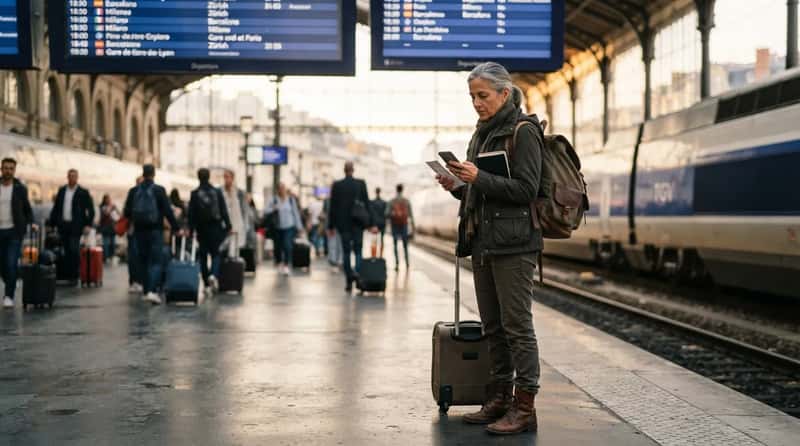
Experienced travellers are not a different kind of person. They’re the same person, after enough trips gone sideways.
The habits above – from building flexible itineraries and going direct on hotel bookings, to managing jet lag before departure and treating every trip as a learning event – are all learnable, repeatable, and cost almost nothing to adopt.
Experienced travellers don’t wait for problems to develop solutions. They anticipate friction, build in redundancy, and stay calm enough to adapt when the plan inevitably shifts.
Start with one or two habits on your next trip. By the time you’ve taken ten more, the traveller who once froze at a foreign ATM or lost a passport in a hotel drawer will feel like someone else entirely.