Most Americans who hit the road in the 1970s remember a hospitality landscape that barely resembles today’s world of five familiar hotel apps. At the industry’s peak, there were an estimated 60,951 motels dotting the American map. By 1987, that number had already collapsed to around 40,424 – and the shrinking never really stopped.
Most people assume a brand that big simply reinvents itself and survives the next decade. That assumption turns out to be exactly wrong, more often than anyone expects. What follows is a countdown through 23 hotel chains that once felt as permanent as the interstate itself – and the strange, sometimes brutal reasons they quietly disappeared.
23. Hiway House: Built by a Yankees Owner, Forgotten by Everyone
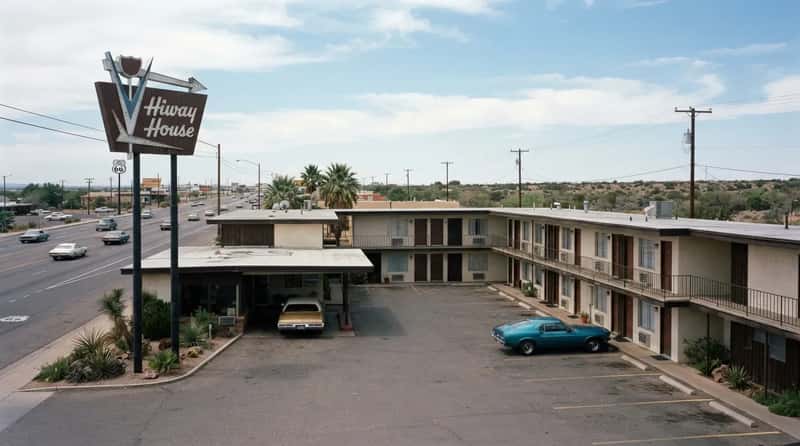
Most people don’t realize that Hiway House was born from one of the most famous real estate minds in American sports history.
Del Webb – the man who co-owned the New York Yankees – founded the Hiway House chain in 1956, pitching roadside comfort with the motto “Sleep Is Our Business.” It was a simple, confident pitch aimed squarely at motor travelers crossing the country.
Webb sold the chain in the early 1960s, and it was renamed Sentry Hiway House. It stayed in operation into the 1970s, but by then most of its properties had already been sold off or converted into competitors’ franchises.
The brand never had the scale to survive corporate consolidation. It quietly faded without headlines or a buyout announcement anyone remembers today.
But if you think a celebrity founder guarantees a chain’s staying power, the next entry proves the opposite can happen even faster.
22. Imperial 400: The Roofline That Couldn’t Save the Chain
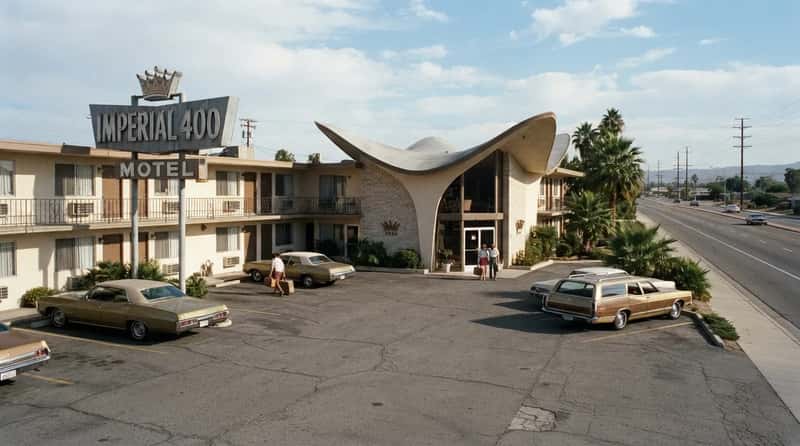
The name was bold, the roof design was distinctive, and the chain was genuinely popular with budget road-trippers through the 1960s and into the 1970s.
Imperial 400 was founded in 1959 by Bernard Whitney in Los Angeles. Its properties were typically two-story buildings with “gull wing” shaped roofs over the lobby, an architectural quirk that made them instantly recognizable from the highway.
That visibility was a real edge before the internet existed. But in 1965, just six years after founding, Imperial 400 filed for Chapter 11 bankruptcy – a stunning collapse for a chain that had rapidly expanded across the country.
The brand limped along through licensed properties into the mid-1970s, but the ownership instability was fatal. By 1987 the Imperial 400 name was officially defunct.
But the story of chains that over-promised and under-delivered is just getting started.
21. Royal Inns of America: The Anaheim Bet That Didn’t Pay Off
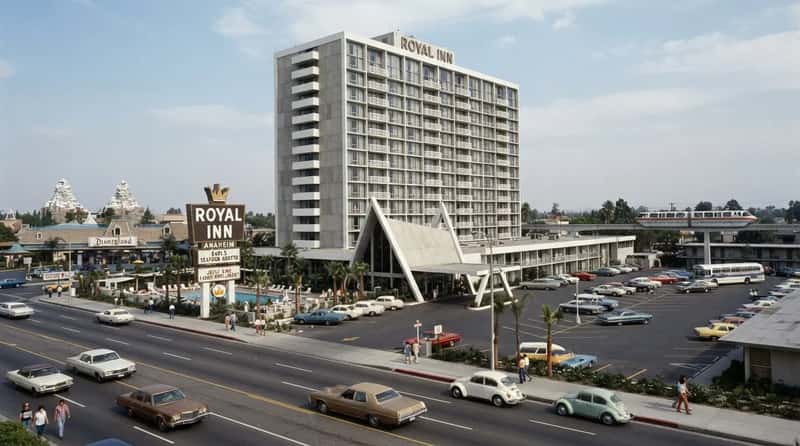
Royal Inns of America looked like a winner in the early 1970s. Modern high-rise properties near major tourist hubs gave it an air of permanence that most competitors couldn’t match.
Founded in 1965 by Earl Gagosian and headquartered in San Diego, the chain was opening 500-room flagship properties near Disneyland by 1971. That was an enviably positioned portfolio for the era.
The Royal Inn of Anaheim opened that October with two restaurants attached – Earl’s Seafood Grotto and Cocktail Lounge, and the Jolly King Family Restaurant. That was the high-water mark, and financial trouble caught up with the chain almost immediately after.
Royal Inns of America was declared defunct by 1975, barely a decade after its founding. Even well-positioned properties couldn’t survive poor capitalization during the 1970s hotel boom.
Speaking of over-leveraging, the next chain’s story involves a Southern restaurant empire making a very strange pivot.
20. Admiral Benbow Inn: Sold to a Cafeteria Chain
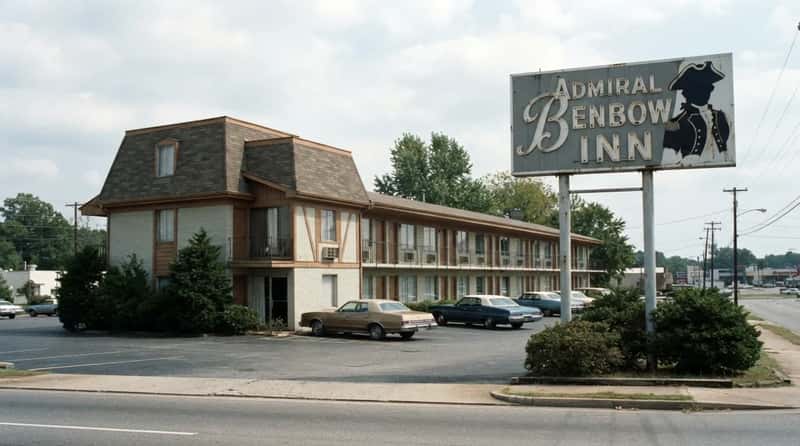
This chain had the kind of founder story that should have guaranteed success – a high school classmate of Holiday Inn’s Kemmons Wilson, building his own Southern hospitality empire from scratch.
Allen Gary opened the first Admiral Benbow Inn in Memphis in 1961. Two more Memphis locations followed, and eventually eighteen Admiral Benbow Inns spread across the South at prime, high-traffic locations.
Gary planned to open one hundred upscale inns by 1970, but he died in 1965 at just fifty-two. Without his leadership, most of the properties were sold to Morrison’s Cafeterias – and a cafeteria company running motels is about as logical as a gas station running a surgery center.
Morrison’s clearly knew the cafeteria business far better than the accommodations business. One by one, the motels were closed and shuttered.
Fast Facts
- Founded: 1961 in Memphis, Tennessee by Allen Gary
- Peak size: 18 locations across the South
- Founder’s goal: 100 upscale inns by 1970
- Gary died in 1965 at age 52, well short of that target
But chains sold to mismatched corporate parents aren’t the only way a brand dies. Sometimes a perfectly good concept just runs out of runway on its own.
19. Friendship Inn: The Loosest Rules in the Business
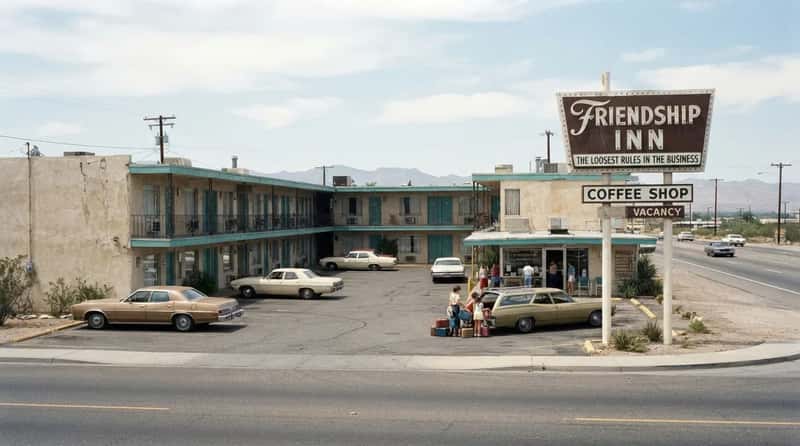
Friendship Inn was everywhere in the early 1970s, and most travelers had no idea how loosely organized the whole operation actually was.
Established in Salt Lake City in 1961 as a referral chain, Friendship Inns of America didn’t require members to meet the strict standards or high fees that competing chains demanded. That low-barrier model let the brand explode fast, reaching 771 member locations by 1974.
With 771 locations and no real quality control, Friendship Inn was essentially a loosely connected group of aging motels flying the same flag. That was both the brand’s greatest asset and its fatal flaw.
By 1997, the chain had been fully absorbed into Rodeway Inn and Econo Lodge, erasing its name entirely.
But inconsistency isn’t the only killer. Sometimes a brand with rigid standards falls too.
18. Exel Inn: A Name Erased by a Copyright Problem
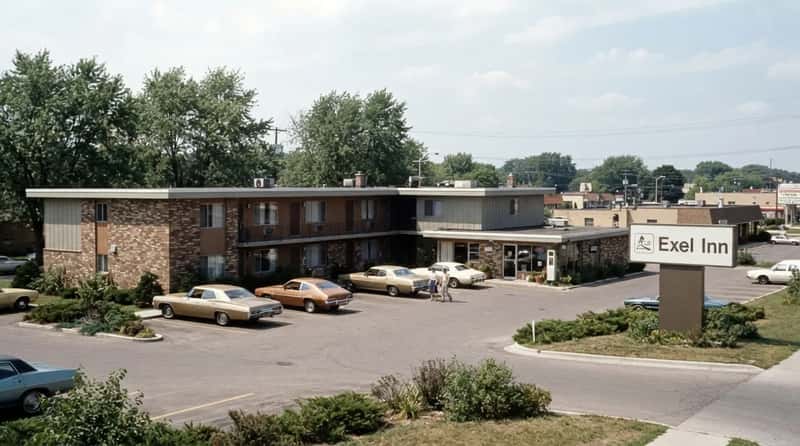
Exel Inn is a name that’s almost completely erased from American travel memory, yet it was a genuine Midwestern success story for over three decades.
Founded as Interstate Inn in 1972 by David Stauffacher, the first location sat on East Towne Boulevard in Madison, Wisconsin. Stauffacher renamed it Exel Inn in 1974 after failing to secure a copyright on the original logo, which had used the Interstate Highway System shield.
The chain grew steadily as a family-run operation – a rarity in an era increasingly dominated by corporate consolidation. Stauffacher and his family ran it that way for its entire history, right up to a sale in 2008 that included 22 hotels.
The buyer was Wyndham Worldwide, and the Exel Inn brand was quietly retired soon after. It was a clean ending for a respectable chain, but an ending nonetheless.
But that’s nothing compared to what happened to one chain that had everything going for it, right up until it didn’t.
17. Parliament House Motor Inn: Right Chain, Wrong Timing
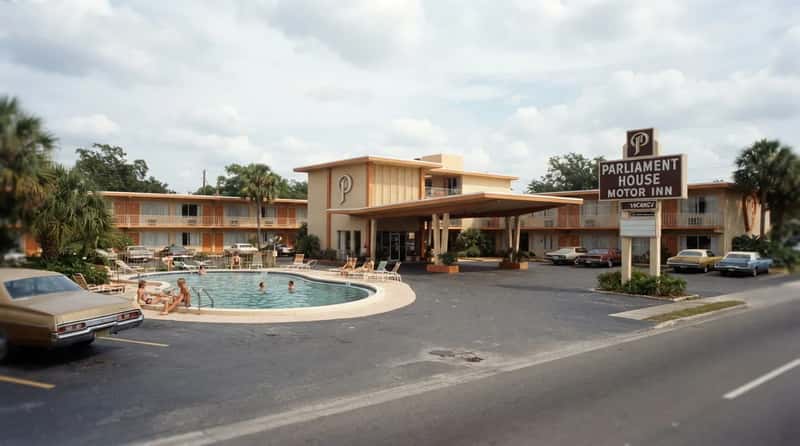
Parliament House Motor Inn is the kind of chain that should have thrived. It launched before the peak of the 1970s travel boom, positioned squarely in prime tourist markets.
Started in 1962 by Kansas City restaurateur Ned Eddy, the chain paired comfortable rooms with dependable dining – a combination that worked beautifully for Holiday Inn and Howard Johnson’s. It seemed built to last.
In the summer of 1972, the manager of its Orlando property was expecting a full-house booking all season – which never came. Missing a full summer’s worth of Florida bookings right as Disney World was launching was a wound the chain never recovered from.
The business was sold in 1985, ending the Parliament House name for good. It’s a cautionary tale about the brutal luck component in hospitality: being in the right city at the wrong moment can be fatal.
That kind of timing catastrophe was rare. For the next chain, the disaster was entirely self-inflicted.
16. Jack Tar Hotels: A Gulf Coast Legend That Lost Its Shine
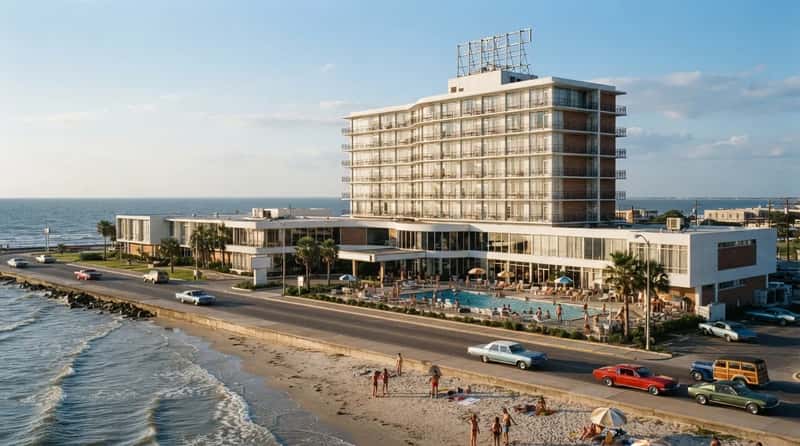
Jack Tar Hotels had decades of history and some genuinely impressive properties across multiple states – and it still didn’t survive.
Founded in 1940 by W. L. Moody III with a single Galveston, Texas motel overlooking the Gulf of Mexico, the chain grew into a real national footprint by the 1970s, stretching from the Gulf Coast to Florida. That was an impressive reach for a regionally rooted brand.
Then one of the classiest hotels on Florida’s west coast.
Tommy John, on his stay at a Jack Tar property in 1961
That reputation for quality was hard-won and slow to fade, but time and competition eroded the brand anyway. It was sold in 1997 to Allegro Resorts, ending the Jack Tar name for good.
A former Durham, North Carolina property was eventually reimagined as a boutique hotel – but the chain itself is gone.
But regional pride can only carry a chain so far when economics shift underneath it.
15. Sentry Hiway House: When a Brand Becomes a Ghost
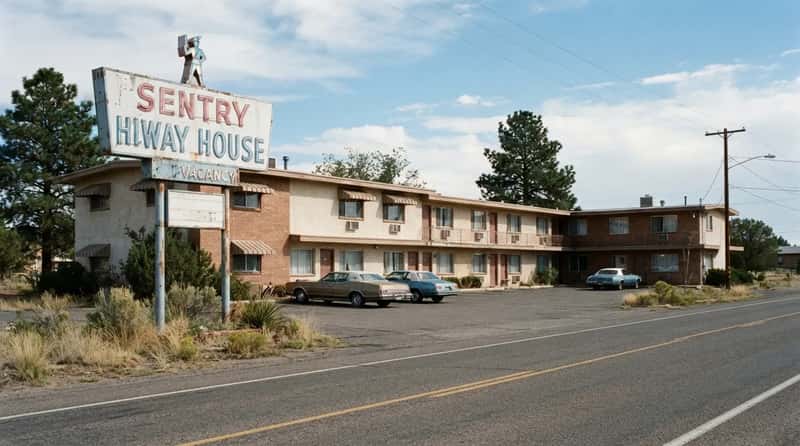
Wait – Hiway House already appeared on this list. That’s intentional, because Sentry Hiway House was functionally a different chain: a rebrand trying to survive without its original founder, patched together with franchise conversions and property sales.
After Del Webb sold the chain in the early 1960s, it took the Sentry Hiway House name and kept operating into the 1970s. By then most of its hotels had already been sold off, renamed, or converted into franchises of competing brands.
This “zombie brand” phase – where properties still carry the name while quietly defecting to competitors – is one of the least-noticed ways a hotel chain actually dies. Travelers see the sign, but the chain has already stopped functioning as a unified network.
This pattern would repeat itself with several other brands still to come on this list.
But zombie brands are just one ending. Sometimes a chain gets outright absorbed by a competitor – a different kind of death entirely.
14. Rodeway Inn: Sold Four Times in Ten Years
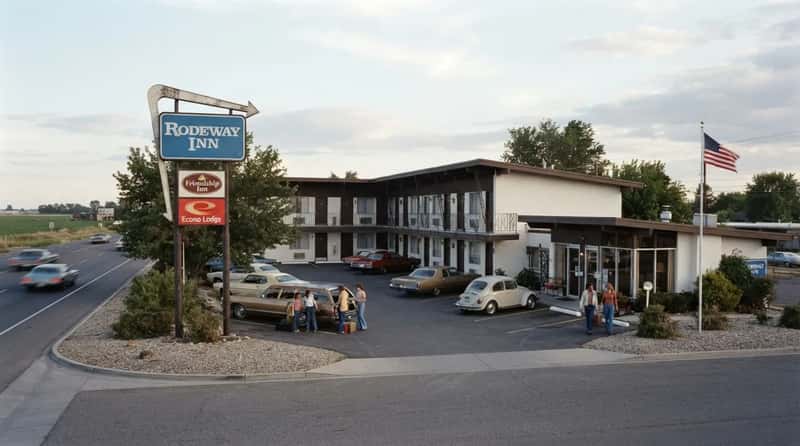
Rodeway Inn technically still exists today, but the Rodeway Inn that 1970s travelers knew is a completely different animal from anything operating under that flag now.
The original chain was started in the early 1960s by Michael Robinson, one of the original investors in Ramada. Britain’s Ladbroke Group bought the brand in 1985, sold it two years later to Ramada Inns, which was then acquired by Prime Motor Inns.
Prime sold the Rodeway brand to New Image Realty in 1990, and Choice Hotels International later acquired that company – and with it, Rodeway, Econo Lodge, and Friendship Inn all at once. The chain changed hands so many times in just a few years that the original Rodeway identity was completely erased.
Quick Compare: Rodeway’s Ownership Chain
- 1985: Britain’s Ladbroke Group buys the brand
- 1987: Sold to Ramada Inns
- Next: Acquired by Prime Motor Inns
- 1990: Sold to New Image Realty
- Later: Absorbed into Choice Hotels International
Today’s Rodeway Inn shares almost nothing with the brand 1970s road-trippers remembered. This kind of ownership carousel is how many beloved mid-century brands die without anyone holding a funeral for them.
But that’s nothing compared to the chaos that consumed a chain which once rivaled Holiday Inn for market dominance.
13. Ramada Inn: The Second-Largest Chain in America, Gone
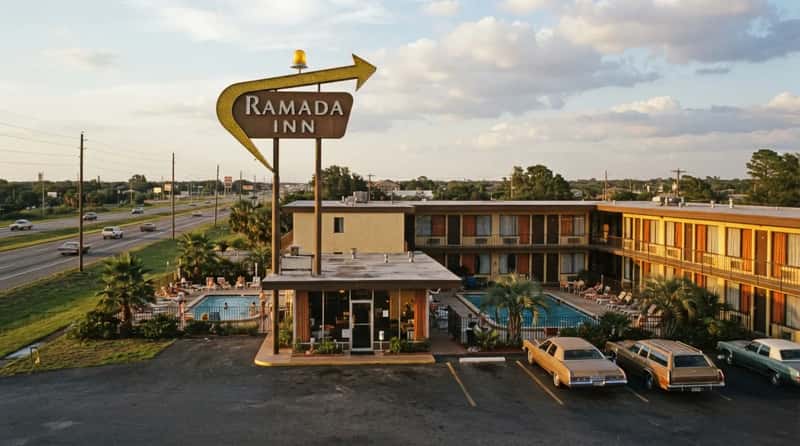
Ramada is still alive – technically. But the Ramada Inn that dominated American highways in the 1970s is, in every meaningful sense, gone.
By the late 1970s, Ramada ranked as the second-largest hotel chain in the U.S. behind Holiday Inn, owning nearly 650 hotels by 1976. A chain that size should have been bulletproof.
Its ownership instability in the 1980s proved otherwise. In 1989 the hotel and casino businesses were split, with hotels sold to New World Development Co. and casinos spun off as Aztar Corporation – effectively ending the original Ramada Inns corporate structure.
Ramada had also built a chain of in-hotel restaurants under names like Uncle Ben’s Kitchen, Ramada Pancake Cottage, and Chez Bon. Those company-owned restaurants became defunct in 1990, taking the full dining experience that defined the classic Ramada with them.
If Ramada’s fall feels dramatic, wait until you see what happened to the brand that once positioned itself as America’s luxury alternative.
12. Adam’s Mark: The Luxury Bet That Collapsed Under Lawsuits
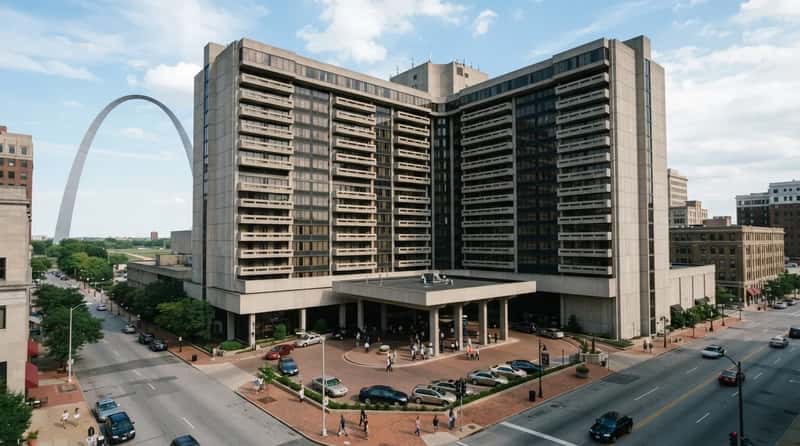
Adam’s Mark was a 1970s creation that positioned itself at the luxury end of the market – a risky bet that paid off briefly and then collapsed spectacularly.
Fred Kummer founded Adam’s Mark Hotels and Resorts during the 1970s, eventually growing it to nearly 20 full-service luxury properties competing directly with Marriott and Sheraton in major American cities.
What made the chain notable – and ultimately doomed – was its “hotel within a hotel” concept, trying to serve both budget and upscale guests under one roof at once. Trying to be all things to all travelers at all price points is one of the oldest traps in hospitality.
Legal troubles and discrimination lawsuits in the late 1990s accelerated the collapse. By the 2000s, all but one of its properties were sold, converted, or shuttered.
That’s nothing compared to the chain whose fall was so drawn-out that the final chapter didn’t close until the 21st century.
11. Friendship Inn’s Forgotten Scale: Bigger Than You Think
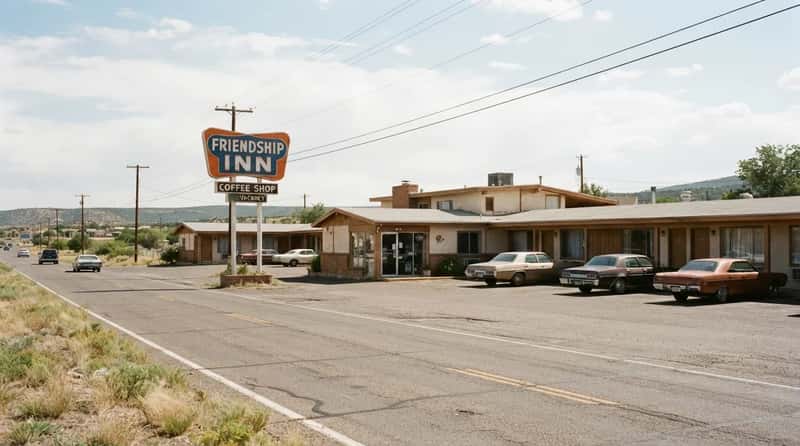
Worth revisiting from a different angle: the Friendship Inn of the 1970s deserves its own mention for just how enormous its footprint had become – and how invisible that history is today.
Established in 1961 and eventually affiliated with Choice Hotels, Friendship Inn ran on a referral model that was genuinely radical for its era – no standard fees, no uniform quality requirements. That’s exactly why it exploded through the early 1970s.
At 771 member locations in 1974, Friendship Inn was larger by location count than many chains that are now household names. Most of those were older, independent motels that had simply attached themselves to a national flag for the reservation referrals.
By 1997, the chain had been fully absorbed and the name disappeared entirely. A brand with nearly 800 locations vanishing without a single mainstream obituary is one of the stranger facts in American hospitality history.
But for every brand that died by neglect, there are others that died because the original founder simply disappeared from the picture.
10. Parliament House’s Orlando Gamble That Failed
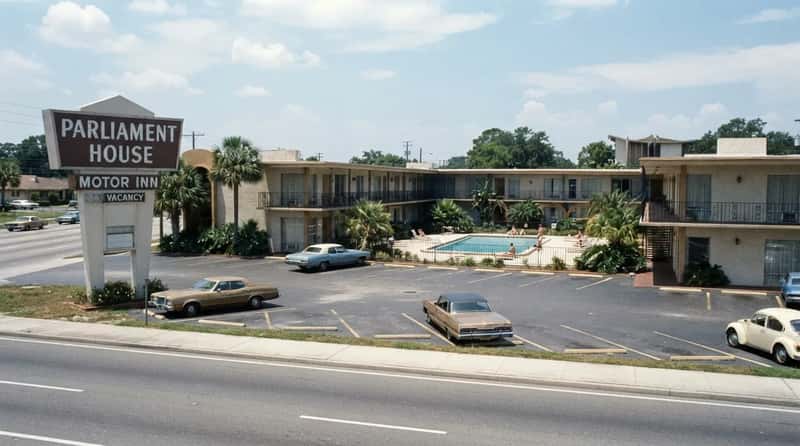
The Florida angle on Parliament House deserves deeper attention, because it shows exactly how badly timed the chain’s peak was – and how unforgiving the market was to those who missed the post-Disney window.
Orlando in the early 1970s was living through one of the most explosive hospitality booms in American history. Walt Disney World opened in October 1971, and any chain with rooms in Central Florida that year and couldn’t fill them was experiencing something close to a miracle of mismanagement.
The reasons behind Parliament House’s empty summer of 1972 remain somewhat murky in the historical record, but the financial damage was decisive. The business was sold in 1985.
Missing the Disney World surge was the kind of failure that doesn’t forgive itself. The 1985 sale was less a strategic exit than an admission of defeat.
But that’s a small story compared to the national chains that simply couldn’t keep up with a changing America.
9. Exel Inn: The Last Family-Owned Holdout
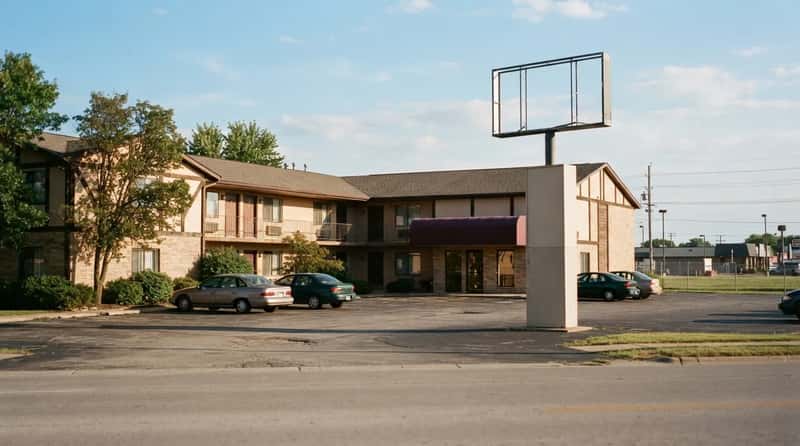
Exel Inn’s story is worth a second look because it represents something increasingly rare: a family-owned lodging chain that competed against national brands for over three decades and actually survived – just not under its own name.
Founded as Interstate Inn in 1972 and renamed Exel Inn in 1974 after a copyright dispute, the chain stayed in the Stauffacher family’s hands from its very first day. A family-run lodging chain lasting over 35 years in an era of brutal corporate consolidation is a genuine achievement.
In 2008, Stauffacher sold the 22-hotel chain to Wyndham Worldwide, which absorbed the properties and retired the Exel Inn brand soon after.
It’s one of the quieter vanishing acts on this list – no bankruptcy, no scandal, no crisis. Just a founder who eventually cashed out, and a corporate buyer with no use for the name.
But corporate absorption is almost genteel compared to what some chains went through.
8. Albert Pick Hotels: The Chain That Left No Digital Footprint
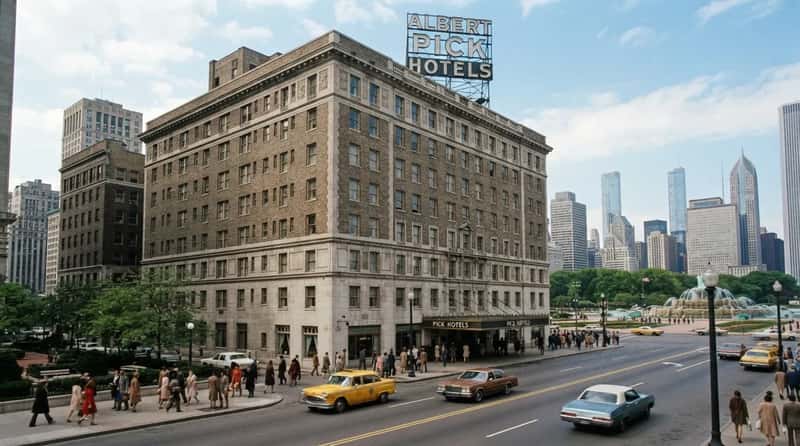
Albert Pick Hotels operated as a regional Midwestern chain through much of the mid-20th century, and it was a genuine fixture of business travel in cities like Chicago during the height of its run.
The name came from a family with deep roots in the hotel supply business – they’d been providing equipment and furnishings to hotels for decades before entering the lodging business directly. That vertical integration gave Albert Pick Hotels an unusual operational advantage in the 1960s and 1970s.
The chain was absorbed and dismantled gradually, with individual properties converting to competing brands or independent operation. Few records survive in public databases today, which itself tells a story about a brand once significant enough to run major city-center hotels.
Worth Knowing
- Origins: A hotel supply company that later expanded into direct ownership
- Stronghold market: Major Midwestern cities, especially Chicago
- Exit style: Gradual absorption rather than one dramatic sale
- Legacy today: Preserved mostly in vintage key fobs and postcards
Albert Pick now lives on almost exclusively in antique hotel key fob collections and vintage postcard archives – artifacts from a chain that once felt essential and now barely registers as a footnote.
But forgettable endings aren’t the most dramatic fate on this list. Some chains went out swinging.
7. Royal Inns of America: Ten Years From Groundbreaking to Gone
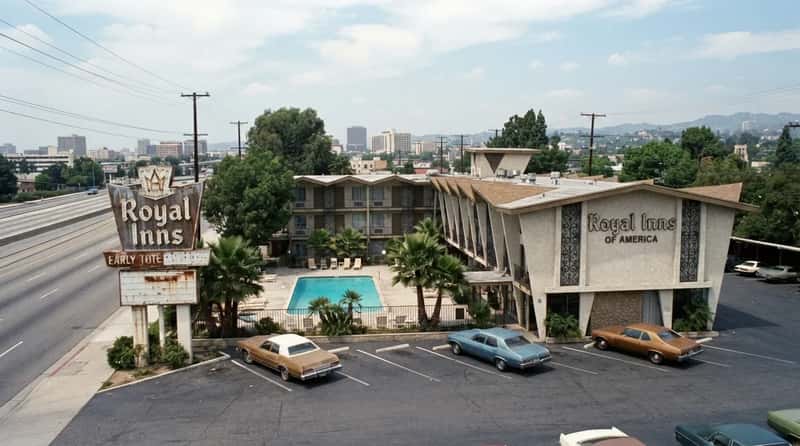
Royal Inns of America’s five-year run from founding to bankruptcy deserves a closer look precisely because it felt so unlikely at the time.
Headquartered in San Diego and founded in 1965 by Earl Gagosian, the chain was opening landmark properties near major theme parks and urban centers by the early 1970s – the kind of locations that should have printed money during the highway travel boom.
The chain was declared defunct in 1975, just ten years after its founding, at a moment when American highway travel was still growing. Overexpansion, poor capitalization, and the pressure of financing large urban properties all fed into a collapse that came faster than almost anyone predicted.
Location and design alone never save a hotel chain. Debt ratios, franchise support, and operational standards decide survival far more than any address ever could.
But if Royal Inns collapsed under the weight of ambition, the next chain failed under the weight of its own dining rooms.
6. Ramada’s Vanished Pancake Empire
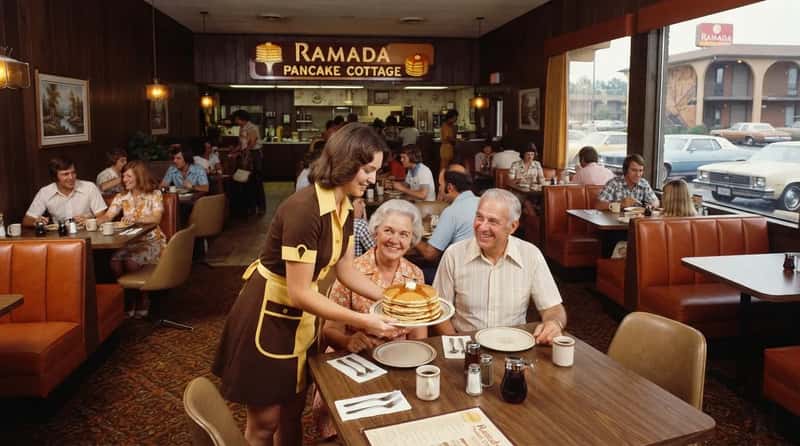
Separate from Ramada’s ownership troubles, the disappearance of its in-hotel restaurant network deserves its own spotlight – because those dining rooms were what made Ramada genuinely different in the eyes of 1970s travelers.
Ramada built a chain of in-hotel restaurants similar to Howard Johnson’s, running them under names like Uncle Ben’s Kitchen, Ramada Pancake Cottage, and Chez Bon, plus other names used by individual franchises. These weren’t hotel coffee shops – they were designed as dining destinations in their own right.
At its peak, Ramada was operating a food empire inside a lodging empire – a double-business model that created extraordinary operational complexity. When the company-owned restaurants became defunct in 1990, the chain lost the most distinctive part of its identity almost overnight.
At a Glance
- Restaurant brands: Uncle Ben’s Kitchen, Ramada Pancake Cottage, Chez Bon
- Model: Destination dining, not just hotel coffee shops
- End date: Company-owned restaurants became defunct in 1990
- Result: Ramada lost its most distinctive point of difference
Today’s Ramada, a Wyndham brand, shares the name but none of the character. The pancake cottages and Chez Bon dining rooms are gone as completely as if they’d never existed.
That’s nothing compared to what happened to the chain that once served more meals than any company in America except the U.S. Army.
5. Howard Johnson’s Motor Lodges: The Orange Roof Empire
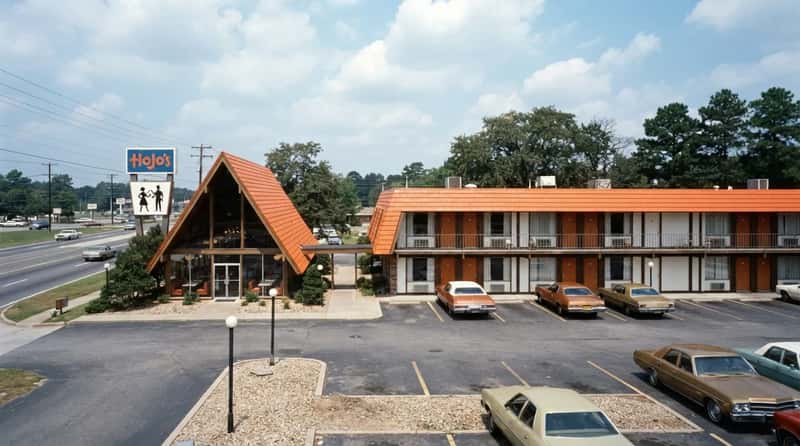
Howard Johnson’s is the most famous name on this list – and the most misunderstood, because people assume it simply faded. It was actually bought, sold, carved up, and rebranded in one of the more dramatic corporate dissections in American hospitality history.
By the 1950s, the company was opening hotels known as Howard Johnson’s Motor Lodges, usually built next to its restaurants. Through the 1960s and 1970s it became the largest restaurant chain in the U.S. across its combined company-owned and franchised outlets.
Howard Johnson’s served more meals outside the home during the 1960s than any company or organization except the United States Army – a statistic almost no one believes on first hearing it. By 1979, founder’s son Bud Johnson decided to get out, selling the company to Britain’s Imperial Group for $630 million.
Efforts to update the restaurants and motels went nowhere. Just six years later, Imperial gave up and sold Howard Johnson’s to Marriott in 1985 for $314 million – half what Imperial had paid for it.
But the HoJo’s story doesn’t end with Marriott. The lodging and restaurant sides were split apart and sold separately – which leads to the next stage of the collapse.
4. Howard Johnson’s Restaurants: From 800 Locations to One
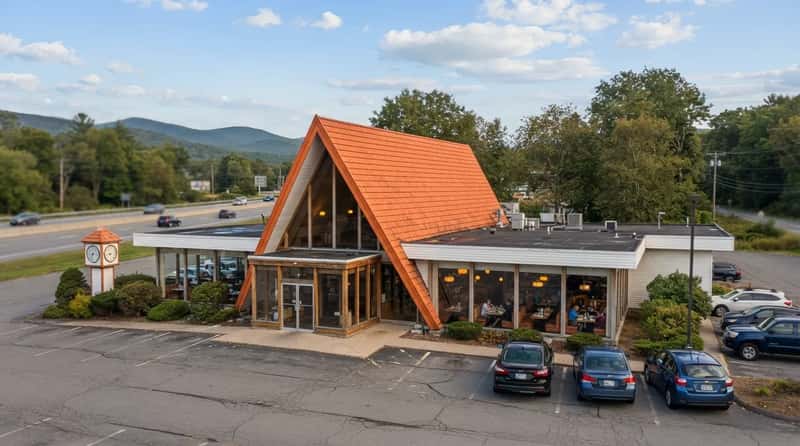
Separate from the motor lodges, the restaurant side of Howard Johnson’s went through its own distinct and devastating collapse – and it lasted far longer than most people realize.
In a related transaction, Marriott sold the motor lodge business and the Howard Johnson trademark to Prime Motor Inns, a New Jersey company. Marriott had really only wanted the company-owned restaurants for the real estate, treating the chain as a portfolio to liquidate rather than a brand to preserve.
Howard Johnson’s restaurants were franchised separately from the hotel brand starting in 1986, and they dwindled steadily through the following years. A chain that once had over 800 locations was reduced to a single outpost in Lake George, New York, as of 2018.
Throughout the 80s, 90s, and into the early 2000s, different owners tried to reinvigorate the brand. None of it worked, and the last restaurant eventually closed as well.
But the HoJo collapse, dramatic as it was, isn’t the most instructive fall on this list. That belongs to the chain that built the entire modern American hotel industry – and then somehow lost its edge anyway.
3. Sheraton Motor Inns: The Budget Tier That Got Erased
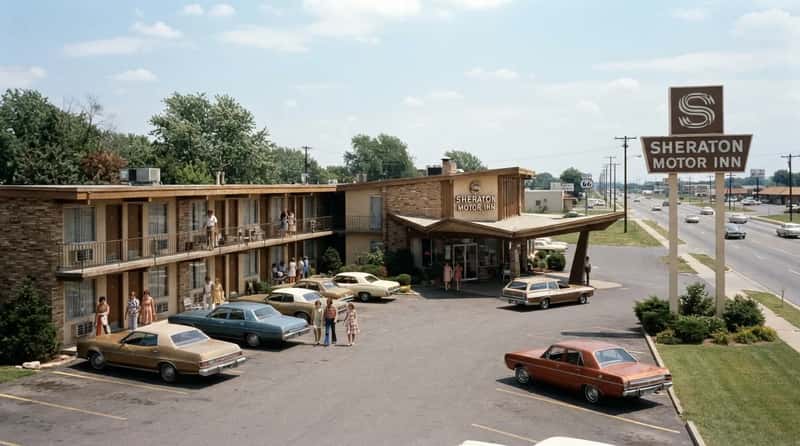
Sheraton is still alive today as a Marriott brand, but the specific Sheraton Motor Inn concept that defined affordable American travel in the 1970s has vanished so completely that most people don’t know it ever existed separately from the upscale Sheraton hotel chain.
Sheraton Motor Inns were the budget tier of the brand, built for road travelers who wanted Sheraton quality at highway motel prices. At its peak, Sheraton was running both luxury urban hotels and roadside motor inns under the same brand umbrella – an ambitious dual-tier strategy that eventually became impossible to maintain.
The motor inn concept was gradually phased out as parent company ITT pushed Sheraton upmarket through the 1980s and 1990s. The roadside Sheraton Motor Inn, with its green signage and pool-facing rooms, was quietly retired, leaving only the upscale tier carrying the name forward.
Travelers who remember Sheraton Motor Inns as an affordable family road-trip option would find the current Sheraton portfolio unrecognizable. The brand survived, but the product millions of 1970s Americans actually stayed in did not.
Only two chains remain, and they represent opposite ends of the spectrum: one that collapsed from the top down, and one that was gutted from the inside.
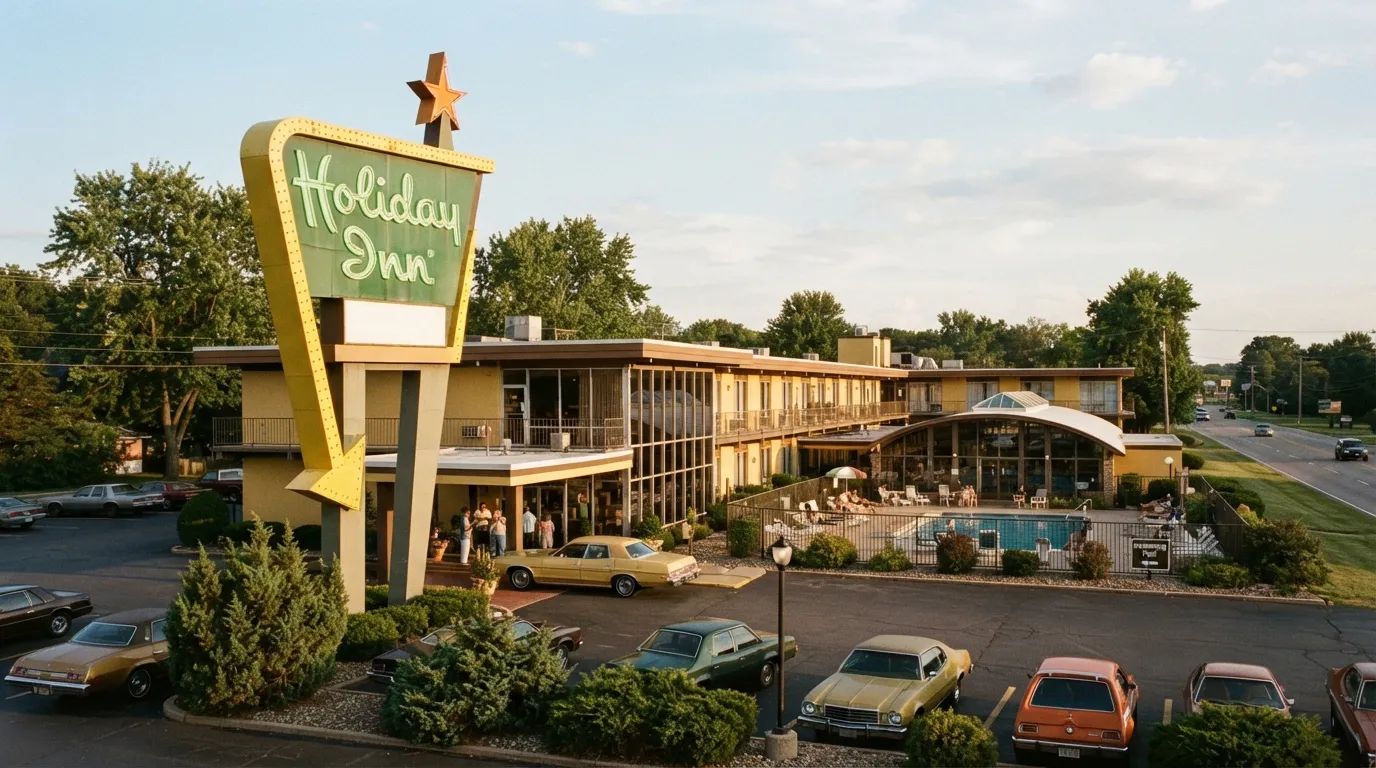
2. Holiday Inn: The Format That Dismantled Itself
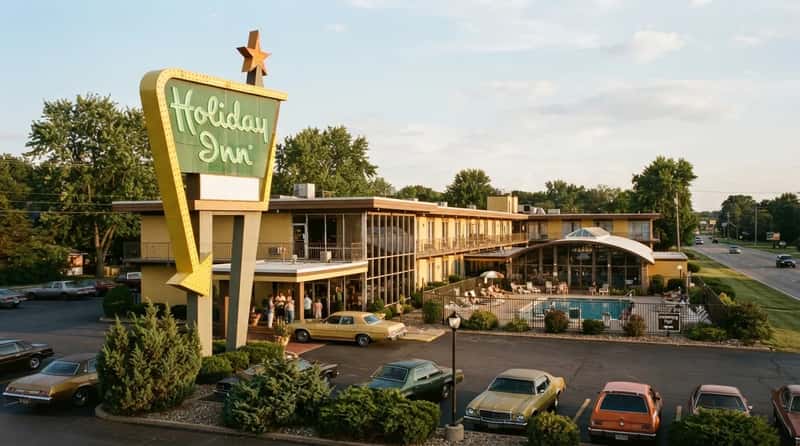
Holiday Inn still exists, but the Holiday Inn that made 1970s America is as gone as the Ramada Pancake Cottage. Arguably this is the most significant loss on the entire list, because Holiday Inn didn’t just vanish – it deliberately dismantled what made it irreplaceable.
Founder Kemmons Wilson, like Ramada’s founder Marion Isbell, dreamed up the idea of a roadside motor hotel chain after noticing how substandard most motor courts were during a cross-country family trip. The entire concept was built around solving a problem real families actually faced.
By the late 1970s, Holiday Inn was the single largest hotel chain in the United States – a position it held through deliberate standardization and the promise that every property would be identical. That promise was the entire product: hotel-like quality at near-motel rates, plus TV, air conditioning, a pool, and an on-site restaurant.
The 1980s and 1990s expansion into Holiday Inn Express, Crowne Plaza, and InterContinental under one corporate parent shattered that single-brand identity. The classic format – roadside sign, family restaurant, drive-up rooms – was phased out so gradually that most travelers didn’t notice it was gone until it already was.
And now, the chain that belongs at #1 – not because it was the biggest, but because its disappearance changed how Americans think about a hotel stay altogether.
1. Howard Johnson’s: The Brand That Invented the American Road Trip
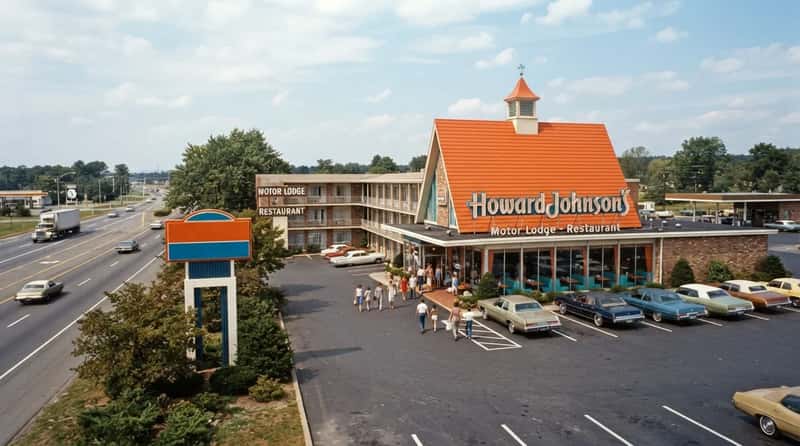
Howard Johnson’s isn’t just the most famous chain on this list – it’s the one whose complete disappearance actually reshaped what Americans expect from a hotel stay, in ways still felt today.
Throughout the 1960s and 1970s, Howard Johnson’s was the largest restaurant chain in the U.S., serving more meals outside the home than any organization except the United States Army. That statistic alone shows how embedded the brand was in daily American life.
The complete Howard Johnson’s experience – the orange roof, the 28 flavors of ice cream, the adjacent motor lodge, the turquoise and orange interior – was America’s first true integrated travel brand. You didn’t just sleep there; you ate there, your kids got a treat there, and you stopped there again on the drive home.
Despite its demise, Howard Johnson’s left an indelible mark on the highway system that crisscrosses the country, and on the memories of anyone who spotted that distinctive orange roof on a family road trip. La Mancha Group’s attempt to revive the brand never materialized, and hope for a comeback has quietly faded.
No chain before or since has combined dining, lodging, and childhood memory into a single brand experience the way Howard Johnson’s did. When it died, it took an entire category of American travel with it – and nothing has replaced it.
The Bottom Line
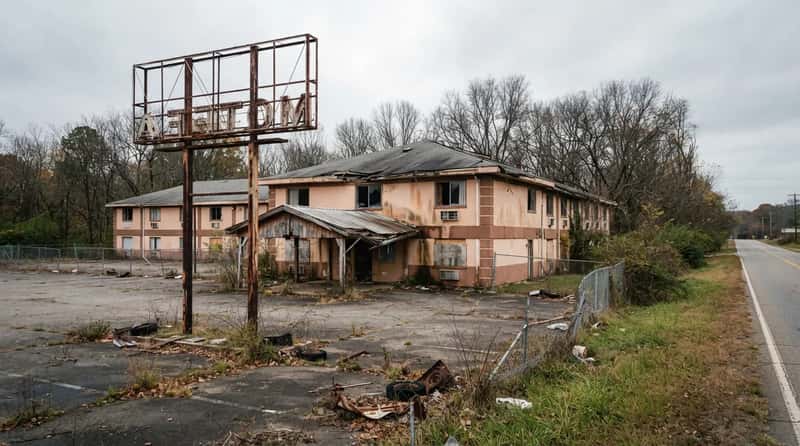
The 1970s American hotel landscape was a battlefield, and most of the combatants didn’t survive. Chains failed for every reason imaginable – a founder dying too young, a summer booking that never came, a corporate buyer that valued real estate over identity, or the slow erosion of relevance in a market that never stops moving.
What’s striking isn’t just that these brands vanished. It’s how completely they’ve been erased from public memory – a chain with 800 restaurants, a chain with 650 hotels, a chain that once outfed the U.S. Army, all gone, all largely forgotten.
The real lesson is that size, heritage, and even genuine quality guarantee nothing when ownership changes, the market shifts, or a founding vision gets diluted beyond recognition. Every hotel chain alive today is one bad decade away from this list.
Did we miss one you remember from a childhood road trip? Drop it in the comments – chances are someone else has been looking for it too.
Bonus: How to Tell If Your Favorite Chain Is Already a “Zombie Brand”
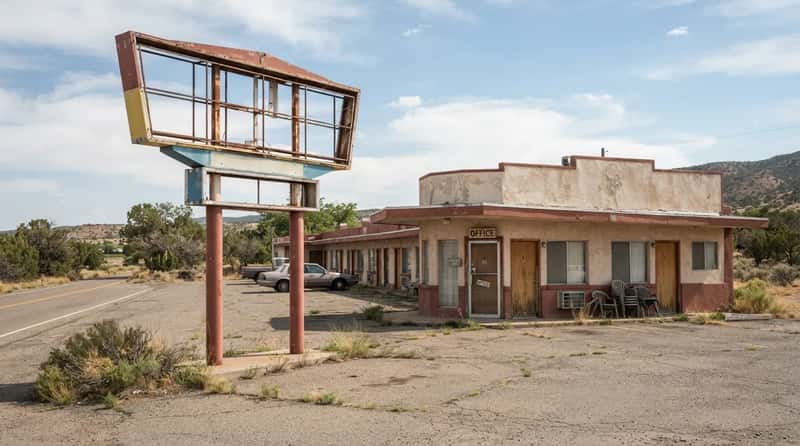
Every chain on this list showed warning signs years before travelers noticed. You can actually check for those same signs on a hotel brand you rely on right now, using public records anyone can access for free.
- Search the USPTO’s TESS trademark database for the brand name. If the registration status shows “cancelled” or “expired” rather than “live,” the corporate owner has already stopped defending the name legally – often the first quiet sign a brand is being phased out.
- Pull the Franchise Disclosure Document (FDD) through your state’s Secretary of State franchise registry (most are public filings). Compare the total unit count from three years ago to today; a shrinking number in Item 20 of the FDD is the same pattern that preceded Rodeway’s and Friendship Inn’s absorption.
- Check the parent company’s most recent 10-K or investor presentation if it’s publicly traded. Brands quietly listed under “legacy” or “other” portfolio categories, rather than named as growth priorities, are frequently next in line for retirement.
- Look at whether new construction is happening under that name. A brand with zero new-build permits in the last two years, only conversions of existing older properties, is usually being wound down the same slow way Sheraton Motor Inns and Holiday Inn’s classic format were.
None of these checks take more than fifteen minutes, and together they can tell you months or years before the headlines do whether a chain is being actively grown or quietly retired.