Most first-time cruisers brace for the wrong mistakes. They worry about forgetting sunscreen or overpacking swimsuits, but the moments that actually get them side-eyed by crew happen in the first three hours onboard, long before anyone even sees a pool deck.
Cruise directors and crew watch the same rookie moves play out sailing after sailing, and none of them make it into the glossy welcome brochure. Some are harmless little tells that mark you as a first-timer. Others can get your towel confiscated, your teenager stopped in a hallway, or your name flagged at guest services before dinner even starts.
#23 – The One Word You Should Never Say Out Loud on Deck

Veteran crew members have one unspoken rule that trumps everything else: never say “Titanic” out loud on deck. Most onboard etiquette is common sense, but this one still catches new cruisers off guard, and more than a century later, it’s apparently still too soon for the crew.
First-timers usually laugh it off as silly superstition. Longtime staff treat it as a real courtesy line, not a joke – it’s about respect for people who live and work at sea year-round, not fear of bad luck. Skip the joke and you’ll blend in with the regulars instantly.
#22 – The Deck Chair Trick That Gets You Publicly Called Out

New passengers think a towel on a lounger holds it for the whole day. Crew members say that’s the exact habit that gets flagged fastest, especially when someone disappears for a three-hour lunch and shopping run while their “reserved” chair sits empty in the sun.
Some lines have stopped tolerating it entirely. Both Celebrity and Carnival now enforce policies where staff remove towels and belongings from chairs left unattended too long, freeing the seat back up for someone actually using it. First-timers are usually stunned the first time it happens to them, standing there mid-sunscreen with no towel in sight.
#21 – Why the Buffet Line Has a Hidden Health Rule

Grabbing seconds at the buffet without a fresh plate feels harmless enough. It’s actually against health code. Cruise lines are required to enforce a clean plate for every trip through the line, no matter how minor the refill.
The rule isn’t about wastefulness, it’s about outbreak prevention. One shared spoon or reused plate can spread norovirus fast enough to shut down an entire buffet section for hours, which is exactly why the illness has such a reputation on ships. New passengers rarely realize how seriously crew take this until they watch someone get gently redirected for double-dipping.
#20 – The Handwashing Habit Crew Members Actually Watch For
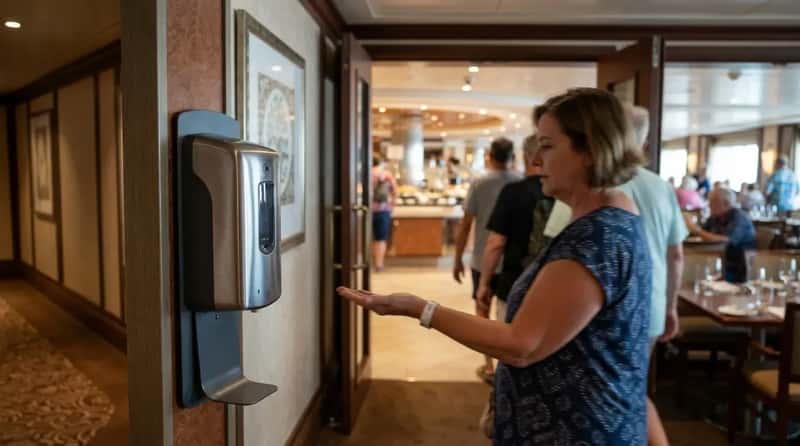
Those hand-sanitizer stations at every doorway aren’t just for show. The CDC specifically recommends frequent handwashing on cruise ships, especially before meals, because illnesses like norovirus spread fast in close quarters with thousands of shared surfaces.
First-timers often walk right past the stations without a second thought. Regulars use them before every single meal, no exceptions, because they’ve learned the hard way what happens when they don’t. Crew members say it’s the single biggest predictor of who gets sick mid-cruise and who sails through symptom-free.
Fast Facts
- Norovirus is the most frequent cause of diarrheal disease outbreaks on cruise ships, responsible for over 90% of them.
- 2024 saw more gastrointestinal illness aboard cruise ships than any year since 2012, with 16 outbreaks affecting 1,894 passengers and 245 crew members.
- Despite the nickname, cruise ships account for only about 1% of all norovirus outbreaks reported nationwide each year.
- The CDC calls proper handwashing the single most effective way to prevent the spread.
#19 – Boarding Isn’t First-Come, First-Served the Way You Think
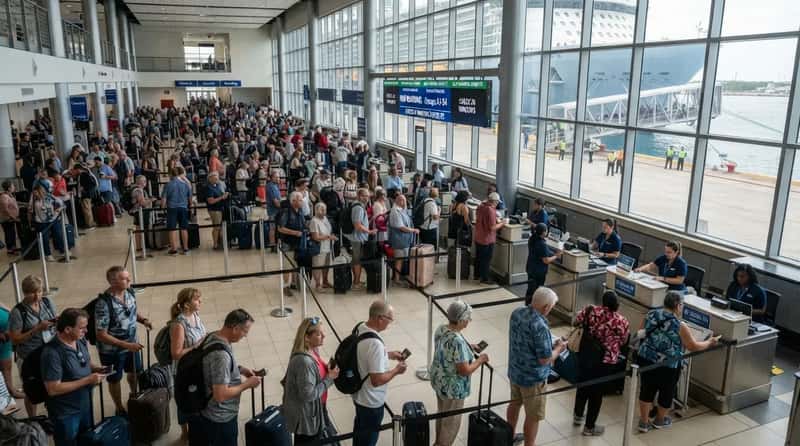
New passengers rush the terminal expecting a race for the best cabin experience. Staff know better – ships run on strict timelines, and boarding windows exist because the whole embarkation process depends on everyone showing up roughly on schedule.
Confusingly, showing up too early doesn’t help either, since cabins usually aren’t ready yet. Arriving late creates bottlenecks for hundreds of other passengers behind you, while arriving right on time sets a calmer tone for the entire trip. Most first-timers never realize their assigned check-in window actually matters until they’re stuck waiting in a slow-moving line.
#18 – The Emergency Drill You Genuinely Cannot Skip

Some new cruisers try to skip the muster drill, assuming it’s optional orientation fluff. It isn’t. International maritime law requires every single passenger to attend before the ship can legally leave port, and crew members are trained to hunt down anyone missing.
Skipping it doesn’t just risk a fine on some lines, it can delay departure for the entire ship full of passengers. Regulars show up early with their life jacket already in hand because they know the drill moves faster when nobody’s being chased down. First-timers are often shocked to learn the ship simply will not leave the dock until every name is checked off.
#17 – Room Service Isn’t the Splurge New Cruisers Assume

Passengers often skip room service breakfast, assuming there’s a hidden charge waiting on their final bill. That fear is usually misplaced. What’s included varies slightly by cruise line, but breakfast room service is almost always free.
Regulars order it every single morning and treat it as one of the best-kept perks onboard, sipping coffee in pajamas while everyone else fights for a buffet table. New passengers usually find out too late, halfway through the cruise, after standing in line for eggs they didn’t need to stand in line for.
Worth Knowing
- Carnival’s continental breakfast stays free from 6 a.m. to 10 a.m., while other room service items are charged individually.
- Royal Caribbean keeps continental breakfast complimentary, then adds a flat $7.95 charge for anything else delivered to the room.
- Norwegian tacks on a convenience charge of up to $9.95 per order for its non-complimentary items.
- Disney runs room service with no standard delivery fee and Princess Cruises charges no room service fee either.
#16 – The Insurance Gap Nobody Explains Before Excursions

New passengers assume the cruise line’s insurance covers them on every shore excursion they book. It doesn’t. The ship’s policy typically covers only the basics tied directly to the cruise line’s own responsibility, like a canceled sailing or lost luggage.
Anything involving your health or an injury during an excursion usually falls outside that coverage entirely. If ziplining, surfing, or ATV tours are on your itinerary, regulars buy separate travel insurance before the trip even starts. First-timers often discover the gap exists only after something goes wrong halfway up a zipline platform.
#15 – There’s No Weight Limit on Luggage, But There’s a Catch

New cruisers pack like they’re flying, stressing over weight limits that don’t even apply at sea. Cruise ships don’t enforce luggage weight restrictions the way airlines do, and some frequent cruisers even drive to their homeport specifically to avoid ever thinking about baggage fees again.
The real limit isn’t weight, it’s your cabin. Most staterooms are smaller than a budget hotel room, and six oversized suitcases simply will not fit under one bed. Regulars pack light on purpose, not out of politeness, but because the physical space makes the decision for them by day two.
#14 – The Tipping Rule That Runs Quietly in the Background
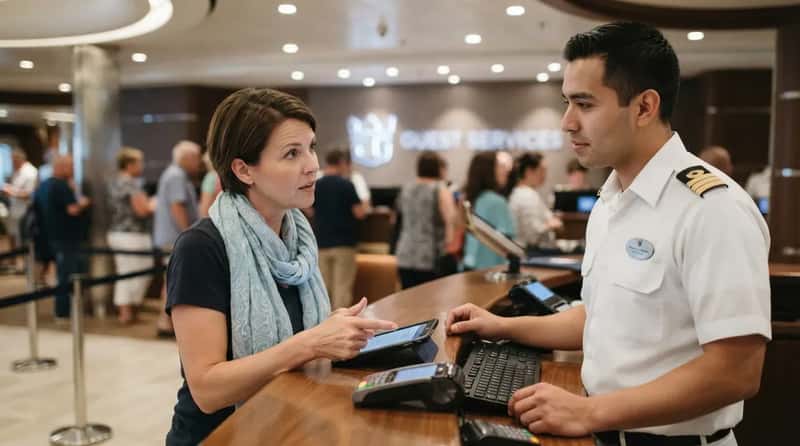
Most new passengers don’t realize gratuities are already quietly stacking up on their onboard account before they’ve tipped a single person by hand. Cruise lines add daily service charges automatically because crew wages are largely built around them.
First-timers sometimes march to guest services to remove the charges, assuming it’s a billing mistake. It’s not, it’s how the system is designed to work. Regulars leave the auto-gratuity in place and add extra only for standout service, because they already know the baseline is covered.
#13 – Why Dinner Table Small Talk Has an Unofficial Ban List

New cruisers often treat the dinner table like a debate stage for current events with total strangers. Veteran cruisers know better than to go there. Politics and religion might feel harmless as an icebreaker, but at a shared table with strangers, they can turn a pleasant dinner into a tense standoff fast.
Add a glass or two of wine to the mix and things escalate even quicker. Cruise directors say this is one of the most common friction points on formal dining nights. Regulars stick to travel stories and ship gossip instead, and the whole table stays friendlier for it.
#12 – The Wine Rule That Surprises Almost Everyone

Many first-timers don’t realize you can usually bring your own bottle of wine onboard, and almost nobody warns them about what happens next. Bring it to the dining room, and most lines will charge a corkage fee just to open and pour it at your table.
Regulars either drink it privately in their cabin to skip the fee, or they budget for it ahead of time so there’s no surprise at checkout. New passengers usually find out the hard way, staring at an unexpected line item on their final bill. It’s a small rule, but it trips up more people than almost any other charge onboard.
Quick Compare
- Dining room: a corkage fee applies just to open and pour your own bottle at the table.
- Cabin: drink the exact same bottle in private and the fee disappears completely.
- Smart move: regulars budget for it ahead of time instead of getting surprised at checkout.
#11 – Formal Night Isn’t the Trap New Cruisers Think It Is

First-timers panic over formal night like skipping it is some kind of social offense. It isn’t. Plenty of passengers choose not to dress up at all, and most ships quietly offer casual dining alternatives for anyone who’d rather skip the fuss.
Regulars know this, so they pack exactly one nice outfit instead of a suitcase full of gowns and tuxedos nobody asked for. New passengers who over-pack for formal night are often, ironically, the only ones who end up overdressed in a sea of sundresses and polos.
#10 – The Doors Marked “Crew Only” Aren’t a Suggestion
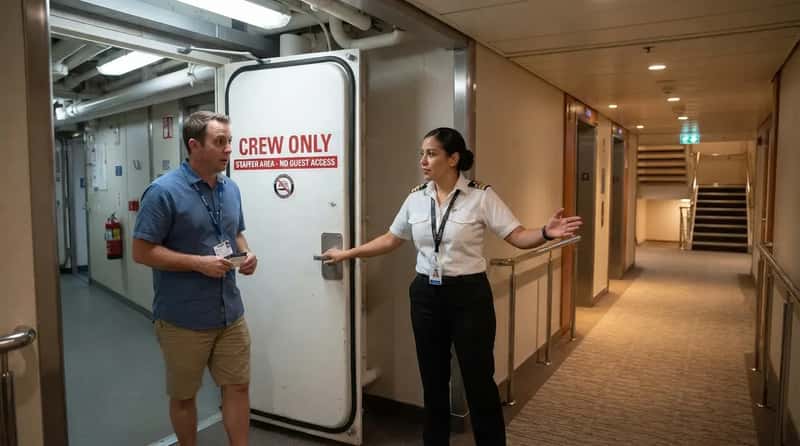
New passengers sometimes wander into unmarked hallways chasing a shortcut back to their cabin. Crew members treat “crew only” doors as a hard line, not a polite suggestion, because they open into working galleys, staff corridors, and living quarters never meant for guest traffic.
Security will redirect you politely the first time. A second attempt tends to get flagged. Regulars stick to marked guest elevators even when the crew route clearly looks faster, because staff say it’s one of the quickest ways to end up in an awkward conversation with security.
#9 – Elevator Manners Say More Than You’d Think

Cruise directors say the elevator is where a passenger’s true manners show up fastest. Holding the door for someone in a wheelchair, an elderly guest, or anyone juggling luggage takes two extra seconds, but plenty of people don’t bother.
New passengers often let the doors close on people carrying trays or walkers without a second thought. Regulars hold it automatically, every time, because on a ship packed with thousands of strangers, small courtesies get noticed fast. It’s one of the quickest ways to stand out for the right reason.
#8 – Hallway Noise Travels Further Than You’d Guess

New cruisers assume cabin walls muffle sound the way hotel walls usually do. They don’t. Noise travels differently on a ship, so hallway conversations and late-night balcony chatter carry much further than people expect.
There’s no official curfew, but keeping the volume respectful after hours is basic common sense that regulars follow without needing a sign to tell them. First-timers are often the ones getting a polite knock from a neighbor, or a call from guest services, on their very first night.
#7 – Specialty Restaurants Book Up Faster Than New Cruisers Expect
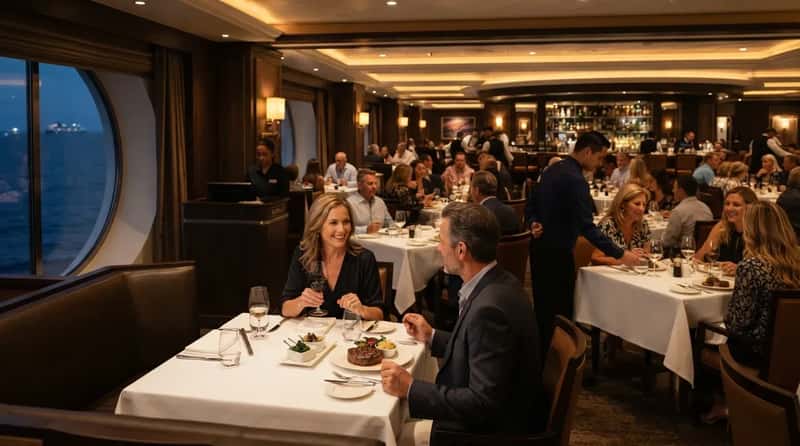
First-timers often assume they can walk up to the steakhouse or sushi spot whenever the mood strikes. Regulars know the good reservation slots vanish within the first day or two, especially on shorter sailings packed with repeat cruisers who know the drill.
Cruise directors say the smart move is booking specialty dining the moment the app unlocks reservations, sometimes before boarding even happens. New passengers who wait until day three usually end up with a 9 p.m. slot on the very last night, if they get a table at all.
#6 – Photographing Crew Members Isn’t as Casual as It Looks
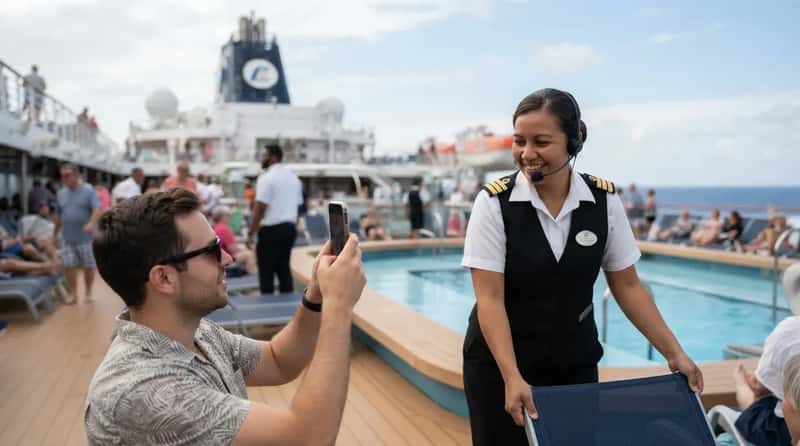
New passengers often snap photos of crew members mid-performance or mid-shift without asking first. Most staff won’t say anything in the moment, but cruise directors say it’s still considered basic courtesy to ask, especially during personal or off-duty moments.
Regulars ask before photographing any crew member directly, the same way they’d ask a stranger on the street. It’s a small habit, but it’s one of the fastest ways new passengers accidentally cross a line without ever realizing it happened.
#5 – Cash Barely Matters Onboard Anymore
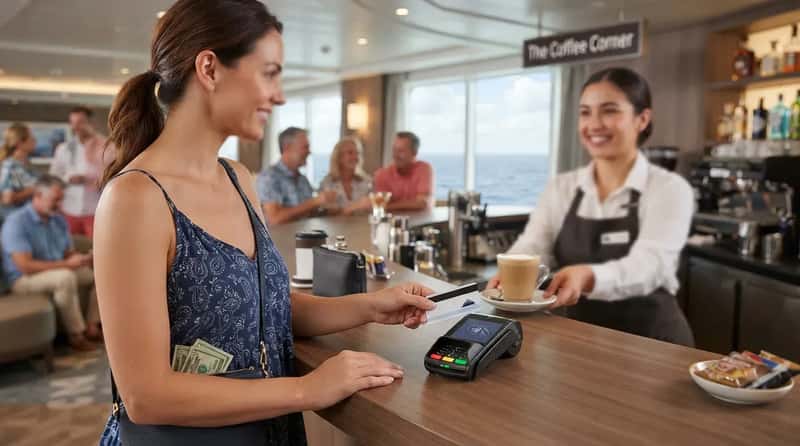
First-timers sometimes bring wads of cash, expecting to need it constantly onboard. In reality, almost everything runs through your room key or the cruise line’s app, tied directly to a card on file.
Regulars barely touch cash the entire trip, saving it only for port tips or the rare crew member who prefers it directly. New passengers often end up carrying bills for a week they never actually needed, only to convert it all back at a losing exchange rate on the last day.
#4 – Balconies and Public Decks Have Gotten Stricter About Smoke
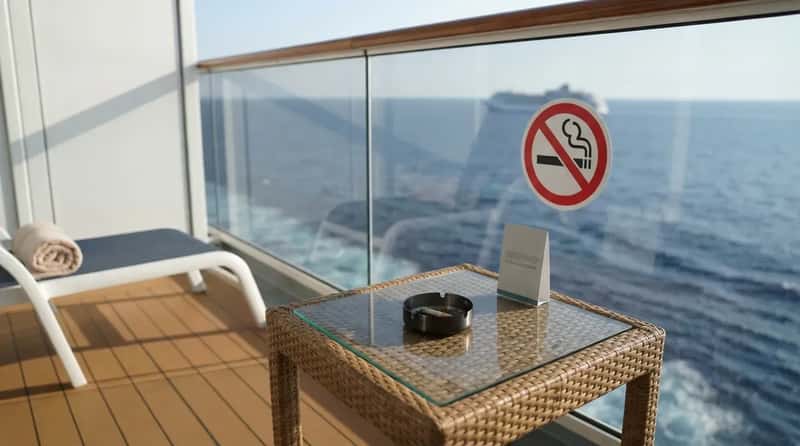
New cruisers used to lighting up on a private balcony are often caught off guard by how tightly some lines now restrict it. Recent policy changes across major cruise lines have narrowed smoking to a handful of designated outdoor spots, cabins and balconies included.
Carnival’s newer onboard conduct guidelines, for example, added bans on smoking in previously allowed spaces alongside new rules on drinks and speakers. Regulars check the daily program or app for exactly where smoking is still permitted before lighting up out of habit. First-timers who assume “it’s my balcony, my rules” are increasingly the ones getting a warning knock from housekeeping.
At a Glance
- Smoking has been narrowed to just a handful of designated outdoor spots on many ships.
- Cabins and private balconies, once smoking-friendly on several lines, are increasingly off-limits.
- Carnival’s newer conduct rules bundle smoking limits together with new restrictions on drinks and speakers.
- Checking the daily app before lighting up now saves regulars an awkward housekeeping visit.
#3 – Bluetooth Speakers Are Getting Banned From Deck Parties

This one catches frequent cruisers off guard too, not just first-timers. New rules on some lines specifically ban Bluetooth speakers and loud personal music in public areas, right alongside a ban on non-electric handheld fans on the dance floor.
Is a cruise line once synonymous with the word “party” quietly toning it down? Plenty of recent cruisers think so. Regulars now stick to headphones or the venue’s own sound system instead of hauling a speaker to the pool deck, and it’s noticeably changed the soundtrack of deck parties over the past couple of years.
#2 – There’s a New Curfew for Minors That Catches Families Off Guard

Families booking their first cruise often have no idea teen curfew rules have tightened noticeably. Some lines now keep passengers under 18 out of public areas after 1 a.m. unless they’re with an adult or at a designated teen event.
The change has drawn real pushback online, with plenty of cruisers calling it an overcorrection that punishes well-behaved teens along with the troublemakers. Regulars with kids now plan late-night activities around official teen programming instead of the main deck. First-timers usually find out about the curfew only when a staff member stops their teenager mid-hallway at 1:15 a.m.
#1 – The Rule Change Sparking the Most Onboard Debate Right Now

Of everything on this list, one policy shift has sparked more passenger backlash than any single rule change in years. One major line’s newer onboard conduct policy – covering everything from dress code to how disruptive behavior gets flagged – drew enough criticism online that the company had to publicly respond to accusations that enforcement felt inconsistent and unfair.
New passengers who board without checking the latest guidelines are often blindsided mid-cruise by enforcement they had no idea existed. Regulars now read the fine print on rule updates before every single sailing, not after boarding. Cruise directors say this one change alone has generated more questions at the guest services desk than any other policy in recent memory.
None of these rules show up in the glossy brochure, and most new passengers only learn them the hard way, usually mid-cruise, usually in front of other people. The smoothest cruisers on any ship aren’t the ones who packed the most, they’re the ones who quietly figured out the unwritten rhythm before anyone had to tell them twice.
Which one caught you completely off guard your first time out? Somewhere on this list, almost every cruiser has a story.