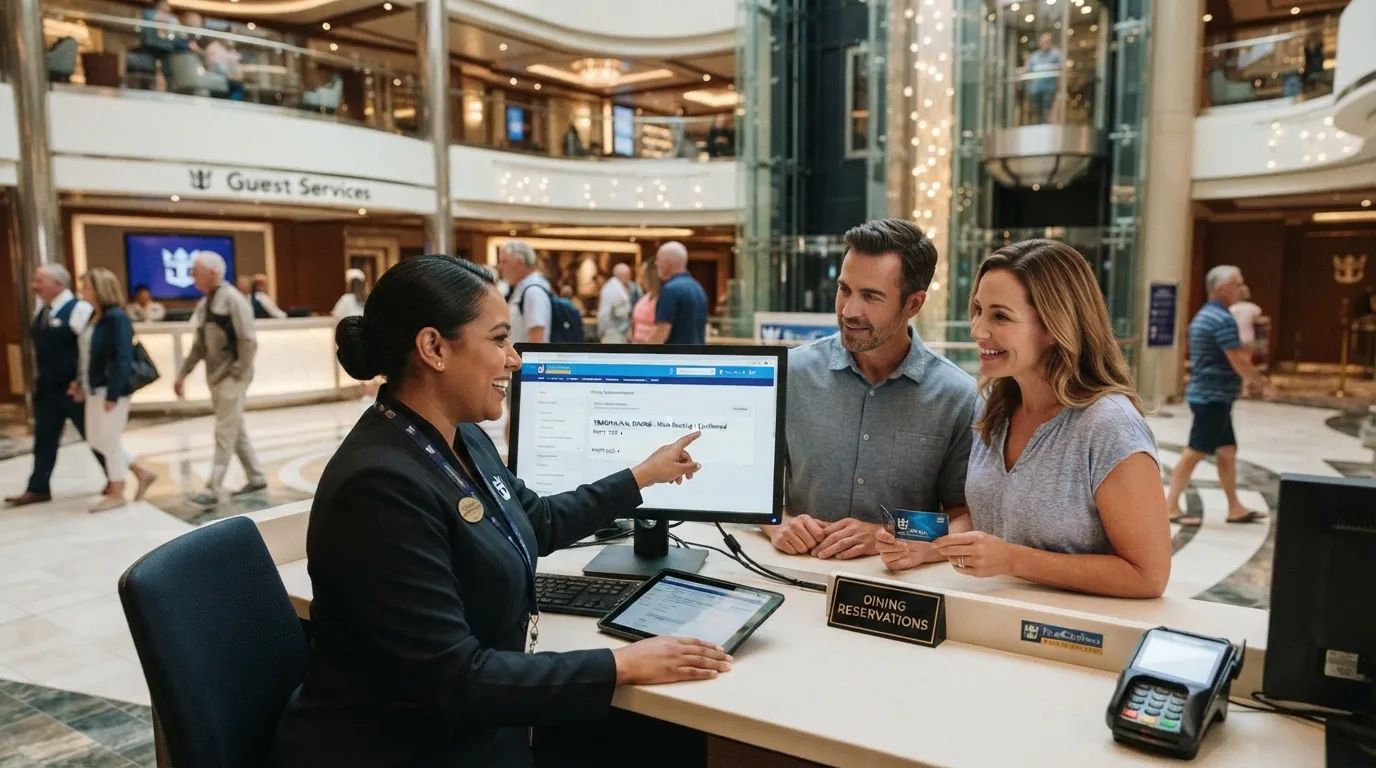
You probably picture a host at the dining room door sizing up your group with one glance. Who’s celebrating, who’s grumpy, who’s about to send the steak back. The reality is less movie scene and more puzzle board, and it says a lot about how your night is about to go.
Cruise dining rooms run on headcounts, table sizes, seating times and what’s open that evening. Your group gets sorted by those details long before the first bread basket lands, and some of the sorting happened months ago. Here’s what the cruise lines’ own guidance reveals, starting with a number that trips up more families than you’d expect.
#23 – Party Size Over Eight Quietly Changes the Whole Seating Plan
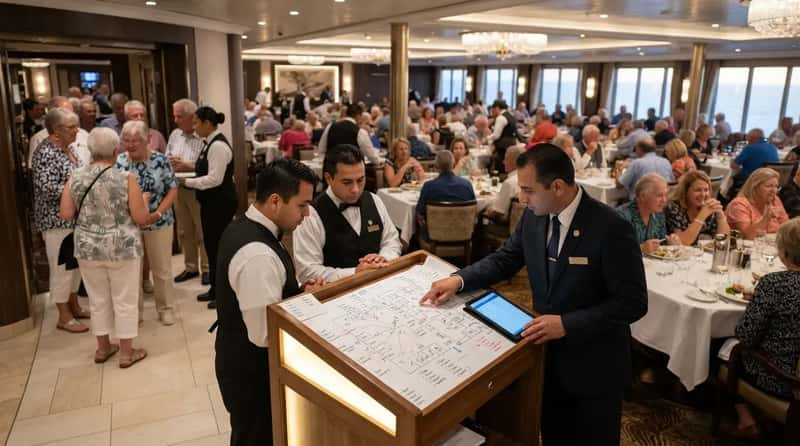
One extra guest can turn a simple dinner into a logistics problem. Carnival says parties greater than 8 guests may need to be accommodated at several tables, and the wait can sometimes be extensive. Most people never realize there’s a line, and nine is just past it.
Tables come in different sizes. The Points Guy notes a table might hold one four-person family or ten mixed singles, couples and groups. A big party doesn’t fit a single slot, so it becomes a puzzle for the seating team.
But the size of your group is only the start. Your dinner time says even more, as #22 shows.
#22 – Early or Late: The Choice That Locks In Your Whole Week
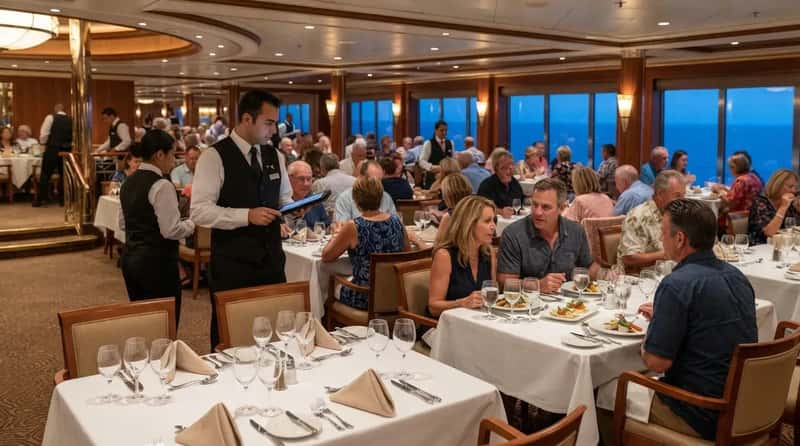
Your seating pick tells the dining team how your evenings will run before you even board. Assigned seating, early or late, gives guests a pre-set dining time for the whole cruise. On Carnival Splendor, that means 5:15pm or 7:45pm in the Main Dining Room.
Quick Compare
- Early seating: 5:15pm on Carnival Splendor, or about 6pm in one guide’s typical range
- Late seating: 7:45pm on Carnival Splendor, or about 8pm in that same guide
- The catch: Whichever you pick, it’s the same time every night
Plenty of cruisers swear late seating is the only civilized choice. Others call it a mistake that leaves them starving after a port day. Either way, you’re committing to the same time every night. The next detail is where a lot of groups get caught.
#21 – Rolling Up at 7 p.m. on Anytime Dining Is the Classic Rookie Move
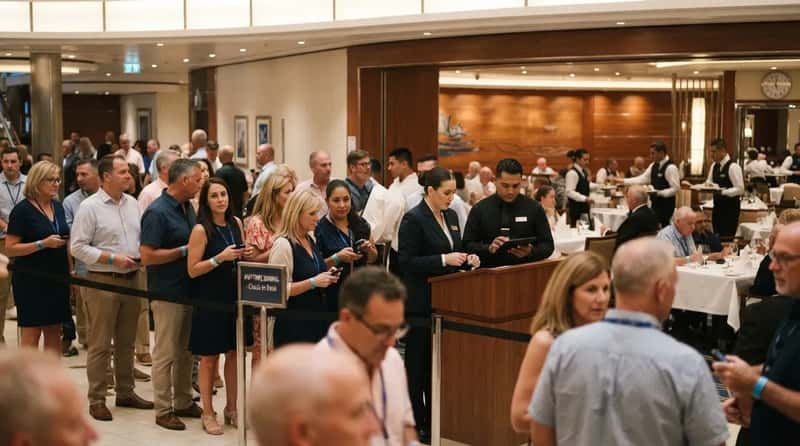
Anytime dining sounds like freedom until everyone has the same idea. One guide puts the peak hours at 7 to 8pm, and says waits of 20 to 45 minutes are common then.
The open window typically runs about 5:30 to 9 p.m. A group that arrives at the rush looks like every other group. Those who arrive at the edges get a very different evening.
There’s also a feature many guests never notice, and it’s waiting in #20.
#20 – The Reservation Feature That Turns a Guess Into a Plan
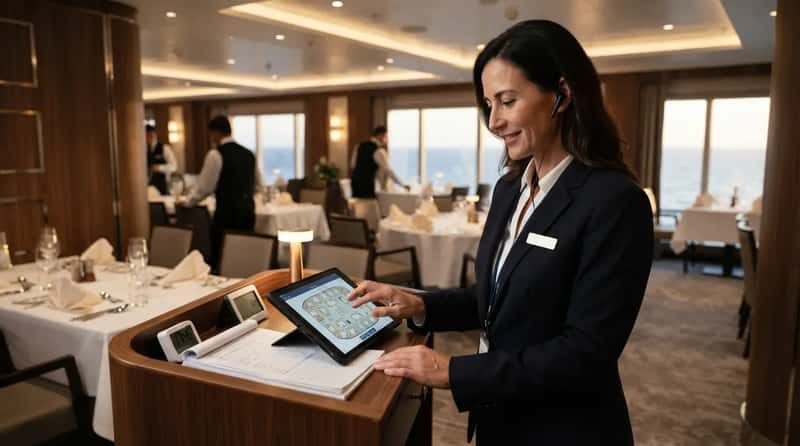
Many guests treat flexible dining like a coin flip, and it doesn’t have to be. The Points Guy says many cruise lines now let you reserve the dining time you’d like each night. A booked time tells the dining room your group is coming.
The rules differ by seating style. You don’t need reservations for an assigned dining time, but booking ahead is a smart move if you want a specific time with flexible dining. A reservation turns you from a walk-up into a known arrival. And for the nights you couldn’t plan, there’s a backup in #19.
#19 – The Waitlist That Lets You Skip the Hostess Stand Standoff

Hovering at the entrance is the least effective way to get a table. The Points Guy says you can put your party on a waitlist for an open table in the cruise line’s app. Then you can have a predinner drink or hang out on your balcony until a table is ready.
Your party size goes into the system. You don’t have to stand in the lobby to be counted. Some cruisers insist this takes the fun out of spontaneous dinners. Others say it’s the only sane way to eat with a group.
Once you’re in the queue, the real math begins, and it’s all about table shapes in #18.
#18 – A Four-Top and a Ten-Top Are Not the Same Dinner
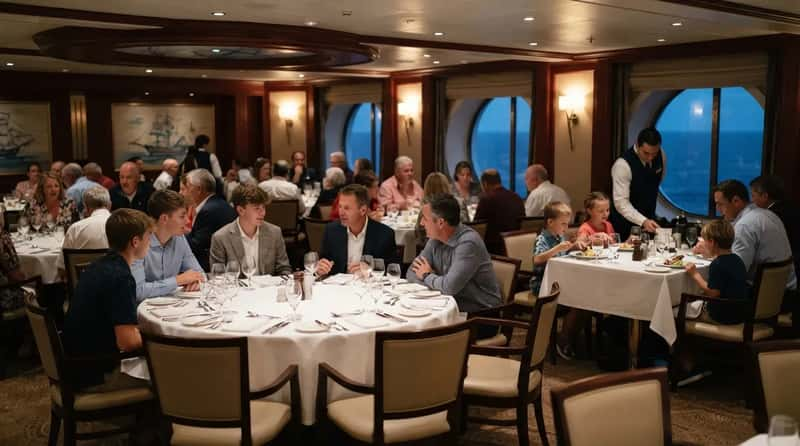
Your party’s size decides whether you eat with strangers. Tables can hold a single four-person family or a ten-person mix of unrelated singles, couples and groups. A couple and a family of six are very different seating problems.
The dining room has to fill every chair it can. That’s why a party of six may land at a larger table with room for other guests. Your group isn’t just being seated; it’s being fitted into a bigger puzzle. The smallest tables turn out to be the hardest to get, as #17 shows.
#17 – Two-Tops Are Secretly the Scarcest Seats in the Room
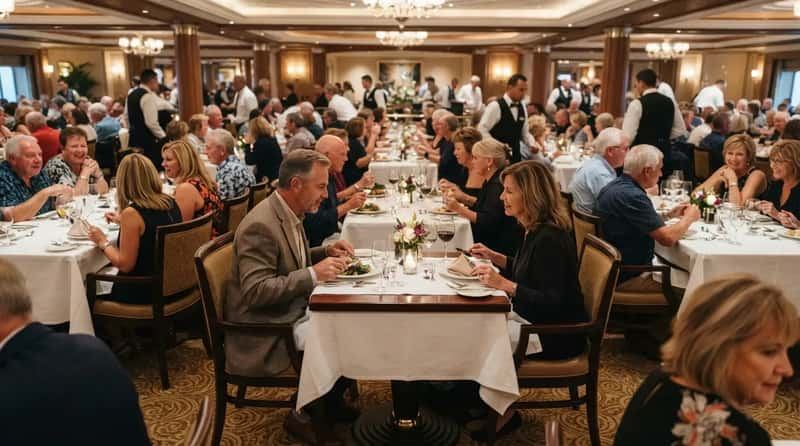
Couples assume a table for two is the default. It isn’t. The Points Guy says desirable two-tops can be hard to come by, and every one of them takes up floor space that could seat more people.
That’s why flexible diners can feel like they’re rolling dice. You might score a two-top one night and end up at a group table the next, or wait an hour to be seated. The room you see is built mostly for groups, not couples.
Big groups have their own surprise, hiding in two words most people misread in #16.
#16 – “Close Together” Does Not Mean “Together”
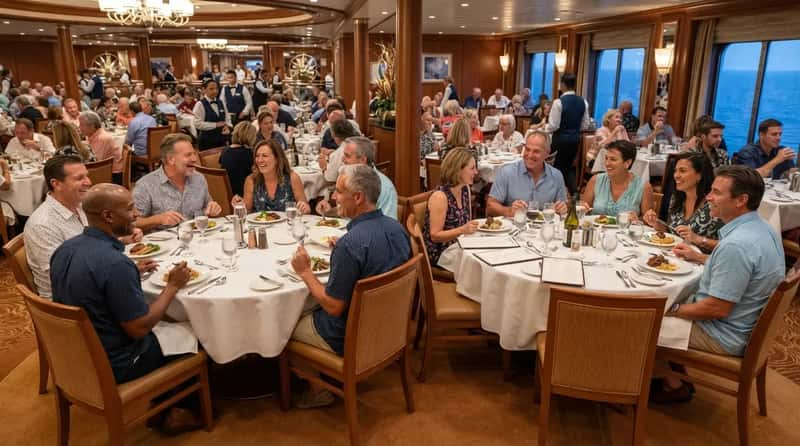
The promise is smaller than most groups assume. Carnival’s wording is that early or late dining assures sitting together at one table or several tables close together. Read that second option again.
Even with the best planning, a large party may end up spread across neighboring tables. Staying “close” is the realistic goal for big groups. If you want one long table for a toast, ask early and don’t count on it.
#15 – Shared Tables Are Normal on Some Lines, Whether You Like It or Not
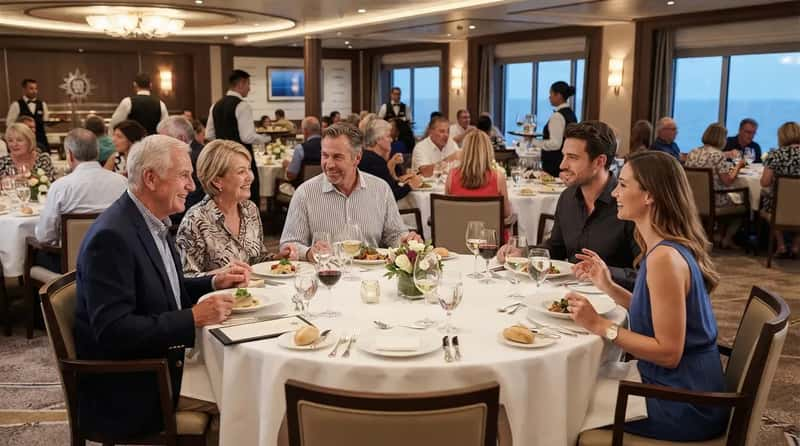
Some guests are shocked to find strangers at their table. On MSC, seating is generally assigned, and shared tables are common in the main dining room. The line says this openly in its own dining guide.
Guests tend to split on this. Some love the social side of dining with other travelers, while others prefer a more private setting. If your party is small, expect to meet the neighbors. It’s worth knowing before you picture a candlelit dinner for two.
If that sounds like your nightmare, #14 is where the private table question comes in.
#14 – The Private Table Request That Isn’t a Promise
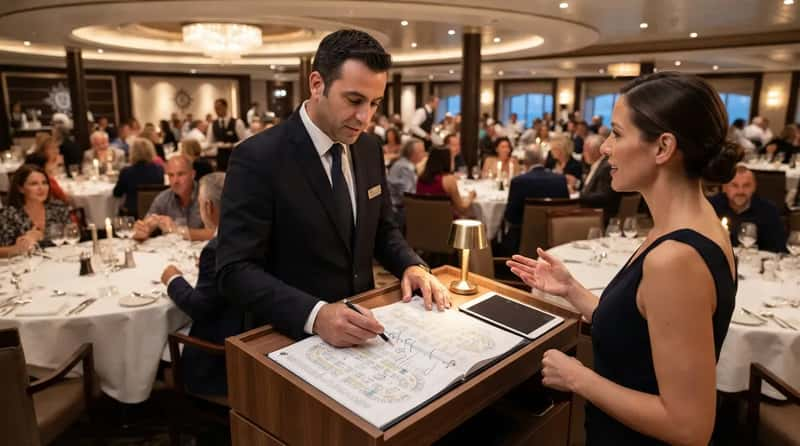
Asking is allowed. Getting it is another story. MSC says private tables can be requested, though availability varies by ship and sailing and is not guaranteed.
The same guide notes that requests for table changes or private seating can be made through the dining staff, but they depend on availability and ship capacity. “Request” is the operative word. A sold-out ship has fewer options to move you around. Your server enters the picture next, in #13.
#13 – Your Waiters Remember You, but Only on Fixed Seating
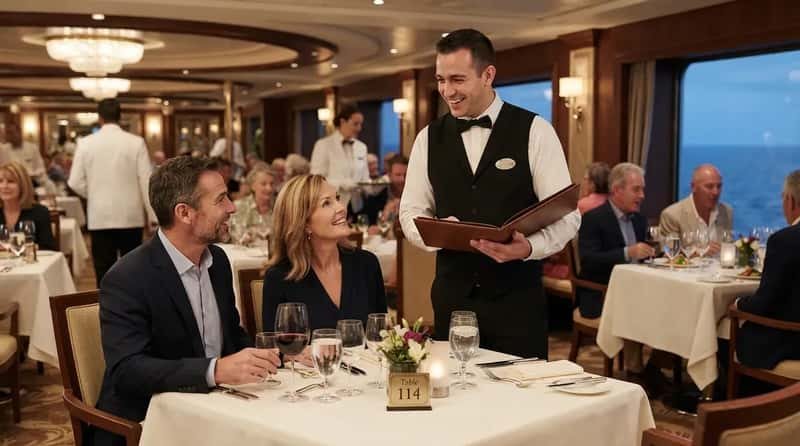
One benefit of assigned dining is hardly ever mentioned. The Points Guy says set-seating guests are given a specific table and the same waiters every night. That means one conversation can carry through the whole week.
One cruise guide says your waiters learn your preferences quickly and the experience feels personal. Flexible diners often trade that familiarity for freedom. It’s a real tradeoff, and many groups don’t weigh it until night three.
And on some ships, even the room itself isn’t what you’d expect, as #12 shows.
#12 – On Some Ships, “The Dining Room” Is Three Different Restaurants
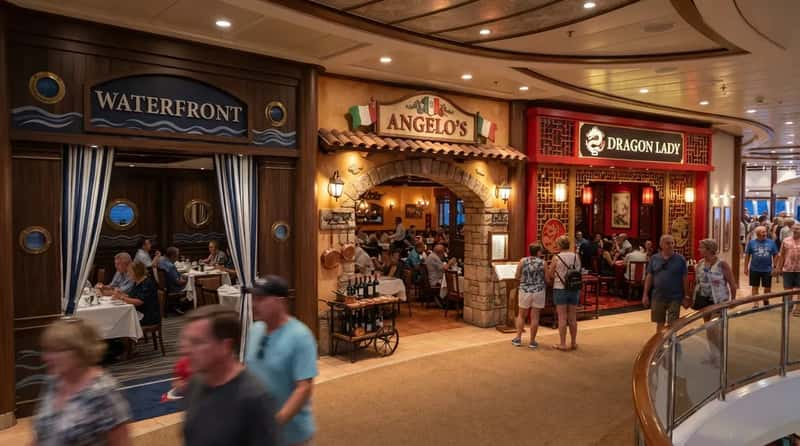
The main dining room isn’t always one room. Carnival’s own ships show how different the setups can be.
At a Glance
- Carnival Adventure and Carnival Encounter: guests rotate between the Waterfront, Angelo’s and Dragon Lady restaurants
- Carnival Splendor and Luminosa: guests keep the same table in one Main Dining Room
- Before you picture the scene: check which setup your sailing actually uses
The Points Guy adds that Carnival, Royal Caribbean, Holland America and Celebrity manage passenger flow by assigning cruisers to specific dining rooms and times. Your assignment sets both the room and the hour. The hours differ far more than you’d think, as #11 shows.
#11 – Seating Times Vary Wildly From Ship to Ship
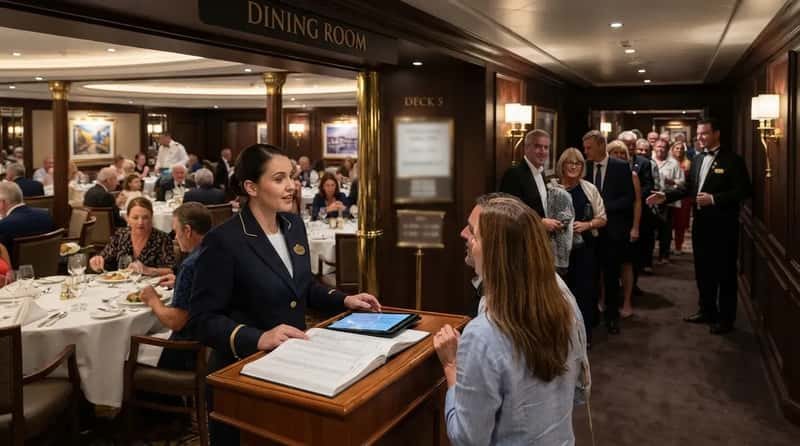
There is no standard dinner clock at sea. Princess lists early at 4:45 p.m., first seating at 5:00 p.m. and second seating at 7:15 p.m. It also says its anytime option runs from 5:30 p.m. to 10:00 p.m.
MSC’s Bella and Fantastica guests typically receive fixed times, most commonly around 5:30 pm or 9:00 pm. That’s a gap of three and a half hours between the two. It’s why a group’s chosen time says so much about how its day is going to go.
Whatever time you land on, the next clue is already in your pocket in #10.
#10 – Your Table Number Is Already Waiting on Your Cruise Card
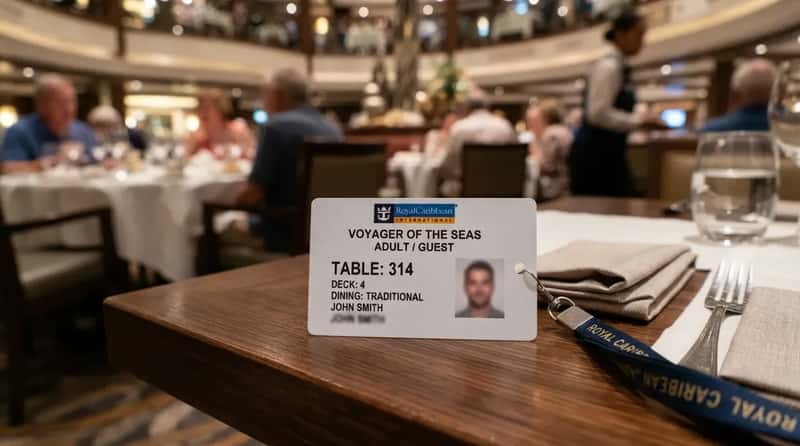
Some guests learn their table by getting lost. On Royal Caribbean, your table assignment is printed on the front of your SeaPass card. The seating was settled before you ever walked in.
That only applies to traditional dining. My Time Dining lets guests eat anytime during dinner hours, according to availability. One card tells you where to go, and the other tells you to wait. You might assume the waiting option comes with a worse meal, and #9 clears that up.
#9 – Nobody Gets a Secret Better Menu, Only a Better Spot
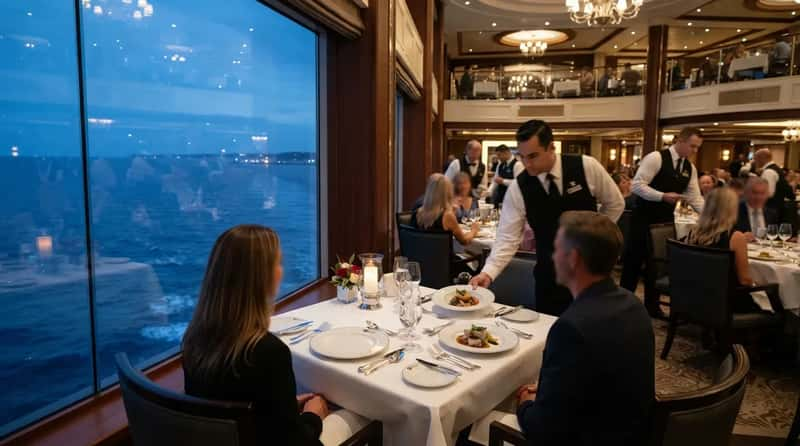
People worry the flexible option comes with a lesser dinner. It doesn’t. Royal Caribbean states that My Time Dining uses the same menu as traditional seating.
The food itself is a rotating lineup. The main dining room offers full waiter service, multiple courses and a menu that changes nightly. What changes your experience is the table, not the dish.
Still, “flexible” isn’t always the same promise on every line, as #8 explains.
#8 – Some Guests Get Guaranteed Anytime Dining, and Others Don’t
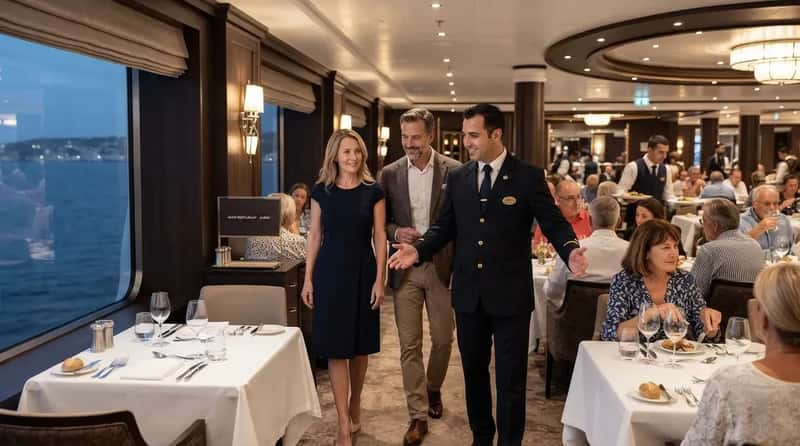
On MSC, Aurea guests enjoy guaranteed anytime dining within the main restaurant’s opening hours. That’s a clear split from the standard flexible option.
Worth Knowing
- Aurea: guaranteed anytime dining during the main restaurant’s opening hours
- Dine on Your Time: capacity dependent, so a table isn’t promised the same way
- Your move: confirm which plan your booking actually lists
Two flexible plans can run on very different rules. Check which version you booked before you assume a table will be there. And if dinner stresses your group out, #7 points to a calmer meal.
#7 – Breakfast Is Open Seating, and That Changes Everything
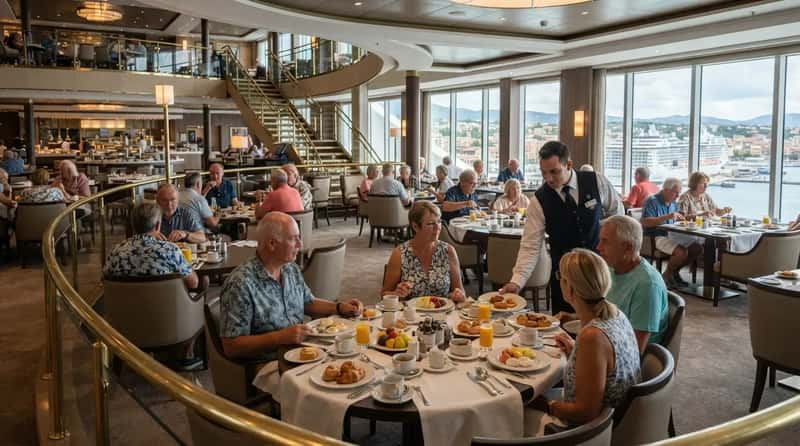
Dinner gets all the attention, and breakfast quietly works the opposite way. On MSC, port day breakfast in the main dining room uses open seating. The line also says sea day brunch uses open seating, so guests dine at their convenience.
That means a group stuck with a late dinner can still eat together in the morning. The most stress-free meal for a party might be breakfast. Many cruisers rank dinner as the highlight, but plenty argue the morning meal is the better value.
Then there are the nights when the pressure is highest, which brings us to #6.
#6 – Celebration Nights Are When Planning Pays Off Most
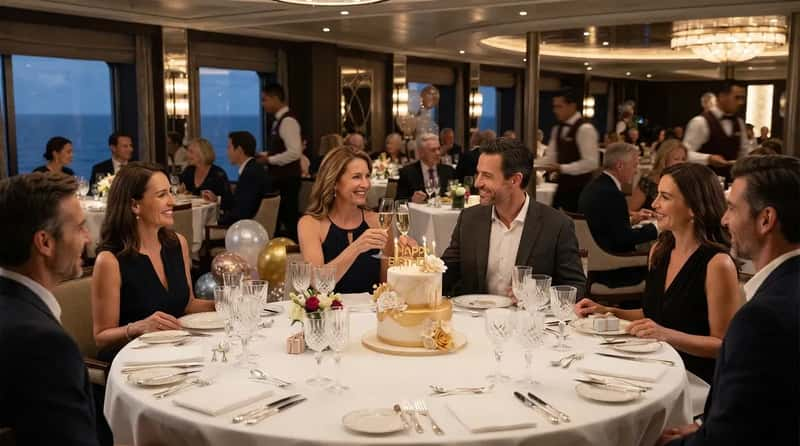
Birthdays and anniversaries put extra pressure on a dining room. One first-timer’s guide says booking ahead is a good move, especially on formal or celebration nights. A party marking a special night isn’t just another table.
The cruise lines also let you sort this out early. At the time of booking, guests can confirm their preferred dining choice. Celebrations are the worst time to improvise. After that, the bill changes the picture in #5.
#5 – Specialty Restaurants Split Parties Over One Word: Extra
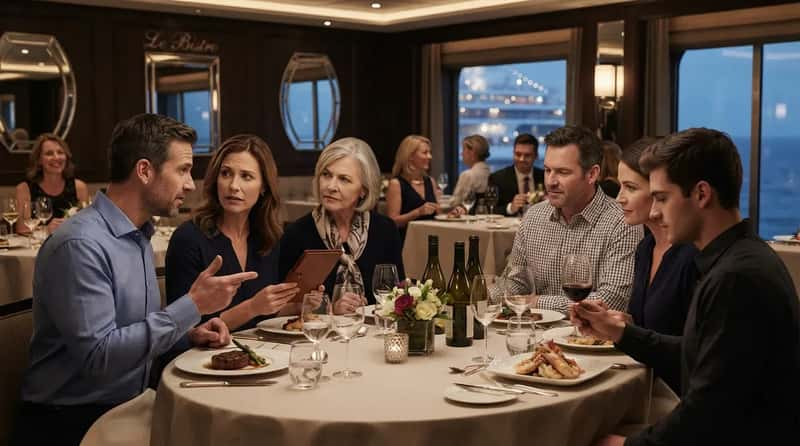
The main dining room is covered by your fare. Unlike specialty restaurants, it’s included in your cruise fare. Specialty spots are optional and may cost extra.
That small word divides groups. Some cruisers argue that paying extra when a full dining room is already included is overrated. Others call it the best night of the week. Few groups agree on who’s paying.
And the most exclusive seat on the whole ship comes next, in #4.
#4 – The Chef’s Table Has a Tiny Guest List and a Big Price Tag
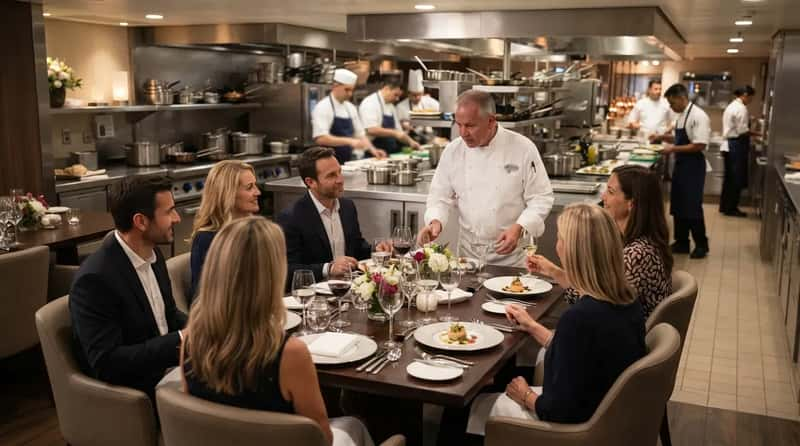
It’s the most exclusive meal on the ship. One guide says it’s a multi-course tasting menu hosted in the galley or a private dining room, often with wine pairings and commentary from a senior chef. It’s not a place for a crowd.
The numbers explain why. A big family might fill the whole thing, or get left out of it entirely.
Fast Facts
- Capacity: eight to sixteen guests
- Price: roughly $100-200 per person
- Setting: the galley or a private dining room
- Availability: spots sell out quickly
#3 – Multi-Course Dinners Can Stretch a Big Party’s Evening
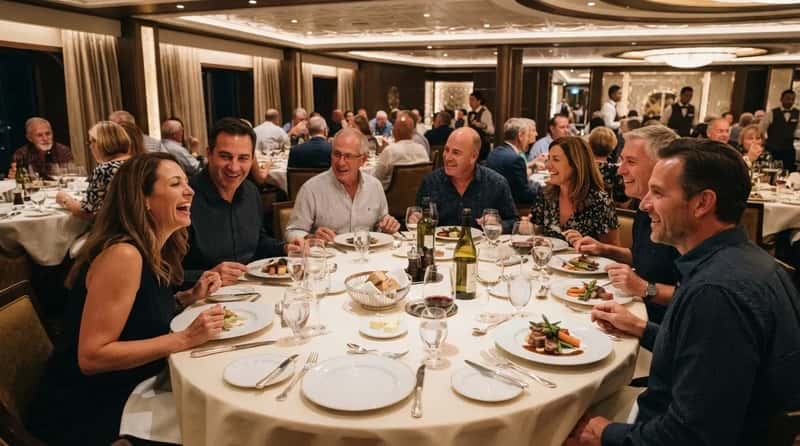
A three-course dinner is quick. A five-course one is a different night. Cruise guides describe main dining room meals as usually 3 to 5 courses with rotating menus.
Add a large group and the pace slows. More plates, more orders and more conversation all add time. Your party size can change how long the evening takes. Fixed seating can also mean a hard stop before the show.
Even a perfect plan can get tangled by something nobody booked, as #2 shows.
#2 – The Friends You Make on Board Might Not Be Able to Sit With You
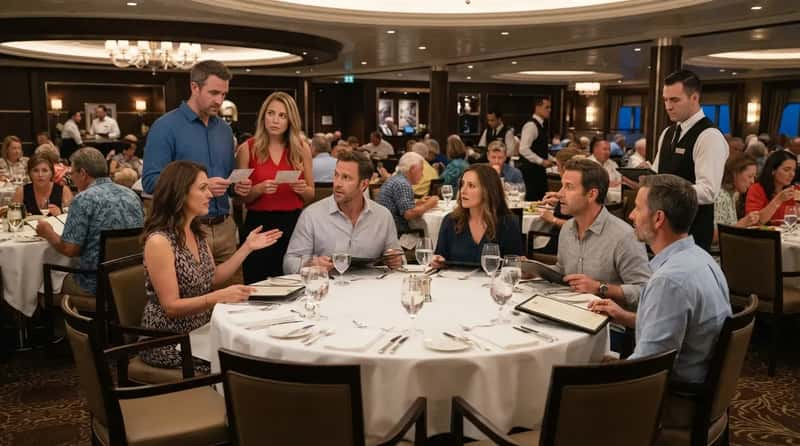
You meet people at the pool and want to share a table. Easy, if you chose the same option. The Points Guy says that if you make friends on board who also chose flexible dining, it’s easy to meet up for dinner.
If they picked fixed seating, your schedules may never line up. The dining choice you made months ago decides who you can eat with now. Plenty of groups only realize this halfway through the cruise. And the biggest factor of all comes next.
#1 – The Seating Decision Was Actually Made at Booking
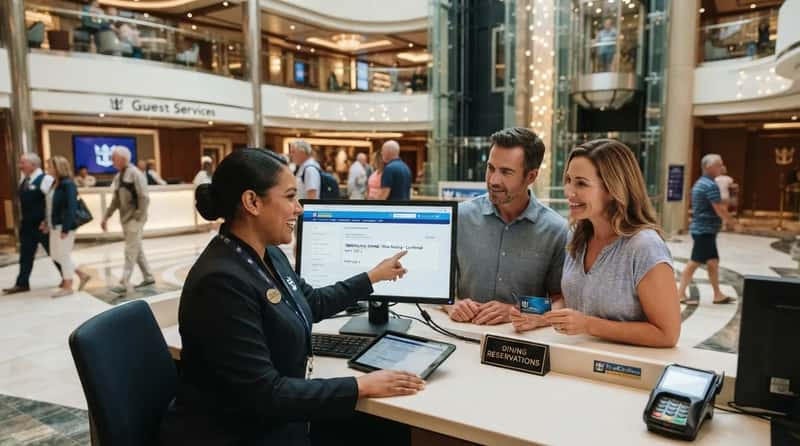
This is the truth most parties miss. Royal Caribbean says that when you book your cruise, you choose between traditional dining and My Time Dining. By the time you board, the biggest decision is already in the system.
If your preference isn’t available, there’s still a path. Guests can check for updated availability at the reservations desk or in the Carnival HUB app once onboard. The real power move is choosing before you sail. Everything else on this list flows from it.
So the host at the door isn’t reading your mood. They’re reading your headcount, your booking and your clock. Parties over eight may be split across tables, two-tops are scarce, and “close together” is not the same as “together.”
The dinner you’ll remember was often decided long before you ever picked up a fork.