Picture the muster drill: hundreds of strangers in sun hats and flip-flops, packed shoulder to shoulder, squinting at a crew member holding a life jacket. It looks like the moment the safety routine begins. For the cruisers who seem strangely calm all week, it’s closer to the last box on a checklist they finished an hour earlier.
Here are 23 things they quietly handle first. None of them are glamorous. One involves a very public announcement of your name, one can decide whether you eat dinner at a sane hour, and one explains why some people look relaxed while everyone else is hunting for a stairwell.
#23 – They Find Their Muster Station Before Anyone Tells Them To
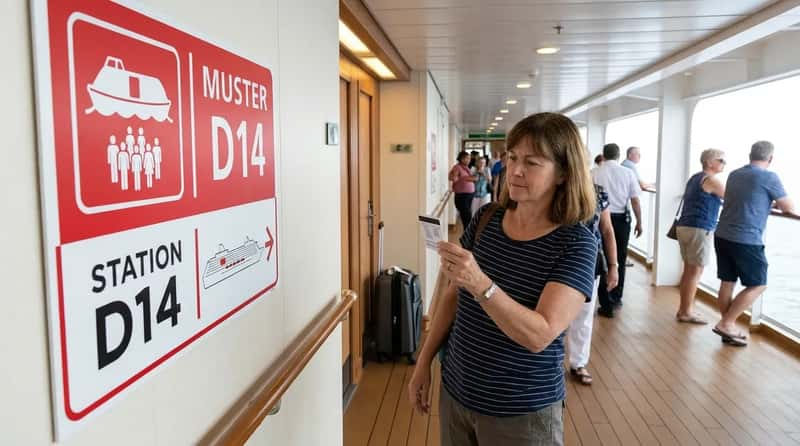
Your assembly station is a specific assigned spot, and it’s often not on the deck you’d guess. Veterans look it up the minute they reach the cabin. While others are still admiring the balcony, they’re already checking the card on the door.
The station is usually listed on a card in the cabin or in the cruise line’s app. Cruisers who have walked there once don’t spend the drill hunting for it. First-timers are the ones wandering the wrong deck while the crowd thins out around them.
#22 – They Finish the Digital Safety Briefing Before the Line Forms

Many ships now split the drill in two. You watch a safety briefing on your own, then show up at your station for a quick in-person check-in. Veterans knock out the video part early, often with a welcome drink in hand.
Lines including Royal Caribbean, Carnival, Norwegian and Princess now use some form of digital muster, though the details vary by ship. The catch is that the station check-in still has to happen. Skip the digital step and you can end up stuck at the station with nothing to show the crew.
It’s the sort of task that sneaks up on you the second the buffet opens, which is exactly why veterans do it first.
At a Glance
- Step one: Watch the safety briefing on your own time.
- Step two: Show up at your assigned station for the in-person check-in.
- Who does it: Royal Caribbean, Carnival, Norwegian and Princess all use some version.
- Fine print: Details differ by ship, so read your line’s instructions.
#21 – They Check the Life Jackets Before They Unpack a Single Shirt
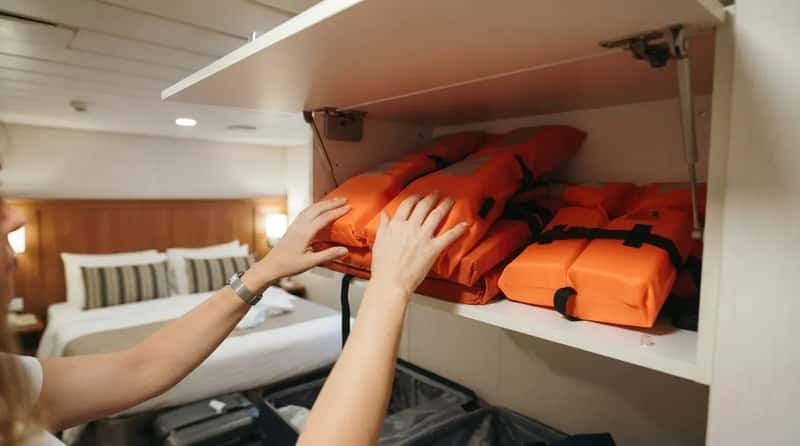
The first thing a seasoned cruiser opens is the life jacket storage, not the minibar. Knowing where the jackets sit removes a scramble later. It also tells you right away whether your family has the right sizes.
Rules require a life jacket for every person on board, and ships carry child sizes too. If you’re traveling with little ones and don’t see one in your cabin, your steward can sort it out. Counting the jackets takes about ten seconds and can save a long hallway search.
#20 – They Walk the Route From Cabin to Station Once, Slowly

Ship layouts are confusing. A route that looks short on a map can involve three stairwells and a detour around a restaurant. Veterans test it with their own legs.
They note which stairs are the straightforward ones. They spot which elevators get mobbed at peak times and which corridors dead-end. The fastest route on paper is often the slowest one in a real crowd. The walk also doubles as a free first tour of the ship.
#19 – They Keep Meds and Documents in the Carry-On, Not the Suitcase
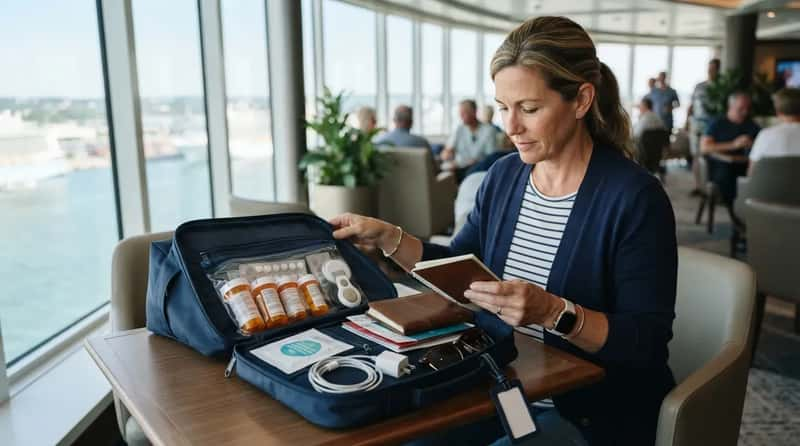
Checked bags can show up at your cabin hours after you board. Veterans plan for that gap. Anything critical stays in their own hands.
That means prescriptions, motion sickness remedies, chargers and travel documents. Cruisers who forget spend the first evening staring at an empty hallway, waiting on a suitcase. A missing medication bag on embarkation day is the classic rookie regret.
#18 – They Lock In Specialty Dining Before the Good Slots Vanish

Popular restaurants and shows fill up fast. Veterans know that waiting until you’re at sea can mean eating at 9 p.m. or not at all. Many book before they even board.
Booking windows vary by line, and some open weeks ahead. Sailors who wait often find only the odd early or late seating left. The best tables can be gone before the ship leaves the dock. That’s why loyal cruisers treat the cruise line’s app like a concert ticket queue.
#17 – They Settle the Drink Package Debate With Actual Math
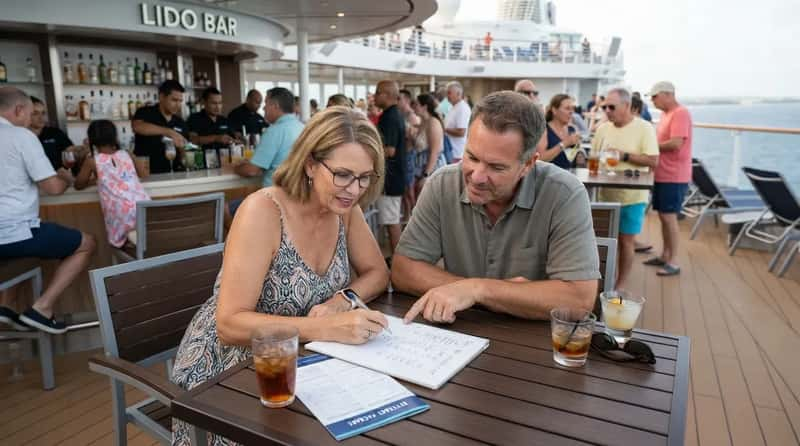
Few topics start more arguments among cruisers. Some swear the package pays for itself. Others call it the most overpriced add-on on the ship.
Veterans estimate what they’d really drink in a day, then compare. They also check whether everyone in the cabin has to buy the same package, since rules vary by line. Plenty of experienced cruisers now say the package is a bad deal for light drinkers.
#16 – They Pick Ship Tour or Solo Adventure Before Port Day

Ship excursions and independent tours both have loyal fans. Veterans settle the choice early, because popular tours can sell out. They also read the cancellation rules before they pay.
The difference that matters most is what happens when you run late. A ship-run tour is tied to the ship’s schedule, while a private one is on you. A late return from a private tour can mean the ship sails without you.
Quick Compare
- Ship excursion: Tied to the ship’s schedule, so timing is managed for you.
- Independent tour: Often more flexible, but a late return is entirely your problem.
- Either way: Read the cancellation terms before you pay.
#15 – They Introduce Themselves to the Cabin Steward on Day One
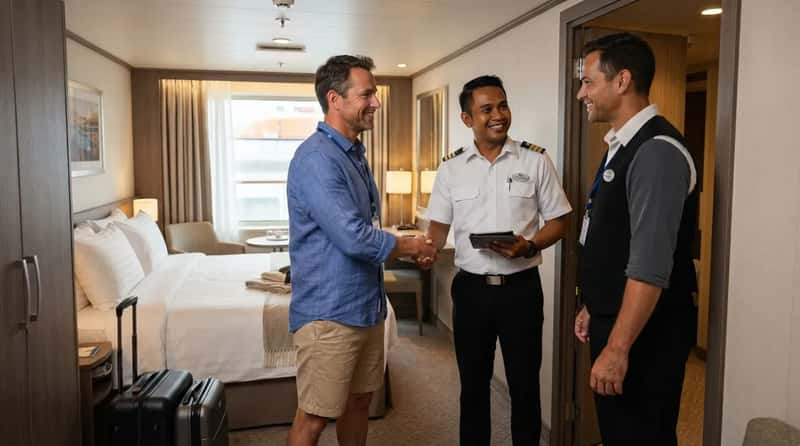
Your steward makes or breaks the small comforts. Veterans say hello right away. They mention pillows, ice or bed arrangements in the first conversation, not on night five.
A short chat sets up a friendly rhythm. It also means requests get handled before anyone is tired and cranky. Stewards tend to remember the cruisers who were kind on day one. Tipping is a separate question and depends on the line’s gratuity policy.
#14 – They Choose Their Dining Style Before the Hostess Chooses for Them
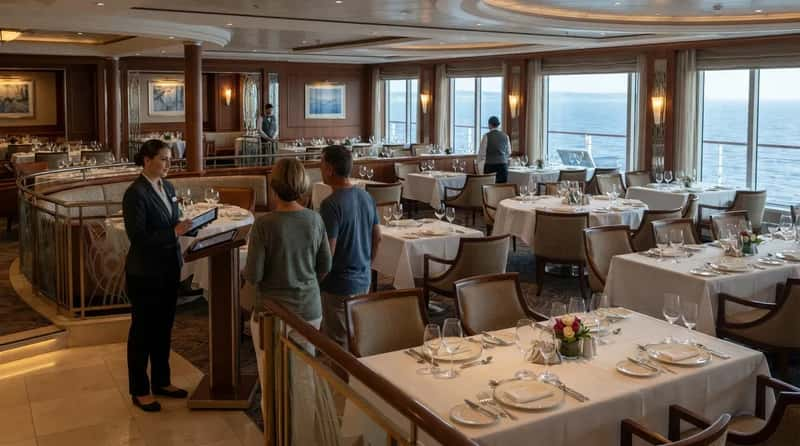
Some cruisers love a set dinner time and a regular table with the same waiter. Others hate being tied down. Veterans know which type they are, and they say so early.
Many lines offer both fixed seating and flexible dining, and the choice may be locked in at booking. Wait until you’re aboard and you may get whatever is left. The wrong seating can mean dinner at an hour you’d never pick at home.
#13 – They Decide Whether Wi-Fi Is Worth It, Device by Device

Ship internet has a reputation for being pricey and slow. Veterans choose in advance, not at the front desk with a line behind them. They also decide who in the group actually needs a connection.
Packages are typically priced per device, and speeds vary by ship. Some cruisers skip the plan and rely on the ship’s app on its own network. Some veterans treat a week without a phone as the real vacation upgrade. Others just need to check work email once a day.
#12 – They Scout the Quiet Corners While Everyone Else Hunts for the Pool

Every ship has a few spots that stay calm. Veterans find them while the crowd is busy with the buffet. It might be a library, an upper deck or a lounge tucked at the back.
The first afternoon is the best time to look, since everyone else is unpacking, eating and heading to the drill. The calmest spot on a ship is often the one nobody finds until day four. Veterans also learn which decks get windy once the ship picks up speed.
#11 – They Set a Backup Meeting Spot in Case the Family Gets Split
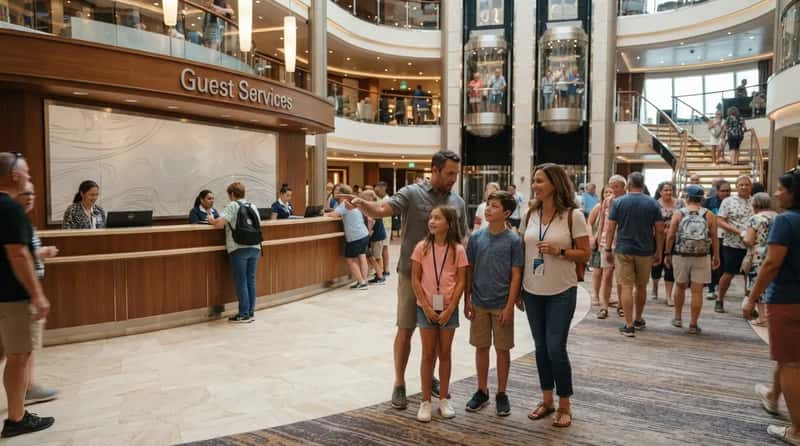
Ships are huge, and phones don’t always work on board. Veterans pick one easy landmark before they ever need it. It might be a certain bar, a particular elevator lobby or the guest services desk.
That matters most with kids and teens. A plan that takes a minute to make can save an anxious hour of searching. A missing child on a ship is every parent’s nightmare, and the fix costs nothing.
#10 – They Download the Cruise App Before the Ship Leaves Wi-Fi Range

The app holds the schedule, the menus, the deck plans and sometimes your muster details. Veterans install it at home, or at least before the ship loses a strong signal. They also log in early.
This avoids a common frustration. Passengers who try to download it mid-ocean often run into slow or paid connections. A dead app on day one can mean you miss the best event of the week. It’s a five-minute job that saves a lot of trouble.
#09 – They Learn Which End of the Ship Is Which
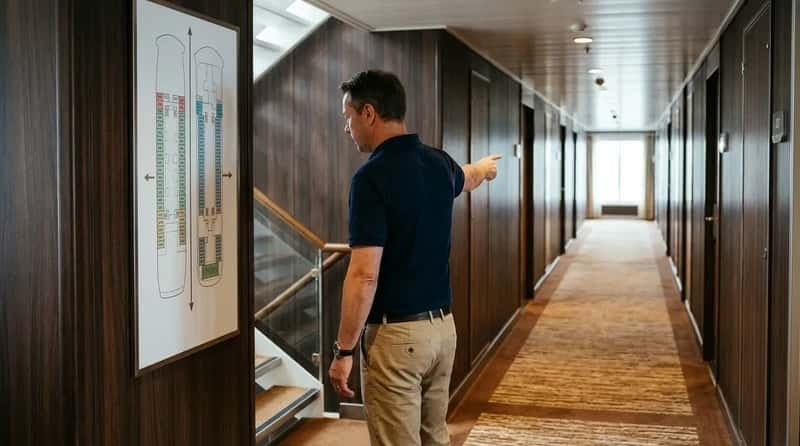
Forward, aft, port, starboard. It sounds like nautical trivia, but it’s the language of every announcement and cabin map. Veterans pick it up fast.
On most ships, odd and even cabin numbers sit on opposite sides. The front of the ship also feels different from the back in rough seas. Once you know which end is which, the ship stops feeling like a maze.
Worth Knowing
- Forward: The front of the ship.
- Aft: The back of the ship.
- Port: The left side when you’re facing forward.
- Starboard: The right side when you’re facing forward.
#08 – They Take Motion Sickness Seriously Before Feeling Queasy
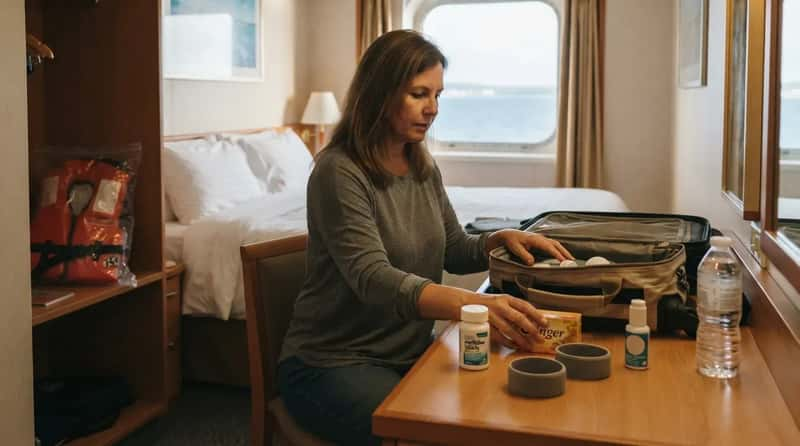
Waiting until you feel sick is the classic mistake. Veterans who know they’re prone to seasickness plan ahead. They pack remedies in the carry-on, not the checked bag.
They also favor cabins with the least motion, which tend to be lower and more central on most ships. Some use wristbands or ginger candies. Treating nausea after it starts is usually harder than preventing it. Anyone with a medical concern should check with a doctor before the trip.
#07 – They Register the Kids for the Youth Club on Day One

Kids’ programs often require parents to sign up before the first drop-off. Veterans handle it right away. That way the kids can start making friends before the first night is over.
Wait too long and you may be standing in line while your child watches others run in. The best time slots for family programs can fill up fast. Parents who plan ahead often win themselves a quiet evening.
#06 – They Check the Gratuity Setup Before the First Bill Surprise
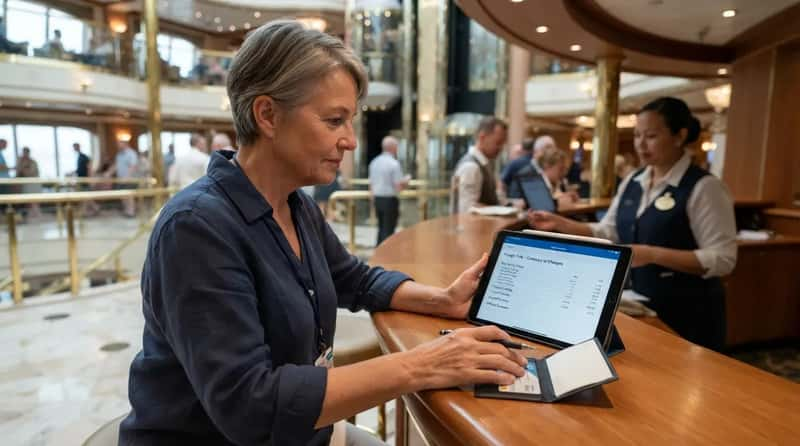
Tips are handled differently on different lines. Many add a daily service charge automatically, and some let you prepay. Veterans find out which applies before they sail.
That stops the double-tipping mistake and the unexpected charge on the final statement. The surprise at the end of the week usually comes from a line item nobody read. Veterans also know they can ask guest services about adjusting the charge if service falls short.
#05 – They Memorize the All-Aboard Time, Not Just the Port Name
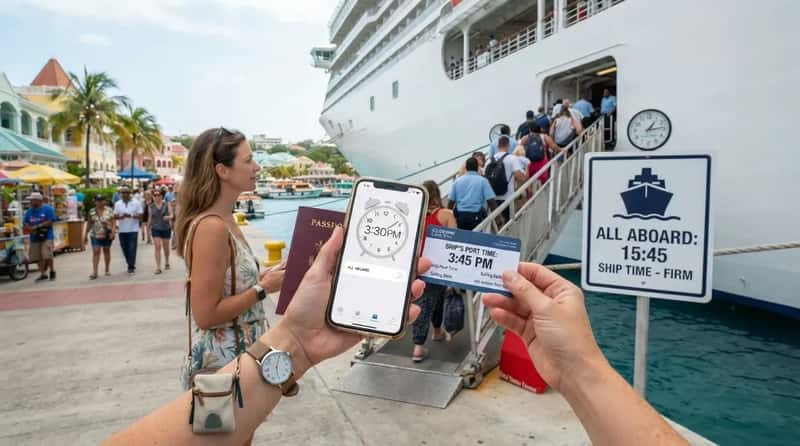
Ships leave on schedule, and they don’t wait around for stragglers. Veterans write the all-aboard time down and set a phone alarm. They also remember that local port time can differ from ship time.
The all-aboard time is usually well before the actual departure. Miss it and you may be paying your own way to the next port. That’s why seasoned cruisers build in a generous cushion, even for a quick coffee on shore.
Fast Facts
- The all-aboard time comes before the ship’s actual sailing time.
- Local port time and ship time can be different, so check which one is posted.
- A phone alarm set for the all-aboard time is the simplest safeguard.
- Ship-run excursions are timed around the schedule. Private plans are not.
#04 – They Never Try to Dodge the Drill
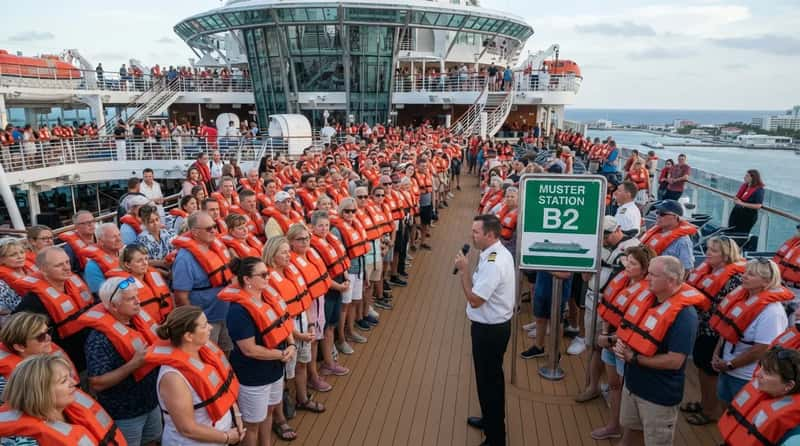
Every year, someone thinks they can slip away and skip it. The drill isn’t optional. Passengers who miss it are typically asked to attend a makeup session.
Crews often announce the names or cabin numbers of missing passengers over the ship’s speakers. Skipping can turn into a very public walk of shame. Veterans know the drill is the cheapest way to avoid it.
#03 – They Pick Shoes They Can Actually Stand In

Drills can mean standing on a crowded deck for a while. Flip-flops and sky-high heels don’t help on stairs. Veterans slip on something sturdy before they head out.
It’s about comfort, but also about moving quickly on wet or steep surfaces. A shoe change before the drill is a small habit with a big payoff. Veterans also keep a light layer handy, since open decks can be breezy.
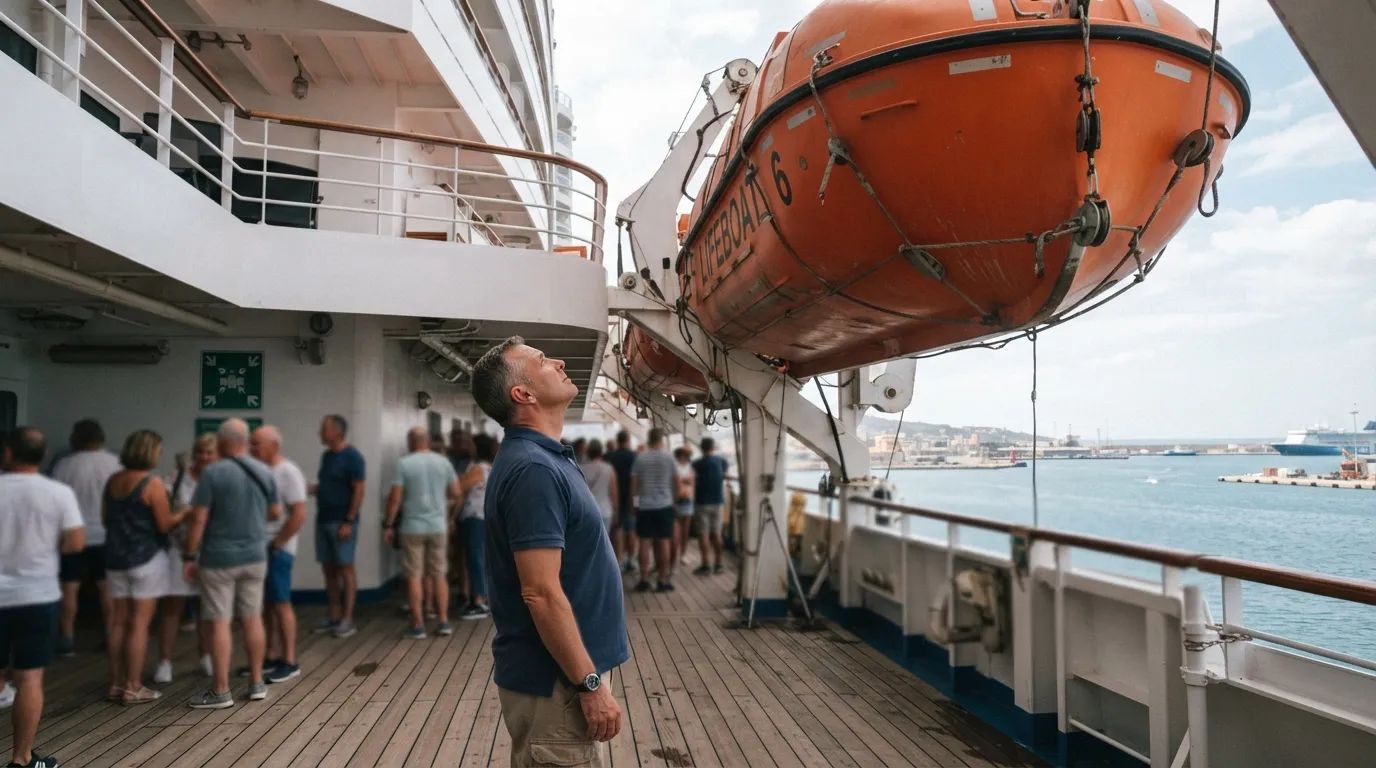
#02 – They Look Up at the Lifeboats Above Their Muster Station

It’s easy to treat the drill like a shuffle. Veterans glance around and study the real equipment. They notice the lifeboats, the signs and the exits.
This sticks better than any video. Since the Costa Concordia disaster in 2012, international rules require passengers to be mustered before or immediately upon departure, rather than within 24 hours. Looking up for ten seconds teaches more than any slide.
#01 – They Put the Phone Away and Actually Listen
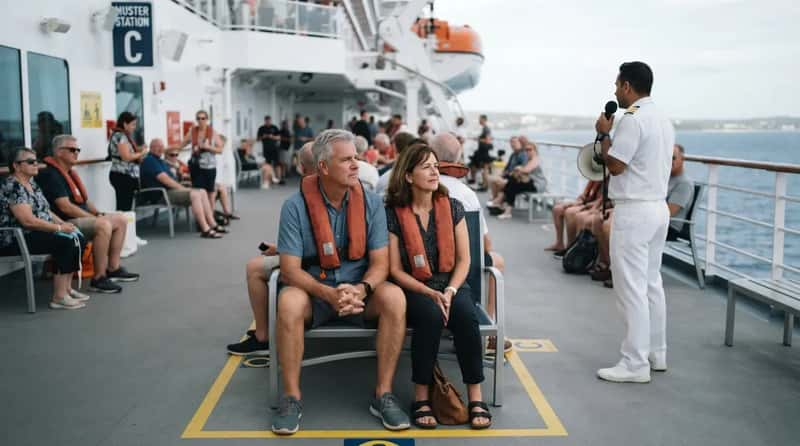
This is the most underrated habit of all. Veterans tune in, even though they’ve heard it before. Instructions can change from ship to ship, and the crew is the only reliable source.
They also learn the sound of the general emergency alarm: seven short blasts followed by one long blast. That signal is the same on a small ship and a giant one. It’s the part of the drill that matters most.
Experienced cruisers aren’t smarter than anyone else. They’ve just learned that the first hour on board shapes the rest of the week. Most of the list is small: a station, a jacket, a dinner reservation, a meeting spot.
The real shock is how many people skip all of it, then wonder why day one felt so chaotic. The drill itself is mandatory. The calm that comes before it is something you can choose.