Somewhere in every airport terminal, a passenger in a crisp blazer leans over the counter and drops the word “honeymoon,” fully convinced this is the moment that finally gets them into seat 2A. Gate agents have seen this move a thousand times, and it almost never works anymore. The upgrade game passengers think they’re playing quietly stopped existing years ago, replaced by something far colder and far more mathematical.
What actually decides who walks past that curtain isn’t charm, timing tricks, or even loyalty alone – it’s a hidden hierarchy most travelers never get to see. Gate agents know exactly how it works, and they’ve been dying to explain it for years.
#23 – The “Nice Outfit” Myth Won’t Move You Up the List
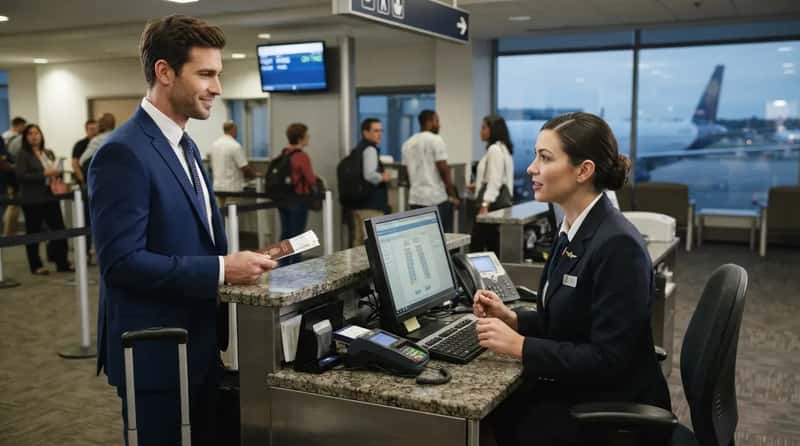
Dressing sharp for a flight still feels like insider knowledge, but that era quietly ended a while ago. The idea that a good blazer or a whispered “honeymoon” story nudges you toward business class comes from a time when gate agents actually had personal discretion to hand out upgrades.
That discretion is mostly gone now. Your outfit might earn you a friendly smile, but it won’t move a single line on an automated priority list. Save the suit for the wedding, not the ticket counter.
#22 – Begging or Complaining Can Actually Cost You a Seat
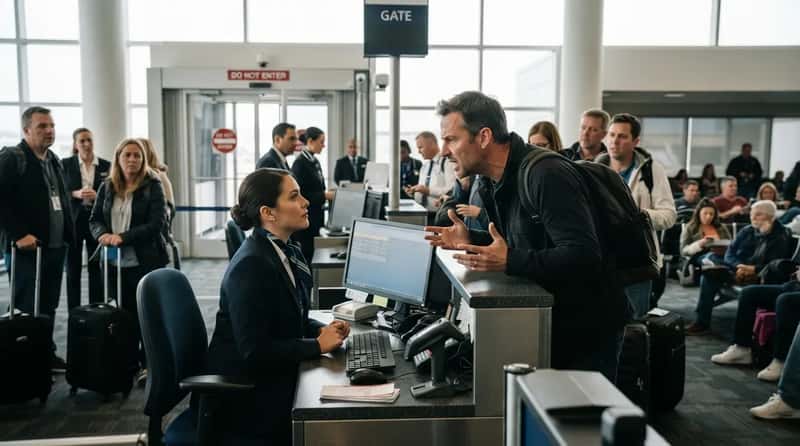
Gate agents remember faces, and a meltdown at the counter is the fastest way to become memorable for the wrong reason. Getting loud or demanding doesn’t push your name up an automated list – it just makes an agent less willing to go out of their way for you.
Timing beats tone every time. The smartest move is being genuinely pleasant and choosing a quiet moment instead of the frantic pre-boarding rush, since a calm interaction leaves the kind of impression an agent might actually act on.
#21 – Checking In Early Only Helps a Little, Not a Lot
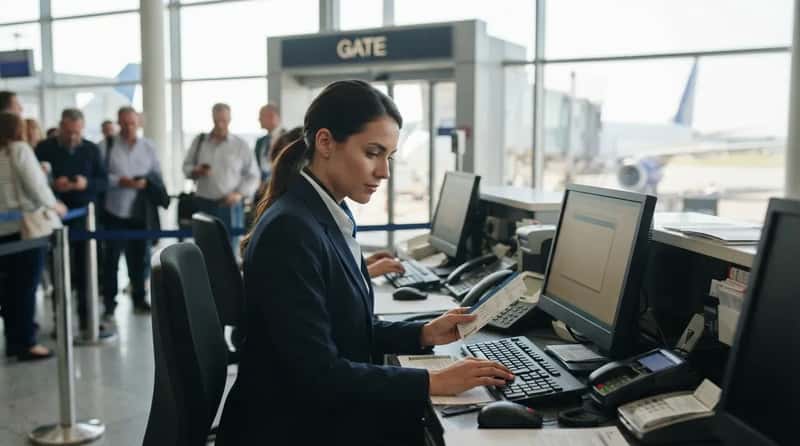
Early check-in feels like a power move, and it does help – just not as much as people hope. It secures your preferred seat and puts your name on a gate agent’s radar sooner, so if upgrades open up from overbooking, you’re already visible.
But it won’t override your actual fare class or status tier. Think of it as a tiebreaker nudge, not a golden ticket – most passengers wildly overestimate how much that single click changes their odds.
#20 – Asking at Check-In Is Basically Wasted Breath
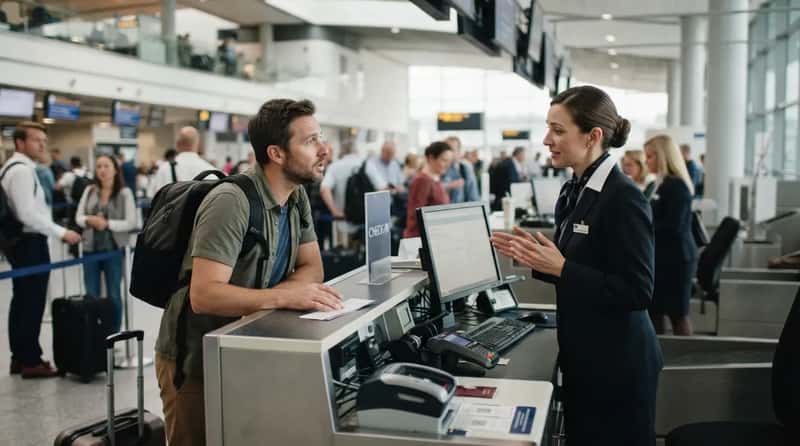
Passengers love pitching their case at check-in, hours before departure, but the timing could not be worse. At that point, the agent often doesn’t even know the final headcount or who’s failed to show up.
By the time you reach the gate, staff finally have a clear picture of the flight and its available premium seats. That means the polite agent you cornered at the ticket counter genuinely doesn’t have the answer you’re hoping for yet.
#19 – The Real Window to Ask Is 30 Minutes Before Departure
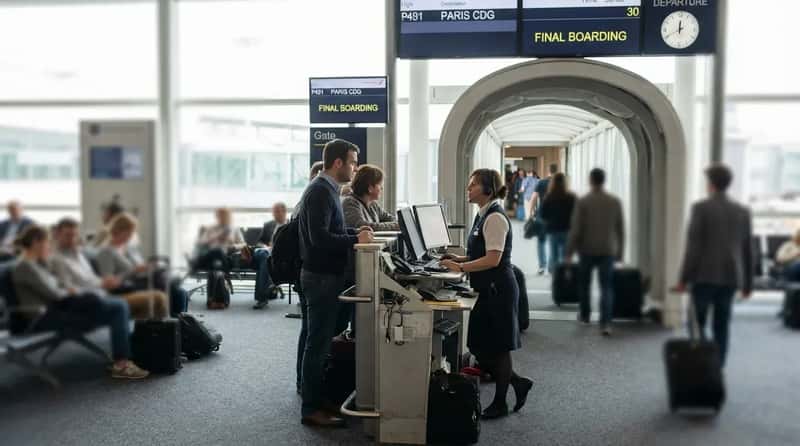
There is an actual sweet spot for asking, and it’s later than most flyers assume. Roughly 30 minutes before departure is when many upgrades get processed and any blocked or held seats finally get released.
That’s the moment no-shows are confirmed and the real seating math locks into place. Ask any earlier and you’re just guessing alongside everyone else in the terminal.
Fast Facts
- Many upgrades process roughly 30 minutes before departure, not earlier
- This is when no-shows and empty premium seats finally get confirmed
- Asking before that window means guessing along with every other passenger
- Gate agents simply don’t have final answers any sooner than this point
#18 – Gate Agents Can’t Just Hand Out Upgrades Anymore
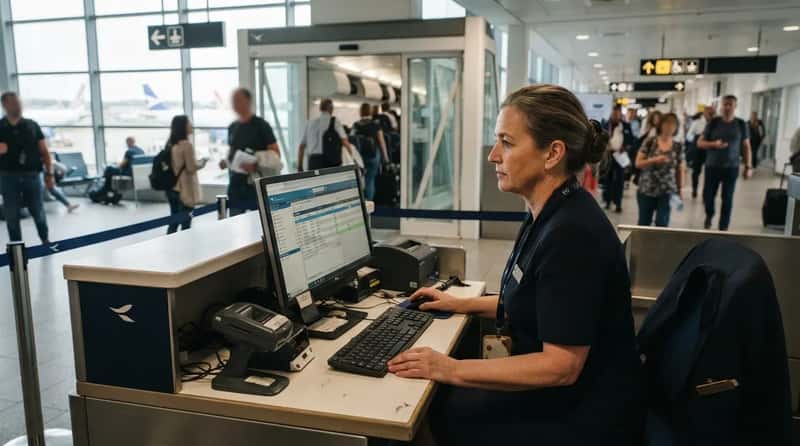
Forget the idea that a friendly agent can quietly wave you into first class. Agents technically still have the power to issue an upgrade, but doing so outside the system raises a red flag with a supervisor and demands a real explanation.
Frequent flyers eligible for free upgrades are ranked on an actual list the agent has to follow. Skipping that list creates paperwork and scrutiny nobody working the gate wants to deal with.
#17 – A Random Upgrade Still Happens – But Only in One Scenario
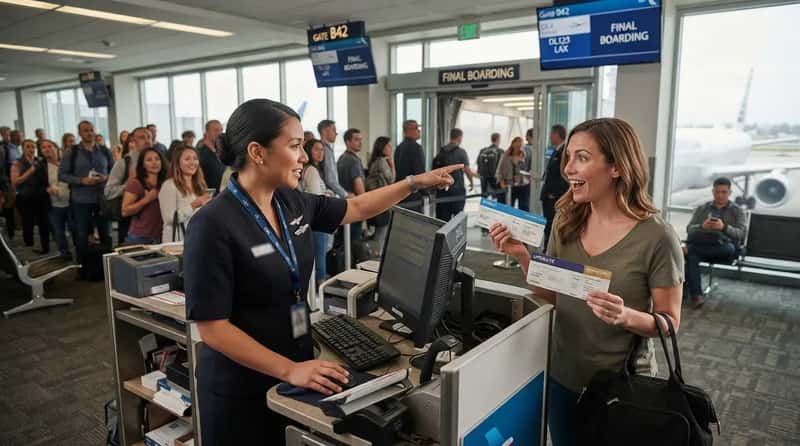
There’s exactly one loophole where a completely unlisted passenger ends up in a better seat. If economy is oversold and the airline needs bodies moved toward the front of the plane, agents can bump someone essentially at random.
It has nothing to do with charm and everything to do with a full cabin needing seats freed up. Weirdly, being in the wrong spot at the right moment is actually the winning position.
#16 – Traveling With 3+ People Can Quietly Kill Your Odds
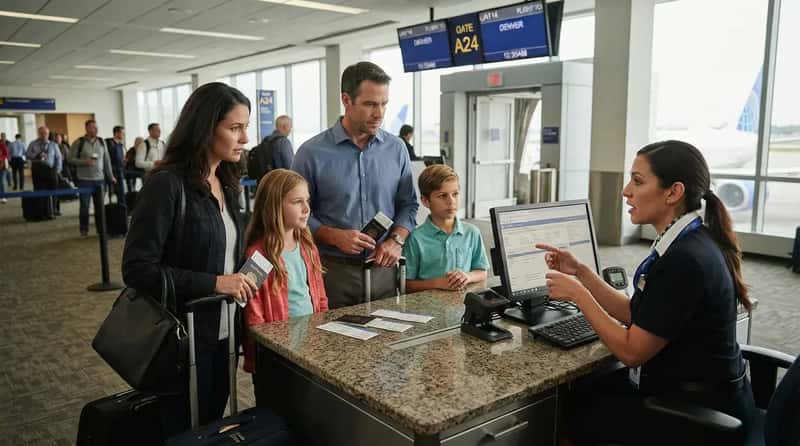
Big group trips feel festive, but airlines quietly treat them as an upgrade liability. Once a reservation includes three or more passengers, complimentary upgrades typically stop clearing automatically.
That means a family of four with top-tier status can still get passed over simply because the system can’t cleanly clear that many seats at once. It isn’t personal – it’s just cabin math.
Worth Knowing
- Complimentary upgrades usually require clearing every seat in a party at once
- Groups of three or more make that math far harder to complete
- Even top-tier elite families can get skipped for this reason alone
- Solo travelers and pairs clear far more easily than larger groups
#15 – Solo Travelers Have a Hidden Edge
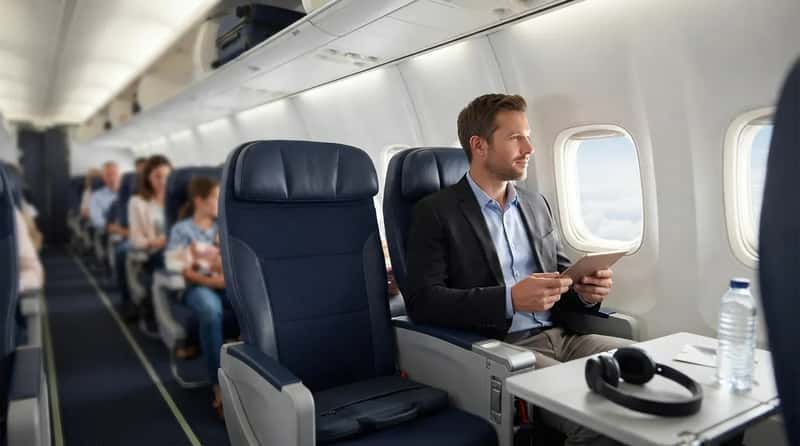
Flying alone genuinely helps, and it’s one of the few upgrade “tips” that actually holds up. A single open seat is far easier for the system to place than two, three, or four seats together.
That’s why the exact same elite passenger might get bumped up on a solo work trip and shut out completely on a family vacation. Solo flexibility quietly outperforms status in these moments.
#14 – Basic Economy Fares Are Almost Always Locked Out
The cheapest ticket you can buy is often the one guaranteed to never see the front of the plane. Basic economy fares are far less likely to be upgraded, while full-fare economy or premium economy tickets carry real eligibility.
Airlines built these restrictive fares specifically to protect premium cabin revenue. Even a top-tier elite flyer can get bypassed entirely if they booked the rock-bottom seat class.
#13 – Premium Economy Has Become the New Upgrade Sweet Spot
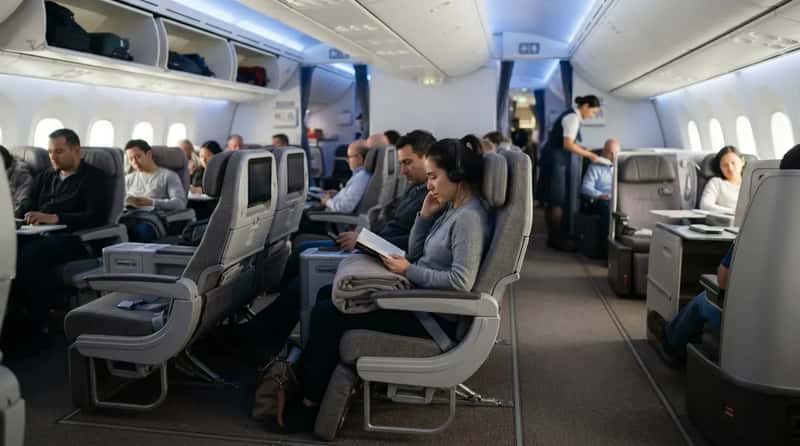
The most overlooked cabin on the plane is quietly the smartest one to book if an upgrade is the real goal. Premium economy gets oversold constantly, and passengers sitting in it are often the first bumped up to business.
Most travelers chase status points without realizing the seat they book already shapes their odds more directly. It’s a strange but very real workaround that has nothing to do with loyalty tier at all.
#12 – Paying More for Your Fare Class Matters More Than People Realize
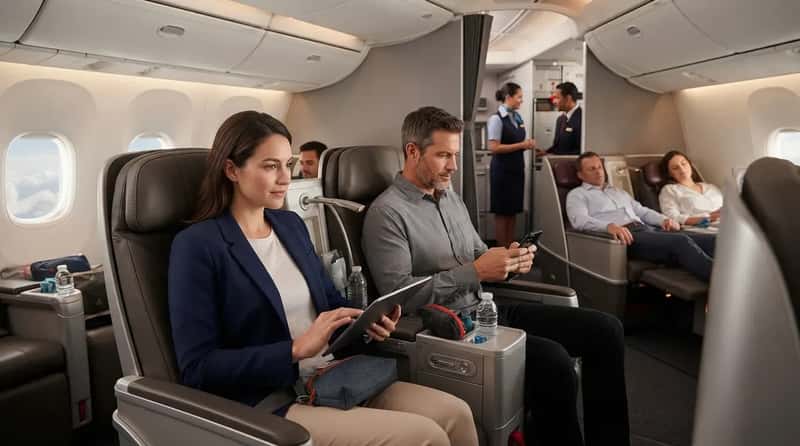
Money still talks, even inside a system built around loyalty. Airlines want to reward passengers who paid closer to full price, not simply the ones who’ve historically racked up the most miles.
That’s part of why two travelers with identical status can have wildly different luck on the same flight. Behind every list sits an algorithm weighing revenue, fare type, and spending – and fare type quietly does more work than most flyers assume.
#11 – Miles and Certificates Can Leapfrog Higher-Status Flyers
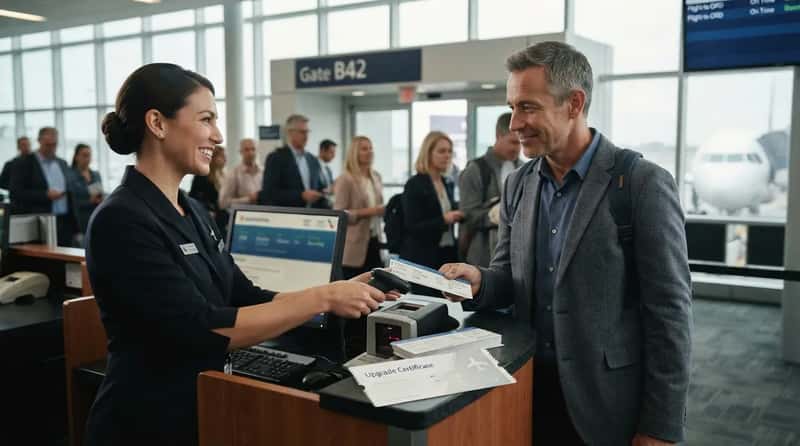
Here’s the part that genuinely surprises frequent flyers: status isn’t always king. Travelers who redeem miles or upgrade certificates generally get priority over those relying purely on a complimentary elite upgrade.
That creates strange situations where a mid-tier elite member leapfrogs a higher-status traveler simply because they were willing to spend miles. From the airline’s side it makes sense – it rewards whoever is actually committing resources, not just whoever flew the most last year.
#10 – Elite Status Tier Still Decides Almost Everything
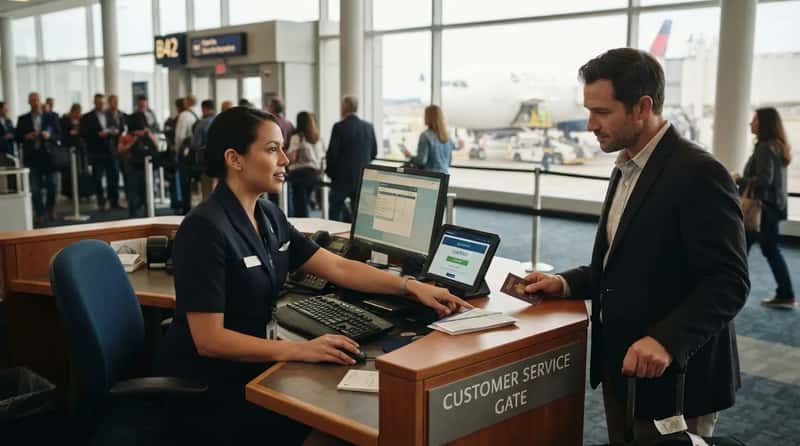
Despite all these exceptions, status remains the backbone of the entire system. Airlines primarily determine who gets upgraded by elite status tier, and the higher that tier, the higher your name sits on the list.
Top-tier members even get confirmed remarkably early – sometimes up to 100 hours before departure for the highest tiers. That’s over four days of certainty before wheels ever leave the ground.
#9 – Loyalty Points Are the Secret Tiebreaker
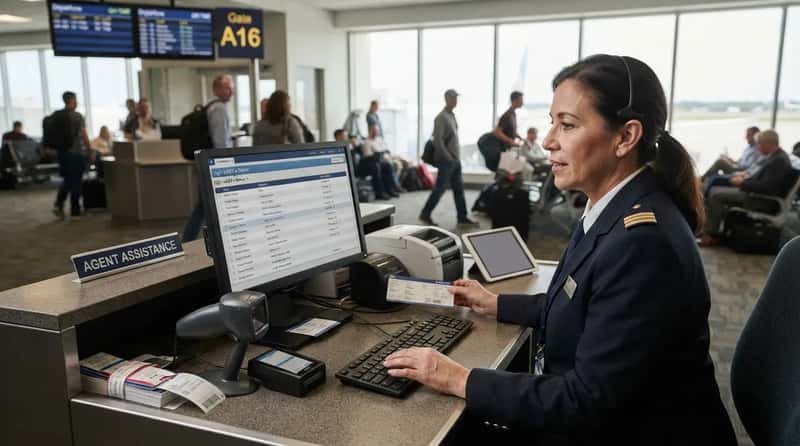
When two passengers share the exact same status tier, most people assume the outcome comes down to luck. It doesn’t – it comes down to a number almost nobody actually tracks in real time.
The final tiebreaker is usually the number of loyalty points earned over the past twelve months. Even credit card spending quietly feeds into that score, since points pile up from far more than just flying.
At a Glance
- Redeemed miles or upgrade certificates
- Elite status tier ranking
- Loyalty points earned in the past 12 months
- Companions sharing a top elite member’s priority
#8 – Companion Upgrades Can Bump a Total Stranger’s Spot
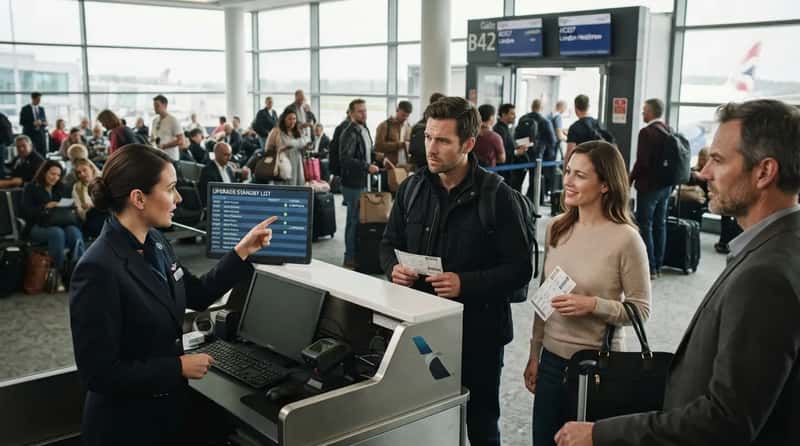
Bringing someone along can shift the entire list in ways most passengers never expect. A traveling companion typically shares the same upgrade priority as the elite member they’re flying with.
That sounds generous until you see the flip side – a companion upgrade can mean another elite passenger doesn’t get upgraded at all. One person’s plus-one quietly becomes a stranger’s downgrade.
#7 – Pilots Sometimes Jump the Entire Line
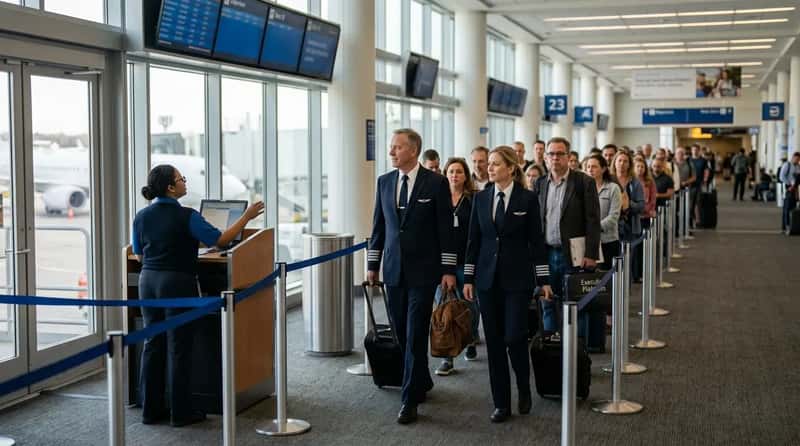
Here’s the detail that genuinely stuns travelers when they hear it for the first time. One Executive Platinum flyer once checked the upgrade list and found themselves ranked eighth – behind five other elite members and two deadheading pilots ahead of everyone.
That ranking comes down to contract terms, not favoritism. Even the highest elite tier in a loyalty program can still get outranked by crew positioning that has nothing to do with customer status at all.
#6 – The Upgrade List Is Visible in the App Before You Even Board
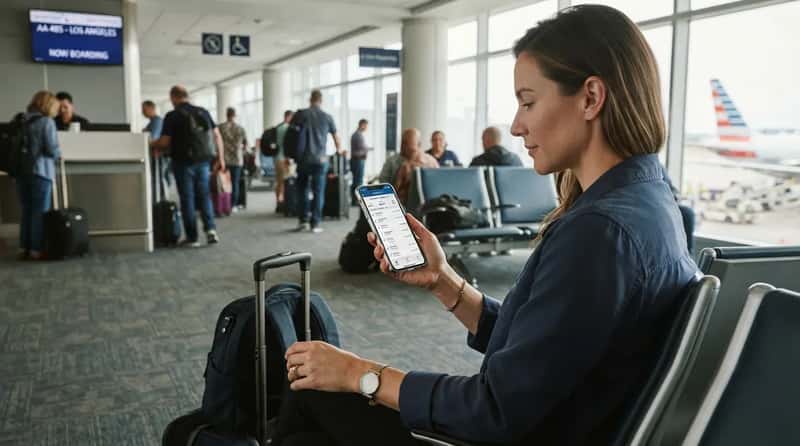
Most passengers have no idea this feature exists, and it removes almost all the mystery from the process. Many airline apps show the actual upgrade list within 8 to 12 hours of departure, letting you see exactly where you stand.
The list only includes travelers who’ve already checked in, and it keeps growing as departure approaches. Checking it yourself is far more useful than asking any human at the counter.
Why It Stands Out
- Shows your real standing without an awkward counter conversation
- Updates continuously as check-ins and no-shows shift the math
- Available hours before gate agents themselves have final clarity
- Turns a stressful guessing game into something you can just glance at
#5 – Aircraft Swaps Can Erase the Whole List in Seconds
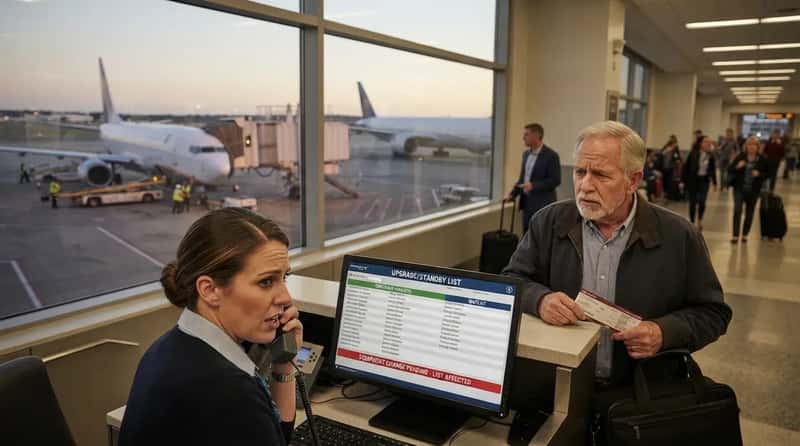
Nothing rewrites an upgrade list faster than a change to the actual plane. Swap a widebody for a narrowbody and entire premium cabins can vanish, forcing airlines to downgrade passengers who were already confirmed.
Go the other direction with a last-minute equipment change and suddenly there’s extra business class capacity that needs filling fast. A confirmed upgrade can disappear overnight through no fault of the passenger – and this is the part gate agents hate explaining most, because it looks personal even though it’s purely mechanical.
#4 – The List Isn’t Static – It Rewrites Itself All Day
Passengers picture the upgrade list as something fixed the second they check in. In reality it’s alive, constantly recalculating as more tickets sell and more passengers check in.
Some travelers get confirmed days in advance while others sit on standby until the final boarding call. A single missed connection somewhere else in the airline’s network can instantly reshuffle the entire list in your favor.
#3 – Revenue Upgrades Have Quietly Replaced Free Ones
The era of generous free upgrades is shrinking fast, and most flyers haven’t caught on yet. Fewer seats are being reserved for status-based upgrades because more of them are already being sold through revenue-optimization systems before boarding even begins.
What might once have been a complimentary upgrade is now frequently converted into a paid seat hours before departure. Elite status now competes directly against an algorithm trying to sell that same seat for cash first – arguably the biggest shift in how upgrades work in the last several years.
#2 – Most Upgrades Are Confirmed Before You Even Reach the Gate
By the time you’re walking toward your gate, the outcome for most elite travelers has already been decided. Upgrades at the airport clear automatically, and the system typically finishes processing them about 40 minutes before departure.
That means the friendly conversation you’re planning at the counter is often happening after the real decision has already been made. Whatever suspense you feel in that moment is mostly theater at that stage.
#1 – The Computer Does the Upgrade, Not the Gate Agent
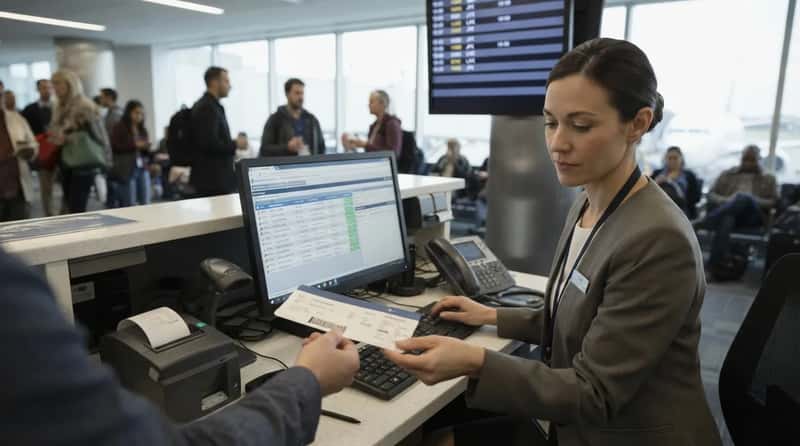
This is the one thing every gate agent wishes every passenger truly understood. When you’re handed a new boarding pass at the gate, it isn’t a random moment, a mood call, or a reward for good behavior.
A system already made that decision hours earlier, based on status, fare class, points, and pure math. Agents will tell you they simply follow the order the algorithm sets, because there’s real accountability if they don’t – the smiling face at the counter is just the messenger for a decision a computer made long before you got there.
The romantic idea of charming your way into first class quietly died out years ago, replaced by a cold, data-driven system almost no traveler ever sees. Status still counts, but fare class, points, aircraft type, and plain algorithmic math now decide nearly everything before you even reach the gate. The real surprise was never who gets upgraded – it’s how little control any single gate agent actually has over the outcome.
So next time that boarding pass gets swapped at the counter, remember: you’re not watching a decision get made. You’re just watching one get delivered.