Most people assume airport food has always been rushed, overpriced, and forgettable. But before fast-casual chains took over every concourse, airport cafes were often full-service restaurants with linen napkins, tableside carts, and menus that read like a steakhouse’s. Travelers didn’t grab a granola bar and run; they sat down for a real meal, sometimes for less than the price of a bottle of water today.
What actually landed on those plates, though, is where things get strange. Some of it was surprisingly elegant. Some of it would get a restaurant shut down today. Here’s what old menus, historians, and airport lifers actually remember being served.
#23 – Ashtrays Sat on Every Table, Even at the Lunch Counter
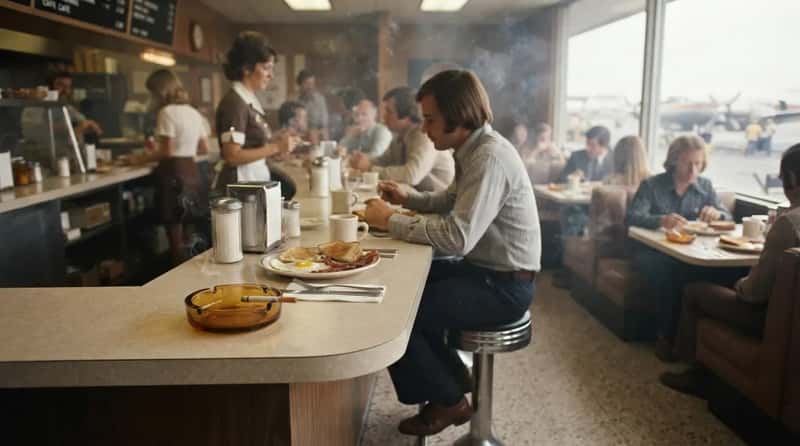
Long before “smoke-free terminal” was a phrase anyone used, ashtrays were standard tableware at airport cafes, right next to the sugar dispenser and the napkin holder. They sat on the table as casually as a ketchup bottle, no smoking section required because the whole restaurant was one.
Smoking wasn’t a section, it was the default. Waitresses lit cigarettes for regulars between orders, and matchbooks doubled as free souvenirs. It sounds bizarre now, but for decades nobody blinked at a lit Marlboro next to a plate of eggs.
#22 – Cocktails Flowed Before Noon, No Questions Asked
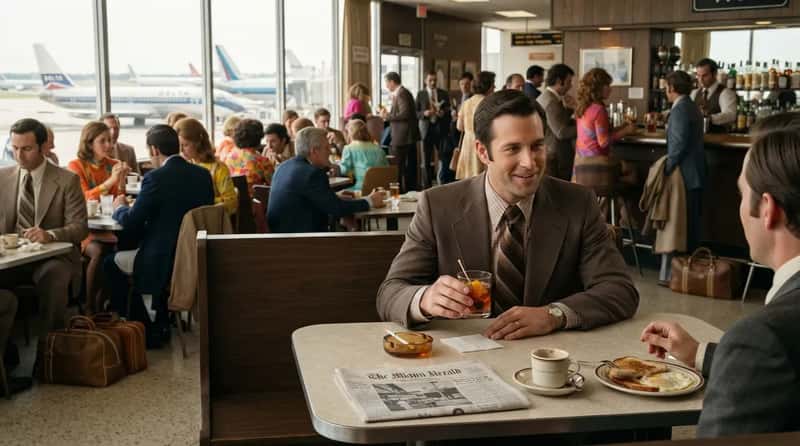
Ordering a Manhattan with your 10 a.m. flight breakfast wasn’t frowned upon in the 1970s, it was practically expected. Airport cafes and terminal lounges served full bar menus all day, and daytime drinking carried none of the stigma it does now.
This mirrored what was happening in the air, too. Passengers dressed up to the nines, white-gloved flight attendants plated meals and poured champagne in the aisles, and some aircrafts even had onboard lounges where travelers could sip cocktails or smoke after dinner. Terminal restaurants simply carried that same boozy, dressed-up energy onto the ground.
Fast Facts
- Self-reported adult smoking peaked in 1954 at 45%, and remained at 40% or more through the early 1970s, so a smoke-filled dining room was simply the national norm.
- By 1970, the percentage of cigarette smokers among the adult population had decreased from 41.6 percent to 36.7 percent, still more than one in three adults.
- The advertising ban on tobacco products went into effect on January 2, 1971, yet lighting up at the lunch counter remained completely unremarkable for years afterward.
- Daytime bar service in airport restaurants existed with no special permit or “brunch hours” restriction, unlike many state liquor laws today.
#21 – Prime Rib Was Carved Tableside, Right at the Gate
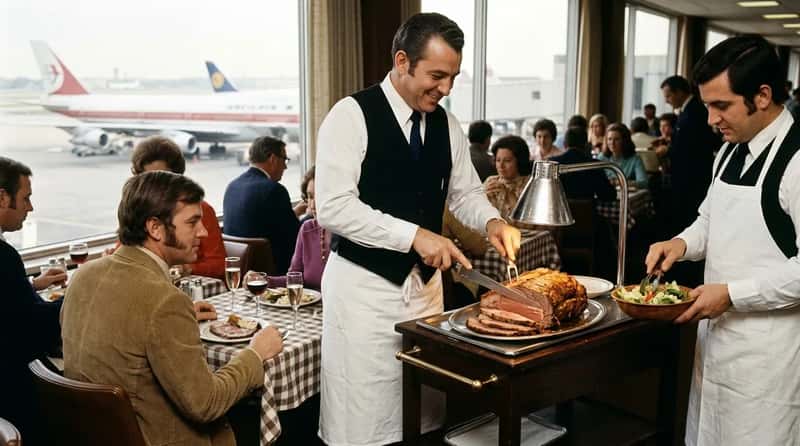
Forget pre-wrapped sandwiches under heat lamps. Some airport dining rooms brought out entire roasts on rolling carts and carved them in front of you, waiter’s apron and all.
This wasn’t just an airline trick for first class. The peak of competition in food probably occurred in the early 1970s, when airlines offered champagne breakfasts, a variety of hors d’oeuvres, lobster plus steak dinners, and prime rib sliced on a rolling cart for each guest. Airport restaurants competed for the same crowd, and they matched that theater course for course, right down to the tossed salad prepared table-side.
#20 – Salisbury Steak Swimming in Canned Gravy Was a Lunch Staple
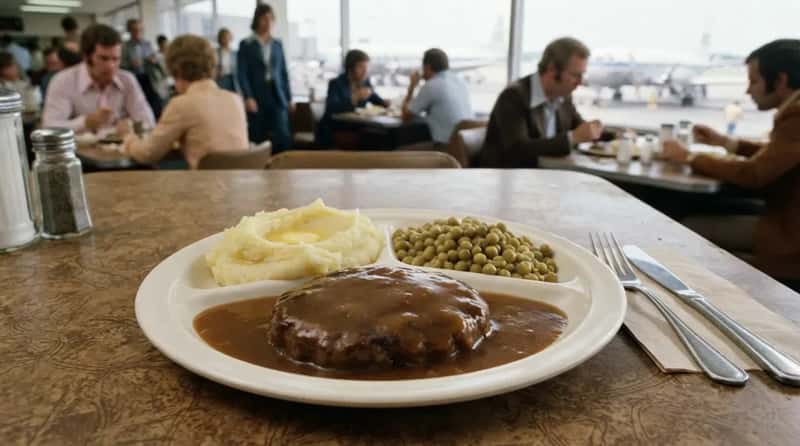
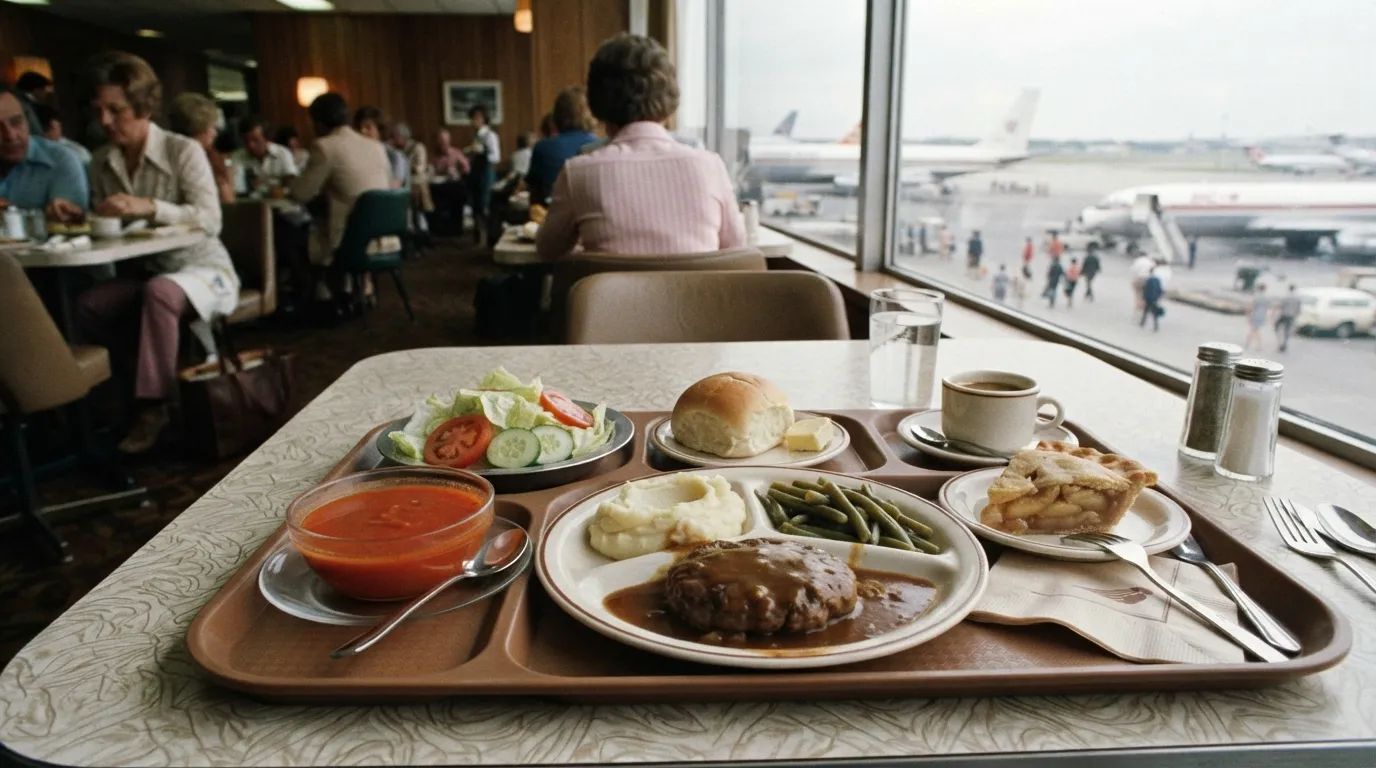
Salisbury steak wasn’t a punchline yet, it was a respected menu item. Airport cafes served it smothered in glossy brown gravy straight from a can, paired with instant mashed potatoes and canned peas.
It was cheap to make in bulk and held up under a heat lamp, which made it perfect for feeding a steady stream of travelers. Today it reads as a frozen-dinner cliché. Back then, it was a completely normal thing to order in a sit-down airport restaurant.
#19 – Tomato Aspic Molds Were Considered a “Fresh” Salad Option
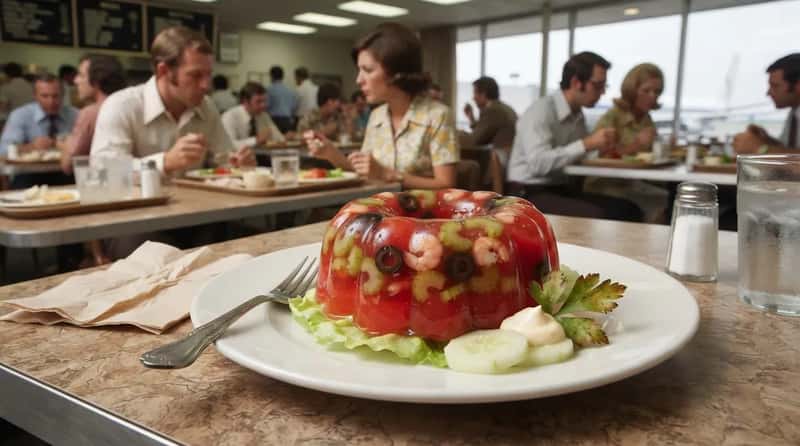
Quivering, jellied tomato aspic, essentially a savory Jell-O built from tomato juice and gelatin, regularly showed up on airport lunch menus labeled as a salad course. It was often studded with celery, olives, or shrimp suspended inside like a science experiment.
Nobody thought this was strange. Molded salads were a mark of sophistication at the time, a holdover from mid-century dinner party culture that airport chefs happily borrowed. Most travelers today would refuse to touch a wobbly tomato gelatin mold, but in 1974 it was practically upscale.
#18 – Creamed Chipped Beef on Toast Was Standard Breakfast Fare
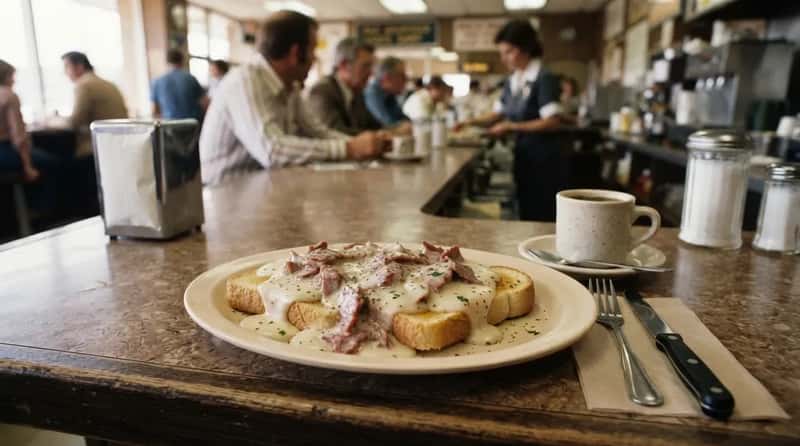
Known affectionately (or not) as “SOS,” creamed chipped beef on toast was a breakfast menu regular at airport coffee shops, borrowed straight from military mess halls. Thin, salty dried beef swimming in white cream sauce, ladled over toast points.
It was cheap, filling, and fast to plate for a rushed traveler. The dish traces its popularity to armed forces cooking, which had a huge influence on American diner menus after World War II. Airport cafes, catering to businessmen and military families alike, kept it on rotation well into the ’70s.
#17 – Relish Trays Arrived Before You Even Ordered
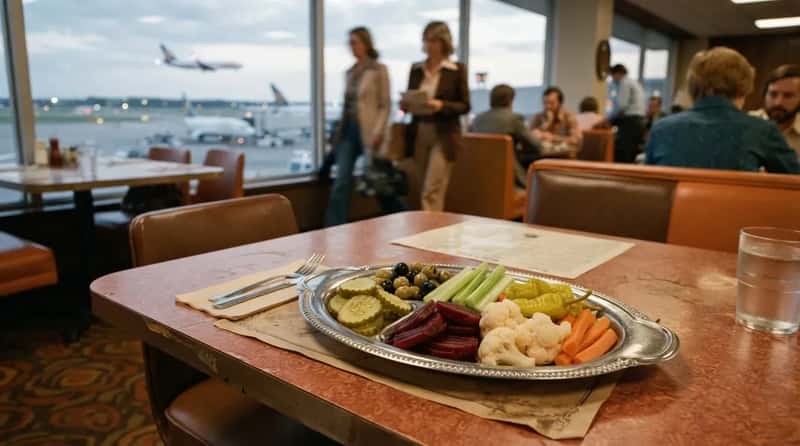
Before the meal started, a server often dropped off a small tray of pickled vegetables, olives, celery sticks, and pickled beets, completely unasked for and completely free. It was a holdover from formal steakhouse service that airport dining rooms adopted wholesale.
This wasn’t a garnish, it was a course. Regulars expected it, and restaurants built their identity around how generous or elaborate the relish tray was. Most modern airport restaurants would never give away a free course before you’ve spent a dime, but in the 1970s it was basic hospitality.
#16 – Automat-Style Coin Slots Dispensed Sandwiches and Pie
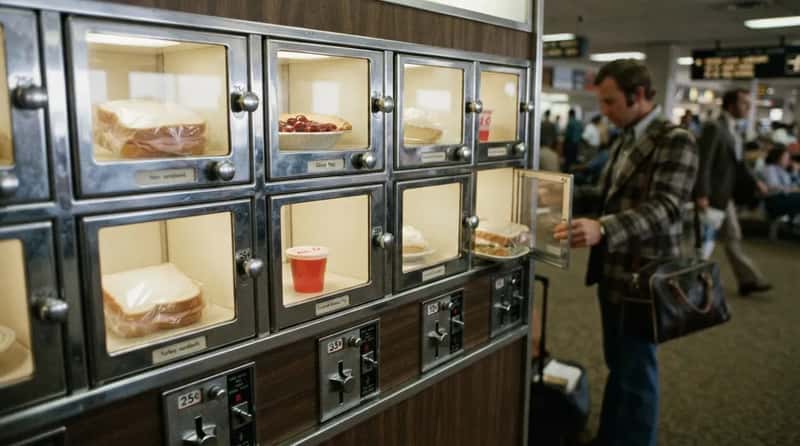
Some larger airports still had automat-inspired setups where you dropped coins into a slot and a small glass door popped open to reveal a sandwich, a slice of pie, or a cup of coffee. The format had been a New York institution for decades before airports picked it up.
Diners could also get hot coffee, brewed fresh every twenty minutes, along with simple foods, for just a few cents in the classic automat model these airport versions borrowed from. It felt futuristic and a little impersonal, exactly the vibe some travelers wanted when they were in a hurry.
Worth Knowing
- Joseph Horn and Frank Hardart opened their first automat in Philadelphia in 1902, decades before the format ever reached an airport.
- The concept crossed state lines when they opened up the first automat in New York City at 1557 Broadway on 42nd Street, in 1912.
- At its peak, the company behind it all became the largest restaurant chain in the world, with more than 100 locations.
- In the early years, for less than fifty cents, diners could eat three meals a day, a level of value airport cafes tried hard to echo.
#15 – Chicken à la King Was Considered a Classy Lunch Order
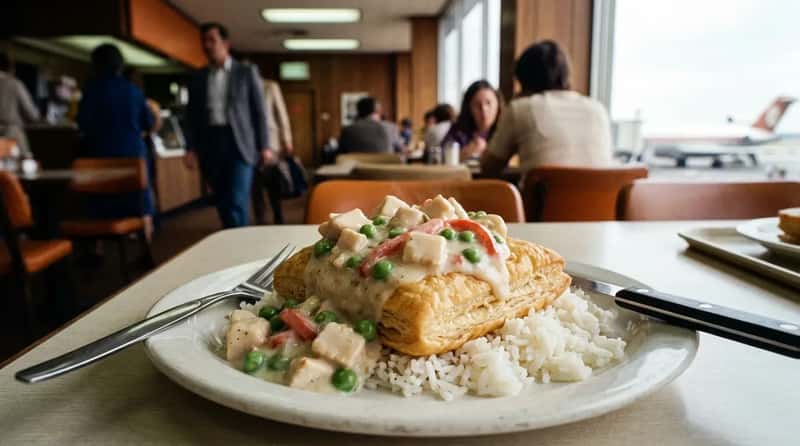
Diced chicken in a thick cream sauce with peas and pimentos, ladled over rice or a puff pastry shell, chicken à la king had genuine restaurant credibility in the 1970s. It showed up on airport menus as a “special,” often the pricier option on the board.
It’s hard to imagine now, but this dish once signaled a step up from a basic sandwich. Airport cafes used it to suggest they were a real restaurant, not just a pit stop, even while serving hundreds of travelers an hour.
#14 – Fondue Pots Bubbled Right at the Terminal Lounge Tables
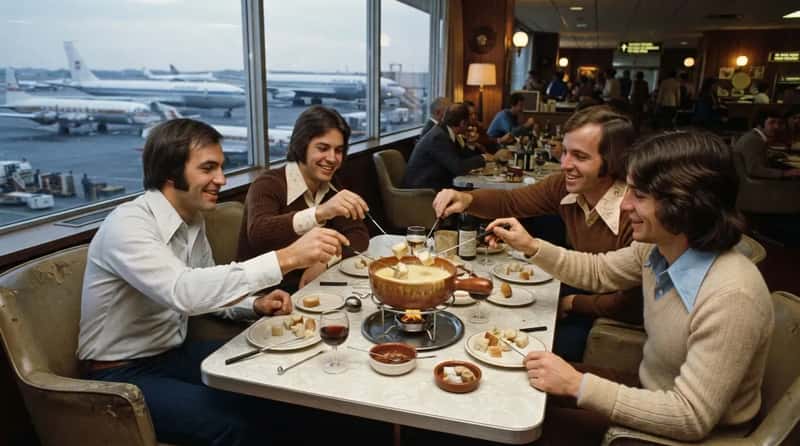
Fondue mania hit American dining hard in the 1970s, and airport lounges weren’t immune. Some upscale terminal restaurants set out communal fondue pots for cheese or chocolate, complete with long forks and cubed bread, as a shared appetizer or dessert experience.
It required patience and table space that no modern airport restaurant can spare. Picture strangers waiting on a delayed flight, dipping bread into a shared cheese pot together, an image almost impossible to imagine at a gate today, but it genuinely happened during the fondue craze’s peak years.
#13 – The “Diet Plate” Was Cottage Cheese and a Canned Peach Half
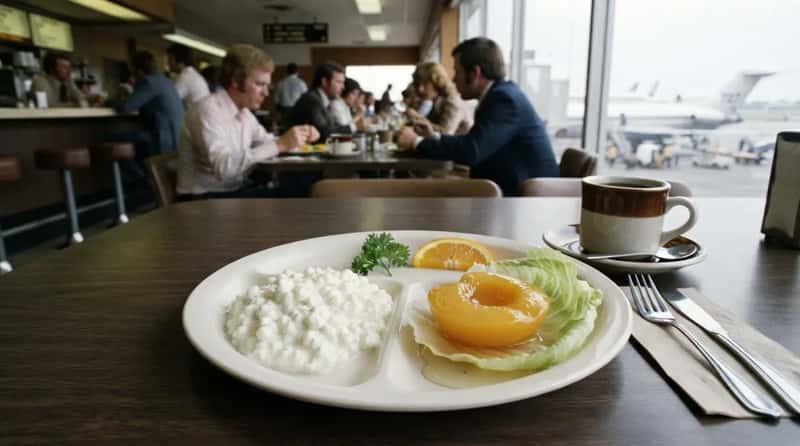
Every airport coffee shop had a designated “diet plate,” and it almost always meant the same thing: a scoop of cottage cheese next to a canned peach half, maybe with a lettuce leaf for decoration. It was marketed as the health-conscious choice.
By modern nutrition standards it’s mostly sugar syrup and bland dairy, but at the time it represented restraint. Travelers watching their weight ordered it specifically because it felt virtuous compared to the fried chicken or prime rib on the rest of the menu.
#12 – Deviled Eggs Were Lined Up Like a Buffet Centerpiece
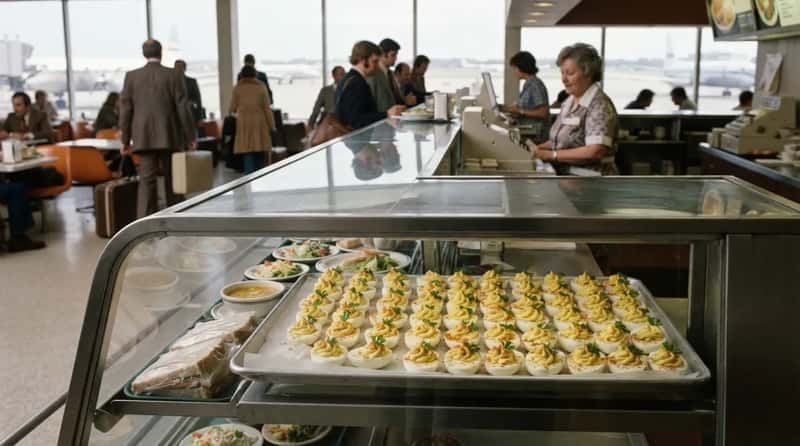
Deviled eggs weren’t a potluck afterthought, they were a proud menu item, often served as a starter or side at airport lunch counters. Paprika-dusted and arranged in neat rows, they showed up alongside sandwiches and soup combos.
They were cheap to make, easy to hold, and travelers loved the retro comfort of them. It’s the kind of dish you’d now only expect at a church potluck or a holiday table, not sitting in a glass case at a departure lounge counter.
#11 – A Full Steak-and-Eggs Breakfast Cost Only a Few Dollars
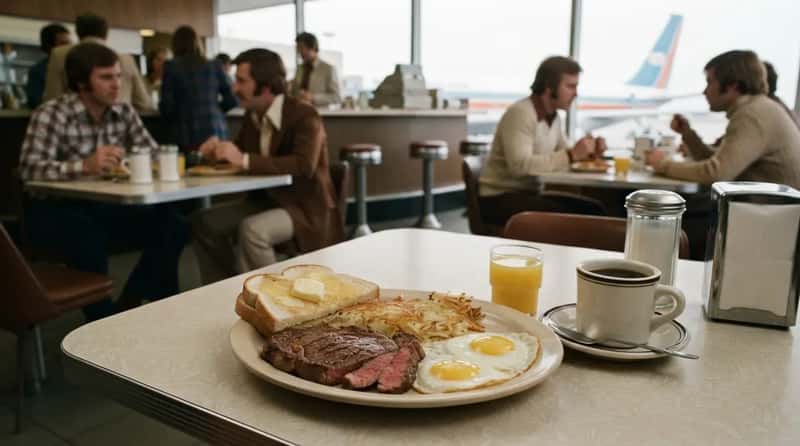
Steak and eggs wasn’t a splurge item, it was a normal breakfast order that regular travelers could afford without blinking. Airport cafes leaned into hearty American breakfasts because business travelers wanted a real meal before an early flight, not a pastry.
Compare that to today’s airport prices, where a coffee and muffin alone can run close to ten dollars. The gap between what a full sit-down breakfast cost then versus a grab-and-go breakfast now is one of the starkest changes in airport dining history, and it explains a lot of modern traveler frustration.
Quick Compare
- 1970s sit-down breakfast (steak, eggs, toast, coffee): a few dollars total, with unlimited refills included.
- 1970s full multi-course dinner (soup, entrée, sides, dessert): also just a few dollars, no upcharges.
- Today’s basic coffee-and-muffin combo: can run close to ten dollars at the same type of terminal.
- Today’s grab-and-go snack combo: often rivals or exceeds the cost of an entire 1970s dinner.
#10 – Cigarette Vending Machines Stood Right Next to the Cash Register
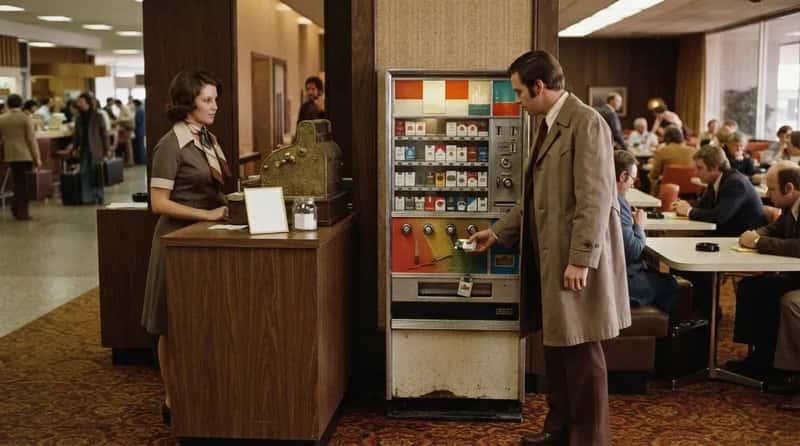
You didn’t need to leave the restaurant to restock your pack. Cigarette machines were installed directly inside airport cafes, often within arm’s reach of the hostess stand, so travelers could grab a pack on their way out the door.
Cigarettes, along with copious amounts of alcohol, were seen as just another part of the dining experience, and flight attendants routinely offered cigarettes as part of their service throughout the era. Airport restaurants matched that culture on the ground, making tobacco as normal a purchase as a mint after dinner.
#9 – Some “International” Airport Cafes Served Frog Legs and Escargot
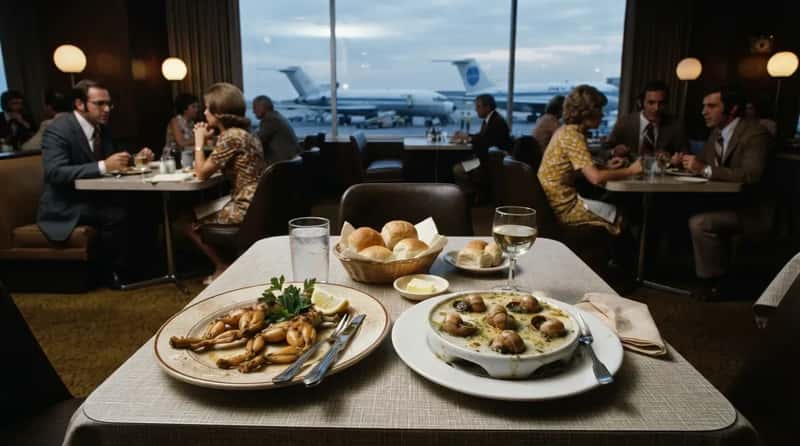
Larger hub airports, especially ones serving international routes, tried to project sophistication with genuinely fancy menu items. Frog legs, escargot swimming in garlic butter, and imported cheese plates showed up at airport restaurants trying to compete with the era’s grand hotel dining rooms.
This fits a broader pattern from the golden age of travel. The early 1950s saw the debut of what might have been America’s premier airport restaurant, The Newarker, which soon became famous, with Duncan Hines lauding it for its flaming sword specialties and authentic East Indian curries. That ambition carried into the 1970s at airports across the country.
#8 – Weak, Watery Instant Coffee Came With Unlimited Free Refills
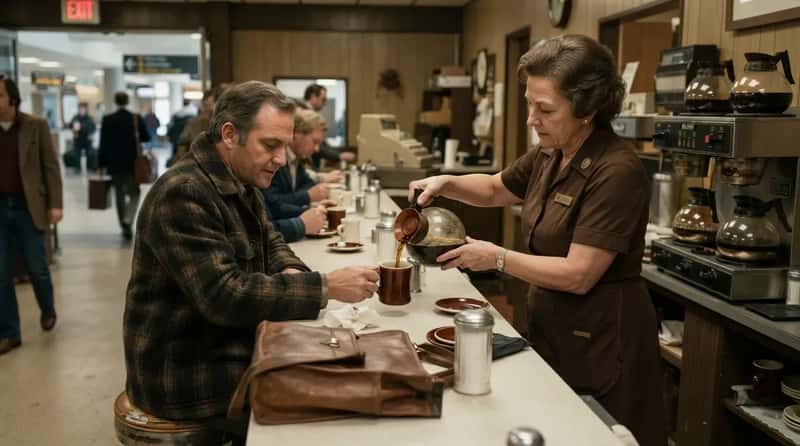
Instant coffee brands dominated airport cafes, and the coffee itself was famously thin and bitter by today’s espresso-obsessed standards. What it lacked in quality, though, it made up for in generosity, servers refilled cups constantly without ever asking.
Nobody expected a flat white or a cold brew, they expected bottomless, mediocre coffee in a heavy ceramic mug. Most modern travelers would be stunned that free refills were once a given, not a $2 upcharge, at nearly every terminal counter in the country.
#7 – Iceberg Wedge Salads Came Drenched in Bottled Dressing
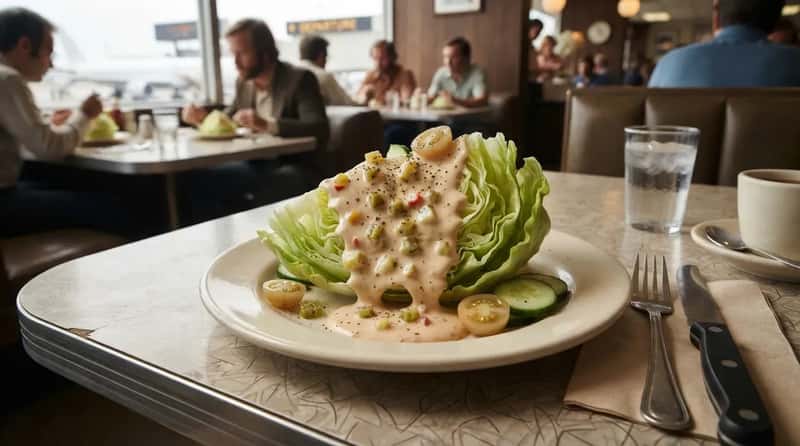
A quarter head of iceberg lettuce, chilled and plated whole, doused in bottled Thousand Island or Russian dressing, was the default salad course at nearly every airport cafe. Fresh, varied greens simply weren’t part of the standard American diner vocabulary yet.
It photographs almost comically plain by modern standards, but travelers didn’t complain. A wedge salad was a normal, expected starter before the main course arrived, no different from bread on the table.
#6 – Jell-O Salads Suspended Canned Fruit Cocktail in Midair
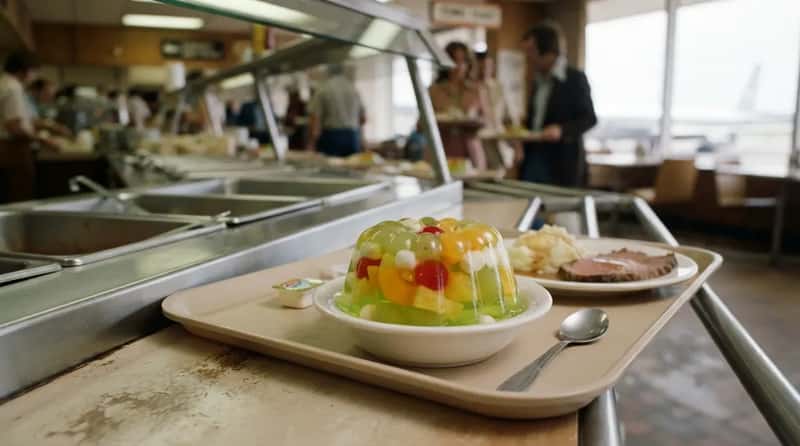
Sweet, wobbly Jell-O molds packed with canned fruit cocktail, mini marshmallows, and sometimes shredded carrots were a genuine side dish, not a kid’s dessert. Airport cafeterias served them as part of the regular lunch line, right next to the mashed potatoes.
This mirrors the broader cafeteria culture of the decade, where California’s cafeteria explosion, which began decades earlier with self-service dining advertised as “food that can be seen,” had grown into a nationwide format that airports adopted for high-volume, fast feeding. Jell-O salad was practically the mascot dish of that entire era.
#5 – Liver and Onions Was a Regular, Respected Lunch Special
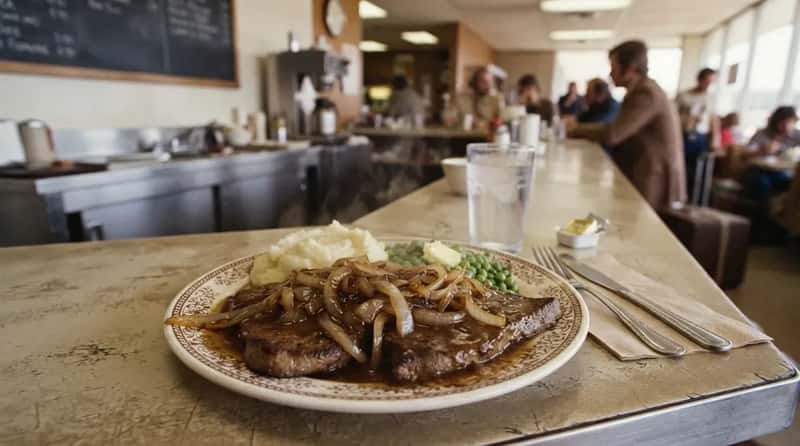
Beef or calf’s liver smothered in sautéed onions was a genuinely popular order, not a dish reserved for grandparents. Airport lunch counters rotated it as a daily special, right alongside meatloaf and pot roast.
It reflects how differently Americans ate organ meat back then, treating it as a normal protein choice rather than an acquired taste. Most airport menus today wouldn’t dare put liver and onions on a laminated menu, but in 1975 it drew a steady, loyal lunch crowd.
#4 – Surf and Turf Combos Cost Barely More Than a Basic Sandwich
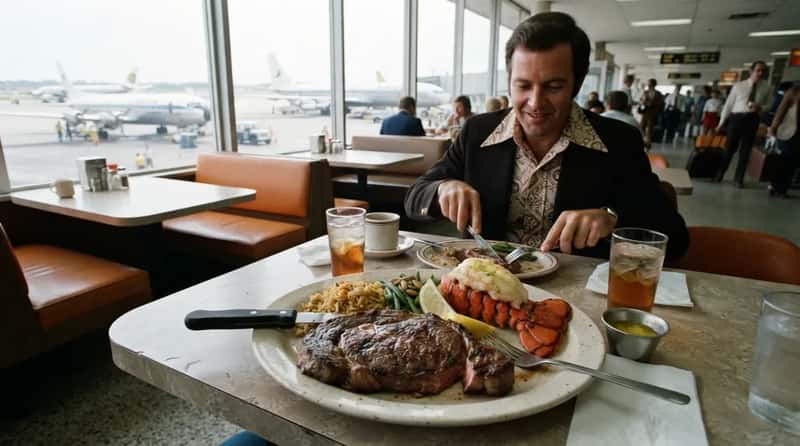
Steak paired with a small lobster tail or shrimp skewer, the classic “surf and turf” combo, showed up on airport menus as a mid-tier option, not a luxury splurge. Seafood simply wasn’t priced the way it is now.
This was part of a broader food arms race happening in air travel generally. There used to be roughly 20 different meals served, from seafood platters to Hindu vegetarian to lacto-ovo vegetarian, giving travelers a gigantic amount of choice, and airport restaurants on the ground matched that same competitive spirit with their own surf-and-turf specials.
#3 – Full China and Linen Table Service Was Standard, Even for a Quick Layover
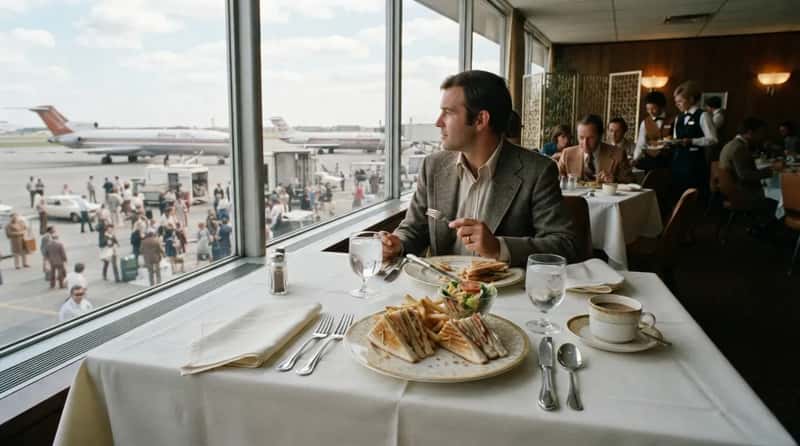
Cloth napkins, real silverware, and actual china plates were the norm at sit-down airport restaurants, even for travelers with only an hour between flights. Disposable everything simply wasn’t part of the terminal dining vocabulary yet.
This attention to detail extended to the design itself. Famed industrial designer Raymond Loewy outfitted terminal restaurant spaces in this era, and menu teams researched historic dining traditions to match the elegance travelers expected on the ground. Grabbing a paper-wrapped sandwich to eat while walking would have seemed almost rude.
#2 – Complimentary Cigarettes Arrived With Your After-Dinner Coffee
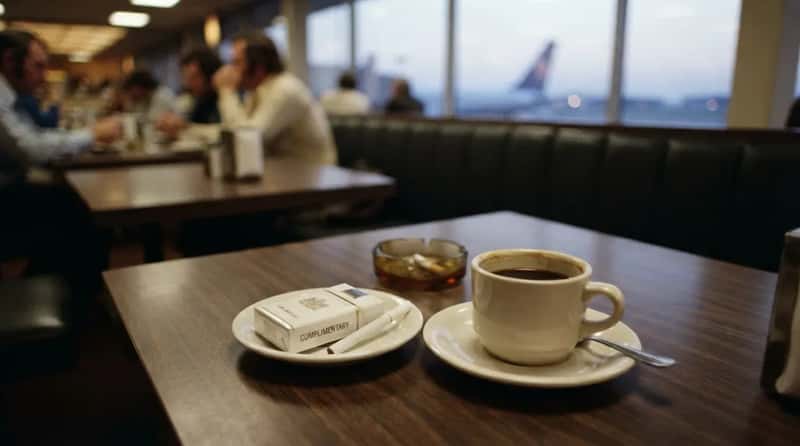
Some airport restaurants followed the airline playbook exactly, offering a complimentary cigarette as a polite closer to the meal, right alongside the check. It was framed as a courtesy, not a health hazard.
The tradition mirrored full airline dinner service of the era, which moved from cold hors d’oeuvres and a seafood cocktail through steak or salmon entrées, dinner rolls, cheese boards, and a full bar service before lastly offering complimentary cigarettes to end the meal. Terminal restaurants borrowed that exact closing ritual for their own dining rooms.
#1 – A Complete Multi-Course Dinner, Dessert Included, Cost Less Than a Modern Airport Snack
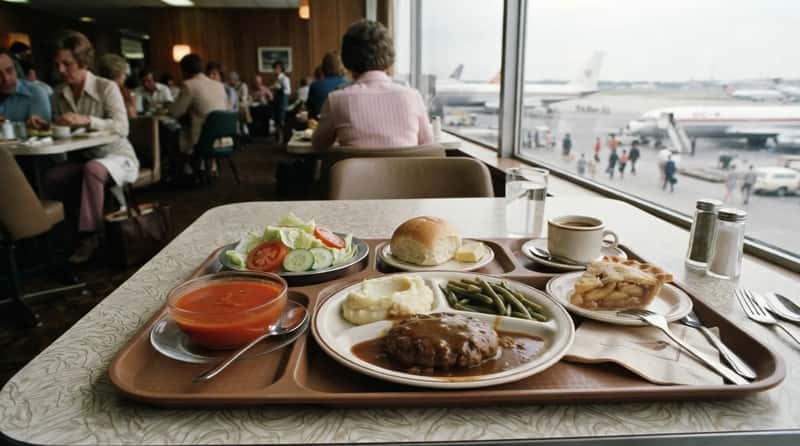
The single biggest shock isn’t any one dish, it’s the whole package. A full-course dinner at a 1970s airport restaurant, soup or salad, a real entrée, a starch, a vegetable, and dessert, could run just a few dollars total, often less than what a bag of chips and a bottled water costs at the same airport today.
This wasn’t a fluke, it was policy. Until 1978, when the airline industry was deregulated, the law required that every passenger got an entrée, two vegetables, a salad, dessert and a drink as part of their ticket price, and airport restaurants built their own generous, multi-course meals around that same expectation of abundance. That entire culture of built-in generosity disappeared almost overnight once deregulation and cost-cutting took hold, and it never really came back.
At a Glance
- President Jimmy Carter signed the Airline Deregulation Act on October 24, 1978, the exact hinge point this whole era swung on.
- Before that, the Civil Aeronautics Board regulated U.S. airlines like a public utility, setting where they could fly and what fares they could charge, which left carriers competing on service and food instead of price.
- The new law phased out the Civil Aeronautics Board over the next four years, ending five decades of federal regulation of passenger airfares.
- Once price became the main battleground, elaborate meals were among the first perks airlines and their airport partners quietly cut.
Looking back, the biggest shock isn’t any single strange dish, it’s how much generosity, formality, and unhurried ritual used to surround something as ordinary as eating before a flight. Deregulation, health warnings, and the sheer scale of modern air travel erased almost all of it within a decade. What’s left now is speed and convenience, for better or worse.
Which one of these would you actually want to see make a comeback, and which one should stay buried in 1975? Drop your pick in the comments.