Most people think a cruise port day is the easy part: step off, pick a tour, snap a few photos. For travellers over 70, the reality is stranger. The costliest surprises are usually locked in before the ship ever leaves the dock: who the ship waits for, which ports need a small boat, and which deadlines expire long before you pack.
Some of the rules below sound minor until they cost real money. Others quietly decide whether you see a port at all. We’re counting down from #23, and the one waiting at #1 is the line most people skim straight past.
23. Popular Tours Quietly Sell Out Before Anyone Boards
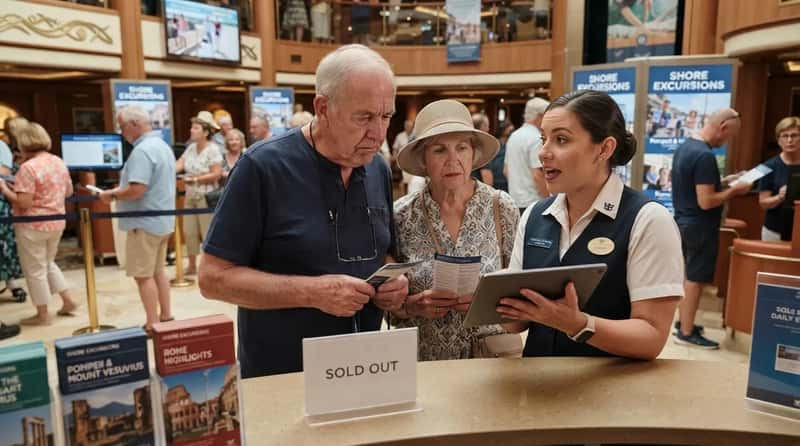
Most travellers assume excursions can wait until they’re on the ship. That’s the costliest guess on the list. One cruise-booking guide notes that some of the most popular excursions sell out quickly, and that waiting until you’re aboard usually leaves few options.
That matters most if you need a seat, a short walk, or a specific pace. Those details are what make a tour workable. Book early and you get a choice. Book late and you get the leftovers. But some ports don’t need a tour at all, and that’s #22.
22. In Plenty of Ports, the Best Plan Is No Plan
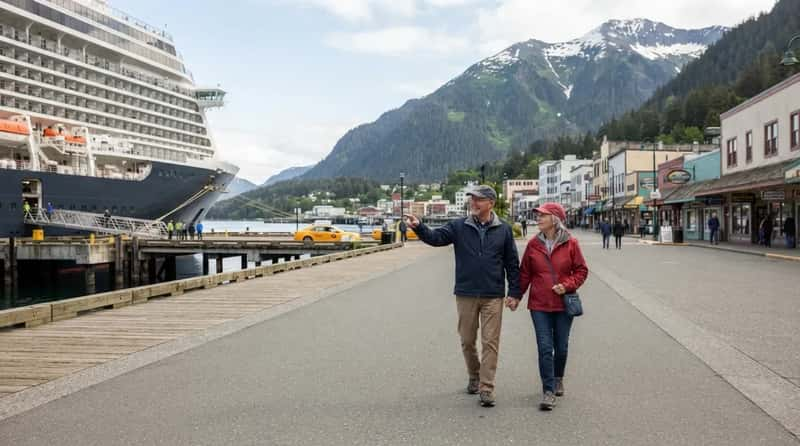
You don’t always have to buy anything. The Points Guy says that in most cases, you don’t need to book a shore excursion to explore a port of call. You can simply walk off the ship and stroll into town or hop in a cab.
Some docks make that easy. Alaska cruise guides describe the area near the cruise ship dock in Juneau as flat and easily walkable. A slow morning near the pier can beat a rushed, expensive bus ride. Then there’s the fine print most people skip, which is #21.
21. The “Easy” Label Is Doing More Work Than the Photo

Brochure pictures sell the view, not the walk. Cruise Critic points out that tour descriptions often flag extended periods of walking, uneven terrain, or activities that may not suit certain medical conditions. That fine print is where the truth lives.
Cruise lines label physical demands now, too. One senior-cruise guide advises looking for tours marked “Easy” or “Panoramic,” which usually involve an air-conditioned motorcoach and very little walking. Check the duration and terrain as well. A short tour can still be a hard one, and the next stop proves it in #20.
20. Cobblestones Turn “Charming” Into a Knee Problem
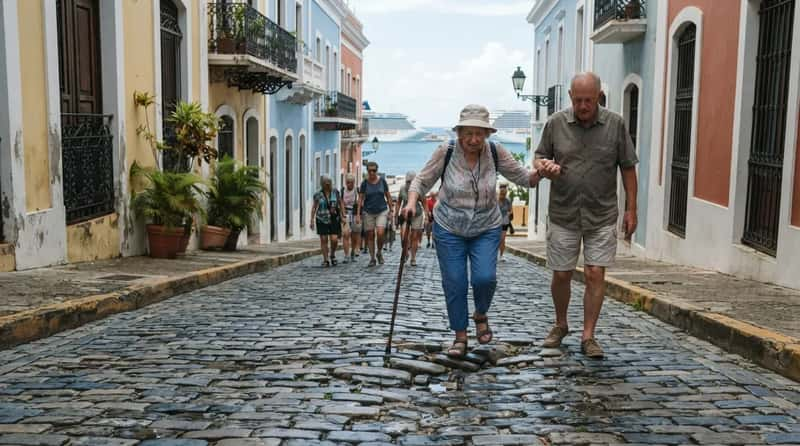
A pretty old town can make for a rough afternoon. One senior-cruise advisor warns that a walking tour of the cobblestone streets in Old San Juan might be tough on the knees. Cruisebound adds that not every “senior-friendly” itinerary accounts for cobblestone historic centers.
The word “walking” in a tour title hides a lot. Uneven stone, slopes and long standing stops all add up. Ask what the ground is actually like before you book. Meanwhile, the bus tour you’re eyeing has its own catch, in #19.
19. The Coach Holds 40 to 55 People, and You’re Moving at Group Speed
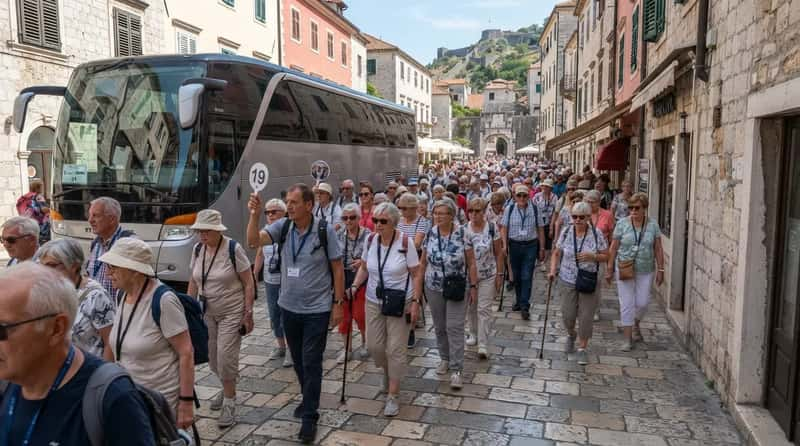
Ship tours can feel like a conveyor belt. A cruise-trade comparison says ship excursions frequently run 40–55 passengers per bus. It also says they accommodate the slowest participants’ pace, which eats into your time at each stop.
Quick Compare
- Ship tour: Often 40–55 people per bus, paced for the slowest participant.
- Ship tour: If your bus runs late, the ship waits for it.
- Independent tour: Often smaller groups, and one trade source says ship tours cost 20–50% more.
- Independent tour: You’re responsible for being back at the ship, ideally two hours before departure.
That cuts both ways. If you walk slowly, a group built around the slowest person can be a relief. If you hate waiting at pickup points, it’s a long day. Some trade sources argue smaller private groups are better value for fit travellers. But the price gap is where it gets heated, in #18.
18. The Ship Tour Can Cost 20 to 50 Percent More, and People Fight About It

Same sights, different price tag. One trade source claims ship-organized tours consistently cost 20–50% more than equivalent independent tours. Its Rome example from Civitavecchia has $189 for the ship’s day trip versus $110–$130 independent.
Plenty of travellers call that markup a rip-off. Others call it the price of never being stranded. Honestly, both camps have a point, depending on the port. Treat those figures as one example rather than a rule, because prices vary by line and season. Then comes the morning problem in #17.
17. A 7 a.m. Tour Plus a Tender Boat Equals a Stressful Start
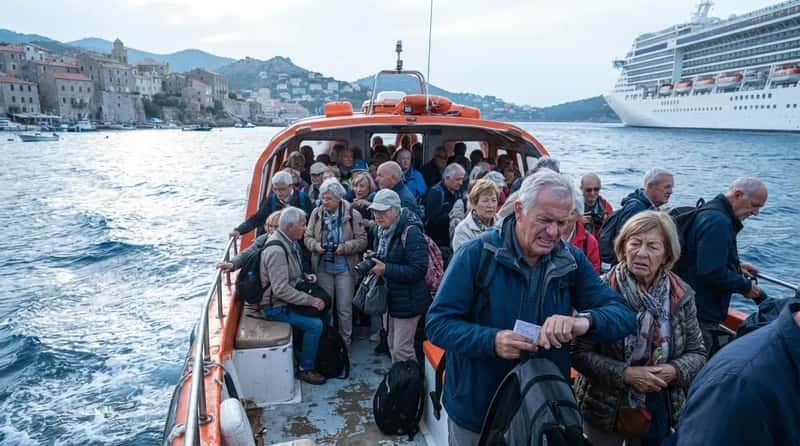
Early tours look efficient on paper. NerdWallet advises avoiding early-morning excursions at tender ports. Ship-booked guests usually tender off earlier, while independent bookers must leave plenty of time to reach shore.
Fodor’s says the tender ride may take as much as 20 minutes. On very large ships, the wait for a tender can be long and frustrating. A 9 a.m. tour that seems relaxed can turn tense before you even reach land. Booking through the ship does get you one big perk, and it’s #16.
16. Ship-Booked Guests Often Skip the Tender Line
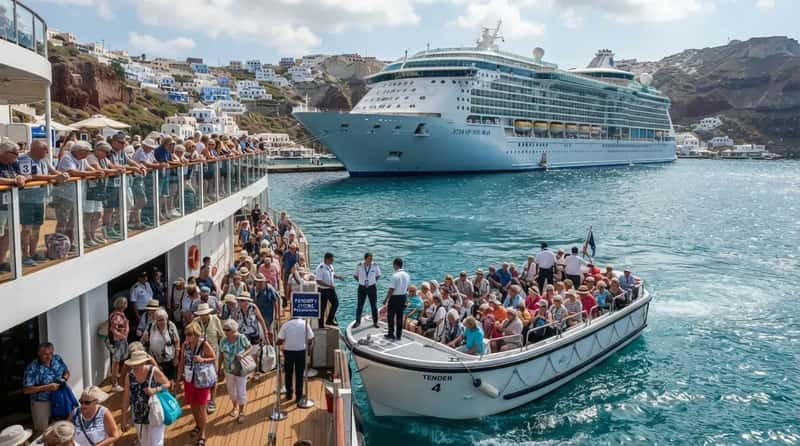
Waiting in a crowded lounge for your number to be called is a rough way to start a day ashore. Fodor’s explains that participants in shore excursions are usually given priority. Other passengers may need to gather in a public room, collect sequenced tendering passes, and wait until their numbers come up.
Another cruise-planning guide adds that booking through the line brings priority disembarkation on port day, which matters most at tender ports. For anyone tired of standing, that’s real value. But it’s nothing compared to what happens when plans change, in #15.
15. When the Port Changes, Only One Kind of Tour Adapts
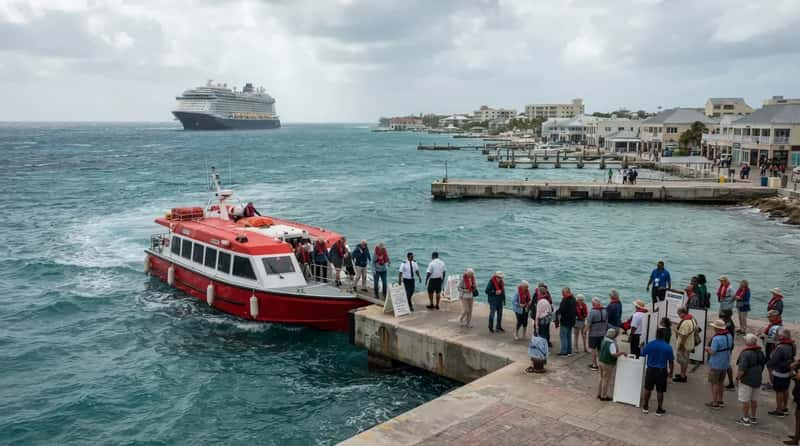
Weather doesn’t care about your booking. The Points Guy describes a Grand Cayman call where high winds forced the ship’s tenders to shuttle passengers to a different pier than planned. Passengers on the ship’s tours were simply picked up at the new arrival point.
The same source says that if a port is skipped or delayed, ship-sponsored tours either adjust to accommodate you or issue a refund. An independent operator may not be so flexible. Next, the accessible options turn out to be shorter than people expect, in #14.
14. Wheelchair-Friendly Tours Exist, but the List Is Short
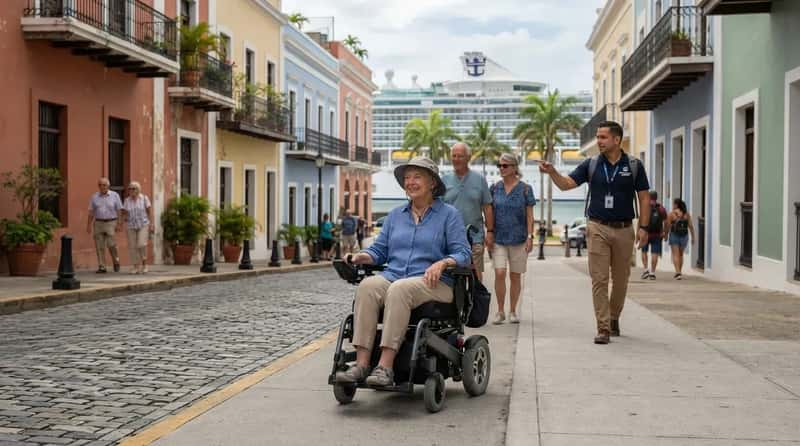
Accessible choices are thin. The Points Guy says that if cruise lines are lacking anywhere, it’s wheelchair-accessible excursions. Some offer them in certain destinations, but choices can be limited. At Royal Caribbean, passengers must fill out a request form before the cruise.
If the ship’s list falls short, the same guide suggests booking with an external company. In many Caribbean and European ports, local operators have adapted transportation. Don’t wait to ask. The next step is the call that saves the most hassle, in #13.
13. One Early Phone Call Can Beat Hours of Guessing
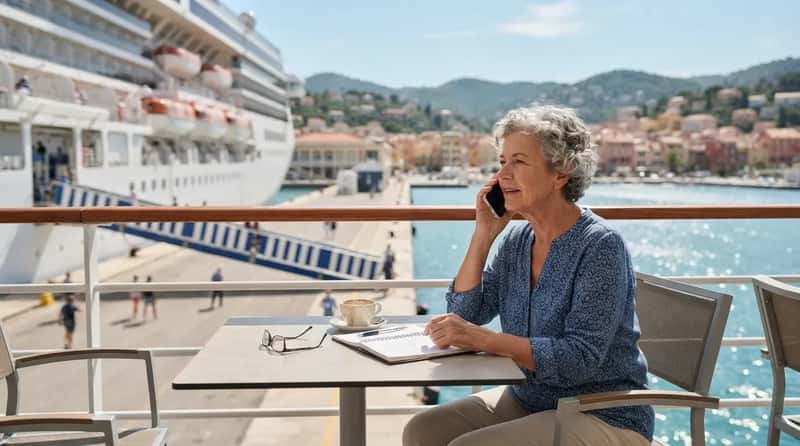
Few passengers ever contact the specialists. Cruise Critic advises that travellers with mobility concerns contact the cruise line’s special needs department or excursions team well in advance. Even if accessible tours are limited, discussing requirements early can help identify suitable options.
Worth Knowing
- Start with the line’s special needs department or excursions team, not the gangway.
- Ask them to confirm port access if tender boats are involved.
- Check the tour’s duration and terrain, not just its name.
- Ask what kind of vehicle an outside operator would actually use.
The same guide says to confirm port access if tender boats are involved. That one question can save a whole day. Asking after you board is often too late. Fortunately, the equipment problem has an easy fix, in #12.
12. The Ship’s Wheelchairs Are for Emergencies, Not for You
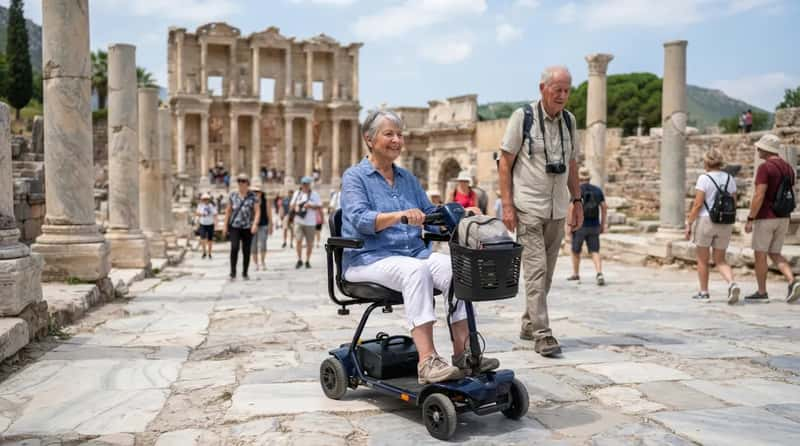
Walking the length of a ship is one thing. A long port day is another. Cruise Critic notes that ships carry limited wheelchairs for emergencies, but you can rent mobility aids from providers like Special Needs at Sea. It suggests renting one even if you don’t normally use a wheelchair but struggle with long distances.
Rentals can be waiting when you board. The Points Guy says companies like Special Needs at Sea and Scootaround let you rent equipment that will be waiting in your cabin. Reserving that gear before sailing is a quiet power move. One of the best seated tours around is next, in #11.
11. Alaska Has Some of the Easiest Big-View Tours Anywhere

Not every great excursion needs a hike. Alaska cruise guides highlight Skagway’s White Pass & Yukon Route Railway, where the entire journey is seated. The ride climbs nearly 3,000 feet over 20 miles without physical demands.
Why It Stands Out
- Skagway’s White Pass & Yukon Route Railway is seated for the whole journey.
- It climbs nearly 3,000 feet over 20 miles without physical demands.
- Juneau’s Mount Roberts Tramway carries you from the pier up the mountain.
- The area near the Juneau dock is flat and easily walkable.
In Juneau, the Mount Roberts Tramway carries you from the pier up the mountain for panoramic views without strenuous hiking. Seats, rails and a smooth ride can beat any “adventure” tour. The next idea is one big ships rarely copy, and it’s #10.
10. Some Lines Run Walking Groups at a Slower Speed

Walking tours don’t all move the same way. One senior cruise guide says AmaWaterways offers “Gentle Walkers” shore excursion groups that move at a slow pace and avoid steep inclines. That’s a very different experience from a fast march past monuments.
It’s a river-cruise feature, but it points to a bigger truth. Pace matters as much as distance. Ask whether your line offers a slower group before choosing any walking tour. The next item is about what you carry, in #9.
9. A Long Tour Day Makes Your Pill Organizer a Port Essential
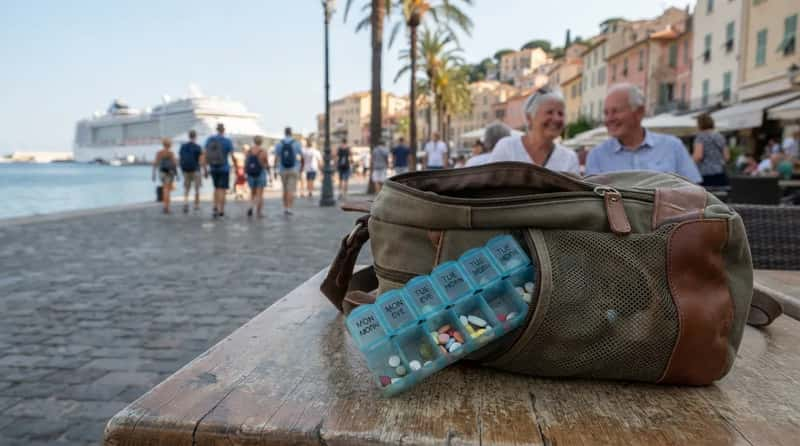
Shore days can run long, and delays happen. Cruise Critic advises bringing extra prescription medications and your own motion-sickness remedies, because ship pharmacies and medical visits can be costly. That advice matters even more when a tour drives hours from the pier.
The real consequence is a missed dose when a bus runs late. Keeping meds in your day bag instead of the cabin safe avoids the problem. It’s easy to overlook until you’re stuck in traffic. Then there’s a deadline that expires months before you sail, in #8.
8. The Insurance Deadline Expires Weeks After Your First Deposit

This is the secret that can cost the most. CNBC reports that many plans won’t cover pre-existing medical conditions unless the company offers a pre-existing condition exclusion waiver. The window to get it is typically about 14 days after your first payment.
Other providers vary. CoverTrip lists waiver windows of 14 to 21 days on its picks. So the clock may be running while you’re still choosing excursions. Check your own policy’s exact date. Just as important is what happens if you miss it, in #7.
7. Miss the Window and the “Look-Back” Can Sink a Claim
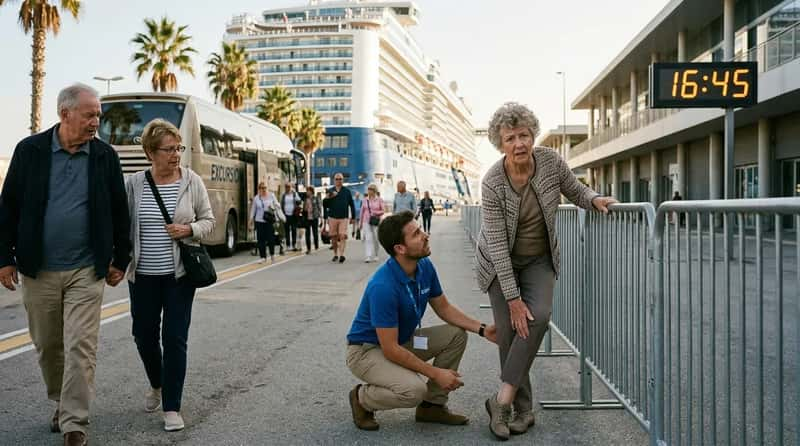
Here’s what the fine print means. One cruise-insurance guide says that if you miss the window, conditions are excluded under a 60–180 day look-back, which it calls the leading cause of declined cruise claims. That’s a big risk for travellers over 70.
CNBC notes that look-back periods vary by plan, from 60 days to 120 or 180. That’s why reading the policy matters more than the brand name. A claim denied after a mid-excursion fall is the nightmare scenario. Next up is the kind of port where the real trouble starts, in #6.
6. At Tender Ports, Scooters and Power Chairs Stay on the Ship
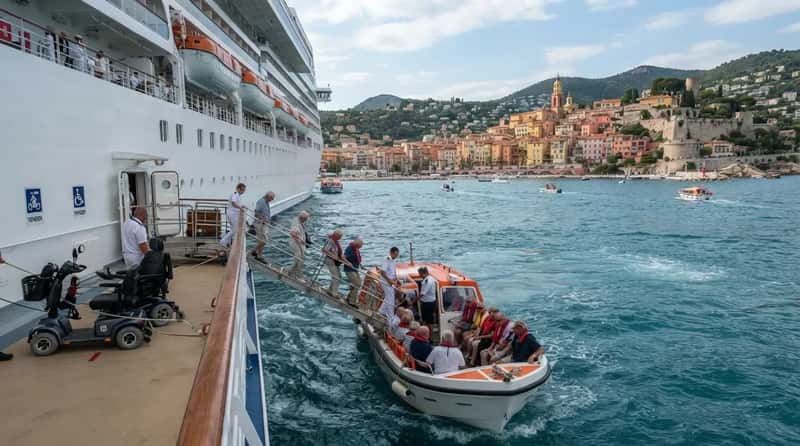
Cruisebound calls tender ports the single greatest accessibility risk on any itinerary. The process involves stepping down into a rocking vessel, often via a gangway with no elevator access.
The rule is blunt. Most lines have a blanket policy that mobility scooters and power wheelchairs cannot be transported on tender boats. Manual wheelchairs may be allowed at the captain’s discretion, never guaranteed. Check the itinerary for tender ports before you pay. But one famous port stands out, in #5.
5. Santorini Is Many Cruisers’ Dream Stop and Some Travellers’ Biggest Trap

Most travellers rank Santorini as a bucket-list stop, yet cruise guides warn it’s a poor fit for anyone with mobility limits. Cruisebound says it’s tender-only and requires a steep cable car or a donkey ride. Another senior-travel guide says Greek Isles villages are steep and stepped, very difficult for seniors with mobility issues.
Fast Facts
- Santorini is tender-only, so there’s no walking straight off the ship.
- Getting up to town means a steep cable car or a donkey ride.
- Other tender ports include Kotor, Sorrento and Cannes, per Port Adventurer.
- Most lines don’t allow scooters or power wheelchairs on tender boats.
Cruisebound’s tip is to ask the line exactly how passengers go ashore. Skipping the stop may beat a ruined day. Now for the rule that decides everything, in #4.
4. Independent Tours Need a Two-Hour Safety Cushion
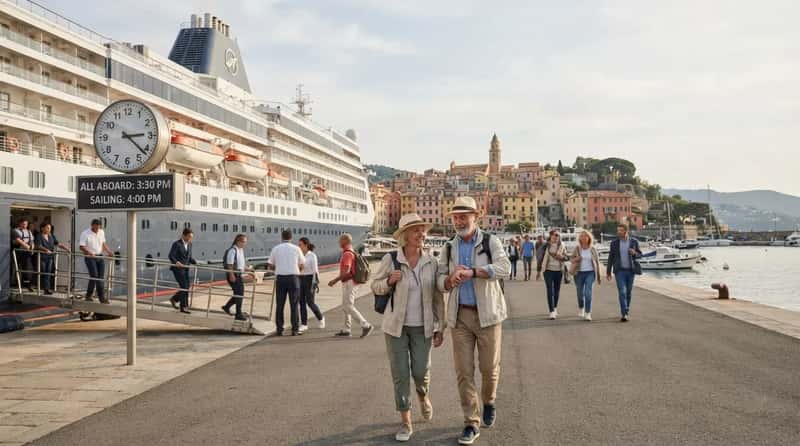
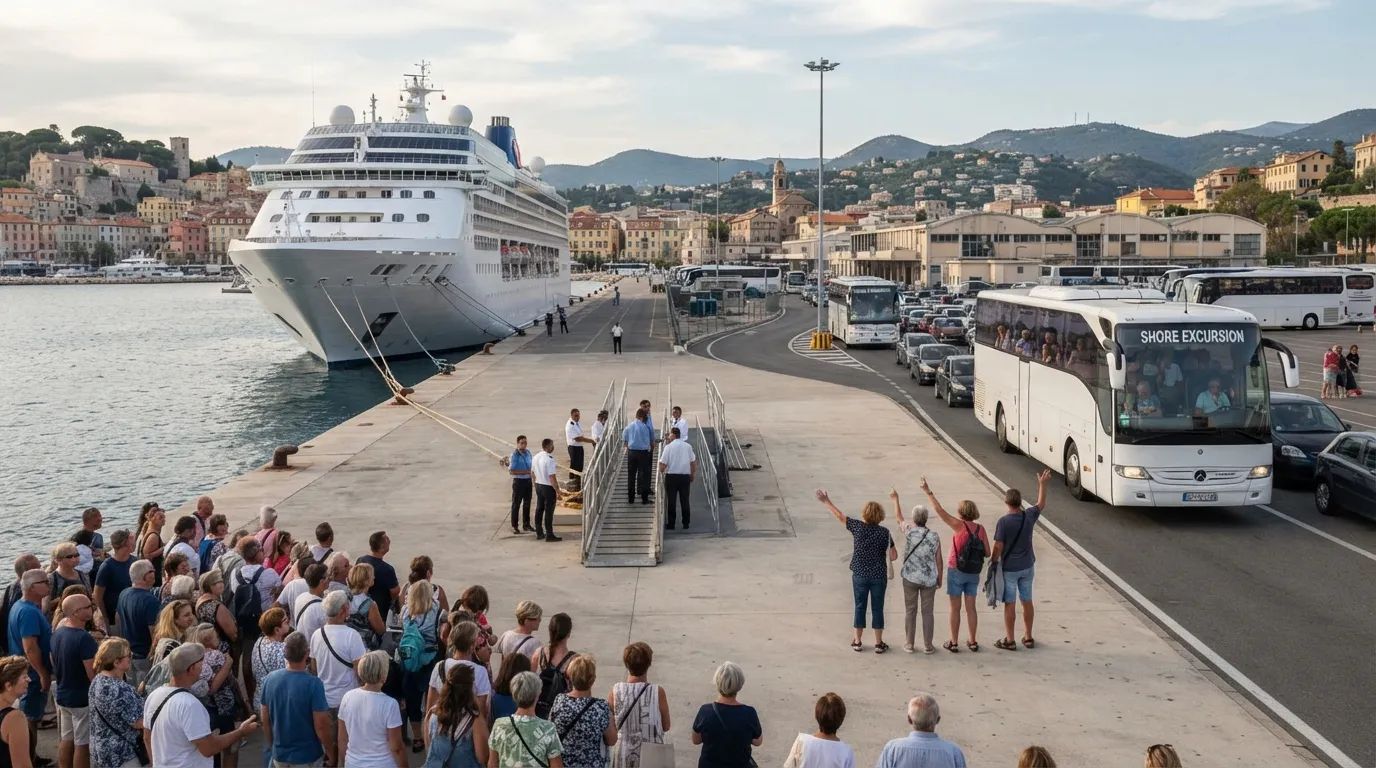
Going independent can work, if you respect the clock. One cruise-planning guide calls it the golden rule: always plan to be back at the ship at least two hours before official departure. It calls two hours the minimum buffer.
Cruise lines are strict about sailing times. Fodor’s says those times are posted at the gangway and in the daily schedule. A relaxed lunch stop can turn into a sprint fast. And the cost of a miss is steeper than most people think, in #3.
3. Missing the Ship Costs Hundreds, Sometimes Thousands
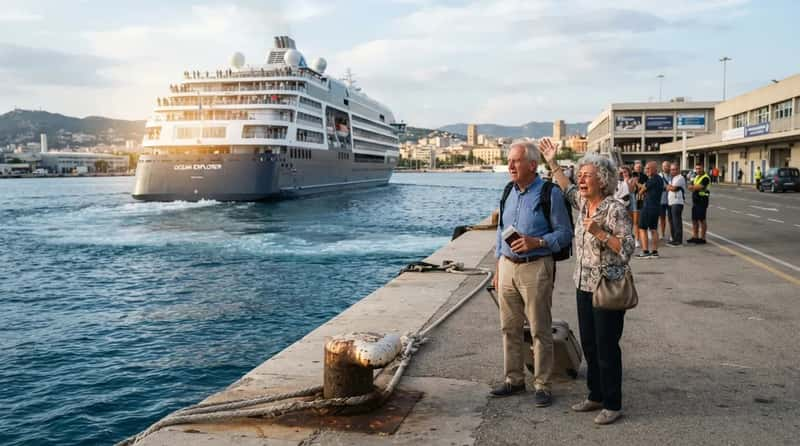
The ship sails on schedule, and you chase it at your own expense. One trade source puts late-return costs at $500–$2,000+ depending on distance. A UK guide estimates flights, taxis and hotels can easily run £500–£800 per person.
That’s before the stress of tracking down your luggage and passport. Those figures vary by port and route. The result is the same: you’re on your own. But there’s a twist that catches even careful planners, in #2.
2. New Independent “Guarantees” Don’t Mean the Ship Will Wait
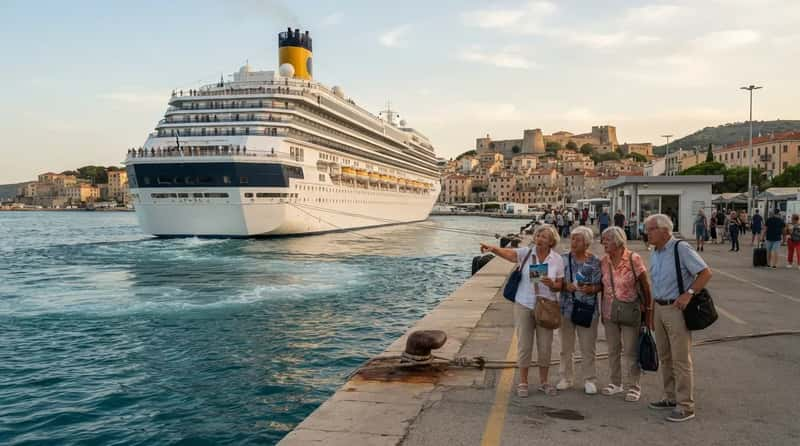
Some independent tour sellers now advertise protection. A cruise-planning site says that kind of guarantee is starting to be offered by independent tours, but the ship wouldn’t wait. They’d simply help you get to the next port. That’s not the same thing.
The same source warns that on sea days or at the last port, that could still mean missing a significant part of your trip. Read what the guarantee actually promises. And remember what a ship tour has that no guarantee matches, the final rule in #1.
1. The Ship Waits for Its Own Tours, and Nobody Else’s
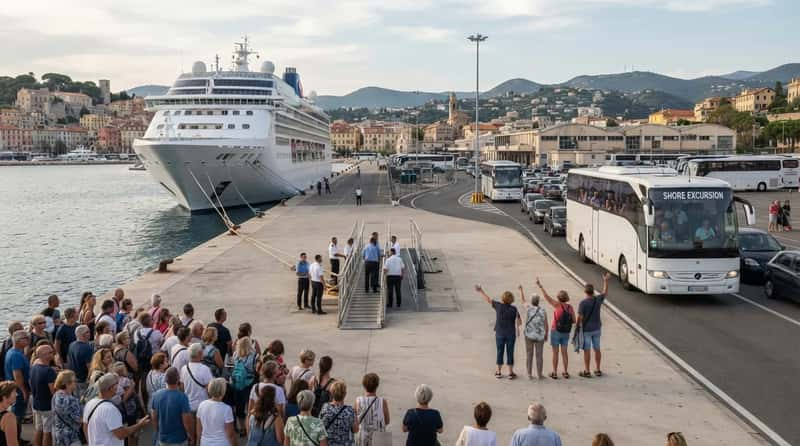
This is the line people skim past. The Points Guy explains that if the tour runs late due to traffic or another reason, the ship will wait for your bus to return. CruiseClarify puts it plainly: the ship waits for its own excursions, but does not wait for you, and getting to the next port is your problem and your bill.
Policies vary by line and fare, so confirm how yours handles a late ship tour. For a long drive inland, that protection can be the cheapest part of the trip. It’s the one fact worth knowing before you ever click “book.”
Most of the regrets on this list come down to timing. They’re about deadlines, boats and gangways, not the sights. Book early, ask the awkward questions, and you’ll spend port days looking at the view instead of the clock.
Which of these would have changed how you booked?