Most people treat a winery tasting room like any other bar: walk in, drink, leave, forget about it by morning.
Tasting room staff remember everything – the reservation you skipped, the perfume that filled the room, the bottle you reached for without asking. Some of these moments earn you an off-menu pour and a personal invitation back. Others get quietly noted before you’ve finished your first glass, and the worst ones get retold in the staff break room for years.
#23 – Walking In Without a Reservation
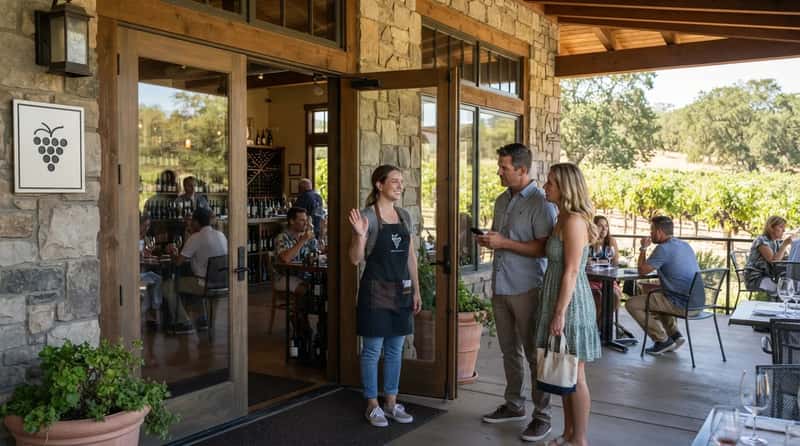
Always call ahead so the winery knows to expect you. Most wineries now use online booking or ask for a quick email before you arrive.
Showing up unannounced signals immediately that you didn’t do your homework – and it puts staff in the position of turning people away at the door.
“There is nothing more disappointing than being turned away at the door, because you did not make a reservation or arrived in a vehicle that is not permitted.”
Alicia Ekeler-Valle, Tasting Room Manager, Lieb Cellars
Staff remember the walk-ins who argue about it far more than the ones who simply accept a fully booked afternoon. Popular wineries fill up fast, especially in summer and during harvest, and a two-minute phone call avoids the whole scene.
But the reservation misstep is just the beginning – what happens when the group actually arrives is a whole other story.
#22 – Showing Up in a Giant, Unannounced Group
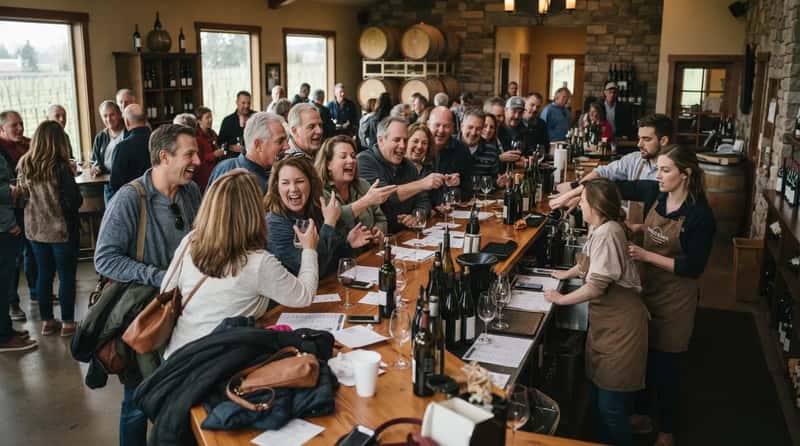
A big group can overtake the tasting bar, change the atmosphere with loud chatter, and prove impossible to corral throughout the day. Staff have to manage every other guest in the room at the same time.
Tasting room manager Alicia Ekeler-Valle suggests doing a little research if you plan to bring more than six guests. Past that number, unannounced, it becomes a logistical problem that lands squarely on the staff.
Industry professionals encourage visitors to call ahead for large groups and stay mindful of the tasting room’s hours. A heads-up call is genuinely appreciated – and remembered.
Fast Facts
- Six guests is the general cutoff most tasting rooms consider a “large party.”
- Bigger groups typically need a private table or advance notice so staff can plan the pours.
- Weekend and harvest-season slots can book solid days or even weeks ahead at popular wineries.
- A quick phone call before arrival is usually all it takes to turn a logistics headache into a smooth visit.
But if you thought group size was the main issue, wait until you hear what staff notice about what you’re wearing before you even say hello.
#21 – Wearing Heavy Perfume or Cologne
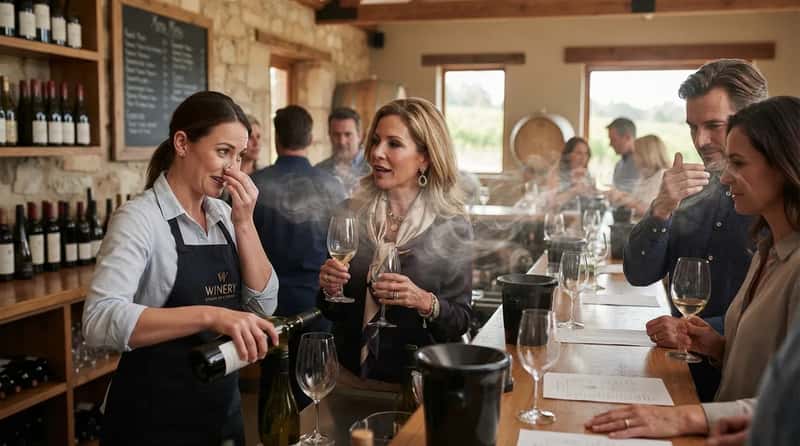
Skip the perfume or cologne on tasting day. The scent interferes with a wine’s aroma – not just for you, but for everyone standing near you.
Within seconds, one heavily scented guest can overwhelm an entire room, until nobody at the bar can smell anything but perfume instead of the wine in their glass. Staff are left trying to salvage the experience for everyone else.
In a small tasting room with six to eight people packed around the bar, it’s impossible to miss. Staff notice it immediately – and so does every other guest in the room.
That’s a sensory faux pas. The next one is a behavioral one that tasting room managers cite again and again.
#20 – Showing Up Right Before Closing
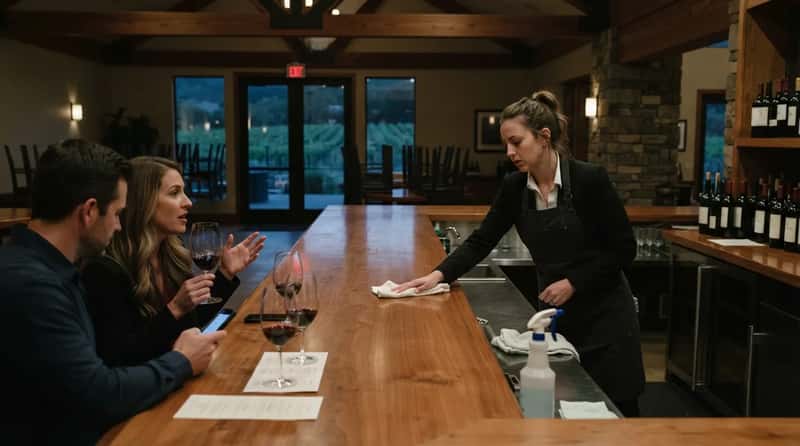
“People show up at 5 p.m. and stay for 45 minutes, knowing you’re closed,” one tasting room professional put it bluntly. It puts staff in the impossible position of being rude or working unpaid overtime.
Tasting rooms don’t run like bars with a last call. Staff have cleanup routines, inventory counts, and often a long drive home after a full shift on their feet.
Arriving with barely enough time for one flight, then lingering past closing, is a pattern that gets remembered. If the staff is already wiping down the counter, take the hint.
The clock matters. So does how you act while it’s still running – especially when it comes to noise.
#19 – Being Loud and Disruptive
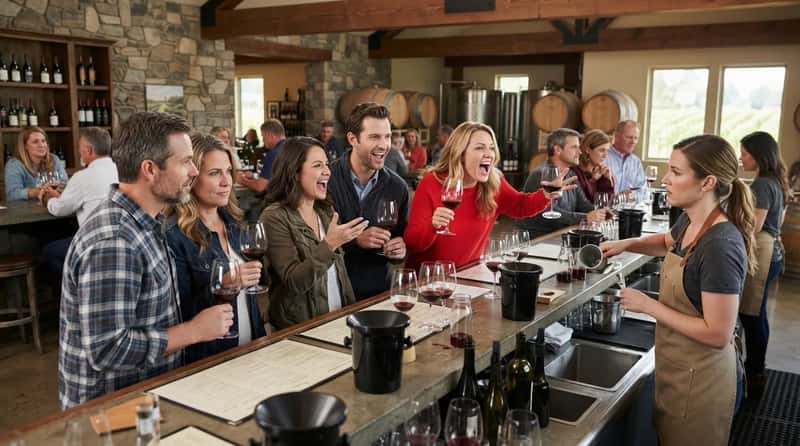
Loud outside voices don’t belong in a tasting room. Conversational tones fit the space and work perfectly for chatting about the wine or the strangers next to you.
Shouting to get a staff member’s attention, crowding the bar, or interrupting someone else’s conversation with the host are the biggest offenders. A tasting room simply isn’t a dive bar, no matter how good the wine is.
Staff can hear every conversation at the bar. The group being “fun and loud” is almost always the group that gets the least information and the shortest pours.
But noise is only half of the disruption equation – bringing certain guests along can be just as memorable for staff, and not in a good way.
#18 – Bringing Young Children Who Can’t Sit Still
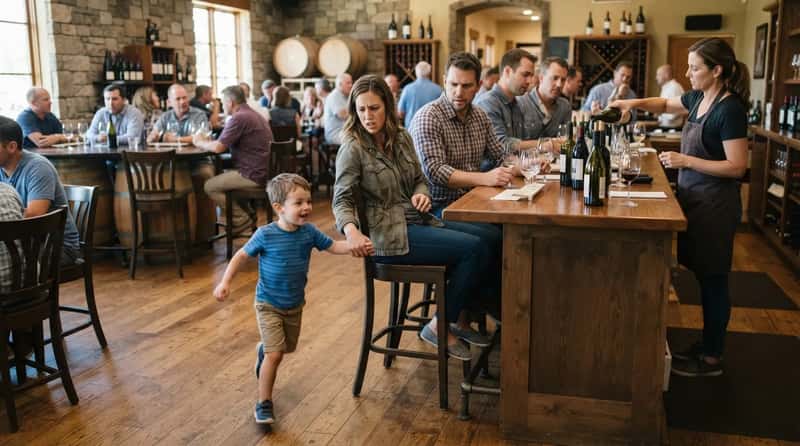
Wine tasting requires attention and a calm environment. If you bring children, they need to understand the need for quiet, respectful behavior at the bar.
Other guests come to wine country to get away from their own children – they most certainly don’t want to hang out with yours. That’s not one cranky staffer’s opinion; it’s a near-universal sentiment among tasting room professionals.
Tasting rooms aren’t playgrounds. If children or pets are allowed, keep them in the designated zone, since a child running loose in a room full of wine glasses is a liability issue staff have to manage on the spot.
Speaking of bringing things into the tasting room – what you bring to eat is watched just as closely as what you bring to drink.
#17 – Bringing Outside Food Into the Tasting Room
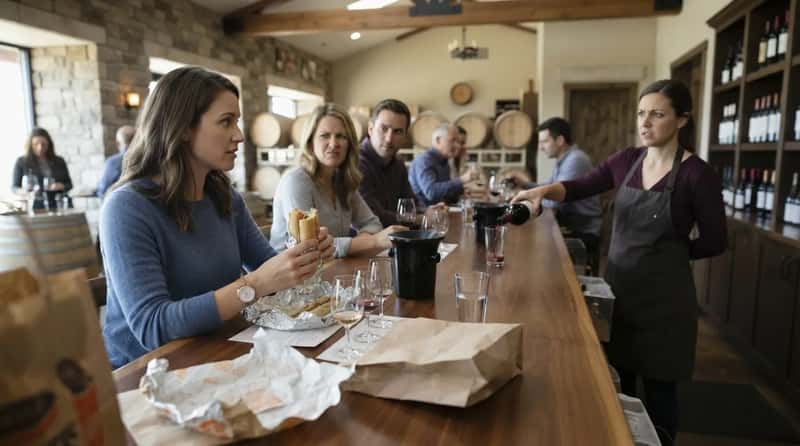
Leave the outside food at the car. It seems harmless, but it creates real problems for both the palate and the room’s atmosphere.
Tasting room etiquette calls for avoiding aromatic foods near the bar – some wineries go so far as to use scent-free soap in the restrooms just to protect the air in the room.
When a guest unwraps a fast-food bag or pulls out a pungent sandwich, the damage to everyone else’s palate is immediate. Staff remember exactly who did it, especially when other guests complain.
Now that we’ve covered what you bring – let’s talk about what you do with the glass once it’s in your hand.
#16 – Grabbing the Bottle to Pour for Yourself
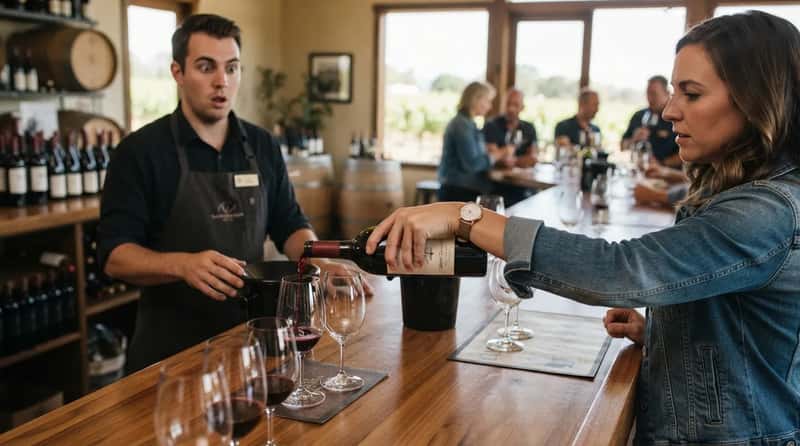
Don’t reach over and help yourself mid-tasting. Pouring is strictly the host’s job, and it usually comes with a few drops of insight along with the wine.
In California – the state with more wineries than any other – it’s actually illegal for a guest to pour their own wine, and the same rule applies in many other states. What feels like helpfulness is, legally, a violation.
Even if you think you’re saving the staff a trip, grabbing the bottle isn’t the move. Staff remember the guests who reached for the bottle – every single time.
#15 – Aggressively Swirling and Sloshing Wine
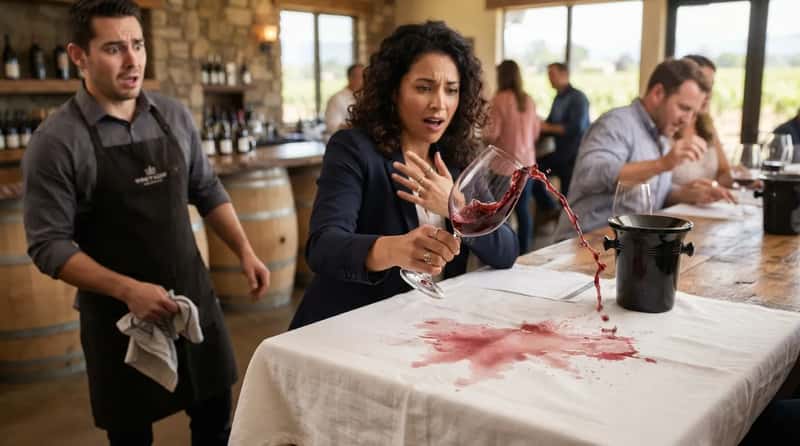
Swirling releases the aromatics, but it’s meant to be gentle and done over a wine-safe surface. Waving the glass around like a lasso is not the same technique.
A misaimed swirl that sends Pinot Noir across a white tablecloth – or across another guest – is the kind of moment that gets replayed in the staff break room for weeks.
Guests who swirl theatrically without knowing why are quickly identified as performers rather than participants. Staff adjust their explanations accordingly, and the reserve pours rarely make it to this group.
The way you handle the glass says a lot. So does the way you handle the staff’s expertise.
#14 – Interrupting the Presentation Repeatedly
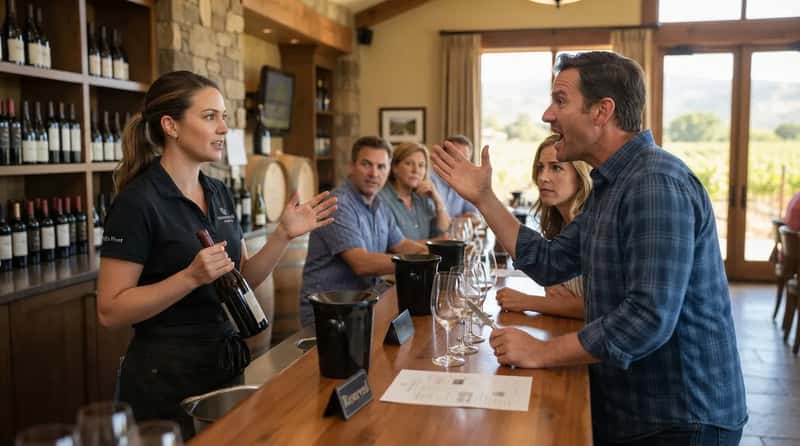
Talking over the host or cutting into a conversation they’re having with another guest is one of the most commonly cited complaints in tasting rooms. A structured tasting has a rhythm, and derailing it inconveniences everyone at the bar.
Good staff sequence the wines on purpose – dry to sweet – and weave in details about flavor, production, food pairing, and serving temperature as they go.
Worth Knowing
- Wines are usually poured from lightest to boldest, white to red, dry to sweet, or youngest to oldest.
- That order exists to protect your palate, not to slow the visit down.
- Jumping ahead or requesting wines out of sequence disrupts the tasting for the entire bar, not just you.
- Hosts often save the story behind each wine for the moment it’s poured – interrupting early means missing it entirely.
Interrupting before they finish a pour or a story cuts off information other guests actually wanted. Staff remember the interrupters, and quietly start giving them the shortest answers in the room.
Interrupting the story is one problem. Acting like you already know it is another – and it’s just as memorable to staff.
#13 – Acting Like a Wine Know-It-All
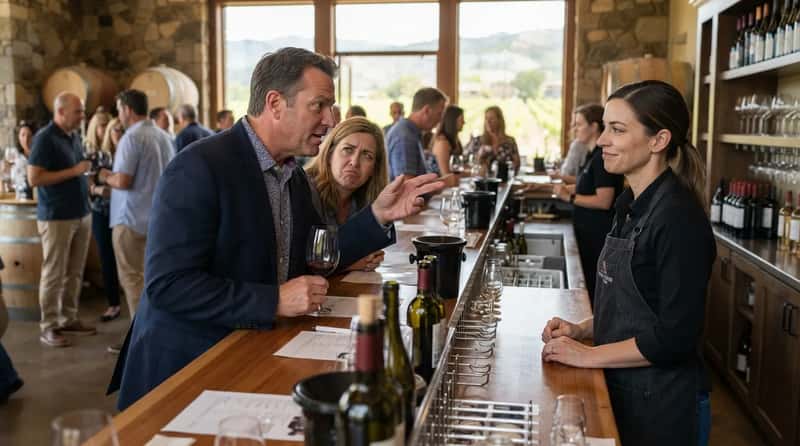
The tasting room isn’t the place to brag about your collection or lecture the room. If you genuinely love wine rather than the sound of your own opinions, you won’t feed into wine culture’s worst stereotype.
Correcting the host on their own wines, name-dropping famous producers you’ve visited, or comparing the pour unfavorably to something you had in Burgundy last summer – all of it gets quietly noted.
There’s always someone in the room who knows more than you, and more often than not, it’s the person standing behind the bar.
The know-it-all is memorable. But so is the opposite – the guest who refuses to engage at all.
#12 – Refusing to Taste Outside Their Comfort Zone
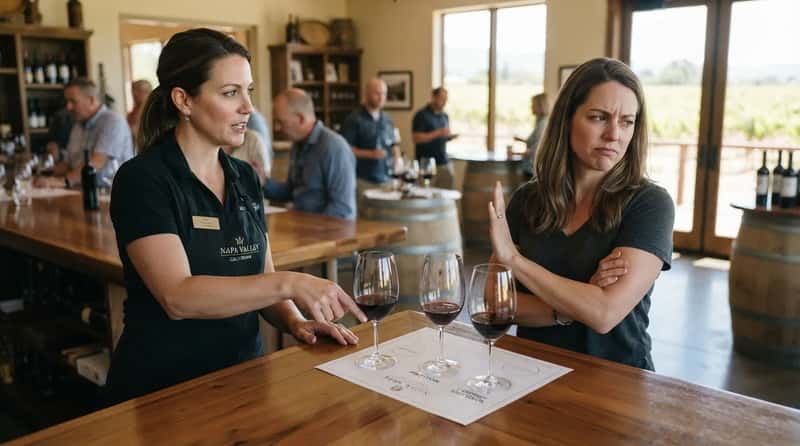
Staff build curated flights that move through a winery’s full range for a reason. When a guest insists “I only drink Cabernet” and waves off everything else, the entire experience they designed falls apart.
One tasting room recalls a guest who refused the Pinot Noir because the tasting notes mentioned blueberries – and she happened to be allergic to blueberries. It’s the kind of story that gets retold for years.
A tasting is the one setting where trying something unfamiliar is the entire point. The guests who stay open usually walk out with a bottle they never expected to love.
Refusing to try is one thing. What you do with the wines you don’t want is another – and it’s more revealing than most guests realize.
#11 – Being Afraid to Use the Spit Bucket
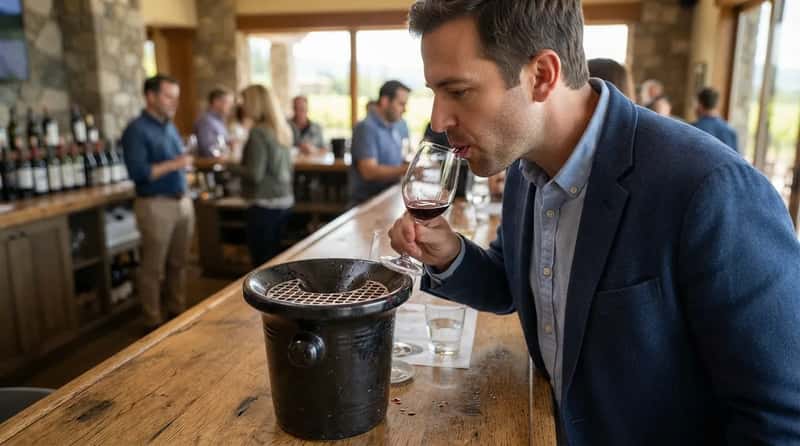
Plenty of amateurs worry that spitting out the wine will offend the staff. It won’t – and it says nothing about whether you liked the pour.
Spitting is how you make it through a full flight, and every professional in the room does it without a second thought. It’s a sign of experience, not disrespect.
Guests who swallow every pour tend to get louder, slower, and harder to talk to as the tasting goes on – and staff dislike nothing more than managing a drunk patron. Use the bucket. Staff will respect you more for it.
#10 – Getting Visibly Drunk During the Tasting
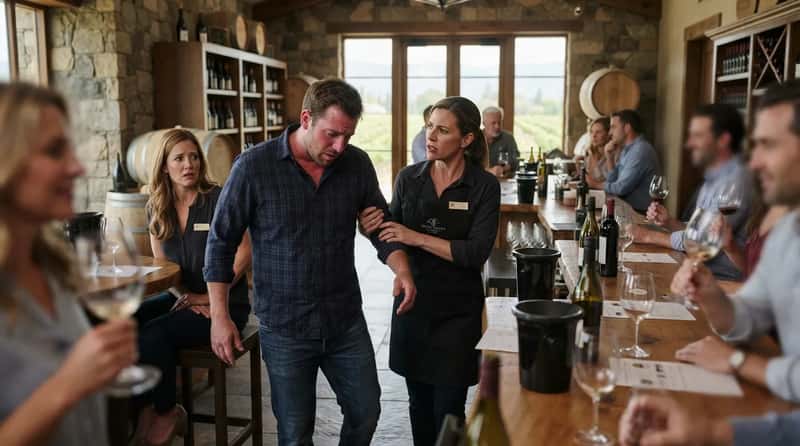
If you appear intoxicated, staff are legally barred from serving you, tasting or not. Drunken behavior has no place in the room, and most often it ends with a polite request to leave.
Wine country has plenty of wine to go around, but a tasting room is not the place to stumble or lose your footing. It sounds obvious, yet it’s one of the most consistent complaints staff share across every wine region.
A little tipsy is part of the day – just know your limits, or you’ll remember nothing and annoy everyone around you. Guests who get cut off are remembered indefinitely.
Overconsumption is an obvious problem. The next issue is quieter – and it costs the winery real money.
#9 – Monopolizing Staff Time Without Buying Anything
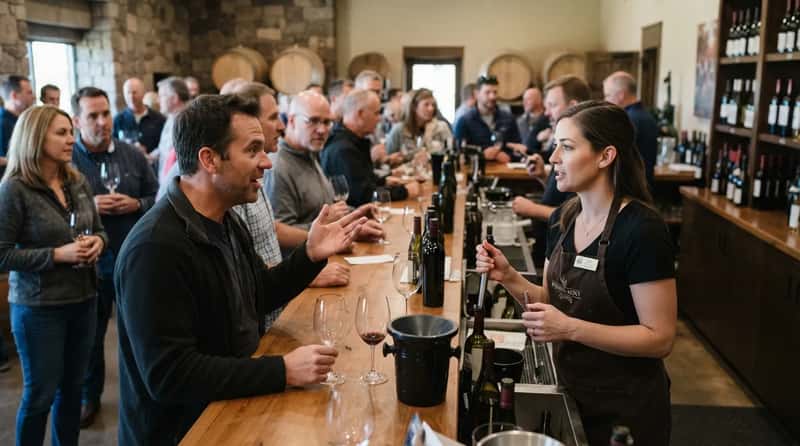
Hogging a busy host’s attention is a recognized problem in tasting rooms. Keeping your questions focused matters when other guests are waiting to be poured.
Spending forty minutes asking for off-menu pours and library bottles, then walking out without buying a single bottle, is a pattern staff spot within the first few minutes.
Quick Compare
- Curious guest who asks a few focused questions and buys a bottle: warmly remembered, often invited back.
- Guest who requests every library pour and leaves empty-handed: quietly flagged before the visit even ends.
- Guest who waits patiently during a lull: often rewarded with an extra taste or two.
- Guest who monopolizes attention during a rush: gets the shortest answers in the room.
Tasting rooms genuinely welcome guests who are still learning and not ready to buy – exploration is part of the business. But taking everything and giving nothing back is the part that gets noticed.
Monopolizing time without buying is one drain on a tasting room’s patience. Fighting over the fee at checkout is another – and it’s just as memorable to staff.
#8 – Complaining About the Tasting Fee
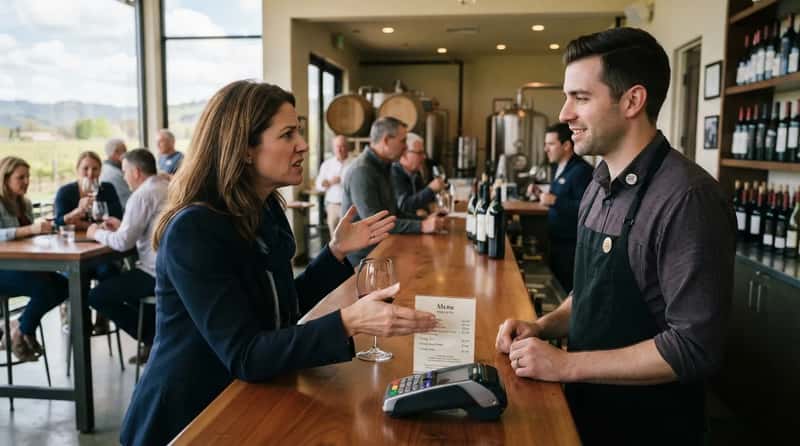
Don’t argue about the tasting fee. It funds the winery’s operations and compensates staff for their time, and many wineries waive it entirely if you purchase a bottle.
Guests who fight over a fee at a winery they’ve never visited signal immediately that the whole trip is a transaction, not an experience – and the energy in the room shifts accordingly.
Tasting rooms run as real profit centers today, between fees, wine sales, club memberships, and events. The fee is how the lights stay on; begrudging it is begrudging the whole operation.
Now we’re getting into the behaviors that don’t just annoy staff – they disrupt the entire room.
#7 – Elbowing to the Front of a Crowded Bar
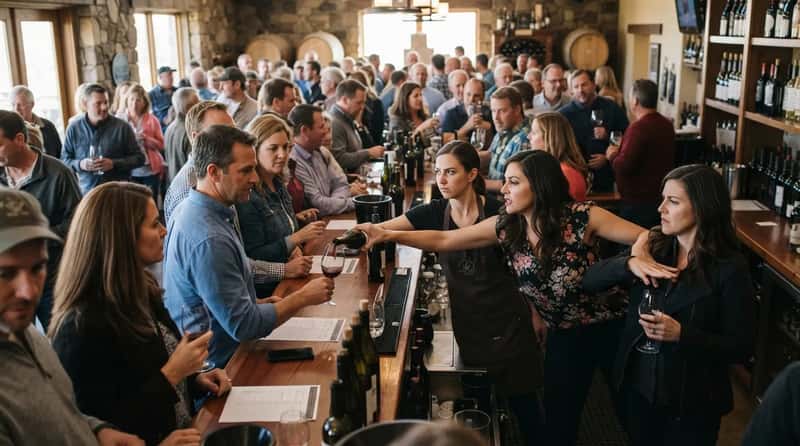
Weekends bring crowds, and pushing to the front of a packed bar is noticed instantly. It creates tension with every guest who was waiting their turn patiently.
Crowding the bar or cutting into a pour mid-conversation breaks tasting room decorum completely. Your turn is coming – there’s no need to force it.
Pushing forward almost never earns faster or better service. Staff quietly prioritize the people who waited, and the pusher gets the minimum pour and the minimum conversation.
#6 – Shoving an Empty Glass in the Pourer’s Face
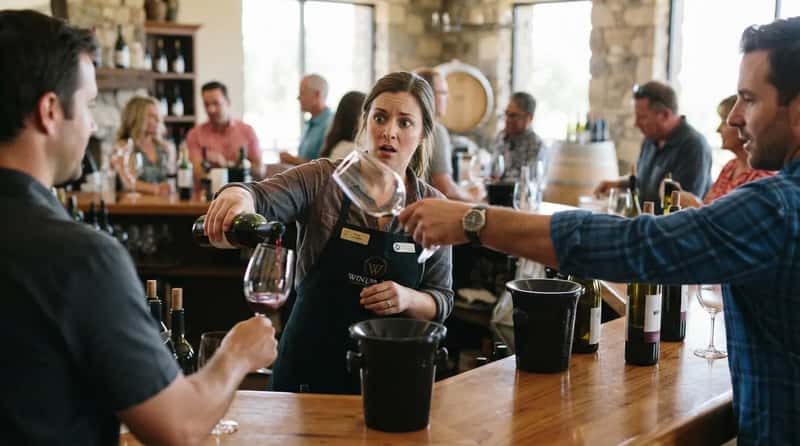
Flagging down the pourer by shoving your empty glass in their face doesn’t speed anything up. It just makes a bad impression – and can get you served less, not more.
This habit usually comes from bar culture, where flagging a bartender is standard. Tasting rooms run differently, since the pour is part of a structured conversation, not a transaction.
Staff remember the glass-shovers as guests who came to drink, not to taste. The reserve bottle stays on the shelf, and the invitation to come back never gets extended.
We’ve covered the bar behavior. Now let’s talk about the behaviors that happen away from the bar but are still completely visible to staff.
#5 – Treating the Vineyard Like a Photo Studio
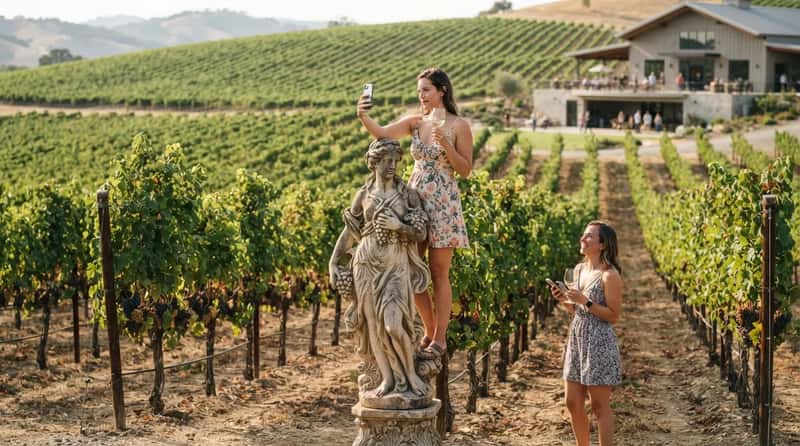
Plenty of wineries sit on bucolic hills with sprawling patios, and it shows in how many guests prioritize the Instagram shot over the wine itself. Staff watch people spend more time framing a glass against the vines than actually tasting what’s inside it.
Climbing on estate furniture, moving props, or wandering into restricted vineyard rows for a better angle all get reported back to management. These areas are often fragile, legally off-limits, or simply unsafe for anyone unfamiliar with winery equipment.
Climbing a statue after a couple of glasses is exactly the kind of thing that baffles staff on a slow Tuesday. The photo lasts seconds in someone’s feed; the staff remembers the person who took it for far longer.
Now we get to the behaviors that actually work in your favor – if you know how to use them, since most visitors get them wrong or skip them entirely.
#4 – Eating the Palate Cleansers Like Snacks
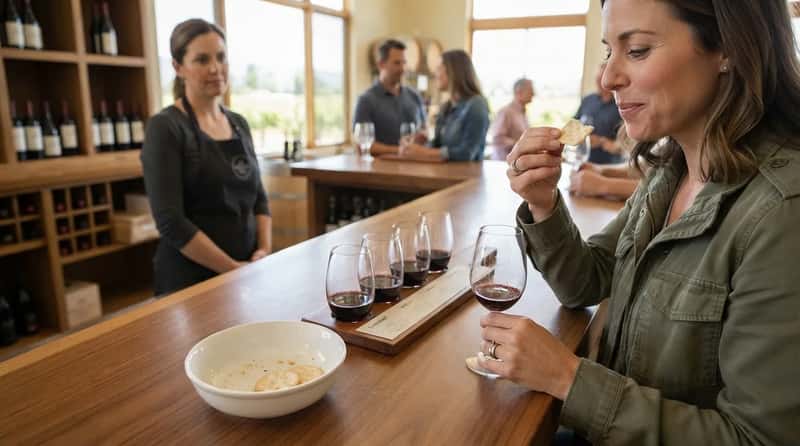
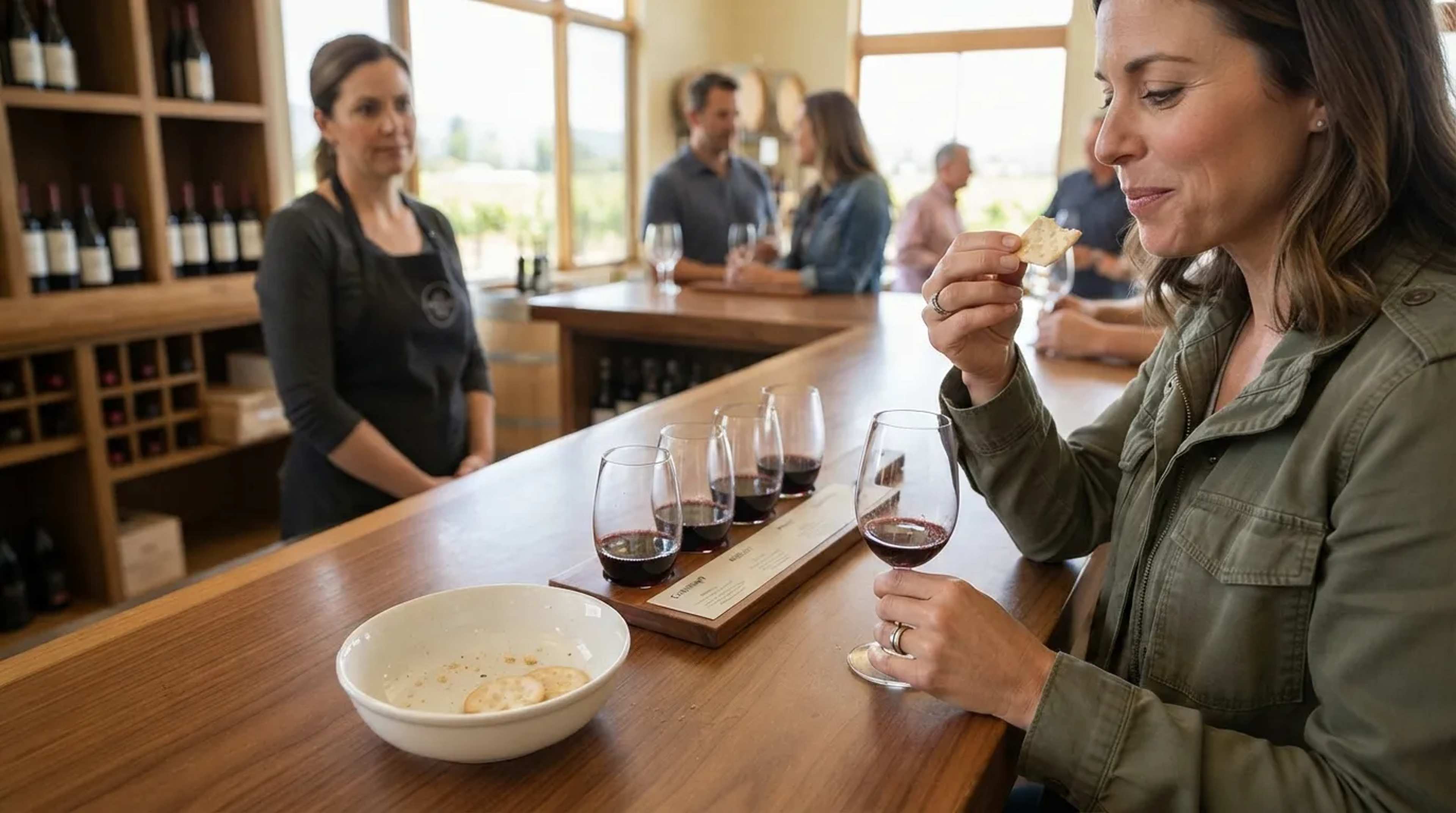
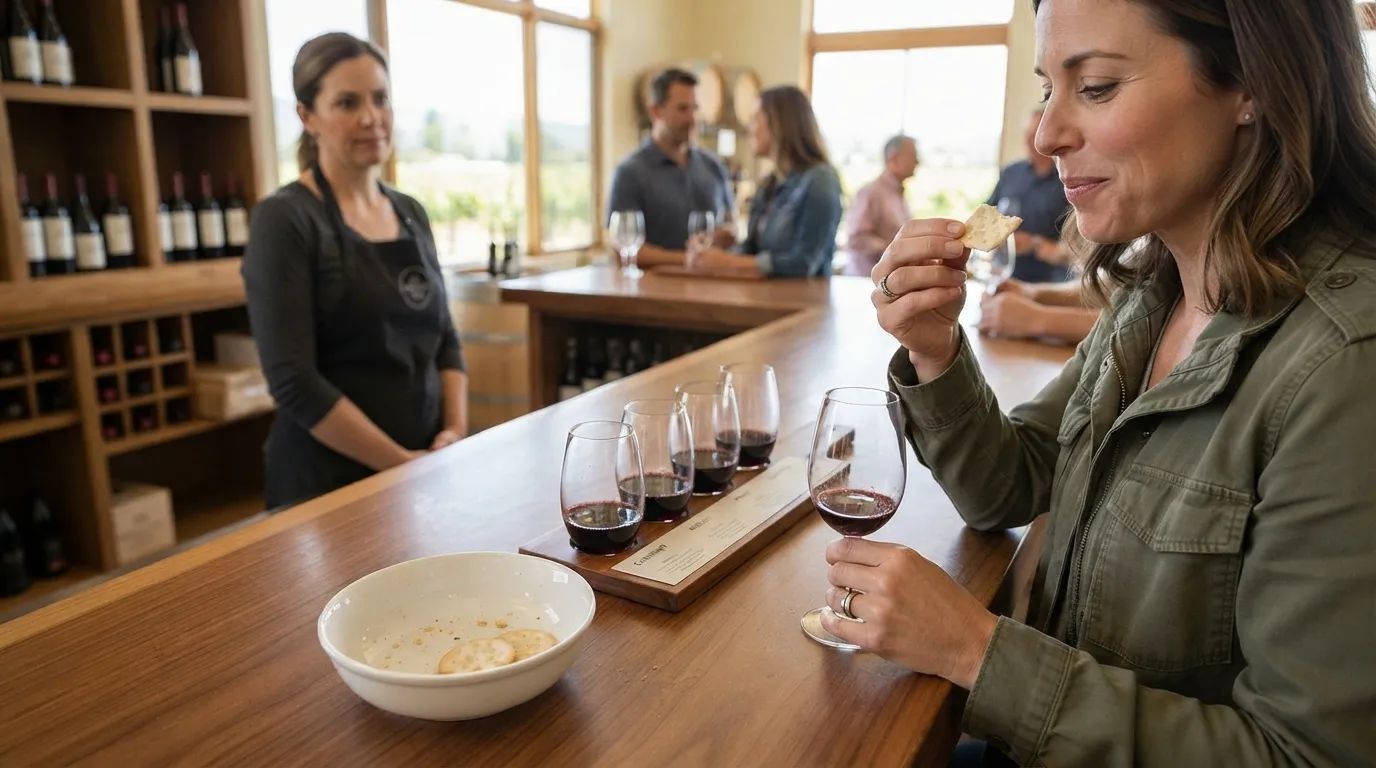
Resist emptying the little bowl of crackers on the bar. Those are palate cleansers meant to go between samples, not a snack to fill up on.
Staff regularly watch guests demolish an entire bowl in the first two minutes, leaving nothing for the rest of the flight. It disrupts the sequencing the staff carefully built and signals the guest showed up hungry, not curious.
At a Glance
- Most wine flights include 3 to 5 pours, with 4 being the industry standard at tasting rooms and wine bars.
- Each pour is usually 1.5 to 2 ounces, roughly a full glass of wine total across the flight.
- Crackers or bread are there to cleanse the palate between wines, not to double as a snack.
- One cracker between pours is the right move; an emptied bowl is a signal staff remember.
One cracker between pours is the correct move. A fistful is the kind of detail that comes up at staff meetings, because in a small, carefully curated room, nothing is really minor.
Overdoing the crackers is a small moment. Racing through the flight itself is a bigger one – and it changes how much you’ll actually remember from the day.
#3 – Rushing Through the Flight to Hit Multiple Wineries
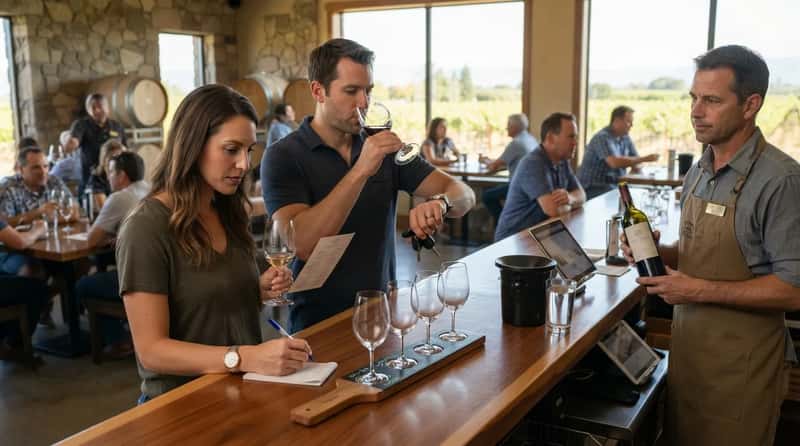
Cramming five wineries into one afternoon compresses a thoughtfully curated tasting into a speed run. Staff can tell within sixty seconds whether you’re there to taste or just checking a box.
Guests who rush through several stops rarely remember any of them clearly, and they get the least out of each one – staff match the surface-level engagement with a surface-level pour.
The guests who linger, ask follow-up questions, and engage with the story behind the wine are the ones who walk away with bottles they’ll drink for years, and often an invitation to the next release event.
Two more to go – and these are the ones that separate the guests who become regulars from the guests who become cautionary tales.
#2 – Signing Up for the Wine Club Just to Skip the Tasting Fee
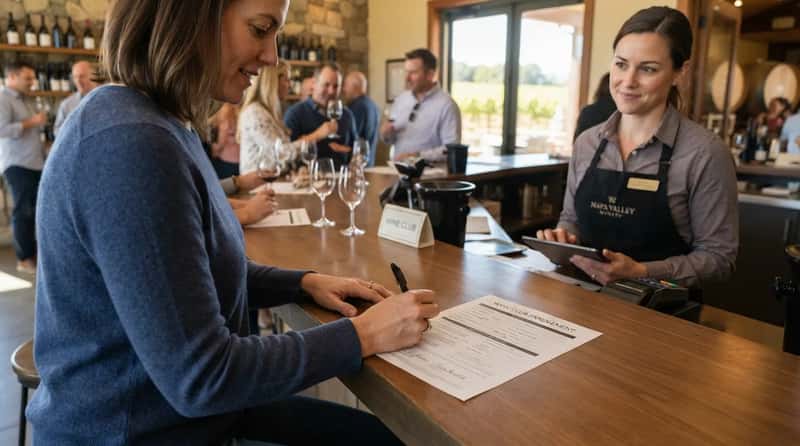
Most guests decline club membership over flexibility concerns or simply not being asked at the right moment – that’s normal. Guests who join purely to dodge the fee, then cancel the next day, are a separate and well-recognized category.
Top-performing wineries convert roughly 8 to 10% of tasting room visitors into club members, according to industry benchmarks, and staff track those numbers closely. That means they also notice exactly when a sign-up is genuine versus transactional.
Joining and immediately canceling isn’t a clever loophole – it’s a data point sitting in the winery’s CRM. Staff want to greet returning guests by name and remember their preferences; the fee-dodger ends up remembered too, just not the way they hoped.
And finally – the one behavior that tasting room staff say they never, ever forget, no matter how long ago it happened.
#1 – Being Genuinely Kind and Curious
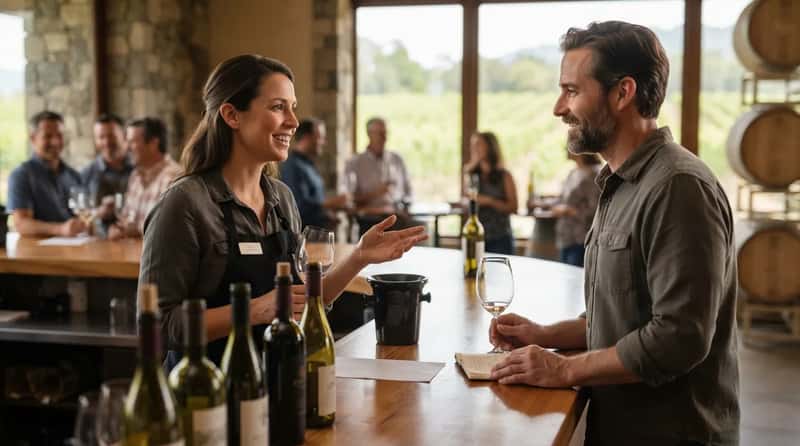
Every entry on this list has been about what not to do. But the moment staff remember most vividly, above every nightmare visitor story, is the guest who was simply kind, curious, and engaged.
Tasting room hosts want an actual conversation, so have one. Ask about the vintage, ask what the winemaker was chasing with a particular blend, ask what the host’s personal favorite pour is – questions like these unlock a completely different level of hospitality.
The guests who do this leave with off-menu samples, winemaker introductions, and invitations to events that never make it onto the website. Staff remember every visitor who made their day a little better – and there’s nothing stopping you from being one of them.
The Bottom Line
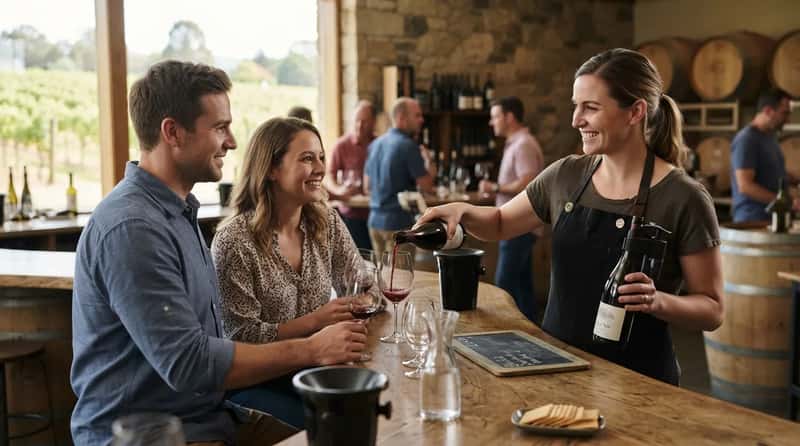
Tasting room staff work in an intimate, sensory-sensitive space, and they notice everything – the perfume you wore, the bottle you reached for, the crackers you demolished, the way you actually talked to the person pouring your wine. None of it disappears once you walk out the door.
The guests who get the reserve pours, the private tour invitations, and the winemaker’s personal number were never the ones who spent the most money. They were the ones who showed up with basic respect and real curiosity – and that, more than anything else on this list, is what tasting room staff never forget.