Most cruisers assume the cabin they booked is the cabin they’re stuck with, and that upgrades only happen if you pay full price for a suite. That’s not how insiders play it. Crew members, revenue managers, and cabin stewards work inside a system built on quiet exceptions – programs and placements they’ll use for themselves and their favorite guests, but rarely explain out loud.
Some of these moves cost nothing. Others cost a fraction of what you’d expect. Here’s what cruise staff actually say once you finally get them talking.
#24 – The Silent Auction Nobody Explains Before You Board

Here’s the part most first-time cruisers miss entirely: you can bid your way into a nicer cabin for pennies on the dollar, and almost none of it is advertised at booking. Several major lines run these programs quietly – Norwegian has Upgrade Advantage, Royal Caribbean has RoyalUp, Celebrity has MoveUp, MSC has MSC Upgrade, and Virgin Voyages has Level Upgrade. Each one lets guests bid their way from oceanview and balcony cabins up into full suites.
Most of these programs are invitation-only and arrive by email in the weeks before sailing, so anyone who skips the marketing emails never even sees the offer. The lowest minimum bids and best odds go to whoever submits first, since minimums climb the closer you get to sail date. Staff quietly wish more guests understood that timing beats luck here.
At a Glance
- Norwegian Cruise Line – Upgrade Advantage
- Royal Caribbean – RoyalUp
- Celebrity – MoveUp
- MSC Cruises – MSC Upgrade
- Virgin Voyages – Level Upgrade
#23 – Norwegian’s Haven Loophole Insiders Never Mention Out Loud
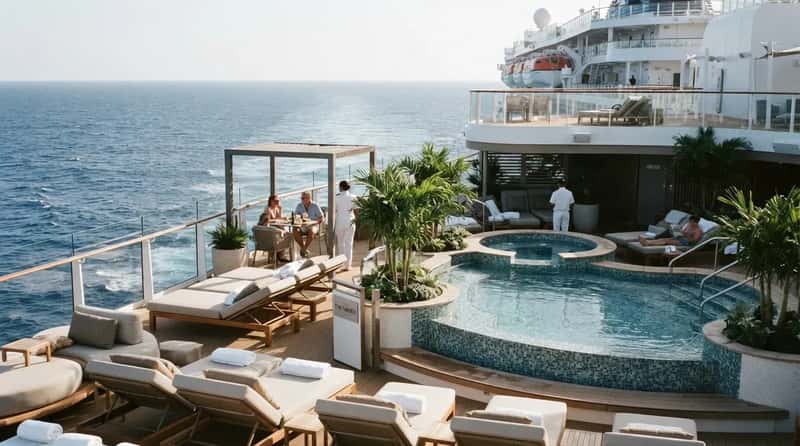
Bidding your way into Norwegian’s ship-within-a-ship suite complex sounds impossible until you see the math staff use behind the scenes. The Haven includes butler service, a private restaurant, a private pool and sundeck, and priority everything most passengers never get near.
Here’s the number that surprises people: a $100-per-person, per-night accepted bid on a seven-night cruise means paying about $1,400 total for two, for a Haven experience that normally books $3,000 to $5,000 above a standard balcony. Crew rarely volunteer that comparison unless someone asks directly. It’s the kind of gap that makes a travel agent’s jaw drop.
#22 – MSC’s Yacht Club Back Door
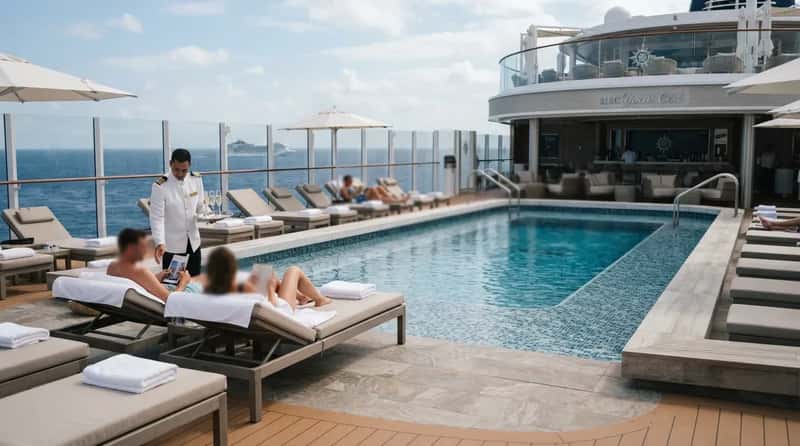
MSC’s version of the exclusive ship-within-a-ship works almost identically, and staff consider it one of the best-kept bargains in the entire industry. Yacht Club access through the bid program still includes butler service, a private pool, and exclusive dining most passengers never see.
Landing that access through an upgrade bid at a fraction of the direct booking price is considered one of the strongest values on the water. Many loyal MSC cruisers say they’d never book Yacht Club outright again once they’ve seen the bid price. That kind of loyalty shift, quietly built on a bidding email, is rarer than you’d think.
#21 – Celebrity’s Quiet AquaClass Sweet Spot
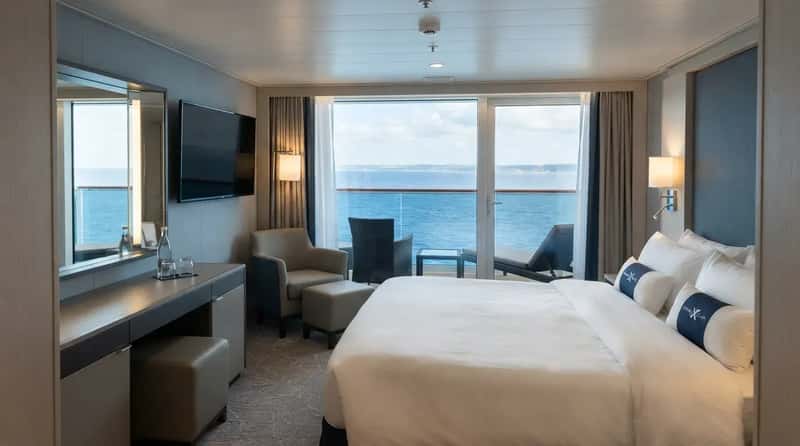
Celebrity runs one of the most transparent bidding systems on the water, and staff say the sweet spot isn’t the top suite – it’s one tier below it. AquaClass upgrades through MoveUp routinely come in as excellent value compared to what the category costs at full price.
The program typically opens to eligible passengers within 30 days of departure, which means last-minute cruisers sometimes get the best shot at it. Many frequent Celebrity guests quietly admit they now book the cheapest cabin on purpose, just to leave room to bid up later – a controversial move some travel agents actively discourage.
#20 – The Guarantee Cabin Gamble Revenue Management Doesn’t Advertise

Booking a “guarantee” fare feels like a gamble, but staff say it’s often the smartest quiet upgrade path there is. With a guarantee, you don’t choose your exact cabin – the cruise line assigns one somewhere in the category you booked, handled entirely by a department crew simply call Revenue Management.
When a category oversells and another undersells, guarantee bookings are frequently the first ones bumped upward at no extra charge. Crew say it’s less romantic than a bidding win, but just as real. Some cruisers now book guarantees on every sailing on purpose – a habit that quietly frustrates guests who paid full price for a specific room number.
#19 – The Secret “Noise Map” Crew Keep Hidden From Guests
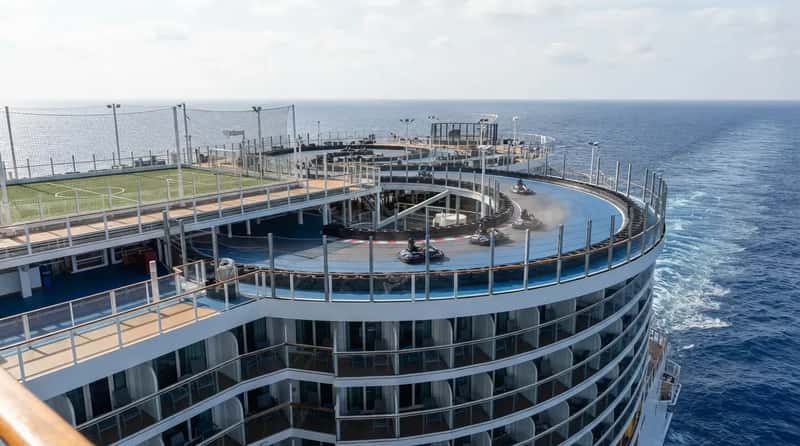
Every ship has a document most passengers never learn exists, and it changes which cabins get quietly reassigned. Crew describe an internal file often called the “Noise Map” or “Problem Map” that lists every cabin with a known issue – engine vibration, sound bleed from public venues, or a structural quirk in the deck above.
On Norwegian, one known example is Deck 14 forward, where cabins sit under the outdoor sports complex and the racetrack causes steady vibration and noise. Crew know they’ll get complaints most cruises and will move guests if space allows, but they wait for someone to raise it first. It is never handed out as a public list.
#18 – The “Cabin Sandwich” Stewards Wish You Knew About
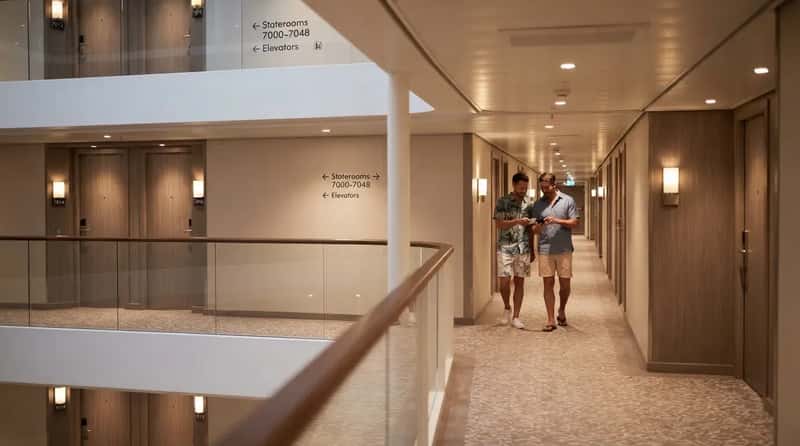
Ask any longtime steward for one free tip and most say the same thing: check what’s above and below your room before you check what’s inside it. Insiders call it the “cabin sandwich” – having other cabins as a buffer both above and below, rather than a lounge, kitchen, or theater ceiling.
The golden rule is to be surrounded on all sides by other guest cabins, which naturally buffers sound from venues and service areas nearby. It sounds almost too simple to matter, and that’s exactly why most guests skip it and end up complaining by night two.
#17 – Why Staff Steer You Away From Elevator-Adjacent Rooms
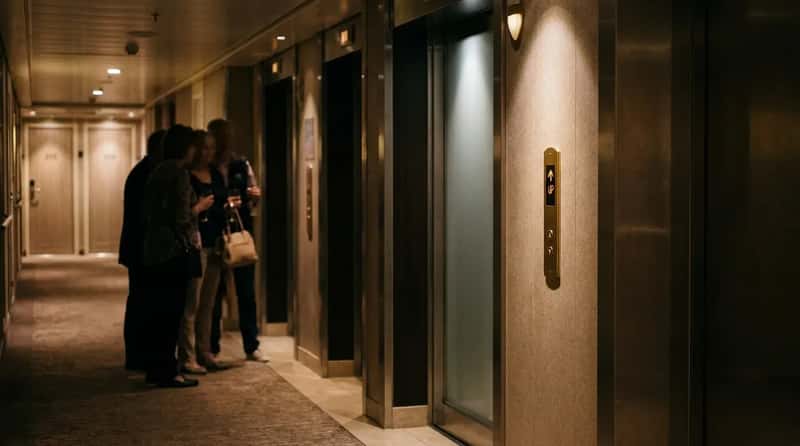
The cabin closest to the elevator bank looks convenient on a deck plan, and staff say that’s the trap. Cabins near elevator lobbies pick up more hallway traffic, more conversation, and the constant chime of doors opening at all hours of the night.
That convenience doesn’t stop when the ship goes quiet after midnight – the chimes and foot traffic keep going regardless. Crew say guests who book near elevators for convenience almost always request a room change by day three, once the novelty wears off.
#16 – The Service Corridor Cabins Nobody Warns You About
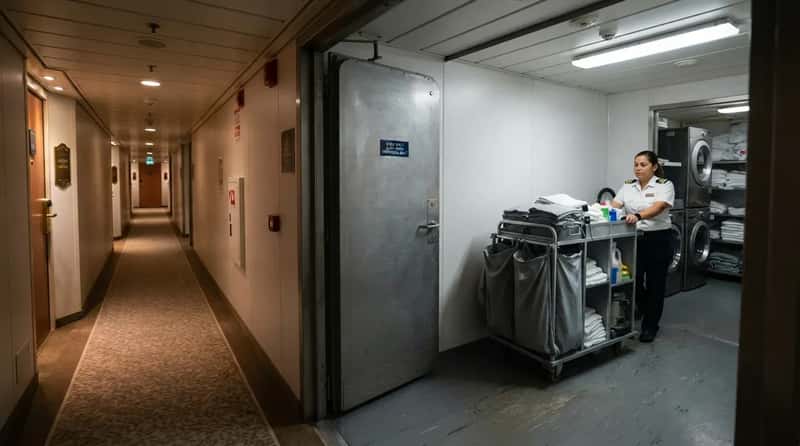
Behind a surprising number of guest cabin walls sits something staff would rather you not think about too hard. Crew stairways, service pantries, and laundries often run directly behind guest corridors, and deck plans rarely make that obvious to a first-time booker.
Cabins opposite laundries, crew access doors, or service corridors deal with near-constant foot traffic and noise around the clock. Staff who work those corridors overnight say they’ve heard more than one guest complaint about carts rolling past at 3 a.m.
#15 – The Motion-Sickness Fix Crew Actually Use Themselves
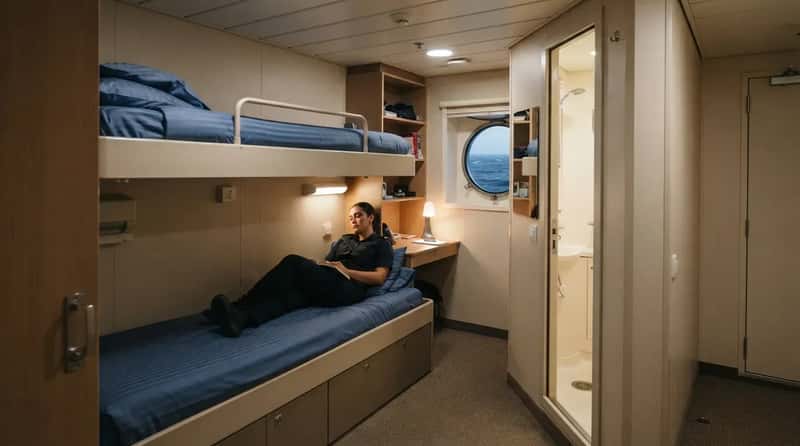
Forget the wristbands and the ginger chews – crew who spend months at sea pick their bunks by physics, not folklore. The safest all-around choice for most travelers is a midship cabin on a lower-to-middle passenger deck, with cabins above and below for a smoother, quieter ride.
If you’re prone to seasickness, lower decks are best since they experience noticeably less motion than upper decks. Cabins in the middle of the ship also feel less rocking than those at the front or back, which is exactly why crew quarters tend to cluster there.
#14 – Why Aft Cabins Come With a Nighttime Rumble
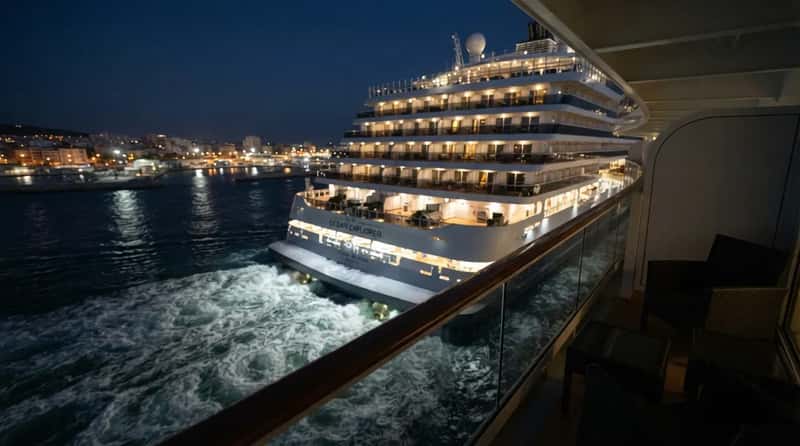
That gorgeous wraparound aft balcony everyone covets? Staff quietly consider it one of the biggest trade-offs on the ship. Cabins at the back can run noisier due to the engines, and vibration becomes very noticeable whenever the ship is docking or maneuvering into port.
Aft cabins also bring more roll and stern vibration, especially at night when the ship adjusts course. Some travel agents now flag this directly to first-time aft-cabin buyers, since it’s a letdown for a room that photographs beautifully but sleeps unevenly.
#13 – The Bow Thruster Surprise Forward Cabins Don’t Advertise
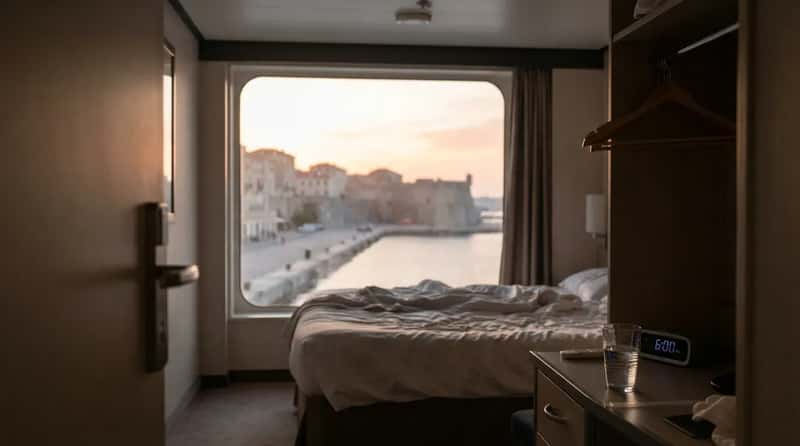
Forward cabins get sold as dramatic and romantic – staff know they also come with a very specific 6 a.m. wake-up call. Forward positions bring more pitch, meaning noticeable up-and-down motion whenever seas get rough.
Forward lower decks can also shake from bow thrusters during docking maneuvers, a sound many first-timers mistake for something going wrong with the ship. Crew say it’s completely normal – but nobody explains it until a sunrise arrival rattles the walls.
Quick Compare
| Position | Motion | Noise Source |
|---|---|---|
| Midship, low-mid deck | Smoothest, least rocking | Minimal – away from engines and thrusters |
| Aft | More roll and stern vibration | Engine noise, loudest during docking |
| Forward | More pitch in rough seas | Bow thruster rumble during maneuvering |
#12 – The Dead-End Hallway Gamble
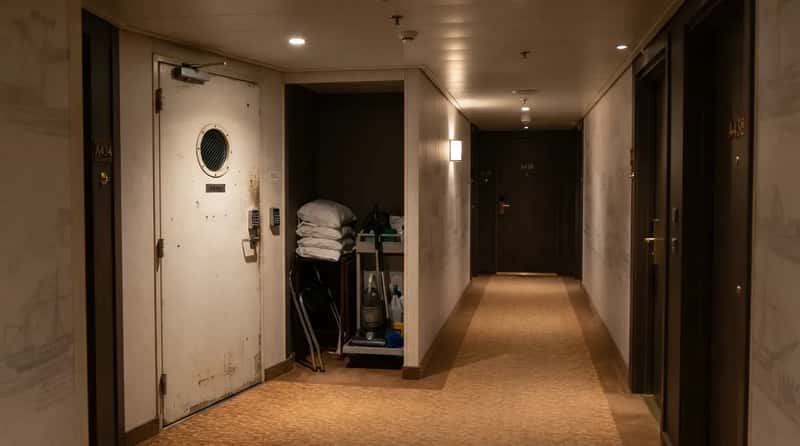
Staff have a running joke about corridors that dead-end near the back of a deck: they’re either the quietest cabins on the ship or the worst. A cabin at the end of a passenger corridor can be wonderfully peaceful when nothing else is back there.
But other dead-end hallways sit right next to crew service doors or storage areas, which cancels out the quiet completely. There’s no shortcut here – always check the deck plan closely before assuming a quiet-looking hallway actually is one.
#11 – The Off-Season Timing Trick That Multiplies Upgrade Odds
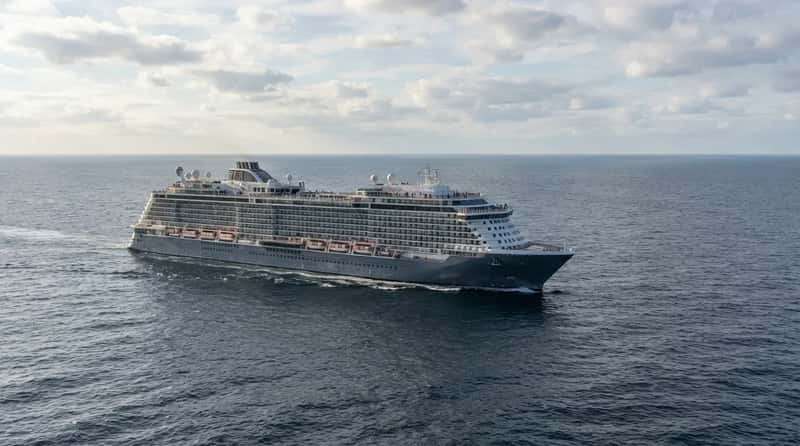
The single biggest lever guests never pull is simply picking the right week to sail. Upgrade odds tend to spike on sailings with lower occupancy – repositioning cruises, fall shoulder season from September through November, January sailings, and less popular itineraries.
During slower sailings, cruise lines are far more willing to bump passengers up just to fill empty inventory. Staff privately admit the emptier the ship, the more generous the upgrades get – a fact cruise lines have zero incentive to advertise on their homepage.
Fast Facts
- Repositioning cruises often sail well under full capacity
- Fall shoulder season (September through November) sees lighter bookings
- January sailings are historically among the slowest of the year
- Less popular or off-the-beaten-path itineraries carry the same edge
#10 – The Loyalty Status Bump Nobody Explains
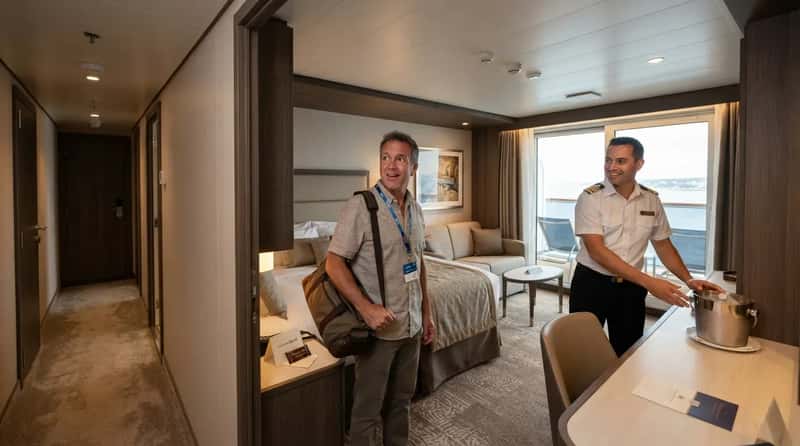
Loyalty programs are marketed as free drinks and priority boarding, but staff say the real prize is quieter and rarely mentioned. Frequent cruisers often get priority for upgrades, especially when a ship isn’t sailing full.
That priority isn’t published anywhere on the official tier chart – it’s an internal courtesy extended by the same revenue teams who manage guarantee cabins. Guests who’ve sailed a line a dozen times say the upgrades started arriving unprompted once they hit mid-tier status.
#9 – The Travel Agent Backchannel

A good travel agent has access to something the cruise line’s own website simply doesn’t show you. Agents sometimes tap into group rates that include free or discounted upgrades, arrangements built through volume relationships rather than public promotions.
Crew and agents alike say guests who book direct online almost never see these offers at all. It’s one reason veteran cruisers still use a human agent even now, despite booking everything else themselves.
#8 – The Repricing Move That Quietly Saves Hundreds
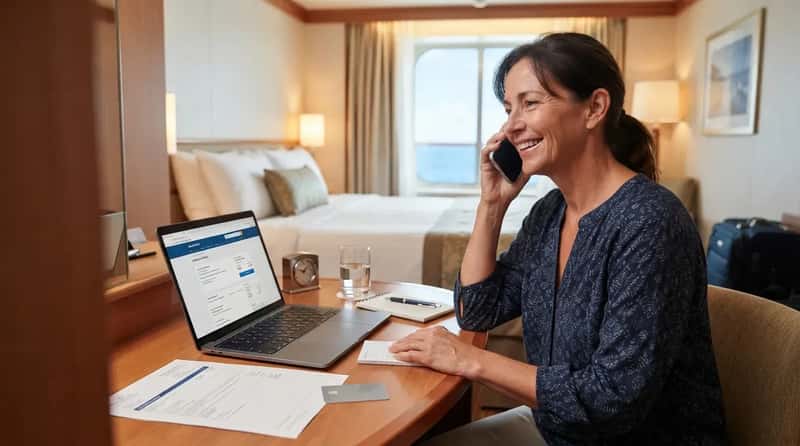
Most guests treat their booked fare as final the moment they pay the deposit. Insiders know better – some lines let you reprice if the fare drops before final payment, which means the exact same cabin can suddenly get cheaper.
That price difference can often be redirected toward a better category instead of refunded outright. Few guests ever check fares after booking, so this saving sits unclaimed on thousands of reservations every single week. It costs nothing but a five-minute phone call.
#7 – The Magnetic Hook Hack Crew Use Themselves
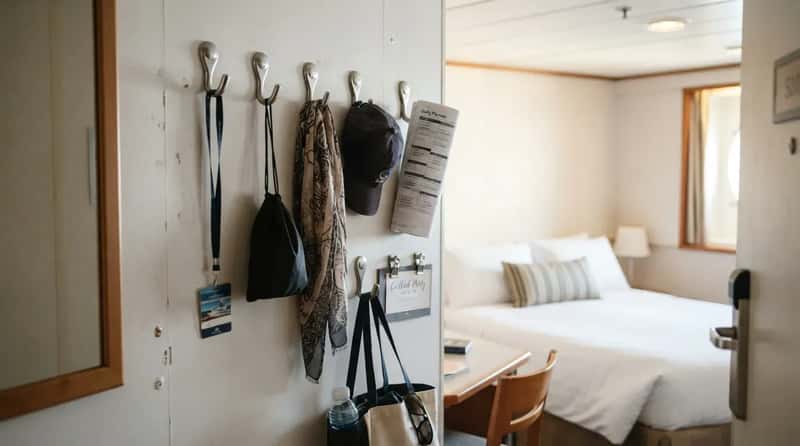
Ask a crew member how they organize a cabin a fraction the size of a hotel room, and the answer is almost always the same trick. Most cruise cabin walls are metal, so magnets brought aboard can hold cocktail party invites, dining reservations, excursion tickets, and daily planners without a single piece of tape.
Heavy-duty hooks designed for barbecue utensils usually hold more than 20 pounds, which turns a bare metal wall into real extra storage overnight. It’s not glamorous, but it’s the single most repeated tip from anyone who’s worked a cabin corridor.
#6 – The Bridge-Cam Trick for Windowless Cabins
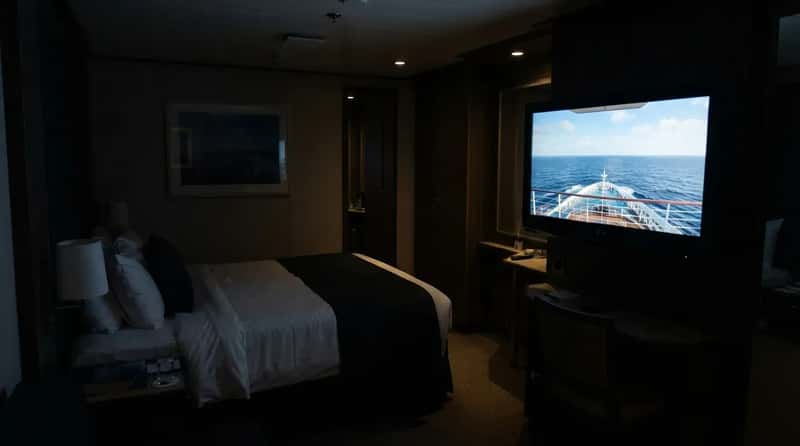
Interior cabins get a bad reputation for total darkness, and staff have a workaround most guests never discover on their own. A windowless inside cabin really is darker than dark, with zero natural cue for when morning arrives.
Turning the TV to the bridge camera station – a feature most cruise ship televisions already have – solves it instantly with a live view outside. It’s a small fix that turns the least popular cabin category into something completely manageable.
#5 – The Coffee Upgrade Stewards Rarely Volunteer
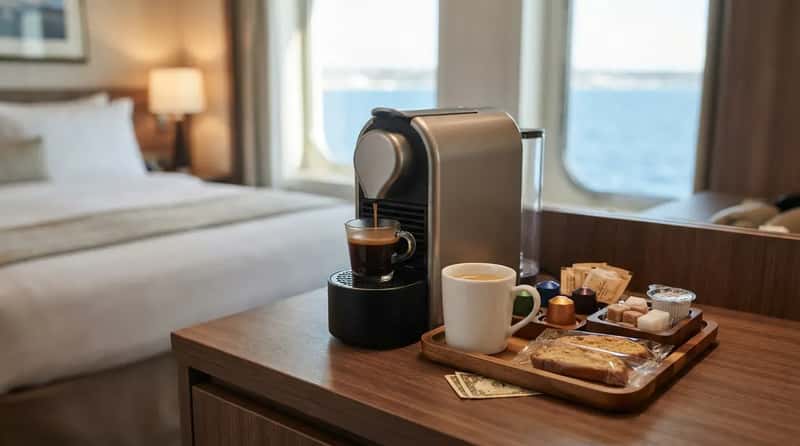
The in-room coffee on most ships is nothing special, and stewards know it – but they won’t fix it unless you ask. Name your preference and many stewards can quietly source better pods, specific tea types, or extra sugar packets without any fuss.
It’s not exactly a secret menu, but it’s close. A little extra tip once requests get specific tends to keep the coffee flowing all week, yet guests who never ask never learn any of this exists.
#4 – The Medical Discretion Most Guests Never Ask About
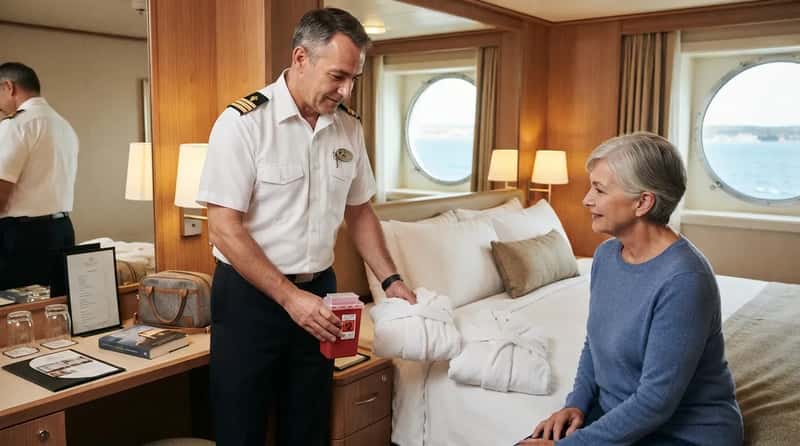
Cabin stewards handle far more than towel animals, and one category of quiet help almost never gets discussed openly. Passengers managing diabetes or other medical needs often don’t realize stewards can quietly assist behind the scenes – sharps container requests, extra robes for comfort, and similar needs handled with zero awkward conversation at guest services.
Cruise lines rarely spell this out anywhere obvious, so most guests simply never learn it’s an option. It’s a quiet kindness built entirely on asking the right person the right question.
#3 – The Deck-Plan Detective Work That Saves Cruises

Veteran cruisers don’t trust the deck plan alone anymore – they treat it as step one of a much longer investigation. When a layout doesn’t make clear what’s behind a wall, searching “quiet cabin locations” on cruise forums lets fellow passengers do the recon instead.
Those forums and cabin reviews are packed with firsthand reports about constant bass from a nightclub below or a lifeboat partially blocking a balcony view. Staff privately admit this crowd-sourced research often beats anything the cruise line publishes officially.
#2 – Disney’s Quiet Soundproofing Advantage
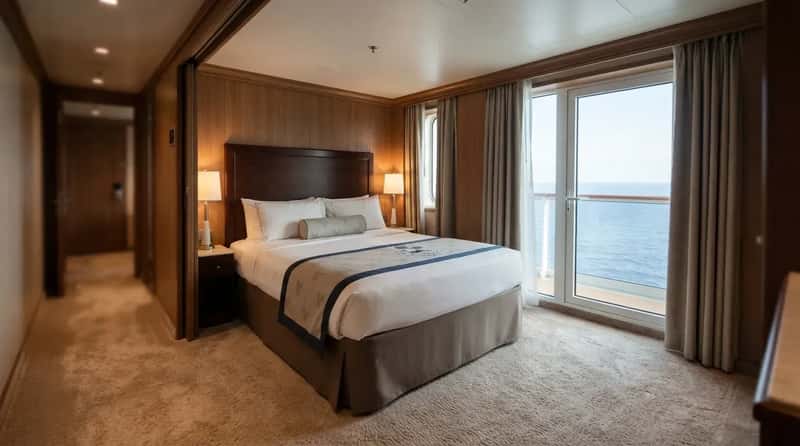
While most lines fight the same noise complaints ship after ship, one line quietly solved the problem years ago. Disney Cruise Line’s cabins are so consistent that the real choice usually comes down to forward-facing verandas on higher decks versus interior cabins – not whether the room will be quiet.
Crew who’ve worked multiple lines say Disney has virtually eliminated the noise issues that still plague competitors, and it’s a huge reason those families rebook without ever reading a cabin review first. Most guests assume the loyalty is all about the characters. It isn’t.
Why It Stands Out
- Cabin quality is consistent across nearly every category, not just top suites
- The real decision becomes veranda vs. interior, not noise vs. quiet
- Multi-line crew single it out as the exception to typical ship-noise complaints
- Families rebook based on cabin comfort, not just the entertainment
#1 – The One Question Stewards Say Changes Everything
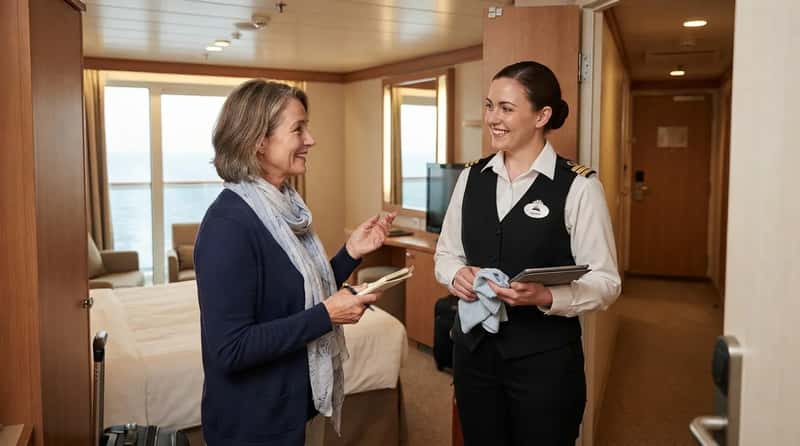
After all the bidding programs, deck-plan hacks, and noise maps, crew agree the single most valuable move costs nothing at all: just ask. Any cabin steward, dining server, or bartender who’s worked a ship for a season knows exactly which cabins run quiet and which small requests get handled without a second thought.
Almost none of it gets offered up front – it only comes out when a guest actually asks. The travelers who do it are, quietly, the ones treated like regulars by day two. It’s the simplest upgrade on this entire list, and the one most people never think to use.
None of these upgrades require luxury money or industry connections – just knowing which quiet systems already exist. The biggest surprise isn’t that cruise staff bend the rules; it’s how many of these “secrets” are really just process, timing, and a willingness to ask a direct question. From silent bidding auctions worth thousands to a five-dollar bag of magnets, the gap between guests who know and guests who don’t is bigger than most people realize.
Which one of these are you trying on your next sailing? Drop it in the comments.