Most travelers assume a hotel stay really starts the second they flop onto the mattress and turn on the TV. Seasoned guests know better. The real trip actually begins in the ten minutes after the key card works, and what happens in that window quietly decides whether the night goes smoothly or turns into a mess of surprise fees, bad sleep, and wasted time.
None of these decisions require elite loyalty status, a bigger travel budget, or decades on the road. They’re small, almost boring habits that frequent guests picked up the hard way, usually after a mistake they never wanted to repeat. Here’s what experienced travelers actually do differently, starting from the least obvious and building to the one habit almost nobody skips twice.
#24 – They Book Direct Instead of Chasing the Cheapest Third-Party Price

Seasoned guests will still browse third-party apps to compare prices, but they rarely finish the booking there. Instead, they take the exact dates to the hotel’s own site or call the property directly, because direct bookings are the ones that get flexibility when something goes wrong.
The logic is simple: if a room is dirty, noisy, or double-booked, a hotel can fix a direct reservation on the spot. A booking routed through a third-party middleman often means a call to a call center first. That extra layer of bureaucracy is exactly what turns a small inconvenience into a ruined first night.
#23 – They Screenshot the Cancellation Policy the Moment They Book
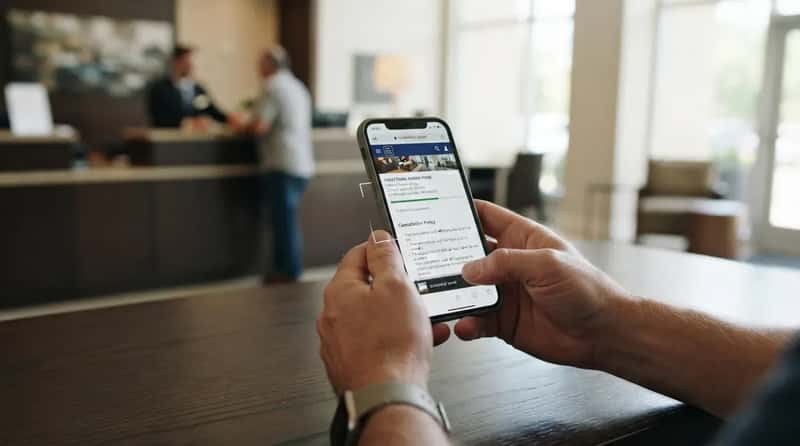
New travelers trust their memory. Seasoned ones don’t. Within seconds of confirming a room, they screenshot the exact cancellation window, the refund terms, and the confirmation number, because hotel websites change layouts and emails get buried.
This isn’t paranoia, it’s protection against the single most common first-night dispute: a front desk agent insisting a rate is non-refundable when the booking screen said otherwise. Having a screenshot ends the argument in under thirty seconds. Without it, guests are stuck arguing from memory against a computer screen.
#22 – They Read Reviews for Safety Complaints, Not Just Star Ratings

A 4.5-star average can hide a property with a broken side door or a parking lot with a bad reputation. Frequent travelers scroll past the “beautiful lobby” comments and search specifically for words like lock, theft, or security.
Formal travel-safety checklists for professional travelers recommend exactly this step before booking. Reading reviews to confirm previous guests didn’t report security concerns is now considered a standard pre-trip check, not an extra precaution reserved for nervous flyers. It takes two extra minutes and prevents a genuinely unsafe first night somewhere unfamiliar.
Fast Facts
- Search reviews for the words “lock,” “theft,” “break-in,” and “security” instead of scanning star totals alone.
- Recent one- and two-star reviews are usually more revealing than the overall average.
- A property with several safety complaints in the last six months is a stronger red flag than a single old comment.
- Photos in reviews often expose dim hallways or broken exterior doors that listing photos never show.
#21 – They Join the Loyalty Program Even for a One-Night Stay

Most people assume loyalty points only matter for road warriors racking up dozens of nights. Seasoned guests join anyway, even for a single overnight stop, because the account itself changes what happens the moment a name is typed into the system.
Hotels increasingly use that profile to flag preferences and past stays automatically. Nearly 80% of guests cite personalized amenities as a reason they return to a specific hotel, and that number climbs to 89% among younger travelers. Skipping the sign-up means getting treated like a stranger every single time, even on repeat visits.
#20 – They Time Arrival for Late Afternoon on Purpose

This is where seasoned travelers quietly disagree with everyone rushing to arrive the moment check-in opens. Arriving early feels efficient, but it often means waiting in a lobby while housekeeping finishes.
By late afternoon, a property has a much clearer picture of its actual inventory for the night. Cancellations and no-shows have already been absorbed into the system by then. Frequent guests use that exact window to ask, politely, about a better room, a request the front desk can barely accommodate at 9 a.m. but can often say yes to by 4 p.m.
#19 – They Skip the Front Desk Line With a Digital Key
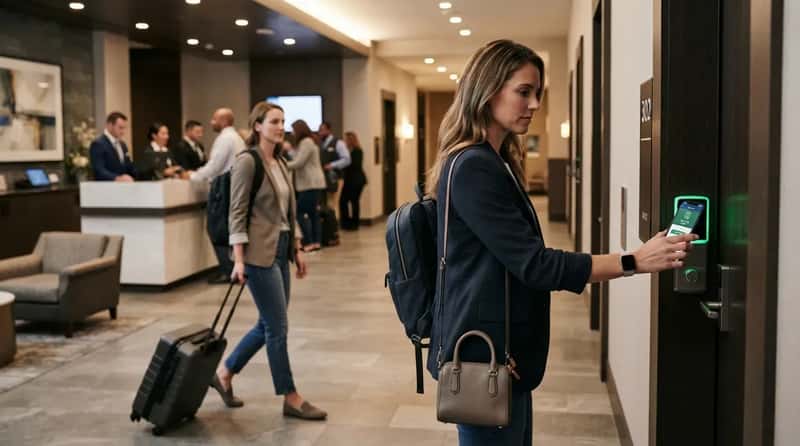
The line at the desk is now optional for most major chains, and seasoned guests treat mobile check-in as the default plan, not the backup. It saves time, but it also removes a layer of friction that used to catch problems before they became someone’s problem at midnight.
Seventy percent of American travelers now say they’re likely to check in through an app or kiosk instead of a front desk, and that number jumps even higher among younger travelers. The trade-off nobody talks about: fewer staff eyes confirming the room assignment before a guest ever walks in.
#18 – They Ask Staff to Write the Room Number, Not Say It Aloud

This one sounds like overkill until it’s explained. Saying “room 412” out loud at a check-in counter means anyone standing nearby now knows exactly where a guest is sleeping and, often, whether they’re traveling alone.
Professional travel-security checklists specifically recommend asking the front desk agent to write the room number down instead of announcing it. It’s a fifteen-second habit that closes an obvious security gap most guests never think about. Seasoned travelers do it automatically, especially in unfamiliar cities or busy lobbies.
#17 – They Request a Mid-Level Floor, Not the Top or the Ground

New guests often ask for the highest floor for the view. Seasoned ones ask for something in the middle, and there’s a real reason behind it that has nothing to do with scenery.
Ground floors are easier for outsiders to access, while very high floors are genuinely harder for fire equipment to reach. Formal traveler safety checklists specifically recommend staying on a floor between three and seven, noting that lower floors carry more access risk while higher floors carry more risk during a fire. It’s a compromise most guests never realize exists.
Quick Compare
- Ground floor: Fast exit access, but also the easiest floor for outsiders to wander onto.
- Top floors: Best views, but the slowest floors for fire equipment and stairwell evacuation to reach.
- Floors 3-7: The middle ground most safety checklists actually recommend requesting.
#16 – They Memorize the Route to the Room Before the Elevator Doors Close
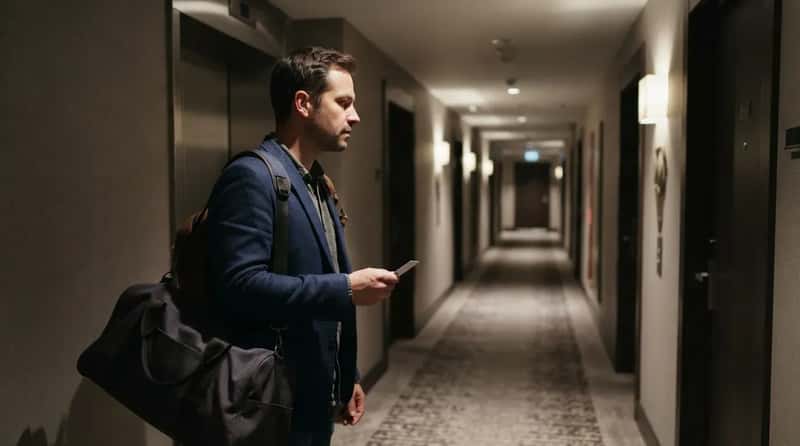
Nobody wants to be the person wandering a hallway at 1 a.m. looking for their own door. Seasoned travelers treat the walk from the elevator to the room like memorizing an airport gate, noting turns, landmarks, and the exact door pattern.
It takes about two minutes and it eliminates almost all late-night confusion later. The habit sounds unnecessary until it’s the difference between finding the room in ten seconds and doing an awkward third-floor loop in front of other guests while fumbling with a phone flashlight.
#15 – They Save the Room Number and Address to Their Lock Screen

Long hallways, identical doors, and travel fatigue make it shockingly easy to forget a room number within minutes of getting the key. Seasoned guests solve this the second they check in, not after they’ve already forgotten it once.
They save both the room number and the hotel’s exact address to their phone’s lock screen or notes app. It sounds almost too simple to matter, but it’s one of the most repeated habits among frequent travelers, and it doubles as a fast way to share their exact location with someone else if needed.
#14 – They Test the Smoke Detector Before Unpacking a Single Bag
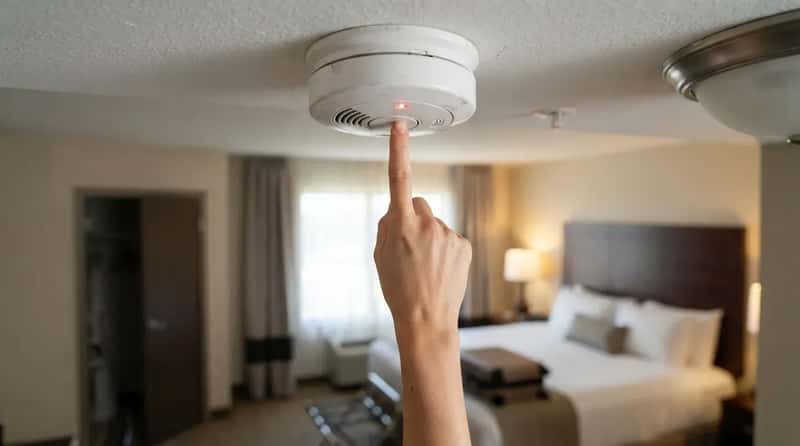
This is the check almost everyone knows they should do and almost nobody actually does. Seasoned guests do it anyway, within the first few minutes, before a single suitcase gets opened.
It only takes pressing the test button once. Fire safety guidance repeatedly emphasizes checking that in-room smoke detectors are functional as part of a basic room sweep, right alongside locating the two nearest exits. Skipping this step is common; regretting it during an actual emergency is rare but entirely preventable.
#13 – They Count the Doors to the Two Nearest Exits
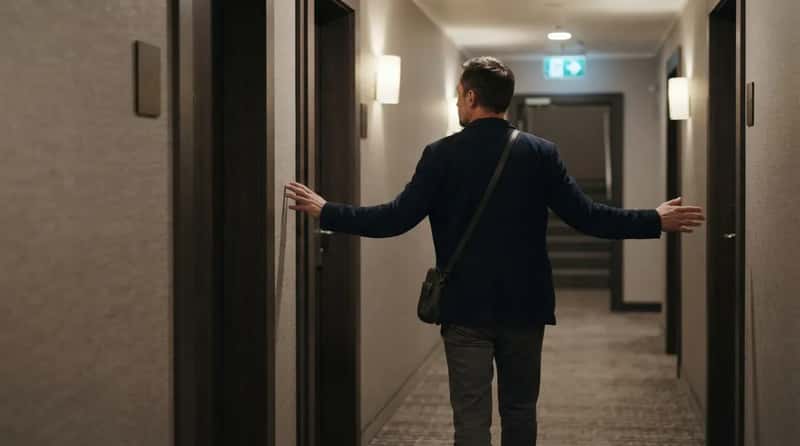
This is the habit that sounds excessive until someone explains exactly why it matters. Smoke fills hallways fast, and dim emergency lighting makes it nearly impossible to read exit signs from a distance.
The American Red Cross specifically recommends finding the two closest exits and counting the number of doors between the room and each one. The U.S. Fire Administration repeats the same advice. Seasoned travelers do this walk once, on arrival, so the count is memorized by feel rather than guesswork later.
#12 – They Walk to the Stairwell, Not Just the Elevator
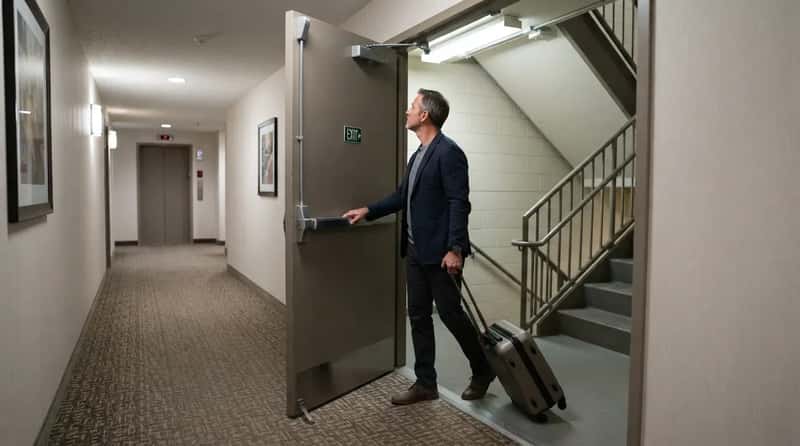
Most guests never see a stairwell unless there’s a fire alarm, and by then it’s the worst possible time to be locating it for the first time. Seasoned travelers walk to it deliberately, on the first pass through the hallway.
Safety guidance recommends locating two different stairways specifically in case one becomes blocked during an emergency. It’s a two-minute detour that most guests skip entirely, right up until they’re the ones standing in a smoke-filled hallway trying to remember which direction the stairs were in.
#11 – They Pull Back the Comforter Before Anything Touches the Bed

This is one of the more uncomfortable habits, but seasoned travelers do it every single time, no exceptions. Before a suitcase, a jacket, or a body touches that bed, the comforter and top sheet get pulled back and checked.
Bedbugs hide specifically along mattress seams and headboard edges, and a thirty-second visual check catches the obvious signs before they become a much bigger, much more expensive problem days later. It’s not paranoia, it’s a habit built from someone else’s bad story.
#10 – They Test Water Pressure and Hot Water Speed Immediately

Nobody wants to discover a lukewarm, weak shower right before an early meeting or a long travel day. Seasoned guests run the tap for a few seconds during their first walkthrough, specifically to check hot water speed and pressure.
If either is disappointing, they ask for a room change immediately, while the front desk still has other rooms held back. Waiting until morning to complain means the hotel has already released those spare rooms to someone else. Timing the complaint matters as much as the complaint itself.
#9 – They Photograph the Room’s Condition Within Five Minutes
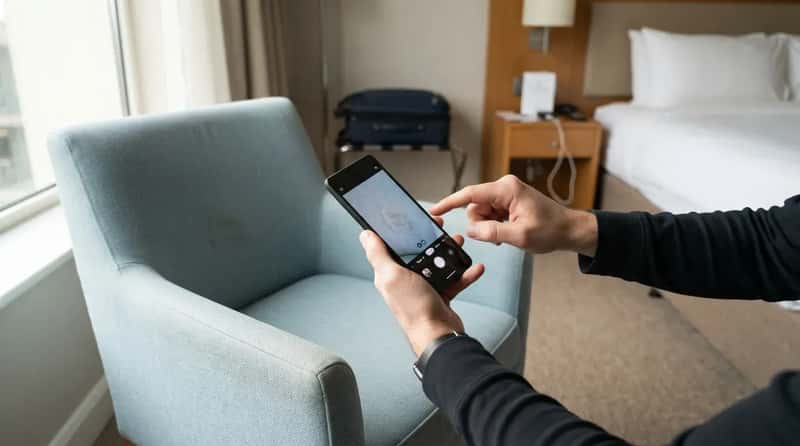
This habit has nothing to do with vanity and everything to do with disputes. Seasoned travelers photograph existing scuffs, stains, or damage the moment they walk in, before unpacking anything.
It’s a quiet form of insurance against a surprise damage charge that shows up on a credit card days after checkout. A dated photo timestamp is far more persuasive than a guest’s word against a hotel’s incident report. It takes under a minute and it’s rarely needed, until, unpredictably, it’s needed badly.
Worth Knowing
- Photograph carpets, upholstery, and bathroom fixtures first, since those are the most commonly disputed “damage” charges.
- Include the minibar and any electronics in the shots, especially anything with a per-use fee attached.
- A phone photo already carries a timestamp, so there’s no need for a separate note unless the damage is easy to miss.
- Send one photo to yourself by text or email as an instant backup in case the phone is lost later in the trip.
#8 – They Keep Shoes and a Flashlight Within Arm’s Reach of the Bed
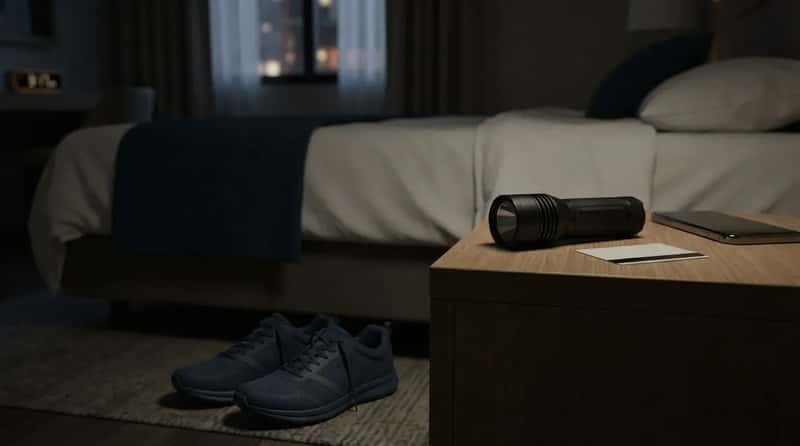
This one seems small until it’s explained in context. If an alarm goes off at 3 a.m., fumbling for shoes in the dark costs precious seconds nobody wants to lose in a real emergency.
Fire-safety guidance specifically recommends keeping shoes and the room key beside the bed for quick access. Seasoned guests add a phone flashlight to that same spot, since hallway emergency lighting during a real evacuation is often dimmer and more chaotic than anyone expects from watching a fire drill.
#7 – They Test the Door Lock and Add a Portable Door Stop
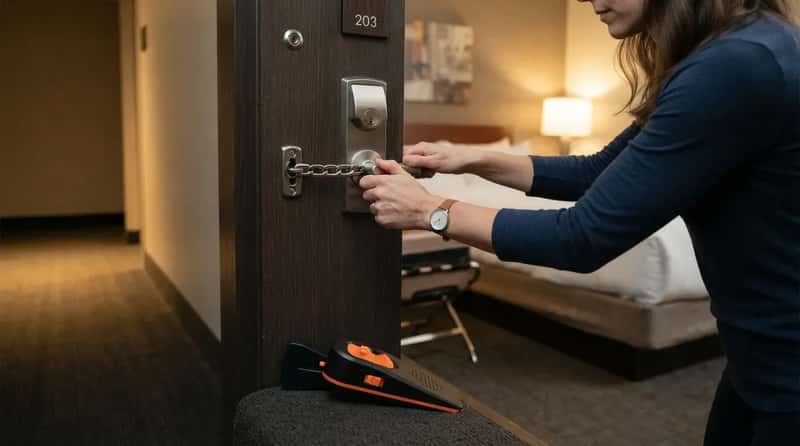
Deadbolts and chain locks fail more often than most guests assume, especially in older properties. Seasoned travelers test every lock on the door within the first minute, not the first night at 11 p.m.
Many also travel with a compact portable door stop alarm, adding a physical barrier that doesn’t depend on hotel maintenance at all. Multiple layers of protection matter more than trusting a single lock, especially in a building where hundreds of strangers hold key cards to the same floor.
#6 – They Confirm Resort Fees and Parking Charges Before Signing Anything

Here’s a slightly controversial opinion: many travelers now consider mandatory resort fees the single most frustrating charge in American hospitality, and seasoned guests refuse to be blindsided by them at checkout.
They ask about resort fees, parking charges, and any additional daily add-ons before signing the check-in paperwork, not after. A rate that looked like a bargain online can quietly grow by $30 to $50 a night once mandatory fees get added, and asking upfront is the only real leverage a guest has to push back or walk away.
At a Glance
- Resort fee: often the largest single add-on, and rarely optional even if it’s never used.
- Self-parking or valet fee: can rival the room rate itself in dense city locations.
- Early check-in or late checkout fee: sometimes waived just by asking at the desk.
- In-room Wi-Fi upgrade fee: basic access is often free, faster speeds usually aren’t.
#5 – They Lock Valuables in Their Own Bag, Not the Room Safe
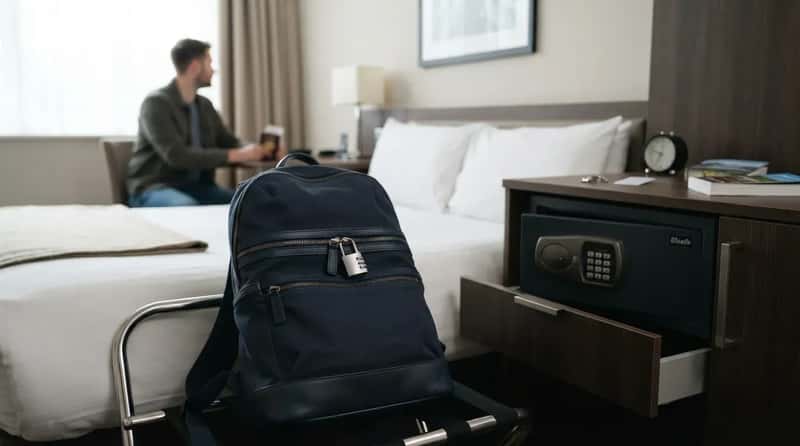
In-room safes feel secure, but seasoned travelers know most hotel safes share a small handful of master override codes that staff can access. That doesn’t make them useless, but it does change how they’re used.
Passports, spare cash, and jewelry often stay in a personal daypack instead, one that leaves the room with the guest. A safe stops an opportunistic thief; it does very little against someone with legitimate access to the building. Seasoned guests treat the safe as a deterrent, not a vault.
#4 – They Set the Thermostat Before Anything Else in the Room
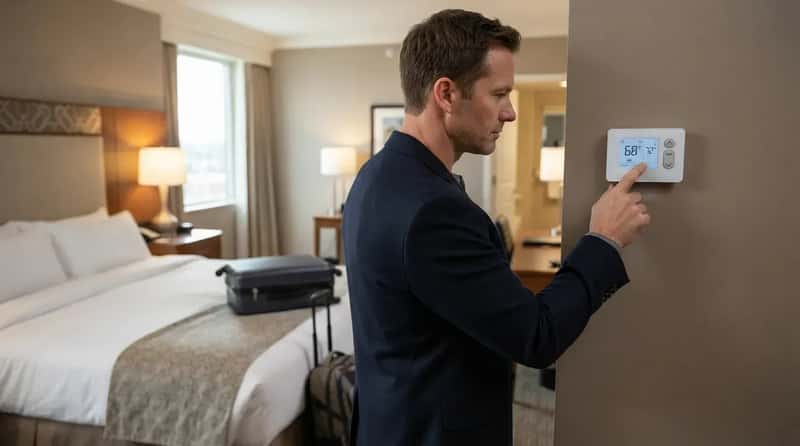
Rooms sit empty for hours between guests, and HVAC systems often default to an energy-saving setting that feels either freezing or stuffy on arrival. Seasoned travelers adjust the thermostat within the first sixty seconds, before unpacking a single bag.
It sounds minor, but a room takes far longer to cool or warm than most guests expect, sometimes 30 to 45 minutes. Waiting until bedtime to fix the temperature means falling asleep uncomfortable on the one night that was supposed to feel like a reset.
#3 – They Decide in Advance Whether to Tap Through the Digital Tipping Prompt

This is genuinely dividing opinions right now, and it’s worth saying plainly: many hotels have quietly moved to digital tipping prompts at checkout, and plenty of experienced guests feel cornered by them rather than grateful for the convenience.
One recent survey found that one in three people feel pressured to tip through these new digital systems, even when the service didn’t clearly warrant it. Seasoned travelers decide their tipping approach before that screen ever appears, rather than making an awkward decision under a stranger’s gaze at the front desk.
#2 – They Tip Housekeeping on the First Night, Not the Last

Most travelers tip housekeeping at checkout, if they remember at all. Seasoned guests flip the order entirely and leave a small tip on the very first night, with a note if needed.
The logic is simple and slightly self-interested: whoever cleans that room for the rest of the stay now has a reason to remember it. A first-night tip often earns extra towels, faster requests, or a little more attention for the remaining nights, value a last-day tip can never buy back, since the stay is already over.
#1 – They Walk the Emergency Exit Route in Person, Not From the Map
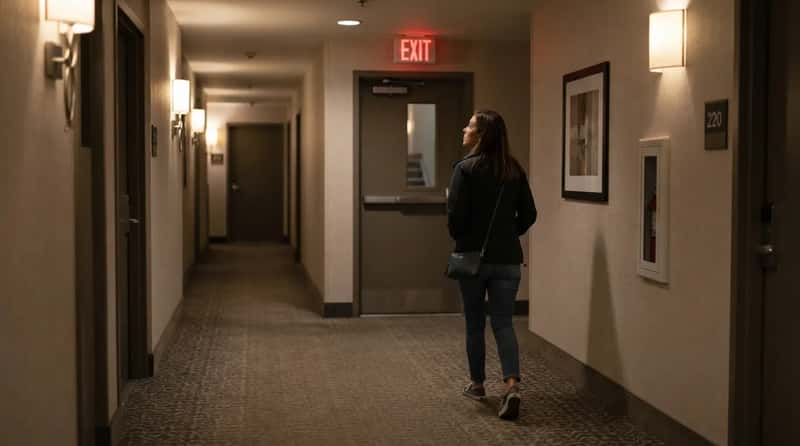
Every other decision on this list matters, but this is the one seasoned travelers refuse to skip, no matter how tired they are after a long travel day. Reading the evacuation map on the back of the door is not the same as walking the actual route.
Fire safety guidance specifically recommends practicing the walk to both exits so the route is known by feel, not just by sight, because hallway lighting and visibility change dramatically during a real emergency. It takes less than three minutes on arrival. It’s the one habit every seasoned guest treats as non-negotiable, and it’s the single decision most first-time travelers never even think to make.
None of these 24 decisions require special status, a bigger budget, or years of frequent travel. They’re small, repeatable habits built from other people’s bad nights: the surprise fee, the forgotten room number, the smoke-filled hallway nobody prepared for. What separates a smooth first night from a stressful one usually isn’t luck, it’s whether these decisions got made in the first ten minutes or ignored until it was too late.
Which of these do you already do without thinking twice, and which one are you adding to your routine starting tonight? Drop it in the comments.