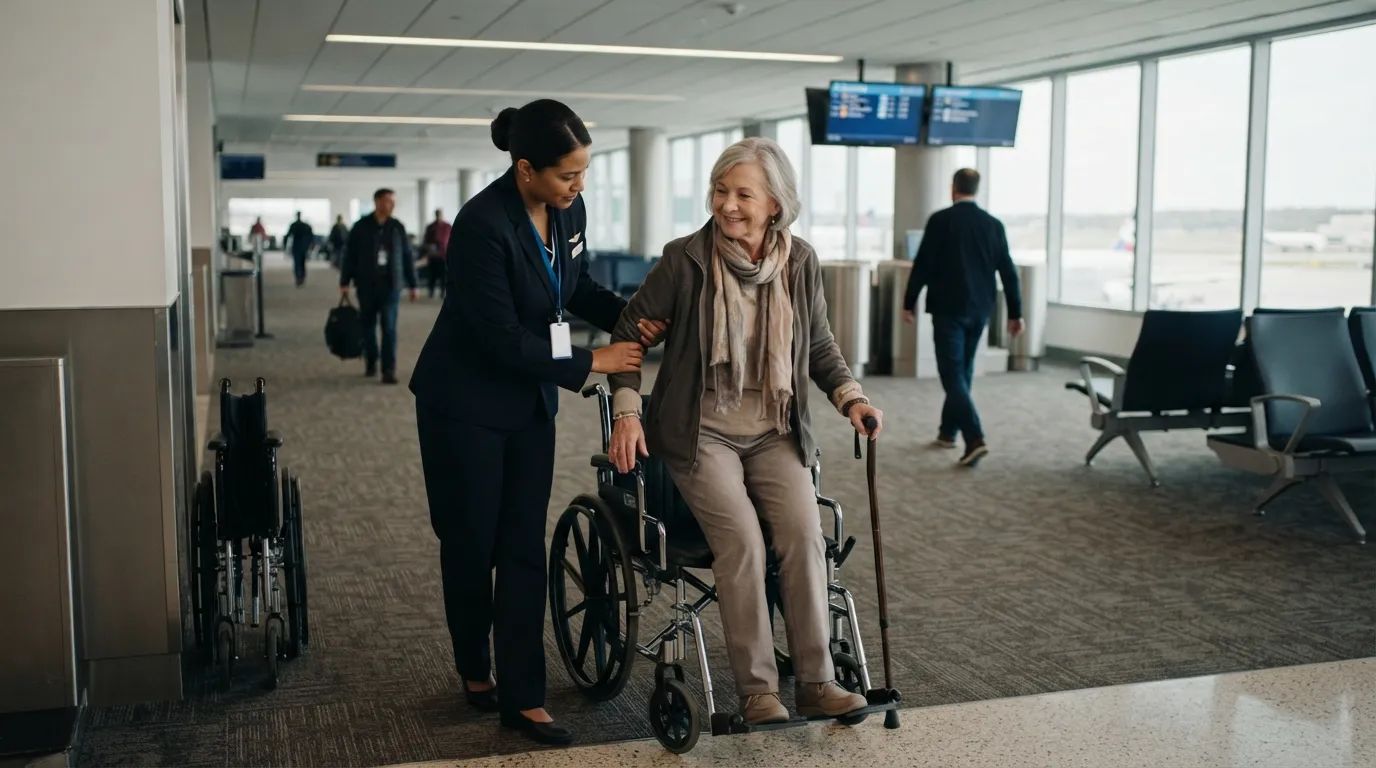
You’ve probably heard the rumor: hit 60 and airport staff quietly start waving you through, offering chairs, early boarding and a friendlier line. The reality is stranger. Some of the best help in an airport is real, free and rarely offered out loud, but very little of it switches on at 60.
The only age line in TSA’s screening rules is 75. One famous perk that once belonged to older flyers went universal in 2025. What’s left is a mix of formal rights, quiet accommodations and single sentences that can change a whole trip. Here’s what’s real, what’s myth, and what most people never think to ask for.
#24 – The Shoes-On Perk That Quietly Stopped Being Exclusive
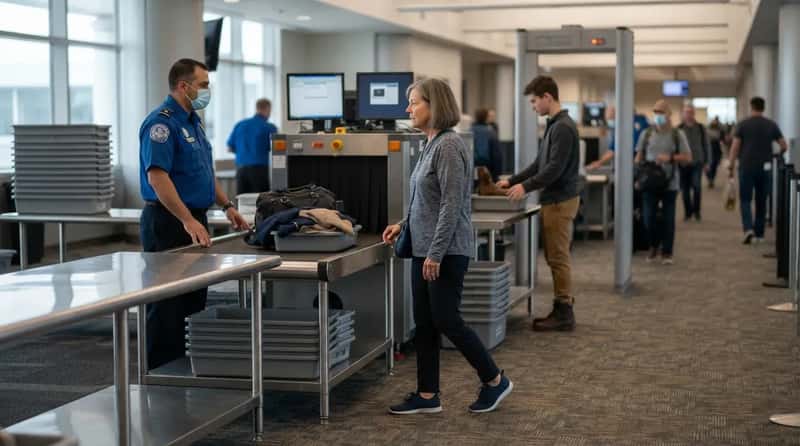
For years, this was the best-known age-based break at security. Children 12 and under, adults 75 and older, and PreCheck members could skip the shoe bin. Older travelers who knew about it felt like insiders.
Then TSA ended its shoe-removal requirement nationwide on July 8, 2025. Shoes now generally stay on for travelers of every age, though officers can still ask for them off in some cases. The old insider trick became everybody’s trick. The next courtesy is one most people never think to request.
#23 – The Scanner “Do-Over” Hardly Anyone Asks About
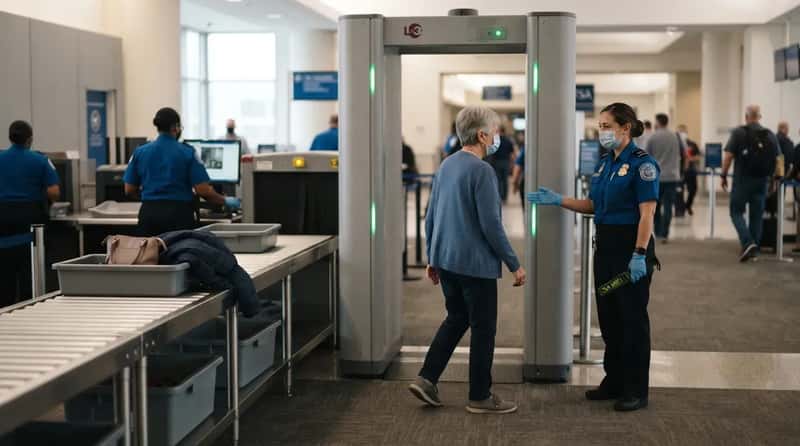
An alarm at the scanner feels like a verdict. It doesn’t have to be. When TSA tested modified screening for older travelers at O’Hare, Denver, Orlando and Portland, passengers were allowed a “do-over” through the imaging scanner to clear any anomalies.
There are limits. TSA reserved the right to require shoe removal and a pat-down if an anomaly couldn’t be resolved another way. Some travel guides now describe a second scanner pass as a routine option for travelers 75 and older, but treat it as a request, not a guarantee. Which brings up something you can ask for during that pat-down.
#22 – The Seated Pat-Down Nobody Mentions
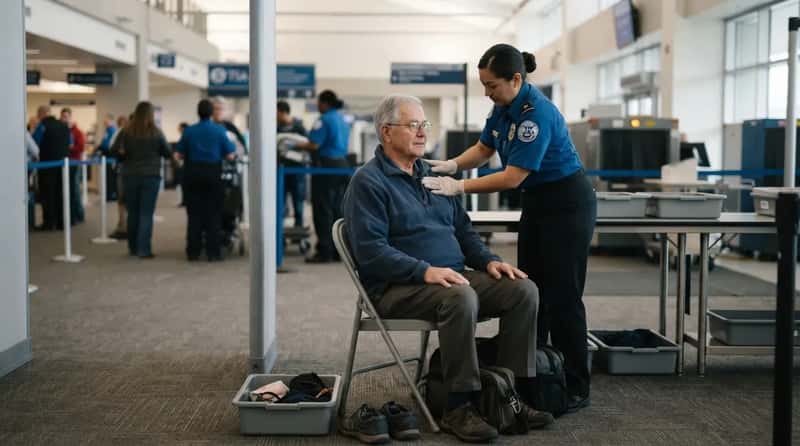
Standing with your arms out is hard for plenty of people. TSA’s page for travelers 75 and older says that if the alarm goes off, you may face further screening, and you can ask to be seated for that part. Few people ever hear this said out loud.
It’s a small courtesy, but it changes the whole experience. A chair turns a stressful moment into a manageable one. The request costs nothing and needs no paperwork. Officers can only accommodate what they know you need. Speaking of asking, TSA itself recommends one particular sentence.
#21 – The Supervisor Request That Resets a Bad Checkpoint
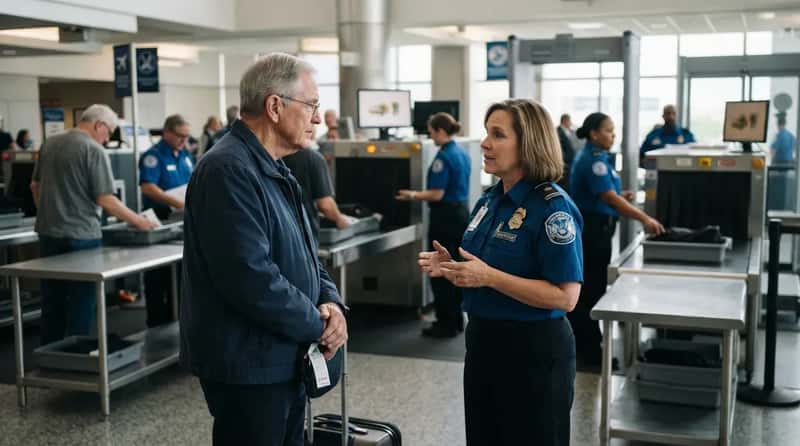
Plenty of travelers swallow a rough screening and stew about it all the way to their gate. TSA’s guidance for travelers 75 and older points the other way. If your screening didn’t meet your expectations, ask to speak with a supervisor at the checkpoint.
That advice sits on TSA’s own page, and most people never read it. The official fix for a rough screening is to ask for the supervisor, not to grit your teeth. The whole flight goes better when it’s settled before you board. Another courtesy needs a phone call before you ever leave home.
#20 – The TSA Cares Line That Lines Up Help Before You Arrive
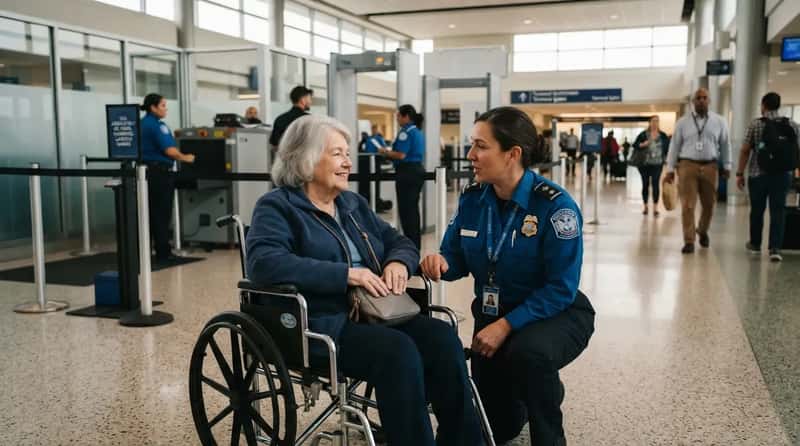
TSA runs a helpline for travelers who need extra support. TSA Cares assists travelers with disabilities, medical conditions and other circumstances. The number is (855) 787-2227.
At a Glance
- Phone: (855) 787-2227, or submit the request through TSA’s online form
- Weekday hours: 8 a.m. to 11 p.m. ET
- Weekend and holiday hours: 9 a.m. to 8 p.m. ET
- Best timing: at least 72 hours before departure
- Wheelchair service at the airport comes from your airline, not TSA Cares
Timing matters, so call at least 72 hours before your flight. TSA Cares and PreCheck can be used together, according to one 2026 guide. The level of service still varies with each airport’s resources. Now for the help that starts at the curb.
#19 – Free Wheelchair Help From Curb to Gate
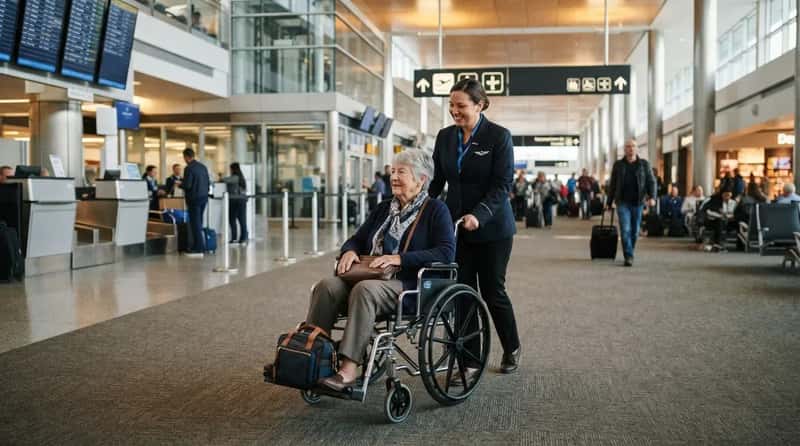
Age alone doesn’t qualify you, but a mobility limitation does. Airlines must provide or arrange assistance from the terminal entrance or drop-off point to your gate, and back again on arrival. That covers a lot of hallway.
Airlines must provide the required wheelchair and guided assistance to eligible passengers with disabilities without charging for it. The service is free no matter what ticket you bought. Plenty of older travelers pay for a cart ride or push through exhausted because nobody told them. Next comes a boarding option that doesn’t need a doctor’s note.
#18 – Early Boarding With No Paperwork
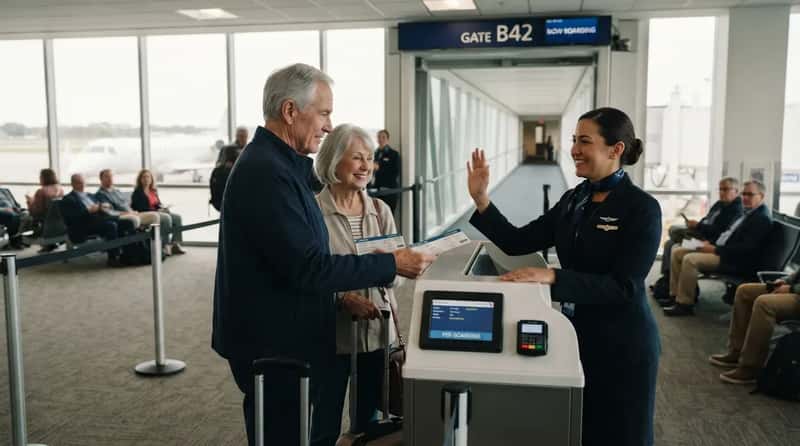
Boarding early isn’t a favor. It’s a right for passengers who need it. If you need extra time to board, stow accessibility equipment or get seated, the airline must offer preboarding when you identify yourself at the gate.
The surprise is how little proof it takes. You don’t need documentation or a doctor’s note, and self-identifying is enough. One sentence to the gate agent is the whole process. It isn’t an automatic age perk, so someone has to speak up. Another form of help can go all the way to your seat.
#17 – The Bag Lift Staff Are Allowed to Give
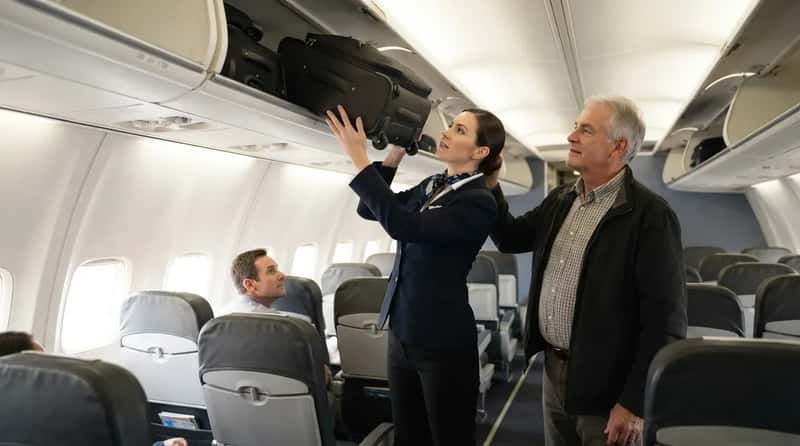
Heaving a carry-on into an overhead bin is where many trips go wrong. Airline personnel may assist with carry-on or gate-checked luggage when a passenger can’t carry it because of a disability.
This help is tied to a disability, not a birthday. Airline staff can lift the bag when a traveler can’t. Many older flyers wrestle the bin instead of asking, and skip help that is fully allowed. The next one is about where you sit.
#16 – The Seat Request That Comes With Fine Print
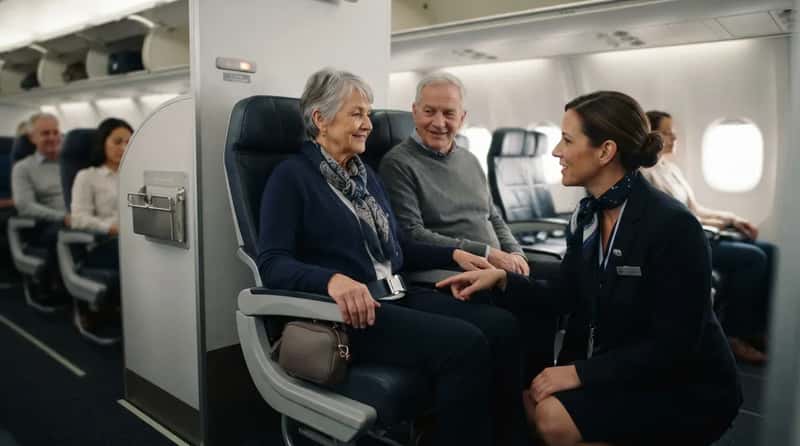
Here’s a myth worth busting: a mobility need doesn’t earn a free upgrade. The airline doesn’t have to move you to a different cabin class or give you extra seats beyond what your ticket covers. That surprises a lot of people.
What you can get is a better seat inside the class you bought. Airlines must provide accessible seating on request, including seats with movable armrests and bulkhead or extra-legroom seats for some passengers. The seating rules are about function, not luxury. Asking early matters. Next is a perk for anyone who preboards.
#15 – Priority Overhead Space for a Folding Wheelchair
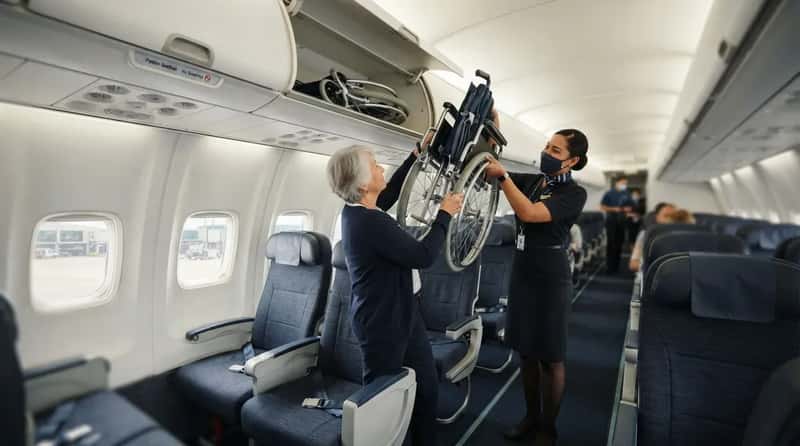
Overhead space is one of the most contested spots on a plane. If you use a foldable wheelchair, you preboard, and the stowage area can hold it, your wheelchair may be stored with priority over other passengers’ and crew members’ carry-on items.
There’s also an alternative. The passenger may have the option to have the wheelchair strapped to a passenger seat. Your mobility device can outrank other people’s roller bags. That’s a big deal when the bins fill fast. The next item covers what happens when you’re changing planes.
#14 – Help Between Gates on Connections
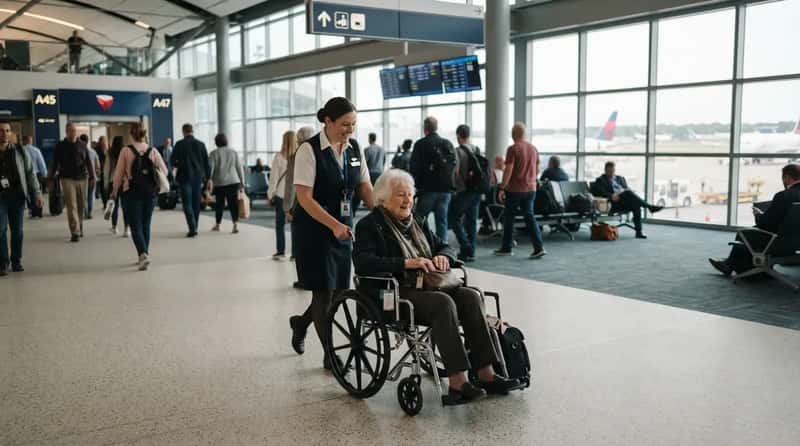
Connections are where flights get stressful. Under federal rules, airlines must help passengers with disabilities with boarding, deplaning, making connections and getting between gates. It isn’t a favor from a kind employee.
The catch is coordination. Make sure the airline has the details of every leg and that assistance is booked at each stop. One missed booking can leave you on your own in a huge terminal. Build in generous time, especially for terminal changes.
Quick Compare
- Assistance booked for every leg: help is expected at each gate change, from landing to the next boarding
- Assistance booked for the first flight only: you may reach the connection alone, with a long walk still ahead
- Extra layover time: gives every handoff room to run late without costing you the flight
#13 – The Handoff Gap Nobody Warns You About
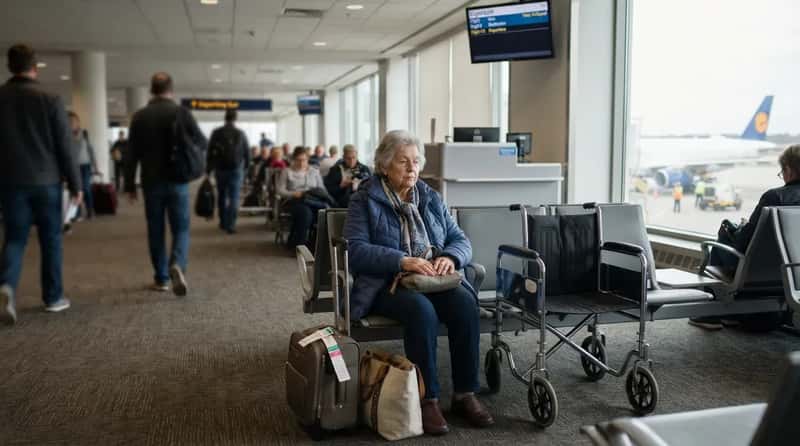
Here’s what most people don’t realize. A wheelchair attendant may bring a senior to the gate, but usually won’t stay through a delay. That can leave a traveler sitting alone for hours.
Another employee may help with boarding, and a different team may help after landing, so gaps can open between services. The person who brought you may simply leave. A plan made in advance fills that gap. One more thing to know before the next item.
#12 – Your Assistive Devices Ride Free in the Cabin
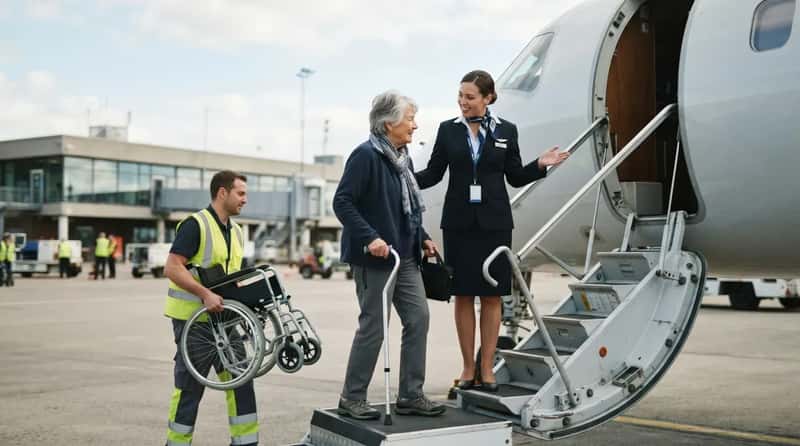
Some travelers worry about carry-on limits for their gear. The Department of Transportation says airlines must allow assistive devices in the cabin free of charge, consistent with safety rules. That’s the baseline.
Those devices shouldn’t count against your carry-on limit. Your assistive gear doesn’t use up your bag allowance. That matters on crowded budget flights. If you carry other medical items, ask the airline how they’re handled before you fly. Next is a role most travelers have never heard of.
#11 – The Complaint Resolution Officer Hiding in Plain Sight
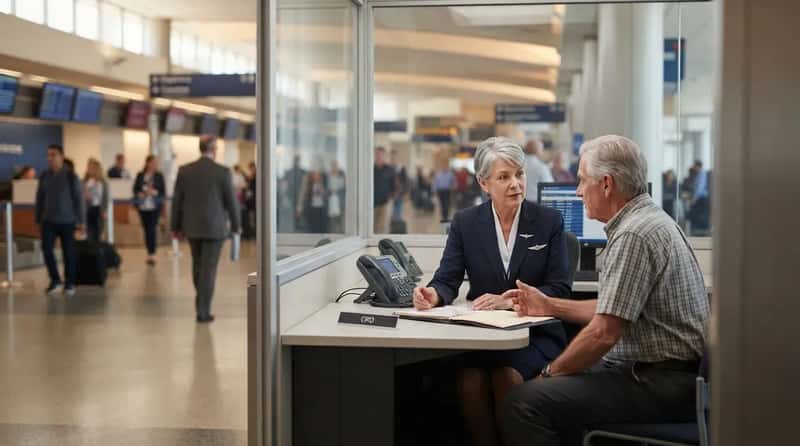
When something goes wrong, most people don’t know who to ask for. Airlines are required to make a Complaint Resolution Officer available at each airport they serve during operating hours, in person or by phone. Most travelers have never heard the title.
The formal complaint route also exists. Complaints can go to the airline or through the U.S. Department of Transportation process. A trained problem-solver is supposed to be reachable whenever the airline is operating. Using that person on the spot beats stewing about it later. Coming up: a number that may worry you.
#10 – The Wheelchair Damage Numbers Behind the Gate Photo
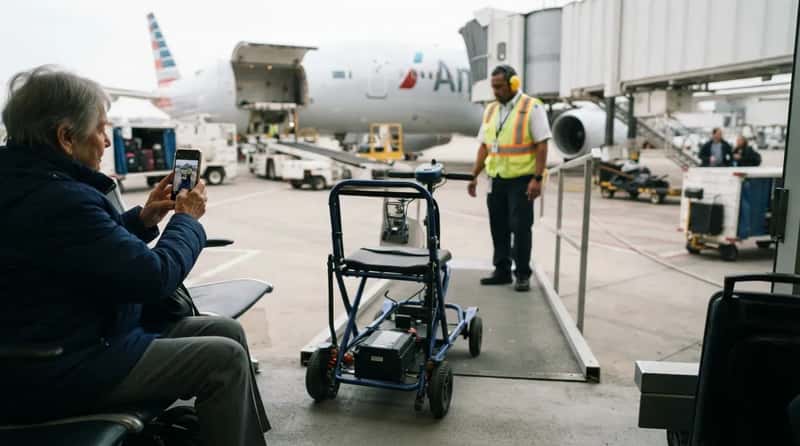
Handing over a wheelchair or scooter at the gate is nerve-wracking, and the worry is fair. One 2026 guide cites DOT data saying roughly 1 in every 100 wheelchairs or scooters checked on a US flight is damaged or delayed.
The advice that follows is simple. The guide says to document your chair at the gate. A quick photo before it goes into the hold can make a claim much easier later. That risk is a big reason regulators stepped in. The next item covers the new rule.
#9 – The Wheelchair Rule That Changed What Airlines Owe You
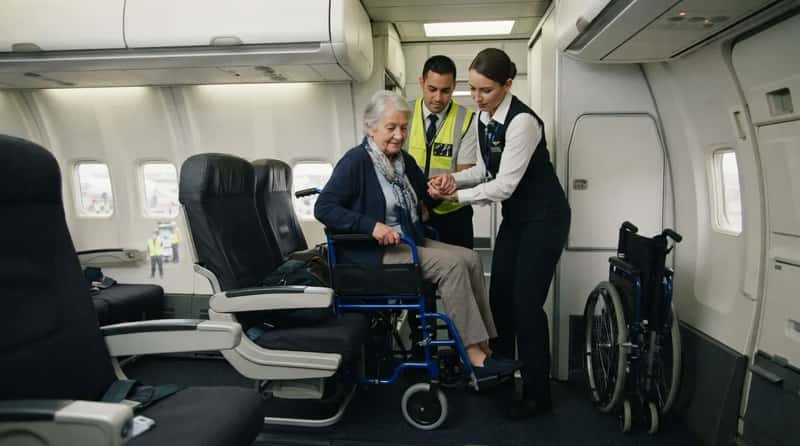
Federal regulators finally went after the problem. DOT’s December 2024 final rule addresses mishandled wheelchairs and scooters and improper transfers to and from seats and aisle chairs.
Fast Facts
- Final rule issued: December 2024
- Took effect: January 16, 2025
- Targets: mishandled wheelchairs and scooters, plus improper transfers to and from seats and aisle chairs
- Some compliance deadlines, including training, stretch into 2026
Not everything hit at once. Some provisions faced delayed enforcement. Some protections arrived in stages, not all at once. Check the current status before quoting the rule at a counter. Coming up: how you actually get on the plane.
#8 – The Ramp, Jet Bridge or Lift That Must Be Available
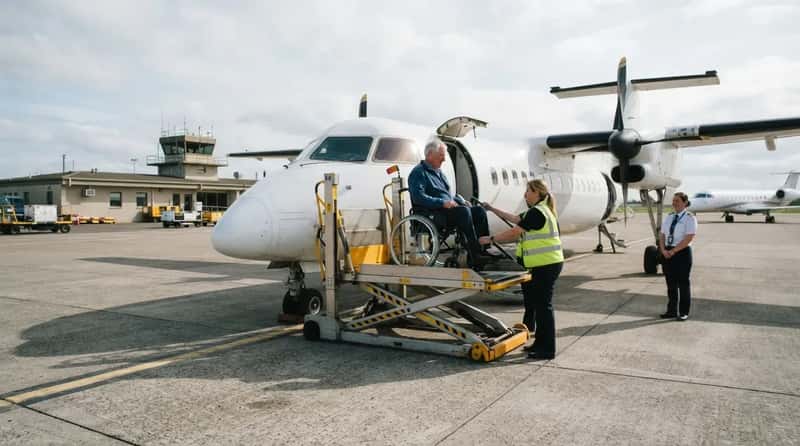
Boarding isn’t supposed to depend on luck. Boarding must be available by level-entry jet bridge, ramp or, on planes with 19 or more seats, a mechanical lift at commercial airports with 10,000 or more annual enplanements.
That’s a specific federal standard, not a courtesy. A lift is required at many commercial airports when there’s no ramp or level-entry bridge. Small airports may work differently. Ask early and confirm the plan. Another surprise is next, and it involves money.
#7 – The Booking-Time Checkbox That Beats a Last-Minute Scramble

The easiest courtesy to secure is also the earliest. Most airlines let you request wheelchair assistance when you book. Requests should ideally go in at least 48 hours ahead, so the airport and airline can guarantee support.
You aren’t locked out if you forget. You can add assistance later by logging into the booking, calling the airline or contacting the airport assistance desk. Advance notice isn’t required for every accommodation, but it makes the help far more reliable. Next up is a “senior discount” that doesn’t exist.
#6 – The PreCheck Senior Discount That Doesn’t Exist
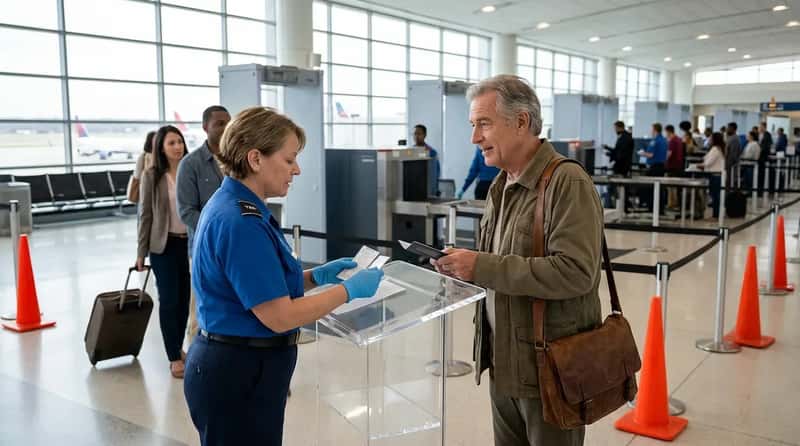
Ask around and you’ll hear about a senior price for PreCheck. There isn’t one. The fee is the same for every age, and it’s a common myth among older travelers.
What does exist is a tool that stacks with other help, since PreCheck and TSA Cares can be used together. The age-based shoe perk that once set older travelers apart is now universal, so PreCheck has to earn its fee on other grounds. The real question is how often you fly. Next: what happens with canes and walkers.
#5 – Canes, Walkers and Scooters Get Screened Too
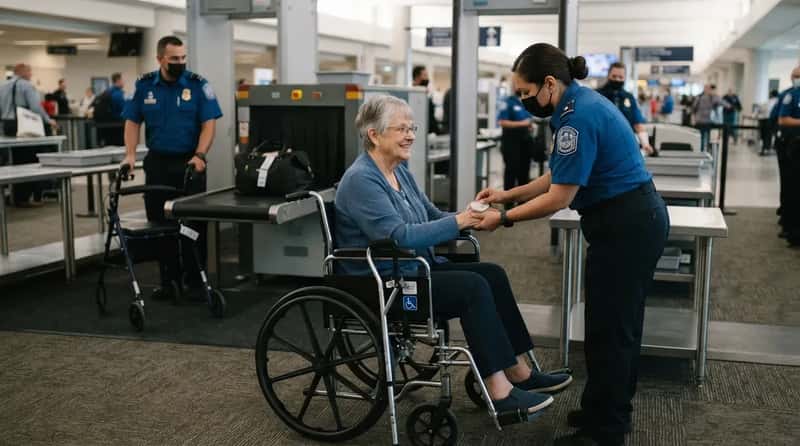
Mobility aids don’t get waved through. One home-care guide says TSA requires everyone with a scooter, wheelchair, walker or cane to be screened in some fashion. The rule applies to everyone.
Worth Knowing
- Bags attached to mobility devices go on the X-ray belt
- A companion can offer walking support through the checkpoint
- You can remain seated while an officer tests your hands
- Local procedures vary, so a quick call ahead helps
So the screening can be adapted, but it isn’t skipped. Your walker or scooter isn’t exempt, but seated options exist. Next, one thing to say before any scanner.
#4 – Implants and Medical Devices: Say It Early
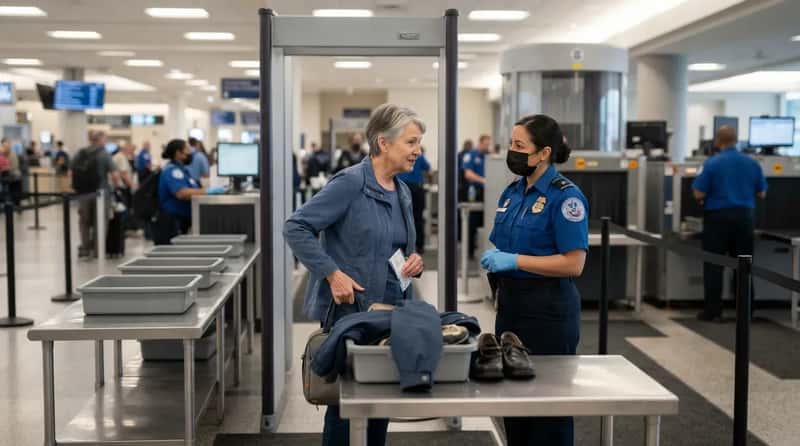
Joint replacements and other implants can complicate a scan. TSA’s page for older travelers notes that if you travel with medical devices or implants, other screening procedures may apply.
That means the process may change once an officer knows. Telling the officer up front is part of how the alternate process starts. TSA Cares can also flag your situation in advance. There’s no reason to wait for the alarm to explain for you. A rule about proving your age is next.
#3 – Your Age Can Be Judged on Sight, No Proof Needed
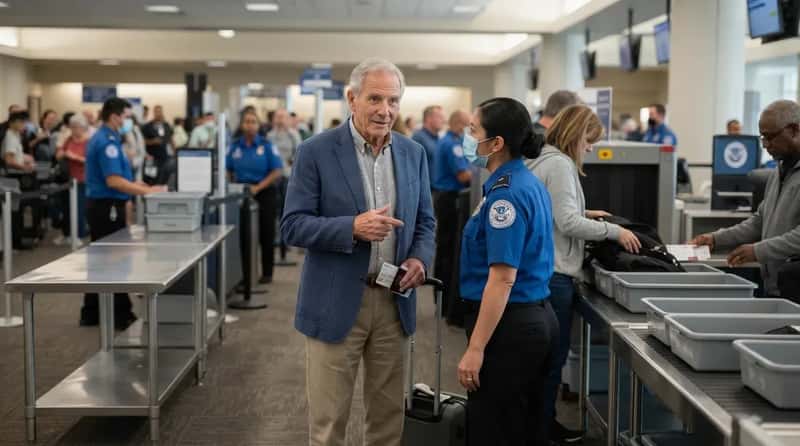
You may not have to prove you’re 75. When TSA piloted modified screening for older travelers, officers assessed age visually and directed qualifying passengers to a special lane. The idea was that older travelers would simply announce themselves.
That was a pilot, so don’t treat it as today’s exact procedure. TSA now says passengers 75 and older can receive some form of expedited screening. The wording is “some form,” not a fixed lane. If you qualify, say so at the start. The final two items matter most.
#2 – If You Can’t Stand, Another Method Exists
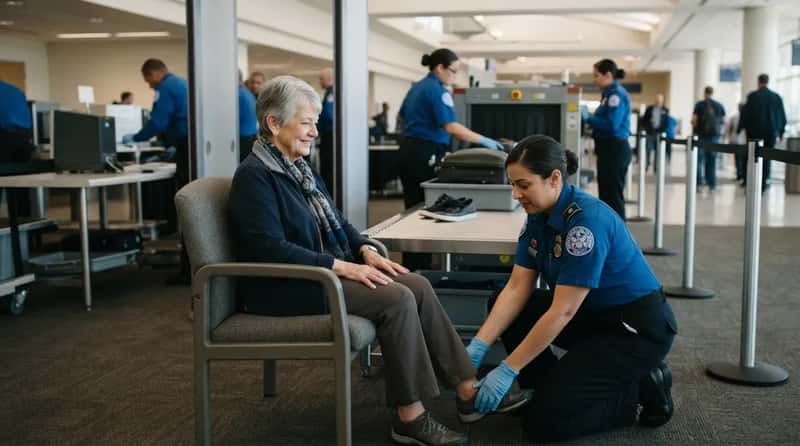
Standing still with your arms raised isn’t possible for everyone. TSA says passengers 75 and older who are unable to stand for screening will be screened through other security methods. That’s an official option, not a favor.
The screening doesn’t have to be an all-or-nothing standing test. Paired with a seated pat-down, it removes the hardest part of the checkpoint for many people. The process still varies by airport, so call ahead if you’re worried. The last item isn’t a procedure. It’s a standard.
#1 – Assistance That Legally Has to Be Safe and Dignified
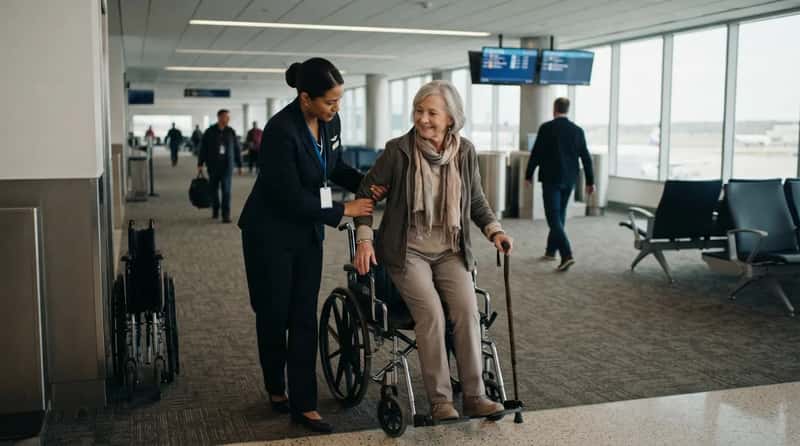
This is the courtesy that underlies all the others. Federal rules say the help airlines provide must be given safely and with dignity. That’s the standard, not a bonus.
It has practical teeth. Staff must provide safe and dignified assistance, and hand-carrying passengers is prohibited. Airline staff aren’t allowed to simply pick you up. If someone tries, you can say no and ask for the proper equipment. That’s not rudeness. It’s the rule.
The biggest surprise in all of this is how few of these are true “over 60” perks. The one age line in TSA’s rules is 75, and its old shoes-on exclusive went universal in 2025. Most of the rest, from free wheelchair help to early boarding, is tied to disability or mobility, and it usually reaches you only if you ask.
The staff who deliver it can be wonderfully kind, but the rules are what make it dependable. So the next time you’re standing at a counter wondering whether to speak up, remember that the help is often already there, waiting for one sentence.