Two coaches leave the same hotel at 8 a.m. They have the same itinerary, the same stops and equally capable drivers. By dinner, one group is swapping photos over dessert, and the other is still arguing about who made everyone late. The route is almost never the reason.
Guides who have run hundreds of these trips say the difference comes down to a handful of oddly specific habits. Some are so small you’d never think they mattered, and a few will start a debate in the group chat. And the habit guides rank number one has nothing to do with clocks, maps or luggage.
#25 – The Ten-Minute Head Start That Quietly Saves the Whole Day
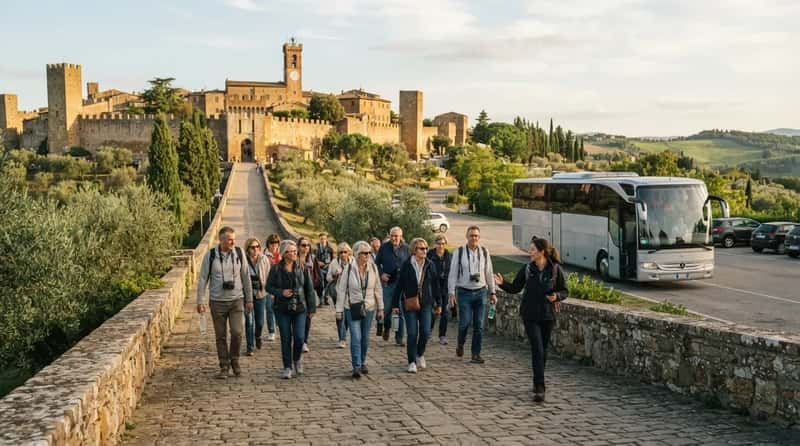
One late traveler can cost an entire coach its lunch. Guides build each day backward from fixed points like timed entries, restaurant bookings and ferry slots. When a return time slips, the delay doesn’t stay with the person who caused it. It lands on the next stop, and often the one after that.
The smoothest groups treat the announced time as the moment the doors close. They start walking back before the deadline, not at it. It sounds minor, but it removes the most common cause of a ruined afternoon.
The next habit takes two seconds, and it’s about the most confusing place on any tour: a parking lot full of identical vehicles…
#24 – The Two-Second Photo That Ends the Parking Lot Panic
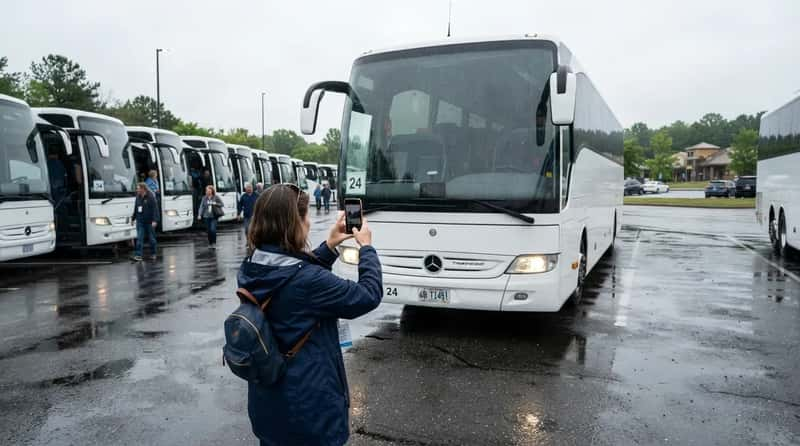
At a busy rest stop, a dozen white coaches can look exactly alike. Guides say this is where travelers lose real minutes, wandering rows and peering through windows at strangers. It’s a small problem, but it’s a very public one.
The fix is almost silly. Snap a picture of the coach’s front, its plate and any number on the windshield. The groups that do this board faster, and the guide stops counting heads in the rain.
That same guide is about to say something at 8 a.m. that most people tune out completely…
#23 – Actually Hearing the One Detail in the Morning Briefing That Changes Everything
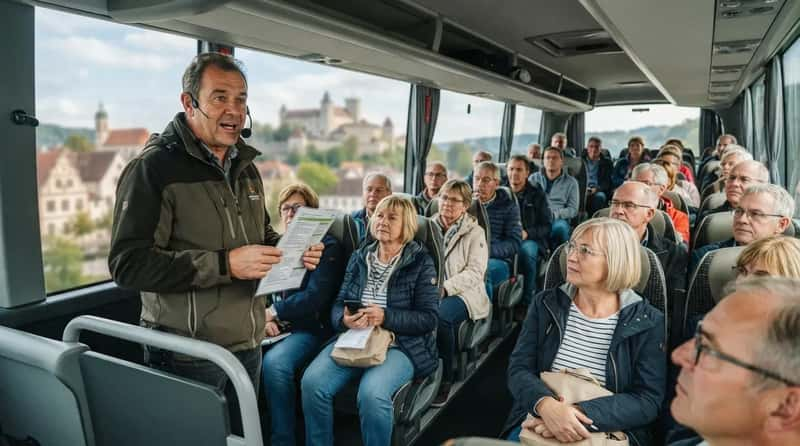
The morning briefing sounds like background noise, and that’s the mistake. Guides use it to say where lunch is, how long the stop lasts and where the coach will be parked. Then they field the same questions all day from people who were scrolling through their phones.
Groups that listen ask fewer questions and sort out problems earlier. The detail most likely to be missed is the one that changes the plan. It usually comes in the middle of the speech, not at the start.
Next up is a habit that sounds awkward to mention, yet it quietly shapes every schedule…
#22 – Using the Restroom at Every Scheduled Stop, Even When You Don’t Need To
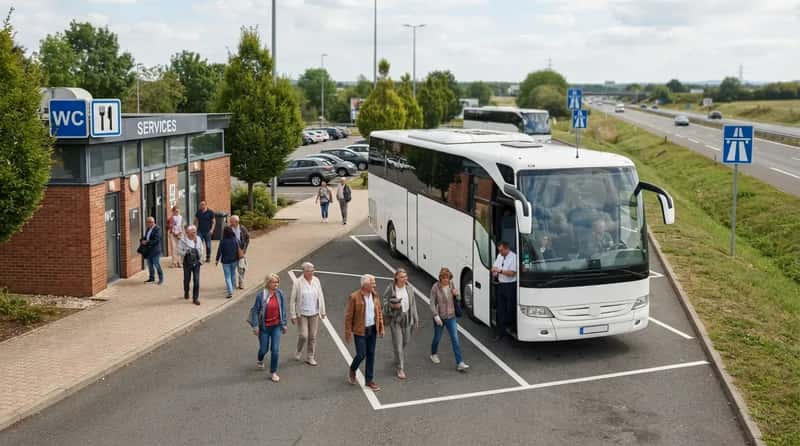
Coach guides have a saying about restroom stops: go when you can, not when you must. The stops aren’t random. In the EU, drivers must take a 45-minute break after 4.5 hours of driving, and it can be split into two parts. That’s why the schedule can’t simply stretch for one person.
Groups that go at every scheduled stop rarely need to ask for an extra one. An unscheduled stop can eat 20 minutes once you count parking, unloading and the walk back. That time usually comes out of something people paid to see.
The next rule is one guides can’t bend, no matter how nicely you ask…
#21 – Buckling Up Before Anyone Has to Say a Word
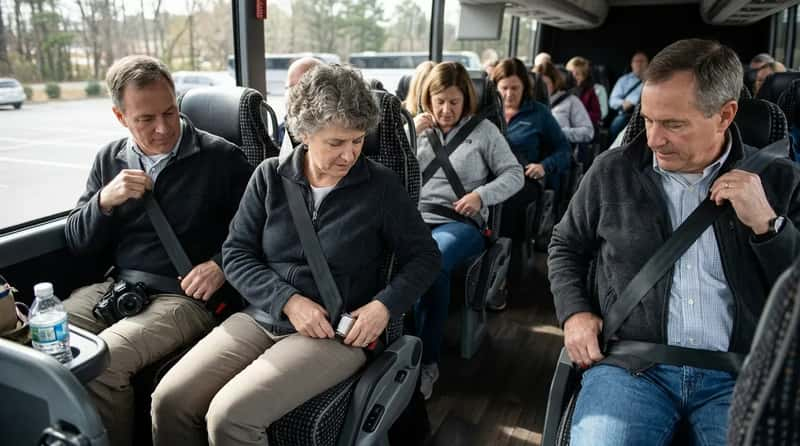
Guides say the best groups never need the seatbelt announcement. Rules vary by country, but in the U.S., new motorcoaches built from late 2016 on are required to have lap-shoulder belts. Most European coaches have them too.
A belt only works if people wear it. Many travelers assume a giant coach is safer than a car and skip it. Guides see that assumption every single day, and the reminders eat up time at every departure.
Fast Facts
- U.S. motorcoaches built on or after September 28, 2016 must have lap-shoulder belts at every seat.
- Older coaches may not have them, so it’s worth asking the operator before you book.
- In the EU, passengers are required to wear a seatbelt wherever one is fitted.
- A belt that’s tucked behind the seat cushion does nothing in a sudden stop.
The next habit is about the aisle, and it’s less trivial than it sounds…
#20 – Keeping Bags Out of the Aisle and Tagged Like a Pro
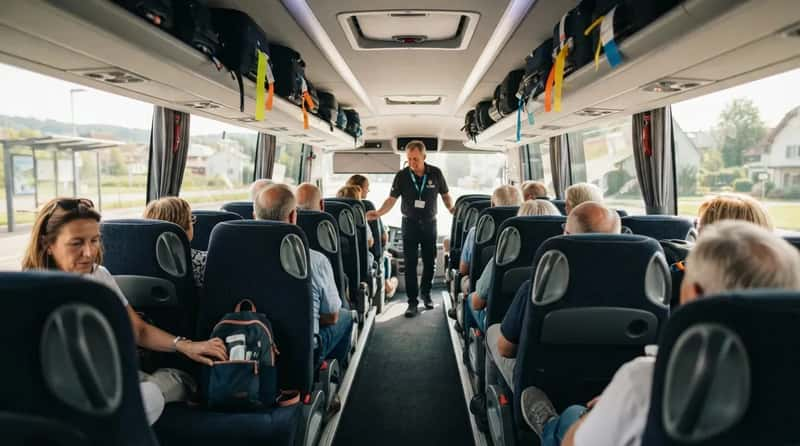
The aisle isn’t storage. Guides want it clear for safety and for fast boarding. A bag stuck in the walkway slows everyone behind it, and it blocks the way out in an emergency.
Luggage in the hold is a different problem. Identical dark suitcases pile up at every hotel. A ribbon or bright strap is one of the cheapest ways to avoid walking off with the wrong bag. Nobody wants to discover the mix-up in a hotel room two cities later.
Now for a topic that splits travelers right down the middle: tipping…
#19 – Knowing the Tipping Custom Before It Gets Awkward

Tipping is where good groups sometimes turn quietly resentful. On U.S. group tours, tipping the guide and driver is widely expected, and it often makes up a meaningful part of their pay. In much of Europe, the custom is softer and varies by country and company.
Some travelers say tips should be built into the price. Many guides argue that a clear tip plan, announced early, is what keeps the mood easy. The groups that run smoothly have usually sorted out the practical side before anyone feels put on the spot.
Next is a rule many travelers secretly hate, and guides still swear by it…
#18 – Rotating Seats Without the Sulking
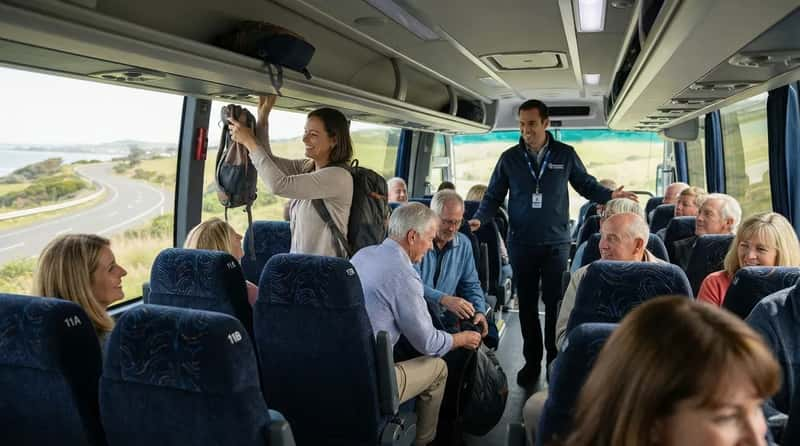
Few things start a quiet feud faster than the best window seat. Many guides use a daily rotation so everyone gets a turn at the front and the view. Some travelers hate it, and they say loyal seat-claiming is part of the fun.
Guides see it differently. A group that rotates tends to have fewer seat feuds by day three. The ones who refuse often become the day’s main topic of conversation, and not in a good way.
The next habit is one guides wish people would mention much earlier…
#17 – Telling the Guide About Motion Sickness on Day One
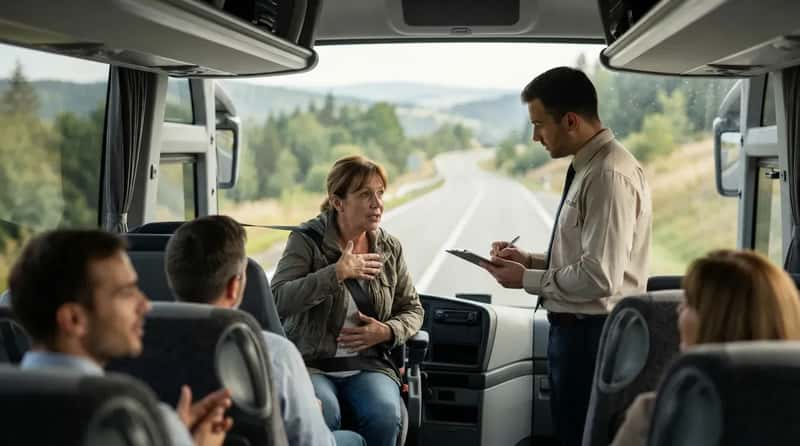
Motion sickness doesn’t announce itself politely. Guides say the worst version is the traveler who stays silent until the hairpin turns begin. A seat toward the front and a view of the road ahead often help, and the guide can only arrange that if they know.
The groups that run smoothly make this a day-one conversation. Often the fix is a seat change, not a pill. It’s far easier to arrange before the road gets bendy.
But the next one is about something far less obvious: a piece of paper in your pocket…
#16 – The Paper Hotel Card That Turns a Disaster Into a Detour
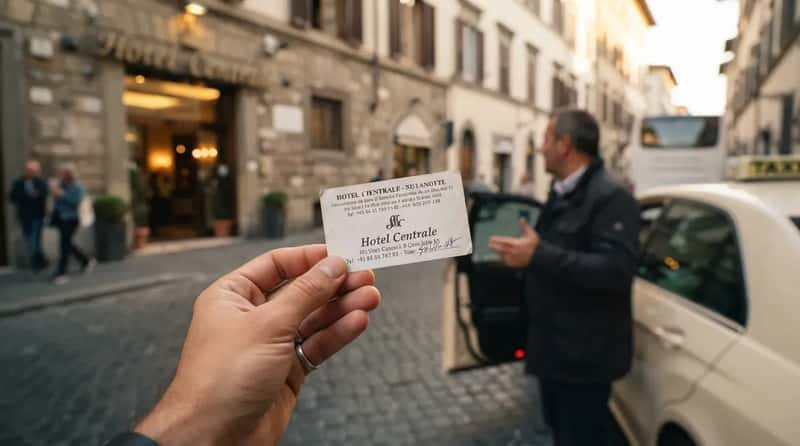
Getting separated from the group is scary, and it’s far more manageable with one small item. Guides recommend carrying the hotel’s name and address on paper. Phones die, and the name of a hotel in another language is hard to pronounce to a taxi driver.
The groups that run smoothly have members who can find their way back alone. A printed card still works when the battery, the signal and the translation app don’t. It takes thirty seconds to grab at the front desk.
At a Glance
- The hotel’s name and full address, ideally in the local language
- The hotel’s front desk phone number
- The guide’s mobile number
- The coach’s plate number, if you snapped it in the parking lot
- A little local cash for a taxi or a pay phone
The next habit is about dinner, and it’s one where “easygoing” can backfire…
#15 – Flagging Allergies Before the Restaurant, Not at the Table

“I’ll just see what they have” is the sentence guides dread. Restaurants working with groups often set menus in advance, so a late allergy mention can mean a scramble at the table. It’s stressful for the traveler and for the kitchen.
Guides say the fix is simple: tell the company at booking and remind the guide on day one. A kitchen with a day’s notice usually handles an allergy far better than one with five minutes. Staying flexible helps, but it isn’t a substitute for a heads-up.
Next comes a rule about the phone in your pocket that most people get exactly backward…
#14 – Reading the Group Message Before Asking the Question
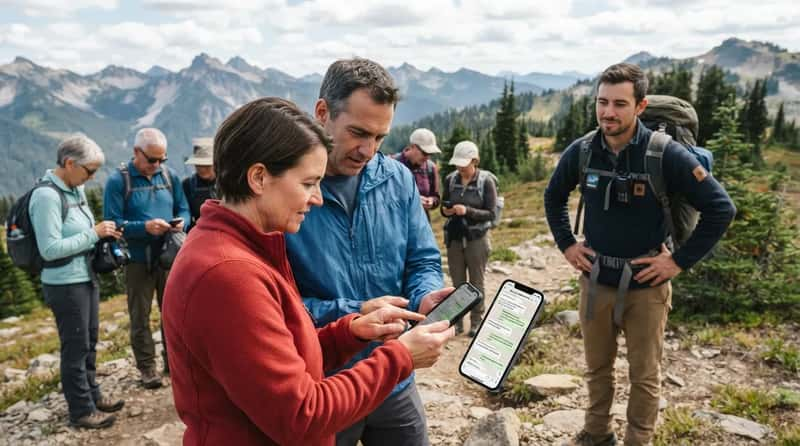
Most guides now send details by messaging app or printed daily sheet. That’s where they put meeting points, timing changes and weather notes. Yet the same questions come up in person all day.
The smoothest groups check the message first. Many guides say the answer to most questions has already been sent. It saves the guide from repeating themselves and keeps the plan moving.
That brings us to a small piece of equipment with a big effect on group mood…
#13 – Wearing the Headset Even Though It Looks Ridiculous
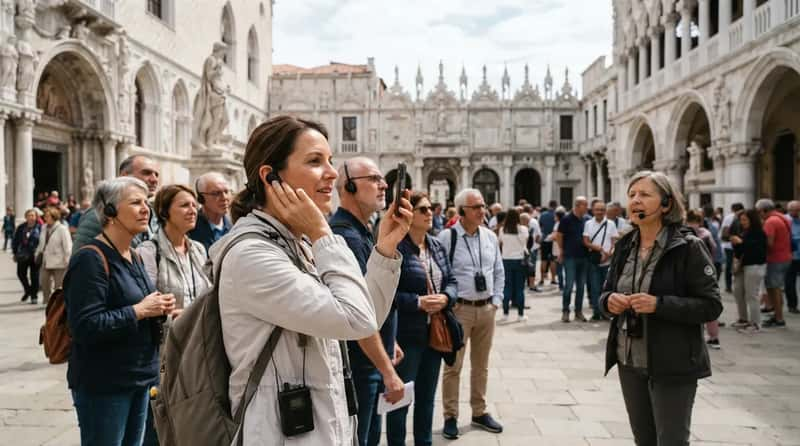
Radio headsets aren’t flattering, and travelers often leave them in the bag. Guides say that’s a mistake. The receiver lets the guide speak at a normal volume while you stand a few steps back to take a photo.
Groups that wear them stay together without effort. People hear the story instead of the wind, the traffic and the crowd. It also means the guide isn’t shouting across a busy square.
The next habit looks silly too, but it’s the oldest trick in the guide’s playbook…
#12 – Watching the Umbrella, Not the Shop Windows
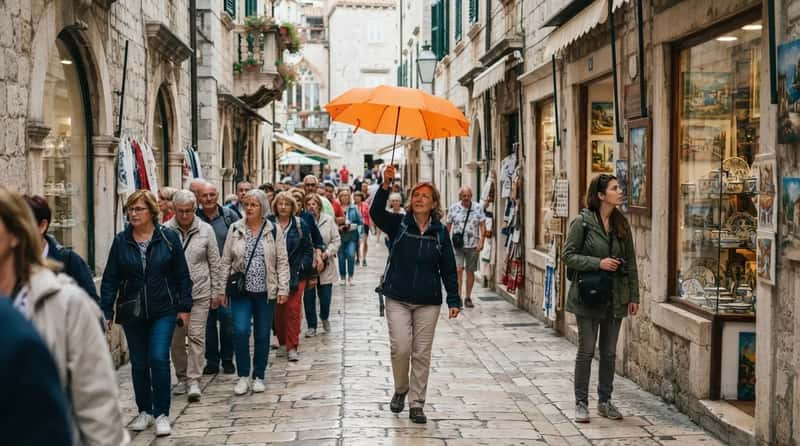
In a crowded old town, the guide’s flag, umbrella or raised hand is the group’s anchor. Guides say the fastest way to lose people is a gorgeous side street. The group moves on, and one traveler is still looking at a window display.
Smooth groups develop a habit of glancing up every minute or so. It takes only a second, and it’s what keeps the whole group in one piece. Guides notice the people who do this and quietly trust them.
The next one is about speed, and it isn’t about being fast…
#11 – Letting the Slowest Walker Set the Pace
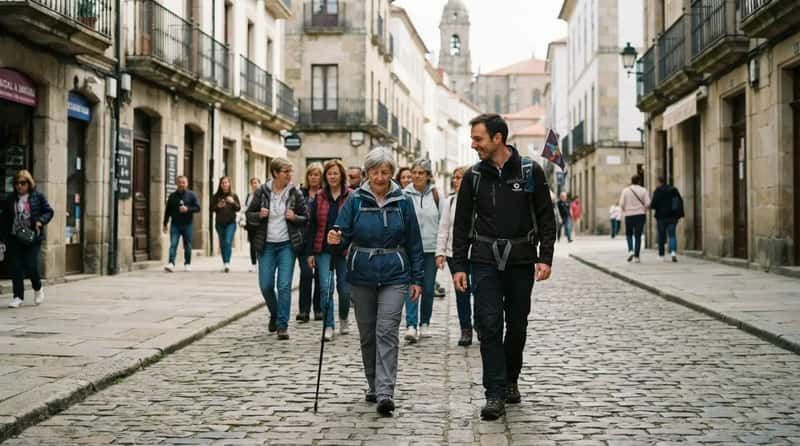
Guides watch the back of the group more than the front. That’s where the day’s mood is decided. A fast walker who charges ahead can leave someone struggling to catch up on cobblestones.
The groups that run smoothly don’t treat speed as a contest. The pace of the group is whatever the slowest person can keep up with comfortably. It’s a courtesy, and guides say it’s also the quickest way to arrive together.
Why It Stands Out
- It protects the people most likely to quietly fall behind, on cobblestones, hills and stairs.
- It keeps the group’s bunching-up at crossings and entrances to a minimum.
- It gives the guide one less person to chase before every move.
- It’s the one habit where the fastest walkers can earn the most goodwill.
The next habit is about complaints, and the timing matters more than the topic…
#10 – Raising a Problem Privately, Early and Calmly

A hotel room with a broken shower is a real problem. A complaint made loudly in front of the group is a different one. Guides say the first can usually be fixed within the hour, while the second tends to spread.
The smoothest groups bring a problem to the guide quietly and quickly. A guide can often solve a room issue in minutes if told at check-in. The same issue discussed all evening in the lobby becomes everyone’s problem.
The next item sounds trivial, but it causes some of the loudest muttering in Europe…
#9 – Carrying Coins for the Pay Toilets
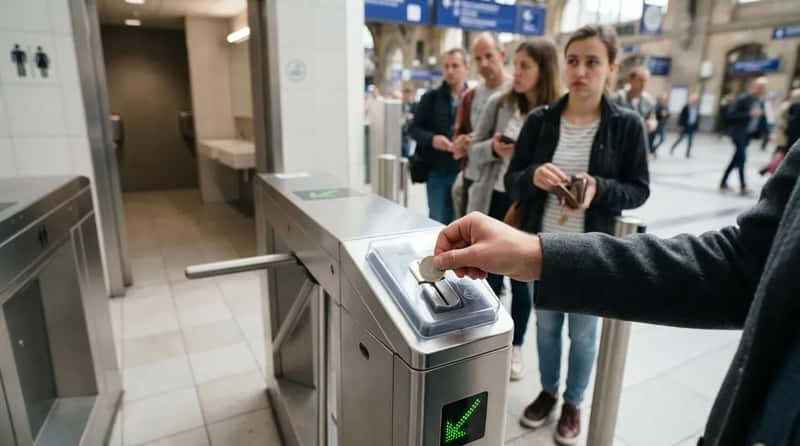
In many European cities and rest stops, public restrooms charge a small fee. A traveler holding only large bills or a card is stuck at the turnstile. The line behind them grows, and the group’s clock keeps running.
Guides say experienced travelers always have coins ready. A pocketful of small coins can save a whole group several minutes at a single stop. It’s boring advice, but guides repeat it for a reason.
Next up is a rule that has turned people away at the door of famous places…
#8 – Dressing for the Dress Code Before You Reach the Door
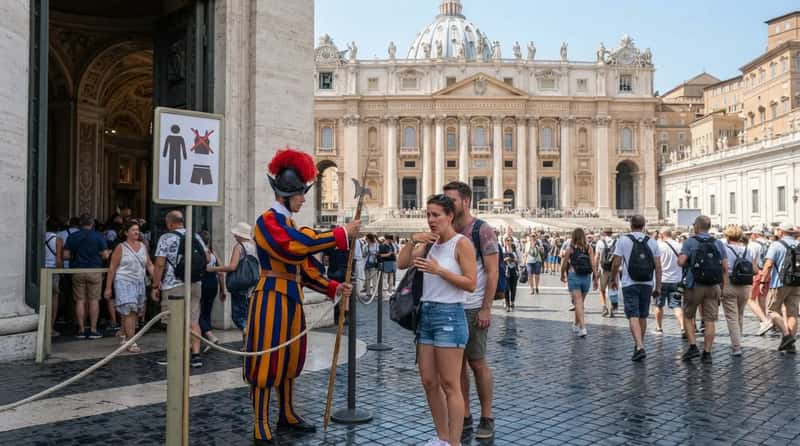
Some of the world’s most visited churches require covered shoulders and knees. St. Peter’s Basilica is one example, and guards do turn people away. The guide can’t change that, and a refused entry can throw off the group’s schedule.
The smoothest groups check the day’s plan and dress for it. The most embarrassing delay is a traveler sent back from the entrance in shorts. It’s avoidable and entirely predictable.
The next habit involves your camera, and the rules are stricter than most people think…
#7 – Respecting the No-Photo and No-Flash Signs

Photo rules are one of the most common reasons guides have to step in. Many museums, churches and private sites forbid flash or photography altogether. Guards enforce the rules, and an embarrassed guide is the one who has to smooth things over.
Smooth groups check the guide’s briefing about photos before they raise a camera. Photography rules can differ between rooms of the same building. Asking takes a second, and it avoids a scene.
Worth Knowing
- Photography is not allowed inside the Sistine Chapel, even though the rest of the Vatican Museums is often more relaxed.
- Flash is commonly banned around paintings and old fabrics because light can damage them over time.
- Some sites allow photos but not tripods or selfie sticks.
- When a sign is missing, a quick question to the guide is faster than a guard’s reprimand.
The next point is about paperwork, and it’s an unglamorous winner…
#6 – Keeping Your Passport Where You Can Reach It
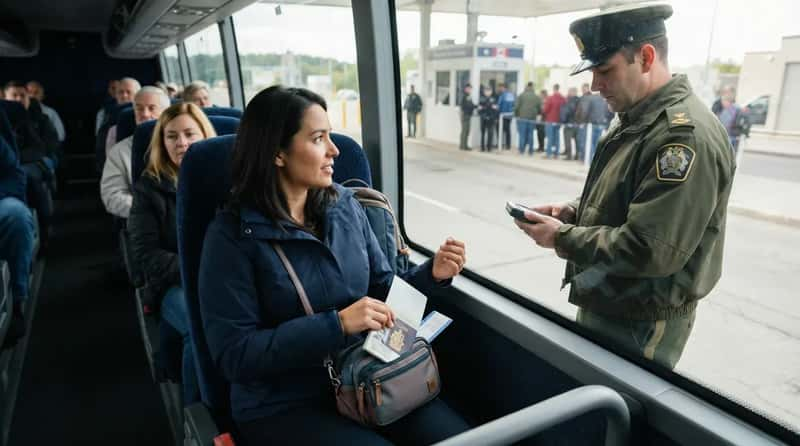
On tours that cross borders or check into hotels that scan passports, documents matter. A passport at the bottom of a packed suitcase in the hold is a problem. The whole group waits while one person digs.
The smoothest groups keep documents in a secure, easy-to-reach spot. One person without a passport in hand can hold up an entire coach at a checkpoint. Guides usually announce when documents will be needed, and the prepared travelers are ready.
The next one starts a real argument among veteran tour-goers…
#5 – Deciding on the Optional Excursions Without the Drama

Optional excursions divide groups more than almost anything. Some travelers see them as an overpriced add-on. Others say they unlock access that would be hard to arrange alone.
Guides say the real problem is the last-minute decision. An excursion with too few sign-ups can be changed or canceled, so a late answer can affect others. The groups that run smoothly decide early and don’t second-guess their choice at the coach door.
The next habit is about a simple sentence that guides never get enough of…
#4 – Telling the Guide Before You Skip Something
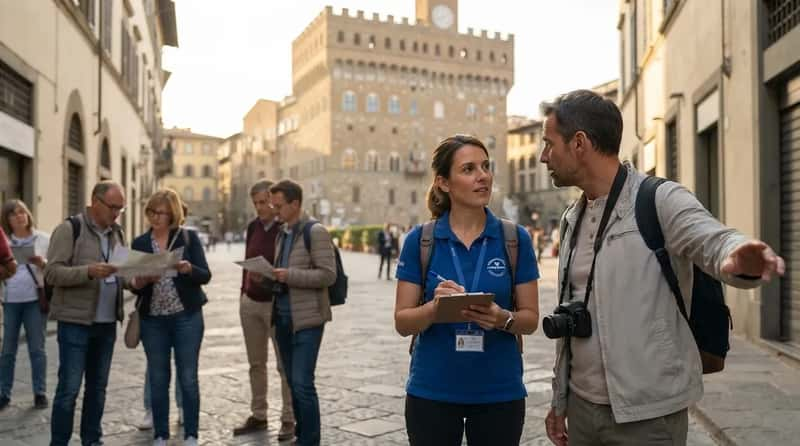
Skipping dinner or a visit is perfectly fine. Disappearing without a word is not. Guides count heads at every departure, and a missing traveler means a search.
The smoothest groups make a habit of telling the guide, even about something small. A single sentence at the start of the day can save the group twenty minutes of calling and waiting. It costs nothing and keeps everybody’s mind at ease.
The next one sounds like a health tip, but it’s really about scheduling…
#3 – Surviving Day One Without Crashing at 3 p.m.
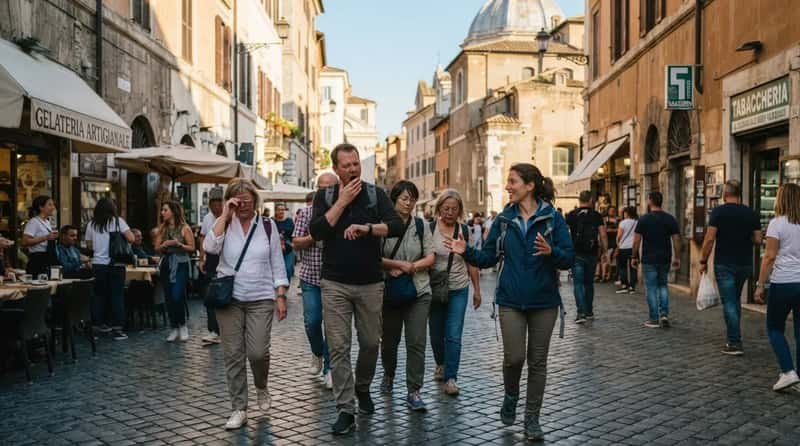
The first day of a tour often follows a long flight. Guides see it constantly: travelers nod off over lunch and miss the best part of the city. The group’s energy is lower, and so is everyone’s patience.
Smooth groups plan for it. Guides commonly suggest staying up until local bedtime on the first night. It’s tough, but it helps the body adjust faster than napping all afternoon.
But this next one explains why guides sometimes have to say no, and it surprises almost everyone…
#2 – Not Pushing the Driver to “Just Wait a Little Longer”
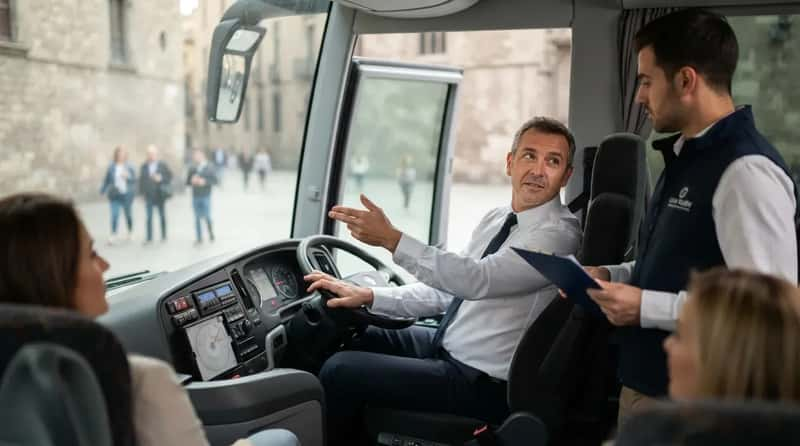
When someone is late, a hopeful voice often asks, “Can we wait five more minutes?” Guides know the driver often can’t. Driving and rest hours are legally limited, and the driver is the one held responsible.
The smoothest groups understand this. Drivers in the EU are bound by rules on driving and rest time, and their hours are recorded. Pushing for an exception puts the person at the wheel in an awkward position.
And the habit guides rank above all the others has nothing to do with schedules…
#1 – Quietly Looking Out for the Person Nobody Sat Next To
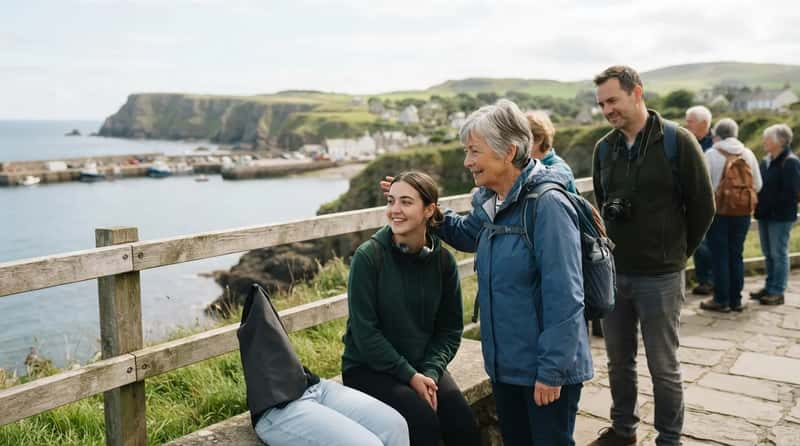
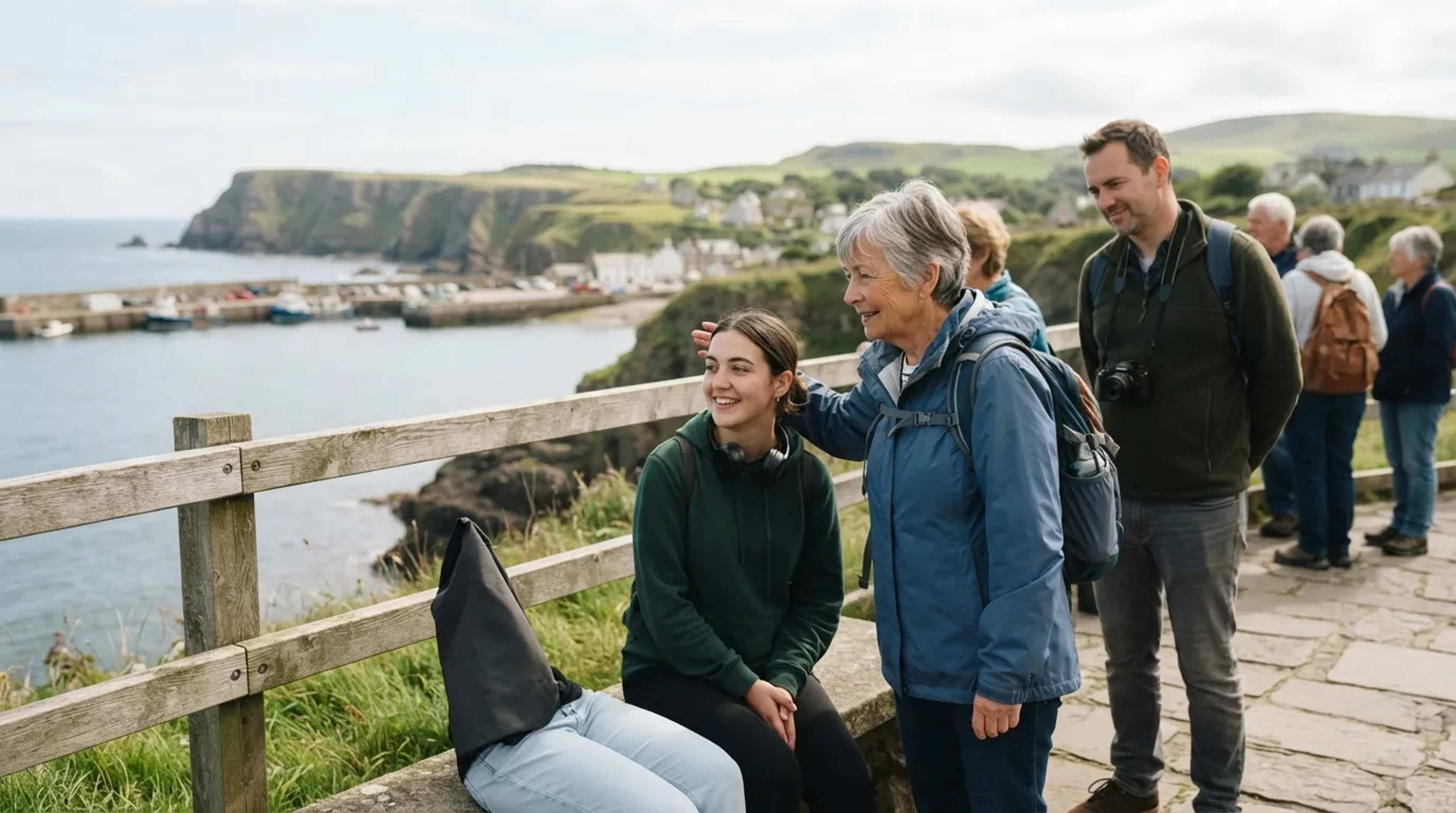
Every group has someone traveling alone, or someone who’s quiet, or someone slower than the rest. Guides say the groups that run smoothest are the ones where someone noticed. It starts with a seat offered, a photo taken or a table with a spare chair.
It’s hardly a rule, and it’s never on the itinerary. Guides say a group becomes a group on the day someone includes the person on the edge of it. After that, the late arrivals, the pace and the seat rotations tend to sort themselves out.
The biggest surprise isn’t how many rules good groups follow. It’s how small they are: a head start on the walk back, a photo of the coach, a coin for the restroom and a quiet word to the guide. None of it costs money, and all of it saves time.
But the last habit on the list might matter most, because the schedule only works when people look out for each other. Which one would you add from your own trip?