Everyone assumes a ferry needs some kind of send-off before it disappears – a farewell sailing, a local news crew, maybe a plaque on the old dock. In reality, most ferry routes across America and beyond just stop. No notice, no ceremony, no explanation. One day the boat runs. The next day the dock is empty and nobody official ever says why.
Some of these crossings ended nearly a century ago, quietly replaced by bridges nobody voted for. Others shut down in just the last year or two, leaving daily riders standing on empty docks wondering if they’d missed a memo that never existed – because it never did. Here’s what actually happened to 25 ferry routes that vanished without so much as a goodbye.
#25 – The Maine Ferry That Vanished the Same Year a Bridge Quietly Took Its Job
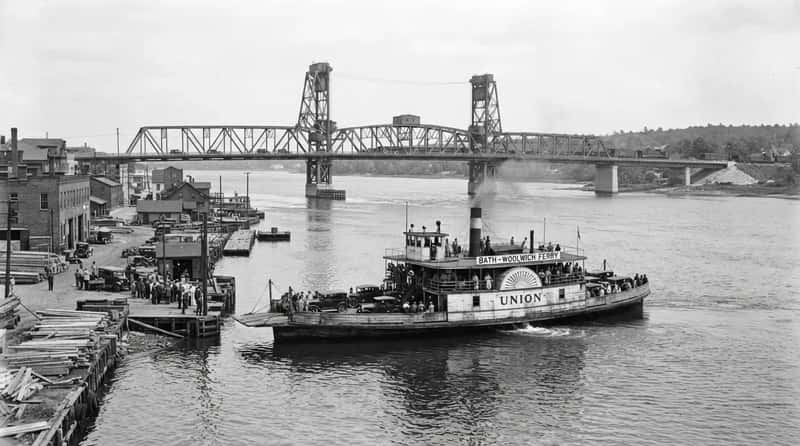
For more than 90 years, a steamer called the Union carried passengers across the Kennebec River between Bath and Woolwich, Maine. Then, in 1929, it just stopped – no recorded send-off, no local note explaining why the crossing suddenly mattered less.
The timing wasn’t a coincidence. The Carlton Bridge had opened in 1927, and once cars could cross for free, the ferry’s business dried up fast. Decades later, the Sagadahoc Bridge arrived too, in 2000, permanently replacing what a boat used to do. The old waterfront that once bustled with steamers is now just a photograph in a local archive.
#24 – The St. Louis Crossings That Disappeared So Slowly Nobody Noticed
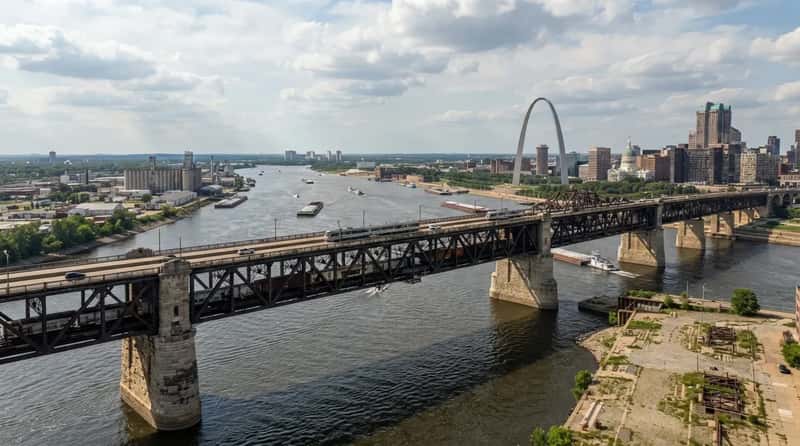
Before the Eads Bridge opened, dozens of ferries worked the Mississippi River around St. Louis, hauling people and freight across water that had no other way over. One of the busiest eventually landed in the hands of Samuel Wiggins, whose name got stitched into river-crossing history for the next century.
The ferries didn’t die in one dramatic moment – they just faded. Once Eads Bridge opened in 1874 as the first span across the Mississippi at St. Louis, bridge-building took off and the ferries lost business one crossing at a time. Nobody marked the exact day the last one folded; today most locals don’t even know the ferries existed.
Fast Facts
- Eads Bridge opened in 1874 as the first bridge across the Mississippi at St. Louis
- The Wiggins Ferry operation had run for roughly a century before fading out
- No commercial ferry service remains on that stretch of the river today
#23 – The Oregon Ferry a Bridge Made Obsolete Overnight
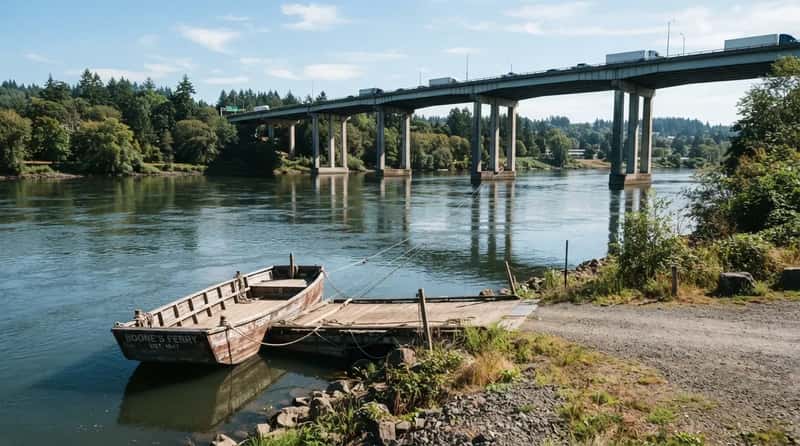
Boone’s Ferry ran across the Willamette River near Wilsonville for more than a century, starting in 1847 under Alphonso Boone – grandson of frontier legend Daniel Boone.
It didn’t fade from disuse. In 1954, a new bridge went up right over the ferry site, and the crossing became unnecessary overnight. One day it was essential infrastructure carrying farmers and families across the river; the next, it was a historical footnote nobody bothered to announce.
#22 – The Ferry That Ran Until 1950 and Then Simply Stopped Being Mentioned
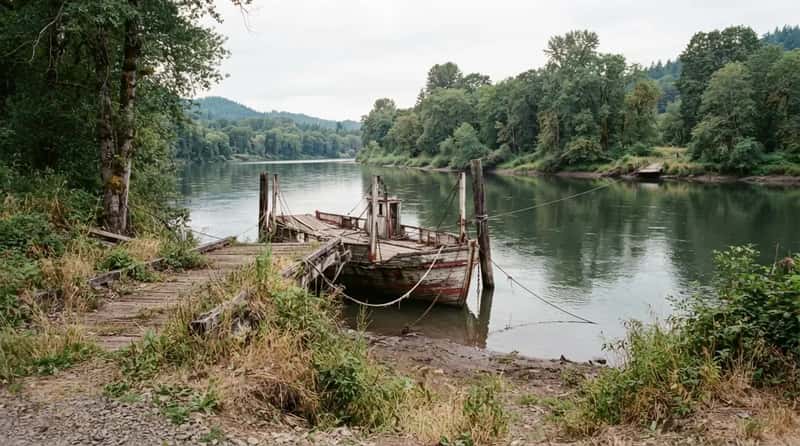
In Polk and Marion counties, Oregon, a ferry called the Claggett carried travelers across the Willamette near Independence for decades. Historical records simply note that it ran “until 1950” – full stop, no further explanation.
That’s the whole story, and that’s exactly the point. Most small ferry crossings like this one never got a formal goodbye. They just stopped showing up in the schedule, and eventually stopped showing up in memory too.
#21 – The Columbia River Crossing That Held On Until New Year’s Eve
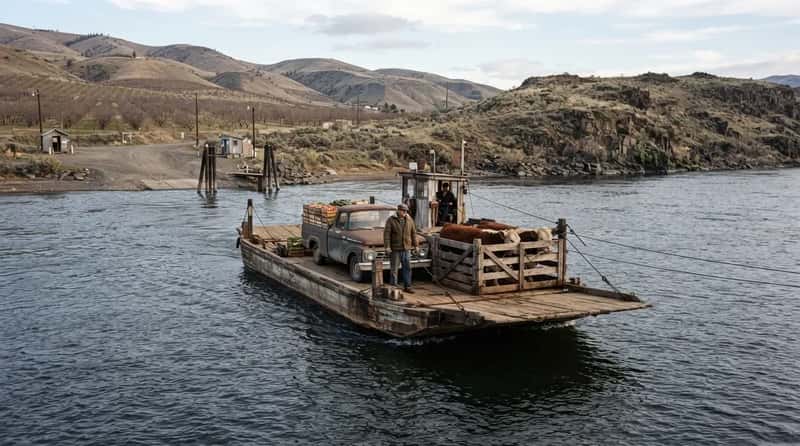
At Orondo, Washington, a string of small ferries crossed the Columbia River from the 1890s all the way until New Year’s Eve 1959, outlasting nearly every other crossing nearby.
These weren’t just tourist boats. Local farmers depended on them to move crops and livestock to market or to fresh grazing ground across the river. When the last one finally stopped that night in 1959, nobody threw a party for six decades of quiet, essential service.
#20 – The Ferry That Survived Runaway Sheep but Not the 1960s
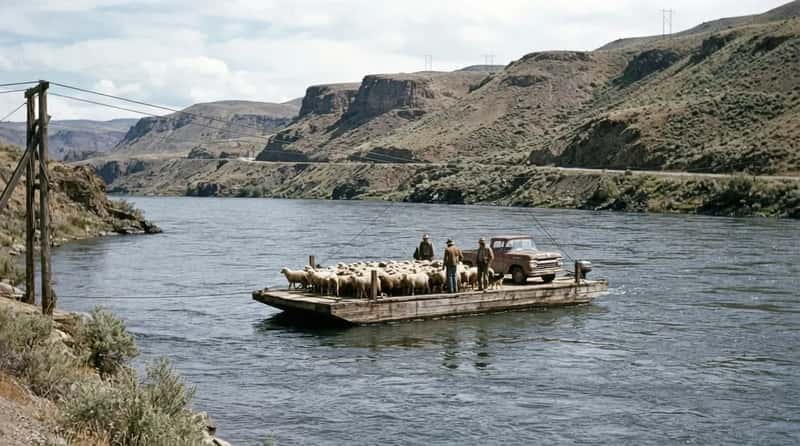
A few miles upriver from Orondo, the Entiat ferry crossed the Columbia from around 1900 until 1965, and it earned its local legend status the hard way.
In June 1907, a ferry loaded with sheep broke loose from its cable and started drifting downriver before the steamer Chelan managed to catch it. That’s the story people still tell. The actual closure decades later, by contrast, barely registered – the crossing just stopped running with none of the drama of its most famous day.
#19 – The Ferry That’s Now Just a Roadside Attraction on the Red River
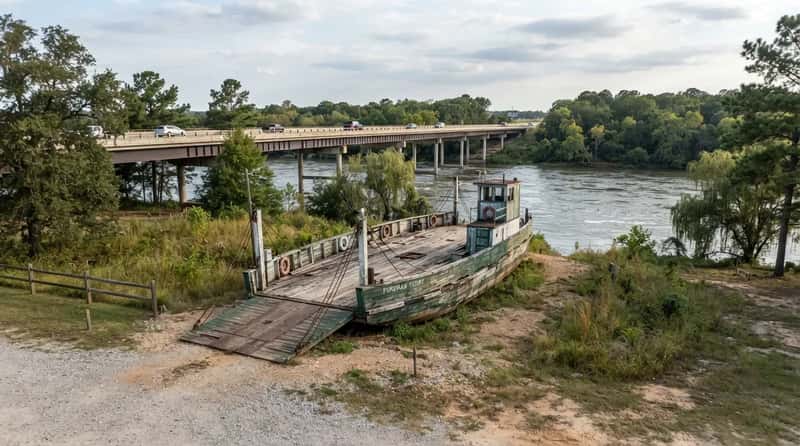
The Foreman Ferry carried travelers across the Red River between Arkansas and Texas while crews built a permanent bridge to replace it – a stopgap that lasted long enough to become part of the landscape.
Once the bridge was finished, the ferry’s job simply ended. Today it sits as a roadside attraction rather than a working crossing – the last ferry boat on that stretch of the Red River, parked for good with no public event ever marking the switch.
#18 – The Mississippi Crossing That Vanished Within a Year of a Final Ride
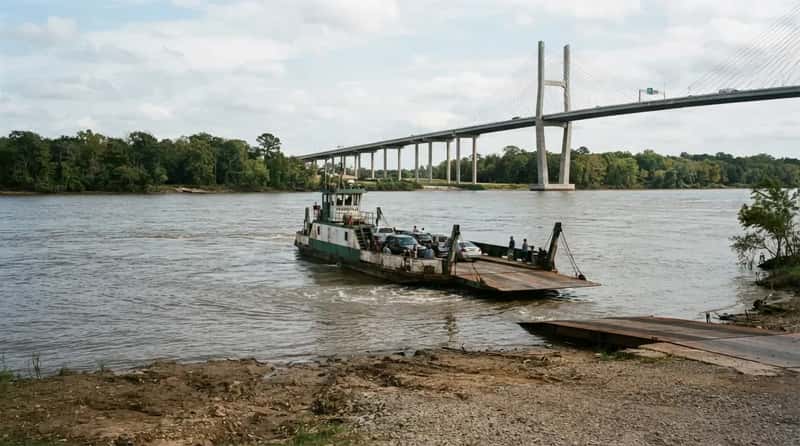
The ferry between St. Francisville and New Roads was one of the last working crossings on the lower Mississippi, charging about a dollar a trip for a slower, older way across the river.
Its ending came fast. One traveler who rode it later wrote that within a year of his trip, a new bridge had replaced it entirely. There was no farewell tour – just a bridge opening, and a boat that never carried another passenger.
#17 – The NYC Ferry a Bridge Erased From the Map in 1936
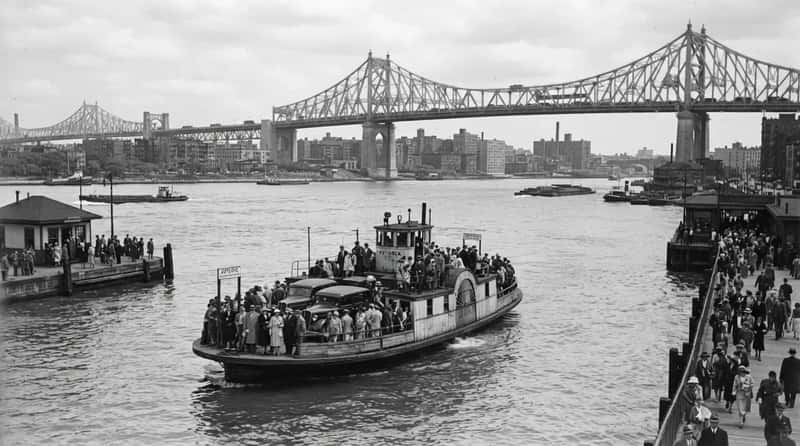
Before the Triborough Bridge existed, a ferry connected Yorkville in Manhattan to Astoria in Queens, carrying commuters across the East River every day.
The moment the bridge opened in 1936, the ferry’s reason to exist disappeared – no transition period, no gradual phase-out, just an old route made instantly redundant. Most New Yorkers today have no idea that crossing was ever there.
#16 – The Hudson River Ferries That New Jersey Commuters Forgot They Once Relied On
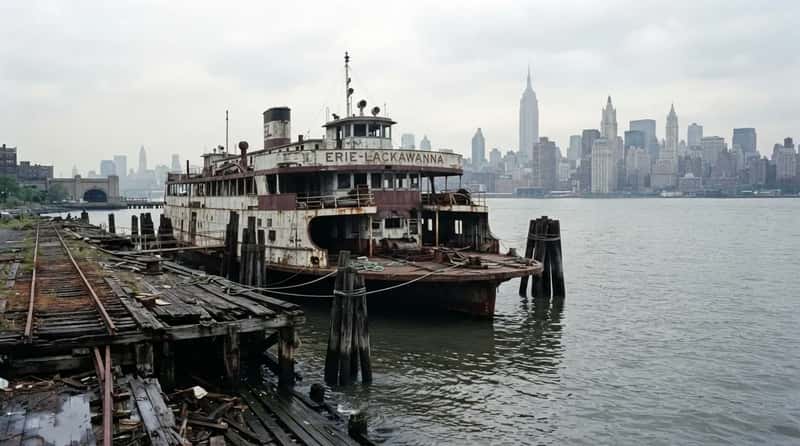
At one point, a sprawling web of ferries connected New Jersey to twenty different docks across the Hudson River in Manhattan – a transit system as complex as any subway map.
Tunnels and bridges killed it piece by piece. The Holland Tunnel, the Lincoln Tunnel, the Hudson & Manhattan Railroad, the Pennsylvania Railroad, and the George Washington Bridge, combined with the rise of car ownership, made those routes unnecessary by the mid-20th century. By 1967, the last cross-Hudson ferry route was gone, closing a chapter most riders never saw coming.
#15 – The Canadian Ferry a Community Is Still Fighting to Get Back
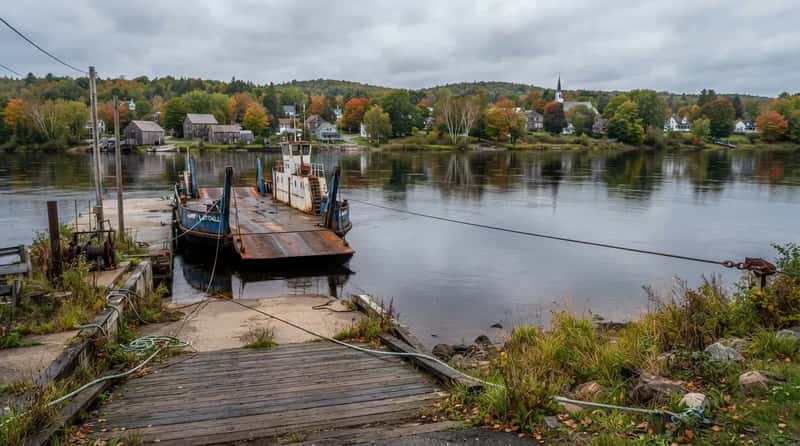
In Gagetown, New Brunswick, a cable ferry served the community for years before the provincial government shut it down in 2015, citing low ridership and the cost of upgrades needed to meet registration and certification requirements.
Residents didn’t take the loss quietly. People in the small village kept pushing to bring the ferry back, describing a psychological toll that outsiders rarely understood – the sense of losing something that had quietly held the community together. Years later, the fight to reverse the decision is still going.
#14 – The Ontario Ferry That Shut Down Because Nobody Showed Up for Work
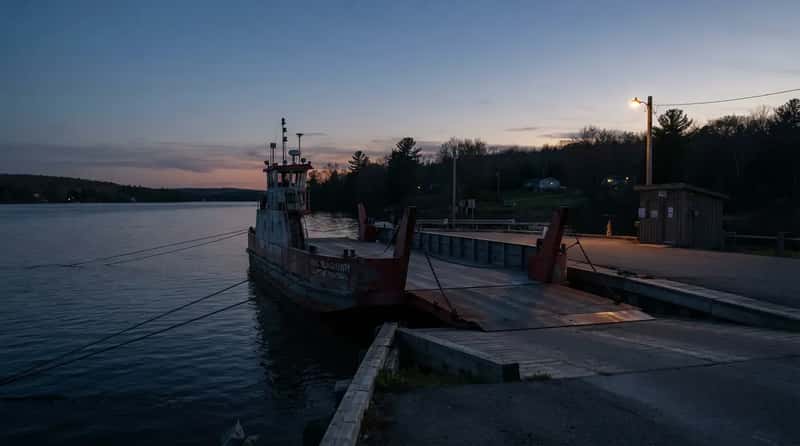
On Howe Island, Ontario, a 15-vehicle cable ferry shut down for roughly 12 hours in 2019 – not because of weather or mechanical failure, but because the operator simply didn’t show up for work.
Notice was almost nonexistent. Officials posted the news around 5 p.m., giving residents barely 90 minutes to adjust before the dock went dark. One resident described lineups stretching past three in the morning – proof that even routes still technically running can vanish for a night with almost zero warning.
#13 – The Bermuda Route That Keeps Disappearing Without Explanation
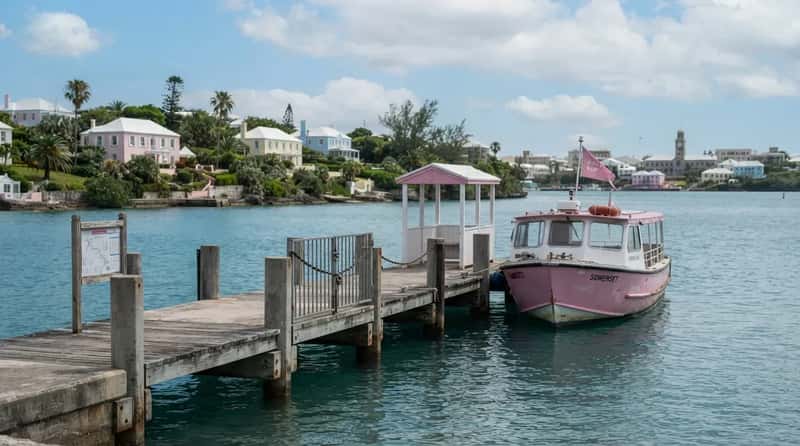
Bermuda’s Pink Route, connecting Paget and Warwick, has been suspended for mechanical issues so many times that locals barely react anymore.
Sometimes the notice comes with almost no lead time and no promised return date – just an announcement that service is suspended “until further notice” while urgent repairs are carried out. For regular riders, it’s become a running joke and a genuine daily headache rolled into one.
#12 – The San Juan Islands Foot Ferry That Ended Almost as Fast as It Started
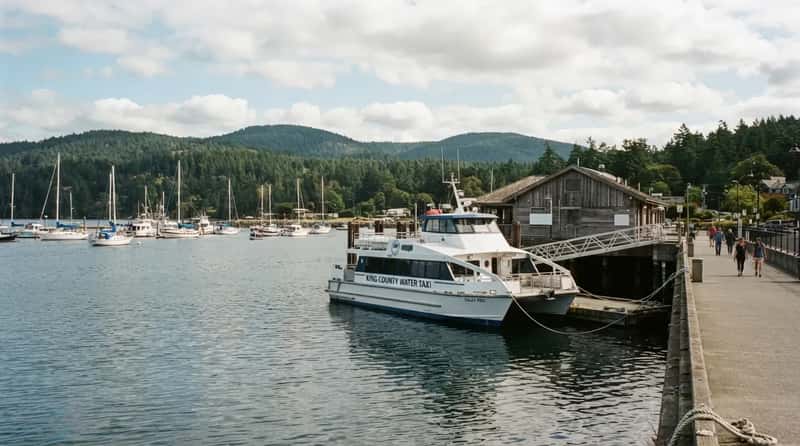
A trial foot ferry service to the San Juan Islands launched as an experiment – and it ended almost as quietly as it began.
Regional reporting summed up the entire arc in one headline: the pilot program launched, then ended, with return “in doubt.” For a region already frustrated with ferry reliability, it was one more route that disappeared before most residents got the chance to rely on it. No relaunch date has been confirmed since.
#11 – The Washington-Canada Ferry Route Still Missing Season After Season
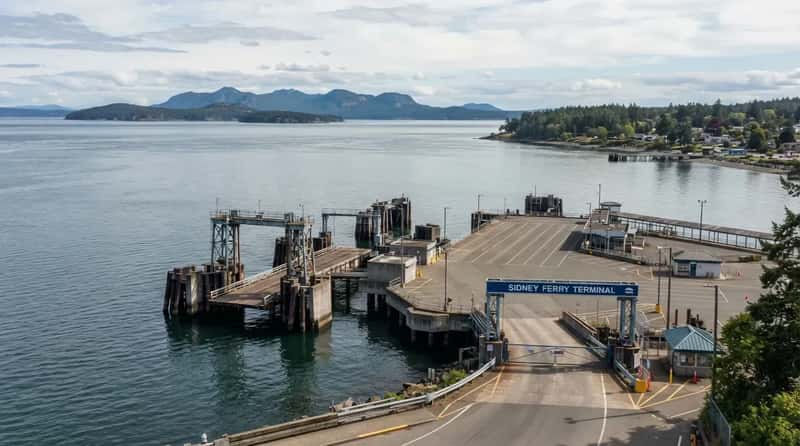
Washington State Ferries once ran cross-border service linking the San Juan Islands to Canada, a route locals used for everything from grocery runs to family visits.
That service has now been gone for years, quietly entering its seventh season without a single cross-border sailing. There was no single dramatic announcement – just season after season passing with the route never coming back, an absence nobody in charge ever fully explained.
At a Glance
- Route once linked the San Juan Islands directly to Sidney, British Columbia
- Service has now been suspended for seven straight seasons
- No restart date has ever been publicly confirmed
- Travelers now rely on longer, indirect routes to cross the border by land and sea
#10 – The 126-Year-Old Ferry That Malaysia Let Go on New Year’s Eve
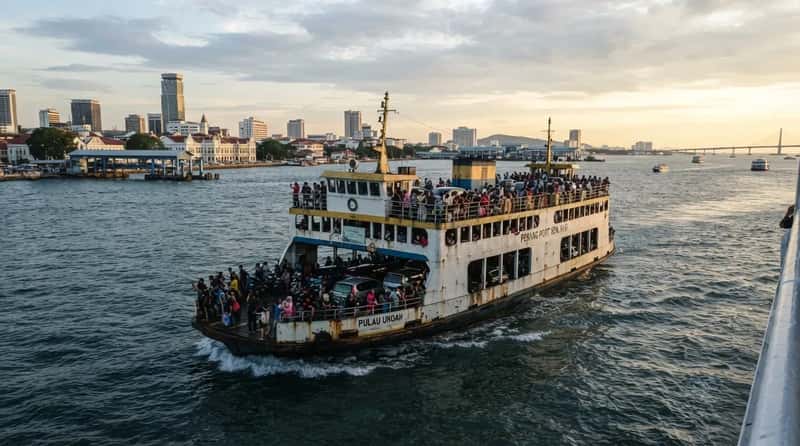
Penang’s ferry service connected the Malaysian island to the mainland for 126 years before officials decided its time was finally up.
The decision didn’t come from falling demand – it came from a change in government. A newly installed administration chose to end the service entirely starting the following year, and a route older than most countries’ highway systems closed with a single final sailing.
#9 – The Irish Ferry That Just Stopped Running for an Entire Year
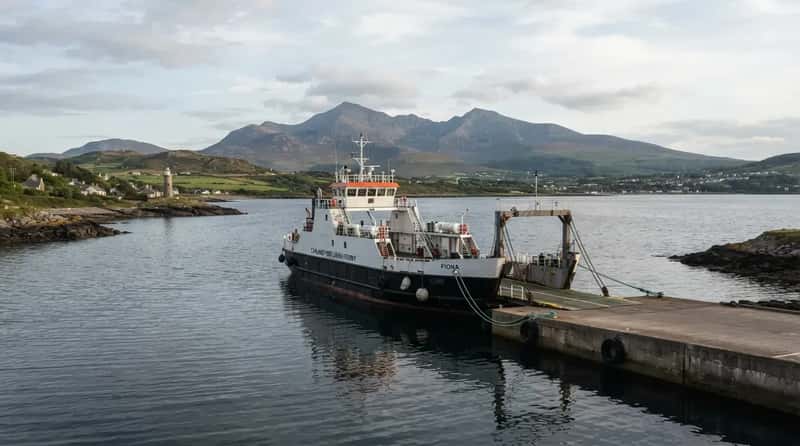
The Carlingford Lough ferry, connecting counties Louth and Down across one of Ireland’s most scenic waterways, announced it simply wouldn’t run at all in 2026.
No real explanation followed – just an abrupt notice that blindsided tourism businesses on both sides of the border. Local advocates said they’d been raising concerns about support for the ferry “for some time” before the suspension hit, with no explanation given and no resumption date set.
#8 – The Massachusetts Ferry That Died Over a Missed Deadline
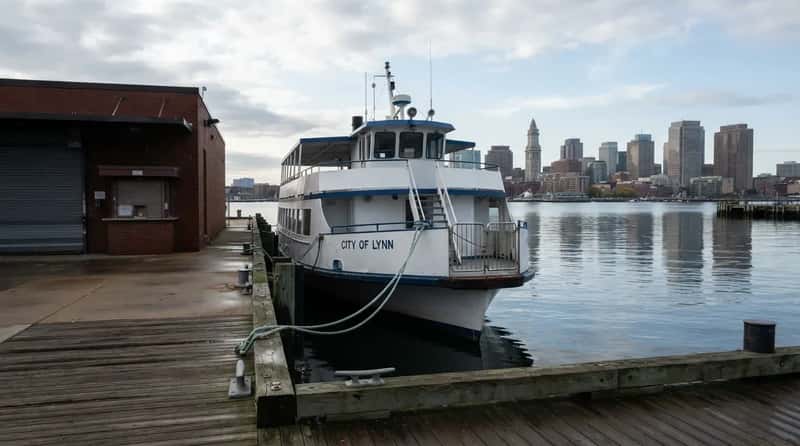
The Lynn Ferry carried Massachusetts commuters into Boston for two straight summers before it was abruptly cancelled – not from low ridership, but from a paperwork issue.
City officials had simply missed a key funding deadline, and the state rejected Lynn’s $700,000 request to keep the service running. One rider said the ferry had cut her commute from Marblehead to Boston from two hours down to just thirty minutes. Then, without much warning, it was gone.
Quick Compare
- Commute by ferry: about 30 minutes
- Commute by car or bus: nearly 2 hours
- Funding request denied: $700,000
- Seasons the ferry actually operated: 2
#7 – The New Jersey Ferry That Never Even Got to Start
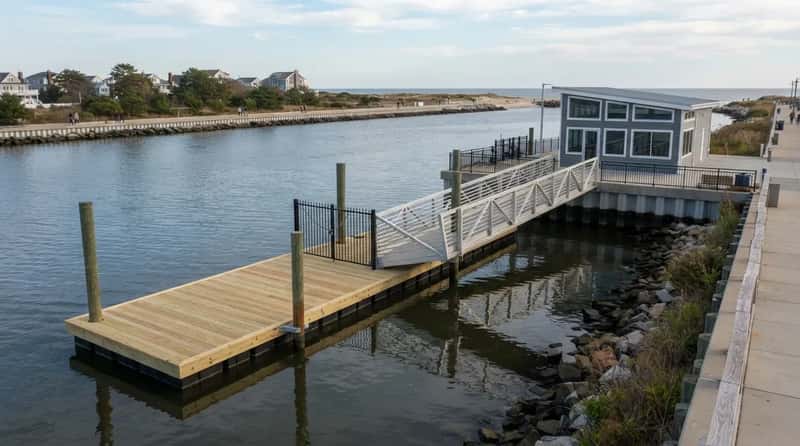
A planned Seastreak ferry service from New York to Point Pleasant Beach, New Jersey, was scrapped just three days before its scheduled launch.
The company pulled the plug after the local borough council rejected an ordinance needed to run it, even though the mayor personally urged approval right before the vote, calling it “a great opportunity in town.” It didn’t matter. The route died before its very first crossing.
#6 – The San Francisco Bay Route a Broken Dock Shut Down Indefinitely
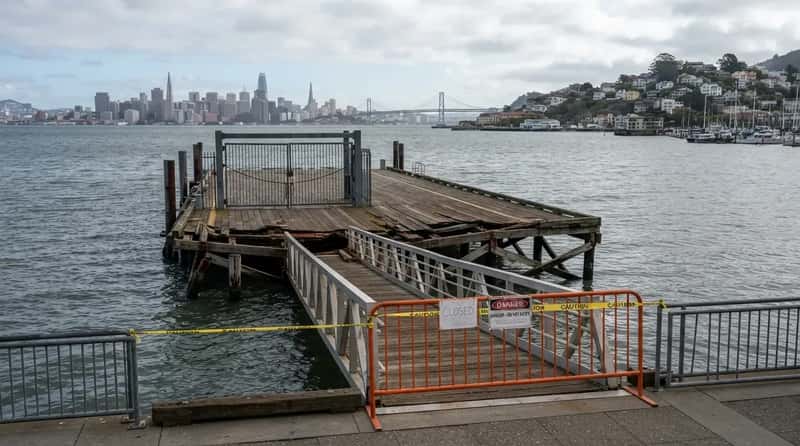
The San Francisco-Sausalito ferry, used by roughly 500 daily riders, was suddenly pulled from service after a routine inspection turned up damage nobody expected.
Even the ferry agency admitted it wasn’t entirely sure what had caused it, saying the cause and extent of the damage were unclear. Buses filled the gap while crews waited on specially fabricated replacement parts, with no firm timeline given to the commuters and tourists who depended on the boats every day.
#5 – The New Orleans Ferry a Routine Inspection Killed Overnight
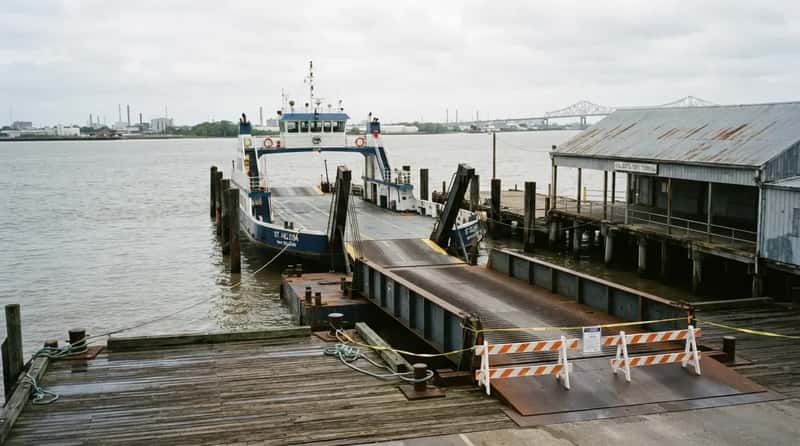
The Lower Algiers-Chalmette ferry in New Orleans went from a normal service day to an indefinite shutdown after one routine bridge inspection flagged structural concerns.
Transit officials offered riders almost nothing to go on, saying only that there was no estimated timeline for resumption and that people should plan accordingly and use alternate routes. For a crossing locals depended on daily, that brief statement was the entire explanation they got.
#4 – The Alaska Ferry That Disappeared Between One Night and the Next Morning
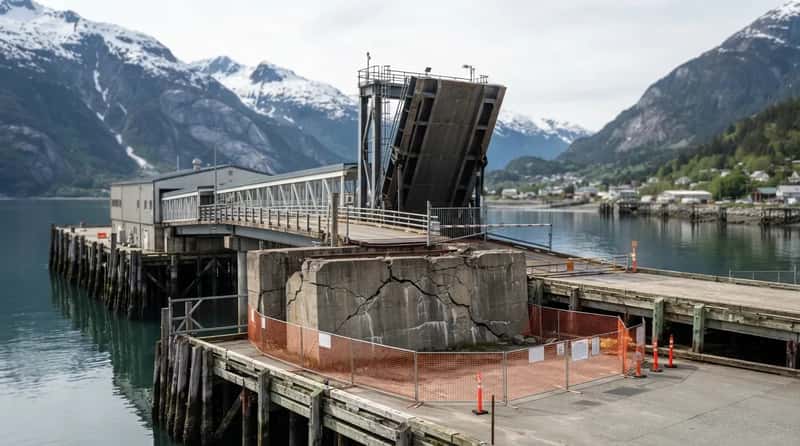
Skagway, Alaska, had daily ferry service one evening – and by the next morning, it was gone with no advance warning at all.
Engineers had spotted cracks spider-webbing across the concrete abutment supporting the vehicle transfer bridge and passenger walkway, and once they saw the damage was actively growing, the terminal was shut down almost immediately. Skagway’s own borough manager found out on a Saturday morning phone call from a DOT engineer – not exactly the kind of notice a whole town expects before losing its ferry.
#3 – The Washington Ferry That Keeps Stranding Islanders With Almost No Warning
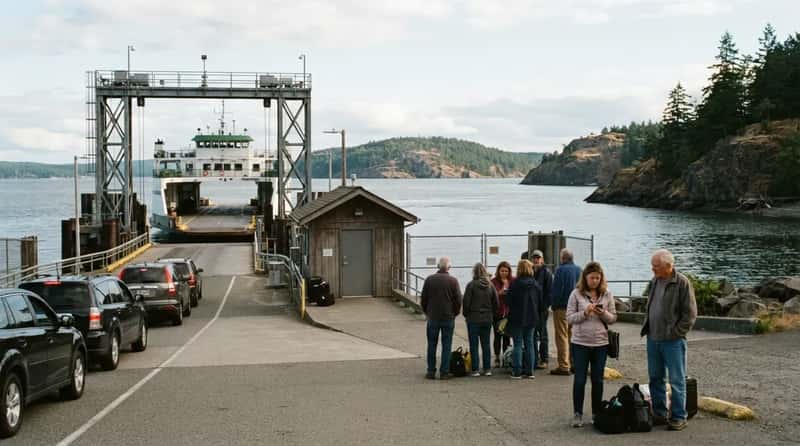
The Lummi Island ferry, connecting the island to mainland Washington across Hale Passage, has been abruptly suspended multiple times in recent months, often stranding riders on the spot after equipment malfunctions at the mainland dock.
One resident, trying to get home to relieve her husband’s caregiver, waited at the dock for hours getting only conflicting information before realizing no boat was coming at all. A local pastor ended up ferrying stranded people across the water himself in a small skiff. That’s how thin the safety net gets when a small-island route goes down without warning.
#2 – The 200-Year-Old Ferry a Land Dispute Ended Overnight
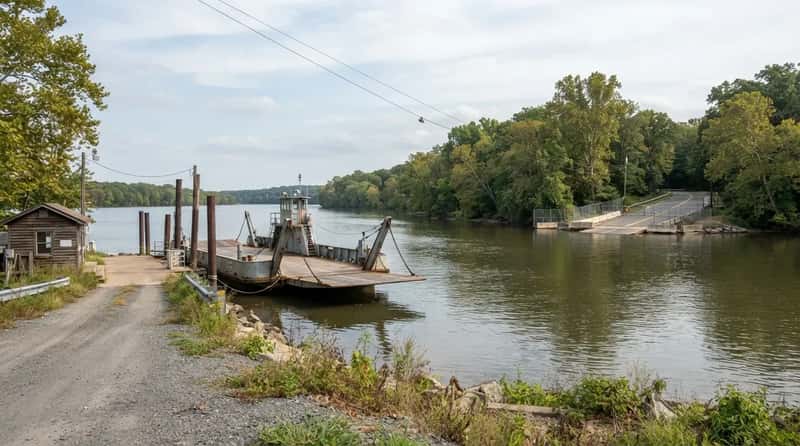
White’s Ferry had carried Marylanders and Virginians across the Potomac River for more than 200 years, moving roughly 600 vehicles a day, right up until a single court ruling shut it down in one afternoon.
A circuit court judge in Loudoun County ruled that no public landing legally existed on the Virginia shoreline, and that was that – no phase-out, no warning to daily commuters. Five years and multiple failed reopening attempts later, drivers are still stuck taking longer routes, and the region has lost the ferry-related traditions and holiday celebrations that once anchored the community.
Worth Knowing
- Operated continuously for more than 200 years across the Potomac River
- Carried an estimated 600 vehicles a day before it shut down
- Closed by a single court ruling, not a gradual decline in ridership
- Multiple reopening attempts over five years have all failed so far
#1 – The 220-Year-Old Ferry That Ended With Zero Warning to Anyone
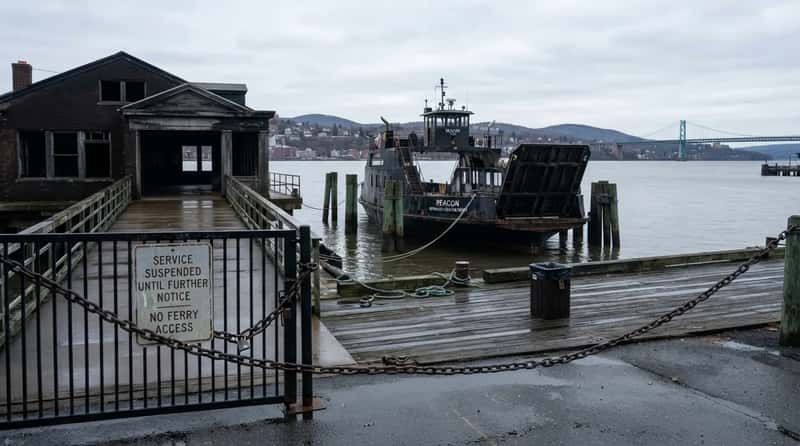
The Newburgh-Beacon Ferry connected two Hudson Valley communities for roughly 220 years, tracing its roots back to 1743 and surviving wars, new bridges, and economic downturns – until it simply didn’t run one February morning.
There was no public process at all – no announcement, no engagement meetings, no real chance for riders to weigh in before the boats stopped for good. Even the local state senator said nobody had warned him it was coming, calling the silence troubling.
People didn’t know this was happening until it was gone.
Newburgh-area transit advocate
Add it all up, and a pattern emerges that most riders never see coming: ferry routes rarely die with fanfare. They die with a locked gate, a cancelled app notification, or a dock that just stays empty one morning. Some vanish because of court rulings, some because of missed budget deadlines, some because of cracks nobody caught in time. What almost none of them get is the one thing you’d expect – a real public heads-up before the last boat ever leaves the dock.
Did we miss a ferry crossing near you that just stopped running one day? Drop it in the comments – someone out there is probably still wondering what happened to it.