Most people assume the biggest disaster on a cruise ship is getting seasick or losing a sock in the laundry. Captains and crew members who’ve spent decades at sea will tell you the real damage comes from far dumber, far more avoidable moments – the kind that get retold at crew dinners for years afterward.
Some of these mistakes cost a few hundred dollars. Others cost a passenger their entire vacation, or worse, a finger. Here’s what veteran captains, cruise directors, and travel experts actually say separates a smooth first sailing from a story you’ll never live down.
#25 – Packing Five Pairs of Shoes for a Five-Day Trip
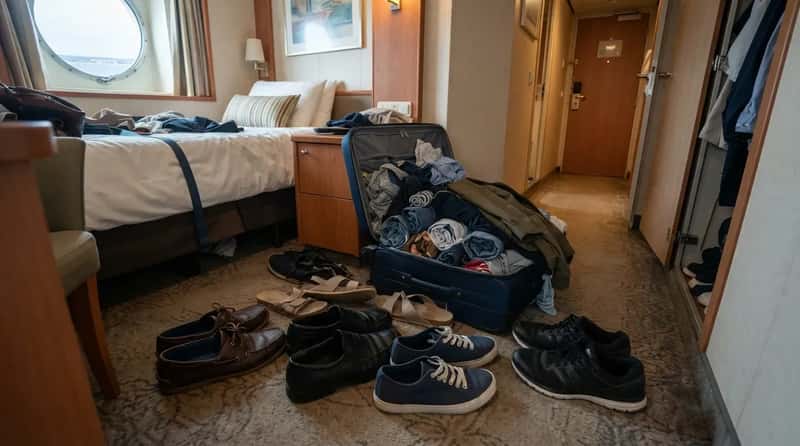
Nearly every first-time cruiser makes the same suitcase mistake before they’ve even boarded. Travel experts who work directly with new cruisers say the pattern is almost universal, and it never ends well once the ship sets sail.
According to CMO Alexandra Dubakova, first-time cruisers won’t listen and stuff their suitcase with five pairs of shoes. The problem is most ships have narrow hallways and small cabins with surprisingly tiny closets, making it hard to move around or store anything extra. That clutter doesn’t stay in the cabin, either – it makes embarkation and disembarkation dramatically more exhausting for exactly one person.
#24 – Bringing a Hardshell Suitcase That Won’t Fit Under the Bed
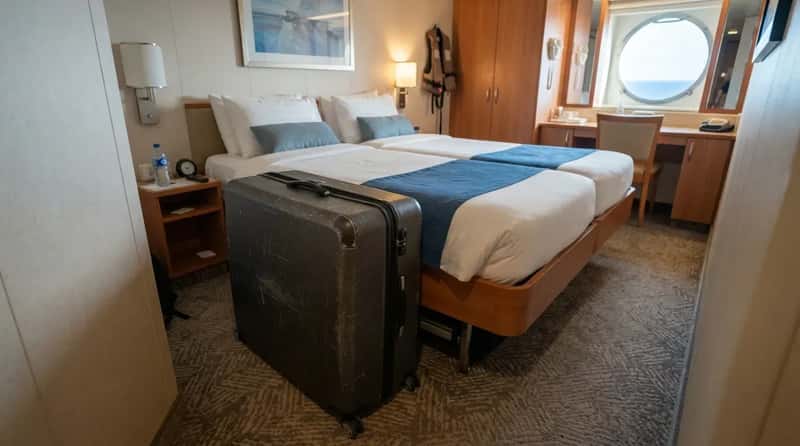
Here’s something almost no first-timer thinks to check before they buy luggage: whether it will actually fit in their room. Cruise cabins aren’t built like hotel rooms, and storage space is one of the most misunderstood parts of ship life.
Most stateroom closets are too small to store a full-sized suitcase, so luggage needs to slide under the bed instead. Travel journalist Sarah Greaves-Gabbadon recommends a soft-sided duffel over a rigid case for exactly this reason. The bag that seemed perfect at home becomes a permanent tripping hazard at sea, and skipping this detail means stepping over your own suitcase for a full week.
#23 – Flying Into Port the Same Day the Ship Departs
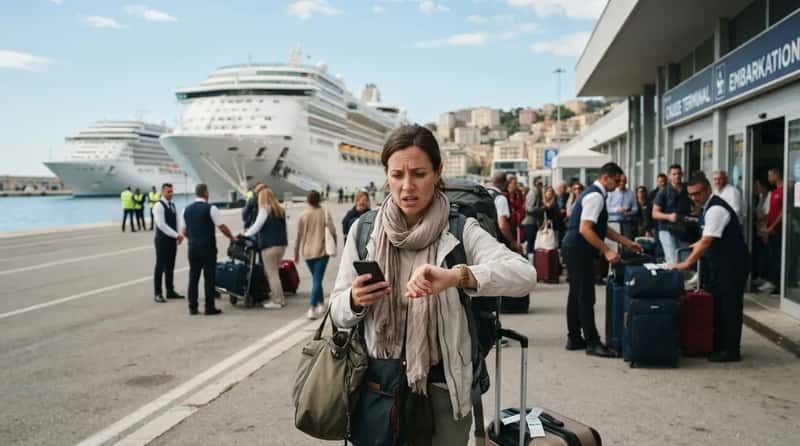
This is the mistake that veteran cruisers describe as the single riskiest thing a first-timer can do, and it has nothing to do with packing. Content creator Courtney Ball, who cruises frequently, calls flying in on embarkation day a huge no-no.
The logic is simple: any flight delay, cancellation, or missed connection means the ship leaves without you, no exceptions. Ball’s advice is blunt about arriving the day before instead, finding a hotel near the port, and using that extra time to relax and explore the city.
Never, ever, ever fly in the day of.
Courtney Ball
#22 – Blowing Off the Muster Drill
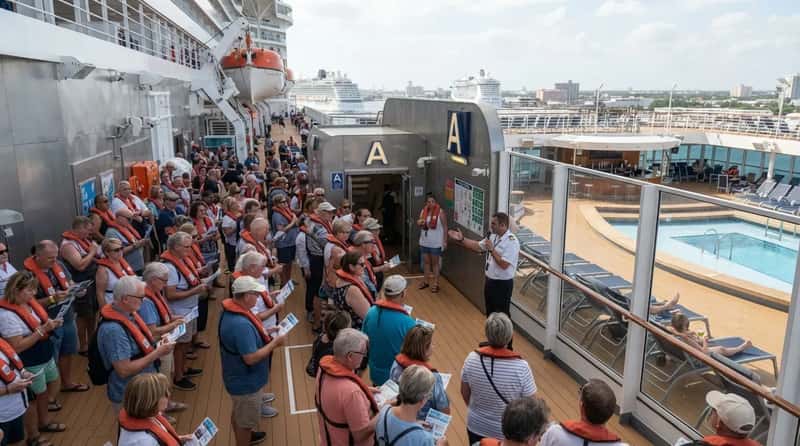
Every first-timer has felt the same urge on embarkation day: skip the boring safety meeting and head straight for the pool bar. Crew members say this is one of the most common – and most reckless – habits new cruisers pick up immediately.
Travel agent Courtney Johnston puts it plainly: safety drills are critically important, and skipping the muster drill is far more common than passengers admit. These drills exist so everyone knows the emergency exits and evacuation routes before there’s ever a real emergency. Treating it like a formality is exactly the mindset that turns minor incidents into major ones.
Fast Facts
- Muster drills are required by international maritime safety law before a ship is allowed to leave port.
- Most major lines now use an e-muster check-in on the cabin TV or app, but attendance is still mandatory.
- Passengers who skip check-in are often paged repeatedly over the PA system until they show up.
- Crew track attendance by cabin, so there’s no quietly slipping past this one.
#21 – Booking a 10-Day Cruise for Their Very First Sailing

New cruisers almost always assume longer means better value, so they book the maximum number of nights available. Experienced cruise consultants say this backfires far more often than people expect.
As CMO Alexandra Dubakova explains, many first-time cruisers want everything at once and book long 8-to-12-day sailings, only to admit afterward that five days would have been plenty before things got boring. A shorter cruise almost always leaves people wanting more, not less. Instead of testing the waters, first-timers commit to over a week before knowing if cruising even suits them.
#20 – Picking a Cruise Line Based on Price Alone

Not every cruise ship offers the same vacation, even when the price tags look identical. This is one mismatch that veteran travelers say ruins more first trips than almost anything else on this list.
Travel writer David Nikel notes that cruise lines aren’t interchangeable – some lean into family-friendly activities, while others cater to older travelers or a more refined pace. Choosing based solely on price or itinerary is a mistake many first-timers make. A quiet, adults-focused ship booked by a family with toddlers is a recipe for a miserable week for everyone involved.
#19 – Trying to Do Absolutely Everything Onboard

This one might be the most surprising mistake on the entire list, because it comes straight from a working ship captain. Most first-timers assume more activities equal more value. Captains say the opposite is true.
Captain Kate McCue, one of the most recognizable ship captains in the industry, says the biggest mistake first-time cruisers make is trying to do everything. Her advice is to leave room for spontaneity, planning just enough to avoid stress while leaving space to be surprised. Packing every hour with excursions and shows guarantees exhaustion by day three.
#18 – Checking Their Only Change of Clothes With the Rest of Their Luggage
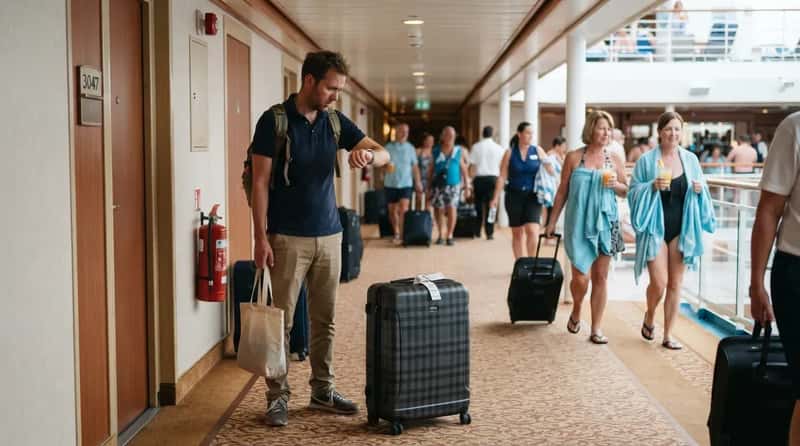
Here’s a detail that catches almost every new cruiser off guard on embarkation day. Checked bags don’t arrive instantly, and first-timers rarely plan for the gap.
Travel writer David Nikel advises packing a carry-on with essentials for embarkation day – medications, swimwear, a change of clothes – since checked luggage can take several hours to reach the cabin. Spend the first afternoon of your cruise in whatever you boarded wearing – that’s the reality for anyone who packed everything into one checked bag, missing the pool, the buffet, or the sail-away party in travel clothes.
#17 – Packing a Travel Iron or Electric Kettle
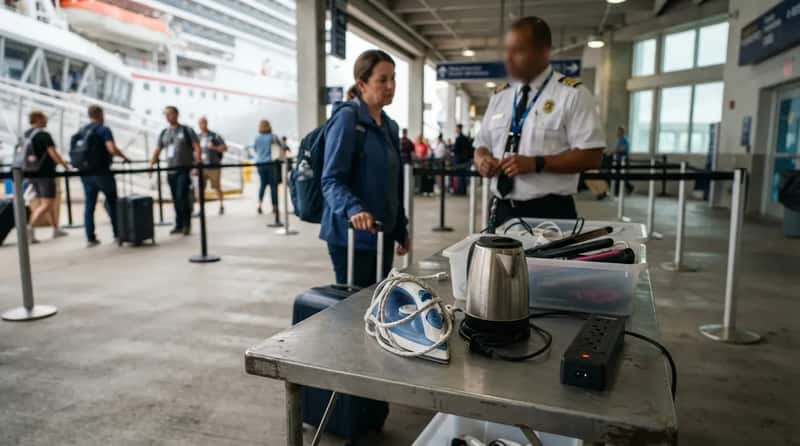
This mistake sounds harmless until security confiscates the item at the gangway. Most first-timers have no idea certain everyday appliances are completely banned onboard.
According to travel writer David Nikel, cruisers should check their line’s rules in advance, since items like travel irons, kettles, and surge-protected power strips are usually prohibited. These items get pulled at security and held until disembarkation – no refunds, no exceptions. It’s a small oversight that costs travelers a favorite gadget for an entire week.
#16 – Hogging a Pool Chair for Hours
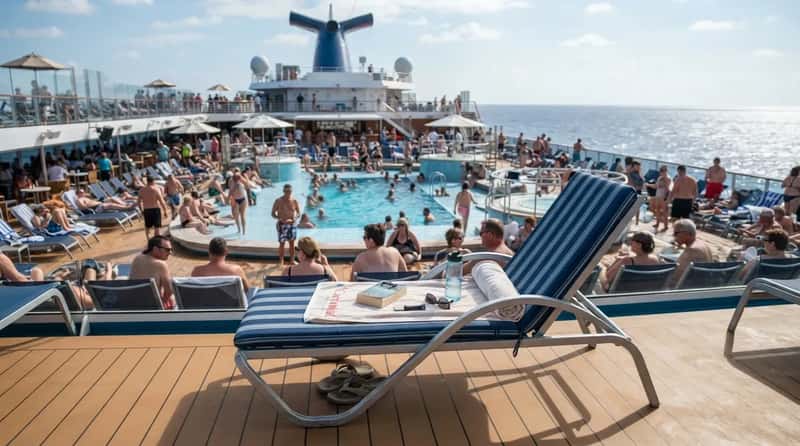
Nothing irritates a ship’s crew and fellow passengers faster than this one habit, and first-timers do it constantly without realizing the consequences. Deck chairs are one of the most fought-over resources on any ship.
As etiquette expert Marquita Harley points out, there are always a few guests who cling to a prime deck chair while ducking off for lunch or shopping. Both Celebrity and Carnival have enforced no-chair-hog policies that eventually send personal belongings straight to the lost and found. Leave your towel too long, and crew members will clear it themselves.
Worth Knowing
- Deck staff regularly sweep pool areas checking for towels and bags with no one nearby.
- Belongings left unattended too long typically get moved to guest services, not thrown out.
- Mid-morning through early afternoon is when shaded loungers disappear fastest.
- A chair with nothing but a towel on it, and no guest in sight, is considered fair game by most crews.
#15 – Grabbing Buffet Food With Bare Hands

This is the fastest way to spot a first-timer at the buffet line, and it’s also one of the biggest health risks on the entire ship. Most new cruisers have no idea there’s an actual rule behind the chaos.
Health laws require cruise lines to enforce a clean plate for each refill, even though it might seem wasteful. Harley’s advice is simple: use utensils, not your hands, and don’t touch what you’re not taking. Reusing a plate or touching food you don’t take is exactly how outbreaks start on a ship carrying thousands of people.
#14 – Skipping the Hand Sanitizer Stations
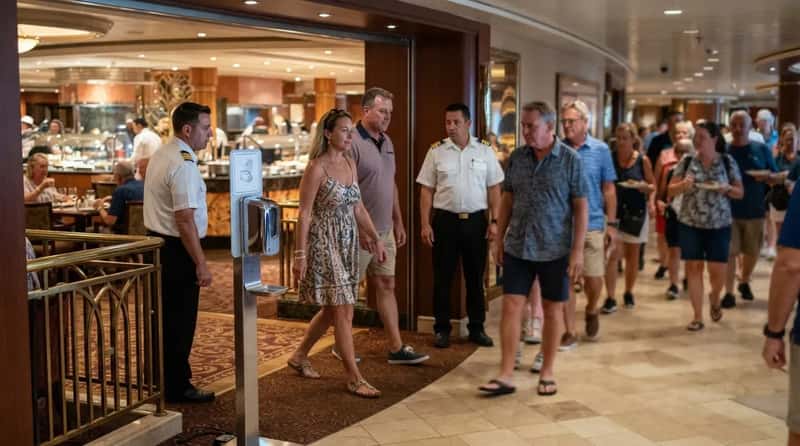
Walking past the sanitizing station without a second thought feels harmless. Crew members treat it as a genuine risk, and health officials back them up completely.
The Centers for Disease Control and Prevention recommends frequent handwashing on cruise ships, especially before eating, because illnesses like norovirus spread easily in close quarters. That’s exactly why sanitizer stands sit at every buffet entrance and dining room door. A stomach bug that would be a minor inconvenience at home can tear through an entire ship within 48 hours.
#13 – Showing Up to Formal Night in Shorts and Flip-Flops
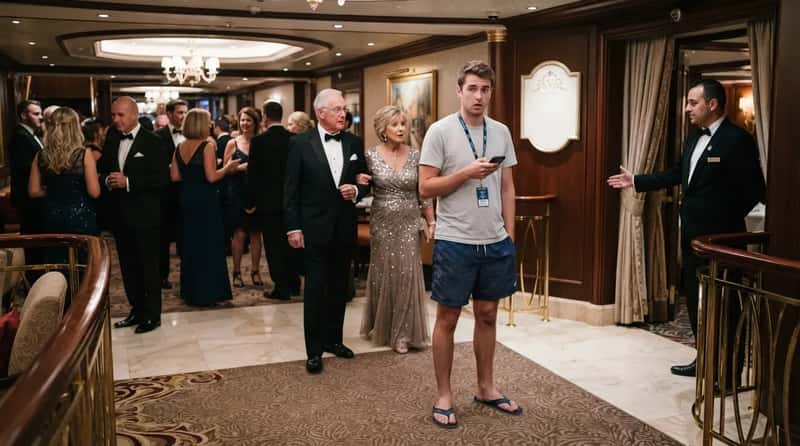
Formal night still exists on most cruise lines, and first-timers routinely underestimate how seriously other passengers take it. This is one of the friction points that veteran cruisers bring up again and again.
Etiquette expert Julie Hirst’s point isn’t about rules for their own sake – it’s about the shared experience everyone paid for. If you don’t want to participate, that’s your choice, but don’t ruin the event for other passengers.
Showing up at a formal night in shorts and flip-flops is unacceptable.
Julie Hirst
#12 – Saying the Word “Titanic” Out Loud on Board
This one sounds like a joke until you watch a crew member’s face change in real time. It’s one of the strangest unspoken rules in all of cruising, and almost no first-timer knows about it in advance.
Most cruise rules are common sense, but a few – like not saying “Titanic” on board – catch new cruisers off guard. Even after all these years, it’s still too soon, according to Royal Caribbean’s own etiquette guide. This superstition has quietly survived more than a century at sea. First-timers who bring it up as a joke are often met with total silence.
#11 – Slamming Cabin Doors and Yelling Down the Hallway

Sound travels completely differently on a ship than it does at home, and first-timers underestimate this every single time. What feels like a normal door close in a hotel becomes a disturbance heard by dozens of neighbors.
A slammed cabin door is unnecessary and disturbs hundreds of passengers at once. The same goes for shouting down hallways to find a travel companion – many ships now hand out interactive wearables specifically so guests don’t need to yell. A single slammed door at 2 a.m. can wake an entire hallway of strangers, and it instantly signals a first-timer to everyone nearby.
#10 – Assuming WiFi Is Included in the Fare
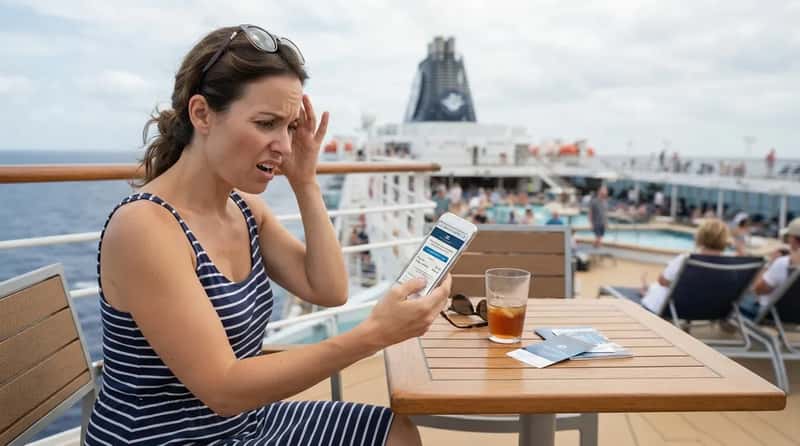
This is one of the more expensive surprises new cruisers run into, usually the moment they try to post a vacation photo. Most first-timers assume internet access comes standard, the way it does at most hotels.
In reality, WiFi on most cruise lines is an additional charge, often priced per day or per device. A week of unlimited internet for one device can cost more than a nice dinner out. First-timers who don’t check ahead often end up paying premium rates just to check email once they’re already at sea.
#9 – Buying the Biggest Drink Package Without Doing the Math

Drink packages sound like an obvious upgrade, and first-timers frequently buy the top tier without running the numbers. Frequent cruisers say this decision often backfires in a very specific way.
Whether a package pays off really just depends on daily habits – it’s much simpler math than the debate makes it seem. Some travelers end up squeezing in extra drinks just to justify the cost, chasing a bar tab instead of relaxing. Buying the top-shelf package “just because” often turns a vacation into a math problem instead of a break.
#8 – Assuming All Onboard Food Is Free

The phrase “food is included” gets repeated so often in cruise marketing that first-timers assume it applies everywhere on the ship. It doesn’t, and the gap catches people off guard at checkout.
Cruise lines advertise food as included, and in a basic sense it is – the main dining room and buffet are generally free. Specialty restaurants such as steakhouses, sushi bars, or celebrity chef venues charge extra, typically $25 to $60 per person. On some of the newest megaships, it’s shockingly easy to eat in a fee-based restaurant several nights in a row without realizing it.
At a Glance
- Main dining room and buffet: included in the standard cruise fare.
- Steakhouses and specialty grills: typically $35 to $60 per person.
- Sushi and Asian-fusion venues: often $25 to $45 per person.
- Celebrity-chef restaurants on premium ships: can run $50 to $80 per person.
#7 – Forgetting the Automatic Gratuity Tacked Onto Drinks and Spa Services

Even cruisers who budget carefully for gratuities are frequently blindsided by a second charge layered on top. This is one of the least understood fees in all of cruising.
Here’s the part most first-timers miss: the automatic gratuity, typically 18-20%, added to bar drinks, specialty restaurants, and spa services cannot be removed – only the flat daily service charge can. That massage you booked as a treat quietly gets 20% tacked on before you even see the bill, and no amount of polite asking at guest services changes it.
#6 – Not Budgeting for Daily Gratuities at All

This is the fee that blindsides more first-time cruisers than almost any other single line item. It isn’t hidden exactly, but it’s rarely factored into the “sticker price” travelers see when booking.
As of 2026, Carnival’s gratuities run $17 per person, per day for standard staterooms and $19 per person, per day for suites, with other major lines charging similarly. For a family of four on a week-long cruise, that’s several hundred dollars automatically added to the final bill. First-timers who don’t plan for this often feel blindsided on the last night, even though the charge was disclosed the entire time.
Quick Compare
- Carnival: $17/day standard cabins, $19/day suites.
- Royal Caribbean: gratuities are an automatic daily charge of $18.50 per guest for non-suite staterooms and $21.00 for suites.
- Norwegian: a daily onboard service charge of $20.00 per guest for most staterooms and $25.00 for The Haven and suites.
- On a 7-night cruise for two, that gap alone can mean a $70 to $100 difference before a single drink or spa visit is added.
#5 – Winging the Entire Itinerary With Zero Plan

Some first-timers pride themselves on being spontaneous travelers, assuming they can figure out excursions once they’re already at each port. Cruise consultants say this almost always backfires.
Travel expert Silvia Lupone points out that most people think they can just “wing it,” not realizing improvised trips often mean missing unique experiences or paying inflated last-minute prices once they’re already ashore. Popular excursions frequently sell out weeks in advance, not hours. Arriving in port with no plan usually means settling for whatever’s left, at whatever price is left.
#4 – Skipping the Facebook or Reddit Group for Their Specific Sailing
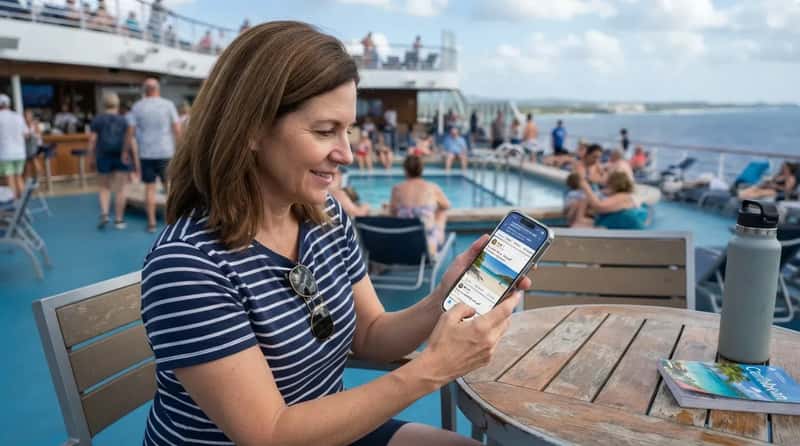
This is a mistake of omission that seasoned cruisers wish every first-timer knew about before boarding. It costs nothing, takes five minutes, and most new passengers never think to do it.
The advice from experienced travel writers is consistent: join a social media group for the cruise line and, if possible, the exact sailing. Facebook groups and Reddit communities are where fellow cruisers swap hotel tips, excursion reviews, and menu recommendations. Passengers on the same exact sailing often share insider details that no travel agent will mention.
#3 – Ignoring Cabin Location When Prone to Seasickness

New cruisers pick their cabin based on view, price, or deck number, almost never considering how it will actually feel once the ship is moving. This oversight quietly ruins more first cruises than people realize.
Health experts are direct about the fix: if you’re prone to seasickness, book a cabin in the middle of the ship on a low floor, where you’re less likely to feel the sway of the boat. A cabin at the front or back of a high deck can feel like riding a seesaw during rough seas, and first-timers who book based on the view alone sometimes spend their first two days feeling far worse than expected.
#2 – Being Late Getting Back From a Shore Excursion
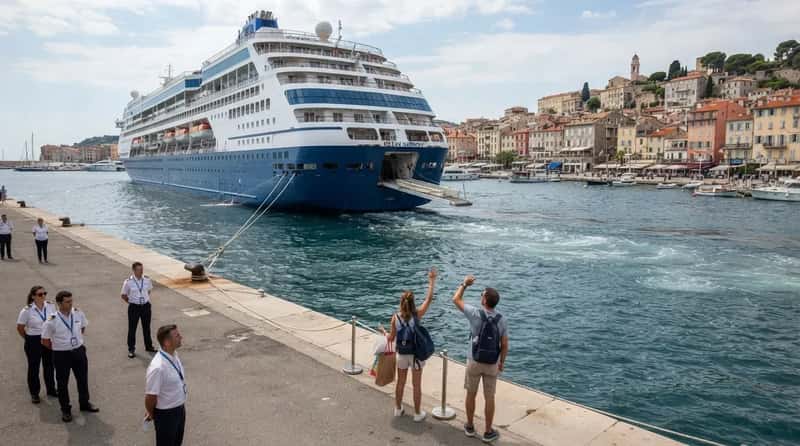
This is the mistake that turns a fun day off the ship into a genuine nightmare, and it happens more often than most people assume. Ships do not wait, no matter how good the excuse is.
Cruise ships run on strict timelines, boarding windows exist for a reason, and ships will not hold for late arrivals since it disrupts staff workflow and creates bottlenecks for every other passenger. First-timers who assume “the ship will hold for a few passengers” are dead wrong – the ship leaves on schedule, full stop. Being stranded in a foreign port with no luggage, no cabin, and no ship is a story every cruise director has watched unfold at least once.
#1 – Getting Too Close to Wildlife Despite Every Warning

This is the mistake seasoned expedition guides and captains genuinely never forget, because it’s the one with the most visible, permanent consequence. It usually starts the same way: someone wants a better photo than everyone else got.
Expedition cruising editor Roderick Eime learned this the hard way. Despite being warned by a guide not to touch any animals, he couldn’t resist a selfie near a “sleeping” crocodile. Even a supine crocodile can seem harmless, but they’re prone to sudden movement, and the beast’s last thrash brought its jaws down on his thumb. He nearly lost a finger for a single photo. The lesson every captain repeats: listen to the safety briefing, because the animal you’re posing next to isn’t actually asleep.
Every one of these mistakes shares the same thread: they seem small in the moment and turn into stories crew members repeat for years afterward. The line between an amateur mistake and an amazing vacation is usually just a few minutes of preparation – checking a packing list, joining a Facebook group, or simply listening during the muster drill. Most of these fixes cost nothing but attention.
Which one of these have you seen happen in real life? Drop it in the comments – we want to hear the story.