
Most people assume childhood summers have always looked basically the same – sunshine, no school, kids running around having fun. But the 1980s version of summer vacation was something so specific, so tactile, and so completely untethered from adult supervision that it almost defies description to anyone who wasn’t there. The moment that final school bell rang in June, an entire civilization sprang to life: bikes disappearing around corners, screen doors slamming, the distant sound of a sprinkler hitting the sidewalk. No tracking apps. No scheduled playdates. No one optimizing your time.
Some of these 25 moments you’ll remember with a grin so wide it surprises you. Others might hit somewhere deeper – a specific smell, a specific sound, a feeling you forgot you were still carrying. Either way, today’s kids are growing up in a genuinely different world, and these 25 summer joys are the proof.
#1 – The Simple Feeling That Summer Was Infinite
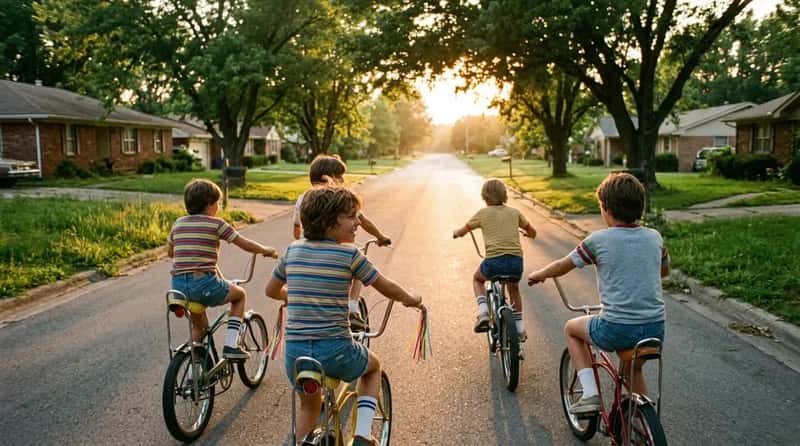
Every item on this list points back to this one. The deepest, most irreplaceable joy of a 1980s summer wasn’t any specific activity or toy or destination – it was the feeling that time itself was different during those months. Summer stretched out ahead of you like something that would never end. No countdowns, no packed schedules, no sense that every idle hour was being wasted. Just weeks and weeks of open, formless, completely yours time.
That sensation – summer as a limitless expanse belonging entirely to you – was a product of a specific era and a specific kind of freedom. A culture that had not yet decided every minute of a child’s life needed to be supervised, optimized, and documented. Kids today may have more comfort, more entertainment, and more options than any generation before them. What they don’t have is this: the bone-deep certainty, on a random Tuesday in July, that the whole summer still lay ahead and nothing was going to rush it.
#2 – Complete, Unstructured Boredom That Led to Something Amazing
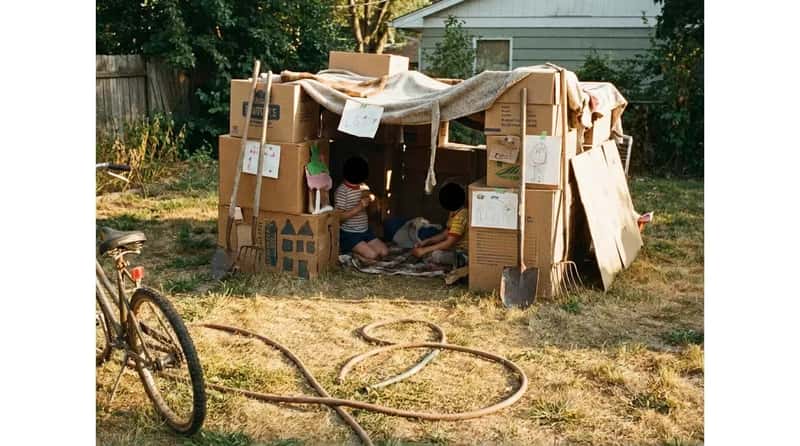
Here’s the thing nobody says out loud about 1980s summers: the boredom was real, and it was actually the point. When there was nothing to do and no one was going to entertain you, you eventually had to create something yourself. A neighborhood newspaper. A backyard obstacle course. A club with rules no adult would ever approve. The boredom wasn’t a problem to be solved – it was the engine that ran the whole summer.
Today, the moment a kid expresses boredom in 2025, an adult reflexively reaches for a screen or a scheduled activity. In the ’80s, boredom was a feature, not a bug. Most of what you needed for entertainment was right around you – a patch of grass, a cardboard box, maybe some watercolor paint and a terrible idea. The kids who grew up with that kind of unstructured time developed something quietly rare: the ability to entertain themselves from scratch. That skill is slowly disappearing, and most people haven’t noticed yet.
Fast Facts
- A University of Michigan study found the average American child today spends just 7 minutes a day in unstructured outdoor play – a 50% drop over one generation.
- In a survey of 800 U.S. mothers, 71% said they played outdoors every day as children – but only 26% said their own kids played outside daily.
- Only 6% of American children ages 9-13 now play outside unsupervised, according to reported research.
- Kids of the 1970s and ’80s routinely spent several hours outside after school on weekdays and all day on weekends.
#3 – Riding Your Bike to Literally Anywhere Without Telling Anyone
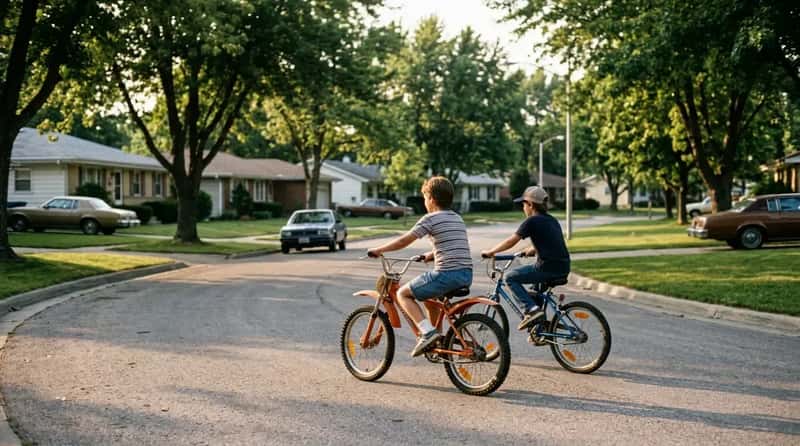
In the 1980s, a bicycle wasn’t just a toy – it was your entire transportation network. You’d be out all day, every day, until the streetlights came on. Nobody texted to check in. Nobody had a GPS tracker clipped to the handlebars. You just went, and everyone understood that’s how it worked. For a solid ten weeks a year, you roamed your little universe completely unwatched and completely free.
You more than likely stayed within a few blocks of your house – except on those legendary long-distance bike journeys to parts unknown, which felt like crossing continents. The only rule was simple: be home the moment the streetlights flickered on, and not a minute later. Today’s kids often have location sharing on their phones before they can ride without training wheels. The pure, anonymous freedom of the ’80s bike ride is genuinely, irrevocably gone.
#4 – The Slip ‘N Slide in Someone’s Front Yard
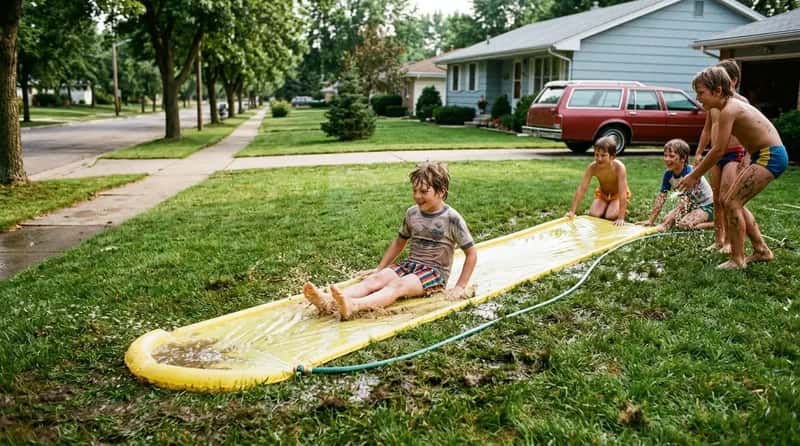
There was nothing quite like the sight of a yellow strip of plastic stretched across a neighbor’s lawn with a garden hose running along the side of it. It cost almost nothing, and the fun it delivered was completely outsized. The Slip ‘N Slide became a true institution of summertime – if you drove through any neighborhood on a hot afternoon in this era, you could count on seeing at least one group of kids launching themselves across a soaked lawn.
Once the hose had been running long enough, the grass beneath would slick down and kids could slide even farther – emerging coated in dirt, grass clippings, and pure satisfaction. Some enterprising kids added dish soap for extra momentum, which was either genius or a lawsuit waiting to happen, depending on your perspective. Try explaining to a modern child that the whole appeal was throwing yourself headfirst onto a strip of plastic in the front yard. They’ll look at you like you’ve lost it. They’re not entirely wrong.
#5 – Chasing the Ice Cream Truck Down the Street
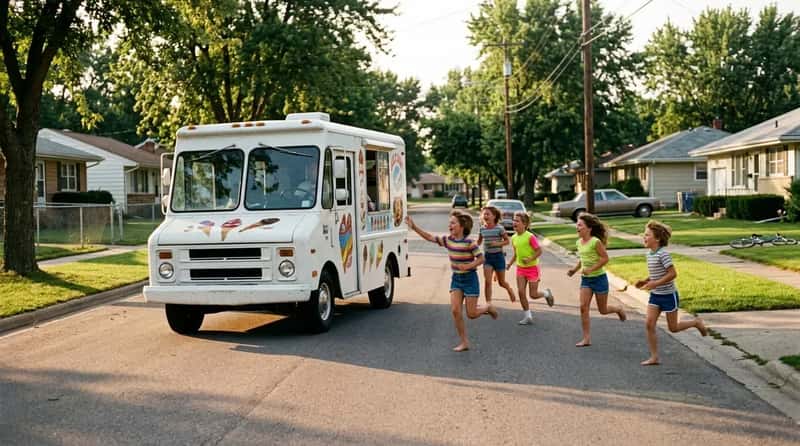
The second you heard that jingle drifting down the block, everything stopped. Whatever game you were playing, whatever argument you were having with your sibling – it all paused immediately. Kids grabbed whatever change they could find and ran, bare feet slapping the hot pavement, because missing the ice cream truck felt like a genuine tragedy. Whether it was a simple Creamsicle or an elaborate Screwball with the gumball at the bottom, the truck delivered something the freezer aisle never could: urgency.
Ice cream trucks still exist in some neighborhoods today, but they’ve never had the same cultural gravity they carried in the ’80s – when the truck’s arrival was basically a rolling neighborhood event that pulled every kid on the block outside at once. The line itself was a social gathering. You’d stand there in wet swimsuits comparing choices with kids you’d never otherwise talk to, united by the important work of spending 75 cents. That specific, joyful scramble is something no food delivery app will ever replicate.
#6 – Spending a Rainy Day at the Video Rental Store
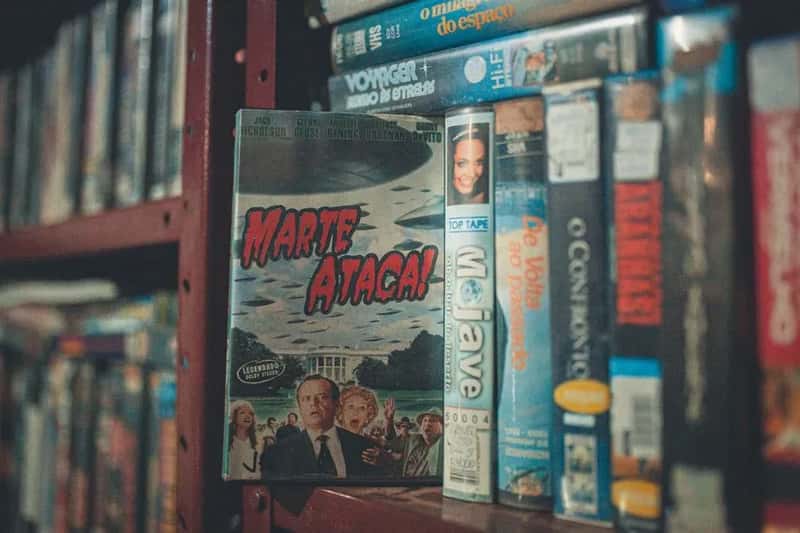
When summer rain wrecked your outdoor plans, there was exactly one correct response: pile into the family car and head to the video rental store. Stepping inside was its own experience – the low hum of the fluorescent lights, the faint smell of plastic VHS casings, the shelves lined with thousands of titles organized by hand. Browsing the aisles meant picking up boxes, studying the cover art, reading the back summary, and putting it down again. The decision alone could take 45 minutes.
Before video rental, you were at the mercy of whatever the three networks decided to air. Being able to actually choose a movie yourself – at the store, with your own hands – felt genuinely revolutionary. New releases came with their own drama: only a few copies existed, and if someone got there first, you were out of luck until next weekend. Streaming killed that ritual completely, and honestly, it took a specific kind of joy with it. The anticipation of choosing, the possibility of disappointment, the satisfaction of finding the last copy – that was the whole experience.
#7 – All-Day Public Pool Sessions With No Shade and No Regrets
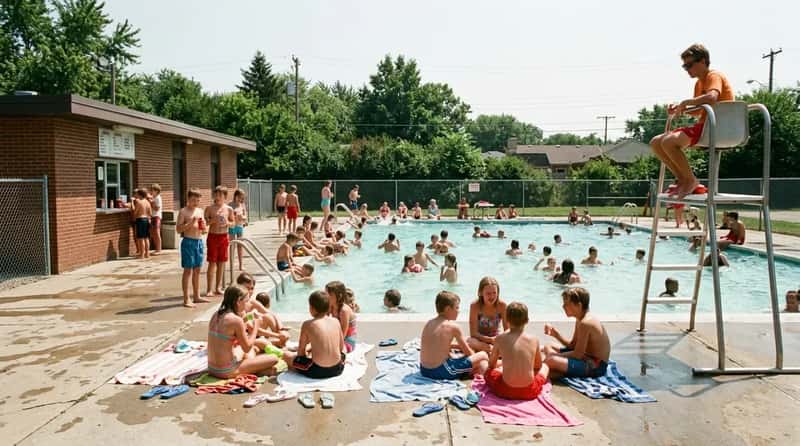
The public pool in the 1980s was its own fully functioning ecosystem. You showed up in the morning, you left when they closed, and whatever happened in between – sunburn, chlorine-bleached hair, a scraped knee on rough concrete – was just the cost of admission. Lifeguards were teenagers who were mostly trying to get a tan themselves. The concession stand sold things that would never pass muster in a modern school cafeteria. Nobody’s parent was there hovering nearby.
The public pool was also the undisputed social hub of the summer. Every kid in the neighborhood showed up, which meant it functioned as a daily reunion that required no planning. Some kids drenched themselves in Coppertone and lounged until they turned the color of a rotisserie chicken. Others played Marco Polo until someone nearly drowned from laughing. Today, pool visits come with SPF 70 spray sunscreen, scheduled pickup times, and an adult in eyeshot at all times. Safer, yes. The same thing? Absolutely not.
#8 – Recording Songs Off the Radio Onto Cassette Tape
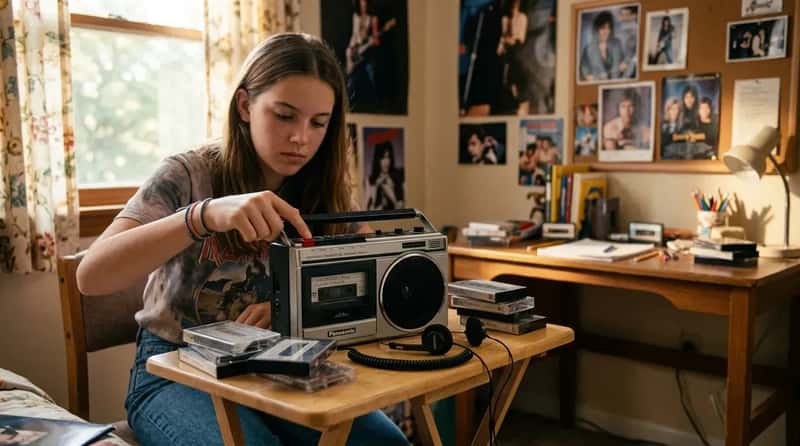
Before Spotify, before iTunes, before even Napster – if you wanted to own a song you loved, you sat next to a boombox with your finger hovering over the record button and you waited. You’d tune to the right station, listen through three songs you didn’t want, and then lunge when your song finally came on. The recording process required patience, timing, and a willingness to accept that the DJ would almost certainly talk over the intro.
The mixtape you assembled this way had genuine meaning because it cost you real time and real effort. You couldn’t drag and drop 40 songs in 30 seconds. Every track on that tape was earned. Today’s kids have access to more music than any generation in history, but they’ve never experienced the specific joy – and specific frustration – of waiting 45 minutes for a song to come back around on the radio, finger hovering, ready, only to have the DJ kill it at the last second. That particular agony was somehow perfect.
#9 – Saturday Morning Cartoons as a Sacred Ritual
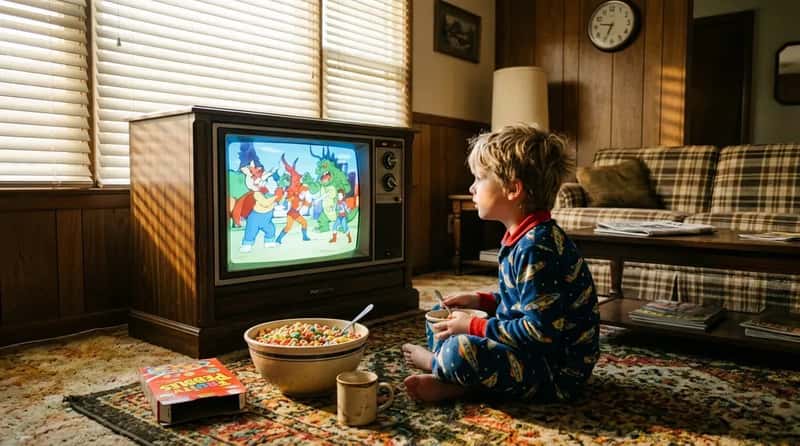
During summer vacation, Saturday morning wasn’t just a time of day – it was an institution. Pajama-clad kids would tiptoe downstairs while parents slept, carefully pour enormous bowls of sugary cereal, and park directly in front of the TV for hours. The cartoons ran for a specific block of time and when they ended, they were over until next Saturday. That scarcity made every single episode feel precious in a way that infinite on-demand streaming never can.
The ritual had a specific texture: the crunch of Cap’n Crunch, the tinny TV speakers, the way the morning light came in sideways through the living room blinds. You’d watch until Mom appeared in the doorway and told you to get outside, the screen door slamming behind you on your way out. On-demand streaming has given kids everything, everywhere, all the time – which sounds better on paper. But it completely destroyed the magic of a scheduled, communal, sugary-cereal morning tradition built around scarcity, anticipation, and zero adult input.
At a Glance: What Made Saturday Mornings Irreplaceable
- Scarcity: Miss an episode and you waited a full week – no rewind, no catch-up streaming
- Ritual: The same couch, the same cereal, the same block of programming every Saturday
- Zero parental oversight: Kids ran the whole show from tiptoe to screen door slam
- A shared national moment: Every kid in America watched the same shows on the same morning
- A hard end time: When the cartoons stopped, summer officially began for the day
#10 – Playing Outside Until the Streetlights Came On
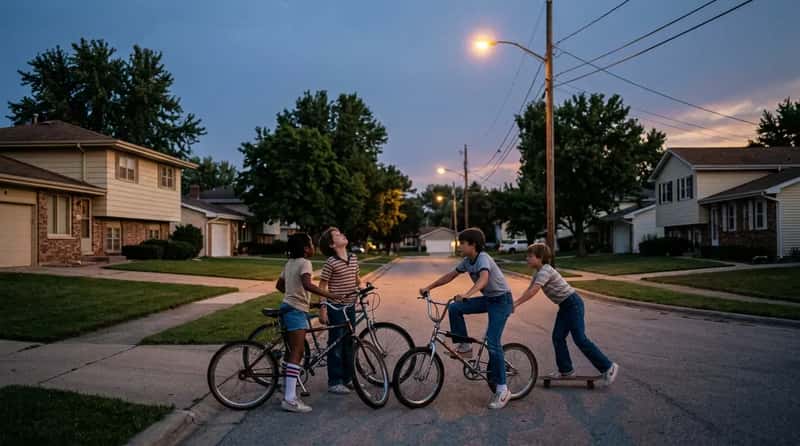
It sounds almost like folklore now, but for ’80s kids this was literally the law. The streetlights flickering on at dusk was the universal signal to get home – no exceptions, no negotiations, no texting to ask for five more minutes. Parents didn’t know exactly where you were, and that was fine. There was an entire informal system built around this single rule, and every kid in the neighborhood understood it without being told twice.
What made this so powerful was the freedom it created within those boundaries. Between breakfast and the streetlights, you were basically on your own recognizance. Today, children are rarely out of a parent’s sight for more than a few minutes, let alone an entire untracked day. The idea that a kid could vanish after breakfast and reappear at dusk – dirty, exhausted, and perfectly fine – now reads like a dispatch from a completely different civilization. Because in a very real sense, it is.
#11 – Backyard Camping With a Canvas Tent and a Flashlight
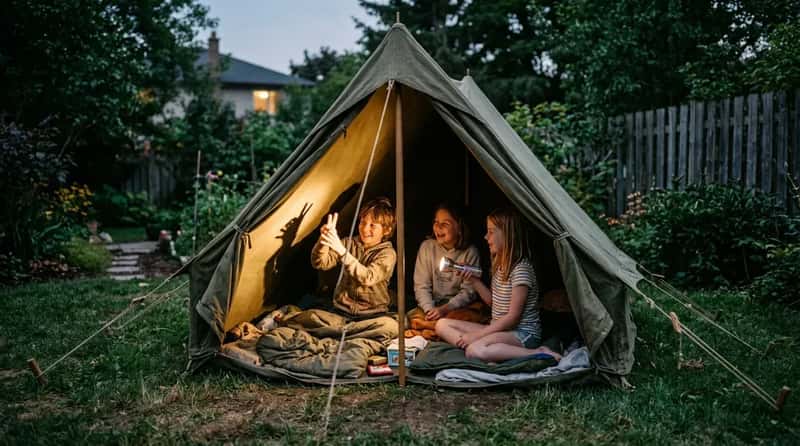
You didn’t need Yellowstone to feel like an adventurer in the 1980s. You just had to drag a canvas tent out of the garage and set it up in the backyard. The setup alone was half the adventure – tangled poles, missing stakes, that distinctive canvas smell that meant summer had officially arrived. Once it was up, you had your own territory: a flashlight, a ghost story getting increasingly outlandish, shadow puppets on the tent wall, and a sleeping bag that smelled like last year’s trip.
The magic of backyard camping was its perfect balance of adventure and safety – far enough from the house to feel like wilderness, close enough to run inside when the ghost story got too real. When sudden rain sent everyone scurrying in at midnight, those “failed” camping nights became the most retold stories in the family for decades. Today’s version often involves inflatable glamping pods, LED string lights, and a Bluetooth speaker. The scrappy, slightly chaotic, smells-like-canvas version from the ’80s had a soul those upgrades genuinely cannot buy.
#12 – The Roller Rink on a Friday Night
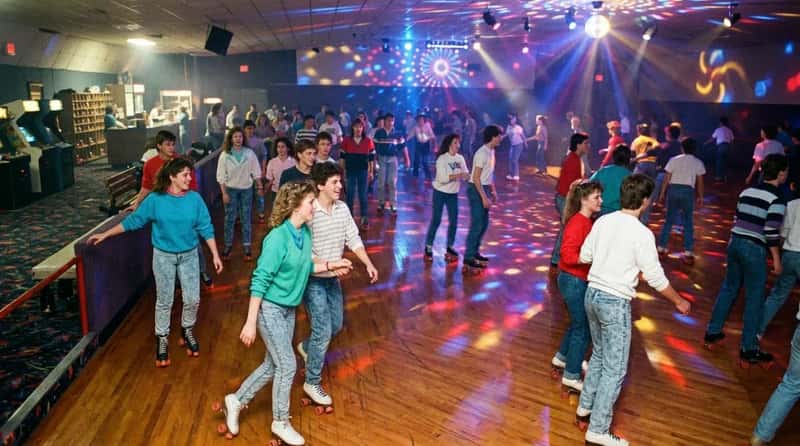
Friday night at the roller rink was the closest thing the 1980s had to a kid-run nightclub, and it was absolutely perfect. Disco lights flashing, the latest hits bouncing off the walls, the smell of rental skates and popcorn – it was a place where style and skill were showcased, friendships were cemented, and crushes were confessed in the half-dark during the couples skate. The exhilaration of gliding smoothly on four wheels, attempting a spin, and occasionally wiping out spectacularly in front of everyone you knew was entirely the point.
The roller rink was genuinely democratic. It didn’t matter if you were rich or broke, athletic or hopelessly uncoordinated – everyone was out there together, going fifteen miles an hour and trying not to die. Most roller rinks across America have since closed, converted to warehouses, furniture stores, or parking lots. The ones that survive are curiosities now, not institutions. Kids today socialize online. ’80s kids did it under a mirror ball, moving in circles, sweating through their Jordache jeans.
Worth Knowing
- The roller rink hit its cultural peak during the Roller Disco era of the late ’70s and into the ’80s, riding the disco wave straight into the next decade
- The number of U.S. roller skaters dropped from 19.8 million in 2006 to 11.5 million by 2017 as rinks continued closing
- Hundreds of rinks shuttered permanently during the COVID-19 pandemic, wiping out many beloved local institutions in a single year
- The rinks that remain today are largely nostalgia destinations – intentional outings, not the casual Friday-night default they once were
#13 – The Specific Joy of a Hand-Scrawled Lemonade Stand
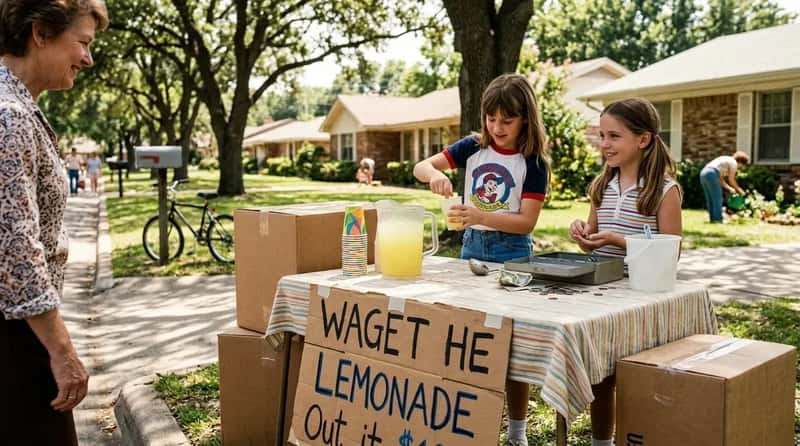
There was no app for this. No Square reader, no Venmo, no social media to promote your brand. Just a cardboard box, a pitcher of lemonade that was mostly sugar, a handwritten sign with very questionable spelling, and the complete confidence that this was going to make you rich. The whole enterprise was about independence, hustle, and the satisfaction of earning something yourself – even if you only cleared $1.75 before the ice melted and you drank the profits.
The lemonade stand also required a specific kind of neighborhood infrastructure that’s genuinely harder to find now. You needed foot traffic, neighbors who’d stop and chat, a community where a kid at a card table waving you down was totally normal and not alarming. That social fabric is thinner in many American neighborhoods today than it was in 1985. Some municipalities have since passed ordinances requiring permits for children’s lemonade stands. Try explaining that to an ’80s kid and watch their face.
#14 – Staying at the Mall All Day for No Particular Reason
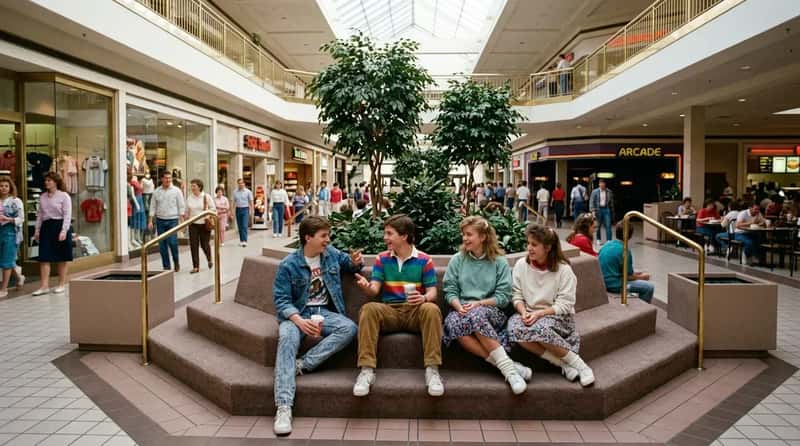
In the 1980s, the American mall was alive. Really, genuinely, vibrantly alive – a climate-controlled wonderland packed with people of all ages, an arcade that ate quarters, a food court serving things that had no business being called food, and the rare magic of running into everyone you knew from school in the same building. You could buy an airbrushed T-shirt, a puppy, and a lawnmower all within 200 feet of each other. It was a destination, not just a place to buy things.
If you were really lucky, your parents might drop you off with your allowance and a promise to pick you up in eight hours. Eight hours. At the mall. Alone or with friends. No check-ins, no worry, no helicopter parenting – just a ten-year-old wandering Spencer Gifts and Orange Julius for most of a summer day. American mall culture has been gutted by e-commerce for years, and the version that existed in the ’80s – packed, loud, social, unsupervised, and faintly ridiculous – is effectively extinct.
#15 – Getting a Sunburn You Hid From Your Mom

Sunscreen in the 1980s existed, technically – but it wasn’t exactly the priority it is today. The unofficial fragrance of summer was Hawaiian Tropic or Banana Boat, slathered on in optimistic quantities before immediately jumping into a pool and washing it all off. Baby oil by the pool was genuinely common. A sunburn was considered a rite of passage rather than a medical event requiring immediate intervention and a dermatologist follow-up.
Kids today have waterproof, sweat-proof, reef-safe sunscreen in spray bottles that their parents reapply every 90 minutes. Dermatologists everywhere are grateful that era is over, and they are correct. But there was something undeniably carefree about a summer where you treated every day like it was made to be spent entirely in the sun – and where a sunburn was just evidence that you’d done the day right. You’d come home pink-shouldered and slightly delirious, and absolutely no one made a federal case out of it.
#16 – The Drive-In Movie Theater
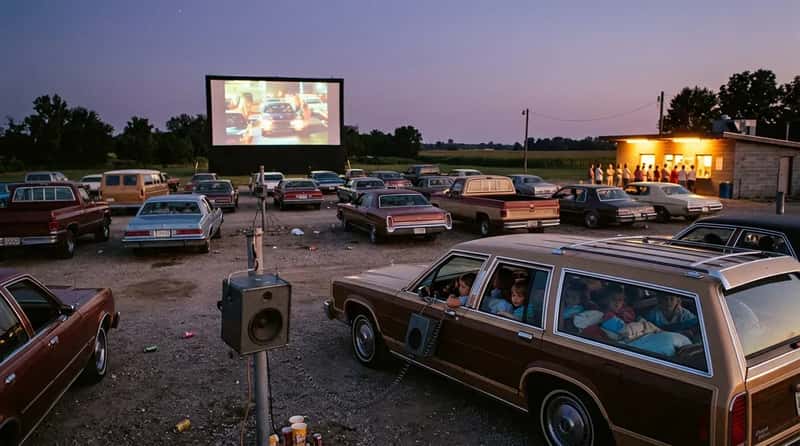
The drive-in movie was one of the most purely American summer experiences ever invented, and the 1980s were its last great era before land values and multiplexes finished it off. You loaded the station wagon with pillows, blankets, and contraband snacks from home, tuned the AM radio to the right frequency, and watched a movie under actual stars with your whole family packed into one vehicle. The tinny crackle of the window-hung speaker box was the sound of summer nights.
At their peak in the late 1950s, there were over 4,000 drive-in theaters across America, serving more than 20 million customers a year. By the time the ’80s ended, that number had collapsed dramatically – today, fewer than 300 remain in operation nationwide. The drive-in theaters that survive are nostalgic attractions – destinations you visit on purpose to feel something. They were never supposed to be a destination. They were supposed to be Tuesday night. Watching a movie in a parking lot, under stars, in your pajamas, eating food your mom packed in a paper bag – streaming has offered no replacement for that.
Quick Compare: Drive-In Then vs. Now
- Peak (late 1950s): 4,000+ drive-ins, 20+ million annual customers, Tuesday-night casual
- 1980s: Steady decline from rising land costs, VCR competition, and daylight saving time pushing start times near 10 p.m.
- Today: Fewer than 300 operating drive-ins in the entire U.S. – nostalgia trips, not neighborhood staples
- What’s gone: The window-mount speaker, pajamas in the back seat, and the sheer ordinariness of a movie under stars
#17 – Neighborhood Kickball Games That Organized Themselves
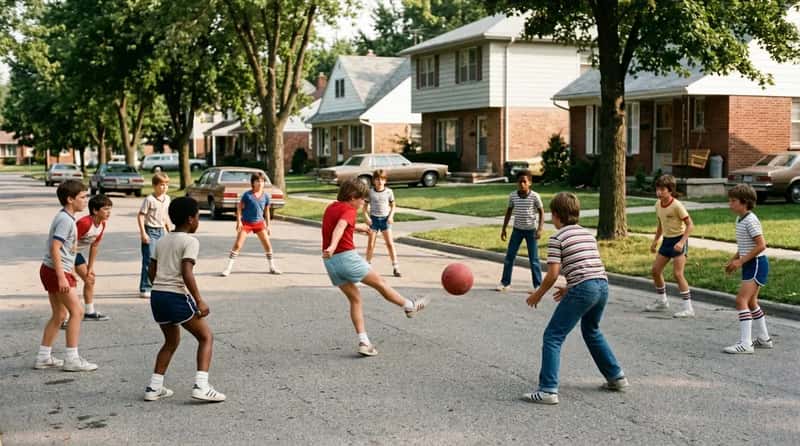
No adult called this meeting. Nobody’s parent sent a group text to coordinate teams and confirm attendance. On a summer afternoon in the 1980s, kids just materialized in the street and a game happened. Kickball, wiffle ball, hide and seek, ghost in the graveyard – it didn’t really matter what you played. What mattered was that it appeared out of nothing, organized by children, and ran entirely without adult input from start to finish.
The self-organizing neighborhood game required one specific ingredient: density. You needed enough kids within a two-block radius to field two teams, and a neighborhood where children simply went outside and found each other. That sounds like a completely alien concept in many American suburbs today, where after-school activities are scheduled weeks in advance and free-range outdoor play has become statistically rare. The spontaneous pickup game was a daily occurrence in the ’80s. Now it’s practically a special occasion when it happens at all.
#18 – Summer Reading Programs at the Actual Public Library
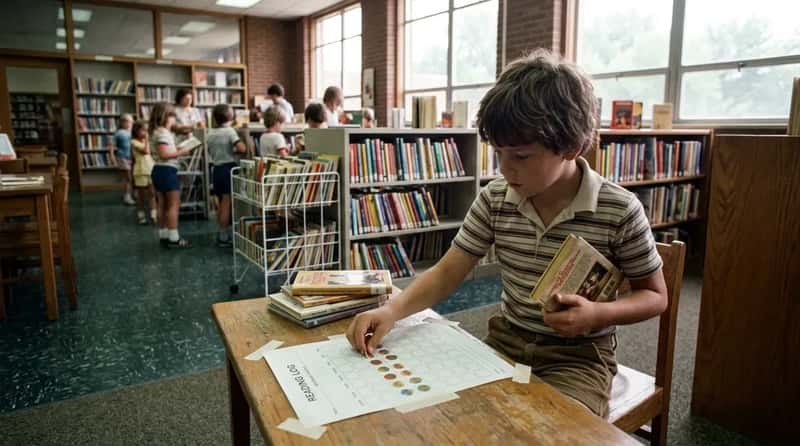
Before tablets, before e-readers, before the entire internet lived in your pocket, the public library was legitimately exciting summer territory. The summer reading program was a real event – you signed up, you got a paper chart, and every book you finished earned a sticker or a stamp. The goal was filling up that chart before August. It was gamification before anyone called it gamification, and it worked on kids who’d never willingly read a single page during the school year.
The library itself had a specific atmosphere no digital substitute has ever matched: the cool air, the particular silence, the smell of old paperbacks, the spinning wire rack of new releases near the door. Librarians knew the kids by name. You could spend two hours there just wandering, pulling books off shelves based purely on cover art, with zero algorithm steering you anywhere. That combination – freedom, quiet, the faint smell of aging paper, and a chart with blank spaces to fill – produced more lifelong readers than any app has managed since.
#19 – The Family Road Trip in a Station Wagon With No Air Conditioning
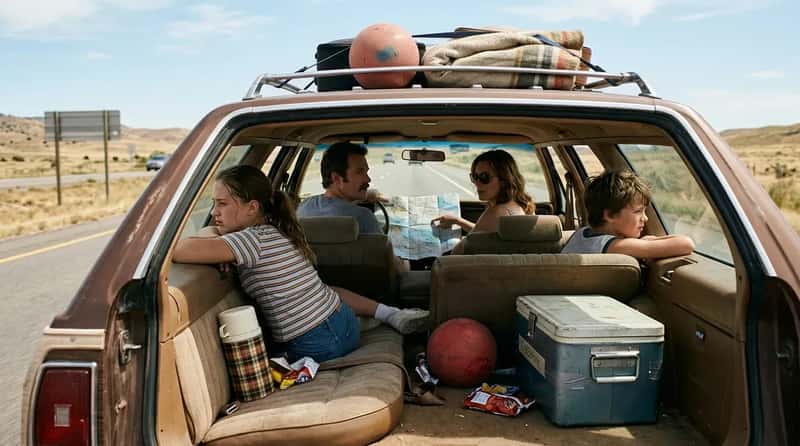
The 1980s family road trip was a feat of endurance dressed up as a vacation. Station wagons were the vehicle of choice – long, wood-paneled, equipped with a rear-facing back seat that looked directly out the tailgate window. No DVD players. No individual headphone jacks. Often, no working air conditioning. Just the open American highway, warm Kool-Aid in a Thermos, a paper map folded incorrectly on the dashboard, and four people discovering exactly how much they could tolerate each other.
Dad would load the wagon with the essentials: a checkered blanket with mysterious stains from summers past, a cooler heavy with soda cans, and sporting equipment in various states of deflation. The shared misery of a long drive without entertainment was, paradoxically, one of the most bonding experiences a family could have. You talked. You played license plate games. You drew an invisible line down the back seat and threatened consequences. Today’s minivans with built-in entertainment systems are infinitely more comfortable and approximately one-tenth as memorable.
#20 – The Bang Snap on the Hot Driveway
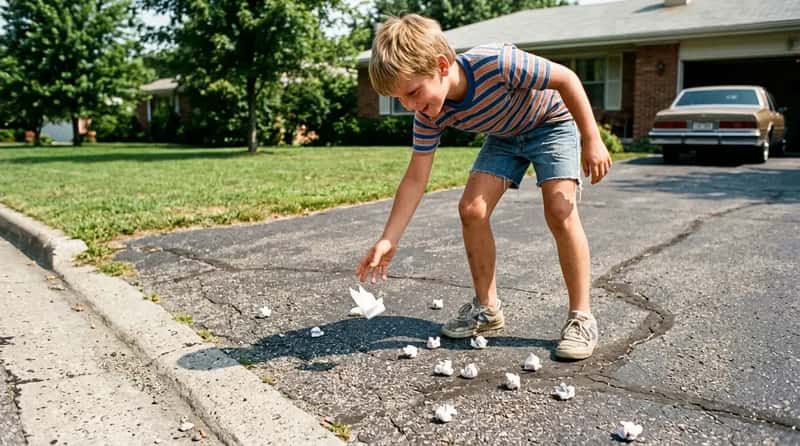
Bang Snaps – those tiny folded tissue paper pouches filled with gravel and a trace of silver fulminate – cost about 25 cents for a pack of fifty and were available at every gas station, corner store, and beach boardwalk in America. You threw them at the sidewalk, at the driveway, at the garage door, at your friend’s foot when they weren’t looking. The sharp little crack they made was the unofficial sound of a summer afternoon with nothing to do and nowhere to be.
That phrase – “nowhere to be” – is really the key to understanding the entire ’80s summer experience. There were whole days, entire stretches of July, where nothing was scheduled, nothing was expected, and nothing existed except finding your own entertainment with whatever you could buy for a quarter at the corner store. Bang Snaps were a perfect artifact of that era: cheap, loud, completely pointless, and absolutely wonderful. They still exist today – but a summer afternoon with nowhere to be doesn’t.
#21 – Beach Bonfires After Dark
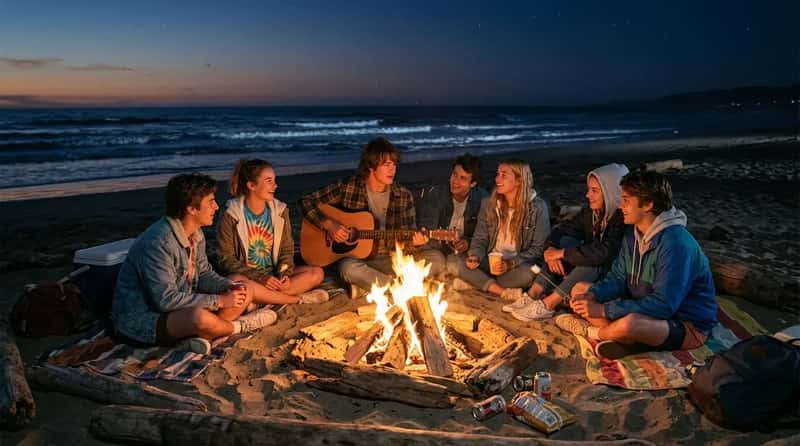
Nothing closed out a long summer beach day better than a bonfire after the sun went down. As the horizon went dark, friends gathered around the flames with whatever snacks survived the afternoon, somebody produced a guitar they could play approximately three chords on, and the night took over. The sound of waves, the smell of woodsmoke, the warmth of the fire against the cool beach air – it was the kind of evening that felt too good to be ordinary, even though it happened all summer long.
Many American beaches have since banned or heavily restricted open fires due to environmental regulations and fire codes – which are reasonable policies, but they’ve also effectively eliminated a ritual that defined summer for an entire generation. Sitting around a bonfire you built yourself, in the dark, with the ocean in front of you and sand in every crevice of your body, is an experience that no amount of curated outdoor content on a phone screen has come close to replacing. Some things require actual fire.
#22 – Running Through the Sprinkler in the Front Yard
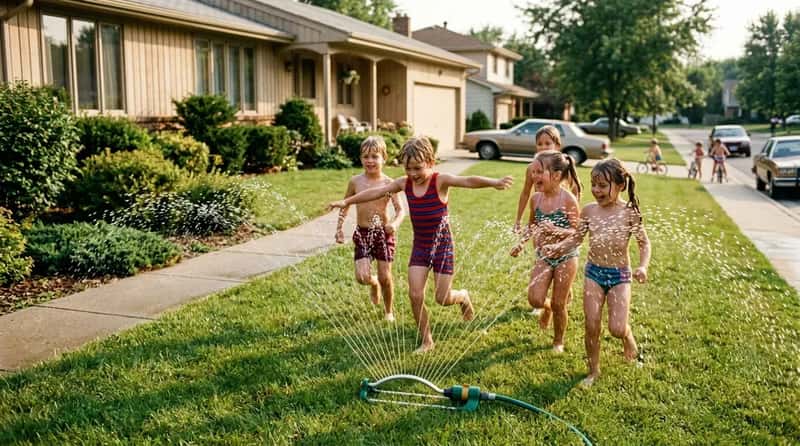
This cost exactly nothing and delivered more pure physical joy than most things money could buy. Set up the oscillating sprinkler on the front lawn, and within minutes, every kid within a two-block radius had materialized in your yard uninvited and completely welcome. Nobody organized it. Nobody sent invitations. The sprinkler was the invitation. You ran through it, you ran back, you ran through it again, and you left your swimsuit on for the rest of the afternoon because why would you ever take it off.
The sprinkler game also required a front yard, open lawns, and kids free to wander over without their parents arranging it first – all of which describe 1980s suburban America remarkably well and 2025 suburban America somewhat less so. The water balloon fight deserves a mention here too: bought in packs of 100 at the drugstore, took 45 minutes to fill, lasted approximately four minutes of actual combat, soaked everyone within a 15-foot radius. Absolutely worth it every single time. These were the economics of ’80s summer fun.
#23 – Making Homemade Popsicles From Kool-Aid
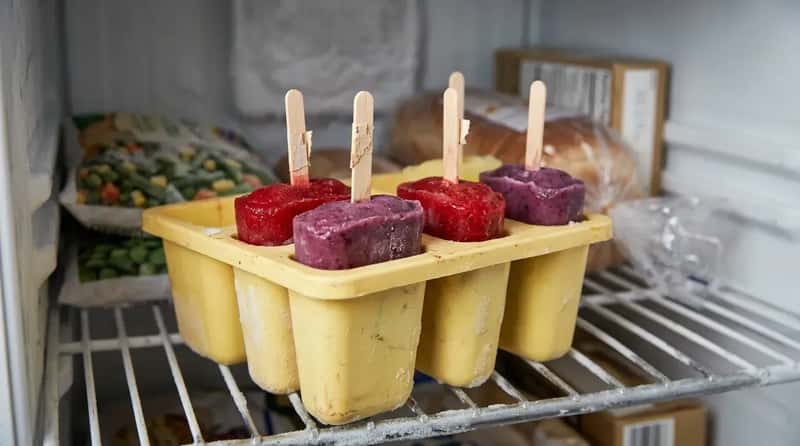
The Kool-Aid popsicle was a monument to summer resourcefulness. You mixed the powder, poured it into an ice cube tray or a set of cheap plastic molds, stuck toothpicks in the top, and waited. The waiting was the hardest part – checking the freezer every 20 minutes, willing them to solidify faster. The result was always slightly too sweet, always slightly too icy, and completely perfect on a 95-degree afternoon with nothing else on the agenda.
This joy is about more than frozen sugar water. It’s about making something yourself, with ingredients from the kitchen, following no recipe, with total freedom to experiment. Grape and cherry were standard. Cherry-lemon was for innovators. The kids who figured out you could layer two flavors in a single mold were considered neighborhood geniuses, and they deserved that recognition. Today’s kids have artisan ice pops from the farmers market. They are objectively fancier. They are not better, and deep down everyone who grew up in the ’80s knows it.
#24 – The Summer Blockbuster as a True Cultural Event
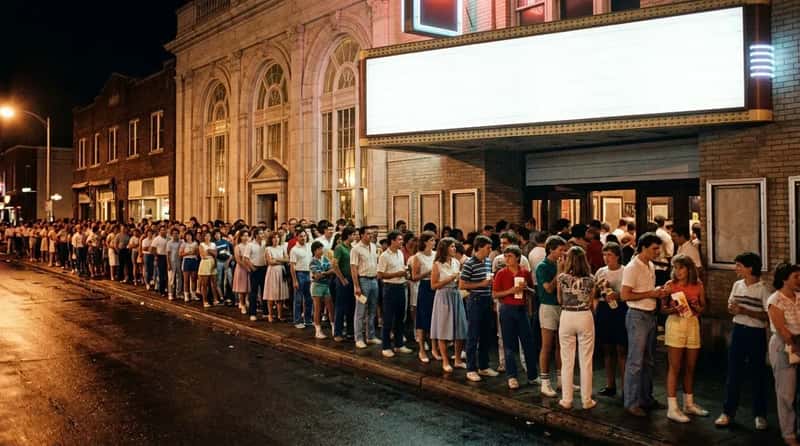
The summer movie in the 1980s was a different animal than anything that exists today. When E.T. came out in 1982, when Ghostbusters hit theaters in 1984 – sitting at number one for seven straight weeks – when Top Gun and Ferris Bueller’s Day Off arrived in 1986, those weren’t just movies. They were shared cultural experiences that the entire country processed together, roughly simultaneously. You lined up outside the theater. You talked about it with everyone you knew for the next two weeks straight.
There was no streaming release three weeks later. There was no way to watch it at home until it hit VHS months down the road – and by then, the shared cultural moment had already happened, and you’d either been part of it or you’d missed it. That scarcity gave ’80s summer movies a weight and significance they simply cannot carry in the streaming age. Today’s biggest films arrive and disappear into a vast algorithmic catalog almost immediately. The communal summer movie experience – the lines, the electricity, the talking about it for days after – is functionally extinct.
Why It Stands Out: The ’80s Summer Movie Difference
- Ghostbusters (1984) held the #1 box office spot for seven consecutive weeks – today’s films rarely last three
- Top Gun (1986) ran in theaters for 33 weeks on a $15 million budget, grossing $357 million worldwide
- No streaming, no VOD – the only way to see a new release was to physically show up, in line, at the theater
- VHS releases arrived months later, meaning the shared cultural conversation happened live or not at all
- Every summer delivered multiple films that became national talking points for the entire season
#25 – The Family Picnic at the Park With Metal Playground Equipment
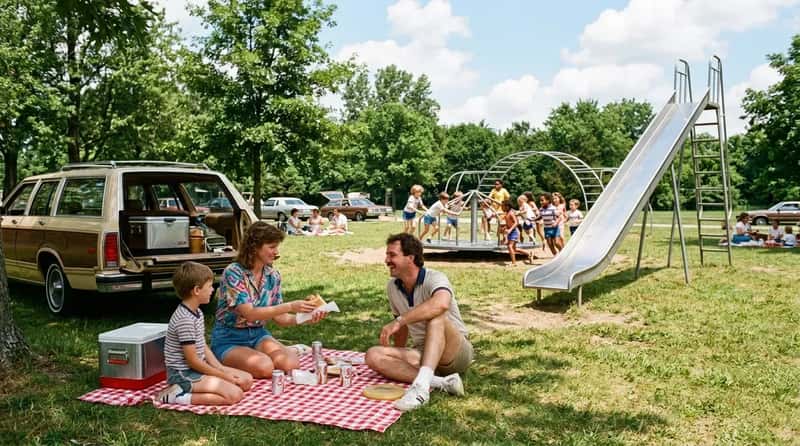
The family picnic in the 1980s was a full production with zero advance planning. Mom packed sandwiches in wax paper while Dad loaded the station wagon with a checkered blanket, a cooler full of soda cans, and a Frisbee that had been in the garage since 1977. Nobody booked a pavilion. You just showed up, found a spot, and spread out next to whatever other family had done the same thing with equally zero preparation.
After eating, kids scattered to the playground – and the playground was something else entirely. Metal slides that got so hot in direct sunlight they could brand you. Merry-go-rounds that a determined kid could spin fast enough to launch someone into the grass. Monkey bars set over concrete because rubber matting was for the future. Today’s rubberized, safety-certified, engineer-approved playground equipment is safer in every measurable way. It is also, somehow, about half as fun. The danger was part of it. The scar on your knee from that metal slide was a summer credential, and you wore it proudly.
None of these joys are coming back, and that’s not really the point. The point is that they happened – that for a specific window of time, American kids got to live a summer that felt genuinely limitless and completely their own. If even one of these sent you right back to a particular yard, a particular afternoon, a particular smell – then you already know that no algorithm, no app, and no carefully scheduled enrichment activity has ever managed to manufacture what those summers handed out for free.