Walk into a typical American kitchen from 1985 and you would not recognize it as the same room you cook in today. The countertops were tiled with grout lines running in every direction. The walls were covered in rooster wallpaper. A phone was bolted to the wall with a cord long enough to reach the living room. And sitting on its own rolling cart, humming like a small engine, was a microwave the size of a carry-on suitcase. Everything about that room radiated personality, maximalism, and a confidence that the post-1990 world quietly decided to sand down and paint white.
What makes it stranger is that none of this was considered quirky at the time. These were aspirational kitchens. Deliberate, fully committed, occasionally overwhelming statements about how American families wanted to live. Some of it aged beautifully. Some of it aged like leftovers forgotten at the back of a harvest-gold refrigerator. Here are 25 things about 1980s kitchens that would genuinely stop anyone born after 1990 in their tracks.
#25 – The Countertops Were Made of Ceramic Tile, Grout Lines and All
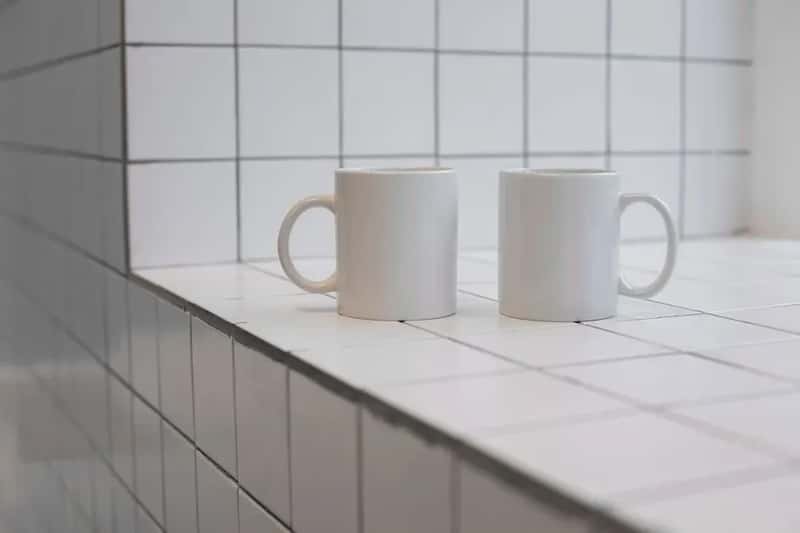
In the 1980s kitchen, a tiled countertop wasn’t a budget compromise – it was the aspirational choice. Ceramic tiles migrated from the backsplash across every inch of the prep surface, and homeowners showed them off like they were marble. If you’ve only ever known quartz, granite, or seamless laminate, the idea of chopping vegetables on a surface cross-hatched with grout lines is genuinely baffling.
Those grout lines collected everything: crumbs, tomato sauce, the memory of every meal ever made. The surface cracked under heavy impact and was notoriously uneven for actual cooking work. Yet for an entire decade, this was the kitchen upgrade people saved up for. The more elaborate the tile pattern, the better. The grout was just part of the deal.
Fast Facts
- Ceramic tile countertops were considered a premium upgrade, not a budget option, through most of the 1980s.
- Tiles migrated directly from the backsplash onto the full counter surface — a crossover move driven by the decade’s love of pattern and texture.
- Grout lines made the surface uneven and hard to clean, which designers now cite as a key reason the trend died out.
- The 1980s graphic tile trend has seen a modest revival on backsplashes, though full countertop tile has not returned.
#24 – The Wallpaper Went Everywhere – Including the Ceiling
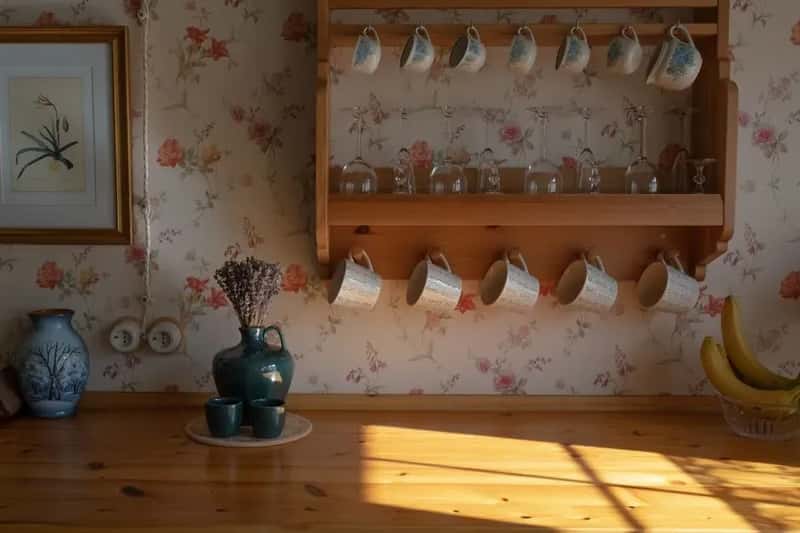
If there is one word that describes the 1980s kitchen, it is committed. Wallpaper wasn’t an accent – it was a full room treatment. Florals, roosters, fruit clusters, geometric repeats – if a pattern existed, someone found a way to paste it on every vertical surface in the cooking space and considered the job finished.
The exuberance didn’t stop at eye level. Wallpaper climbed onto the ceiling, wrapped around kitchen islands, and framed windows in complementary borders. Neon colors and bold prints were not a mistake. They were the point. Anyone raised in the era of clean white subway tile would walk into one of these kitchens and assume a visual emergency was in progress. The people who lived there would have no idea what you were talking about.
#23 – There Was a Telephone Mounted Directly on the Wall With Its Own Shelf
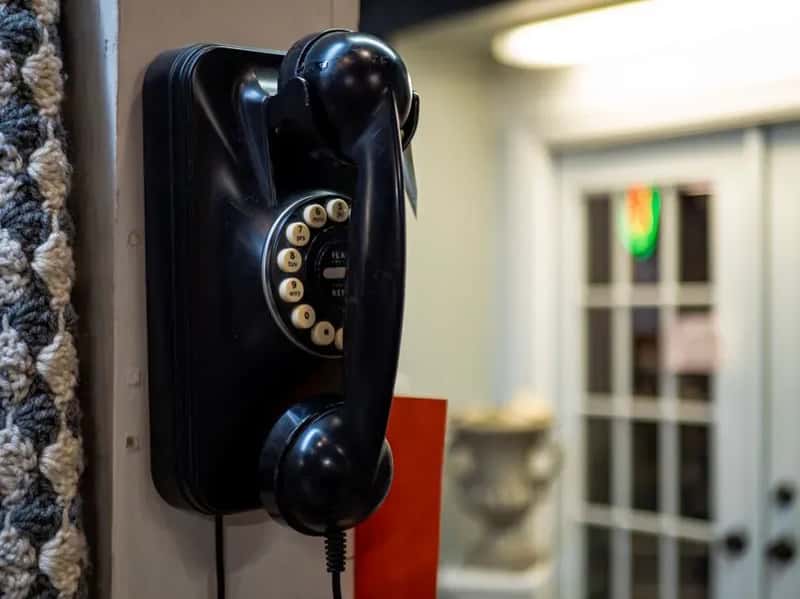
The kitchen phone wasn’t optional. It was the family’s communication command center, mounted right next to the cabinets with a small shelf underneath for phone books, notepads, and the occasional overdue bill. Bright corded models sometimes came with built-in chalkboard panels for messages. This was the original group chat.
The coiled cord stretched across the kitchen long enough to reach the table, the sink, sometimes the living room doorway. You stirred soup with one hand and held the receiver with the other, cord looped around your waist. Today’s generation conducts full video calls while cooking without thinking twice. Back then, you were tethered to one spot on the wall, and everyone in the family knew exactly who Mom was talking to by how long the cord had been stretched.
#22 – Appliances Came in Almond, Bisque, and Harvest Gold
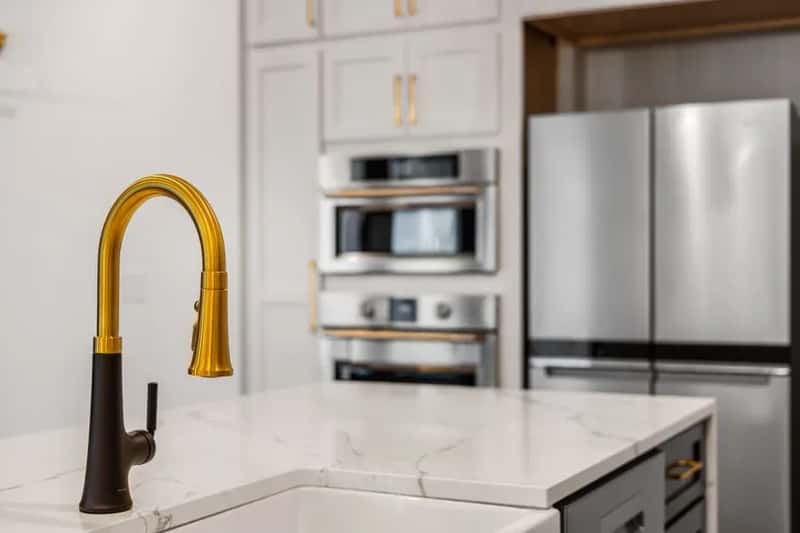
Stainless steel was basically nonexistent in 1980s home kitchens. Instead, every refrigerator, dishwasher, and range came in a coordinated palette of warm, creamy off-whites – almond, bisque, and the legendary Harvest Gold. These weren’t random color choices. They were the premium finishes that cost more and signaled a fully upgraded kitchen.
Harvest Gold had arrived in the late 1970s and refused to leave. By the mid-1980s, it had spread to every appliance category imaginable – ranges, dishwashers, mixing bowls, canisters, and Tupperware sets. The entire kitchen glowed the same warm golden hue, and that coordination was considered the height of elegance. Anyone renovating a house built between 1978 and 1988 has met Harvest Gold. Usually, they are not happy about it.
Quick Compare
- 1970s–mid-1980s: Harvest Gold, Avocado Green, Almond, and Bisque ruled the appliance aisle.
- Late 1980s–1990s: Stark white and black appliances replaced the earth tones as the new standard.
- 2000s–present: Stainless steel became the default finish for premium kitchens and has largely held that position since.
#21 – The Microwave Sat on Its Own Rolling Cart Like a Throne
The built-in microwave did not exist yet in most homes. What existed was a massive countertop unit – often larger than a modern toaster oven – that sat on its own dedicated wooden cart, usually on wheels, usually positioned wherever it could fit. It hummed. It clicked. It was the most impressive appliance in the room.
What started as an expensive appliance found only in restaurants slowly became affordable enough for suburban kitchens by the early 1980s, and families treated their acquisition like a milestone. That chrome-and-beige behemoth on a rolling cart wasn’t just a convenience. It was a status symbol. Guests noticed it. People pointed it out. The microwave had its own moment, and it took up a lot of counter space getting there.
#20 – Entire Cookbooks Were Dedicated to Cooking Full Meals in the Microwave
Publishers understood the moment. Microwave cookbooks sold in enormous numbers throughout the 1980s, framed not as shortcut guides but as genuine culinary frontiers. They introduced readers to the science of microwave cooking and offered complete dinner menus – including, without irony, microwaved roast beef with a special browning sauce to make the meat look more appetizing. This was real. People genuinely believed the microwave would replace the oven.
For a few years, the excitement held up. The cookbooks promised futuristic convenience and most households had at least one sitting in the kitchen drawer. Then people started eating the results. Dry chicken. Rubbery fish. Sad vegetables. The microwave cookbook era ended quietly, not with a declaration but with a slow return to the stovetop. Today’s generation uses a microwave to reheat leftovers and never thinks about it twice. In 1984, it was a culinary frontier with its own literature.
At a Glance: The Microwave’s Rocket Rise
- In 1971, fewer than 1% of U.S. households owned a microwave oven.
- By 1986, that number had jumped to roughly 25% — a surge driven by falling prices and dual-income households.
- Average household spending on microwaves peaked in 1984, then fell steadily as prices dropped.
- By 1997, over 90% of American households owned one — completing a journey from status symbol to standard appliance in under 20 years.
#19 – The Kitchen Had Its Own Built-In Intercom System

From the 1960s through the late 1990s, the intercom system was the signature feature of a well-appointed family home, and the kitchen was always its headquarters. A wall-mounted panel with speaker grilles and channel buttons let you buzz the garage, page the upstairs bedrooms, or announce dinner without leaving the stove. It felt like running mission control from a split-level ranch house.
Smartphones and wireless everything eventually made these systems irrelevant, and by the early 2000s, builders quietly stopped installing them. Anyone born after 1990 who encountered one of these panels in a grandparent’s kitchen probably spent several minutes pressing buttons and assuming it was some kind of security system. It wasn’t. It was just how you told your dad the food was ready.
#18 – Overhead Soffits Boxed In the Space Above Every Cabinet
The soffits were everywhere. Those boxy, drywalled ledges that filled the gap between the top of the upper cabinets and the ceiling were a defining architectural feature of 1980s suburban kitchens – and most people who lived with them never once questioned their existence. Builders used them to house ductwork, run wiring, or simply fill dead space, and homeowners decorated them accordingly.
The result was a kitchen where the ceiling felt lower, the room felt more enclosed, and the top of the cabinets disappeared into a drywall shelf that collected ceramic roosters, trailing ivy, and dusty wicker baskets. Removing soffits is now one of the first things renovation shows do to open up a dated kitchen. In the 1980s, you displayed your cookie jar collection on top of them and thought nothing of it.
#17 – The Floor Was Linoleum and It Was Proud of Every Pattern
This wasn’t the wood-look vinyl plank flooring that blends seamlessly into every room in a modern house. This was linoleum in full color – geometric repeats, checkerboard grids, bold florals, and abstract patterns in shades with names like colonial blue and harvest wheat. The kitchen floor was a design statement you noticed the moment you walked in.
Black-and-white checkerboard linoleum was particularly popular and showed up in kitchens across the country, from modest ranch homes to split-levels with cathedral ceilings. The idea that a floor should be visually interesting – that it should compete for your attention alongside the wallpaper and the pot rack – is completely foreign to anyone raised in the era of seamless gray LVP that disappears underfoot. In the 1980s kitchen, even the floor had something to say.
#16 – There Was a Trash Compactor Built Right Into the Cabinetry

Back when pre-packaged convenience foods were turning American households into high-volume trash producers, the built-in trash compactor emerged as the kitchen’s answer to the problem. Tucked between the base cabinets with a panel-ready door that matched the rest of the cabinetry, it compressed a family’s weekly garbage to roughly one-quarter of its original volume. For a brief and earnest period, this was considered a major selling point.
The trash compactor did exactly what it promised. It just turned out that nobody wanted to deal with the resulting brick of compacted, aromatic refuse any more than they wanted to deal with four separate bags. As recycling and composting grew through the 1990s, the compactor quietly disappeared from new kitchen designs. Today, you can still buy one – but walking past a row of modern kitchen showrooms and seeing a built-in trash compactor would feel like spotting a fax machine in a Tesla.
#15 – Honey Oak Cabinets Covered Every Single Wall in Amber
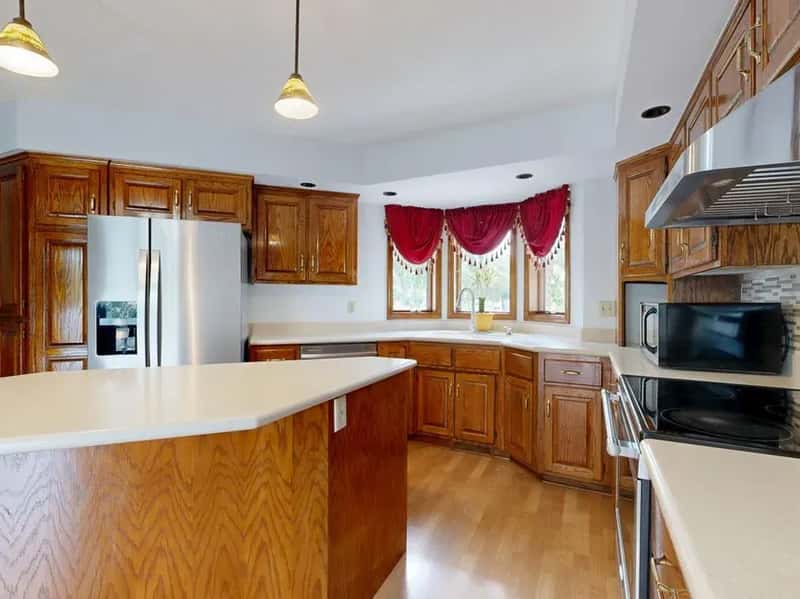
Honey oak – that warm, orange-tinged wood finish – was the dominant cabinet material of the decade, and it appeared in kitchens across every price range and every region of the country. Pair it with matching oak floors and wood-trimmed countertop edges, and you had a room where virtually every surface glowed the same amber tone from floor to ceiling.
For anyone who grew up after 1990 in a world of painted white Shaker cabinets, flat-front gray melamine, and two-toned kitchen designs, walking into a full honey-oak kitchen is a disorienting experience. Everything is the same color. Everything is wood. The room feels warm in a way that modern kitchens rarely do, though whether that warmth is comforting or claustrophobic depends entirely on how long you have to stay in there.
Worth Knowing
- Honey oak cabinets paired naturally with ceramic tile countertops because the square white tiles “complemented the proliferation of honey oak cabinetry” across the decade.
- The oak edge trim — a thick wood strip running along the front lip of laminate counters — was the signature detail of kitchens built between roughly 1978 and 1992.
- Removing or painting over honey oak is now one of the most-searched DIY kitchen updates in the U.S., signaling just how many of these kitchens are still out there.
- Warm wood tones are cycling back into fashion, though today’s versions are lighter, more varied, and far less orange than the originals.
#14 – A Greenhouse Window Jutted Out Over the Sink

The greenhouse window was a genuine 1980s architectural upgrade. Installed above the kitchen sink, this glass-sided, glass-topped bay extension jutted outward from the exterior wall, creating a small indoor shelf bathed in natural light. Homeowners filled them with herbs, succulents, trailing pothos, and small cacti. The person doing dishes always had something living to look at.
Today’s kitchens favor a flat window above the sink or no window at all. The greenhouse window required caulking, collected condensation, and occasionally sprouted something unintentionally in the corners – but it was considered a legitimate architectural feature worth calling out in a real estate listing. Anyone who encounters one today in a house they’re touring will either love it immediately or spend twenty minutes figuring out if it leaks. It probably leaks a little.
#13 – Pastel Colors Were Everywhere, Especially Mauve

The earthy browns and harvest tones of the 1970s gave way in the early 1980s to an entirely different color story. Soft blush pinks, mint greens, baby blues, and peach tones swept through American interior design, and kitchens were not spared. The 1980s pastel kitchen wasn’t timid – it was fully saturated in these soft shades, from wall color to tile grout to cabinet hardware.
Mauve – that dusty, pinkish-purple shade – was the decade’s signature kitchen color, and it showed up in forms that seem almost surreal in retrospect. Mauve accent tiles. Mauve barstool cushions. Mauve curtain valances with white ruffled edges. Mauve canisters on the counter next to the Harvest Gold toaster. If you have ever renovated a house built between 1983 and 1989, you have seen mauve. It was inescapable, and in its time, it was considered quietly sophisticated.
#12 – Track Lighting Was the Pinnacle of Modern Kitchen Design
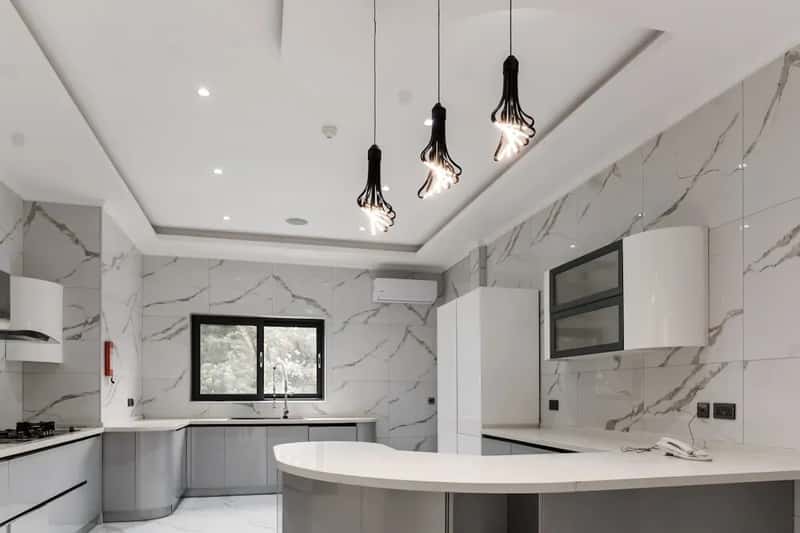
Long ceiling-mounted rails with adjustable spotlight heads weren’t the dated, forgotten relics they became in the 2000s. In the 1980s, track lighting above the kitchen island or countertops meant your space was contemporary. The flexibility to aim each head independently – toward the counter, the sink, the breakfast bar – felt genuinely innovative compared to the fluorescent box lights it was replacing.
The track lighting system also looked like something from the future, which mattered enormously to a decade obsessed with technology and progress. Domed pendant fixtures appeared over islands and peninsulas, but the track was the statement piece. Anyone raised after 1990 who grew up with recessed cans and pendant lights over an island would look at a track-lit 1980s kitchen and assume it was the lighting section of a hardware store. In 1985, it was the pinnacle.
#11 – The Walls Were Covered in Country Rooster and Fruit Decor – Seriously
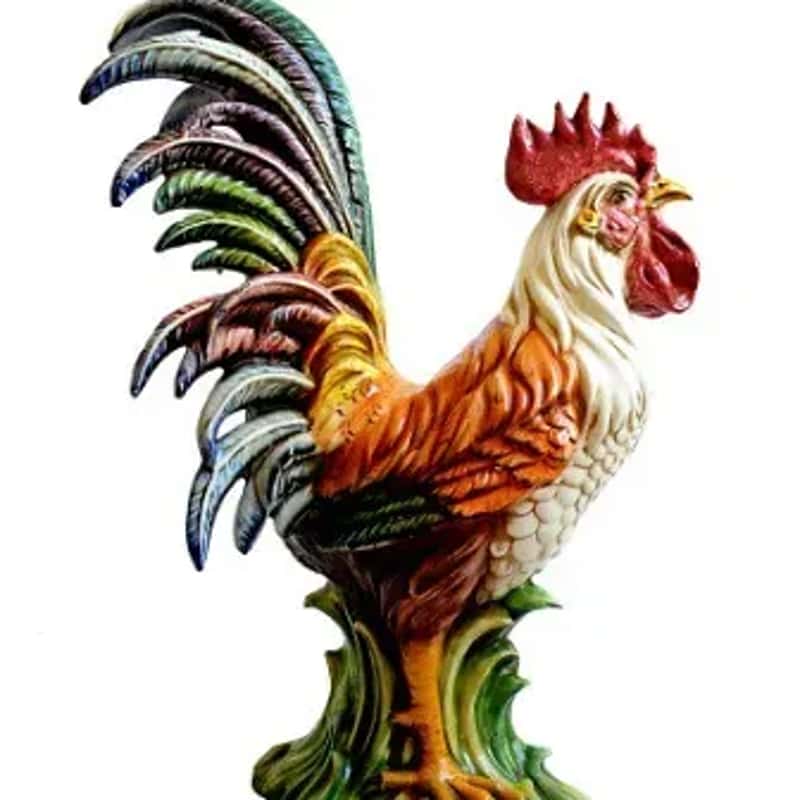
The rooster was the unofficial mascot of the American 1980s kitchen, and it appeared in every format imaginable. Ceramic rooster figurines. Rooster-print wallpaper. Framed rooster artwork. Rooster-shaped salt and pepper shakers. The country kitchen aesthetic was a full philosophical commitment, and the rooster was its standard bearer, flanked by fruit cluster prints, apple-motif canisters, and at least one cross-stitch that said something about home and cooking.
Anyone born after 1990 who spotted rooster decorations in a grandparent’s kitchen probably assumed it was a personal quirk – that Grandma just really liked roosters. She did not. Everyone liked roosters. Along with dried flower arrangements, decorative plates displayed above the cabinets, and ceramic canisters with hand-painted cherries, the rooster was a design choice that tens of millions of American households made simultaneously, without consulting each other. That’s the part that’s hardest to explain.
#10 – A Built-In Desk and Computer Nook Sat Right in the Kitchen Cabinetry
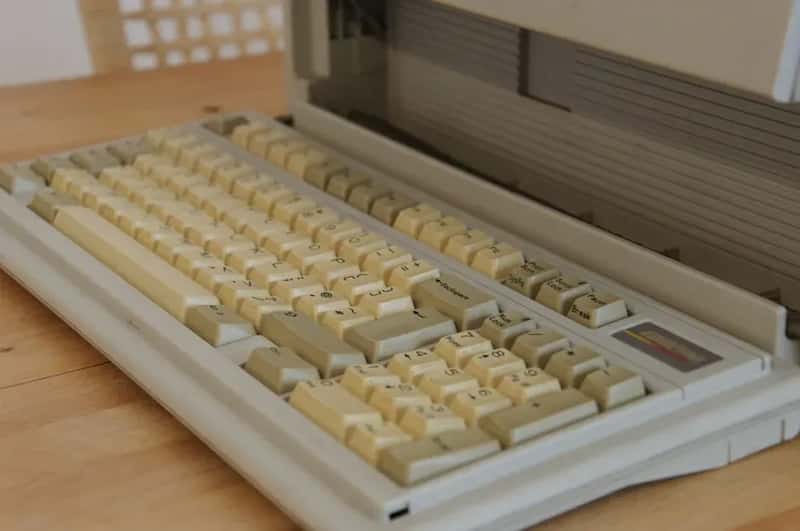
As home computers became more common in the late 1980s, kitchens – already the household’s operational center – absorbed a dedicated workspace. Builders started incorporating a small desk area directly into the kitchen cabinetry: a lowered counter section with a spot for a monitor, a drawer for floppy disks, and a shelf for software manuals and phone books. This was the original work-from-home setup, and it was bolted to the kitchen wall.
The idea was practical in a distinctly 1980s way. You could watch dinner cook, answer the wall phone, help with homework, and manage the household finances all from one fixed spot in the kitchen. Anyone born after 1990 works from a laptop anywhere in the house – or in a coffee shop three miles away. The concept of a dedicated computer nook built into the oak cabinetry, with a bulky CRT monitor and a dot-matrix printer on the shelf below, is the kind of thing that makes people stop mid-renovation and take a photo.
#9 – Faux Brick Panels Lined the Walls Beneath Breakfast Bars
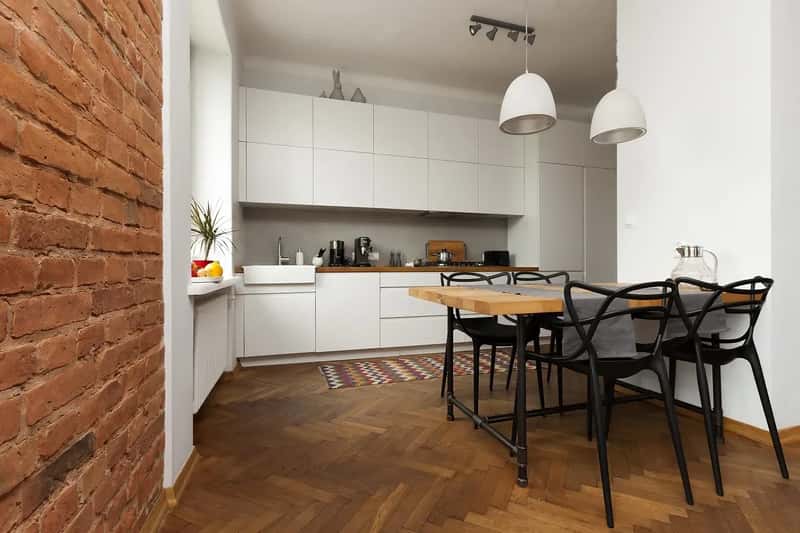
Brick-effect walls were a hallmark of 1980s home design, and the kitchen was prime territory for them. Instead of actual masonry, homeowners installed lightweight polyurethane panels or individual tiles that delivered the rustic look without the structural work. They appeared beneath breakfast bars, along kitchen peninsula walls, and on the lower half of walls below a chair rail – always in service of that warm, tavern-like coziness the decade craved.
The faux brick panel was not considered a cheap shortcut at the time. It was a deliberate design choice, and it was executed with pride. As minimalist interiors took hold in the 1990s, the look fell out of fashion almost overnight. Today, the closest equivalent is shiplap – same idea, different material, entirely different aesthetic. Anyone who stumbles across real faux brick paneling in a kitchen today usually assumes they’ve walked into a Pizza Hut that never renovated. They are closer to correct than they realize.
#8 – Tupperware Was a Social Event, Not a Storage Product

Tupperware wasn’t just in the 1980s kitchen – it was a social institution built around the kitchen. The containers came in coordinated color families: greens, golds, oranges, and earthy tones that matched the Harvest Gold aesthetic perfectly. Beyond basic food storage, the brand sold pitchers, domed serving trays, ice buckets, and stacking canister sets designed to be displayed on the counter, not hidden in a drawer.
The Tupperware party was how most of these products entered homes – not through a store, but through a neighbor’s kitchen, with a group of women gathered around a table to watch demonstrations and place orders. It was a genuine cultural institution with its own social rituals, complete with games and prizes. Today’s generation orders mismatched glass containers off Amazon alone, at midnight. The idea that buying food storage containers was once a hosted event, with refreshments, is one of those things that sounds made up until you realize your mother went to at least a dozen of them.
Fast Facts: Tupperware’s Peak Era
- Tupperware parties were the only way to buy the product from 1951 until 1988, when the company introduced its first catalog.
- Average sales per party were up 15% in 1985, reflecting the brand’s peak cultural grip on American kitchens.
- The party model grew into a global direct sales force of nearly 3 million consultants by 2019.
- Tupperware filed for Chapter 11 bankruptcy in September 2024 — a fitting end to a brand whose identity was inseparable from the kitchens of a specific era.
#7 – Decorative Columns Framed the Kitchen Entrance Like a Roman Villa
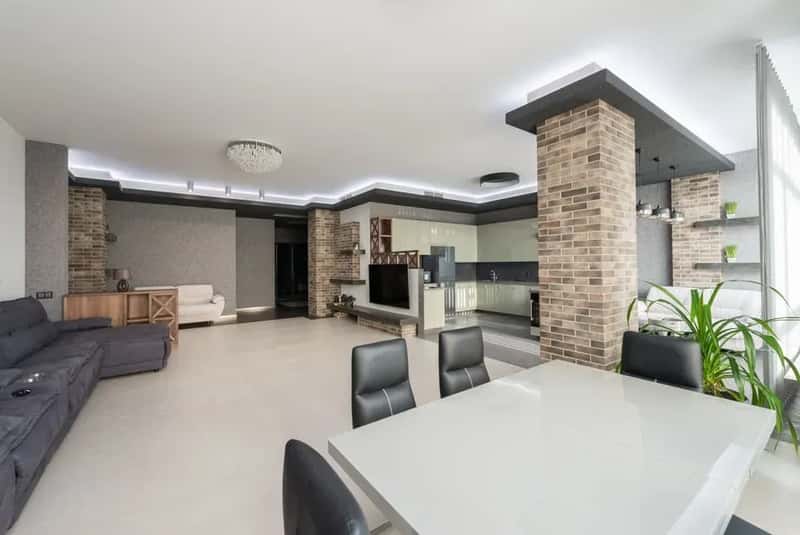
Classical columns – inspired by Greek and Roman architecture – showed up in the most unexpected places during the 1980s, and the kitchen entrance was one of them. Whether structural or purely ornamental, columns flanked open-plan kitchen doorways, framed transitions between the kitchen and the dining room, and occasionally appeared alongside a counter as a purely dramatic gesture. Often finished in faux marble or smooth plaster, they turned a ranch home entryway into something with genuine architectural swagger.
The 1980s had a complicated relationship with grandeur. It wanted classical elegance and suburban practicality in the same room, and the decorative column was one way to achieve that – or at least attempt it. A plaster column standing between a Harvest Gold dishwasher and a ceramic tile countertop is perhaps the most perfectly 1980s image imaginable. The column said old money. Everything around it said otherwise. Nobody cared. That contrast was entirely the point.
#6 – Pot Racks Hung From the Ceiling as a Statement of Serious Cooking
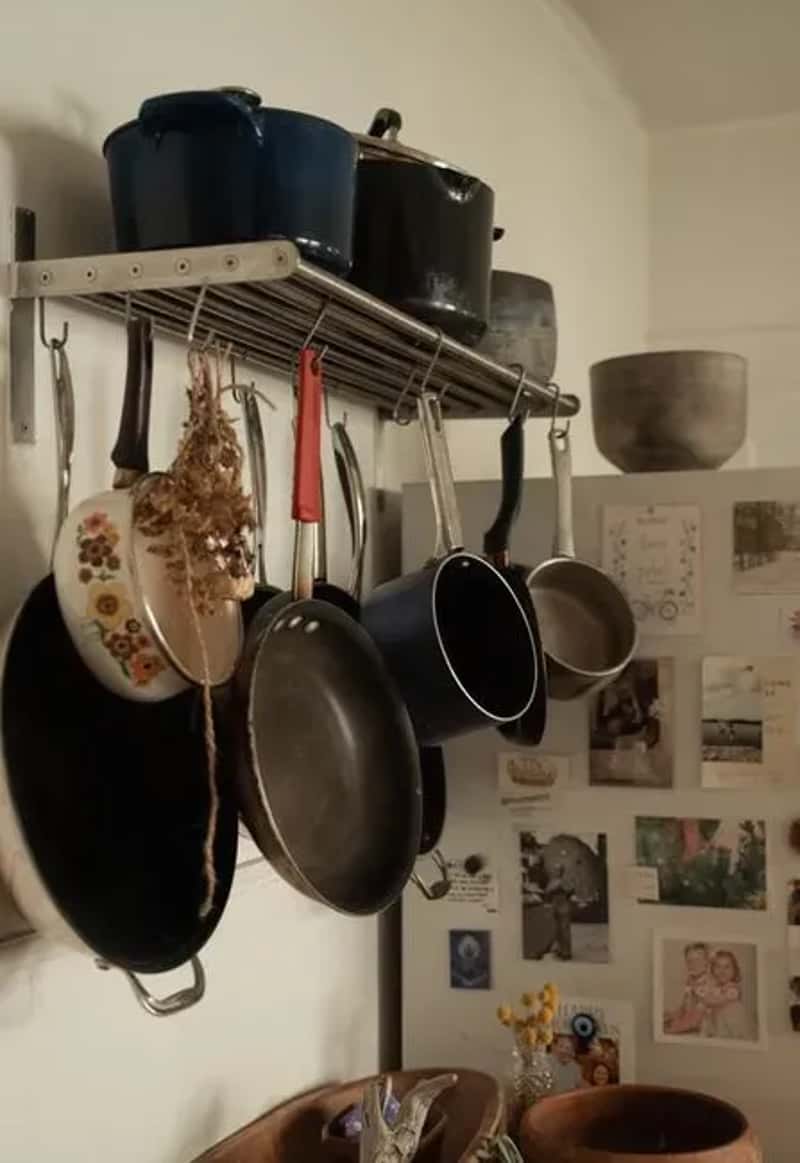
Ceiling-mounted pot racks weren’t a professional chef’s affectation in the 1980s – they were a mainstream design choice that appeared in ordinary suburban kitchens from coast to coast. Iron or brass rails hung above the island or the prep counter, laden with copper-bottomed pans, cast iron skillets, and stainless stockpots. If you had a pot rack, you were declaring, to anyone who entered, that this was a kitchen where cooking actually happened.
The pot rack represented the 1980s belief that your kitchen was worth showing off – that your cookware was décor in its own right. Today’s kitchen design philosophy hides everything behind cabinet doors and drawer inserts. The idea that your entire pan collection should dangle overhead like a metallic chandelier, catching light, collecting grease, and occasionally bonking a tall guest on the forehead, is a distinctly 1980s philosophy. It didn’t survive the decade, but it had a great run.
A messy kitchen is a happy kitchen, and this kitchen is delirious.
Unknown – printed on roughly 40,000 1980s kitchen plaques
#5 – The Appliance Garage Hid Small Appliances Behind a Roll-Top Tambour Door
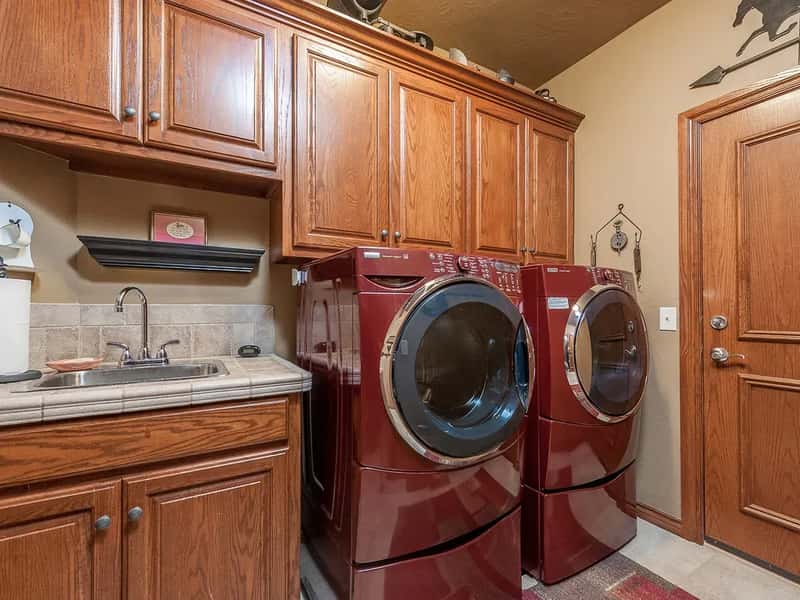
The appliance garage was the 1980s solution to a problem that has never gone away: too many countertop gadgets, not enough space. The solution was a roll-top tambour door – that slatted wooden mechanism that slid upward like a miniature roll-top desk – built directly into the oak cabinetry at counter level. Behind it lived the toaster, the stand mixer, the bread maker, and whatever else wouldn’t fit in the cabinet above.
What made it distinctly 1980s was the execution. The tambour mechanism required occasional lubrication, had a tendency to jam on cold mornings, and made a satisfying clatter when you flung it open to grab the coffee maker. Post-1990 kitchens simply leave the espresso machine on the counter and call it intentional. The appliance garage demanded effort, had its own small drama, and matched the oak cabinets perfectly. That drama is completely lost now, and some people genuinely miss it.
#4 – Laminate Counters Came in Speckled, Marbled, and Aggressively Patterned Finishes
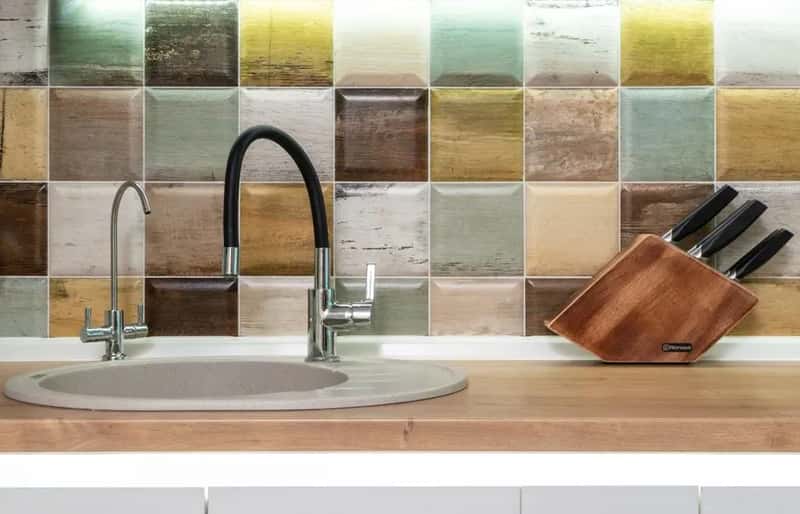
These weren’t the bland beige laminates of a rental apartment. The laminate countertops of the 1980s came in active, textured, deliberately patterned surfaces with names like Almond Fog, Bermuda Coral, and Spice Island Brown. Speckled finishes mimicked granite. Marbled finishes mimicked stone. Bold geometric patterns mimicked nothing found in nature and were completely unapologetic about it.
The detail that most reliably dates a laminate countertop to this era is the edge: a thick strip of wood – almost always matching the honey oak cabinets – ran along the entire front lip of the counter. That oak edge trim was the signature finish of an entire generation of American kitchens, and it appeared in virtually every middle-class home built between 1978 and 1992. Anyone renovating one of those homes today knows that oak edge strip on sight. It comes off first. Always.
#3 – Neon Accents and Memphis-Influenced Geometry Were Serious Interior Decor
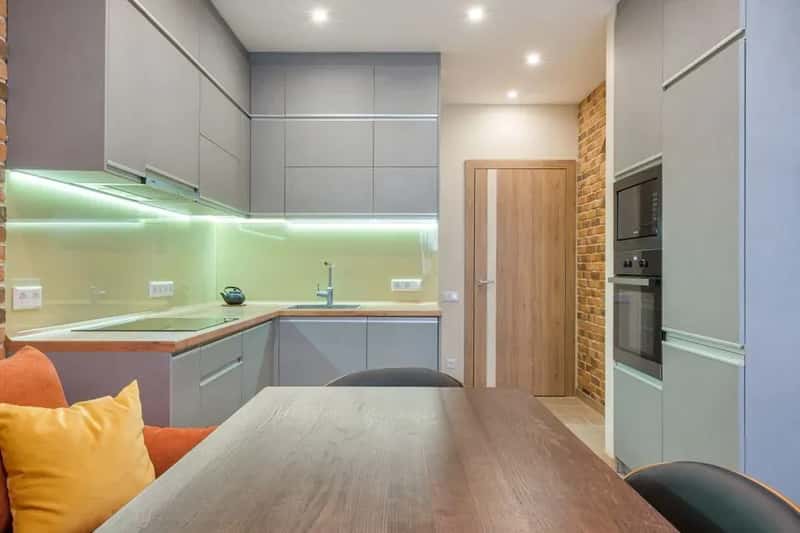
The Memphis design movement exploded onto the scene at the 1981 Salone del Mobile in Milan with clashing bright colors, bold geometric shapes, and patterns that seemed to deliberately violate every rule of tasteful restraint. In American kitchens, it translated to geometric backsplash tiles, brightly colored small appliances, and accent pieces in hot pink, electric blue, and lime green placed against black-and-white backgrounds for maximum visual impact. None of this was considered excessive. It was called vibrant.
Think hot pink bread bins sitting next to lime green canisters. Electric blue bar stools at a tiled breakfast bar. Bright geometric patterns on the backsplash running directly into a bold floral wallpaper border. The 1980s kitchen had no internal volume control, and Memphis gave it theoretical justification for turning everything up. For a decade, this was the leading edge of American domestic design. Then the 1990s arrived and turned everything beige, and the Memphis kitchen became something you only see in photos now – usually with the caption “my parents’ kitchen, circa 1987.”
Why It Stands Out: The Memphis Movement
- Founded in Milan by designer Ettore Sottsass, the Memphis Group debuted at the 1981 Salone del Mobile and was active through 1988.
- The movement deliberately mixed cheap plastic laminate with hardwood and brass — reframing “low” materials as bold design statements.
- Memphis was described as “a shotgun wedding between Bauhaus and Fisher-Price” — critics hated it, but it defined the visual language of an entire decade anyway.
- By the mid-1980s, the style had escaped galleries and appeared in shopping malls, fast-food interiors, TV sets — and suburban kitchens across America.
- Works from the Memphis Group are now held in the Art Institute of Chicago, the Design Museum in London, and MoMA in New York.
#2 – The Two-Tone Color Scheme Was Carried Through Absolutely Every Single Element
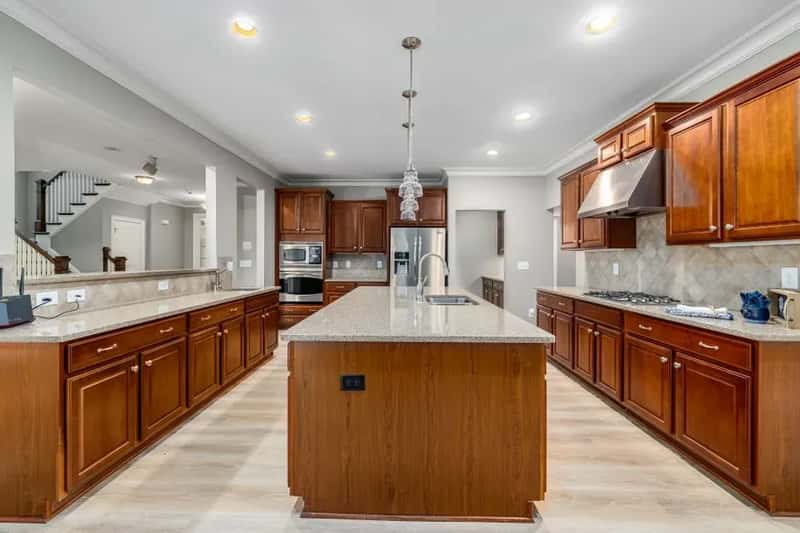
The 1980s kitchen didn’t do accent colors. It did total commitment. If the color scheme was blue and white, it appeared on the tiles, in the grout, on the floral curtains, in the painted ceiling beams, on the decorative plates above the cabinets, and in the border of the wallpaper. Every surface locked into the same two-color story, and the room became a fully coordinated environment that felt curated in a way modern kitchens rarely achieve – for better or worse.
The decade had three distinct camps: the brown-and-earth-tone kitchens still echoing the 1970s, the explosive neon and geometric kitchens riding the Memphis wave, and the country-style white kitchens with bold color pops carried through every accessory. The style varied enormously. The philosophy did not. Pick a scheme, commit completely, and leave no surface unreflective of the choice. Restraint was simply not part of the conversation, and honestly, that total commitment is the thing modern kitchens – for all their elegance – have never quite replicated.
#1 – The Kitchen Was Designed to Be the True Center of the Home – and It Showed
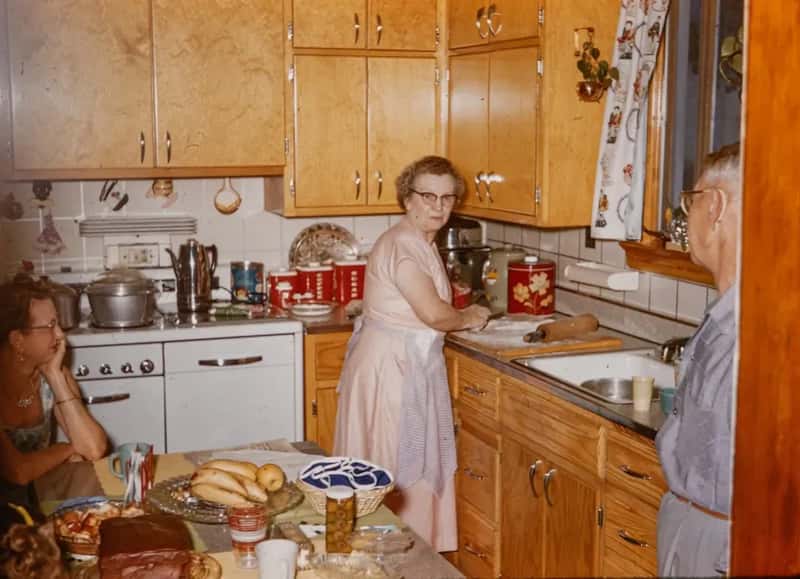
The phone was on the wall. The computer was in the corner. The kids did homework at the kitchen table. The pot rack hung overhead. Guests gathered around the tiled island while dinner cooked and something beeped in the microwave. The 1980s kitchen wasn’t just a room for cooking – it was the operational headquarters of the household, and every design decision made over the decade reflected that understanding.
Post-1990 kitchens are cleaner, sleeker, more expensive, and significantly quieter in terms of visual noise. The wallpaper is gone. The roosters are gone. The tambour door and the soffits and the greenhouse window and the Harvest Gold dishwasher are all gone. But something else went with them – that quality of a room that looked genuinely, unapologetically lived in. The 1980s kitchen didn’t pretend to be a showroom. It was too busy being the center of everything that mattered.
The 1980s kitchen wasn’t confused about what it was. It was loud, layered, and completely unapologetic. Tiled counters, mauve accents, a rooster on the wall, a microwave on a cart, and a phone cord long enough to reach the den – these weren’t design mistakes. They were choices. Confident, era-defining choices that anyone who grew up in that era remembers with either deep nostalgia or the mild horror of someone who just realized the grout still needs cleaning. Which of these did your family’s kitchen have?