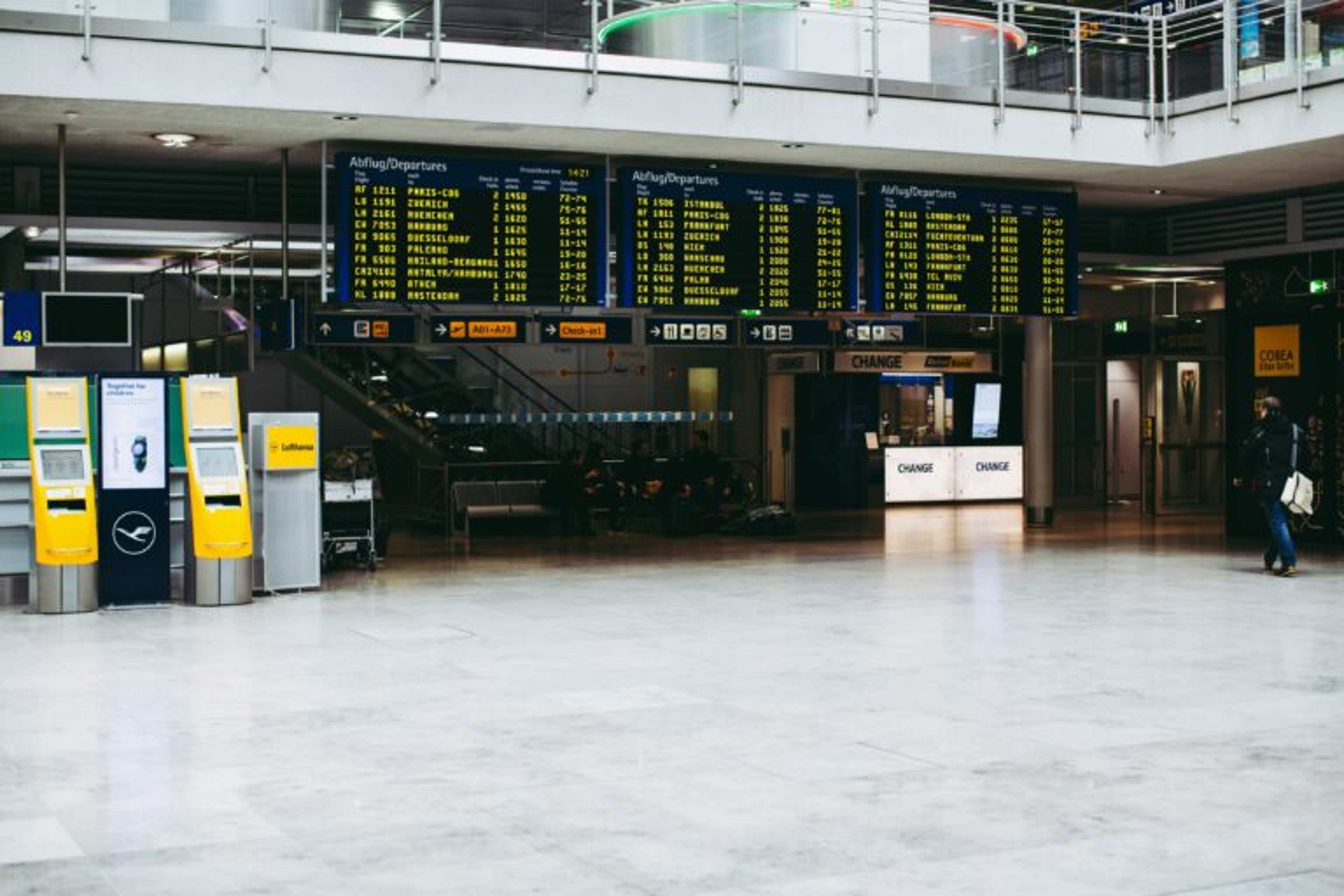
You’ve seen it a hundred times: someone frantically yanking off their shoes, snapping at a TSA officer, or trying to sweet-talk their way to the front of the line, convinced they’ve found the secret shortcut. Here’s the uncomfortable truth – most of these “hacks” don’t shave a single second off your wait. In fact, plenty of them make the line behind you move slower.
Airport security has changed more in the last eighteen months than in the previous fifteen years combined, and most travelers haven’t caught up. That gap between what people think works and what actually works is exactly where the delays happen. Here’s what TSA officers, checkpoint data, and recent policy changes actually say – and it’s probably not what you’re doing right now.
#25 – Yanking Your Shoes Off Before Anyone Even Asks
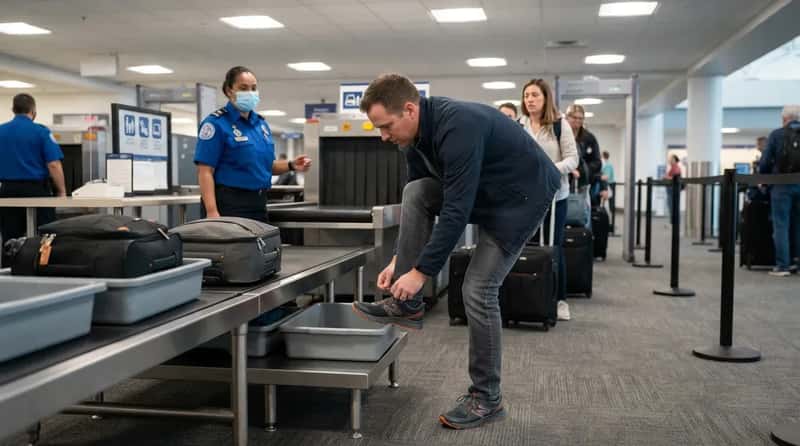
Old habits die hard, and this one is costing people real time at the belt. Travelers no longer need to remove their shoes at TSA checkpoints under the agency’s updated screening rules, a shift that now applies far more broadly than most flyers realize.
Bending down to untie sneakers “just in case” doesn’t earn you points for caution. It adds an extra bin, an extra bag to reload, and one more body blocking the belt for everyone stacking up behind you.
Fast Facts
- The shoes-off mandate officially ended nationwide on July 8, 2025, closing out a policy that had run in some form since 2006.
- Before the change, only PreCheck members, kids 12 and under, and travelers 75 and older were already allowed to keep footwear on.
- Officers can still flag an individual traveler for a shoe check if a scanner picks up something unusual, so the rule isn’t a total free pass.
#24 – Trying to Beat the System With a Screenshotted Boarding Pass
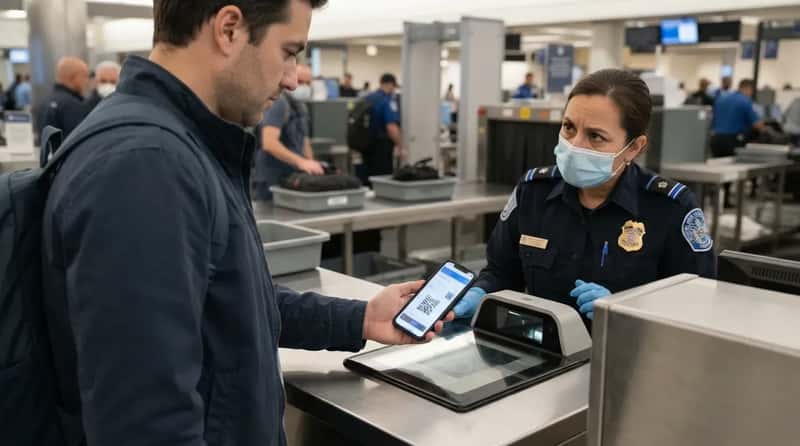
Some travelers think a manipulated or printed-at-home boarding pass gets them waved through faster, since agents supposedly can’t check anything in real time.
That’s a myth with a dangerous edge. It’s actually been fairly easy to slip a fake boarding pass through a checkpoint, because officers simply don’t have time to verify your flight, run a background check, or confirm your record on the spot. It doesn’t speed you up – it just gambles that nothing else about you draws a second look.
#23 – Snapping “Do I Look Like a Terrorist?” at the Officer
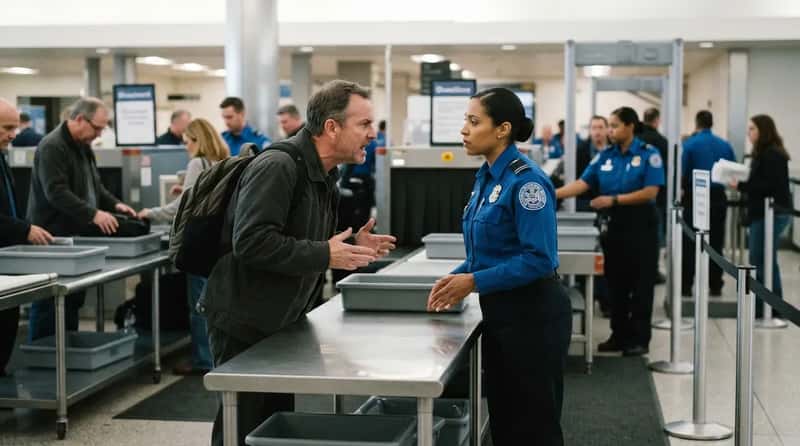
Getting defensive with a TSA officer feels satisfying in the moment, but it guarantees nothing except a longer conversation.
Officers say this reaction is one of the most common misunderstandings at the checkpoint. One supervisory officer described being asked exactly that question during additional screening, pointing out that a threat could look like anyone at all. Arguing doesn’t clear you faster – it just extends the exact interaction you were trying to avoid.
#22 – Dumping Your Whole Pockets Straight Into Your Carry-On
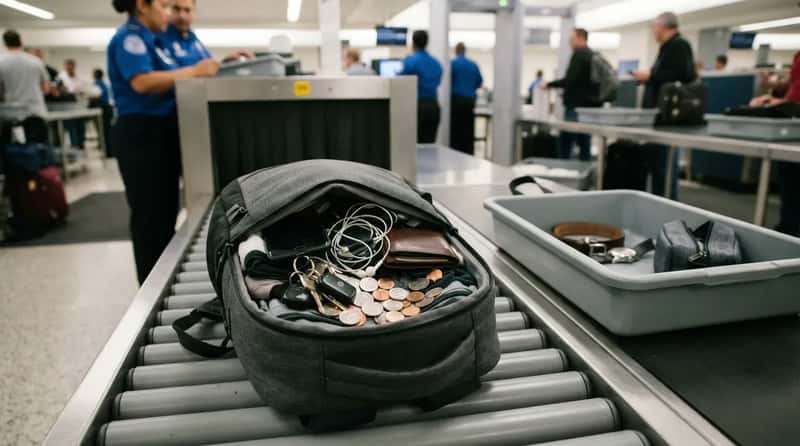
Shoving keys, phones, and loose change into your backpack instead of a bin feels efficient, but it often backfires at the X-ray belt.
Screening machines flag bags based on what’s actually inside them, not luck of the draw. There’s nothing random about it – your bag gets a closer look based solely on its contents. A jumble of metal and electronics buried in a backpack is far more likely to trigger a manual search than the same items sorted neatly into a bin.
#21 – Wearing Every Layer You Own Through the Metal Detector
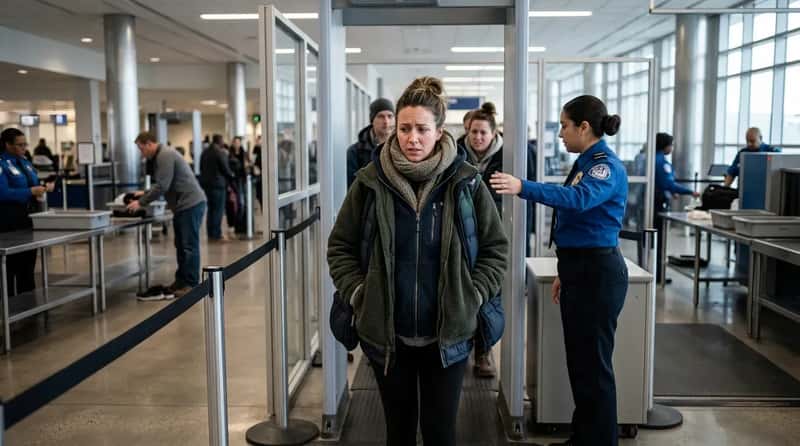
Scarves, vests, hoodies, and jackets all layered on at once might feel like a smart way to save luggage space, but at the checkpoint it’s a guaranteed alarm trigger.
Each extra layer is another chance for a zipper, snap, or underwire to set off the detector, sending you straight into a pat-down queue. Stripping down to fewer layers before you even reach the belt is the real time-saver, not piling everything on and hoping for the best.
#20 – Treating the MyTSA App Wait Time Like a Guarantee
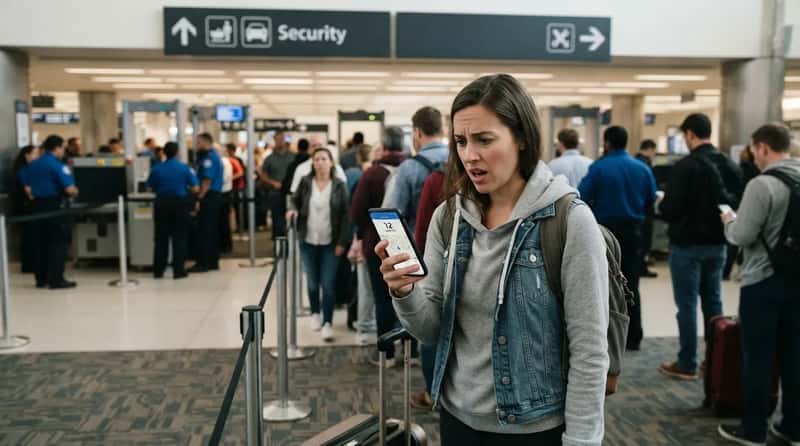
People plan their entire arrival window around a single number on their phone, then act shocked when reality doesn’t match it.
That number is far less scientific than it looks. The MyTSA app relies on other passengers reporting their own wait times – it’s useful, but it’s crowd-sourced, not a live feed straight from the checkpoint. Treating it as gospel instead of a rough guess is how people end up sprinting to their gate.
#19 – Showing Up Absurdly Early Because “Mornings Are Always Faster”
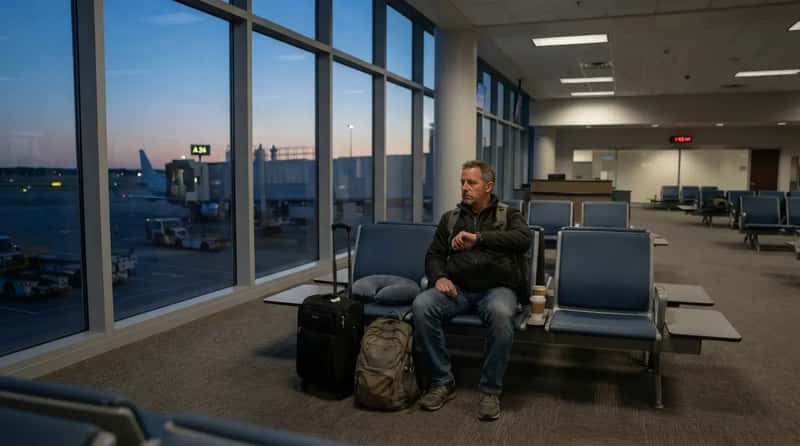
The idea that there’s a secret quiet hour at every airport is more folklore than fact these days.
TSA scales staffing up and down based on shifting travel patterns, which makes predicting a “better” time to fly genuinely unreliable from one week to the next. Showing up two hours earlier than necessary doesn’t outsmart the system – it just means you wait at the gate instead of the line.
#18 – Packing a Full Tub of Protein Powder in a Carry-On
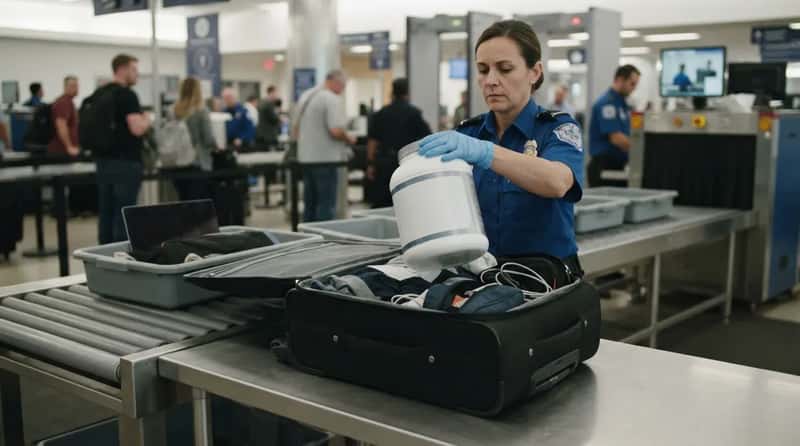
Gym-goers who travel with their supplements are, without realizing it, one of the most common causes of a manual bag check.
Officers see this constantly. Protein powder, ground coffee, and coffee creamer all come through the X-ray in large enough quantities that they get flagged almost every time, even though they’re fine nine times out of ten. Fine, yes – but not fast. That tub almost always means a hand search.
#17 – Bringing Bags of Coffee Grounds or K-Cups as Gifts
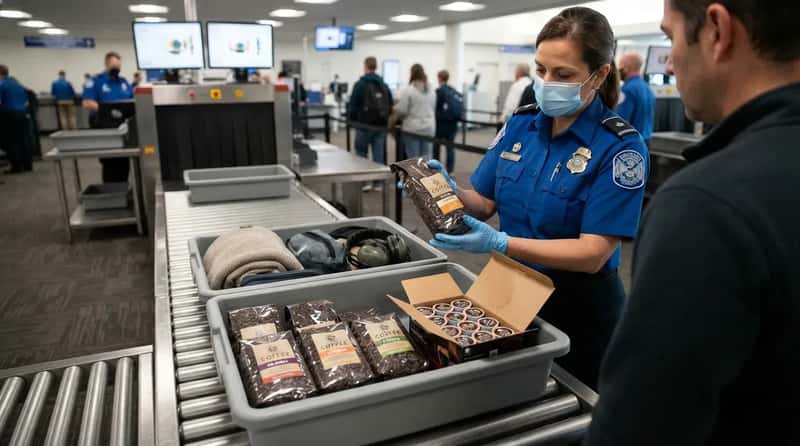
Travelers heading home with local coffee as a souvenir don’t expect it to slow anyone down, but dense, powdery items read strangely on an X-ray scan.
Coffee and creamer routinely get pulled for extra checking simply because of their density and volume, even though they almost always turn out to be harmless. It’s less a security risk than a screening quirk – but it still costs you minutes in the line.
#16 – Leaving a Laptop Zipped in Its Sleeve at the Wrong Lane
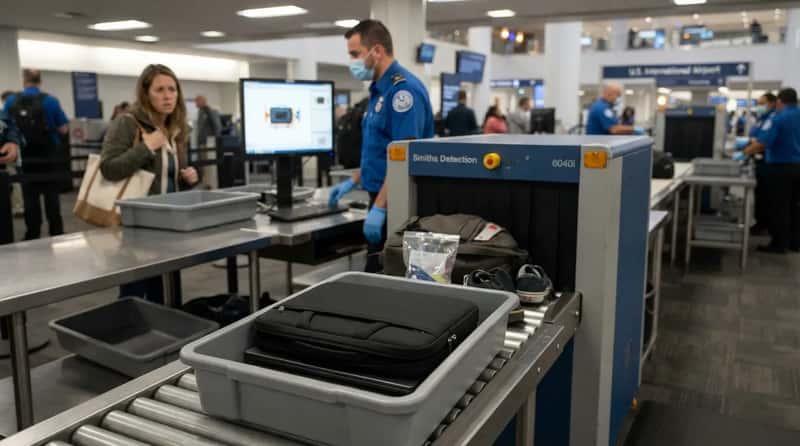
New scanning technology has convinced a lot of travelers that laptops never need to come out anymore, no matter which lane they land in.
That’s only true at airports with the newest equipment. TSA only allows laptops to stay bagged in lanes equipped with 3-D computed tomography scanners, currently running in roughly 278 U.S. airports. Assume the old rules apply anywhere else, or you’ll be pulled aside to unpack it by hand.
Worth Knowing
- TSA’s CT scanner rollout keeps climbing fast, with more than a thousand units now installed nationwide and still expanding to new checkpoints.
- Even inside a “CT airport,” not every lane has the new machines yet, so a laptop-friendly checkpoint on one trip can be a laptop-out checkpoint on the next.
- The 3-1-1 liquids rule hasn’t changed a bit – CT lanes just mean your quart bag can stay zipped in the carry-on instead of pulled out separately.
#15 – Assuming the Shoes-On Rule Covers Every Single Shoe
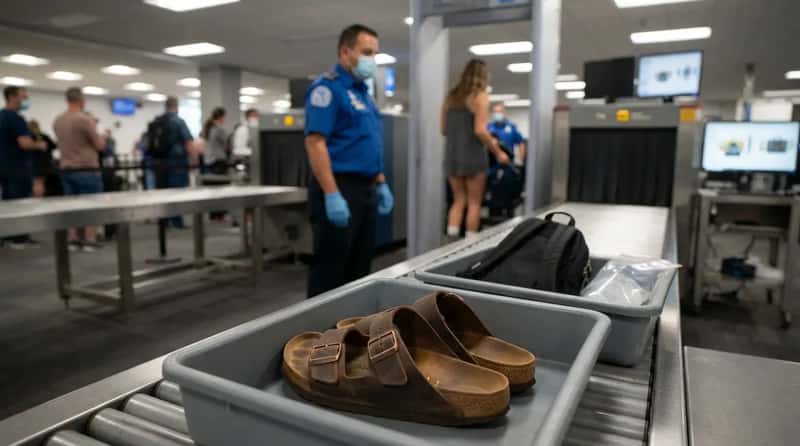
Sandals with a hidden metal shank are the one footwear category still tripping people up under the new rules.
Officers call out one popular brand by name: real Birkenstocks, thanks to their metal shank, will almost always set off the detector even under the shoes-on policy. That warning is specifically about the genuine article, not the knockoffs – but assuming every sandal is exempt now is exactly how people end up back at the bin station.
#14 – Splitting the Family Into Separate Lines to “Double the Odds”
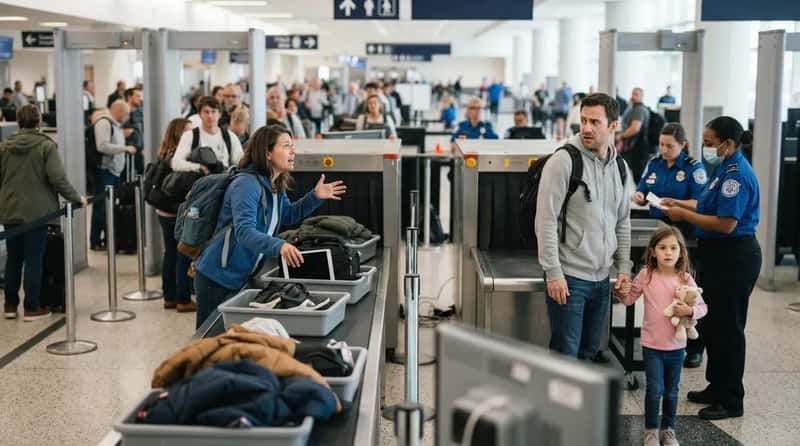
Parents sometimes send half the group to one lane and half to another, betting one side will move faster.
In practice, this usually creates two separate delays instead of one. A kid without ID, a mismatched last name, or a parent who forgot the boarding passes in the other line all become their own headaches – and then everyone has to regroup at the far end anyway, often losing more time than they saved.
#13 – Sneaking Into the PreCheck Lane Without a PreCheck Boarding Pass
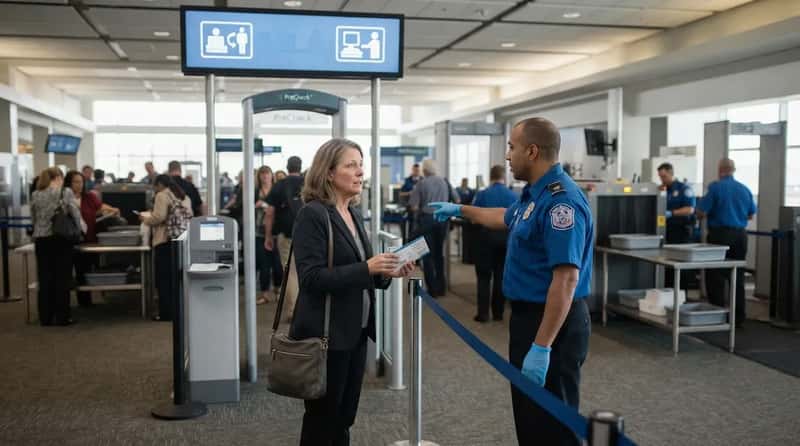
Some travelers assume flashing confidence at the lane divider is enough to slip through the faster line unnoticed.
It isn’t, and there’s now an added wrinkle. PreCheck members still have to meet the REAL ID requirement – PreCheck status doesn’t replace proper identification. Get caught in the wrong lane without the right credentials and you’re sent back to standard screening, further behind than when you started.
#12 – Filming the Officer Mid-Screening to “Expose” Them
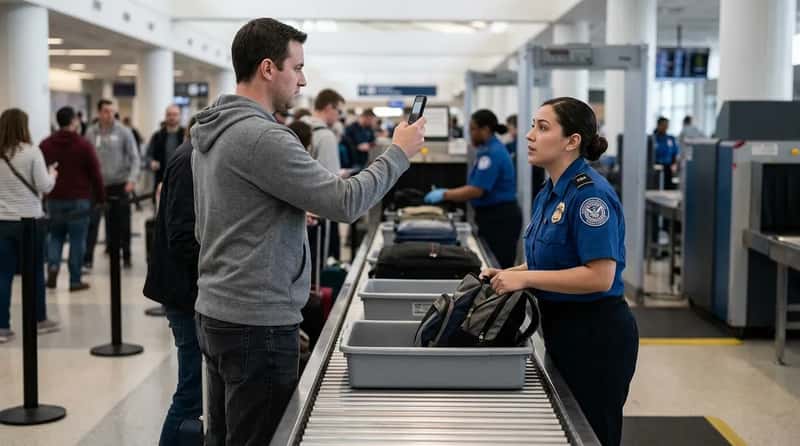
Pulling out a phone to record a pat-down or bag check might feel like accountability, but it rarely moves the process along.
Most checkpoints have policies around recording near screening equipment, and officers are trained to pause and address it before continuing anything else. The footage might make a good post later, but in the moment, it’s just more time standing at the belt instead of walking toward your gate.
#11 – Raising Your Voice to “Motivate” the Line to Move
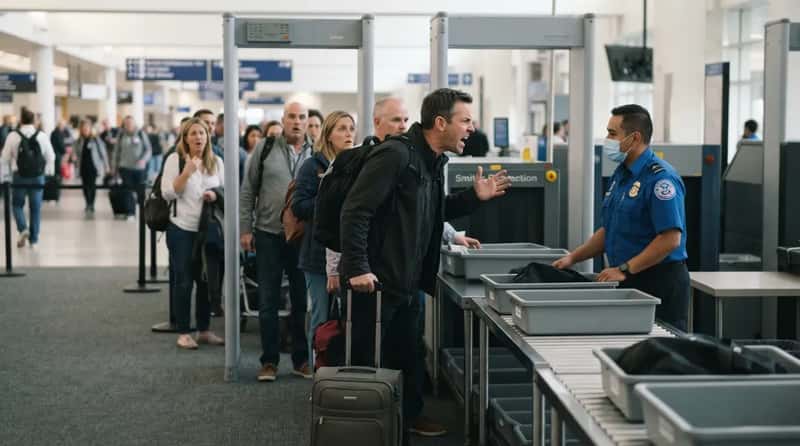
Loud frustration at a slow-moving queue feels like it should light a fire under everyone, but checkpoints simply don’t work that way.
Additional screening isn’t a punishment for attitude, and it isn’t personal either – metal detectors randomly select passengers for extra screening on their own, with no agent deciding who “looks” suspicious. Misunderstanding that is one of the more exhausting parts of the job for officers. Yelling at the belt doesn’t change an algorithm.
#10 – Trying to Tip or Bribe an Agent for a Shortcut
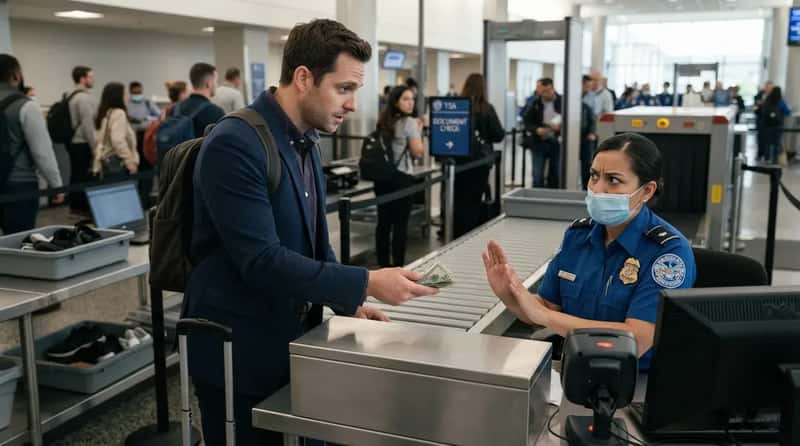
It sounds almost too obvious to include, but it happens more than people admit, especially from travelers used to tipping their way past a hostess stand.
Federal checkpoints aren’t restaurants. Slipping cash or a favor to an officer doesn’t just fail – it invites exactly the kind of scrutiny that guarantees a much longer, much more thorough screening experience for everyone involved.
#9 – Assuming CLEAR Skips the Bag Scan Too
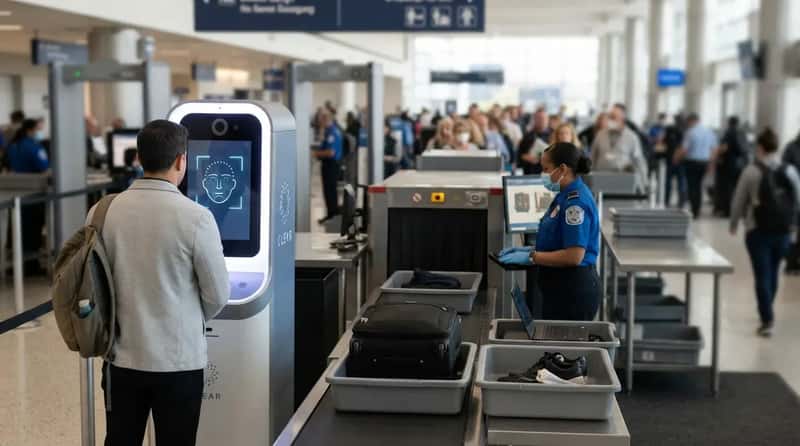
CLEAR members sometimes walk up expecting to breeze straight to the gate, forgetting that identity verification and baggage screening are two completely different steps.
Touchless ID through CLEAR and TSA PreCheck uses face recognition instead of a physical card, which speeds up exactly one part of the process. Your bag, your shoes, and your pockets still go through the same screening line as everyone else standing next to you.
#8 – Packing Eight “Technically Compliant” Mini Bottles
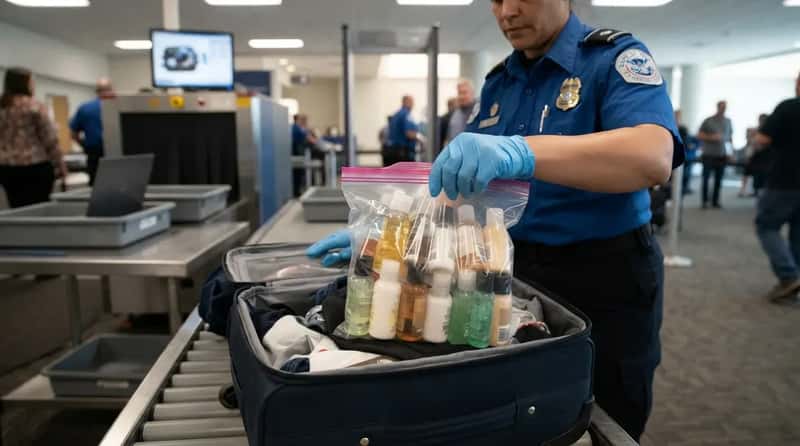
Travelers love finding the loophole, and the 3-1-1 liquid rule feels ripe for one: pack a dozen tiny bottles, each just under the limit, and surely that’s fine.
It isn’t a loophole. A bag stuffed with a dozen small containers reads just as suspicious on an X-ray as one large bottle – and it often triggers the exact hand search you were trying to dodge in the first place.
#7 – Ignoring REAL ID Prep Because “PreCheck Will Cover It”
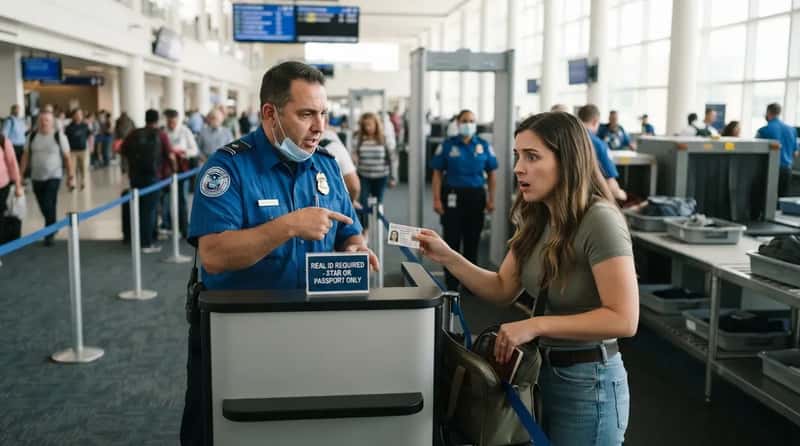
This one is quietly causing the biggest slowdowns at checkpoints across the country right now, and most people don’t see it coming until they’re standing at the podium.
REAL ID enforcement went live nationwide on May 7, 2025, which means TSA agents are now required to reject non-compliant state IDs. If your driver’s license doesn’t have a star in the upper-right corner, you need a passport or another federally accepted document – or you can expect secondary screening. PreCheck doesn’t waive any of it.
Fast Facts
- More than 94% of travelers already show up with a compliant ID or an accepted alternative, which means the delays fall hardest on a shrinking minority.
- Accepted alternatives include a U.S. passport, military ID, and Trusted Traveler cards like Global Entry – not just a starred driver’s license.
- Starting February 1, 2026, travelers without acceptable ID can pay a $45 fee through TSA ConfirmID instead of being turned away.
#6 – Waiting to Pay the ConfirmID Fee at the Airport Instead of Online
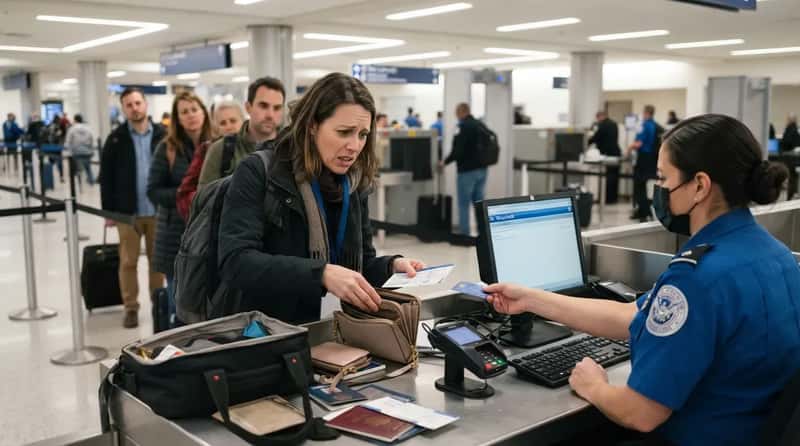
Forgetting an ID entirely used to mean missing a flight. Now there’s a workaround – but handling it the slow way defeats the whole purpose.
Travelers without acceptable ID can pay a fee to use TSA ConfirmID, an identity verification process, but doing it at the counter instead of prepaying online beforehand turns an already stressful moment into the slowest possible version of itself.
#5 – Merging the Whole Family’s Items Into One Shared Bin
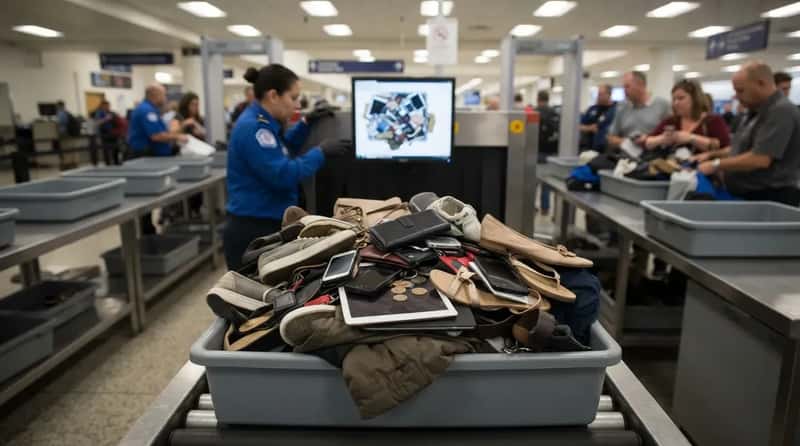
It seems efficient to pile everyone’s phones, wallets, and shoes into a single bin so the family “moves as one unit” through the belt.
Instead, a bin that dense and cluttered is far more likely to need a second look, since overlapping objects are simply harder for a scanner operator to read clearly. Spreading items across two or three bins, one per person, almost always clears faster than one crowded pile.
#4 – Wearing an Oversized Metal Belt Buckle “Just This Once”
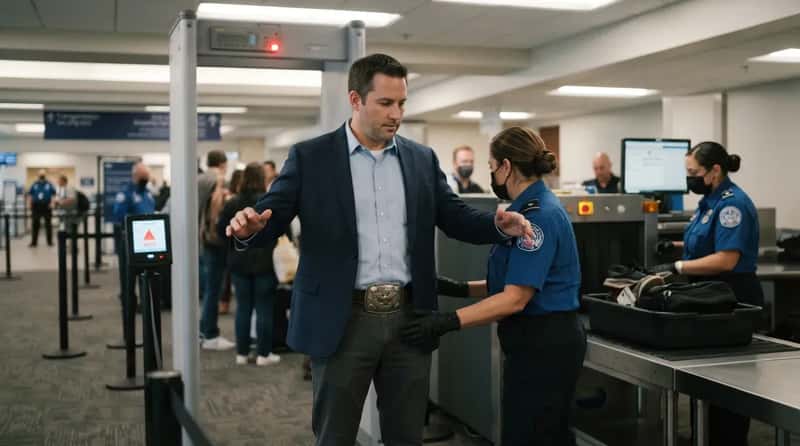
Everyone has that one statement accessory they wear for a flight without thinking twice, and belt buckles are a classic offender.
A large metal buckle is one of the most predictable alarm triggers at any walk-through detector, PreCheck or not. It doesn’t matter how experienced a flyer you are – the buckle sets off the same alarm, requiring the same pat-down, every single time it’s worn through the line instead of packed away.
#3 – Treating Secondary Screening Like a Personal Insult
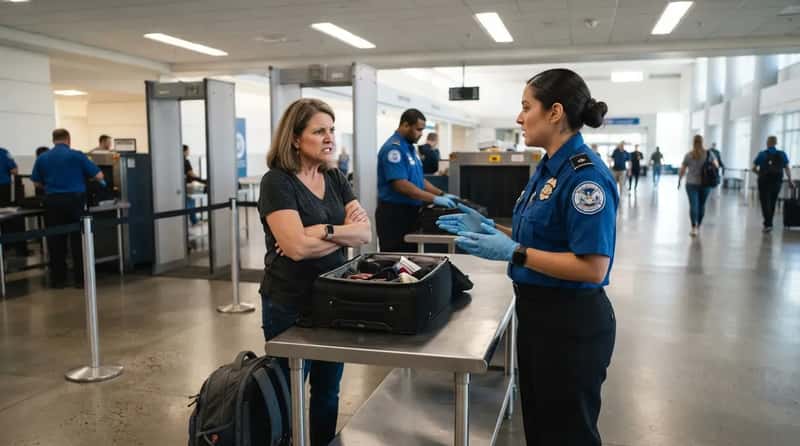
Getting pulled for extra screening feels targeted, but freezing up, arguing, or demanding an explanation only extends the process.
The selection comes from the metal detector itself, not an agent’s personal judgment – and passengers who don’t understand that often turn an already tense moment into a worse one. Cooperating quickly and calmly is the only thing that actually shortens this particular delay.
#2 – Discovering a Name Mismatch Right at the Belt
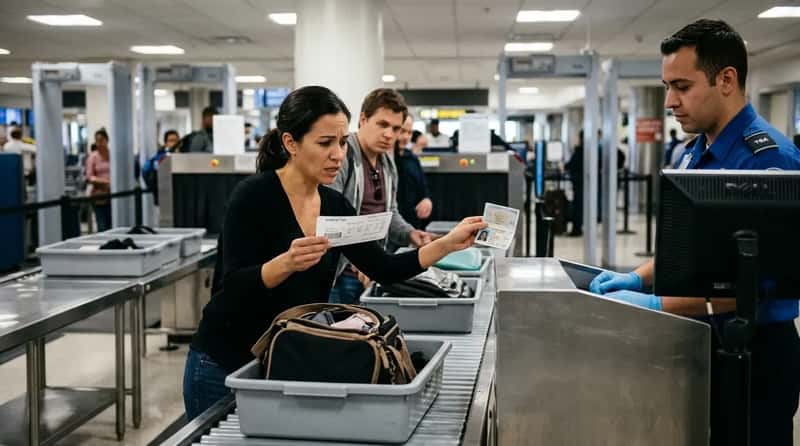
Nothing stalls a line faster than a traveler realizing, mid-screening, that their boarding pass name doesn’t quite match their new REAL ID.
With REAL ID enforcement now active nationwide, agents are catching far more of these mismatches than before, and each one requires a manual identity check on the spot. Double-checking that your booking name matches your ID exactly, days before departure, avoids a delay that can’t be fixed once you’re standing at the podium.
#1 – Believing PreCheck Alone Guarantees a Fast Line, No Matter What
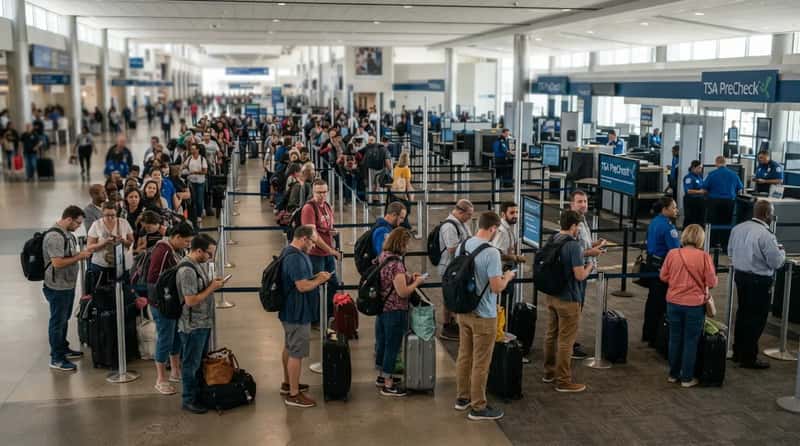
This is the biggest misconception flying today, and it’s costing frequent flyers real time at some of the country’s busiest hubs.
TSA staffing has improved overall, but certain airports remain chronically understaffed, and throughput still crawls at places like Denver, Atlanta, and Austin during peak hours. PreCheck shortens the line – it doesn’t fix a checkpoint that simply doesn’t have enough officers to run it.
Quick Compare
- Hartsfield-Jackson Atlanta: consistently ranked among the world’s busiest airports by passenger volume, which means even the fast lane fills up fast.
- Denver International: one of the busiest hubs in the country, with checkpoint capacity that’s constantly being expanded to keep pace with traffic.
- Austin-Bergstrom: one of the fastest-growing major airports in the U.S., where passenger growth has consistently outpaced checkpoint infrastructure.
None of these habits are dramatic mistakes. They’re small, understandable assumptions that made sense a few years ago and simply haven’t kept pace with how fast the rules have shifted. Shoes, REAL ID, ConfirmID, new scanners, understaffed hubs – each one quietly rewired what “moving fast” at security actually means.
The travelers who breeze through aren’t the ones with the best hacks. They’re the ones who stopped relying on outdated shortcuts and started paying attention to what actually changed. Chances are, at least one of these is something you’ve done on autopilot without ever realizing it wasn’t helping at all.