Most people assume train food was always sad – a limp sandwich and bitter coffee shoved at you before the whistle blew. That’s actually the opposite of the truth. For nearly a century, America’s dining cars ran full-scale restaurant kitchens on wheels, turning out dishes so specific and so regional that entire menus were built around a single railroad’s identity.
Then, almost overnight, it all vanished. No farewell tour, no nostalgia headline, no “last call” moment – just quietly discontinued menus as railroads merged, Amtrak took over, and kitchens shrank down to microwaves. Here’s what old menu archives and railroad historians actually reveal about the dishes nobody thought to save.
#25 – Pennsylvania Railroad’s Shoo-Fly Pie Disappeared With the Line Itself
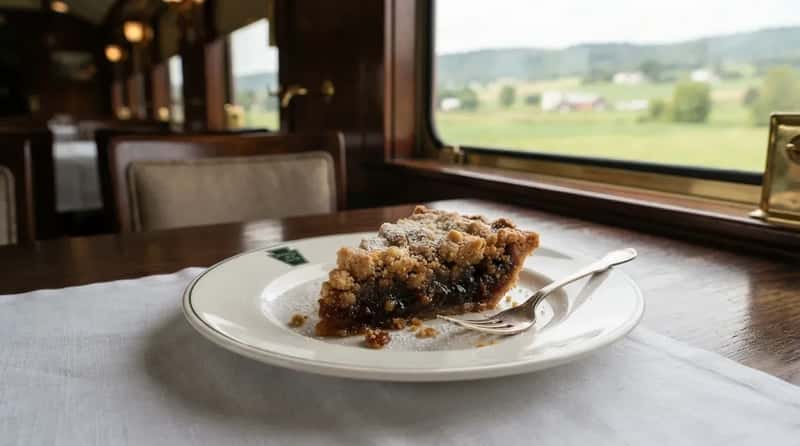
Long before airline meals existed, the Pennsylvania Railroad had already figured out branding through food. Its signature dessert was Pennsylvania Dutch Shoo-Fly Pie, and it wasn’t a random pick – it was a deliberate nod to the Pennsylvania Dutch communities the train rolled straight through.
That regional storytelling through dessert quietly died once the PRR merged into Penn Central in 1968. It had been a beloved fixture in the dining cars for decades, tying the railroad directly to the state’s Pennsylvania Dutch settlers. Today it survives in Amish country diners, but almost nobody connects it back to its railroad origin story.
#24 – Missouri Pacific’s Golden Dollar French Toast Was a Whole Marketing Gimmick
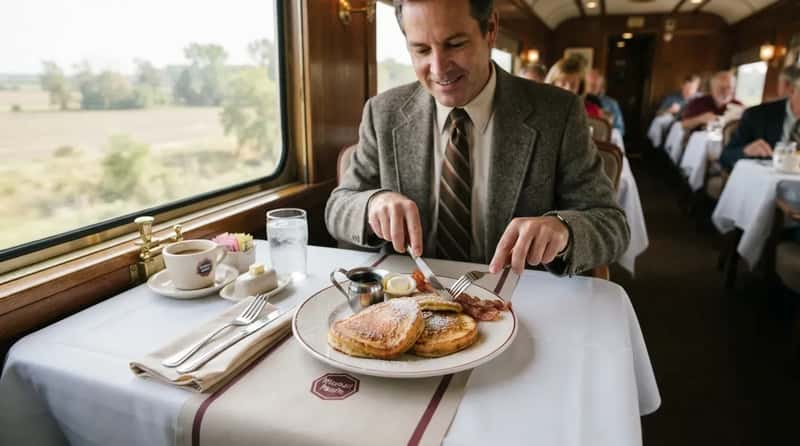
Breakfast on the Missouri Pacific wasn’t just eggs and toast – it was a signature item designed to make passengers brag about it later. Golden Dollar French Toast was served as one of the road’s defining specialties, and the name alone did half the marketing.
It promised something coin-shaped and crisp-edged, and it worked as a conversation piece for decades of travelers. Once Missouri Pacific was absorbed into Union Pacific in 1982, the dish had no train left to call home, and it simply stopped appearing anywhere.
#23 – Southern Pacific’s Salad Bowl Was Built Table-Side, Not Kitchen-Side
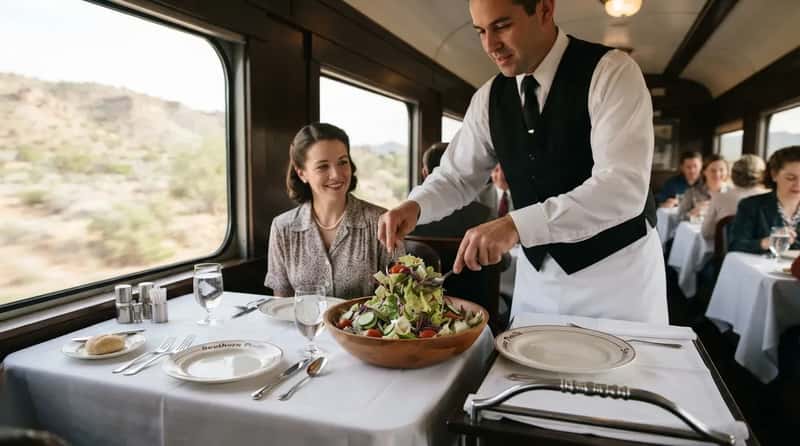
Most travelers pictured train salads as an afterthought. Southern Pacific made theirs a whole performance instead. Salad Bowls were a specialty on the line, tossed and dressed right in front of passengers.
The presentation mattered as much as the ingredients – fresh produce boarded at stops along the route, then assembled tableside like a mini floor show. When Southern Pacific’s dining service faded through the 1970s, that ritual disappeared with barely a mention in the press.
Fast Facts
- Dining cars first rolled onto American railroads in 1868, introduced by the Pullman Company.
- By the early 1900s, most major U.S. railroads ran full-service kitchens, restocking fresh ingredients at scheduled stops.
- Amtrak’s formation in 1971 folded dozens of independent railroad dining services into one standardized national menu.
- Countless regional specialty dishes simply never made the jump to Amtrak’s smaller, simplified kitchens.
#22 – Southern Railway’s Georgia Peaches Turned a Fruit Into a Sales Pitch
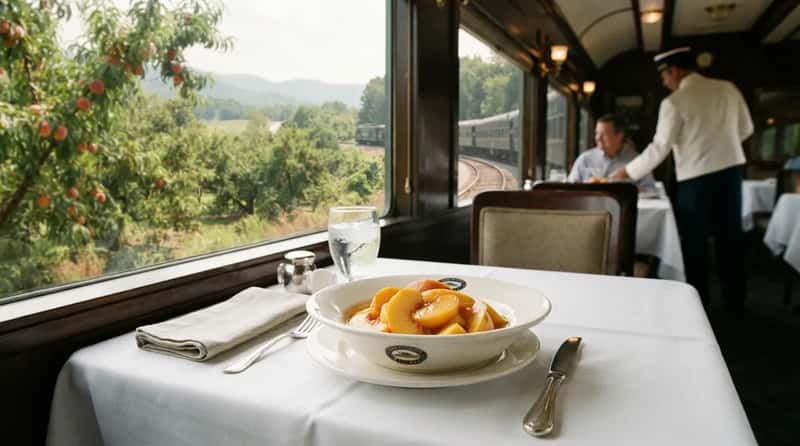
Before “farm-to-table” was a marketing phrase, Southern Railway was already doing it with fruit. Georgia Peaches were a signature specialty, served fresh whenever the train passed through peach country.
It was a simple, almost embarrassingly obvious idea – serve the region’s most famous crop to travelers passing through it – but it worked. Once refrigerated freight made peaches available everywhere year-round, the novelty evaporated, and the dish quietly left dining car menus for good.
#21 – New York Central’s Chicken à la Century Was Named After a Legend
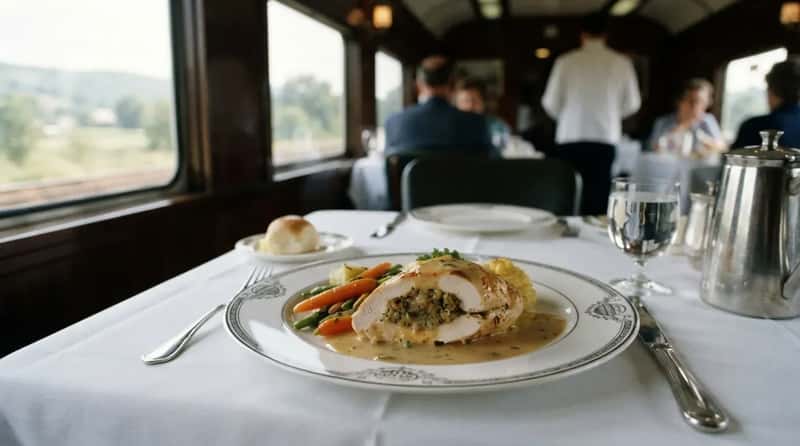
This wasn’t just stuffed chicken breast. New York Central named the dish Chicken à la Century after its flagship streamliner, the 20th Century Limited. Ordering it meant you were, in a sense, ordering the train’s own reputation.
The dish carried the weight of one of the most famous trains in American history, one that rolled out a literal red carpet for passengers at Grand Central. When the 20th Century Limited made its final run in 1967, the dish lost its namesake – and its reason to exist on any menu.
#20 – Chicago & North Western’s Potato Pancakes Were a Midwest Signature Nobody Talks About
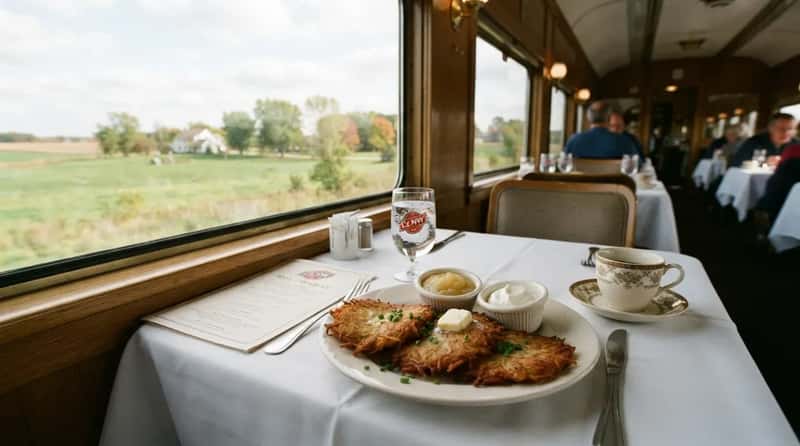
Regional identity wasn’t just for the South. Potato Pancakes were served as a specialty on Chicago & North Western’s dining cars, a nod to the heavy German and Scandinavian farming communities along its Midwest routes.
They were crisp, simple, and comforting – the kind of dish that made a Wisconsin-bound trip feel like home before you’d even arrived. Once C&NW’s passenger service wound down through the 1970s and 1980s, this Midwestern staple disappeared from the rails entirely.
#19 – Rock Island’s Reuben Sandwich Turned Lunch Into a Landmark
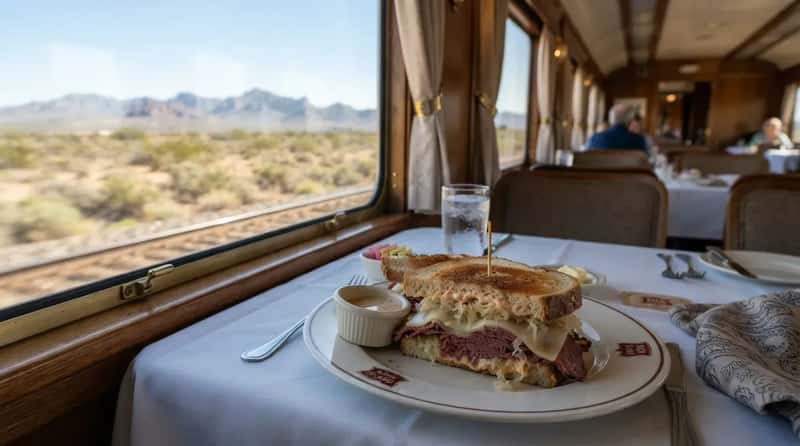
Some railroads named entrees after trains; Rock Island named a sandwich after a whole style of eating. Passengers aboard the Golden State Limited or the Rocket could order up a Rock Island Reuben for lunch.
It was a hearty, filling choice built for travelers who needed something substantial before hours more on the tracks. When Rock Island collapsed into bankruptcy and ceased operations in 1980, the Reuben went with it, absorbed into deli history rather than railroad history.
#18 – Baltimore & Ohio’s “Help Yourself” Salad Was Shockingly Ahead of Its Time
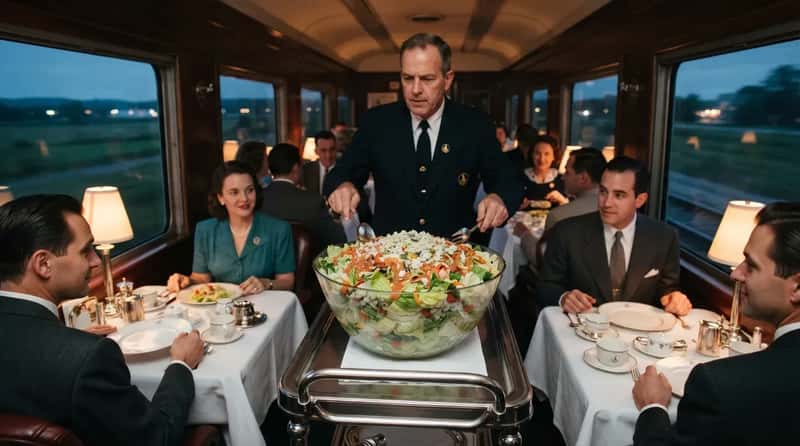
Long before self-serve buffets were common, B&O was already doing it inside a moving dining car. The railroad offered a popular “Help Yourself” salad, drizzled with Catalina dressing and blue cheese, that a server would lug around in a huge bowl at dinner.
Picture a full-size salad bowl being wheeled between tables on a train traveling 70 miles per hour – that was standard B&O service. The concept sounds modern, but it disappeared decades before self-serve salad bars became a restaurant trend on land.
#17 – Gulf, Mobile & Ohio’s Caviar Chicken Sandwich Was Pure Excess
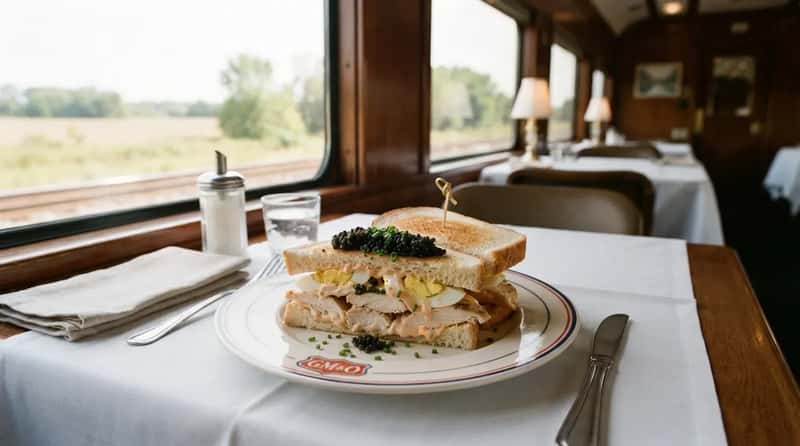
This wasn’t a sandwich you grabbed on the go. Aboard a Gulf, Mobile & Ohio train, passengers seeking extra extravagance could order a special chicken sandwich embellished with hard-boiled egg, Thousand Island dressing, and caviar.
Caviar on a chicken sandwich sounds almost like a joke today, but it captured exactly how far mid-century railroads would go to make lunch feel like an occasion. When GM&O merged into Illinois Central Gulf in 1972, the dish disappeared into obscurity without so much as a footnote.
#16 – Northern Pacific’s “Lone Ranger Sandwich” Was Just PB&J in Disguise
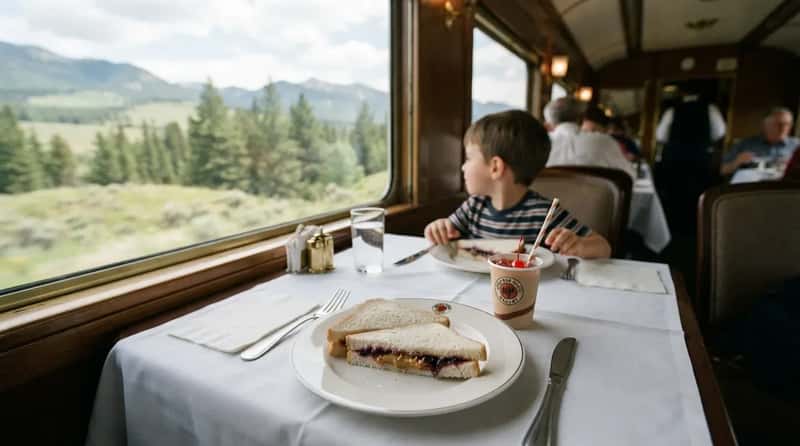
Not every vanished dish was fancy – some were built purely to make kids happy. A children’s menu from the Northern Pacific Railway in 1962 offered a “Kiddie Cocktail” alongside the “Lone Ranger Sandwich,” which was, in plain terms, peanut butter and jelly.
The rebranding trick worked because it turned an ordinary lunch into an adventure, tying the sandwich to the era’s biggest kids’ TV hero. Once Northern Pacific merged into Burlington Northern in 1970, both the whimsical naming and the children’s menu culture behind it quietly disappeared.
#15 – Illinois Central’s Shrimp Creole Told You Exactly Where You Were
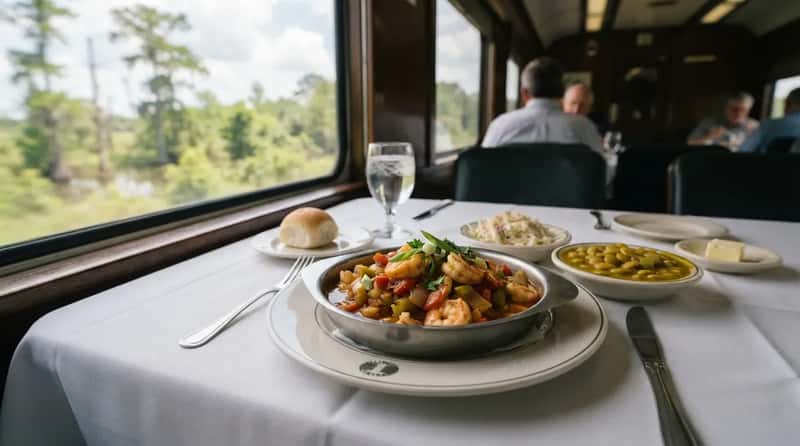
Few dishes announced a region as clearly as this one. On the Chicago-to-New Orleans run known as the Panama Limited, Illinois Central served Shrimp Creole alongside seasoned coleslaw and lima beans baked in mustard sauce.
Ordering shrimp creole meant you were closing in on New Orleans, no announcement needed. The Panama Limited itself was discontinued by Amtrak in 1971, and the Cajun-inflected menu that made the ride memorable never got a second life on any successor train.
Worth Knowing
- The Fred Harvey Company began running elevated rail dining service for the Atchison, Topeka & Santa Fe Railway starting in the 1870s, setting a national standard.
- The Panama Limited connected Chicago and New Orleans along a route of roughly 920 miles.
- Regional dishes like Shrimp Creole were often reserved for the stretch of track closest to their home region, then pulled once the train crossed into different territory.
#14 – Illinois Central’s Lima Beans Baked in Mustard Sauce Sound Odd Today for a Reason
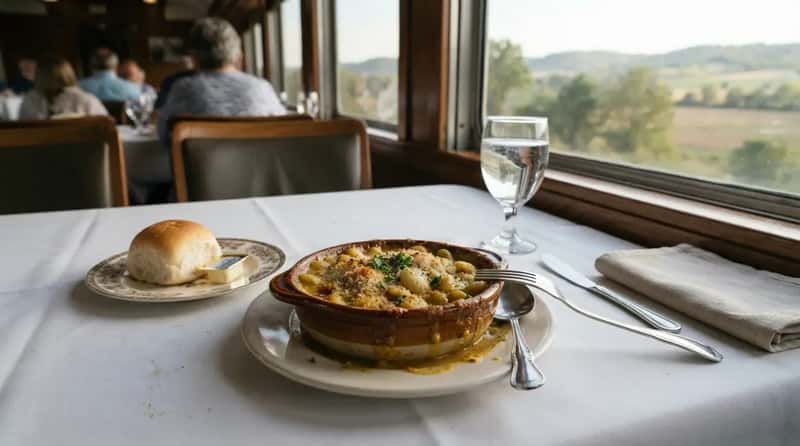
This one genuinely surprises modern readers. Lima Beans Baked in Mustard Sauce were part of the menu on the Panama Limited – a side dish nobody would expect to see on a train today.
Mustard-baked lima beans reflected an era when Southern comfort-food sides were treated as seriously as the entrée itself. Once the Panama Limited stopped running, this specific preparation essentially vanished from American food culture altogether, train or otherwise.
#13 – Santa Fe’s Santa Fe French Toast Was Hiding a French Name
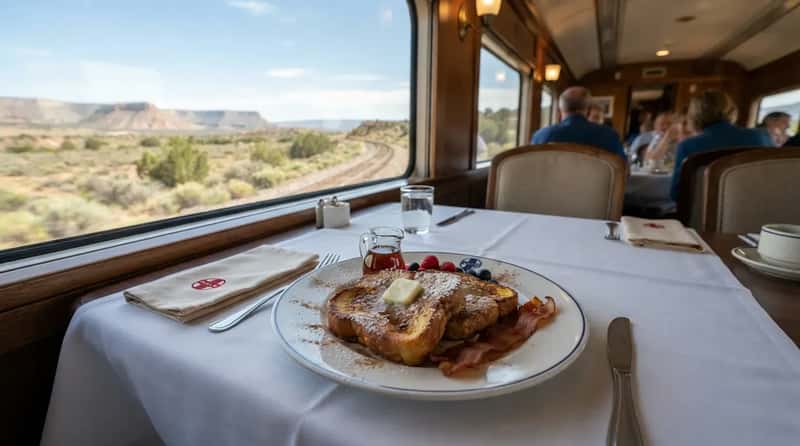
Most passengers had no idea this “American breakfast classic” was secretly a centuries-old French dish in costume. One of the Super Chief’s most popular signature dishes was AT&SF’s version of pain perdue, simply and appropriately renamed Santa Fe French Toast.
The rebranding made it feel distinctly Southwestern instead of European, matching the train’s Fred Harvey-run identity. When Amtrak absorbed Santa Fe’s passenger routes in 1971, the dish’s specific name and preparation faded, even though French toast itself obviously survived everywhere else.
#12 – Santa Fe’s New Corn Chowder, Southern Style, Blended Two Regions Into One Bowl
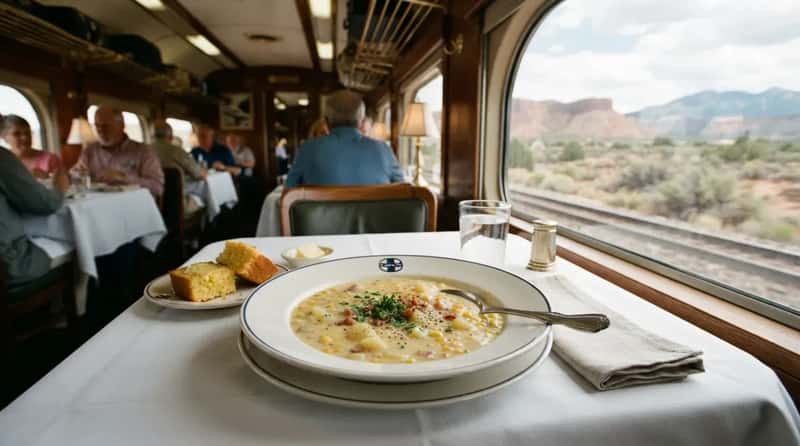
This dish quietly broke the “one railroad, one region” rule most companies followed. New Corn Chowder, Southern Style, was a real menu item served by the Atchison, Topeka & Santa Fe Railway.
A Southwestern railroad serving a “Southern style” chowder shows how much cross-pollination actually happened in dining car kitchens, borrowing techniques regardless of geography. It’s one of the more obscure entries in Santa Fe’s catalog, and it never resurfaced once the line’s dining service ended.
#11 – Santa Fe Super Chief’s Stuffed Zucchini Andalouse Was a Chef’s Signature Dish
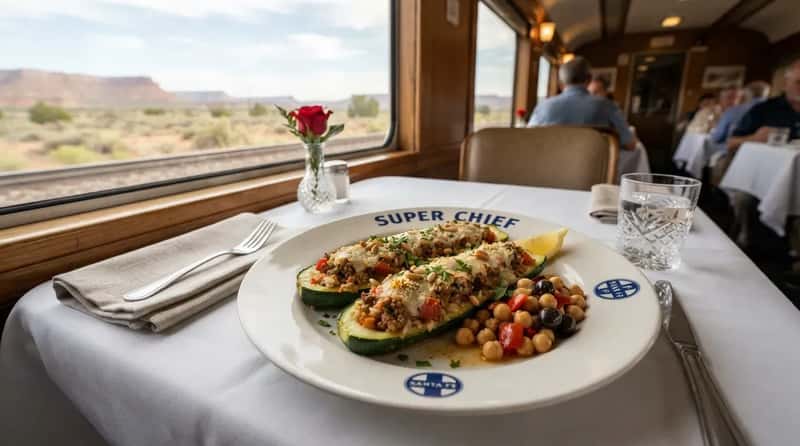
Not every dish was folk cuisine – some were pure culinary showmanship. Super Chief chef Carlos Gardini created the Stuffed Zucchini Andalouse, a dish distinctive enough to be printed in the train’s own souvenir cookbook for passengers.
Handing diners a take-home recipe card was a genuinely bold move for a railroad, treating its chef like a celebrity decades before that became normal. Once the Super Chief’s kitchens shut down, Gardini’s signature dish essentially disappeared along with his name.
#10 – New York Central’s Pepper Pot Commodore Was Named After a Robber Baron
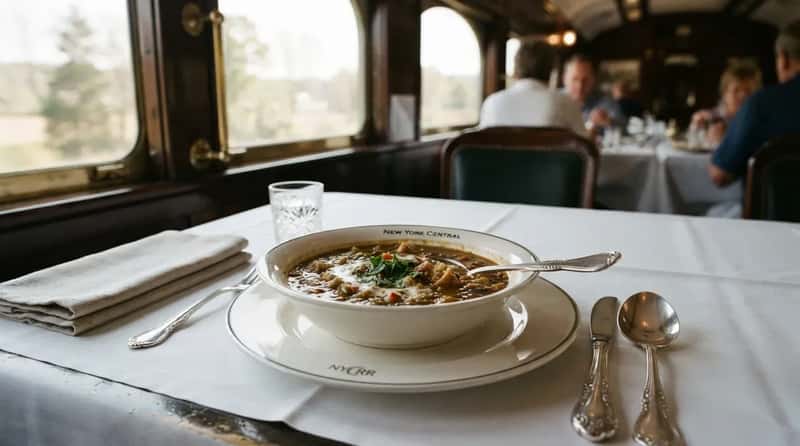
This soup carried a hidden history lesson in its name. Pepper Pot Commodore, served onboard the New York Central Railroad in 1925, honored Cornelius Vanderbilt – nicknamed “the Commodore” – who had acquired and consolidated the smaller lines that became the New York Central.
Naming a soup after the man who built the empire was a small but telling flex of corporate pride. Once New York Central merged into Penn Central and eventually collapsed by 1976, this tribute dish vanished along with almost every trace of its own backstory.
#9 – New York Central’s Pin Money Pickles Had a Surprisingly Feminist Backstory
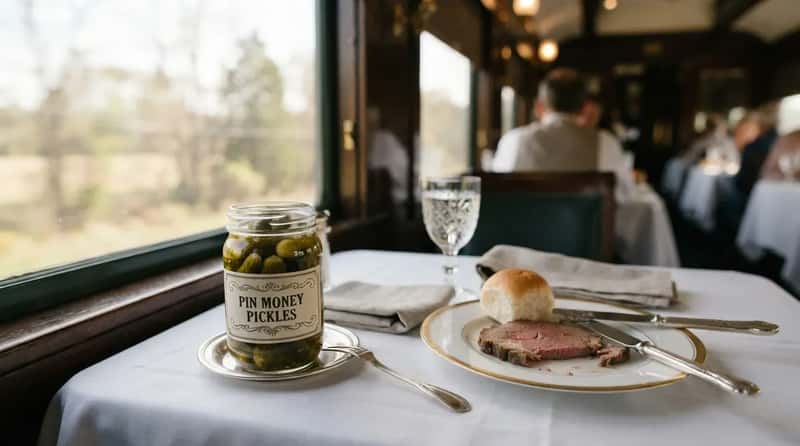
This isn’t a typical condiment story. Pin money pickles were served on the New York Central Railroad in 1903 and the Southern Pacific Railroad in 1927 – the brainchild of Ellen Gertrude Tompkins Kidd of Richmond, Virginia, who started selling them in 1868 at just sixteen years old.
The pickles funded personal independence for their creator at a time when women had little financial autonomy of their own. Both railroads eventually dropped the item as commercial pickle brands took over supply chains, erasing the connection to Kidd’s business almost entirely.
#8 – Baltimore & Ohio’s Boned Shad Reflected an Entire Regional Waterway
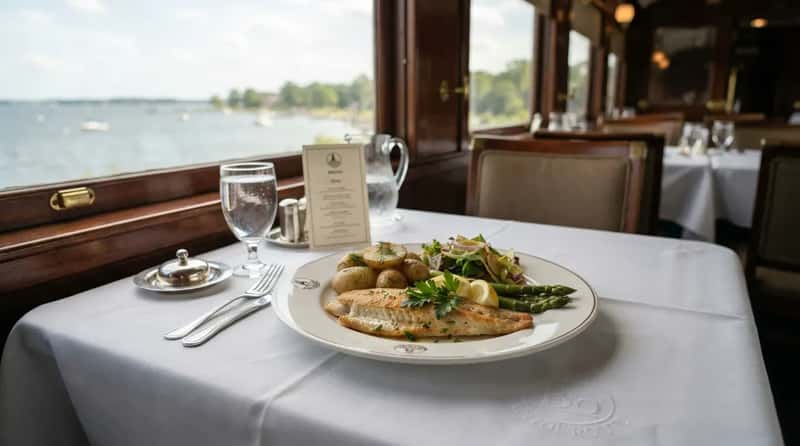
B&O didn’t just serve seafood – it served a geography lesson. The food served on the Baltimore and Ohio Railroad in 1932 reflected the line’s location along the Chesapeake Bay: clams on the half shell, clam stew, boned shad, shad with bacon, crab flakes, and fried filet of fish.
Shad, in particular, was a seasonal Chesapeake delicacy that most Americans outside the region rarely encountered at all. As shad populations declined and B&O’s own dining service shrank through the 1950s, this once-signature fish quietly slipped off the menu for good.
At a Glance
- Chesapeake Bay shad runs traditionally peaked each spring, making the fish a strictly seasonal menu item.
- American shad populations along the East Coast declined sharply through the 20th century due to overfishing and dams blocking spawning runs.
- B&O’s Chesapeake-themed menu also featured clams, crab flakes, and fried fish filets tied to the same waterway.
#7 – Pennsylvania Railroad’s Baked Indian Pudding Was a Colonial Dessert on Rails
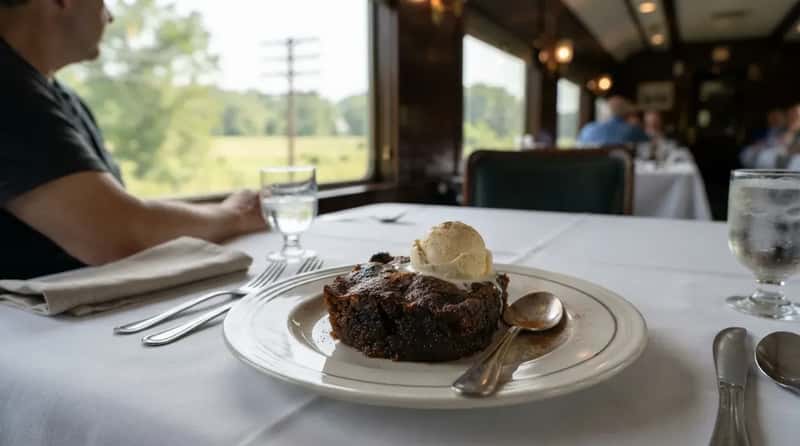
Few passengers realized how old-fashioned this dessert really was. A typical PRR dinner menu might include Pennsylvania Dutch chicken, baked potato Pennsylvania style, and baked Indian pudding.
Baked Indian pudding, a cornmeal-and-molasses dessert dating back to colonial New England, felt like an odd fit for a Pennsylvania-focused menu – yet there it was. As American dessert tastes shifted toward pie and ice cream, this colonial holdover disappeared entirely from dining cars.
#6 – Pennsylvania Railroad’s Pennepicure Pie Was a Punny Dessert Nobody Remembers
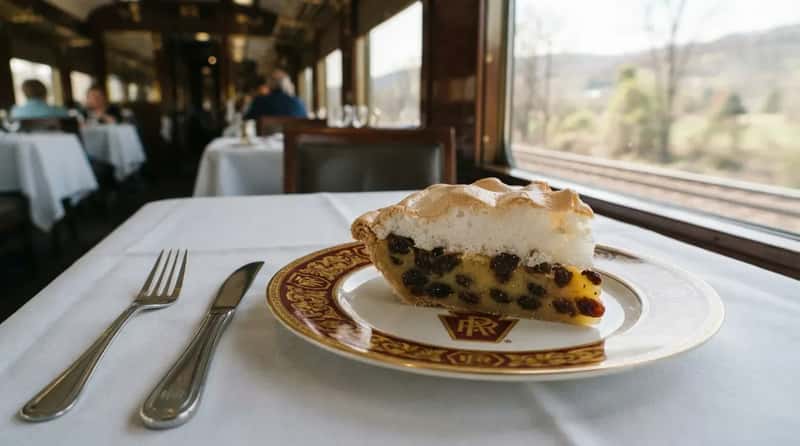
This dessert had a name built entirely around wordplay. Pennepicure pie, a rich raisin custard pie topped with meringue, was part of the PRR’s typical dinner menu for years.
The name mashed together “Pennsylvania” and “epicure,” a clever bit of branding for what was essentially a dressed-up raisin pie. Once Penn Central absorbed the railroad in 1968, the pun and the pie both disappeared, and almost nobody has revived the recipe since.
#5 – Pennsylvania Railroad’s Deviled Roast Beef Was a Menu Anchor for Decades
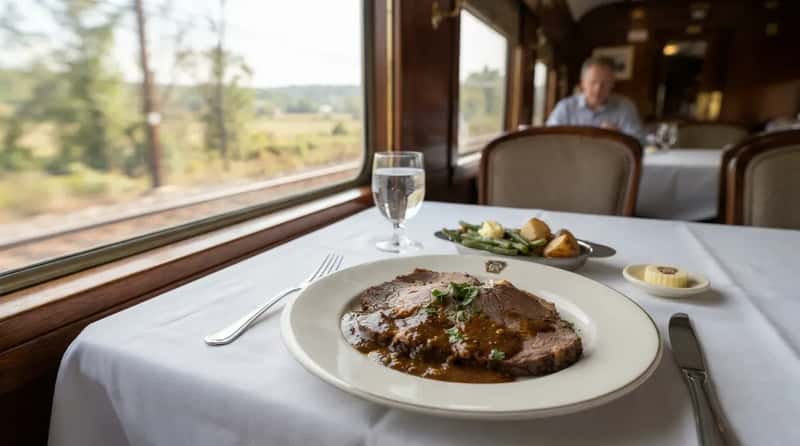
This wasn’t a side note – it was a defining PRR dish. Menus ranged from the Pennsylvania Railroad’s “Deviled Roast Beef with Mustard Sauce” to Illinois Central’s “Potatoes Romanoff,” and the deviled roast beef held its own for years.
Spicing up leftover-style roast beef with a sharp mustard sauce was a clever way to make simple cuts feel elevated. When Penn Central’s finances collapsed in the early 1970s, dining service cuts hit staples like this one hardest, and it never returned.
#4 – Illinois Central’s Potatoes Romanoff Sounded Fancier Than It Was
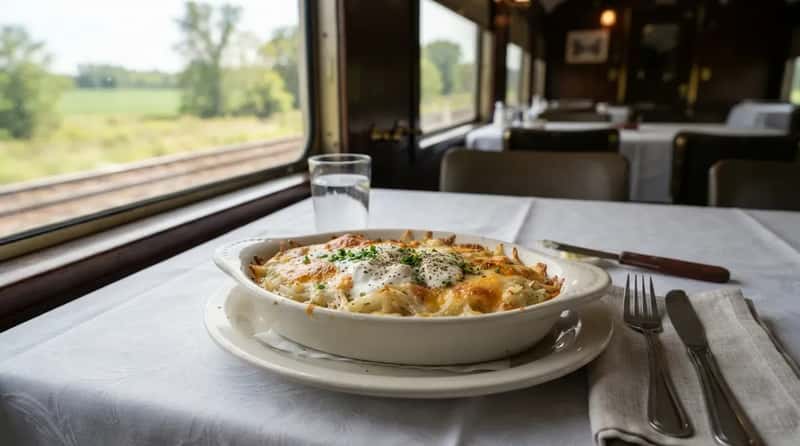
This side dish borrowed a name meant to sound imperial. Potatoes Romanoff was one of the signature items served on Illinois Central’s dining cars for years.
Naming a cheesy, sour-cream-laced potato dish after Russian royalty was a common mid-century trick to make comfort food feel upscale. Once Illinois Central’s passenger network was folded into Amtrak in 1971, the dish disappeared along with most of the railroad’s independent identity.
#3 – Texas & Pacific’s Cantaloupe Pie Was Genuinely One of a Kind
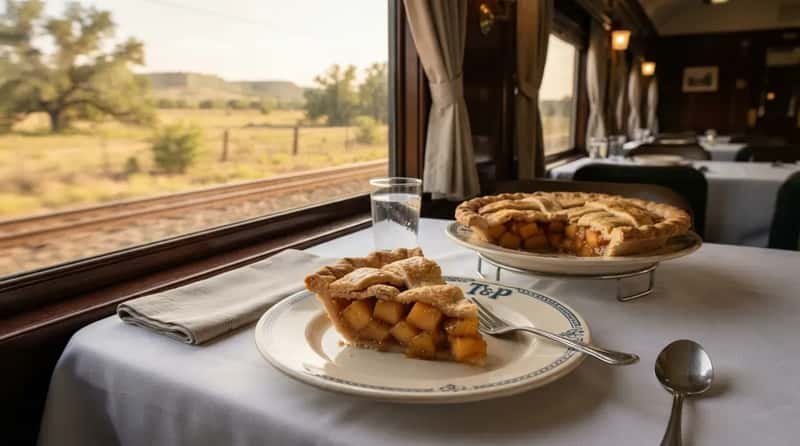
Out of every dish on this list, this might be the strangest. Cantaloupe Pie was one of the unusual recipes served on the Texas & Pacific Railway, documented in railroad dining historian Patricia Porterfield’s research on the era.
A pie made from cantaloupe instead of apple or pumpkin sounds almost invented, but it was a real regional specialty tied to Texas melon country. Once Texas & Pacific’s passenger routes were absorbed by other lines in the 1960s, this oddball dessert essentially disappeared from American food entirely.
#2 – Santa Fe Super Chief’s Caviar-and-Steak Dinner Cost Less Than Modern Fast Food
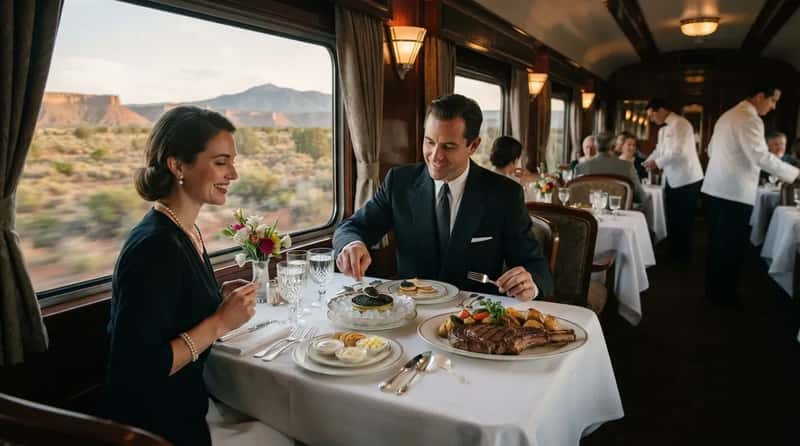
This one reveals how affordable true luxury once was on rails. In the halcyon days of the Super Chief, Romanoff fresh malossol caviar was $1.75 and a Kansas City sirloin steak for two was $2.75 – in 1938.
Adjusted for inflation, that’s still remarkably cheap for a caviar-and-steak combination most modern steakhouses would price well into three figures. As dining car costs ballooned and Amtrak simplified service after 1971, this level of affordable extravagance disappeared permanently from American rail travel.
Quick Compare
- 1938 Super Chief menu: caviar at $1.75, sirloin steak for two at $2.75.
- Adjusted for decades of inflation, that combined meal would likely land somewhere around $90 to $100 in today’s dollars.
- A comparable caviar-and-steak dinner at a modern steakhouse routinely starts well above $150.
#1 – Welsh Rarebit and Kippered Herring Were Once Completely Normal Breakfast Orders
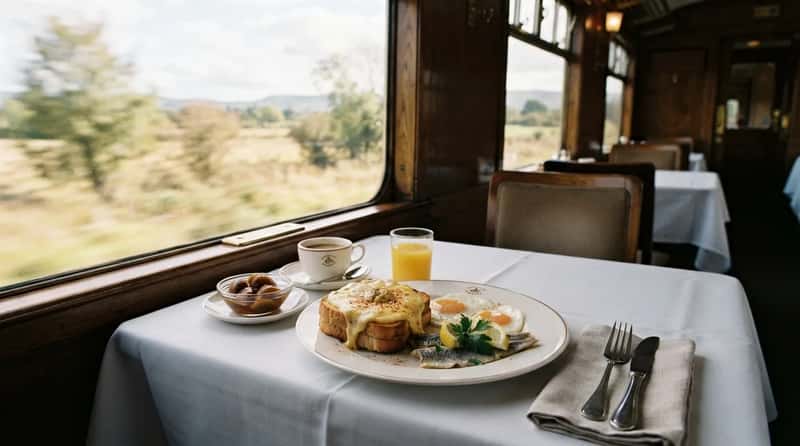
This is the one that proves how much dining car culture has shifted. Long gone are the days when Welsh rarebit – fancy melted cheese on toast – kippered herring with eggs, and preserved figs were considered de rigueur for breakfast.
These weren’t rare specialty orders; they were standard offerings across multiple railroads’ breakfast menus for decades. Today, a modern Amtrak rider would likely find both dishes bizarre, which says less about the food and more about how completely this entire culinary era has been forgotten.
What’s striking isn’t just that these dishes disappeared – it’s how quietly it happened. No farewell menus, no last-order announcements, just mergers, bankruptcies, and Amtrak’s 1971 takeover erasing decades of regional identity almost overnight. Somewhere between shrinking kitchens and shrinking budgets, an entire cuisine – one built specifically for the rhythm of a moving train – got left behind on the tracks, and nobody ever thought to write it a proper goodbye.