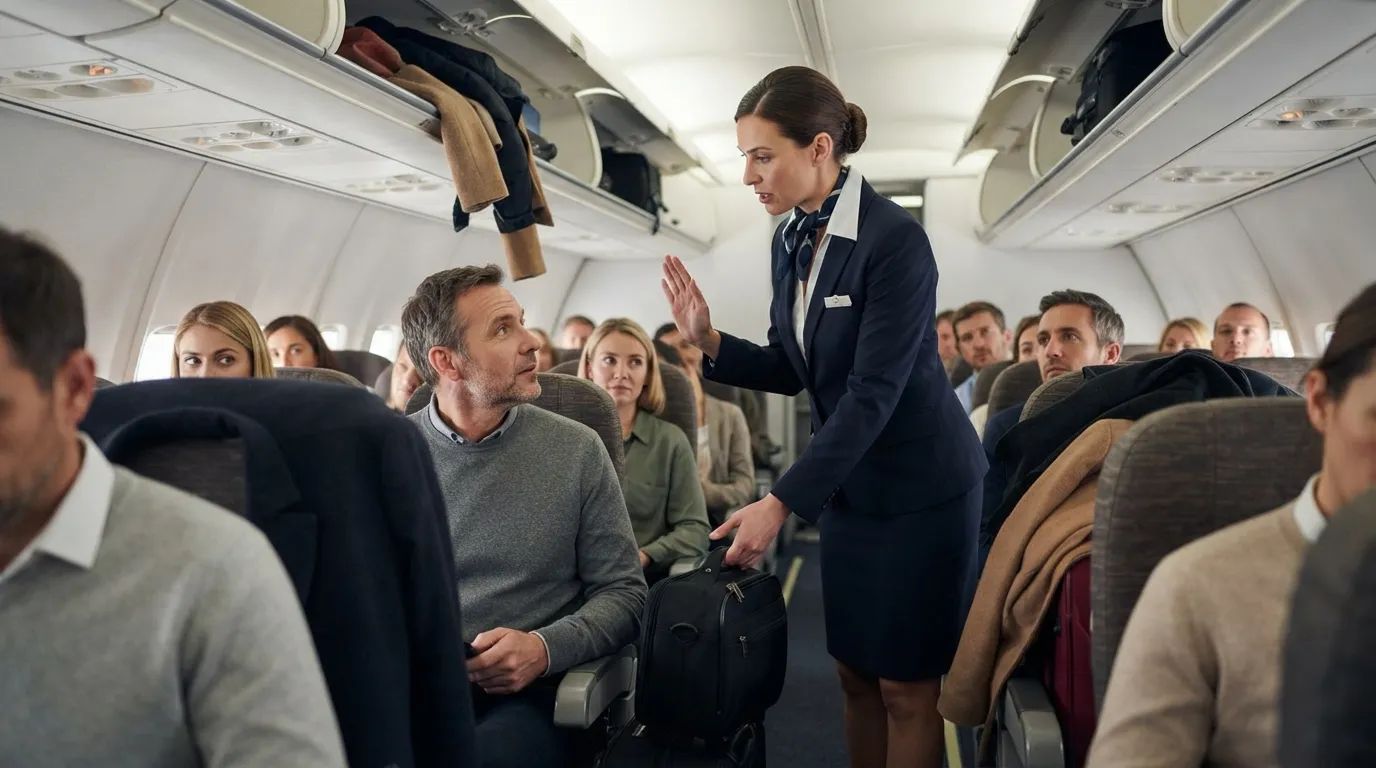
You’ve probably been told the worst thing a passenger can do is recline too far or kick the seat in front of them. Ask cabin crew and they point somewhere else: the jet bridge, the aisle, the frantic few minutes before the door closes. These 26 boarding habits look harmless from your seat, and they look very different from theirs.
The scale is bigger than you’d expect. Airlines worldwide logged about one unruly incident every 355 flights in 2025, and the most commonly reported problem wasn’t screaming or fighting. It was ignoring crew instructions. Some habits on this list can cost you your bin space, your seat, or a fine as high as $43,658, and the one at #1 ties them all together.
#26 – The Wheels-First Mistake That Keeps Bins From Closing
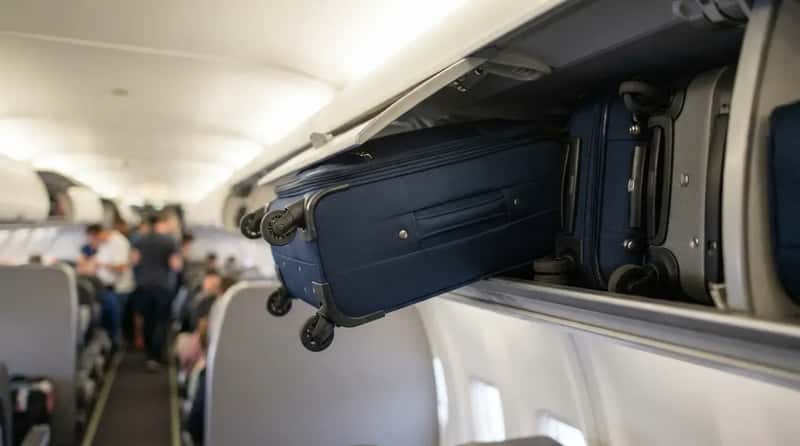
Your bag fits in the bin, but the door won’t shut. One Play Airlines flight attendant says the best way to store a roller bag is wheels-first and vertical, like a book on a shelf. That saves room for the next passenger. If a bag sticks out even slightly, the bin won’t latch.
Many passengers lay the bag flat out of habit. One suitcase placed sideways can take the space of two. The crew then has to pull it out and re-stow it while the line behind you waits.
But that’s nothing compared to what crew say about jackets in #25…
#25 – The Coat Pile-Up That Quietly Steals Bag Space
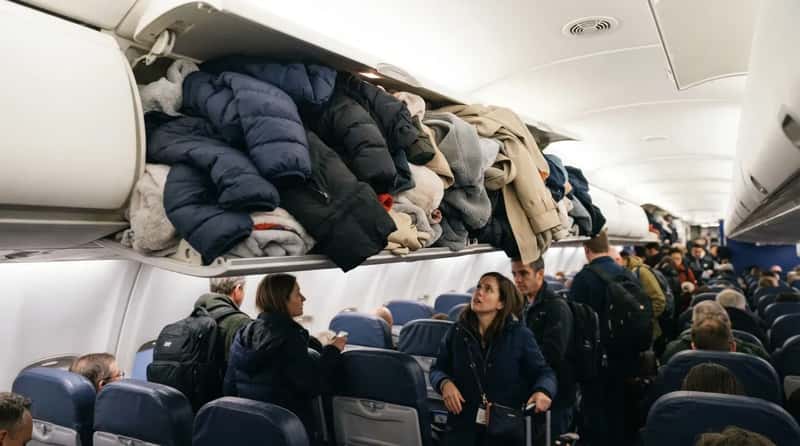
A puffy jacket can swallow bin space that a suitcase needed. Delta flight attendants advise keeping coats and blankets out of the overhead bin until everyone has boarded. The rule is simple, yet it gets ignored on almost every full flight.
The consequences are real. One United passenger said boarding crew pleaded with people not to stuff coats in the bins, and about a third of the bins still ended up full of jackets. Suitcases that should have fit got gate-checked instead.
And the next habit is even more common…
#24 – The Personal Item Parked Overhead Before the Suitcases Arrive
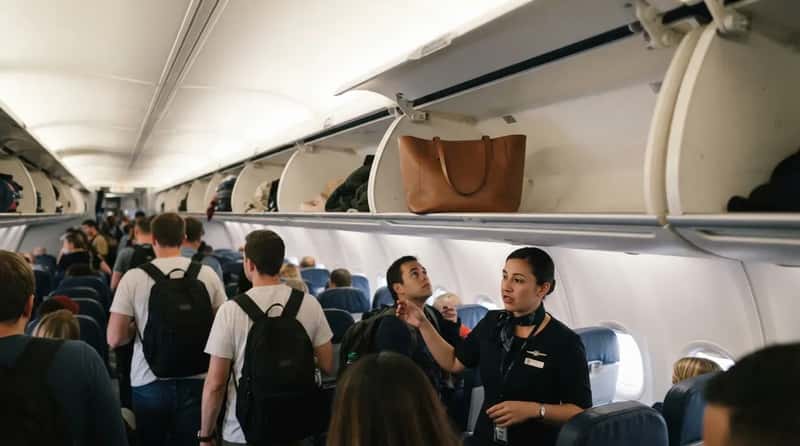
Your purse isn’t supposed to ride upstairs. Bins are designed for larger carry-on suitcases, and smaller personal items are meant to go under the seat in front of you. Crew see this mistake on nearly every boarding.
A personal item in the bin can eat up space before everyone has finished boarding. The last people on can be left with nowhere to put a paid carry-on. Then the crew has to sort it out on the spot.
Wait until you hear how territorial it gets in #23…
#23 – “That’s My Bin”: The Space Nobody Actually Owns
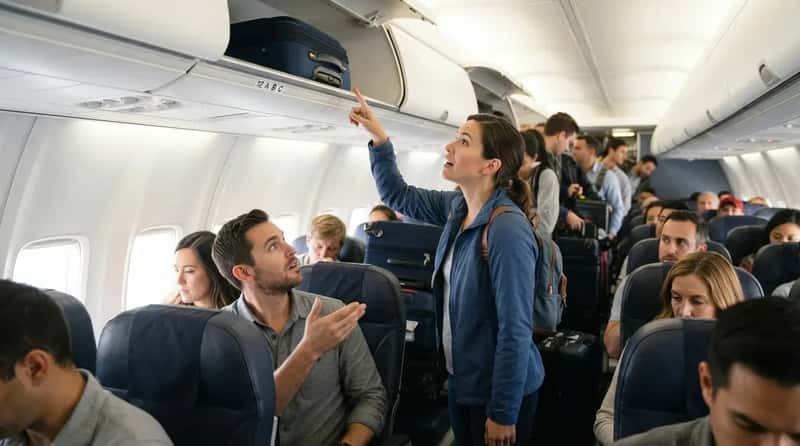
The bin above your seat is not yours. One Delta flight attendant says people claim the space above their seat all the time, and the answer is always the same: there’s no assigned bin space. Sitting under a bin doesn’t buy you the bin.
The space belongs to everyone in that section, so you may have to stow your bag a few rows ahead. Some bins also hold safety equipment and can’t be used for luggage at all. Fighting over a bin that was never available is a losing argument.
Even the simplest part of boarding gets blocked in #22…
#22 – The Aisle Stop-and-Rearrange That Freezes the Whole Plane
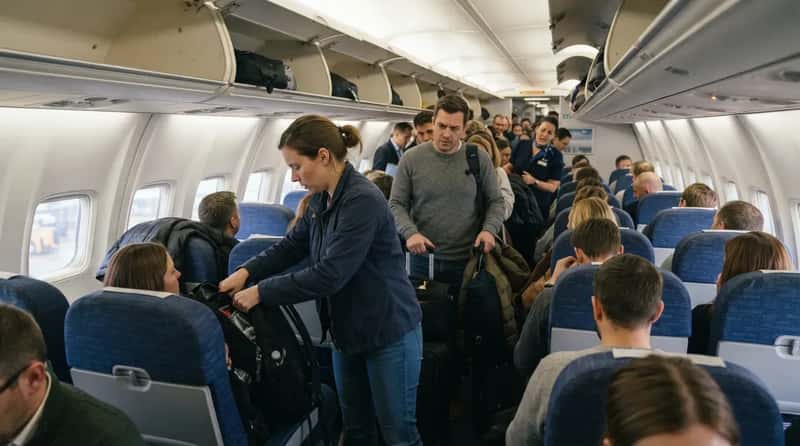
One person digging through a backpack can stall 100 people. Boarding is one of the most stressful phases of a flight, with congestion in narrow aisles while crew juggle important duties. A single stopped passenger blocks everyone behind them.
Crew say the fix is to step into your row first. Then you can sort your things without plugging the aisle. Even a ten-second pause can back the line up into the jet bridge.
But the biggest line-breaker comes next in #21…
#21 – Boarding Before Your Group Is Called
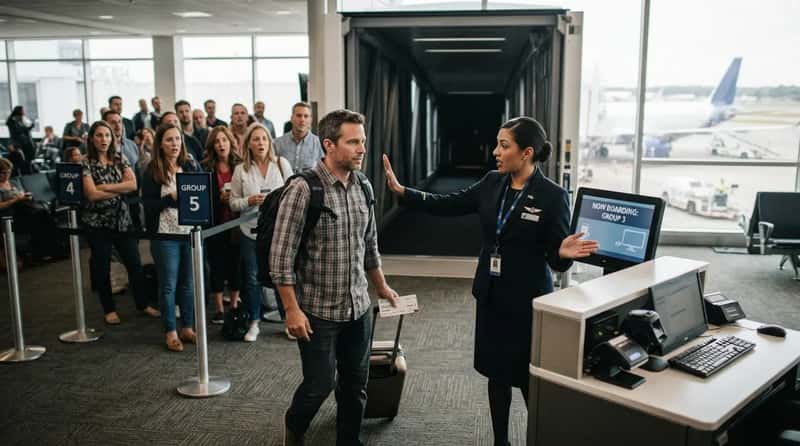
The crowd at the gate is not a line. Airlines board in groups for a reason: so the aisle keeps moving and the bins fill in a predictable order. When someone walks on early, the whole sequence falls apart.
Gate agents usually catch it, but not always. Passengers who paid for early boarding can arrive to find their bin already full. Crew then have to untangle the problem on the aircraft.
Next, the argument crew hear before every departure…
#20 – Arguing About the Gate-Check When the Bins Look Empty
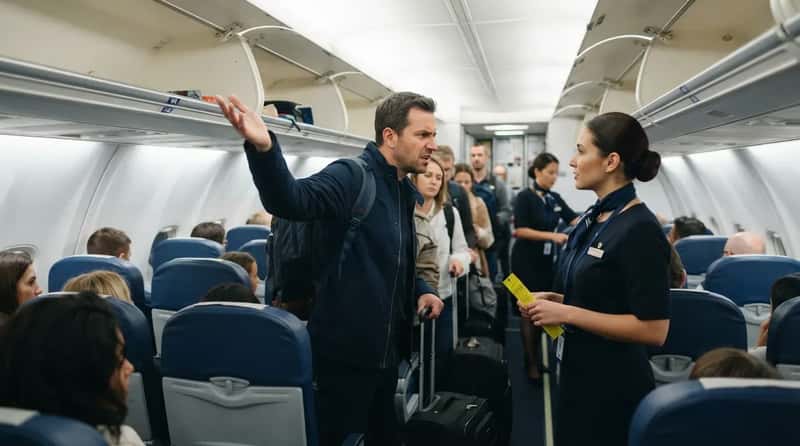
“But the bins are empty!” Crew and gate agents hear it constantly. Turns out, it’s not about the space you can see. It’s about the space the airline knows will be filled once everyone is on board.
An expert quoted by Reader’s Digest says gate-checking is often about speeding up boarding or enforcing policy early. The argument usually takes longer than the gate-check would have. Meanwhile the line behind you stands still.
The next mistake is about where your bag lands, not whether it fits…
#19 – Stashing Your Bag in a Cabin You Didn’t Buy
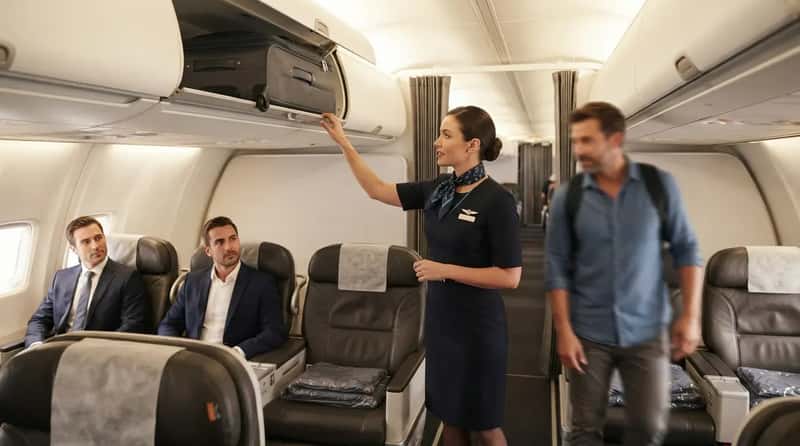
An empty first-class bin looks tempting. It isn’t yours. Delta flight attendants advise placing luggage in the class where your ticket was purchased, and crew see this on nearly every flight with a premium cabin.
Passengers who paid for the front cabin board expecting space. Crew may have to take your bag back out and move it to economy. That happens in front of everyone, and it holds up boarding.
But the opposite habit causes just as much trouble in #18…
#18 – Locking Your Essentials in the Overhead Bin
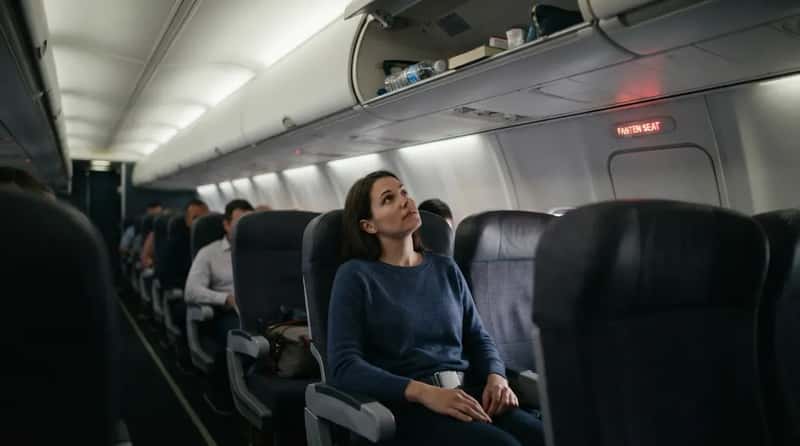
Your water, snacks, and medication are now out of reach. A former flight attendant says not to leave entertainment, medicine, snacks, or water in the overhead locker. You’ll want them 20 minutes after takeoff.
If the seatbelt sign is on, you can’t stand up to get them. Crew then end up fetching items or turning down requests during turbulence. It’s a small mistake with an awkward consequence.
The next one involves a hazard you can’t see coming…
#17 – The Backpack Swing That Takes Out Seated Passengers
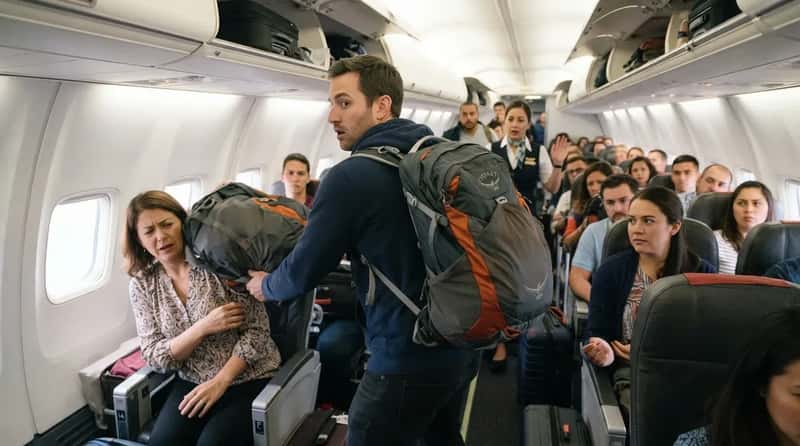
A backpack adds depth you can’t see. Turn around in a narrow aisle and it clips everyone in the aisle seats. Crew watch this happen row after row.
Nobody means to do it. Seated passengers are at exactly head and shoulder height for a swinging pack. Taking it off and carrying it by the handle before you enter the aisle avoids the problem.
Then there’s the seat drama that begins in the aisle in #16…
#16 – Haggling Over Seats in the Aisle
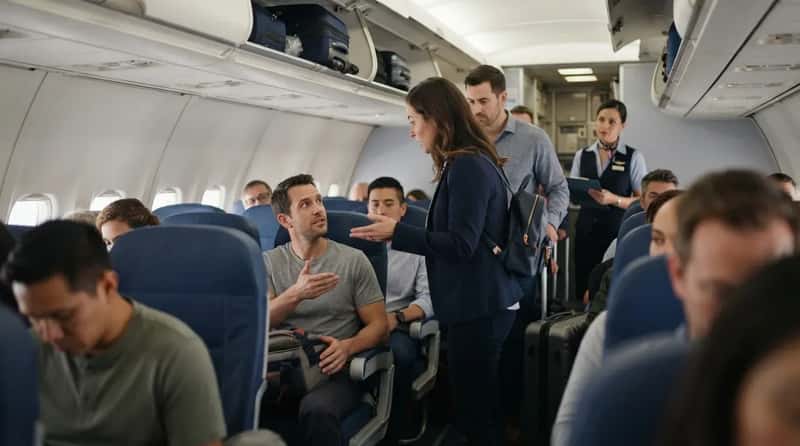
Seat swaps are the biggest unofficial negotiation on any flight. Passengers ask strangers to move so a family can sit together, or so they can get a window. It usually happens while the aisle is jammed.
Crew would rather you ask them, after boarding finishes. Some seats come with rules that make a casual swap impossible. The exit row is the best-known example, and it’s coming up.
Few things spread faster than what comes next in #15…
#15 – Boarding With Strong-Smelling Hot Food
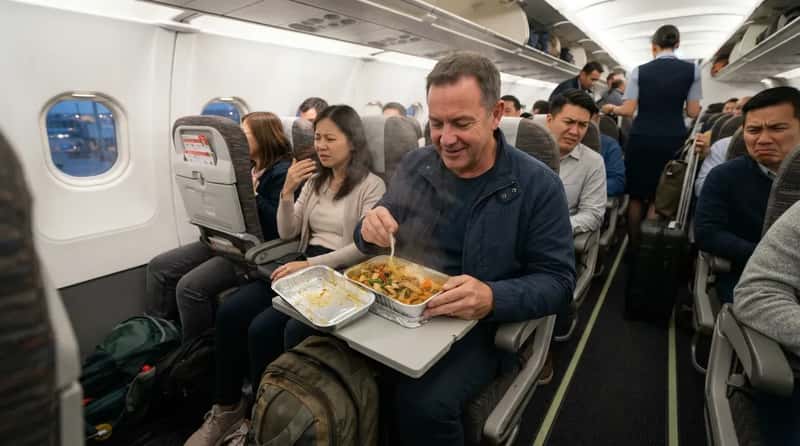
A takeout order smells wonderful to the person who bought it. In a sealed cabin, it follows everyone. Flight crews field complaints about food smells as often as almost any other issue.
The cabin is small and the rows are close together. Your meal becomes the smell for the whole section. Choosing something mild is a quiet courtesy to the people who can’t leave.
The next habit affects safety, not just comfort…
#14 – Staying on Your Phone Through the Safety Briefing
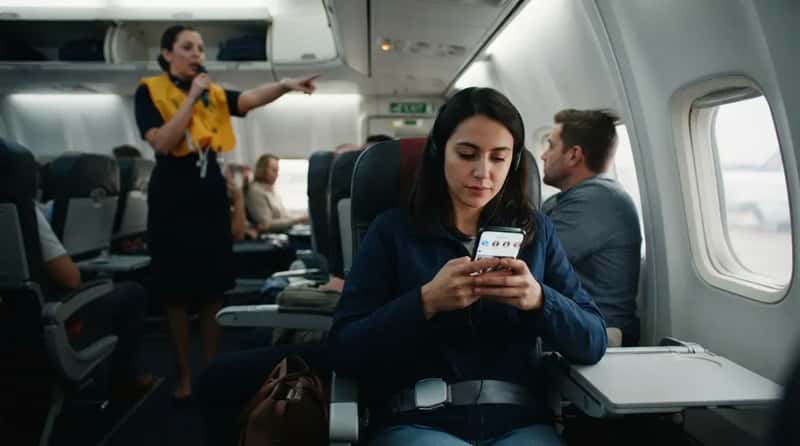
Everyone has heard it before. That’s exactly why people tune it out. Crew give the briefing on every flight because the one time it matters, there’s no time to learn it.
A phone call or a scroll during the briefing sends the wrong message. Crew say the demonstration is a legal requirement, not a courtesy. Putting the phone down for a couple of minutes is all they ask.
Fast Facts
- Federal rules require crew to brief passengers before takeoff.
- The briefing covers seat belts, exit locations, and oxygen masks.
- The safety card in your seat pocket is specific to your aircraft type.
- Your nearest exit may be behind you, so look for it when you sit down.
And then there’s the problem of not hearing the crew at all in #13…
#13 – Both Earbuds In While Crew Are Talking
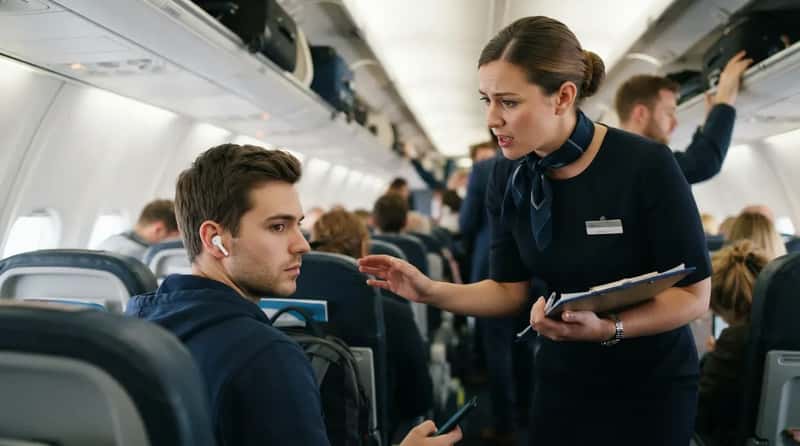
Noise-canceling headphones can hide the one announcement you needed. During boarding, crew give instructions about bags, seats, and doors. If you can’t hear them, they have to repeat everything, sometimes row by row.
In an emergency, the stakes are higher. Crew need to be able to reach you in a few seconds. Taking out one earbud during boarding is a small price.
The next mistake could block an escape route…
#12 – The Bag Left Half Under the Seat
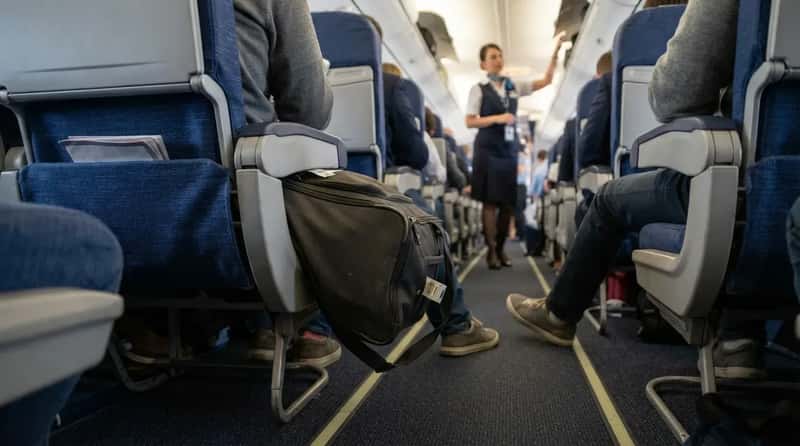
Your bag sticks out into the aisle by a few inches. It seems like nothing. One flight attendant says an item under the seat must be fully under it, so it doesn’t block quick access to the aisle in an emergency.
Crew check for this during final preparation. A strap in the aisle is a trip hazard in the dark or in smoke. If your bag won’t fit, it may belong in the bin.
But boarding troubles aren’t just about bags, as #11 shows…
#11 – Camping in the Galley or Lavatory Line During Boarding
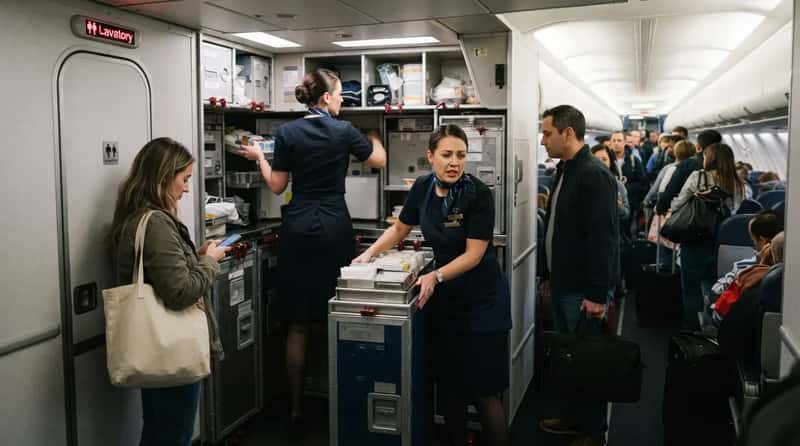
The galley looks like open space. It’s actually the crew’s workspace. Passengers use it for stretching or phone calls while crew are trying to load supplies and run checks.
The same goes for the lavatory line during boarding. Crew are finishing pre-departure tasks and need the aisle clear. Using the restroom in the terminal first is easier on everyone.
The next request is one crew can’t say yes to, even if they want to…
#10 – Asking the Flight Attendant to Lift Your Bag
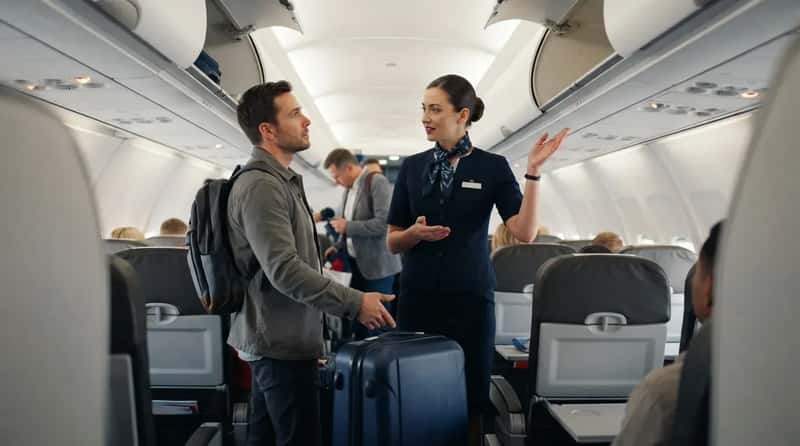
It seems like a polite favor. It usually isn’t allowed. One flight attendant explains that crew can’t lift bags for passengers because of safety policies. They can guide you or help reposition items if needed.
The reason is injury risk. Most airlines prohibit crew from handling large suitcases to prevent back injuries. If you can’t lift your bag over your head, check it at the gate. Crew often make exceptions for passengers with disabilities, but not as a general rule.
Worth Knowing
- Policies vary by airline, but lifting passengers’ bags is commonly off-limits for crew.
- If you have an injury or disability, tell the gate agent before boarding starts.
- Gate-checking is usually the quickest fix for a bag that’s too heavy to lift.
- Packing heavy items in your under-seat bag keeps the overhead load lighter.
The next habit looks small but sends the wrong signal in #9…
#9 – Snapping Fingers or Waving Crew Down During Boarding
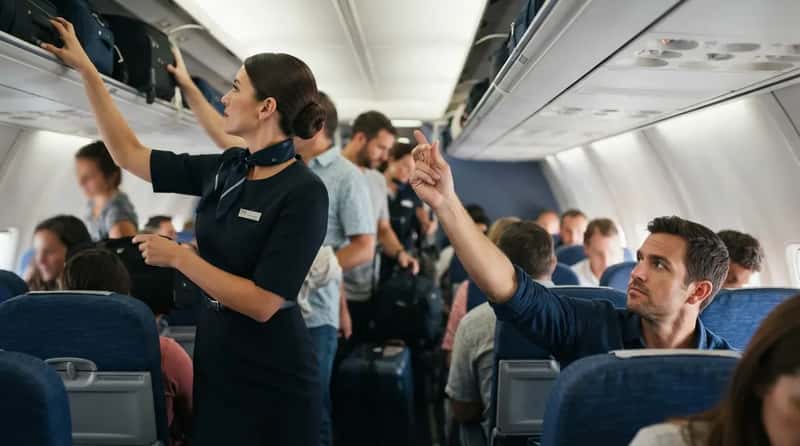
It takes about two seconds and it’s the fastest way to get ignored. During boarding, crew are managing the aisle, the bins, and the door all at once. A non-urgent request can wait until the doors are closed.
Crew say a little courtesy goes a long way. A calm hello gets you further than a wave. Waiting for the right moment also gets you a better answer.
The next move is one that many passengers think is harmless…
#8 – Moving to an Empty Seat Without Asking
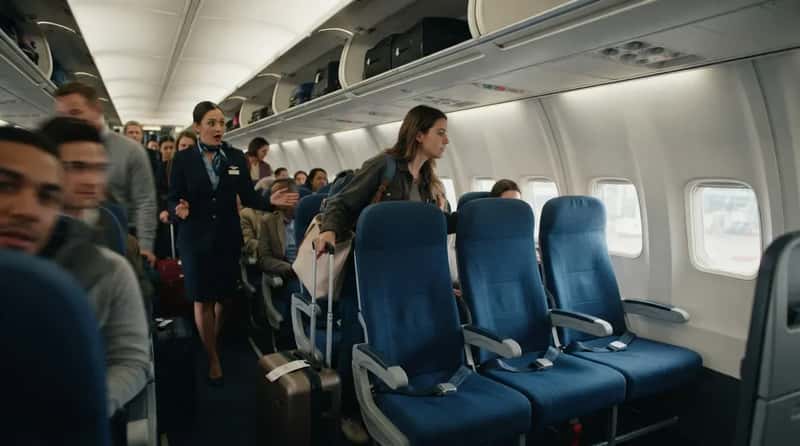
An empty row looks like free space. It’s also a decision the crew should make. On smaller aircraft especially, where passengers sit can affect how the plane is balanced.
Crew can also see things you can’t. That row may be held for a crew member, a passenger with special needs, or a late arrival. Asking first takes a few seconds and can save you a public correction.
The next seat comes with actual duties attached…
#7 – Taking the Exit Row for the Legroom and Nothing Else
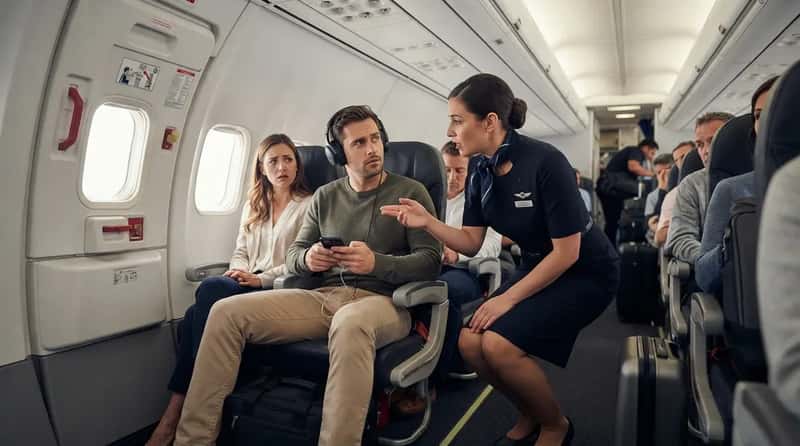
The exit row is sold as extra legroom. Crew see it as a job. Passengers there must be willing and able to help open the exit and assist others in an evacuation. If you can’t or won’t, crew can move you.
The briefing is where it gets awkward. Passengers who wear headphones, don’t speak English, or say they’d rather not help get reseated. Many travelers argue the seat should be sold as a responsibility, not a perk.
Quick Compare
- The perk: extra legroom, often on a pricier seat.
- The job: be willing and able to open the exit and help others out.
- The rules: federal rules bar passengers under 15 from exit rows.
And then there’s the part of takeoff prep that many people skip in #6…
#6 – Leaving the Tray Table and Seat Back Out of Place
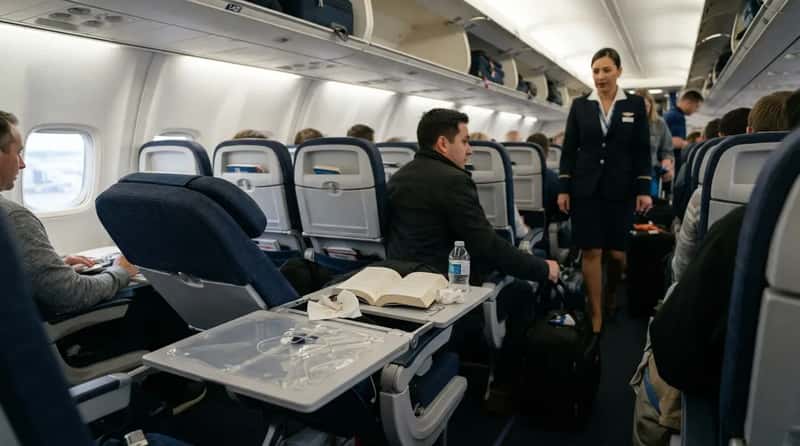
Crew walk the aisle before every departure, checking small things. A tray table left down or a seat back left reclined is one of them. These items need to be stowed for takeoff and landing.
It sounds trivial, but crew say it delays pushback. A row of passengers who ignore the request can hold up the whole flight. Doing it before the crew arrives avoids the exchange.
The next mistake makes the crew’s work much harder in #5…
#5 – Standing Up or Unbuckling After the Doors Close
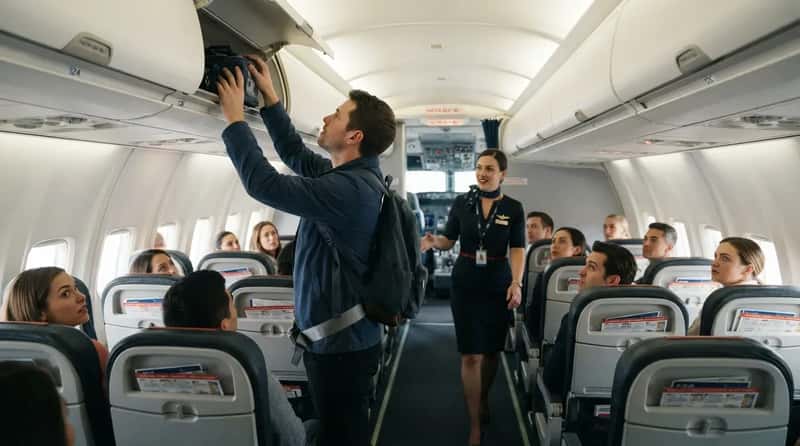
The doors close and some passengers start moving. Maybe they want something from the bin or a word with a friend. Crew have to ask them to sit down again.
Federal rules require passengers to be seated and belted during taxi, takeoff, and landing. A single standing passenger can delay the aircraft. In a worst case, the plane can return to the gate.
The next trick is one crew spot immediately in #4…
#4 – Sneaking an Oversized Bag Past the Gate
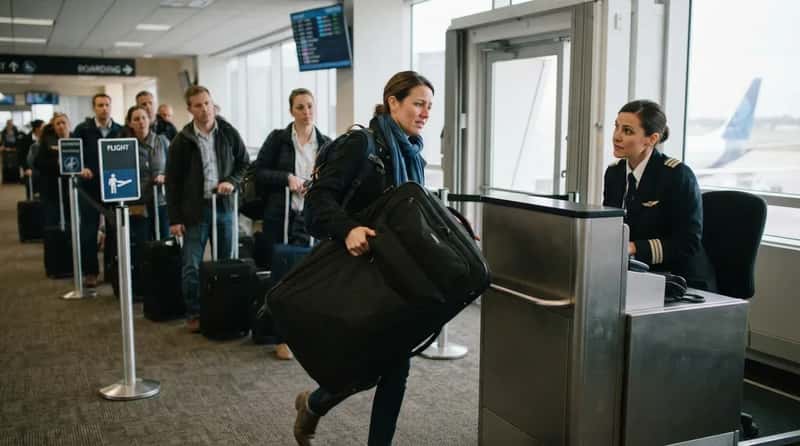
Everyone knows the person who holds a bag at an odd angle to hide its size. Crew know them too. Some airlines restrict full-size carry-ons on the cheapest fares, so a hidden bag can mean a charge or a gate-check.
The trick rarely works. Crew can often tell at a glance whether a bag will fit in the bin. The result is a delay while the crew sort it out, with the whole line watching.
But the next two problems are the serious ones…
#3 – Boarding After Too Many Drinks at the Gate Bar
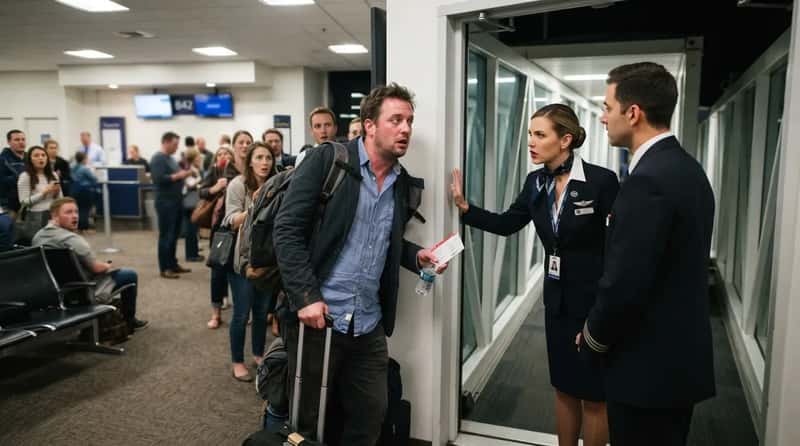
A drink at the terminal bar feels like part of the trip. For crew, it’s a problem waiting to happen. FAA regulations prohibit airlines from allowing intoxicated passengers to board.
The airline can refuse you, even if you already have a boarding pass in hand. Crew make the call based on how you walk, talk, and respond. It’s a decision they’d rather not make at the door.
At a Glance
- A boarding pass doesn’t guarantee you a seat if you appear intoxicated.
- Crew judge by walking, speech, and how you respond to them.
- A refused boarding usually means a missed flight.
- The terminal bar’s pour doesn’t factor into the airline’s decision.
And what happens after boarding is even more serious in #2…
#2 – Drinking Your Own Alcohol on Board
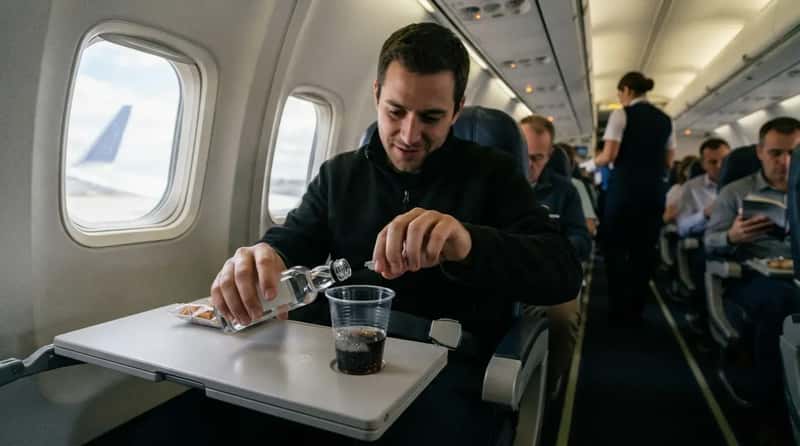
That bottle from the duty-free shop isn’t for the plane. FAA rules prohibit passengers from drinking alcohol on board unless a flight attendant served it. Crew can’t tell how much you’ve had if they didn’t pour it.
This one comes with real penalties. Civil penalties can reach $43,658 per violation. A drink you poured yourself can cost more than the flight. And crew say it often leads to the biggest problem of all.
The number one item on this list is the one crew say matters most…
#1 – Ignoring a Crew Member’s Instruction
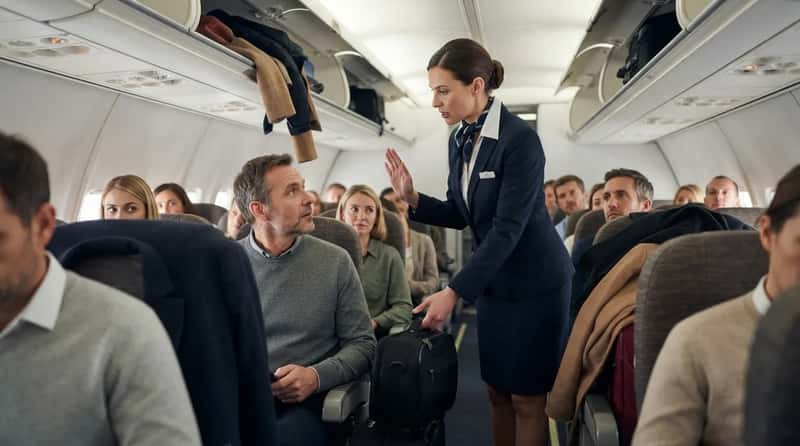
Every item on this list comes back to this one. Non-compliance with crew instructions is the most frequently reported type of unruly behavior, according to IATA. It’s not the loudest behavior, but it’s the most common.
It often starts small: a bag, a seat belt, a phone. IATA notes that these acts are committed by a minority of passengers but have a disproportionate impact. The FAA has a zero-tolerance policy. Crew can’t fix what passengers won’t follow. They’re trained for your safety, and every instruction has a reason.
Crew say most of these behaviors aren’t about bad people. They’re small habits that pile up in a narrow aisle: the coat in the bin, the backpack swing, the bag half under the seat. Each one looks harmless on its own, but together they slow boarding and wear down the people trying to get everyone home safely.
The next time you step onto a plane, notice how few feet of aisle 150 strangers have to share. The smoothest boardings usually come from people who remember that.