Most people assume the worst part of flying is turbulence or a middle seat next to a stranger who wants to talk. Ask anyone who has actually worked a check-in counter, and they’ll tell you a different story entirely. The real chaos happens before anyone even reaches security, and it’s almost never a fluke – it’s the same handful of avoidable habits, on repeat, every single day.
What looks like a harmless five-second delay to a passenger reads completely differently to the person standing behind the counter. Here’s what airline staff actually deal with day after day, and why some of these “small” habits quietly push them past their limit.
#26 – Sprinting Up to the Counter With Minutes to Spare, Then Acting Shocked
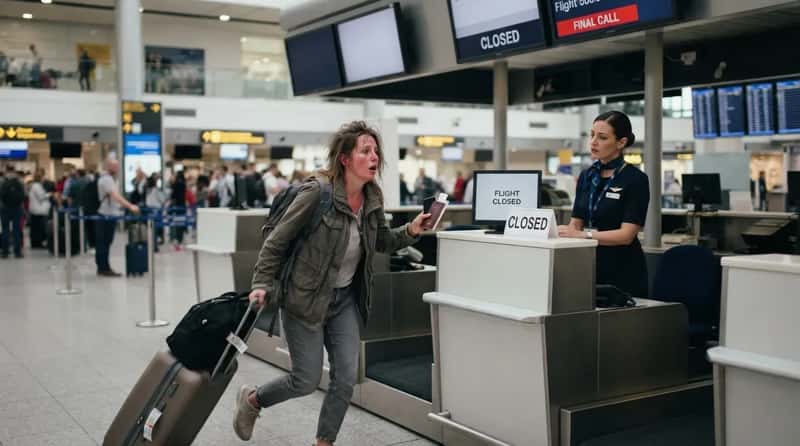
Cutting it close feels efficient right up until the counter closes in your face. International cutoffs typically sit 60 minutes before departure, and domestic ones aren’t far behind, yet travelers still treat those windows as friendly suggestions.
Staff don’t set these deadlines to be difficult. The bag has to make it onto the aircraft, get loaded, and get accounted for before departure, and that process has a hard stop built into it. Showing up breathless and asking for an exception just transfers the stress onto someone who has zero power to bend the clock.
#25 – Trying to Negotiate an Overweight Bag Like It’s a Garage Sale
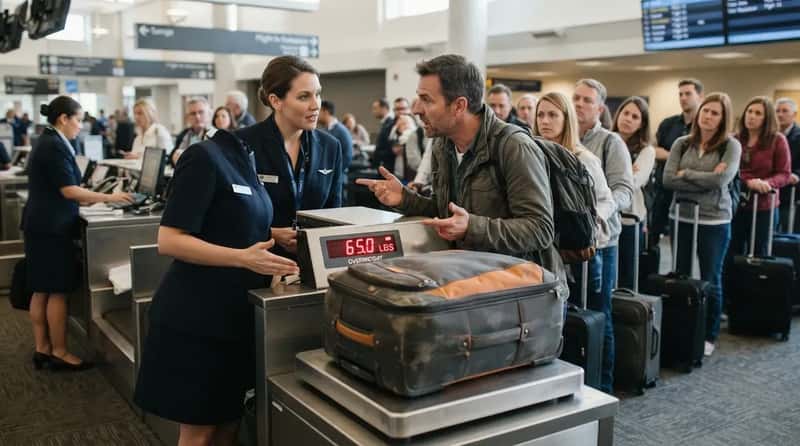
Fifty pounds is fifty pounds, no matter how politely someone asks for “just a little grace.” Agents hear the same pitch dozens of times a day, and the scale never magically agrees.
The math isn’t personal – weight limits exist because of fuel calculations and cargo hold capacity, not staff preference. Arguing over a 15-pound overage rarely works, but it reliably eats five extra minutes every single time. The line behind that traveler grows while the negotiation drags on, and nobody actually wins the standoff.
#24 – Handing Over ID That’s Buried Inside the Bag Already on the Belt
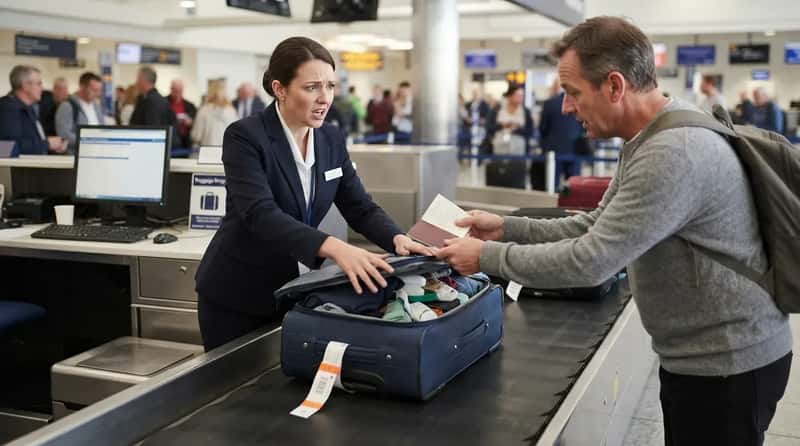
Nothing stalls a line faster than a passport or driver’s license surfacing from the depths of a suitcase that’s already halfway down the conveyor. It happens constantly, and it’s almost always avoidable.
The fix is embarrassingly simple: keep ID in a pocket, not packed away. Staff have to physically stop the belt, sometimes flag down ramp workers, just to retrieve a bag that’s already tagged and moving. That single mix-up can hold up boarding for an entire flight, not just the one passenger who caused it.
#23 – Packing Spare Batteries and Power Banks in Checked Luggage
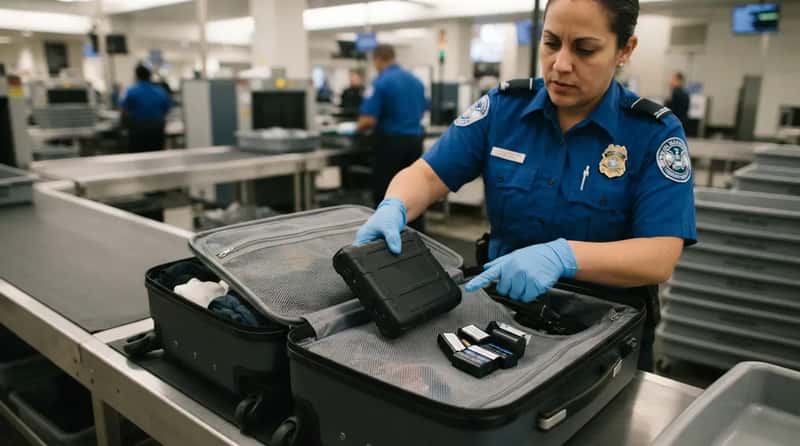
This one isn’t just annoying – it’s an actual safety rule most travelers have never bothered to learn. The FAA says spare lithium batteries and power banks must stay in carry-on baggage only, never checked.
Fast Facts
- Rechargeable batteries with a capacity of 0-100 Wh are allowed on passenger aircraft, while those with a capacity of 101-160 Wh require approval from the air carrier, and batteries exceeding 160 Wh are forbidden.
- Larger batteries in the 101-160 Wh range are capped at two spares per person, even with airline approval.
- Spare lithium batteries (including power banks and portable chargers) must be carried on and cannot be checked.
- Anything above 160 watt-hours simply isn’t allowed on a passenger aircraft at all.
Loose lithium batteries in a cargo hold are a genuine fire risk without a crew member nearby to react, which is exactly why the rule exists. If a carry-on gets checked at the gate or planeside, those items have to be pulled out and kept with the passenger in the cabin. Staff who catch this at check-in have to pull the bag apart on the spot, turning a routine drop-off into a scavenger hunt.
#22 – Trying to Check a Vape or E-Cigarette in the Suitcase
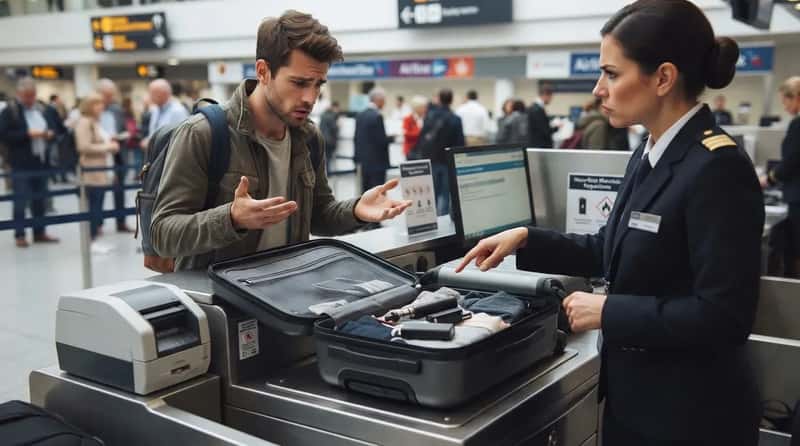
Right alongside the battery rule sits one travelers ignore just as often. The FAA also requires electronic smoking devices to be carried on your person or in carry-on baggage, never in checked luggage.
Staff aren’t trying to police anyone’s habits – they’re trying to keep an unpredictable ignition source out of an unsupervised cargo hold. A single confiscated vape can turn a two-minute bag drop into a full unpacking session at the counter. Keeping it in a jacket pocket takes zero effort and avoids the entire scene.
#21 – Checking In For a Travel Companion Without the Right Documents
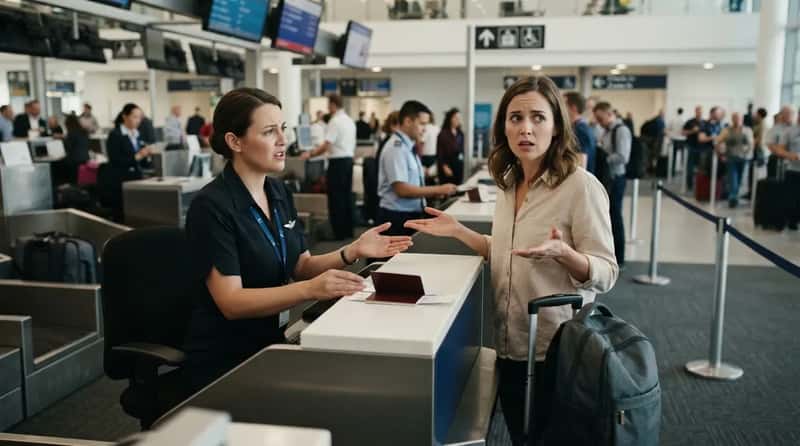
“I’ll just check in for both of us” sounds thoughtful until the agent asks for the other person’s ID and it’s nowhere in sight. This happens constantly with couples, families, and groups splitting up tasks at the airport.
Every passenger’s identity has to match their ticket exactly, no exceptions, no vouching. Agents legally cannot process someone who isn’t physically present with valid ID, no matter how convincing the explanation sounds. The well-intentioned shortcut ends up costing the whole group more time than doing it separately would have.
#20 – Mentioning a Firearm Casually, After It’s Already Packed Wrong
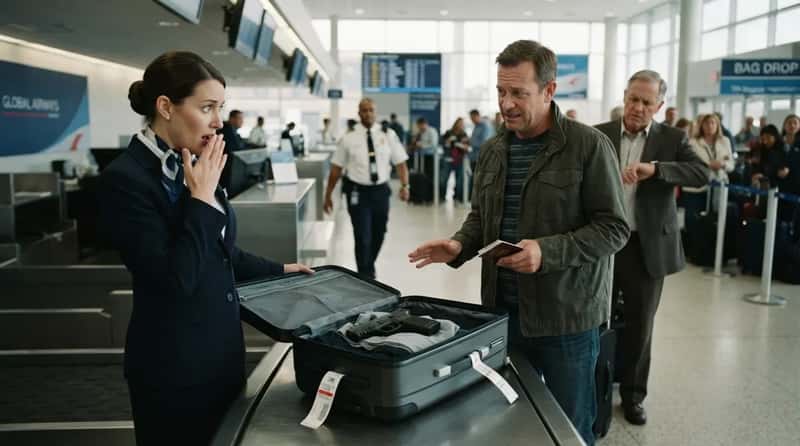
Traveling with a firearm is completely legal in checked baggage, but the process has specific steps that have to happen in order, at the counter, before the bag disappears down the belt.
Skipping the declaration or packing it incorrectly turns a routine procedure into a serious incident requiring supervisors and extra paperwork. A firearm discovered after the fact, rather than declared upfront, can delay an entire departure while the situation gets sorted out properly. Staff aren’t trying to make travelers feel like suspects – they’re following rules that exist for everyone’s safety, including the passenger’s own.
#19 – Refusing to Pay a Bag Fee, Then Trying to “Gate-Check” It for Free
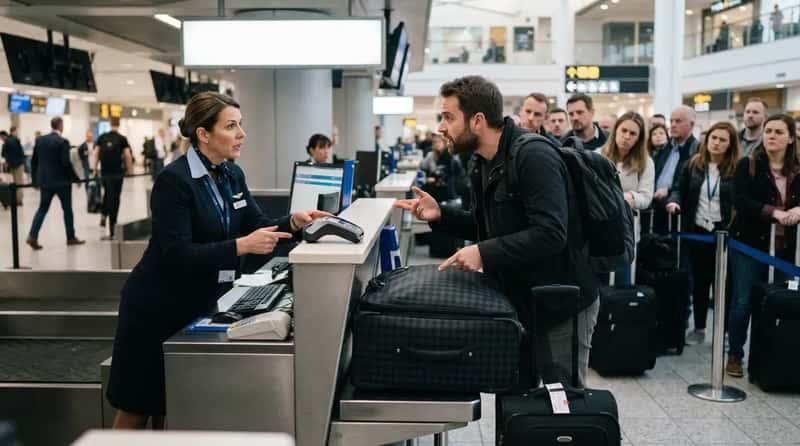
Some travelers treat the checked-bag fee as optional and expect staff to quietly wave it through if they wait until the very last second.
It doesn’t work that way, and pushing the issue just burns time everyone else in line is losing. The fee structure sits well above the counter agent’s authority, so arguing with them accomplishes nothing except a longer wait for the next twenty people. Paying it upfront, or packing lighter, avoids the standoff entirely.
#18 – Crowding the Counter Before It Even Opens
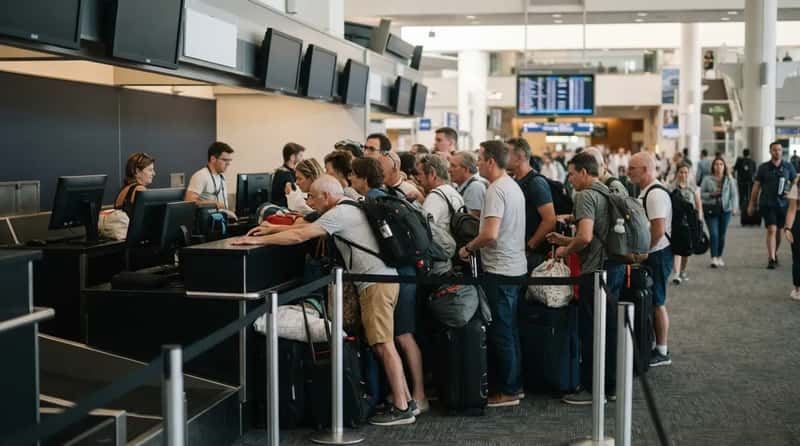
There’s a term for gate-crowders before boarding, and the counter version is just as real. “Gate lice” are passengers who position themselves early, likely so they can secure overhead space for their carry-on bags.
The same instinct shows up at check-in counters that haven’t even opened their line yet. Staff can’t process a single bag faster just because ten people are leaning over the desk before the system boots up. It just makes the eventual line harder to organize once things actually begin.
#17 – Showing Up to Check-In Already Visibly Intoxicated
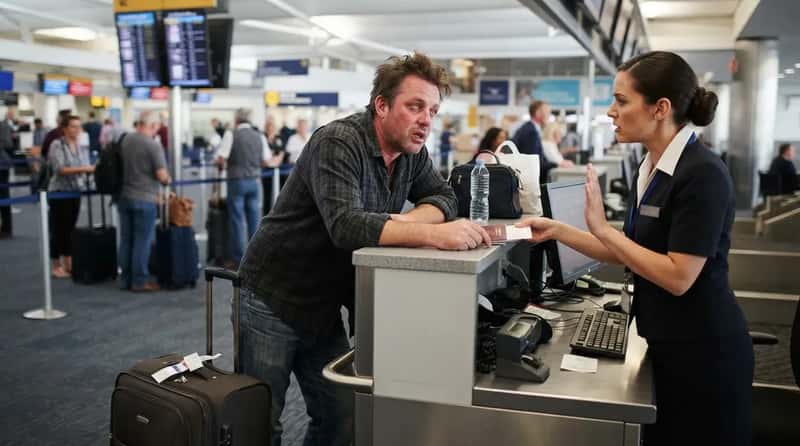
This isn’t a boarding-only problem – staff notice it the moment someone reaches the counter. FAA regulations prohibit airlines from allowing intoxicated passengers to board, and prohibit passengers from drinking alcohol that wasn’t served by a flight attendant.
When someone shows up to the counter already drunk, or orders several drinks at the airport bar beforehand, the crew notices. They’re trained to identify intoxicated passengers and have the authority to deny boarding outright. A denied-boarding call over alcohol doesn’t just ruin one trip – it can follow a passenger’s record with the airline going forward.
#16 – Calling Staff “Honey” or “Sweetheart” Like It’s Charming

What feels like friendly banter to one person reads as condescending to the employee hearing it fifty times a shift. It’s a small thing, but it never actually feels small to the person on the receiving end.
Pet names and flirty comments add up over the course of a long day, and the pattern shows up constantly at check-in counters, not just onboard. Staff quietly remember these interactions, and repeated ones can shape how much flexibility a passenger gets the next time something actually goes wrong.
#15 – Arguing About Fees As If the Agent Personally Invented Them
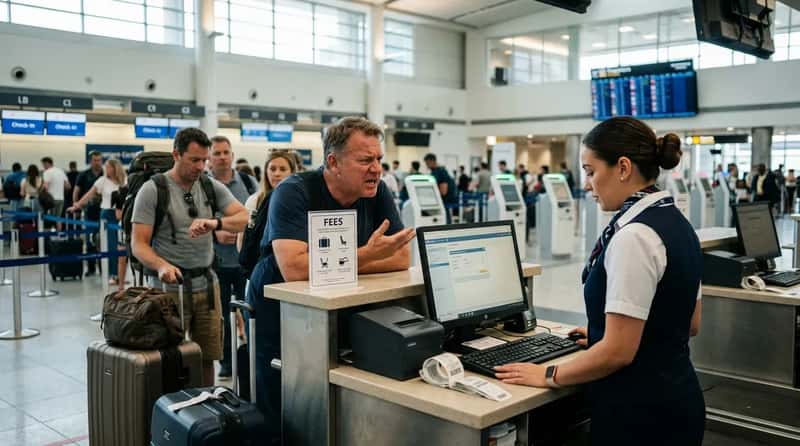
Airline pricing structures are set by corporate revenue teams, not the person scanning boarding passes, yet counter staff absorb the anger every single day.
Raising a voice over a $35 bag fee or a seat-selection charge accomplishes nothing except delaying the ten travelers waiting behind. The person at the desk has no button that removes a fee – they just have a script for explaining it, over and over, all day long. Staying calm gets a resolution faster than escalating ever will.
#14 – Bringing Wrapped Gifts That Trigger Extra Screening Every Time
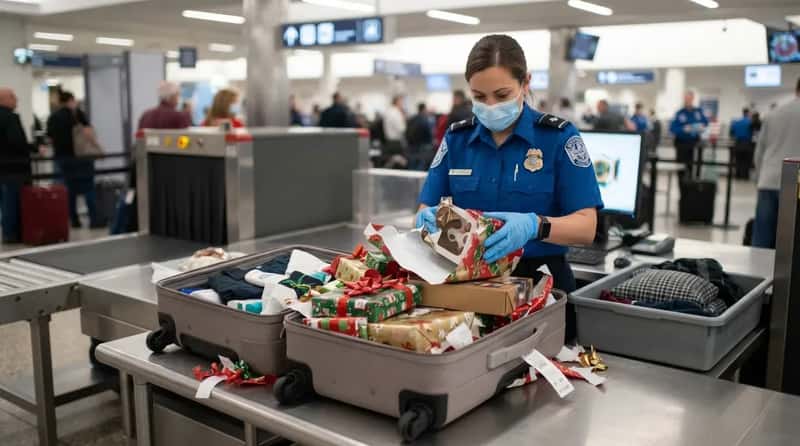
Holiday travelers love wrapping presents before the flight, not realizing it almost guarantees a manual bag check somewhere down the line.
Wrapped boxes hide shapes that screening equipment can’t read clearly, which means torn paper, re-wrapped gifts, and frustrated grandparents at the gate. The fix takes thirty seconds: pack gifts unwrapped and wrap them after landing. It sounds trivial, but it’s one of the most common self-inflicted delays during peak travel weeks.
#13 – Trying to Check a Pet Without the Right Carrier or Paperwork
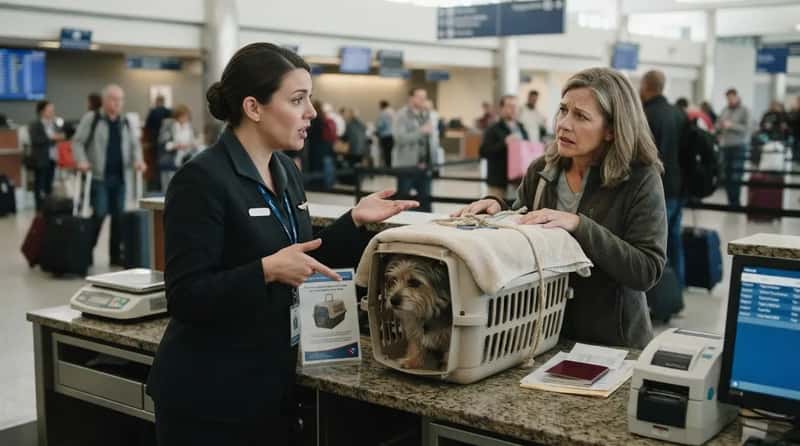
Airlines have specific carrier dimensions, ventilation rules, and health documentation requirements for pets, and travelers routinely show up assuming a laundry basket will do.
Worth Knowing
- The USDA requires that your pet must be at least eight weeks old and fully weaned before traveling.
- A health certificate from a licensed vet usually can’t be dated more than 10 days before the trip.
- Almost all airlines ban brachycephalic dogs (those with a short muzzle and flattened face) from flying, especially in cargo.
- Carriers generally need to be leak-proof and well-ventilated, and pets have to stay inside them for the entire flight.
Staff can’t bend these rules on the spot no matter how much they sympathize with a stressed-out dog owner. A pet turned away at check-in isn’t a small paperwork inconvenience – it can mean rebooking an entire trip around one missing form. Confirming requirements days in advance, not at the counter, is the only real fix.
#12 – Demanding a Free Upgrade Because It’s a Birthday, Honeymoon, or “Special Occasion”
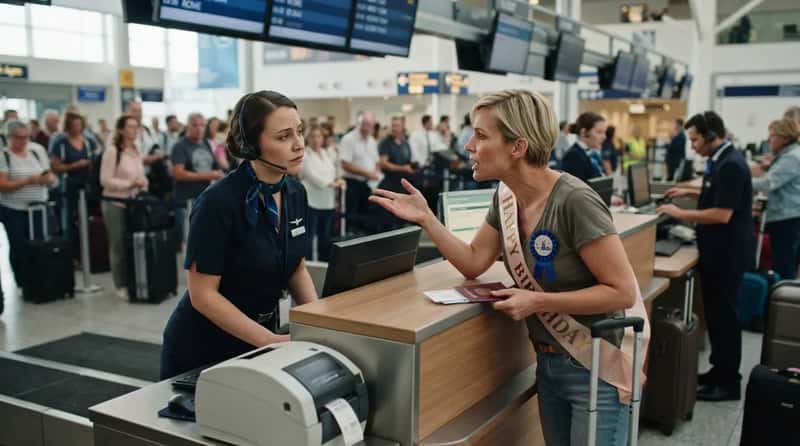
Every counter agent has heard some version of this pitch, and it almost never results in a free seat change, no matter how heartfelt the delivery.
Upgrades run on loyalty tiers, fare class, and available inventory – not how meaningful the trip is. Announcing a birthday doesn’t unlock hidden seats; it just adds another awkward conversation to an already packed shift. Paying for the upgrade, or using miles, remains the only reliable path.
#11 – Not Knowing the Destination City or Flight Number When Asked
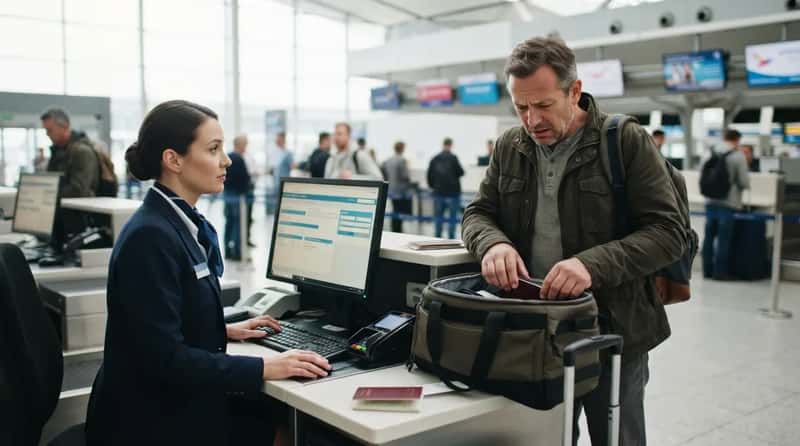
It sounds impossible, but it happens weekly: a traveler steps up to the counter and can’t confirm where they’re actually flying that day.
Confirmation numbers get lost, printouts get left in the car, and suddenly the agent is doing detective work instead of processing a boarding pass. A simple screenshot of the confirmation email would solve this instantly, yet most people never think to save one. It’s a two-second fix that prevents a five-minute scramble.
#10 – Traveling Internationally on an Expired Passport
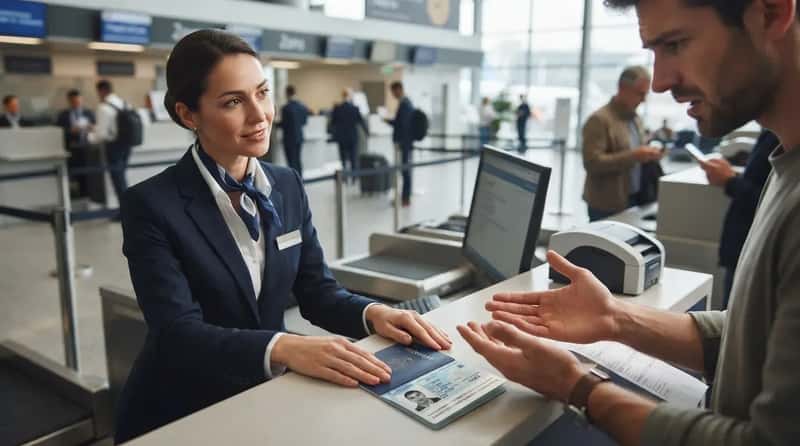
This is the mistake that ends trips entirely, not just delays them, and it happens more often than most travelers assume it could.
Many countries also require passports valid at least six months beyond the travel dates, a rule travelers frequently forget entirely. An expired or soon-to-expire passport can mean a denied check-in with zero recourse, even with a fully paid, non-refundable ticket. Staff genuinely hate delivering this news because there’s nothing they can do to help.
#9 – Booking Under a Nickname That Doesn’t Match Government ID
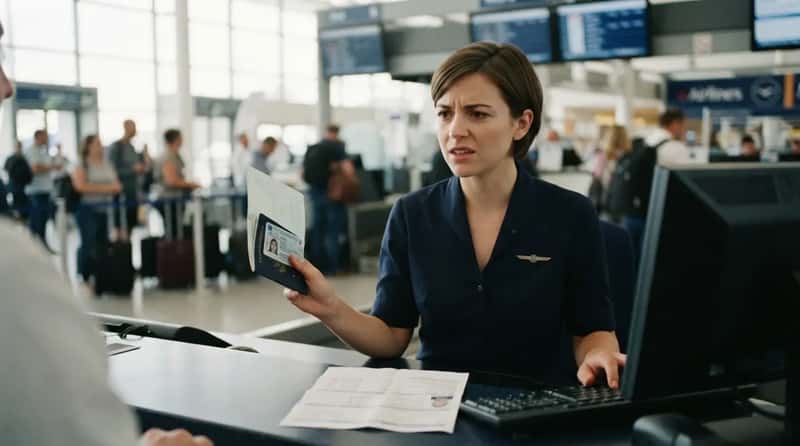
“Mike” on the reservation and “Michael” on the passport shouldn’t matter, except airline systems and security databases don’t see it that way at all.
Name mismatches can flag a booking for extra review or, in stricter cases, block check-in entirely until it’s corrected. Fixing a name error after the fact often requires a phone call to a separate department, not something the counter agent can resolve alone. Booking with the exact legal name avoids this completely.
#8 – Bringing an Oversized Bag and Insisting It’s “Basically Carry-On Size”
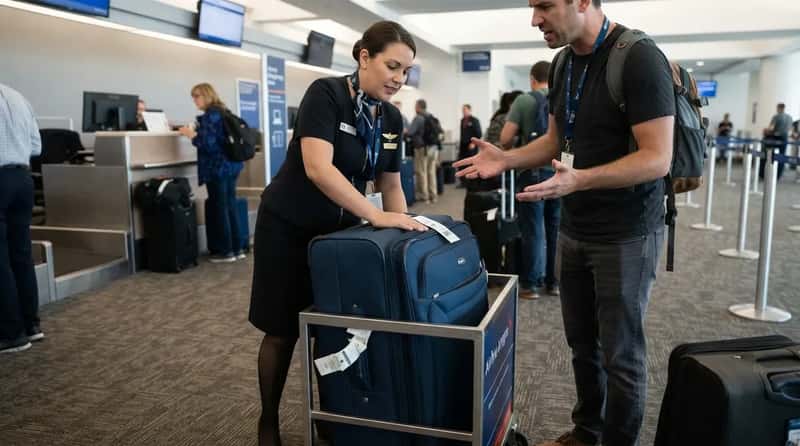
Every airline posts exact carry-on dimensions, yet travelers still show up with bags that clearly exceed them, then act surprised when it’s flagged at the gate.
I wish people would just follow the rules. The bag either fits in the compartment, or it doesn’t. If you can’t get it to fit, then you’re going to have to check it.
Gate agent
Measuring a bag before leaving home takes two minutes and eliminates an entire category of counter arguments before they even start.
#7 – Ignoring the Liquids Rule and Getting Flagged Every Single Trip
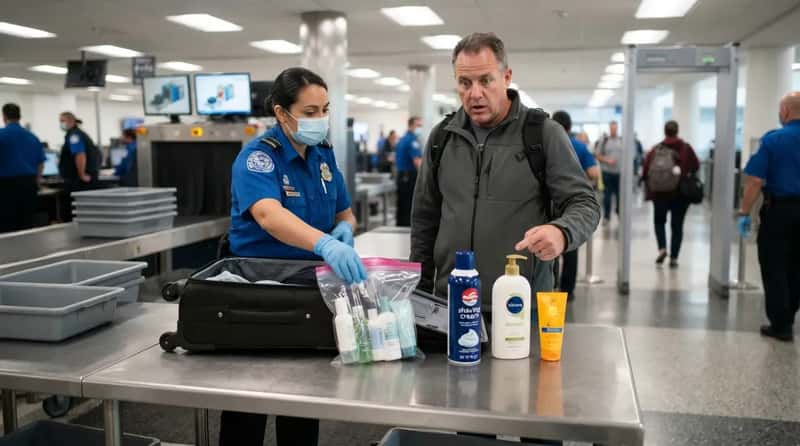
Some travelers treat the liquids rule as optional, packing full-size bottles and acting shocked when security pulls their bag aside yet again.
At a Glance
- These are limited to travel-sized containers that are 3.4 ounces (100 milliliters) or less per item.
- All of those containers have to fit inside a single quart-size bag, and each traveler only gets one bag.
- Medically necessary liquids can exceed the limit as long as they’re declared at the checkpoint.
- Anything over the limit that isn’t declared gets confiscated on the spot, not sent back to a checked bag.
Repeat offenders create repeat delays, and staff can spot the same mistake happening to the same traveler trip after trip. Travel-size bottles cost a few dollars and solve the problem permanently.
#6 – Letting Kids Run Unsupervised Around a Busy Check-In Hall
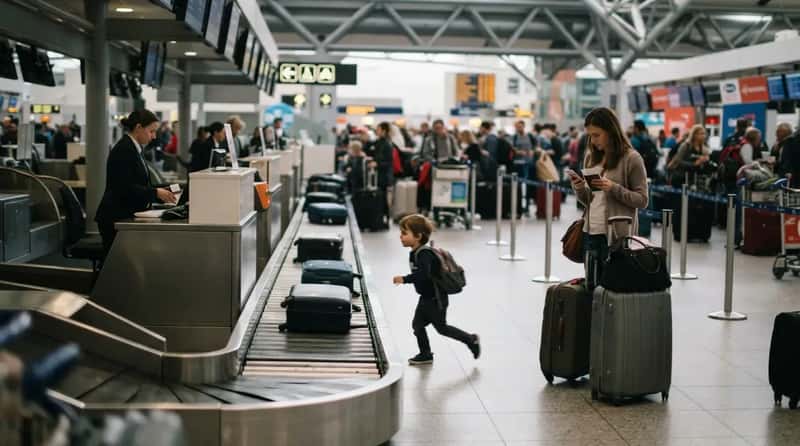
A check-in hall isn’t a playground, but during peak travel hours it often becomes one, with parents distracted by phones or paperwork.
Unsupervised kids near moving conveyor belts, luggage carts, and crowded lines create genuine safety concerns, not just noise complaints. Staff have had to stop bag belts entirely because a child wandered too close, turning a minor distraction into a real hazard. A few minutes of attention prevents the entire scenario.
#5 – Filming the Argument Instead of Actually Resolving It
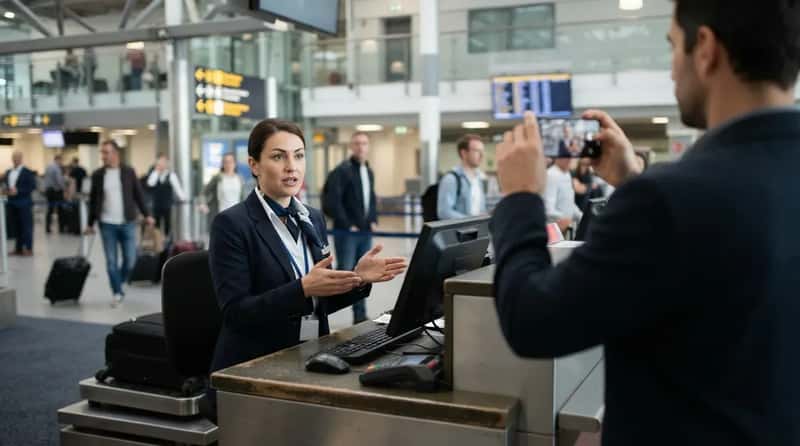
Somewhere along the way, phones came out faster than patience did, and now every heated moment at the counter risks becoming content instead of a solved problem.
Why It Stands Out
- A phone recording doesn’t speed up rebooking, refunds, or missed connections – the outcome stays the same either way.
- Supervisors are trained to stay calm whether or not a camera is pointed at them, which limits how dramatic the footage actually turns out.
- Viral clips almost never show the rule that started the disagreement, just the raised voices that followed.
- Asking for a supervisor directly, off camera, usually gets a faster answer than posting for an audience.
Staff are trained to stay calm on camera, but filming rarely speeds up a resolution – it just adds pressure and an audience to an already tense interaction. The traveler filming still leaves with the same delayed bag or missed connection, just with a video to show for it. Talking to a supervisor directly almost always works faster than going viral.
#4 – Trying to Check In an Unaccompanied Minor Without the Required Forms
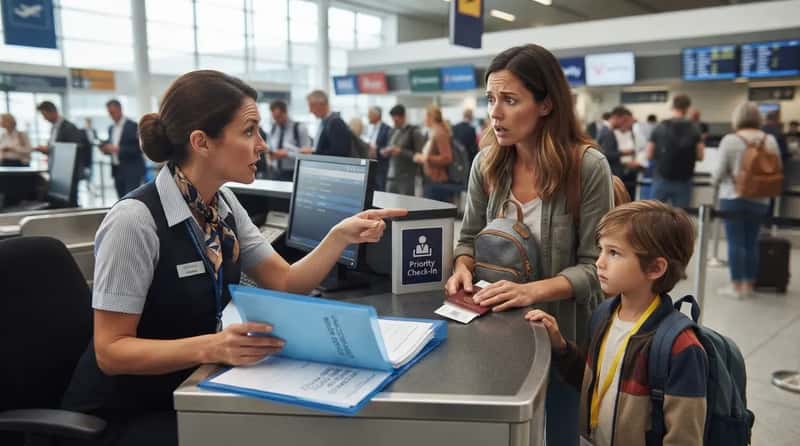
Airlines require specific paperwork, fees, and advance notice for children flying alone, and families routinely discover this for the first time at the counter.
Skipping the unaccompanied-minor process isn’t just against policy – it’s a liability issue airlines take extremely seriously. A missing form at check-in can mean a child simply isn’t allowed to board, regardless of how far the parents already drove to get there. Booking this service days ahead, not hours, is the only way around it.
#3 – Repacking an Entire Suitcase at the Counter to Shave Off a Few Ounces
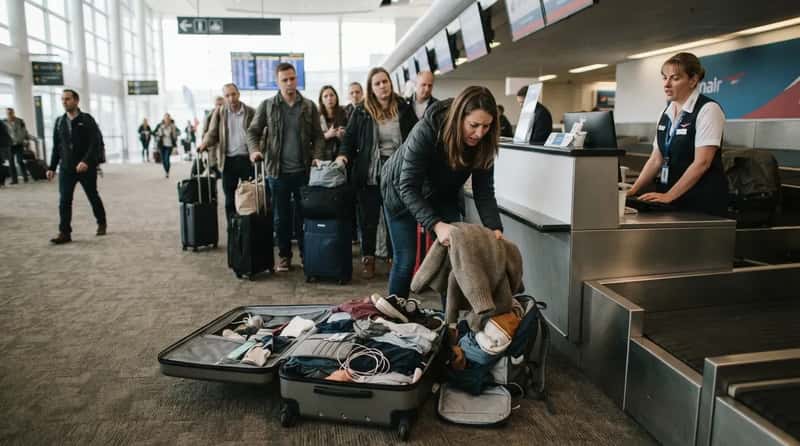
Few things stall a line faster than someone unzipping a suitcase at the desk and transferring clothes into a backpack, item by item, in front of everyone waiting behind them.
It’s an understandable panic move, but it turns a thirty-second bag drop into a ten-minute production. Staff can’t weigh, tag, or process the next traveler until that impromptu repacking session finishes, no matter how many people are stacking up behind it. Weighing bags at home with a ten-dollar luggage scale eliminates this entirely.
#2 – Splitting One Family’s Luggage Weight Across Everyone’s Tickets Without Saying So
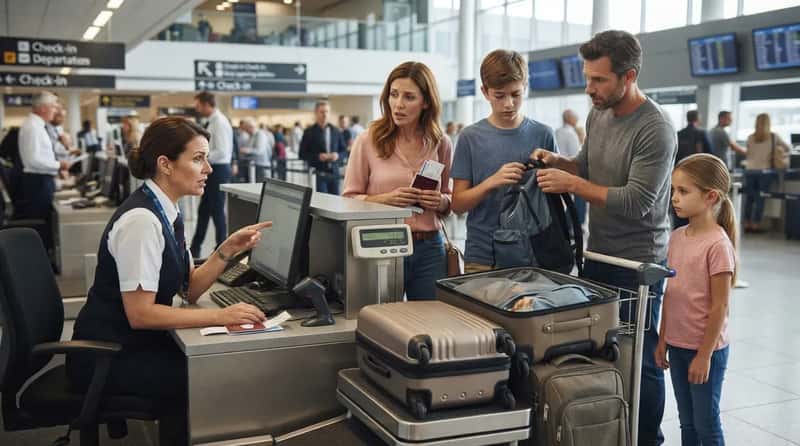
Quietly shifting a few pounds from an overweight bag into someone else’s suitcase feels like a clever workaround, until the agent notices the mismatch between the bags and the boarding passes.
This isn’t just a rules technicality – mismatched bag counts and unexplained weight shifts can trigger security review, not just an awkward conversation at the counter. What looks like a harmless family shuffle can suddenly look like something staff are required to flag. Transparency about who’s carrying what avoids the entire situation.
#1 – Melting Down and Threatening to “Get Someone Fired” Over a Rule They Didn’t Make
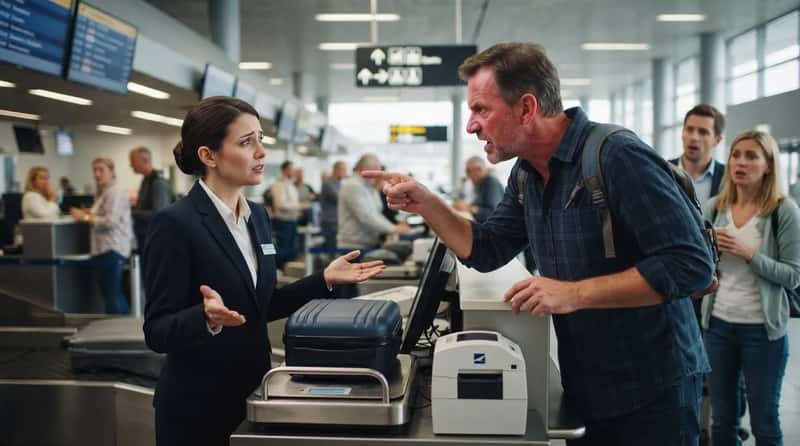
This is the one every counter agent remembers by name, because it happens weekly and it’s almost never actually about the rule itself.
Weight limits, fee structures, and document requirements are set by corporate policy and federal regulation, not by the person standing at the desk. Threatening someone’s job over a rule they have zero authority to change accomplishes nothing except making an already-long shift longer. Staff genuinely want to help – the outburst just guarantees they can’t.
None of these habits are dramatic on their own. That’s exactly why they’re so common – each one feels small in the moment, right up until it multiplies across hundreds of travelers moving through the same counter in the same hour.
The fixes are almost embarrassingly simple: keep ID accessible, weigh bags at home, know the rules before arriving, and remember that the person at the desk didn’t write any of them. Which one of these have you seen happen in real time? Every frequent flyer has at least one story.