Most travelers assume airport delays are about weather, staffing, or bad luck. Airport staff know better. Behind almost every stalled security line, chaotic boarding call, or bruised suitcase on the carousel sits a packing habit the traveler swore was “no big deal.”
TSA officers, baggage handlers, gate agents, and flight attendants see the same mistakes on repeat, thousands of times a day. Some are simple carelessness. A few are so strange that even veteran screeners still bring them up years later. Here’s what airport insiders actually wish every traveler would stop doing.
#26 – The Overstuffed Bag That Blinds the X-Ray
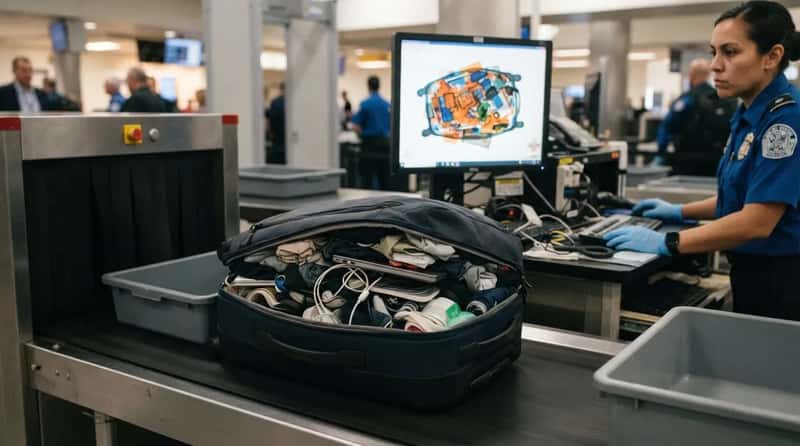
Airport screeners say a jam-packed carry-on is one of the fastest ways to get pulled aside, even when nothing inside is remotely dangerous. Overstuffed carry-ons where everything is layered tightly together are one of the biggest culprits, and while compressing a wardrobe into packing cubes feels efficient, dense bags can slow down screening when agents can’t clearly distinguish what’s inside.
It isn’t a security failure on your part. One screening expert explained that densely packed bags can take longer to clear simply because it’s a function of a high-volume system moving quickly. A looser pack means a faster scan every single time.
#25 – Burying the Liquids Bag at the Bottom of the Suitcase
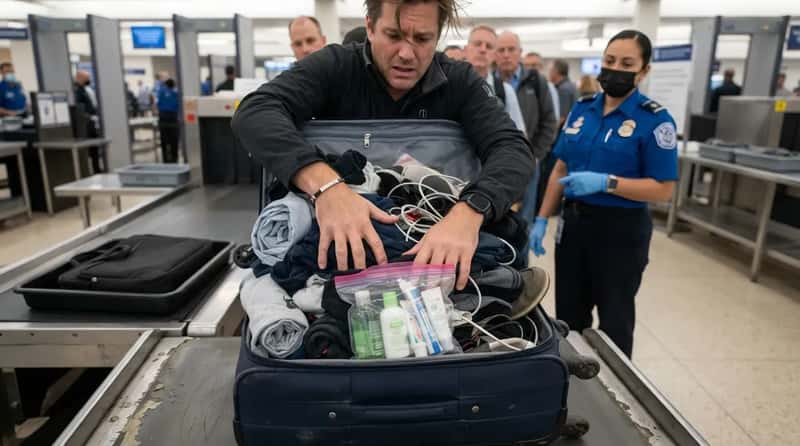
Nothing stalls a checkpoint line faster than a traveler frantically excavating their own bag. TSA recommends placing your 3-1-1 liquids bag in the front pocket of your carry-on so it’s easy to pull out at the checkpoint.
One travel industry CEO put it plainly: the most common issue is that toiletries are packed too deep or mixed in with other items, creating hesitation at the checkpoint. Retrieving liquids in one motion keeps you moving at the speed the system expects, while buried liquids mean a guaranteed dig-through in front of everyone.
Fast Facts
- TSA’s 3-1-1 rule: each liquid container must hold no more than 3.4 ounces (100 ml).
- All containers must fit inside one quart-size, clear zip-top bag.
- Each passenger is allowed a single liquids bag through the checkpoint.
- TSA PreCheck travelers can often leave liquids packed inside their bag entirely.
#24 – Treating Peanut Butter and Hummus Like Solid Food
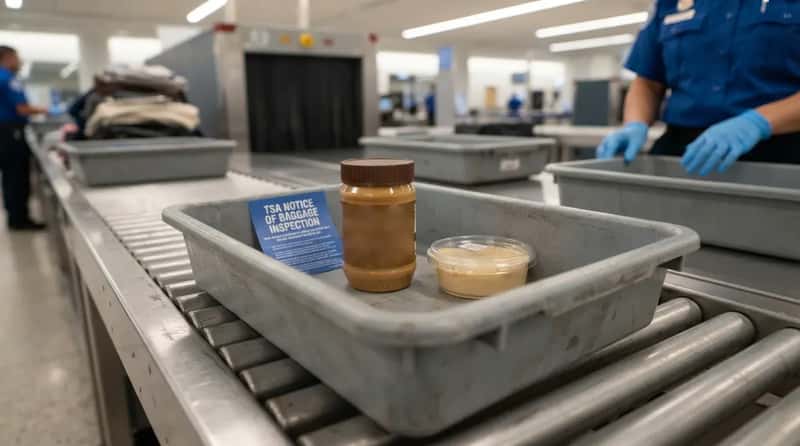
This one catches even seasoned flyers off guard every single week. Even savvy travelers get caught off guard by foods like peanut butter, yogurt, hummus, and soft cheeses, which are technically considered liquids or gels and can be flagged during screening.
It isn’t a rare exception, either. Screeners see it constantly with vacation souvenirs and holiday food gifts, and the item almost always gets confiscated on the spot rather than repacked, no matter how special it is.
#23 – Forgetting to Pull the Laptop Out
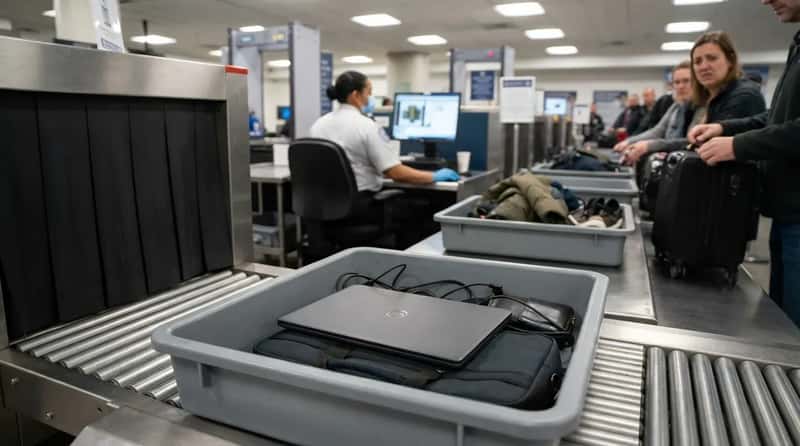
Airport staff say this single oversight causes some of the most avoidable slowdowns at any checkpoint in the country. A surprisingly large number of people still forget, or assume the rule doesn’t apply to them, but personal electronic devices larger than a cell phone must be removed and placed in a bin alone for X-ray screening.
This isn’t optional, and skipping it is one of the most common excuses screeners hear. One forgotten laptop can back up an entire lane behind a single traveler.
#22 – Wrapping Gifts Before You Even Reach the Airport
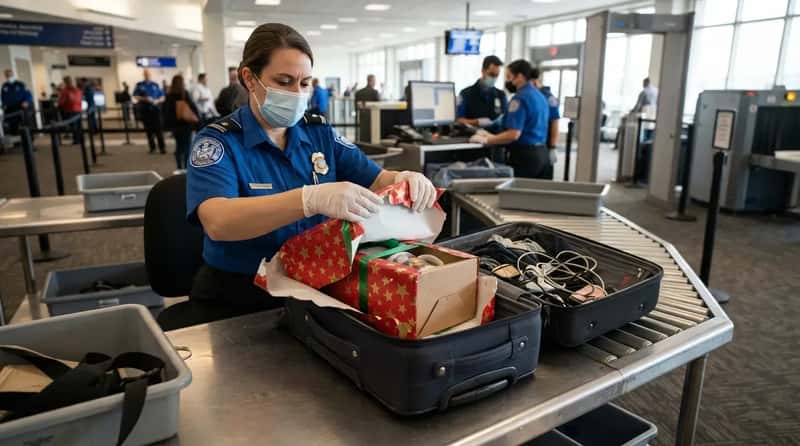
Holiday travelers repeat this mistake more than almost any other, and TSA has been trying to warn people for years. A former Transportation Security Officer said the one thing you should never pack in your carry-on is a wrapped gift, because TSA recommends against wrapping gifts when packing them for a flight.
If a wrapped gift triggers an alarm, it will have to be unwrapped to confirm it isn’t a threat. Officers don’t want to unwrap someone else’s gift, but they will if the item sets off the alarm, so wrap it at your destination instead and save everyone the awkward moment.
#21 – Tossing Loose Spare Batteries in With Your Clothes
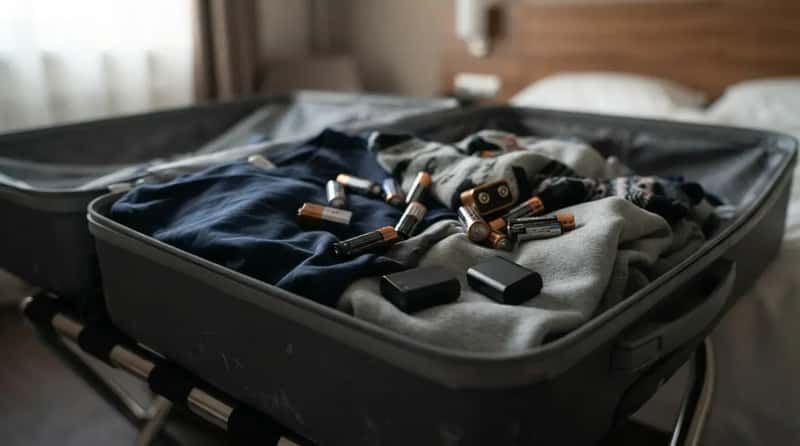
Handlers treat this habit far more seriously than most travelers realize. Nobody packs a spare battery thinking it’s dangerous, but handlers treat a loose one like a lit fuse, and only batteries installed inside a working device are allowed in checked luggage, loose spares aren’t, full stop.
A sealed cargo hold at cruising altitude is the worst possible place for an unprotected battery to short out. Keep spares in a carry-on, in their original packaging, every single time you fly.
Worth Knowing
- Spare lithium batteries must always travel in carry-on luggage, never checked bags.
- Batteries under 100 watt-hours are generally allowed without airline approval.
- Batteries between 101 and 160 watt-hours usually require prior airline sign-off.
- Anything above 160 watt-hours is banned from passenger aircraft entirely.
#20 – Leaving Old Flight Tags Stuck to the Suitcase
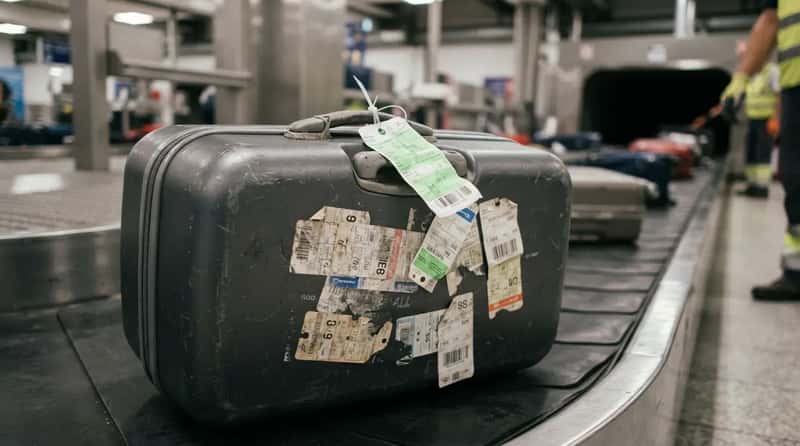
It looks harmless, but handlers say this small habit causes real routing problems every single shift. One baggage worker explained that bags miss flights or get misrouted because passengers leave old tags on, which confuses both handlers and the belt scanners.
It’s a habit that costs nothing to fix, yet handlers say they see it on nearly every belt, every shift. Ripping off last month’s sticker takes ten seconds and can save your bag from ending up on the wrong continent.
#19 – Packing “Just One More Pair” of Shoes
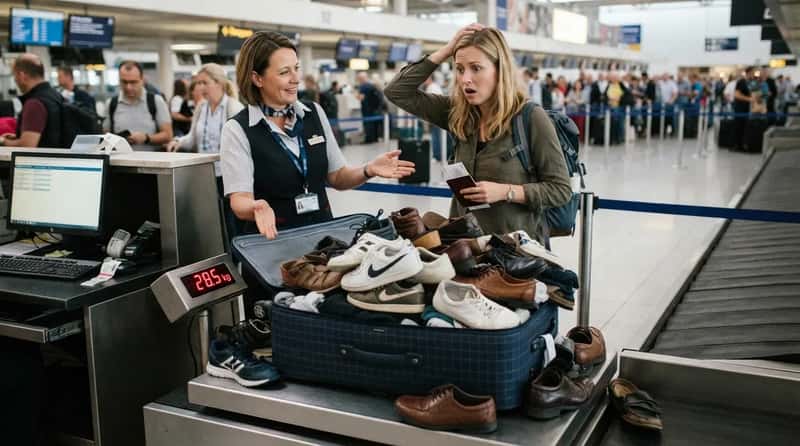
This is the quiet suitcase-wrecker nobody blames until they’re paying an overweight fee at the counter. Shoes are the single most common source of wasted space and unnecessary weight in checked luggage, and travel experts consistently flag footwear as the worst offender among unnecessary items people cram into their suitcases.
A single extra pair rarely feels like a big deal on its own, which is exactly why the habit spirals. That weight creep is often the difference between a bag that clears check-in cleanly and one flagged as overweight, and handlers feel every one of those extra pounds on their backs.
#18 – Choosing the Wrong Bag Type for Fragile Gear
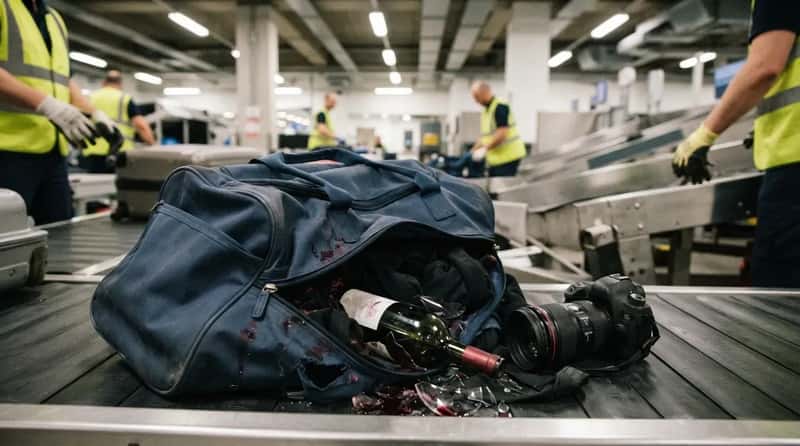
Not every suitcase is built for every trip, and mismatching them is one of the most preventable damage causes handlers see. Soft-sided bags flex and compress well for space efficiency but offer little protection for anything breakable, while hard-shell cases protect fragile items but sacrifice flexibility and can crack under a hard drop.
Handlers say the mismatch between bag type and trip type is one of the most preventable causes of damage they see. A camera or wine bottle inside a soft-sided duffel is asking for trouble.
#17 – Packing an “Almost Empty” Oversized Water Bottle
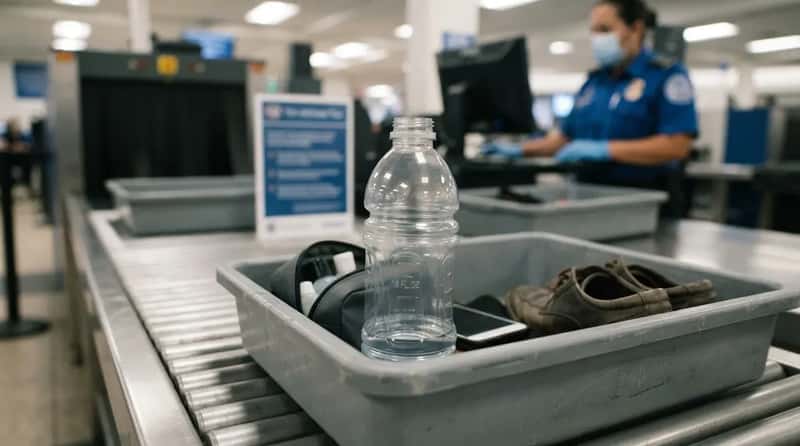
This is the trap that catches even veteran flyers off guard, because the rule has nothing to do with how much liquid is actually left. A partially consumed sports beverage bottle labeled 16 ounces but only holding 3 ounces of liquid still fails, because the container’s volume exceeds the allowable limit; the container size is what matters, not how full it is.
Screeners can’t eyeball how much liquid is inside a bottle from an X-ray anyway. If the container was ever bigger than 3.4 ounces, it’s getting tossed, no matter what’s left inside it.
Quick Compare
- 3 oz bottle, completely full: passes screening without issue.
- 16 oz bottle, only 1 oz left inside: still fails, no exceptions.
- Container size decides the outcome, not how much liquid remains inside it.
#16 – Slipping a Pocket Knife In “Just in Case”
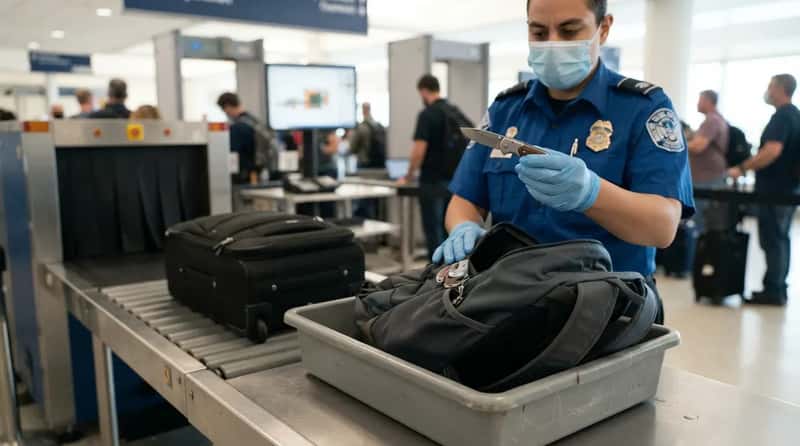
Airport staff will tell you this is one of the most common last-minute panics they witness at the checkpoint. Even the most well-traveled passenger can recall a time when they forgot they had a half-filled water bottle or a small pocket knife, leading to extra time in line.
It’s rarely malicious. Most travelers simply forget it’s tucked into a jacket pocket or a daypack from a camping trip months earlier, but forgetting is exactly what causes the delay for everyone in line behind them.
#15 – Letting Straps and Pockets Dangle Off Checked Bags
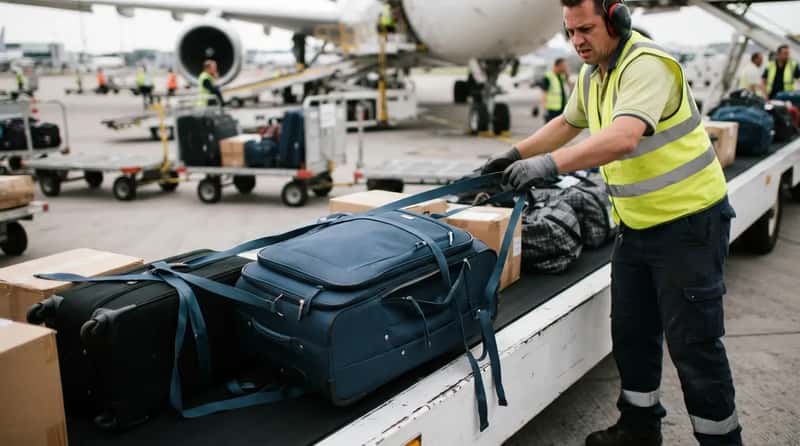
Handlers say awkward, loose luggage shapes throw off the entire loading rhythm during tight turnarounds. Handlers are given strict instructions to load bags by weight, size, and shape, and dangling compression straps or loose external pockets throw off an otherwise smooth load, with one bad shape holding up an entire line.
Cinch every strap down before you check the bag. A five-second habit at the counter can prevent a snagged buckle from delaying an entire ramp crew.
#14 – Packing Cordless Styling Tools With Butane Cartridges in Checked Luggage
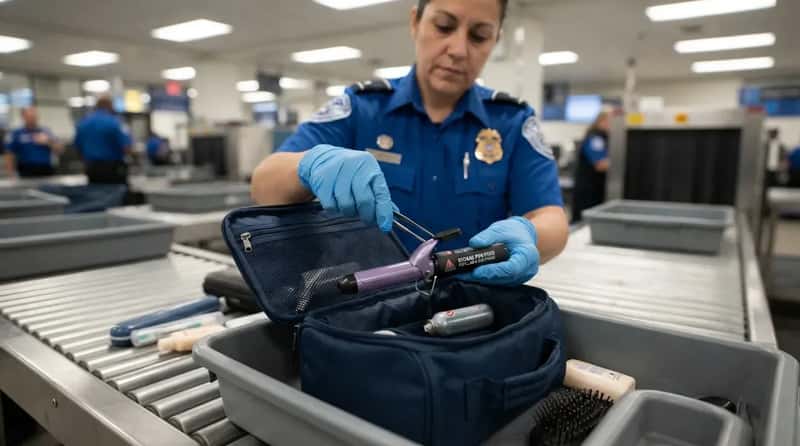
This is a newer rule many travelers still don’t know exists, and it’s a serious one. Battery-powered personal care devices should travel in your carry-on, not your checked luggage, where a malfunction is far harder to detect and manage, and the same applies to cordless styling tools with butane cartridges.
Officers are trained to look inside personal care packaging, not just at it, and unusual density or obscured contents inside a wash bag will get flagged. That curling iron belongs in your carry-on, not buried in the suitcase you’re checking.
#13 – Checking a Bag Full of Jewelry, Cameras, or Important Documents
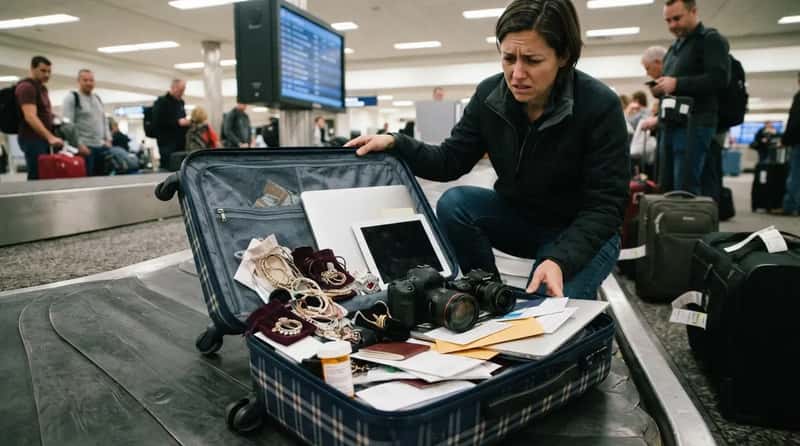
This habit sounds convenient right up until the bag doesn’t show up. Jewelry and heirlooms are nearly impossible to replace and easy to lose track of in a crowded hold, while laptops and cameras are fragile, valuable, and frequent sources of damage claims.
Medications and vital paperwork deserve the same treatment. Anything you genuinely cannot live without for a day, or ever, belongs within arm’s reach in your carry-on, not in the belly of the plane.
#12 – Gate-Checking a Stroller or Car Seat Without Wrapping It
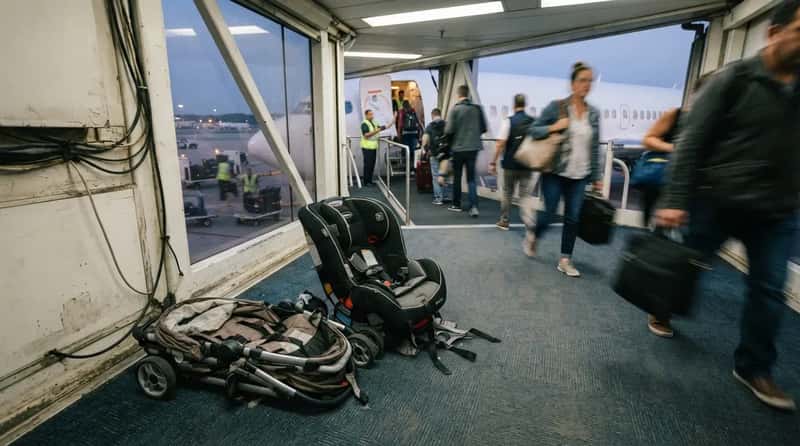
Parents rushing through the jet bridge often skip this step, and handlers notice immediately. Strollers, car seats, and odd-shaped gear cause real problems when they’re not wrapped, since straps catch on belts and buckles get stuck.
Wrapped items move quicker and stack without issue, while unwrapped gear risks getting shoved aside if it’s dirty or awkward. Most gate podiums keep plastic wrap on hand for exactly this reason. Ask for it.
#11 – Stuffing a Personal Item Into the Overhead Bin
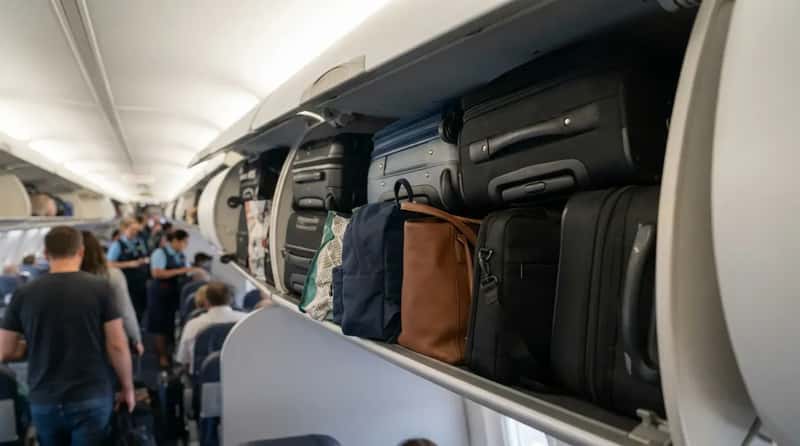
Flight attendants say this single habit quietly eats up space meant for real carry-ons. Despite repeated announcements to only put larger carry-on bags in the overhead bins and place smaller ones under the seat, passengers continue to put smaller backpacks, purses, and bags in the overhead anyway.
So the bins can fill up faster than predicted, and it’s all about on-time departure once that happens. That “small” tote under your seat could be the reason someone behind you gets gate-checked.
#10 – Stowing Your Bag Rows Away From Your Actual Seat
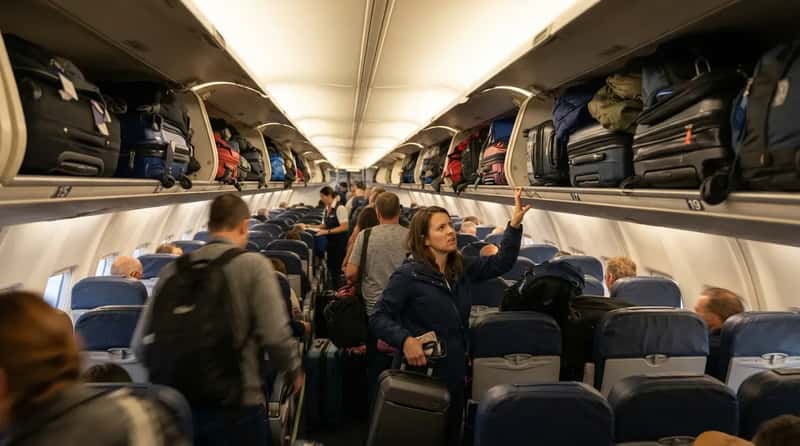
This is one of the more infuriating habits according to both passengers and crew. One traveler described boarding early only to watch passenger after passenger toss their roller bag into bins far from their seats, forcing the people actually assigned to those rows to carry their own bags to the back of the plane.
The traveler summed it up simply: it should be common courtesy to put your bag in the vicinity of your seat. Airport staff can’t police every bin, so this one falls entirely on fellow passengers to fix.
#9 – Racing to the Gate to Protect a Bag That Fits Under the Seat
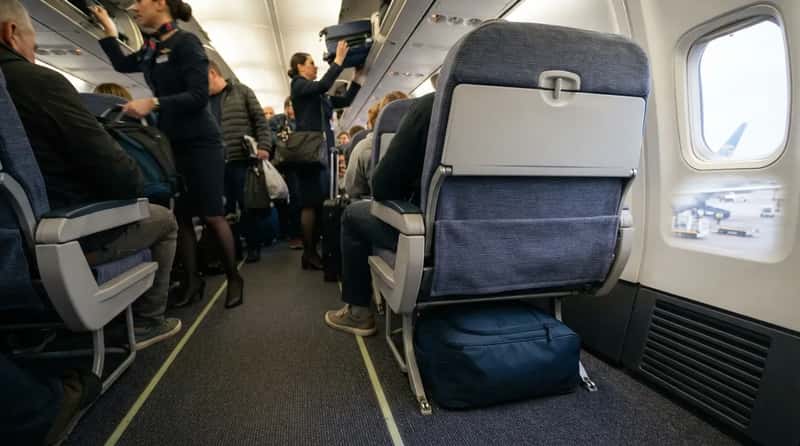
This scramble happens on nearly every flight, and it’s almost always unnecessary. On one flight, a bin space people rush the gate to protect turned out to be filled with bags that would have fit under a seat all along.
The irony is real: travelers create their own boarding chaos protecting space they didn’t need in the first place. A bag that clears the under-seat test rarely needs the overhead bin at all.
#8 – Packing Self-Defense Spray in the Wrong Spot
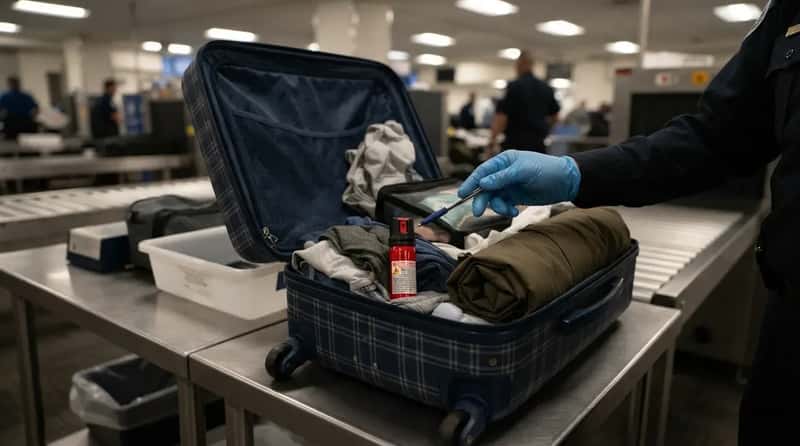
Travelers heading somewhere unfamiliar often pack this for peace of mind, then get blindsided at the counter. They toss in pepper spray or bear spray, assuming checked baggage is a safe workaround.
Screeners and handlers who physically inspect flagged bags are the ones exposed if a canister leaks or discharges under pressure changes. Checking the specific carrier rule before packing it saves a confiscation and a scare for the crew handling your bag.
#7 – Packing an Item That Looks Like a Weapon on the Scanner
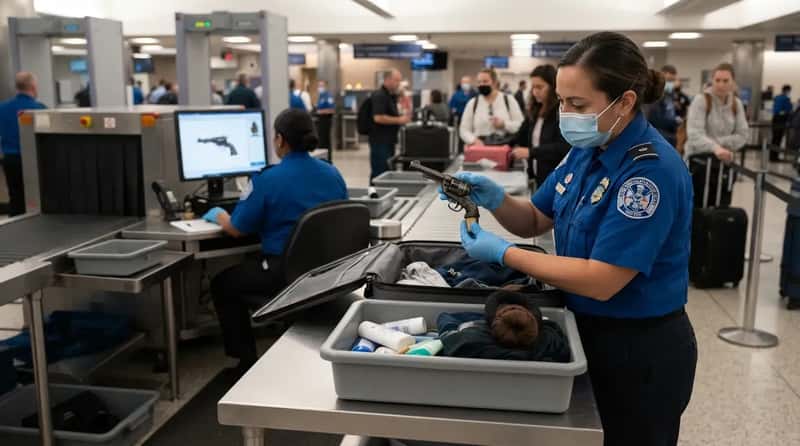
Some of the strangest checkpoint delays come from completely innocent objects. One traveler had a wine bottle stopper flagged because it looked like a weapon on the scanner, and even got stopped over a foam sock bun in her hair that TSA had to squeeze to confirm wasn’t dangerous.
Dense, oddly shaped objects almost always trigger a second look, gift or not. If it looks unusual on an X-ray, expect a hands-on inspection no matter how ordinary it is in real life.
#6 – Packing Canned or Tinned Food Without Checking the Weight
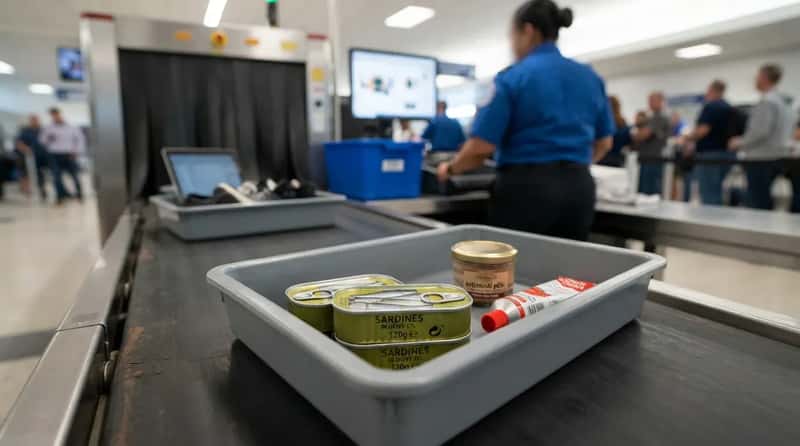
Souvenir food is a common casualty at checkpoints around the world, and travelers rarely see it coming. Travelers have lost tins of sardines coming back from trips because they were over 100 grams and counted as liquids.
The rule catches people off guard because a solid-looking tin still qualifies as a paste or gel by screening standards. If it’s canned, jarred, or vacuum-sealed and liquid-adjacent, assume it needs to go in checked luggage instead.
#5 – Scattering Coins, Keys, and Gadgets Loosely Through Every Pocket
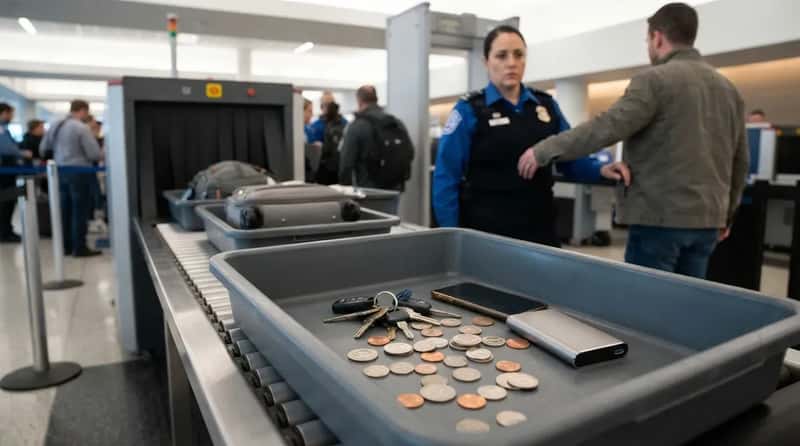
Airport staff repeatedly point to this as one of the sneakiest slowdown causes at any checkpoint. Tossing loose coins and keys directly into pockets instead of a bin is a common mistake that slows the line for everyone behind a traveler.
Metal scattered across a body sets off the walk-through detector almost every time, triggering a manual pat-down that nobody wanted. Emptying pockets into a jacket or bag before stepping up avoids the whole ordeal entirely.
#4 – Choosing a Wheel-less Suitcase for a Connecting Flight
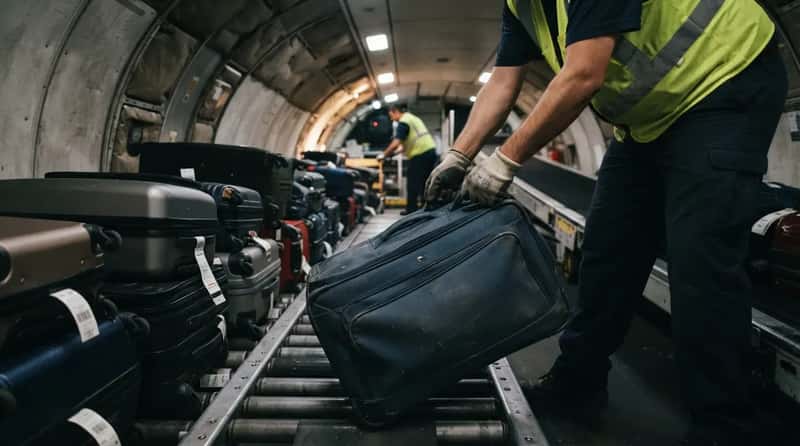
Handlers openly admit this is one of the worst choices a traveler can make for their own luggage. The best type of luggage is actually a suitcase with at least two wheels, since bags with no wheels have to be manually stacked inside each hold, and the holds can get fairly long.
Wheel-less bags get dragged or shoved to make room, not gently carried. If you want your bag treated with any care at all, wheels aren’t a luxury, they’re basic protection.
At a Glance
- Most U.S. airlines cap checked bags at 50 pounds for standard economy fares.
- Overweight bags routinely trigger fees of $100 or more at the counter.
- Wheeled suitcases are built to survive tight, fast-moving cargo holds.
- Wheel-less bags are typically stacked and shoved rather than carried with care.
#3 – Packing Lighters or Flammables Into Checked Luggage
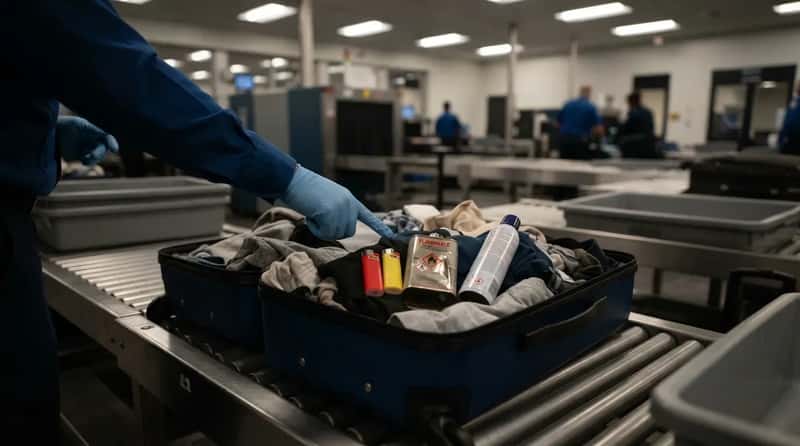
This is a habit that turns a routine flight into a genuine hazard for everyone loading the plane. Handlers who search flagged bags are the first ones exposed if a flammable item leaks or ignites in a pressurized, unmonitored hold. In one real case, screeners at a U.S. airport even discovered a carry-on containing dangerous substances that put screeners and handlers at risk first.
Common butane lighters, camping fuel, and certain aerosols are far more restricted than most travelers assume. When in doubt, that item belongs at home, not in a hold thousands of feet in the air.
#2 – Hiding Pills Inside Unrelated Containers
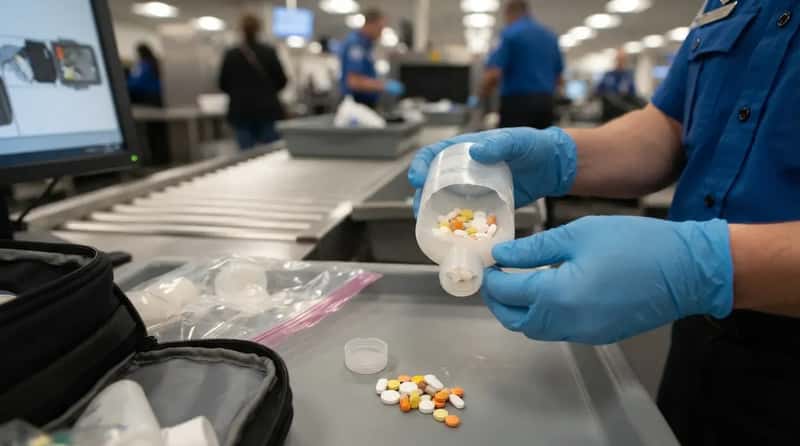
This is a habit screeners flag constantly, even when the intent is completely innocent. TSA’s own year-end roundup of “worst packing decisions” specifically called out pills packed inside a shampoo bottle as one of its most memorable finds.
Disguising medication, even for space-saving reasons, almost guarantees a manual search the moment the scanner flags an unidentifiable substance inside a liquid container. Keep pills in their original, labeled containers and skip the confusion entirely.
#1 – Trying to Sneak Live Animals Through Security
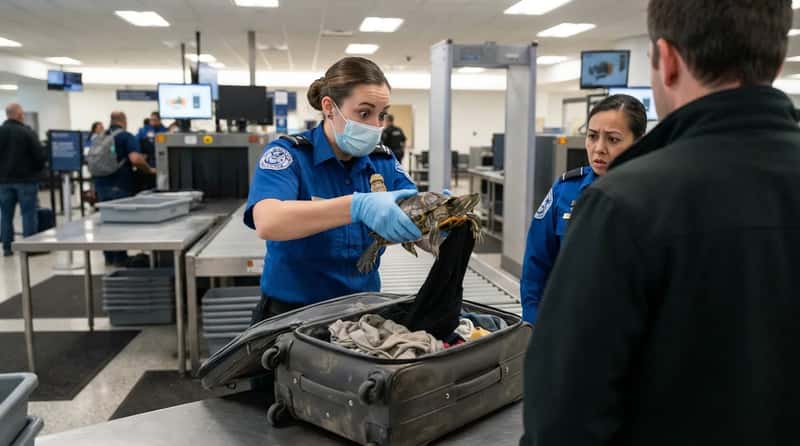
Nothing tops the list of habits airport staff genuinely cannot believe they still have to explain. Coming in near the top of TSA’s own “worst packing decisions” list were turtles hidden in a passenger’s pants at one major airport and two turtles hidden in a bra at another.
TSA highlighted these finds in a Top 10 Best Catches video, calling them a rundown of the worst packing decisions of the year. No screener signs up expecting to find a living creature mid-checkpoint, and yet, somehow, it keeps happening.
It’s a rundown of some of the worst packing decisions of the year.
TSA, Year-End Top Catches Recap
From a chaotic X-ray image to a turtle in someone’s waistband, the pattern is the same: small packing habits create outsized problems for the people trying to get you and your bag safely to the gate. Most of these fixes take less than a minute, yet they’re repeated at checkpoints and carousels every single day across the country.
Airport staff aren’t asking for perfection, just a little more awareness before the zipper closes. The next time you’re tempted to cut a corner, remember that somewhere behind that conveyor belt, someone else is stuck dealing with what you left behind.