If you think overpacking is a modern problem, you haven’t seen a 1970s suitcase. Families didn’t just pack clothes back then – they packed entire survival kits, because there was no app, no card reader, and no charger waiting for them on the other side.
Some of these items sound almost unbelievable to anyone under 40, but every single one was considered completely normal packing logic just a few decades ago. Here’s what actually made the cut before phones, plastic, and convenience took over.
#26 – Traveler’s Checks: The Signature You Had to Do Twice
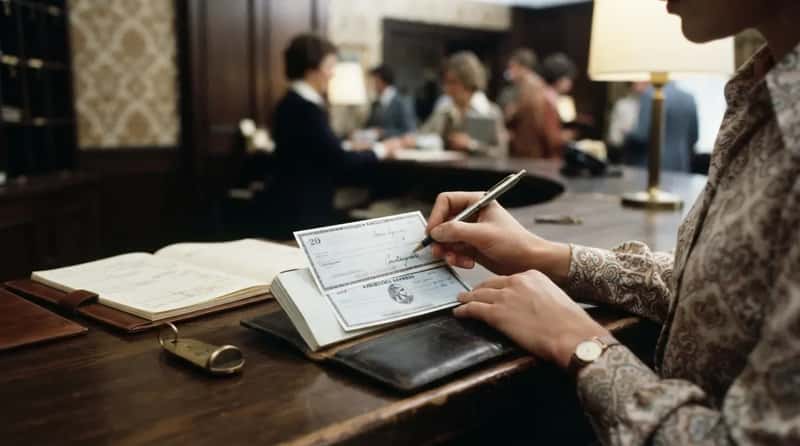
Before debit cards existed, cash abroad was risky, so people carried traveler’s checks instead. You signed each one when you bought it, then signed it again in front of a clerk to prove it was really yours.
Losing them meant a trip to an office, not a tap on an app. Families often carried a whole booklet of them, tucked into a special wallet just for that purpose.
#25 – A Paper Ticket Booklet Thick Enough to Need Its Own Pocket
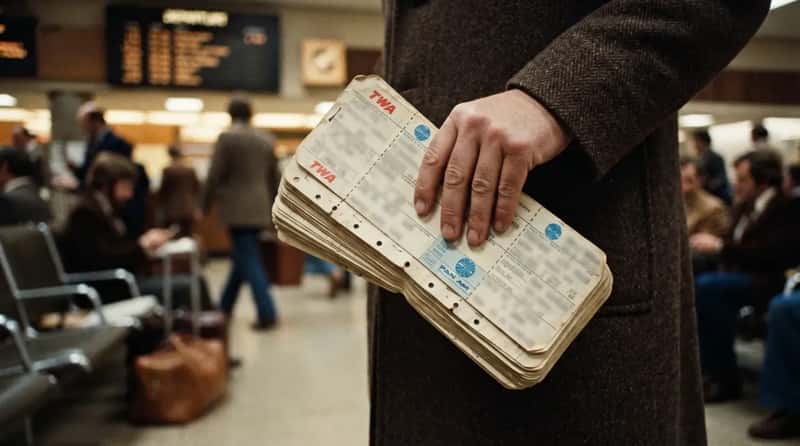
Airline tickets weren’t a QR code on a phone. They were multi-page paper booklets, one perforated slip per flight leg, that had to survive the entire trip without tearing.
Losing that booklet could mean buying a brand-new ticket on the spot. Parents guarded it like a passport, often pinning it inside a coat pocket for safekeeping.
#24 – A Transistor Radio for News From Back Home
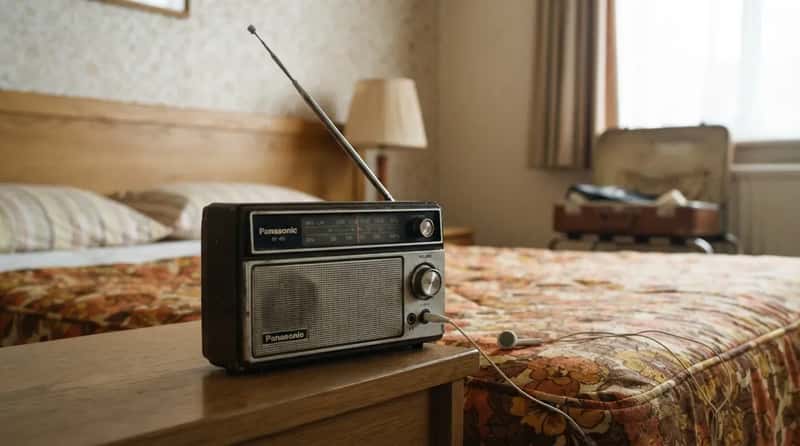
There was no way to check headlines from a hotel room, so a small transistor radio came along in the suitcase. It ran on batteries and had a single earphone jack for private listening.
Families used it to catch weather reports before a road trip or ballgame scores on vacation. It was often the only link to the outside world once the car pulled out of the driveway.
#23 – Hot Rollers Packed Like Fragile Cargo
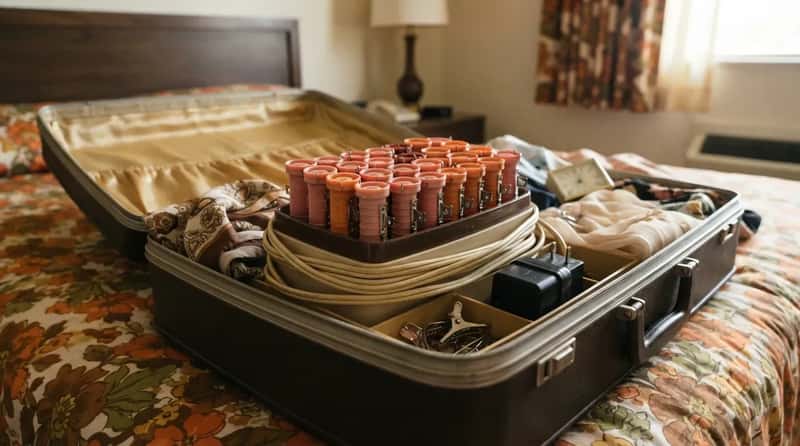
A full set of electric hot rollers took up serious suitcase space, but skipping them wasn’t an option for many travelers. Getting “done up” for dinner or a flight was part of the routine, not an afterthought.
The heating unit alone was heavy and bulky, and it needed a voltage converter for international trips. Some travelers packed an entire separate case just for hair tools.
#22 – A Film Camera With a Stash of Extra Rolls
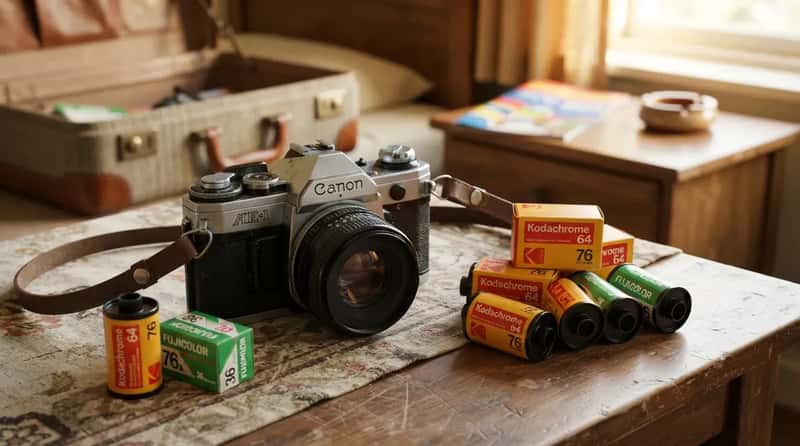
Digital photos didn’t exist, so every trip meant packing a film camera plus several rolls of Kodak or Fujifilm. Each roll usually held just 24 or 36 shots, so people had to choose their moments carefully.
Running out of film mid-vacation was a real disaster, sending families hunting for a drugstore in an unfamiliar town. Nobody knew how the photos turned out until they were developed weeks later back home.
Fast Facts
- Most rolls held just 24 or 36 exposures, so every shot had to count.
- Mailing film off for developing could take a week or more before prints came back.
- Popular formats included 35mm cameras and Kodak’s simpler 110 cartridge models.
- There was no screen to preview, delete, or retake a bad shot on the spot.
#21 – A Paper Phrasebook for Every Country on the Itinerary
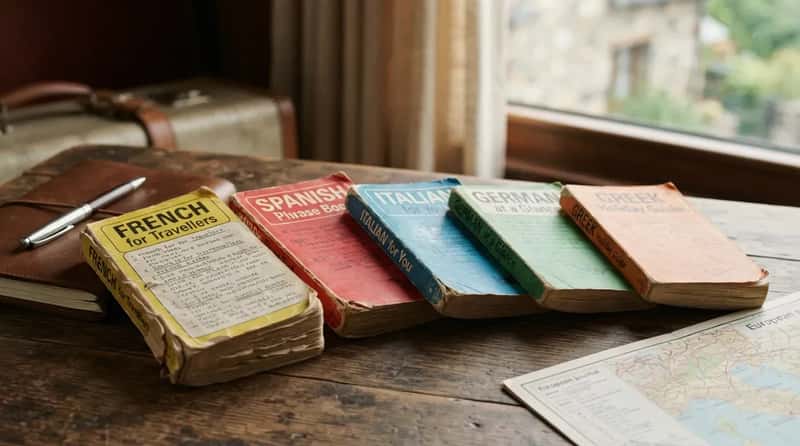
Long before translation apps, a pocket phrasebook was essential for anyone crossing a border. Travelers memorized a handful of phrases and hoped for the best when the conversation got complicated.
These little books were dog-eared and underlined by the end of a trip. Some families packed a different phrasebook for every country on a European tour, adding real weight to the luggage.
#20 – A Sewing Kit for Mid-Trip Repairs
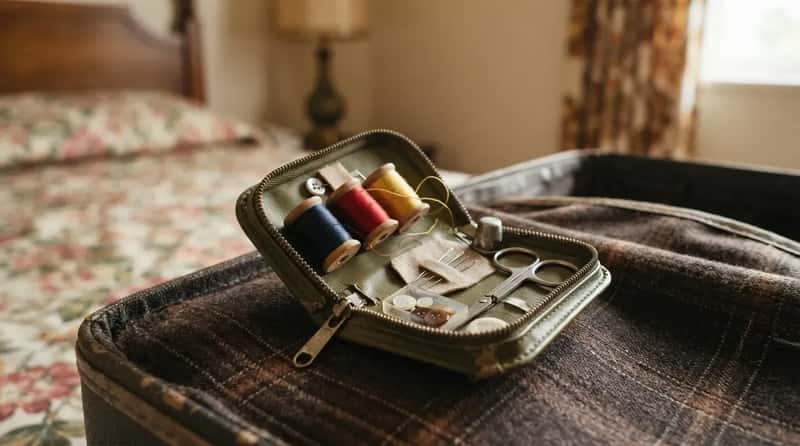
Clothing wasn’t as disposable in the 1970s, so a tiny sewing kit came along in case a button popped or a hem tore. Hotels sometimes offered one too, but many travelers didn’t trust it and brought their own.
This kit usually included a few needles, spools of thread, and a couple of spare buttons. It might seem like overkill now, but it saved plenty of vacations from a wardrobe malfunction.
#19 – Baby Oil Instead of Sunscreen

SPF protection wasn’t the priority it is today, and many beachgoers packed baby oil or iodine mixed with oil to speed up tanning instead of blocking the sun. The goal was a deep tan, not sun protection.
Dermatology warnings about UV damage were barely part of mainstream conversation yet. Looking back, this is one of the clearest signs of how differently people thought about sun exposure just a few decades ago.
#18 – A Hard-Sided Suitcase With an Actual Lock and Key
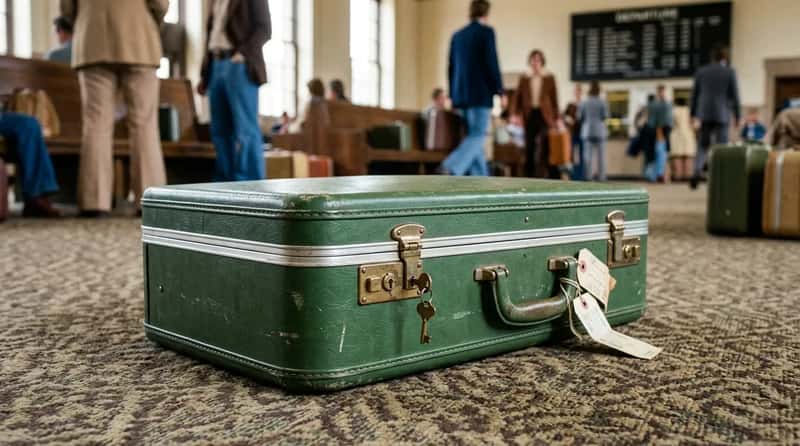
Wheeled luggage barely existed, so people hauled heavy, hard-shell suitcases by hand, often matching sets bought as a family investment. Each one came with a small key that opened a built-in lock.
Losing that key meant prying the case open with force. These suitcases were built to survive being tossed around, and many families still have one gathering dust in a closet somewhere.
#17 – An Entire “Travel Outfit” Just for the Flight
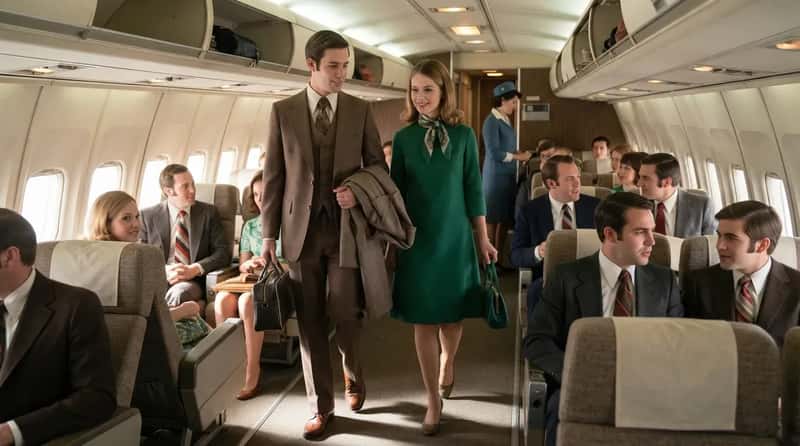
Flying was still treated as a special occasion, so people dressed up specifically for the plane – suits, ties, and dresses were common even in economy seats. Comfort wasn’t the priority; presentation was.
This meant packing an outfit that never left the suitcase until boarding day. Many travelers now find old photos of relatives flying in formalwear almost unrecognizable compared to today’s airport fashion.
#16 – A Portable Record Player or 8-Track Player
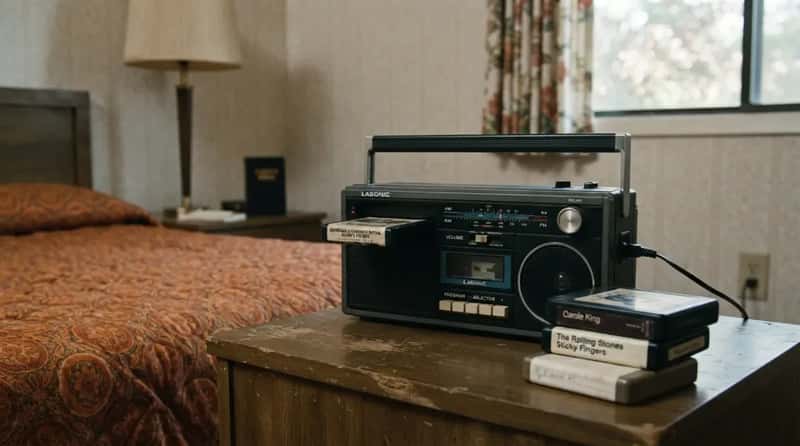
Music didn’t travel in a pocket yet, so some families packed a small, boxy record player or an 8-track player for hotel rooms and campsites. It ran on batteries or had to be plugged in.
A few favorite records or tapes came along too, chosen carefully since space was limited. It made a hotel room feel a little more like home, even if the sound quality was rough.
#15 – Postcards and Stamps Bought Before Leaving Home
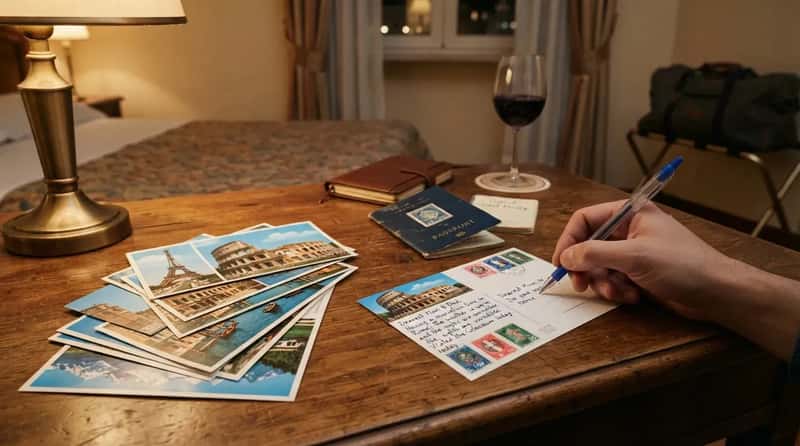
Rather than searching for postcards abroad, plenty of travelers packed a small stack of stamped postcards from home, ready to write and mail the moment they landed. It saved time and guaranteed the right postage.
Writing them became a nightly ritual on the trip, often done at the hotel desk or kitchen table. It’s a habit that’s almost completely disappeared now that a text message does the same job instantly.
#14 – An Address Book Just for Sending Mail on the Road
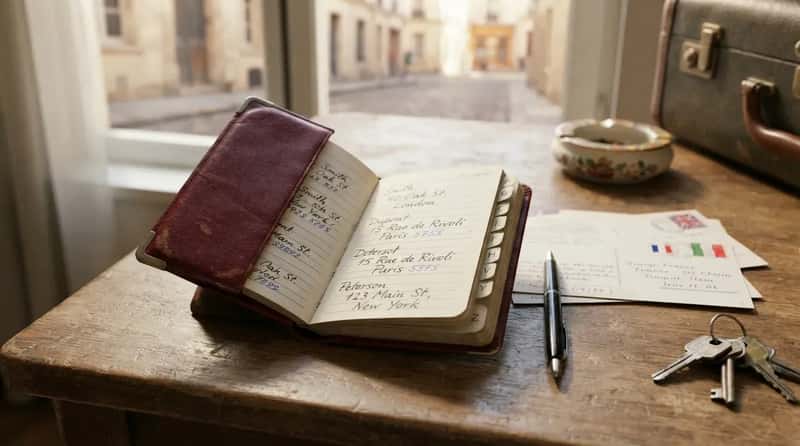
Since postcards needed real addresses, a small paper address book came along in the suitcase too. Contacts weren’t stored on a phone; they were handwritten and carried everywhere.
Losing that book meant losing touch with people until you got home to your master copy. It’s one of the smaller items that made 1970s travel feel far more manual than today’s version.
#13 – Cigarettes and a Lighter, Packed Like Toiletries
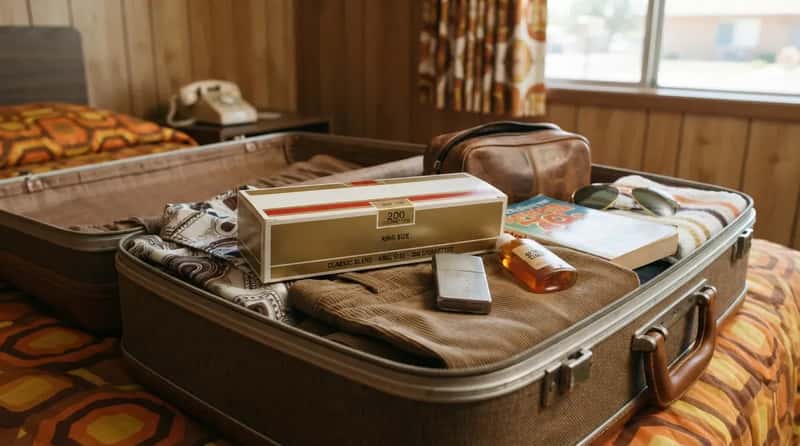
Smoking rates were dramatically higher in the 1970s, and cigarettes were treated as a standard travel item, not an afterthought. Smoking was even allowed on most domestic flights well into the decade.
Packing a carton for a longer trip wasn’t unusual, especially if a destination had different brands available. This is one of the clearest examples of how much cultural norms around health and travel have shifted since then.
Worth Knowing
- Airlines weren’t required to offer separate smoking sections until 1973.
- Smoking wasn’t banned on flights under two hours until 1988.
- The ban didn’t expand to nearly all domestic flights until 1990.
- A full ban on all U.S. international flights didn’t arrive until 2000.
#12 – A Folded Paper Road Map for Every State on the Route
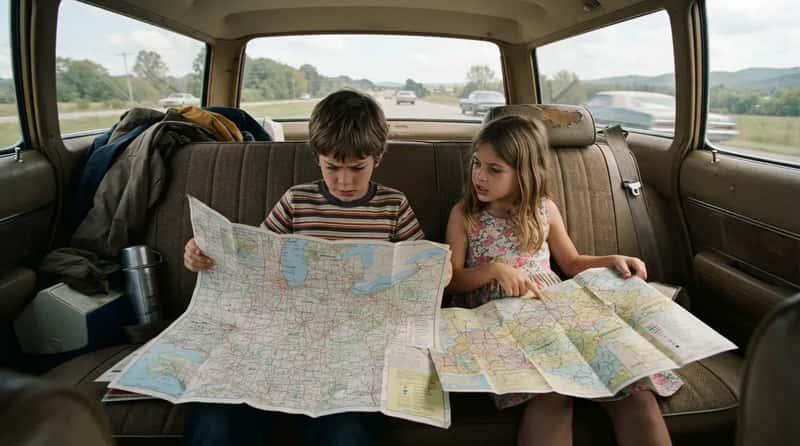
GPS wasn’t invented yet, so road trips meant packing a glovebox full of paper maps, often one per state or region. Refolding them correctly became its own small skill.
Getting lost meant pulling over and asking a gas station attendant for directions, not glancing at a phone screen. Many families still remember arguments over who was in charge of map-reading duty in the back seat.
#11 – A Wind-Up Alarm Clock for Every Hotel Stop

Hotel alarm clocks weren’t reliable, so travelers packed their own small wind-up clock to make sure they woke up for early flights or tours. It ticked loudly enough to be heard across the room.
Forgetting to wind it before bed was a common vacation mishap. It’s a small item, but it represents just how much manual effort went into simply staying on schedule.
#10 – A First-Aid Kit With Iodine and Merthiolate
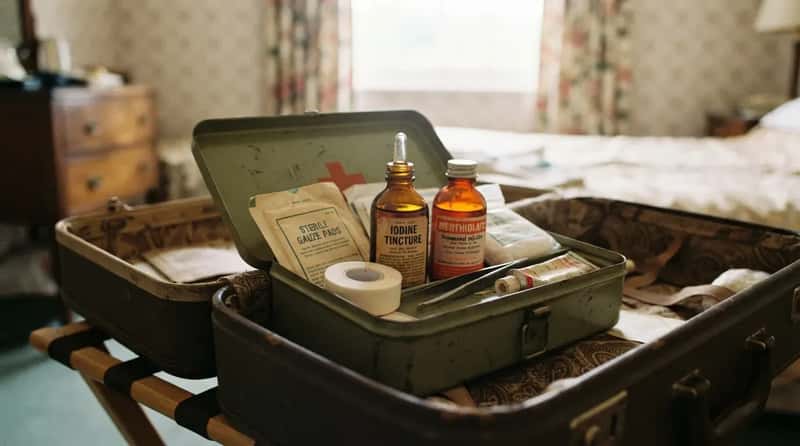
Basic medical supplies weren’t as easy to find abroad, so a compact first-aid kit was standard packing, usually including iodine, gauze, and Merthiolate for cuts and scrapes. It was treated as essential, not optional.
Parents especially wouldn’t leave home without one, given how often kids got scraped knees on vacation. Some of these kits smelled so strong they were memorable decades later.
#9 – A Polaroid Camera for Instant Souvenirs
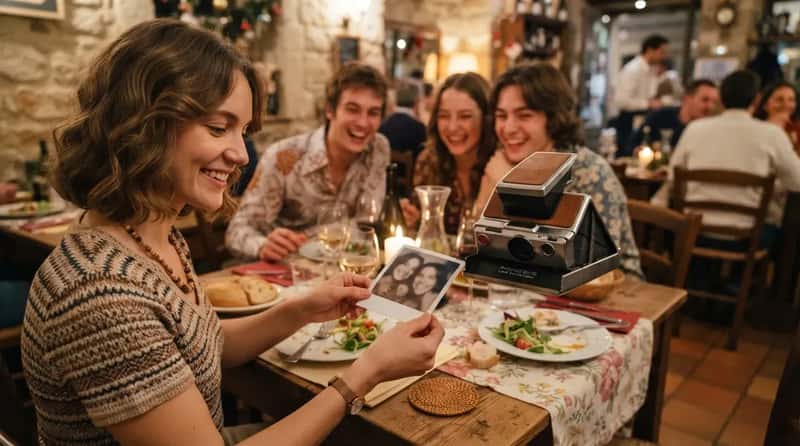
While regular film cameras were common, some families also packed a Polaroid camera for instant photos to show off immediately at the dinner table or hand to a new friend on the trip. The film packs were expensive, so shots were rationed carefully.
Watching the photo slowly develop in your hand felt like magic at the time. It’s one of the few 1970s travel habits that’s recently made a nostalgic comeback among younger travelers today.
#8 – A Slide Projector Carousel Tray, Packed for Later
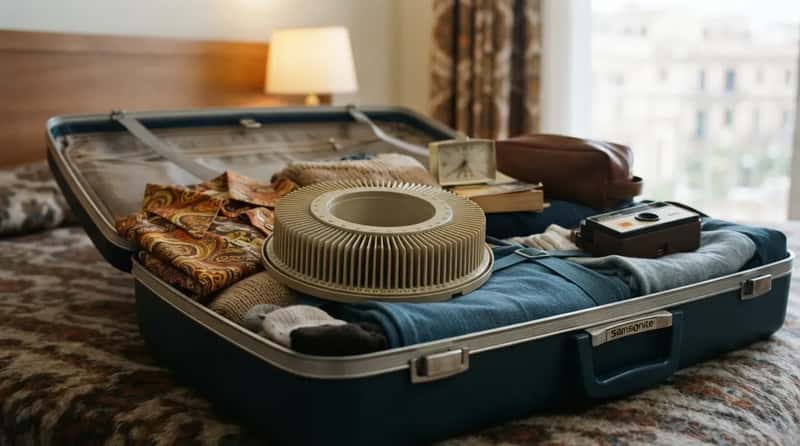
Some travelers didn’t just take photos on a trip – they packed an empty slide carousel tray in anticipation of loading it after the film was developed. The real event was the slideshow back home for family and neighbors.
This turned a single vacation into a weeks-long project of processing, organizing, and finally presenting the trip. It’s a ritual that completely disappeared once photos became something you could scroll through instantly.
#7 – A Cassette Recorder to Capture Sounds, Not Just Photos
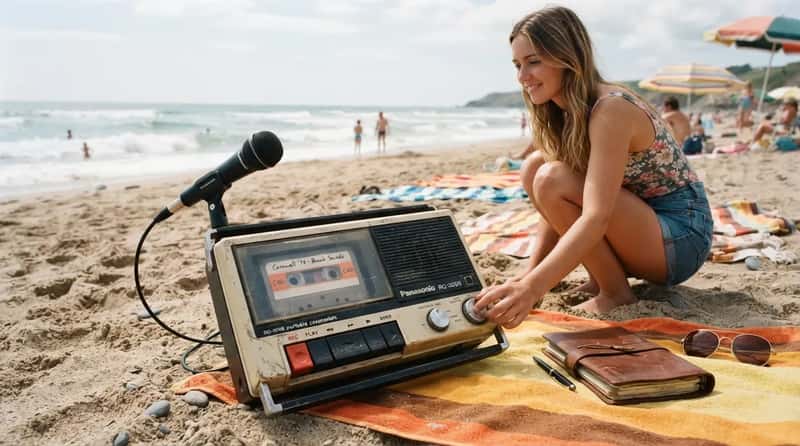
A handful of travelers packed a portable cassette recorder specifically to capture ambient sounds – waves, street musicians, or even a child’s first reaction to the ocean. Photos weren’t enough; sound felt like a different kind of memory.
These recordings often ended up mixed in with home movies played back for years afterward. It was a far more deliberate way of documenting a trip than snapping a quick video today.
#6 – A Stack of Ironed Cloth Handkerchiefs
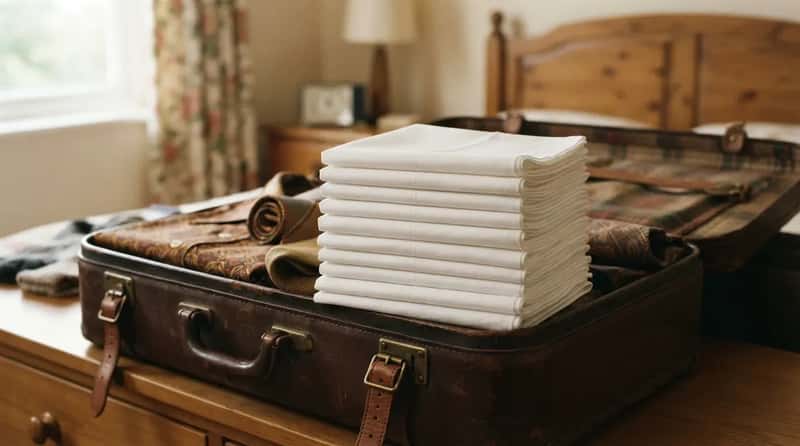
Disposable tissues were common by the 1970s, but many travelers still packed cloth handkerchiefs, often ironed and folded neatly by a parent the night before departure. They were considered more polished and practical for a long trip.
Losing one wasn’t a big deal, but forgetting them entirely felt like forgetting socks. It’s a small detail, but it says a lot about how differently people packed for “presentability” back then.
#5 – A Full Garment Bag for Dinner Clothes
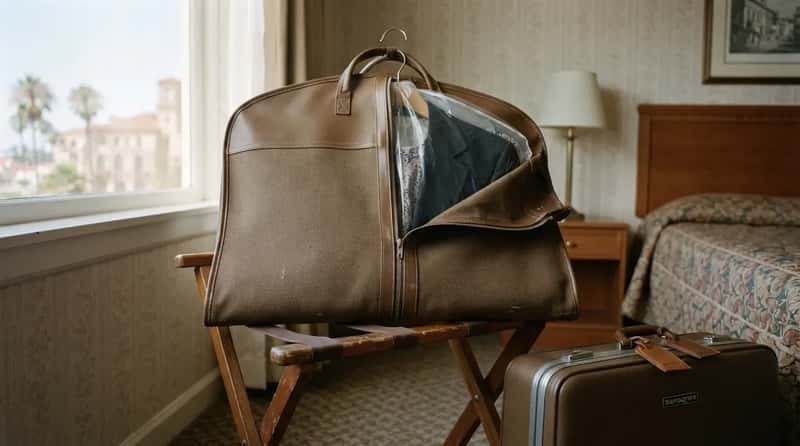
Vacation didn’t mean casual all the time – many families packed a separate garment bag specifically for dinner outfits or church clothes, kept apart from everyday luggage to avoid wrinkles. Formal dining was still a regular part of travel.
This meant carrying essentially two wardrobes: one for daytime activities and one for evenings out. The idea of packing “nice clothes” for a beach vacation feels almost foreign to travelers today.
#4 – A Coin Purse Loaded With Dimes for Payphones
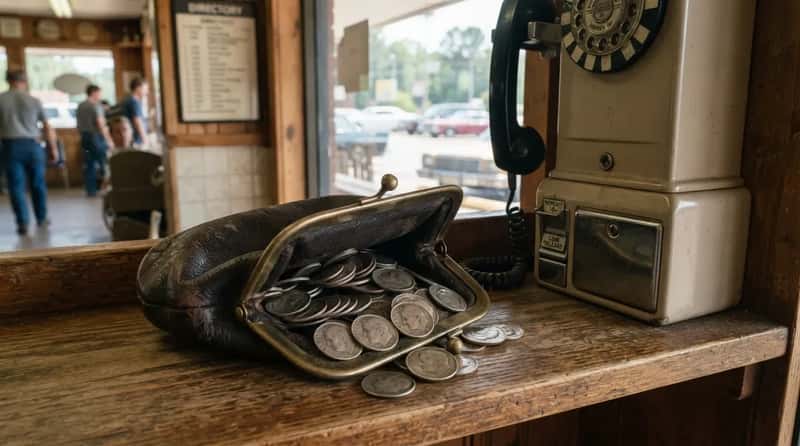
Staying in touch on the road meant finding a payphone, so a small coin purse packed with dimes and quarters was non-negotiable for any trip. Running out of change could mean missing an important call entirely.
Kids were often handed a few coins specifically “for emergencies only” before leaving the car at a rest stop. It’s one of the most concrete reminders of how differently communication worked before mobile phones existed.
#3 – A CB Radio for Long Road Trips
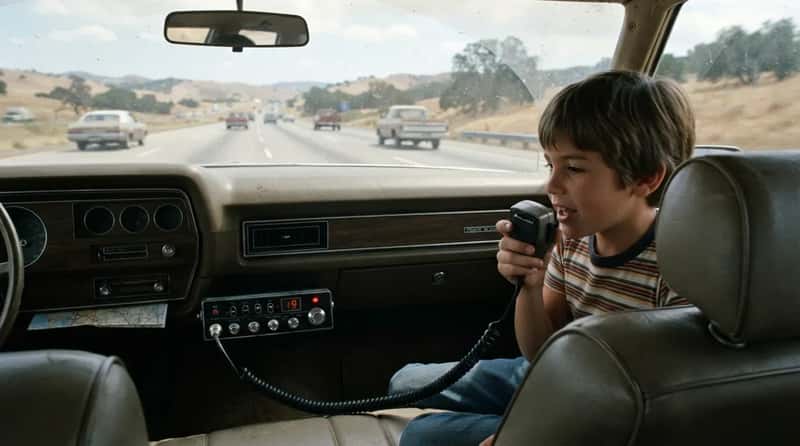
Citizens Band radios became hugely popular in the 1970s, and many families installed or packed a portable CB radio specifically for road trips, using it to check traffic conditions or chat with truckers along the highway. It added a strange sense of community to long drives.
Learning the lingo and handles became part of the fun for kids in the back seat. This trend faded fast once cell phones offered a far easier way to get real-time information on the road.
At a Glance
- Americans bought roughly 25 million CB radios between 1974 and 1977 alone.
- By the CB’s peak year in 1979, an estimated 20 to 30 million radios were in use nationwide.
- The FCC expanded the band from 23 to 40 channels in 1977 just to handle the traffic.
- Movies and hit songs turned trucker lingo into everyday household slang.
#2 – A Cooler Packed With a Full Family Meal
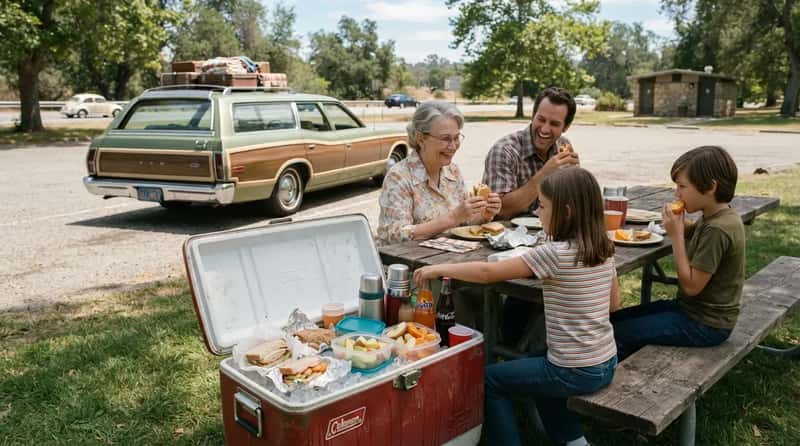
Fast food existed, but many families still packed a cooler with sandwiches, fruit, and drinks to avoid the cost and hassle of stopping at restaurants during a road trip. Eating in the car or at a rest stop was standard practice, not a budget compromise.
This habit stretched a family’s travel budget significantly further than it does today. Some families treated the roadside picnic as the actual highlight of the trip, not just a pit stop.
#1 – Foreign Currency Exchanged Weeks Before Departure
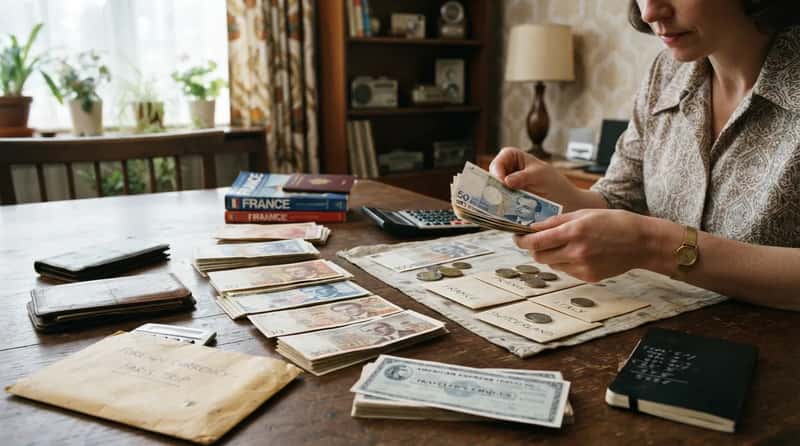
Without ATMs or card payments abroad, travelers had to plan ahead and exchange cash into foreign currency at a bank, sometimes weeks before a trip even began. Carrying that much cash across borders came with real risk and real anxiety.
A miscalculation meant either running short mid-trip or coming home with a pocketful of unusable coins. This single habit captures just how much modern banking and cards have quietly reshaped the entire experience of traveling abroad.
Quick Compare
- 1970s: Cash exchanged at a bank weeks in advance, with real risk of running short or over-converting.
- 1970s: Traveler’s checks required a double signature and a trip to an office if lost.
- Today: ATMs and contactless cards handle conversion automatically within seconds.
- Today: Apps show live exchange rates before a traveler even leaves home.
Looking back at this list, it’s clear that 1970s travel demanded far more preparation, planning, and physical packing than a modern trip ever does. Every item on this list solved a real problem that simply doesn’t exist anymore, replaced by a phone, a card, or an app.
What’s most striking isn’t how outdated these items feel – it’s how confident and normal they seemed at the time. Which one of these do you remember packing yourself? Drop your answer in the comments.