Ask any cabin steward what really happens behind closed doors on a cruise ship, and the stories get uncomfortable fast. Most passengers assume they’re polite, tidy, and low-maintenance guests – but the crew who clean up after them tell a very different story once the cabin door closes. Turns out the “nice” passengers are sometimes the ones creating the biggest headaches.
Cabin stewards are away from their families for months at a time, working long hours in a demanding environment, and they see the same bad habits repeat themselves cruise after cruise, ship after ship. Some of it is gross. Some of it is just plain rude. And a surprising amount of it comes from guests who genuinely think they’re being helpful. Here’s what stewards actually say happens in real cabins, once you’re not looking.
#27 – Yanking the Auto-Gratuities Right Before Disembarkation

Most major cruise lines quietly build steward pay into your bill from day one. Many mainstream cruise lines now charge automatic gratuities that cover cabin steward service, with Carnival, Holland America, Norwegian, MSC, Princess, and Royal Caribbean among the brands that do, typically running $16 to $21 per day per passenger. That money is supposed to be baseline compensation, not a bonus.
Yet on the last night of the cruise, a small percentage of guests walk to guest services and remove the charge entirely, sometimes after a full week of daily service. Stewards rarely find out until payday, when the number is simply smaller than expected. It’s one of the few “awful” things a passenger can do without ever having an uncomfortable face-to-face moment. That’s exactly why it stings so much when it happens. But that’s nothing compared to what we found about #26…
Fast Facts
- Automatic daily gratuities are standard on Carnival, Holland America, Norwegian, MSC, Princess, and Royal Caribbean.
- The typical charge runs $16 to $21 per passenger, per day.
- The fee is meant to fund baseline cabin and dining service pay – not act as a bonus tip.
- Guests can usually remove it at guest services any time before disembarkation.
#26 – Hiding Dirty Room-Service Trays Under the Bed
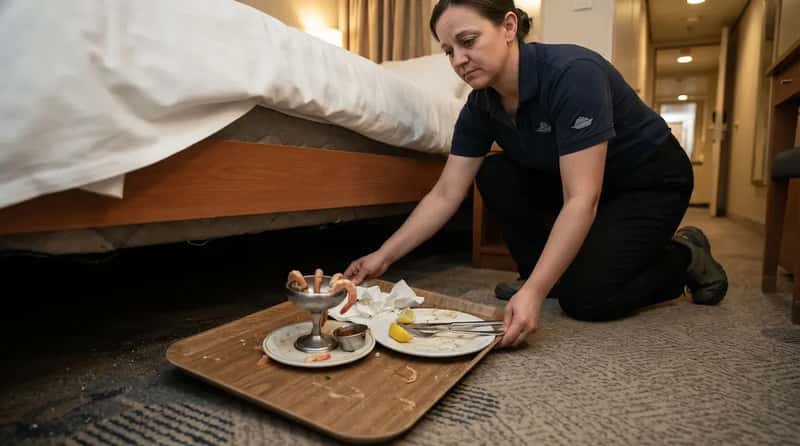
Nobody wants a plate of half-eaten shrimp cocktail sitting out in plain sight, so some guests get creative. The best advice is generally to put the plate outside the door so it can be collected, but instead some people try to hide the plates temporarily, maybe behind a curtain, under the bed, or in the wardrobe. It feels tidy for about a day.
Then the smell starts. Stewards say they’ve pulled crusted plates out from under mattresses days after they were left there, often with silverware still tucked inside the sheets. What looks like “cleaning up” to the guest actually just relocates the mess somewhere harder to find. It turns a five-second task into a full search-and-rescue mission during a room that’s supposed to take fifteen minutes.
#25 – Leaving the Do-Not-Disturb Sign Up All Day, Then Complaining Nothing Got Cleaned
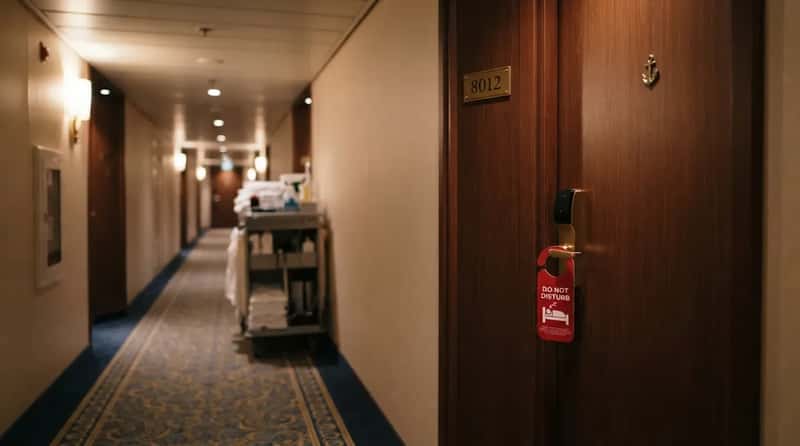
The little door hanger is meant to protect privacy for an hour or two, not become a permanent fixture. One crew member shared their frustration at having to wait until 9:45 p.m. to clean a cabin because the couple was gone all day at a show, yet the sign never moved.
Stewards are watching the clock just as closely as guests are watching the buffet hours. When a sign stays up from breakfast to bedtime, the room simply doesn’t get touched, and the same guest often ends up at guest services the next morning asking why their cabin “wasn’t serviced.” The sign wasn’t a suggestion – it was a locked door as far as the staff is concerned. It’s a tiny miscommunication that creates a full day of wasted opportunity.
#24 – Walking Hallways and Lounges Completely Barefoot

Even more annoying to crew members and fellow passengers than most complaints is when people put their bare feet on furniture, including coffee tables, lounges, and other areas where people place their drinks or food. It’s one habit crew can’t legally stop, since it’s not technically against most ship rules.
Cabin attendants and bar staff quietly rank it among the grossest things they see daily. A viral discussion proved crew members privately disagree with the habit, with one commenter bluntly stating that “the carpets of the rooms are full of germs.” Housekeeping physically cannot stop a paying guest from going shoeless, so they just keep steaming and vacuuming behind it, cabin after cabin, all cruise long.
#23 – Apologizing for Ten Minutes Before Finally Saying What They Need

This one sounds harmless, even sweet. Passengers sometimes feel bad asking for fresh towels, a drink refill, extra ice, or a quick fix in the cabin, so they apologize ten times before even saying what they need.
Stewards genuinely wish guests would skip the guilt trip. Crew members are there to help with normal requests, and making the request sound like some horrible inconvenience can actually slow things down and make the exchange feel awkward. The over-apologizing wastes more of the steward’s limited time than the actual request ever would. A direct, friendly ask is always the faster and kinder option.
#22 – Scrubbing the Cabin Themselves So the Steward “Won’t Have To”
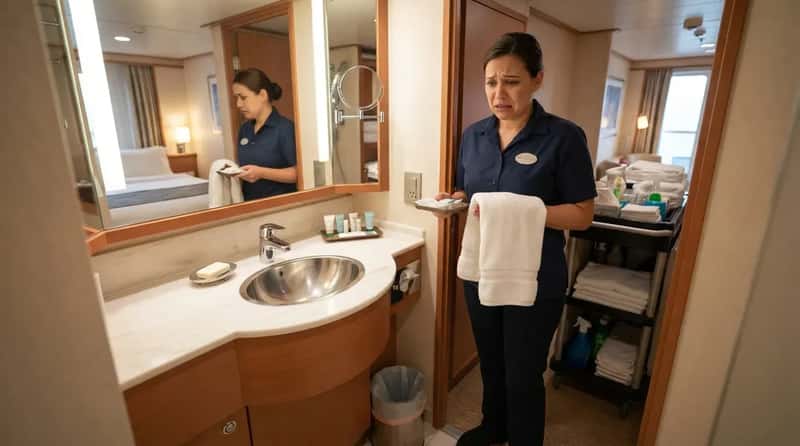
It sounds like the ultimate considerate guest move. Some guests scrub the sink, bag their trash, and leave the cabin spotless so their steward “won’t have to,” and it feels considerate – but it actually makes their job harder.
Without visible mess, stewards lose their roadmap. They can’t tell what needs changing or where something might be hidden, so they end up double-checking everything anyway, just more slowly. The “helpful” guest accidentally erases every clue the steward relies on to do the job efficiently. Ironically, a normally lived-in room is often easier to service than an artificially spotless one.
#21 – Storming Into the Cabin Before Housekeeping Has Finished
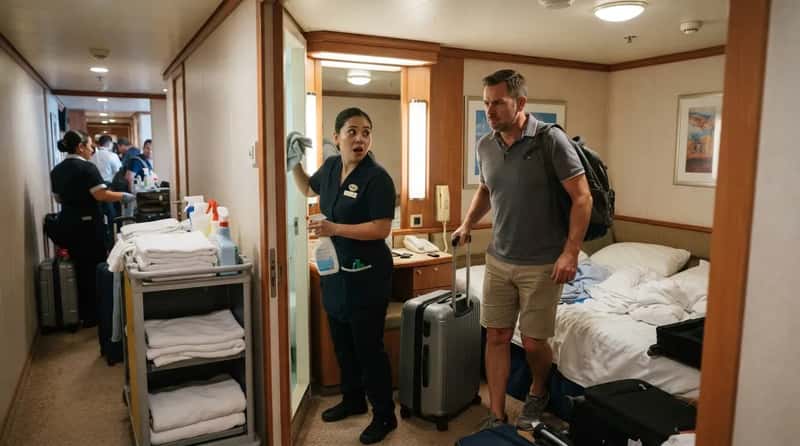
Embarkation afternoon is chaos on every deck at once. Attendants are racing to flip hundreds of rooms simultaneously, and guests who linger to unpack while housekeeping is mid-clean significantly increase that attendant’s workload for the whole afternoon.
Early-boarding perks make the problem worse, not better. Loyalty programs give some guests early cabin access, but if the room isn’t actually ready, dropping bags and stepping back out lets the attendant finish. One impatient guest walking in early can throw off an entire deck’s cleaning schedule for hours. But that’s nothing compared to what we found about #20…
#20 – Twisting Dirty Towels Into Cute Animal Shapes Meant to Be Reused
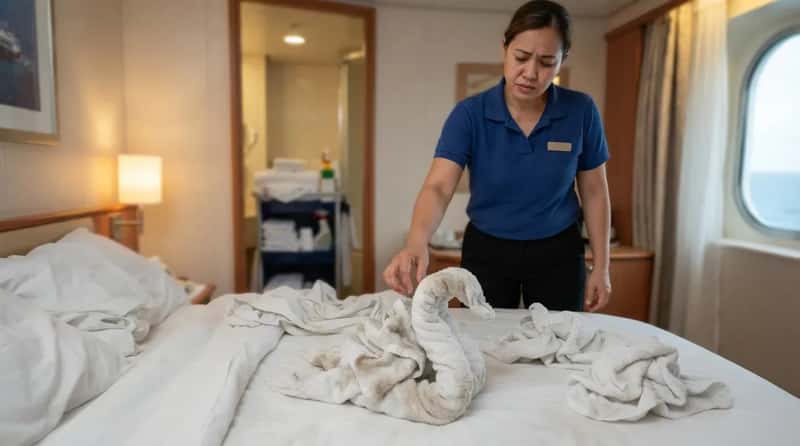
Passengers pick up the towel-animal trend from resort vacations and try to return the favor. Folding used towels into cute little bundles doesn’t speed things up – it slows everything down, because the steward now has to unfold each one and guess whether it’s decorative or damp and dirty.
What feels like a charming callback to the elephant-shaped towels stewards leave on beds becomes a small forensic project in reverse. A pile of unfolded, obviously-used towels is genuinely easier to process than a neat little swan. The kindest move is the least decorative one: leave used towels loose and let the professionals handle the folding.
#19 – Sneaking Forbidden Buffet Food Back to Rot in the Cabin

Dining rules exist for a reason most guests never think about. Fruit flies can show up within hours, and crew have found yogurt cups leaking through tissues and a slice of pizza that had practically glued itself to the plastic liner.
It’s not just gross to find later – it draws pests into shared ventilation and hallway spaces. Wrapping food well and using the main trash bin, or leaving it outside with the tray, is faster, cleaner, and spares everyone the smell. A single forgotten pastry can turn a tidy cabin into a fruit-fly breeding ground in under a day. Stewards say they can smell trouble before they even open the door.
#18 – Leaving the Balcony Door Wide Open for Hours

The ocean breeze feels irresistible, so plenty of guests prop the balcony door open and forget about it. Guests wanting fresh air or ocean sounds often leave the balcony door open all day, which kills the A/C and sometimes invites unexpected guests.
What flies in next is the real problem. Stewards say it’s not uncommon to find cabins full of mosquitoes and, in rare cases, birds. A single open balcony door can undo an entire day of climate control and turn the cabin into an accidental aviary. By the time the steward arrives for evening service, the cool air is gone and the bug problem has just started.
#17 – Cornering an Exhausted Steward for a Boozy 1 a.m. Chat
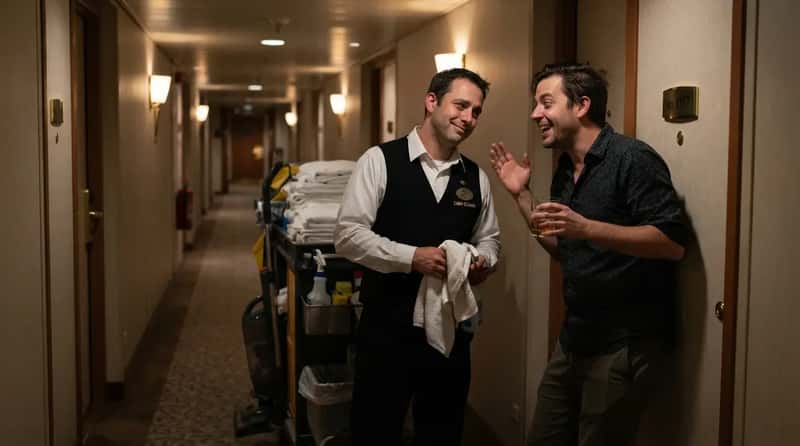
A little friendliness in the hallway is fine – most crew genuinely enjoy it. But there’s a version of this that goes too far. Some guests, a little buzzed, try to make conversation with their steward in the hallway, thinking they’re being friendly, maybe offering a compliment or a joke that lands weirdly.
For the crew member, it’s a different experience entirely. They’re mid-shift, exhausted, and required to stay pleasant no matter how the conversation feels. What reads as harmless bonding to a tipsy guest often reads as a workplace ambush to the person holding the cleaning cart. A quick smile and a “goodnight” almost always lands better than a ten-minute hallway monologue.
#16 – Lighting Up in a No-Smoking Cabin or Balcony
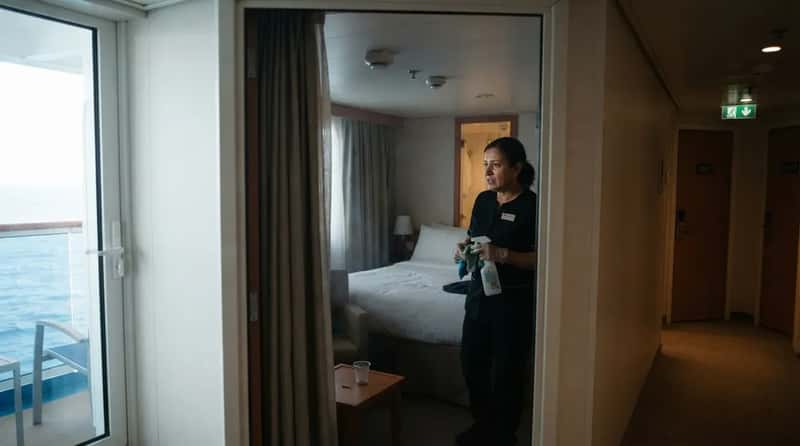
Smoke detectors on modern ships are sensitive enough to catch even a cracked window attempt, and stewards are usually the first ones to smell it, long before an alarm ever trips. Cigarette smoke embeds itself in curtains, carpet, and upholstery in a way that regular cleaning products can’t fully remove.
When it happens, the steward is the one who has to explain the lingering smell to the next guest checking in. A single sneaky cigarette can leave a smell that outlasts the smoker’s entire cruise. It’s one of the few habits that punishes a total stranger in the very next cabin cycle, not just the crew.
#15 – Showing Up With Fifteen-Plus Suitcases and Expecting a Miracle

Most cabins were designed for a carry-on and a mid-size suitcase, not a small moving truck’s worth of luggage. Cruise staff have seen requests that push storage logic to its absolute limit. One Holland America housekeeper recalled a guest who needed room for an extraordinary amount of luggage on an unusually long sailing.
“the 17 suitcases they had brought for their admittedly very long sailing.”
Holland America cabin steward
In that case, housekeeping was able to accommodate the request – but not without rearranging furniture, borrowing space from adjoining closets, and burning through time meant for a dozen other cabins. Seventeen suitcases for one sailing is an extreme, but even five or six oversized bags can eat an entire service window. The steward becomes an unpaid logistics manager for the afternoon.
#14 – Hoarding Rolls of Toilet Paper Like It’s a Doomsday Bunker
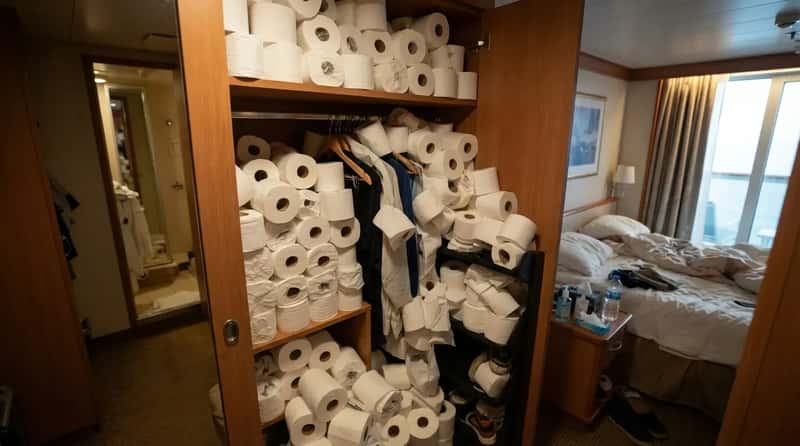
This one usually spikes during outbreaks of stomach bugs onboard, when anxious passengers start stockpiling supplies “just in case.” One crew member described the chaos from a real onboard scare. Cabin stewards had to swap rolls of paper between “low use” and “high use” guest cabins, and it came right down to the wire, with none of the guests realizing what was happening.
The fix that came out of it stuck around for good. Now toilet paper is hidden in every cabin instead of a centralized location. An entire ship-wide supply strategy changed because a few nervous guests decided to hoard. It’s a strange, very human panic response that stewards now quietly plan around every single cruise.
#13 – Spreading One Request Into Five Separate Trips Across the Day
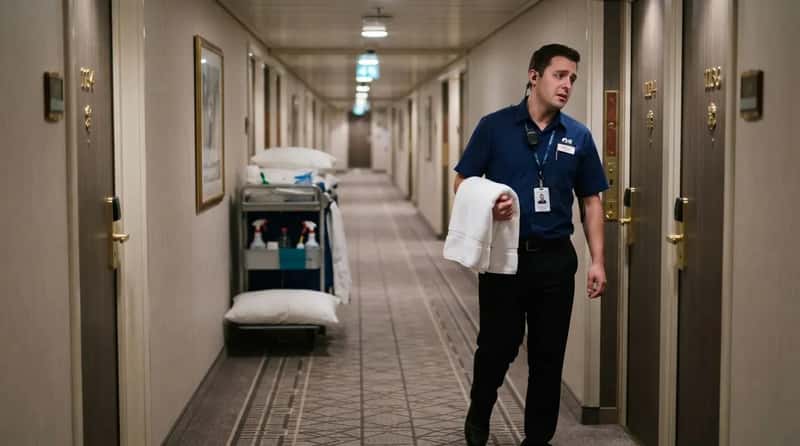
A pillow at 9 a.m., towels at noon, ice right before dinner – it feels casual to the guest, but it’s a logistics nightmare for the steward. Asking for a pillow now, extra towels later, and ice right before dinner isn’t necessarily rude, but it’s not efficient either, and it annoys stewards like crazy.
Batching requests changes everything on the crew side. One stateroom steward on Princess Cruises said guests who ask for several things at once usually get them delivered quickly, because the steward can work the requests into their route without backtracking. The exact same requests, asked one at a time instead of together, can turn a two-minute favor into five separate trips down the hall. But that’s nothing compared to what we found about #12…
#12 – Spotting a Bug in the Bed and Staying Quiet Until the Last Day
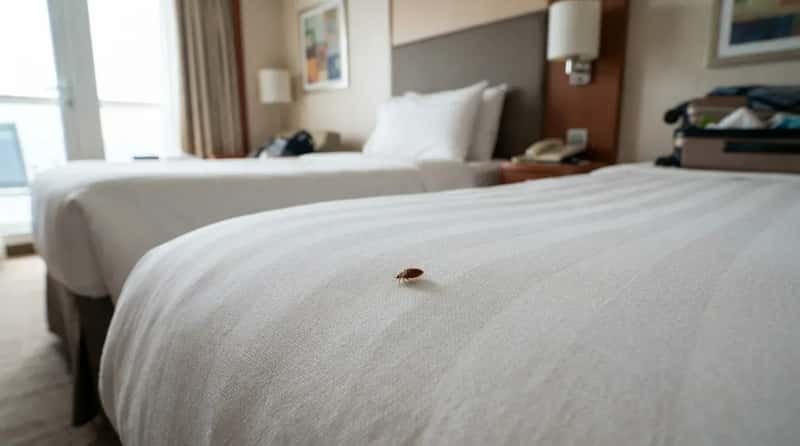
Discovering an unwanted visitor in your bed is unsettling enough. Waiting to say anything about it makes the problem worse for everyone who sails after you. One passenger on a six-night Carnival Vista sailing says they spotted a bug crawling across their bed just hours before disembarking, on the final day of the cruise.
The guest immediately contacted guest services, and crew members responded by inspecting and cleaning the room – but only because it was finally reported. A problem flagged on day one can be treated and monitored; the same problem flagged on the last morning leaves almost no time to fix anything before new guests arrive. Stewards say early reporting is the single biggest favor a guest can do them.
#11 – Letting Kids Sprint the Halls and Pound on Random Doors
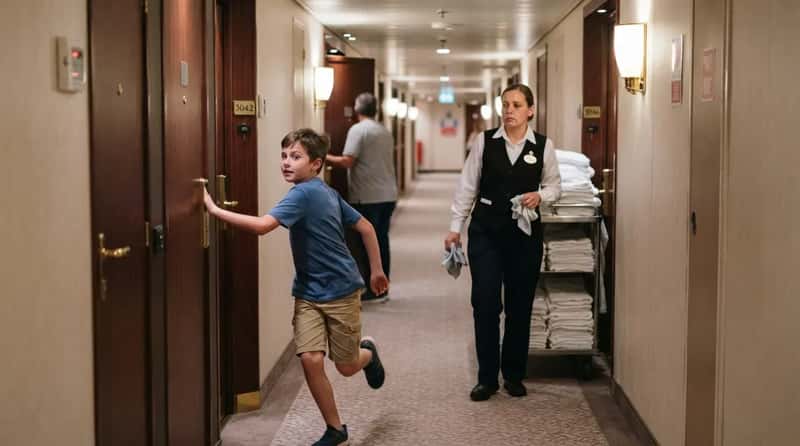
Cruise hallways are long, carpeted, and irresistible to bored kids who’ve been cooped up in a cabin all day. Unsupervised sprinting turns into door-knocking, and door-knocking turns into confused, sometimes frightened, adult passengers answering to nobody.
Stewards end up as the default mediators, since they’re usually the only staff visible in the hallway at any given moment. A steward mid-service with a cart full of towels can’t exactly chase down a ten-year-old two decks away. It’s rarely the kid’s fault, but the steward is the one who absorbs the awkward complaints from neighboring cabins afterward.
#10 – Rolling Their Eyes Through the Mandatory Muster Drill

The safety briefing on day one feels like an inconvenience to plenty of vacationers eager to hit the pool deck. It’s anything but optional from the crew’s side of things. Crew members are responsible for ensuring all passengers know what to do in an emergency, and acting annoyed or rushing through the safety procedures makes their job harder and potentially puts everyone at risk.
Cabin stewards are often pulled into muster drill duty alongside their regular room turnover schedule on the busiest day of the cruise. A guest treating the drill as background noise adds real risk on top of an already brutal embarkation-day workload. It’s one of the few moments where impatience genuinely isn’t a personality quirk – it’s a safety issue.
#9 – Leaving a Seasickness Disaster Without a Word of Warning
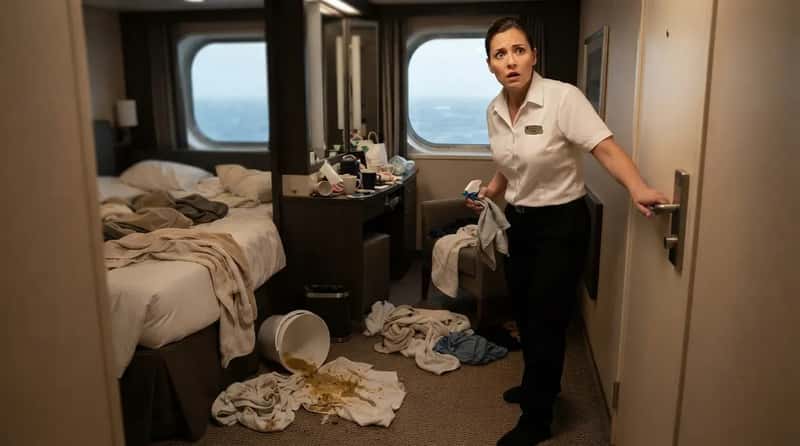
Rough seas happen, and nobody blames a guest for getting sick. What stewards do mind is walking into a cabin completely unprepared for what’s waiting behind the door, with zero warning that anything happened at all.
A quick note, a call to the front desk, or even just a heads-up in passing changes the entire cleaning approach and protects the steward from unnecessary exposure. The mess itself is forgivable; the silence around it is what turns an unpleasant task into a genuinely unsafe one. A thirty-second warning is all it takes to fix.
#8 – Skipping the Steward Entirely and Running Straight to Their Supervisor
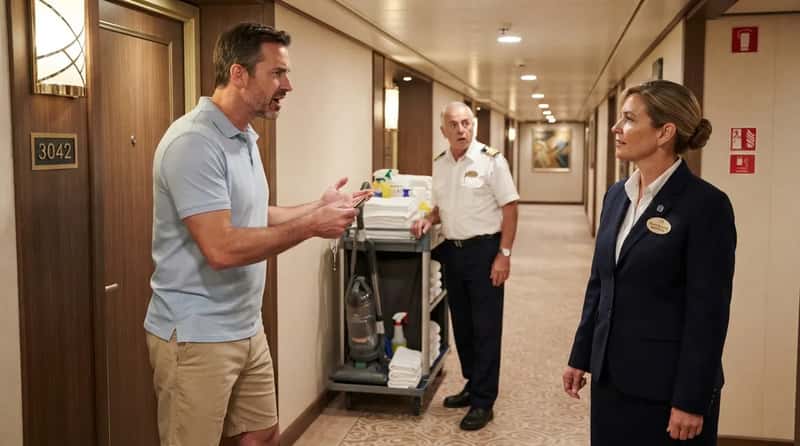
When something’s wrong with the cabin, plenty of guests bypass the person who can actually fix it fastest. If there’s a concern about the cabin, the better move is talking to the cabin steward directly first rather than going straight to their supervisor or guest services.
Escalating immediately doesn’t just skip a step – it can make a small fixable issue look like a formal complaint on someone’s record. Crew members can actually fix problems when guests are onboard, whether it’s an issue with the cabin or something else. Going over a steward’s head for something they never even got a chance to solve is one of the fastest ways to sour an otherwise great relationship. Most issues get resolved in minutes when the steward hears about them first.
Quick Compare
- Steward first: Most issues get fixed within minutes, no formal complaint on record.
- Supervisor first: Turns a simple fix into an escalated case the steward never got to solve.
- Steward first: Keeps the relationship personal for the rest of the cruise.
- Supervisor first: Can leave the steward feeling blindsided instead of helpful.
#7 – Saving All Their Charm for Officers, None for the Cleaning Crew
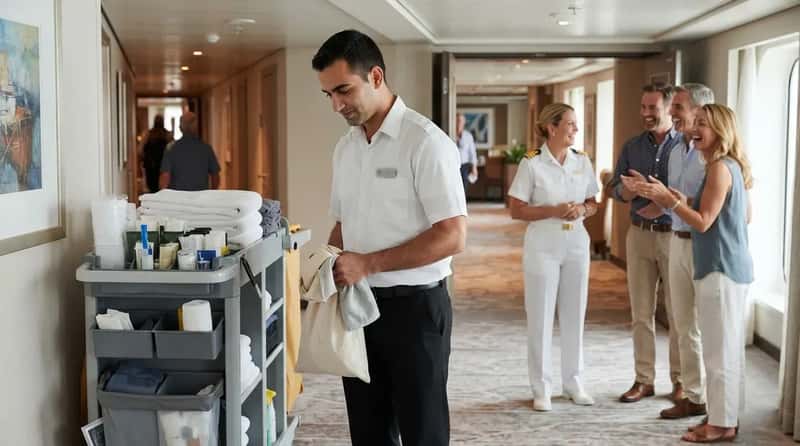
It’s a pattern stewards notice constantly, and it stings every time. Some passengers treat entertainment staff and officers with more courtesy than they show cabin stewards or buffet workers.
The same guest who’s warm and chatty with the cruise director can turn cold and dismissive the second a housekeeping cart rolls by. The politeness gap between “visible” crew and “behind the scenes” crew is one of the most quietly hurtful patterns on the entire ship. Stewards remember exactly which guests treated them like furniture and which ones treated them like people.
#6 – Leaving a Passive-Aggressive Note Taped to the Mirror
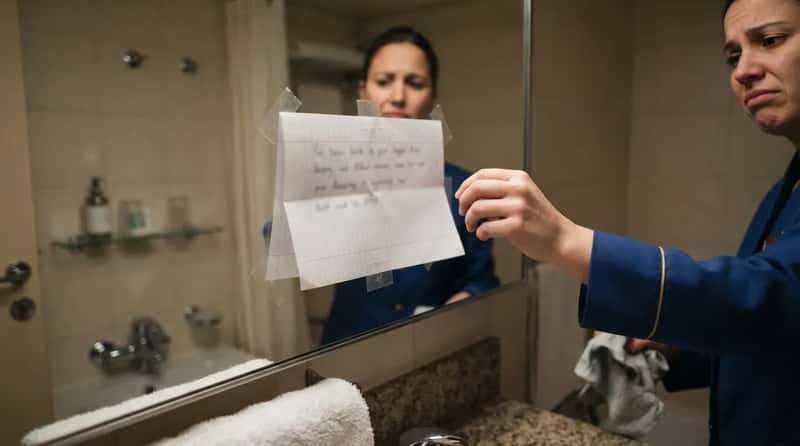
Direct conversation feels harder than it should for some guests, so complaints show up as notes instead – taped to the mirror, tucked under the phone, or left on the bed. A note about a missed towel or a wrong wake-up time can sit unread for hours if the steward’s schedule doesn’t bring them back to that cabin right away.
By the time it’s seen, the moment to fix it easily has usually passed. A two-minute hallway conversation solves almost everything a written note tries to solve, just hours faster. Stewards genuinely prefer being told to their face, even if the complaint itself is uncomfortable.
#5 – Trying to Sneak a Pet or a Hot Plate Past Ship Security
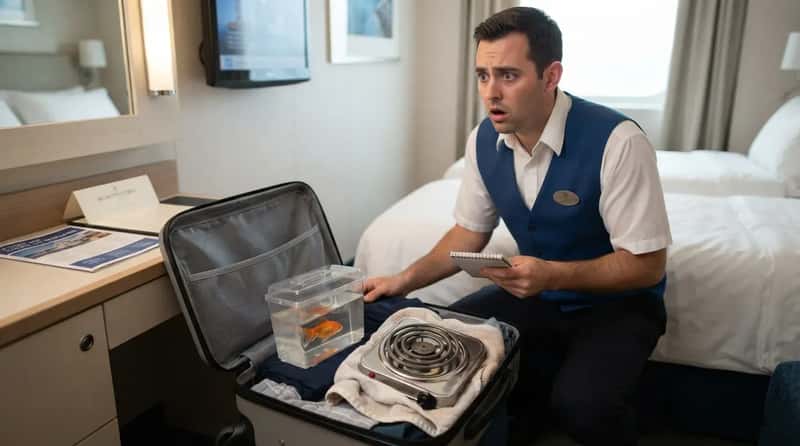
Contraband on a cruise ship isn’t usually dramatic – it’s a smuggled goldfish, an emotional-support hamster that wasn’t cleared in advance, or a travel hot plate meant to save money on room service. Stewards are often the ones who discover it during routine service, long after security has already cleared the cabin.
Fire risk and biosecurity rules exist for reasons that have nothing to do with being unreasonable. An undeclared pet or appliance puts the steward in the awkward position of having to report a guest they may have otherwise liked. It rarely ends well for anyone involved, least of all the smuggled pet.
#4 – Trashing the Cabin on the Last Night Like It’s a Frat House

Final-night parties happen on every sailing, and some guests treat the last twelve hours like consequences no longer apply. Bottles, spilled drinks, and food debris pile up fast when a cabin is treated as disposable instead of still-occupied.
Stewards still have to service that room the next morning before a brand-new guest checks in, often with almost no turnaround time between sailings. The mess left on the very last night is often the worst mess of the entire week, timed for the least amount of cleanup window possible. It’s the final impression a steward gets of a guest they may have served flawlessly for six straight days.
#3 – Forgetting the Walls Are Paper-Thin and the Steward Hears Everything
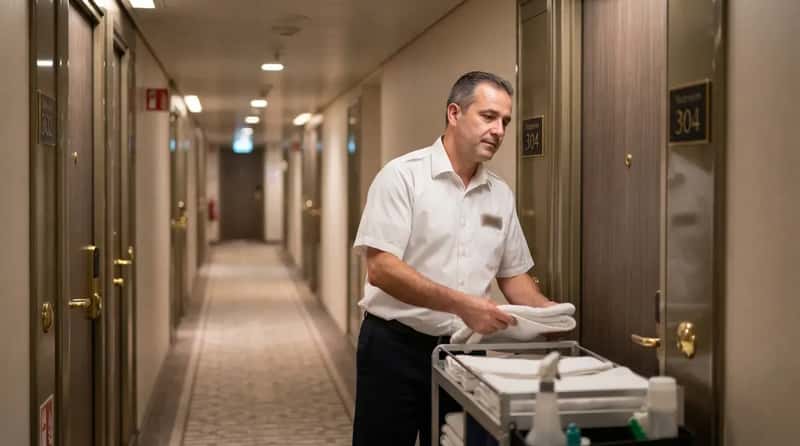
Modern cruise cabins are efficient, compact, and acoustically honest. Arguments, phone calls, and private conversations travel through walls and connecting doors far more easily than most guests assume, and stewards working the hallway hear plenty they never mention.
It’s an unspoken part of the job that most passengers never think about. A steward can often tell exactly how a couple’s vacation is going without ever setting foot inside the actual cabin. Professional discretion means they rarely say a word – but they absolutely notice.
#2 – Stiffing the One Crew Member Who Touches Everything They Own
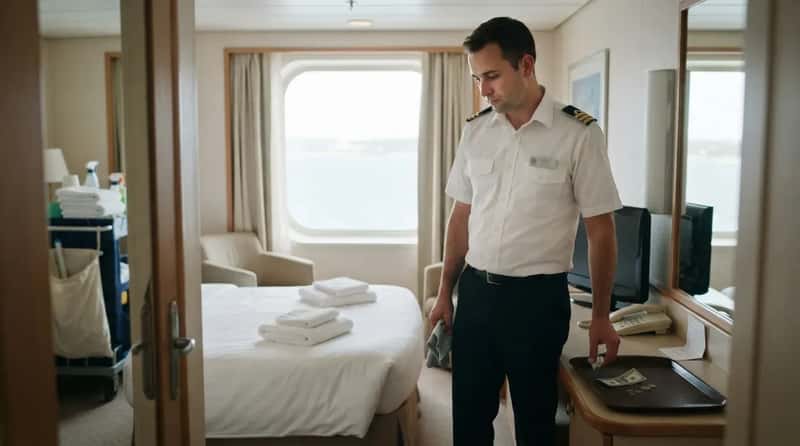
Cabin stewards handle a guest’s sheets, towels, luggage space, trash, and personal belongings every single day of the cruise, more intimately than almost any other crew member onboard. Despite that, they’re often the last person to see an extra tip, even after genuinely exceptional service.
A few extra dollars slipped over on the final morning goes further than most guests realize, especially for a role that rarely gets acknowledged by name. The crew member with the most access to a guest’s entire trip is frequently the one who receives the least appreciation for it. It’s a quiet imbalance that stewards notice every single week, on every single sailing.
Worth Knowing
- Auto-gratuities cover baseline pay, not extra recognition for exceptional service.
- A cash tip on the final morning is one of the few “thank yous” a steward keeps in full.
- Handing it over in person, with a name attached, tends to mean more than an envelope left on the pillow.
- Many stewards say the gesture is remembered longer than the amount itself.
#1 – Treating a Hard-Working Steward Like They’re Invisible
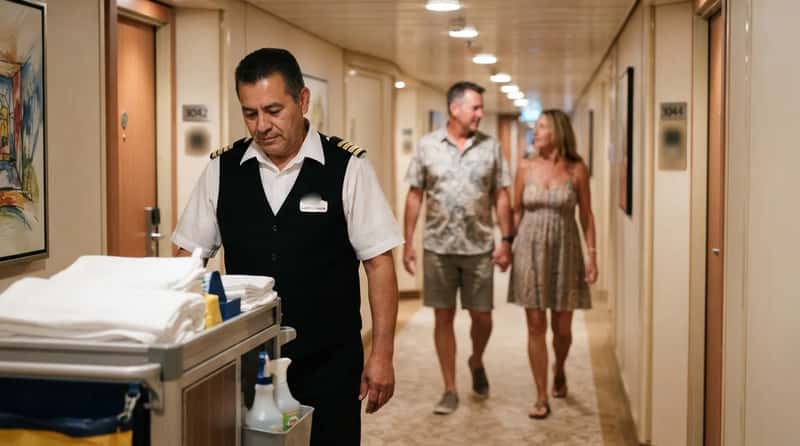
This is the one every steward brings up first when asked what actually gets to them. Not the towels, not the trays, not even the messes – just being walked past in a hallway without a nod, a name, or a moment of acknowledgment, cruise after cruise, cabin after cabin.
It’s a small thing that adds up over a seven-day contract, then a fourteen-day contract, then months away from home. The single most common complaint among stewards isn’t disgust – it’s simply feeling unseen by the very people they work hardest for. A first name, a genuine thank-you, and eye contact cost nothing and change everything.
None of this is really about towels or trays. It’s about the gap between how passengers see their vacation and how the crew experiences the exact same week – one relaxing, one relentless. The good news is that almost every item on this list has a free fix: a little patience, a little eye contact, a little less silence. Which one of these habits did you not expect? Drop it in the comments – cruise crew members are probably reading, too.