Most people assume the biggest threat to a good night’s sleep on a train is the train itself – the clatter of the tracks, the sway, the occasional jolt at a switch. Rail crew who work overnight routes tell a very different story. According to attendants and conductors who log hundreds of nights a year in sleeper cars and couchettes, it’s almost never the train that ruins the trip. It’s the passenger three doors down.
Some of these habits sound completely harmless. A few are so common that most travelers don’t even realize they’re doing them. But once you hear why crew members quietly dread certain behaviours night after night, you’ll never board an overnight train the same way again.
#27 – Flicking On the Overhead Light at 2 A.M.
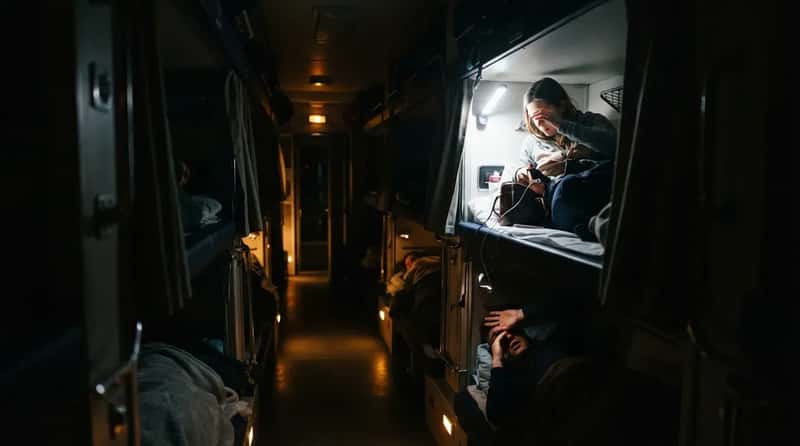
Nothing wakes an entire sleeper car faster than one passenger deciding the main light is the only way to find a phone charger. Crew members say this is one of the most common complaints they field the next morning, and it’s almost always avoidable.
Sleeper etiquette is simple: no overhead light after dark, no music through speakers, no smelly food. Most of these light-flicking moments could be solved in seconds with a phone’s built-in flashlight instead. Attendants say the fix takes zero effort, yet the overhead light remains the number-one overnight complaint on shared cars.
#26 – Treating a Phone Speaker Like It’s a Living Room
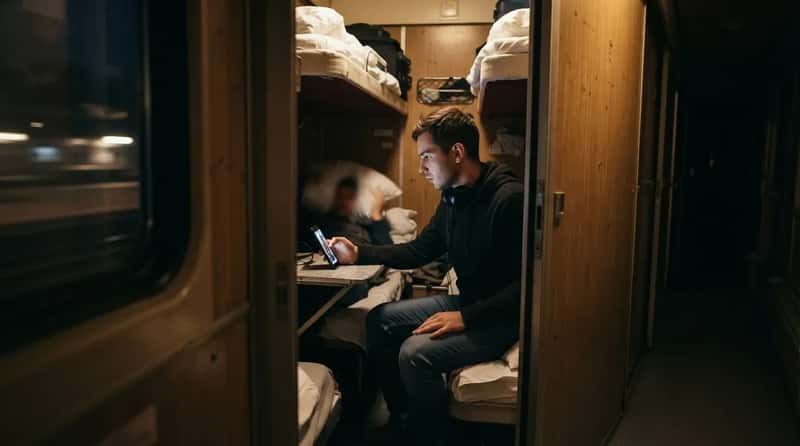
Rail crew say the fastest way to turn a quiet cabin into a group grievance is playing anything on speakerphone.
Whether it’s a movie, a voice memo, or a video call, sound carries through thin sleeper walls far more than passengers expect. Even headphone volume can spill over if it’s cranked too high, and crew say a speaker turned on inside a sleeper car is treated as flatly unacceptable. What feels like a private moment to one traveler becomes shared entertainment for an entire car. It’s usually the fastest way to earn a polite but firm knock from an annoyed attendant.
#25 – Boarding Late With a Flashlight and a Loud Whisper
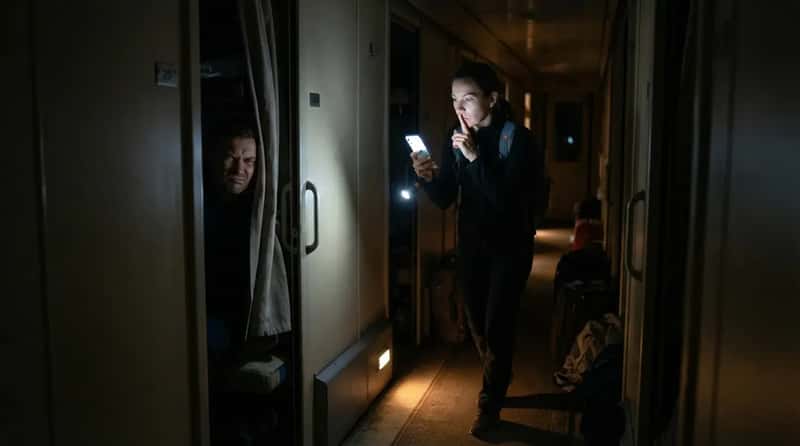
Late boarders think they’re being quiet. Crew members insist they almost never are.
An overnight train can feel like a plane, minus the attendant gently dimming the cabin lights, so a passenger arriving at 4 a.m. with a glaring phone screen and an “urgent whisper” wakes up half the car anyway. Crew say that whisper is somehow louder than a normal speaking voice, and they’ve heard it repeated on nearly every overnight route. A dimmed screen and real silence until the door closes would solve it completely, but almost nobody remembers in the moment. Wait until you hear what happens next door in #24.
#24 – Ignoring the Unspoken Quiet-Car Culture
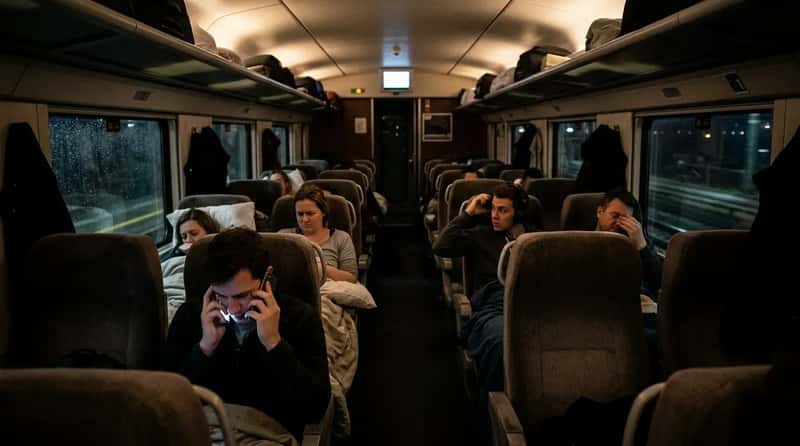
Quiet cars exist for a reason, and rail staff say the passengers who break the rule are almost never first-timers – they’re repeat offenders who assume the rule stops applying after dark.
Most passengers in quiet cars use the Wi-Fi and keep devices on low volume without being asked, which is exactly the standard crew expect overnight too. When someone breaks that unspoken agreement with a late-night call, the ripple effect wakes rows of passengers who never signed up for it. Attendants say enforcing quiet hours has become one of their most frequent, and most awkward, nightly duties.
Fast Facts
- Quiet-car norms are largely unwritten, but crew treat them as fully in effect after dark.
- Most riders already keep calls and devices low without being reminded.
- One broken rule can ripple across an entire row of sleeping passengers.
- Enforcing quiet hours is one of the most repeated duties attendants describe on overnight runs.
#23 – Packing Food That Announces Itself
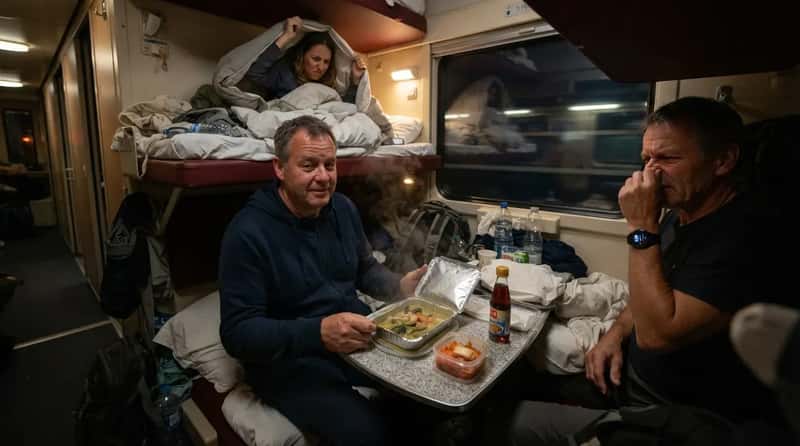
Nothing turns a shared sleeper into a battleground faster than a passenger unwrapping a pungent meal at midnight.
Outside food is technically allowed on overnight trains, but strong-smelling meals like seafood or heavily spiced dishes can disturb everyone nearby, which is why mild snacks are generally the safer call. Crew say the smell lingers for hours in a sealed compartment, long after the food itself is gone. It’s rarely malicious – travelers just don’t think about how enclosed the space really is until the damage is done.
#22 – Sneaking Coach-Ticket Friends Into a Sleeper Room
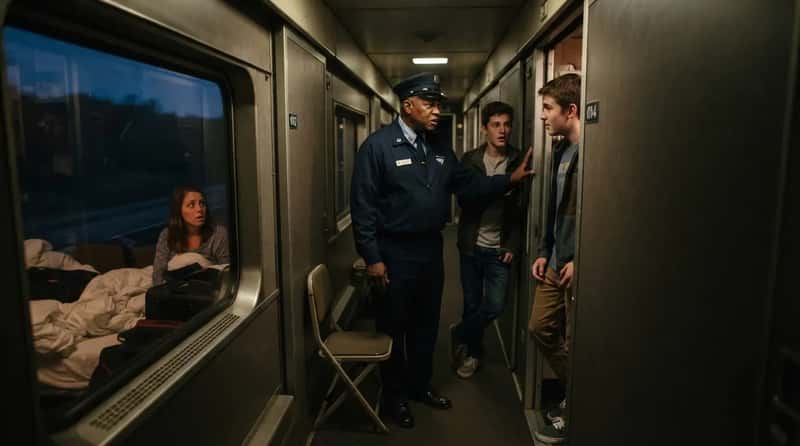
It sounds like a harmless favor. Crew treat it as a serious violation.
Long-time Amtrak riders confirm that coach passengers generally aren’t allowed into sleeper rooms, and attendants enforce that rule no matter how confused travelers seem about why it exists. The rule isn’t random – it protects the paid privacy that sleeper passengers are covering with a premium fare. Crew say they catch this attempt on nearly every long-distance route, and it almost always ends the same way: an awkward walk back to coach.
#21 – Refusing an Early Bed Turn-Down
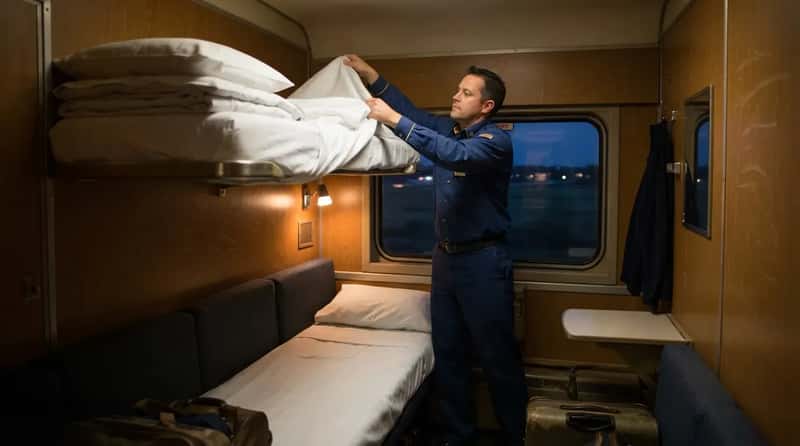
Younger travelers wait until they’re yawning to ask for their bed. Crew say that’s backwards thinking.
Attendants know that converting a room from daytime seats into a made bed goes faster earlier in the evening, long before anyone’s exhausted enough to fumble through it. Waiting until the last minute means digging through luggage and bedding in the dark while the train is already swaying down the tracks. The smartest passengers request the switch right after dinner and get a calmer, easier night for it.
#20 – Fighting Over the One Shared Control Panel
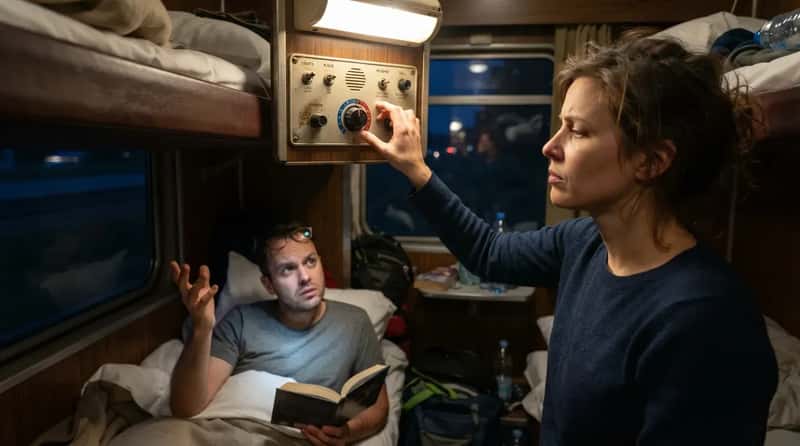
Older sleeper compartments come with a single control for light, radio, and temperature – and it turns into a nightly negotiation.
Roommates rarely agree on bedtime instantly, and with only one shared panel for the light, radio, and thermostat, compromise doesn’t happen on its own. Someone almost always loses out on comfort unless the group talks it through early. Crew say the passengers who ask politely and settle it before lights-out get a far better night than the ones who just flip the switch and hope nobody complains.
#19 – Misusing the Overnight Door Lock
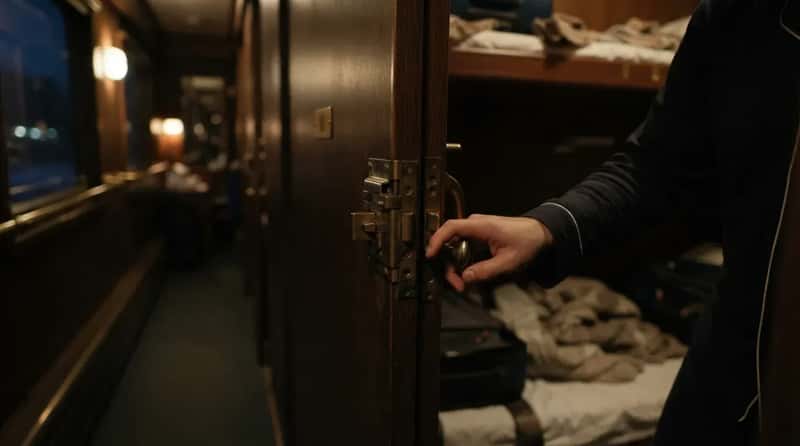
Most passengers don’t realize the inside lock on a sleeper compartment isn’t just for privacy – it’s a safety feature crew depend on too.
In soft sleeper cars, there’s typically a double lock meant to stay engaged once everyone’s in bed, so no one but the guard can enter, and only in a genuine emergency. Locking it wrong, or leaving it open out of habit, undermines the entire system crew are relying on. Attendants say confusion over this lock causes more late-night door-fumbling than almost any other mechanical issue on the car.
#18 – Snoring Without a Backup Plan
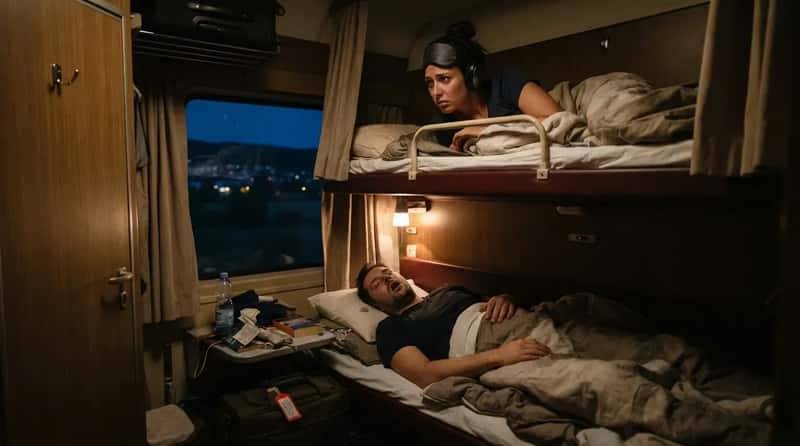
Snoring itself isn’t something anyone can control. What crew notice is who prepares for it – and who doesn’t.
Frequent overnight travelers say the fix is simple: pack a snore strip if your travel partner sleeps flat on their back, and assume other passengers in the cabin might not be quite as considerate about it. The travelers crew hear complaints about the next morning are almost always the ones who showed up with zero backup plan. A cheap pack of earplugs handed out in advance has saved more than one shared compartment from a tense sunrise.
#17 – Letting Kids Run the Corridors at Night
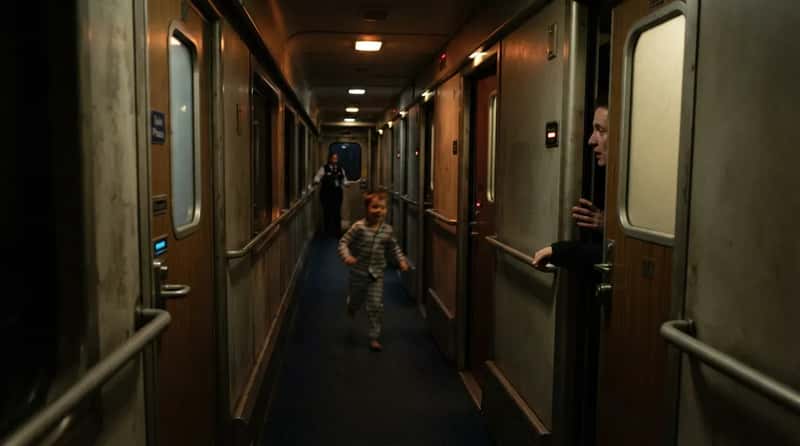
Families traveling overnight sometimes forget that a moving train corridor after dark isn’t a playground.
Crew say unsupervised kids running between cars while other passengers try to sleep is one of the more physically dangerous habits they witness, given the sway of a moving train and dimly lit hallways. It’s less about noise and more about safety – a sudden brake or curve can send a running child straight into a door frame. A firm boundary set before lights-out, according to attendants, prevents almost every one of these incidents.
#16 – Leaving Luggage to Block the Aisle
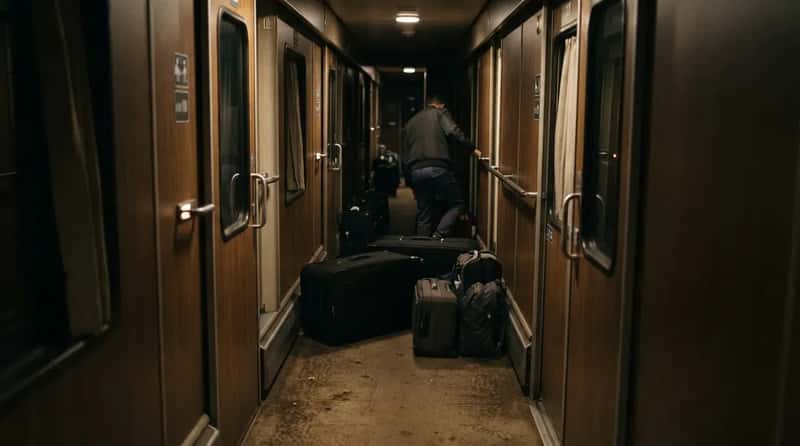
Sleeper cars are narrow by design, and crew say abandoned luggage in the corridor is one of the most preventable hazards on board.
A bag left outside the overhead rack or under-bunk storage turns a routine walk to the restroom into an obstacle course, especially in the dark. One dropped suitcase in a swaying corridor is often all it takes to send another passenger stumbling. Crew consistently ask travelers to store everything inside the compartment before sleep – a request, they say, that gets ignored more than almost any other.
#15 – Skipping the Dinner Reservation System
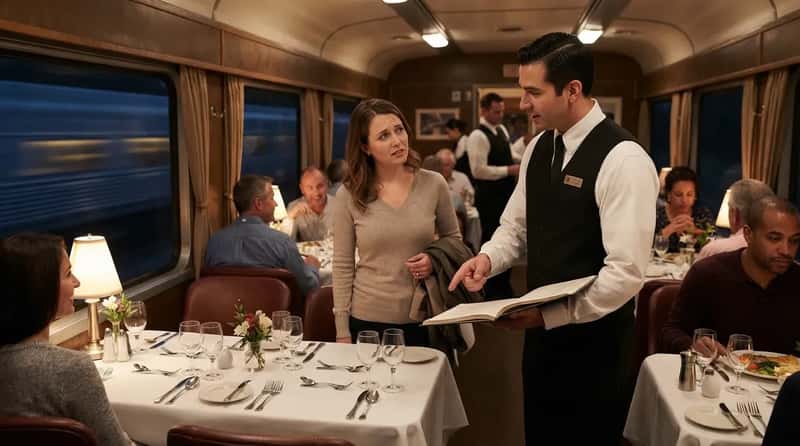
Assuming a seat in the dining car will simply appear is a mistake crew see constantly on long-distance overnight routes.
The system works in a specific order: sleeping car passengers are expected to walk to the diner and grab a reservation themselves, and only afterward does staff circulate through the sleeper cars offering slots to anyone who didn’t show up. Passengers who skip that step and expect a table anyway often end up with the last, worst seating time of the night. Following the process, rather than assuming automatic priority, avoids nearly all the dinner-related friction crew see.
#14 – Trying to Jump the Boarding Order
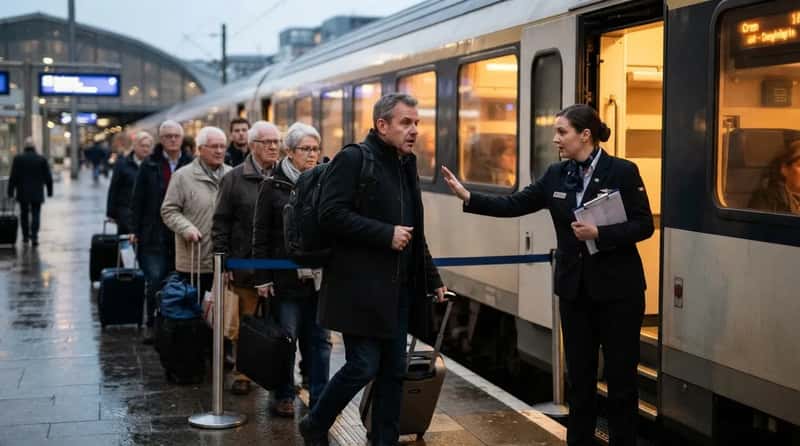
Boarding chaos on overnight trains is almost always self-inflicted, according to crew who manage it every departure.
There’s usually an informal hierarchy – passengers needing assistance board first, then Business Class and sleeper passengers, with Coach boarding last – and respecting it keeps the whole platform moving. Cutting the line doesn’t just annoy other travelers; it slows down boarding for everyone standing behind you. Crew say the passengers who ignore the order are almost always the same ones frustrated later when their space isn’t immediately ready.
Quick Compare: Typical Overnight Boarding Order
- Passengers needing assistance board first
- Business Class and sleeper passengers board next
- Coach passengers board last
#13 – Assuming There’s Always a Dining or Buffet Car
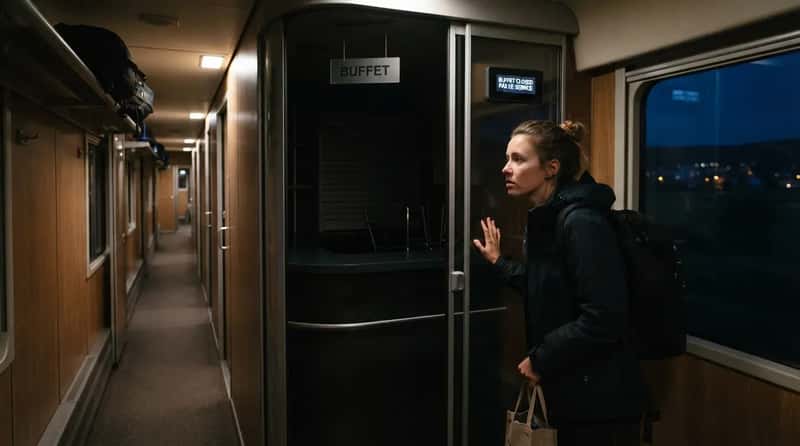
Nothing derails an overnight trip faster than discovering there’s no food service when you expected one.
Travelers should never assume a buffet or restaurant car exists unless they’ve specifically confirmed it, and should pack their own provisions just in case – even a bottle of wine, if that’s the plan. Passengers who skip this step sometimes go a full overnight leg with nothing to eat, and hungry travelers create more onboard tension than almost anything else. A packed bag of snacks solves a problem most people don’t realize exists until it’s already too late.
#12 – Turning the Fold-Down Table Into Storage
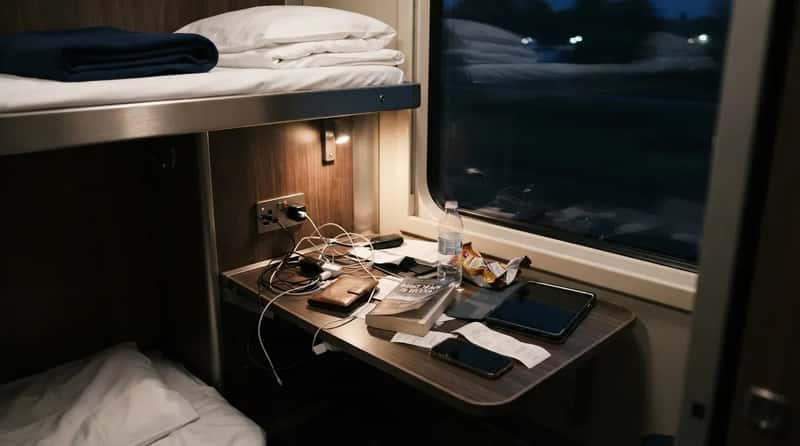
The small fold-down table in a sleeper compartment has one job: staying clear enough for crew to do the nightly turn-down service.
Sleeper passengers get hotel-like touches like fresh linens and a bottle of water, and attendants often place that water and a small snack directly on the fold-down table before lights-out. When the table’s already buried under chargers and paperwork, that small comfort simply doesn’t happen. Clearing it before dinner is one of the easiest ways to actually receive the extra care crew are trained to provide.
#11 – Expecting On-Demand Hospitality Without Basic Requests
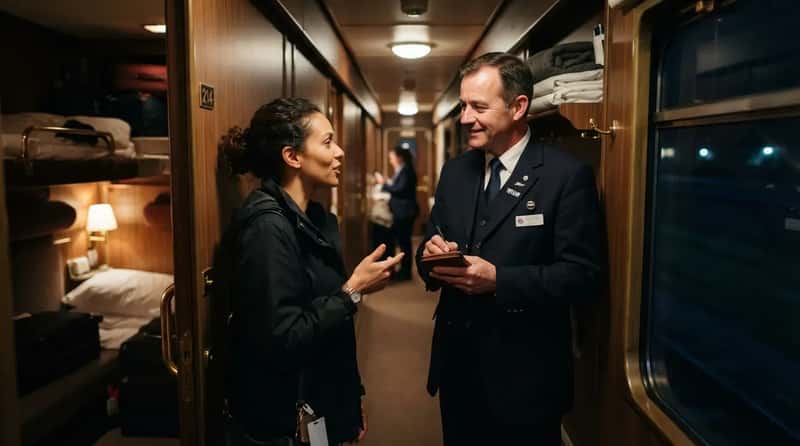
Sleeper service runs on communication, and crew say the passengers who get the best treatment are the ones who simply ask.
Attendants can usually arrange a personal wake-up call instead of leaving passengers to trust a phone alarm alone, along with small preferences most travelers never think to mention. Passengers who never ask for anything tend to get the bare minimum, then complain afterward that the service felt cold. A polite, specific request – a wake-up time, a bedding note, a meal preference – almost always earns a warmer response than silence followed by frustration.
#10 – Overusing the Call Button for Non-Emergencies
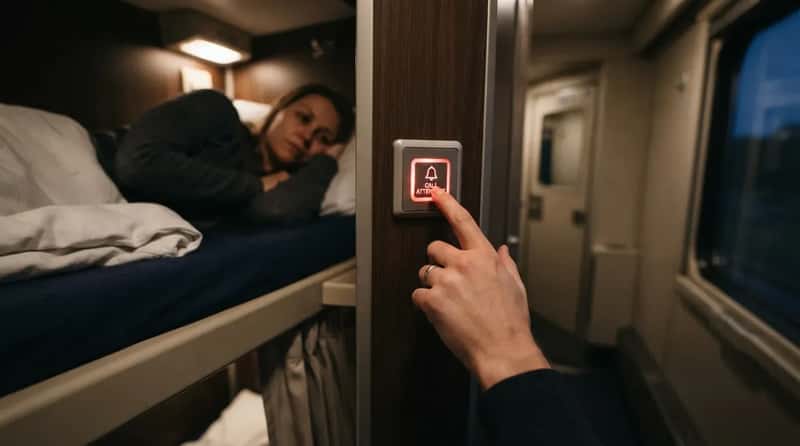
Every overnight crew member has a story about a call button pressed for something that could have waited until morning.
Repeated non-urgent requests late at night – an extra pillow, a minor temperature tweak, a general question – pull attendants away from real emergencies and the rest breaks they’re owed between rounds. Crew say it’s almost always the same passengers, night after night, on the same route. A little patience saved for daylight hours goes a long way toward keeping the whole car running smoothly overnight.
#9 – Complaining About Motion Instead of Expecting It

Rail crew say some first-time overnight travelers genuinely seem surprised that a moving train… moves.
Sway, gentle rocking, and the occasional jolt at a switch are completely normal parts of rail travel, not signs of a mechanical problem. Passengers who treat every bump like an emergency create unnecessary anxiety for everyone nearby. A basic understanding that motion is part of the ride – not a malfunction – changes the entire tone of a first overnight trip.
#8 – Mismanaging Corridor Lighting Etiquette
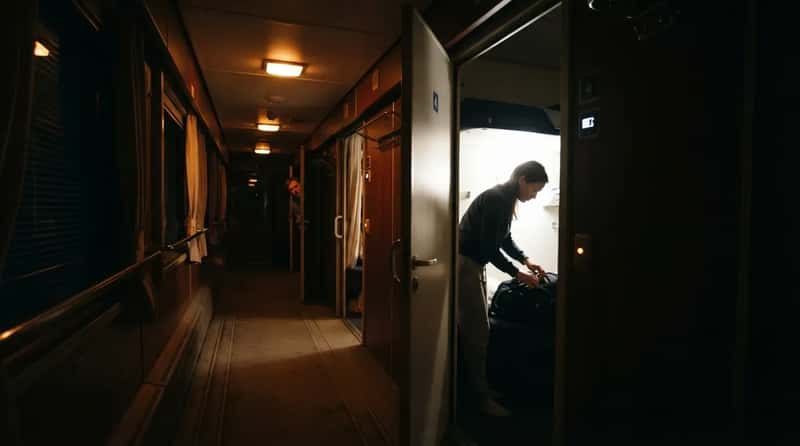
There’s a reason corridors stay dimly lit overnight, and crew say passengers who ignore that logic cause more stumbles and collisions than almost anything else.
Corridors are already lit enough to navigate safely, so there’s no real need to flip on a room light when most people carry a flashlight in their pocket already. Slamming on a bright light to dig through a bag is a habit crew say they correct constantly, especially on longer routes. A dimmed phone flashlight does the same job without waking an entire section of sleeping travelers.
Why It Stands Out
- Corridors stay dim on purpose, so eyes can adjust without a jarring bright light at 3 a.m.
- Most passengers already carry a built-in flashlight – their phone.
- A dimmed screen does the same job as an overhead light, minus the wake-up call for a whole section.
#7 – Confronting Other Passengers Directly Over Noise
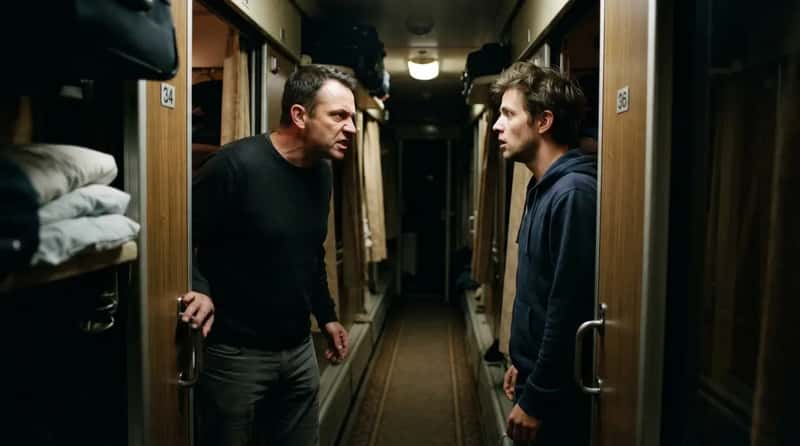
When a neighbor is too loud, crew say the instinct to bang on a wall or knock on a stranger’s door almost always backfires.
Direct confrontation between strangers in tight, shared quarters tends to escalate rather than resolve anything, which is exactly why attendants are trained to mediate these situations instead. A quiet word to crew almost always solves the problem faster, and with far less tension, than a face-to-face standoff. Passengers who come to staff first, rather than confronting a stranger themselves, get quieter results by the next stop.
#6 – Turning a Shared Compartment Into a Party
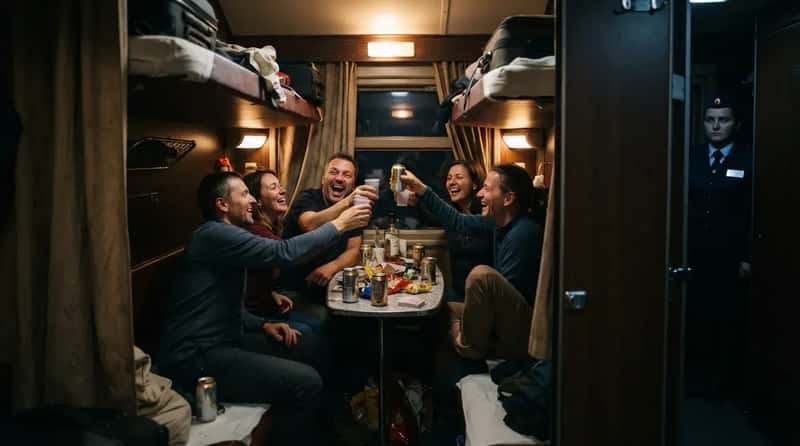
Alcohol on an overnight train isn’t the problem. Crew say it’s what happens after the second or third round that causes issues.
Loud games, rowdy toasts, and a drawn-out drinking session in a shared compartment spill noise into neighboring rooms fast. What feels like harmless fun to one group becomes a sleepless night for everyone within earshot. Crew say the volume creeps up so gradually that the group rarely notices until an attendant has to step in and end it.
#5 – Assuming Old Compartment Norms Still Apply Everywhere
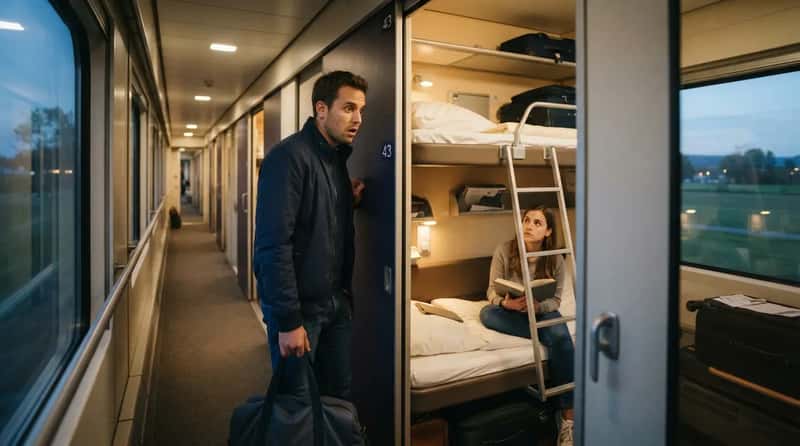
Sleeper car customs are shifting, and crew say travelers who assume nothing has changed are sometimes caught off guard.
Starting in 2026, Nightjet and European Sleeper became notable exceptions where mixed-gender compartments are now the default, though women traveling solo can still book a bed in a ladies-only section. Passengers expecting the old single-gender norm sometimes react with visible surprise when boarding. Checking a route’s current booking rules ahead of time, crew say, avoids an awkward and entirely preventable moment at the compartment door.
Worth Knowing
- Since 2026, Nightjet and European Sleeper default to mixed-gender sleeper compartments.
- Solo women travelers can still request a bed in a ladies-only section on these routes.
- Checking a route’s current booking rules before departure helps avoid surprise at the compartment door.
#4 – Trying to Negotiate a Free Upgrade
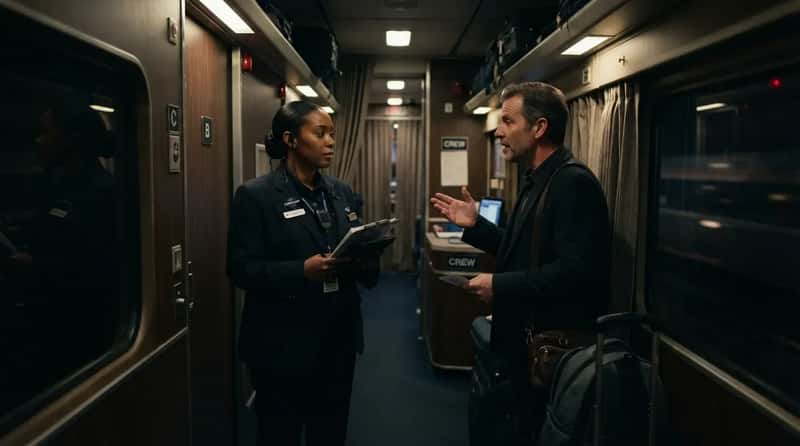
Every overnight crew member has faced a passenger who assumes charm alone will get them a bigger room for the price of a smaller one.
Sleeper cars run on strict, ticketed room assignments, and staff have little to no ability to reshuffle paid inventory on the spot, no matter how the request is phrased. Attendants say persistent upgrade requests, especially late at night, are one of the most exhausting patterns they deal with on busy routes. Accepting the booked room gracefully – and requesting upgrades through official channels ahead of time – gets far better results in the long run.
#3 – Treating the Attendant Like Background Furniture
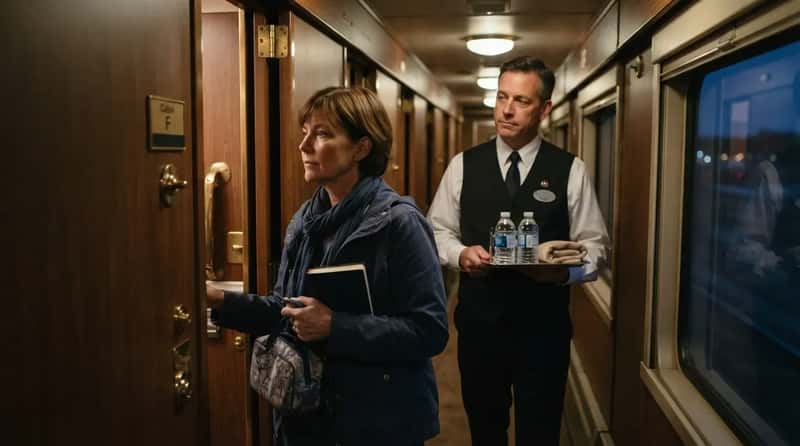
Sleeper attendants do far more overnight work than most passengers ever notice, and crew say being ignored entirely is oddly one of their more common frustrations.
A sleeper attendant typically greets passengers at the door, checks the reservation, and can usually arrange drinks, snacks, or a light breakfast on request. A simple acknowledgment – a name, a thank-you, a quick question – changes the entire tone of the service a passenger receives overnight. Crew say the passengers who treat them as invisible are, unsurprisingly, the ones who get the most basic, hands-off version of the job in return.
#2 – Leaving Valuables Completely Unsecured
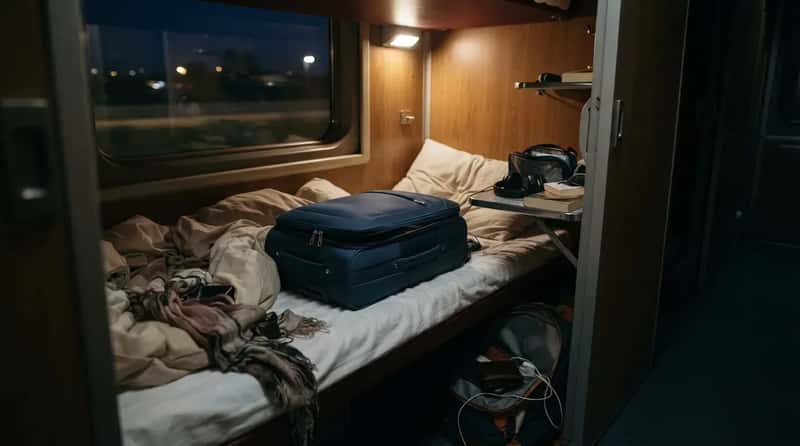
Overnight compartments feel private, which is exactly why crew say theft-prevention basics get forgotten fastest.
A small lock on cabin bags helps avoid theft, and travelers who wander the train should keep valuables on them rather than left behind in an unattended room. A single unlocked bag left in a shared space overnight is one of the most preventable regrets crew hear about after the fact. The fix takes seconds – a small lock, a habit of keeping valuables close – but it’s the one step nearly every first-time overnight traveler skips.
#1 – Packing Up and Blocking the Hallway Before Arrival
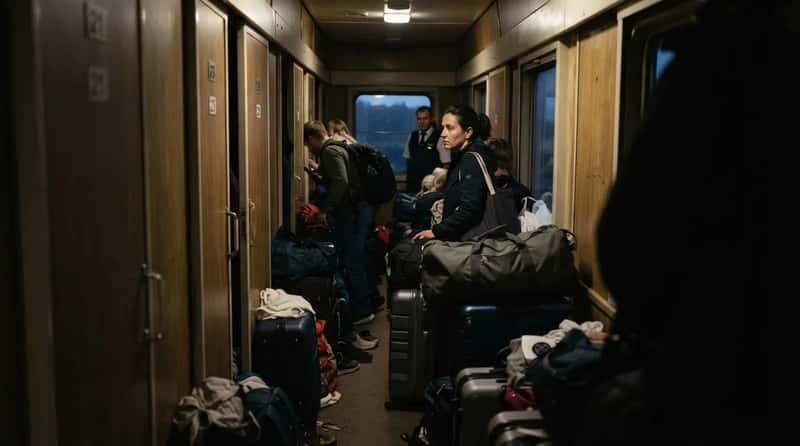
The single most common complaint crew report isn’t about noise, smell, or light. It’s about timing.
Passengers who dismantle their berth, pile luggage in the aisle, and camp near the door a full hour before arrival create a bottleneck that affects everyone behind them. Crew say this rush-to-exit habit, repeated trip after trip, causes more late-night hallway congestion than any other single behaviour on this list. Waiting for the actual arrival announcement, instead of preparing an hour early, is the one change attendants say would instantly improve almost every overnight journey.
None of these habits are dramatic on their own. But strung together across a single overnight car, they’re exactly why some journeys feel calm and restorative while others turn into a long night of small, avoidable friction. Almost every item on this list has a simple fix – earplugs, patience, a locked bag, a quiet word to an attendant instead of a stranger.
The passengers who master these small adjustments are usually the ones who step off the train the next morning actually rested, while everyone else compares notes on who kept them up all night. Which one of these have you seen firsthand on an overnight train?