
If you think flying today is miserable, you’re not wrong – but you might be surprised just how jaw-dropping the gap really is. The 1960s were the so-called “Golden Age of Air Travel,” and the things that were considered completely routine back then would either horrify you, make you deeply jealous, or both. Jet engines on commercial planes ushered in larger, faster aircraft, and the cabin experience was closer to a cocktail party than a commute – guests dined on lobster, drank champagne, and smoked cigars at 30,000 feet. Nobody questioned any of it. It was just… flying.
But here’s the twist: a lot of what looked glamorous on the surface was sitting on top of some genuinely wild, borderline unhinged social norms that everyone simply went along with. The cigarettes handed out like mints. The female flight attendants fired for turning 32. The life insurance vending machines right next to the gate. The deeper you look at this era, the stranger it gets – and a few of these details will make you question everything the nostalgia posters leave out.
#1 – Everybody Just Showed Up and Walked Straight to the Gate
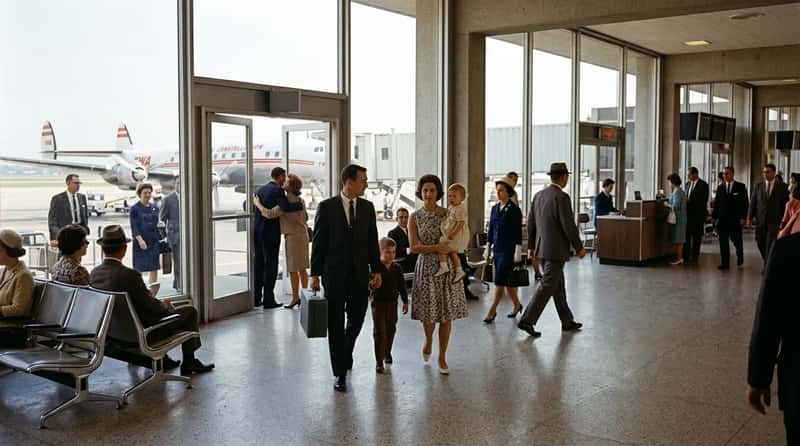
There were no TSA checkpoints, no body scanners, no lines of people removing their shoes and belts. In the 1960s, you didn’t need to show up two hours early – if you arrived 30 minutes before departure, you were guaranteed to make your flight. That’s it. Thirty minutes. You strolled in, handed over your ticket, and walked to the gate.
Friends and family could escort you all the way to the jetway – the tearful gate goodbye was a genuine cultural norm, not a scene from a romantic movie. Security screenings weren’t implemented until 1973, when metal detectors and bag searches became standard. In fact, you didn’t even need to show a government-issued ID to board a domestic flight until the early 2000s. Think about that the next time you’re standing in a security line for 45 minutes.
At a Glance
- No TSA, no ID check, no shoe removal – a 30-minute arrival was plenty
- Non-passengers could walk all the way to the gate with you
- Mandatory passenger screening didn’t begin until 1973
- Government-issued ID wasn’t required for domestic boarding until the early 2000s
#2 – You Could Buy Life Insurance From a Vending Machine Before Your Flight
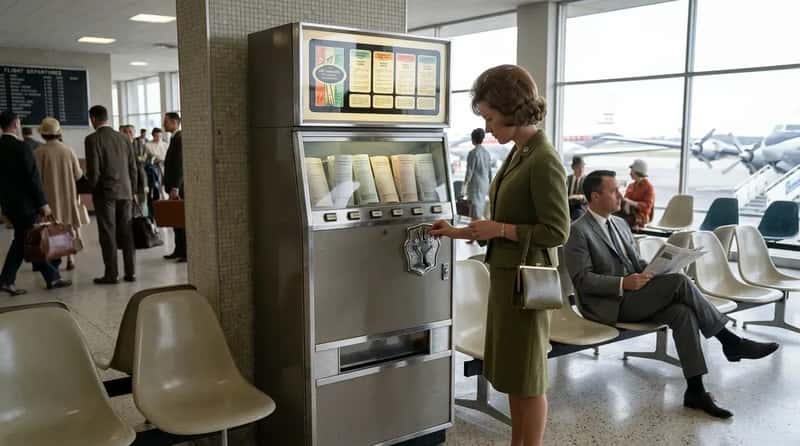
This one sounds made up, but it was completely real – and nobody batted an eye. Back in the 1960s, it was not uncommon to encounter vending machines in airport terminals that sold life insurance policies for around $2.50, paid in quarters, right before you boarded. You’d drop in your coins on the way to the gate, pocket the paper policy, and climb onto the plane. Normal Tuesday stuff.
Flight insurance vending machines and booths were a fixture at airports throughout the 1950s and 1960s, and the larger U.S. insurance companies made serious profits from them. The machines eventually faded not because of regulation, but because air travel grew demonstrably safer and passengers stopped feeling the urgent need. The fact that those machines existed at all tells you something real and raw about how people actually felt the moment before they boarded.
#3 – Smoking Wasn’t Just Allowed – Airlines Handed Out Free Cigarettes
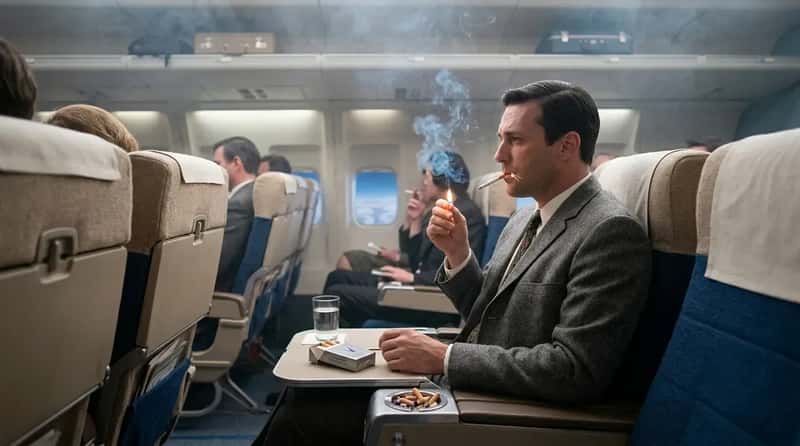
Smoking on planes in the 1960s wasn’t a dirty secret tucked in the back row. It was front-and-center, glamorous, and aggressively normalized. Passengers could smoke cigarettes, pipes, and cigars freely once airborne – the only restriction was on the ground, where open flames near refueling operations were an obvious hazard. Pipes and cigars. On a sealed commercial aircraft. At altitude.
Complimentary sample cigarette packs, complete with airline branding, were regularly handed out by flight attendants as an amenity – like a warm towel, but more carcinogenic. It took complaints from non-smokers, physicians, and members of Congress before U.S. airlines discontinued the practice of giving away free cigarettes with meals in 1967. Congressional pressure. Just to stop giving them away for free. The cigarette wasn’t a vice you brought on board – it was part of the hospitality package.
#4 – Tickets Cost a Fortune, and the Government Kept It That Way on Purpose
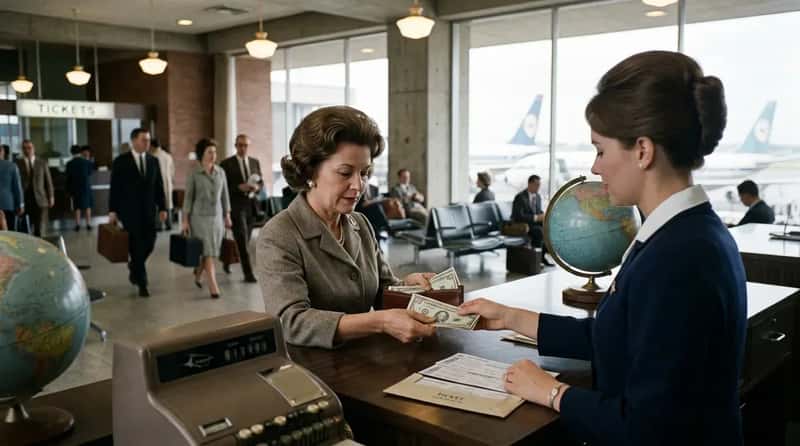
All that glamour came at a steep price, and it wasn’t an accident – the government literally set ticket prices by law, keeping them high to ensure airline profitability. Before the Airline Deregulation Act of 1978, the Civil Aeronautics Board controlled fares. International flights were four to five times more expensive than today, with some costing the equivalent of more than $4,000 in today’s dollars. A domestic round-trip could run the equivalent of $800 to $3,000.
Flying economy in the 1960s cost the equivalent of business class today. It was genuinely only accessible to the wealthy or to business travelers whose companies footed the bill. This is exactly why the whole thing felt so rarefied and ceremonial – because it was. Flying wasn’t a Tuesday-morning commute. It was a financial event, and everyone in the cabin knew it.
Fast Facts
- A one-way transatlantic ticket in the early 1960s: roughly $400 – around $3,600 today
- “Bargain” New York–Paris fares in 1955 translated to over $3,200 in 2023 dollars
- A round-trip domestic ticket could equal $800–$3,000 in today’s money
- Fares were identical across all carriers – the government set them by law until 1978
- The average American in the 1950s might spend up to 5% of annual salary on a single ticket
#5 – Economy Seats Had More Legroom Than Today’s Business Class
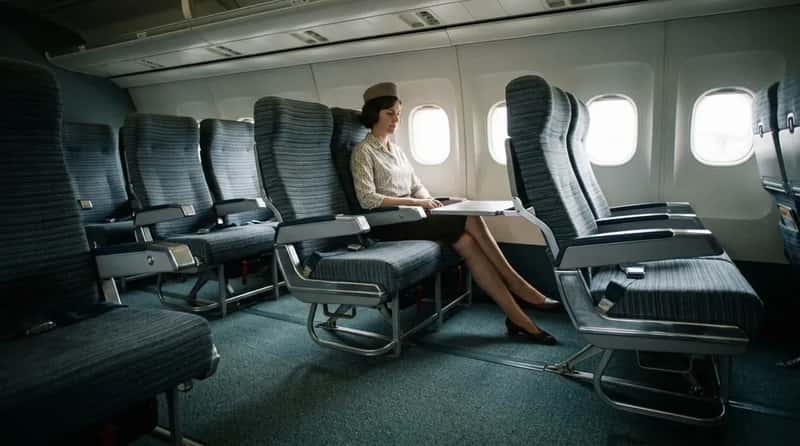
Every modern frequent flyer knows the feeling: knees jammed into the seatback, elbows fighting over a shared armrest. That experience simply did not exist in the 1960s – not even close. The average economy passenger had generous legroom, and today’s business class is spatially comparable to what a standard economy seat used to be. Let that sink in for a moment.
Economy seat widths have actually decreased since the 1960s, with seats as narrow as 16 inches now common on some carriers. Pan Am’s Boeing 707 offered an 18-inch seat width in economy – two full inches wider than what some airlines offer today. The shrinkage is incremental enough that most people never noticed it happening. But measured over six decades, it’s one of the quietest scandals in the history of commercial aviation.
#6 – Every Meal Came on Real China With Actual Silverware – Even in Coach
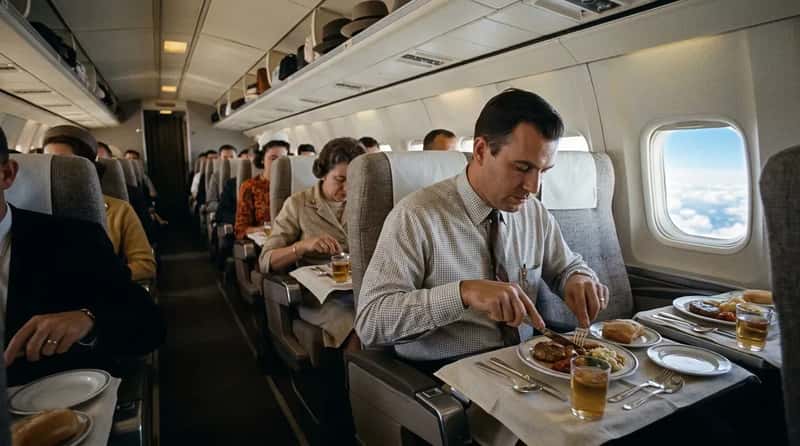
Forget the foil tray and the sad bread roll sealed in plastic. In the 1960s, even coach-class passengers ate off proper tableware – white linen, silver cutlery, and fine china. The setup looked like a restaurant, because in most meaningful ways it was one, just moving at 500 miles per hour and 35,000 feet above the earth.
If you were flying coach on American Airlines, the “Royal Coachman” menu offered beef consommé, chicken breast sautéed in wine, and a fruit tartlet for dessert. That was the budget option. First class on TWA’s Royal Ambassador service featured Chateaubriand carved tableside from a cart in the aisle, veal piccata, and lobster thermidor. The china was designed to match. The silverware was actual silverware. And every bit of it was included in the ticket price.
#7 – Caviar and Lobster Were Standard Menu Items, Not Special Occasions
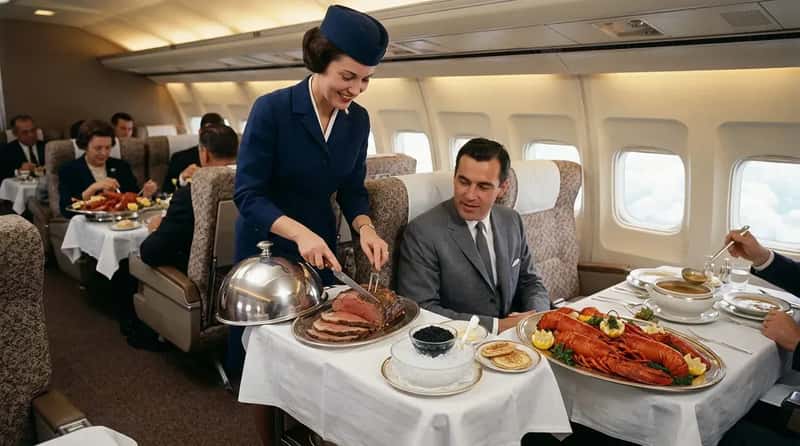
This wasn’t just a first-class flex – it was a baseline expectation across premium cabins, and the competition to outdo rival airlines made the menus increasingly extravagant. Because government regulation locked fares at the same level across airlines, food became the primary battleground. You couldn’t undercut competitors on price, so you outspent them on lobster.
Ice sculptures adorned with caviar were normal centerpieces. Soup arrived from a tureen. Roast beef and prime rib were carved fresh from a silver trolley in the aisle. Airline menus were designed by acclaimed restaurant chefs, and the ambition was genuine. You were eating better at 30,000 feet than most Americans could afford to eat at home – and the airline treated that fact as a point of pride.
#8 – Free Champagne and Walk-Up Bars Were Just Part of the Ride
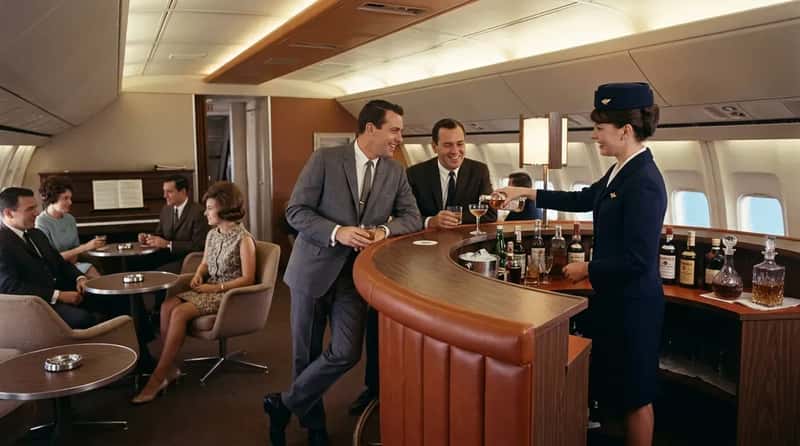
The open bar wasn’t an upgrade you paid extra for – it was simply part of the flight. Champagne flowed freely in first class, and upper-deck lounges on wide-body jets came equipped with walk-up bars where you could order a cocktail like you were at a hotel lounge. Passengers got up from their seats, walked over, and ordered drinks. Routinely. On a commercial flight.
Some aircraft even featured piano lounges where passengers could socialize mid-flight. The combination of free alcohol, no smartphones, and a captive social environment meant the cabin genuinely functioned like a cocktail party. The fact that much of the drinking was also a coping mechanism for genuine fear of flying was rarely discussed out loud. It was simply called “cocktail hour” – and nobody questioned the framing.
Worth Knowing
- First-class lounges on some aircraft featured full bars, comfortable seating, and even pianos
- Cocktails, wine, and champagne were included in the ticket price – no upcharge
- Airlines competed on cabin experience since government rules barred competing on price
- The social cabin was a direct result of no personal screens and no Wi-Fi – passengers actually talked
#9 – Passengers Dressed in Full Formal Wear. Every Single Time.
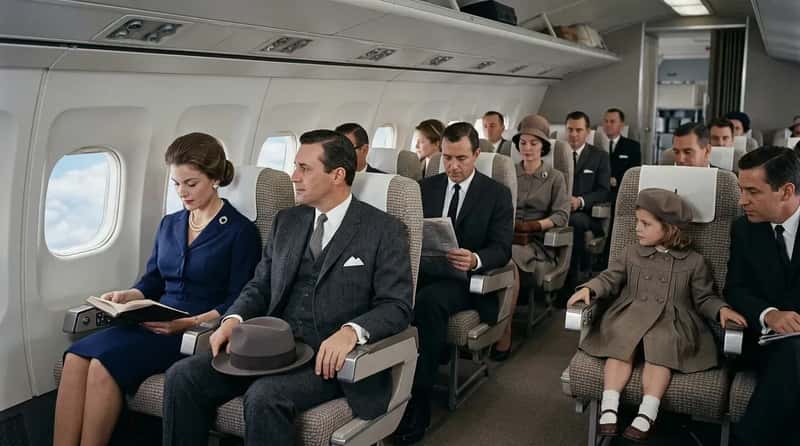
Sweatpants and flip-flops on a flight would have caused a genuine scandal in 1965. Getting on a plane was a formal occasion, and everyone treated it that way without being told to. Men wore three-piece suits and ties. Women wore dresses, heels, and jewelry. Children were dressed up the way you’d dress them for church – because the social weight of the occasion demanded it.
Part of it was practical status signaling: flying was expensive, and you dressed to match what it meant to be there. Part of it was genuine reverence for something that still felt miraculous. Boarding a commercial flight in casual clothes would have read as disrespectful – to the occasion, to other passengers, to the experience itself. The uniform wasn’t enforced. It didn’t have to be. The culture enforced it.
#10 – Stewardesses Were Fired If They Got Married or Turned 32
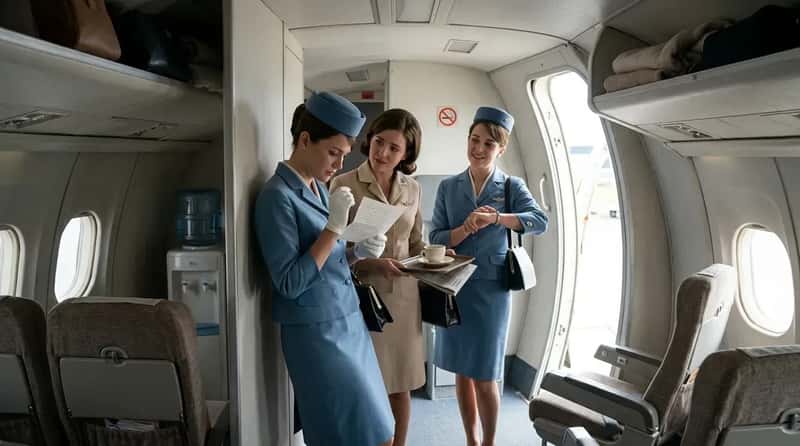
The rules for female flight attendants in the 1960s were so extreme they sound fictional today. Female flight attendants were required to be single upon hiring and were fired if they got married, exceeded weight limits, or reached age 32 or 35 – depending on the airline. That wasn’t a fringe policy at one rogue carrier. It was industry-wide, openly enforced, and rarely questioned by passengers or the press.
Pan Am required stewardesses to be at least 5-foot-2, weigh no more than 130 pounds, and be unmarried with no children. TWA grounded its stewardesses at 35; at Northwest Orient and American Airlines, a flight attendant was considered professionally finished at the “doddering old age” of 32 – those exact words appeared in print, without irony. The women serving you dinner were operating under rules most employers today would face immediate lawsuits for – and everyone on those flights just ate their meal and said nothing.
#11 – Stewardesses Were Weighed Regularly and Could Be Grounded for Gaining Weight
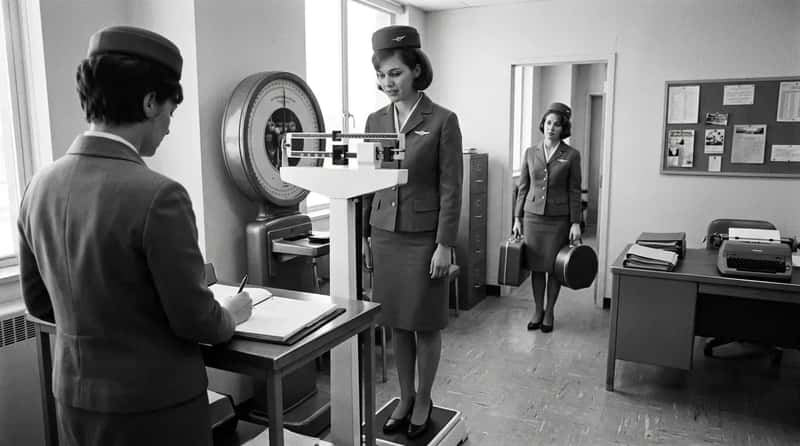
The weight surveillance didn’t stop at the hiring interview. Once on the job, the scrutiny continued on a regular basis. Stewardesses faced scheduled weigh-ins to ensure they remained within the narrow limits set by airlines, and those who exceeded them faced serious penalties – being grounded, suspended, or terminated. An extra five pounds could end your career mid-season.
Some airlines went a step further and issued girdles to employees as part of the standard uniform, to ensure physical compliance between weigh-ins. The airline handed you a girdle. As standard-issue equipment. And passengers on those flights had no idea any of this was happening – because it was never discussed. It was just the industry. Unremarkable. Invisible. Accepted.
Quick Compare: Then vs. Now – Flight Attendant Requirements
- 1960s: Must be single, female, under 130 lbs, retired by 32–35
- 1960s: Regular weigh-ins; grounded or fired for exceeding limits
- 1960s: Height, vision, and skin requirements listed in newspaper classified ads
- Today: Open to all genders, ages, and marital statuses; safety-focused training is primary
#12 – Stewardess Uniforms Were Commissioned From World-Famous Fashion Houses
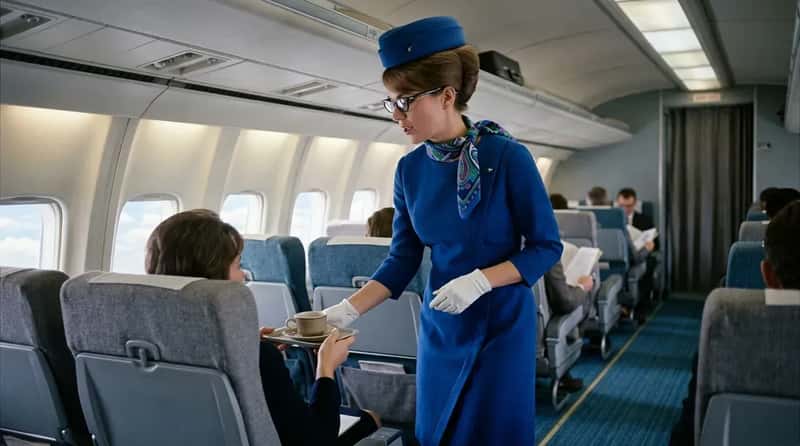
While the rules governing stewardesses were often brutal behind the scenes, the public-facing image was pure high fashion. Airlines weren’t buying uniforms off a rack – they were commissioning them from internationally recognized designers. In 1964, Braniff International launched a full rebranding called “End of the Plain Plane,” with flight attendant uniforms designed by Emilio Pucci – bold prints, saturated colors, unmistakably Italian. Other airlines followed fast.
The Golden Age cabin was treated like a total design environment: the silverware, the china, the seat fabric, and the uniform were all imagined together. Pacific Southwest Airlines put female flight attendants in brightly colored miniskirts. The aircraft cabin was, quite literally, a runway. The same women working under brutal weight and age requirements were simultaneously the most fashionably dressed workers in any American industry. Both things were true at the same time.
#13 – In-Flight Fashion Shows Were a Real Thing
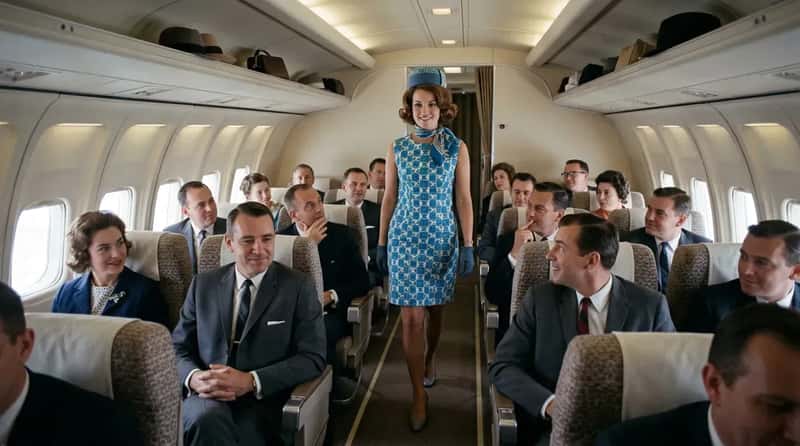
If designer uniforms weren’t enough, some airlines went one step further and turned the flight itself into a live runway event. First-class passengers on select routes could watch flight attendants change outfits mid-flight to showcase the airline’s full wardrobe – an actual fashion show, performed in the aisle, at altitude. It sounds absurd now, but it made a strange kind of sense in context.
Airlines couldn’t compete on price – the government had fixed fares – so they competed on spectacle. The cabin was a stage, and experience meant something to talk about when you landed. The fashion show was just one more story you’d tell at dinner. And because everyone flying was already dressed formally and already drinking champagne, nobody found it strange. It fit. Perfectly. Absurdly.
#14 – You Could Sleep in a Bunk Bed on a Transatlantic Flight
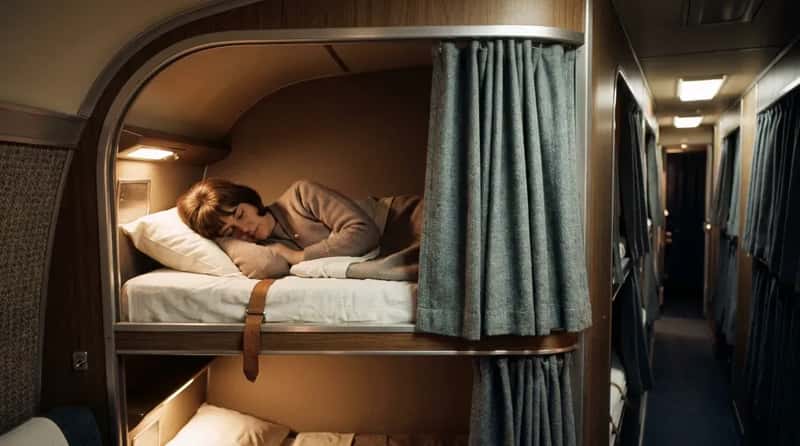
Long-haul sleeping arrangements in the 1960s weren’t just a reclined seat with a thin blanket. Some aircraft had genuine berths – sleeping compartments with a mattress, pillow, and a privacy curtain you could pull closed. You’d climb up, draw the curtain, and sleep horizontally across the Atlantic like you were in a Pullman sleeper car. On a commercial aircraft.
The concept had carried over directly from ocean liner culture, where passengers on long journeys expected a real bed. Early jet-age airlines simply applied the same logic to the sky. Today, airlines charge a substantial premium for a lie-flat seat in business class. In the 1960s, actual bunk beds were part of the standard overnight experience – included, unremarkable, and not something anyone felt the need to put in the brochure.
#15 – In-Flight Movies Only Appeared in 1961 – and Everyone Watched the Same One
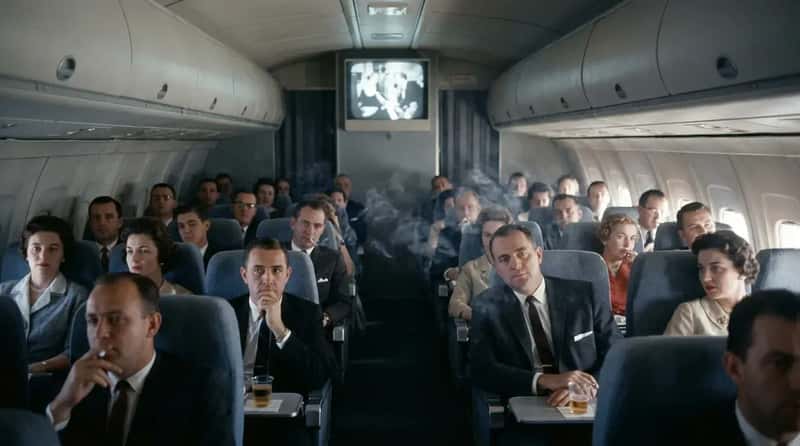
For most of the decade, there was no in-flight entertainment system at all. Passengers talked to each other, drank, ate, smoked, and read. Then TWA introduced the first regularly scheduled in-flight movie in 1961 – one screen, one film, one showing. You watched what was playing, when it was playing, whether you liked it or not. There was no opting out and no alternative.
Before personal screens arrived to seal everyone into a private bubble, the cabin was inherently communal in a way modern flying isn’t. You couldn’t tune out the person next to you – you were watching the same movie, eating the same meal, breathing the same air, and probably talking to each other because there was genuinely nothing else to do. The shift to on-demand personal screens improved entertainment and quietly destroyed the last remnant of the social cabin.
#16 – Nobody Booked Online – Because Travel Agents Handled Every Detail
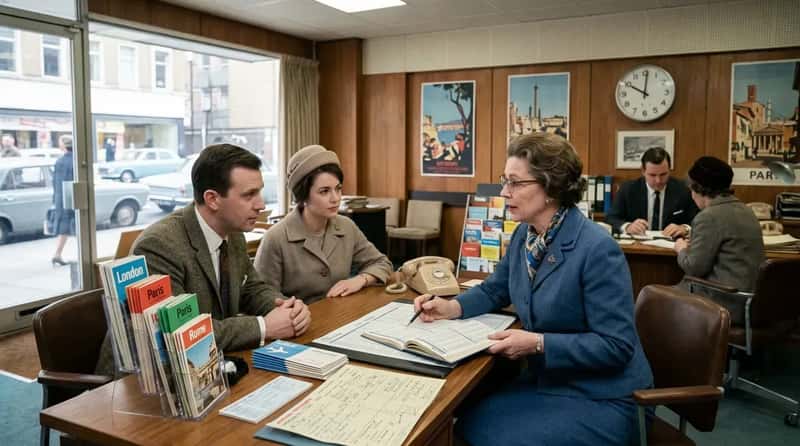
There was no Expedia, no Google Flights, no fare comparison across 23 browser tabs. If you wanted to fly somewhere, you called a travel agent or walked into their storefront office, and they handled everything – routes, timing, ticketing, hotels, transfers. The entire journey, arranged by a human who knew the industry and knew you.
Since fares were government-regulated and identical across airlines, agents didn’t compete on price. They competed on knowledge, relationships, and service. There were no loyalty programs, no mileage points, no tiered elite status. You booked, you flew, you arrived. The transaction was clean and total. The relationship was with a person, not a platform. And honestly, for what flying cost at the time, the full-service model made complete sense.
#17 – Passengers Mailed Postcards From the Sky Mid-Flight
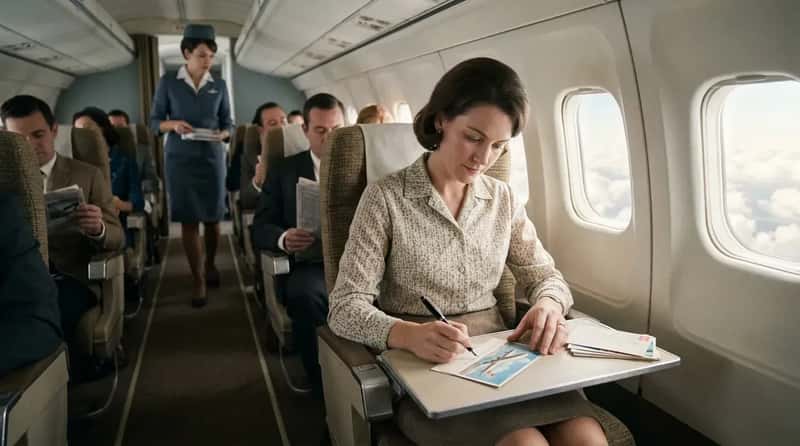
Before social media, before in-flight Wi-Fi, before you could text the moment you landed, 1960s passengers had their own version of the travel update: postcards written at altitude and handed to the crew, who mailed them on your behalf. “Postcards from the sky” became genuinely collectible, and airlines leaned into it – the cards were beautifully designed and often featured the aircraft itself.
It was a charming gesture and a clever piece of marketing. Since commercial flight was still a remarkable, awe-inspiring event for most Americans, passengers wanted physical proof they had done it. They posed for group photos before boarding. They kept the souvenir menus. They filled out the postcard mid-flight and handed it to the stewardess to mail. Flying wasn’t just transportation. It was an event worth commemorating – down to the last stamp.
#18 – Baggage Had Zero Fees and Could Be Delivered Straight to Your Home
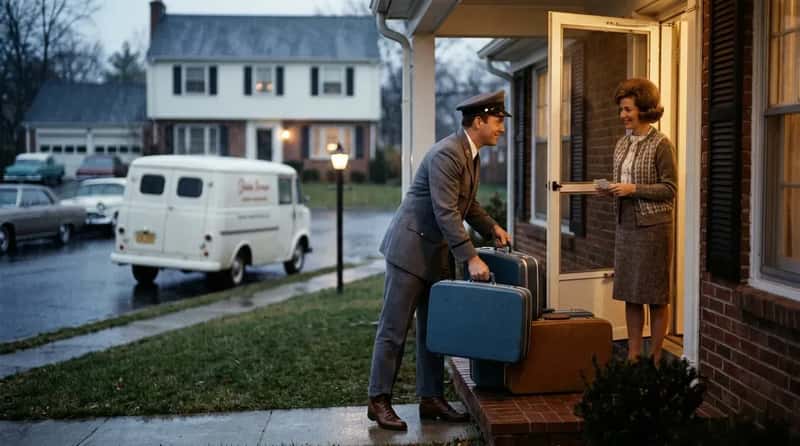
The modern nickel-and-diming of checked bags would have seemed genuinely insulting in the 1960s – because the opposite was standard practice. Not only were bags included in the ticket price, but after arrival, some airlines would deliver your luggage directly to your home by courier. End-to-end baggage service, built into what you already paid.
There were no baggage limits, no overweight fees, no carry-on wars over overhead bin space. The entire cost of the journey – food, drinks, bags, delivery – was wrapped up in a single ticket price. Today, U.S. airlines collect over $7 billion in baggage fees annually. The shift from “we’ll bring your bags to your door” to “that’ll be $35 per checked item” is one of the most complete reversals in the history of the industry.
#19 – Hijackings Were So Common They Were Fodder for Late-Night Comedians
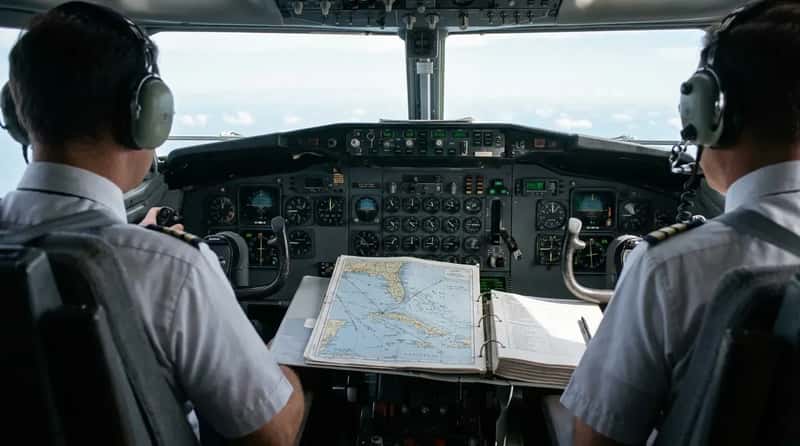
Here’s the detail that reliably makes jaws drop. The 1960s were glamorous, yes – but they were also the beginning of a genuine hijacking epidemic that most people managed to normalize in real time. Airport security was minimal throughout the decade, essentially a formality. Then the late 1960s arrived. In the U.S. alone, between 1968 and 1971, there were 130 hijackings. That is not a typo.
Hijackings grew so frequent they became material for late-night comedians – a dark cultural reflex that says everything about how people cope. Cuba was such a routine diversion destination that every U.S. airliner carried aviation charts for Havana on board, regardless of its actual route, just in case. By the mid-1960s, “Take me to Cuba” had become a recognized stand-up punchline. The “Golden Age” of flying had a very dark underbelly – and an entire culture of caviar and champagne helped everyone look the other way.
Fast Facts: The Hijacking Epidemic
- 130 hijackings in the U.S. alone between 1968 and 1971
- More than 50 hijackings occurred in the single year of 1969
- “Take me to Cuba” became a recognized stand-up comedy punchline by the early 1970s
- Every U.S. airliner carried Havana aviation charts – just in case
- Meaningful passenger screening didn’t begin until the mid-1970s
#20 – The Stewardess-to-Passenger Ratio Was Extraordinarily High by Any Modern Standard
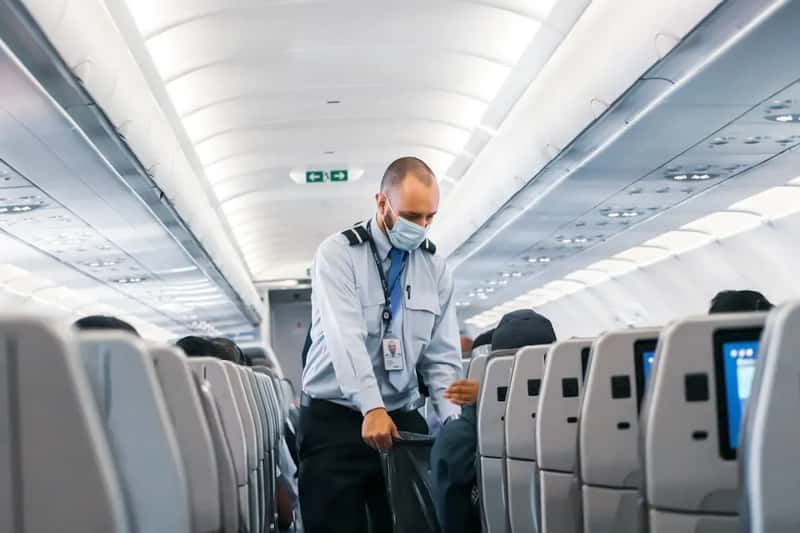
Service in the 1960s cabin didn’t just feel attentive – it was structurally designed to be overwhelming by modern standards. The crew-to-passenger ratio was dramatically higher than anything airlines operate today, which meant you weren’t waiting 20 minutes to flag someone down for a glass of water. Needs were anticipated and addressed before you fully articulated them.
Flight attendants distributed hot towels, fresh fruit baskets, and cloth napkins – in economy. They were trained extensively in hospitality and etiquette, with safety protocols being a secondary emphasis. That balance shifted in the 1980s and 1990s, when the industry reoriented the role around safety first. The crew existed to make the flight feel like a dinner party. In the 1960s, that really was the primary job description.
#21 – You Could Mingle With Celebrities in the Cabin Like It Was a Cocktail Party
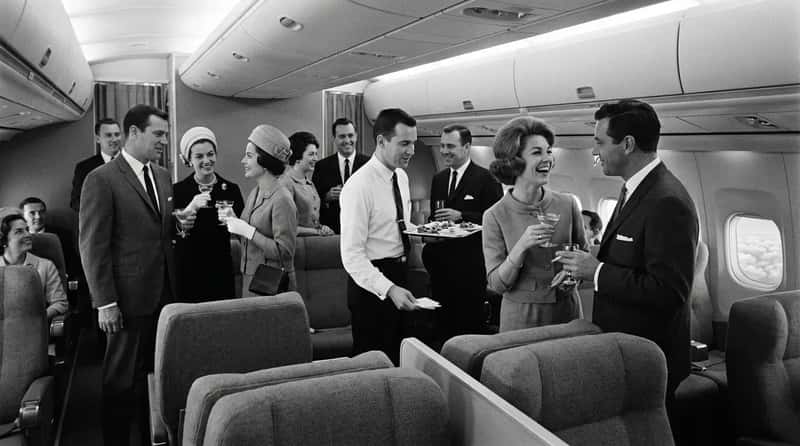
Because flying was expensive and exclusive, the passenger manifest on any given flight read like a slice of mid-century American celebrity culture. There were no private jets isolating the famous from everyone else – everyone flew commercial, which meant everyone was in the same cabin, at the same altitude, ordering from the same menu.
The wealthy, the famous, and the aspirational were collectively nicknamed the “Jet Set” – a term coined in the early 1950s by journalist Igor Cassini – and they genuinely mingled onboard. The Beatles arrived at JFK in February 1964 aboard a Pan American Boeing 707, surrounded by ordinary passengers. The cabin was a social venue as much as a transport vehicle, and the mix of people made it feel like the most exclusive party in the sky.
#22 – Pilots Were Used in Cigarette Ads Aimed Directly at Passengers
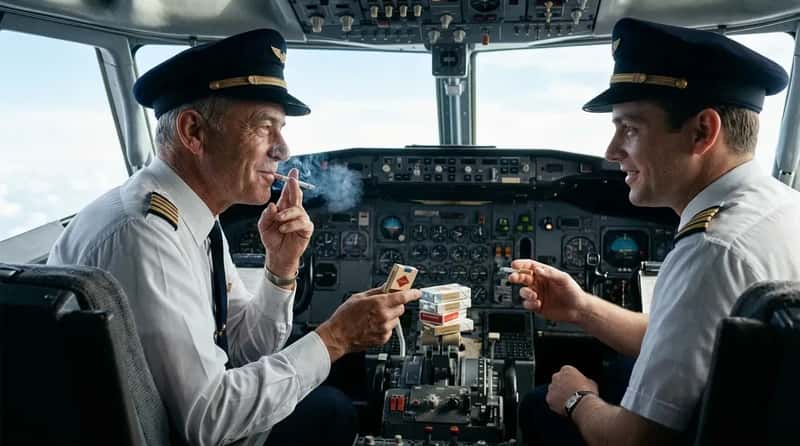
The tobacco-and-aviation connection ran even deeper than passengers lighting up in their seats. The two industries were actively co-branded in advertising and culture. A 1965 Newport Cigarettes ad featured not just passengers but a commercial pilot smoking in the cockpit, casually telling his co-pilot about the fresh taste of the new menthol. The pilot. Smoking. In the cockpit. Used as a glamour prop in a national advertisement.
TWA branded their Boeing 707 jets as “StarStream Jets” and celebrated the aircraft’s launch in 1959 by distributing branded cigarette samplers on flights and in airport lounges. The airline literally handed out branded cigarettes to commemorate a new plane entering service. Tobacco and aviation were essentially co-sponsors of the same aspirational lifestyle – and the passenger who received that sampler saw nothing unusual about it at all.
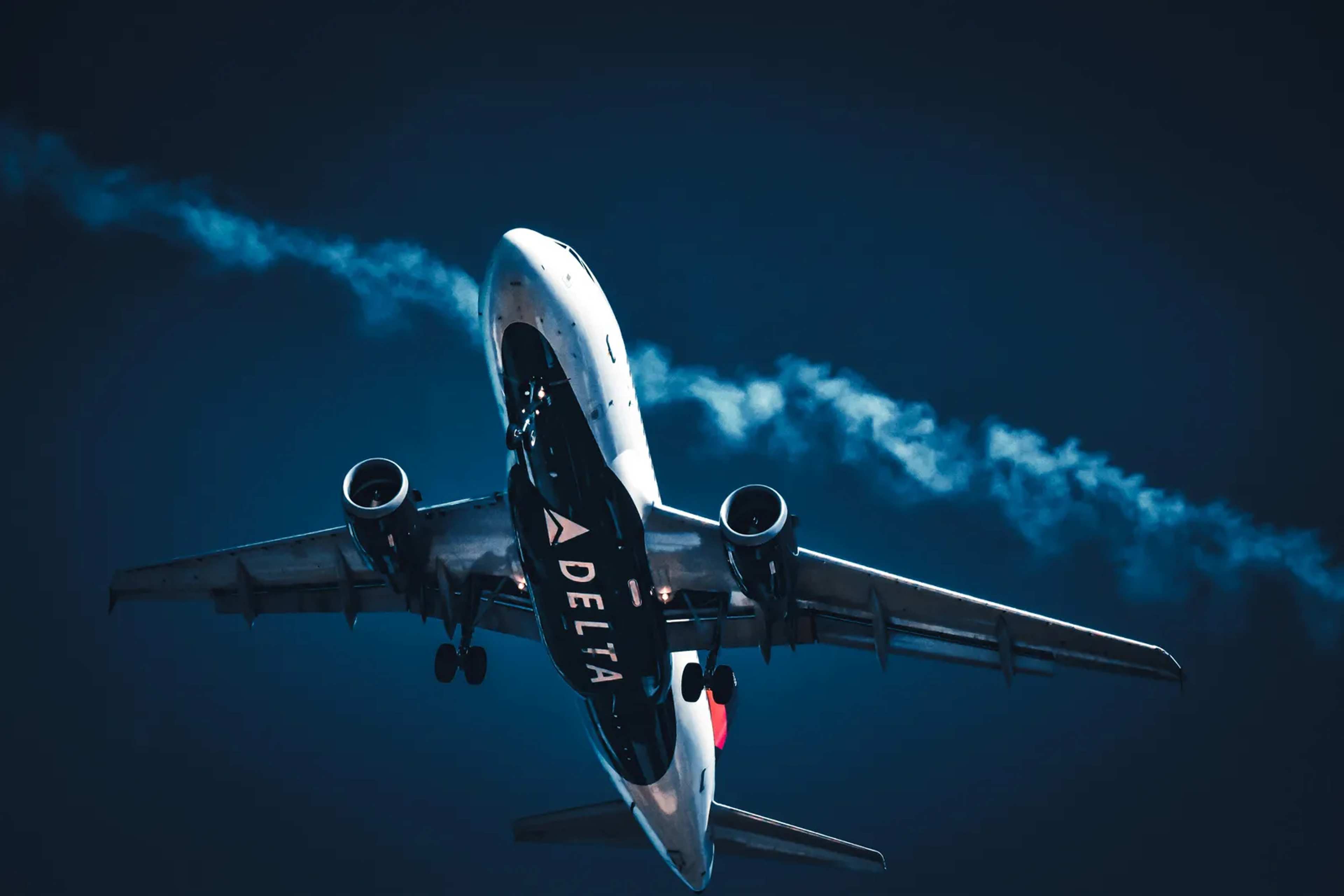
#23 – The Boeing 707 Changed Civilization – and Nobody Fully Grasped It While It Was Happening
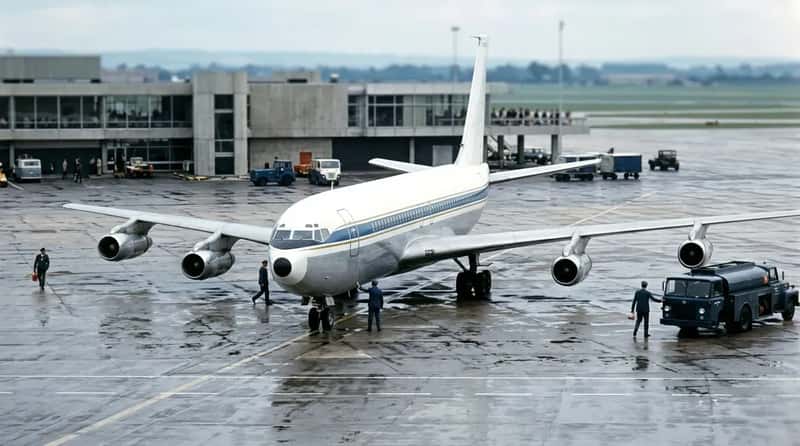
The airplane that defined 1960s air travel wasn’t just a new model – it was a civilizational rupture that people lived through without quite registering its scale. Before the Boeing 707, transatlantic flight involved multiple fuel stops and grueling hours in propeller aircraft. After the 707 entered commercial service in 1958, a New York–London trip that once took up to 15 hours could be made in under seven. The geography of the planet shrank overnight.
Between 1958 and 1972, nearly half of all Americans had flown on a commercial aircraft. That transition – from flight as a rare, wealthy-person experience to something half the country had done – took less than 15 years. The 707 didn’t just move passengers faster. It restructured how Americans thought about distance, ambition, and the world beyond their city. The speed of that cultural transformation is still staggering when you stop and measure it.
#24 – Collectible Luggage Tags Were a Visible Badge of Worldly Experience
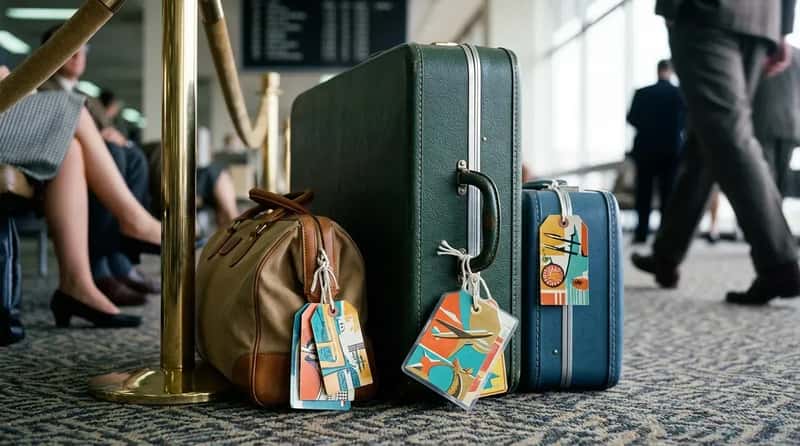
Long before Instagram travel flexes and location check-ins, 1960s passengers had a physical, tangible way to signal their worldliness: colorful, beautifully designed luggage tags issued for every trip, often featuring artwork tied to specific airports, cities, or airlines. You didn’t just travel – you accumulated visual proof of it, displayed on your bags for anyone who handled them to see.
The tags were part of a broader culture of physical souvenirs at every step of the journey – branded menus kept as keepsakes, postcards mailed from altitude, boarding passes saved in scrapbooks. Airlines understood that every object a passenger took home was a piece of marketing and a memory trigger. Today the baggage tag is a printed thermal strip torn off at baggage claim. The shift from collectible artwork to disposable barcode is a nearly perfect metaphor for what happened to flying as a whole.
#25 – Flight Attendants Had Mandatory Retirement Ages in Their Early 30s – and It Was Publicly Defended
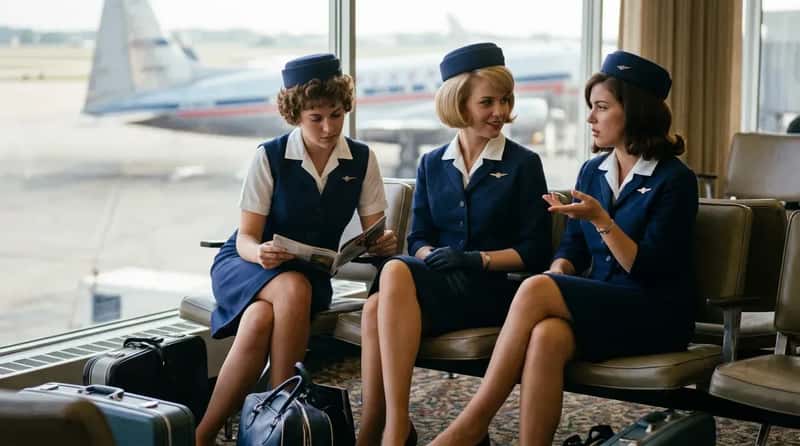
The age ceiling for female flight attendants wasn’t just discriminatory – it was openly defended in industry publications and congressional testimony as reasonable business practice. TWA grounded stewardesses at 35. So did Southern Airways. At Northwest Orient and American Airlines, a flight attendant was considered professionally finished at the “doddering old age” of 32. Those exact words appeared in print. Without irony.
It took the Civil Rights Act of 1964 and years of subsequent litigation before the mandatory retirement ages were legally challenged. In the 1970s, the group Stewardesses for Women’s Rights organized protests against sexist advertising and company discrimination and brought cases to court that slowly dismantled the system. The women who served you lobster thermidor at 30,000 feet were doing so against a ticking professional clock – and everyone in the cabin just ate their dinner and said nothing.
#26 – The Taste of Food Actually Changed at Altitude – and Airlines Never Mentioned It
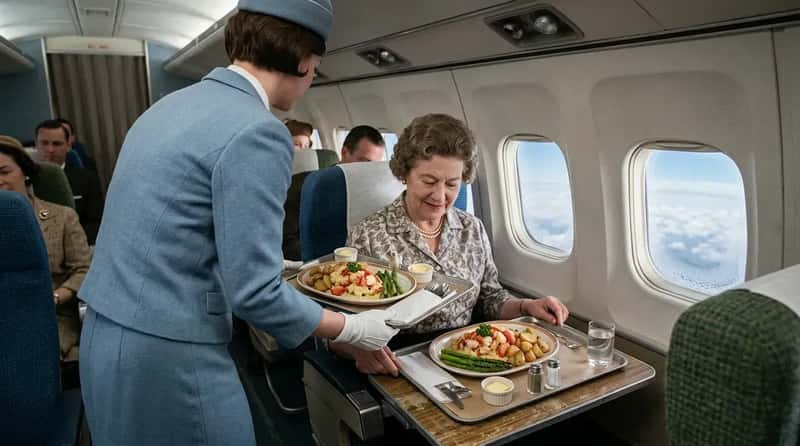
Here’s something the Golden Age marketers never put in the brochure: the extraordinary food you were eating in the 1960s cabin wasn’t tasting the way it should have, for a very specific physiological reason. Our ability to perceive sweet and salty flavors drops by roughly 20 percent at cruising altitude, a combination of low cabin pressure and extremely dry air that effectively mutes the palate. Even the best lobster thermidor at 35,000 feet was chemically dulled compared to the same dish on the ground.
Cabin humidity hovers around 12 percent at altitude – the Sahara Desert runs about 25 percent. Since the nose requires moisture to detect aroma properly, and smell is the dominant component of flavor, the combination of dry air, low pressure, and ambient stress created conditions actively hostile to taste. The most glamorous dining experience in mid-century America was happening under conditions that suppressed the sense of taste. Nobody was told. Nobody complained. They were busy with the champagne.
Why It Stands Out
- Cabin humidity at altitude is roughly 12% – drier than the Sahara Desert (~25%)
- Sweet and salty perception drops ~20% at cruising altitude due to pressure and dry air
- Smell drives most of what we taste – and dry air suppresses it
- Airlines never disclosed this to passengers; the lobster was real, but the full flavor wasn’t
#27 – The Entire Glamour of 1960s Flying Was Partly Designed to Make You Forget You Might Die
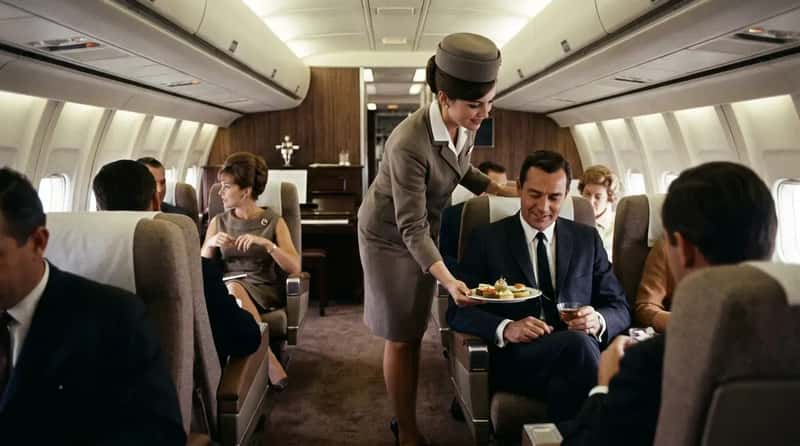
Everything about 1960s air travel – the caviar, the cocktails, the designer uniforms, the piano bars, the fashion shows – served one master purpose that the nostalgia posters never mention: it was all engineered, at least in part, to help passengers not think too hard about what they were actually doing. People were genuinely scared of flying. It was a relatively new form of mass travel, and accidents were common. In the 1950s and 1960s, U.S. airlines experienced at least a half-dozen crashes per year, most resulting in fatalities of everyone on board. The glamour wasn’t incidental to the fear. It was the answer to it.
The life insurance machines at the gate. The free drinks in the air. The impossibly polished stewardesses in Pucci uniforms. The six-course meal served on china. All of it built a psychological buffer between the passenger and the reality that commercial aviation in the 1960s was measurably dangerous by any modern comparison. Today, flying really is extraordinarily safe. But in that era, the whole glittering production was as much about managing existential dread as it was about luxury. That’s the detail nobody puts on the nostalgia poster. And somehow, an entire generation just accepted it – because what else were you going to do?
Looking back at 1960s air travel is a genuinely strange experience: half of it really was more gracious, more spacious, and more human than what we endure today, and the other half was a tangle of rigid rules, real danger, and deep inequality polished to a shine and served alongside the champagne. The Boeing 707 changed the world. The lobster was real. And a woman really could lose her job for getting married. All of it was true at exactly the same time – on the same flight, at the same altitude, in the same cabin.