
Most people who grew up in the 1980s will tell you their childhood vacations were pure freedom – wide-open highways, no screens, no stress. What they’re actually remembering is something far more chaotic: six people crammed into a station wagon that smelled like vinyl and Cheez-Its, a map the size of a bedsheet that no one could refold correctly, and a dad who hadn’t stopped for directions since 1977. It was glorious, sweaty, and completely unforgettable all at once.
The 1980s road trip was a very specific American experience – one that Gen Z simply cannot replicate, no matter how many retro-aesthetic TikToks they make. If any of the following signs hit a little too close to home, buckle up. You were there, and you know exactly what it felt like to watch the world scroll past a rear-facing backseat window while Cyndi Lauper played for the fourth time in a row.
#27 – You Rode in the Rear-Facing “Way Back” Seat
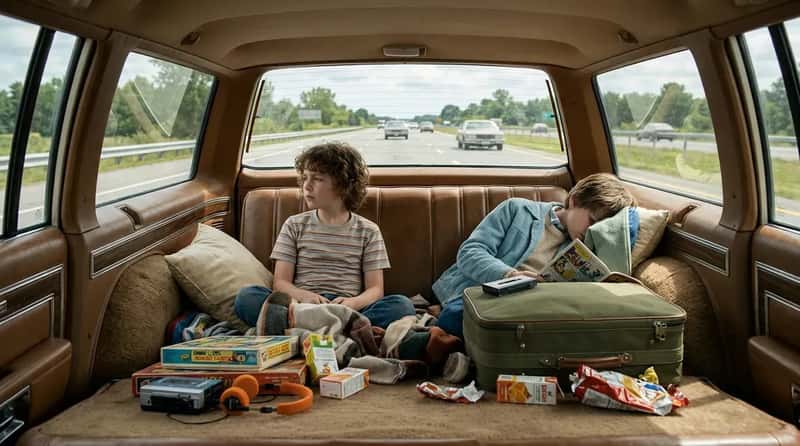
The rear-facing third row turned every trip into a social experiment, with kids claiming the backward seats like territory in some elaborate automotive hierarchy. You watched the road disappear behind you instead of seeing where you were going – which, honestly, felt like a superpower at age nine. Anyone who got that spot felt like royalty, even if it meant facing a six-hour stretch of highway exhaust and the slowly shrinking silhouette of wherever you’d just left.
The “way back” was its own micro-civilization. You were out of Mom and Dad’s direct line of sight, which meant a loosely enforced rule set and enough space to build a blanket fort out of luggage. Nobody wanted to be stuck facing backward – except, of course, every single kid in the car, because it felt like the coolest seat on the planet. If you got it, you did not give it up voluntarily. Not for anything.
#26 – The Car Had Fake Wood Paneling on the Side
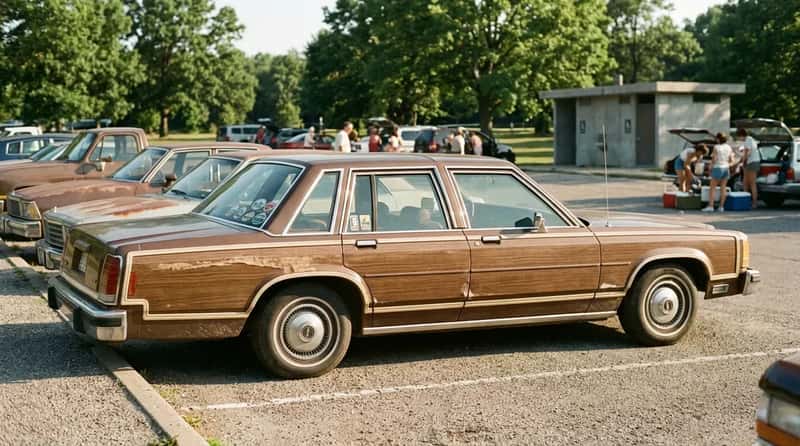
Before SUVs conquered suburban driveways and minivans redefined family hauling, station wagons ruled the road with their distinctive long profiles and wood-grain paneling. That faux wood wasn’t just a design choice – it was a statement. It said: this family is going somewhere, and they have enough cargo to prove it. At the time, it felt like the absolute height of suburban sophistication.
In reality, that “wood” was vinyl appliqué that peeled at the edges after a few summers, bubbled in heat, and faded into a sad brown stripe by mid-decade. National Lampoon’s Vacation, released July 29, 1983, immortalized the look forever: the Wagon Queen Family Truckster was built on the bones of a 1979 Ford LTD Country Squire and loaded with imitation wood paneling covering roughly 70% of the exterior. If your family wagon looked even remotely like that movie car, you heard about it every single summer. For years. Your dad did not find it as funny as everyone else did.
Fast Facts
- The Wagon Queen Family Truckster was a heavily modified 1979 Ford LTD Country Squire wagon built for the film by customizer George Barris
- Five Trucksters were built for National Lampoon’s Vacation – mostly to be wrecked during filming
- The film’s distinctive color was officially called “Metallic Pea”
- Some automotive historians argue the Truckster helped accelerate the decline of station wagon sales – families shifted to minivans almost immediately after the movie’s release
- The Ford LTD Country Squire was one of the most recognizable family wagons of the era, complete with real or simulated wood-grain side trim
#25 – Your Dad Refused to Stop and Ask for Directions
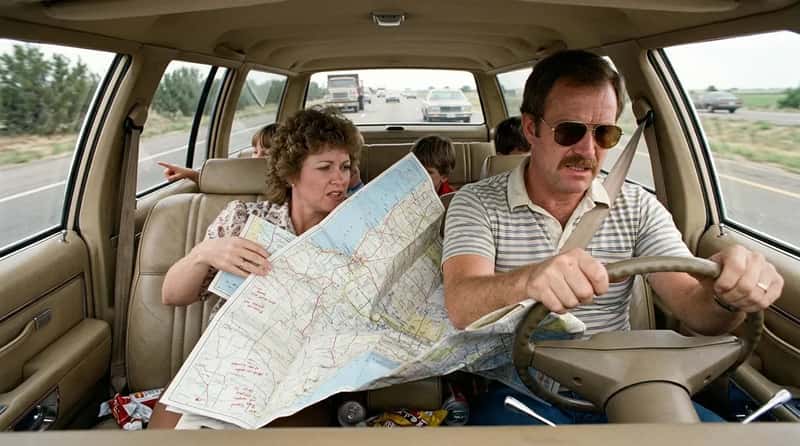
There was no GPS voice saying “Turn left in 500 feet.” Just a paper map the size of a blanket and a driver trying to read it while doing 70 down the interstate. Mom would fold it wrong every time, Dad would insist he “knew where we were,” and the kids in the back would yell about McDonald’s signs. This scene played out in virtually every American family car throughout the entire decade. It was practically a federal tradition.
Getting lost wasn’t a glitch – it was part of the adventure, whether anyone admitted it or not. Sometimes families ended up on back roads that added hours to the trip, but they’d stumble across weird roadside attractions they never would have planned to see. Dad would never acknowledge the wrong turn as a wrong turn. It was always a “shortcut” or a “different way.” Secretly, those detours became the best stories of the whole trip.
#24 – The Map Never Folded Back the Right Way
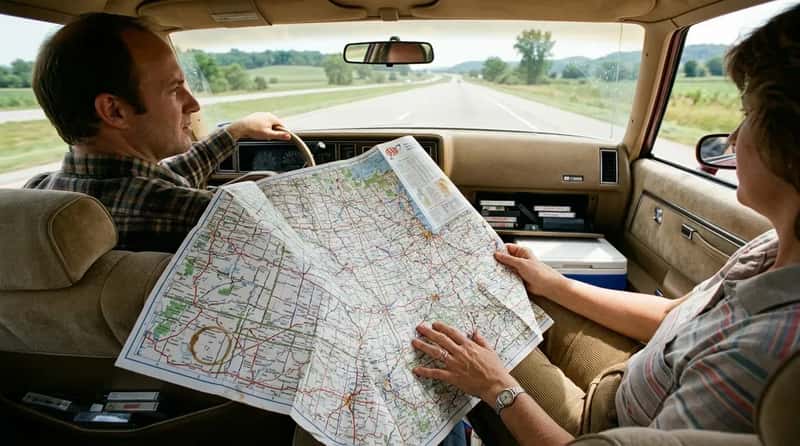
Before GPS, navigating the open road required a skill that now seems almost mythological: reading a fold-out paper map. Unfolding one was like presenting a geographical tapestry, revealing the journey ahead in intricate detail. The problem was that once you unfolded it, you were committed. That thing was never going back the way it came, and everyone in the car knew it the moment it opened.
The passenger – often dubbed the “navigator” – was tasked with calling exits and turns while managing a document that had the structural integrity of a wet paper bag in wind. These maps were more than just guides. They were keepsakes of the journey, often marked with coffee stains, ballpoint pen circles, and someone’s greasy fingerprint over the exact town you were trying to find. No app has ever felt that alive. Or that infuriating.
#23 – You Had a AAA TripTik in the Glove Box
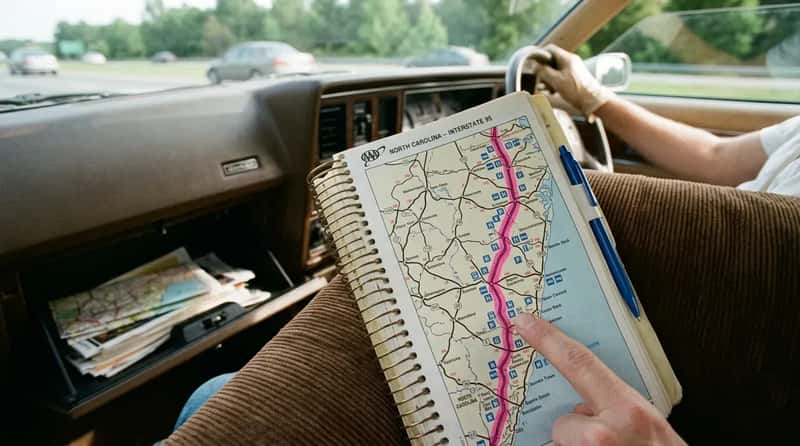
The AAA TripTik was an essential navigation tool for the 1980s road tripper. These spiral-bound route planners were custom-made for each trip, filled with detailed strip maps, travel tips, and highlighted paths that promised to guide the family to its destination with confidence. They were more than just maps – they were personalized travel companions. Getting one felt like a pre-trip ritual as serious as packing the cooler. Your parents treated it like a sacred document.
The TripTik was essentially the Google Maps of its day, except it never recalculated, never updated for traffic, and had absolutely no opinion about the scenic route. You flipped through the little spiral-bound pages one by one as the miles ticked by, matching the car’s position to the right page. Miss a flip, and you were navigating blind for the next fifty miles. No pressure. The navigator’s job was real and unforgiving, and if you messed it up, Dad knew before you did.
#22 – Someone Was Always Sitting on the “Hump”
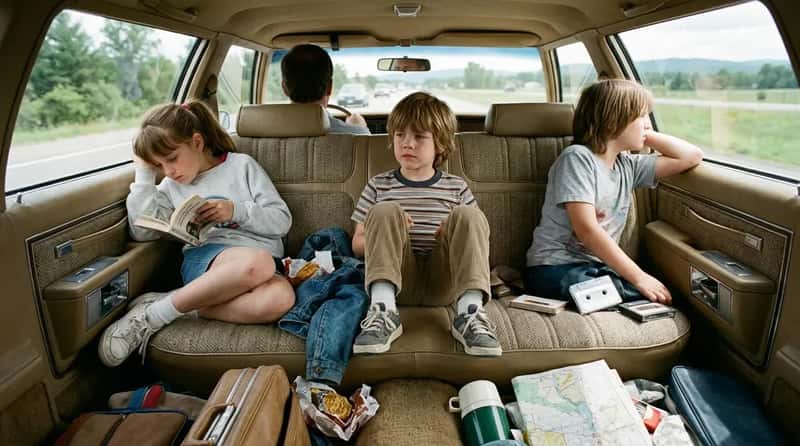
The backseat was a jungle gym. Kids sprawled across vinyl seats, leaned between the front chairs, or laid on the floor during long drives without a second thought from anyone. Someone always yelled “stop touching me,” someone else had to sit on the “hump,” and yet somehow everyone survived. The middle hump seat was the worst real estate in the vehicle – no window, no legroom, and a direct line of fire for every sibling elbow in the car.
Bench seats that could seat three across were standard equipment in family cars of the era – something modern vehicles have abandoned entirely. That bench was the great equalizer: nobody wanted the middle, so it was assigned by birth order, parental decree, or whoever lost the shotgun call at the last gas station. The kid stuck on the hump for a ten-hour drive developed either extraordinary patience or a lifelong grudge. Usually both, often unresolved to this day.
#21 – Seat Belts Were Entirely Optional
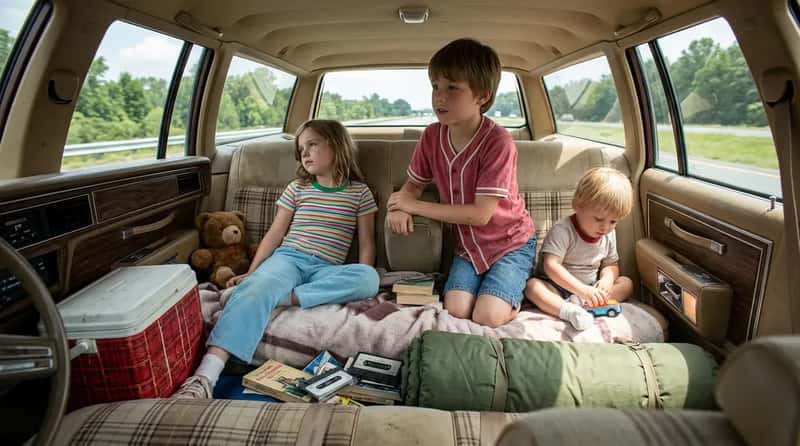
New York became the first state to require vehicle occupants to wear seat belts, with the law taking effect December 1, 1984. That means for a good chunk of the decade, strapping in was considered a suggestion rather than a rule across most of the country. Kids migrated freely around the backseat like it was a living room with wheels. By today’s standards, this is jaw-dropping. By 1982 standards, it was just Tuesday afternoon somewhere on I-95.
In the early 1980s, seat belt use nationally sat somewhere between 11% and 14% – meaning the overwhelming majority of Americans simply didn’t buckle up. Families crammed cousins, coolers, and sleeping bags into whatever car they had. Kids sat on laps, teens occasionally rode in the cargo area for “short trips,” and everyone somehow made it work. If you road-tripped in the early 1980s, there’s a very real chance you spent at least one leg of the journey lying across the back seat under a beach towel, totally unbuckled, completely unbothered, watching the highway lights flick past the rear window like a slow strobe.
#20 – The Cooler Came Instead of Stopping at Restaurants
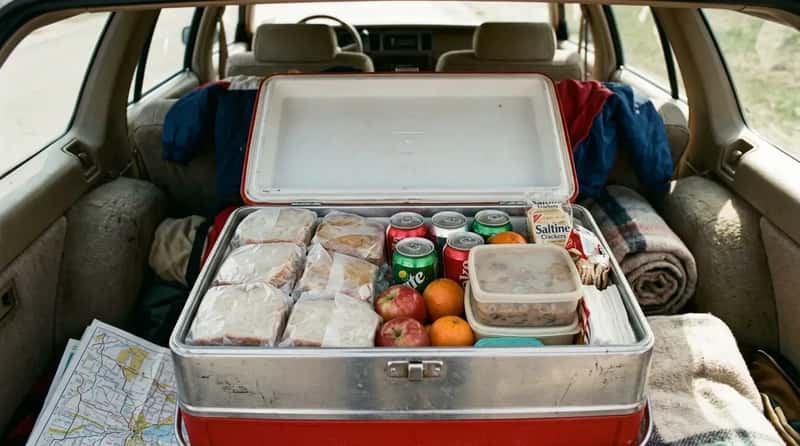
These weren’t grab-and-go convenience store hauls. These were provisions, packed with a mother’s calculation of how to feed a carload of kids for eight hours without stopping anywhere that charged restaurant prices. The family cooler was a masterwork of Tetris-level packing: sandwiches wrapped in wax paper, canned drinks, fruit that would be bruised by noon, and one mystery Tupperware container that everyone was afraid to open by hour five.
Our sense of smell connects directly to the brain’s limbic system, which processes emotion and memory – which is why food-related road trip memories are so vivid and so stubbornly specific. To this day, a warm bologna sandwich and a warm can of Sprite can transport some people straight back to 1985, somewhere on I-75, watching the mile markers count down to the motel with the pool. That cooler wasn’t just snacks. It was the whole atmosphere of the trip compressed into a Styrofoam box.
#19 – You Begged to Stop at Stuckey’s
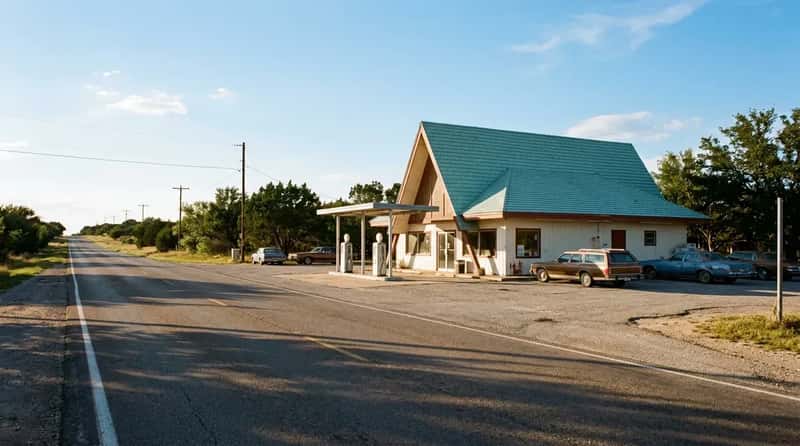
The Stuckey’s roadside stop became synonymous with clean restrooms, pecan candy, kitschy souvenirs, gasoline, and anything else a road-weary motorist could possibly need. That iconic teal-blue peaked roof was visible from half a mile away, and spotting it from the backseat was a legitimate event. Kids practically lost their minds. The lobbying campaign started the moment the roof appeared on the horizon and did not stop until the car either pulled in or passed it, at which point a period of grieving began.
Stuckey’s sold the kind of souvenirs you absolutely had to have in the moment and completely forgot about by the time you got home: pecan log rolls, rubber alligators, novelty license plates, and spinning postcard racks. At its peak, the chain had more than 350 stores across 30 states – though by the early 1980s, corporate ownership changes and the interstate highway system had already begun closing hundreds of locations. The pecan log roll was the unofficial candy bar of the American family road trip, and if your parents drove past without stopping, it registered as a genuine act of cruelty. Some family grudges have longer roots than anyone admits.
At a Glance: Stuckey’s Then vs. Now
- Founded: 1937 by W.S. Stuckey Sr. in Eastman, Georgia, starting as a roadside pecan stand
- Peak size: More than 350 stores in 30 states through the 1950s–1960s, with over 4,000 roadside billboard signs
- The signature treat: The pecan log roll recipe – vanilla nougat, caramel, roasted pecans, and maraschino cherries – was perfected by Ethel Stuckey and remains largely unchanged
- The 1980s decline: Corporate ownership changes and interstates bypassing original routes closed hundreds of locations by the early 1980s
- The comeback: Granddaughter Stephanie Stuckey became CEO in 2019 and has led a brand revival, with pecan log rolls now available at major retailers nationwide
#18 – Howard Johnson’s Orange Roof Meant the Night Was Saved
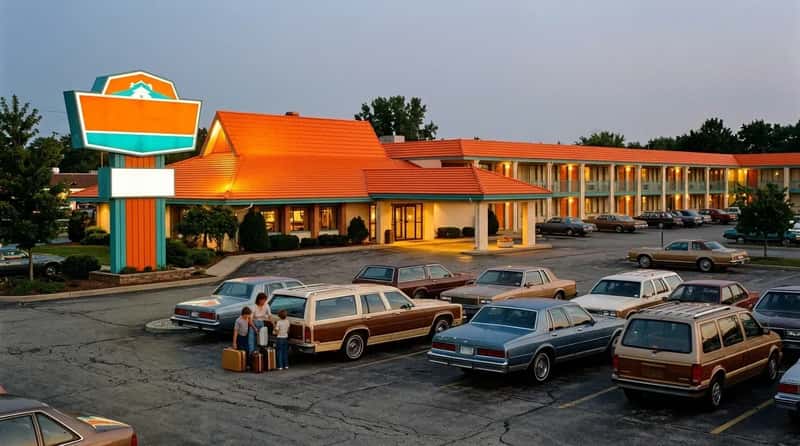
Howard Johnson’s used a staff of 27 architects and bright orange porcelain roof tiles – chosen specifically because testing determined they were the best color for attracting a motorist’s attention from the road. By the early 1980s, the chain operated over 1,000 restaurants and 500 motor lodges across the country. Spotting that roof after eight hours in a packed station wagon felt like finding an oasis. Dad would ease the wagon into the parking lot like a victorious general returning from a long campaign.
The motor lodges promised fresh linens, air conditioning, televisions, and full private bathrooms – amenities that felt genuinely luxurious at roadside prices outside the big cities. You swam in that pool until your eyes burned red. You watched whatever was on the room TV like it was a gift from above. And you ate pancakes the next morning without anyone mentioning how much they cost. That was living. That orange roof meant everything was going to be fine tonight.
#17 – The Cassette Tape Was Your Entire Entertainment System
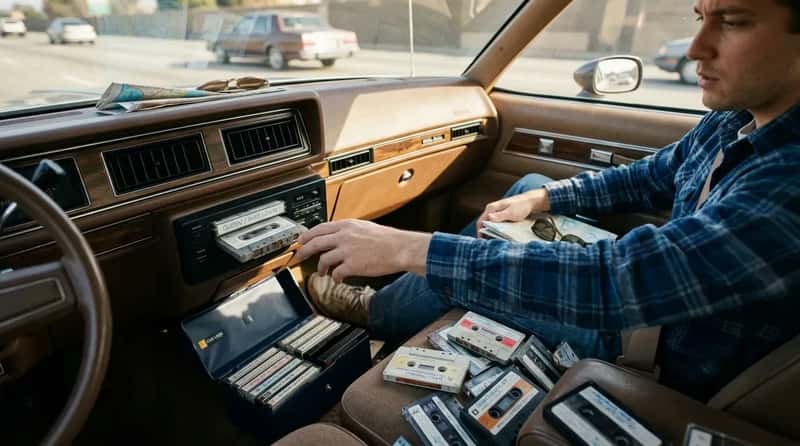
Cassette tapes were the soundtrack to every 1980s road trip. Carefully curated mixtapes filled with Queen, Cyndi Lauper, and Bon Jovi blared from the car speakers, creating a mobile concert on wheels. Your parents’ tape collection lived in a Case Logic holder under the front seat, and choosing the next tape was a diplomatic exercise that could consume ten full minutes of interstate time – longer if anyone tried to argue for a second Huey Lewis album.
The ritual of rewinding tapes with a pencil was a familiar dance, ensuring the music never stopped when the auto-rewind failed. If the tape ate itself on hour three of a twelve-hour drive, the resulting silence was deafening. Everyone just stared out their window and pretended it wasn’t a crisis. It absolutely was a crisis. Music was the only thing standing between a peaceful car and open sibling warfare, and everyone in the front seat knew it.
#16 – You Played License Plate Bingo Until Someone Cheated
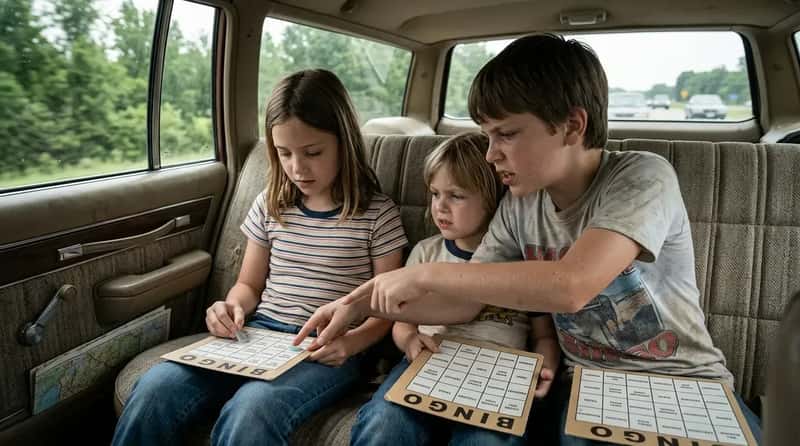
The license plate game was the official sport of the pre-iPad backseat. Every state spotted was a small victory. Alaska and Hawaii were legendary gets that caused real arguments about whether a plate “counted” if you only glimpsed it for a second while passing a semi at 65 mph. Nobody could agree on the rules because nobody had ever written the rules down. The rules were whatever the person who spotted it said they were, which was a deeply flawed system.
The beauty of license plate bingo was that it required zero equipment, cost absolutely nothing, and still somehow erupted into full-scale family conflict by hour four. Someone always claimed they saw Wyoming. Nobody else saw Wyoming. Wyoming was always the disputed territory of every single road trip. The accusations of cheating were fierce, the appeals to Mom went unresolved, and the game usually dissolved into a sulk somewhere before the state line. It would restart within forty miles. It always restarted.
#15 – You Stopped at Every Single Rest Stop
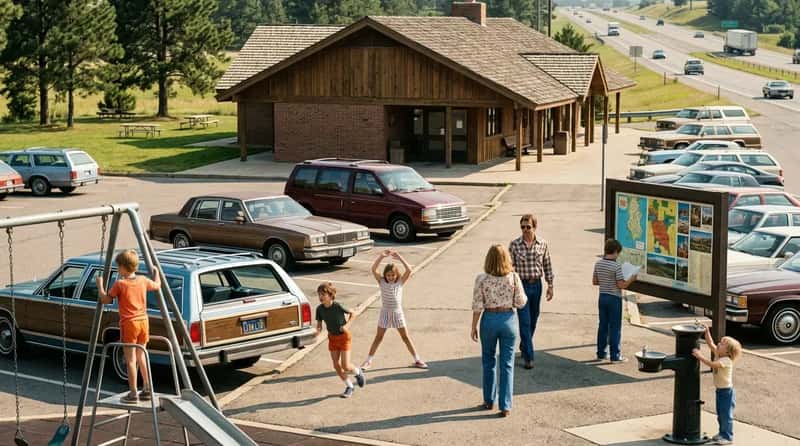
The rest stop was a sacred institution of the 1980s road trip. Clean or not – and many were decidedly not – it was the only sanctioned break from the car, and kids treated it like shore leave. You ran. You stretched. You read every word on the state tourism billboard like it was literature. You drank from a water fountain that tasted faintly of rust and declared it the best water you’d ever had in your life.
Dad would announce it was “the last stop for two hours,” which everyone in the car understood meant “the last stop for four hours.” Strategic pre-emptive bathroom usage was a survival skill learned early and never forgotten. The rest stop parking lot was also the only place where kids could burn off accumulated backseat energy – which meant that the two-minute stretch break somehow took twenty-five minutes and nobody could fully explain why. Dad always looked at his watch. Mom pretended not to notice.
#14 – The Car Had No Air Conditioning (Or It Broke on the Trip)
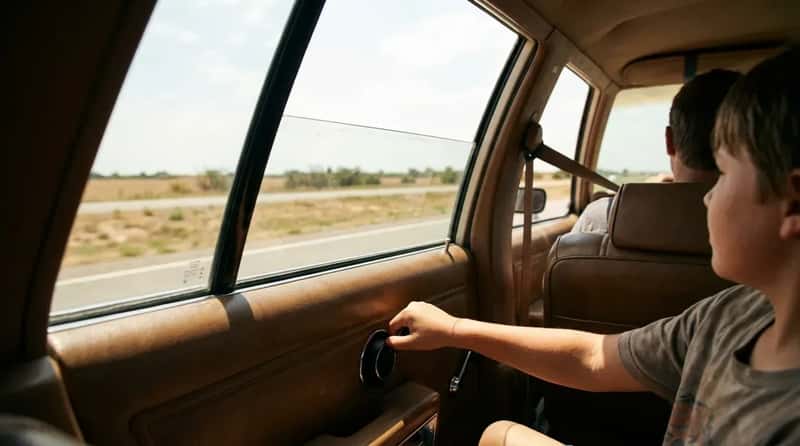
When the AC went out on a July road trip through the South – which it inevitably did, always on the hottest day, always in the flattest, most featureless stretch of highway – those window crank handles became the most important mechanism in the entire vehicle. Everyone cranked simultaneously. The resulting wind was warm, loud, and smelled like asphalt, but it was better than nothing and you were grateful for every degree of it.
The hierarchy of window airflow was real and heavily negotiated. The kid stuck in the middle rear seat got nothing but warm air bouncing off two siblings. The front passengers monopolized the dash vents without guilt or apology. Vinyl seats in 90-degree heat created a specific type of suffering that no amount of adulthood has fully resolved. But nobody complained to Dad, because stopping somehow seemed worse. You just sweated through it, peeled your legs off the seat at rest stops, and called it a summer.
Worth Knowing: The Backseat Survival Kit
- A beach towel doubled as a blanket, sun shade, and emergency carsick barrier
- A Ziploc bag or plastic grocery sack in Mom’s purse was standard emergency equipment – always present, never discussed in advance
- The paper cup from the last gas station was the unofficial backseat water bottle, refilled at rest stops and left to rattle on the floor
- Coloring books lasted about ninety minutes before the heat wilted the pages and the crayons became soft and waxy
- A pillow against the window was the only thing standing between your skull and the door panel on a twelve-hour night drive
#13 – Someone Got Carsick and Told Everyone Too Late
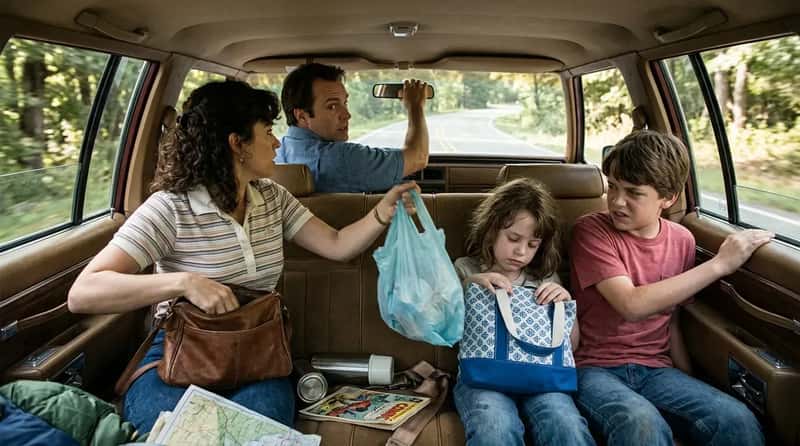
Every 1980s family road trip had a carsick incident. It was as inevitable as getting lost or forgetting the sunscreen. Someone in the backseat – usually the smallest kid, usually on the twistiest section of road – would turn a color that didn’t exist on any paint chart and deliver the news approximately forty-five seconds too late for anyone to do anything useful about it. The scramble that followed was impressively fast for a moving vehicle.
Mom would produce a plastic bag from somewhere in her purse like a magician – always prepared, never surprised. The windows went down immediately and stayed down for the rest of the day, no discussion, no vote. The carsick kid spent the next hour staring at the horizon with the thousand-yard look of someone who had permanently learned their lesson about reading in a moving car. Reading in the car was never attempted again. The lesson stuck in a way that no warning ever could.
#12 – Gas Station Stops Were a Full Family Production
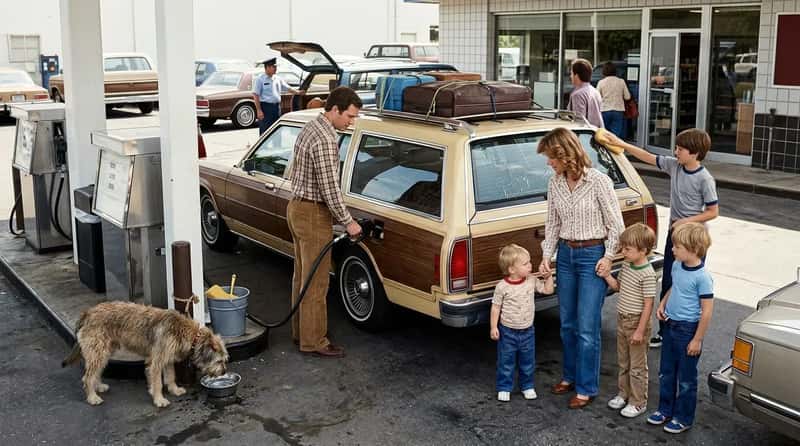
Pulling into a gas station in the 1980s wasn’t just a refueling stop – it was an event. Dad pumped the gas. Mom took three kids to the bathroom in a single trip, which required military-level coordination. Someone always wanted something from inside the store. Someone else needed a Coke. The dog, if there was one, needed water. You could help wash the windshield – swirling a sopping wet sponge across an insect-covered front glass, then squeegeeing it in long methodical stripes that never quite cleared the middle.
Gas station attendants still existed at the start of the decade in many states, meaning a uniformed human would actually come to your window and handle things. By the mid-1980s, self-service was taking over, and Dad had to do it himself while fielding requests from the backseat. Plastic travel mugs with quirky logos were a staple souvenir of the era, found in every gas station and rest stop across the country. Half the family had one by the time you reached the destination. Nobody remembered buying them.
#11 – You Had a Specific Snack That Defined Every Trip
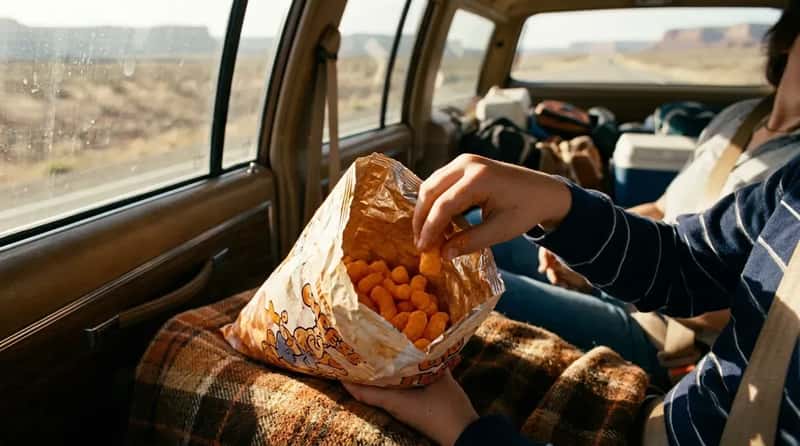
Every family had its road trip snack – the one item that, to this day, can transport you back to a specific stretch of interstate in seconds. For some families it was Cheetos. For others it was sunflower seeds or Chex Mix. For a lucky few, it was something from Stuckey’s that didn’t survive the first hour out of the parking lot. The snack wasn’t chosen for nutrition. It was chosen because someone’s mom bought it at the last gas station and now it was tradition.
The sense of smell connects directly to the brain’s limbic system, which processes emotion and memory – which explains why these food memories hit so hard and so specifically. The road trip snack is one of the most powerful memory triggers from a 1980s childhood, arguably stronger than any photograph. Open a bag of Cheetos on a long drive today and see what happens. You’ll be eleven years old again, somewhere on I-75, before you even reach the on-ramp.
#10 – You Played “I Spy” Until Everyone Was Ready to Scream
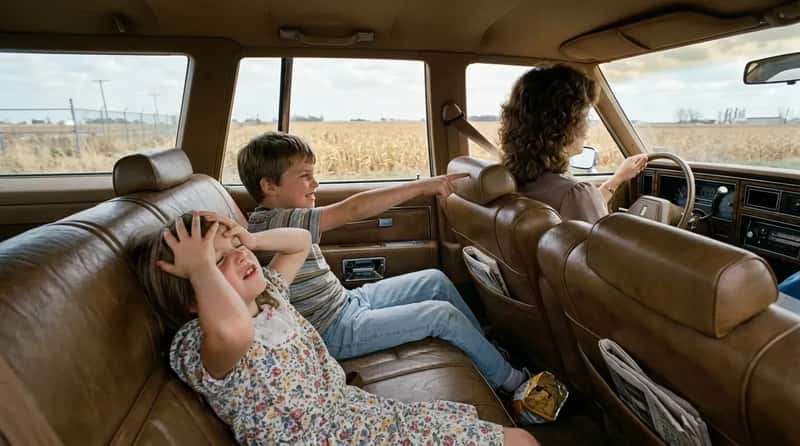
“I spy with my little eye, something… brown.” Out on a flat stretch of Ohio cornfields, literally everything was brown. That was the move. You picked the most ambiguous, unhelpful color possible and watched your siblings spiral for forty minutes guessing fence posts, highway signs, and the seat upholstery directly beneath them. It was psychological warfare dressed up as a children’s game, and you played it with complete, shameless pride.
The genius of I Spy – and why it survived every road trip despite being openly despised by the third hour – is that it required zero materials, worked for any age, and was technically educational enough that parents couldn’t ban it even when it was actively damaging sibling relationships. Together with license plate bingo and Punch Buggy, it formed the holy trinity of 1980s backseat entertainment. All three were essentially structured boredom management. All three worked better than anyone wanted to admit. All three ended in an argument.
#9 – The Trip Was Planned Around Dad’s Driving Schedule, Not Anyone Else’s
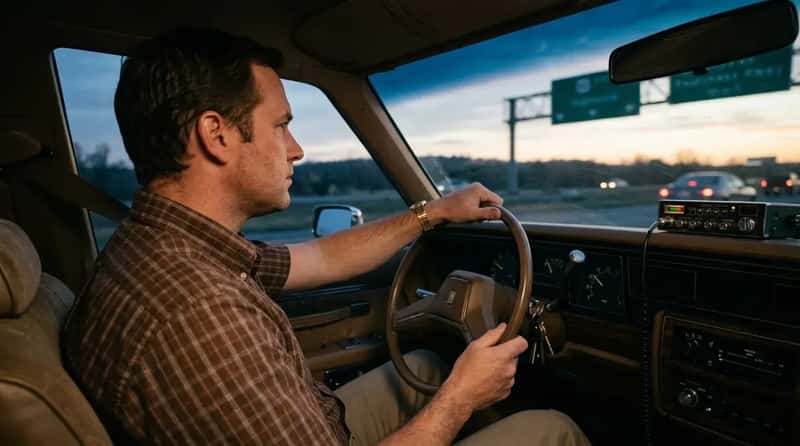
Dad’s driving schedule was law. You left at 5 a.m. because he wanted to “beat the traffic.” You didn’t stop for lunch until 2 p.m. because he wanted to “make time.” You drove straight through the stretch where everyone needed the bathroom because he was “fifteen minutes from the next exit.” The entire itinerary of a 1980s family road trip was essentially one man’s internal monologue about highway efficiency, drafted without consulting any other party in the vehicle.
Nobody ever fully understood the urgency. There was no prize for arriving early. There was no penalty for stopping. But Dad had a schedule, and the schedule was sacred, and questioning it was not a conversation that ended well. This was especially true on the return trip, which was always driven faster and with fewer stops than the outbound leg. The logic was never explained. The logic was never questioned. You put your pillow against the window and tried to sleep through Missouri.
#8 – You Stayed at a Motel With a Pool and It Was the Highlight of the Trip
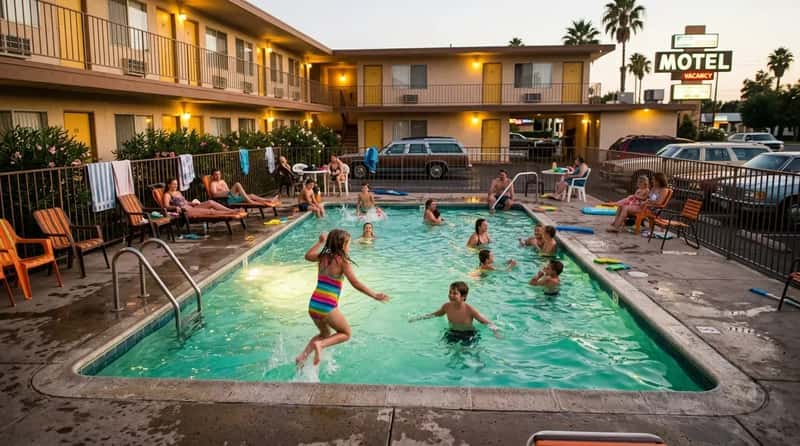
The motel pool was not a luxury. It was oxygen. After a day in a hot car on a vinyl seat, that rectangle of chlorinated water – regardless of its temperature, its color, or the number of other families already splashing around in it – represented pure salvation. You would swim until your fingertips pruned and your eyes burned and your parents called you inside. Then you’d try to get back in for five more minutes. The answer was always no. You always asked anyway.
The real status marker of the 1980s family vacation wasn’t the destination – it was the motel. A pool meant you’d arrived. No pool meant a box fan, a pay-per-view TV bolted to a particleboard dresser, and the quiet understanding that the trip had been budgeted very carefully. The presence or absence of a motel pool could make or break a kid’s entire opinion of the vacation. Some of us are still processing the summers when there was no pool. We’ve moved on. Mostly.
#7 – The Car Smelled Like a Specific Combination of Things
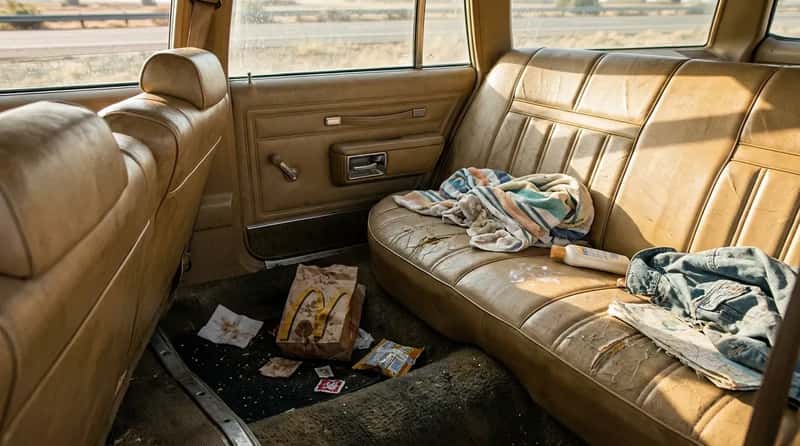
You know the smell. Warm vinyl seats baking in afternoon sun. Someone’s leftover fast food bag from two states ago. Sunscreen that soaked into the seat cover and never came out. A faint petroleum edge from the highway. Maybe a wet towel from the motel pool balled up in the footwell. That specific cocktail of odors was the smell of summer, and if you encountered it today – in a vintage car, at a garage sale – you’d be back in 1986 before your brain could process what happened.
Smell is the sense most directly wired to memory and emotion, which is why the car smell hits differently than a photograph ever could. It wasn’t pleasant by any objective measure. But it was yours. It meant the whole family was packed into one moving space, headed somewhere that had taken months to plan, and the miles between here and there were just part of it. That smell meant the trip was real. It meant you were all in it together.
#6 – Someone Always Started a Fight Over the Invisible Line
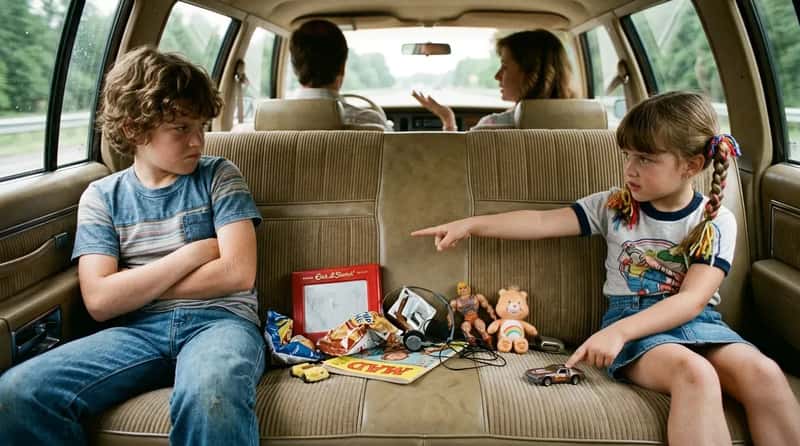
Every backseat had a line. It was invisible, non-binding, and the source of more interstate conflict than any road construction in American history. The line divided the seat into territories, each belonging to one sibling, and crossing it – even accidentally, even while asleep – was a violation that warranted immediate escalation to the parental authorities in the front seat. The front seat had exactly zero interest in adjudicating backseat border disputes and communicated this through increasingly tired tones of voice.
“Don’t make me pull this car over” was the single most empty threat of the entire decade. Dads said it approximately every forty-five minutes and never once followed through – because pulling over meant losing time, and losing time was apparently catastrophic. So the invisible line wars raged on, unstoppable as weather, immune to parental warnings, reigniting every time someone shifted their weight or a leg drifted an inch across the unmarked DMZ. Every single trip. Every single family. Without exception.
Quick Compare: 1980s Road Trip vs. Today
- Navigation: Fold-out paper map + AAA TripTik vs. live GPS turn-by-turn with traffic
- Entertainment: License plate bingo, I Spy, and cassette tapes vs. tablets, streaming, and wireless headphones
- Seat belt rules: Entirely voluntary in most states before 1984 vs. mandatory in 49 states today
- Snack stops: The family cooler and Stuckey’s vs. drive-throughs every 30 miles
- Lodging intel: Spotting the Howard Johnson’s orange roof from the highway vs. booking on an app three weeks in advance
- Getting lost: A guaranteed part of the trip vs. nearly impossible unless you actively ignore your phone
#5 – You Read Every Single Billboard Out Loud
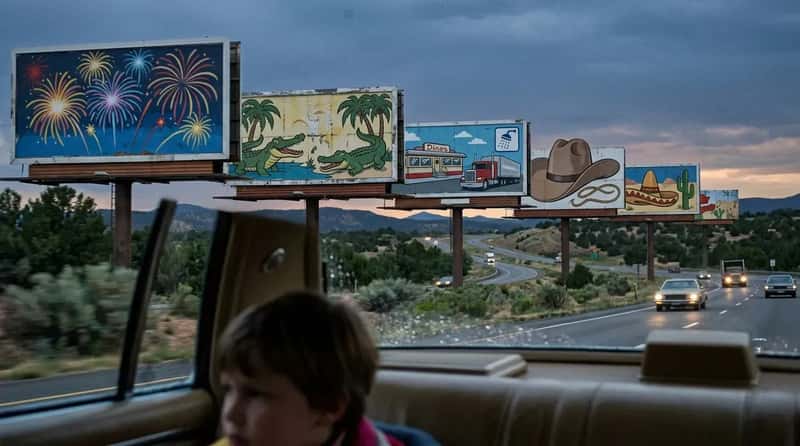
When you’re a kid with no screens, no headphones, and four more hours until the destination, billboards become literature. You read every single one out loud, unprompted, whether anyone wanted to hear it or not. Roadside billboards in the 1980s advertised things that barely exist anymore: fireworks superstores, alligator farms, truck stops with “FREE SHOWER with fill-up,” and mystery attractions promising something wild just 47 more miles ahead.
The count-down billboard was its own genre. “Pedro’s South of the Border – 112 miles!” Then 98. Then 74. Then 43. By the time you actually passed the place, you’d been anticipating it for two states, and it was either a genuine roadside spectacle or a crushing disappointment. Either way, you talked about it for the rest of the trip. The billboard was the promise. The road was the delivery. Sometimes the delivery fell short and that became part of the story too.
#4 – The Station Wagon Was Packed to Absolute Maximum Capacity
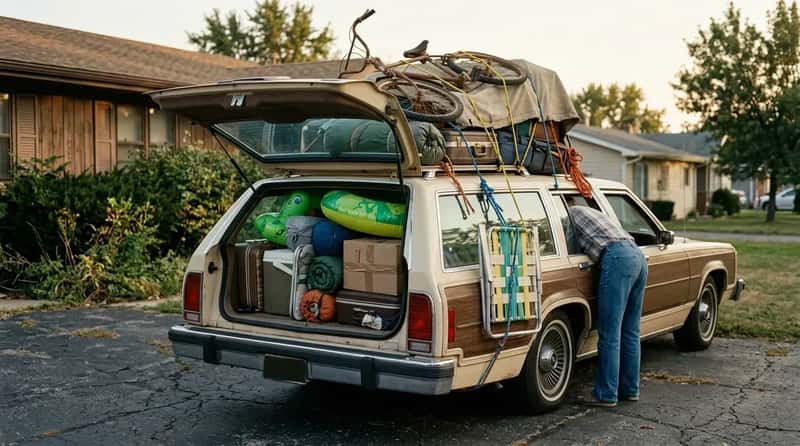
Family weekend plans hinged entirely on how much stuff could fit in the back of the wagon. Before SUVs and minivans took over, these weren’t just cars – they were mobile command centers for families who needed space, reliability, and enough room for everyone’s gear. “Enough room” was always loosely defined. If it fit with the tailgate closed, it was fine. If it required bungee cords, it was still technically fine. If it required rope, a tarp, and a prayer, it was absolutely fine.
In practice, something was always sticking up, a cooler was always wedged in a way that blocked the rear view, and someone’s bike or inflatable pool toy was strapped to the roof with enough rope to dock a small vessel. The fully loaded station wagon, viewed from the outside, looked less like a family vacation vehicle and more like the family was fleeing a natural disaster. But it all fit. It always somehow fit. And pulling out of the driveway that morning felt like the start of something genuinely epic.
#3 – You Fell Asleep in the Car and Woke Up in a Different State
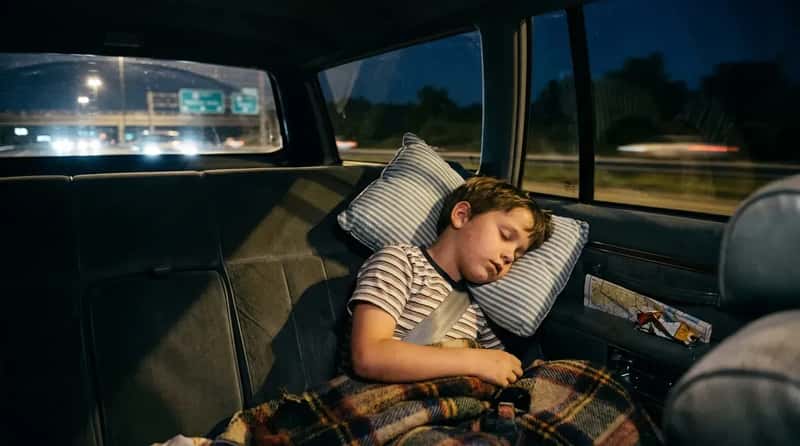
There is no sleep like the sleep of a child in the backseat of a moving car on a warm summer night. You were out before you hit the interstate, dead to the world by the time Dad found his cruising speed, and completely unaware of the three states that passed underneath you while you drooled on your travel pillow. A couple of old pillows and worn blankets were always packed in the cargo area for exactly this purpose, and they smelled like every previous trip you’d ever taken.
Waking up in a different state was a specific kind of magic. You’d open your eyes, look at an unfamiliar overpass or a highway sign for a city you’d never heard of, and realize the world had moved while you were unconscious. Dad was still driving. The cassette was on a different side. The sky was a different color. You were somewhere new and had done nothing to get there except fall asleep in the backseat. At nine years old, that felt like actual teleportation. It still kind of does.
#2 – The Trip Had One Catastrophic Moment Everyone Still Talks About
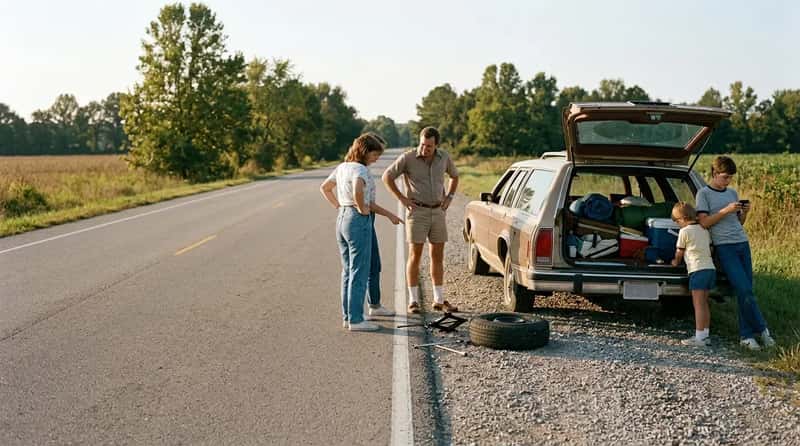
Every 1980s family road trip had a moment. A tire blowout on an empty Tennessee highway. A wrong turn that added three hours through a town with no gas station. A dog that got loose at a rest stop in Georgia and had to be chased across a parking lot in 95-degree heat. A cooler left on the roof at a gas station somewhere in Alabama. These weren’t disasters – they were the thing that turned a trip into a story that gets told at Thanksgiving thirty years later with increasing embellishment and absolutely zero regret.
The catastrophic moment was the crucible of family bonding. It was the thing nobody wanted to happen and everybody secretly needed. It created the inside reference, the shared laugh, the “remember when Dad tried to read the map while merging onto I-40 and we ended up in Kentucky” story that never gets old no matter how many times it gets told. That story is still funnier every single time. The road trip made you a family unit in a way that no resort, no cruise, no all-inclusive package ever could. The breakdown was the point.
#1 – The Destination Mattered Less Than You Thought It Did
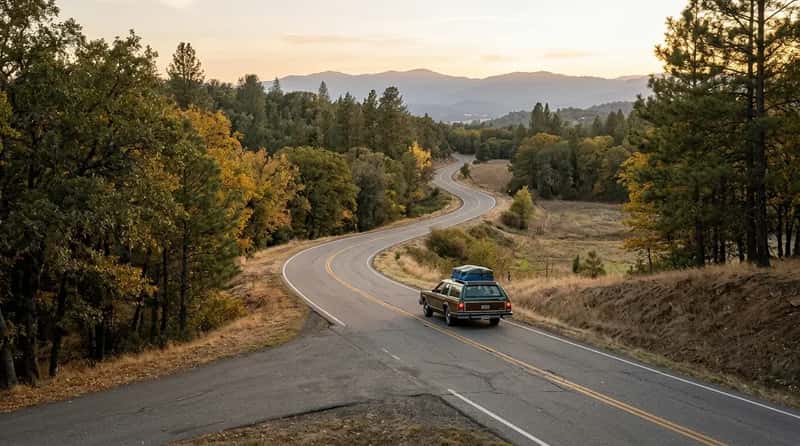
Here’s the truth that takes about twenty years of adulthood to fully understand: the destination was almost never the real point. Whether it was the beach, a national park, Grandma’s house, or a theme park that was slightly less impressive than the commercials promised – the destination was a container, and the road trip was the contents. Every wrong turn, every carsick kid, every invisible line war and Stuckey’s negotiation was the actual experience. The destination was just the excuse to have it.
You were craving the context: being young enough that someone else was in charge, that the miles ahead still outnumbered the miles behind, that the backseat of a station wagon with worn upholstery and a broken AC vent felt like the whole world. That world – cramped, loud, slightly overheated, smelling like sunscreen and Cheez-Its – was everything. And most of us didn’t fully know it until it was long gone.
If you made it through all 27 of these and felt a pang of something warm and slightly painful, congratulations – you were there. You survived the hump seat, the wrong exits, the melted crayons, and the taped-up Rand McNally. And if you could go back for just one more summer in that sticky, vinyl-scented station wagon, you would. Every single one of us would.