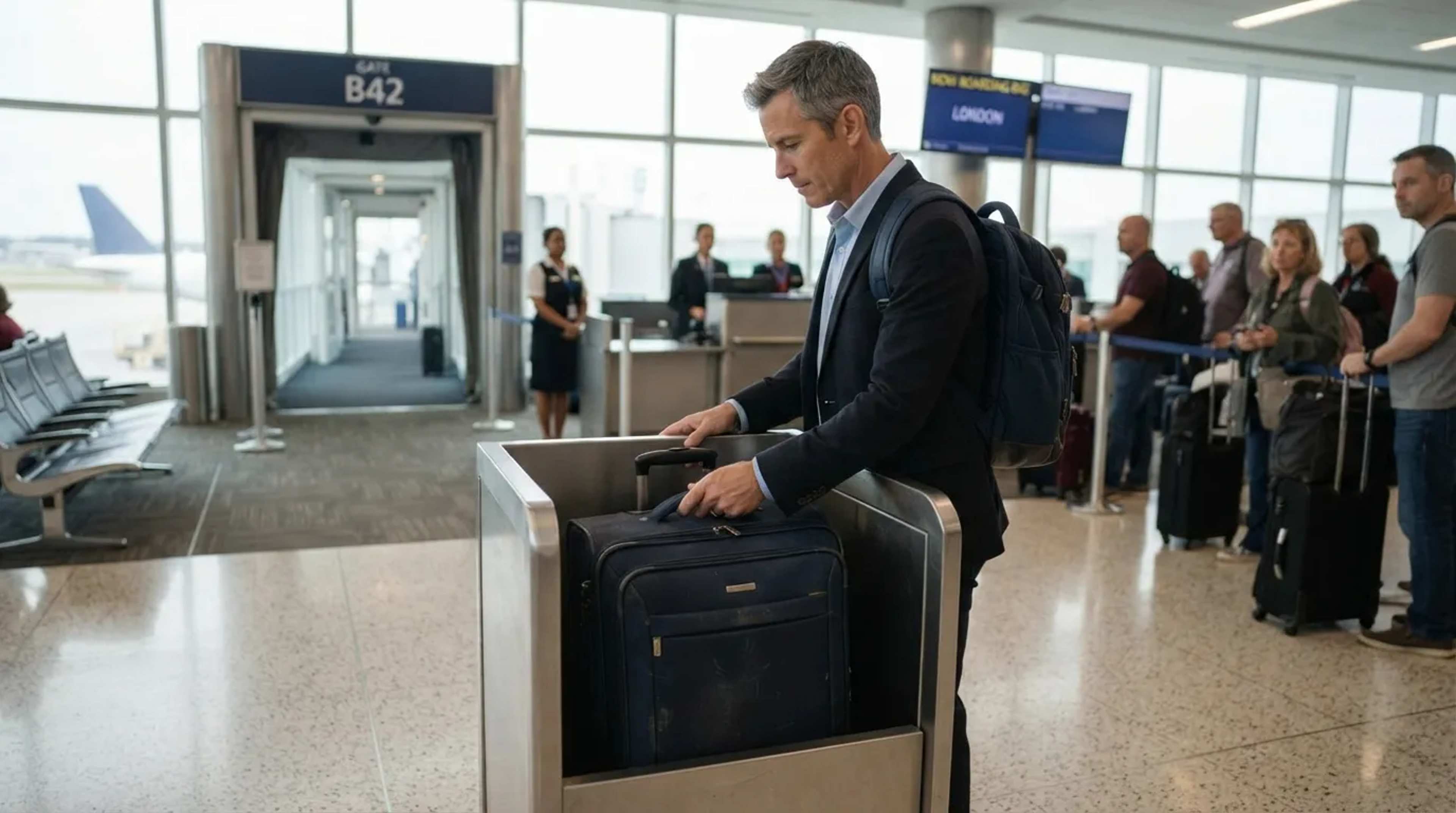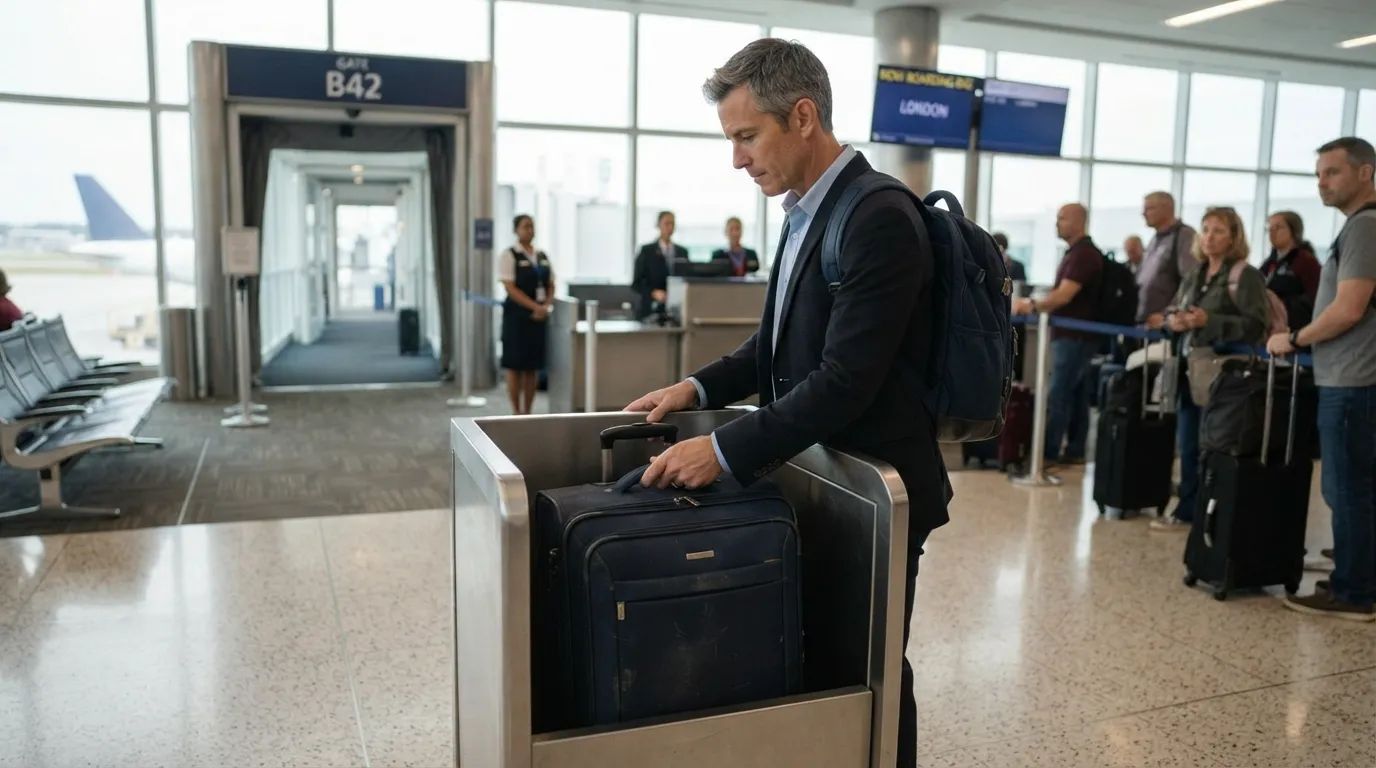
You bought the bag with “carry-on” printed right on the tag. You rolled it through security without a second look. Then a gate agent pointed at a metal sizer box, and the whole trip went sideways.
That moment is what this list is about: 27 habits weekly flyers have, and occasional travellers usually learn the expensive way. Most have nothing to do with buying a fancier suitcase. They’re quiet checks on fares, wheels, planes and even a global bag standard that was announced and then shot down. Start at #27, because the very first one explains why a bag that “fits” can still fail.
#27 – They Measure the Bag Fully Packed, Wheels and Handles Included
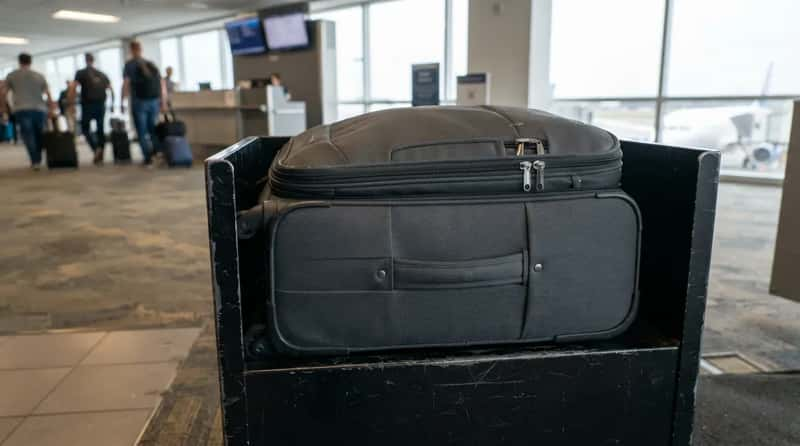
Delta counts wheels and handles in its 22 x 14 x 9 inch limit. Occasional travellers measure the empty shell and call it a day. Weekly flyers measure the bag the way the gate will see it: stuffed, zipped, handle down.
A bag can pass on paper and still fail once it’s packed. Soft sides bulge and a full zipper pulls the shape out. That’s the gap a gate agent spots in two seconds.
But that’s nothing compared to who actually sets the rules, coming up at #26…
#26 – They Know the TSA Doesn’t Set Carry-On Size at All
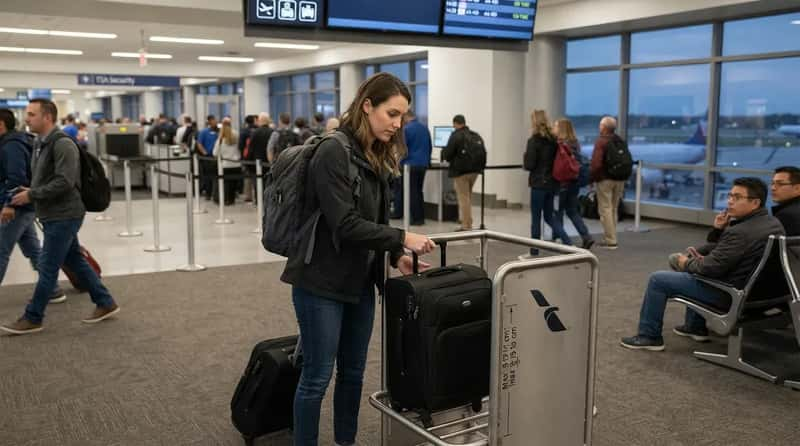
The TSA gets blamed for everything at the airport. When it comes to bag dimensions, it has nothing to do with it. The airline sets the size. The TSA screens what’s inside.
That’s why a bag can sail through security and still get stopped at the gate. Passing the X-ray tells you nothing about whether the bag fits the airline’s limit. Weekly flyers stop asking security and start reading the airline’s baggage page.
Next, a rule that trips up even confident travellers at #25…
#25 – They Treat the Personal Item as Its Own Separate Rulebook

Most people assume a personal item is “whatever fits under the seat.” Frequent flyers know the numbers differ by airline. American’s personal item limit is 18 x 14 x 8 inches. United’s is 17 x 10 x 9 inches.
That United limit is noticeably slimmer. A backpack that sails through on American can be over the line on United. Weekly flyers check which airline they’re on before they pick the bag.
And your ticket may decide whether you even get the bigger bag, as #24 shows…
#24 – They Check the Fare Type Before They Pack a Single Sock
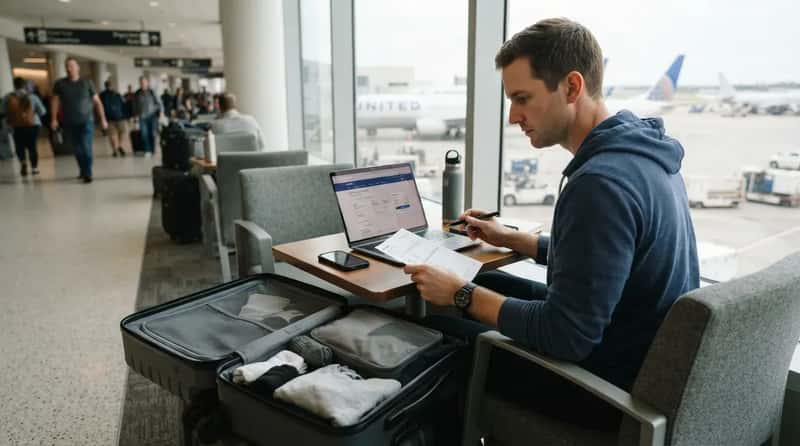
Same airline, same flight, different rules. United’s Basic Economy fare has limited most domestic travellers to a personal item, with a full carry-on costing extra unless you have elite status or an eligible credit card. Policies shift, so weekly flyers check the current terms.
Meanwhile, American includes a carry-on on all fares, Basic Economy included. The cheapest ticket on one airline can allow more than the cheapest ticket on another. Weekly flyers read the fare rules first and pick the bag second.
Quick Compare
- United Basic Economy: personal item for most domestic travellers, carry-on extra
- American, all fares: carry-on included, even on Basic Economy
- Spirit, Frontier, Allegiant: personal item free, full carry-on paid
That brings us to the airlines where the “free” bag is a lot smaller than people expect, at #23…
#23 – They Never Assume a Budget Airline’s Carry-On Is Free
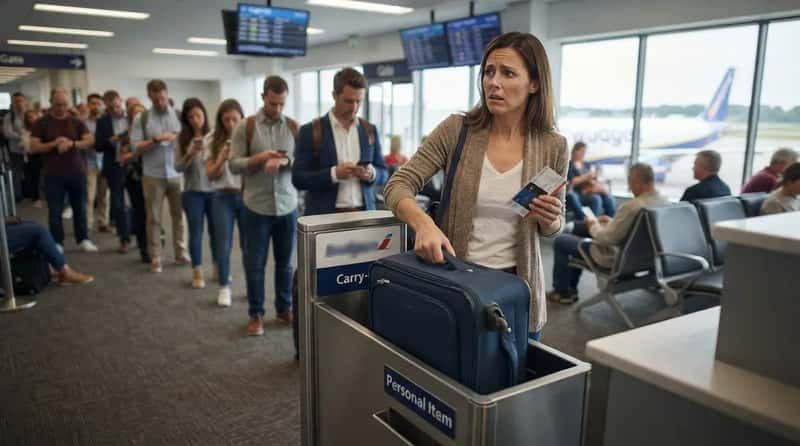
The low fare looks like a steal until the bag question shows up. On Spirit, Frontier and Allegiant, the personal item is free. The full carry-on is a paid add-on.
Occasional travellers find this out at the gate, with a line of annoyed people behind them. Weekly flyers add the bag fee to the ticket price before they compare fares. Often the “cheap” flight isn’t.
Even the airline with the roomiest bag has changed a lot lately, as we’ll see at #22…
#22 – They Know Roomier Doesn’t Mean Universal
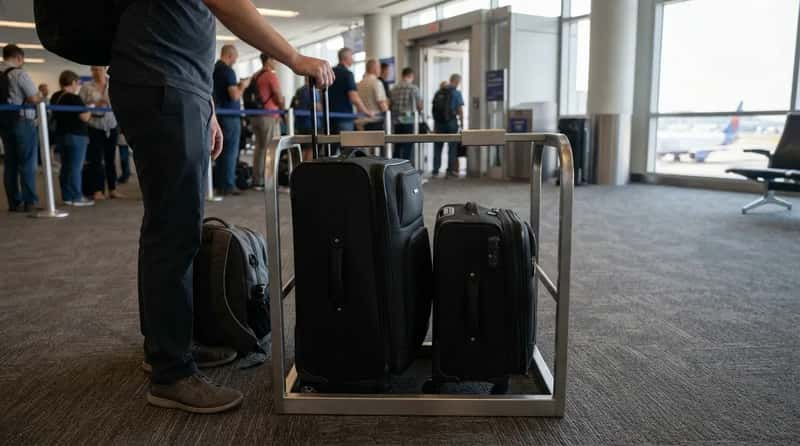
Southwest allows carry-ons up to 24 x 16 x 10 inches. That’s a real difference. It works out to about 38% more packing volume than the standard 22 x 14 x 9 bag.
The trap comes when you carry that bag onto the next airline. The bag that fit perfectly on Southwest can be too big for Delta, United or American. Weekly flyers who connect between airlines pack for the smaller limit.
Speaking of Southwest, one of its changes surprised even loyal fans, and it’s at #21…
#21 – They Watch Airline Policy Shifts, Not Just Bag Charts

Southwest ended its free-checked-bag policy in May 2025. It then moved to assigned seating on flights departing January 27, 2026 and later. That’s a huge shift for a carrier famous for open seating.
The carry-on size didn’t move an inch. Its 24 x 16 x 10 limit stayed exactly the same. The bag rule stayed put while everything around it changed. Weekly flyers check which rules changed and which didn’t.
Now for a mistake that fools hard-shell owners every time, at #20…
#20 – They Pick Soft-Sided Bags That Give a Little
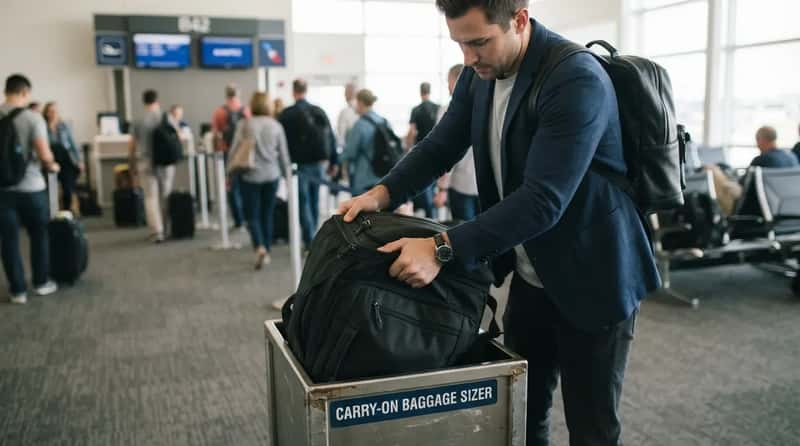
Here’s the secret of the sizer box. A soft-sided bag can be nudged, squeezed and compressed. A hard shell is exactly as big as it is.
That’s why many weekly flyers lean toward soft luggage. A bag that squishes by half an inch can be the difference between boarding and a gate-check tag. Hard-shell fans argue the protection is worth it. Honest ones admit it leaves zero margin.
And there’s a feature on many bags that quietly breaks the rules, coming up at #19…
#19 – They Keep the Expansion Zipper Closed
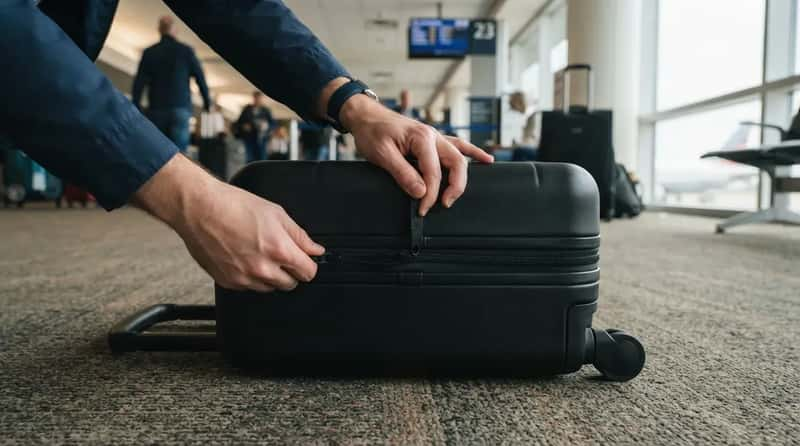
Lots of carry-ons have an expansion zipper that adds extra packing room. It looks like a free bonus. In reality, it can push the bag past the limit the second it opens.
Weekly flyers treat the expanded size as the real size. The extra inch you gained packing at home may be the inch that gets flagged at the gate. If the bag only fits when it’s zipped flat, they keep it zipped flat.
Next up: the bag style that travellers argue about more than any other, at #18…
#18 – They Argue the Roller Bag Is Overrated
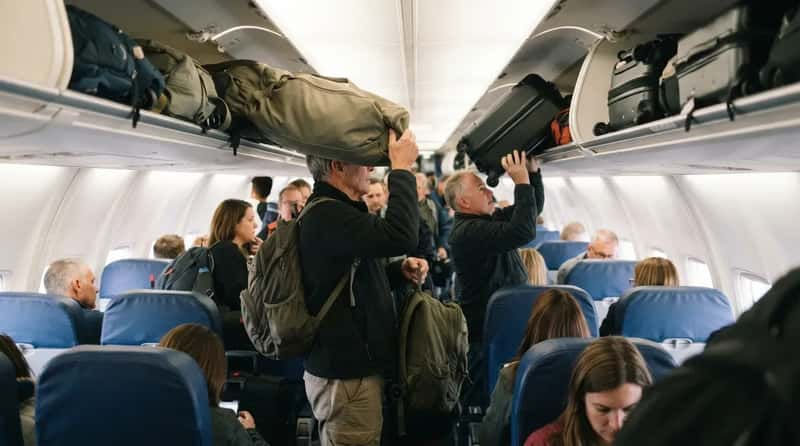
Here’s a take that starts fights in travel forums. Most people see the wheeled carry-on as the default, but many weekly flyers argue it’s the clumsiest option on a packed flight.
Wheels and a rigid frame eat into your size allowance. A soft duffel or backpack can hold the same gear in a more flexible shape. Roller loyalists say wheels save their backs. Which side are you on?
But the wheels themselves cause a bigger problem, at #17…
#17 – They Check Whether the Listed Size Includes the Wheels
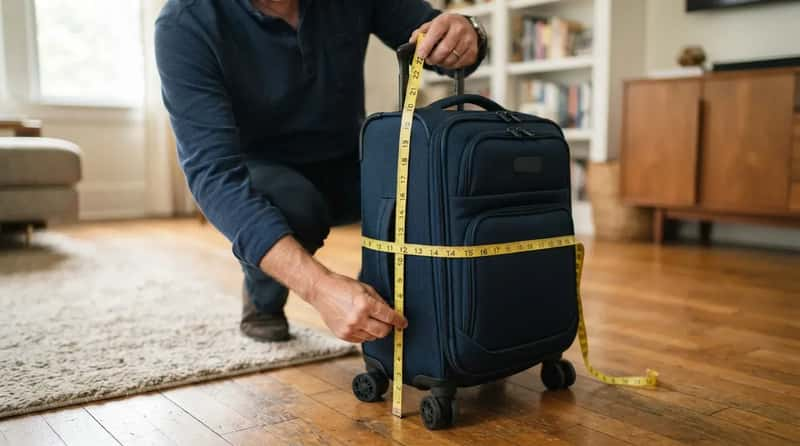
Product pages love to show a bag’s body size and skip the rest. A listing might quote a tidy number that leaves out the wheels and top handle.
Airlines don’t make that exception. Alaska’s 22 x 14 x 9 inch limit includes wheels and handles. The number on the box may not be the number the airline measures. Weekly flyers measure it themselves before they buy.
And the label on the bag can be misleading too, as #16 shows…
#16 – They Ignore the Word “Carry-On” on the Tag
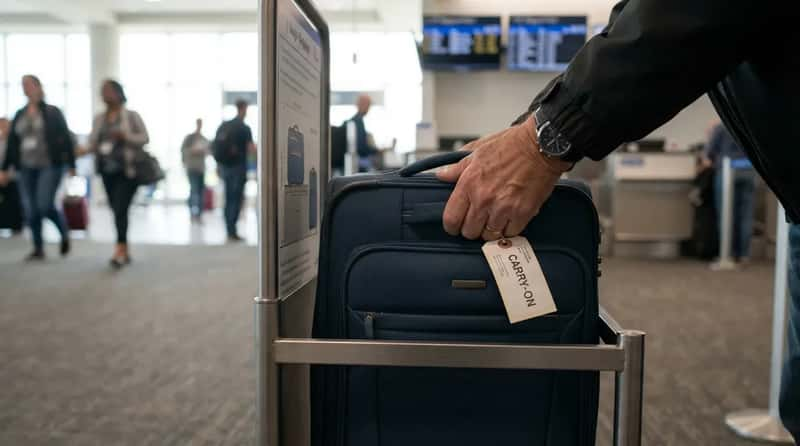
A bag’s tag says “carry-on.” That’s a marketing term, not an airline approval. No airline signs off on bags at the store.
Weekly flyers know this. The word “carry-on” on a bag is a suggestion from the seller, not a guarantee from the airline. They check the size against their airline’s own limit and treat the tag as decoration.
The next surprise has nothing to do with inches at all, at #15…
#15 – They Know Weight Rules Hide on Some Airlines
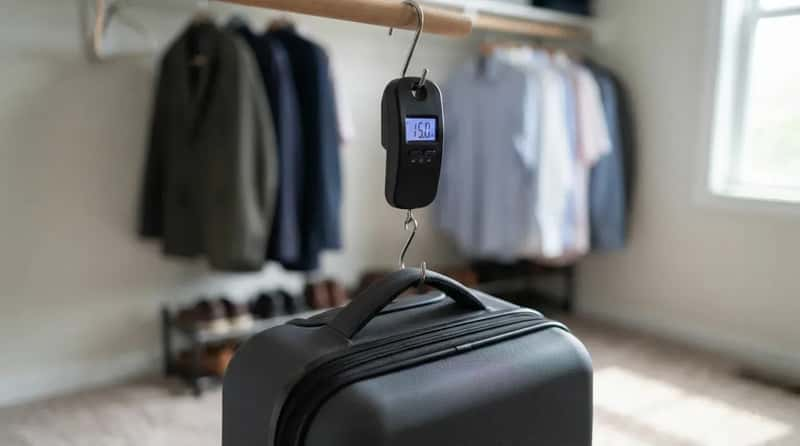
In the U.S., size is the usual fight. Most U.S. airlines publish no carry-on weight limit. Frontier is a notable exception, capping the carry-on and personal item at 35 lb each.
Abroad, it can get much tighter. Emirates limits economy carry-ons to 15 lbs (7 kg). A bag that clears the size check can still be turned back on the scale. Weekly flyers weigh their bags at home.
But even when there’s no limit, there’s still one that no airline writes down, at #14…
#14 – They Pack What They Can Lift Overhead Alone
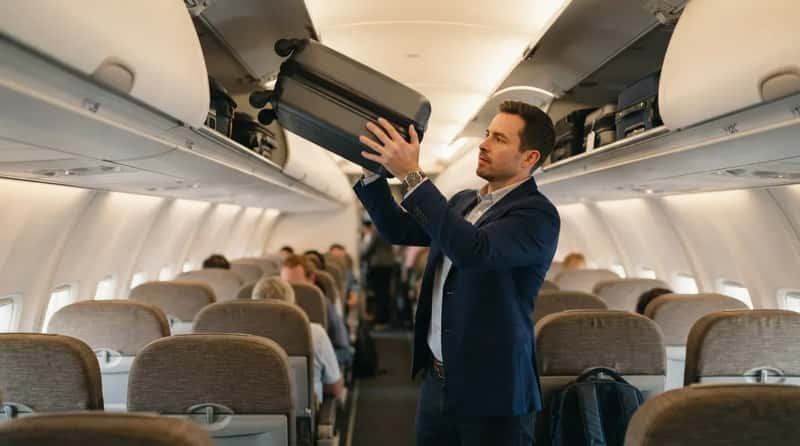
With no published weight limit, the real limit is you. Airlines expect you to lift your own bag into the bin. Flight attendants aren’t standing by to do it for you.
That unspoken rule shapes how weekly flyers pack. If you can’t swing the bag up one-handed, it’s too heavy for the plane, whatever the rules say. They’d rather leave a third pair of shoes behind than struggle in the aisle with a line growing behind them.
Now for the rules that change completely once you leave the U.S., starting at #13…
#13 – They Know European Limits Are Built Differently
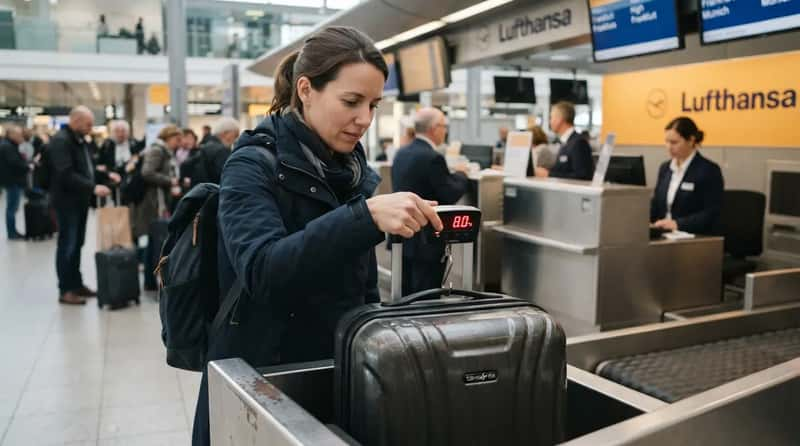
Don’t assume U.S. numbers travel. Lufthansa allows 55 × 40 × 23 cm and 8 kg, with a personal item of 40 × 30 × 10 cm.
Look at that weight. A bag that was totally fine on a U.S. domestic flight can break the 8 kg limit on a European carrier. Weekly flyers who cross the Atlantic check the weight first, not the dimensions.
And one budget airline has a system that confuses nearly everyone, at #12…
#12 – They Read Ryanair’s Two-Tier System Twice
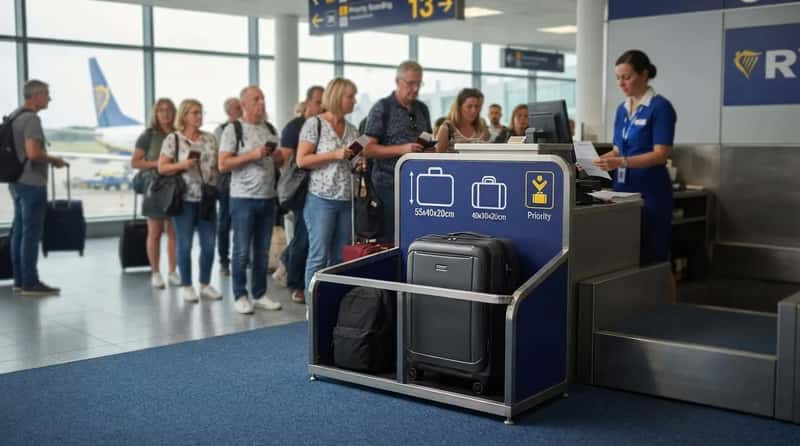
Ryanair’s rules split in two. With Priority boarding or a Plus/Family Plus fare, you get one bag at 55 × 40 × 20 cm (up to 10 kg) in the overhead bin, plus one 40 × 30 × 20 cm personal item under the seat.
Without that upgrade, the picture changes fast. On the basic fare, the personal item is the whole allowance. Weekly flyers on European budget airlines check the fare grid before they even pick a suitcase.
At a Glance
- Ryanair with Priority or Plus: 55 × 40 × 20 cm bag (up to 10 kg) plus a personal item
- Ryanair basic fare: personal item only, 40 × 30 × 20 cm
- Lufthansa: 55 × 40 × 23 cm bag at 8 kg, plus a 40 × 30 × 10 cm personal item
So why isn’t there one universal size? The answer, at #11, is a story most travellers never heard…
#11 – They Remember the Global Size That Got Shot Down
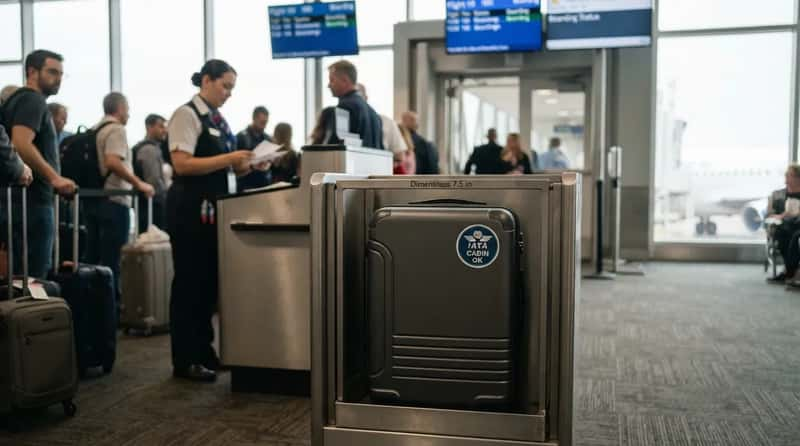
The industry did try to fix this mess. In June 2015, IATA proposed a labeled bag of no more than 21.5 x 13.5 x 7.5 inches. It later paused the plan after backlash from North American airlines, travel groups and elected officials.
IATA stressed that Cabin OK was a guideline, not a standard. More than a decade later, travel sites still say there’s no universal carry-on size. Weekly flyers stopped waiting for one.
Instead, weekly flyers use a smarter strategy, revealed at #10…
#10 – They Buy for the Strictest Airline on Their Route
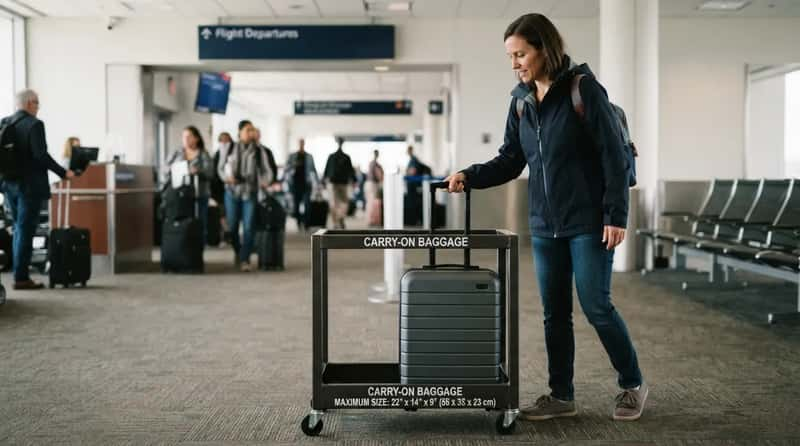
Here’s the logic. If your bag fits the smallest limit you’ll face, it fits all the bigger ones too. Weekly flyers don’t shop for the average airline. They shop for the toughest.
For many U.S. routes, that means the 22 x 14 x 9 standard. A bag sized for the strictest rule never has to be repacked at the gate. It might feel a little small in the store. It saves a lot of trouble later.
Fast Facts
- Delta and Alaska both count wheels and handles in a 22 x 14 x 9 inch limit.
- Southwest allows a larger 24 x 16 x 10 inch bag.
- IATA’s 2015 idea was smaller still, at 21.5 x 13.5 x 7.5 inches, and it was paused.
- Pack to the smallest number on your route, and every bigger limit takes care of itself.
But size is only half the battle. The next one is about timing, at #9…
#9 – They Board Early, Because Bin Space Is the Real Competition
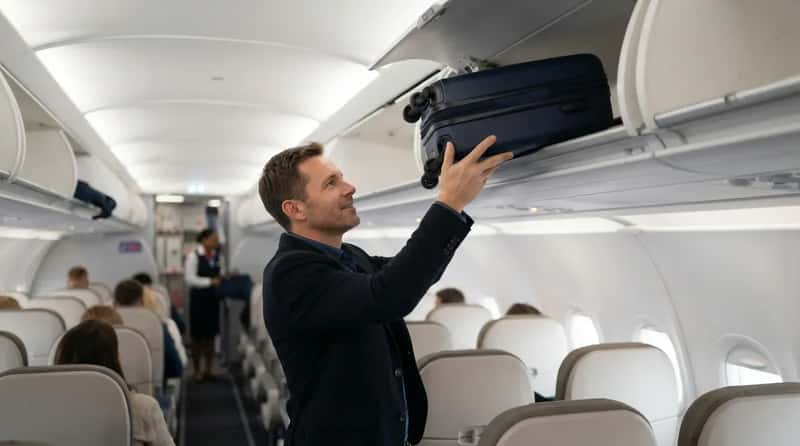
A bag that meets the size limit still needs somewhere to go. Overhead bins fill up, often before the last boarding groups reach the door.
That’s why weekly flyers care so much about boarding position. A perfectly legal bag can still get gate-checked because the bins ran out of room. Being near the front of the line is the best insurance they know.
When the bin does run out, though, the best flyers have a plan, revealed at #8…
#8 – They Treat a Free Gate-Check as Plan B, Not a Disaster
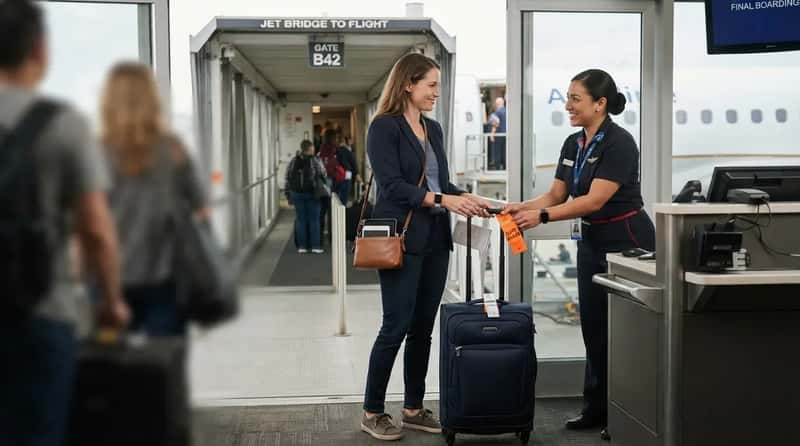
Occasional travellers panic when the agent reaches for a tag. Weekly flyers stay calm. When a flight is full, gate-checking is often offered at no charge, though the details depend on the airline and fare.
The difference is preparation. The calm flyer already has valuables and chargers in a small bag that stays with them. The suitcase goes down the jet bridge and comes back at the door or the carousel.
That packing habit protects you from one particularly risky item, at #7…
#7 – They Keep Spare Batteries Out of Any Bag That Might Be Tagged
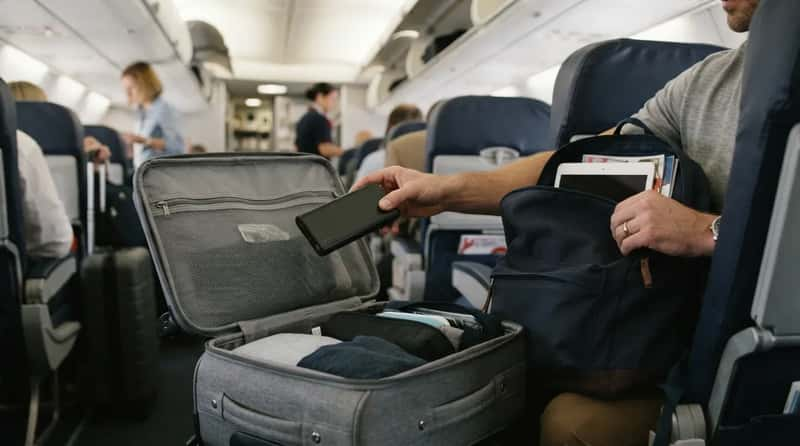
The FAA says spare lithium batteries and power banks belong in carry-on baggage, not checked bags. That matters because a gate-checked roller can end up in the cargo hold.
Weekly flyers don’t gamble on that. Power banks go in the personal item, which never leaves their seat. If the main bag gets tagged, nothing risky goes with it.
Next, a packing trick that makes gate-checking painless, at #6…
#6 – They Pack Like the Bag Might Get Pulled at Any Moment
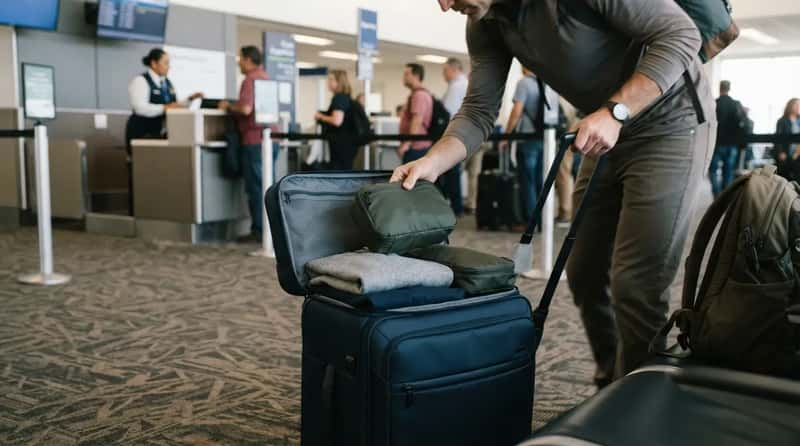
Seasoned flyers build their bags in layers. Everything they need during the flight sits in one pouch on top. Everything else sits below.
When the tag comes out, they move fast. Pulling one pouch takes about ten seconds, with no repacking at the gate. The line doesn’t wait, and neither do they.
But some travellers fall into a trap before they even reach the gate, at #5…
#5 – They Don’t Trust the Check-In Counter to Sign Off on a Bag
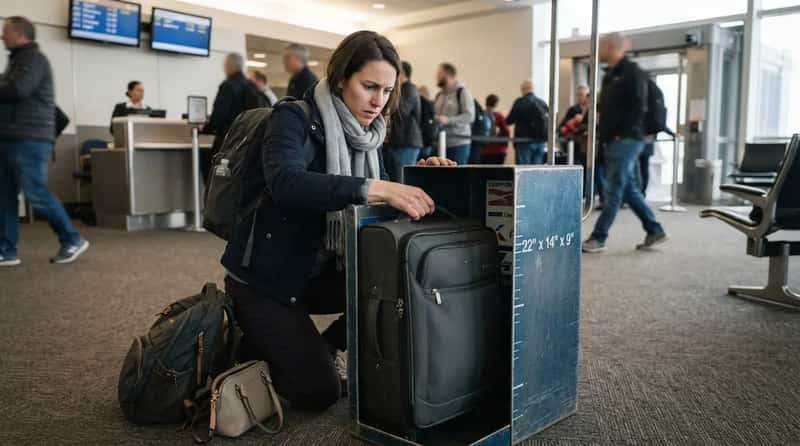
A friendly nod at check-in feels like approval. It isn’t. Bag checks can happen at the counter, in the boarding line or at the gate, and each can reach a different conclusion.
That’s the catch. Getting waved through once doesn’t guarantee getting waved through again. Weekly flyers keep their bags legal at every step, not just the first.
There’s one more habit that covers the stuff you buy on the trip, at #4…
#4 – They Bring a Foldable Tote for the Trip Home
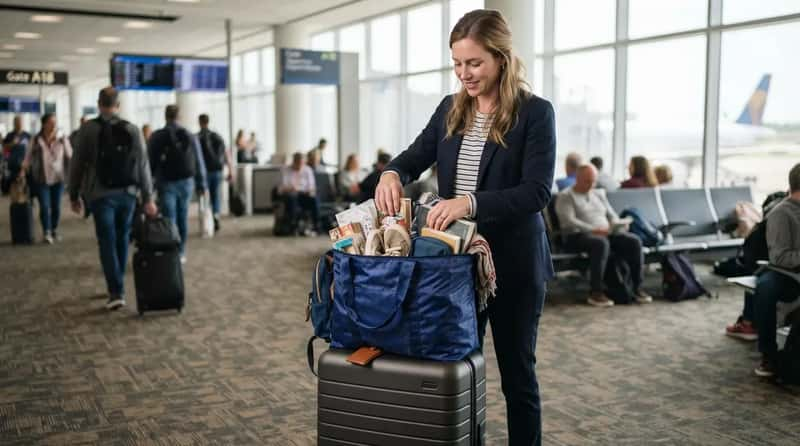
The trip out is easy. The trip home is where bags break the rules. Souvenirs, gifts and shoes you never planned to buy all need somewhere to go.
Weekly flyers pack a thin foldable tote for exactly that. It weighs almost nothing and saves them from cramming an already full bag past its limit. It’s also a handy fix if a gate-check ends up being necessary.
Worth Knowing
- Unplanned souvenirs and gifts are what usually push a bag over the line on the way home.
- A flat tote adds almost no weight to the outbound trip.
- If your suitcase gets tagged, the tote can carry valuables and chargers onboard.
But the biggest curveball isn’t about your bag at all, and it shows up at #3…
#3 – They Know Small Planes Play by Different Rules
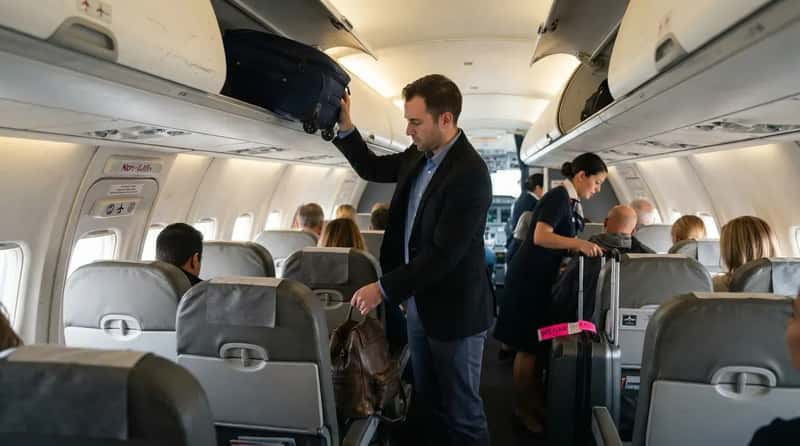
A bag that’s perfect for a big jet can be a problem on a small one. Regional aircraft have smaller overhead bins, and standard roller bags often don’t fit inside them.
Weekly flyers expect this on short regional hops. A fully legal carry-on can still get tagged at the jet bridge simply because of the plane. They keep a personal item ready to go for exactly that reason.
All of this leads to the habit that holds the rest together, at #2…
#2 – They Re-Check the Rules Before Every Single Trip
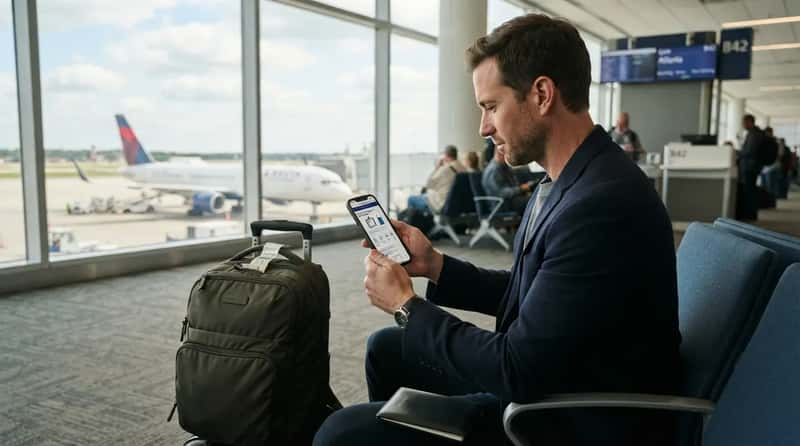
Airline rules change. Fare types change. Even the same airline can handle two tickets differently. Weekly flyers know a chart from last year can be wrong this year.
So they spend two minutes on the airline’s own bag page before every flight. Third-party size charts disagree with each other, and even the most careful ones lag behind updates. The airline’s page is the final word.
And the habit that matters most is the one at #1…
#1 – They Never Trust “It Fit Last Time”
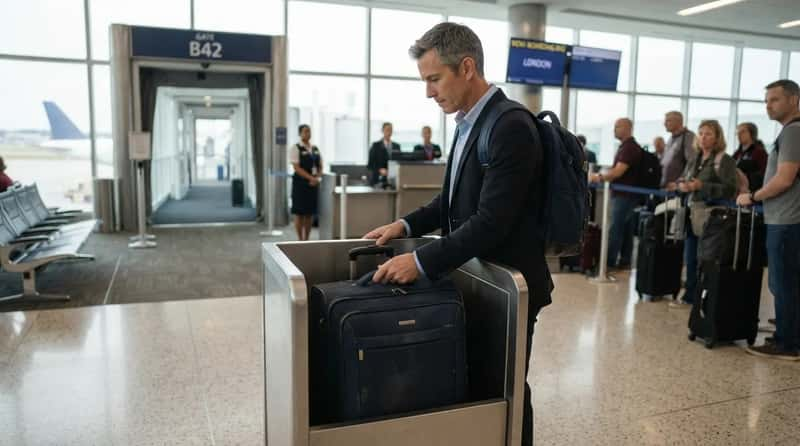
This is the biggest difference of all. Occasional travellers treat one successful flight as proof. Weekly flyers treat it as luck.
A different airline, a different fare, a different plane or a different gate agent can change the result. The bag that sailed through last month can be the one that gets tagged today. That’s why the pros measure, check and pack for the worst case, every time.
That mindset, more than any bag, is what separates the two kinds of traveller.
Weekly flyers aren’t luckier than the rest of us. They just stopped trusting the tag, the store and last month’s flight. No universal carry-on size exists, and the 2015 attempt to create one fell apart, so the only dependable habit is checking.
Next time you’re standing at the gate and the sizer box comes out, you’ll know exactly who’s going to look calm. It’ll be the person who measured the night before.